
What is a UAV Pilot? A Guide to the Profession in 2026
A pilot arrives at a jobsite before the client does, checks the airspace, walks the boundary, confirms the weather, and decides whether the mission can run safely. The drone may only be in the air for ten minutes. The true job starts before takeoff and continues after landing, because commercial UAV work is about getting usable results, staying compliant, and delivering something a client can act on.
If you're asking what a UAV pilot is, you're usually picturing the person on the controller. That is only part of the role. A UAV pilot is a certified remote operator who plans, flies, documents, and manages unmanned aircraft missions for commercial work. In the United States, that often starts with a written aeronautical knowledge exam rather than a mandatory practical flight test.
Good pilots do more than fly clean patterns. They assess whether the mission should happen at all, choose a safe and legal operating method, capture usable data for the client, and keep records that stand up if a regulator, insurer, or customer asks questions later.
That is why the role sits somewhere between aviator, field technician, and project manager. On many jobs, the aircraft is just one tool in a wider workflow that includes risk assessment, battery and maintenance tracking, data handling, client communication, and business admin. If you want a quick primer on the aircraft side of that equation, Dronedesk's guide on what's a UAV is a useful reference.
Beyond the Buzz An Introduction to the UAV Pilot
A pilot sets up on the edge of a live construction site at first light. The aircraft may only be airborne for ten minutes, but the client is paying for far more than ten minutes of stick time. They need clean progress records, usable site data, a safe inspection method, and an operator who can work around site traffic, weather limits, and airspace rules without slowing the job down.
That is the answer to the question, what is a UAV pilot.
A professional UAV pilot runs a mission from start to finish and delivers an outcome a client can use. Flying is only one part of the job. The role also includes planning, compliance, data capture, equipment oversight, recordkeeping, and client delivery. In practice, that puts the pilot somewhere between an air operator, a field technician, and a small business manager.
If you need a quick refresher on the aircraft itself, this guide on what a UAV is covers the basics.
The role is about usable results
Commercial clients do not buy flights. They buy answers, evidence, and documentation.
A roof survey client wants imagery that clearly shows defects. A construction firm wants repeatable progress updates they can compare over time. An inspection team wants data they can pass into a report without chasing missing files or unclear notes. That is why good pilots think about outputs before they think about flight paths.
A professional pilot is usually responsible for:
- Mission planning: Checking the site, airspace, weather, access, hazards, and client requirements
- Flight execution: Operating safely, keeping the mission on profile, and adjusting to conditions on site
- Data capture: Collecting imagery, video, thermal scans, or survey data that is usable
- Operational control: Tracking batteries, logs, aircraft status, and any crew or observer support
- Client delivery: Turning raw files into inspection material, maps, media assets, or reporting inputs
New pilots often focus too heavily on aircraft handling. Good control matters, but it is not what usually decides whether a job is successful. The standard is simpler. Did the client get accurate, usable output, and was the mission completed safely and legally?
Commercial UAV work is often won or lost in planning, documentation, and delivery.
Why the job has matured
UAV piloting has become a mainstream commercial service. Companies now use drones in surveying, inspections, utilities, agriculture, media production, public safety, and construction because they reduce access risk and speed up data collection.
That demand has changed the job description. Clients are not only hiring someone to launch an aircraft and bring it back in one piece. They are hiring someone who can gather the right data, keep records in order, work within regulations, and run the operation like a professional service business.
That shift matters. The strongest pilots are rarely just the best flyers. They are the operators who can manage repeatable workflows, protect margins, keep maintenance and logs under control, and hand over work a client can trust.
The Three Worlds of UAV Piloting
The easiest way to understand UAV piloting is to compare it to driving.
Flying a recreational drone is like driving your own car on the weekend. Commercial piloting is closer to operating a truck for paid work. Military drone operations are another category entirely, with different aircraft, different command structures, and far higher stakes.
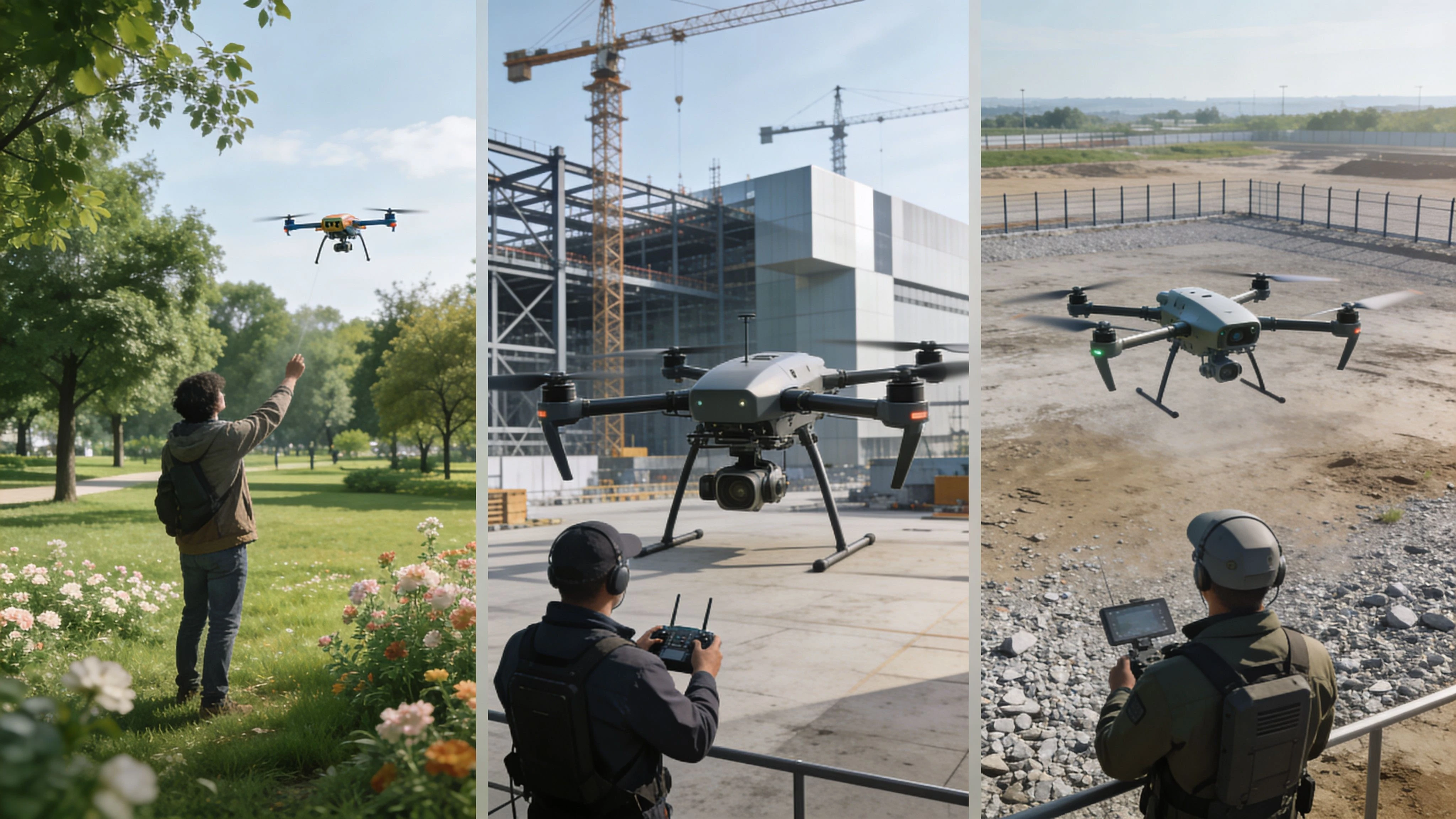
Recreational pilots
Recreational pilots fly for enjoyment, practice, travel, and personal creative work. They may become very skilled, especially in camera movement or FPV control, but the purpose is personal use rather than paid service or business output.
What works well in the recreational world:
- Learning aircraft behavior: New pilots get a feel for orientation, wind response, braking distance, and battery habits.
- Building confidence: Repetition helps. Safe, legal practice matters.
- Developing camera control: Smooth movement and framing carry over into paid work.
What doesn't carry over automatically:
- Casual planning habits: Professional jobs don't tolerate vague launch spots or improvised site assessments.
- Loose file handling: A hobbyist can live with a messy SD card. A client project can't.
- Assuming good flying equals job readiness: It doesn't. Good flying is one part of the job.
Commercial pilots
Commercial UAV pilots fly in service of a business outcome. That can mean roof inspections, stockpile measurement, real estate media, utility work, solar surveys, public safety support, or construction progress capture.
The role becomes operational. The pilot must think like a risk manager and a field technician at the same time.
Commercial work changes the standard
In commercial operations, a pilot is expected to handle more than the aircraft:
| Area | Recreational focus | Commercial focus |
|---|---|---|
| Purpose | Enjoyment or personal content | Client deliverable or business task |
| Planning | Basic site awareness | Formal risk checks, permissions, workflow planning |
| Output | Photos, video, practice | Usable data, reporting, inspection records |
| Accountability | Personal responsibility | Legal, contractual, and operational responsibility |
For most readers, this is the answer behind what is a UAV pilot. It is someone who flies as part of a structured job, where safety and data quality have to hold up under scrutiny.
Military pilots
Military UAV pilots operate in a separate world. Their platforms, objectives, command relationships, training systems, and legal frameworks are distinctly different from civilian commercial work.
The aircraft can be larger, the payloads more specialized, and the consequences much more severe. Even when the control interface looks familiar, the mission logic does not. A civilian pilot inspecting a flare stack and a military operator supporting defense operations are not doing the same job under different branding.
Civilian and military UAV roles share a technology family. They do not share the same operating environment.
Why this distinction matters for your career
Many new pilots blur these categories. They jump from hobby flying to calling themselves a professional because they bought a better aircraft.
That shortcut causes problems. Commercial clients expect documentation, consistency, and judgment. They don't pay for enthusiasm. They pay for a pilot who can operate safely, capture the right data, and manage the mission with very little drama.
Becoming a Certified Professional UAV Pilot
A client does not care that you can hold a hover and shoot a smooth orbit. They care whether you can turn up legal, prepared, insured where required, and able to deliver work that stands up to scrutiny. That is the point where flying becomes a profession.
For commercial pilots in the United States, the usual entry point is the FAA Part 107 Remote Pilot Certificate. Other countries use different licensing systems, but the principle is the same. You need documented knowledge of airspace, operating rules, weather, and risk management before you take paid work.
Certification matters. It is still only the starting line.
What certification actually proves
A new pilot often assumes the licence is proof of flight skill. In practice, it proves something narrower. It shows you understand the operating framework well enough to make legal and safe decisions before and during a mission.
In the U.S., that starts with a knowledge test rather than a practical flight check. That surprises people coming from manned aviation or from the hobby side of drones. The regulator wants evidence that you can read airspace, interpret limitations, and make sound calls. A pilot who flies smoothly but misreads the airspace can create far more trouble than a pilot whose stick work is merely average.
If you're comparing routes into commercial work, Dronedesk's guide to getting a drone licence gives a practical breakdown of what the process looks like in day-to-day terms.
The normal path into commercial work
A solid route into paid UAV work usually looks like this:
-
Learn the rules before chasing jobs
Study airspace, weather, operational limits, emergency procedures, and the practical meaning of pilot in command responsibility. This groundwork shapes judgment, and judgment is what clients are really buying. -
Pass the knowledge requirement
The certificate gives you the legal basis to start commercial operations, subject to the rules in your country and the type of work you're taking on. -
Keep your currency up to date
Recurrent training or renewal is part of the job. Letting credentials lapse is an easy way to lose work and create avoidable compliance problems. -
Build flight experience with purpose
Practice should match the jobs you want. Flying circles in an empty field helps with control. It does not prepare you for inspecting a roof beside parked cars, pedestrians, reflective glass, and changing wind. -
Develop a service skill, not just flight skill
Inspection, mapping, thermal capture, media production, and public safety support all demand different planning methods, camera settings, file handling, and reporting standards.
That last point gets missed all the time. A professional UAV pilot is not only a flyer. The job often includes data capture, quality control, record-keeping, client communication, and business administration. If the output is poor, disorganized, or late, strong stick skills do not save the project.
Where new pilots get the wrong idea
Passing the test can create false confidence.
The aircraft has automation. The app shows a clean map. Return-to-home is available. None of that removes the pilot's responsibility to maintain awareness and control. FAA Section 107.31 still requires visual line of sight, and this Section 107.31 analysis explains why camera view alone does not satisfy that requirement.
In the field, the problem is obvious. A camera feed is useful for framing, alignment, or checking inspection detail. It is a weak tool for scanning the wider airspace, watching for conflict, and judging everything happening around the aircraft at once.
A practical rule helps here. If your whole plan depends on the screen to tell you everything you need to know, the plan needs work.
Professional standards start after you pass
The exam gives you a legal foundation. Professional standards are built in the habits that follow.
- Pick launch points that preserve actual visibility: Do not set up where walls, vehicles, trees, or rooflines cut off your view once the aircraft moves.
- Use a visual observer when the site is busy or broken up: Industrial yards, urban sites, and property inspections often create blind spots that one pilot cannot manage well alone.
- Keep the mission inside your real management range: Legal range and practical range are not always the same thing.
- Brief abnormal procedures before takeoff: Loss of signal, flyaways, low battery, airspace conflict, and an aborted mission should already have a response.
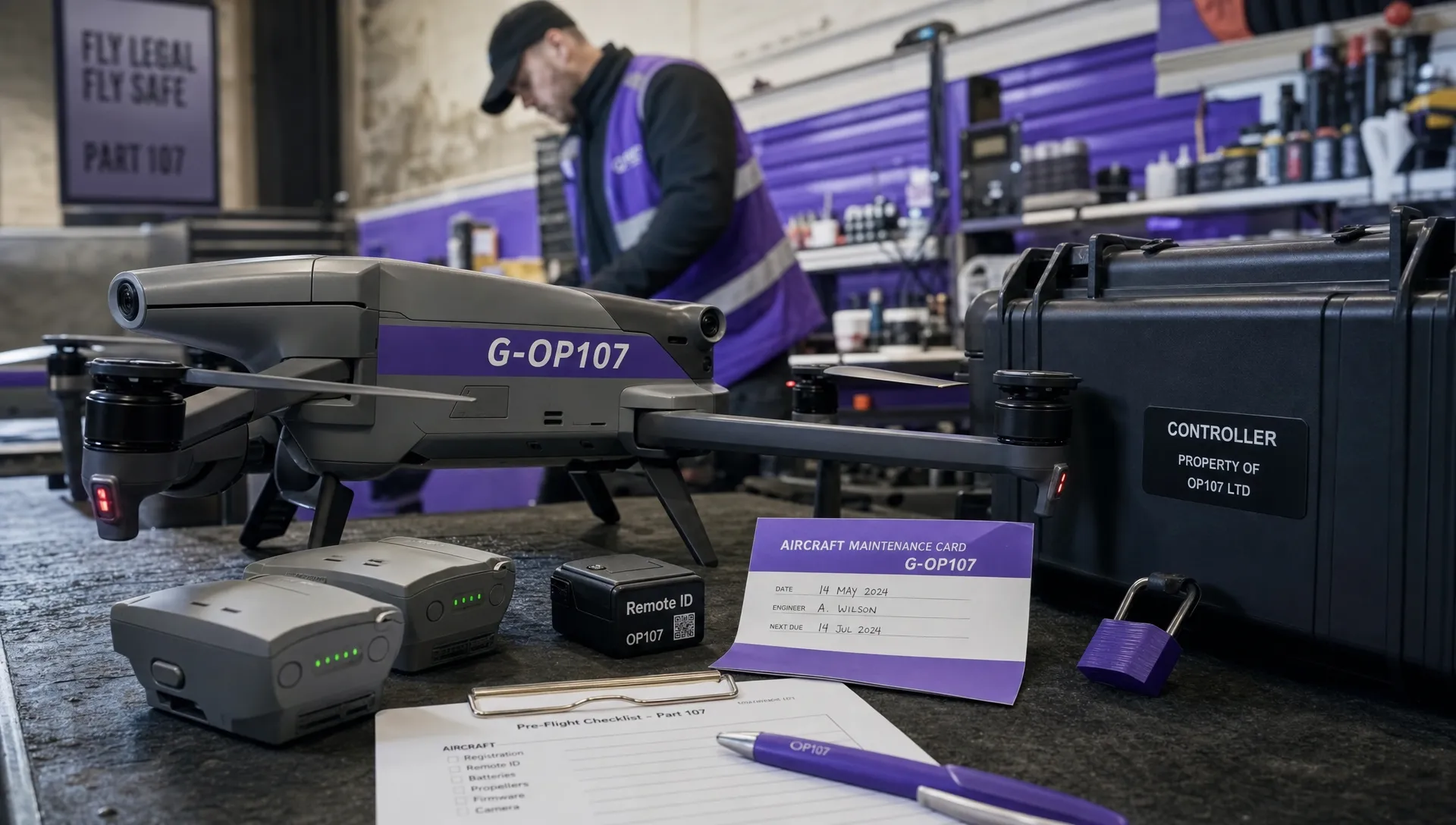
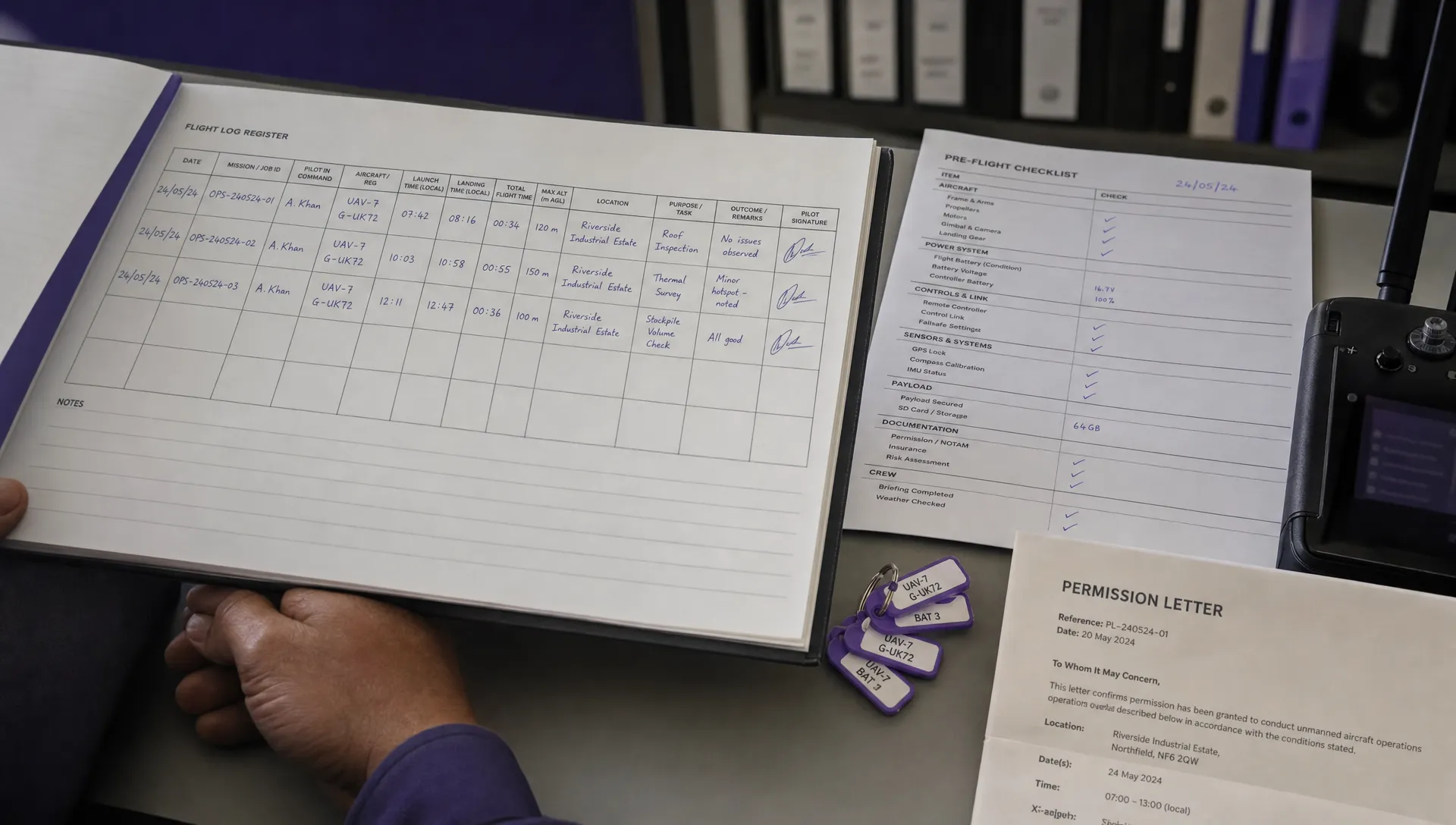
- Treat records as part of the job: Certificates, flight logs, maintenance notes, battery history, site permissions, and client deliverables need to stay organized.
That paperwork is not admin for admin's sake. It is part of being a reliable operator. As soon as you start flying regularly for clients, you are running a small aviation operation and a data workflow at the same time. The pilots who last in this field learn to manage both.
A Day in the Life The UAV Pilot Workflow
At 6:30 a.m., a pilot is standing on a wet construction site with a client who wants progress photos, a cut-and-fill update, and footage for the next investor report. The aircraft is only one part of that job. The pilot also has to confirm the brief, assess the site, capture usable data, protect the files, and deliver something the client can act on.
That is the workflow. Commercial UAV work is planning, flight execution, data handling, and job management tied together.
Before takeoff the pilot is a planner
The first task is defining the output. A roof inspection needs different capture settings than a stockpile survey. A marketing shoot needs different timing and movement than a repeatable mapping mission. If the deliverable is vague, the flight usually goes vague with it.
Then the pilot works through the site as an operator, not a hobby flyer. Ground hazards, public access, vehicle movement, signal interference, changing weather, takeoff area, recovery area, and nearby airspace all affect the plan. Crew roles need to be clear. Emergency actions need to be briefed. Batteries, props, storage media, firmware status, payloads, and controller settings need to be checked before anyone is waiting on site.
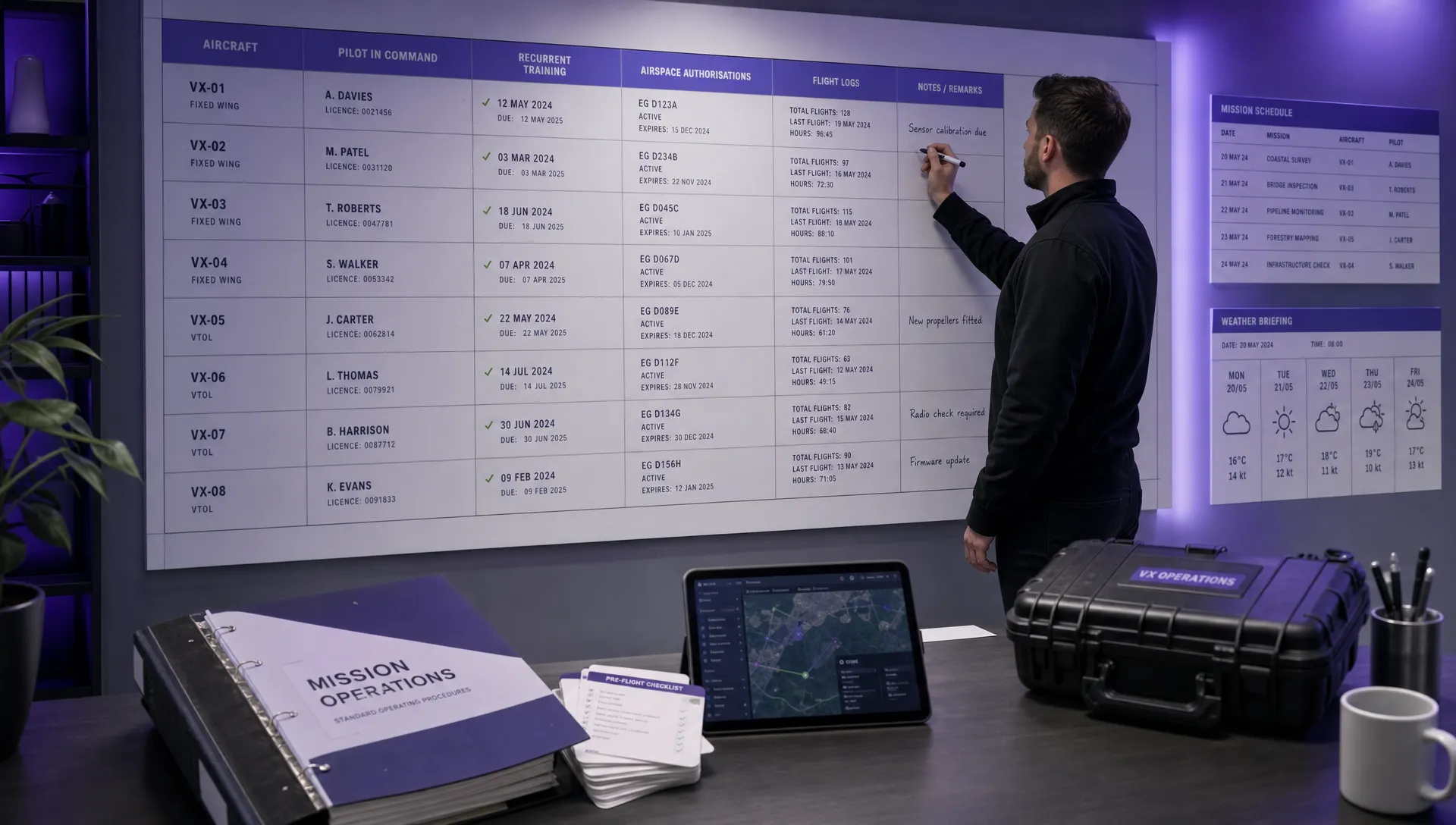
This is also where business discipline shows up. Once flights become regular, the pilot is managing certificates, maintenance logs, client notes, job history, and fleet status alongside the mission itself. Dronedesk is useful here because it keeps flight planning, records, crew documents, equipment tracking, and reporting in one system instead of spreading them across spreadsheets, messaging apps, and memory.
In the air the pilot is an operator, inspector, and data manager
A good flight looks calm from the outside. Inside the pilot's head, there is constant evaluation.
Inspection work means holding a safe and consistent standoff distance, checking whether the angle shows the defect, and deciding if another pass is needed before leaving site. Mapping work means maintaining the planned altitude, speed, and overlap so processing does not fall apart later. Media work means getting smooth movement without drifting into unsafe positioning or legal trouble.
This is why I tell new pilots that clients are rarely paying for stick time alone. They are paying for usable output.
RTK, PPK, and automated flight paths can improve consistency, but they do not fix careless capture. Bad overlap, poor lighting choices, rushed passes, and inconsistent altitude still create weak models, missed defects, and extra office time. In sectors experimenting with additive manufacturing and field fabrication, including UAV 3D printing techniques, capture quality matters even more because the drone's output may feed a technical workflow, not just a photo gallery.
After landing the pilot is a data handler
Landing is not the end of the mission. It is the point where the pilot confirms whether the job is complete.
Files need to be offloaded and checked before leaving site. Flight details need to be logged while they are still fresh. Batteries and airframe condition need a quick review. If a sensor glitched, a prop took a knock, or a battery ran hotter than expected, that note belongs in the record before the next booking.
The client deliverable also starts here. Depending on the job, that may be stitched imagery, annotated inspection photos, progress documentation, orthomosaics, or data prepared for another analyst or survey team.
A practical post-flight routine usually includes:
| Task | Why it matters |
|---|---|
| File verification | Confirms the mission captured what the client paid for |
| Flight logging | Supports compliance, traceability, and later review |
| Equipment notes | Catches battery, prop, or sensor issues before the next job |
| Deliverable prep | Turns raw capture into something the client can use |
The drone captures inputs. The pilot delivers a result.
The workflow mistake that causes the most friction
New commercial pilots often spend heavily on aircraft and payloads, then run the business side from text messages, notebook pages, and folders with unclear filenames. That usually holds up for a few jobs. It breaks down once clients want repeat visits, multiple team members touch the same project, or an insurer, regulator, or contractor asks for records.
The stronger operators treat each mission as both an aviation task and a data job. That approach protects quality, saves time in the office, and makes the pilot easier to trust with larger contracts.
Essential Skills and Equipment for Success
Individuals entering the field typically ask about the drone first. That's understandable, but it isn't the best question. A more useful question is this: what capabilities let a UAV pilot deliver reliable work under pressure?
The answer combines technical skill, judgment, and a field kit that supports repeatable operations.
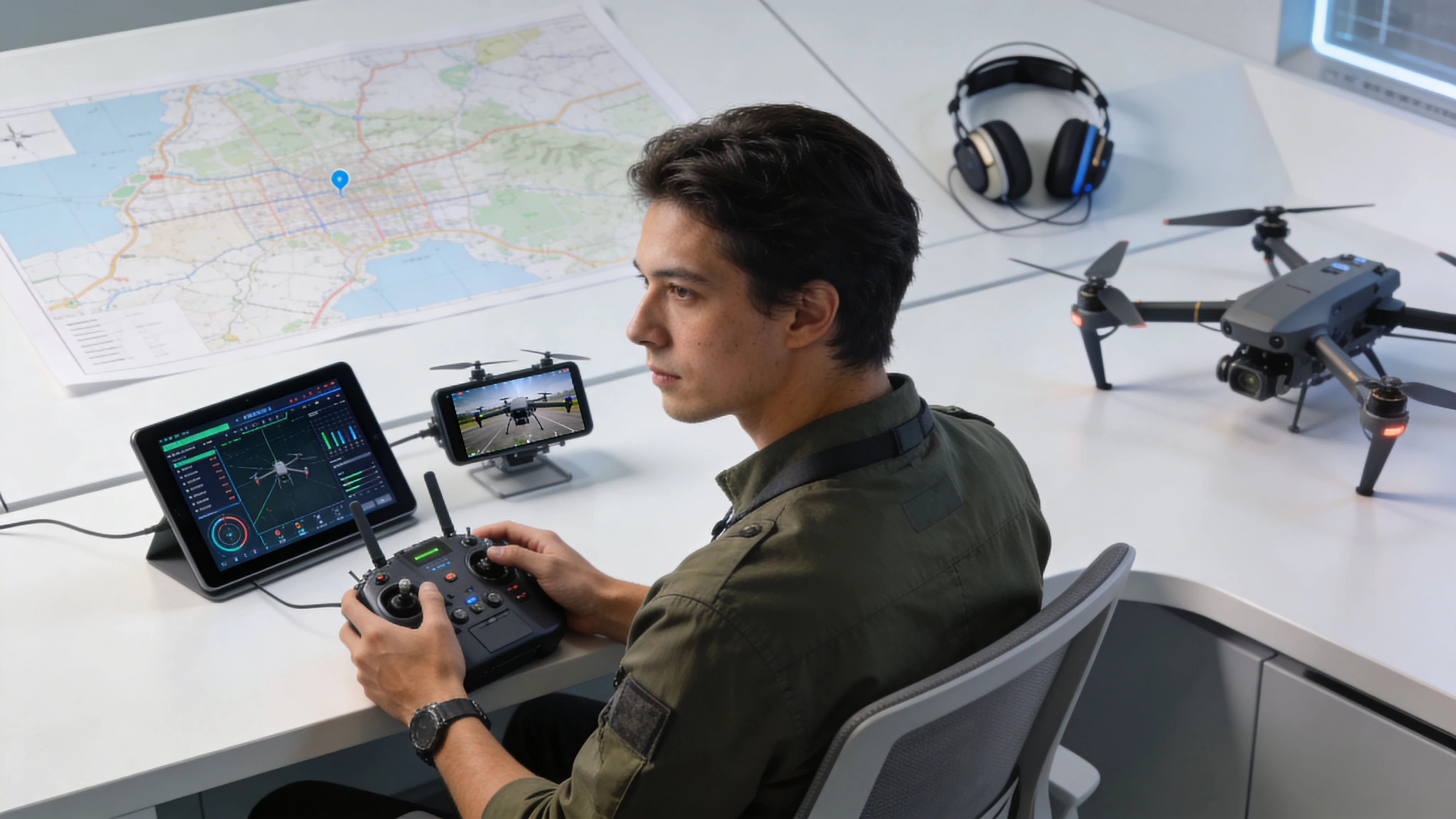
Technical skills you can't fake
A UAV pilot has to understand aerodynamics, not in a classroom-only sense, but in a field sense. Lift, thrust, drag, and weight determine how the aircraft behaves. On multi-rotors, propeller rotation speeds can range from 1000 to 5000 RPM, and proper control can hold hover stability within plus or minus 0.5 degrees. Improper force balancing can increase power draw by 20 to 30% and reduce flight time by 15%, while manual flight skill in GPS-denied environments can reduce mission failure rates by 40%, according to this breakdown of the UAV technical skill set.
That has direct operational consequences. If the aircraft is fighting itself because of poor setup or poor control, battery reserve disappears faster, framing gets sloppier, and the safety margin shrinks.
The technical stack that matters most
- Manual flight control: You need to recover calmly when GPS becomes unreliable or positioning drifts.
- Sensor understanding: RGB, thermal, LiDAR, and zoom payloads all demand different capture decisions.
- Mission software literacy: Automated mapping is only useful if you know how to set it up correctly.
- Data discipline: Folder structures, version control, and export settings matter more than people admit.
If you can only fly with every assist feature active, you're not ready for demanding inspection work.
Soft skills that clients actually notice
Clients don't usually judge you by your stick feel. They judge you by whether you make the day easier.
Strong pilots tend to be good at:
- Clear communication: Explaining what the aircraft will do, where the risks are, and what the client will receive.
- Calm decisions: Stopping a flight without drama when the site or conditions aren't right.
- Documentation habits: Keeping notes, logs, permissions, and deliverables organized.
- Expectation management: Telling a customer early when a site constraint limits what can be captured.
A lot of failed jobs aren't flight failures. They're communication failures that started before takeoff.
The equipment list goes well beyond the drone
A working pilot kit usually includes far more than aircraft and controller.
| Equipment | Why it matters |
|---|---|
| Spare batteries and charging solution | Keeps the job moving and protects the schedule |
| Propellers and small field tools | Minor issues shouldn't end a site visit |
| Tablet or display setup | Improves framing, telemetry review, and mission planning |
| Landing pad and markers | Helps in dusty, wet, or uneven launch areas |
| Storage and backup media | Protects deliverables before you leave site |
| Specialized payloads | Thermal, zoom, or LiDAR unlock higher-value work |
Custom hardware also has a place, especially for teams building niche platforms or modifying payload mounts. If you're exploring lightweight fabrication, UAV 3D printing techniques are worth reviewing because they show where additive manufacturing can help with prototyping and mission-specific parts.
The gear matters. The skill to use it under ordinary jobsite pressure matters more.
UAV Pilot Career Paths and Salary Expectations
A new pilot often asks the wrong salary question first. The better question is what kind of problems you can solve for a client, and how reliably you can solve them.
That difference shapes the whole career.
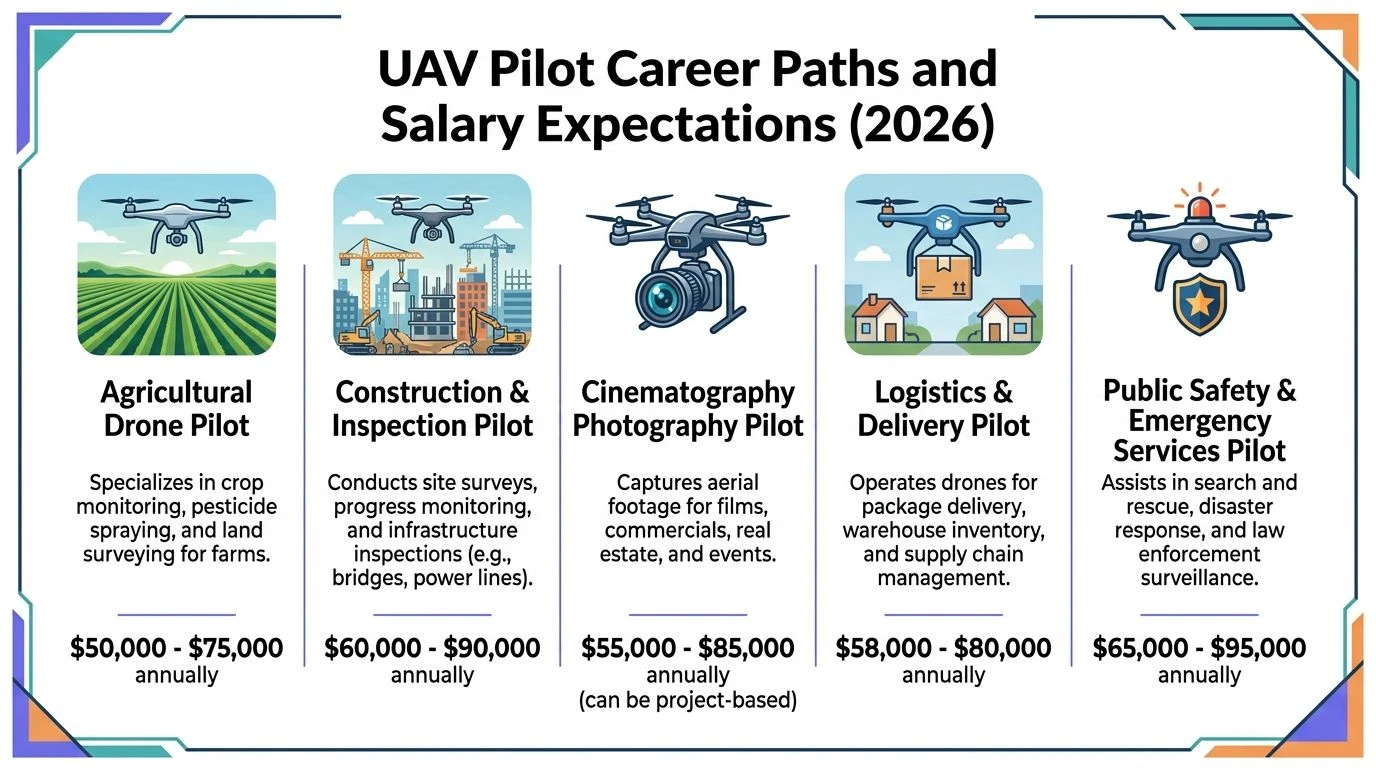
A UAV pilot can work in media, surveying, inspections, construction, agriculture, energy, public safety support, and in-house enterprise programs. Those paths do not pay the same because the job is not the same. A client hiring for a roof promo video is buying a finished visual asset. A client hiring for stockpile measurement, thermal inspection, or corridor mapping is buying usable data, documented process, and lower operational risk.
That is why the strongest careers usually grow out of specialization.
Where commercial demand is strongest
Demand is steady in sectors where drones save time, reduce site exposure, or improve reporting quality:
- Surveying and mapping: Orthomosaics, terrain models, volumetrics, and repeatable site progress data
- Infrastructure inspection: Roofs, towers, utilities, bridges, flare stacks, and industrial assets that are expensive or risky to inspect manually
- Construction and engineering support: Progress tracking, site documentation, quantity checks, and stakeholder reporting
- Energy and resource operations: Solar, mining, and oil and gas work that rewards consistency, safety discipline, and payload-specific skill
- Media and property marketing: Competitive work with lower barriers to entry, where client service and turnaround speed affect margins
- Public safety support: Search support, incident documentation, and scene awareness under tighter procedural control
The market is growing, but revenue is concentrated. As noted earlier, broad growth in the sector does not mean every pilot earns well. The pilots who do best usually pair flight skill with domain knowledge and clean delivery standards.
Why specialization changes pay
Hourly rate conversations can be misleading because "drone work" covers very different jobs.
A media pilot may spend more time on shot planning, editing coordination, and client revisions. A mapping pilot may spend more time on ground control, overlap checks, processing validation, and file handoff into GIS or CAD. The second role is closer to technical field data collection than content capture, and clients often budget for it differently.
In practice, higher-paying work tends to share three traits:
- The site is difficult, hazardous, remote, or regulated
- The payload or workflow requires training beyond basic flight competence
- The deliverable feeds a larger business decision, such as maintenance planning, engineering review, or production tracking
That is the shift many new pilots miss. The better-paid operator is rarely just "good at flying." The better-paid operator produces dependable data and runs jobs like a business.
What affects earning power
Skill matters, but earning power usually comes from a mix of technical range and operational discipline.
Technical depth
Pilots who can handle thermal workflows, mapping accuracy requirements, inspection patterns, or industry-specific deliverables are harder to replace. So are pilots who understand what the client needs before they launch.
Data handoff quality
Raw files have limited value if the customer has to sort, rename, interpret, and verify everything themselves. Clear file structures, usable outputs, and consistent reporting raise your value fast, especially in construction, surveying, and asset inspection.
Business reliability
Quoting accurately, showing up prepared, protecting margins, and sending deliverables on time often matter as much as the flight itself. Clients remember the pilot who made the job easy to buy and easy to use.
One sentence sums it up. Low-friction operators keep clients longer.
Employee role or freelance operator
Some UAV pilots build careers inside surveying firms, utilities, engineering consultancies, production companies, or internal enterprise drone teams. That route usually offers steadier income, access to better equipment, and mentoring under an established workflow.
Others run owner-operator businesses. The upside is control over niche, pricing, and equipment decisions. The trade-off is that you also handle lead generation, scheduling, compliance records, maintenance, insurance, invoicing, and client follow-up. If you're pricing media work, this guide to drone videography rates and costs is useful for understanding how pilots and production teams frame service pricing in the market.
Pilots comparing roles, niches, or next steps can also review Dronedesk's guide to UAS pilot jobs across different commercial sectors.
A realistic note about the profession
This field rewards people who can do more than fly.
A durable UAV career usually belongs to the pilot who can plan a mission, capture consistent data, manage client expectations, protect compliance records, and keep the business side under control. That mix of pilot, field technician, data producer, and operator is where the strongest long-term value sits.
How Dronedesk Streamlines the Professional Workflow
The hard part of professional drone work usually isn't the takeoff. It's the accumulation of small operational tasks around every flight.
You need pilot records, aircraft status, job planning, client details, risk documentation, flight logs, and reports that don't look improvised. Once a team is managing multiple pilots, airframes, batteries, and sites, that admin load becomes a real operational risk.
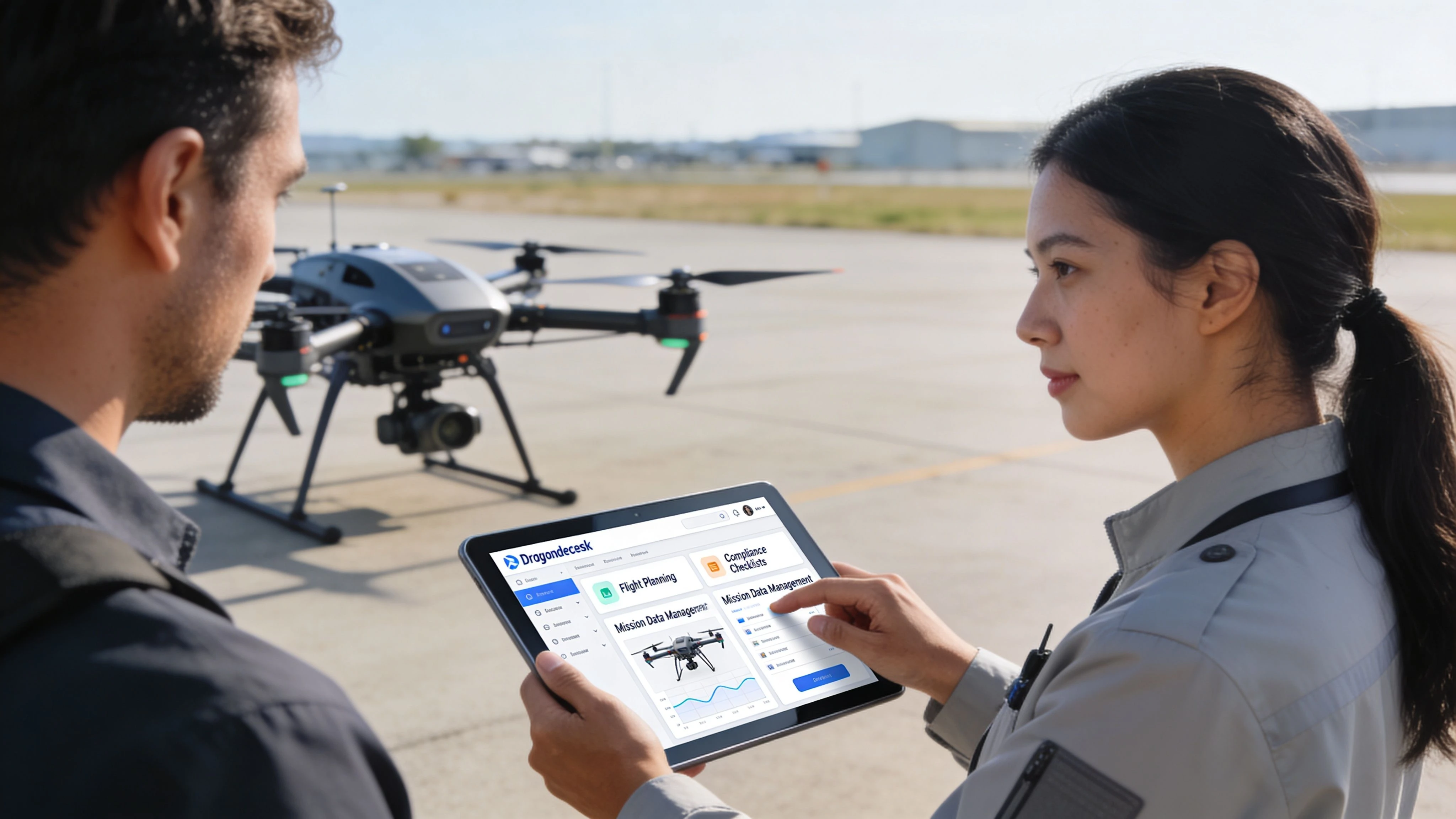
A platform built for drone operations helps by keeping those moving parts in one place. Dronedesk is designed for client management, fleet management, team management, airspace and proximity intelligence, flight planning and logging, DJI data syncing, and reporting, based on the product information provided by the publisher.
For solo operators, that means fewer scattered tools and cleaner records. For teams, it means better visibility into who is current, what aircraft are available, and which jobs are ready to fly. That's not glamorous work, but it is exactly what lets a professional pilot spend more time on mission quality and less time rebuilding the paperwork trail after the fact.
Frequently Asked Questions About UAV Piloting
Do I need to own a drone before becoming a UAV pilot
No. Owning one helps because regular practice builds control and judgment, but it isn't mandatory to begin learning the regulations, the workflow, or the business side. Some pilots train on borrowed aircraft, through an employer, or within a team setup before buying their own kit.
What matters more is learning on equipment that matches the work you want to do. A small camera drone may be fine for basic media practice, but inspection, thermal, or mapping work often needs a different platform and a different workflow.
Is passing the exam enough to start taking paid jobs
Legally, certification is the starting point for commercial work in many cases. Operationally, it isn't enough by itself.
You should be comfortable with site assessment, emergency procedures, airspace awareness, battery discipline, client communication, and organized data handling before taking on real customer work. A pilot who can answer exam questions but can't manage a complicated site is still not ready.
Can UAV piloting become a full-time career
Yes, but usually not by relying on general flying alone.
Pilots who build a full-time career tend to do one or more of these well: specialize in a sector, become reliable at producing usable data, or run the business side cleanly. The strongest careers are built around repeatable client value, not around owning an expensive drone and hoping jobs appear.
If you're operating professionally or planning to, Dronedesk gives you a structured way to manage jobs, aircraft, pilots, records, and reporting without piecing the workflow together across multiple tools. That's the kind of system that helps turn drone flying into a dependable operation.
 How to Review a DJI Flight Log After an Unexpected Event →
 Drone Laws Around the World: A Pre-Flight Research Framework →
 How to Compare Drone Survey Services for Complex Sites →
 How to Start a Drone Mapping Business With a Clear Workflow →
 Class C Airspace Drone Rules for Commercial Flights →
 How to Create a Drone Job Pack for Every Mission →
 FAA Small UAS Rule: Key Requirements for Operators →
 How to Build a Drone Pilot Flight Log That Is Audit Ready →
 FAA Drone Licence Requirements for Commercial Pilots →
 FAA BVLOS Waivers Granted: What Successful Cases Show →