
How to Start a Drone Photography Business in 2026
Starting a drone photography business in 2026 is no longer just about buying a capable aircraft and learning smooth camera moves. The market has matured. Clients now expect professional planning, safe operations, reliable delivery, clear pricing and proof that you can work around people, property, infrastructure and controlled airspace without creating avoidable risk.
That is good news if you are willing to build a proper business. Cheap drones have made basic aerial images easier to capture, but they have not replaced operators who can plan, document and deliver a dependable service. Whether you want to shoot property, construction progress, infrastructure, tourism, events or public sector work, the opportunity is strongest when you combine creative skill with operational discipline.
This guide walks through the practical steps to start a drone photography business in 2026, with a UK-focused lens and advice that also applies broadly to operators building a commercial aerial imaging service.
Is a drone photography business still worth starting in 2026?
Yes, but only if you avoid positioning yourself as a generic drone owner for hire. The low end of the market is crowded, especially for simple aerial shots of houses, farms and venues. The stronger opportunity is in solving specific visual problems for clients who need dependable, repeatable imagery.
A residential estate agent may want fast listing media. A construction firm may need monthly progress photos from the same viewpoints. A survey company may need supporting imagery for condition reports. A utility company may need visual documentation of assets, access routes or site constraints. Emergency services may use aerial imagery for planning, training and post-incident review.
In each case, the drone is only part of the service. Clients are buying confidence that you can turn up, assess the site, fly legally, manage risk, capture useful images and deliver them in a format they can actually use.
Choose a niche before you buy more kit
The fastest way to waste money is to buy equipment before you know what type of work you are pursuing. A drone photography business serving estate agents has different needs from one supporting construction sites or utility inspections. Start with one primary niche and one secondary niche, then build your portfolio, website and workflow around them.
| Niche | Typical clients | Common deliverables | What matters most |
|---|---|---|---|
| Residential property | Estate agents, landlords, developers | Aerial photos, short listing videos, social clips | Speed, consistency and local availability |
| Commercial property | Architects, hotels, developers, asset managers | Hero images, site context, marketing video | Image quality, planning and brand fit |
| Construction progress | Contractors, project managers, survey companies | Repeatable site photos, progress videos, annotated image sets | Repeat visits, documentation and safety |
| Infrastructure and utilities | Utility companies, maintenance contractors, consultants | Asset overview images, access documentation, condition photos | Compliance, records and operational reliability |
| Tourism and hospitality | Hotels, venues, destinations, agencies | Promotional photos, cinematic video, seasonal campaigns | Creative direction and editing quality |
| Public sector and emergency planning | Councils, emergency services, resilience teams | Site awareness imagery, training media, incident documentation | Risk control, audit trails and data handling |
If you target property or hospitality, remember that your client may care as much about atmosphere as altitude. Understanding how interiors, landscaping and details such as modern lighting and fixtures influence a space can help you plan aerial images that complement the wider visual story rather than feeling like disconnected drone shots.
Once you have chosen a niche, study the buying process. Who approves the work? What deliverables do they need? How quickly do they need them? What risks stop them from hiring a drone operator? Your answers will shape your pricing, marketing and operations.
Understand the legal basics before your first paid flight
In the UK, commercial drone work is not governed by a simple paid versus unpaid rule. Operations are risk based. You need to understand where your flights sit within the regulatory framework and what permissions, competency and insurance apply. Always check the latest guidance from the UK Civil Aviation Authority before you fly, especially if your work involves congested areas, people, controlled airspace or higher-risk environments.
At a minimum, most operators need to understand Flyer ID and Operator ID requirements, drone registration, operational categories, airspace restrictions, privacy obligations and insurance. If your planned work goes beyond what is allowed in the Open category, you may need additional competency and an Operational Authorisation from the CAA.
| Area | What to consider before operating commercially |
|---|---|
| Registration and competency | Make sure the correct person or organisation is registered as the operator, and that pilots have the required competency for the type of flight. |
| Operational category | Check whether the flight can be conducted in the Open category or whether it falls into the Specific category and needs further authorisation. |
| Airspace and permissions | Review flight restriction zones, temporary restrictions, NOTAMs, local site rules and landowner requirements. |
| Insurance | Arrange appropriate drone insurance for commercial work, including public liability and cover suitable for your operations. |
| Privacy and data protection | Avoid unnecessary capture of people or private spaces, and follow relevant data protection principles. The ICO drone guidance is a useful starting point. |
| Records | Keep flight logs, maintenance records, risk assessments, checklists and client job documentation in a consistent format. |
Do not sell work you are not yet authorised or competent to complete. A client may ask for a city-centre roof survey, a flight near an airport or imagery above a busy event. Your answer should be based on regulations, permissions and risk, not on optimism.
Build a sensible startup equipment stack
You do not need the most expensive drone on the market to start a drone photography business. You need equipment that matches your niche, produces professional files and has enough redundancy to avoid embarrassing cancellations.
For many new operators, a capable camera drone with RAW photo capture, stable video, reliable obstacle sensing and good battery life is enough to begin. If you are targeting higher-end commercial property, film production or complex industrial work, you may need larger sensors, interchangeable lenses, thermal payloads or specialist aircraft, but those should follow demand rather than precede it.
| Item | Why it matters | Sensible starting point |
|---|---|---|
| Main drone | Your core image capture tool | Choose based on image quality, reliability, wind performance and regulatory suitability. |
| Spare batteries and charger | Most jobs require more than one flight window | Carry enough batteries for the planned shoot plus contingency. |
| ND filters and memory cards | Helps control exposure and maintain professional video settings | Keep labelled, high-quality cards and a simple backup process. |
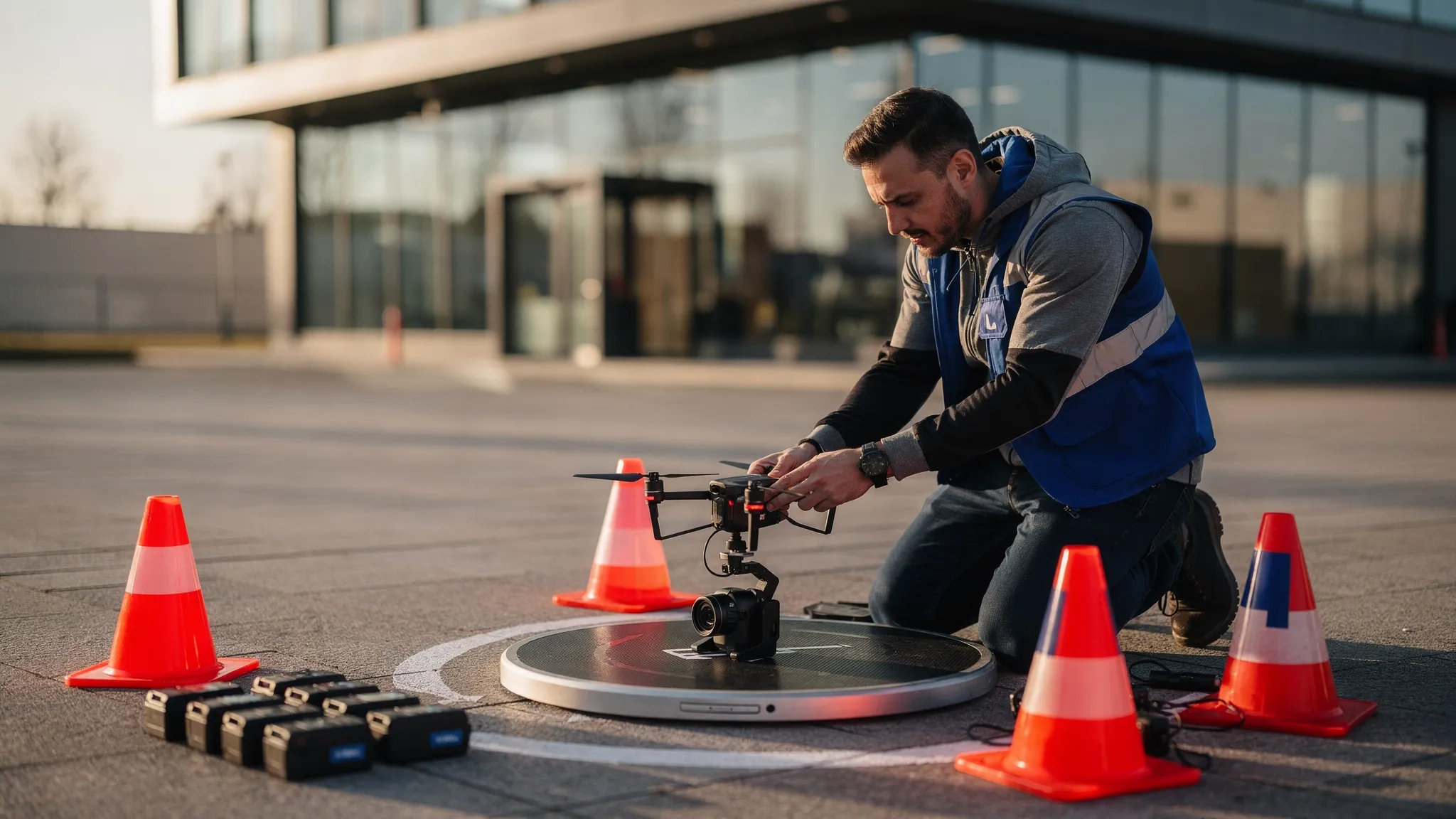
| Landing pad and safety kit | Supports controlled take-off and landing | Include cones, high-visibility clothing and basic site safety items where appropriate. |
| Editing software | Turns captured media into saleable deliverables | Use tools that support RAW photo editing, colour correction and efficient export presets. |
| Storage and backup | Protects client files and your reputation | Use at least two copies of active project files, ideally with off-site or cloud backup. |
| Operations software | Keeps jobs, risk assessments, checklists and logs organised | Use a system that supports repeatable planning and record keeping as you grow. |
A common mistake is building the business around a single drone, a single memory card and no contingency plan. If a battery fails, firmware update stalls, weather changes or a site contact is late, your workflow should still protect the job and the client relationship.
Create a professional workflow from enquiry to delivery
The difference between a hobby flight and a commercial operation is the system around it. A proper workflow helps you quote accurately, plan safely, capture the right shots and prove what happened afterwards.
A simple drone photography workflow might look like this:
- Receive enquiry and clarify the client objective, location, deliverables and deadline.
- Check whether the site is feasible from an airspace, access, privacy and safety perspective.
- Provide a written quote with scope, assumptions, exclusions and usage terms.
- Confirm insurance, permissions, contacts and site-specific requirements.
- Prepare a flight plan, risk assessment, emergency procedures and pre-flight checklist.
- Monitor weather, NOTAMs and any changes to site conditions before departure.
- Conduct the flight, capture the agreed shot list and adapt only within safe limits.
- Back up files immediately after the shoot.
- Edit and deliver the media in the agreed formats.
- Log the flight, record issues and store the project documentation.
This is where many new operators underestimate the admin. The flight may take 25 minutes, but the job includes planning, travel, communication, editing, file transfer, invoicing and record keeping.
Dronedesk is built for this operational layer. Its features include client management, fleet management, team management, airspace intelligence, proximity intelligence, flight planning, flight logging, data reporting, configurable checklists and risk assessments. You can review the current platform capabilities on the Dronedesk features page.
Price for the outcome, not the minutes in the air
If you price only by flight time, you will undercharge. Clients rarely understand how much work happens before and after take-off, so your pricing needs to reflect the full service.
Start by calculating your real cost per job. Include travel, planning, insurance, equipment depreciation, editing, software, taxes, admin, revisions and profit. Then compare that with local market rates and the value of the deliverable to the client.
| Pricing model | Best for | Notes |
|---|---|---|
| Fixed package | Property listings, simple venue shoots, social media content | Works well when the scope is clear and repeatable. |
| Half-day or day rate | Commercial property, construction, tourism campaigns | Better when shot lists may evolve on site. |
| Retainer | Construction progress, asset documentation, agency partnerships | Useful for repeat clients who need predictable monthly output. |
| Project fee | Complex shoots, multi-location work, higher-risk operations | Allows you to include planning, permissions, editing and contingency. |
| Add-ons | Extra edits, rush delivery, ground photography, additional locations | Keeps the base offer simple while protecting your margins. |
A useful rule is to avoid offering a price until you understand the site and deliverables. A simple rural shoot and a city-centre commercial building can look similar in a client email, but the planning burden and risk profile may be completely different.
Build a portfolio that proves business value
Your portfolio should show more than pretty skies. It should prove you can create images a client can use to sell, report, document or decide.
If you are new, create controlled portfolio projects before approaching paying clients. Photograph a local venue with permission. Build a mock construction progress set from a safe and legal location. Create a before-and-after style case study for a landscape, property or public space. Keep the work honest and label it clearly as portfolio work if it was not commissioned.
For each portfolio piece, explain the objective, planning considerations, deliverables and result. A construction company wants to know you can repeat the same viewpoint next month. A hotel wants to know you can make the site look inviting. A utility contractor wants to know you can work safely around operational constraints.
Your website should include a clear service page for each niche you serve, a location page if you work regionally, a simple contact form and examples of deliverables. Add trust signals such as insurance, qualifications, operating areas and the types of clients you support, but avoid claiming permissions or capabilities you do not have.
Win your first clients without racing to the bottom
Low prices can win attention, but they often attract clients who do not value planning, safety or quality. Instead, focus your outreach on buyers who already understand the value of visual documentation.
Good first-client targets include local estate agents, independent developers, architects, roofers, solar installers, event venues, marketing agencies, survey companies and construction contractors. For utilities and public sector work, expect longer procurement cycles and more emphasis on compliance, insurance, documentation and data handling.
When you reach out, make the message specific. Do not say you offer drone services. Say you help estate agents produce listing media within a defined area, or you help construction firms create monthly progress photo sets from consistent viewpoints. The narrower the promise, the easier it is for the client to understand when to hire you.
Partnerships are especially powerful. Ground photographers, videographers, surveyors, estate agency media providers and marketing agencies often need aerial capability but do not want to manage aircraft, permissions and flight logs themselves. If you can be their dependable aerial partner, you may win repeat work without constantly chasing one-off jobs.
Set up the business properly
A drone photography business is still a business. Treat the admin seriously from day one, because poor terms, missing records or weak financial controls can cause problems long after the flight.
Choose a business structure, set up a separate bank account, track expenses and speak to an accountant if you are unsure about tax, VAT or whether to trade as a sole trader or limited company. Create standard quote, invoice and contract templates. Define payment terms, cancellation rules, weather rescheduling, revision limits, file delivery timelines and image usage rights.
Your terms should also cover what happens if a flight cannot legally or safely proceed. Clients may assume that booking a drone shoot guarantees flight. Your contract should make clear that safety, legality and weather conditions come first.
For data and media management, decide how long you will keep client files, who can access them and how you will share them. This is particularly important for sensitive sites, infrastructure, emergency services, schools, private homes or anything that could reveal personal data or security-relevant information.
Scale safely when the work starts growing
The first stage of growth is usually more repeat work, not more drones. Before hiring pilots or buying aircraft, make your operation repeatable. Standardise your pre-flight checklists, risk assessment templates, file naming, editing presets, client onboarding and flight logging.
As you move into larger clients, especially survey companies, utility companies and emergency services, your operational maturity becomes part of the sale. These clients often need evidence that pilots are competent, aircraft are maintained, flights are logged, risks are assessed and records can be produced when needed.
If you add team members, decide who is responsible for flight approval, equipment maintenance, client communication and post-flight records. A small team can become chaotic quickly if everyone uses separate spreadsheets, messaging apps and storage folders.
This is another point where an operations management platform can help. Dronedesk brings core operational information into one web platform, including clients, fleet, team details, planning, checklists, risk assessments, flight logs and reporting. For a growing drone photography business, that structure can support a more professional and consistent way of working.
For an example of how a solo aerial photographer and videographer approached operational management, you can read the Dronedesk case study on a solo videographer and photographer.
A practical 90-day launch plan
You do not need to build everything at once. A focused 90-day plan can take you from idea to a credible first version of the business.
| Timeline | Focus | Outcome |
|---|---|---|
| Days 1 to 15 | Choose your niche, study local competitors, check legal requirements and identify likely clients | Clear positioning and a realistic view of the market |
| Days 16 to 30 | Finalise essential kit, insurance, operating procedures and document templates | A basic but professional operating setup |
| Days 31 to 45 | Create portfolio projects with permissions and strong deliverables | Evidence you can show prospects |
| Days 46 to 60 | Build a simple website, Google Business Profile and niche-specific service pages | A place for clients to assess and contact you |
| Days 61 to 75 | Contact targeted prospects and potential referral partners | First conversations, quotes and test projects |
| Days 76 to 90 | Review pricing, refine workflows and turn early jobs into case studies | A stronger offer based on real feedback |
The goal is not perfection. The goal is to become operationally credible, commercially clear and visible to the right buyers.
Common mistakes to avoid
Many drone photography businesses fail because of business fundamentals, not flying ability. Watch for these issues early:
- Buying specialist equipment before validating demand.
- Charging for flight time instead of the complete job.
- Promising flights before checking airspace, permissions and site risks.
- Failing to keep flight logs, maintenance records and risk assessments.
- Delivering files without clear usage rights or revision limits.
- Relying on one client, one drone or one type of work.
- Competing only on price instead of reliability, niche expertise and professionalism.
If you fix these habits early, you will look more professional than many operators with better showreels but weaker processes.
Frequently Asked Questions
Do I need a licence to start a drone photography business in the UK? You need to meet the relevant CAA requirements for the type of drone and operation. This may include Flyer ID, Operator ID, suitable competency and, for higher-risk work, an Operational Authorisation. Always check current CAA guidance before offering paid work.
How much does it cost to start a drone photography business? Costs vary widely depending on your niche. Budget for the aircraft, batteries, insurance, training or competency, editing software, storage, website, business admin and operations tools. Start lean, then upgrade when client demand justifies it.
What is the best drone for a new photography business? The best drone is the one that meets your client needs, regulatory constraints and budget. Prioritise image quality, RAW photo capability, reliability, battery life, wind performance and support. Do not buy a specialist aircraft until you know the work requires it.
Can I fly over people or private property for a client? It depends on the drone, location, operational category, permissions and risk controls. Do not assume that a client request makes a flight legal or safe. Check the rules, assess the site and obtain any required permissions.
How do I get my first drone photography clients? Pick a niche, create a relevant portfolio, build a simple website and approach businesses that already use visual content or site documentation. Partnerships with photographers, surveyors, agencies and contractors can be a strong source of repeat work.
Is drone photography too saturated in 2026? Generic aerial photography is competitive, but specialist, well-run services are still valuable. Operators who understand compliance, client workflows and niche deliverables can stand out from hobbyists and low-cost providers.
Make your drone photography business easier to run
The operators who last are not always the ones with the biggest drone. They are the ones who plan carefully, manage risk, keep reliable records and deliver what clients need without unnecessary chaos.
If you want a more organised way to manage the operational side of your drone photography business, explore Dronedesk. It brings together the core tools drone operators need for client management, fleet management, team management, airspace and proximity intelligence, flight planning, flight logging, reporting, configurable checklists and risk assessments, all in one web platform.
 How to Review a DJI Flight Log After an Unexpected Event →
 Drone Laws Around the World: A Pre-Flight Research Framework →
 How to Compare Drone Survey Services for Complex Sites →
 How to Start a Drone Mapping Business With a Clear Workflow →
 Class C Airspace Drone Rules for Commercial Flights →
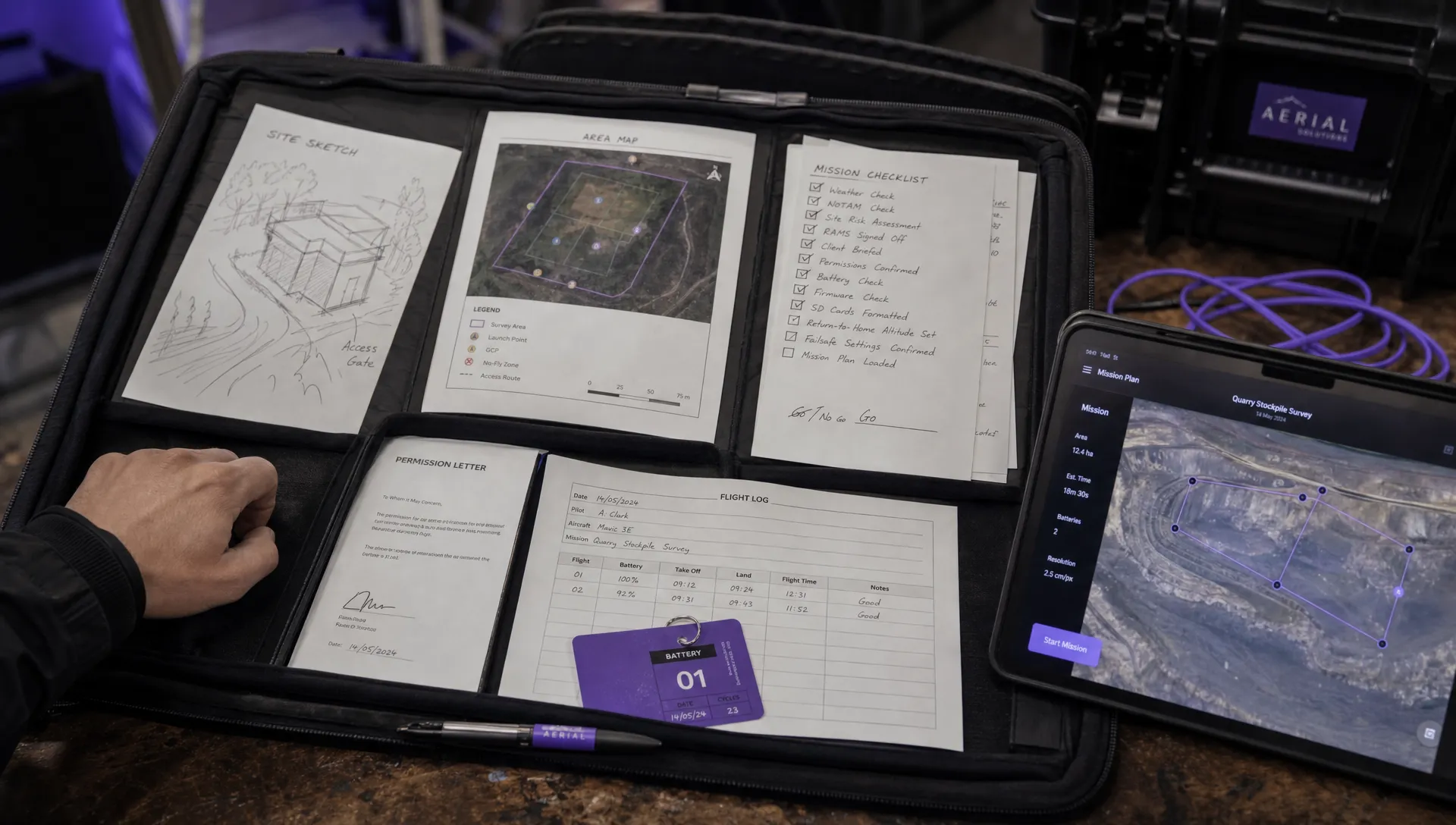 How to Create a Drone Job Pack for Every Mission →
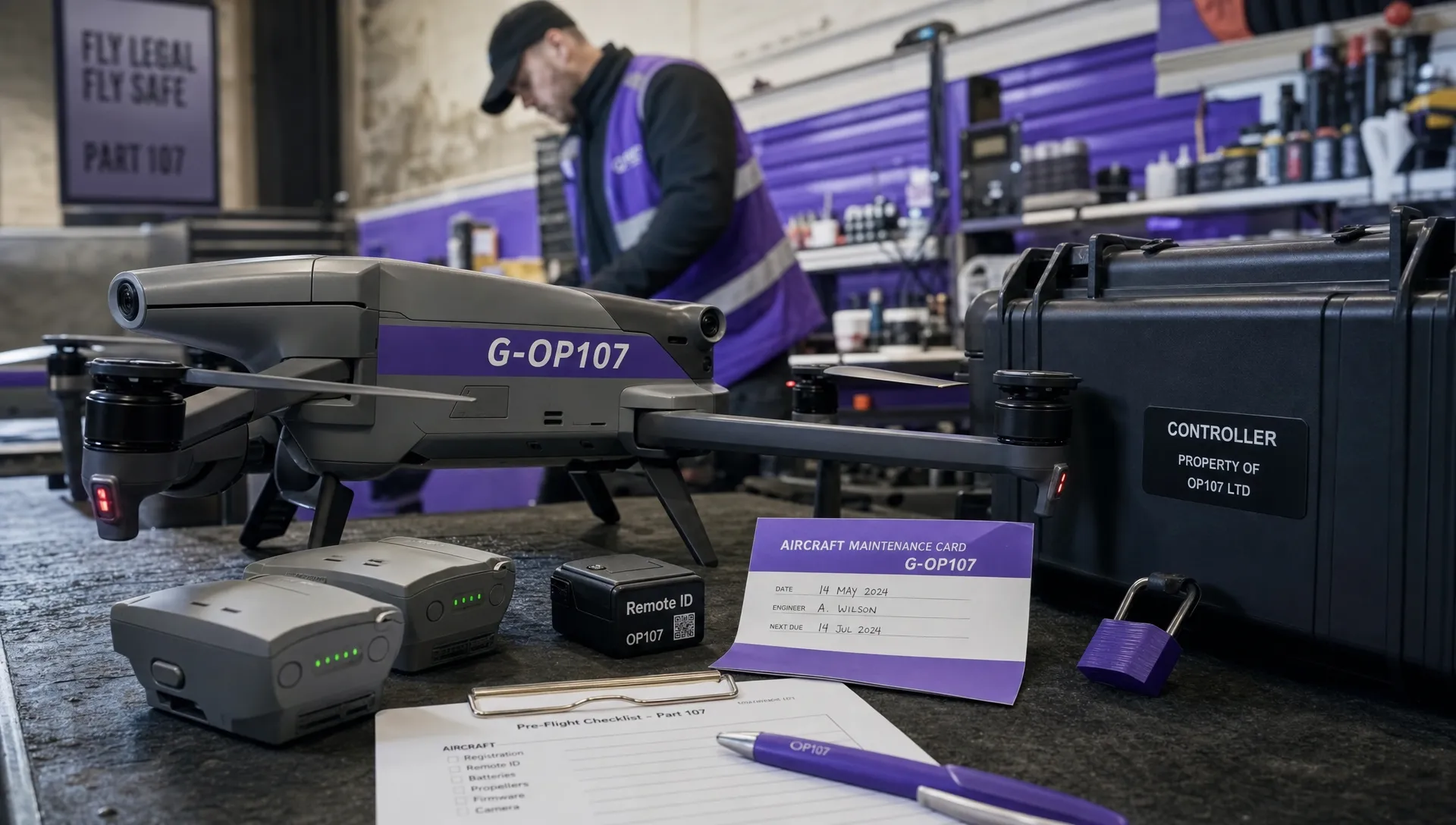 FAA Small UAS Rule: Key Requirements for Operators →
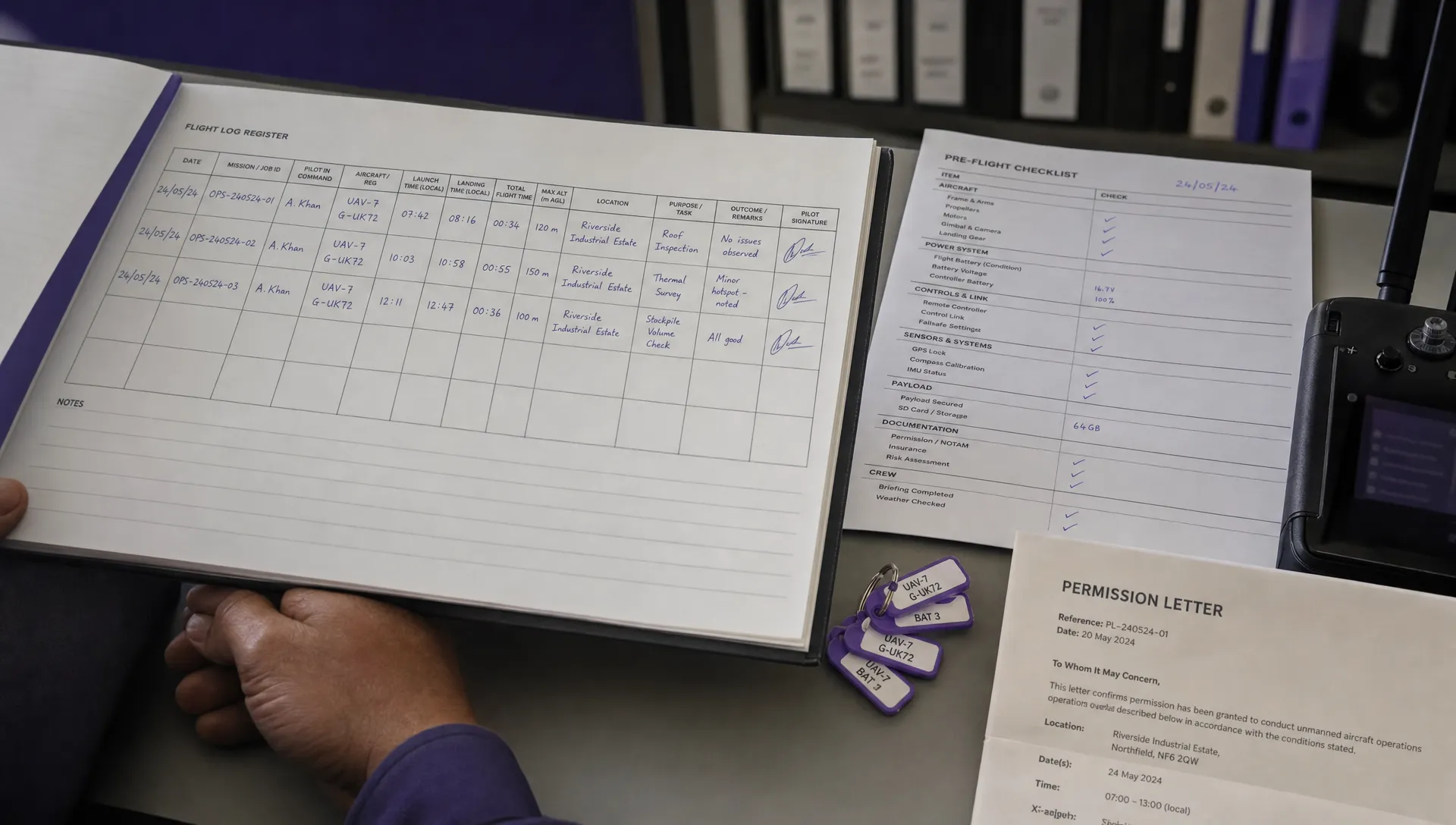 How to Build a Drone Pilot Flight Log That Is Audit Ready →
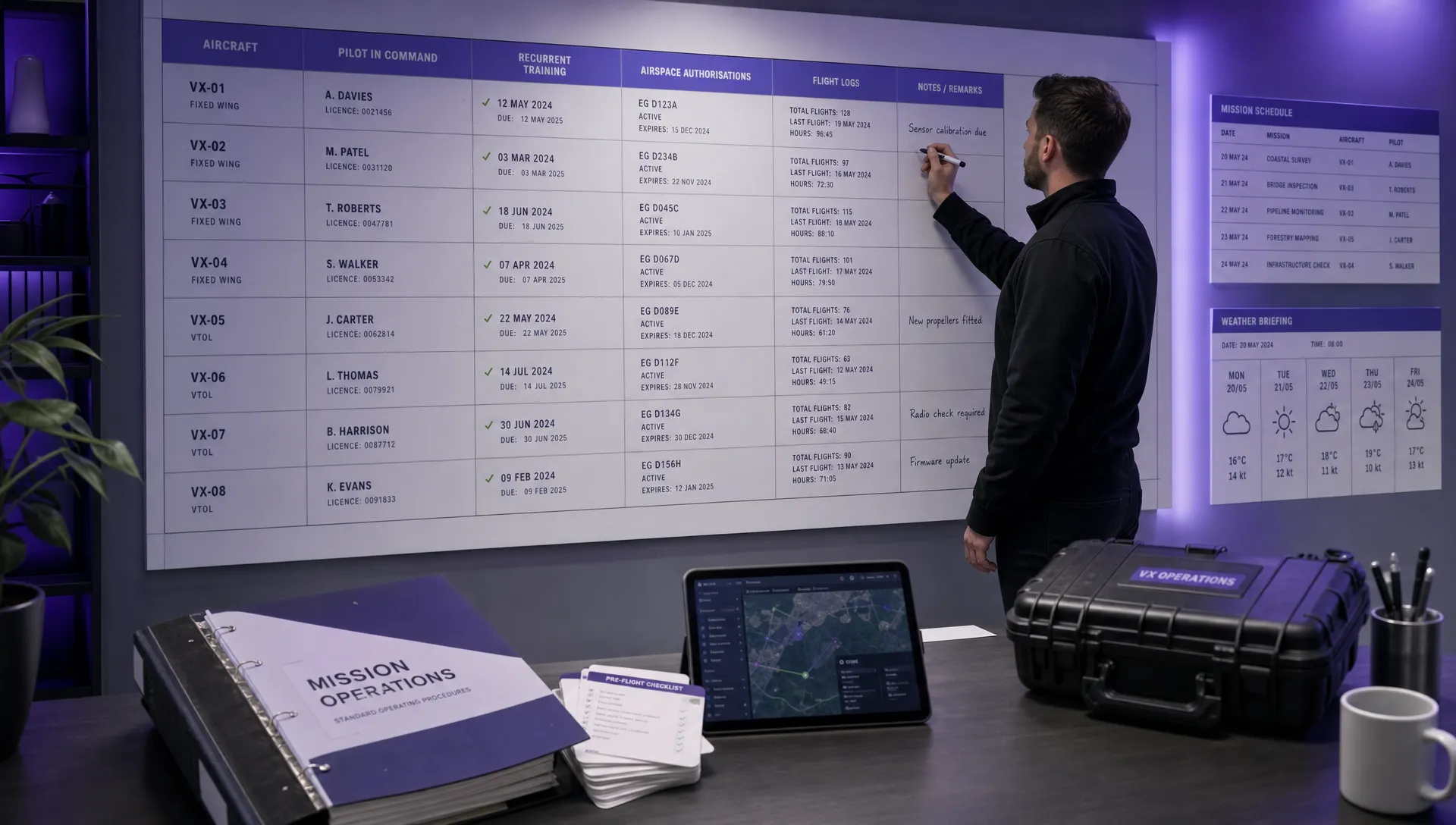 FAA Drone Licence Requirements for Commercial Pilots →
 FAA BVLOS Waivers Granted: What Successful Cases Show →