
Commercial Drone Licence: What Operators Need to Know
If you are planning to earn money with a drone in the UK, the first thing to understand is that a commercial drone licence is not a single document you buy once and forget. It is a combination of CAA registration, pilot competency, operational permissions, insurance, safe procedures and good records.
That distinction matters. A low-risk paid job may be legal in the Open category without a separate CAA Operational Authorisation. A higher-risk job for the same client, perhaps close to uninvolved people, near controlled airspace or beyond the Open category limits, may require a formal authorisation and a more detailed safety case.
In other words, the question is not just whether the flight is commercial. The real question is: what are you flying, where are you flying, how are you flying, and what risk does the operation create?
Is a commercial drone licence actually required in the UK?
Many operators still use the phrase commercial drone licence, and some search for commercial drone license using the US spelling. In the UK, however, the Civil Aviation Authority no longer regulates drone work simply by asking whether you are being paid.
The old Permission for Commercial Operations, commonly known as PfCO, has been replaced by the current unmanned aircraft system framework. Today, drone flights are mainly organised into the Open, Specific and Certified categories. The category determines what you need before you fly.
The CAA drone guidance should always be your primary source for current rules, because requirements can change and your authorisation conditions may be specific to your operation. The Drone and Model Aircraft Code is also essential reading for every remote pilot, including experienced commercial operators.
For professional work, the practical answer is usually this: you need the right registration, the right competency, the right insurance and, where your operation falls outside the Open category, the right CAA Operational Authorisation.
The three operating categories explained
The UK framework is risk-based. A simple rural flight with a lightweight drone is treated differently from a complex inspection near infrastructure, emergency response activity in a busy area or any operation involving higher levels of air and ground risk.
| Category | Typical use | CAA authorisation needed before flight? | What operators should check |
|---|---|---|---|
| Open | Lower-risk flights within set limits, usually visual line of sight and away from higher-risk situations | No, if all Open category rules are met | Drone weight or class, subcategory, distance from uninvolved people, airspace restrictions and maximum height |
| Specific | Operations that exceed Open category limits or present higher risk | Yes, normally via an Operational Authorisation | Remote pilot competency, operations manual, risk assessment, procedures, mitigations and authorisation conditions |
| Certified | Highest-risk operations, closer to crewed aviation standards | Yes, with more demanding certification requirements | Aircraft certification, operator certification and pilot licensing requirements where applicable |
Most commercial drone operators work in the Open or Specific category. The Certified category is not where the average survey, media, roof inspection, utility inspection or public safety drone operation starts, but it becomes relevant as operations become more complex and risk resembles crewed aviation.
What most commercial operators need before taking on paid work
A professional operator should build compliance around the operation, not around a generic idea of commercial flying. The following elements are the foundation.
Registration: Operator ID and Flyer ID
In the UK, most drone operators need to register with the CAA. The Operator ID identifies the person or organisation responsible for the drone. The Flyer ID confirms that the remote pilot has passed the basic online test where it is required.
For commercial teams, registration should be managed centrally. If a survey company, utility contractor or emergency services unit operates multiple aircraft and pilots, it should be clear who owns each aircraft, who is responsible for keeping details current and which pilots are authorised to fly which drones.
Pilot competency: Flyer ID, A2 CofC and GVC
The minimum competency depends on the aircraft and category of flight. A Flyer ID may be enough for some Open category operations, but many professional operators go further.
The A2 Certificate of Competency, or A2 CofC, is commonly used for certain Open category operations where the pilot wants more flexibility around distances from uninvolved people, subject to the applicable rules. The General Visual Line of Sight Certificate, or GVC, is commonly used as evidence of remote pilot competence when applying for a Specific category Operational Authorisation.
Training is not just a paperwork exercise. A good pilot should understand airspace, human factors, emergency procedures, battery management, weather limitations, privacy, site control and how to make conservative decisions under client pressure.
Operational Authorisation for Specific category work
If your proposed flight cannot be carried out within the Open category, you will normally need a CAA Operational Authorisation before flying. This is where many people are really pointing when they ask about a commercial drone licence.
An Operational Authorisation sets out what you are allowed to do and under what conditions. You may need an operations manual, risk assessments, defined procedures, pilot competency evidence and documented mitigations. The authorisation is not a blanket permission to fly anywhere at any time. It must be read carefully and applied to each job.
Examples that may push an operation towards the Specific category include flights close to uninvolved people, more complex operating environments, certain infrastructure inspections, higher-risk sites or operations that cannot remain within Open category limitations.
Insurance for commercial drone work
Commercial drone operators should not treat insurance as optional. If you are flying for work, you will typically need aviation insurance that meets the applicable legal requirements, and many clients will also require evidence of public liability cover before issuing a purchase order.
Depending on the type of work, you may also need to consider professional indemnity, equipment cover, employer responsibilities and contractual requirements. Utility companies, public sector buyers, construction firms and emergency services partners often have specific insurance thresholds and evidence requirements.
Site permissions, airspace approvals and local restrictions
CAA compliance is only one part of lawful operation. You may also need landowner permission for take-off and landing, air traffic control approval inside a Flight Restriction Zone, permission from site management, coordination with security teams and awareness of local restrictions.
A safe flight plan should confirm airspace, ground hazards, nearby aerodromes, temporary restrictions, NOTAMs where relevant, obstacles, public access, emergency landing options and communication arrangements. For professional work, these checks should be recorded rather than left as informal judgement.
Which route is right for your operation?
The right route depends on the job profile. The table below gives practical examples, but it is not a substitute for checking the rules against your exact aircraft, location and method of work.
| Example operation | Likely starting point | Why |
|---|---|---|
| Rural land photography with a small drone, away from uninvolved people | Open category may be possible | Risk can be low if all Open category limits are met |
| Construction progress survey on an active site | Open or Specific, depending on site control and proximity to people | A controlled site may reduce risk, but people, plant and access routes need careful management |
| Roof inspection on a busy high street | Specific category is often likely | Proximity to uninvolved people and urban hazards may exceed Open category limits |
| Utility corridor inspection | Open or Specific, depending on location and method | Linear infrastructure, roads, railways, property access and airspace can complicate the operation |
| Emergency services deployment | Usually governed by organisational procedures and authorisations | Time pressure increases the need for clear training, command processes and auditable records |
The key is to avoid assuming that a previous job proves the next one is compliant. Two flights using the same drone can fall into different categories if the location, people, airspace or method changes.
Operational planning beyond the licence
A commercial drone licence, qualification or authorisation is only useful if the actual operation is planned properly. Clients rarely just want a legal pilot. They want a reliable operator who can arrive prepared, manage risk and produce evidence if challenged.
Professional planning should consider the whole job, including the client brief, data outputs, access arrangements, weather windows, site induction, crew responsibilities, contingency plans and post-flight records. For survey companies and utility teams, repeatable planning processes are especially important because small omissions can multiply across dozens or hundreds of flights.
Crew welfare is part of safe planning too. If pilots are travelling for multi-day infrastructure surveys, remote inspections or mutual aid deployments, fatigue and logistics should be considered alongside airspace and weather. Booking suitable accommodation in advance through reputable services offering hotel booking deals can be a practical part of keeping travelling crews rested and operationally ready.
Data protection also matters. If your drone captures identifiable people, vehicles, homes or workplaces, UK GDPR and privacy considerations may apply. This is particularly relevant for media work, inspection in residential areas, public safety deployments and long-duration monitoring tasks. A professional operator should know what is being captured, why it is needed, who will access it and how it will be stored.
Records commercial drone operators should keep
Good records are what turn compliance from a claim into evidence. If a client, insurer, auditor or regulator asks how a flight was planned and conducted, you should be able to show a clear trail.
Useful records include:
- CAA registration details and Operator ID evidence.
- Pilot competency documents, such as Flyer ID, A2 CofC or GVC where relevant.
- Operational Authorisation and operations manual, if operating in the Specific category.
- Site-specific risk assessments and method statements.
- Airspace checks, permissions, landowner approvals and client instructions.
- Aircraft, battery, maintenance and defect records.
- Flight logs, incident records and post-flight notes.
For a solo operator, this helps protect the business. For a growing team, it becomes essential. Once you have multiple pilots, aircraft, clients and repeat sites, spreadsheets and folders can quickly become difficult to control.
Common mistakes to avoid
One of the most common mistakes is assuming that paid work automatically requires a separate CAA permission. Sometimes it does not. The opposite mistake is more dangerous: assuming that because payment is not the deciding factor, commercial operations can be treated casually. They cannot.
Another common issue is relying on a pilot qualification without checking the operating category. An A2 CofC or GVC is valuable, but it does not override airspace restrictions, authorisation conditions or site-specific risk. Competence and permission are related, but they are not the same thing.
Operators also get caught out by poor version control. If an operations manual, pilot list, fleet record or checklist is out of date, the organisation may struggle to prove that the flight was conducted under current procedures. This is especially important for utilities, survey firms and emergency services, where operational tempo can be high and several people may be involved in the same workflow.
Finally, do not let client pressure dictate the rules. A client may ask for a flight at short notice, in poor weather, near people or in restricted airspace. A professional operator knows when to pause, re-plan, seek permission or decline the task.
How Dronedesk supports compliant commercial operations
Obtaining the right authorisation is only the start. The day-to-day challenge is applying it consistently across real jobs, real pilots and real aircraft.
Dronedesk is an all-in-one web platform for drone operations management and flight planning. Its features include client management, fleet management, team management, airspace intelligence, proximity intelligence, flight planning, flight logging, data reporting, configurable checklists and risk assessments.
That combination is useful because commercial drone compliance is rarely one isolated task. A job may start as a client enquiry, become a planned flight, require a risk assessment, involve a particular pilot and aircraft, generate logs, and later need to be evidenced for audit, renewal, client review or insurance purposes.
Dronedesk does not replace CAA approval, training or legal responsibility. It helps operators organise the workflows and records that sit around those obligations, which is where many commercial teams lose control as they scale.
Frequently Asked Questions
Do I need a commercial drone licence to make money with a drone in the UK? Not automatically. UK drone rules are based on operating risk rather than whether you are paid. You may be able to fly commercially in the Open category if you meet all the rules, but higher-risk work normally requires a CAA Operational Authorisation.
What replaced the PfCO? The old Permission for Commercial Operations is no longer the standard route for new commercial drone work. Operators now work within the Open, Specific or Certified category framework, with Operational Authorisation required for Specific category operations.
What is the difference between an A2 CofC and a GVC? The A2 CofC supports certain Open category operations, subject to the aircraft and operating rules. The GVC is commonly used as evidence of remote pilot competency when applying for a Specific category Operational Authorisation.
Can I fly commercially in the Open category? Yes, if the operation stays fully within Open category rules. You still need the right registration, competency where required, insurance for commercial work and proper planning. The fact that a flight is paid does not by itself move it into the Specific category.
What insurance do commercial drone operators need? Commercial operators typically need aviation insurance that meets applicable legal requirements, and clients may ask for specific public liability limits. Depending on the work, you may also need other cover such as professional indemnity.
What records should I keep for commercial drone operations? Keep evidence of registration, pilot competency, authorisations, risk assessments, airspace checks, permissions, aircraft maintenance, battery records, flight logs and incidents. Good records are essential for audits, renewals, client assurance and internal safety management.
Bring your commercial drone operations under control
A commercial drone licence is only one part of operating professionally. The real standard is whether you can plan safely, fly within the rules and prove what happened afterwards.
If you manage drone work for surveys, utilities, emergency services or a growing operator team, Dronedesk gives you one place to manage planning, risk assessments, checklists, fleet details, team records and flight logs.
Explore how Dronedesk can support safer, more organised commercial drone operations at dronedesk.io.
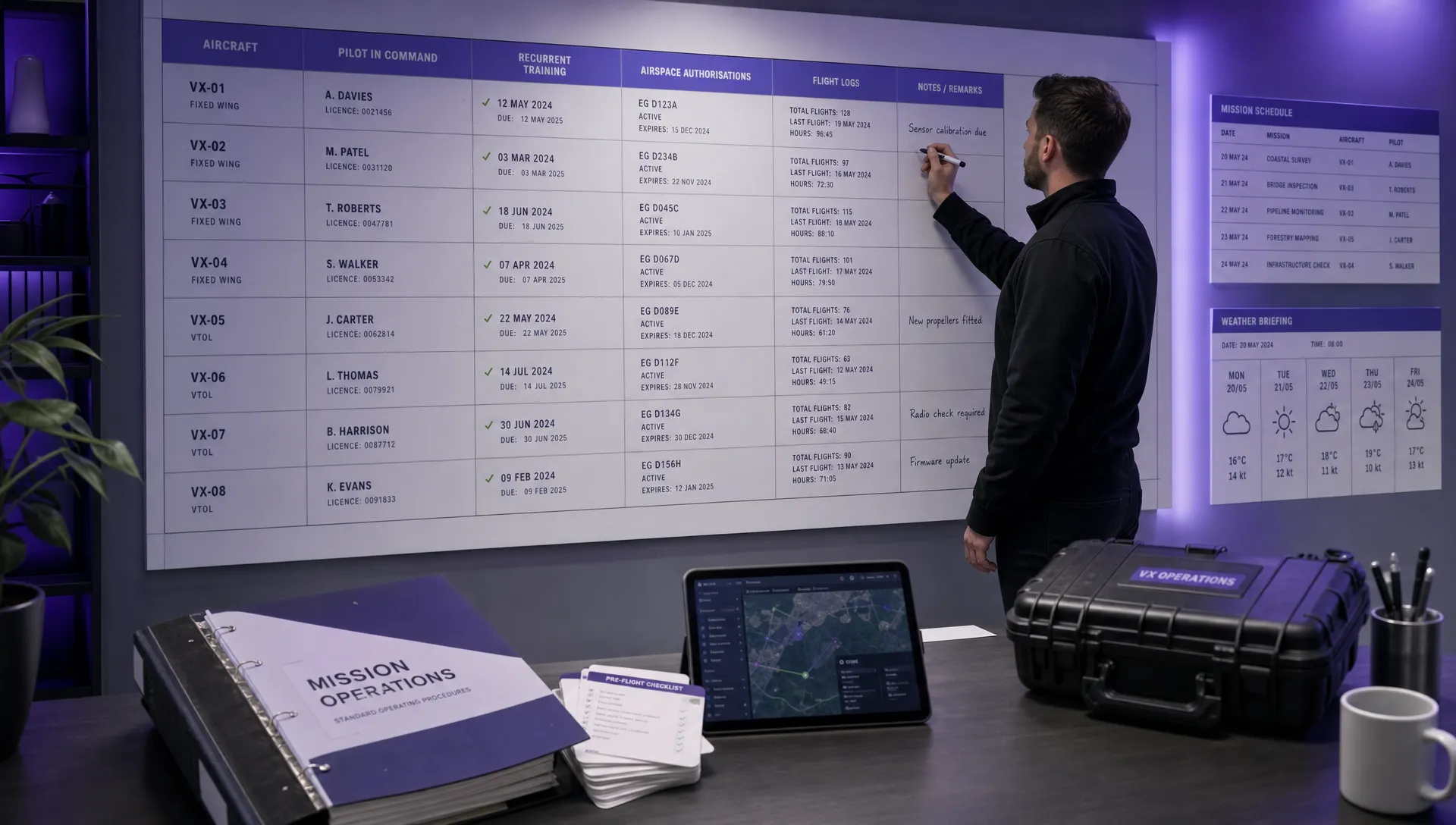 FAA Drone Licence Requirements for Commercial Pilots →
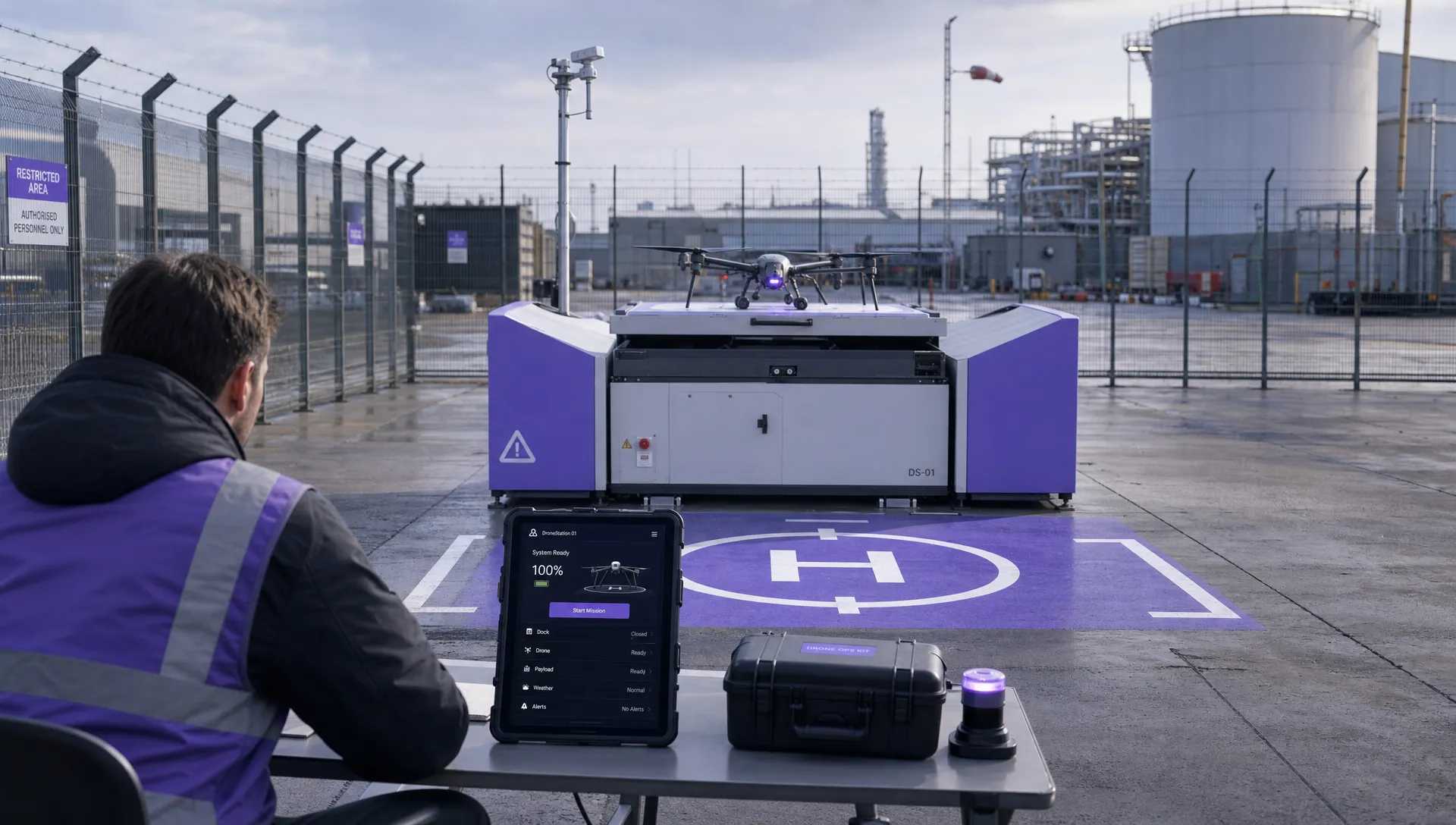 FAA BVLOS Waivers Granted: What Successful Cases Show →
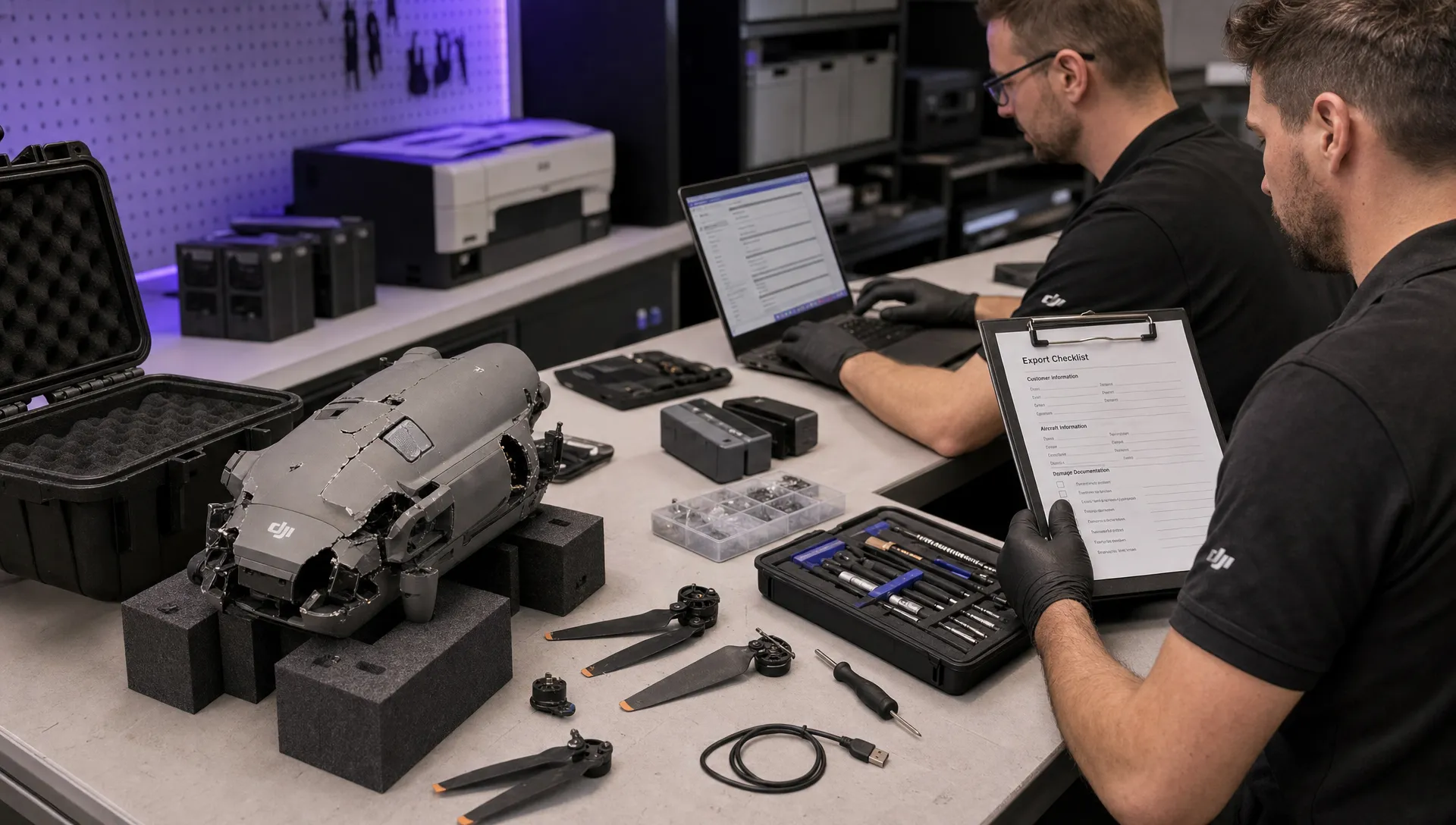 How to Export DJI Flight Logs for Incident Reviews →
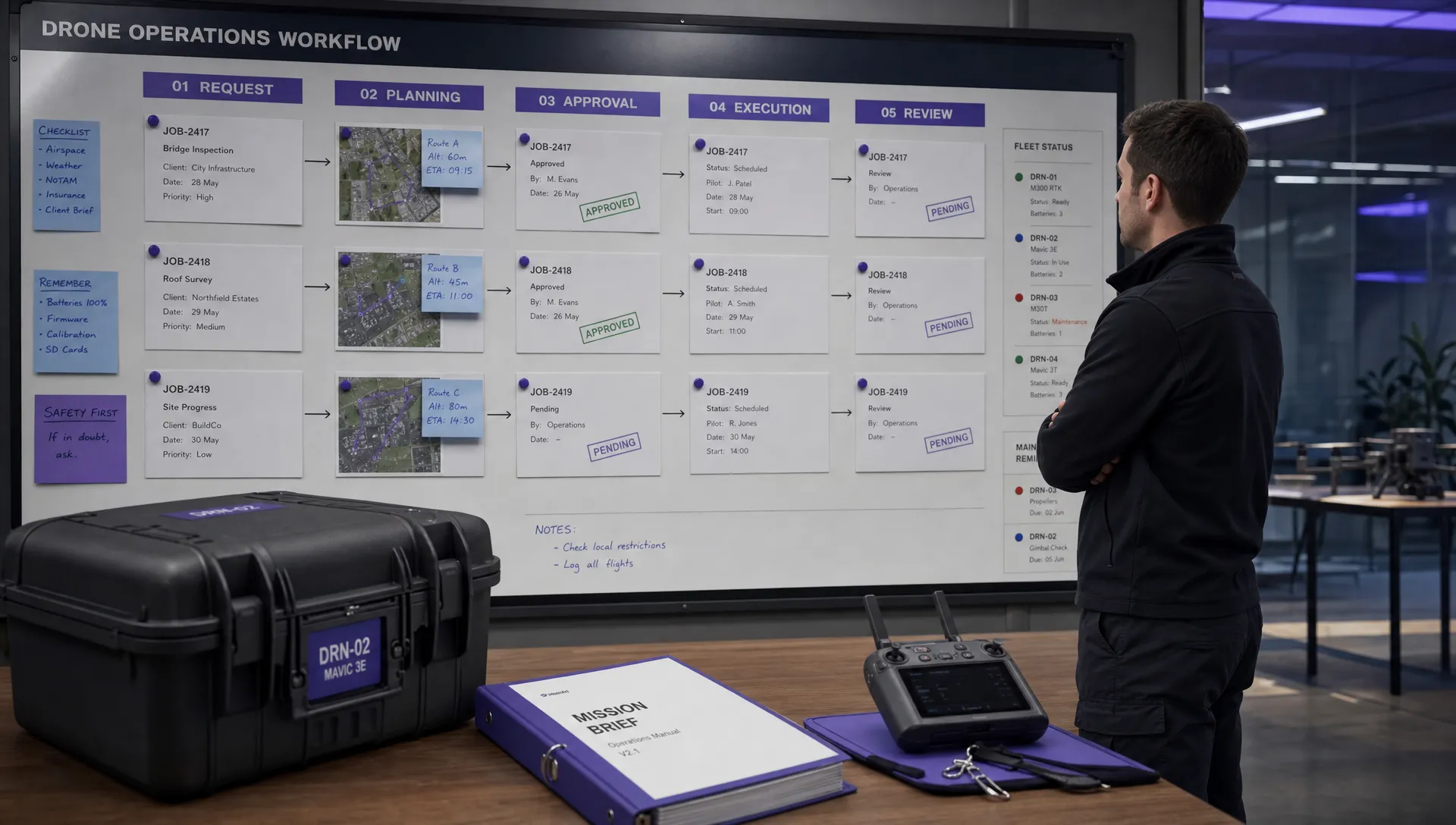 Drone Safety and Legal Duties for Business Operations →
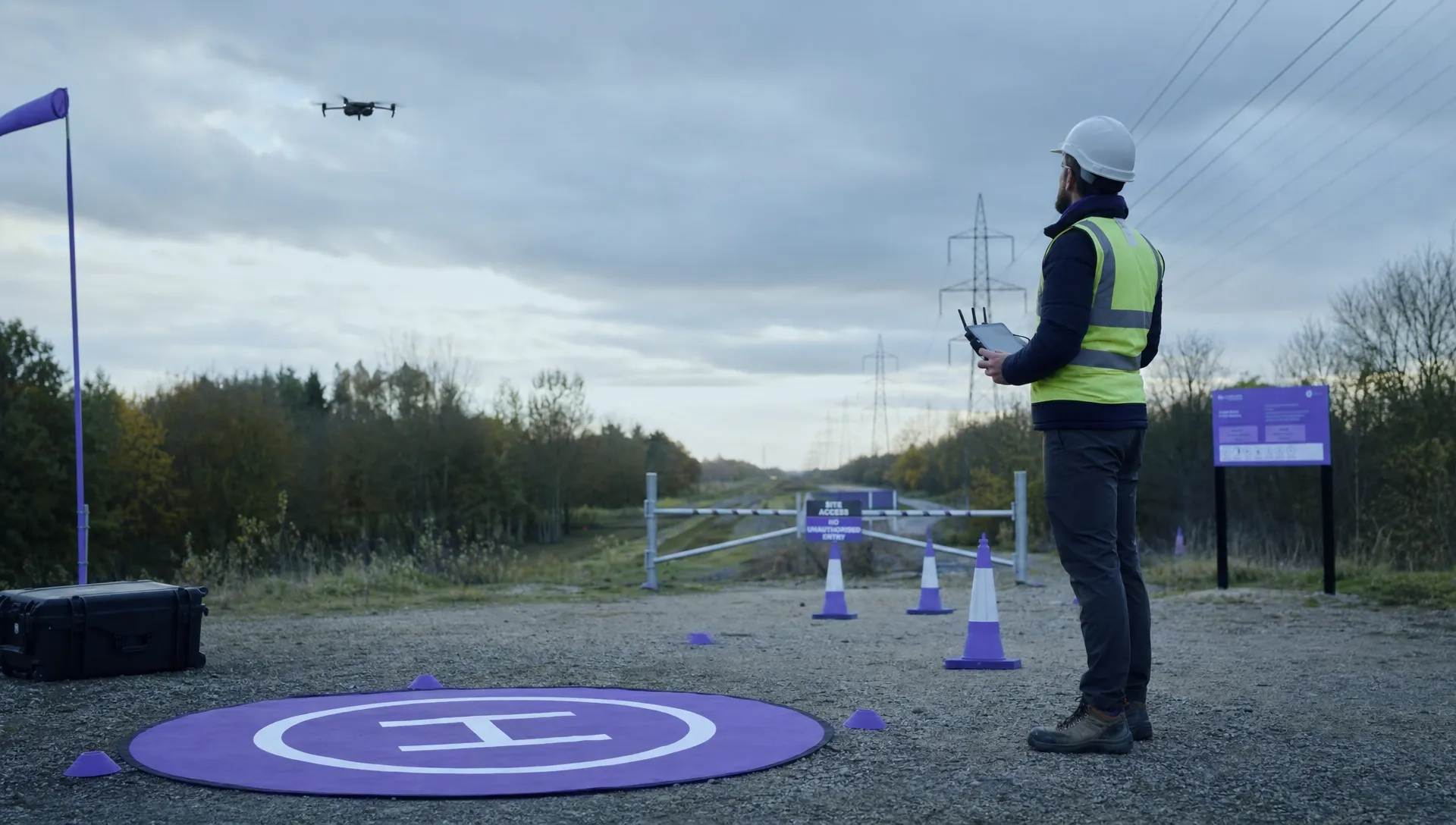 EASA Drone Regulations: Open, Specific and Certified Categories →
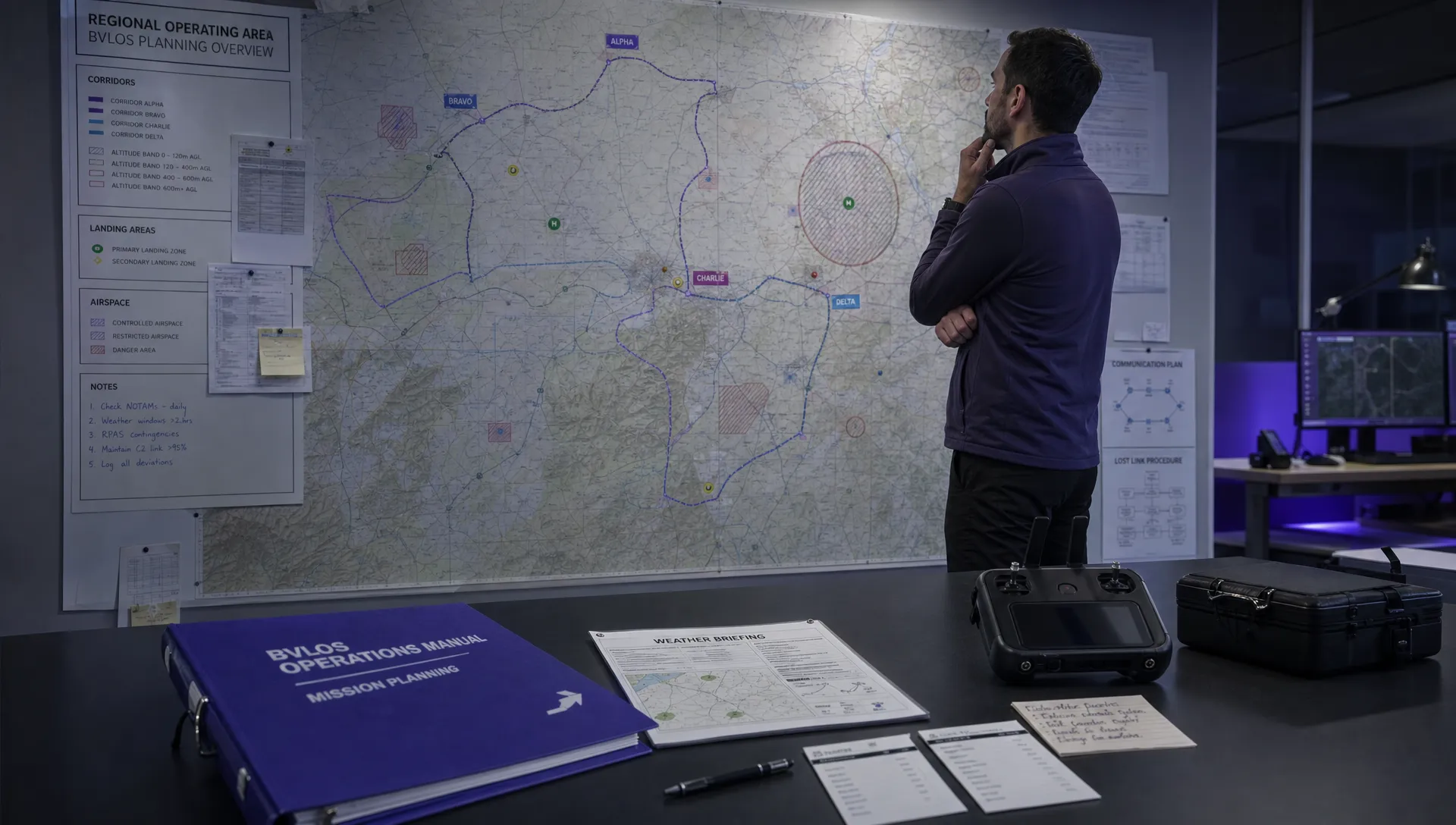 What the BVLOS ARC Report Means for UAS Operators →
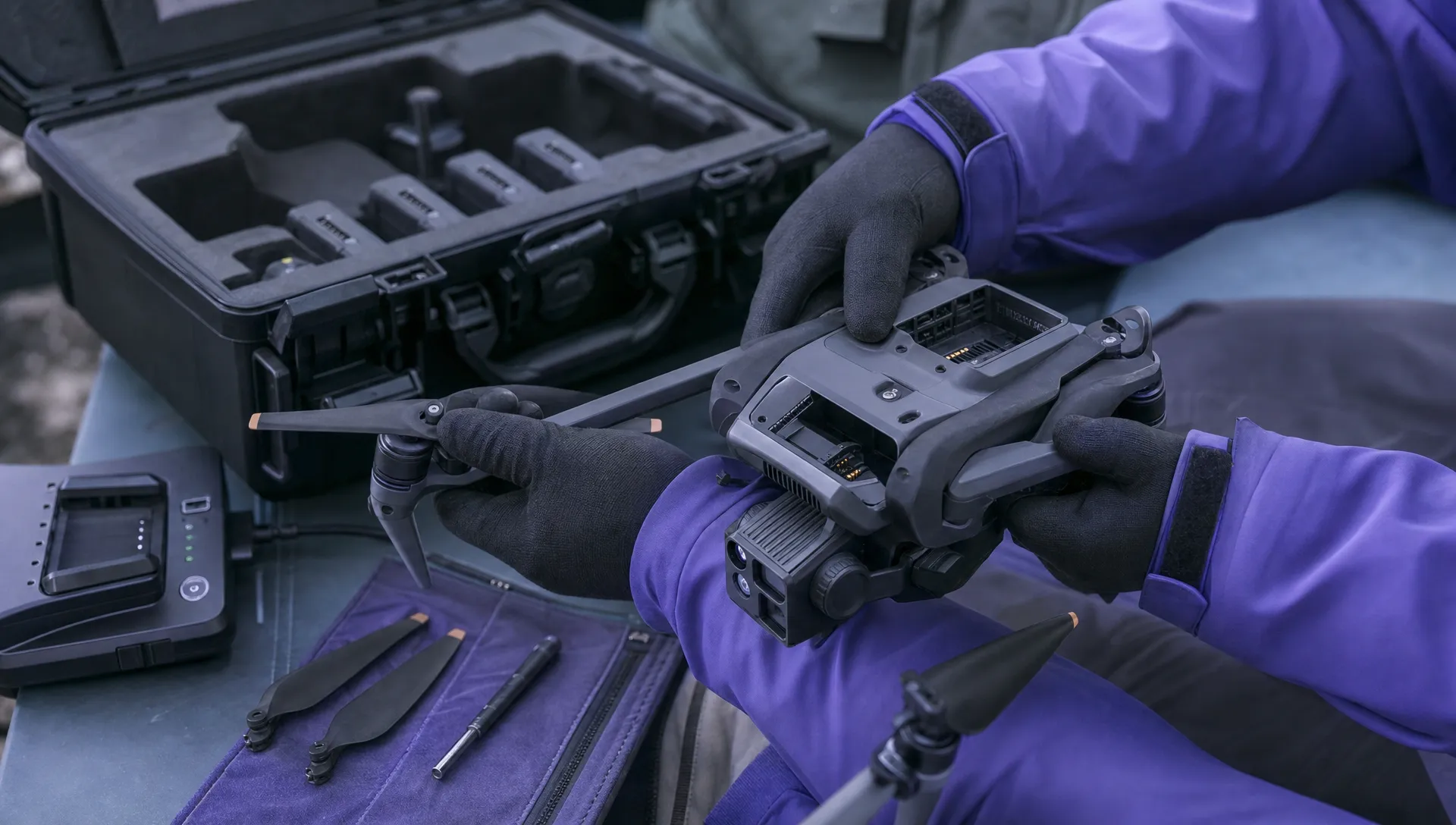 Free Drone Pre-Flight Checklist for Commercial Missions →
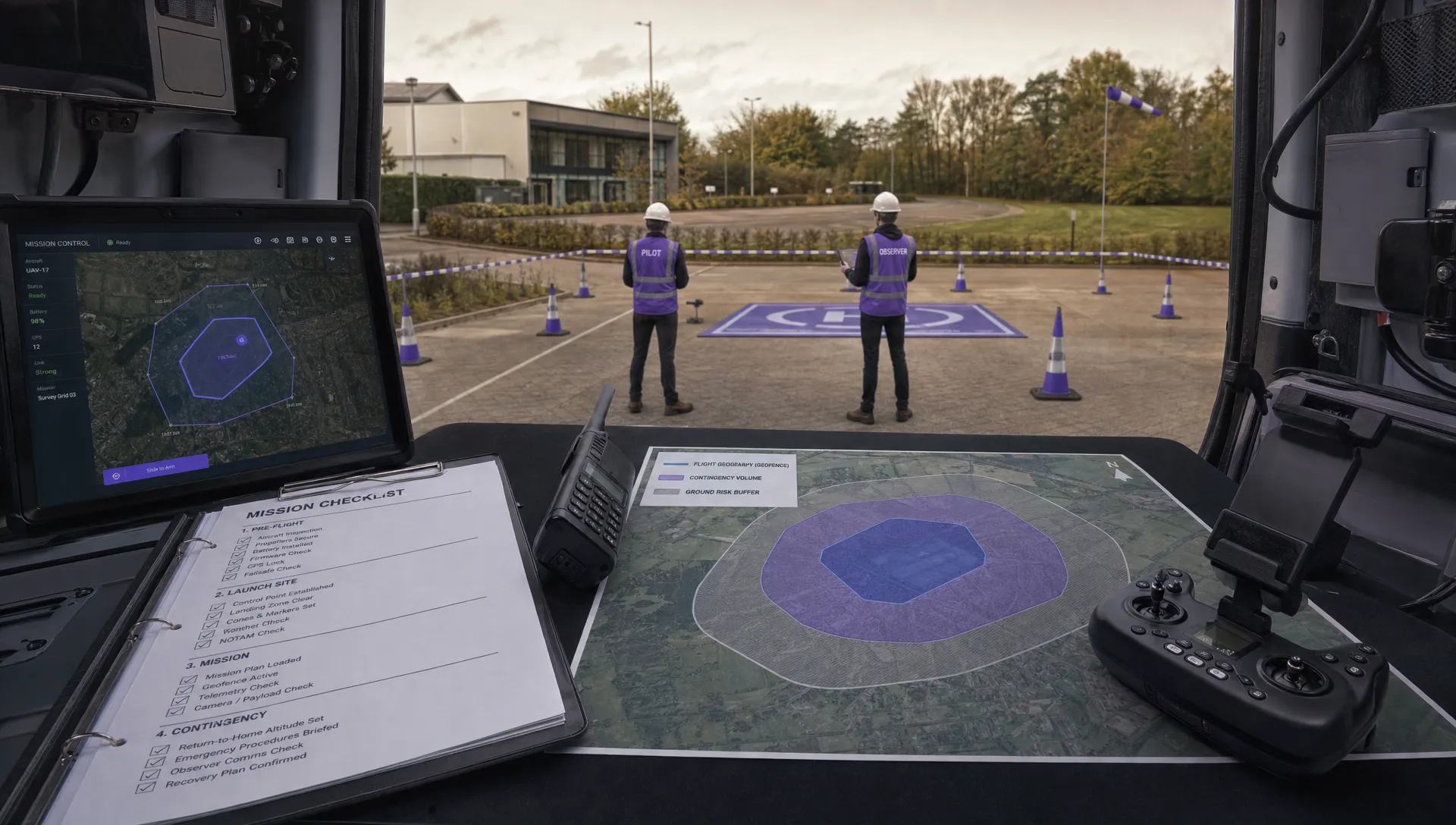 Contingency Volume and Flight Risk Buffer Explained →
 FAA Policy Changes That Commercial Drone Teams Should Track →
 Drone Night Flying Rules and Pre-Flight Checks →