
How to Win More Work as a Drone Service Provider
Winning more work as a drone service provider is rarely about having the newest aircraft, the sharpest showreel, or the lowest day rate. Those things can help, but they do not usually win the job on their own.
Clients buy confidence. They want to know you understand their problem, can operate safely, will deliver usable data or media, and will not create avoidable delays, compliance issues, or admin headaches. That applies whether you are pitching to a construction firm, estate agent, utility company, survey practice, emergency service, local authority, quarry operator, or creative agency.
The opportunity is still strong. Drones are now a proven tool for inspection, mapping, monitoring, search operations, marketing, and asset management. At the same time, buyers are more informed than they were a few years ago. Many have already used drones, compared suppliers, or had a disappointing experience with an operator who over-promised and under-delivered.
So, how do drone service providers stand out and win better work without racing to the bottom on price? The answer is to sell outcomes, build trust before the quote, and run your operation like a professional service business.
Start by selling the result, not the drone
A common mistake is leading with equipment: aircraft models, sensor specs, flight time, camera resolution, or the fact that you are CAA authorised. These details matter, but they are rarely the buyer’s first concern.
A facilities manager is not buying a drone inspection. They are buying faster roof condition evidence with less scaffolding and fewer safety risks. A construction director is not buying aerial images. They are buying progress visibility, stakeholder confidence, and documentation they can use in meetings. A utility company is not buying flight hours. It is buying safer, more efficient asset inspection.
Your messaging should connect your service to the commercial, operational, or safety outcome the buyer cares about. Instead of saying “we provide drone surveys”, say “we help asset managers inspect hard-to-reach structures safely and produce clear evidence for maintenance decisions.”
That shift changes the conversation. You stop competing as a commodity pilot and start positioning yourself as a specialist who solves a specific problem.
Choose a niche before you try to win everyone
It is tempting to market yourself as a provider for every possible drone job: property photos, weddings, construction, agriculture, mapping, inspections, events, film, emergency support, and more. But broad positioning often makes you harder to trust.
Specialist buyers want to see that you understand their world. A survey company wants to know you understand accuracy, ground control, deliverables, and repeatable workflows. A quarry operator wants to see evidence of safety, access control, site hazards, and operational planning. A public sector buyer wants assurance around governance, records, and risk management.
You do not need to serve only one sector forever. But your website, outreach, case studies, and proposals should be focused enough that each buyer thinks, “This provider understands our problem.”
| Target market | What they usually care about | Strong positioning angle |
|---|---|---|
| Construction and infrastructure | Progress tracking, safety, stakeholder reporting | Reliable site intelligence delivered on a repeatable schedule |
| Survey companies | Accuracy, data quality, turnaround, integration with existing workflows | Aerial data capture that supports professional survey deliverables |
| Utilities and energy | Asset access, compliance, safety, scale | Safer inspections and centralised operational records across sites |
| Emergency services | Speed, coordination, evidence, auditable records | Rapid deployment with structured planning and incident-ready logs |
| Property and marketing | Visual impact, speed, licensing, local knowledge | Professional aerial content that helps listings and campaigns stand out |
| Agriculture and land management | Coverage, repeat visits, environmental conditions | Practical aerial insight for monitoring, planning, and operational decisions |
The best niche for you depends on your skills, permissions, equipment, geography, and existing relationships. If you have a surveying background, lean into it. If you know construction, build around that. If you have strong creative experience, focus your portfolio on campaigns, property, and production work.
Build proof that reduces buyer risk
Most clients do not want to be your experiment. They want to see evidence that you can deliver the job safely and professionally.
A strong proof system includes more than a gallery of impressive images. It should show your process, outputs, and reliability. For technical clients, sample deliverables are often more persuasive than cinematic clips. For creative clients, a polished reel and campaign examples matter more. For enterprise buyers, documentation and governance can be the deciding factor.
Useful proof assets include:
- A short sector-specific case study showing the client problem, your method, and the result.
- Example reports, maps, inspection images, edited media, or data outputs with sensitive details removed.
- Testimonials that mention reliability, communication, safety, or business impact.
- A simple explanation of your planning, risk assessment, and flight logging process.
- Evidence of relevant permissions, insurance, training, and experience.
If you are new and do not yet have paid case studies, create credible demonstration projects. For example, produce a mock construction progress report using an accessible site where flight is permitted, or create a sample roof inspection workflow using your own property or a consenting local business. The key is to make the buyer feel the experience of working with you before they commit.

Turn compliance into a sales advantage
For serious clients, compliance is not a box-ticking exercise. It is part of procurement risk. If your proposal leaves uncertainty around airspace, permissions, risk assessments, insurance, pilot competence, or record keeping, you make it harder for the buyer to say yes.
In the UK, operators and clients should understand the relevant legal framework and safety requirements. The Civil Aviation Authority’s drone guidance is a useful starting point for understanding responsibilities, categories of operation, and safe use of unmanned aircraft.
But your job is not simply to tell clients that you are compliant. Your job is to make compliance visible and reassuring.
Before a client asks, be ready to explain how you handle:
- Site and airspace checks.
- Risk assessments and method statements.
- Pre-flight checklists.
- Pilot and equipment records.
- Flight logs and post-flight documentation.
- Permissions, notifications, and stakeholder communication where required.
This is especially important when selling to utilities, emergency services, public sector organisations, construction companies, and large landowners. These buyers often need to justify supplier selection internally. Clear documentation helps your contact defend the decision to hire you.
Make your website work harder
Your website should answer the questions a buyer has before they contact you. Too many drone websites look impressive but fail to explain who the service is for, what outcomes are delivered, and why the provider is a safe choice.
A high-converting drone service website needs five core elements: a clear niche, service pages matched to buyer intent, trust signals, strong examples, and an easy next step.
For example, “Drone Services” is too broad as a main page. A better structure might include pages such as “Drone Roof Inspections for Commercial Buildings”, “Drone Progress Monitoring for Construction Sites”, or “Aerial Survey Support for Land Surveyors.” Each page should explain the problem, the process, deliverables, typical use cases, and what the buyer should do next.
Look at how other professional service businesses build trust online. Local specialists often make their offer clear, show credibility, and invite low-friction enquiries. For instance, a service business such as Tracey Warren Nutritionist in Nantwich, Cheshire uses a clear local proposition, service explanations, testimonials, and consultation calls to reduce hesitation. Drone operators can apply the same principle: make the value obvious, prove you are credible, and make the next step easy.
Your website does not need to be complex. It needs to be specific, trustworthy, and useful.
Create a lead generation system, not random bursts of outreach
Winning more work consistently requires a simple pipeline. You need to be visible when buyers are searching, present when they are planning future projects, and memorable when a need arises.
For many drone service providers, the best lead sources are local search, sector partnerships, repeat clients, LinkedIn, referrals, and direct outreach to organisations with recurring inspection, mapping, or media needs.
A practical lead generation system might include:
- Publishing one detailed service page for each target sector.
- Updating your Google Business Profile with services, images, areas covered, and reviews.
- Building relationships with surveyors, roofing contractors, engineers, estate agents, marketing agencies, and health and safety consultants.
- Sending targeted outreach that references a real operational problem, not a generic “we offer drone services” message.
- Following up past clients with seasonal or scheduled inspection ideas.
- Turning every successful project into a short case study or testimonial request.
The follow-up is where many operators lose work. A buyer who says “not right now” may have a project in three months. A construction firm may not need you today but may need monthly progress captures once the next site starts. A facilities manager may be gathering quotes now for budget approval later.
Use a basic CRM process, even if it is simple. Track who you contacted, what they care about, when to follow up, and what content or proof would help them make a decision.
Quote for value, not just flight time
If your quote is built only around flight hours, you invite the client to compare you directly against cheaper operators. A professional quote should make the full scope of value visible.
That includes planning, airspace checks, risk assessment, travel, site coordination, data capture, processing, editing, reporting, revisions, insurance, equipment, pilot expertise, and record keeping. The drone may be in the air for 40 minutes, but the professional service surrounding that flight is what makes the job safe and useful.
Where appropriate, offer tiered options. This helps buyers choose based on value rather than simply accepting or rejecting a single price.
| Package type | Best for | What to include |
|---|---|---|
| Essential | Simple, low-risk jobs | Flight planning, safe data capture, basic edited outputs or files |
| Professional | Most commercial work | Planning, risk documentation, defined deliverables, reporting, revisions |
| Managed programme | Repeat or multi-site clients | Scheduled flights, standardised reporting, asset records, regular review meetings |
Be careful with discounting. A small reduction may win a one-off job, but repeated discounting trains clients to see your work as interchangeable. Instead, adjust scope. If the budget is limited, reduce deliverables, turnaround speed, editing time, or reporting depth rather than quietly absorbing the cost.
Respond faster without cutting corners
Speed wins work, especially when the client has an urgent inspection, a weather window, a media deadline, or a construction milestone. But speed cannot come at the cost of safety and compliance.
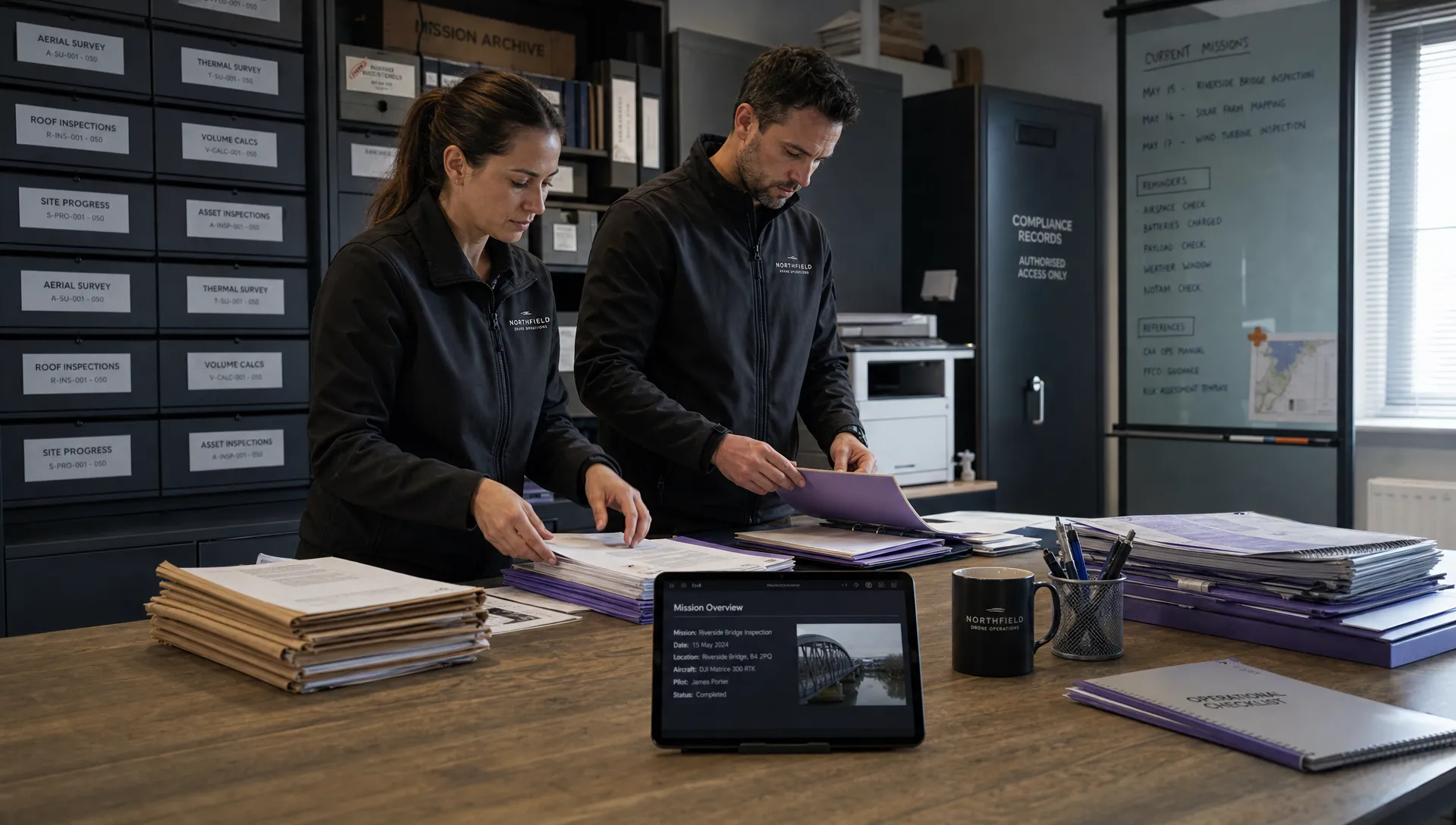
This is where operational systems make a commercial difference. If your planning, checklists, risk assessments, asset records, and flight logs are scattered across spreadsheets, folders, email threads, and paper forms, every new enquiry creates friction. You may delay the quote, miss a follow-up, or spend too long rebuilding similar documentation from scratch.
Dronedesk is designed for exactly this operational layer. It is an all-in-one web platform for drone operators, with tools for client management, fleet management, team management, airspace intelligence, proximity intelligence, flight planning, flight logging, data reporting, configurable checklists, and risk assessments. You can explore the platform’s capabilities on the Dronedesk features page.
The commercial benefit is not just tidier admin. It is the ability to look more professional, respond with confidence, and maintain the records clients expect. In Dronedesk’s published case studies, different types of operators have used structured operations management to support growth and reduce planning friction. For example, Eagle Eye Innovations reduced flight planning from three hours to 30 minutes, while Drone Evolution scaled beyond 100 flights per month after replacing spreadsheets with centralised planning and field workflows.
For a prospective client, that operational maturity is reassuring. For you, it can mean fewer duplicated tasks, fewer missed details, and more capacity to focus on winning and delivering profitable work.
Package repeat work instead of chasing one-off jobs
One-off projects are useful, but repeat work is what stabilises a drone business. It reduces your cost of sale, improves forecasting, and deepens client relationships.
Many drone services naturally lend themselves to recurring packages. Construction sites need regular progress updates. Facilities teams need periodic roof and asset inspections. Land managers may need seasonal monitoring. Marketing agencies may need ongoing content. Emergency services may need training support, exercises, or operational readiness workflows.
When a project ends, do not simply send the invoice and move on. Ask what the client will need next. Suggest a monitoring schedule. Offer a quarterly inspection plan. Create a simple retained package for ongoing aerial content or site documentation.
The best time to sell repeat work is when the client has just seen the value of the first job.
Build partnerships with people who already have your buyers’ trust
Partnerships can be more powerful than cold outreach because they borrow existing trust. Many organisations need aerial services, but they prefer to buy through a consultant, contractor, or supplier they already know.
For technical work, strong partners can include land surveyors, civil engineers, roofing contractors, environmental consultants, quantity surveyors, loss adjusters, and health and safety advisers. For creative work, partners might include video agencies, property marketing firms, event organisers, estate agents, and PR agencies.
The best partnership offer is specific. Do not just ask for referrals. Explain how you help their clients, how you protect their relationship, and how you make them look good.
For example, a survey practice may not want to build its own drone capability immediately. If you can provide reliable aerial capture, clear documentation, and consistent data handover, you become an extension of their team rather than a threat. A roofing contractor may use your imagery to quote more accurately and reduce unnecessary access risks. A marketing agency may use you as a trusted aerial specialist without hiring in-house.
Improve your proposals
A proposal is not just a price document. It is a decision-making tool. It should help the buyer understand why your approach is safe, appropriate, and worth the investment.
A strong proposal usually includes the client’s objective, your recommended method, deliverables, assumptions, exclusions, operational considerations, timeline, price, and next steps. For higher-value work, include relevant proof such as a similar project, sample output, or summary of your safety process.
Avoid vague deliverables. “Drone survey” can mean very different things to different people. Be specific about what the client receives, in what format, by when, and for what purpose.
Compare these two descriptions:
| Weak wording | Stronger wording |
|---|---|
| Aerial survey of site | Aerial image capture of the site boundary, with edited high-resolution images and a marked-up visual report for maintenance planning |
| Drone filming | Half-day aerial filming for a promotional video, including pre-flight planning, licensed pilot operation, and delivery of selected 4K clips |
| Roof inspection | Visual roof inspection using drone imagery, focusing on gutters, flashing, visible defects, access constraints, and annotated findings |
Clear proposals reduce misunderstandings, improve perceived value, and make you easier to approve.
Ask better discovery questions
Better questions lead to better quotes and stronger client confidence. They also help you identify whether the job is profitable and feasible before you commit.
Instead of asking only “Where is the site?” and “When do you need it?”, dig into the business purpose of the work.
Useful discovery questions include:
- What decision will this drone work help you make?
- Who will use the outputs, and in what format do they need them?
- Have you used a drone provider before, and what worked or did not work?
- Are there site access restrictions, sensitive areas, operating hours, or stakeholder approvals to consider?
- Is this a one-off requirement or part of a recurring programme?
- What would make this project a success for you?
These questions position you as a professional adviser. They also uncover upsell opportunities, such as reporting, repeat visits, additional angles, higher-resolution outputs, or stakeholder-ready documentation.
Protect your reputation after the flight
Winning more work is easier when your reputation does some of the selling. That reputation is built after the flight as much as before it.
Deliver when you said you would. Communicate delays before the client chases you. Name files clearly. Provide a short summary of what was captured. Explain any limitations. Store records properly. Ask for feedback while the project is still fresh.
Small operational details create confidence. If a client has to chase for files, decode confusing folders, or remind you what was agreed, they are less likely to recommend you. If the experience is smooth, they are more likely to rebook and refer.
Reviews and testimonials should be part of your process. Do not wait until months later. When the client is happy, ask for a short review that mentions the business outcome, not just the quality of the images.
A practical 30-day plan to win more drone work
You do not need to overhaul your entire business at once. Focus on the highest-impact improvements first.
| Timeframe | Action | Outcome |
|---|---|---|
| Week 1 | Choose one priority niche and rewrite your homepage or main service page around that buyer’s problem | Clearer positioning and stronger relevance |
| Week 2 | Create one proof asset, such as a case study, sample report, or sector-specific portfolio page | More trust before the enquiry |
| Week 3 | Build a list of 30 potential clients or partners and contact them with a tailored message | Targeted pipeline growth |
| Week 4 | Improve your quote template, follow-up process, and operational documentation | Higher conversion and smoother delivery |
Repeat this cycle for another niche once the first one is working. Over time, you will build a library of sector-specific pages, proof assets, proposals, and partner relationships that make sales easier.
Frequently Asked Questions
How do drone service providers find new clients? The most reliable sources are sector-specific website pages, local SEO, Google Business Profile, referrals, partnerships, LinkedIn outreach, and repeat work from existing clients. The key is to focus on buyer problems rather than promoting generic drone services.
What should I include in a drone services proposal? Include the client objective, your method, deliverables, safety and planning considerations, timeline, assumptions, exclusions, pricing, and next steps. For higher-value work, add proof such as a case study or sample output.
Should I compete on price when trying to win drone work? Competing only on price is risky because it makes your service look interchangeable. Instead, show the full value of planning, compliance, expertise, deliverables, reporting, and reliability. If the budget is tight, reduce scope rather than discounting without limits.
How can I make my drone business look more professional? Use clear service pages, strong proof assets, documented planning processes, consistent proposals, proper risk assessments, organised flight logs, and reliable client communication. Professional operations are often as important as impressive imagery.
Is a niche important for a drone service provider? Yes. A niche helps buyers understand why you are relevant to them. You can still serve multiple sectors, but each marketing message should be specific to the client’s industry, problem, and desired outcome.
Build the operational foundation for more profitable work
Winning more work is not only a marketing challenge. It is an operations challenge. The more enquiries, flights, clients, pilots, assets, and records you manage, the more important it becomes to have a reliable system behind the scenes.
Dronedesk helps drone operators manage the admin and operational detail that sits around safe, professional flying, from clients and teams to planning, risk assessments, checklists, flight logs, fleet records, and reporting.
If you want to respond faster, present a more professional operation, and stay organised as you grow, visit Dronedesk and see how it can support your drone business.
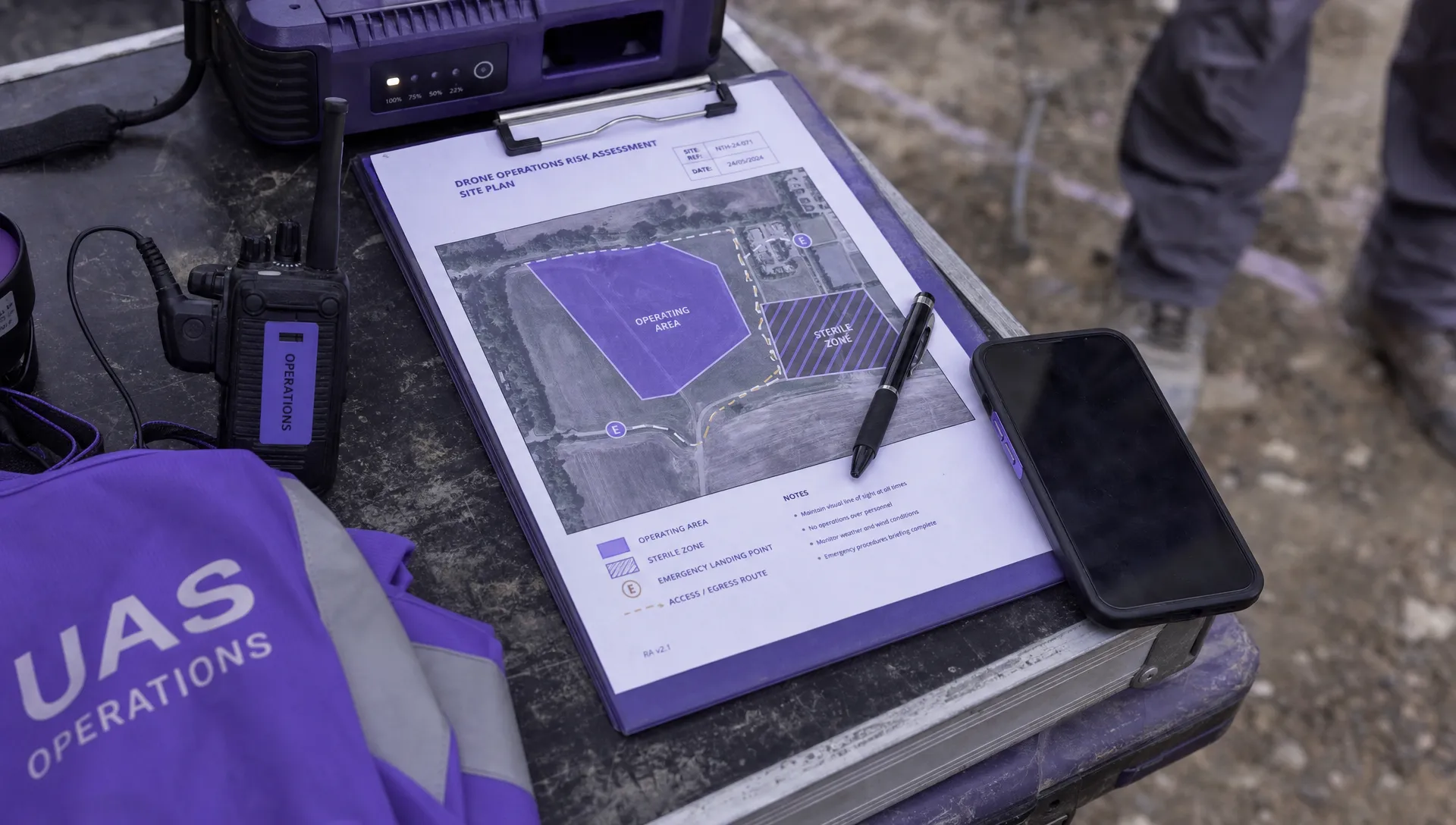 Drone Risk Assessment Controls That Work in the Field →
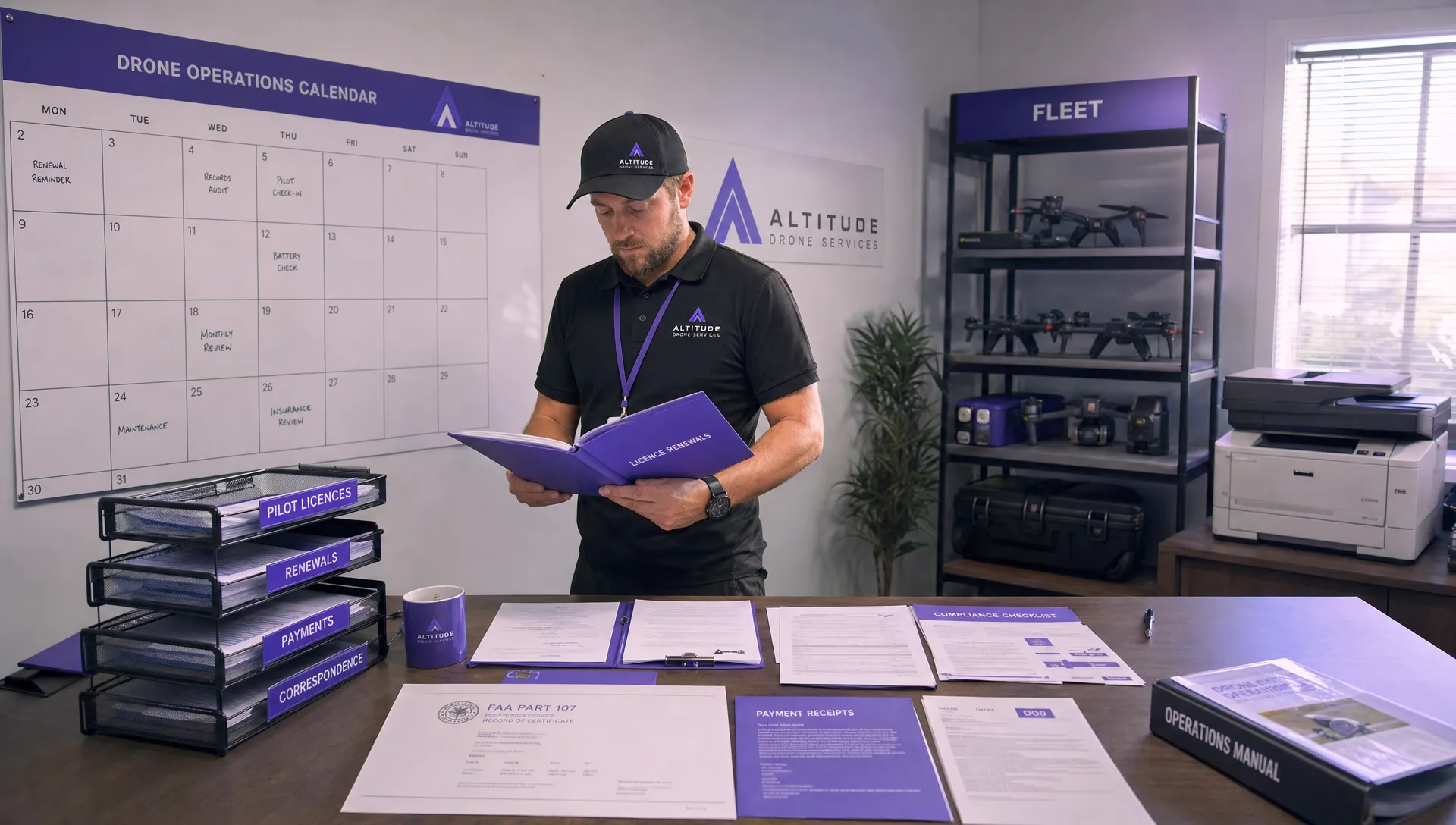 FAA Drone License Costs Beyond the Knowledge Test →
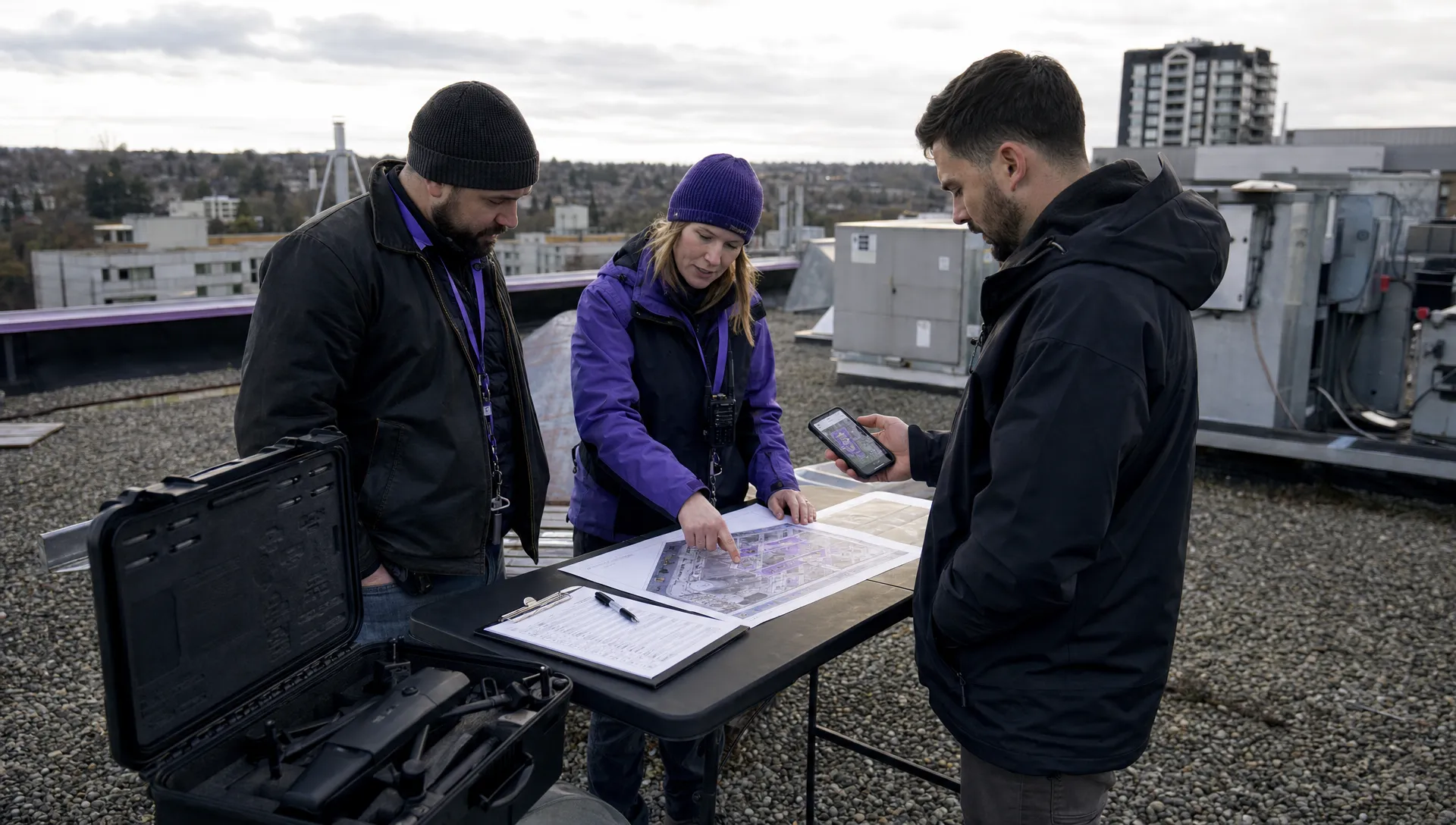 Drone Part 107 Operations: When a Waiver May Be Needed →
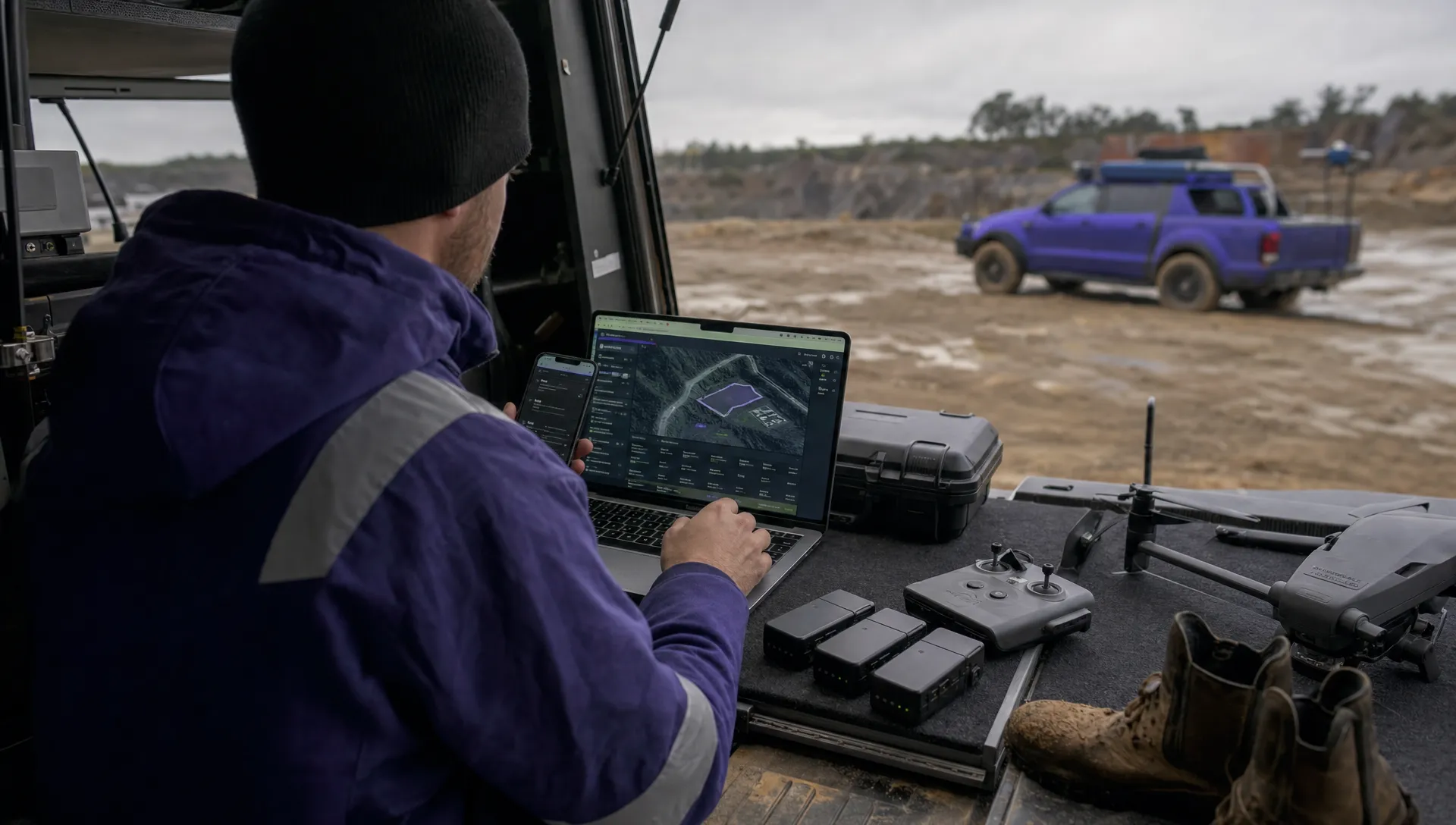 Drone Operating Rules for Managing Contractors and Employees →
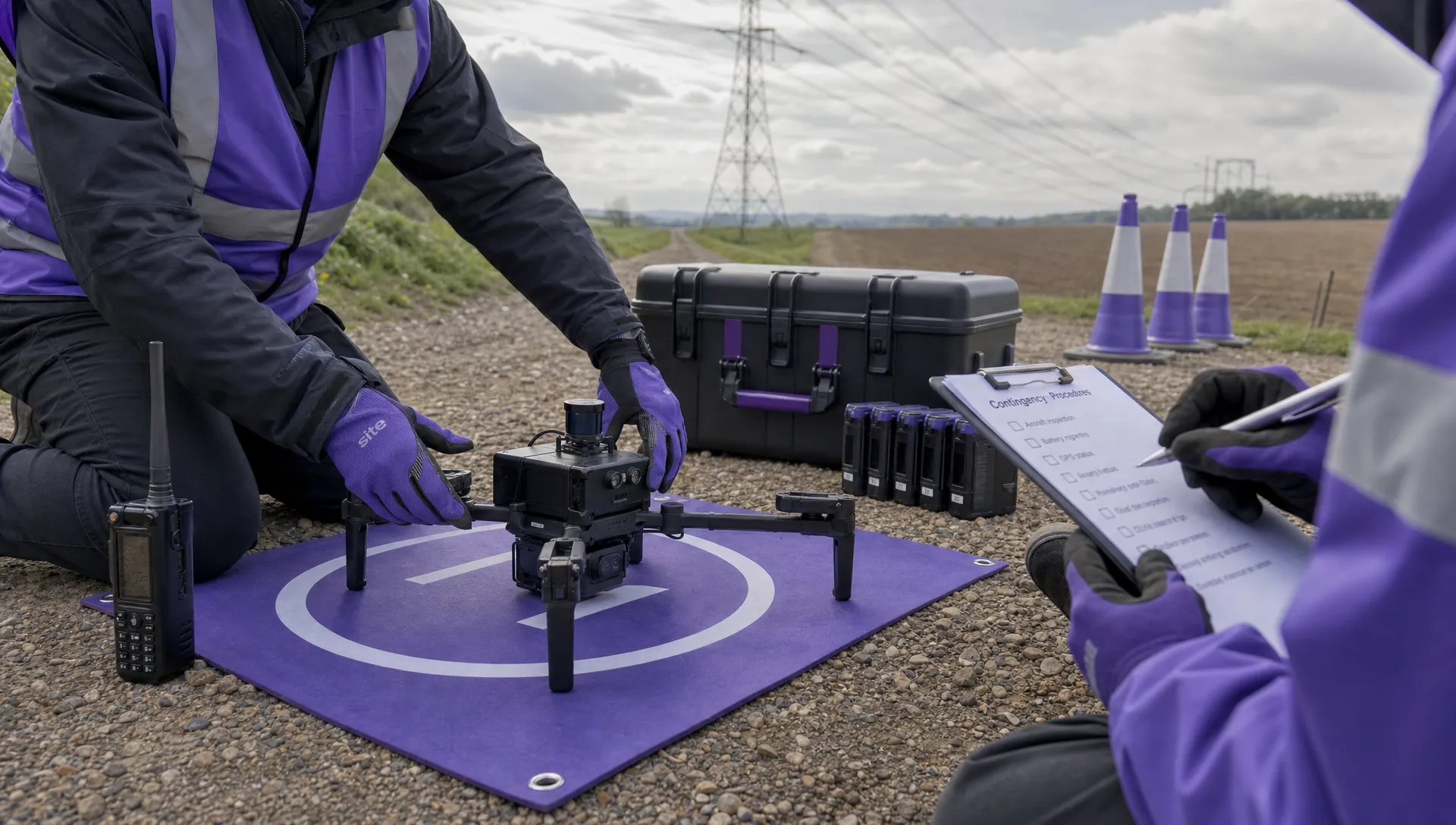 BVLOS Drone Requirements for Building a Safety Case →
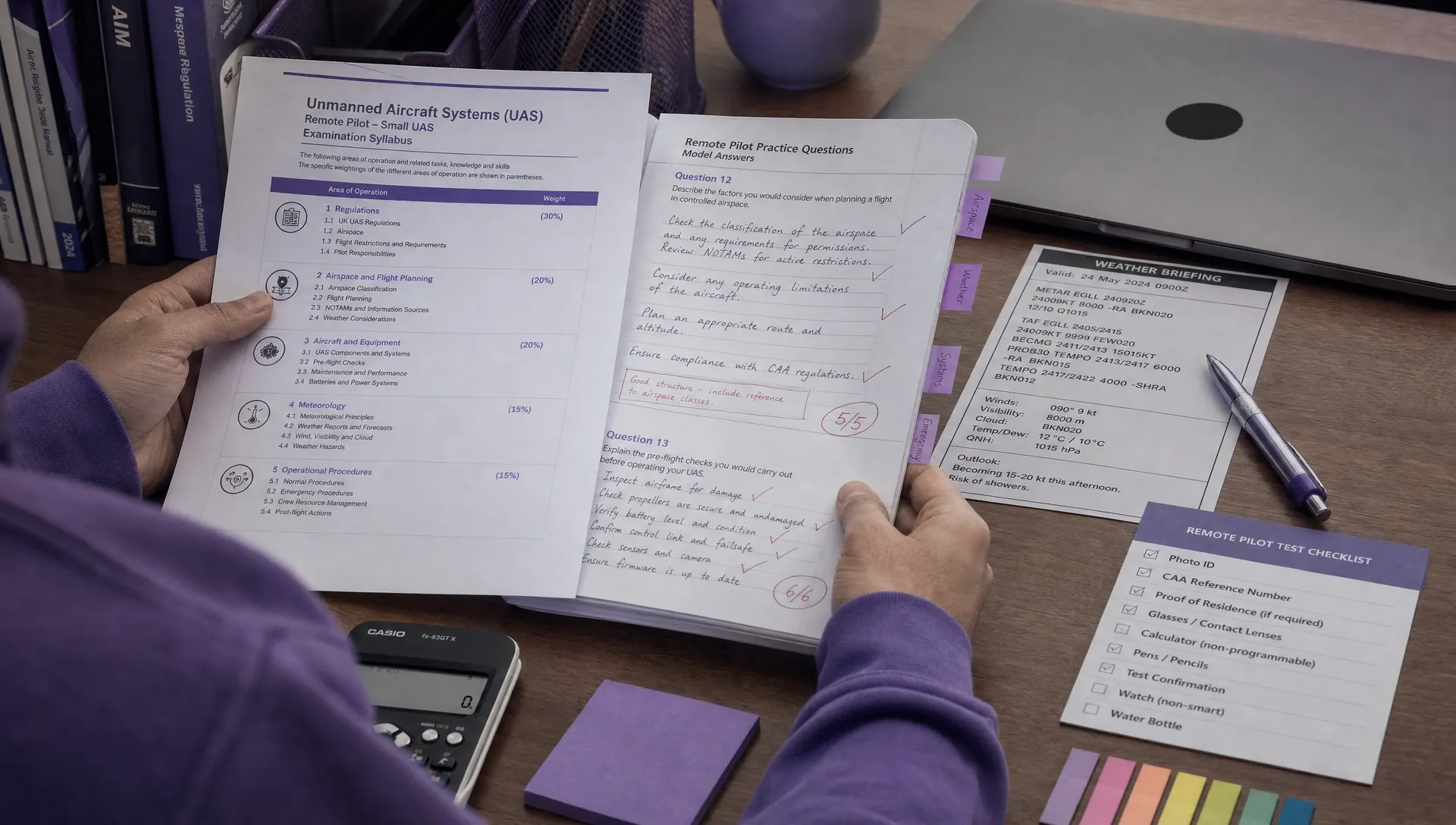 Drone Pilot Test Mistakes That Cost Candidates Marks →
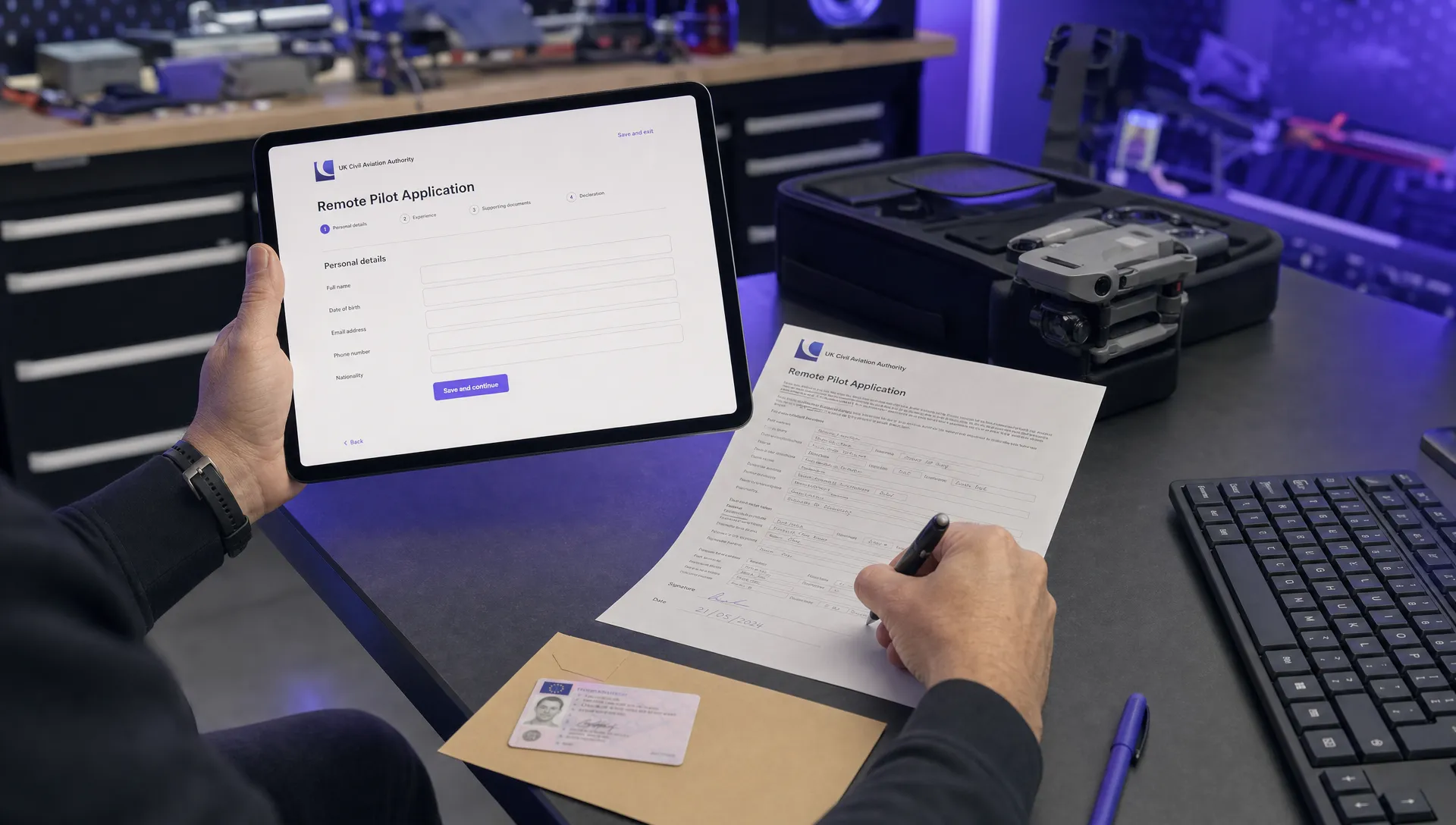 FAA 107 License vs Part 107 Certificate: What’s the Difference? →
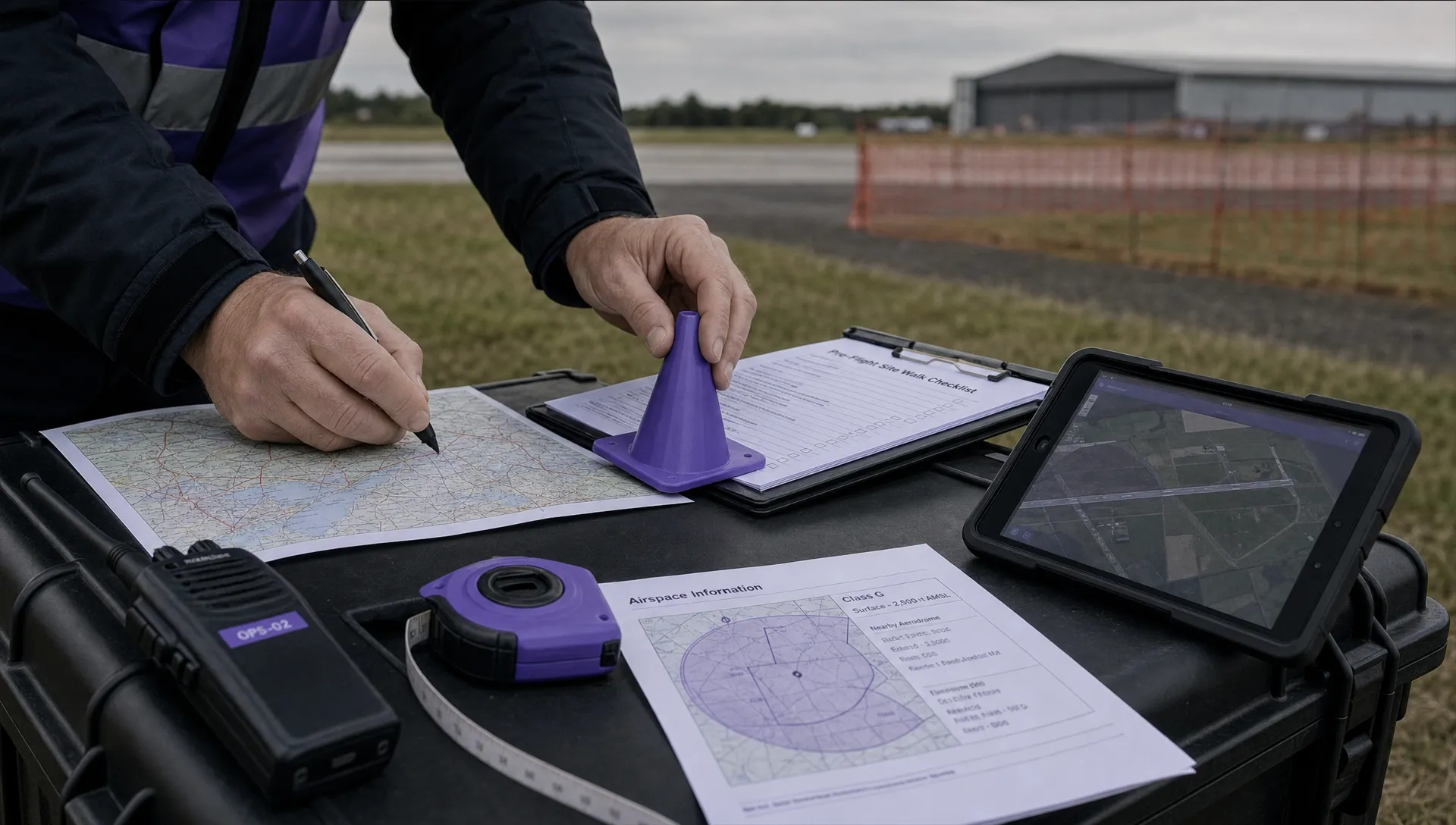 Drone Airport Rules: A Field Checklist for Site Assessments →
 FAA Part 107 Record-Keeping Rules for Commercial Teams →
 How to Review a DJI Flight Log After an Unexpected Event →