
Getting A Drone Licence A Pilot's Guide For 2026
Securing a drone licence isn't just about ticking a box; it's your launchpad into the professional drone world. Think of it as the official line in the sand between flying for fun and operating as a pro. It's the credential that lets you legally charge for in-demand services like real estate photography, agricultural surveying, or infrastructure inspections.
Your Journey To Becoming A Certified Drone Pilot
Embarking on the path to certification is a real investment in your career. It’s that pivotal moment you go from being a casual enthusiast to a trusted, credentialed professional who can legally earn money with a drone. This isn't just about following rules; it's about unlocking some serious career opportunities and building a solid reputation for safety and reliability.
Across the globe, the drone industry is standardising. In the US, for instance, you'll need to get to grips with the FAA's Part 107 rules. Over in Europe, pilots navigate EASA regulations. Your first job is to figure out which certification applies to your region and get it.
From Hobbyist To Professional
Making the distinction between recreational and commercial flying is absolutely critical. Flying for fun in your own backyard is one thing. But the second you accept payment for aerial shots of a property, that flight is instantly classified as commercial, and you'll need a licence. The rules here are crystal clear and legally binding.
So, is it worth the effort? Let's look at the numbers. In the United States, getting certified under the FAA's Part 107 rules has become the key gateway for the 37% of drone operators now working commercially. With a staggering 316,075 commercial drones registered out of a total of 855,860, the trend is obvious.
This split—63% recreational versus 37% commercial—shows exactly how licensing is turning hobbyists into professionals, creating real business opportunities in the very sectors where Dronedesk users are making their mark.
To help you figure out where you stand, here’s a quick breakdown of the differences between flying for fun and flying for work.
Commercial vs Recreational Drone Operations At A Glance
| Aspect | Recreational Flying | Commercial Operations |
|---|---|---|
| Purpose | Purely for personal enjoyment and fun. No compensation of any kind. | Flying in exchange for money, goods, or services. Supports a business. |
| Licensing | Generally, a basic test and registration are required (e.g., The Recreational UAS Safety Test - TRUST in the US). | A specific commercial licence is mandatory (e.g., FAA Part 107 certificate in the US). |
| Regulations | Simpler rules, often focused on flying in safe, uncontrolled airspace away from people. | Stricter, more comprehensive regulations covering airspace, weather, and operational planning. |
| Example | Filming your family barbecue in the garden. | Taking aerial photos of a house for an estate agent's listing. |
As you can see, the moment your drone flight is connected to any form of business activity, you cross over into the commercial realm, and that’s where professional certification becomes non-negotiable.
Becoming a certified pilot signals to clients that you are serious, knowledgeable, and committed to operating safely and legally. It's the single most important credential you can earn to build trust and win higher-value projects.
Understanding Your Path Forward
For many aspiring pilots, the whole process can feel a bit daunting at first. To get started, you need a clear map of the journey. This excellent guide offers a proven path on how to get a commercial drone license and lays out the necessary steps.
Ultimately, getting that licence is the foundation you'll build your entire drone career on. It proves you're competent in several critical areas, including:
- Airspace Regulations: Knowing exactly where you can and, more importantly, cannot fly.
- Operational Safety: Understanding how to properly assess and manage risks before and during every flight.
- Weather Interpretation: Being able to read meteorological data and make smart go/no-go decisions.
- Emergency Procedures: Having a plan for when things don't go as expected.
This knowledge doesn't just get you through an exam. It makes you a safer, more competent pilot who is truly ready to handle professional assignments.
Understanding Global Drone Licence Requirements
Figuring out drone licence requirements can feel like a minefield. The rules change dramatically depending on where you are in the world, and what’s needed for a commercial flight in the US is completely different from the regulations in Europe or the UK.
Getting your head around these key distinctions is the first step to flying legally and professionally, whether you're at home or thinking about operating abroad. A licence from one country doesn't just automatically transfer to another—each aviation authority has its own set of rules.
To cut through the noise, this decision tree boils down the first question every aspiring pilot needs to answer.
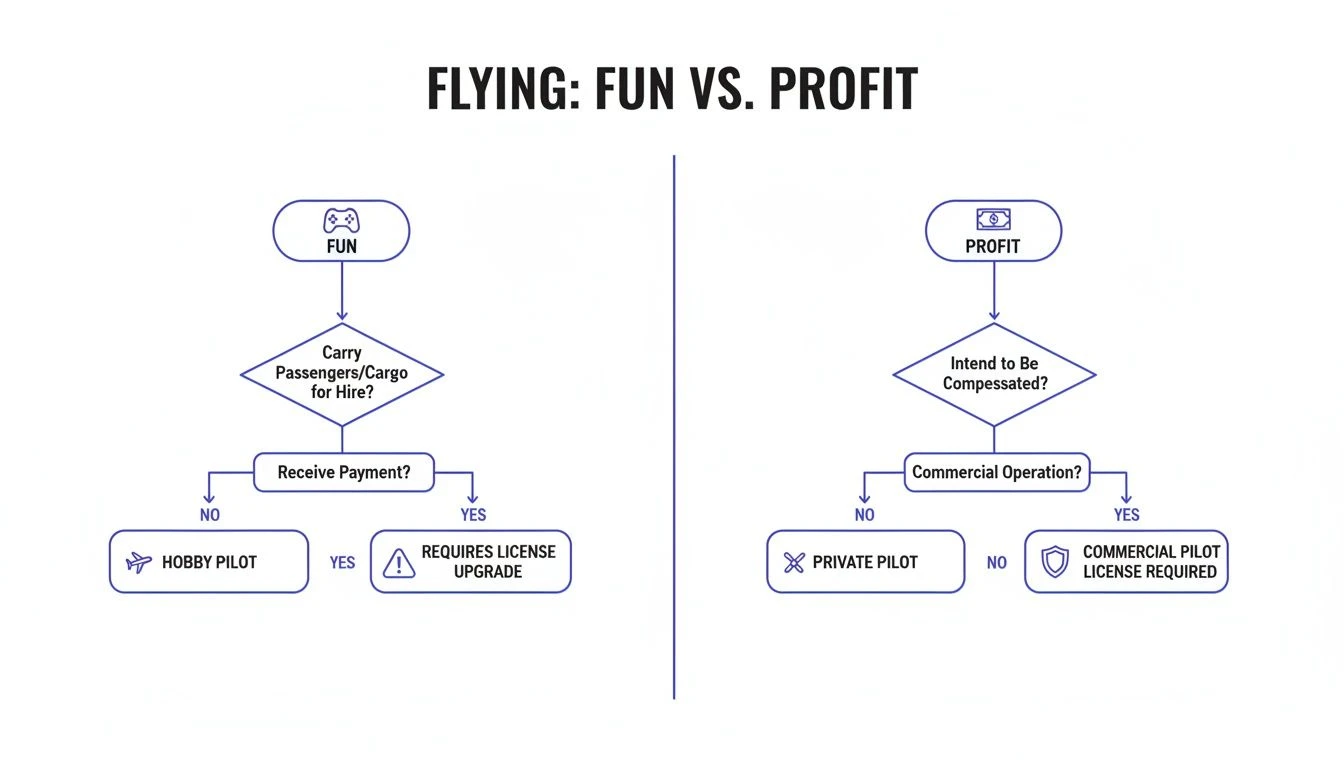
As you can see, the moment your flight isn't just for fun and involves any kind of payment or business purpose, you’re in professional territory. That means it’s time to get licenced.
The United States: FAA Part 107 Certificate
In the US, the Federal Aviation Administration (FAA) runs the show. If you plan to fly a drone for anything other than pure recreation, you need the Part 107 Remote Pilot Certificate. There’s no grey area here.
So, who needs a Part 107?
- A real estate agent using a drone to get aerial shots for a property listing.
- A construction manager surveying a site to track progress.
- A wedding photographer offering a drone package.
Basically, if your flight is for a business or you’re getting paid, you must be Part 107 certified. This cert lets you operate commercially under a clear set of rules, like staying below 400 feet and always keeping your drone in sight. Like with manned aviation, there are age limits, and you can find general information on pilots licence age requirements in this guide.
The European Union: EASA Framework
Across the pond, the European Union Aviation Safety Agency (EASA) has created a unified set of rules for all member states. Their approach is more nuanced, based on the level of risk for each operation.
You'll mainly hear about the Open and Specific categories. The Open category covers low-risk flights and is broken down into subcategories (A1, A2, A3) based on the drone’s weight and how close you’ll be flying to people. Many commercial jobs with smaller drones fit into these subcategories, as long as you pass the required online training and exam.
When an operation poses a greater risk—like flying beyond visual line of sight (BVLOS) or over crowds—it moves into the Specific category. This is a bigger deal. It requires you to conduct a detailed risk assessment (called a SORA) and get operational authorisation from your national aviation authority.
For a pilot in Europe, this means your mission dictates your licence. A simple aerial photo in an open field might only require an A1/A3 certificate, while mapping a bustling construction site in France would almost certainly push you into the Specific category, demanding more extensive paperwork and approval.
The United Kingdom: CAA Qualifications
Since Brexit, the UK operates under its own Civil Aviation Authority (CAA) rules. While they share some DNA with the EU framework, the qualifications are distinct. For commercial pilots, the two tickets that matter most are the A2 Certificate of Competency (A2 CofC) and the General Visual Line of Sight Certificate (GVC).
The A2 CofC is perfect for many photography and videography gigs, letting you operate slightly heavier drones closer to people in built-up areas. The GVC is the next level up; it’s a prerequisite for getting an Operational Authorisation, which you’ll need for higher-risk flights, much like the EU's Specific category.
These risk-based systems are becoming the global standard. You can find more details in our complete guide on drone license requirements.
This shift is having a massive impact. Since the FAA introduced the Part 107 rule in 2016, commercial drone operations in the US have shot up by 300%, with certified pilot numbers now topping 500,000. That explosive growth is mirrored in the EU and UK, feeding a market that's on track to hit $69 billion by 2036.
How To Pass Your Aeronautical Knowledge Exam
The aeronautical knowledge exam is pretty much the biggest hurdle you’ll face on your way to getting a drone licence. This isn't just some pop quiz; it’s a serious test to make sure you have the chops to operate safely within the national airspace.

Passing takes more than a last-minute cram session. It demands a solid study plan and a real-world understanding of what you'll be tested on. We’ll walk through the whole process, drawing on advice from pilots who’ve been there and earned their certificate.
Confirming Your Eligibility
Before you even think about hitting the books, you need to make sure you tick all the boxes set by your local aviation authority. For the FAA's Part 107 exam in the US, the requirements are straightforward:
- You must be at least 16 years old.
- You have to be able to read, speak, write, and understand English.
- You need to be in a physical and mental condition to fly a drone safely.
These might seem basic, but they are non-negotiable. They're the first line of defence in ensuring pilot accountability.
Your Study Playbook And Key Topics
Alright, let's get to the main event: prepping for the exam. You're looking at 60 multiple-choice questions, and you need to nail at least 70% of them to pass. The questions pull from a wide range of aeronautical knowledge, and some topics trip up new pilots time and time again.
I'd suggest focusing your energy on these critical areas:
- Regulations: You've got to know the rules of the sky inside and out. This includes everything from operational limits and flight restrictions to your responsibilities as a pilot.
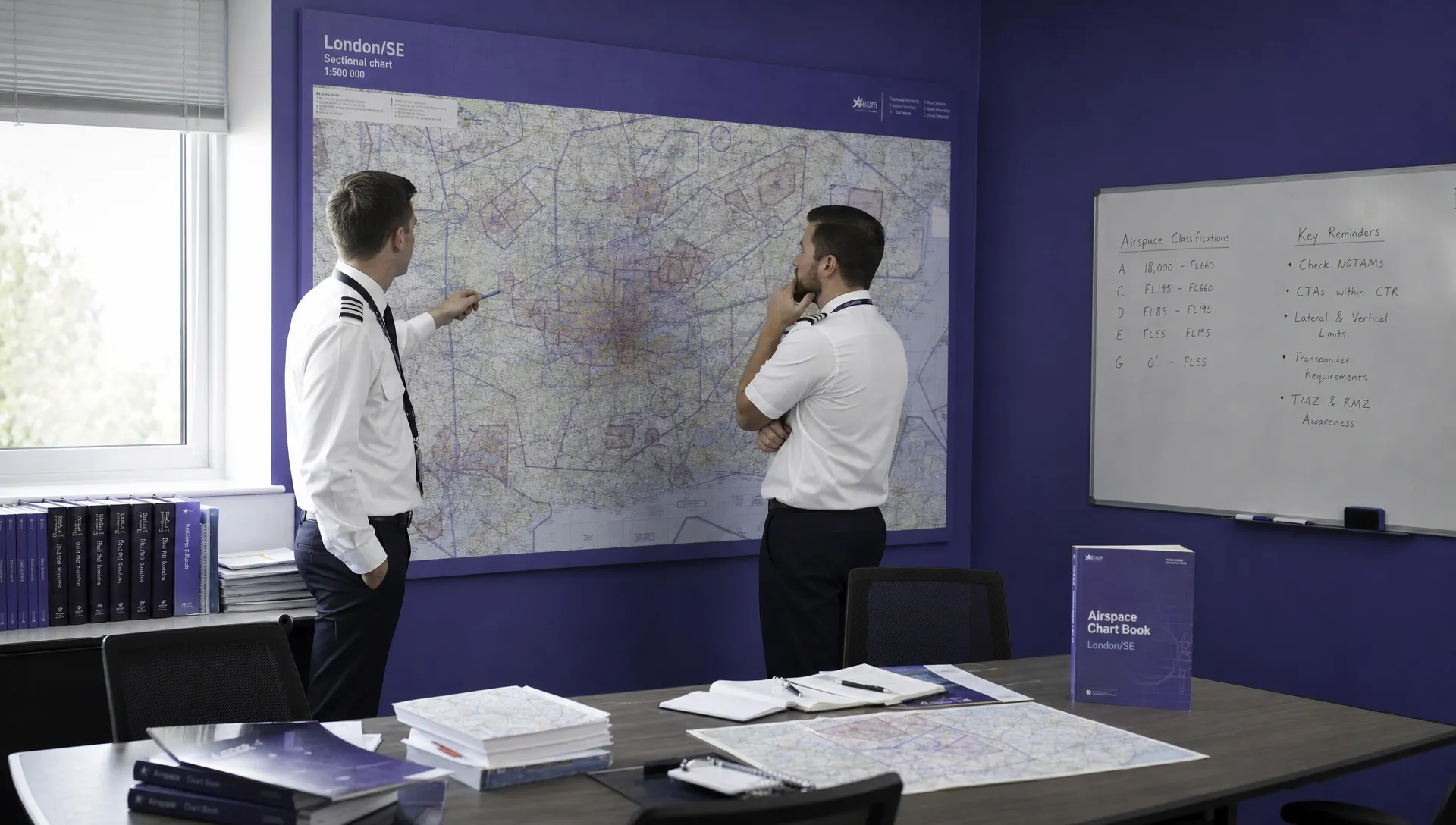
- Airspace: This is a big one. Learning to read sectional charts and identify airspace classes (like Class G, E, D, etc.) is absolutely essential and often the toughest part for newcomers.
- Weather: You'll be expected to read and interpret METARs (Meteorological Aerodrome Reports) and TAFs (Terminal Aerodrome Forecasts) to make smart, safe flight decisions.
- Drone Performance: This covers the physics of flight—things like load factors, weight and balance calculations, and how air density affects your drone's performance.
The push for certification has really separated the professional pilots from the hobbyists. The numbers back this up: there’s a 78% first-time pass rate for well-prepared pilots, which is a world away from the 55% pass rate for those who wing it. With a typical $175 fee for each attempt, investing in good study materials just makes sense.
To get your studying structured, our comprehensive Part 107 study guide is built to walk you through these exact topics and help you master the material.
Don't just memorize answers. Aim to truly understand the concepts behind the questions. The goal isn't just to pass a test but to become a competent and safe pilot who can apply this knowledge in real-world scenarios.
Booking And Taking The Test
Once you’re feeling confident with the study material, it’s time to get the exam on your calendar. In the US, this means getting an FAA Tracking Number (FTN) by creating a profile in the Integrated Airman Certification and Rating Application (IACRA) system.
Got your FTN? Great. Now you can schedule your test at an FAA-approved Knowledge Testing Center. You'll usually find these at local flight schools or airports. Just don't forget to bring a government-issued photo ID on the day.
The testing environment is what you'd expect—quiet and formal. They'll give you a supplement book with all the charts and figures you need for the exam questions. You have two hours, so take your time, read every question carefully, and don't rush.
Post-Exam Steps To Finalize Your Licence
You passed! Take a moment to celebrate, but you're not quite at the finish line yet. There’s a bit of final paperwork to sort out.
You’ll need to log back into the IACRA system and fill out FAA Form 8710-13 for your remote pilot certificate. The system uses your knowledge test ID to pull in your passing score automatically. Once you submit the application, the TSA will run a background security check.
After you clear that vetting process, you'll get an email with instructions to print a temporary certificate. Your permanent plastic card will show up in the mail a few weeks later. This last step is what makes it all official, allowing you to legally fly commercially. Depending on your study pace and how quickly the government processes everything, the whole journey can take anywhere from a few weeks to a couple of months.
Your First Steps As A Licensed Pilot
So, you’ve passed your aeronautical knowledge exam. Congratulations! That’s a massive achievement, but what you’ve really done is earned your ticket to the start line, not the finish. With that temporary certificate in your pocket, you're now shifting from theory to the real world. But before you even think about launching your first paid flight, there are a few crucial things to lock down. Get these right, and you'll be operating like a seasoned pro from day one.
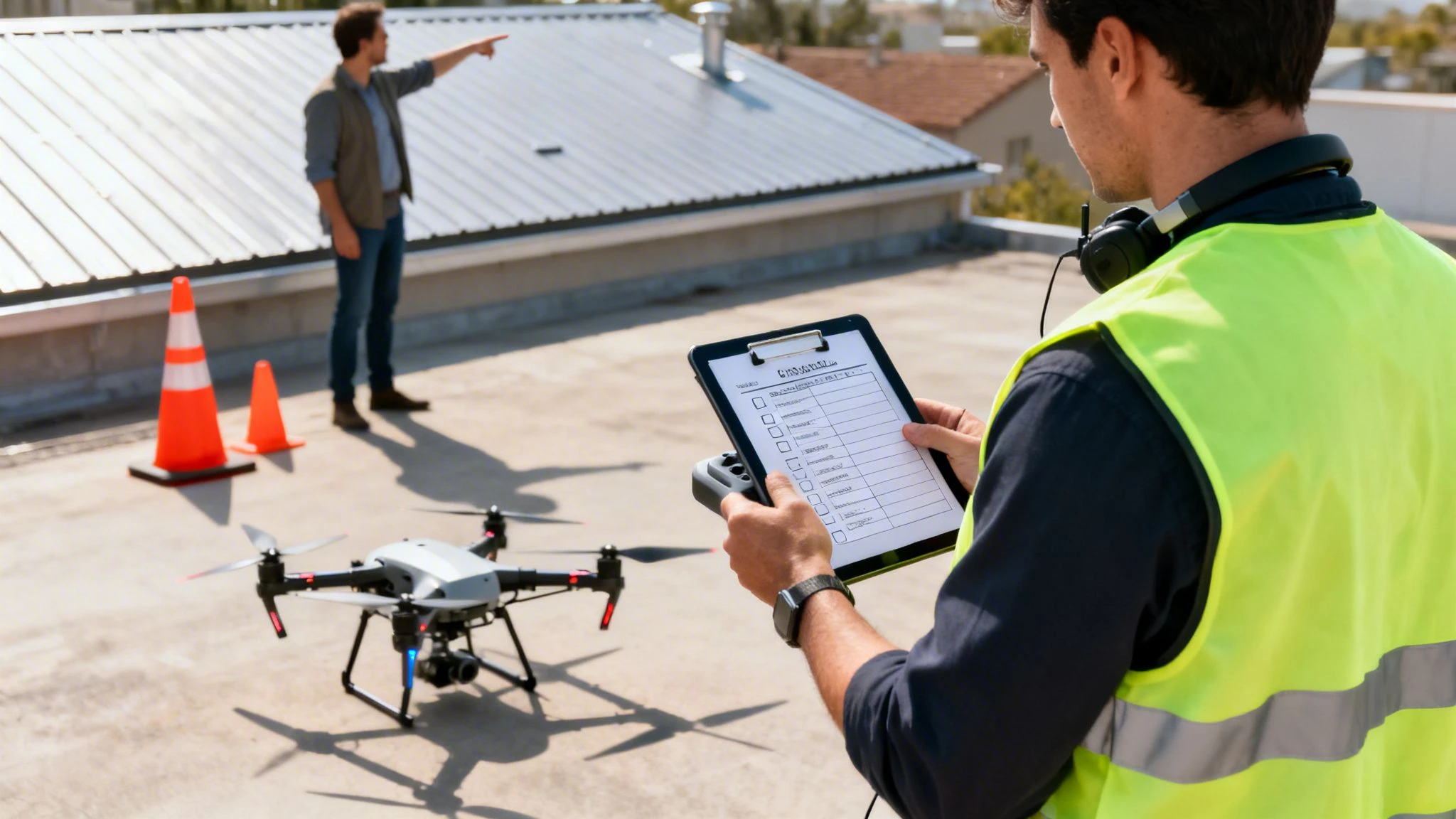
Here's the first thing that trips up a surprising number of new pilots: your pilot certificate and your drone's registration are two separate, equally important things. Your licence proves you are qualified to fly. Your drone's registration links a specific aircraft to you as the responsible operator. You need both to be legal.
Registering Your Professional Drone
Any drone you plan to use for commercial work weighing over 0.55 lbs (250g) absolutely must be registered with your country's aviation authority, like the FAA in the United States. This isn't a suggestion; it's a hard-and-fast rule.
Thankfully, the process is pretty painless and is usually done online through an official government portal like the FAA's DroneZone. It’ll set you back about $5 per drone, and that registration is good for three years. Once it's done, you'll get a unique registration number (an "N-number" in the US) that you have to display on the outside of your drone. Just think of it as a licence plate for your aircraft.
Getting licensed is just the first box to tick. To make sure you're fully compliant and ready for business, here's a quick checklist of what to do next.
Essential Post-Licence Checklist
| Task | Description | Importance |
|---|---|---|
| Complete Certification | Finalise your application in the official system (e.g., IACRA in the US) to get your temporary, then permanent, certificate. | Critical |
| Register Your Drones | Register every drone you'll use for work that's over 0.55 lbs and stick that registration number on the aircraft. | Critical |
| Get Insured | Secure liability insurance. Trust me, most commercial clients won’t even talk to you without proof of insurance. | High |
| Adopt a Management System | Get a system like Dronedesk in place to manage your flight logs, maintenance, and compliance from the very start. | High |
| Keep Practicing | Log plenty of flight hours in different conditions. This builds the real-world confidence and skill that no exam can teach you. | Medium |
Don't treat this as just a list of suggestions. These steps are the bedrock of a professional and, more importantly, sustainable drone business.
Building A Compliance-First Mindset
Now that you're licensed and your drone is registered, it's time to build professional habits. In the commercial drone world, meticulous record-keeping isn’t just "good practice"—it's your best defence if an incident ever occurs. This is exactly where a drone operations management platform like Dronedesk becomes your most valuable co-pilot.
Trying to juggle compliance with a mess of spreadsheets, paper logbooks, and random notes is a recipe for disaster. A dedicated platform helps you build the right habits from the start by making complex jobs feel simple. It handles everything from flight logging and pre-flight checks to risk assessments, all in one organised workflow.
From your very first flight, act like the seasoned professional you want to become. Document everything. A solid digital logbook isn't just a record; it's proof of your professionalism and commitment to safety.
Let's say you land your first paid job: a roof inspection for a local construction firm. Instead of being swamped by paperwork and regulations, your workflow can be smooth and impressive.
With a tool like Dronedesk, here’s how it would look:
- Create the Job: Input the client and site details to kick off a new project file. No more scattered information.
- Check Airspace: Instantly pull up all the airspace data for the location. You'll see nearby airports, controlled zones, and any other restrictions in seconds.
- Generate a Risk Assessment: Use built-in templates to quickly spot and mitigate potential hazards on-site, like power lines, public footpaths, or signal interference.
- Create a Flight Plan: Outline the mission, including takeoff/landing zones and flight patterns. This creates a professional document you can share with the client, which builds their confidence in you.
- Log the Flight: Once the job's done, your flight time and aircraft details are logged automatically. Your verifiable flight history starts building itself.
This systematic approach turns administrative headaches into a streamlined process that screams professionalism. You're no longer just a person with a drone; you are a certified, compliant, and organised aviation professional, ready to take on bigger and better jobs with total confidence.
Maintaining Compliance And Growing Your Business
Getting your drone licence is a huge step, but don’t make the mistake of thinking it’s a one-and-done deal. Your professional journey is really just beginning. Think of your new certification less like a diploma to hang on the wall and more like a subscription that needs to be kept active.
This licence is your permission to fly professionally, and with that comes ongoing responsibilities. Aviation authorities need to see that you're keeping your knowledge sharp and adapting to new rules. Dropping the ball here can undo all the hard work you put into getting certified in the first place.
Staying Current With Training And Regulations
The drone world moves fast, and the regulations are always evolving. To keep your certification valid, you have to complete recurrent training at set intervals. For instance, pilots holding an FAA Part 107 certificate must complete a free online recurrent training course every 24 months.
This isn't just a box-ticking exercise. This training makes sure you’re fully up to speed on the latest rules, safety procedures, and any new tech that changes how you fly.
A drone licence is a living credential. Keeping it current through recurrent training demonstrates your commitment to professionalism and safety, which is a major selling point for clients.
Beyond your scheduled training, you need to keep your finger on the pulse of major regulatory shifts. A perfect example is the rollout of Remote ID, which is basically a "digital licence plate" for drones. Most drones are now required to broadcast identification and location data, and as a certified pilot, you’re expected to know and follow these rules inside and out.
Staying ahead of the curve means actively looking for information:
- Subscribing to official newsletters from your aviation authority (like the FAA).
- Following reputable industry news sources and blogs.
- Participating in professional communities where other pilots are discussing regulatory changes.
This proactive approach means you’ll never be caught off guard by a new rule that could ground your operations. It’s just part of being a responsible pilot-in-command.
Scaling Your Operations With Smart Management
Once you’ve got a solid system for staying compliant, you can get to the exciting part: growing your business. This is where you shift from being a solo pilot juggling paperwork to a streamlined operation ready for bigger jobs, and maybe even a team.
This is also where a platform like Dronedesk goes from being a handy compliance tool to the core of your business strategy. When you use it consistently, you start gathering data that reveals patterns and opportunities you would have otherwise missed.
For example, the detailed reporting in Dronedesk gives you a bird's-eye view of your entire business. You can instantly see:
- Flight hours per aircraft, which is vital for planning maintenance and getting the most out of your fleet.
- Job profitability, letting you compare the hours you logged against what you earned for each project. You'll quickly see which services are your real moneymakers.
- Team activity, making sure every pilot is following the same compliant procedures and keeping solid records.
Imagine you want to expand from solo real estate shoots to managing a small team for larger construction projects. Dronedesk makes that jump manageable. You can assign jobs, review your team’s pre-flight risk assessments, and check their flight logs, all from one dashboard. This kind of central control ensures that as your business gets bigger, your safety and professional standards get even stronger.
This level of organisation makes your business run smoother, but it also makes you far more attractive to high-value corporate clients who demand proof of compliance. By building a system like Dronedesk into your workflow from day one, you’re setting yourself up to build a scalable, trustworthy, and profitable business. If you're looking for ways to expand your services, check out our guide on how to earn money with your drone for more ideas.
Common Questions About Drone Certification
Once you start the journey toward getting your drone licence, it's perfectly normal for a few big questions to crop up. The world of drone certification is full of fine print that can feel a bit overwhelming at first.
Let's cut through the noise and tackle some of the most common queries we hear from pilots just starting out. Getting these details straight now will save you from some serious headaches down the line.
How Long Does It Take To Get A Drone Licence?
This is the one we get asked all the time, and the honest answer is: it really depends on you. The biggest factor is how quickly you can get through the study material for your theory exam.
Most people set aside 2 to 4 weeks to really knuckle down and prepare. If you've already got some aviation experience, you might breeze through it faster. Others prefer to take their time to make sure the information truly sinks in.
After you pass the exam, things tend to move a lot quicker. In the US, for instance, once your application is in the IACRA system and you’ve cleared the TSA background check, you can usually print a temporary certificate in about a week. The plastic card itself will follow in the mail a few weeks after that.
Can I Fly Commercially In Another Country?
This is a massive point for anyone with international flying ambitions: almost certainly, no. Your drone licence is only valid for the country or region that issued it. A Part 107 certificate from the FAA is for the US, and an EASA certificate covers the European Union. They simply aren't interchangeable.
If you’re planning a commercial job abroad, you have to play by that country's rules. This usually means getting a whole new certification or special permission from their local aviation authority. Always do your homework before you even think about packing your drone for an international trip.
Never, ever assume your home country's licence gives you the green light to fly commercially somewhere else. It's a fast track to serious legal trouble, from having your gear confiscated to facing eye-watering fines. The rules are not universal.
What Happens If I Fly Commercially Without A Licence?
Flying for money without the right paperwork is a huge red flag for aviation authorities, and they don't mess around. The penalties can be crippling. In the US, the FAA can hit you with fines running into thousands of dollars per flight. If an accident happens, you could also be looking at serious legal action.
But it goes beyond the financial hit. It torches your professional reputation. Word gets around, and no legitimate client will touch a pilot who cuts corners and operates illegally. It's a gamble that's just not worth taking.
Do I Need Insurance If I Have A Licence?
Yes. Absolutely. Think of this as non-negotiable for any professional. Your licence proves you know the rules of the sky, but liability insurance is what saves your skin—and your bank account—when things go wrong. And believe me, accidents can happen to even the most seasoned pilots.
Put it this way: your licence gets you in the door, but insurance is what keeps you in the game. In fact, the vast majority of commercial clients won't even consider hiring you without seeing a certificate of insurance first. It's a standard part of doing business professionally.
Building a professional drone career starts with getting licensed, but it thrives on smart, compliant operations. Dronedesk is the all-in-one platform that helps you manage everything from flight logging and risk assessments to client and fleet management, ensuring you operate like a pro from day one. Simplify your compliance and focus on flying by visiting https://dronedesk.io to see how it works.
 How to Evaluate a Free Drone Logbook Before Using It →
 FAA Part 107 Test: How to Master Airspace Questions →
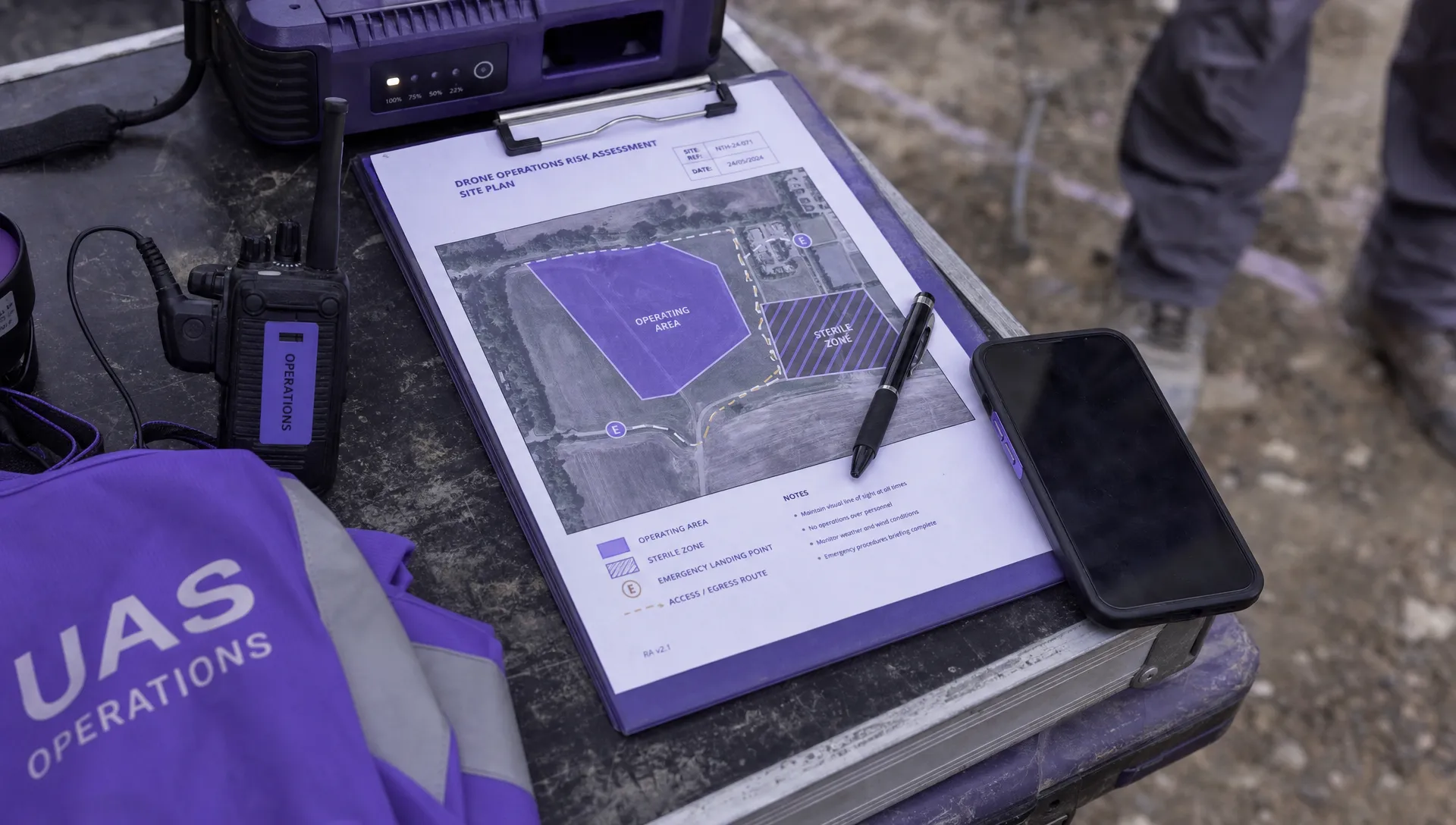 Drone Risk Assessment Controls That Work in the Field →
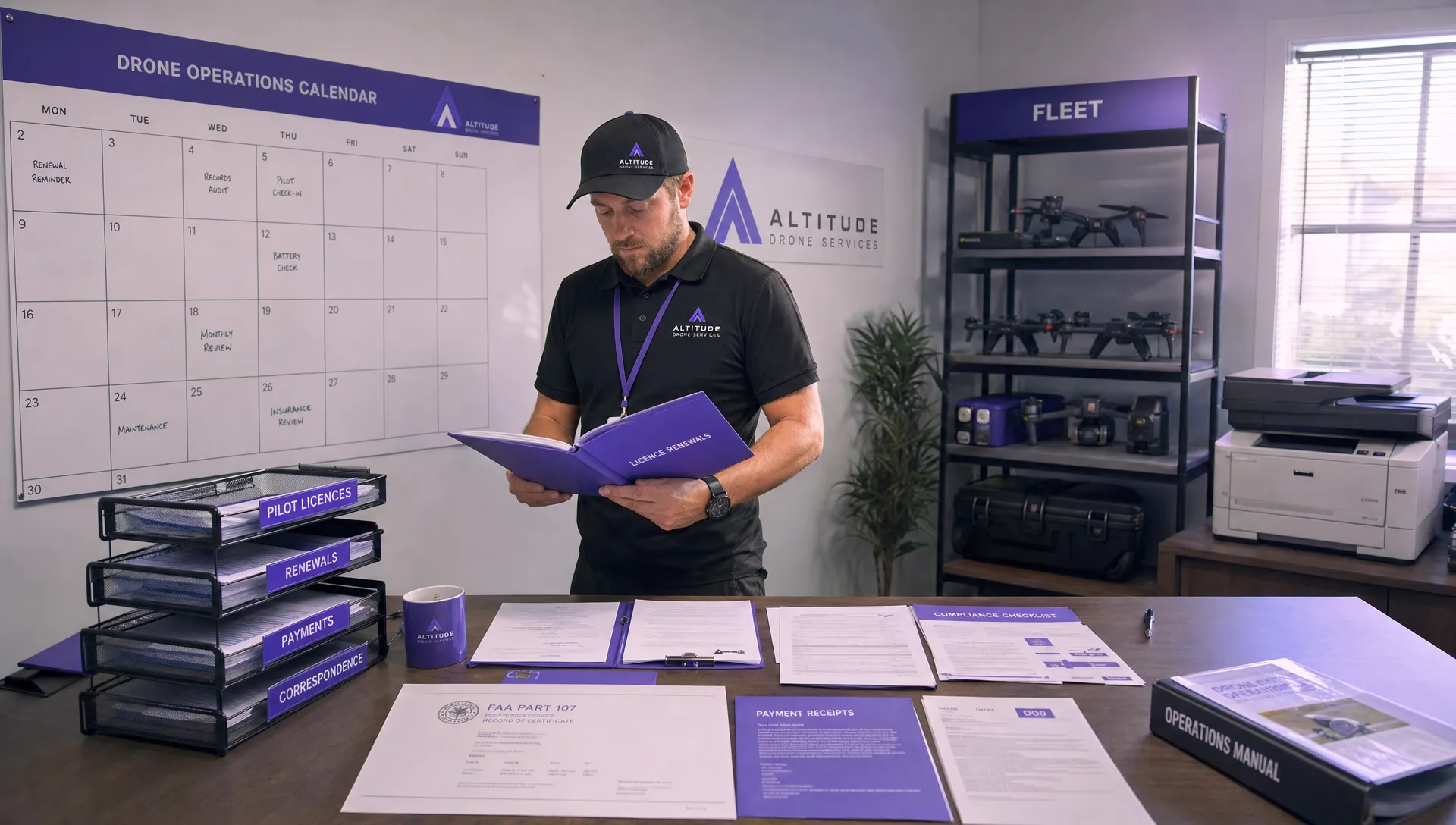 FAA Drone License Costs Beyond the Knowledge Test →
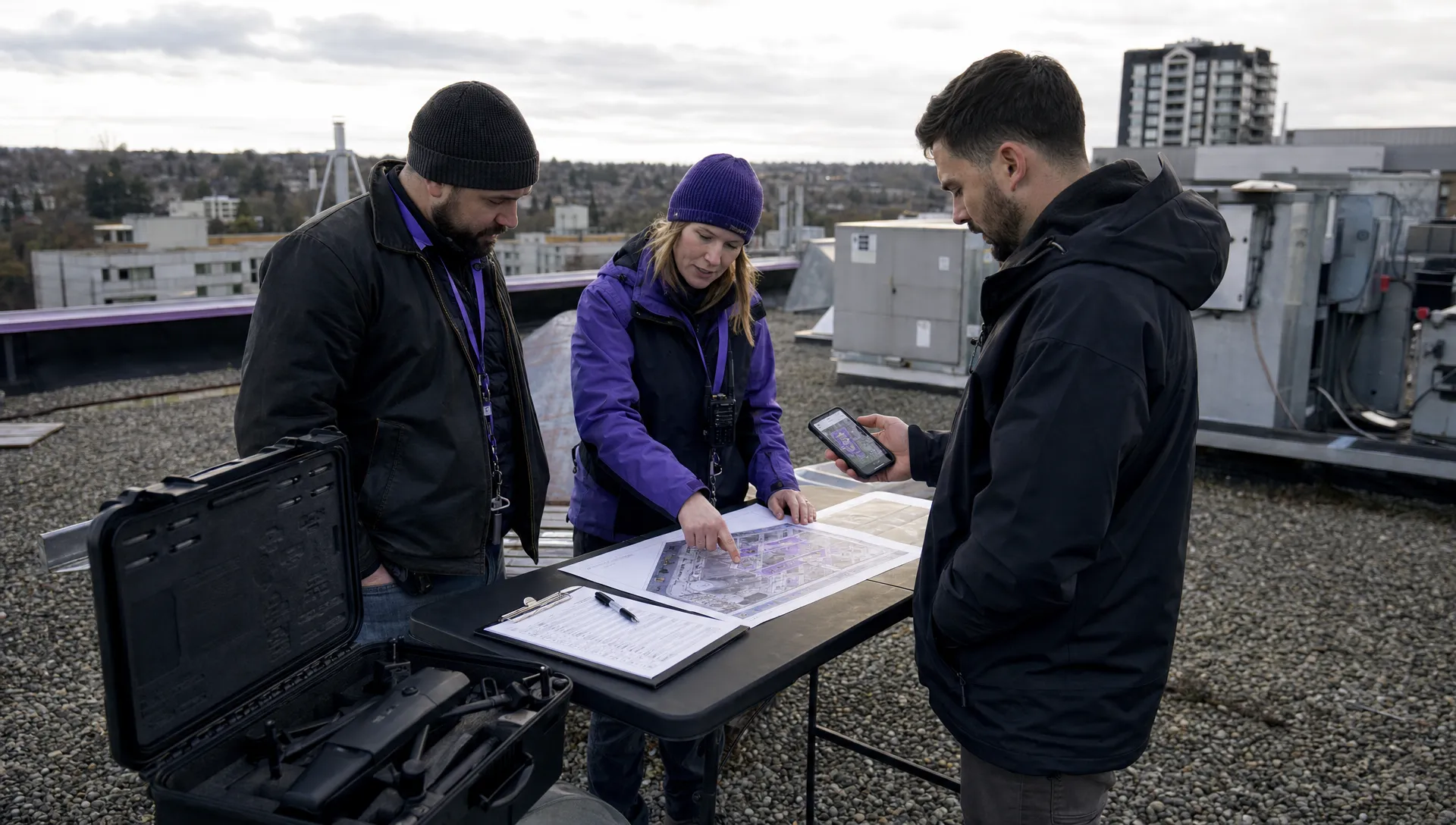 Drone Part 107 Operations: When a Waiver May Be Needed →
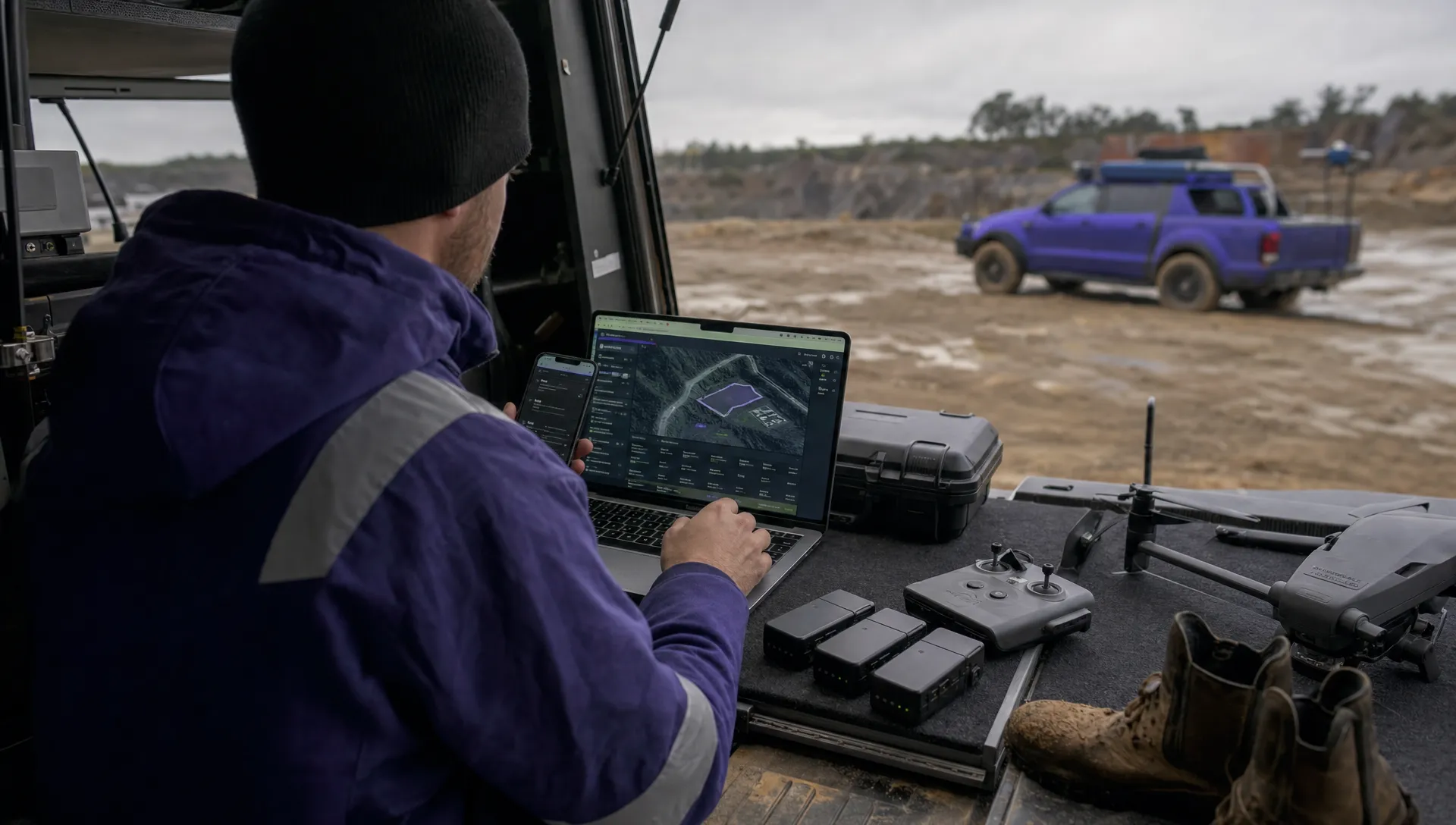 Drone Operating Rules for Managing Contractors and Employees →
 BVLOS Drone Requirements for Building a Safety Case →
 Drone Pilot Test Mistakes That Cost Candidates Marks →
 FAA 107 License vs Part 107 Certificate: What’s the Difference? →
 Drone Airport Rules: A Field Checklist for Site Assessments →