
How to Earn Money with Drone: A 2026 Guide to Profitable Services
So, you've got a drone and you're wondering how to turn those flying hours into actual income. The path from pilot to paid professional isn't as complicated as you might think. It really boils down to getting your commercial license, finding a profitable niche, and then getting your services in front of the right clients.
From there, it's about delivering professional aerial photos, videos, and data that businesses are willing to pay for.
Your Path from Drone Pilot to Profitable Entrepreneur
The days of drones being purely for hobbyists are long gone. We're in the middle of a commercial boom, which has opened up a clear route for skilled pilots to become successful business owners. The opportunities go way beyond just taking pretty pictures; they're in critical industries hungry for aerial data and unique perspectives.
This guide is your roadmap. We’ll cover everything you need to build a real, sustainable business, not just a weekend side hustle.
Your Drone Business Launch Checklist
Before we dive deep, it's helpful to see the journey laid out. This checklist gives you a quick-glance reference for the core actions you'll be taking to get your drone business off the ground.
| Phase | Key Action | Primary Goal |
|---|---|---|
| Foundation | Get licensed and insured | Operate legally and protect your business from day one. |
| Strategy | Choose a high-demand niche | Focus your efforts where clients are actively spending money. |
| Execution | Build a portfolio and market your services | Attract and win your first paying clients with tangible proof of your skills. |
This table maps out the essentials. Getting these three phases right is the key to building a business that lasts.
Where the Real Money Is
You'll find the most lucrative work in a few key sectors where aerial data provides massive value. These aren't just one-off gigs but areas where you can build lasting, recurring client relationships.
- Real Estate: High-quality aerial photos and videos are no longer a luxury; they're a standard for property listings. Agents need captivating shots to make their listings pop, and that's exactly what drones deliver.
- Construction: Site managers depend on drones for everything from progress monitoring and stockpile measurements to creating 3D site models. This data is invaluable, saving them time and money.
- Agriculture: Farmers are using drones to monitor crop health and for precision spraying, which helps boost yields and cut down on waste.
- Inspections: Safely inspecting roofs, power lines, and bridges without putting a person in a high-risk situation is a huge safety and cost benefit. Companies will happily pay a premium for this.
This visual lays out the foundational steps from getting qualified to getting clients.
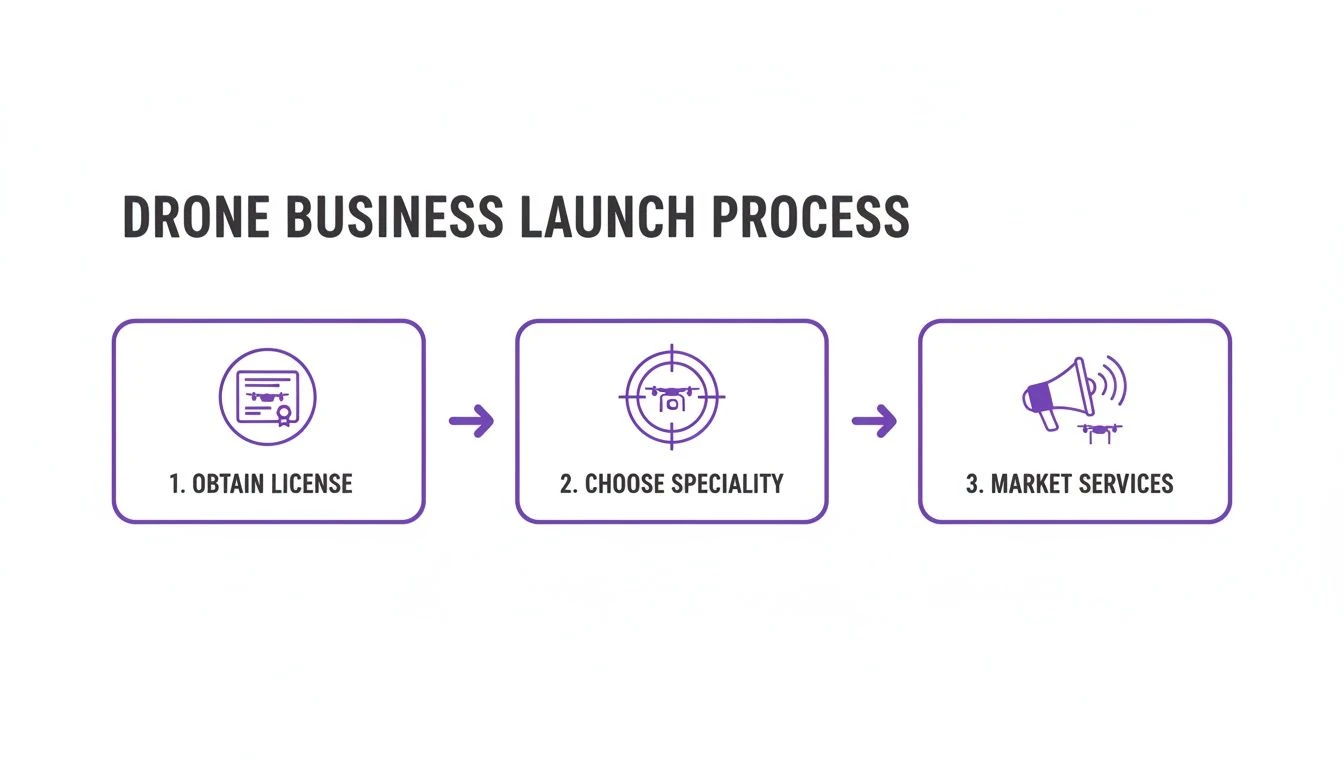
As you can see, success starts with compliance (your license), moves to strategy (your niche), and then grows through smart marketing.
The Market Is Booming
The scale of this opportunity is genuinely massive. The global drone market is on track to hit an incredible USD 182.45 billion by 2033, with North America leading the pack.
The United States alone accounts for over 86% of the North American market, which shows just how much potential there is for local operators. You can dig into more of the numbers on this growth over at Grandview Research.
The most sustainable model emerging is Drone-as-a-Service (DaaS). Instead of single projects, you offer ongoing services like monthly construction monitoring or quarterly roof inspections on a subscription basis. This creates predictable, recurring revenue—the holy grail for any service business.
Finding Your Most Profitable Drone Niche
If you want to earn good money with a drone, the quickest way is to stop trying to be everything to everyone. It’s tempting to offer every service you can think of, but the most successful operators I know have built a name for themselves by mastering a specific, high-demand niche.
This focus pays off. You'll master a particular skill set, know exactly what gear to invest in, and be able to charge premium rates for your expertise. Not all drone jobs are created equal—a basic property photoshoot just isn't going to command the same fee as a complex thermal inspection on a solar farm. The real trick is finding that sweet spot where your skills, gear, and local market demand all line up.
Analyze High-Value Industries
Some industries get so much value from aerial data that they’re more than willing to pay top dollar for a reliable pilot. Better yet, these aren't just one-off gigs. They often lead to long-term contracts and recurring revenue.
Specific sectors like energy, construction, and agriculture are leading the pack in spending on drone services. In fact, the energy sector is the number one application area for commercial drone ops right now. With the overall commercial drone market growing at a 7.9% CAGR, drone services remain the largest segment, which is great news for specialized pilots. If you want a deeper dive, you can explore detailed commercial drone market insights on YouTube.
Here are three of the most consistently profitable niches I've seen:
- Construction and Engineering: Think site progression monitoring, 3D modeling, and volumetric measurements for things like gravel stockpiles. This kind of data saves construction firms a massive amount of time and money, making it invaluable for project management and keeping stakeholders happy.
- Energy and Utilities: This is high-stakes work, involving inspections of assets like wind turbines, solar panels, and power lines. Drones are a safer, faster, and cheaper way to get this done compared to traditional methods that often mean shutting down operations or hiring climbers.
- Real Estate and Property Management: The real value here is in going beyond simple photos. One of the most profitable drone applications is providing high-end visual content, which includes offering dedicated services for aerial photos for real estate. You can also create slick marketing videos for luxury properties, commercial buildings, and large land developments.
Scout Your Local Market
The best niche for you will always depend on your local economy. A pilot in a busy city will have totally different opportunities than one in a rural, agricultural area. Just start by looking around. What are the main industries in your own backyard?
Is your town seeing a lot of new construction? Are you surrounded by farms, wineries, or solar installations? These are your starting clues. Research local companies in those sectors and see if they’re already using drones. If they aren’t, you might have just found your opening.
A powerful strategy is to find a niche that isn't already saturated but has a clear need. Instead of fighting it out with dozens of real estate photographers, you could become the go-to expert for inspecting cell towers or mapping golf courses for irrigation management.
Introduce Subscription-Based Services
To really lock in your income, you need to shift your thinking from one-off projects to recurring revenue. This is what we call the Drone-as-a-Service (DaaS) model, and it's the key to building a predictable income stream.
Instead of a single roof inspection, you could offer a quarterly inspection package to a large property management company. Rather than one construction site video, propose a weekly progress monitoring contract that runs for the entire 18-month project. By offering these types of valuable commercial drone services, you secure clients for the long haul and build real financial stability.
By zeroing in on a high-value industry, scouting your local market for unmet needs, and building your offerings around recurring contracts, you’ve got a powerful formula for a truly profitable drone business. This isn't just about being a pilot anymore; it's about becoming a valued business partner.
Setting Up Your Drone Business for Success
So you've mastered the sticks and can fly a drone with confidence. That's a great start, but turning that skill into a real business that makes money requires shifting your mindset from pilot to owner. The real excitement might be in the flying, but the profit is made on the ground by building a solid, professional foundation.
It’s all about getting your house in order from day one. Taking care of the "boring" admin stuff upfront isn't just about staying out of trouble; it's about showing potential clients you're a serious, reliable professional they can trust. Once your legal and operational systems are squared away, you can get back to what you love—delivering incredible aerial work.
Navigating Licenses and Legal Structures
First things first: you can't legally charge a single penny for your drone services until you're certified. If you're in the United States, that means getting your Part 107 Remote Pilot Certificate from the FAA. This is absolutely non-negotiable and the very first hurdle to clear.
Passing the Part 107 test proves you know the rules of the sky—airspace, weather, and all the operational limits. Think of it as your official ticket into the world of commercial drone work.
Beyond your pilot license, you'll need to decide how to structure your business legally. There are a few ways to go:
- Sole Proprietorship: The simplest path. You and your business are legally the same entity. You'll report business income on your personal tax return, but the big drawback is that there’s no liability protection for your personal assets.
- Limited Liability Company (LLC): This is, by far, the most popular route for new drone businesses. An LLC creates a legal wall between your personal finances and your business, which is a critical layer of protection if something ever goes sideways on a job.
Securing Essential Drone Insurance
Flying a commercial drone without insurance is a gamble you just can't afford to take. One mishap could easily destroy your drone, but worse, it could lead to massive liability claims that would sink your business before it ever gets a chance to take off.
Most commercial clients won't even think about hiring you unless you can show them proof of insurance. You’ll need liability insurance at a bare minimum to cover any potential property damage or injury. Many pilots also get hull insurance, which covers damage to the drone itself.
Don't skip this step. Drone insurance is often more affordable than you'd expect, especially with on-demand policies that let you pay only for the time you're actually in the air. It's a small price for huge peace of mind and instant professional credibility.
Choosing Your First Professional Drone
You absolutely do not need to buy the most expensive drone on the market to get started. The goal is to find a reliable workhorse that fits your budget while still delivering the quality your chosen services demand. A solid mid-range drone is often the perfect place to start.
For example, a drone like the DJI Air 3 or Mavic 3 series packs a fantastic camera and robust safety features. They're more than capable of tackling popular jobs like real estate photography, basic roof inspections, and creating marketing content for local businesses.
Think about the services you want to offer and pick the gear that matches those needs. A real estate photographer needs top-notch photo and video quality, while someone getting into surveying will need a drone that works with mapping software and can be upgraded with RTK for pinpoint accuracy. You can always reinvest your profits into more specialized equipment as you grow.
Establishing Your Operational Systems Early
The moment you land your first paying client, you're officially a business owner with administrative duties. This means juggling client details, planning every flight, meticulously logging your flight hours, assessing risks, and making sure every job is compliant. Trust me, trying to manage all that with a mess of spreadsheets and random notes becomes a headache fast.
This is where a drone operations management platform like Dronedesk becomes an absolute lifesaver. Putting a system like this in place from the very beginning sets a professional tone and will save you countless hours down the road.
A purpose-built platform helps you:
- Manage Clients and Projects: Keep all your job info, client messages, and project files in one organized place.
- Simplify Flight Planning: Automatically check airspace restrictions, weather forecasts, and potential ground hazards before you even leave the house.
- Ensure Compliance: Generate risk assessments and log flights to maintain a clean, professional record for every single operation.
Using a platform like Dronedesk isn't just another expense; it's an investment in your own efficiency and ability to scale. It helps you present a polished, organized face to your clients and frees you from getting bogged down in paperwork, so you can focus on flying more and earning more. It’s a crucial tool for anyone serious about figuring out how to earn money with a drone.
How to Price Your Drone Services and Win Clients
Figuring out what to charge is probably one of the biggest headaches when you’re starting out. Go too low, and you’re not only leaving cash on the table, but you also risk looking cheap. Price too high, and you might spook the very clients you’re trying to land. The real trick is to stop thinking in simple hourly rates and start pricing based on the actual value you're delivering.
Once you’ve got a handle on your numbers, the game shifts to actually getting paid. This is all about building a killer portfolio, networking with the right people, and writing proposals that get signed. It's the moment you stop being just a pilot and start becoming a business owner.
Designing Your Pricing Strategy
There's no magic number for drone services. Your best price will always depend on how complex the job is, the client's industry, and what the final images or data are actually worth to them. Let's look at the most common ways to price your work.
-
Project-Based Pricing: For most jobs, this is your best bet. You quote a single, flat fee that covers everything—planning, flying, editing, and final delivery. This gives the client cost certainty and lets you price based on the total value, not just how long your drone is in the air.
-
Value-Based Pricing: This is a more advanced move, but it’s where the real money is. It works best when your service directly saves or makes the client a significant amount of money. For example, if your thermal inspection finds a roof leak that prevents $15,000 in water damage, charging $2,500 for that flight is a no-brainer for the client and a huge win for you.
-
Retainer/Subscription Models: Got clients who need work done regularly? Think monthly construction progress reports or quarterly farm surveys. A retainer is perfect for this. You get a set monthly fee for an agreed-upon amount of work, which creates predictable, recurring revenue—the holy grail for any stable business.
For a much deeper dive into these models, check out our guide on pricing your drone services. It's packed with benchmarks and tips to help you get your pricing right from day one.
Example Drone Service Pricing Structures
To give you a practical starting point, here's a look at common pricing models and typical rates for popular drone services to help guide your own strategy. Just remember, these are guides—always adjust based on your location, experience, and what the project actually involves.
| Service | Pricing Model | Typical Price Range (USD) |
|---|---|---|
| Real Estate Photoshoot | Project-Based | $250 - $750 |
| Real Estate Video Tour | Project-Based | $500 - $1,500+ |
| Basic Roof Inspection | Project-Based | $200 - $600 |
| Construction Progress (Monthly) | Retainer | $400 - $2,000 / month |
| 3D Mapping (Small Site) | Project-Based | $800 - $3,000 |
Again, treat these as benchmarks. A massive, multi-day shoot for a luxury commercial property is going to be worlds apart from a quick 20-minute flight for a standard home. Always put together a detailed quote that clearly spells out what the client is getting for their money.
Building Your Portfolio and Finding Clients
You won't get far without proof you can do the job. Your portfolio is your most powerful marketing weapon, so it needs to look incredible.
Don't wait around for paying gigs to start building your portfolio. Get out there and shoot projects that look like real jobs. Film a stunning real estate promo for a friend's house, map a local park, or even offer a local business a free or heavily discounted video.
With a solid portfolio in hand, it's time to hunt for clients.
-
Network with Purpose: Figure out who hires drone pilots in your niche. If you’re targeting real estate, start connecting with agents on LinkedIn. For construction, find local builder association meetups. Tell people what you do and have your work ready to show them.
-
Use Social Media to Showcase Your Work: Platforms like Instagram, YouTube, and LinkedIn are goldmines for visual services. Post your best aerial photos and videos consistently. Use hashtags and tag local businesses to get on their radar.
-
Write Proposals That Seal the Deal: When an inquiry comes in, your response needs to be more than just a price. A professional proposal should remind them of their problem, explain how your drone service solves it, and clearly list the deliverables before you present the price. This approach proves you understand their needs and are the right person for the job.
Streamlining Your Operations to Maximize Profit
The real difference between a drone pilot making a decent living and one just scraping by with side cash often boils down to one word: efficiency.
Every minute you spend wrestling with paperwork, scrambling to double-check airspace, or manually logging your flights is a minute you’re not flying, editing, or out finding your next client. Profit isn’t just about what you charge; it’s about how lean and professional your whole operation is, from the first call to the final invoice.
Learning how to earn money with a drone is about becoming a master of your workflow. The most successful operators I know run their businesses like a well-oiled machine. For them, admin tasks are automated and every job follows a smooth, repeatable process. This doesn't just free up your flying time—it makes you look like a highly organised and reliable pro that clients will hire again and again.
Mastering Pre-Flight Planning
A profitable flight starts long before your props even twitch. Solid pre-flight planning is the absolute bedrock of a safe, compliant, and efficient operation. This isn't about a quick glance at the weather app; it's a systematic check of every single variable that could throw a wrench in your mission.
This process involves a few non-negotiables:
- Airspace Analysis: Confirming you’re actually clear to fly and figuring out what authorisations you might need to get.
- Weather Assessment: Looking beyond just rain and wind to things like temperature, visibility, and even solar flare activity that can mess with your GPS.
- Ground Hazard Identification: Scouting the location (even virtually) for power lines, tall trees, public footpaths, and other potential snags.
Your pre-flight risk assessment is more than a box-ticking exercise; it's your professional commitment to safety. A detailed, documented assessment not only protects you and your client but also demonstrates a level of professionalism that separates you from amateur operators.
Getting this wrong doesn't just put your gear and reputation on the line; it can lead to costly delays or, worse, having to cancel the mission entirely when you're already on-site.
Centralizing Your Business with a Management Platform
As your business picks up, trying to juggle client emails, project details, flight logs, and maintenance schedules with a messy combination of spreadsheets and notebooks becomes a nightmare. Important info gets lost, compliance becomes a guessing game, and you spend more time on admin than you do in the air.
This is the exact point where a dedicated drone operations management platform stops being a "nice-to-have" and becomes essential.
These platforms act as the central nervous system for your entire business. A system like Dronedesk, for instance, pulls every piece of the puzzle into one organized dashboard. This lets you manage everything from the initial client enquiry to the final flight report, all in one place. The amount of time this saves is incredible. You can see what I mean by exploring strategies for automating repetitive tasks in your drone business.
With a proper management platform, you can:
- Store all your client and project data in one secure, easy-to-find location.
- Automate pre-flight checks like airspace and weather for every single job.
- Generate professional RAMS (Risk Assessment Method Statements) in minutes, not hours.
- Log flights automatically and keep tabs on equipment usage for maintenance.
An integrated approach like this simply means less time stuck on paperwork and more time on the high-value activities that actually make you money.
A Real-World Scenario: Construction Progress Monitoring
Let's imagine you've landed a monthly contract to monitor a big construction project. This is a fantastic source of recurring revenue, but it comes with some serious operational headaches.
Without a management system, you're stuck each month manually re-entering job details, checking airspace from scratch, creating new risk assessments, and just hoping you don't forget a critical step.
Now, picture that same job managed through a platform like Dronedesk.
- Job Setup: You create the project just once. The client info, site location, and flight plans are saved.
- Recurring Flights: Each month, you simply duplicate the previous job. The system instantly pulls in the latest airspace and weather data for the new date.
- Asset Management: Flight hours are automatically logged against the drone and batteries you used, giving you a crystal-clear picture of your equipment's health and when maintenance is due.
- Reporting: When the project's done, you can generate a comprehensive report for your client—and your own records—detailing every flight. It’s a powerful way to show your professionalism and compliance.
This level of organization not only makes you far more efficient but also directly supports your financial health. Good Cash Flow Management Strategies are critical for growing your drone business, ensuring you squeeze every bit of profit from the money you earn. By running a lean, professional, and scalable operation, you turn your piloting skills into a business that actually works.
Your Drone Business Questions, Answered
Jumping into the world of commercial drones brings up a ton of questions. I get it. You're probably wondering about everything from how much you can actually earn to what the law requires. Let's tackle some of the most common questions I hear from pilots who are just starting out.
How Much Money Can I Realistically Make?
This is the big one, isn't it? Honestly, it's all over the map. Your income is going to hinge on your specialty, where you're located, your experience level, and, frankly, how good you are at running a business.
When you're the new kid on the block, you'll likely be grabbing jobs like basic real estate photoshoots, which might bring in anywhere from $200 - $500 a pop.
But as you start to build a name for yourself and dive into more complex work, your rates can climb fast. Seasoned pilots in specialised fields like industrial inspections, 3D mapping, or high-end cinematic work can pull in thousands per project. Hitting a six-figure income is all about creating a consistent flow of clients and zeroing in on that high-value work.
What's the Most Profitable Drone Business Model?
One-off projects are great for getting started, but the real money is in recurring revenue. We're seeing the Drone-as-a-Service (DaaS) model become the most dependable way to build a profitable operation. For a solo operator, this looks like landing service contracts for regular, ongoing work—think monthly construction progress reports, quarterly roof inspections, or routine agricultural surveys.
Shifting your mindset from one-time gigs to subscription-based services is how you create a stable, scalable business. The Connected Commercial Drones Report 2025 has some interesting insights on this trend.
What License Do I Need to Earn Money With My Drone?
If you're in the United States and want to fly your drone for anything other than a hobby, you absolutely must get a Part 107 certificate from the Federal Aviation Administration (FAA). This is non-negotiable.
You'll need to pass an aeronautical knowledge test covering things like airspace rules, weather, and safe flight procedures. If you're outside the US, other countries have their own versions (like the A2 CofC in the UK). It's crucial you research and follow the laws for your specific region before you ever fly for payment.
Do I Really Need Drone Insurance?
Yes. Full stop. Flying commercially without liability insurance is a gamble you just can't afford to take. It protects you, your client, and your business from financial ruin if an accident happens.
Most commercial clients won't even consider hiring you without proof of insurance. It's a standard part of doing business that signals you're a serious, professional operator.
The good news is that it can be surprisingly affordable. Some on-demand plans start as low as $25-$50 per month, so there's really no excuse.
What's the Best Drone for Starting Out?
Don't fall into the trap of thinking you need the most expensive drone on the market right away. I've seen too many new pilots overspend on gear they just don't need yet. A solid, mid-range drone is the perfect place to start.
Models like the DJI Air 3 or Mavic 3 Pro deliver fantastic camera quality and have advanced safety features. They're more than capable of handling a huge range of paying jobs, particularly in real estate photography and content creation. The smart move is to buy a drone that fits the niche you're targeting, then reinvest your profits into upgraded gear as your business grows.
Ready to turn your flight skills into a profitable, professional business? Dronedesk gives you the all-in-one platform to manage clients, plan flights, ensure compliance, and streamline your entire operation. Stop drowning in paperwork and start scaling your business by visiting https://dronedesk.io to see how it works.
 How to Start a Drone Mapping Business With a Clear Workflow →
 Class C Airspace Drone Rules for Commercial Flights →
 How to Create a Drone Job Pack for Every Mission →
 FAA Small UAS Rule: Key Requirements for Operators →
 How to Build a Drone Pilot Flight Log That Is Audit Ready →
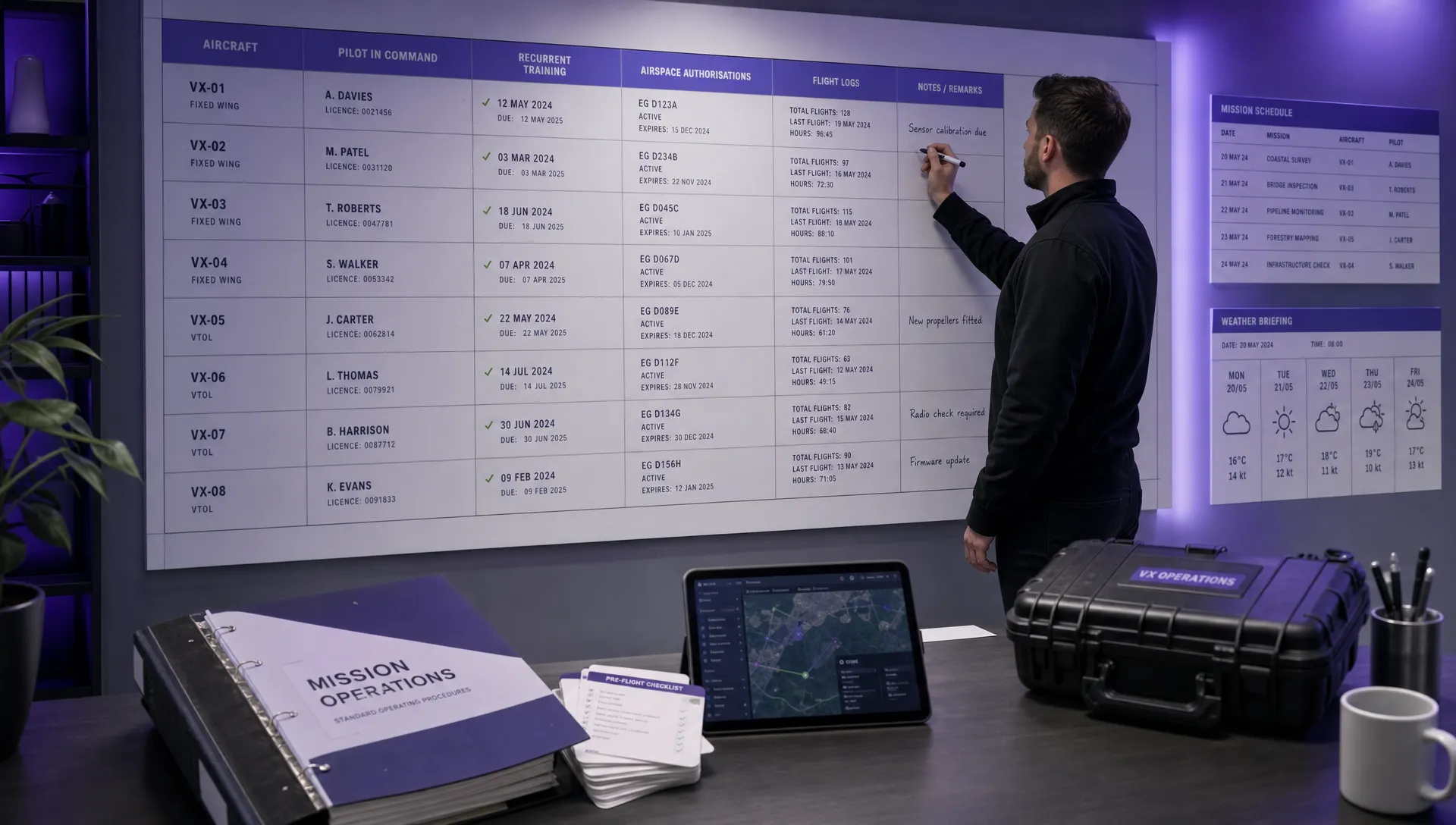 FAA Drone Licence Requirements for Commercial Pilots →
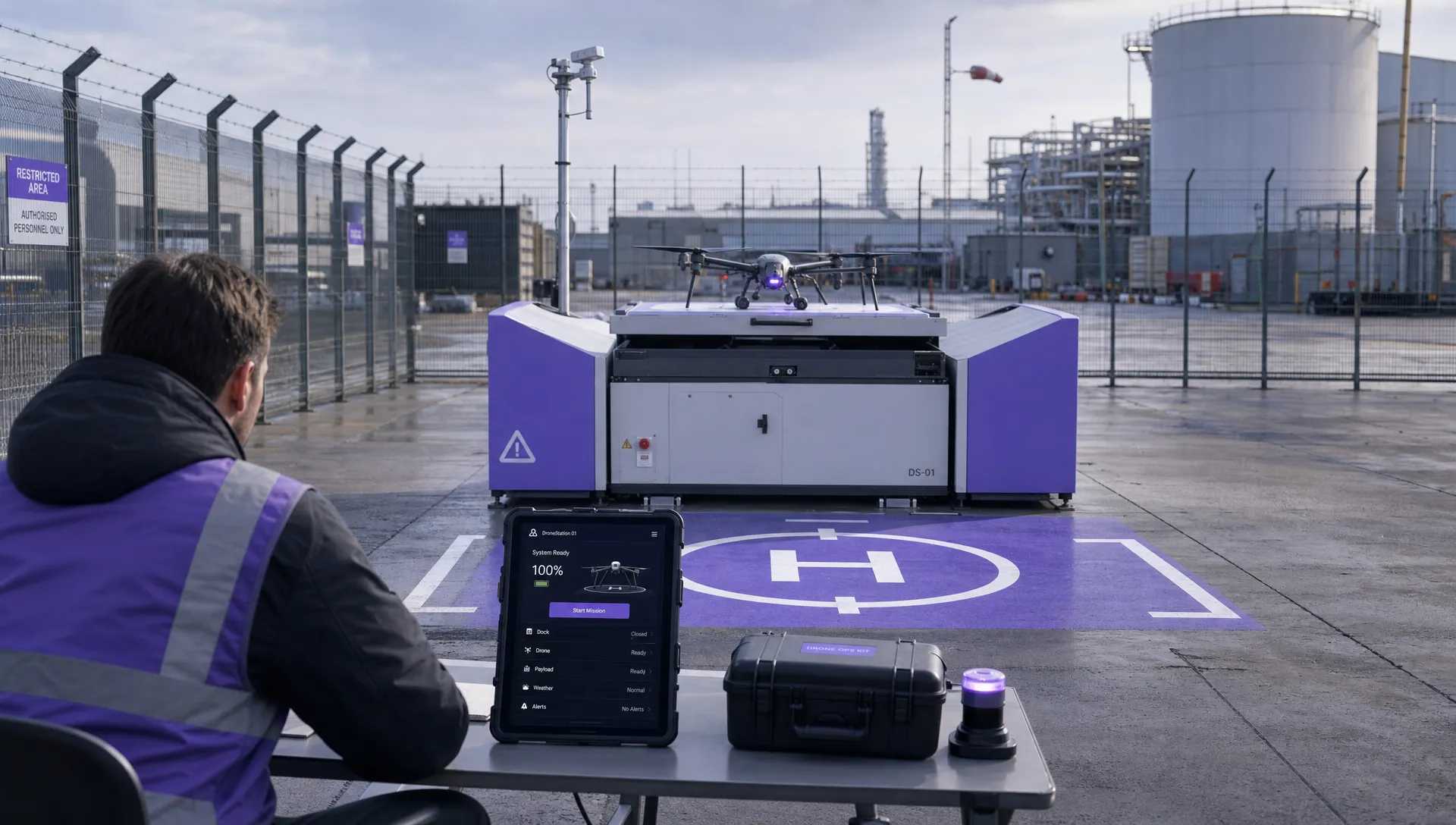 FAA BVLOS Waivers Granted: What Successful Cases Show →
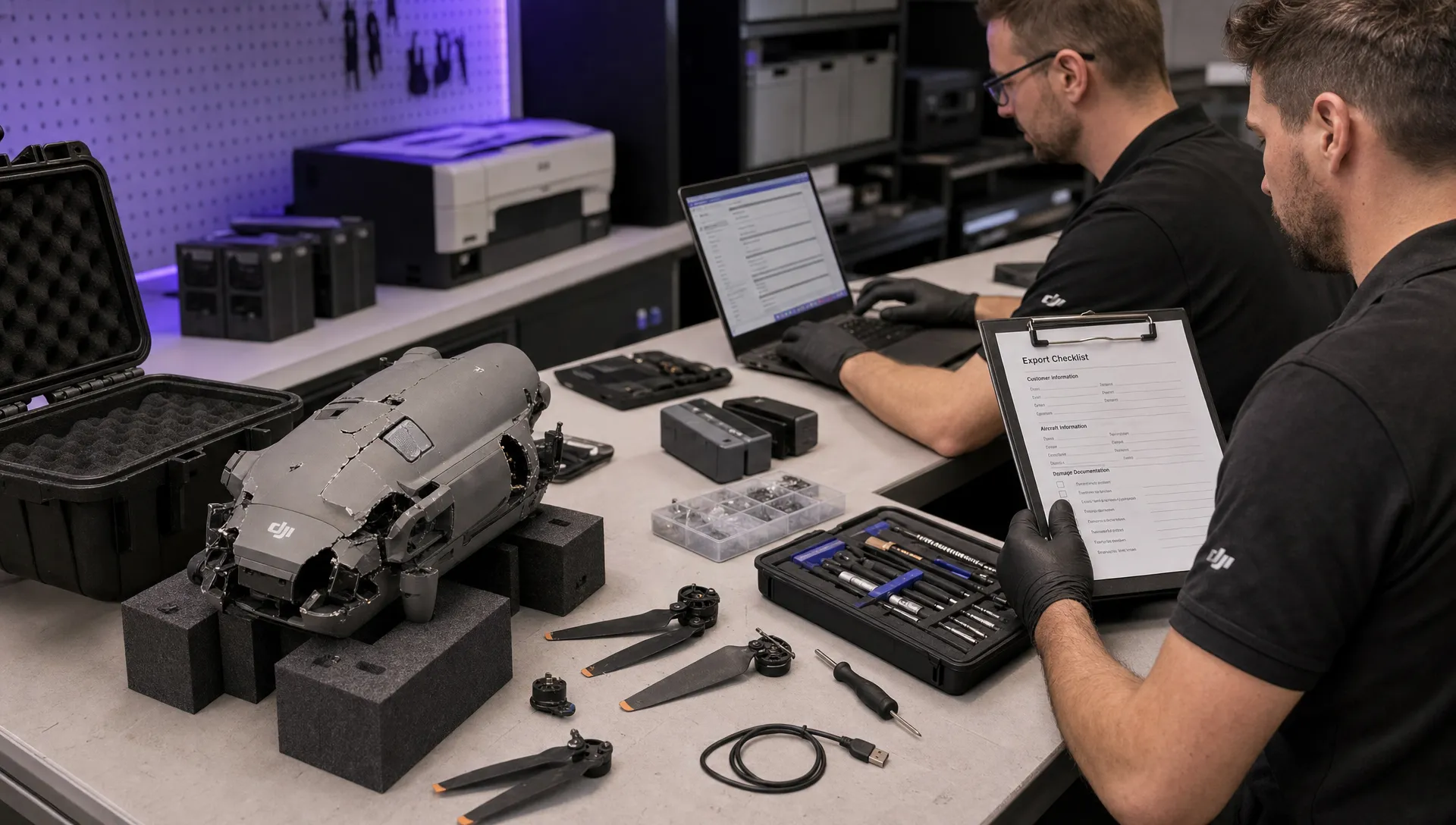 How to Export DJI Flight Logs for Incident Reviews →
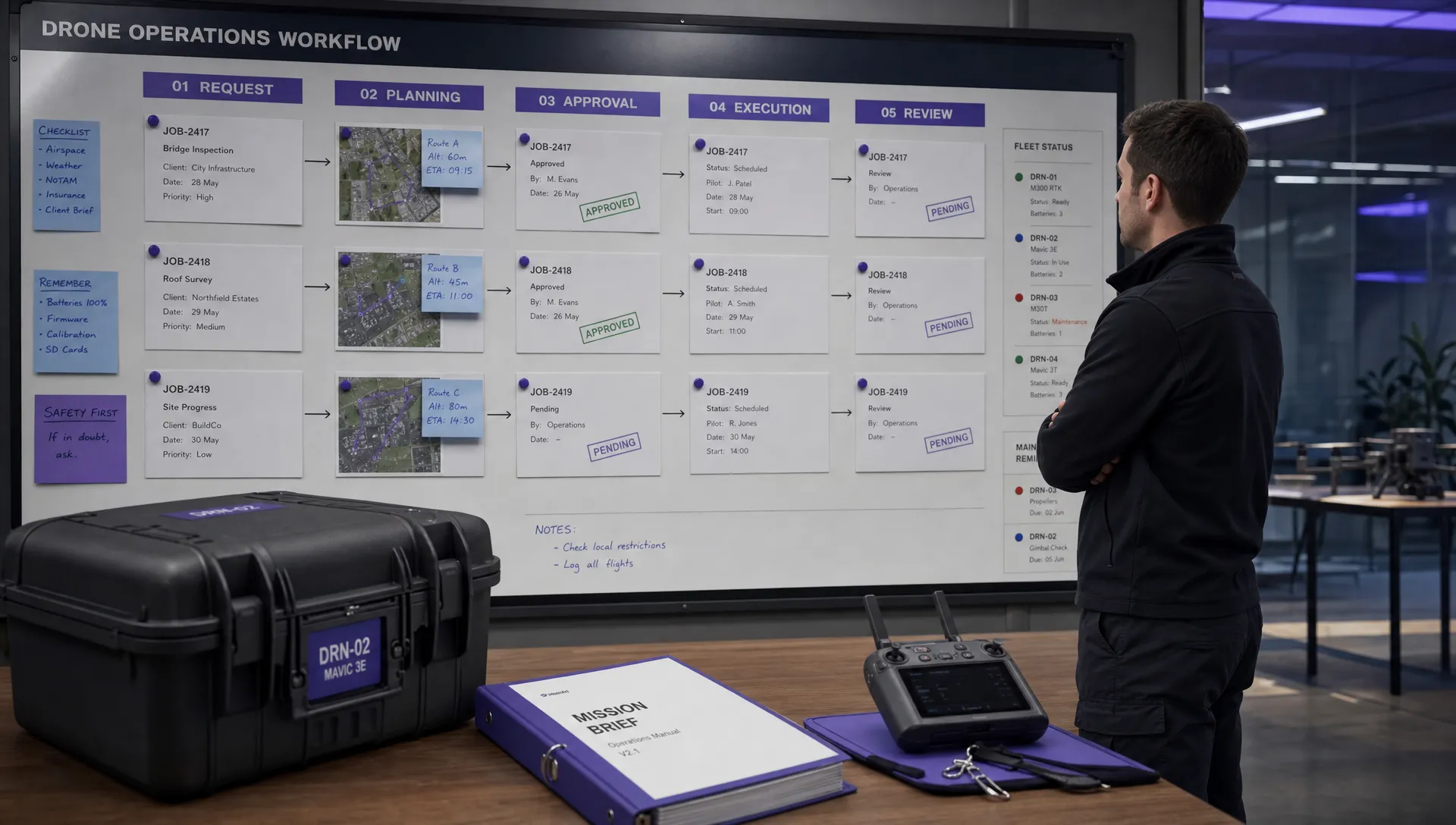 Drone Safety and Legal Duties for Business Operations →
 EASA Drone Regulations: Open, Specific and Certified Categories →