
Your Guide To Commercial Drone Services In 2026
When you hear "commercial drone services," don't just picture a flying gadget. Think bigger. These aren't just for hobbyists anymore; we're talking about professional operations where drones (or UAVs) are put to work to get real business results. The goal is to collect data, produce incredible aerial media, or handle logistics in a way that’s far safer and more efficient than the old methods.
What Exactly Are Commercial Drone Services?
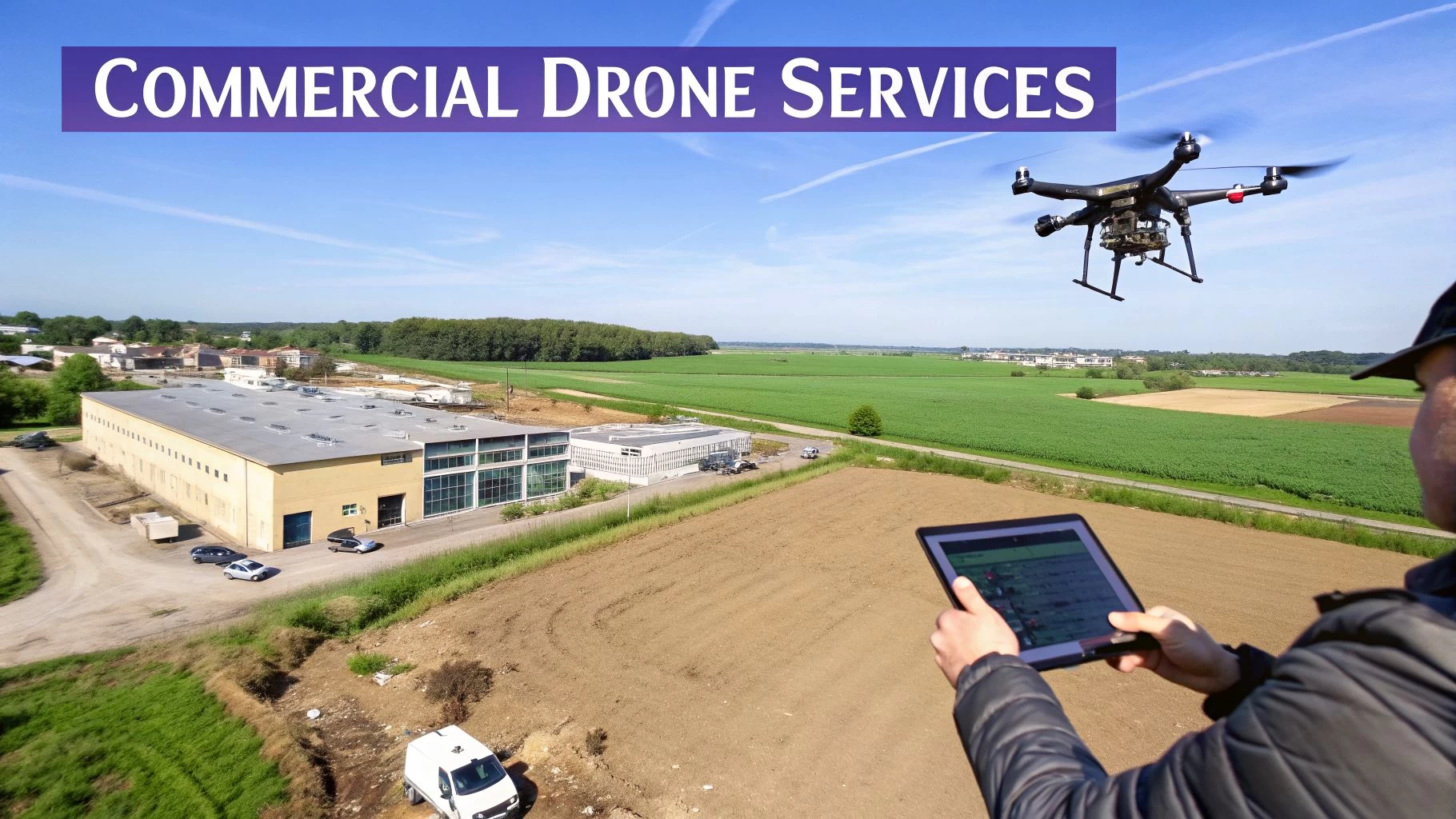
It’s easy to get fixated on the drone itself, but the real value is in the information it brings back. A drone is just a high-tech tool—a flying platform for a sophisticated camera or sensor. What businesses are really buying is the actionable intelligence it provides, whether that's a razor-sharp 3D map of a construction site or a thermal scan revealing faulty panels on a solar farm.
This industry has blown past its hobbyist roots and is now a seriously professional field. The global commercial drone market was pegged at USD 13.86 billion in 2024 and is expected to rocket to an eye-watering USD 65.25 billion by 2032. This isn't just hype; it's being driven by smarter regulations and a massive appetite for automated, data-driven solutions across almost every industry you can think of.
The Three Pillars of a Drone Service
At its core, any professional drone service is a blend of three key elements, all working together to solve a specific business problem:
- Advanced Hardware: This is the drone, of course, but also the specialized gear it carries. Think high-resolution cameras, thermal sensors, or LiDAR scanners tailored for the job.
- Skilled Operation: You can't just unbox a drone and go. A certified, experienced pilot is absolutely essential for flying safely, legally, and effectively.
- Data Processing: Raw footage or sensor data is just noise. The magic happens when it's processed into something useful, like a detailed inspection report, a topographic map, or a polished marketing video.
This powerful combination gives businesses a completely new perspective on their assets and operations. Suddenly, they can spot problems before they become expensive disasters, track progress with incredible accuracy, and create visual content that truly stands out.
The real product of any commercial drone service isn't the flight—it's the decision-making power that comes from the data collected during that flight.
Taming the Complexity
As the industry matures, so does the challenge of managing it all. Professional drone operators are juggling a lot—client proposals, detailed flight planning, constant compliance checks, and equipment maintenance, to name a few.
This is where dedicated platforms come in. Tools like Dronedesk are now the backbone of a well-run drone business, handling the complex admin so operators can focus on flying. This ensures every mission is not just successful, but also safe, compliant, and fully documented. If you want to dive deeper into the nitty-gritty, check out our detailed guide on aerial drone services.
How Drones Are Actually Being Used in Major Industries
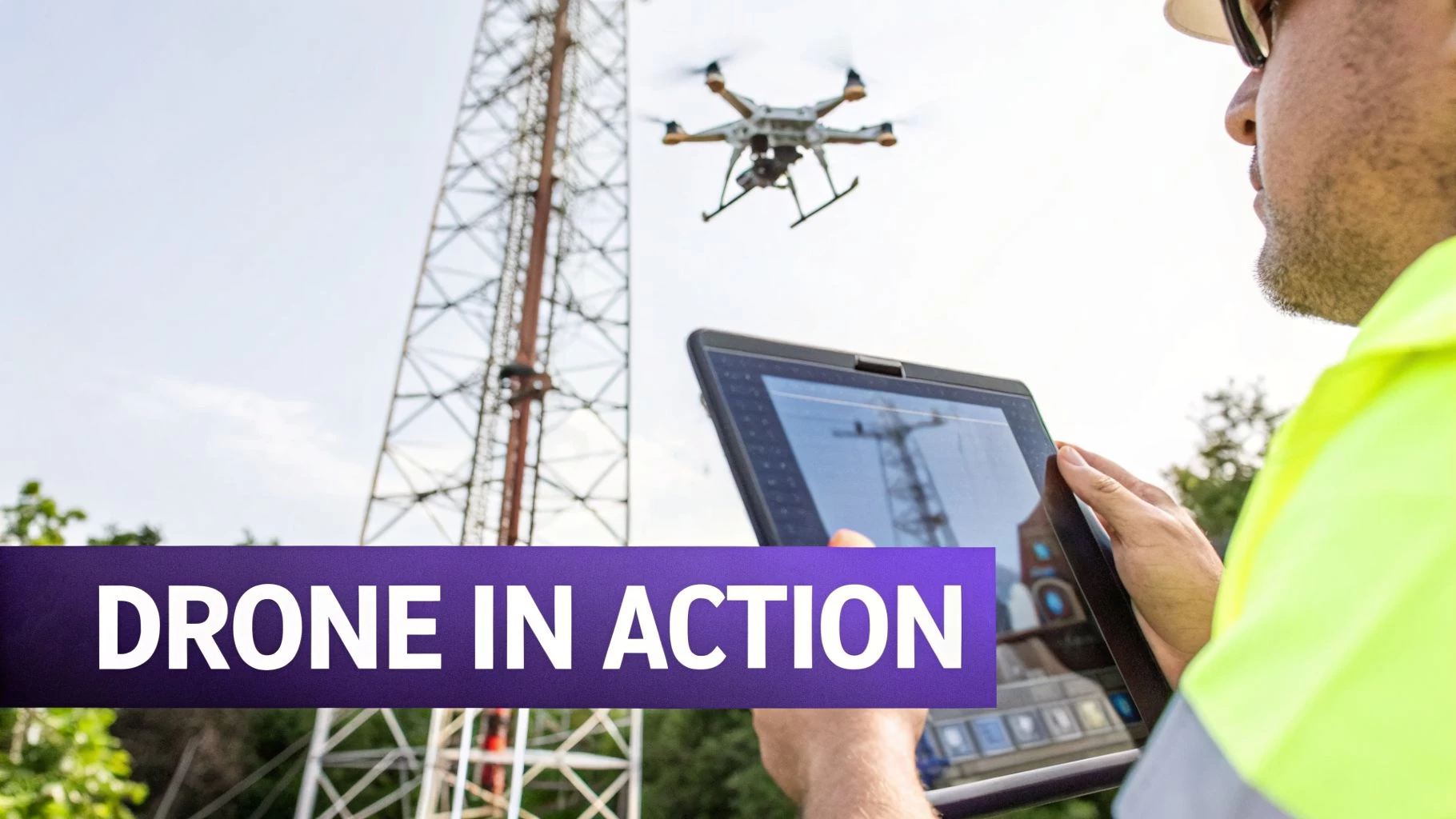
It’s one thing to talk about drones in theory, but it’s another to see them in action. These aren’t just fancy toys; they’re powerful tools that are completely changing the game in some of the world’s toughest industries. Whether it’s a high-rise construction site or a massive farm, drones are tackling old problems in ways that are faster, cheaper, and a whole lot safer.
The market growth tells the story. North America's commercial drone services market was valued at USD 12.55 billion in 2025 and is expected to hit USD 15.02 billion in 2026. Projections show it soaring to USD 36.76 billion by 2031. This isn't just hype; FAA data confirms there are 349,580 registered commercial drones in the U.S. alone. Why the boom? Because businesses are slashing costs—sometimes by as much as 90%—by replacing dangerous manned jobs with a drone. You can dig deeper into the numbers on the North American drone services market.
This growth isn't just about money; it’s a fundamental shift in how things get done on the ground—and in the air. Let's look at where they're making the biggest impact.
Construction and Infrastructure
A construction site is practically a playground for a drone. Before drones, checking on a big project meant slow, manual surveys and sending people up scaffolding for risky inspections. Now, a single drone flight can do in a few hours what used to take a team days to complete.
Drones generate incredibly detailed 3D models and orthomosaic maps, giving project managers a god-like view of the entire site in near real-time. This lets them track how much earth has been moved, make sure the build is matching the blueprints, and catch problems before they turn into expensive rework. For infrastructure like bridges, dams, and cell towers, it’s a no-brainer—inspections are safer and more thorough than ever.
- Problem Solved: Slow progress tracking and hazardous manual inspections.
- Data Collected: High-resolution imagery, 3D point clouds, and LiDAR data.
- Tangible Outcome: Survey times cut by over 75%, dramatically improved site safety, and early detection of costly construction errors.
Think about this: a drone can fly the exact same pre-planned path every single week, creating perfectly aligned progress reports. You get a consistent data stream that's impossible to get manually, giving stakeholders an unmatched view of the project's entire lifecycle.
Energy and Utilities
The energy sector has to manage a staggering amount of infrastructure, often in the middle of nowhere. We're talking about endless miles of power lines, towering wind turbines, and huge solar farms. Inspecting all of it used to mean hiring expensive helicopters or sending crews out for dangerous line-of-sight checks.
Drones have flipped that script. Kitted out with thermal and high-zoom cameras, a drone can safely spot tiny stress fractures on a wind turbine blade or identify an overheating component on a power line from a safe distance. This isn't just about finding problems; it's about finding them before they cause an outage, which saves money and keeps the lights on.
Agriculture and Precision Farming
In agriculture, a drone is like the ultimate farmhand. Farmers used to have to rely on intuition or tedious soil sampling to figure out what their crops needed. Now, a drone with a multispectral sensor can fly over a field and generate a detailed health report.
These maps show subtle variations in crop health that are completely invisible to the naked eye. This is the heart of precision agriculture. Instead of blanketing a whole field with water or fertilizer, farmers can apply resources with surgical precision, right where they're needed most.
- Problem Solved: Wasted resources and a lack of detailed crop health data.
- Data Collected: Multispectral and NDVI (Normalized Difference Vegetation Index) imagery.
- Tangible Outcome: Significant cost savings on fertilizer and water, better crop yields, and a smaller environmental footprint.
Public Safety and Emergency Response
When a disaster hits, every single second is critical. Drones give first responders an immediate eye in the sky, providing the situational awareness they need to make life-or-death decisions. During a fire, a drone with a thermal camera can peer through smoke to find hotspots or locate people who are trapped.
In search and rescue missions, a drone can cover huge, dangerous areas much faster than a team on foot. This aerial view helps coordinate the entire response, assess damage after a hurricane or flood, and even deliver medical supplies to places no one can reach. It's fundamentally making emergency services more effective and safer for the responders themselves.
Real Estate and Media Production
It's not all industrial work, though. Drones have become an indispensable tool for anyone in the business of creating compelling visuals. In real estate, for example, the dramatic aerial shots and smooth fly-through videos from professional real estate video services can make a property listing pop like never before.
In filmmaking and advertising, drones are capturing shots that used to require a Hollywood budget for a helicopter or massive crane. This has opened up a whole new world of creative possibilities, letting storytellers of all sizes create stunning, immersive content that grabs an audience's attention.
The best way to see the big picture is to lay it all out. Here’s a quick summary of how these services are being applied across different sectors.
Commercial Drone Services Across Industries
This table shows at a glance how drones are tackling specific problems and delivering real value.
| Industry | Primary Application | Key Benefit |
|---|---|---|
| Construction | Site Monitoring & 3D Mapping | Reduced survey times by 75%; improved safety. |
| Energy & Utilities | Asset & Infrastructure Inspection | Proactive maintenance; reduced risk to personnel. |
| Agriculture | Crop Health Monitoring | Increased yields; significant savings on resources. |
| Public Safety | Situational Awareness | Faster response times; improved operational safety. |
| Real Estate | Aerial Photography & Videography | Enhanced property marketing; more compelling listings. |
| Media & Film | Cinematography & Content Creation | Access to dynamic, low-cost aerial shots. |
From industrial inspections to creative storytelling, it's clear that commercial drone services are far more than a passing trend. They are a versatile and powerful tool that's here to stay.
Navigating Drone Regulations And Safety
Flying a commercial drone isn't the wild west; it's a professional activity governed by clear rules designed to keep everyone safe. Think of them as the "rules of the road" for the sky. Just like you need a license to drive a car on public streets, a professional drone pilot needs to be certified to fly for business.
These rules do more than just prevent accidents; they build public trust and set a baseline for quality. The best commercial drone services don't see them as a hassle. They see them as a mark of their professionalism. It’s a clear signal to clients that an operator is serious, skilled, and committed to safe, legal flights every single time. This is what separates a pro from a hobbyist.
The Cornerstone Of Compliance: FAA Part 107
While rules differ from country to country, the U.S. Federal Aviation Administration's (FAA) Part 107 is a widely respected benchmark for safe commercial drone operations. It lays out a clear framework that many other countries have used as a model. Get a handle on its core parts, and you'll understand what professional compliance looks like almost anywhere.
The main requirements under Part 107 include:
- Remote Pilot Certificate: The pilot has to pass an aeronautical knowledge exam to earn an FAA-issued certificate. This proves they understand airspace, weather, and safe operating procedures.
- Drone Registration: Any drone weighing over 0.55 pounds (250 grams) must be registered with the FAA. It's just like a license plate for a car, connecting the aircraft to its owner.
- Following the Rules of Flight: Pilots have to keep the drone within their visual line of sight (unless they have a special waiver), fly below 400 feet, and avoid flying over people or from a moving vehicle.
These aren't just random rules. They’re specifically designed to prevent conflicts with planes and helicopters and to keep people and property on the ground safe.
Why Airspace Authorizations Matter
Even with a certificate, you can't just fly a drone anywhere you want. A lot of the sky, especially around airports, is controlled airspace. Flying in these zones requires specific permission from air traffic control to make sure a drone doesn't get in the way of manned aircraft.
Getting this approval, often through automated systems like LAANC (Low Altitude Authorization and Notification Capability), is a non-negotiable step for any professional flight near an airport. It’s a digital handshake between the drone pilot and air traffic control, confirming the flight is known and approved.
Failing to get the right authorization is one of the biggest red flags of an unprofessional operator and can lead to serious fines. It's a critical safety step that protects the drone, the mission, and the entire national airspace system. A true professional checks airspace maps before every single flight, no exceptions.
Streamlining Safety With Modern Tools
Juggling pilot certificates, drone registrations, maintenance schedules, and flight authorizations can quickly become an administrative mess, especially for a growing business. Trying to track it all in spreadsheets is a recipe for mistakes and creates huge compliance risks. This is where drone operations management software becomes a lifesaver.
Platforms like Dronedesk act as a central command centre for all your compliance tasks. They take the tedious admin work off your plate, making it easy to ensure every flight is safe and by the book. These tools can automatically flag an expiring pilot license, remind you about scheduled maintenance, and even plug directly into airspace authorization systems. For a deeper look at managing these duties, check out our comprehensive commercial drone compliance guide.
By putting all this information in one place, operators can build a smooth, repeatable workflow. Flight plans get automatically checked against airspace maps, pre-flight checklists are standardised for every job, and flight logs are created and stored securely. This doesn't just make compliance easier; it builds an ironclad record of safety and professionalism that both clients and regulators will trust.
Understanding Drone Service Pricing Models
"So, how much does a drone service actually cost?" It’s the million-dollar question, and the honest answer is: it depends. The price isn't just for the flight; it's for the pilot's expertise, the high-tech gear they're using, and most importantly, the valuable data and insights that drone brings back.
Think of it less like buying a product and more like hiring a specialist. You wouldn't expect a chartered land surveyor and a wedding photographer to have the same day rate, even if they both use a camera. It’s the same with drones. Pricing is shaped by the job's complexity, the level of risk involved, and the specific technology needed. A simple aerial photoshoot of a house will naturally cost a lot less than a high-risk inspection of a wind turbine using a specialized thermal camera.
The value is clear, and it’s driving a market that’s projected to hit an incredible USD 1,755.97 billion by 2035. This boom is happening because industries are waking up to the massive return on investment from drone-captured data, particularly in the energy sector where drones slash inspection costs and make dangerous jobs safer. You can explore the commercial drone market research for a full breakdown of this growth.
Common Pricing Structures Explained
Drone service providers usually lean on one of three main pricing models. Getting your head around them helps both clients and operators agree on a fair price that reflects the value being delivered.
- Hourly or Day Rates: This is the most straightforward model, great for smaller projects or jobs where the scope isn't set in stone. A provider might charge anywhere from $150-$350 per hour, which typically covers the pilot's time, standard equipment, and the flight itself.
- Project-Based Fees: For well-defined projects like a complete construction site map or a real estate video package, a fixed fee makes the most sense. This price bundles everything—planning, flying, data processing, and the final deliverables—into a single, predictable cost.
- Subscription or Retainer Models: If a business needs drone data on a regular basis, a subscription is often the best fit. Think of a farm needing weekly crop health scans or a construction firm tracking monthly progress. This model guarantees consistent service, often at a better rate than booking one-off flights.
The best pricing model really comes down to what the client needs. A one-off job is perfect for a project fee, while ongoing operational needs are a great fit for a retainer. No matter which model you choose, clear communication about the final deliverables is what makes it work.
What Really Drives The Cost
Several key things influence the final price tag of any drone service. It's not just about how long the drone is in the air; the real cost drivers are tied to the complexity of the mission and the value of the final product.
The single biggest factor is often the payload—the camera or sensor bolted onto the drone. A standard high-resolution camera is one thing, but a survey-grade LiDAR scanner or a multi-spectral sensor can cost tens of thousands of pounds. That investment is always going to be reflected in the service price.
Another huge component is data processing. Raw data straight from the drone is rarely the final product. The real magic happens back at the office, where specialists turn gigabytes of images and data points into usable 3D models, orthomosaic maps, or detailed inspection reports. This post-processing requires powerful software and skilled analysts, which adds significant value and cost.
Finally, the risk and complexity of the mission—like flying in controlled airspace or near critical infrastructure—will always have an impact on the price. For a much deeper dive, check out our guide on how to effectively price your drone services.
A quick look at the different pricing models can help you decide which structure is the right fit for your project or business.
Comparing Drone Service Pricing Models
| Pricing Model | Best For | Pros | Cons |
|---|---|---|---|
| Hourly/Day Rate | Small, flexible, or undefined scope projects (e.g., event coverage, ad-hoc inspections). | Simple to understand; flexible for evolving needs; client only pays for time used. | Can be hard to budget for; potential for costs to escalate if scope creeps. |
| Project-Based Fee | Clearly defined projects with specific deliverables (e.g., real estate video, site survey). | Predictable, fixed cost; focuses on the final result, not the hours worked. | Less flexible if project requirements change; provider must accurately estimate effort. |
| Subscription/Retainer | Businesses needing regular, ongoing data collection (e.g., agriculture, construction monitoring). | Ensures consistent service; often more cost-effective for recurring work; builds a strong client relationship. | Requires a longer-term commitment; may not be suitable for one-off needs. |
Choosing the right model is all about aligning the pricing structure with the project’s goals and the client’s needs, ensuring everyone is clear on the value being provided from the get-go.
Should You Hire A Drone Service Or Build Your Own Program?
So, you're at a crossroads: do you bring in a professional drone service for your project, or do you take the plunge and build your own drone program from the ground up? This is the classic "buy versus build" dilemma, and it’s about more than just getting a drone in the air. You’re weighing immediate access to seasoned experts against the long-term control of having your own in-house team.
There's no single right answer here. The best choice really depends on your specific situation.
Hiring a professional drone service is like calling in a specialist contractor. You instantly get certified pilots, top-of-the-line equipment, and years of experience without spending a penny on hardware or training. This approach keeps your risk low, as the provider shoulders all the compliance headaches, insurance, and maintenance. It's the perfect fit if you need drone data for one-off projects or just want to test the waters without a major commitment.
On the other hand, building your own program is a long-term play. It gives you maximum control and lets you weave drone operations directly into your daily work. For a large construction firm needing to monitor multiple sites every week, an in-house team quickly becomes the more cost-effective option. The trade-off? A hefty initial investment in drones, pilot training, and the ongoing grind of managing compliance.
This decision tree helps visualize the core questions that will point you down the right path.
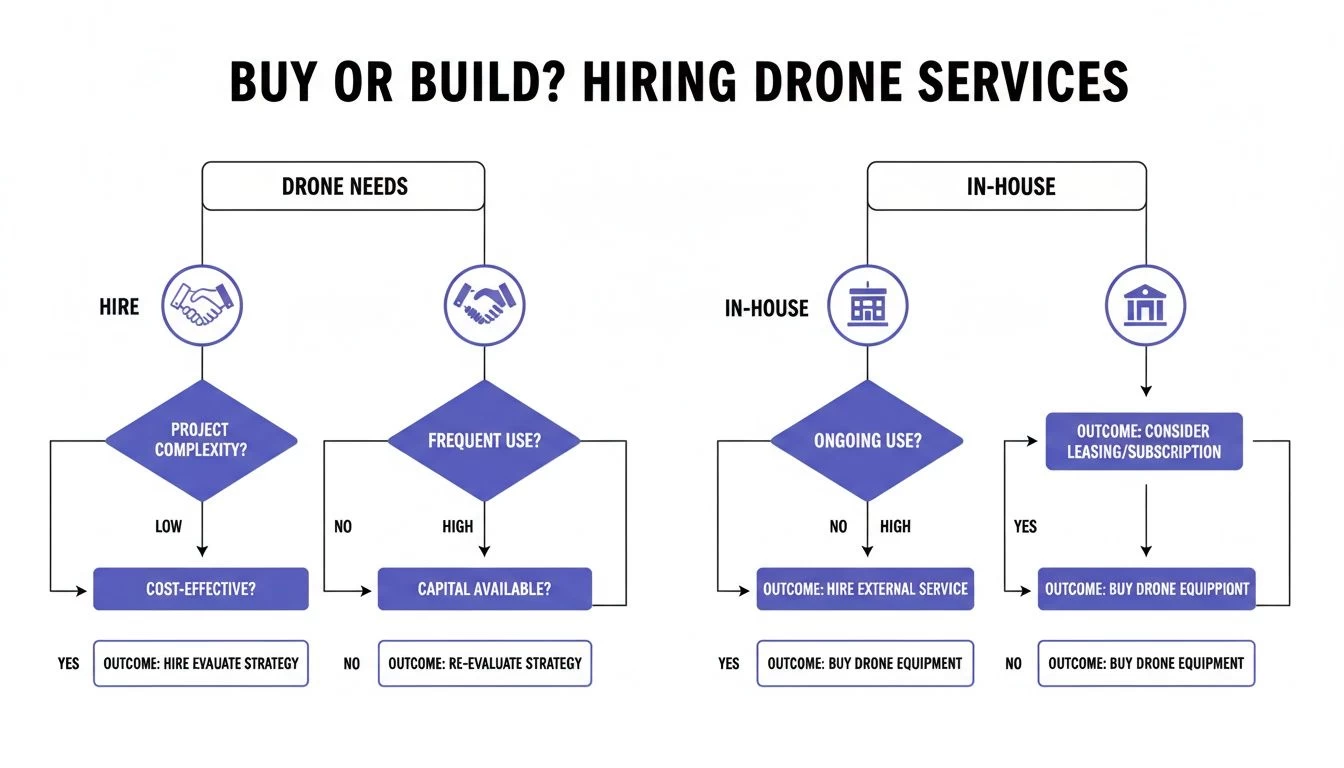
Ultimately, it boils down to two things: how often you'll fly and what resources you have internally. Occasional needs point toward hiring, while high-volume, integrated operations make a strong case for building.
Key Questions To Guide Your Decision
To make a practical choice, your team needs to tackle a few critical questions. Your answers will shine a light on the most logical and financially sound path for your business.
- How often will you need drone services? If you’re looking at a handful of projects a year, hiring is almost always the smarter move. But if you need flights daily or weekly across multiple sites, the cost of outsourcing will start to add up fast, making an in-house team look much more appealing.
- What's your budget for equipment and training? A pro-grade drone with a specialized sensor like LiDAR or thermal can easily run into the tens of thousands. Factor in pilot certification, insurance, and software, and the upfront cost for an in-house program can be a real eye-opener.
- Do you have the capacity to manage compliance? A drone program isn't just about flying; it's about navigating a maze of regulations, from pilot licenses to airspace authorizations. A service provider handles all of this for you. If you go in-house, someone on your team needs to own this critical responsibility.
Comparing The Two Approaches
Let's lay out the pros and cons of each path to make the choice crystal clear.
A common mistake is underestimating the hidden admin costs of an in-house program. The total cost of ownership goes far beyond the drone itself—think software subscriptions, insurance renewals, and the staff hours spent on compliance and flight logging.
Hiring a Drone Service Provider
- Pros: No big capital investment, immediate access to specialized skills and gear, and zero liability for compliance and insurance.
- Cons: Higher cost per project, less flexibility for spur-of-the-moment tasks, and a bit disconnected from your internal workflows.
Building an In-House Drone Program
- Pros: Complete control over operations and scheduling, lower long-term costs if you fly a lot, and seamless integration with your existing business processes.
- Cons: High upfront investment, ongoing operational costs, and you're on the hook for all training, safety, and regulatory compliance.
How To Scale Your Drone Operations Effectively
Growing from a one-person show with a single drone to a full-fledged operation is a huge jump. The simple spreadsheets and paper checklists that got you by as a solo pilot quickly turn into a messy bottleneck. All of a sudden, you're trying to keep track of multiple pilots, a growing fleet of drones, and a pipeline of projects that are getting more complex by the day. This is the exact point where a lot of promising drone businesses hit a wall.
The game changes. It’s not just about being a good pilot anymore; it's about managing a ton of moving parts. Without a proper system, crucial details start falling through the cracks. Are all your pilots' certifications up to date? Was a risk assessment actually completed for tomorrow's big job? Is every single flight being logged correctly for the CAA? Trying to answer these questions by digging through paperwork wastes time you don't have and opens you up to some serious risks.
Moving Beyond Manual Mayhem
Trying to scale a professional drone service with a jumble of disconnected tools is more than just inefficient—it’s a recipe for disaster. It creates drag at every single step, from sending a client a quote to delivering the final report. This administrative headache doesn't just slow down your growth; it pulls your skilled pilots away from flying and into mind-numbing paperwork.
The real barrier to scaling a drone business isn't a lack of flying opportunities. It's the operational chaos that comes from managing dozens of moving parts without a proper system to connect them.
To grow your business and stay profitable, you need a single source of truth. Think of it as a central nervous system for your entire operation. This is exactly what drone operations management platforms were built for.
The Power of an Operations Management Platform
Imagine a platform like Dronedesk as the mission control for your entire drone business. It's designed to fix the real-world problems that pop up when you start to scale, turning all those disjointed, manual tasks into a smooth, automated workflow. Instead of drowning in admin, you can run everything from one place.
These systems tie together every stage of a job:
- Client & Project Management: Whip up and send professional quotes, then flip them into live jobs with a single click.
- Team & Fleet Management: Keep tabs on pilot qualifications, drone maintenance schedules, and what gear is assigned to which job. This ensures your team is always compliant and ready to fly.
- Automated Flight Planning: Generate rock-solid flight plans in minutes, not hours. This includes everything from airspace checks and weather forecasts to detailed risk assessments.
- Streamlined Logging & Reporting: Automatically log every flight detail and generate the reports you need for regulatory compliance and happy clients.
For example, this is a typical dashboard view in Dronedesk, where you can get a quick overview of upcoming jobs, important alerts, and what your team is up to.
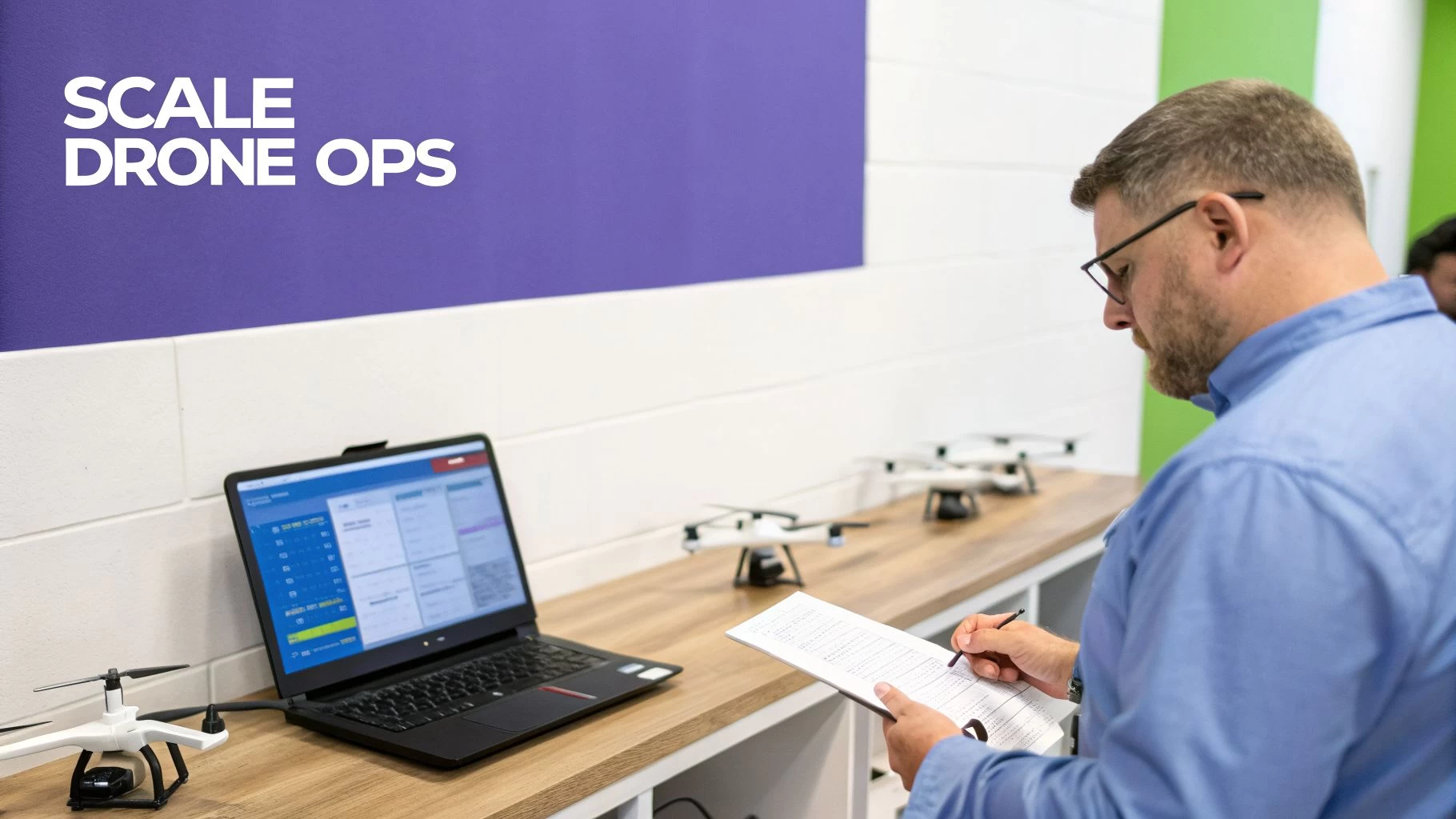
This kind of centralised view gives you an instant health check on your business, showing you what needs attention and confirming that everything is good to go. By automating all the repetitive admin, you free up your team to do what they're best at: flying missions and looking after clients. That’s how you build a business that can actually grow without falling apart at the seams.
Got Questions About Commercial Drone Services?
Dipping your toe into the world of commercial drones can feel a bit overwhelming. Let's clear the air and answer a few of the most common questions people have, whether you're looking to hire a service or start your own.
How Much Does It Cost To Hire A Commercial Drone Service?
This is the big one, and the honest answer is: it depends. You could be looking at a few hundred pounds for a simple property photoshoot, or several thousand for a complex industrial inspection using specialized gear. It all comes down to the equipment needed, how complex the job is, and what you need delivered at the end.
Most operators structure their pricing in one of three ways:
- Hourly Rates: Great for straightforward jobs. Expect to pay somewhere between $100 and $300 per hour.
- Project-Based Fees: This is a fixed price for a clearly defined job, like a full roof survey or a mapping project.
- Retainer Models: If you need regular work, like weekly progress shots on a construction site, a monthly retainer is often the way to go.
Before any work starts, always insist on a detailed quote. It should spell out exactly what's included, what the final deliverables are, and confirm they have the right insurance.
Do I Need A License To Fly A Drone For Work?
Absolutely. If you're using a drone for anything other than a hobby, you need to be certified. In the US, for instance, pilots need to have the FAA's Part 107 Remote Pilot Certificate. It's a non-negotiable legal requirement in most parts of the world.
Flying a drone for commercial purposes without the proper certification is illegal and asking for trouble, including some hefty fines. Any professional you hire should be able to show you their certification and insurance without hesitation—it's the clearest sign they're legitimate and take safety seriously.
What’s The Real Difference Between A Hobby Drone And A Commercial One?
You might see some pretty impressive consumer drones on the market, and some can certainly handle basic professional work. But when you get into serious industrial jobs, the difference becomes crystal clear. It's all about advanced capability and rock-solid reliability.
Commercial-grade drones are built tough to handle rough environments. They usually have far superior cameras, much longer flight times, and are designed to carry specific tools for the job. We're talking about things like LiDAR scanners, thermal cameras, or multispectral sensors—specialized payloads essential for gathering the kind of data that a consumer drone just can't touch.
Ready to get your drone operations organized and scale your business? Dronedesk is the all-in-one platform built to make managing your fleet, team, and compliance feel effortless. Find out more and start your free trial today.
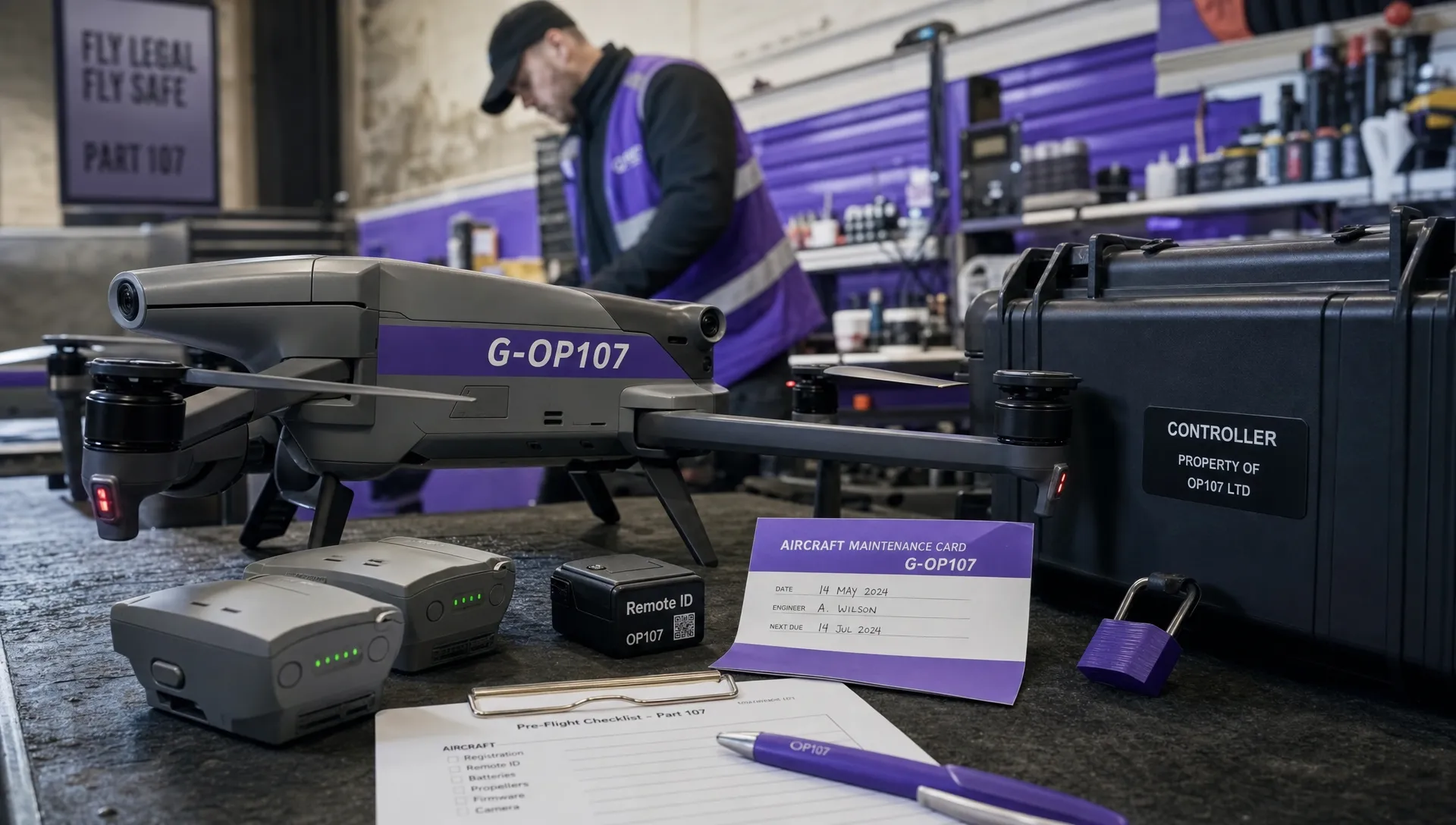 FAA Small UAS Rule: Key Requirements for Operators →
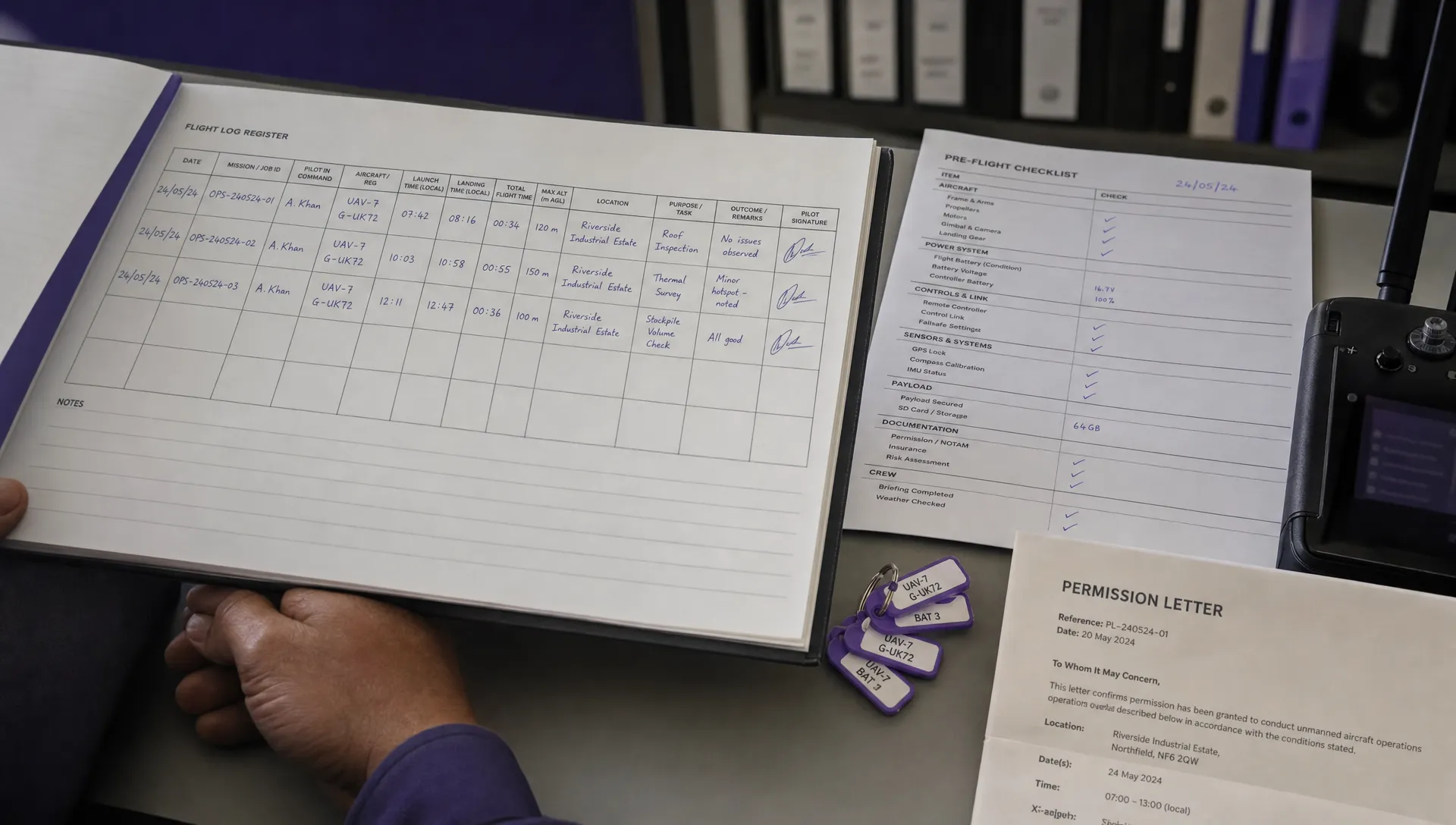 How to Build a Drone Pilot Flight Log That Is Audit Ready →
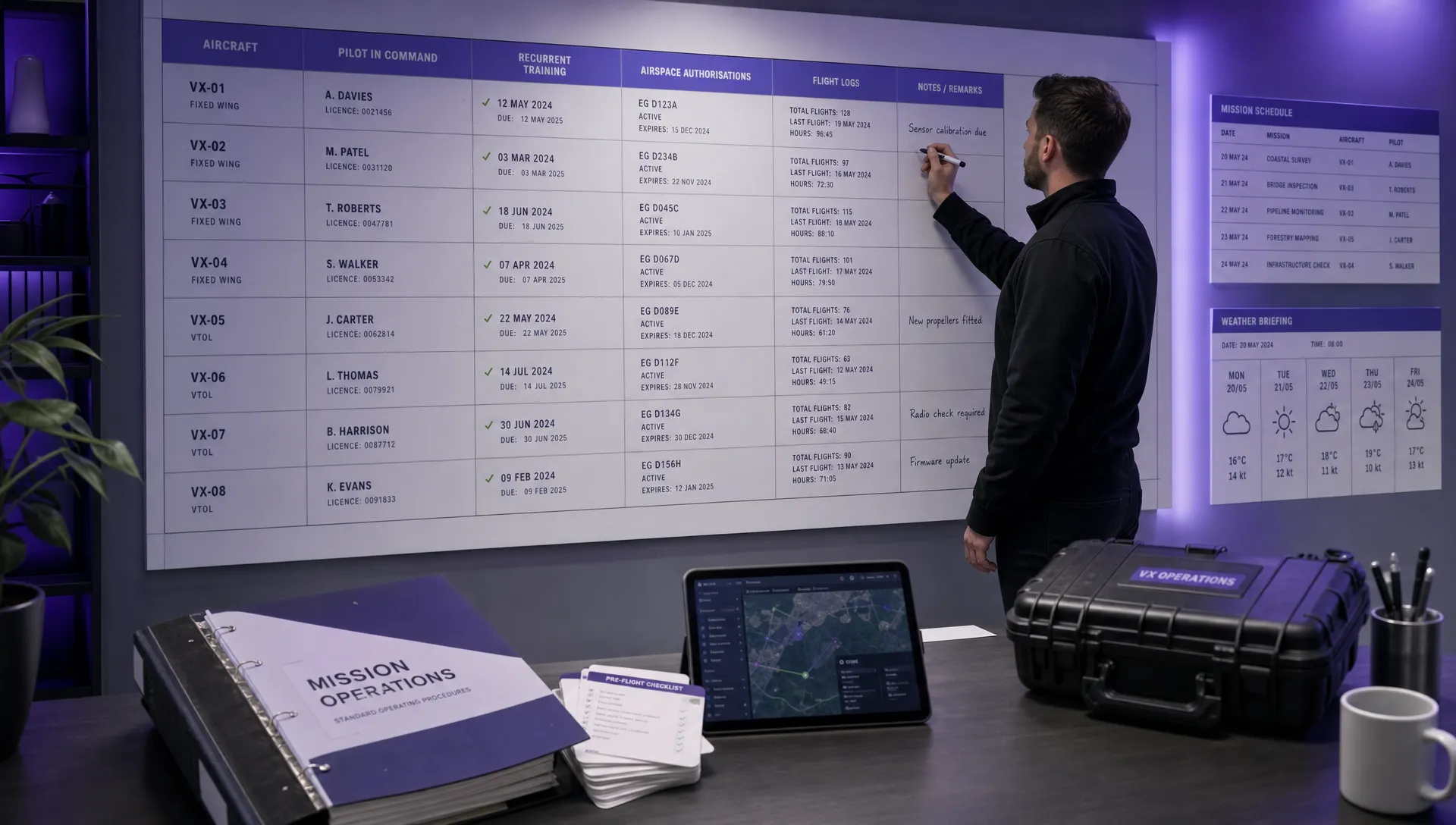 FAA Drone Licence Requirements for Commercial Pilots →
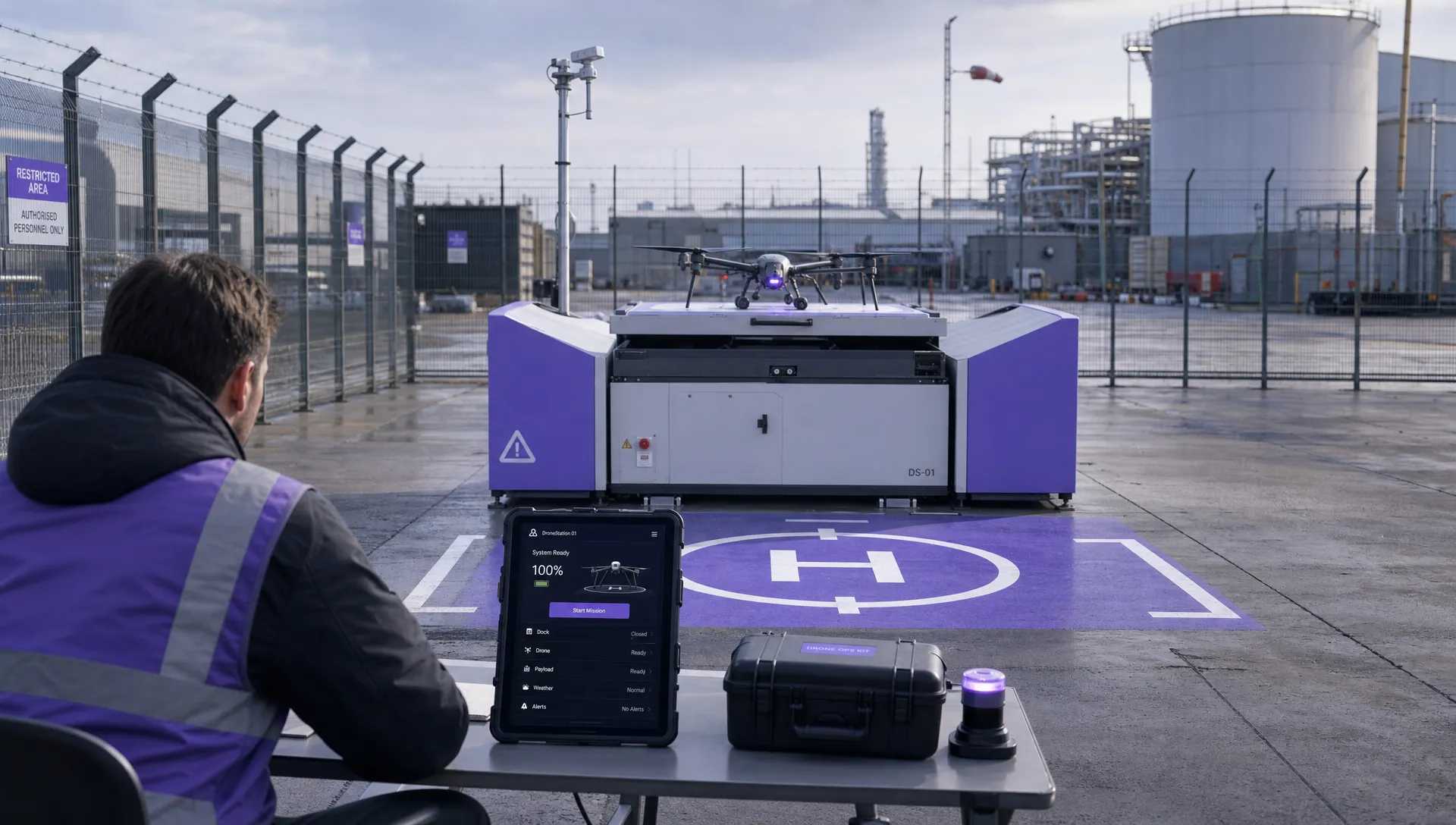 FAA BVLOS Waivers Granted: What Successful Cases Show →
 How to Export DJI Flight Logs for Incident Reviews →
 Drone Safety and Legal Duties for Business Operations →
 EASA Drone Regulations: Open, Specific and Certified Categories →
 What the BVLOS ARC Report Means for UAS Operators →
 Free Drone Pre-Flight Checklist for Commercial Missions →
 Contingency Volume and Flight Risk Buffer Explained →