
A Guide to Drone Flight Data Systems
Think of flight data systems as the central nervous system for your entire drone operation. They're the magic behind the scenes, capturing, crunching, and translating every tiny detail of a flight—from airspeed to battery voltage—into information you can actually use. This is what turns a simple drone into a reliable, professional tool.
Understanding Your Drone's Nervous System

Imagine trying to navigate a maze completely blindfolded. You might get lucky and stumble your way out, but it would be chaotic, dangerous, and you’d have zero chance of repeating it consistently. Flying a professional drone mission without a solid flight data system is pretty much the same thing. You’re just guessing when you need to be precise.
These systems aren't just a technical headache; they are the very core of your operational awareness. They feed you a constant stream of information that answers the big questions, both in the moment and after you've landed: Was the flight path dead-on? Did the battery hold up like it was supposed to? Did we push any operational limits? Answering these with confidence is what separates the pros from the amateurs.
The Foundation of Modern Operations
Getting a handle on your drone’s data is the key to improving every single part of your business. It's how you boost safety, prove compliance to regulators, and squeeze every bit of performance out of your gear. A flight data system does this by creating an objective, indisputable record of every move the drone makes. This digital proof is pure gold for post-flight analysis, incident investigations, and pilot training.
The rapid adoption of this technology across aviation tells the whole story. The global flight data monitoring market was valued at around USD 6.03 billion in 2025 and is expected to climb to USD 9.67 billion by 2032. This boom is all about serious investment in analytics and safety monitoring.
A flight data system turns ambiguity into certainty. It replaces "I think the flight went well" with "I know the flight was successful because the data confirms it."
At a high level, a robust flight data system performs a few essential jobs. Let's break them down.
| Core Functions of a Drone Flight Data System | ||
|---|---|---|
| Function | Description | Impact on Operations |
| Data Capture | Gathers real-time information from all onboard sensors, including GPS, IMU, battery, and motors. | Provides a complete, second-by-second picture of what the drone is doing and how it's performing. |
| Data Processing | Translates raw sensor readings into understandable metrics like speed, altitude, and flight duration. | Makes complex information accessible and ready for immediate review or deeper analysis. |
| Data Storage | Securely saves flight logs and telemetry data, either on the drone, the controller, or in the cloud. | Creates a permanent, auditable record for compliance, maintenance tracking, and incident review. |
| Data Visualization | Presents flight information through intuitive interfaces like 2D/3D flight path replays and performance graphs. | Allows pilots and managers to quickly spot trends, identify anomalies, and understand flight performance at a glance. |
Ultimately, having these functions working together is what empowers you to make smarter, safer, and more efficient decisions for your drone program.
From Raw Numbers to Actionable Intelligence
The end goal here is to make sense of the mountain of information your drone collects. This is where a proper flight data system really shines. It doesn't just spit out numbers; it organizes them into clean reports, visual replays, and performance dashboards that tell a story.
This journey from raw data to real insight is critical for a few key reasons:
- Improved Safety: You can spot risky flight patterns or early signs of component wear long before they cause an accident.
- Simplified Compliance: It automatically generates the logs required by aviation authorities like the FAA or EASA, saving you a massive headache.
- Enhanced Efficiency: You can optimize mission plans, battery cycles, and maintenance schedules based on hard data, not guesswork.
Getting a grip on the fundamentals of UAV data collection is the first step toward building a safer, smarter drone program. Throughout this guide, we’ll dig into how you can manage this flow of information, from the moment it's captured to its final use in fleet management and beyond.
Deconstructing Your Flight Data System
Flying a drone without a solid flight data system is like trying to build a house without a blueprint. You might get something standing, but it won't be safe, stable, or meet any standards. Every single piece of that system, from live telemetry to the data formats used, plays a critical part in turning raw flight information into real-world insights for safety and performance.
The Core Components of Your Flight Data System
Think of your flight data system as the drone's central nervous system. It’s made up of a few key parts that work together:
- Telemetry is the drone's live heartbeat, streaming real-time vitals like speed, altitude, and battery level back to the pilot.
- Flight logs are the mission's official diary, recording every single command, system event, and environmental reading for later review.
- Sensors act as the drone's senses, constantly gathering data on its position (GPS), orientation (IMU), and the world around it.
- Data storage is the drone's memory, saving those crucial logs to an SD card or syncing them up to the cloud.
- Data formats (like ULOG and CSV) are the languages used to structure all this information so it can be understood and shared.
Getting a handle on how these pieces fit together is the first step toward building a truly data-driven drone operation.
Understanding Telemetry and Flight Logs
At a glance, telemetry and flight logs seem similar, but they serve two very different purposes.
Telemetry is all about the "right now." It's a constant, live feed of data flowing from your drone to your ground control station. For example, a telemetry stream might give you a velocity update every 100 milliseconds, letting you react instantly if something looks off.
Flight logs, on the other hand, are the comprehensive story of the entire mission, saved after you land. You can download these files—often in ULOG or CSV format—to replay a flight path in 3D or dig deep into a timeline of battery voltage and motor performance.
“A clear flight log is like a forensic diary; it reveals the story behind every altitude change and power draw.”
Pilots use both to get the full picture. If you see a weird spike in the live telemetry, you can go back to the flight log to cross-verify the anomaly and figure out exactly what happened.
Exploring Sensors and Data Storage
Your drone is packed with an array of sensors that work together to paint a precise picture of its flight. The most common ones include:
- GPS units for pinpointing its exact location on the globe.
- IMUs (inertial measurement units) to track its orientation and motion.
- Barometers for accurate altitude and air pressure readings.
- Magnetometers to provide heading and compass data.
These sensors feed a constant stream of raw data into the flight system, which becomes the foundation for every insight you'll generate later.
How and where you store this data—your data storage choice—has a big impact on how quickly you can access and analyze it. Here’s a quick comparison of the usual suspects:
| Storage Medium | Capacity | Access Speed | Usage Scenario |
|---|---|---|---|
| SD Card | Up to 512 GB | 80 MB/s | Onboard local logs for individual flights |
| Cloud Sync | Unlimited | Dependent on bandwidth | Fleet-wide data aggregation and team access |
| Internal Memory | 16–64 GB | 200 MB/s | Quick backup on a controller or device |
Choosing the right storage is a balancing act between your mission's needs, your budget, and your internet connectivity. A solo operator might be perfectly happy with SD cards, while an enterprise managing a fleet will almost certainly lean on cloud integrations for shared dashboards and analysis.
Comparing Data Formats
Picking the right data format is about making sure all your tools can speak the same language. It prevents headaches down the line. The big three you'll run into are:
- ULOG
- A binary format built for high-frequency sensor data.
- It gives you smaller file sizes and loads much faster.
- CSV
- A simple text-based format that's perfect for opening in a spreadsheet.
- It's universally compatible but creates much larger files.
- MAVLink Logs
- A rich format used by specific autopilot systems.
- It can handle more complex messages and custom extensions.
If you're running a mixed fleet of drones, you'll likely need some kind of converter or middleware to get everything into a standard format. This is where platforms like Dronedesk come in handy, as their syncing capabilities can automate this translation and save you from endless manual file conversions.
Tips for Effective Format Management
- Always keep a copy of the raw log file alongside any converted versions. You never know when you'll need the original.
- Get into the habit of labeling every log with a flight ID, date, and drone serial number. Traceability is key.
- For large-scale operations, use scripts or APIs to batch-process your logs.
This kind of disciplined approach cuts down on errors and dramatically speeds up your reporting, especially when you're dealing with hundreds of missions per month.
Bringing It All Together
By understanding each of these building blocks—telemetry, logs, sensors, storage, and formats—you're ready to design a flight data system that can grow with you. Whether you're a solo pilot analyzing a single flight or an enterprise manager overseeing a massive fleet, getting this foundation right ensures your operations are safe, compliant, and powered by data.
Next up, we'll follow the journey of this data, tracing how raw sensor values are transformed into powerful dashboards and reports during the analysis phase.
Tracing Data From Capture to Insight
A drone's flight data starts its life as a chaotic jumble of raw numbers—a digital language only its internal parts can understand. To be of any use, this stream of information has to go on a journey, transforming from abstract code into clear, actionable intelligence. This whole process is the bread and butter of modern flight data systems, turning what the drone experiences into a story a pilot or manager can actually use.
The story begins the moment the props start spinning. Onboard sensors—the drone's eyes and ears—are capturing thousands of data points every single second. This isn't just a simple location ping; it's everything from precise GPS coordinates down to the tiny, constant adjustments the IMU (inertial measurement unit) makes to keep the aircraft stable. Think about how systems like GPS tracking technology work; it’s a similar principle of collecting and transmitting data, just on a much more complex scale.
This flood of information is handled in two main ways. It's either beamed down to the ground control station in real-time as telemetry, or it’s carefully recorded in flight logs on an SD card or internal drive.
The infographic below gives a clean, simple visual of this fundamental three-step flow, from capture right through to storage.

As you can see, telemetry gives you the live feed, while the onboard sensors are busy logging all the nitty-gritty details for a deep dive after the flight.
Turning Raw Data into Something Meaningful
Once the mission is over and the drone is back on the ground, the raw log files are fed into specialized analysis software. This is where the real magic happens. The software acts like a translator, taking those dense lines of code and turning them into formats that make immediate sense to us humans. It's like turning a complex scientific paper into a summary with easy-to-read charts and graphs.
First, the software cleans and organizes the data, fixing any errors or filling in gaps. Then, it starts the visualization process, which can look like a few different things:
- 2D and 3D Flight Replays: You can literally watch the entire mission unfold on a map, seeing the drone's exact path, altitude changes, and speed at every single moment.
- Performance Graphs: Key metrics like battery voltage, motor output, and signal strength are plotted on timelines. This makes it incredibly easy to spot anomalies, like a sudden voltage drop or a weak GPS lock that could signal a problem.
- Automated Reports: The system can automatically generate summaries that flag any events that went outside of pre-set safety limits, such as flying in high winds or making sharp, aggressive turns.
This isn't just about making the data look pretty. It’s about revealing patterns and issues that would be completely invisible otherwise.
Why Data Traceability Is a Bigger Deal Than Ever
Being able to trace data from the drone all the way to the final analysis is becoming absolutely critical. The global market for flight tracking systems is a good indicator of this, projected to rocket from USD 472.30 million in 2024 to USD 834.65 million by 2035. This huge growth is being pushed by a much stronger focus on safety and new regulations that demand auditable, reliable flight records.
By transforming raw flight data into visual replays and clear reports, operators can move from reacting to problems to proactively preventing them. This is the foundation of a mature safety culture.
This analytical process gives you the hard evidence needed to make smart decisions. A fleet manager might notice a trend of hard landings across multiple flights and use that data to justify more pilot training. An inspector could use a 3D replay to confirm a survey was flown at the perfect altitude and overlap. Without this translation from raw data to real insight, these opportunities to improve would just stay buried in the noise.
From Analysis to Actionable Intelligence
The final, and most important, step is turning these insights into real-world action. An automated report flagging a battery that’s consistently underperforming can trigger a maintenance alert, potentially preventing an in-flight failure down the road. In the same way, analyzing flight paths might reveal a more efficient route for a recurring job, saving both time and money.
This cycle—capture, storage, analysis, and action—is what makes flight data systems so incredibly powerful. It creates a continuous feedback loop where every single mission provides the intelligence needed to make the next one safer, more compliant, and more efficient. By mastering this flow, drone operators unlock the true potential of their programs.
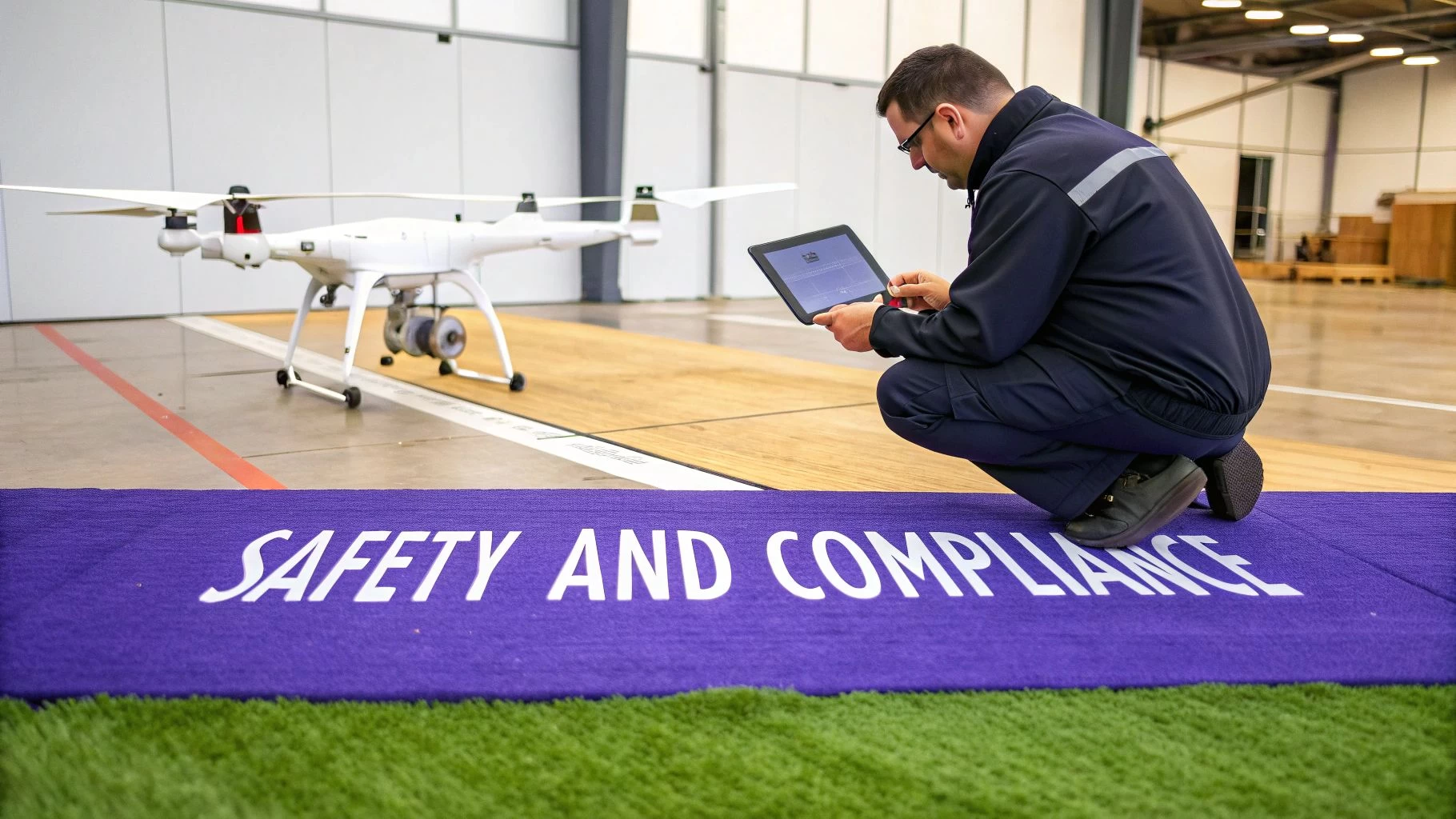
Using Flight Data for Safety and Compliance
Sure, flight data is great for optimizing routes and watching your battery life, but its most critical roles in any professional drone operation are safety and compliance. You should start thinking of the data your drone records not just as a performance log, but as an objective witness to every single flight.
This digital record is easily your most powerful tool for building a proactive safety culture and keeping the regulators happy.
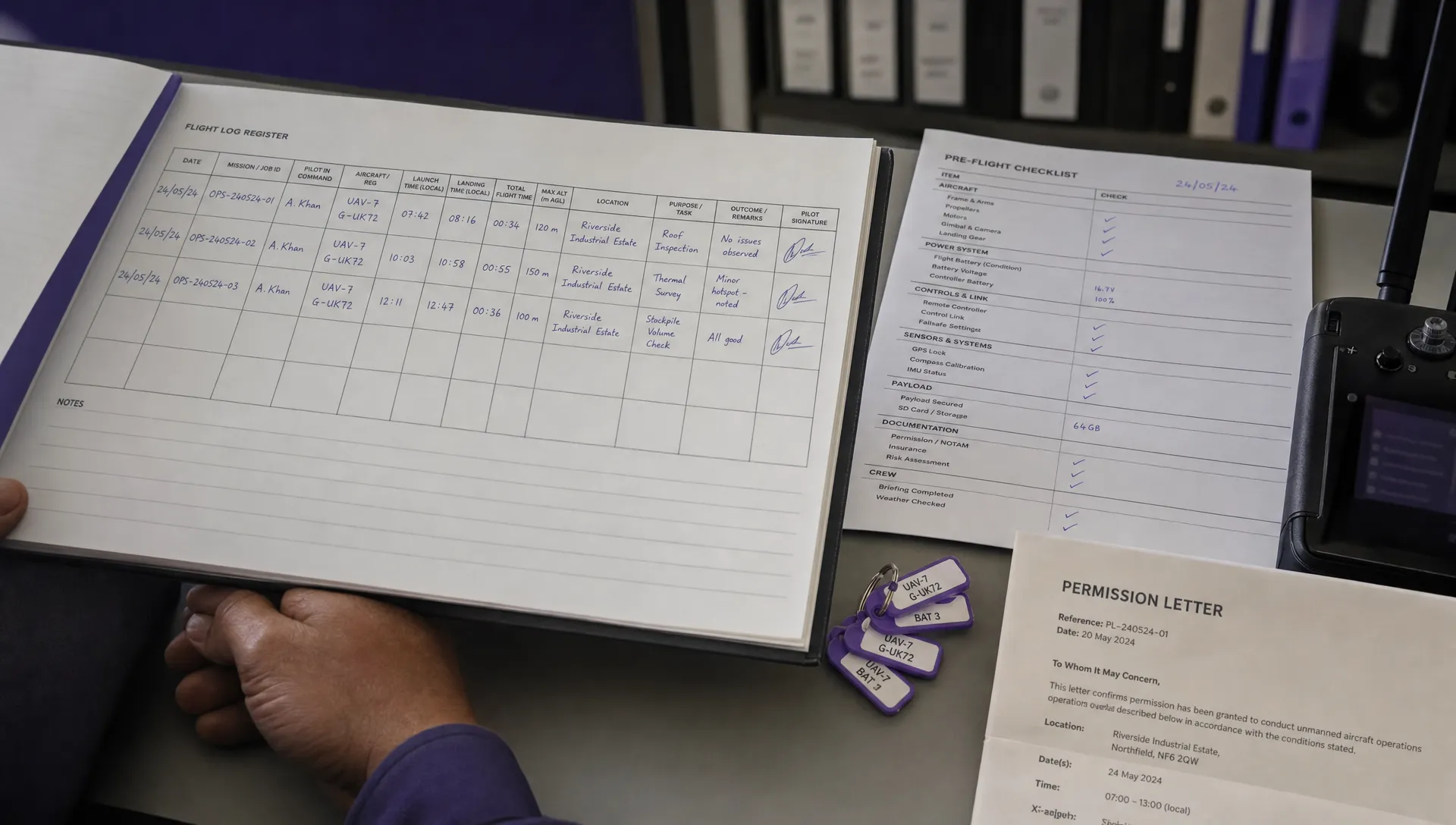
There's a well-worn mantra in professional aviation: "If it wasn't logged, it didn't happen." That principle holds just as true for drones. Without a detailed, verifiable record of a flight, you've got no way to prove you operated safely, investigate an incident with any accuracy, or defend your actions if something goes wrong. Automated logs from a proper flight data system give you that irrefutable proof.
Bolstering Operational Safety with Data
Digging into your flight logs is like having a seasoned instructor debrief every mission. The data can reveal subtle patterns in pilot behavior that might otherwise go completely unnoticed. For example, you might spot a pilot who consistently makes aggressive maneuvers or pushes the drone's battery right to the edge. Nipping these habits in the bud with a bit of targeted training can stop a minor risk from snowballing into a major incident.
This proactive mindset applies to your equipment's health, too. A solid flight data system can sniff out the early warning signs of component failure.
- Motor Performance: Is one motor consistently drawing more power than the others? That could be a sign of a failing bearing.
- Battery Health: You can track voltage sag and internal resistance over time to pinpoint batteries that are getting old and are no longer safe to fly.
- GPS Signal Strength: Noticing recurring weak GPS signals at a specific job site? That helps you flag potential interference zones for future missions.
By catching these issues early, you can schedule maintenance before a component gives up mid-flight. What could have been a disaster becomes a routine repair. It's the same logic used in other transport sectors, where tools like dash cameras for trucks are used to boost safety and provide hard evidence for compliance and liability.
Simplifying Regulatory Compliance
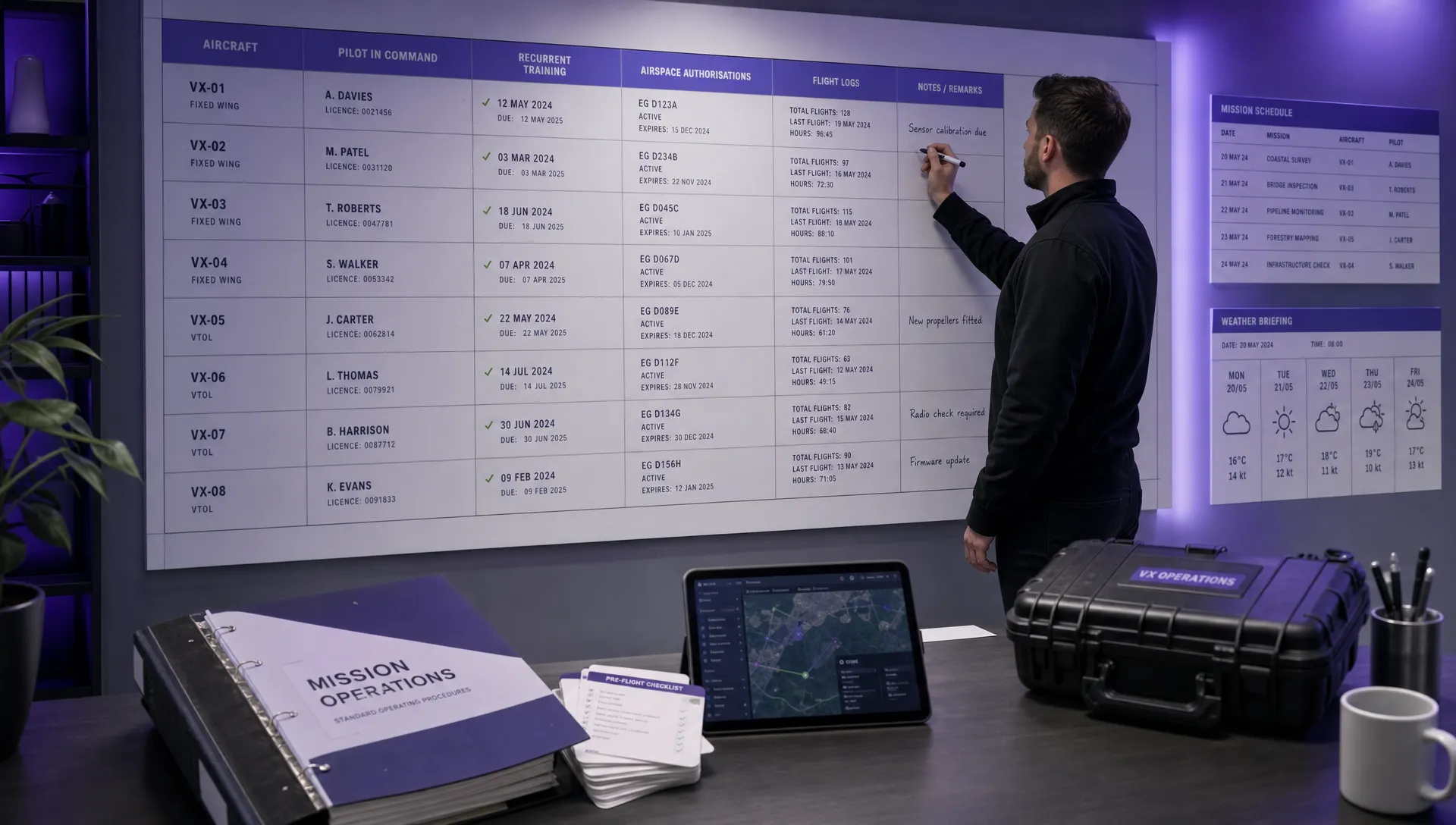
For regulators like the FAA in the US or EASA in Europe, verifiable data is king. Flight data systems completely automate the logging process. This creates a clean, auditable trail that proves you're sticking to operational limits like maximum altitude, speed, and flight times.
This screenshot from the FAA's official UAS page just scratches the surface of the resources available to keep operators compliant. Having automated, accurate flight logs from your system makes proving your compliance a simple, straightforward task during an audit or inquiry.
And if an incident does happen, this data becomes invaluable for reconstruction. Investigators can use the flight log to replay the entire mission, second by second, to figure out the precise sequence of events. This kind of objective analysis helps get to the root cause, protecting operators from liability when they've done everything by the book and providing clear lessons to prevent it from happening again.
Flight data transforms compliance from a burdensome administrative task into a natural byproduct of safe, well-documented operations. It provides the digital evidence needed to operate with confidence and authority.
Mastering how to use this data is a game-changing skill. To dive deeper, check out our detailed guide on the fundamentals of flight data monitoring and how it strengthens your safety management system. When you get right down to it, integrating these practices connects every flight you make directly to risk mitigation, legal protection, and building a truly professional safety culture in your operation.
Integrating Your Flight Data Systems
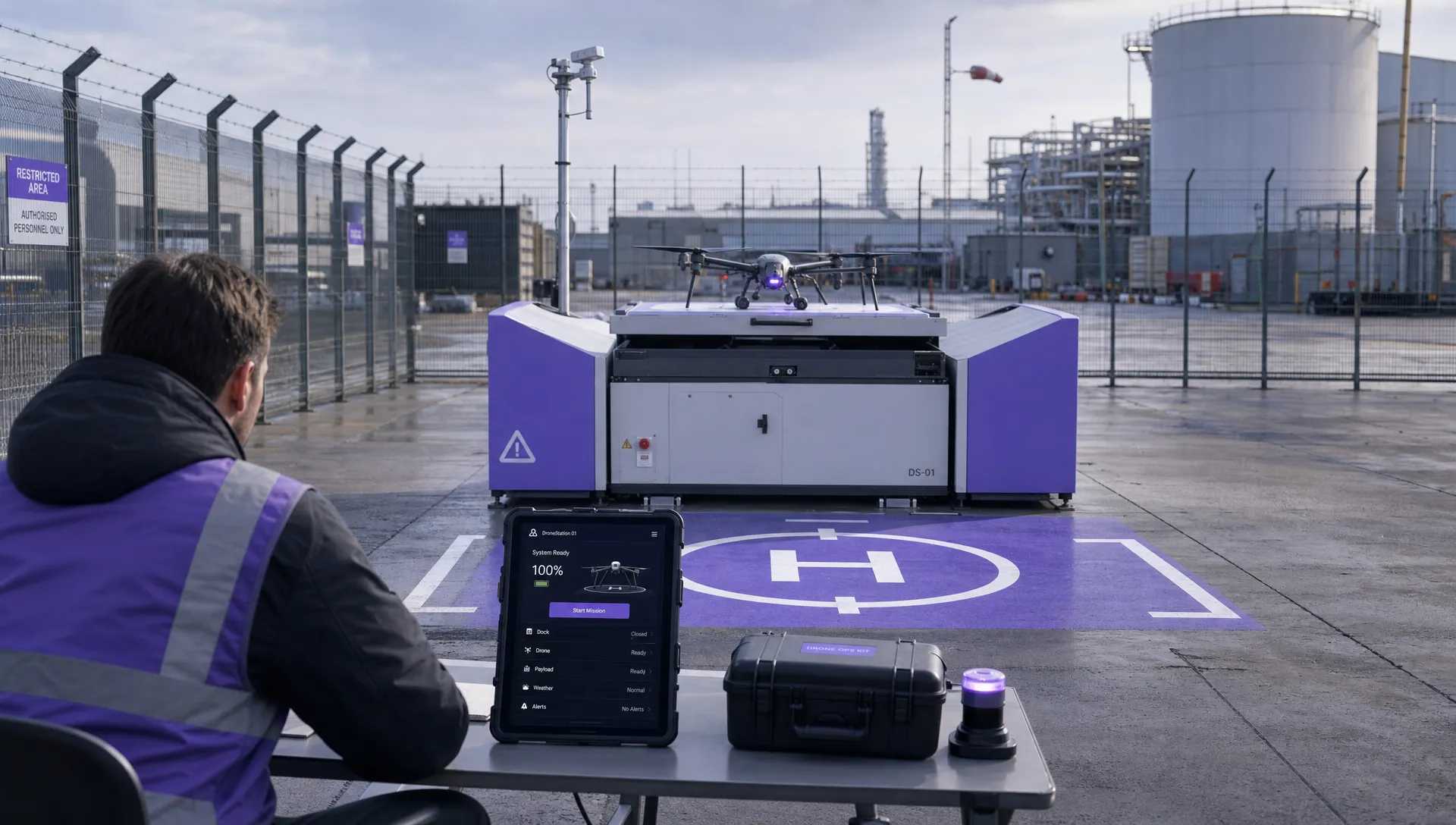
Let’s be honest, a disconnected flight data setup just creates more work. When your tools don't talk to each other, you're stuck with manual data entry and conflicting information. Integrating everything is the only way to get a single source of truth for every mission.
Think of the integration process like a hub and spoke model. Your central data system is the hub, feeding crucial insights out to all the different parts of your operation. This way, your maintenance, scheduling, and reporting systems are always working with the latest, most accurate information.
The Hub And Spoke Model In Action
Imagine your flight data system as the central hub. From that hub, several spokes branch out, each connecting to a key part of your business:
- Maintenance Logs get fed real-time component health data, which automatically informs service schedules.
- Pilot Schedulers receive up-to-date reports on pilot availability and flight performance.
- Client Dashboards can be updated with live mission status, keeping stakeholders in the loop.
- Fleet Management platforms track aircraft hours and utilization without anyone lifting a finger.
- Compliance Systems are continuously updated with audit-ready logs for any regulatory review.
This model is all about breaking down data silos and making sure every team is on the same page.
Syncing With Fleet Management And DJI FlightHub
So how does this all happen? APIs and automated workflows are the engines that make it all work. For example, you can connect Dronedesk directly with your fleet software or manufacturer platforms like DJI FlightHub. We dive deeper into this topic in our article on data integration best practices.
Once you have the APIs configured, data flows automatically from the flight controller straight into the tools you use every day. Say goodbye to shuffling CSV files or manually updating spreadsheets.
Automating Your Data Workflows
Setting up an automated workflow is pretty straightforward:
- First, authenticate the API credentials for each platform you want to connect.
- Next, map the data fields between your flight logs and their destination.
- Then, schedule regular syncs to keep everything current and avoid data gaps.
- Finally, set up validation checks to confirm every data transfer is successful.
Automated workflows practically eliminate human error and give you the information you need to make faster, better decisions.
Scaling For Tomorrow's Drone Fleets
The scale of aviation is exploding. According to Airbus's Global Market Forecast for 2025–2044, the global aviation fleet is expected to nearly double, growing from 24,730 aircraft at the end of 2024 to 49,210 aircraft by 2044. That massive expansion means our flight data systems have to keep up, handling more data for safety, maintenance, and efficiency. You can discover more insights about fleet expansion here.
As your own drone operation grows, having the right data infrastructure in place is what will keep you ahead of the curve.
Best Practices Checklist
- Standardize data schemas across all systems to make sure everything is compatible.
- Enforce real-time synchronization so your dashboards and logs are always current.
- Monitor transfer logs and alerts to catch any failed transfers the moment they happen.
- Secure API keys and credentials using environment variables or a proper vault.
- Implement version control for formats to keep track of changes over time.
"Integrating flight data systems transforms operational chaos into coordinated insight." — DroneOps Magazine
Following these strategies will help you build an interconnected tech stack that saves time, cuts down on errors, and grows right alongside your fleet. For solo pilots, this means faster mission debriefs and no more manual uploads. Small teams get a centralized dashboard that makes oversight a breeze.
Enterprises can take it even further, integrating monitoring scripts directly into their CI pipelines to run checks after every batch of flights. Managing security and permissions becomes simple with role-based access controls, allowing you to define exactly who has read or write access to each data flow.
You can even integrate monitoring logs and alerts into your team's Slack or Teams channels for instant notifications. When a sync fails, your team knows immediately, helping you resolve issues before they can impact your operations.
Enjoy.
Your Flight Data System Implementation Plan
Getting a flight data system up and running isn't just about plugging something in and hoping for the best. It starts with having a clear idea of what you want to achieve with your drone operations. This plan breaks the process down into a 5-phase checklist that works just as well for solo operators as it does for large enterprise teams.
Defining Your Operational Needs
First things first, you need to map out what you're actually doing. What do your typical missions look like? How critical is the data you're collecting? What kind of reports do you need to generate? You'll also need to decide if you need live telemetry streaming from the field or if you're happy just pulling logs after a flight. Getting this right from the start ensures the system you build actually fits your needs, whether you're doing simple inspections or complex land surveys.
- Pinpoint your common mission types and the specific metrics you need to track.
- Decide between real-time data feeds and post-flight batch uploads.
- Establish your minimum safety and compliance thresholds.
“Setting precise requirements saves time and budget in later stages.”
It's also smart to think about the future. A solo pilot might be starting small, but what happens when you add a second or third drone to the fleet? You'll want a system that can grow with you. For enterprise teams, the needs are often different from day one, usually involving strict service-level agreements and access controls for multiple users.
Choosing Your Hardware
Picking the right hardware is always a balancing act between cost, reliability, and performance. A good place to start is looking at flight controllers that can output data in common formats like ULOG and CSV.
- Pick flight controllers that have solid sensor integration.
- Compare your storage options—are 512 GB SD cards enough, or do you need beefier internal modules?
- Double-check that your telemetry radios have the range to cover your operational area.
For solo operators, off-the-shelf modules are often the quickest way to get going. Enterprise fleets, on the other hand, should be looking for industrial-grade hardware with built-in redundancy to minimize any chance of data loss.
Selecting Your Software Tools
The software is where your raw data logs get turned into something you can actually use. Look for platforms that can sync directly with popular drones, like those from DJI, and offer API access for custom integrations.
- Make sure the software is compatible with your drone's firmware version.
- Check out the analysis dashboards—do they show the metrics that matter most to you?
- Test the cloud-syncing features, especially if you have a team that needs to access the data.
Don't skip the trial phase. This is where you might uncover hidden costs, like extra fees for exporting your own data. If you're planning to scale up, make sure your chosen platform can handle 100+ flights per week without breaking a sweat.
Dronedesk simplifies data syncing so you spend less time on uploads and more time on analysis.
Establishing Data Management Protocols
Once the data starts flowing, you need a plan to keep it secure and organized. This means setting up protocols for storage, encryption, and backups. Something as simple as defining a clear folder structure and a consistent naming convention can save you a world of headaches down the line.
- Always encrypt your data, both when it's stored (at rest) and when it's being transmitted (in transit).
- Use strong passwords for everything and make it a policy to rotate keys every 90 days.
- Set up automated backups to an off-site cloud storage location. You'll thank yourself later.
Training Your Team
A system is only as good as the people using it. Arm your team with everything they need to succeed: step-by-step guides, video tutorials, and simple checklists. This is the best way to make sure everyone is following the same best practices from the get-go.
- Once the system is set up, schedule some hands-on training sessions.
- Create quick-reference sheets or "cheat sheets" for the most common tasks.
- Hold regular reviews to get everyone up to speed on new features or process changes.
A well-trained team makes far fewer mistakes in data collection and analysis. And this isn't just for big teams—even solo pilots can benefit from having a concise cheat sheet to keep things consistent.
The Implementation Checklist
Rolling out a new flight data system can feel like a huge task, but breaking it down makes it much more manageable. This checklist walks you through the key phases, with specific pointers for both solo operators and larger enterprise fleets. Think of it as your roadmap from planning to a fully operational system.
| Phase | Key Action | Consideration for Solo Operators | Consideration for Enterprise Fleets |
|---|---|---|---|
| Planning | Define objectives and scale. | Focus on your immediate needs but keep future growth in mind. | Align with broader company policies and IT infrastructure. |
| Procurement | Choose controllers, storage, and radios. | Look for affordable, plug-and-play devices for a quick start. | Prioritize industrial-grade, redundant hardware for reliability. |
| Configuration | Set up data formats and sync rules. | A simple folder structure on a local drive or personal cloud is fine. | Implement centralized cloud repositories with access controls. |
| Training | Onboard users on the new tools. | Self-paced learning or one-on-one sessions work well. | Run role-based workshops to train different user groups. |
| Monitoring | Review sync logs and performance alerts. | Manual spot-checks of data integrity are usually sufficient. | Set up automated alerts and dashboards for real-time oversight. |
By following these steps, you build a solid foundation that not only meets your current needs but is also ready to adapt as your operations evolve.
Launching and Improving Your System
It's tempting to flip the switch for everyone at once, but a phased rollout is a much smarter approach. Start with a small pilot group or even a single drone before deploying across the entire fleet. This lets you catch any kinks early, reducing risk and building confidence in the new system.
- Pick a representative pilot or team to be your initial guinea pigs.
- Gather their honest feedback on everything from data accuracy to the user experience.
- Keep a close eye on error rates and sync success over the first 30 days.
Once you're live, don't just set it and forget it. Schedule regular reviews to fine-tune your setup. You might discover, for example, that your data retention policies are too aggressive and you're running out of storage. Small, continuous tweaks are what turn a basic setup into a truly powerful and adaptable flight data system.
Continuous improvement turns a basic setup into an adaptable flight data system.
Here's how this plays out in the real world:
Case Study: The Solo Operator Alex started syncing flight data from his DJI Mavic. In the first week, he noticed his altitude logs were spotty. After a quick bit of troubleshooting, he tweaked the formatting settings on his SD card and hit 100% log capture by the second week.
Case Study: The Enterprise Fleet A logistics company rolled out an API-based syncing solution for its fleet of 50 drones. The initial pilot revealed occasional data loss during transmission. They responded by adding redundant radio modules to their hardware, which slashed data loss incidents by a whopping 85%.
Measuring Success
After all that work, how do you know if it was worth it? You need to track key metrics to verify the system is performing as expected.
Keep a weekly eye on things like uptime, sync rates, and error counts.
- An uptime of over 99% is a good sign of stable connectivity.
- Sync success rates above 95% show that your data flows are reliable.
- Ideally, your error counts should be trending downward over time as you iron out the wrinkles.
Common Questions About Flight Data Systems
Even when you've got a handle on the basics, a few specific questions always seem to pop up about putting flight data systems to work in the real world. Thinking through the details of data security, storage, and what to do when things go wrong is what separates a smooth operation from a chaotic one.
Let's tackle some of the most common questions I hear from other pilots.
How Secure Is My Flight Data in the Cloud?
This is a big one, and for good reason. When you upload flight logs, you're handing over sensitive operational data. The good news is that any reputable platform takes this responsibility very seriously and builds its entire business on protecting your information.
Think of it less like a simple online folder and more like a digital vault. These platforms typically use:
- End-to-end encryption, which scrambles your data the moment it leaves your device, while it's in transit, and while it's sitting on their servers.
- Secure authentication protocols to make absolutely sure only you and your authorized team members can get anywhere near it.
- Regular security audits and compliance with tough international standards like SOC 2 or ISO 27001.
Honestly, your data is often far more secure in a professionally managed, audited cloud system than it is on a local hard drive that could get lost, stolen, or fried.
There's a common myth that keeping data on your own computer is automatically safer. The reality is that professional cloud platforms offer layers of security, backup redundancy, and access controls that are incredibly difficult and expensive for a single operator to replicate on their own.
What Happens If My Drone Loses Connection Mid-Flight?
It’s a heart-in-your-throat moment for any pilot, but it happens. That live telemetry feed drops, and for a moment, you're flying blind. Fortunately, modern drones and their data systems are built for exactly this scenario.
While you might lose the live video and data stream to your controller, the drone itself doesn't stop working. It diligently keeps recording every bit of flight data—attitude, speed, battery voltage, GPS coordinates—directly to its onboard storage, usually an SD card.
Once you safely land and retrieve the aircraft, you just pop out the card and upload the complete log file. You won't have a single gap in the official record for that flight, which is crucial for analysis and compliance.
Can I Use Flight Data to Predict Maintenance Needs?
Absolutely, and this is where a flight data system really starts to pay for itself. This practice, known as predictive maintenance, is one of its most powerful uses. By looking at data trends across dozens or even hundreds of flights, you can spot the early warning signs of a component getting tired long before it fails catastrophically.
For instance, you might notice one motor is consistently drawing more power than the others to maintain a hover. That's not something you'd ever feel on the sticks, but the data makes it obvious. It could be a sign of a failing bearing or some other issue. This gives you the chance to swap it out on your schedule, in the workshop, rather than having it fail unexpectedly on a critical job. It's a total game-changer for safety and avoiding costly downtime.
Ready to stop wrestling with data and start using it to your advantage? Dronedesk pulls all your flight data together, making it simple to stay compliant, improve safety, and run a more efficient operation. See how Dronedesk can work for you and discover what professional drone management feels like.
 How to Build a Drone Pilot Flight Log That Is Audit Ready →
 FAA Drone Licence Requirements for Commercial Pilots →
 FAA BVLOS Waivers Granted: What Successful Cases Show →
 How to Export DJI Flight Logs for Incident Reviews →
 Drone Safety and Legal Duties for Business Operations →
 EASA Drone Regulations: Open, Specific and Certified Categories →
 What the BVLOS ARC Report Means for UAS Operators →
 Free Drone Pre-Flight Checklist for Commercial Missions →
 Contingency Volume and Flight Risk Buffer Explained →
 FAA Policy Changes That Commercial Drone Teams Should Track →