
What Makes a Great Drone Platform for Commercial Teams
When commercial drone work moves beyond occasional flights, spreadsheets and shared folders start to show their limits. The issue is rarely one missing document. It is the lack of a single operational system that helps your team plan consistently, assign people and aircraft, assess risk, record evidence and prove that the job was flown as intended.
A great drone platform gives commercial teams that operating system. It does not replace professional judgement, pilot competence or regulatory responsibility. Instead, it reduces avoidable admin, improves visibility and makes safe, repeatable workflows easier to follow across every job.
For survey companies, utility teams, emergency services and growing drone operators, the right platform can become the difference between a promising drone capability and a scalable commercial operation.
What a drone platform should actually do
A drone platform is not the same thing as a mapping engine, photogrammetry tool or manufacturer flight app. Those tools may be essential for capturing or processing data, but they usually focus on one part of the workflow.
A true commercial drone platform sits above individual flights. It helps manage the operational lifecycle, from client or task intake through flight planning, risk assessment, crew and fleet allocation, flight logging, reporting and record keeping.
That matters because commercial teams are rarely judged only on whether the drone took off successfully. They are judged on whether the operation was planned properly, whether the right people and assets were used, whether risk was managed, whether records are complete and whether the client or internal stakeholder can trust the process.
| Capability | What it helps the team do | Why it matters |
|---|---|---|
| Flight planning | Build a repeatable plan for each job | Reduces missed steps and improves consistency |
| Airspace and proximity intelligence | Understand the operating environment | Supports better go or no-go decisions |
| Risk assessments | Identify and document hazards | Creates a defensible safety process |
| Checklists | Standardise pre-flight and post-flight tasks | Helps teams avoid human-factor errors |
| Fleet management | Track drones and related assets | Improves availability and accountability |
| Team management | Manage pilots, roles and responsibilities | Supports multi-person and multi-site operations |
| Flight logging | Record what happened in the field | Builds the evidence trail for audits and reviews |
| Reporting | Turn activity into management insight | Helps leaders improve utilisation, safety and cost control |
1. It reduces admin without hiding responsibility
The best commercial drone software does not simply make paperwork prettier. It removes duplication while keeping the operator in control of decisions.
In a weak workflow, a pilot may copy the same site details into a spreadsheet, a risk assessment document, a client pack, a flight log and an email. Each copy creates friction and increases the chance of outdated or inconsistent information. In a stronger workflow, core job information flows through the process once, with the platform helping to structure each stage.
A good drone platform should make these steps easier to complete and easier to review:
- Capture the client, site and task details in one place.
- Review airspace, local constraints and proximity risks before the flight.
- Build a risk assessment that reflects the actual operating environment.
- Use checklists to support consistent briefings and pre-flight checks.
- Allocate the right pilot, aircraft and supporting resources.
- Log the completed flight and retain the record for future reference.
The important point is that the platform should support operational discipline, not encourage box ticking. A risk assessment that can be cloned or templated is useful, but only if the team still reviews what has changed for the specific site, crew, aircraft, weather window and task.
2. It creates a shared operational picture
Commercial drone teams often work across multiple stakeholders. A survey company may have pilots, project managers, data processors and clients. A utility company may coordinate drone work around substations, transmission assets, contractors and internal safety teams. Emergency services may need fast deployment while maintaining clear accountability.
In those environments, fragmented information becomes a risk. If the aircraft status is in one spreadsheet, pilot availability is in another, site hazards are in an email and the flight plan is on a local laptop, nobody has a reliable view of the operation.
A great drone platform gives the team a shared operational picture. It should be clear which jobs are planned, who is assigned, which assets are being used, what risks have been identified and what still needs approval or completion.
This is especially valuable when operations are distributed. A manager should not need to interrupt every pilot for a status update. Equally, a pilot should not need to chase multiple people to confirm whether a job has the correct documentation. The platform should make the current state of the operation visible to the people who need it.
3. It connects people, aircraft and field readiness
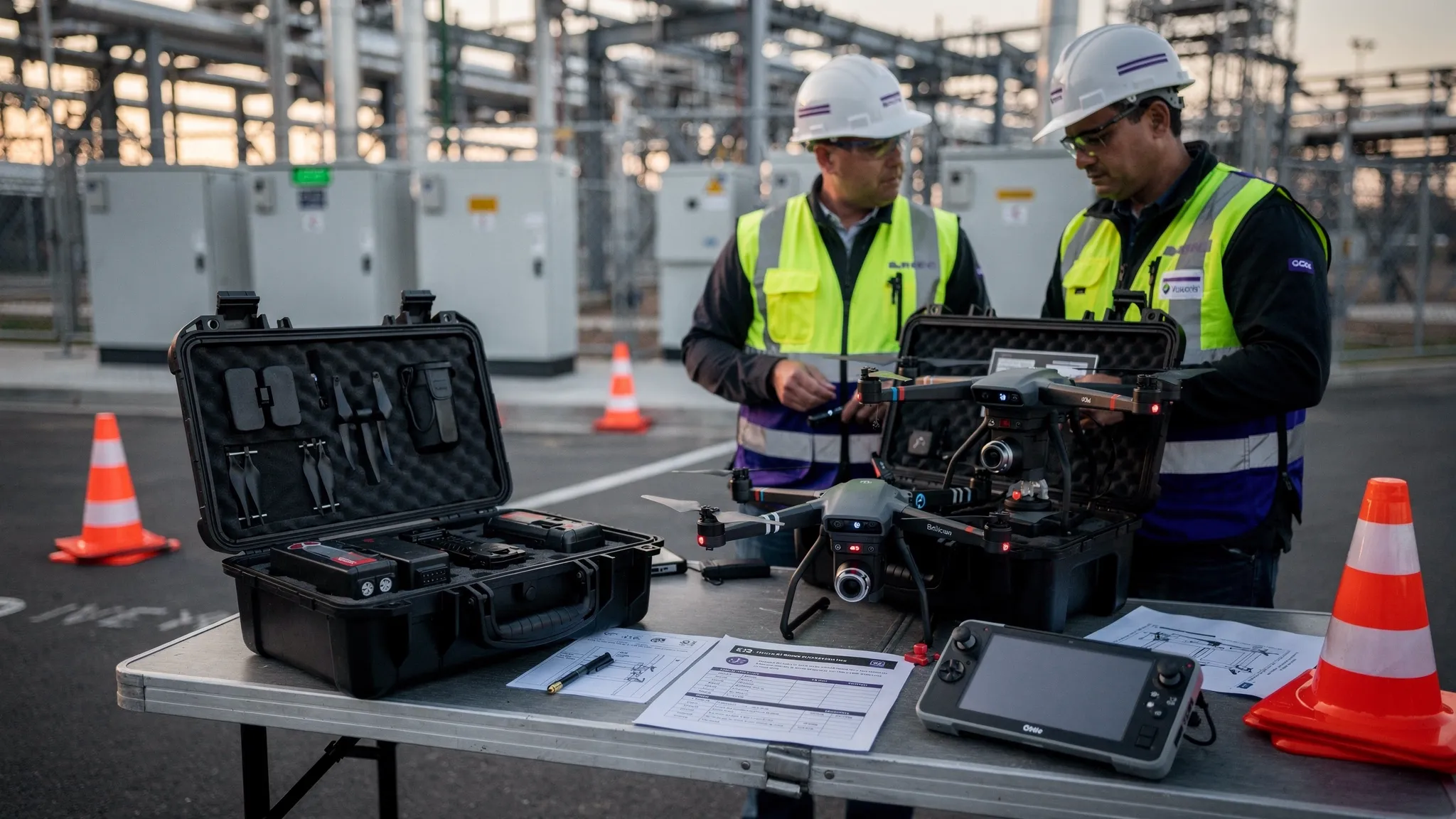
As drone operations scale, the challenge is not just planning flights. It is making sure the right people and equipment are available, current and suitable for the job.
For a small operator, this may be simple. For a team flying dozens or hundreds of missions per month, it becomes harder to track pilot workload, qualifications, aircraft availability, maintenance status, payload suitability and supporting equipment.
A strong platform should help answer practical questions before a job reaches the field. Is the assigned pilot appropriate for the task? Is the aircraft available? Are there open actions from previous flights? Is the team using the latest checklist? Has the site been reviewed for relevant hazards and restrictions?
Software also sits alongside practical field readiness. Utility, survey and emergency teams working in cold, wet or remote environments still need appropriate PPE, layered clothing and specialist equipment, and some organisations source non-aviation field kit from established outdoor and sports retailers such as Fabbrica Ski Sises as part of a wider deployment plan.
The key is to avoid treating field operations as a collection of separate admin tasks. A great drone platform should help link the job, the people, the aircraft and the evidence trail so that readiness is visible before the team arrives on site.
4. It supports compliance by design
Regulators do not accept poor records just because a team is busy. Clients, insurers and internal safety departments often take the same view.
In the UK, operators should always work from current Civil Aviation Authority requirements and guidance. The UK Civil Aviation Authority drone guidance is the starting point for understanding responsibilities, categories of operation and the wider regulatory environment.
A platform cannot guarantee compliance on its own. It cannot make an unsafe plan safe or replace the need for competent remote pilots. What it can do is make compliant behaviour easier to repeat.
For commercial teams, that means building workflows around evidence. If a question is asked after the event, the organisation should be able to show what was planned, who was involved, what risks were considered, what checks were completed and what actually happened during the flight.
| Record type | Why it matters |
|---|---|
| Flight plan | Shows the intended operation, location and task scope |
| Risk assessment | Demonstrates that hazards were considered and mitigated |
| Checklists | Provides evidence of standard operating procedures being followed |
| Pilot and team records | Supports competence, role clarity and accountability |
| Fleet records | Helps demonstrate asset control and maintenance awareness |
| Flight logs | Captures the operational history for audits, reviews and reporting |
This is where a platform becomes more than an admin tool. It becomes part of the organisation’s assurance system.
5. It is configurable enough for real-world operations
A rigid platform can be almost as frustrating as no platform at all. Commercial drone teams vary widely in how they work. A roof survey, linear infrastructure inspection, quarry mapping mission and emergency search task all require different planning detail, site context, documentation and approvals.
The best drone platform gives teams structure without forcing every operation into the same shape. Configurable checklists and risk assessments are particularly important because they allow organisations to reflect their own operating procedures, client requirements and sector-specific hazards.
For example, an emergency services team may need rapid deployment workflows and clear post-incident records. A utility company may need repeatable planning around known infrastructure assets. A survey company may need efficient job packs and logs that support repeat client work. The underlying principles are similar, but the operational details are not identical.
Configuration should not mean complexity for its own sake. If every small change requires a consultant or days of setup, adoption will suffer. The goal is a platform that can reflect how the team works while still being simple enough for pilots and managers to use under pressure.
6. It provides useful reporting, not just stored documents
Many teams start looking for a drone platform because they are drowning in documents. But the longer-term value often comes from reporting.
When flight records, risk assessments, fleet activity and team data are stored in a consistent way, managers can start asking better questions. Which clients or sites generate the most work? Which aircraft are most heavily used? Are certain types of job creating repeated hazards? How much operational capacity does the team really have? Where are delays occurring?
Good reporting turns flight administration into operational intelligence. It helps leaders move from anecdote to evidence.
This matters for budget holders as well as pilots. Commercial drone teams often need to justify investment in aircraft, sensors, training and software. Reliable operational data makes those conversations more objective. Instead of saying the team is busy, you can show the volume, type and pattern of work being delivered.
7. It is easy enough for the whole team to adopt
A technically capable platform can still fail if people do not use it. Adoption is not a minor issue. It determines whether the system becomes the operational source of truth or just another abandoned tool.
A great platform should be intuitive for pilots in the field, useful for managers and credible for compliance stakeholders. It should reduce the number of places people need to look, not add another layer of admin on top of existing processes.
When evaluating vendors, look for evidence beyond polished feature lists. Are users saving time in real operations? Do they rate the platform as reliable and easy to use? Is customer support responsive? Dronedesk, for example, publishes a customer satisfaction survey that includes customer-reported measures such as time saved on flight planning, satisfaction, user-friendliness, reliability and support.
Transparent customer evidence is valuable because drone operations software is not purchased in a vacuum. It has to work on busy days, with real pilots, real clients and real compliance pressure.
What different commercial teams should prioritise
The right drone platform should match the way your organisation creates value. A small operator may care most about faster planning and professional client packs. A utility company may need asset-based planning, team oversight and secure records. Emergency services may prioritise rapid deployment and incident-ready documentation.
| Team type | Platform priorities |
|---|---|
| Drone service providers | Client management, job planning, risk assessments, flight logs and professional reporting |
| Survey companies | Repeatable workflows, asset and site context, flight records and data handover support |
| Utility companies | Multi-site planning, team visibility, fleet oversight, audit trails and reporting |
| Emergency services | Fast planning, clear checklists, reliable records and team coordination |
| Enterprise operators | Governance, standardisation, permissions, reporting and scalable administration |
The common thread is control. A good platform helps teams control operational risk, admin workload, asset visibility and evidence quality as the number of flights, pilots and stakeholders increases.
How to evaluate a drone platform before committing
Before choosing software, map your current workflow honestly. Where is time being lost? Where do mistakes happen? Which records are hard to find? What would be painful if flight volume doubled? Which client, regulator or internal audit questions would be difficult to answer today?
Then assess platforms against practical criteria rather than feature volume alone.
| Evaluation question | Strong answer | Red flag |
|---|---|---|
| Does it cover the full operational workflow? | Planning, risk, checklists, logging and reporting are connected | It only solves one isolated task |
| Can teams configure it to their procedures? | Checklists and assessments can reflect real operations | Everyone must use a generic workflow |
| Does it improve visibility? | Managers can see jobs, people, aircraft and records in one place | Key information remains in spreadsheets and inboxes |
| Is evidence easy to retrieve? | Records are structured and audit-friendly | Documents are scattered or hard to export |
| Will pilots actually use it? | The interface is simple enough for routine field use | It feels like extra admin |
| Is the vendor transparent? | Public features, customer evidence and support routes are clear | Claims are vague or impossible to verify |
A useful buying principle is to avoid choosing only for today’s smallest workflow. If your operation is growing, select a platform that can support more pilots, more aircraft, more stakeholders and more scrutiny without forcing you to rebuild your admin process from scratch.
Where Dronedesk fits
Dronedesk is an all-in-one web platform for drone operators, built to support end-to-end management of commercial drone operations. According to the Dronedesk features page, the platform includes client management, fleet management, team management, airspace intelligence, proximity intelligence, flight planning, flight logging, data reporting, configurable checklists and risk assessments.
That combination is important because commercial teams rarely need one disconnected feature. They need a workflow that brings planning, people, assets, safety documentation and records together in a way that is practical to use.
For operators comparing options, Dronedesk is worth considering if your current process depends on spreadsheets, manual document templates, duplicated flight records or scattered client and fleet information. The value is not simply digitisation. It is the ability to run drone operations with better structure, visibility and consistency.
Frequently Asked Questions
What is a drone platform? A drone platform is software that helps manage the operational side of drone work, including planning, risk assessments, checklists, team and fleet management, flight logging and reporting. It is different from a flight control app or mapping engine because it focuses on the wider operation, not just the aircraft or captured data.
How is a drone platform different from drone mapping software? Drone mapping software usually focuses on capturing, processing or analysing imagery, such as orthomosaics, point clouds or measurements. A drone platform manages the operational workflow around the job, including planning, compliance evidence, people, aircraft, risk and records.
Do small commercial drone teams need a platform? Not every small team needs a complex system, but even solo operators can benefit from consistent planning, risk assessment templates, flight logs and client records. The need becomes more urgent when the number of jobs, pilots, aircraft or compliance obligations increases.
Can a drone platform guarantee compliance? No. Compliance remains the operator’s responsibility and depends on competent people, current procedures and appropriate decisions. A good platform helps by making compliant workflows easier to follow and by keeping clear evidence of planning, checks and flight activity.
What should enterprise and emergency services teams prioritise? Larger and time-critical teams should prioritise visibility, standardised workflows, team and fleet oversight, fast access to records, configurable checklists and strong reporting. They should also look for software that is easy enough for pilots to adopt consistently.
Build a safer, simpler drone operations workflow
If your commercial drone team is growing, your admin process needs to grow with it. Spreadsheets, inboxes and disconnected templates can work for a while, but they become harder to trust as operations scale.
Dronedesk brings core drone operations management into one platform, covering planning, risk assessments, checklists, flight logging, team and fleet management, client records and reporting. If you want a simpler way to manage safe, productive and auditable drone operations, explore Dronedesk or start by reviewing the platform’s features in detail.
 BVLOS Drone Requirements for Building a Safety Case →
 Drone Pilot Test Mistakes That Cost Candidates Marks →
 FAA 107 License vs Part 107 Certificate: What’s the Difference? →
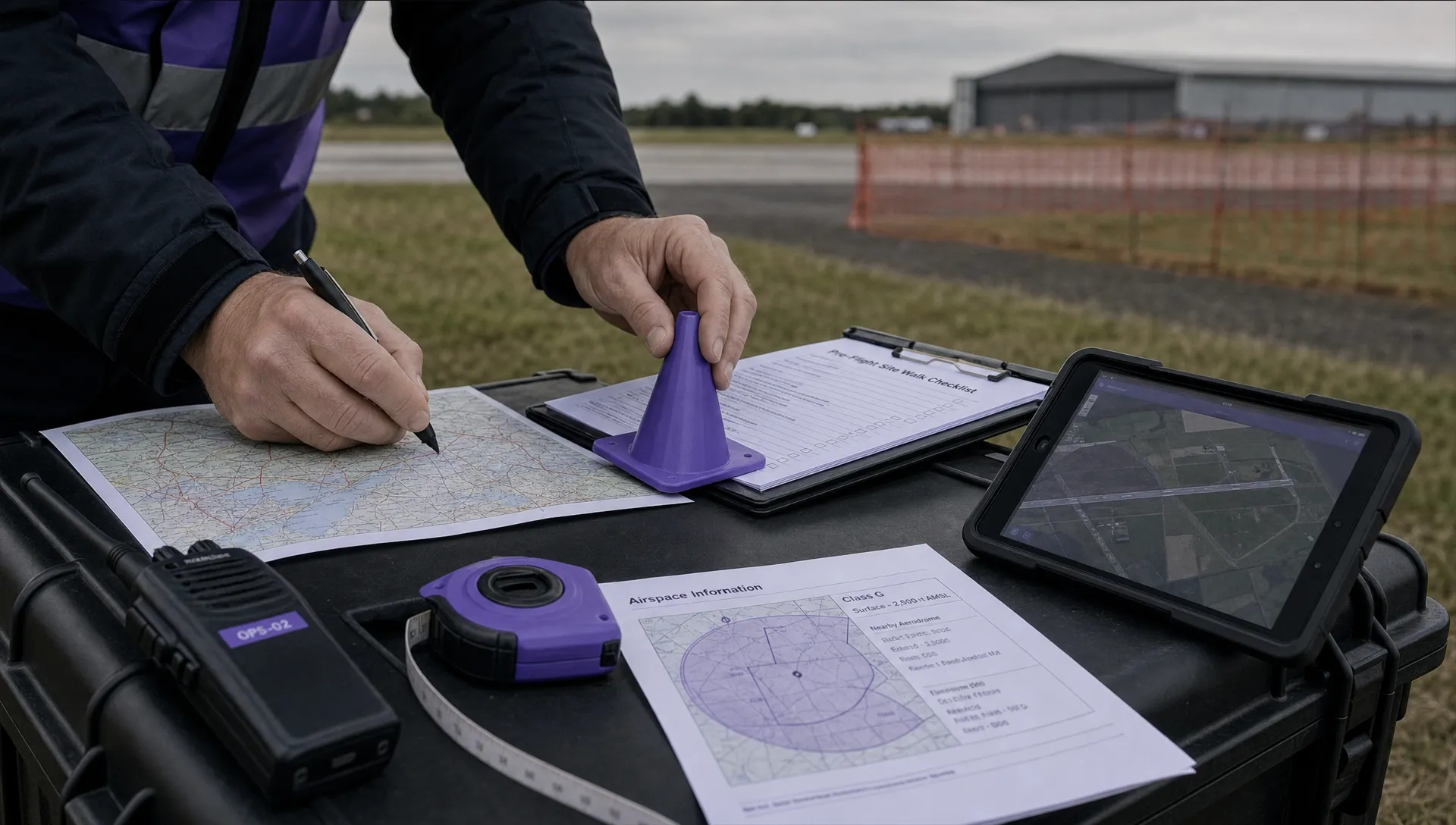 Drone Airport Rules: A Field Checklist for Site Assessments →
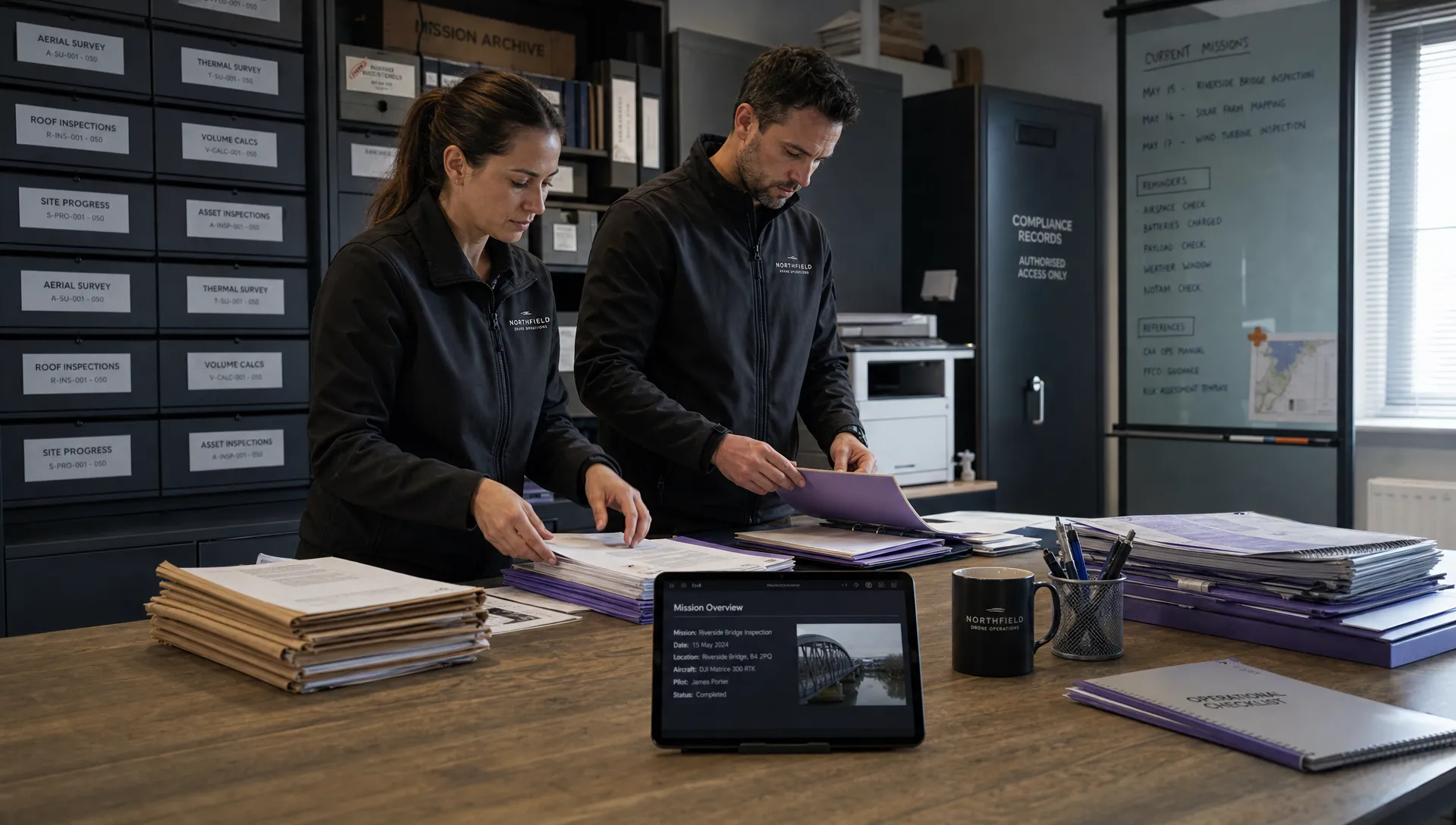 FAA Part 107 Record-Keeping Rules for Commercial Teams →
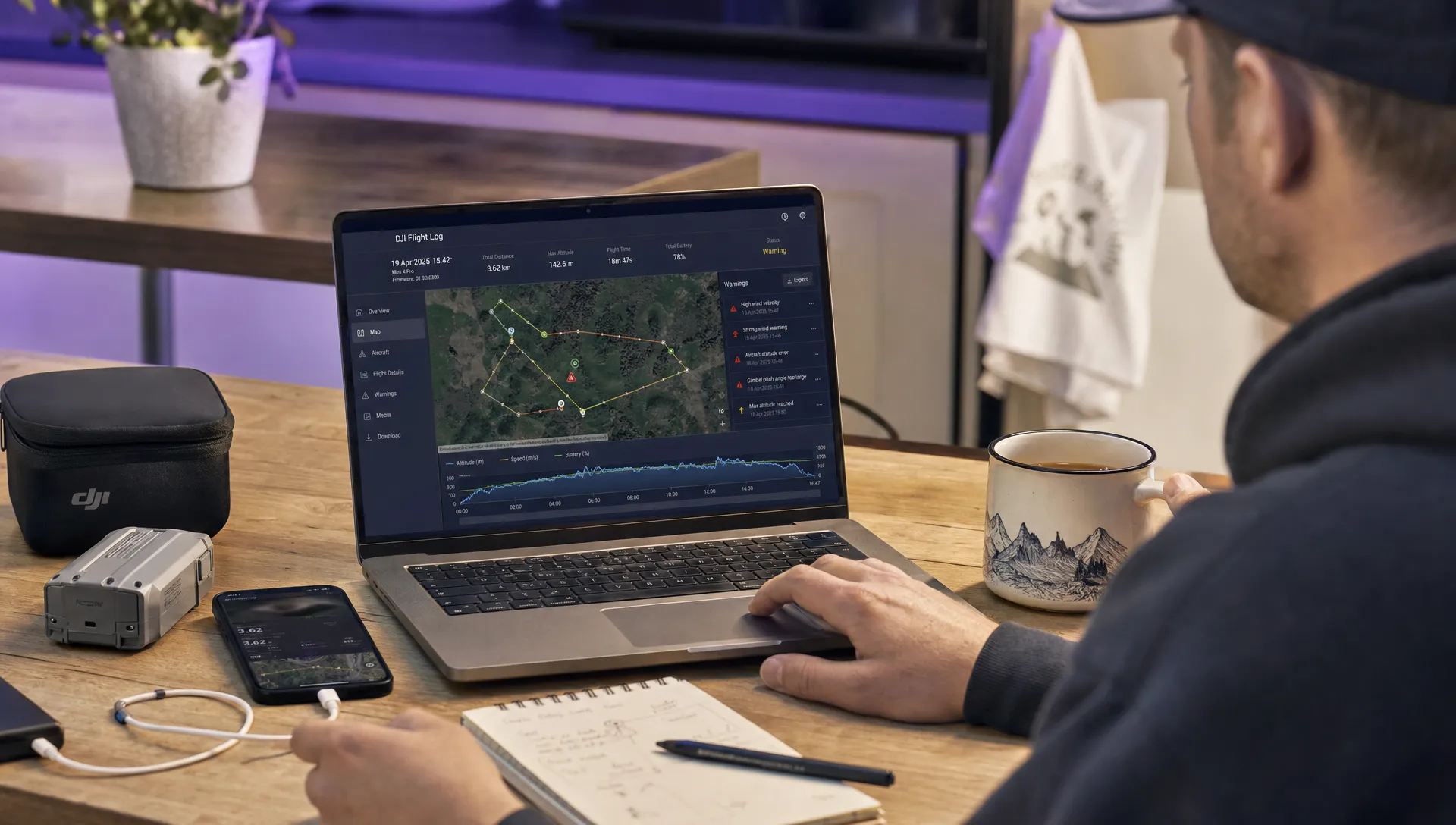 How to Review a DJI Flight Log After an Unexpected Event →
 Drone Laws Around the World: A Pre-Flight Research Framework →
 How to Compare Drone Survey Services for Complex Sites →
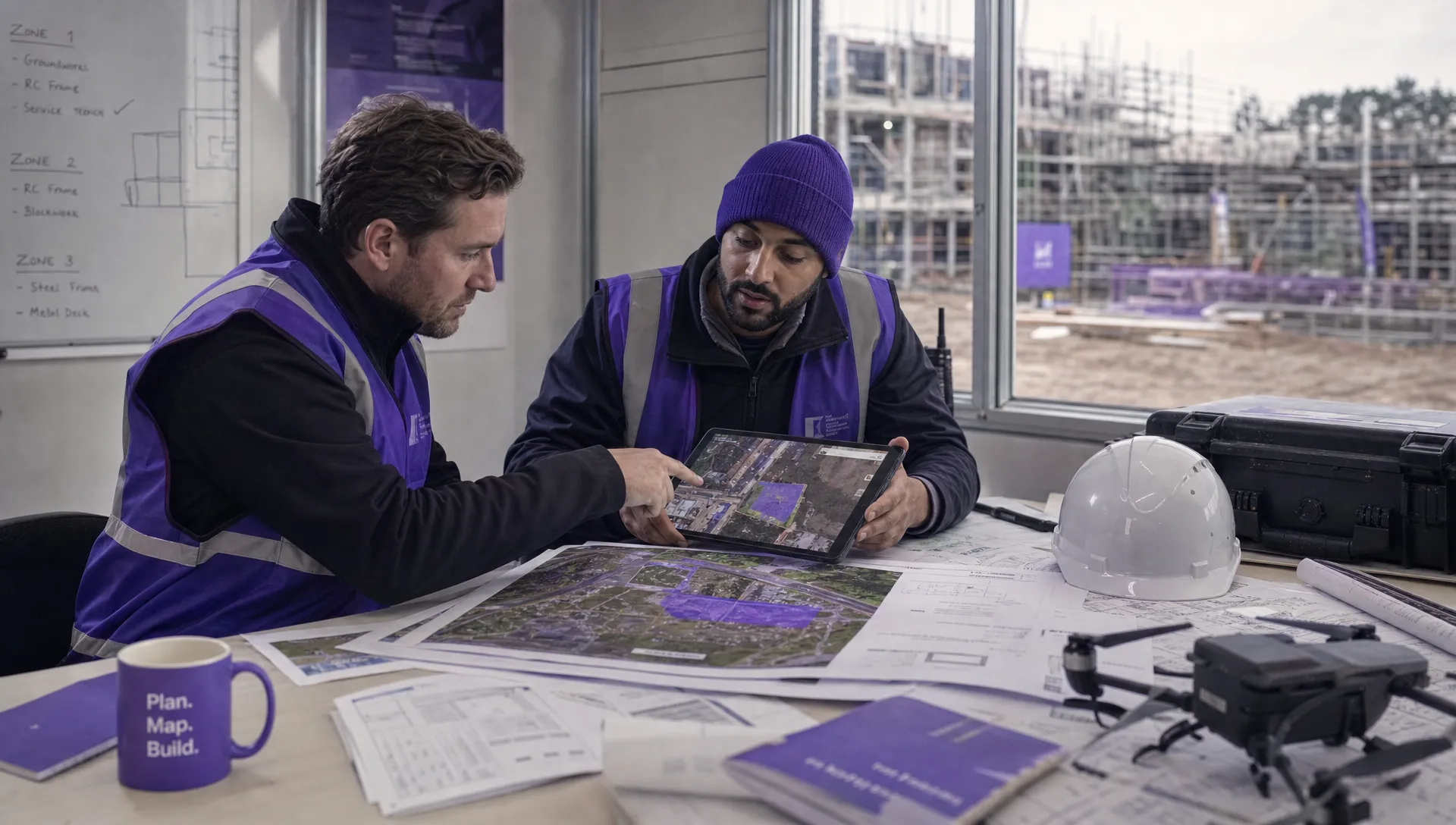 How to Start a Drone Mapping Business With a Clear Workflow →
 Class C Airspace Drone Rules for Commercial Flights →