
Data Integration Best Practices - Boost Drone Efficiency
In professional drone operations, data is the most valuable asset. From flight logs and asset condition reports to client details and compliance documents, a constant stream of information flows through your business. The real challenge, however, isn't just collecting this data, it's integrating it effectively. Disconnected systems and manual data entry create operational bottlenecks, increase the risk of errors, and obscure the insights needed for growth.
Effective data integration turns fragmented information into a strategic advantage, enabling faster decision-making and more efficient workflows. Without a solid strategy, drone businesses risk falling behind, bogged down by administrative tasks and compliance headaches. This is where mastering data integration best practices becomes essential for scaling operations and maintaining a competitive edge.
This article outlines eight critical best practices, tailored for the unique demands of drone professionals, to help you build a seamless, efficient, and scalable data ecosystem. We will explore how to establish strong governance, design for scalability, and ensure data quality from capture to reporting. We'll use real-world examples from platforms like Dronedesk to show how these principles translate into tangible benefits, from saving administrative hours to ensuring mission-critical compliance. Let's dive into the core strategies that will transform your data from a raw resource into your most powerful operational tool.
1. Establish a Comprehensive Data Governance Strategy
Data governance is the foundational framework for managing your organization's data assets. It's not just an IT task; it's a business-critical strategy that defines clear policies, procedures, and roles for handling every piece of data your drone operations generate. This includes everything from client information and flight plans to asset maintenance logs and mission reports. A robust governance strategy ensures data is consistent, trustworthy, and secure across its entire lifecycle.

This framework is one of the most vital data integration best practices because it establishes a single source of truth. It answers critical questions: Who owns the flight log data? Who can access sensitive client details? How is data quality verified before it's used in a final report? By defining these rules upfront, you prevent data silos and ensure everyone, from the pilot in the field to the project manager in the office, operates with the same reliable information.
Why It's a Top Priority
Without governance, data integration can become chaotic, leading to costly errors, compliance risks, and inefficient workflows. For drone service providers, this could mean using outdated airspace data for a flight plan or delivering inconsistent survey results to a client.
Platforms like Dronedesk embed governance principles directly into their workflow. For example, you can implement role-based access controls, ensuring pilots only see mission-critical flight details, while administrators retain full oversight of client, fleet, and financial data. This automated enforcement of your governance policy minimizes human error and protects sensitive information.
Actionable Tips for Implementation
- Start Small: Begin by applying governance to a high-impact data domain, such as client project files or fleet maintenance records, before expanding.
- Engage Stakeholders: Involve pilots, project managers, and administrative staff in designing the governance policies. Their input is crucial for creating practical, effective rules.
- Automate Enforcement: Use tools to automatically apply governance policies wherever possible. This includes setting user permissions, mandating data entry formats, and automating data validation checks.
- Review and Adapt: Regularly review your governance policies to ensure they still meet evolving business needs and regulatory requirements.
2. Design for Scalability and Performance Optimization
A scalable data integration architecture is designed to grow with your drone business. It ensures that as you take on more projects and generate larger volumes of data from high-resolution sensors and complex missions, your systems can handle the increased load without slowing down or failing. This involves creating data pipelines that can expand to accommodate greater data volume, velocity, and variety while maintaining optimal processing speeds.

This approach is one of the most crucial data integration best practices because it future-proofs your operations. As your drone fleet expands from one to ten, or your data processing needs shift from simple image uploads to complex 3D model rendering, a scalable system adapts seamlessly. For drone operators, this means no performance bottlenecks when syncing hundreds of gigabytes of survey data or when multiple team members access project files simultaneously. When evolving your data architecture for this kind of agility, understanding effective strategies for monolith to microservices migration can provide a valuable roadmap.
Why It's a Top Priority
An unscalable system creates operational drag. Imagine your entire workflow grinding to a halt during a critical project because your server can't handle the influx of LiDAR data. This not only delays client deliverables but also erodes profitability and damages your professional reputation.
Dronedesk is built on a cloud-native architecture designed specifically for this purpose. It automatically scales resources to match your workload, ensuring fast, reliable performance whether you're managing five jobs or five hundred. This removes the technical burden of infrastructure management, allowing you to focus on growing your business with confidence. Learn more about how Dronedesk supports scaling your drone operations.
Actionable Tips for Implementation
- Leverage Cloud-Native Services: Use cloud platforms like AWS or Azure that offer auto-scaling capabilities to handle fluctuating demand without manual intervention.
- Implement Batch Processing: For non-urgent, data-heavy tasks like generating large reports or processing photogrammetry data, use batch processing to manage resource use efficiently.
- Partition Your Data: Organize data logically, for example, by client, project date, or geographic location, to make queries faster and more manageable.
- Monitor Performance Metrics: Continuously track key metrics like data processing times, system latency, and error rates to identify and address bottlenecks before they impact operations.
3. Implement Robust Data Quality Management
Data quality management is the process of ensuring that data is accurate, complete, consistent, and reliable throughout its lifecycle. For drone operations, this means systematically checking everything from mission coordinates and sensor readings to client contact information. A robust quality management process involves implementing validation rules, cleansing procedures, and continuous monitoring to ensure the data you integrate is fit for its intended purpose.
This is a critical component of data integration best practices because poor quality data leads to poor quality outcomes. Integrating inaccurate flight telemetry or incomplete survey data can result in flawed analysis, unsafe mission planning, and dissatisfied clients. By establishing systematic quality checks, you build trust in your data and the decisions derived from it, ensuring that every report and deliverable is based on sound information.
Why It's a Top Priority
Without active data quality management, "garbage in, garbage out" becomes the reality. For a drone business, this could manifest as sending a final report with inconsistent measurements or creating a flight plan based on corrupted location data. These errors not only undermine client confidence but also create significant operational and safety risks.
Tools like Dronedesk help enforce data quality at the point of entry. By using standardized templates for job creation, risk assessments, and flight logs, the platform ensures that essential information is captured consistently every time. This structured approach minimizes the chances of missing or inaccurate data entering your integration pipeline, forming a strong foundation for reliable analytics and reporting. For more insights, explore our guide on quality assurance best practices for drone operations.
Actionable Tips for Implementation
- Define Quality Rules: Establish clear, measurable quality standards based on business needs. For example, all GPS coordinates must have a specific number of decimal places.
- Validate at Entry: Implement checks at the initial data capture stage to prevent bad data from entering your system in the first place.
- Automate Cleansing: Use automated scripts or tools to correct common errors, such as standardizing address formats or removing duplicate entries from flight logs.
- Monitor and Report: Create data quality scorecards to track key metrics over time and regularly report on the health of your data assets to stakeholders.
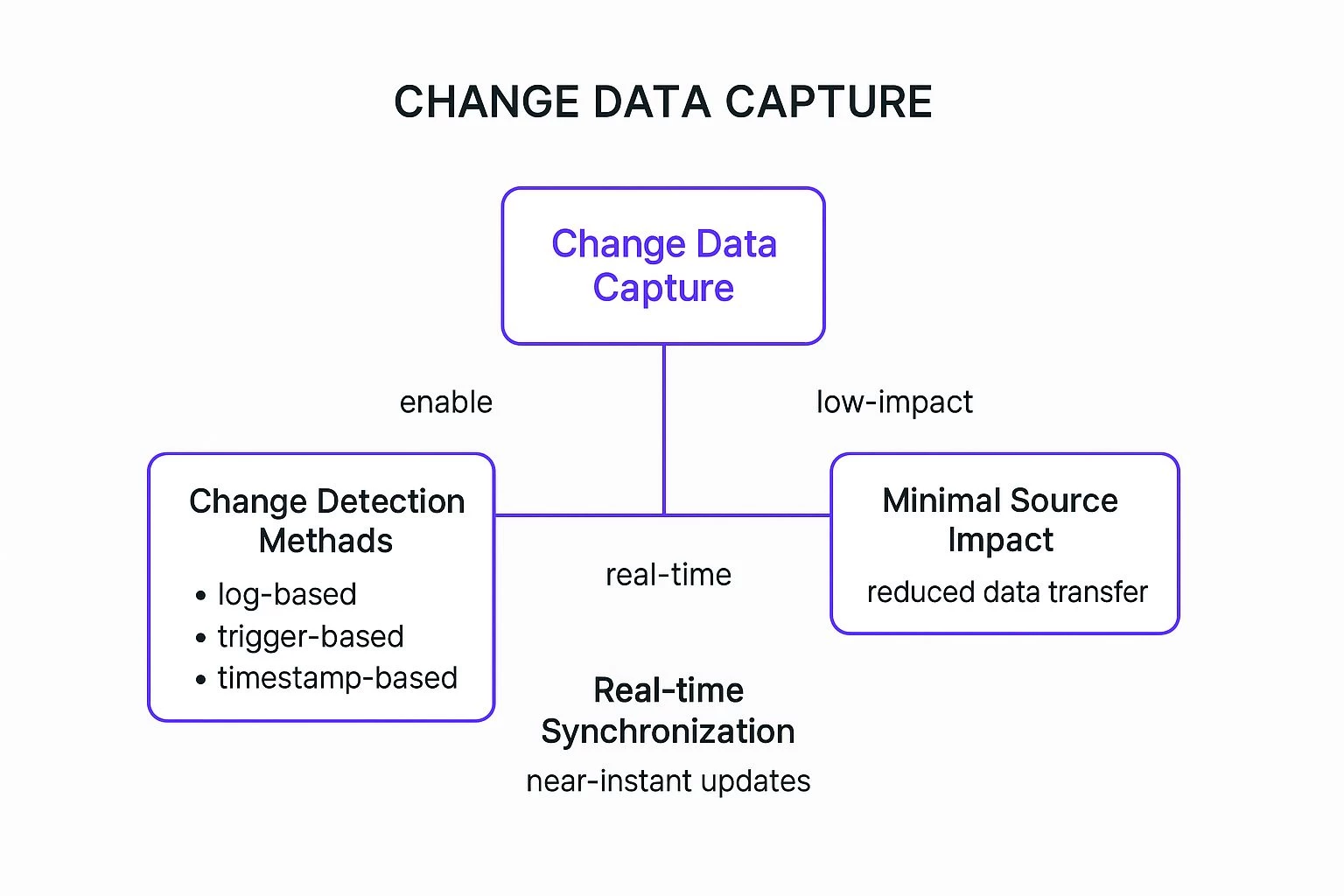
4. Adopt Change Data Capture (CDC) for Real-time Synchronization
Change Data Capture (CDC) is a sophisticated technique for identifying and capturing data modifications as they happen in a source system. Instead of transferring an entire dataset during each sync, CDC only processes the changes: new entries, updates, and deletions. This approach dramatically reduces processing overhead and enables real-time or near-real-time data flow between your operational tools and analytical platforms. For drone operations, this means a pilot's updated flight log or a new asset maintenance record can be instantly reflected in a central dashboard.
This method is one of the most efficient data integration best practices for dynamic environments where timely information is critical. It eliminates the need for resource-intensive batch jobs that run overnight. With CDC, a project manager can see live updates from the field, such as completed inspection points or newly identified hazards, allowing for immediate decision-making and improved operational agility.
Why It's a Top Priority
In fast-paced drone operations, relying on outdated information is not an option. A delay in syncing critical data like a temporary flight restriction (TFR) or an urgent equipment maintenance flag can introduce significant risk. CDC ensures that every system, from the pilot's field app to the central management dashboard, is working with the most current information available, enhancing safety and operational efficiency.
For example, imagine a large-scale infrastructure inspection. As pilots complete sections and log data, CDC can instantly stream these updates to a project management system like Dronedesk. This allows stakeholders to monitor progress in real time, identify potential issues as they arise, and reallocate resources on the fly without waiting for end-of-day manual uploads.
Actionable Tips for Implementation
- Choose the Right Method: Select a CDC method based on your source system’s capabilities. Options range from trigger-based CDC in databases to transaction log-based capture, which is often less intrusive.
- Monitor for Lag: Keep a close eye on CDC performance metrics, especially the lag between when a change occurs and when it is captured. This is crucial for time-sensitive operations.
- Plan for Schema Changes: Develop a strategy for handling changes to your data structure (schema evolution). Ensure your integration pipeline can adapt without breaking when a field is added or modified.
- Combine with Streaming Platforms: Use CDC with event streaming platforms like Apache Kafka for a highly scalable and resilient data integration architecture capable of handling high data volumes.
5. Standardize Data Formats and Implement Schema Management
Standardizing data formats means establishing consistent structures and schemas across all integrated systems. This practice ensures that when data moves from your flight planning software to your client reporting tool, it's interpreted correctly without manual conversion. Schema management governs how these data structures evolve, ensuring that system updates don't break your integration pipelines.
This process is one of the most crucial data integration best practices as it eliminates ambiguity between systems. Imagine one application records flight duration in seconds while another expects minutes; without standardization, your analytics would be wildly inaccurate. By defining a common "language" for data, you create a robust and reliable integration ecosystem, similar to how companies like Spotify and Airbnb use standardized formats for seamless service communication.
Why It's a Top Priority
Inconsistent data formats are a primary cause of integration failure. For a drone operation, this could lead to corrupted flight logs, incorrect geodata in survey reports, or failed syncs with accounting software. A lack of schema management means a simple software update could unexpectedly change a data field, causing downstream processes to fail without warning.
Effective schema management provides a controlled way to handle these changes. For instance, if a drone manufacturer updates its battery telemetry output, your schema rules would ensure the new data is either accommodated or flagged, preventing it from corrupting your maintenance records. This proactive approach prevents data chaos and ensures long-term system compatibility.
Actionable Tips for Implementation
- Choose Evolving Formats: Select schema formats that support evolution, such as Avro or Protocol Buffers, which handle new or missing fields gracefully.
- Centralize with a Registry: Implement a schema registry to act as a single source of truth for all your data structures and their versions.
- Establish Naming Conventions: Create and enforce clear standards for naming conventions, data types (e.g., ISO 8601 for timestamps), and units of measure.
- Automate Validation: Use automated tools to validate incoming data against the defined schema, rejecting or quarantining non-compliant data before it enters your systems.
6. Build Comprehensive Monitoring and Alerting Systems
Effective data integration doesn't end once a pipeline is built; it requires continuous oversight. Comprehensive monitoring provides end-to-end observability into your data integration workflows, tracking performance, data quality, and system health in real-time. Paired with intelligent alerting, this system allows you to proactively identify and resolve issues before they escalate and impact business operations or client deliverables.
This proactive approach is one of the most crucial data integration best practices because it transforms your process from reactive to preventative. Instead of discovering a corrupted dataset when a client report fails, monitoring systems can alert you the moment an anomaly is detected in the data transfer from a drone's SD card to your central storage. This ensures that the data used for creating orthomosaic maps, 3D models, or inspection reports is always reliable and timely.
Why It's a Top Priority
Without robust monitoring, data integration pipelines are "black boxes." A silent failure, such as a dropped network connection during a large file sync or a formatting error in a sensor log, can go unnoticed for hours or even days. For drone operators, this could mean losing critical mission data or basing analysis on incomplete information, leading to costly re-flights and damaged client trust.
Continuous monitoring gives you the confidence that every piece of data, from flight telemetry to high-resolution imagery, is being processed as expected. It helps answer key questions instantly: Did the data from yesterday's survey sync correctly? Is the processing server's performance degrading? Are there unusual spikes in data volume that could indicate a problem?
Actionable Tips for Implementation
- Monitor End-to-End: Track metrics at every stage, including data ingestion from the field, transformation processes, and final loading into analytics tools or client portals.
- Set Intelligent Alerts: Configure alerts that are specific and actionable. Instead of a generic "pipeline failed" alert, create one that states, "Photogrammetry data sync failed due to timeout error."
- Combine Technical and Business KPIs: Monitor not only system health (CPU, memory) but also business-relevant metrics like "data processing time per mission" or "data quality score."
- Establish Runbooks: Create clear, documented procedures for your team to follow when specific alerts are triggered, ensuring a swift and consistent response.
7. Ensure Comprehensive Security and Compliance
Security and compliance are non-negotiable pillars of data integration, especially when handling sensitive information like client details, site plans, and proprietary survey data. This practice involves implementing robust, end-to-end protection for data both in transit and at rest. It requires establishing strict access controls, encryption, and audit trails to ensure every piece of information is shielded from unauthorized access and adheres to regulatory standards like GDPR or CCPA.

This process is one of the most crucial data integration best practices because a single breach can lead to catastrophic financial loss, legal penalties, and reputational damage. It ensures that as data moves between your drone, your field apps, and your central management system, it is encrypted and monitored. A comprehensive security posture means protecting the entire integration pipeline, not just individual endpoints.
Why It's a Top Priority
Neglecting security and compliance can expose your drone operations to significant risks. An unsecured API could allow a competitor to access your flight plans, or improper data handling could violate client privacy agreements, resulting in costly legal battles. To secure your data integration pipelines effectively, adhering to essential network security best practices is a fundamental starting point for protecting your entire digital infrastructure.
Platforms like Dronedesk prioritize security by building it into the core of their drone operations management. For instance, all data is encrypted, and role-based access ensures that pilots can only view the mission data they are assigned to, while managers retain control over sensitive business information. This integrated approach simplifies compliance and secures your data by default.
Actionable Tips for Implementation
- Implement a Zero-Trust Model: Assume no user or device is inherently trustworthy. Verify every access request, regardless of whether it originates inside or outside your network perimeter.
- Use API Gateways: Centralize security controls for your APIs. A gateway can manage authentication, authorization, and traffic monitoring for all integrated services.
- Audit Permissions Regularly: Routinely review who has access to what data. Remove permissions for former employees or those who have changed roles to minimize exposure.
- Automate Security Scans: Use tools to automatically scan your integration pipelines for vulnerabilities and misconfigurations before they can be exploited.
8. Implement Effective Error Handling and Recovery Mechanisms
Even the most well-designed data pipelines can fail. Effective error handling is the process of anticipating, detecting, and resolving issues that arise during data integration, from a dropped network connection to corrupted file formats. It involves building resilient systems with automated retry logic, failure notifications, and clear recovery procedures to ensure that data integrity is maintained and downtime is minimized when things go wrong.
This process is one of the most crucial data integration best practices because it builds trust and reliability into your workflows. Instead of integrations failing silently, a robust error handling system provides immediate visibility into what went wrong, where, and why. For a drone operation, this could be an alert that a batch of photogrammetry images failed to upload to a processing server, allowing the team to intervene before it impacts project deadlines.
Why It's a Top Priority
Without automated error handling, manual intervention is required for every hiccup, consuming valuable time and resources. A single failed data sync could go unnoticed for days, leading to decisions based on incomplete or outdated information. This could result in a surveyor working with an old site map or an inspector missing a critical asset update, compromising the quality and safety of the mission.
Platforms like Dronedesk build in resilience by ensuring data is saved locally before syncing, reducing the risk of data loss from intermittent connectivity in the field. If a sync fails, the system is designed to retry or alert the user, ensuring that critical flight logs, risk assessments, and client reports are not lost. This approach prevents data corruption and ensures operational continuity.
Actionable Tips for Implementation
- Categorize Errors: Classify errors by severity. A temporary network timeout might trigger an automatic retry, while a critical data validation failure should generate an immediate alert for manual review.
- Use Idempotent Operations: Design your integration tasks so that they can be run multiple times without creating duplicate data or unintended side effects. This makes retrying failed operations safe and simple.
- Implement Retry Logic with Backoff: When a failure occurs, don't just retry immediately. Use an "exponential backoff" strategy that waits for increasing intervals between retries to avoid overwhelming a temporarily unavailable system.
- Maintain Detailed Logs: Log every error with as much context as possible, including timestamps, the data involved, and the specific error message. This is invaluable for troubleshooting complex issues.
Best Practices Comparison Matrix for Data Integration
| Item | Implementation Complexity 🔄 | Resource Requirements ⚡ | Expected Outcomes 📊 | Ideal Use Cases 💡 | Key Advantages ⭐ |
|---|---|---|---|---|---|
| Establish a Comprehensive Data Governance Strategy | High – policy design, roles, & buy-in | Significant – time, tools, ongoing maintenance | Improved data quality, compliance, accountability | Organizations needing standardization, compliance, trust | Consistent data quality, regulatory risk reduction, clear accountability |
| Design for Scalability and Performance Optimization | High – specialized architecture & expertise | High – infrastructure, specialized skills | Scalable data pipelines, consistent high performance | Systems expecting growth in data volume & velocity | Handles growth, efficient resource use, future-proof infrastructure |
| Implement Robust Data Quality Management | Medium to High – validation, monitoring rules | Medium to High – tools and maintenance | Reliable, accurate data, error reduction | Data-critical processes requiring high accuracy | Improves trust, reduces errors, compliance support |
| Adopt Change Data Capture (CDC) for Real-time Synchronization | Medium to High – complex integration & schema handling | Medium – specialized tools and monitoring | Real-time data sync, reduced processing overhead | Real-time analytics, event-driven systems | Real-time integration, low source impact, supports event-driven architecture |
| Standardize Data Formats and Implement Schema Management | Medium – establishing and governing standards | Medium – tooling and governance | Seamless data exchange, fewer transformation errors | Multi-system integrations requiring interoperability | Reduces errors, speeds dev, improves interoperability |
| Build Comprehensive Monitoring and Alerting Systems | Medium – monitoring setup and tuning | Medium – monitoring tools and expertise | Proactive issue detection, system reliability | Complex data pipelines needing observability and alerts | Faster response, better resource optimization, outage prevention |
| Ensure Comprehensive Security and Compliance | High – secure architecture and regulatory adherence | High – security tools and expertise | Protected data, regulatory compliance | Sensitive data environments requiring strong security controls | Data protection, compliance assurance, trust building |
| Implement Effective Error Handling and Recovery Mechanisms | Medium to High – robust retry and recovery design | Medium – tools, testing and operational effort | Higher uptime, data consistency, resilient systems | Mission-critical systems needing reliability | Prevents data loss, reduces manual fixes, improves resilience |
Unifying Your Data for Operational Excellence
Navigating the complexities of drone operations requires more than just skilled piloting; it demands a sophisticated approach to managing the vast amounts of data generated. The journey from disconnected data silos to a unified operational hub is built on a foundation of robust data integration best practices. As we've explored, this isn't merely a technical exercise but a strategic imperative that directly impacts efficiency, safety, and profitability.
Implementing a strong data governance strategy ensures every piece of information, from flight logs to client reports, has a clear owner and purpose. Designing for scalability prevents your systems from buckling under the weight of a growing fleet and more complex projects. By prioritizing data quality, standardizing formats, and embracing real-time synchronization with methods like Change Data Capture (CDC), you create a single source of truth you can rely on for critical decisions.
From Technical Tactics to Strategic Advantage
Mastering these concepts transforms how your business functions. Instead of wasting hours manually collating information or chasing down missing records, your team can focus on value-added activities.
- Enhanced Decision-Making: With clean, synchronized data, you can accurately assess project profitability, identify maintenance needs before they become critical failures, and optimize resource allocation.
- Improved Safety and Compliance: A unified system ensures all pre-flight checks, risk assessments, and compliance documentation are consistently completed and logged, creating an unassailable audit trail.
- Superior Client Experience: Delivering accurate, timely, and comprehensive reports becomes effortless, bolstering your professional reputation and fostering client trust.
These data integration best practices are the pillars supporting a modern, resilient drone operation. Building comprehensive monitoring, ensuring end-to-end security, and implementing effective error handling are not just add-ons; they are essential components of a system designed for operational excellence. The ultimate goal is to create an ecosystem where data flows seamlessly and securely from the field to the front office, empowering every member of your team.
Adopting these principles, whether by building a custom-integrated toolset or leveraging a comprehensive platform, is the key to unlocking your operation's full potential. It’s about turning raw data into actionable intelligence, administrative burden into automated efficiency, and operational risk into a competitive advantage. This strategic shift positions your business not just to compete, but to lead in an increasingly data-driven industry.
Ready to see these data integration best practices in action? Dronedesk is the end-to-end drone management platform built to unify your entire workflow, from client management and project planning to flight logging and invoicing. Stop wrestling with disconnected tools and discover how a fully integrated system can transform your operations by visiting Dronedesk to start your free trial today.
 FAA Part 107 Record-Keeping Rules for Commercial Teams →
 How to Review a DJI Flight Log After an Unexpected Event →
 Drone Laws Around the World: A Pre-Flight Research Framework →
 How to Compare Drone Survey Services for Complex Sites →
 How to Start a Drone Mapping Business With a Clear Workflow →
 Class C Airspace Drone Rules for Commercial Flights →
 How to Create a Drone Job Pack for Every Mission →
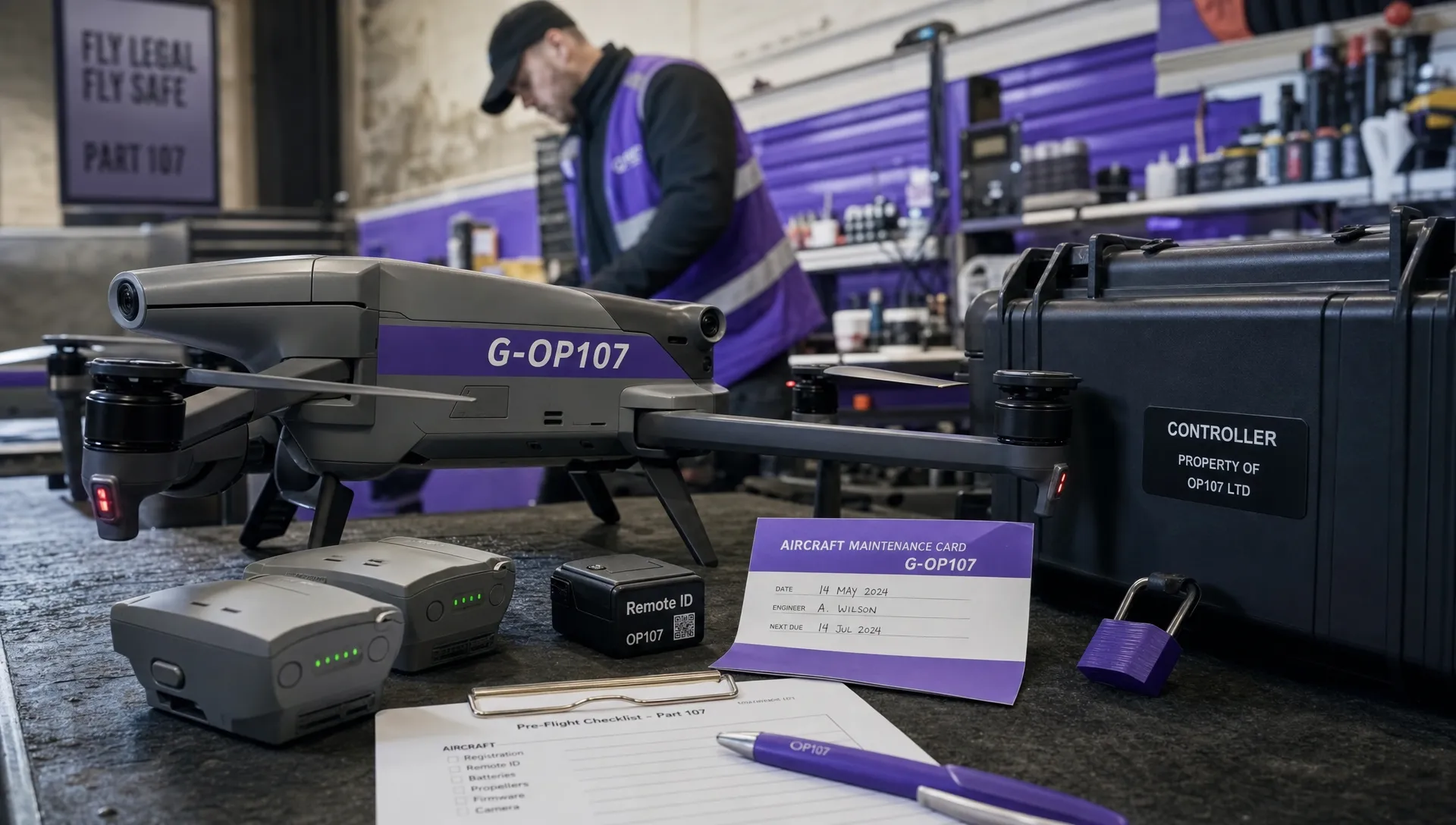 FAA Small UAS Rule: Key Requirements for Operators →
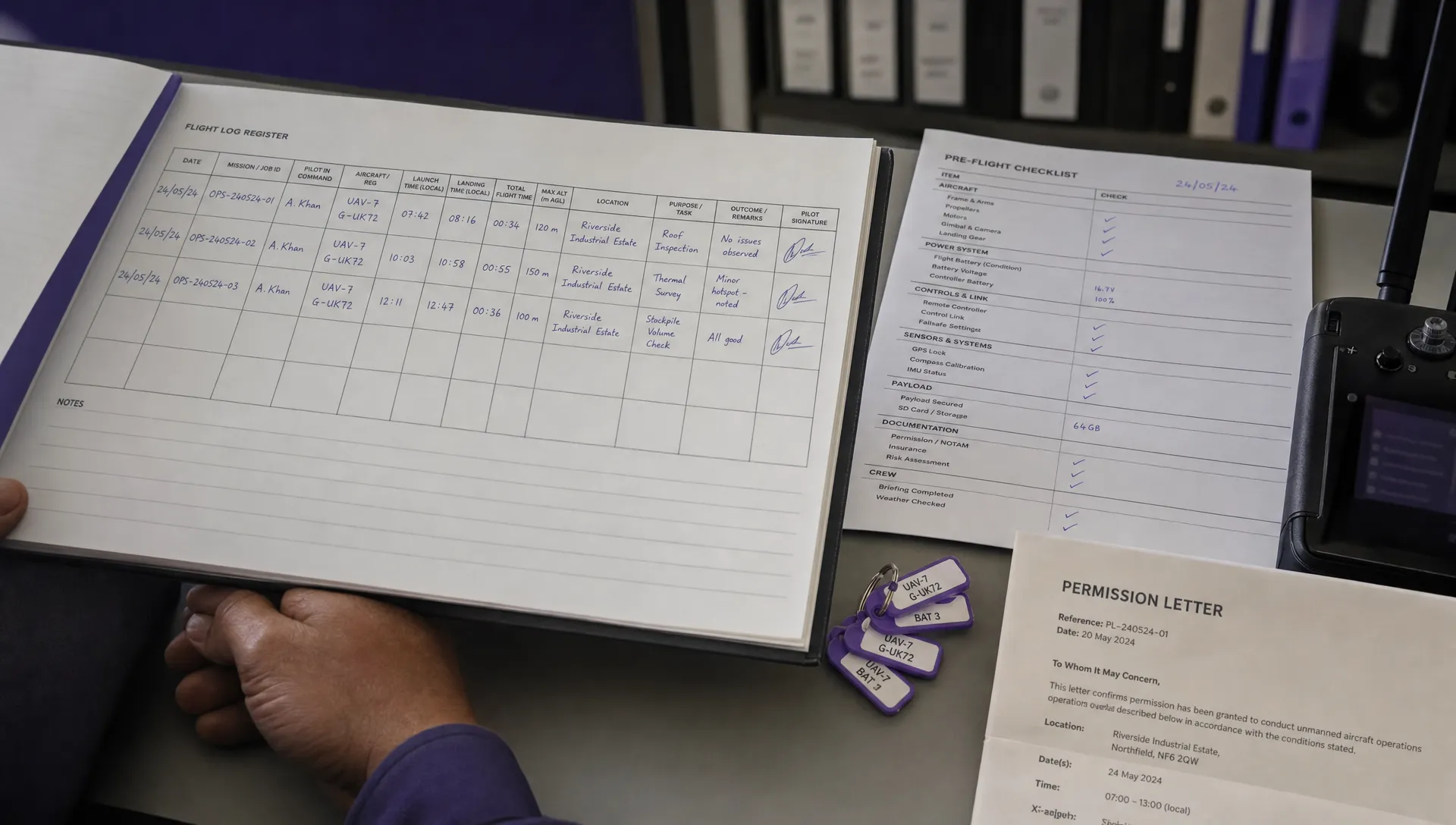 How to Build a Drone Pilot Flight Log That Is Audit Ready →
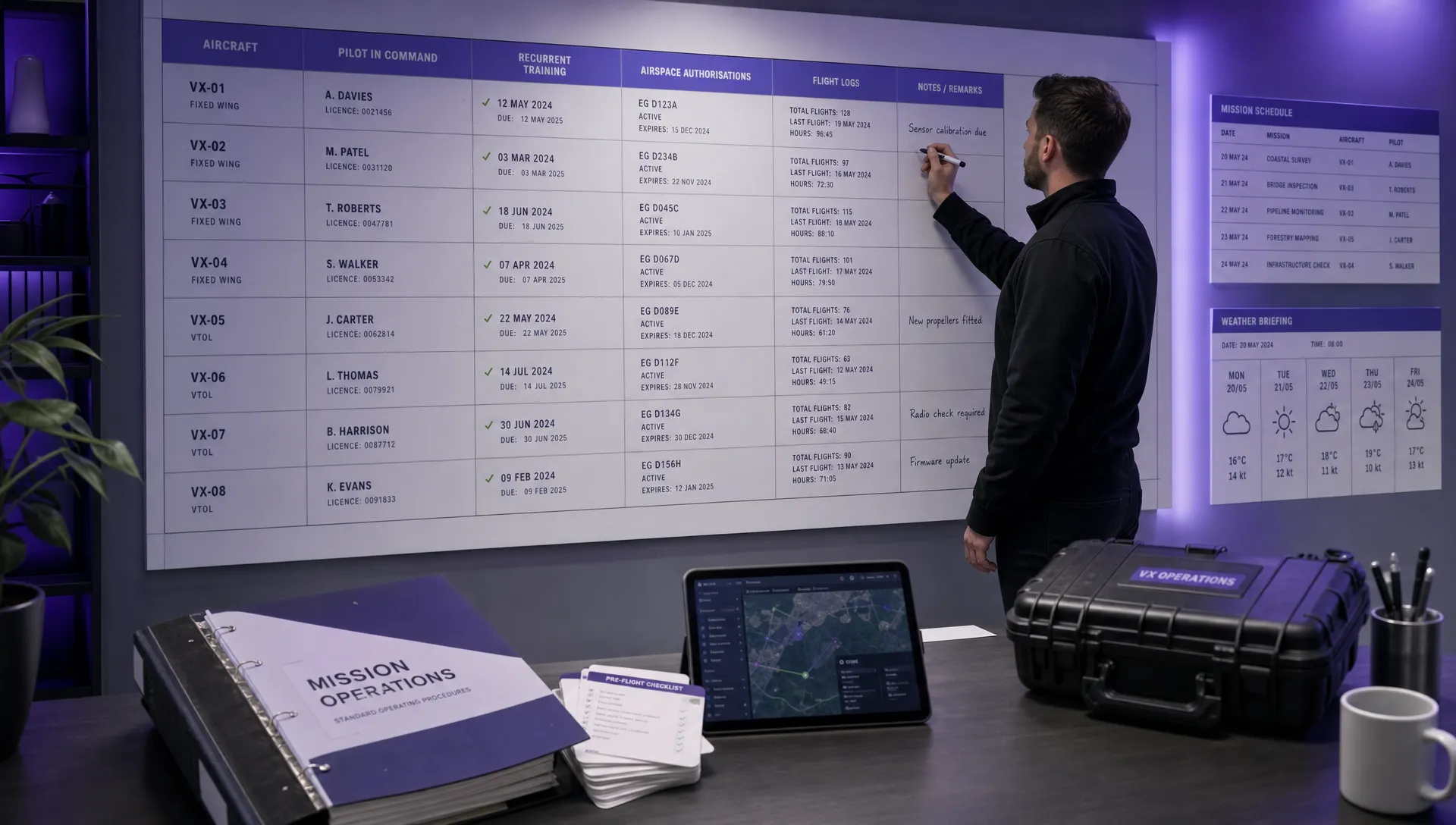 FAA Drone Licence Requirements for Commercial Pilots →