
A Guide to Flight Data Monitoring
Flight Data Monitoring (FDM) is all about being proactive. Think of it as a continuous health and fitness tracker for your aircraft. But instead of counting steps and monitoring heart rate, it records thousands of operational details on every single flight. This isn't about waiting for an emergency; it's about learning and getting better every day.
Understanding the Core of Flight Data Monitoring

We've all heard of the "black box," or Flight Data Recorder (FDR). It's a reactive tool, essential for investigators to piece together what went wrong after an accident. Flight Data Monitoring completely flips this idea on its head. It takes the same incredibly rich data streams but uses them to spot potential risks and operational hiccups before they ever escalate into real problems.
Imagine a sophisticated system watching over your entire fleet. This system isn't just looking for big, obvious failures. It’s smart enough to flag the subtle little deviations from your standard operating procedures (SOPs) that, when they add up over time, might point to a hidden risk you’d otherwise miss. It’s a fundamental shift from a reactive safety posture to a predictive one.
From Raw Data to Actionable Insights
The real magic of FDM lies in turning a firehose of raw flight parameters into clear, actionable intelligence. It captures everything—from airspeed and altitude to engine performance and control inputs. Specialised software then gets to work, sifting through all this information to automatically flag predefined "events" or anomalies that fall outside your normal operational boundaries.
An FDM program can quickly spot trends that need attention, such as:
- Unstabilised Approaches: A pattern of coming in too high or too fast for landing at a particular airport.
- Inefficient Climb Profiles: Consistently using more fuel than necessary during takeoff and ascent.
- Hard Landings: A trend of landings that put excessive stress on an aircraft's landing gear.
- Procedural Deviations: Small but repeated drifts from the company's established SOPs.
When you can see these patterns early, you can take meaningful action. That could mean refining pilot training, adjusting your procedures, or scheduling some preventative maintenance.
At its core, flight data monitoring is a non-punitive tool designed for collective learning and continuous improvement. It builds a safety culture based on data-driven insights rather than blame, empowering pilots and operators to perform at their best.
At the end of the day, Flight Data Monitoring is a specialised form of continuous monitoring—a practice that's vital across many high-stakes fields, including cybersecurity. Understanding the importance of continuous monitoring in other areas can really drive home its value in aviation. This proactive philosophy has become indispensable for everyone from major airlines to specialised drone operators using platforms like Dronedesk, creating the foundation for safer, smarter aviation.
What Are The Real-World Benefits of an FDM Program?
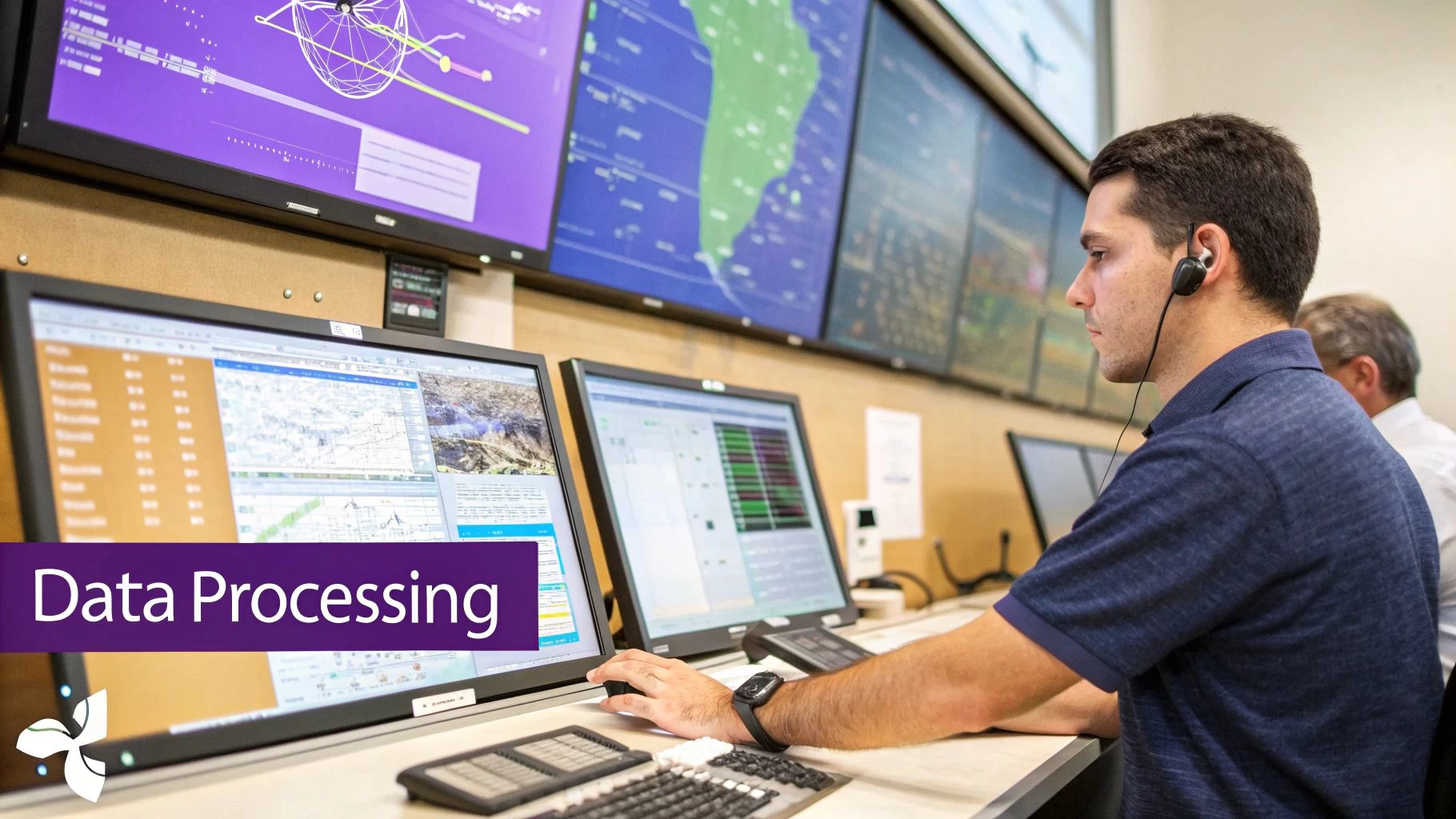
When you bring a flight data monitoring (FDM) program into your operation, you’re fundamentally changing your approach from reactive to proactive. It's easy to see it as just another expense, but it’s much better to think of it as a strategic investment in safety, efficiency, and overall resilience. These aren't just abstract ideas; they deliver real, measurable results that strengthen every part of your aviation business.
The advantages really boil down to three core areas. First and most importantly, you get a massive boost in safety. Second, you see a big improvement in operational efficiency, which translates directly into cost savings. And finally, a solid FDM program means you can confidently meet and even surpass your regulatory requirements.
A Powerful Early Warning System for Safety
The most critical benefit of flight data monitoring is its role as a powerful early warning system. It's designed to pick up on subtle, unsafe trends long before they could ever lead to an incident. By looking at aggregated, de-identified data from every single flight, safety managers can spot patterns of minor deviations that would otherwise be completely invisible.
For instance, an FDM system might flag a recurring pattern of slightly high-speed approaches at a specific airport known for its tricky terrain. While no single approach was dangerous enough on its own to warrant an alert, the trend points to a hidden risk. This insight allows the organization to get ahead of the problem, maybe by adding specialized simulator training or updating procedural guidance for that location.
This proactive stance completely transforms an organisation's safety culture. The focus shifts away from assigning blame after something goes wrong to identifying systemic risks and fixing them through a process of continuous improvement.
An FDM program is built on a non-punitive philosophy. Its goal is to create a transparent environment where data is used for collective learning, allowing crews and management to work together to elevate safety standards for everyone.
This approach empowers pilots, reinforces the entire safety management system (SMS), and creates a positive feedback loop of ongoing improvement.
Boosting Efficiency and Reducing Operational Costs
Beyond the safety improvements, flight data monitoring is a fantastic tool for optimising your operations and cutting down on costs. The very same data you use to spot safety trends can also shine a light on opportunities for serious financial savings. Take fuel consumption, for example—it's a massive operational expense, and even tiny improvements can make a huge difference to the bottom line.
A good FDM program helps operators achieve these savings in a few key ways. This table summarises the key benefits you can expect to see.
Key Benefits of Flight Data Monitoring
| Benefit Category | Description | Impact Example |
|---|---|---|
| Fuel Optimisation | Identifies the most fuel-efficient takeoff, climb, and descent profiles and standardises them across all pilots. | Pinpointing opportunities for reduced-engine taxiing or optimal flap settings can lead to 5-10% fuel savings annually. |
| Maintenance Planning | Shifts maintenance from a fixed schedule to a condition-based model by monitoring engine and component data. | Predictive maintenance reduces unnecessary work and prevents unexpected, costly downtime from component failure. |
| Training Effectiveness | Uses objective flight data to provide targeted feedback, customising training programs to address common deviations. | Instead of generic recurrent training, focus can be placed on specific manoeuvres where data shows pilots struggle most. |
As you can see, the data provides a clear path to smarter, more cost-effective operations.
For drone operators, meticulously tracking this kind of information is just as vital. The scale might be different, but the principles are identical. The first step toward building this data-driven picture is to capture every detail in a comprehensive flight log for your drone.
Ensuring Verifiable Regulatory Compliance
Lastly, a well-documented FDM program gives you undeniable proof of your commitment to safety and compliance. Regulatory bodies like the FAA and EASA are increasingly looking for data-driven safety management. An FDM system provides the solid, verifiable records needed to show that you're not just meeting the required standards, but actively exceeding them.
This documentation is priceless during audits. It demonstrates that your organisation has a systematic process for identifying, analysing, and mitigating risk. It proves that safety management is a living, breathing process in your company—not just a set of manuals gathering dust on a shelf. This builds a huge amount of trust with regulators, stakeholders, and clients alike.
How Flight Data Monitoring Actually Works
To really get the value of a flight data monitoring program, it helps to pull back the curtain and see what’s going on behind the scenes. The whole process is a systematic journey that turns a flood of raw numbers from an aircraft into clear, actionable intelligence for safety teams.
Think of it like a four-stage data production line. Each step adds value and refines the information until it becomes a powerful tool for improving how you fly. This cycle is designed to be methodical and continuous, creating a constant stream of insights that help your whole operation learn and adapt.
Let's walk through this journey, from the aircraft right to the analyst's desk.
Stage 1: Data Acquisition
It all starts in the air. On every single flight, specialised onboard recorders are working overtime. These are often the same units as the "black box" or supplemental quick access recorders (QARs), and they’re busy capturing thousands of different parameters. We're not just talking about basic stuff like altitude and airspeed.
These systems paint a detailed digital picture of the entire flight, recording things like:
- Aircraft Configuration: Flap settings, landing gear position, and autopilot modes.
- Engine Performance: N1/N2 speeds, exhaust gas temperature (EGT), and fuel flow.
- Control Inputs: Every movement of the pilot and co-pilot's controls, from the column to the rudder and throttles.
This first stage is all about gathering the best possible raw material. The more detailed and accurate the data, the more powerful the final analysis will be.
Stage 2: Data Transfer
Once the aircraft is safely on the ground, that mountain of data needs to be moved. The goal is simple: get the flight files from the aircraft's recorder to the ground-based analysis station as quickly and efficiently as you can.
Not too long ago, this was a manual chore. Someone would have to physically pull a data card or disk and walk it over to a computer. While some operations still do it this way, modern systems have made this step a breeze. Many aircraft now use automated wireless systems (like Gatelink) that automatically transmit the data the moment the plane is in range of the airport's Wi-Fi.
This automation doesn't just save a ton of time; it also protects the data's integrity and consistency, setting the stage for much faster analysis. For drone teams, understanding this is key, and you can learn more about how automated flight logging and reporting can save drone teams hours every week.
Stage 3: Processing and Analysis
This is where the magic happens and raw data gets its meaning. Specialised software crunches the numbers, sifting through the flight files and comparing every single parameter against the operational limits and procedures your organisation has set.
This is where you turn complex data into clear alerts for your analysts.
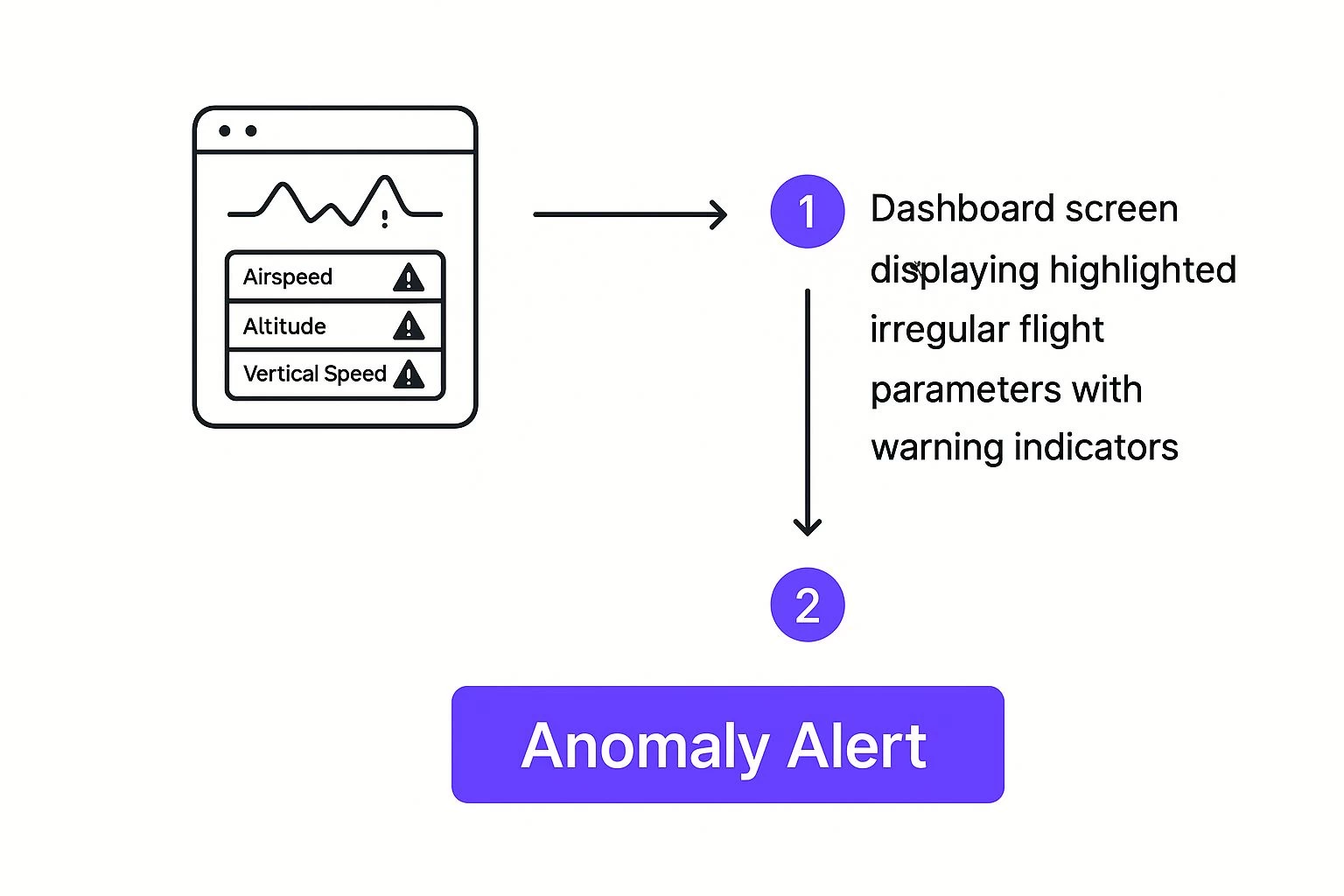
A good system flags any strange parameters, letting safety teams zero in on what actually matters without getting lost in the noise.
The heart of this stage is "event" detection. An event is any time the aircraft's operation deviates from the established norms—think a steep bank angle, a hard landing, or an unstabilised approach. The software flags these moments for a closer look.
Stage 4: Reporting and Action
The final stage is all about closing the loop. All that processed data and the flagged events are packaged into clear, easy-to-read reports for the safety team, management, and flight crews. To foster a just culture, these reports focus on trends and big-picture data, often de-identifying individual crews to keep the focus on improvement, not blame.
Armed with these findings, an organisation can take real, concrete steps. This could mean tweaking training programs, refining standard operating procedures (SOPs), or sending out safety bulletins. It’s this final, action-focused step that makes flight data monitoring a true driver of safety and operational excellence.
Here's the rewritten section, crafted to sound like it was written by an experienced human expert.
The Global Growth and Adoption of FDM
Flight Data Monitoring (FDM) has come a long way from its early days as a niche analytical tool. Today, it’s a cornerstone of modern aviation safety and efficiency. For operators of all sizes, it's no longer a question of if they should adopt it, but when. The technology's global spread is being driven by a perfect storm of soaring air traffic, tighter safety regulations, and the constant economic pressure to squeeze every drop of efficiency out of flight operations.
This worldwide embrace has transformed FDM from a reactive, "what went wrong?" tool into a strategic necessity. For many operators, it's now a critical source of competitive advantage. The growth isn't just about ticking compliance boxes; it's about using hard data to build smarter, safer, and more profitable aviation businesses. The market's impressive expansion tells the story loud and clear: data-driven decision-making is now the standard across the industry.
The Forces Driving FDM's Expansion
So, what’s really pushing flight data monitoring systems into the mainstream? A few key factors are at play. The most obvious driver is the relentless growth in global air traffic. More planes in the sky means the margin for error gets thinner and thinner, making proactive safety measures an absolute must.
At the same time, regulatory bodies like the Federal Aviation Administration (FAA) and the European Union Aviation Safety Agency (EASA) are raising the bar for Safety Management Systems (SMS). A formal FDM program is the best way to generate the verifiable data needed to meet—and exceed—these tough requirements. It lets operators show a clear, systematic approach to managing risk, which is vital for keeping their licenses and building trust.
The economic argument for FDM is just as powerful as the safety one. In an industry where margins are razor-thin, the ability to pinpoint fuel inefficiencies, fine-tune maintenance schedules, and cut down on component wear translates directly into major cost savings.
A Market on the Rise
The numbers don't lie. The financial trajectory of the FDM market highlights just how vital it has become. The global flight data monitoring market has seen incredible growth, valued at roughly $5.03 billion one recent year and jumping to $5.3 billion the next. Looking ahead, projections show the market is expected to hit $8.02 billion by 2033, growing at a compound annual growth rate (CAGR) of 5.31%. This demand is coming from all corners—airlines, maintenance providers, and regulators who all depend on FDM to manage fuel, mitigate risk, and ensure compliance. You can dig deeper into the numbers behind this market expansion and its key drivers.
Regional trends also paint a telling picture of FDM adoption:
- North America: Currently holds the lion's share of the market. This isn't surprising, given its advanced aviation infrastructure and a long history of strict safety rules that have always encouraged data-led safety programs.
- Asia-Pacific: This is where the real action is, representing the fastest-growing market. The boom is fueled by a massive expansion in regional air traffic and fleet sizes, making FDM an essential tool for managing this rapid growth safely and efficiently.
All this global momentum makes one thing clear: investing in a solid flight data monitoring program is no longer just a best practice—it's a fundamental piece of any successful, modern aviation operation.
Applying FDM Principles to Your Drone Operations
Think flight data monitoring is just for jumbo jets? Think again. The very same principles that keep commercial airliners safe are incredibly valuable—and directly applicable—to commercial drone operations. After all, safety, reliability, and accountability are just as critical when you're flying a drone.
With the right mindset and modern management tools, you can build a robust FDM-style program for your drone fleet. It’s all about translating the high-level concepts of data acquisition, analysis, and action into practical, everyday habits for your drone program. This is where platforms like Dronedesk come in, giving you a central hub for the data that forms the backbone of any F-D-M system.
Building Your FDM Foundation with Meticulous Records
First things first: you have to treat every drone flight with the same level of importance as a commercial airline flight. That means keeping meticulous, accurate, and complete records for every single operation. Your flight logs are the drone equivalent of an airliner's black box, capturing the essential information you'll need for analysis later on.
A truly comprehensive flight log captures a lot more than just how long you were in the air. To build a proper FDM-style database, you need to track:
- Detailed Flight Parameters: This includes takeoff and landing spots, total flight time, and the distance you covered.
- Environmental Conditions: Make a note of the weather, wind speed, and temperature. These factors have a direct impact on drone performance and battery life.
- Pilot and Equipment: Always log which pilot was flying the mission and which specific drone and batteries were used.
This consistent data entry is the bedrock of your program. It stops individual flights from being isolated events and turns them into a rich dataset that reveals patterns over time.
Think of your flight logging platform as your central data warehouse. Every piece of information you enter contributes to a bigger picture of your operational health, pilot performance, and equipment reliability.
Once you have this data, you can start asking the important questions. Are certain pilots running into more weather-related problems? Is one drone model burning through battery life faster than others in cold weather? These are exactly the kinds of insights a basic FDM system is built to uncover.
Tracking Pilot Performance and Equipment Health
With a steady stream of data coming in, the next step is analysis. A core principle of flight data monitoring is to track performance against established standards. For drone operations, that means keeping a close eye on pilot currency and equipment health.
Good drone fleet management software is where the magic happens, allowing you to connect your flight logs directly to pilot profiles and equipment records. This integration is powerful. You can effortlessly track pilot qualifications, make sure they’re meeting currency requirements, and spot if a particular pilot might need extra training on specific gear or procedures.
It’s the same story for your hardware. By linking flights to specific drones, batteries, and other components, you can shift from just fixing things when they break to proactively maintaining them.
Proactive Maintenance Triggers:
- Flight Hour Thresholds: Get automatic alerts when a drone hits a certain number of flight hours, telling you it’s time for a scheduled inspection.
- Battery Cycle Counts: Monitor how many charge cycles each battery has gone through, so you can retire them before their performance drops off a cliff unexpectedly.
- Component-Specific Logs: Keep detailed notes on any repairs or issues, building a complete maintenance history for every asset in your fleet.
This data-driven approach means you can set up maintenance schedules based on actual usage, not just a date on the calendar. It helps you catch potential equipment failures before they become a real problem in the field—a cornerstone of any serious safety program. By weaving these FDM concepts into your daily workflow, you build a powerful quality assurance system that boosts the safety and professionalism of your entire drone operation.
The Future of FDM and Predictive Analytics
Flight data monitoring has traditionally been about looking in the rearview mirror—understanding what went wrong after an incident. But that's all changing. We're now entering an era where the focus is shifting from a reactive stance to a truly predictive one. This leap is powered by incredible technologies that are essentially turning aircraft into smart, self-aware assets.
The future of flight data monitoring isn't about hoarding more and more data; it's about making that data work smarter for us. Technologies like Artificial Intelligence (AI) and machine learning are leading this charge, building a new reality where we can actually forecast problems before they have a chance to happen. It's a fundamental shift in how we approach aviation safety and manage operations.
The Rise of Predictive Analytics
Picture this: an AI algorithm tirelessly sifts through data from thousands of flights across your entire fleet. It's not just hunting for the obvious red flags or specific events we’ve told it to look for. Instead, it’s searching for faint, almost invisible patterns that a human analyst would never spot.
This is the very heart of predictive analytics. It’s the ability to connect seemingly random dots to predict a future event. For instance, a system might notice a microscopic uptick in engine vibration paired with a fractional drop in fuel efficiency on a certain aircraft model. To the naked eye, it’s nothing. To the AI, it’s a clear signal predicting a potential component failure weeks down the line.
Predictive analytics transforms flight data monitoring from a historical record into a forward-looking crystal ball. It allows operators to move from asking, "What happened?" to proactively asking, "What is likely to happen next?"
This capability gives maintenance teams the power to schedule repairs before a part gives out, sidestepping expensive, unscheduled downtime and massively improving the reliability of the entire fleet.
AI and Machine Learning in Action
The real-world impact of these technologies is profound, creating a more cohesive and automated FDM ecosystem. You only have to look at the market growth to see how significant this trend is. Valued at roughly USD 7.7 billion, the flight data monitoring market is expected to balloon to USD 15.5 billion by 2034, pushed forward by the widespread adoption of AI, machine learning, and cloud computing for next-level analysis. You can dig deeper into the forecasts driving this market growth.
Here’s a glimpse of how these technologies are already making a difference:
- Automated Anomaly Detection: Machine learning models can be trained on the "normal" operational fingerprint of an aircraft. Once they know what normal looks like, they can instantly flag any tiny deviation, catching new or unknown risks without a human ever having to define what to look for.
- Real-Time Risk Assessment: By pulling in live data streams from advanced sensors and IoT devices, modern systems can assess risk as it unfolds during a flight. This gives crews immediate, data-backed information to support their decision-making right when it matters most.
- Optimized Pilot Training: AI can chew through performance data from all pilots to pinpoint systemic training gaps. This allows an organization to build highly targeted and effective training programs that address the most common slip-ups or procedural deviations.
Ultimately, the future of FDM is one where data isn't just passively recorded but actively put to work to foresee and fend off problems. The fusion of cloud computing for handling massive datasets, IoT for richer data streams, and AI for intelligent analysis is forging a safer, more efficient, and more dependable aviation industry for us all.
Frequently Asked Questions About FDM
Even with a solid handle on what flight data monitoring is all about, you might still have a few lingering questions. Let's tackle some of the most common ones I hear from operators, breaking down the key ideas and how they apply in the real world.
Is Flight Data Monitoring the Same as a Black Box?
Not exactly, though it's easy to see why people mix them up. While both systems record flight-critical data, their whole reason for being is fundamentally different.
A "black box," or more accurately, a Flight Data Recorder (FDR), is a purely reactive tool. Its main job is to survive a crash so that investigators can piece together what went wrong after an accident has already happened.
In complete contrast, flight data monitoring is proactive. It's about analyzing data from every single flight—the good, the bad, and the perfectly normal—to spot subtle trends, fine-tune pilot training, and make the whole operation safer and more efficient. Think of it like this: the black box is for investigating accidents, while FDM is for preventing them in the first place.
Is an FDM Program Only for Large Airlines?
That’s a common myth, but it’s one that’s thankfully out of date. While the big airlines certainly pioneered FDM, the technology is no longer their exclusive playground. Thanks to modern software and scalable platforms, the benefits are now well within reach for operators of all shapes and sizes.
Today, you'll find a wide range of aviation outfits using FDM principles, including:
- Regional air carriers
- Corporate and private flight departments
- Helicopter operators
- Commercial drone service providers
The core goal is the same whether you have two aircraft or two hundred: use your own data to build a safer, smarter, and more efficient operation.
The key takeaway is that the principles of FDM scale. A small operator might not need the same level of complex analysis as a global airline, but the value of tracking performance and identifying risks with data is universal.
How Does FDM Help with Fuel Efficiency?
Fuel is almost always one of the biggest line items on an operational budget, and FDM is an incredible tool for getting it under control. By sifting through data from thousands of flights, an FDM program can pinpoint very specific procedures where fuel can be saved.
For example, the data might show that certain climb profiles are less efficient than others, or that pilots could be using reduced engine taxiing more frequently at particular airports. By identifying these best practices and making them standard across the fleet, operators can achieve some serious, measurable fuel savings. It's a direct line from operational data to a healthier bottom line.
What Kind of Events Does an FDM System Track?
An FDM system is set up to automatically flag "events"—which are really just deviations from an organisation's Standard Operating Procedures (SOPs). These aren't necessarily hair-raising incidents; often, they're just moments that fall slightly outside the normal operational envelope.
Some common events an FDM system might track include:
- Unstabilized Approaches: Coming in for a landing too high, too fast, or without being properly configured.
- Steep Bank Angles: Exceeding the recommended bank angle during a turn.
- Hard Landings: Touchdowns that put more force on the landing gear than is ideal.
- Late Flap Deployment: Lowering the flaps later than the procedure calls for.
The point of tracking these events isn't to play the blame game. It’s about helping the organisation see where systemic risks might be creeping in, allowing them to focus training efforts where they'll have the biggest safety impact.
Ready to apply these data-driven safety principles to your drone operations? Dronedesk provides the tools you need to log flights, track assets, and manage your team with precision. See how our platform can elevate your operational standards. Get started with Dronedesk today.
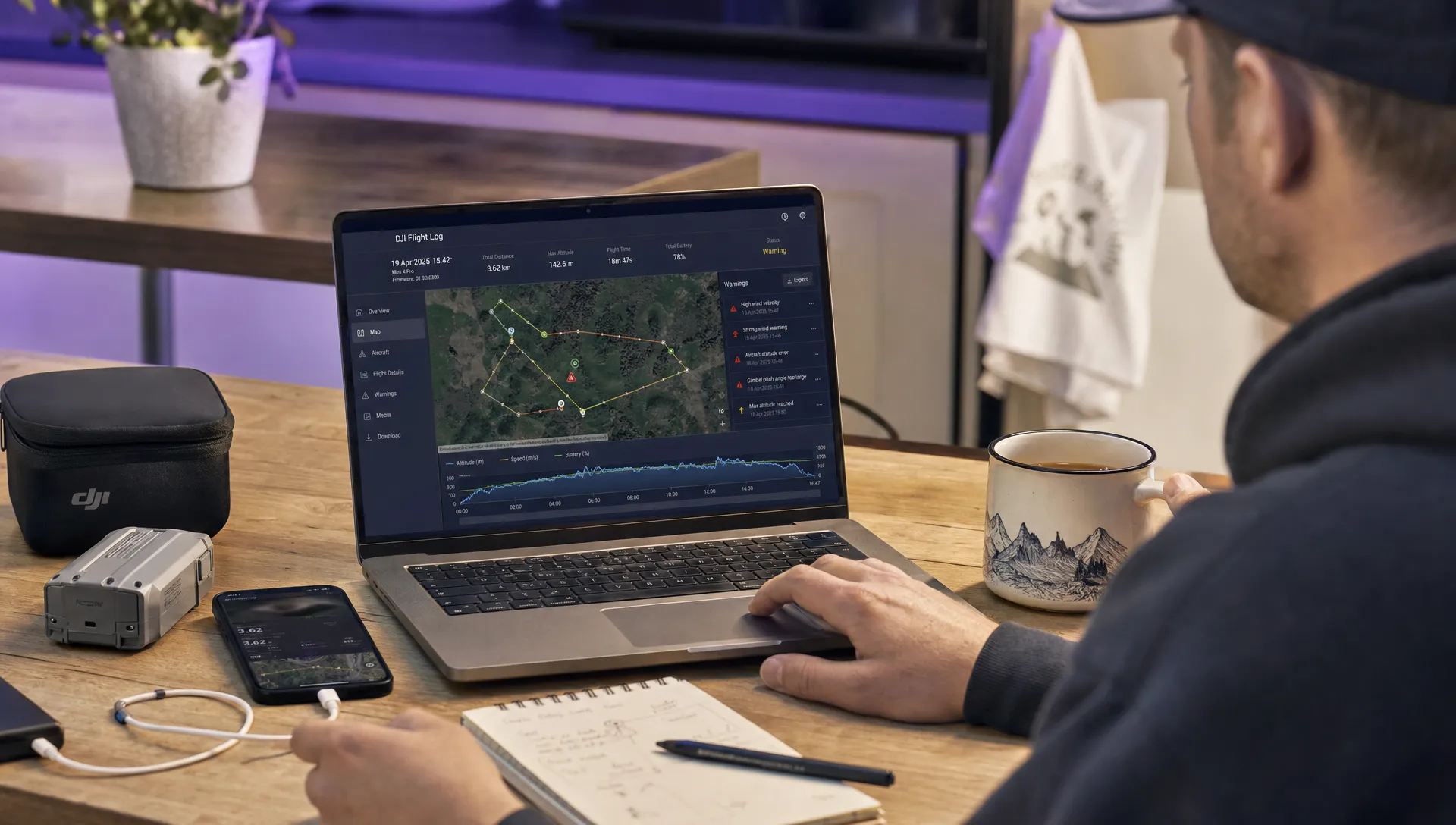 How to Review a DJI Flight Log After an Unexpected Event →
 Drone Laws Around the World: A Pre-Flight Research Framework →
 How to Compare Drone Survey Services for Complex Sites →
 How to Start a Drone Mapping Business With a Clear Workflow →
 Class C Airspace Drone Rules for Commercial Flights →
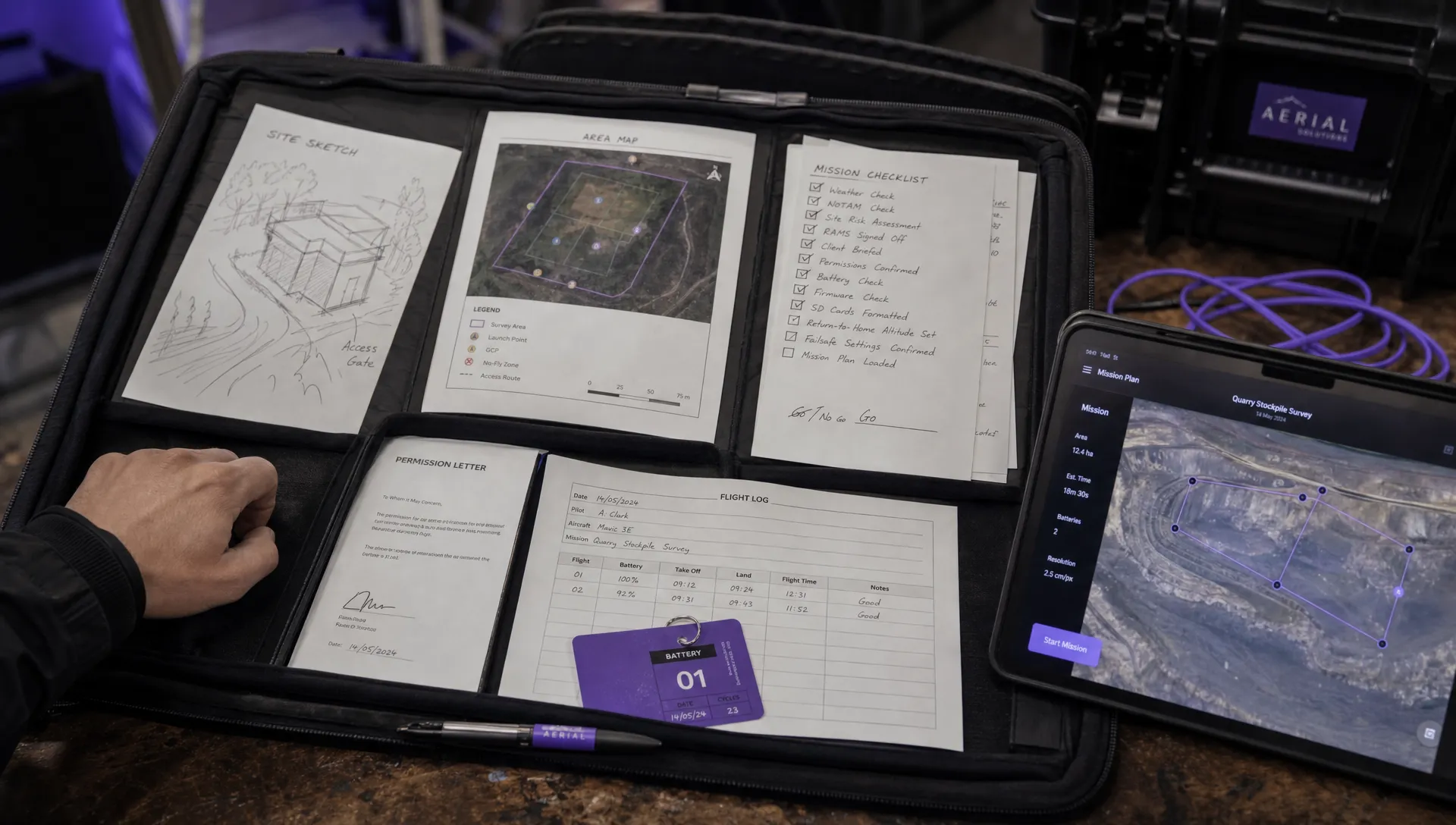 How to Create a Drone Job Pack for Every Mission →
 FAA Small UAS Rule: Key Requirements for Operators →
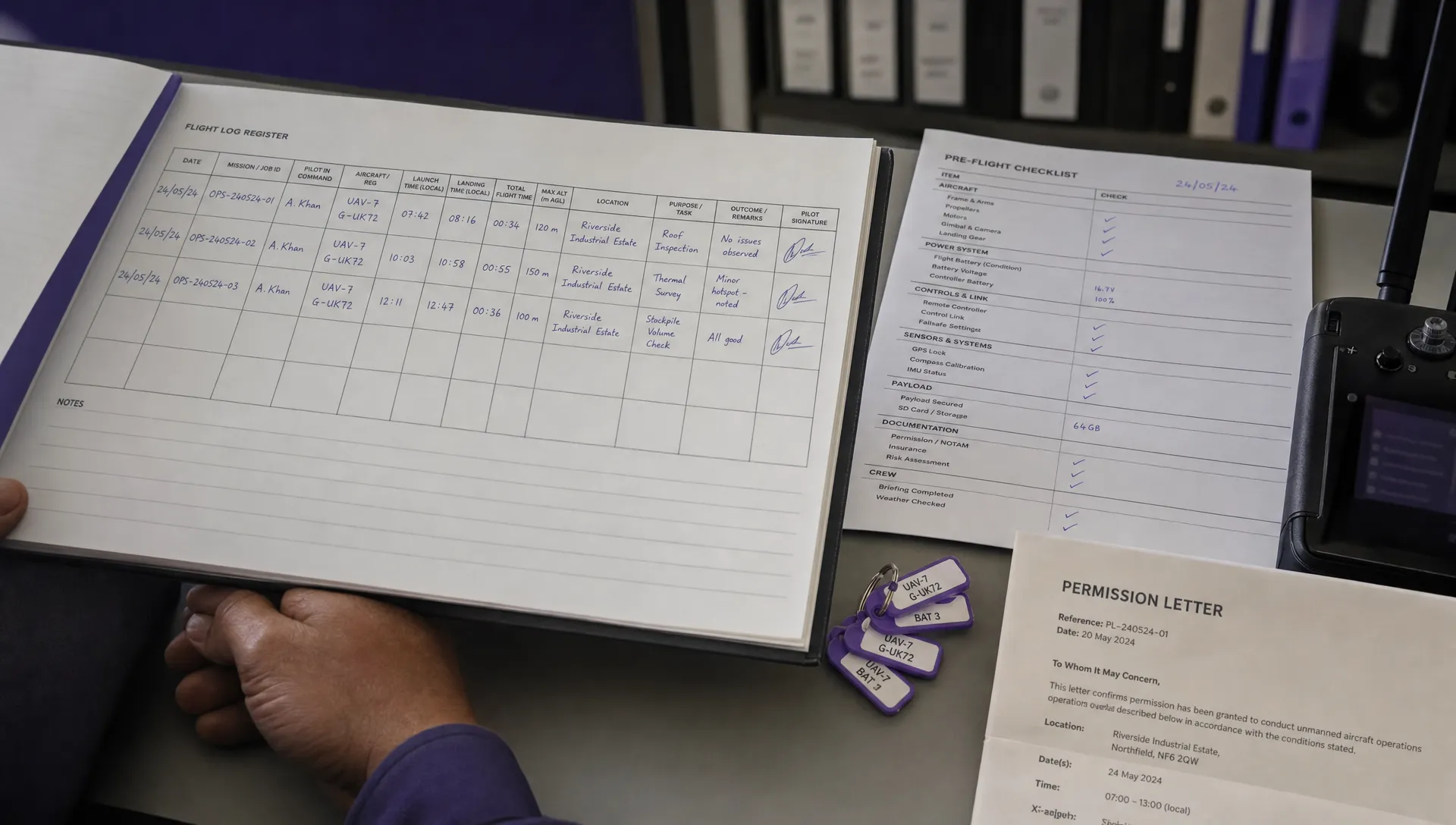 How to Build a Drone Pilot Flight Log That Is Audit Ready →
 FAA Drone Licence Requirements for Commercial Pilots →
 FAA BVLOS Waivers Granted: What Successful Cases Show →