
A Guide to Drones Commercial Use in 2026
Imagine being able to survey a hundred-acre farm in minutes instead of days. Or picture inspecting the top of a wind turbine without ever leaving the ground. This isn’t some far-off future; it's what’s happening right now, thanks to the commercial use of drones. These aerial tools are unlocking serious efficiency gains and creating brand new opportunities across almost every industry you can think of.
The Sky Is Now Open for Business
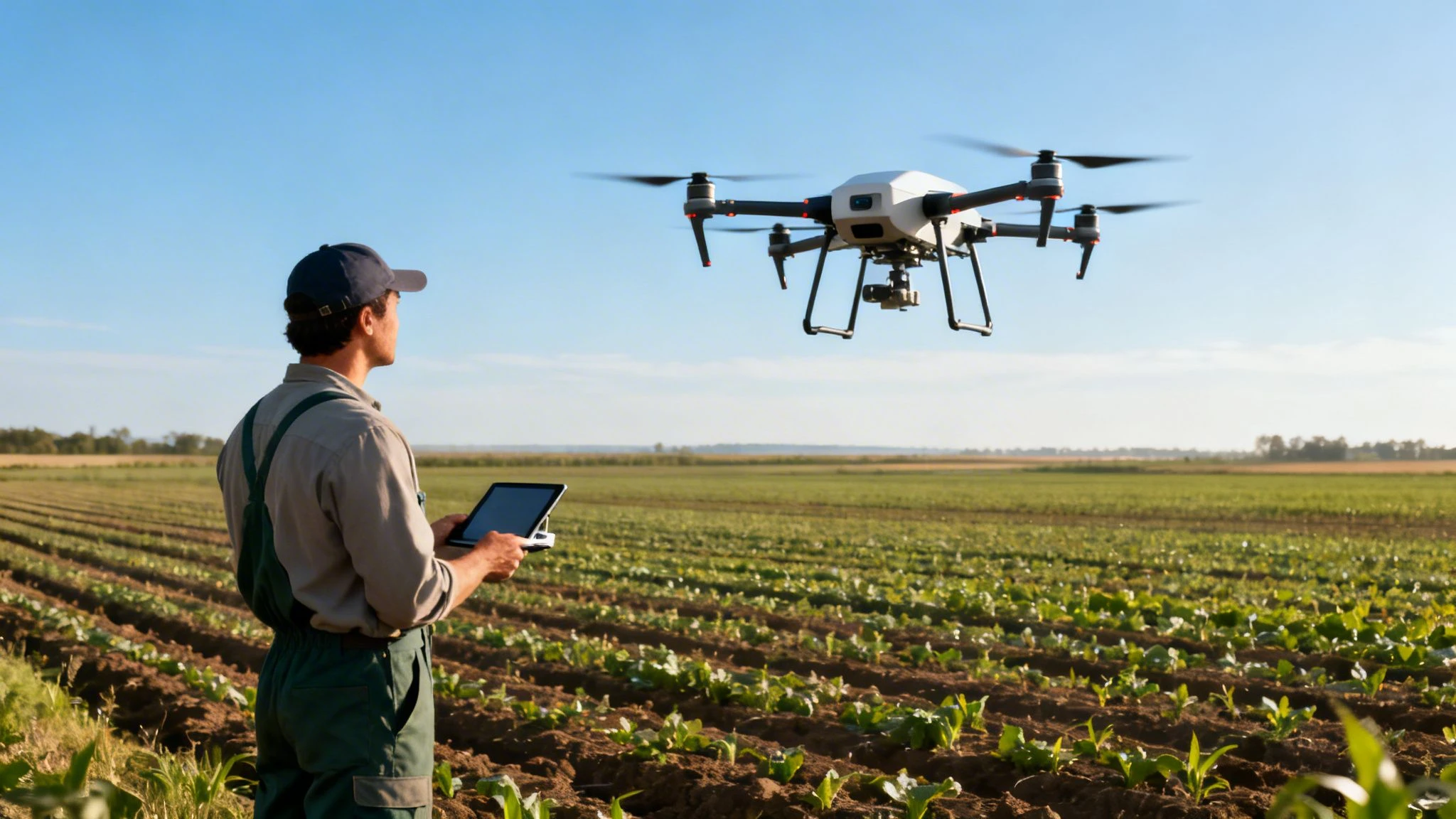
The whole conversation about drones has changed. Not long ago, they were seen as toys for hobbyists. Now, unmanned aerial vehicles (UAVs) have grown up into essential tools for professionals. This shift isn't just a passing trend—it's a fundamental change in how businesses get work done, collect data, and generate real value.
A few things have come together to make this happen. Hardware costs have dropped, sensor technology has become incredibly advanced, and flight autonomy has matured. All of this makes professional-grade drones more accessible than ever, and the market growth shows it.
The global drone market is on track to hit a staggering US$147.8 billion by 2036. That's a massive jump from US$69 billion in 2026, marking a strong compound annual growth rate (CAGR) of 7.9% as more industries get on board.
What started as a niche has become a multi-billion-dollar powerhouse. In fact, commercial drone shipments alone are expected to exceed 9 million units by 2036, a number pushed higher by constant improvements in sensors and self-flying capabilities.
The Flying Swiss Army Knife
It helps to think of a commercial drone as a flying Swiss Army knife. It’s a single platform that you can adapt for all sorts of jobs just by swapping out the payload. One day it's a camera, the next it's a thermal sensor. This flexibility is where the real business value lies.
The same drone that captures beautiful 4K video for a property listing can be fitted with a different sensor tomorrow to perform a thermal roof inspection.
This multi-tool nature allows businesses of all shapes and sizes to:
- Gather crucial data from angles that were once too dangerous, expensive, or flat-out impossible to get.
- Boost operational efficiency by completing jobs like surveys and inspections in a fraction of the time.
- Improve worker safety by keeping people out of harm's way, whether that’s working at height or in hazardous areas.
- Make better decisions with the help of precise, high-resolution aerial imagery and data.
Whether you're a one-person operation just starting out or a manager integrating drones into a large company, understanding this versatility is the first step. It’s what makes the commercial use of drones such a game-changer for modern business.
How Drones Are Really Being Used Across Industries
It’s easy to think of drones as just flying cameras, but that's selling them way short. Think of them as powerful, flying data-collection platforms. The commercial use of drones is giving businesses a level of insight that used to be either wildly expensive or downright impossible to get.
By swapping out the payload—the camera or sensor on the bottom—drones can gather incredibly specific data safely and quickly. This lets businesses get ahead of problems instead of just reacting to them. You're not just finding a weak spot on a bridge after it fails; you’re spotting it during a routine flight. That shift is delivering real, measurable value everywhere from construction sites to farms.
Precision Surveying And Mapping
Surveying and mapping is one area where drones have completely changed the game. Before, mapping a big construction site or quarry was a slow, manual job that could take weeks and put surveyors in risky situations. Now, a drone can do the same work in a few hours.
The magic behind this is a process called photogrammetry. A drone flies a pre-planned grid pattern, snapping hundreds of overlapping, high-resolution photos. Software then stitches these images together to create unbelievably detailed and accurate models.
The typical deliverables from this process include:
- Orthomosaic Maps: Think of these as super-accurate, distortion-free versions of Google Earth for your specific site.
- 3D Point Clouds: Millions of individual data points that create a full 3D model of the terrain and any buildings or structures.
- Digital Elevation Models (DEMs): These are detailed topographic maps, crucial for planning drainage or any kind of earth-moving work.
On a busy building site, a project manager can use these models to check progress against the blueprints, measure stockpile volumes with over 99% accuracy, and spot problems before they turn into expensive delays. It's a constant flow of reliable data that helps keep projects on track.
Safer And Smarter Asset Inspections
Inspecting things like bridges, wind turbines, cell towers, and power lines used to mean putting people in harm's way with rope access teams or bringing in pricey cranes. Drones have made this work massively safer and more efficient. The pilot stays firmly on the ground, guiding the drone to capture every angle.
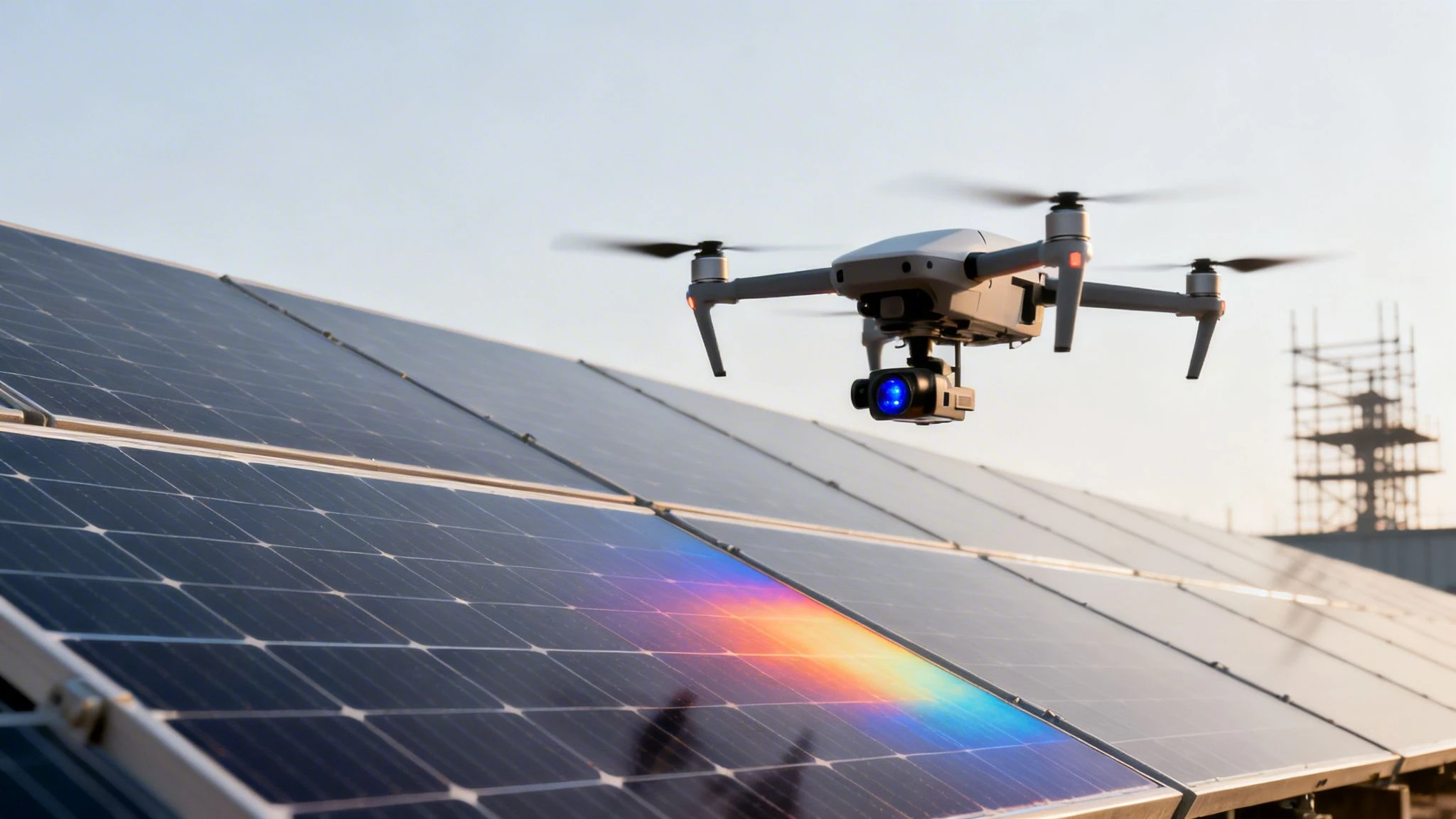
For instance, a drone with a powerful zoom lens can read a tiny serial number on a bolt 300 feet up a wind turbine. Another drone, fitted with a thermal camera, can fly over a solar farm and instantly spot faulty, overheating panels—a job that would take a ground crew days.
By finding problems early and taking people out of dangerous situations, companies can slash maintenance costs and downtime while making the workplace significantly safer.
This is a genuine win-win, cutting both operational costs and risk. The data provides a clear, actionable record that helps maintenance crews prioritise their work and manage the life of their assets far more effectively. To keep pushing the envelope, industries are even using advanced techniques like UAV 3D Printing to develop specialised components for these complex inspection tasks.
To give you a clearer picture, here’s a breakdown of how different sectors are putting drones to work.
Commercial Drone Applications by Industry
| Industry | Primary Application | Key Benefit | Common Technology Used |
|---|---|---|---|
| Construction | Site Surveying & Progress Monitoring | Improved accuracy, faster data, better safety | Photogrammetry drones (e.g., DJI Phantom 4 RTK) |
| Energy | Wind Turbine & Solar Panel Inspection | Reduced downtime, predictive maintenance, enhanced safety | High-zoom cameras, thermal imaging sensors |
| Utilities | Power Line & Pipeline Inspection | Proactive fault detection, reduced risk for workers | LiDAR scanners, high-resolution zoom cameras |
| Agriculture | Crop Health Monitoring & Spraying | Increased crop yield, reduced chemical use | Multispectral sensors, RTK-enabled spray drones |
| Public Safety | Search & Rescue, Incident Overview | Real-time situational awareness, rapid deployment | Thermal cameras, high-zoom cameras, spotlights |
| Real Estate | Property Marketing & Videography | Compelling visuals, enhanced property listings | High-quality cameras (e.g., DJI Mavic 3 Pro) |
This table just scratches the surface, but it highlights the core value drones bring: better data, faster, and with less risk.
Data-Driven Agriculture
Nowhere has the commercial use of drones made a bigger splash than in agriculture. Farming is a high-tech game these days, and drones are leading the charge in what's known as precision agriculture. They're helping farmers get more from their land while using fewer resources.
With multispectral sensors, drones can spot crop stress before it's visible to the naked eye. This allows for targeted application of fertilizers and pesticides, which can slash chemical use by 20-30% and, in some irrigation setups, cut water consumption by up to 90%. It’s about working smarter, not harder.
Vital Support In Public Safety
For first responders, knowing what you're walking into is everything. Drones offer that invaluable "eye in the sky" during an emergency, feeding back a live overview of what's happening on the ground.
Firefighters use thermal drones to find hotspots inside a burning building. Police can get a clear view of a large crowd to manage it safely. And for search and rescue teams, a drone can scan a huge, rugged area for a missing person far faster than a ground team ever could. This aerial view helps commanders make smarter decisions, send resources where they're needed most, and ultimately keep their people safer.
If you’re curious about the full spectrum of what these machines can do, exploring the various applications for drones gives a great overview of their growing potential.
Elevating Creative Media
And let’s not forget the creative world. In filmmaking, television, and real estate, drones have blown the doors off what’s possible on a reasonable budget. Those stunning, sweeping aerial shots that used to require a helicopter? Now, a skilled pilot can capture them with a drone.
A smooth flyover can show the sheer scale of a luxury home, add massive production value to a local business commercial, or set the scene for a film. For estate agents, a drone video isn't a "nice-to-have" anymore; it's a standard tool for showing how a property fits into its wider environment.
Navigating Drone Regulations and Compliance
Using a drone for your business isn’t as simple as pulling it out of the box and launching it into the air. The world of drones for commercial use is governed by a strict set of rules meant to keep both the public and the skies safe.
Think of it less like flying a kite and more like operating a commercial vehicle—it demands certification, registration, and a solid grasp of the rules of the road.
Getting this wrong can bring serious heat, from hefty fines reaching tens of thousands of dollars to losing your right to fly commercially altogether. More than that, though, compliance is the bedrock of a professional, trustworthy drone business. It’s how you show clients and the public you’re serious about safety and responsibility.
Understanding The Core Rules
In the United States, the rulebook for commercial drone pilots is the Federal Aviation Administration's (FAA) Part 107. In Europe, the European Union Aviation Safety Agency (EASA) has rolled out a similar framework to standardize rules across its member countries.
While the fine print varies by region, the big ideas are pretty consistent and boil down to a few key areas:
- Pilot Certification: Commercial pilots have to pass an aeronautical knowledge exam to get their remote pilot certificate (like the FAA's Part 107 certificate). This proves you know your way around airspace, weather, and the operational rulebook.
- Aircraft Registration: Any drone flying for business has to be registered with the national aviation authority. This gives your drone a unique number, just like a license plate on a car.
- Operational Limitations: The standard rules will usually keep you flying during daylight hours, within your visual line of sight (VLOS), and below a certain altitude—typically 400 feet. Flying over people or moving cars is also a no-go without special permission.
These rules create a baseline for safe, professional flights. For a deep dive into exactly what's needed, our commercial drone compliance guide breaks down all the essentials for pilots.
Flying Beyond The Standard Rules
So what happens when a job calls for something outside the box? Maybe you need to capture a twilight real estate shoot after sunset or inspect a massive property that takes the drone beyond your view. This is where waivers and special approvals come into play.
Think of a waiver as a special permission slip from the aviation authority. It lets you bend a specific rule, but only if you can prove your operation will still be safe.
A huge area of growth right now is flying Beyond Visual Line of Sight (BVLOS). This is a game-changer for long-distance jobs like pipeline inspections or large-scale mapping. To get a BVLOS waiver, you need to present a rock-solid safety case, often built on advanced "detect-and-avoid" technology to prevent any mid-air surprises.
This tech is a massive focus for regulators. Drones operating BVLOS might rely on a mix of sensors to stay safe:
- Onboard Cameras: Giving the remote pilot a full 360-degree view.
- Acoustic Sensors: Using sensitive mics to "hear" other aircraft nearby.
- Ground-Based Radar: Feeding the operator live data on local air traffic.
As the FAA and other bodies work to integrate unmanned aircraft into the national airspace, this kind of technology is becoming central to the future of drones for commercial use.
Why Compliance Is Your Competitive Edge
Wading through all these regulations might feel like a chore, but it’s actually a huge business advantage. A pilot who gets the rules is a pilot who prioritizes safety, and that’s exactly what professional clients are looking for.
When you can confidently walk a client through your compliance process—from your pre-flight risk assessments to your Part 107 certificate—you instantly build trust. It separates the pros from the hobbyists and positions your services as a premium, reliable solution.
At the end of the day, mastering drone regulations isn't just about dodging fines; it’s about building a respected, sustainable business from the ground up.
Building Your Drone Operations Workflow
Great flying skills are one thing, but running a successful drone business is another beast entirely. The real secret to turning a passion into a profession isn't just about what you do in the air; it’s about having a rock-solid, repeatable workflow on the ground.
This system is what separates the pros from the hobbyists. It's about standardizing every step, from the first client call to the final invoice, to guarantee safety, compliance, and quality every single time. A solid workflow doesn't just make your life easier—it builds the client trust that leads to repeat business.
The Three Phases of a Professional Drone Job
No matter the mission—whether it’s a quick property shoot or a complex multi-day survey—every professional drone job boils down to three key phases. Thinking about your work in these stages is the best way to make sure nothing critical gets missed.
- Pre-Flight Planning: This is where you win or lose the job. Honestly, 80% of a mission's success is locked in before the props even spin. It’s all about homework: understanding the client's goals, checking the location, and getting all your regulatory ducks in a row.
- On-Site Execution: This is showtime. It’s about flying the plan safely and efficiently, capturing the data you need while managing everything from batteries to bystanders.
- Post-Flight Management: The job isn't done when the drone lands. This final step is about processing your data, logging everything for compliance, and delivering a polished final product to a happy client.
A disciplined approach across these three phases is what takes your service from a side-gig to a serious business and dramatically cuts down your risk.
Mastering Pre-Flight Planning
A huge amount of work has to happen before you even think about taking off. This is the foundation of the entire operation, and skipping steps here is probably the most common mistake new pilots make. This stage ensures your mission is safe, legal, and actually set up to deliver what the client asked for.
Your pre-flight checklist should always include:
- Detailed Client Briefing: Get crystal clear on what the client actually needs. What’s the end goal? What format do they need the final data in? A good brief prevents a lot of headaches later.
- Airspace Intelligence Checks: You need to know the airspace you're walking into. Are there airport restrictions, no-fly zones like national parks, or any surprise Temporary Flight Restrictions (TFRs)?
- Thorough Risk Assessment: Get on Google Maps, walk the site if you can, and identify every potential hazard. We're talking power lines, trees, public footpaths, and unpredictable weather. A written risk assessment is non-negotiable for a professional.
- Equipment Preparation: This is basic but essential. Are all your batteries charged? Is the firmware up to date? Do you have all the right lenses, spare SD cards, and safety gear packed and ready to go?
To pull all these crucial steps together, many pros rely on dedicated flight ops software that brings all these checks and documents into one place.
On-Site Execution and Safety Protocols
Once you're on-site, that pre-flight plan is your bible. The aim is to execute the mission as planned, but you also need to be ready to adapt if something unexpected crops up. Safety is everything in this phase.
This visual guide gives you a simple overview of the compliance journey.
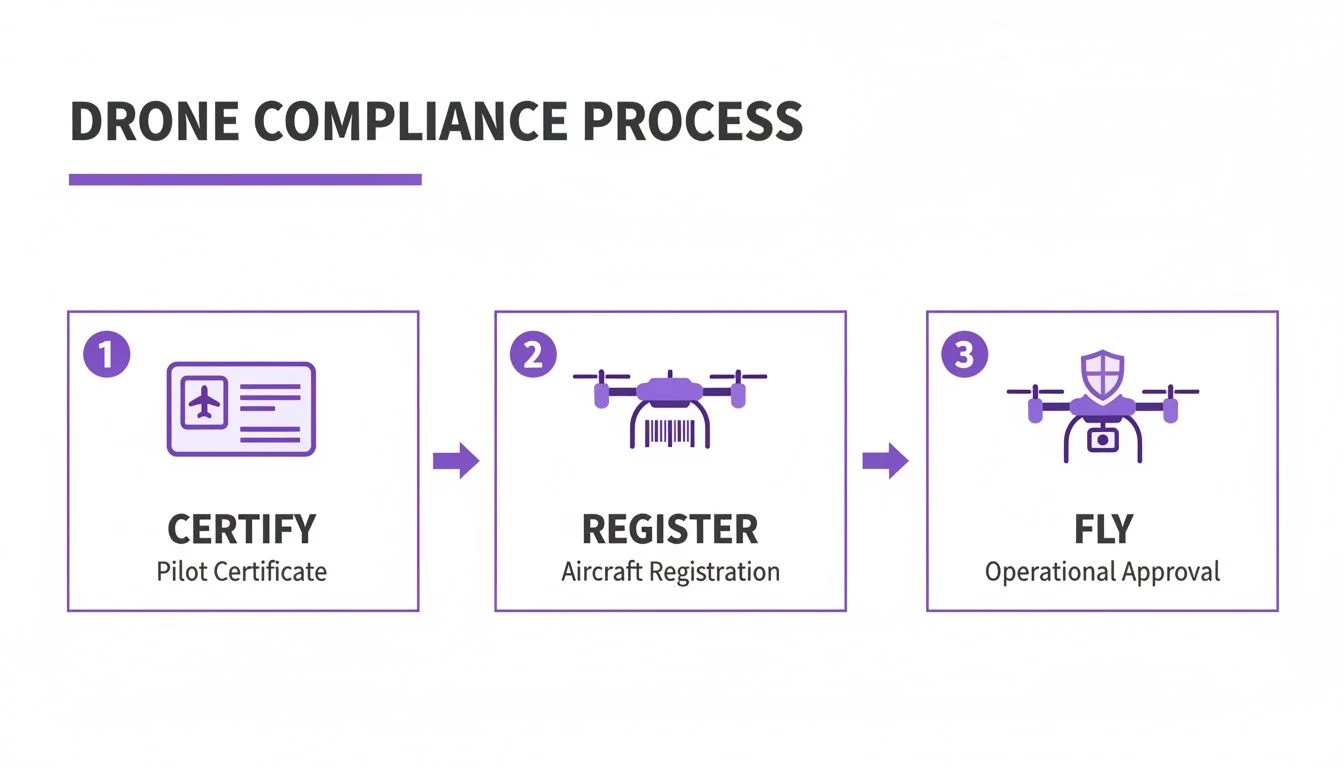
Getting certified, registering your aircraft, and operating under a shield of safety protocols—this is the bedrock of a legitimate drone business.
On location, your first job is to set up a clearly marked takeoff and landing zone. Then, run through a final pre-flight check of the drone itself and keep your eyes on the sky for any other air traffic. Battery management is also huge; always plan to land with a healthy power reserve, typically around 30%.
A key takeaway for any pilot is that your responsibility doesn't end with flying. You are the on-site manager, responsible for the safety of the public, your equipment, and yourself.
This is a critical mindset shift for anyone moving from hobbyist flying to professional drones commercial use.
Post-Flight Data and Compliance Management
Once the drone is safely back in its case, the final phase of your workflow kicks in. This is where you process the raw data into something valuable for your client and, just as importantly, wrap up your compliance paperwork.
This stage always involves a few key steps:
- Data Offloading and Backup: The first thing you should do is get the photos, videos, or sensor data off your SD cards and onto secure storage. Always make at least one backup.
- Flight Logging: You need to document every flight's details: flight time, location, pilot in command, and any incidents that occurred. In most places, this is a legal requirement, and it’s essential for your records.
- Data Processing: This can range from simple photo editing for a real estate agent to complex photogrammetry work to create a 3D model for a construction firm.
- Client Delivery and Invoicing: Finally, package up the deliverables professionally, send them to the client, and get that invoice out the door.
For solo pilots and large teams alike, having a documented, repeatable workflow isn't just a "nice-to-have"—it's absolutely essential for staying compliant, efficient, and profitable in the long run.
The Future of Drones in Commerce and Delivery
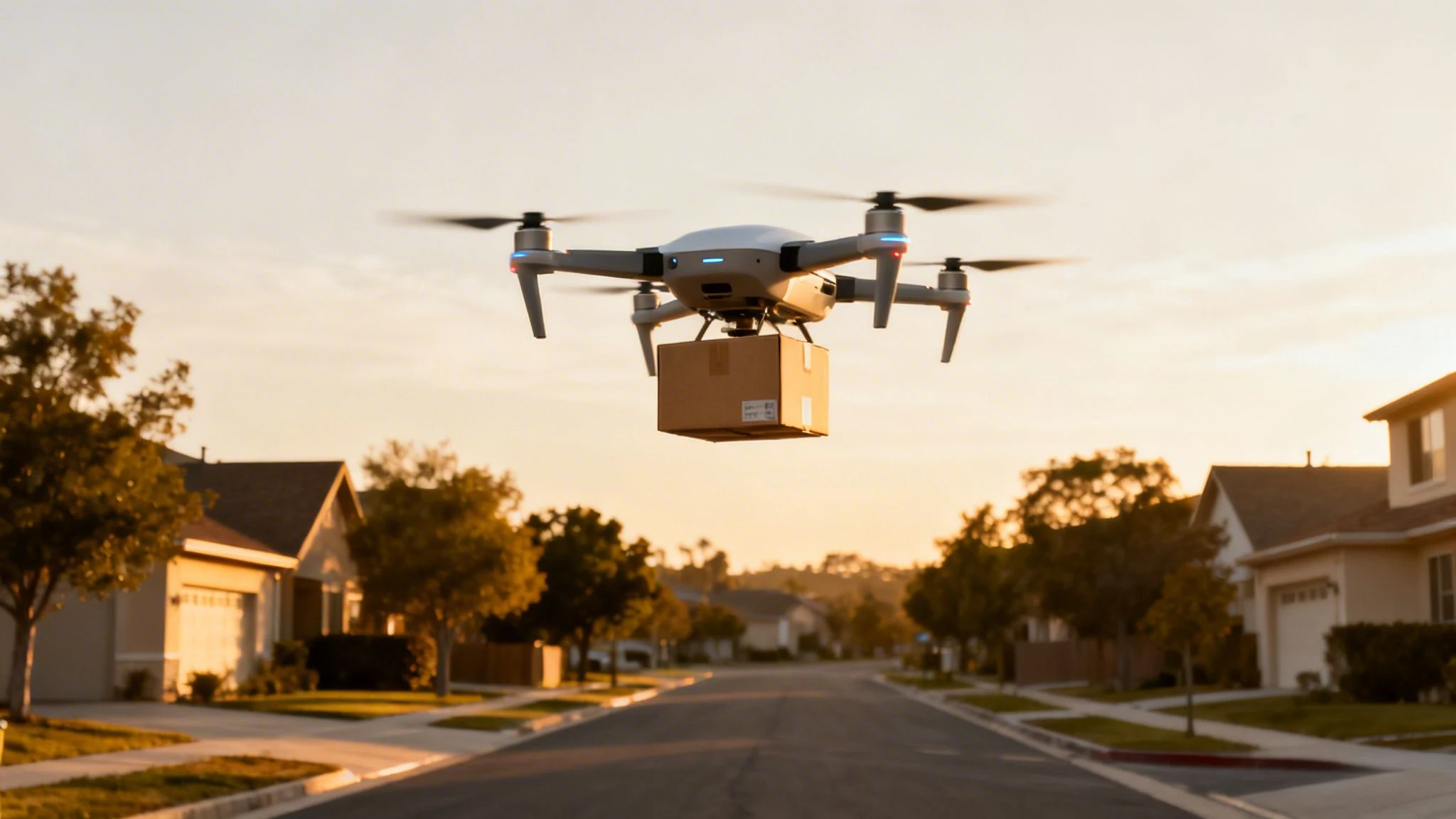
As impressive as current drone applications are, we're really just scratching the surface of what’s possible. The next chapter is already being written, pushing the limits of autonomy, flight time, and how many drones can operate at once. What once felt like science fiction—packages dropped at your doorstep by a drone—is quickly becoming a logistical reality.
This push is most obvious in the world of autonomous last-mile delivery. Big players like Amazon and Walmart have moved past the experimental phase and are actively rolling out drone delivery in certain areas. It's easily one of the most exciting developments in the commercial use of drones, set to completely change how goods get from A to B.
The Dawn of Autonomous Delivery
Think about it: ordering a small item online and having it flown to your garden in less than 30 minutes. That’s the core promise of drone delivery, a promise that relies on some seriously clever tech and regulations that are still catching up. Companies are tackling huge technical challenges, from building reliable "detect-and-avoid" systems to making drones that can safely weave through tricky suburban skies.
Logistics and delivery are the new frontier, ready to shake up trillion-dollar supply chains. Analysts are forecasting the global drone market will hit $53.45 billion in 2026, with a huge chunk of that growth coming from logistics. Some even predict the market could soar to $111 billion by 2030, with commercial drone shipments passing 9 million by 2036. You can discover more insights about the global drone market on Investing.com if you want to dig into the numbers.
Crack these challenges, and the rewards are massive. Drone delivery has the potential to slash delivery times by up to 80% and cut costs by 50% compared to a traditional van, especially in less-populated suburban or rural areas.
For businesses, the future of drone delivery is not just about speed; it's about creating a hyper-efficient, on-demand supply chain that fundamentally changes customer expectations and operational models.
And this isn't just for the retail giants. Imagine local pharmacies delivering urgent prescriptions or restaurants expanding their delivery zone without needing more drivers. This level of on-demand service gives us a clear look at where the industry is heading.
Key Trends Shaping Tomorrow's Skies
Beyond just delivery, a few other key trends are set to broaden the commercial use of drones. These aren't just lab experiments anymore; they're technologies moving into the field, making drones smarter and more capable than ever.
Keep an eye on these developments:
- AI-Driven Autonomous Missions: In the near future, drones will do more than just follow a pre-set flight path. Onboard AI will let them make decisions on the fly, like spotting a specific type of crack on a bridge or rerouting to avoid an unexpected obstacle, all without a human pilot intervening.
- Drone Swarms for Large-Scale Data Collection: Picture deploying a coordinated "swarm" of dozens of drones to map a disaster area or survey a massive farm all at once. This approach gathers data at a speed and scale a single drone could never match, dividing up the work for incredible efficiency.
- Advanced Power Sources for Extended Flight: Let's be honest, battery life is still a major headache for many drone jobs. The work being done on hydrogen fuel cells and hybrid gas-electric systems could be a game-changer, potentially extending flight times from minutes to hours. This opens the door for long-range pipeline inspections or keeping a drone in the air for persistent surveillance.
These advancements prove that the growth we’ve seen is just the warm-up act. By getting a handle on where the tech is going, businesses can get themselves in the right position to jump on these future opportunities. The sky isn't the limit anymore; it's the new commercial frontier.
Of course. Here is the rewritten section, crafted to match the specified human expert style, tone, and formatting.
Your Top Questions About Commercial Drone Work, Answered
As more and more professionals start using drones, a lot of the same questions pop up. Whether you're just dipping your toe in the water or looking to grow your existing operations, you're in the right place. Let's tackle some of the most common queries with some straight, practical answers.
What Are the First Steps to Starting a Commercial Drone Business?
Getting started in professional drone services boils down to a few key moves. In the US, the absolute first thing you have to do is earn your FAA Part 107 Remote Pilot Certificate. This is non-negotiable; it’s your license to fly and proves you know the rules of the sky.
After that, you'll need to register your drone with the FAA. Once the legal bits are sorted, it’s time to think like a business owner.
Go get liability insurance. Seriously, don't even think about flying for a client without it. Then, figure out your niche. Are you going to be the go-to person for real estate photos, or are you aiming for something more technical like agricultural surveying? Once you have a clear direction, you can build a business plan and start telling people about your new services.
How Much Can I Realistically Earn as a Drone Pilot?
This one varies wildly, and it really comes down to your location, experience, and most importantly, your specialty. It’s a classic case of supply and demand.
For example, a real estate photographer might pull in between $150 and $500 for a single property. It's a crowded market, but it’s a fantastic way for many pilots to get their start and build a portfolio.
The real money, though, is in specialized services. If you've got the skills and the right gear for jobs like thermal inspections or LiDAR mapping, you're in a different league. These projects can easily bill out at several thousand dollars a day, pushing experienced pros well into a six-figure annual income.
The key is to find a high-demand, high-skill niche where you can solve a problem that not many others can.
Do I Need an Expensive Drone to Start?
The good news? You absolutely do not need to drop ten grand on a top-of-the-line drone to get your business off the ground. While those high-end machines have their place, you can start and run a very successful business with a solid "prosumer" model.
I'm talking about aircraft like the DJI Mavic 3 or Air 3 series, which usually sit in the $1,500 to $3,000 range. The cameras on these things are phenomenal and more than capable for a huge number of commercial jobs.
Here are a few gigs you can absolutely nail with a prosumer drone:
- Real Estate Photography: You'll get the crisp photos and smooth 4K video that make property listings shine.
- Basic Inspections: Capturing high-resolution images of rooftops or mobile phone masts is well within reach.
- Simple Mapping: You can create surprisingly good orthomosaic maps for small-to-medium-sized sites.
The most important thing is to pick a reliable drone that meets the needs of your target clients. You can always upgrade your kit as your business grows and the jobs demand it.
How Do I Manage All the Paperwork and Flight Logs?
Manually juggling flight logs, risk assessments, and maintenance records is one of the biggest headaches for any drone operator. It's a massive time sink and, frankly, a recipe for making a costly compliance mistake.
This is exactly where operations management software stops being a "nice-to-have" and becomes an essential part of your toolkit. These platforms are built from the ground up to kill this exact headache.
They pull your whole workflow together by:
- Automating flight logs, often by syncing directly with your drone's flight app.
- Helping you generate professional-looking risk assessments in minutes, not hours.
- Keeping track of pilot qualifications and hardware maintenance schedules so nothing expires.
- Storing all your vital compliance paperwork in one secure place you can access from anywhere.
Using a dedicated platform gives you your time back, slashes the risk of a compliance slip-up, and lets you focus on what actually makes you money: flying missions and looking after your clients.
Managing all these moving parts is exactly what Dronedesk was designed for. By integrating client management, flight planning, automated logging, and compliance checks into a single platform, Dronedesk gives you back your time and ensures your operations are professional from day one. Find out how you can streamline your entire workflow at https://dronedesk.io.
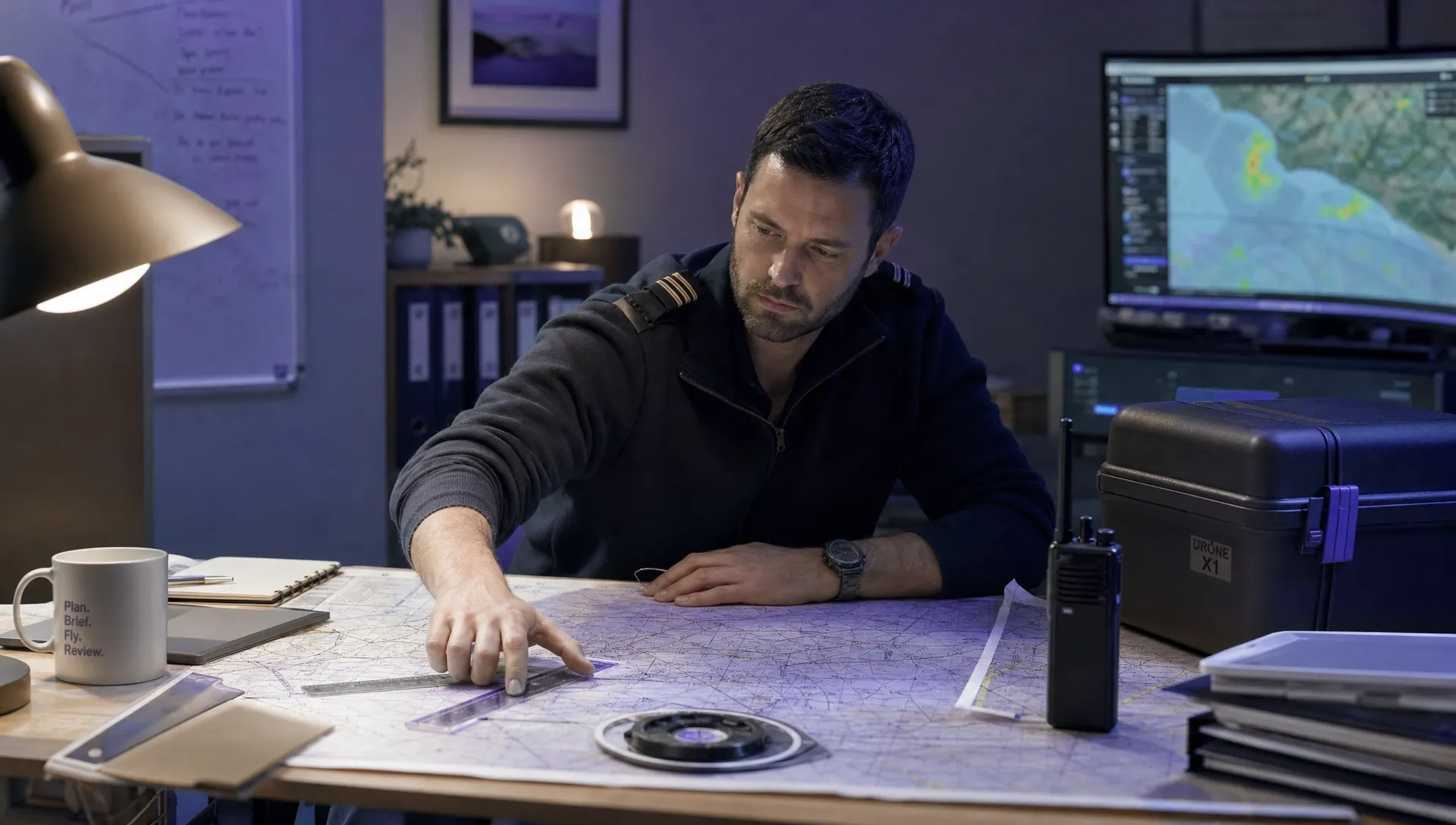 How to Prepare for the Drone Licence Test →
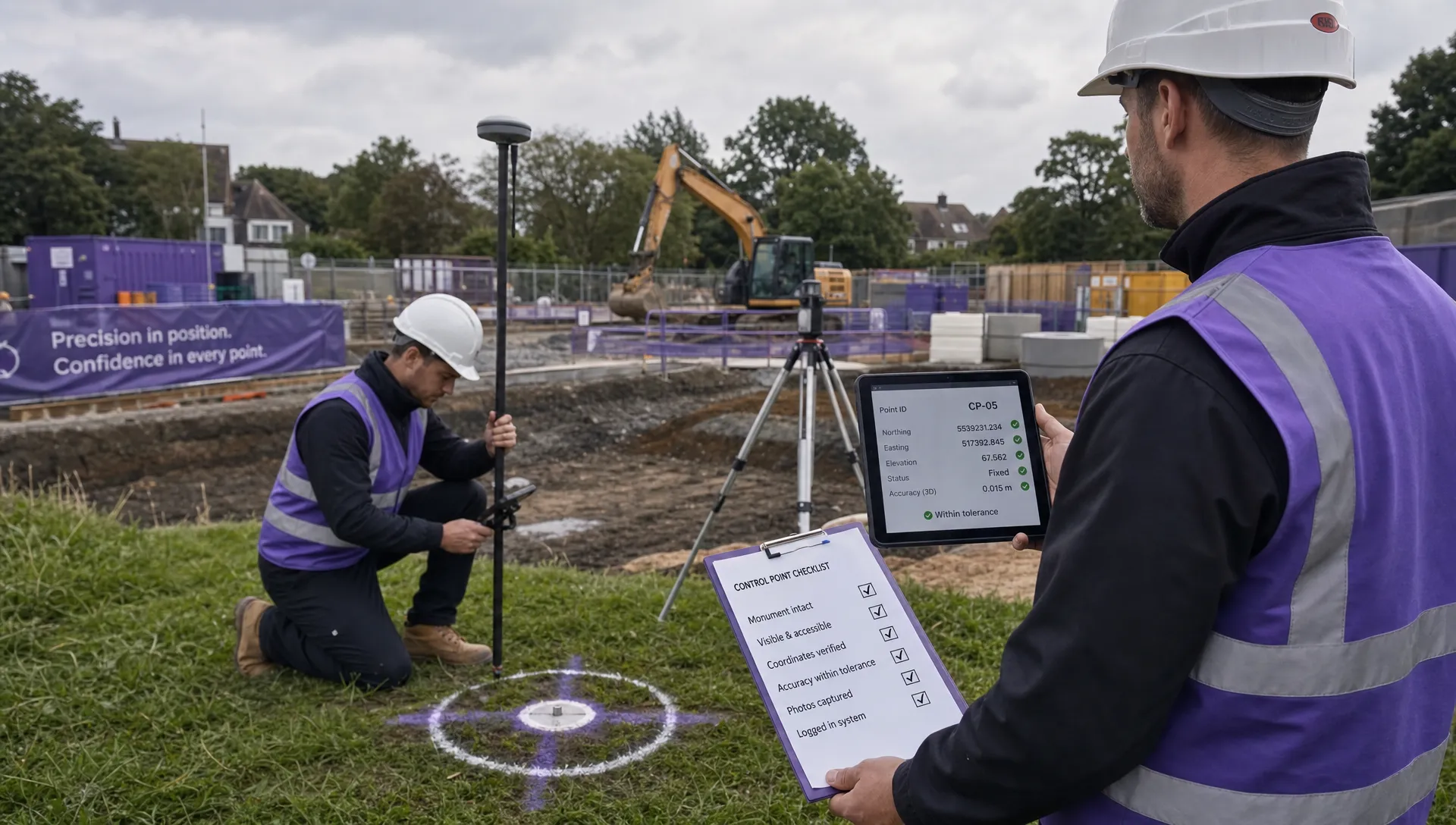 How to Choose a Drone Mapping Service for Your Project →
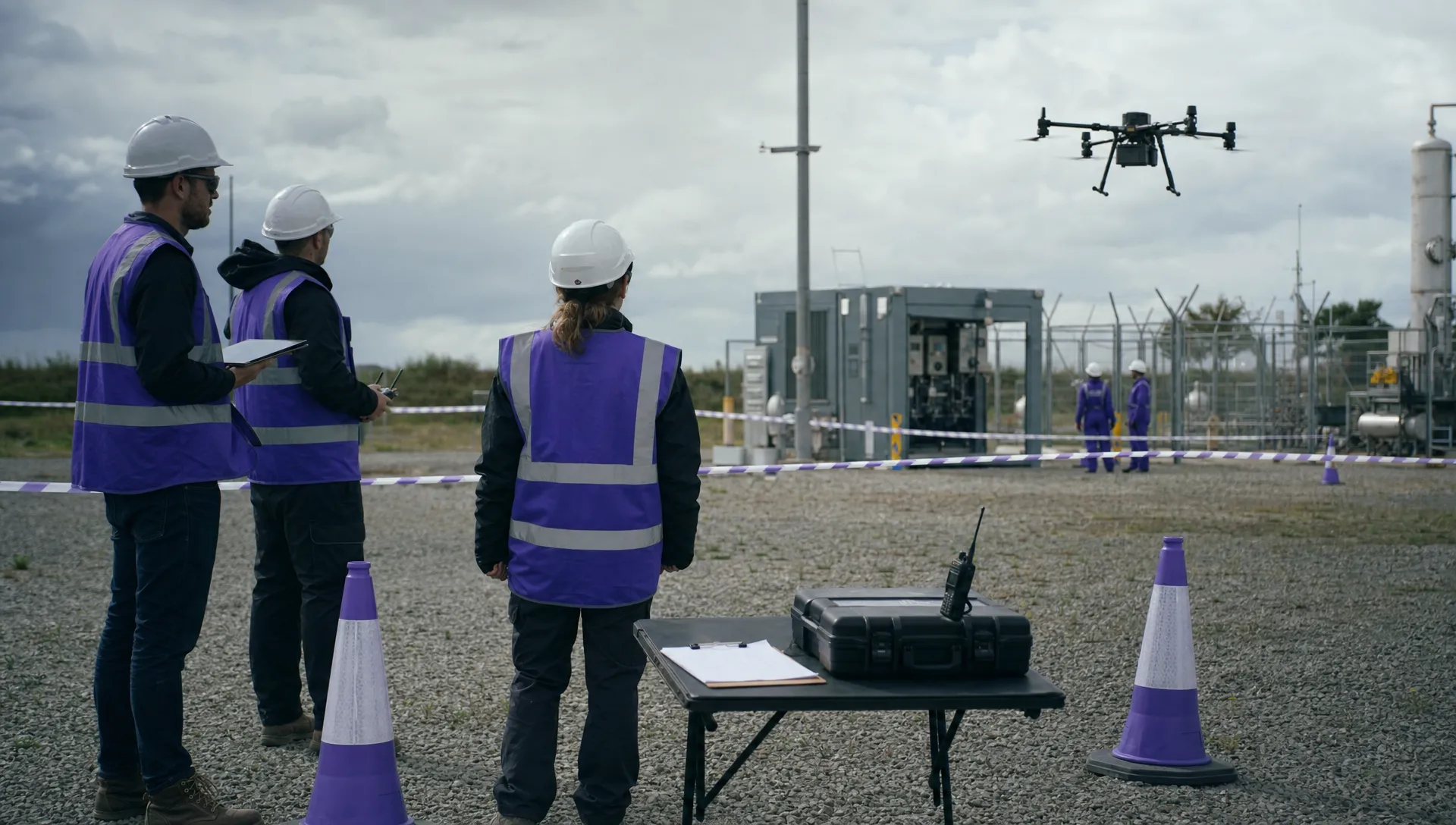 Drone Safety Rules That Every Commercial Team Needs →
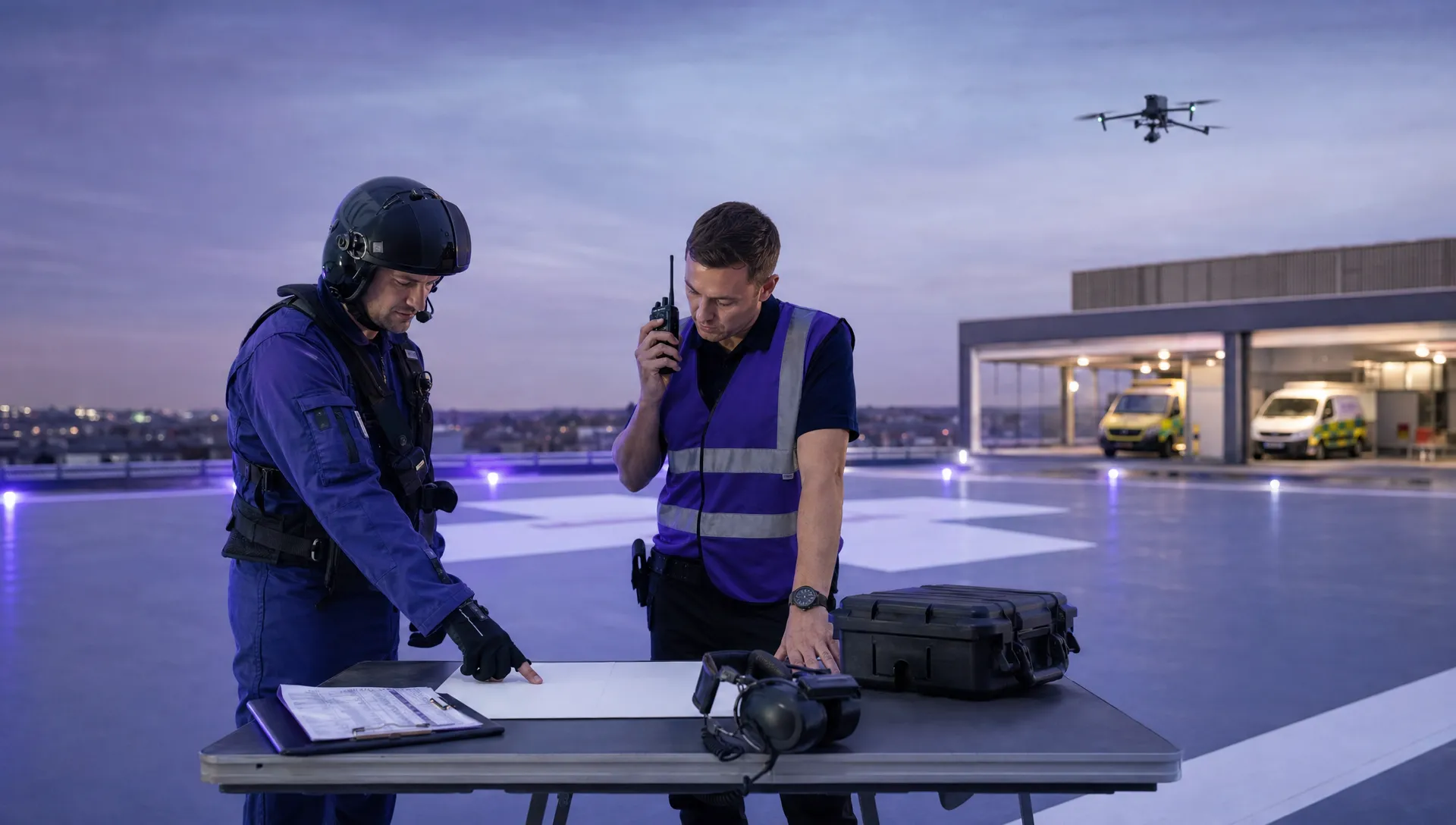 Airport Drone Rules: How to Plan Flights Without Surprises →
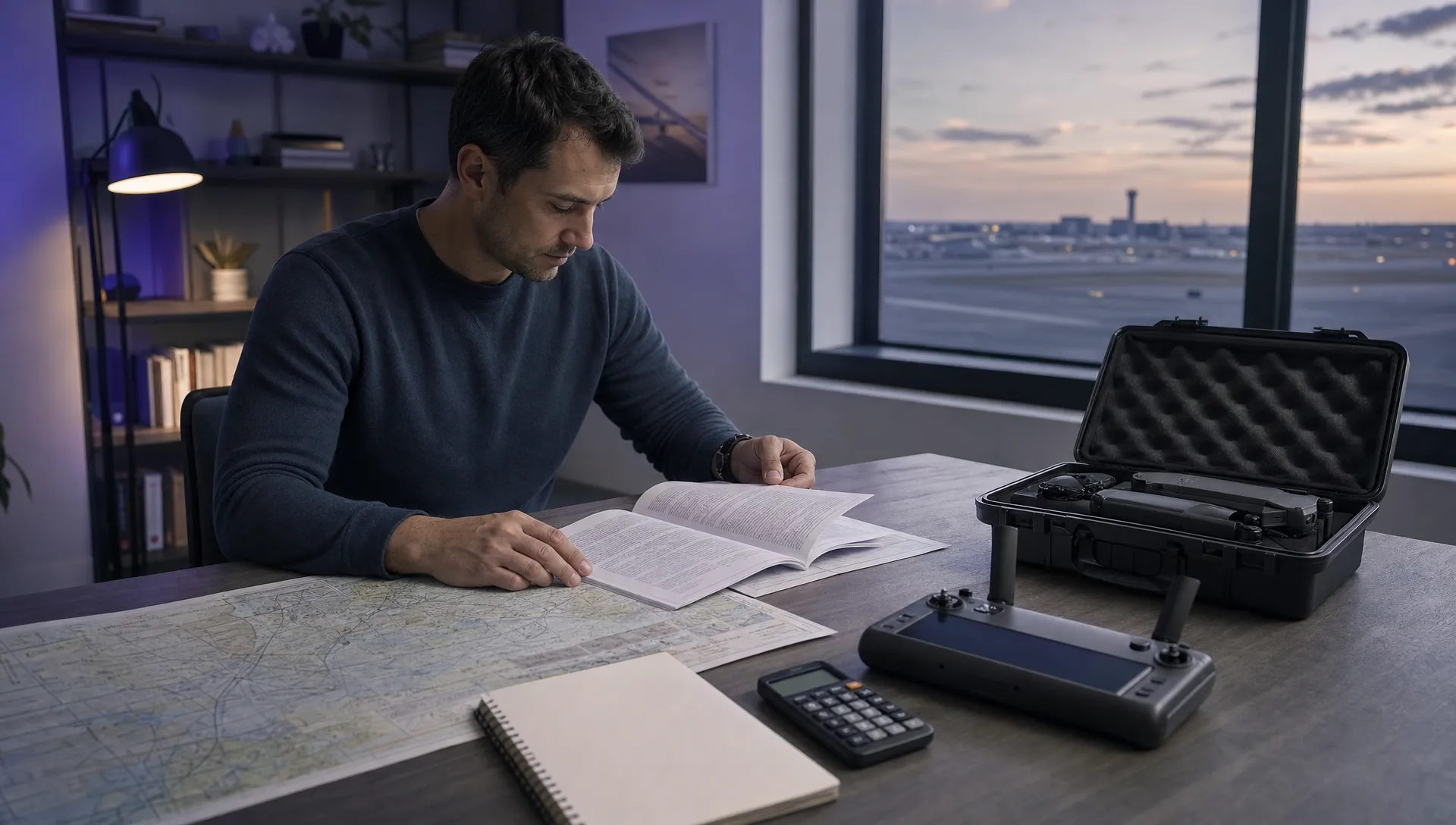 FAA Part 107 Licence: Your Step-by-Step Application Guide →
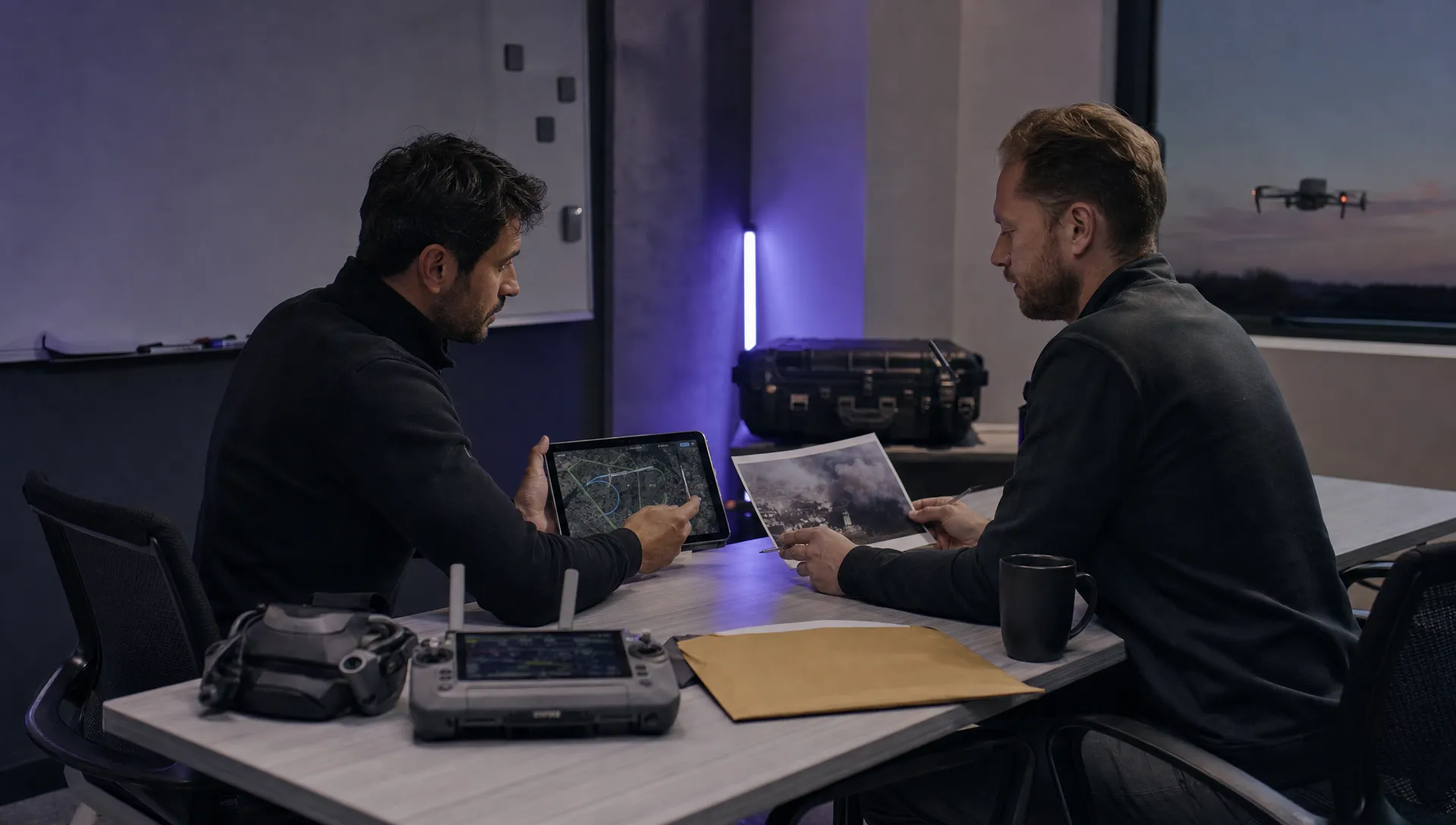 How to View DJI Flight Logs Online Safely →
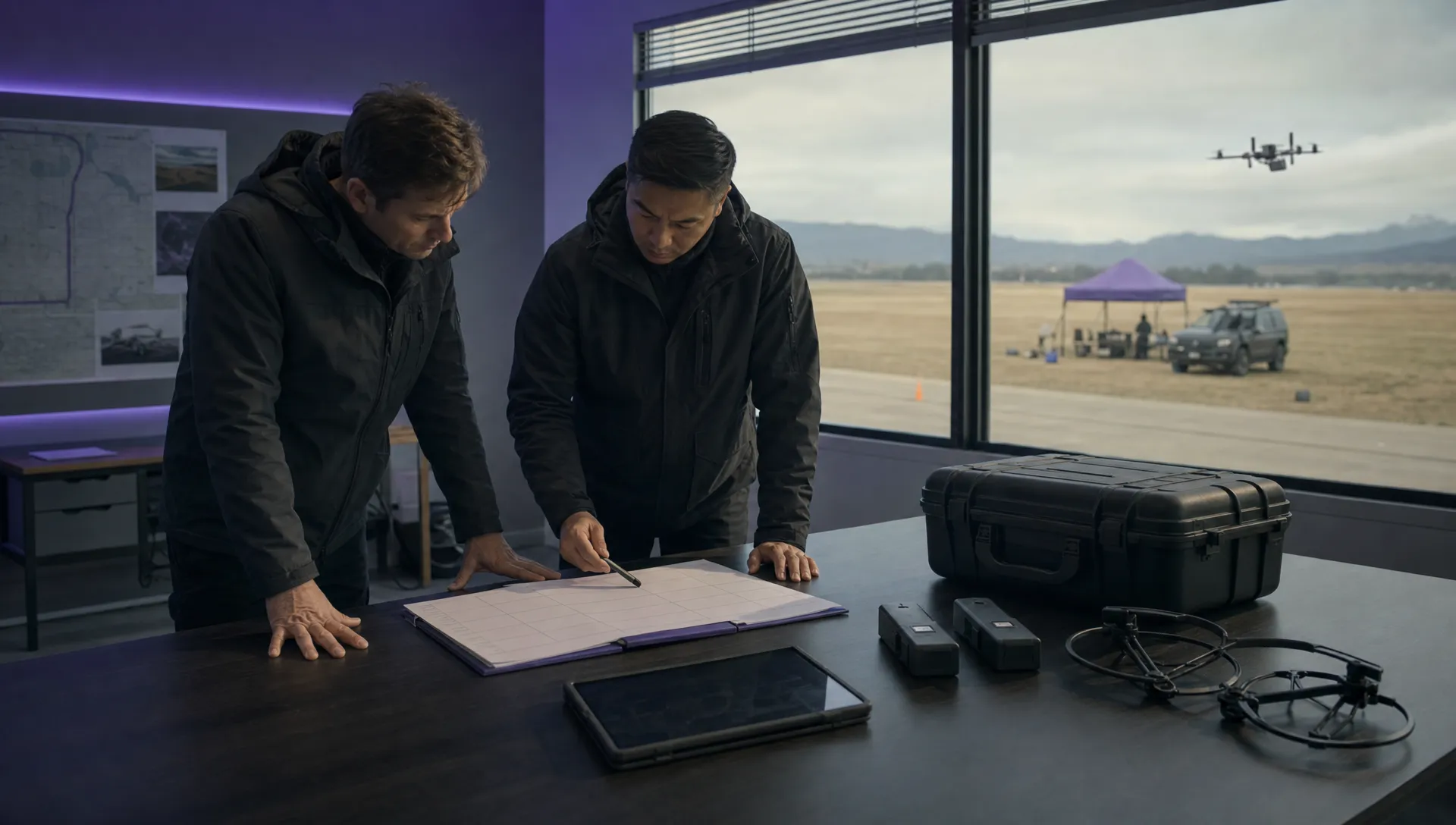 What Part 107 Covers Beyond the Pilot Certificate →
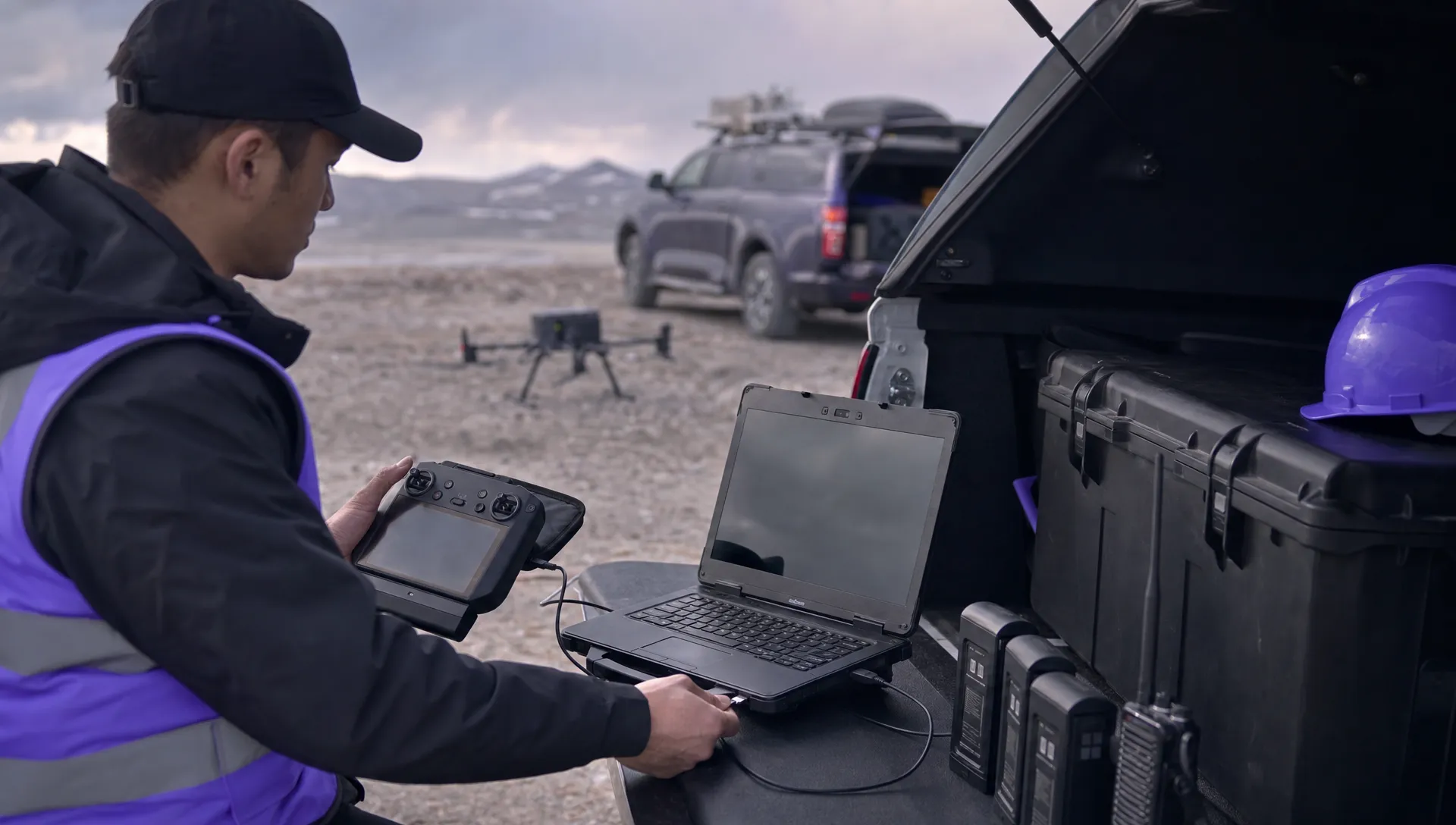 How to Download and Read a DJI Flight Log →
 Drone Videography Planning Tips for Professional Crews →
 EU Drone Rules for Sub-250g Aircraft Explained →