
Drone Service Companies: A Complete 2026 Guide
You’re usually not looking for a drone service company because drones are interesting. You’re looking because a current process is slow, risky, expensive, or unreliable.
A project manager needs current site data before a coordination meeting. An asset owner wants to inspect a roof, flare stack, or solar field without sending people where they shouldn’t be. An agriculture team needs better field visibility than a pickup truck and a clipboard can provide. At that point, hiring an external drone team stops being a novelty purchase and becomes an operations decision.
That’s where many buyers get stuck. They compare a few providers, skim some showreels, ask for a price, and assume the rest will sort itself out. It usually doesn’t. The real work is in vetting, scope control, safety planning, data handoff, and making sure the provider can fit into your workflow without creating more admin than value.
The companies that get good outcomes from drone vendors tend to treat them the same way they’d treat any other specialist contractor. They define the job clearly, demand clean deliverables, and check whether the team can operate safely and legally under real-world constraints. That approach matters even more in a market full of capable but very different operators.
Why Businesses Are Turning to Drones in 2026
A lot of teams have hit the same wall. Traditional inspection methods take too long. Ground surveys can bottleneck a job. Manned access introduces cost and safety exposure. By the time decision-makers get the data, the situation on site has already changed.
Professional drone services solve that when they’re used properly. A qualified external team can collect aerial imagery, map a site, inspect assets, and deliver usable outputs without tying up your internal staff. That’s the key point. You’re not just buying flight time. You’re buying faster access to decisions.
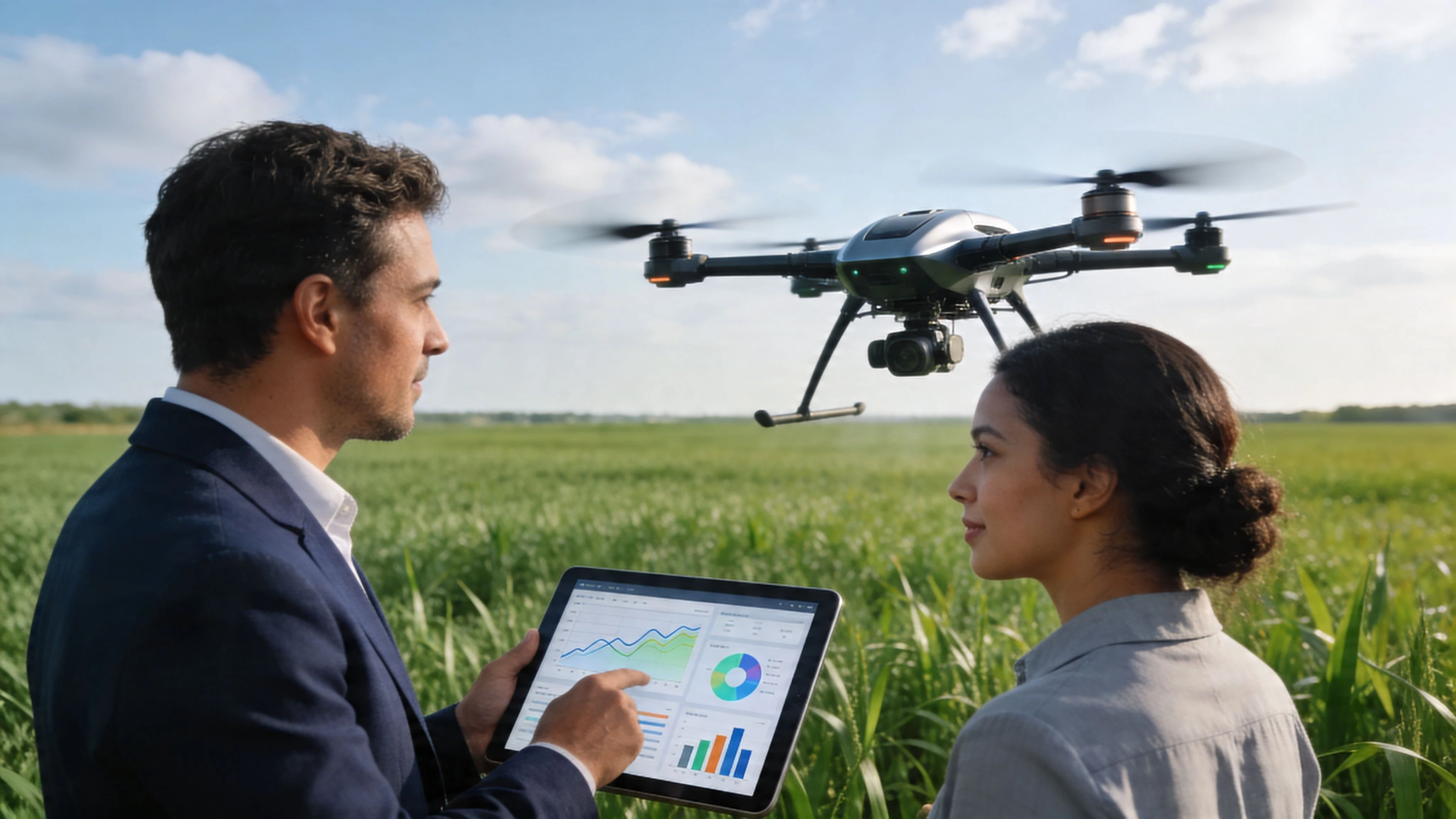
The market shift is real, not hype. The global drone services market was valued at USD 16.50 billion in 2025 and is projected to reach USD 142.22 billion by 2035, growing at a 24.04% CAGR, according to Precedence Research’s drone services market analysis. That growth tells you businesses across sectors now see drones as a practical operating tool.
Where the demand is coming from
Construction, utilities, agriculture, logistics, and infrastructure teams all need the same thing. They need current, visual, location-aware data that doesn’t require a major mobilization.
Some buyers also need adjacent technical capabilities, especially when aerial operations connect to manufacturing or prototyping workflows. If that applies to your program, this overview of UAV 3D printing is a useful reference for understanding how airframes, components, and mission-specific hardware can be adapted for specialized jobs.
Practical rule: Hire a drone provider when the business problem is data delay, access risk, or coverage gap. Don’t hire one just because aerial media looks impressive.
What changes when you use drones well
The best use cases share a pattern. A drone team reduces time to information, lowers site friction, and gives managers a clearer record of what happened and where. That’s valuable in progress tracking, claims support, maintenance planning, and executive reporting.
Poor deployments do the opposite. They create nice footage with weak metadata, inconsistent capture, and no clean path into the systems your staff already use.
Understanding the Drone Service Company Landscape
Most buyers picture drone service companies as either tech startups or media crews. In practice, they’re closer to specialist subcontractors. Some are one-person experts with deep knowledge in a narrow niche. Others run multi-pilot operations with survey, inspection, compliance, and client delivery processes that look more like a field services business.
That distinction matters because you’re not shopping in a market dominated by a handful of giant firms. You’re choosing from a broad mix of small operators, niche technical teams, regional providers, and larger service organizations.
According to The Drone Girl’s coverage of the Global Drone Review 2024, 55% of drone companies operate with fewer than 10 employees, and drone service providers make up 74% of all companies in the drone industry. That tells you two things fast. First, this is a fragmented market. Second, service delivery is the dominant business model.
What kinds of providers you’ll meet
You’ll usually run into four broad types.
| Provider type | Typical strength | Common limitation | Best fit |
|---|---|---|---|
| Solo specialist | Fast decisions, direct communication, deep niche skill | Limited redundancy if pilot or aircraft is unavailable | Focused inspections, media, small mapping jobs |
| Small technical team | Broader capability, better documentation, can handle repeat work | Capacity can tighten during peak season | Construction, utilities, recurring site programs |
| Regional multi-crew operator | Consistency across sites, stronger project management | Less flexible on custom requests | Multi-location clients with standard workflows |
| Enterprise service firm | Formal reporting, procurement readiness, larger scale | Higher overhead, sometimes slower to adapt | Large asset owners, regulated environments |
A common mistake is assuming bigger automatically means better. It doesn’t. For a single solar inspection, a focused specialist may outperform a large vendor because the work is routine for them. For a multi-site utility program, that same specialist may struggle with scheduling, QA, and reporting consistency.
Capability matters more than brand size
A polished website won’t tell you if the team can deliver what you need. Buyers should separate flight capability from business capability.
Flight capability means the crew can safely gather the right data. Business capability means they can quote clearly, manage change, document risk, protect your data, and deliver files your team can use.
A good drone company isn’t just good at flying. It’s good at reducing uncertainty for the client.
Why fragmentation changes the buying process
Because the market is made up largely of small teams, your hiring process needs to be sharper. Many providers are competent. Fewer are operationally mature.
That’s why buyers should ask early whether the provider is strongest in one category or trying to cover too many. A team that says yes to every job often produces generic outputs. A team that knows its lane tends to ask better questions about scope, site access, data standards, and downstream use.
When you understand the environment this way, vendor selection gets simpler. You stop asking, “Who is the biggest?” and start asking, “Who regularly delivers this exact outcome under these operating conditions?”
A Breakdown of Common Drone Services Offered
The easiest way to evaluate drone service companies is to ignore their marketing categories and focus on deliverables. What file, report, model, or decision support will your team receive?
That’s the lens that keeps projects grounded.
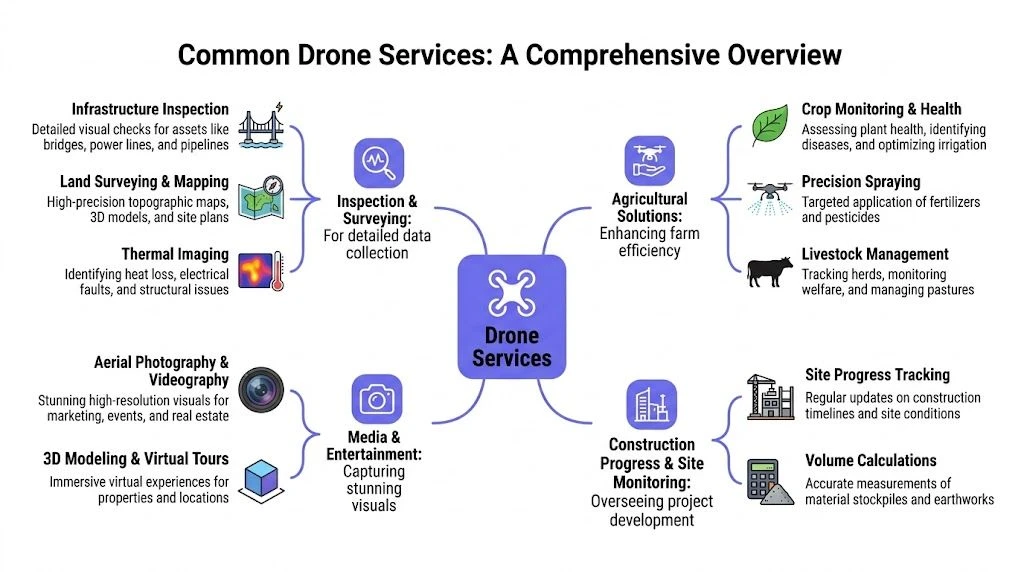
Inspection and monitoring
Inspection work is where many businesses first engage an external drone team. The use case is simple. You need eyes on an asset, but traditional access is slow, disruptive, or risky.
Typical inspection services include:
- Roof and facade review: Visual condition capture for commercial buildings, storm response, and maintenance planning.
- Utility asset inspection: Poles, substations, solar arrays, wind assets, and transmission corridors.
- Industrial inspection: Tanks, stacks, flare tips, process structures, and hard-to-access plant areas.
- Thermal surveys: Heat anomalies, moisture indicators, electrical issues, or panel performance concerns.
The output should never be “a folder of photos” unless that’s all you asked for. A useful inspection package usually includes annotated imagery, issue logs, asset references, and a summary your maintenance or engineering team can act on.
What works is repeatability. Same capture angles, same naming convention, same issue categories. What doesn’t work is a one-off flight with no structured reporting.
Mapping and surveying
This is the most technically demanding category, and it’s where buyers need to be precise about accuracy, control, and end use.
Professional drone mapping can produce orthomosaics, topographic models, contour outputs, volume calculations, and 3D reconstructions for construction, mining, land development, and infrastructure planning. The big value is speed. In aerial mapping, advanced drones can reduce survey fieldwork time by up to 70%, compressing a two-week job into four days while capturing data with centimeter-level accuracy, as described by Extreme Aerial Productions.
That improvement only matters if the provider manages the details that support it. Ground control, flight planning, overlap, georeferencing, weather windows, and processing standards all affect whether the output is suitable for your use case.
Ask for the actual deliverable list
For mapping jobs, clarify whether you’re receiving:
- Orthomosaic imagery
- Point clouds
- Digital surface or terrain models
- Contour deliverables
- Volume reports
- CAD- or GIS-compatible exports
If the provider sounds vague on formats, coordinate systems, or accuracy expectations, slow the process down. Mapping projects fail more often from unclear assumptions than from bad flying.
Field note: A stunning 3D model is useless if your surveyor can’t align it with the rest of the project data.
Construction and site progress work
Construction teams often hire drone providers for regular progress captures, earthwork tracking, stockpile management, and stakeholder reporting.
This category sits between media and measurement. Some clients need simple visual documentation for weekly meetings. Others need measurable site intelligence that supports pay applications, sequencing decisions, or dispute resolution.
The strongest providers can separate those needs. They’ll ask whether you want executive visuals, operations updates, measurement outputs, or all three. That matters because each one demands a different flight plan and a different post-processing workflow.
A progress vendor should also be comfortable working around live site constraints. Crane positions, haul routes, exclusion areas, and changing access points affect both safety and consistency.
Agriculture and environmental work
Agriculture jobs usually revolve around crop observation, irrigation review, drainage assessment, stand variability, and issue detection. Environmental work can include land condition documentation, habitat review support, drainage paths, and site change records.
The technical trade-off here is sensor selection and interpretation. Standard RGB imagery is useful, but some jobs need multispectral or thermal payloads and someone who knows how to turn the data into a decision, not just a colorful map.
For buyers, the practical question is simple. Who on your side will interpret the result? If the answer is “we don’t know,” then ask the provider what level of analysis they include and what they leave to agronomists, consultants, or internal staff.
Media and marketing services
This is the most visible category and also the easiest to buy badly. Aerial photography and videography can be valuable for real estate, destination marketing, events, tourism, hospitality, and brand content. It can also become style-heavy and operationally thin.
Good media providers ask about audience, usage rights, framing requirements, and editing needs. Weak ones focus on drone models and cinematic moves.
What to pin down on creative jobs
- Usage scope: Internal use, social campaigns, broadcast, sales collateral, or archival record.
- Editing expectations: Raw footage only, edited clips, color correction, branded cutdowns.
- Site restrictions: Crowds, timing windows, noise sensitivity, and approvals.
- Reshoot terms: What happens if light, weather, or access ruins the first attempt.
Emerging operations and specialized missions
Some drone service companies now support longer-range operations, recurring remote capture programs, dock-based deployments, and integrated data collection for logistics, utilities, and infrastructure owners. These jobs are less about a pilot arriving with a case and more about embedding an aerial workflow into an operating model.
That’s a very different buy. You’re assessing not just pilot skill but software interoperability, remote ops procedures, client permissions, and data management discipline.
If your use case is unusual, that’s not a problem. But it does mean you should favor providers who can describe the operational chain from mission planning through final handoff without resorting to buzzwords.
Navigating Pricing Models and Service Contracts
Most buyers ask price first and scope second. That’s backward.
In drone work, a low quote often means one of three things. The provider doesn’t understand the job yet. They’ve excluded processing and reporting. Or they’ll try to recover margin through change requests once the project starts. None of those are good outcomes.
The main pricing models
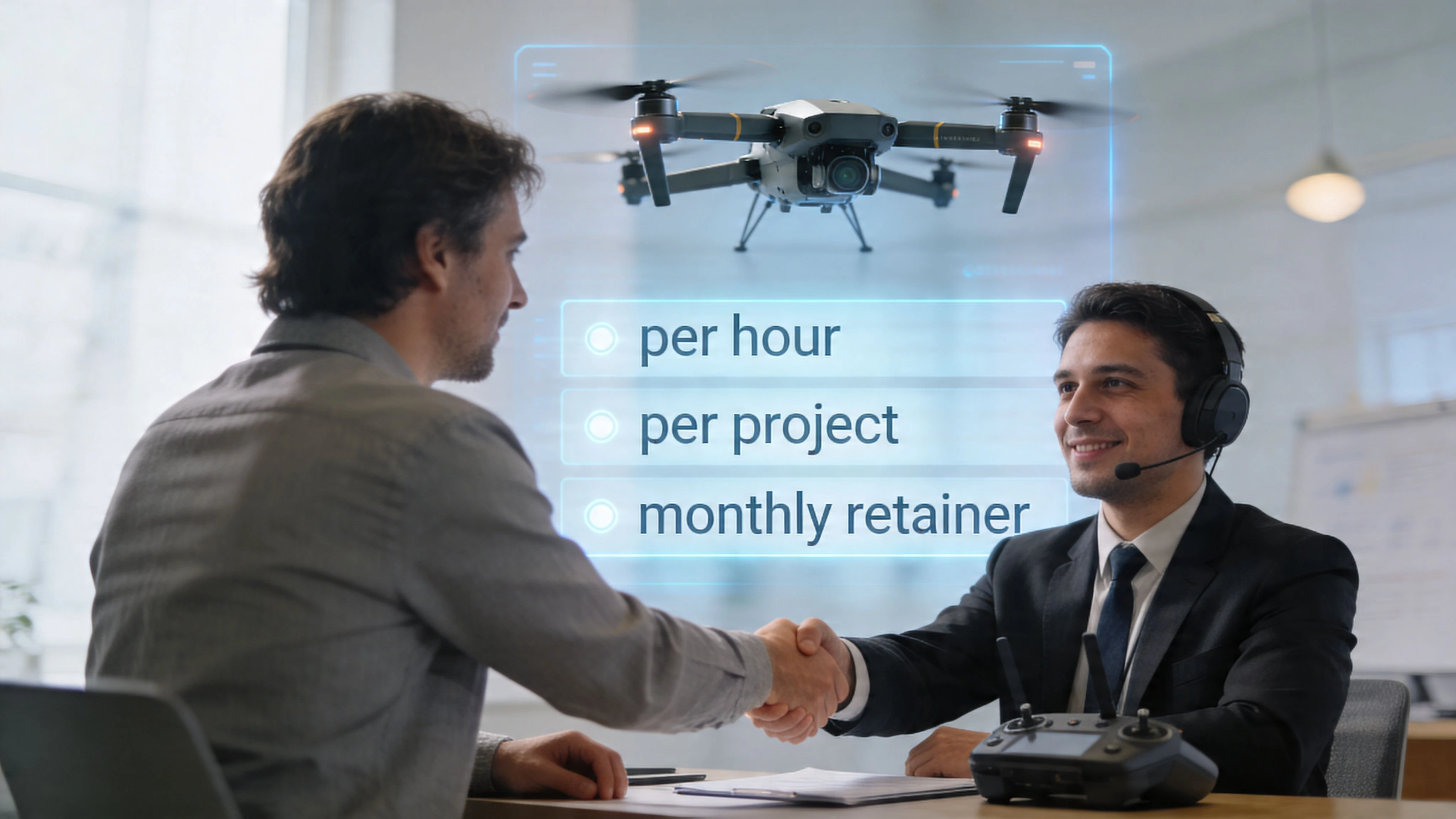
You’ll usually see pricing presented in one of these ways:
| Model | When it works | Watch for |
|---|---|---|
| Hourly or half-day | Short inspections, standby support, simple media work | Travel, setup, and weather delays can muddy the real cost |
| Day rate | Site visits with changing needs | Deliverables may still be loosely defined |
| Per-project fee | Clearly scoped mapping, inspection, or progress work | Scope creep if revisits or extra processing aren’t defined |
| Program or retainer model | Recurring jobs across sites or months | Requires tighter service levels and reporting standards |
The right model depends on how predictable the work is. If you know the asset, location, output, and reporting standard, project pricing is usually cleaner. If the site is fluid or the work package may change on the day, a day rate with clear exclusions can be safer for both sides.
Why DaaS can be the better buy
For recurring operations, Drone as a Service often makes more sense than one-off engagements. It shifts the conversation from “what does this flight cost?” to “what operating result do we need every month?”
That matters because the value in mature drone programs often comes from processing, reporting, and workflow continuity, not the flight itself. According to Unmanned Systems Technology’s overview of DaaS by ZenaDrone, DaaS models can reduce manual data review time by up to 40% through AI-powered analytics and reduce on-site crew needs, which can cut personnel exposure risks in hazardous environments by as much as 80%.
That doesn’t mean every client needs a subscription model. It means recurring inspection and monitoring programs should compare one-off fieldwork quotes against a service model that includes standard capture, processing, QA, and delivery.
If you’re benchmarking commercial rates and packaging approaches, this guide on pricing drone services is useful for structuring quote comparisons.
Contract terms that protect both sides
A drone contract shouldn’t be long for the sake of looking serious. It should remove ambiguity.
Put these points in writing
- Scope of work: State the site, assets, flight objective, and exact deliverables.
- Operational assumptions: Include access windows, client escorts, shutdown conditions, and weather handling.
- Data ownership and usage: Clarify who owns raw files, processed outputs, and derivative products.
- Revision and reshoot terms: Define what triggers a no-cost revisit and what counts as a new job.
- Liability and insurance responsibilities: Match this to site risk, not generic language.
- File standards: Name formats, coordinate systems where relevant, naming conventions, and delivery method.
Don’t sign a drone services contract that says “inspection completed” without stating how findings will be documented and delivered.
What buyers often miss
The biggest miss is post-flight labor. Many quotes cover collection but stay fuzzy on sorting imagery, stitching datasets, generating reports, and coordinating revisions.
The second miss is mobilization friction. If your site requires inductions, escorts, permits, PPE rules, or specific work windows, those details belong in the agreement early. Otherwise, both sides will spend more time on admin than flying.
The Vetting Checklist How to Choose the Right Partner
A polished reel and a reasonable quote aren’t enough. You need evidence that the provider can handle your kind of work, under your conditions, without creating avoidable risk.
Start with relevance, not reputation
Ask for examples that match your use case. A strong real estate portfolio doesn’t qualify a team for industrial inspection. A good bridge inspection sample doesn’t prove they can run repeat construction progress captures across active sites.
Look for evidence in three areas:
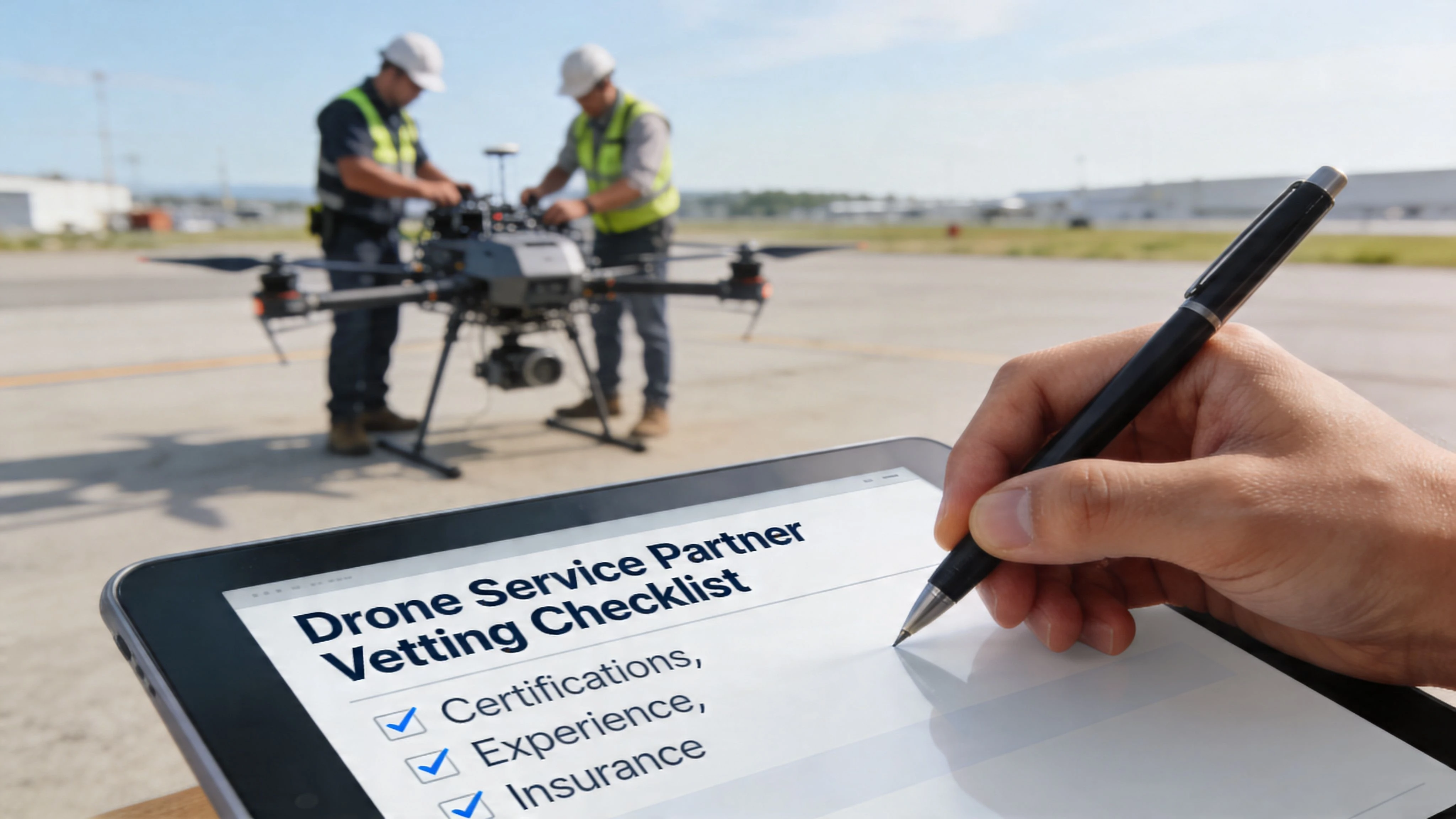
- Comparable assets: Have they worked on sites like yours before?
- Comparable outputs: Did they deliver the same type of file or report you need?
- Comparable constraints: Did they operate near live operations, restricted access, or sensitive stakeholders?
If the answer is vague, keep digging.
Verify the operating basics
Before you compare style or turnaround, verify whether the provider is set up like a business you can rely on.
Check these documents and practices
- Pilot qualifications: Confirm the required operational credentials for your jurisdiction and mission type.
- Insurance: Ask for proof and make sure the cover matches the site risk.
- Aircraft suitability: The right sensor and platform matter more than owning the newest drone.
- Maintenance discipline: They should be able to explain how aircraft batteries, firmware, and airframes are managed.
- Risk assessment process: Ask what they produce before flight day and who signs off.
Ask questions that expose maturity
Good vetting questions force a provider to describe their workflow. Weak operators answer with gear talk. Strong operators answer with process.
Try questions like these:
-
How do you define a complete job before mobilizing?
You want to hear about scope confirmation, site constraints, and deliverable alignment. -
What happens if access changes or weather interrupts the mission?
You’re testing contingency planning, not optimism. -
How will the data be organized and handed over?
If they can’t describe folder structure, report format, and naming logic, expect confusion later. -
What part of the work is outsourced?
Some teams fly in-house but subcontract processing or reporting. That isn’t always bad, but you should know. -
Who is my point of contact on the day and after the job?
Clients lose time when sales, pilot, and editor all work in separate silos.
Buyer’s shortcut: The best providers ask hard questions back. If they don’t need to know much about your site, they probably haven’t understood the risk or the output.
Run a paid pilot job when the stakes are high
For larger programs, don’t award the whole package immediately. Buy a small test engagement first.
Use it to evaluate communication, punctuality, safety behavior, field discipline, and file delivery. That tells you more than any proposal deck.
Ensuring Compliance and Operational Safety
Safety isn’t a box to tick after procurement. It’s one of the main ways you tell the difference between a usable provider and a liability.
A professional drone team should be able to show how they plan operations, assess site hazards, document decisions, and keep records. If they treat compliance as a last-minute paperwork exercise, expect the same attitude elsewhere.
Compliance is harder for small teams than buyers assume
Many clients misread the market. Smaller providers often do excellent flight work, but enterprise-style compliance can be hard to build and maintain without the right systems.
That pressure is real. A key challenge for smaller drone teams is navigating fragmented regulations and high setup costs for enterprise-level compliance, and recent FAA rule changes for BVLOS operations haven’t yet been matched by affordable compliance tools for solo pilots, as noted in this report on the U.S. drone as a service industry outlook.
That doesn’t mean you should avoid small operators. It means you should ask how they manage the burden.
What good operational safety looks like
A capable provider usually has a repeatable chain that includes:
- Pre-site planning: Airspace review, access requirements, local hazards, nearby people and property considerations.
- Site-specific risk assessment: Not a template with your address pasted in, but an actual review of operational conditions.
- Crew roles: Clear responsibility for pilot duties, observer support, client liaison, and stop-work authority.
- Flight logging and recordkeeping: Enough structure to support audits, incident review, and repeat work.
- Post-flight documentation: Confirmation that the job was completed as planned, or a record of deviations.
The client’s role matters too
Buyers often assume compliance belongs entirely to the provider. That’s not true on active sites.
If your location has exclusion zones, induction rules, radio protocols, or permit controls, your team needs to feed that information into the planning process early. Some of the worst flight-day problems come from client-side omissions, not pilot-side mistakes.
A better handoff from client to provider
- Share site rules early: Don’t wait until arrival to mention no-fly areas within the property boundary.
- Name operational conflicts: Crane lifts, shutdowns, traffic management, and public access all matter.
- Confirm permissions: Decide who is authorized to approve launch, pause, or cancellation.
- Define incident escalation: If something goes wrong, everyone should know who gets notified and how.
For teams building a more formal process around this, Dronedesk is one example of software used to manage planning, flight logging, fleet records, client details, and compliance documentation in one place. If you want a deeper operational checklist, this commercial drone compliance guide is worth reviewing.
Compliance isn’t separate from productivity. A provider with a clear planning system usually runs smoother on site, communicates better, and hands over cleaner records.
Integrating Drone Data into Your Operations
A drone mission only creates value when the output lands in the hands of someone who can use it quickly. Raw images sitting in a download folder don’t help a project team make decisions.
The fix is straightforward. Define the handoff before the flight happens.
Build the data path first
Ask three questions before the provider mobilizes:
- Who needs the output first?
- In what format do they need it?
- Where will it live after delivery?
If the answers are unclear, the job will drift into manual sorting, duplicate uploads, and version confusion. That’s common when imagery, reports, and models get passed around by email instead of entering a known system.
Match drone outputs to existing tools
The smartest buyers tie drone deliverables to software they already use. A roofing contractor, for example, may need aerial measurements and imagery to flow into estimating and quoting. In that case, it helps to think about how the deliverable connects to tools such as roofing estimating software, rather than treating the drone job as a standalone media task.
The same logic applies in construction, utilities, and facilities. Progress images should support reporting. Inspection findings should feed maintenance planning. Survey data should land where design and operations teams can access it without file wrangling.
If your team is tightening the post-flight process, this guide on data analysis and management is a practical reference for deciding how drone outputs should be stored, reviewed, and used.
What good integration looks like
Good integration is boring in the best way. Files arrive named correctly. Reports are easy to scan. Stakeholders know where to find the final output. No one has to ask which version is current.
That’s the benchmark to hold your provider to. Not “did they fly,” but “did the information move cleanly into the business?”
Frequently Asked Questions About Drone Services
Is it better to hire a solo operator or a larger drone company
It depends on the job.
A solo operator can be a very good choice for focused work with a clear scope, especially when you need direct communication and niche skill. A larger company is often the safer choice for multi-site programs, repeat scheduling, or jobs where backup crews and formal reporting matter.
Don’t decide on company size alone. Decide based on redundancy, workflow maturity, and whether the provider has done your kind of work before.
What should I ask for before approving a quote
Ask for a clear scope of work, list of deliverables, assumptions about access and weather, turnaround timing, and data ownership terms. If the quote is vague about processing, revisions, or reporting, get that clarified before signing.
A short quote can still be solid. It just can’t be ambiguous.
How do professional drone service companies handle bad weather
The good ones plan for it upfront. They’ll define weather thresholds, explain whether the mission can be paused or rescheduled, and spell out what counts as a client delay versus an operational safety stop.
If a provider promises they can “usually make it work” without discussing wind, rain, visibility, or lighting, that’s a warning sign.
Who owns the footage, imagery, and models
Don’t assume. Put it in the contract.
Some providers transfer ownership of final deliverables but retain rights to raw files or portfolio use. Others assign everything to the client. Neither approach is automatically wrong, but it needs to be explicit, especially if the data involves sensitive facilities, proprietary construction progress, or private property.
How should we think about data security and privacy
Treat drone data like any other operational data collected by a contractor. Ask where files are stored, who can access them, how long they’re retained, and whether subcontractors touch the data at any stage.
For sensitive sites, require restrictions on portfolio use and clarify whether geotagged originals are included in the handoff.
What’s the most common mistake buyers make
They hire based on visuals and price, then discover too late that the provider’s process is weak. That usually shows up as poor communication, unclear file delivery, or safety paperwork assembled at the last minute.
The fix is simple. Buy the workflow, not just the flight.
If you manage recurring drone work, vendor coordination, or compliance-heavy operations, Dronedesk gives teams a structured way to handle planning, flight logging, fleet records, client administration, and operational documentation without stitching together separate tools.
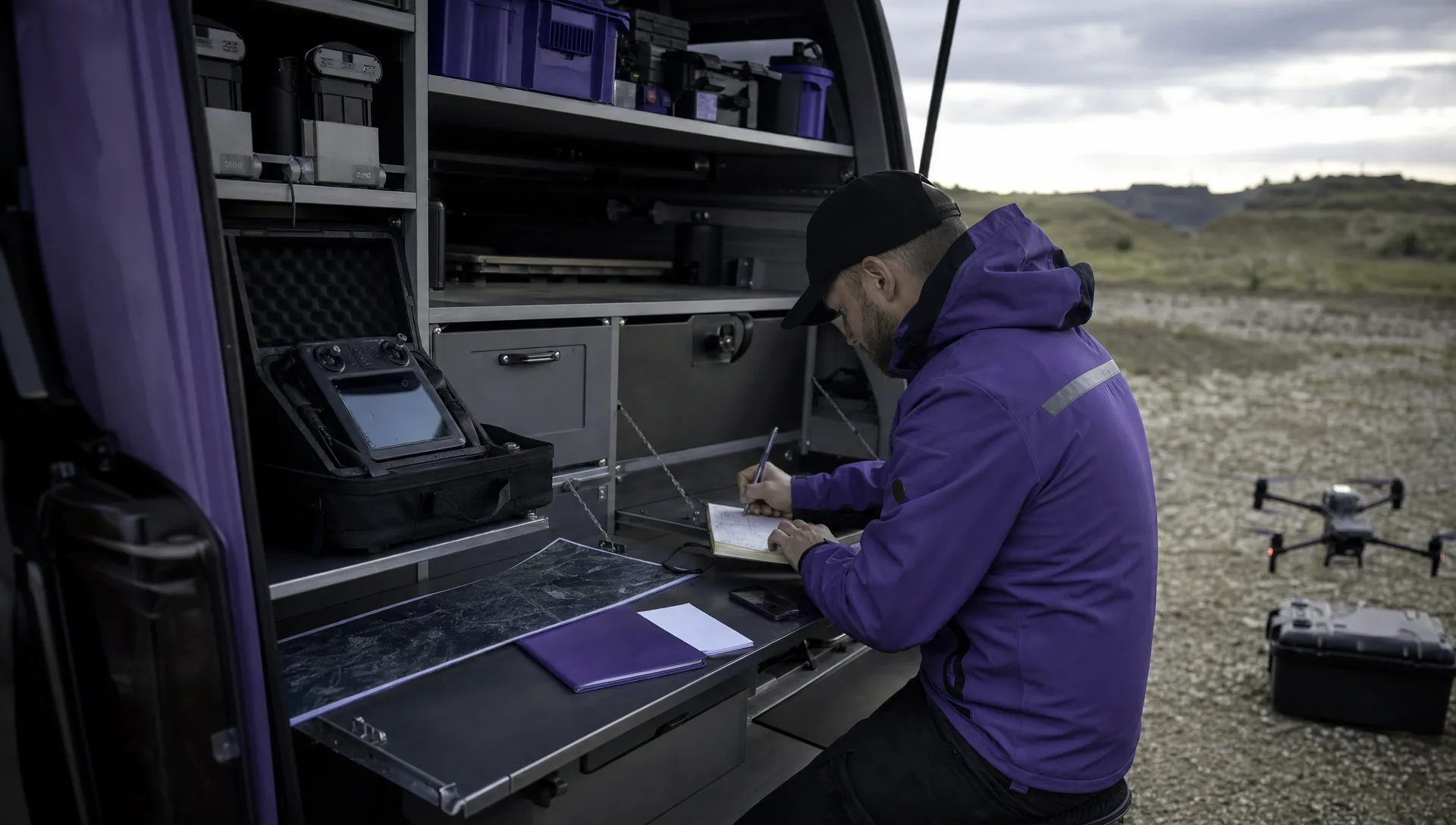 How to Evaluate a Free Drone Logbook Before Using It →
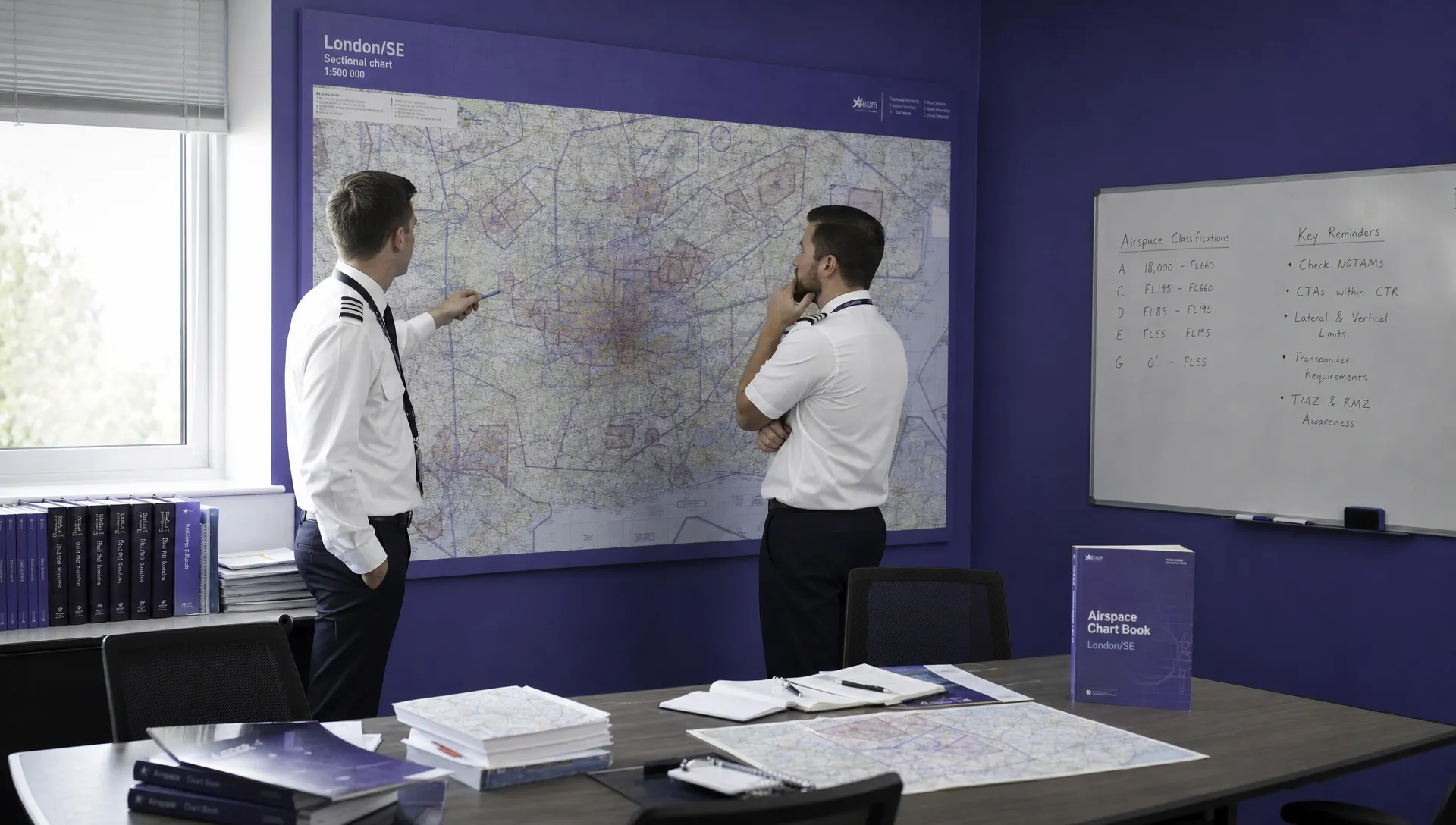 FAA Part 107 Test: How to Master Airspace Questions →
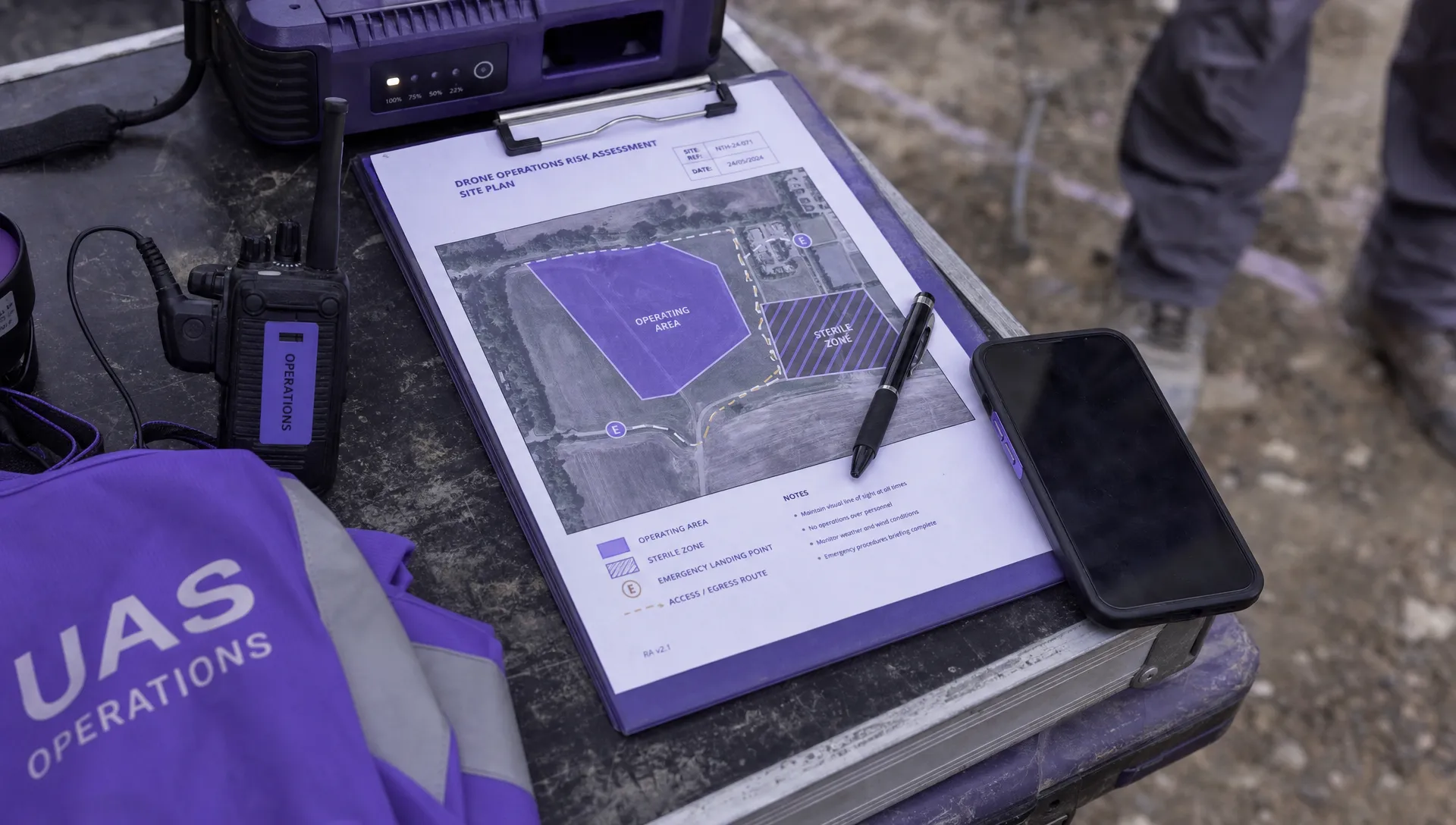 Drone Risk Assessment Controls That Work in the Field →
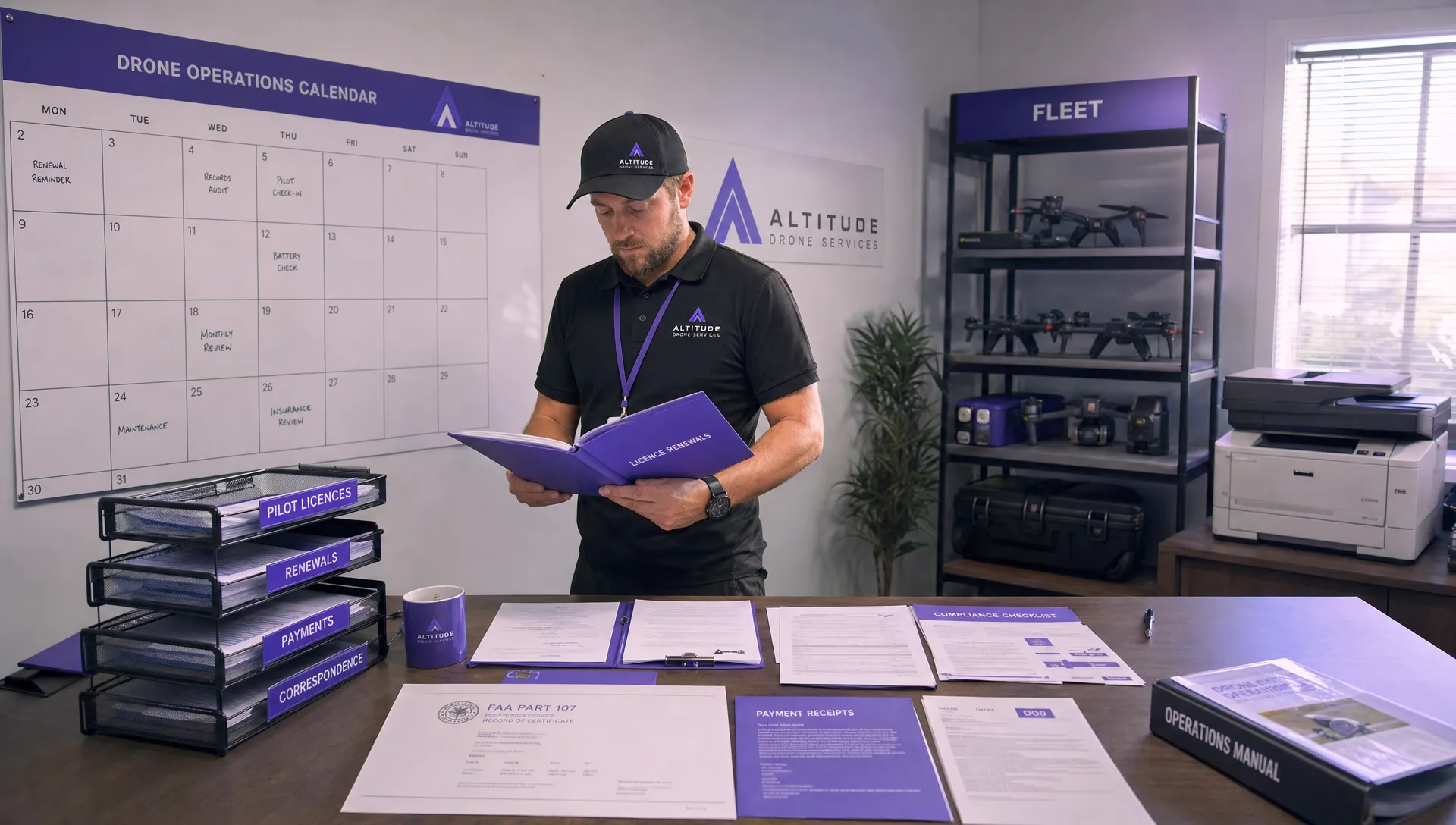 FAA Drone License Costs Beyond the Knowledge Test →
 Drone Part 107 Operations: When a Waiver May Be Needed →
 Drone Operating Rules for Managing Contractors and Employees →
 BVLOS Drone Requirements for Building a Safety Case →
 Drone Pilot Test Mistakes That Cost Candidates Marks →
 FAA 107 License vs Part 107 Certificate: What’s the Difference? →
 Drone Airport Rules: A Field Checklist for Site Assessments →