
UAVs for Sale: A Professional Buyer's Guide for 2026
You're probably staring at a spreadsheet with too many tabs open. One tab has multirotors. Another has fixed-wing platforms. A reseller has sent a quote that looks reasonable until you notice batteries, software, and training aren't included. Someone else on the team is asking whether the aircraft will need special insurance, whether your pilots can legally fly it for client work, and whether the data will fit your current workflow.
That is the commercial buying process. Searching for uavs for sale isn't about finding the highest camera resolution or the longest advertised flight time. It's about choosing an aircraft system your team can deploy, maintain, insure, and turn into revenue without creating a compliance headache.
The market itself reflects that shift. The overall UAV market is projected to grow from USD 26.12 billion in 2025 to USD 40.56 billion by 2030, with North America accounting for 48.6% of the market in 2025, according to this UAV market forecast from MarketsandMarkets. That matters because it confirms commercial UAVs are no longer fringe equipment. They're established business tools used in inspection, surveying, public safety, and agriculture.
Starting Your Professional UAV Search
The biggest mistake I see in first-time fleet procurement is treating the aircraft like the whole purchase. It isn't. The aircraft is one line item in a wider operating system that includes pilots, batteries, charging, software, maintenance, records, and client deliverables.
If your search starts with model names, you'll usually buy too early. Start with the mission instead. Ask what the aircraft must do repeatedly, under real conditions, with your actual staff and deadlines.
Start with the work, not the catalog
A useful shortlist begins with practical questions:
- What are you capturing: Orthomosaic outputs, thermal inspections, progress imagery, tower data, video, or something else.
- How often will it fly: A drone used weekly needs different support planning than one deployed occasionally.
- Who will operate it: An experienced pilot can absorb complexity. A growing team usually needs simpler, more standardized workflows.
- What happens after landing: Data processing, QA, client reporting, and recordkeeping often determine whether the purchase pays off.
That's why professional buying has shifted away from hobby-style comparison shopping. Teams are buying airborne data collection systems, not gadgets.
Practical rule: If two aircraft can complete the mission, the better buy is usually the one your team can deploy with fewer workarounds.
For property and survey-related work, it also helps to look at the operational outcomes clients care about. This overview of drone survey benefits for UK properties is a good example of how buyers should think beyond hardware and focus on usable inspection and survey value.
What a serious buying process looks like
Before requesting quotes, define these three things in writing:
| Decision area | What to define early |
|---|---|
| Mission scope | Area size, site type, payload needs, output format |
| Operational limits | Crew size, launch space, transport constraints, weather tolerance |
| Business fit | Software compatibility, support expectations, approval process |
That document will save you from a common failure mode. A team buys a capable aircraft, then discovers it doesn't fit their sites, staff, or reporting process.
Match the Airframe to Your Mission
There is no universally best professional drone. There's only the airframe that matches your job profile with the least friction.
Most uavs for sale pages frequently fall short for buyers. They show flight time, range, and payload slots, but they don't force the harder question. What kind of aircraft reduces operating cost per mission once you include launch space, training burden, crew workload, and maintenance?
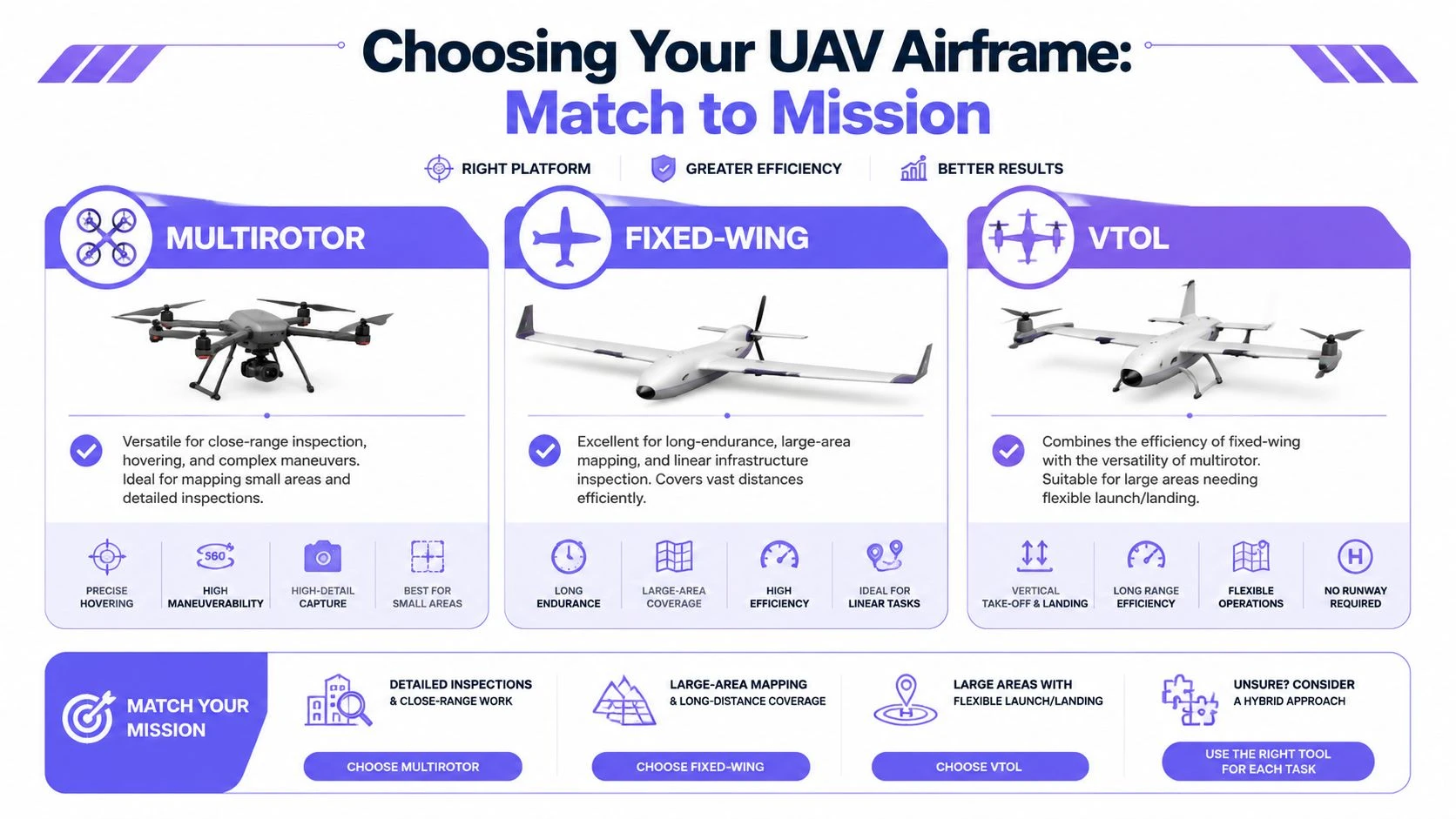
Multirotor for precision and access
Multirotors are the easiest starting point for most commercial teams. They're strong at close inspection, confined-area flying, repeatable hovering, and jobs where the pilot needs fine positional control.
That makes them a practical fit for:
- Facade and roof inspections
- Construction progress work
- Utilities and asset checks
- Short-range mapping on tighter sites
- Public safety deployments in complex spaces
Their weakness is efficiency over distance. You can map with a multirotor, but if you're covering large acreage or long linear corridors, the aircraft will spend too much of the mission doing what fixed-wing platforms do better.
Fixed-wing for distance and coverage
Fixed-wing aircraft earn their place when area coverage matters more than hover. They're built for endurance, efficient forward flight, and large-area mapping.
They often make sense for:
- Large agricultural blocks
- Long road, rail, or pipeline corridors
- Broad topographic survey jobs
- Wide-area reconnaissance
But fixed-wing comes with real trade-offs. Buyers often overlook launch and recovery constraints, pilot workload, and maintenance complexity. That's one reason mission-specific procurement matters more than marketplace browsing. A 2024 order for 40+ eBee VISION fixed-wing systems worth about USD 3.4 million shows how professional buyers select aircraft for a defined operational need rather than a generic “best drone” category, as noted in this fixed-wing UAV market example.
A fixed-wing platform can be the right answer on paper and the wrong answer on site if your team lacks suitable launch space or recovery experience.
Fixed-wing usually wins the coverage argument. It doesn't always win the operations argument.
VTOL for mixed environments
VTOL platforms sit in the middle. They offer vertical takeoff and landing with more efficient forward flight than a pure multirotor. For many survey teams, that sounds ideal. Sometimes it is.
They're useful when you need:
- Coverage beyond a multirotor
- No runway or catapult
- Safer access to uneven or remote launch areas
- A compromise between field practicality and endurance
The compromise is complexity. VTOL systems can introduce more maintenance points, more transition-related procedures, and more training burden than buyers expect.
A quick decision view
| Airframe | Best at | Watch-outs |
|---|---|---|
| Multirotor | Hovering, inspections, confined sites | Less efficient on large areas |
| Fixed-wing | Long-distance mapping, area coverage | Launch and recovery demands |
| VTOL | Mixed-site mapping with flexible takeoff | More system complexity |
If your team is still comparing broad categories, this guide to commercial drone operations is useful for framing the aircraft decision around actual field use, not just brochure specs.
Decode Must-Have Technical Specifications
Once the airframe is right, the next job is separating useful specifications from marketing noise. A professional platform doesn't need every premium feature. It does need the features that protect data quality and reduce rework.
The question isn't “Which spec is highest?” The question is “Which spec prevents a bad mission?”
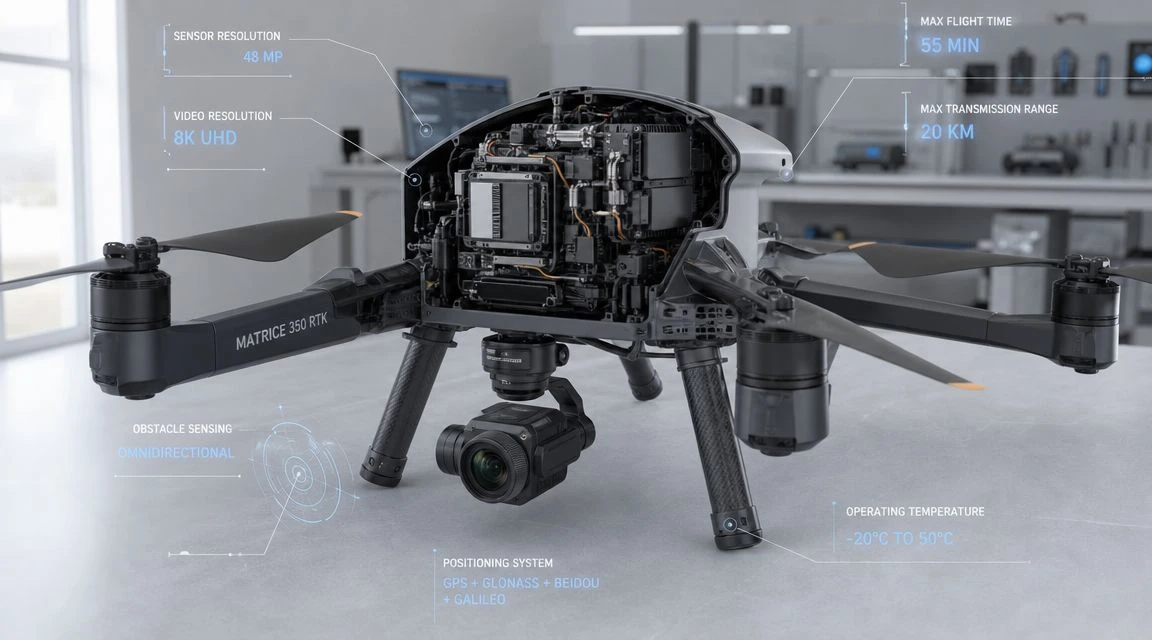
Sensor compatibility matters before camera resolution
Payload capacity is a business constraint, not just a technical one. It determines whether you can carry the sensor you need now and whether you can adapt the aircraft later.
For a visual inspection team, a stabilized camera setup may be enough. For utility, survey, or public safety work, you may need thermal, zoom, LiDAR, or multisensor options. If the aircraft only works with one narrow payload ecosystem, your upgrade path shrinks quickly.
Check these points before you buy:
- Mounting options: Can the aircraft support the sensor class your work requires?
- Power and balance: Some payloads technically fit but make the aircraft awkward or inefficient.
- Workflow output: Sensor quality is only useful if the resulting files work with your processing tools.
RTK and PPK are not optional for serious mapping
For professional mapping and surveying, RTK/PPK integration and mechanical shutters are critical features, according to this mapping and surveying drone guidance from Advexure. RTK and PPK enable centimeter-level accuracy and reduce reliance on ground control points. Mechanical shutters prevent motion blur that can distort photogrammetric models.
That combination has a direct operational benefit. You spend less time fixing alignment issues and less time re-flying missions because the image set wasn't clean enough.
Field note: If your deliverable depends on measurement, don't treat georeferencing as a premium extra.
The specs that usually deserve scrutiny
A practical spec review should focus on the few items that change mission outcomes:
- Endurance under payload: Advertised flight time means little if it drops sharply with your real sensor setup.
- Data link reliability: Stable control and transmission matter more than headline range figures.
- Environmental tolerance: Wind, dust, and light rain exposure can define whether the aircraft is deployable on commercial schedules.
- Battery system design: Swap time, charging process, and stock availability affect sortie planning more than many buyers expect.
What to ignore until later
Some details belong lower on the list:
| Prioritize first | Consider later |
|---|---|
| Geospatial accuracy | Cosmetic design |
| Image capture method | Minor speed differences |
| Payload workflow fit | Consumer-style smart modes |
| Battery and link reliability | Promotional app features |
Specs should make operations easier. If a feature looks impressive but adds little to data quality, dispatch readiness, or repeatability, it's probably not driving ROI.
Navigate Critical Regulations and Insurance
Commercial UAV procurement should always include a compliance check before the purchase order is approved. If the aircraft, payload, or intended use creates licensing, registration, or insurance problems, you haven't bought a productivity tool. You've bought delay.
The exact rules depend on where you operate, but the principle is consistent. Commercial drones are aircraft operating in regulated airspace. In the United States, operators commonly work within the FAA framework. In Europe, teams often work under EASA-related structures and national rules. Your aircraft choice should fit the permissions your team can realistically maintain.
Certification and registration come first
Before committing to a platform, confirm:
- Pilot eligibility: Your team needs the right certification for commercial work in the countries where it flies.
- Aircraft registration: The aircraft may need registration before deployment.
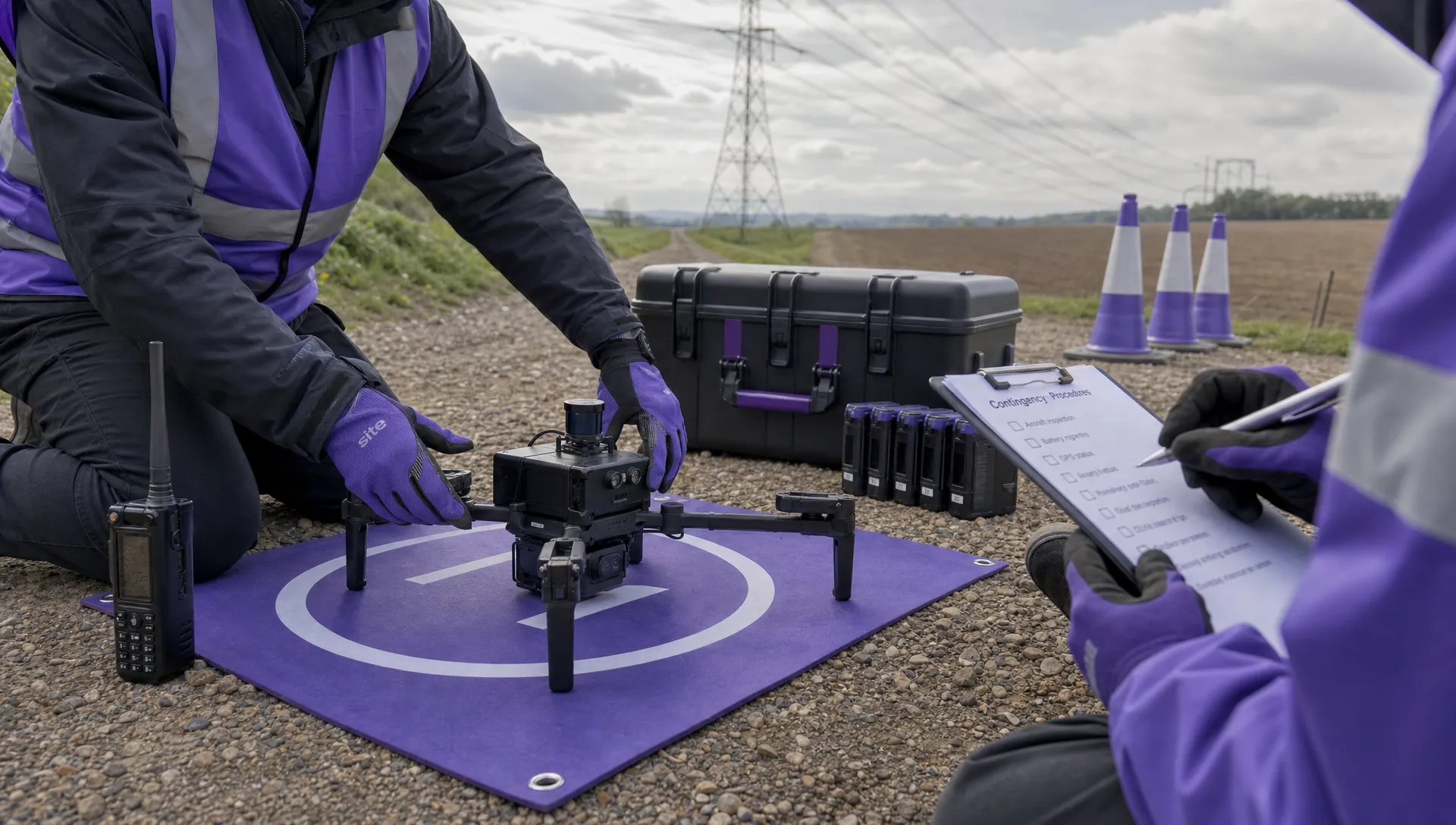
- Mission profile fit: Night operations, controlled airspace, or specialized operations can require additional planning or approvals.
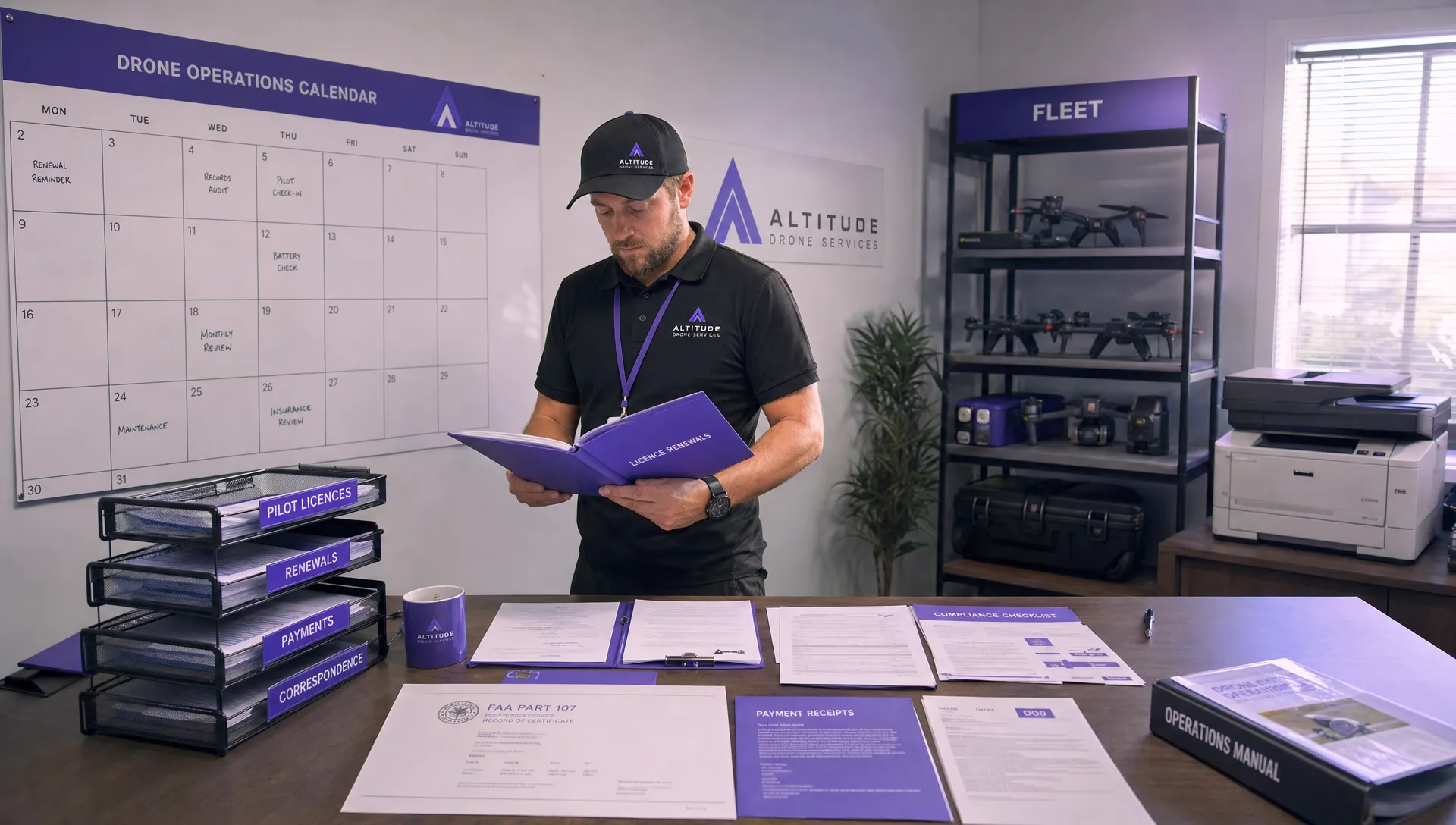
- Recordkeeping: Logs, maintenance records, and operational documentation need to stand up to internal review and external scrutiny.
This isn't paperwork for its own sake. It affects staffing, scheduling, and insurability.
Insurance should match the real risk
A lot of first-time buyers ask for “drone insurance” as if it's one product. It usually isn't. You're typically evaluating liability protection for third-party injury or property damage, and separate cover for the aircraft and attached equipment.
A good starting point is understanding how essential business liability works in a wider commercial context. Drone operations create exposure on active worksites, near buildings, around vehicles, and in front of clients. Liability cover protects the business when something on the ground goes wrong. Hull cover protects the aircraft investment when hardware is damaged.
Insurance should reflect where you fly, what you carry, and what a grounded aircraft would cost your business.
Procurement questions that avoid later problems
Use this short compliance screen before buying:
- Can our current pilots legally operate this aircraft for its intended use?
- Will this mission profile change our insurance requirements?
- Do we have a process for maintenance and incident records?
- Will clients ask for proof of cover or operating credentials?
If your team is formalizing that side of the operation, this overview of commercial UAV insurance considerations is worth reviewing alongside vendor quotes.
Budgeting Beyond the Sticker Price
The purchase price is the easiest number to get and the least useful number for decision-making on its own. For commercial teams, the better budgeting question is this: what will it cost to keep this aircraft productive over its working life?
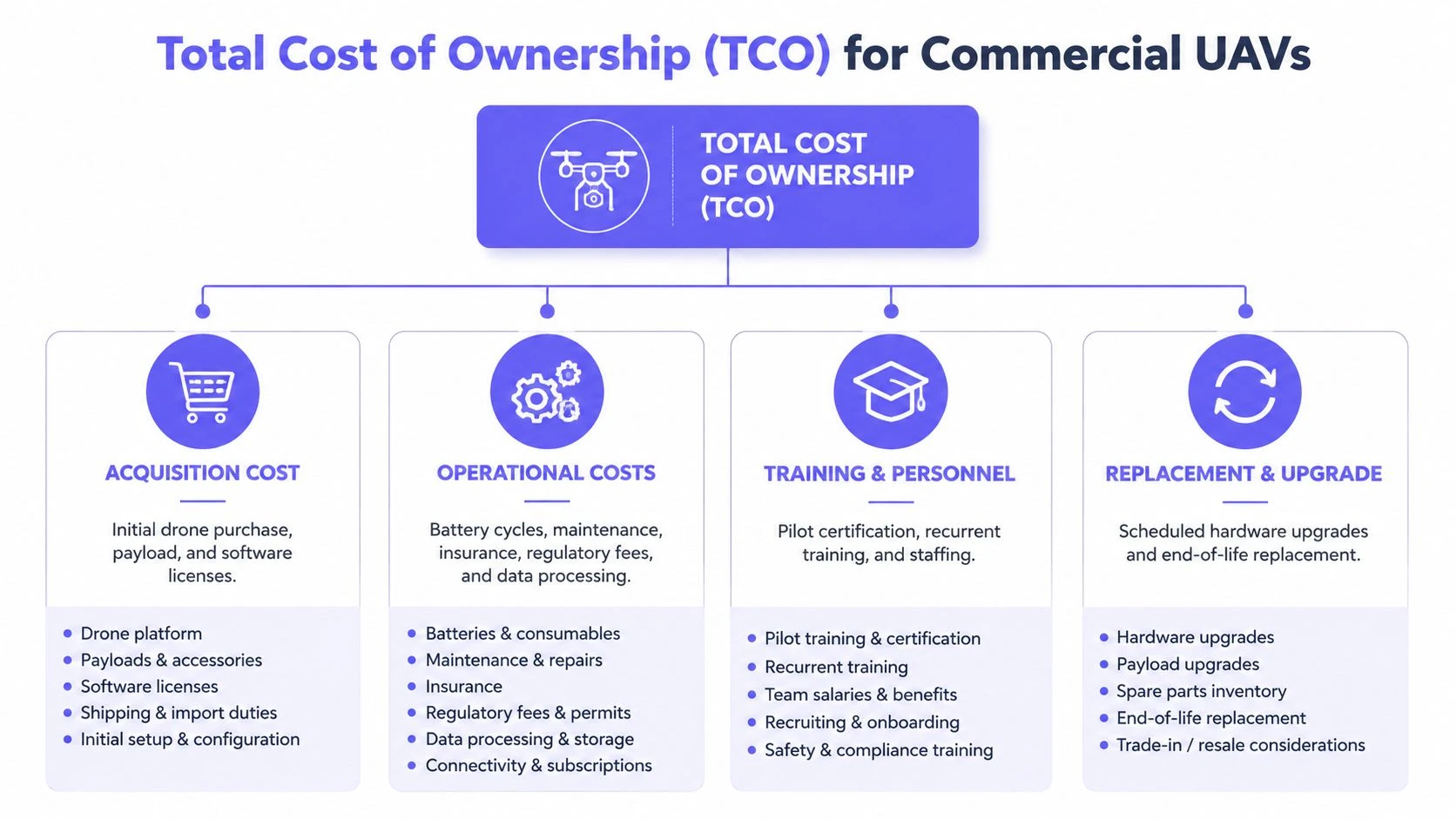
That's the total cost of ownership, and it's where many UAV buying decisions either become smart or become expensive.
Industry analysis points to a persistent content gap here. Most buying guides focus on specs, while professional buyers need clarity on total cost of ownership, compliance, and operational readiness. That gap matters in a market where the U.S. commercial drone market reached over USD 11.3 billion in 2024, signalling that business use cases are driving demand, as noted in this commercial drone market analysis.
The four cost buckets that matter
A realistic budget should include more than the aircraft body and controller.
Acquisition
This is the obvious part. Airframe, payload, batteries, chargers, cases, controllers, and required software licenses all belong here.
What catches buyers out is configuration drift. A quote starts with the base aircraft, then grows once you add the sensor package, spare batteries, transport cases, and software needed to do the actual job.
Operations
Operational cost is where the aircraft proves whether it's economical.
That includes:
- Battery turnover and replacement
- Routine servicing
- Repairs after hard landings or component wear
- Insurance
- Data handling and processing tools
- Travel and field support items
A platform with a lower purchase price can still become the more expensive option if it needs more downtime, more manual processing, or more support intervention.
Training and personnel
A complex aircraft usually requires more than a handover session. Teams need initial instruction, recurrent practice, standard operating procedures, and enough staff resilience that one unavailable pilot doesn't stop the program.
This cost is often hidden because it sits in payroll or external training invoices rather than the procurement line.
Replacement and upgrade
Every fleet ages. Batteries degrade, payloads become limiting, support terms change, and software ecosystems evolve.
If you don't plan for replacement and upgrades, the aircraft becomes a stranded asset rather than a managed one.
A practical TCO lens
| Cost area | Typical buying mistake |
|---|---|
| Hardware | Under-scoping batteries and accessories |
| Software | Forgetting subscriptions and processing tools |
| Training | Assuming pilots will “figure it out” |
| Maintenance | No service plan or spare strategy |
| Insurance | Buying too late or buying the wrong cover |
Cheap aircraft can be expensive programs.
A disciplined fleet buyer asks which platform will create the fewest interruptions over time. That usually leads to better decisions than comparing sticker prices in isolation.
For teams managing aircraft over several seasons, this resource on equipment lifecycle management helps frame the purchase as part of an asset strategy rather than a one-off spend.
Select Vendors and Manage Procurement
Where you buy matters almost as much as what you buy. A professional UAV purchase should leave you with an aircraft, support path, warranty clarity, and someone accountable when parts fail or firmware introduces issues.
Anonymous marketplaces can look attractive because they compress the buying decision into a single screen. That convenience disappears fast when you need service, documentation, replacement parts, or proof that the configuration matches what was promised.
Choose support, not just stock availability
Authorized dealers and specialist resellers usually offer more than a transaction. They can help with payload fit, firmware setup, training, and warranty handling.
When evaluating sellers, ask:
- Are they an authorized reseller for the aircraft and payload?
- Do they provide commissioning or setup support?
- Can they supply spare batteries, props, and replacement parts quickly?
- Who handles warranty claims and repair logistics?
A vendor who understands field operations is worth more than one who only knows catalog codes.
Build your RFP around operations
For larger purchases, a simple RFP keeps teams aligned. It also forces vendors to answer the questions that determine long-term success.
Include these categories:
| RFP section | What to request |
|---|---|
| Mission requirements | Site types, payload needs, deliverables |
| Operational conditions | Crew model, launch constraints, weather exposure |
| Support expectations | Training, warranty process, repair turnaround |
| Integration needs | Logging, maintenance records, data workflow compatibility |
A good RFP also asks vendors to state what the proposed system does poorly. That answer is often more revealing than the polished capability summary.
Questions worth asking in the call
Don't end vendor conversations at “What's the price?” Ask operational questions that expose hidden effort:
- What routine maintenance does this system require from the operator?
- What breaks most often in normal commercial use?
- How long is the training curve for a competent pilot new to this platform?
- What accessories are mandatory rather than optional?
- What is the recovery plan if the aircraft is down during a live contract?
Good procurement is less about chasing the lowest quote and more about reducing uncertainty before the fleet goes live.
Integrate Your UAV into Daily Operations
A UAV only creates return when it becomes part of repeatable work. Plenty of teams buy capable hardware and then leave value on the table because planning, logging, maintenance, and job tracking stay scattered across notebooks, memory cards, spreadsheets, and inboxes.
That's why the true finish line isn't delivery of the aircraft. It's dependable integration into daily operations.
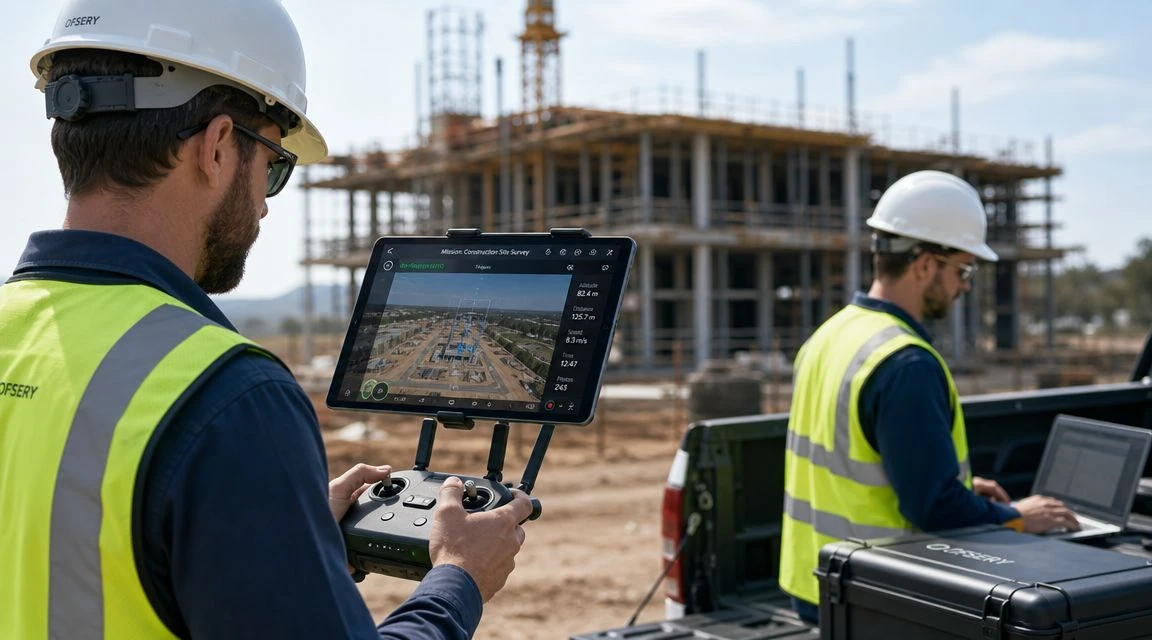
Build a repeatable mission workflow
The strongest drone teams standardize what happens before, during, and after each flight. That includes site checks, client references, aircraft assignment, battery readiness, flight logging, media handling, and maintenance follow-up.
If each pilot runs jobs differently, the fleet won't scale cleanly. You'll also struggle to prove consistency to clients or internal stakeholders.
A practical workflow usually includes:
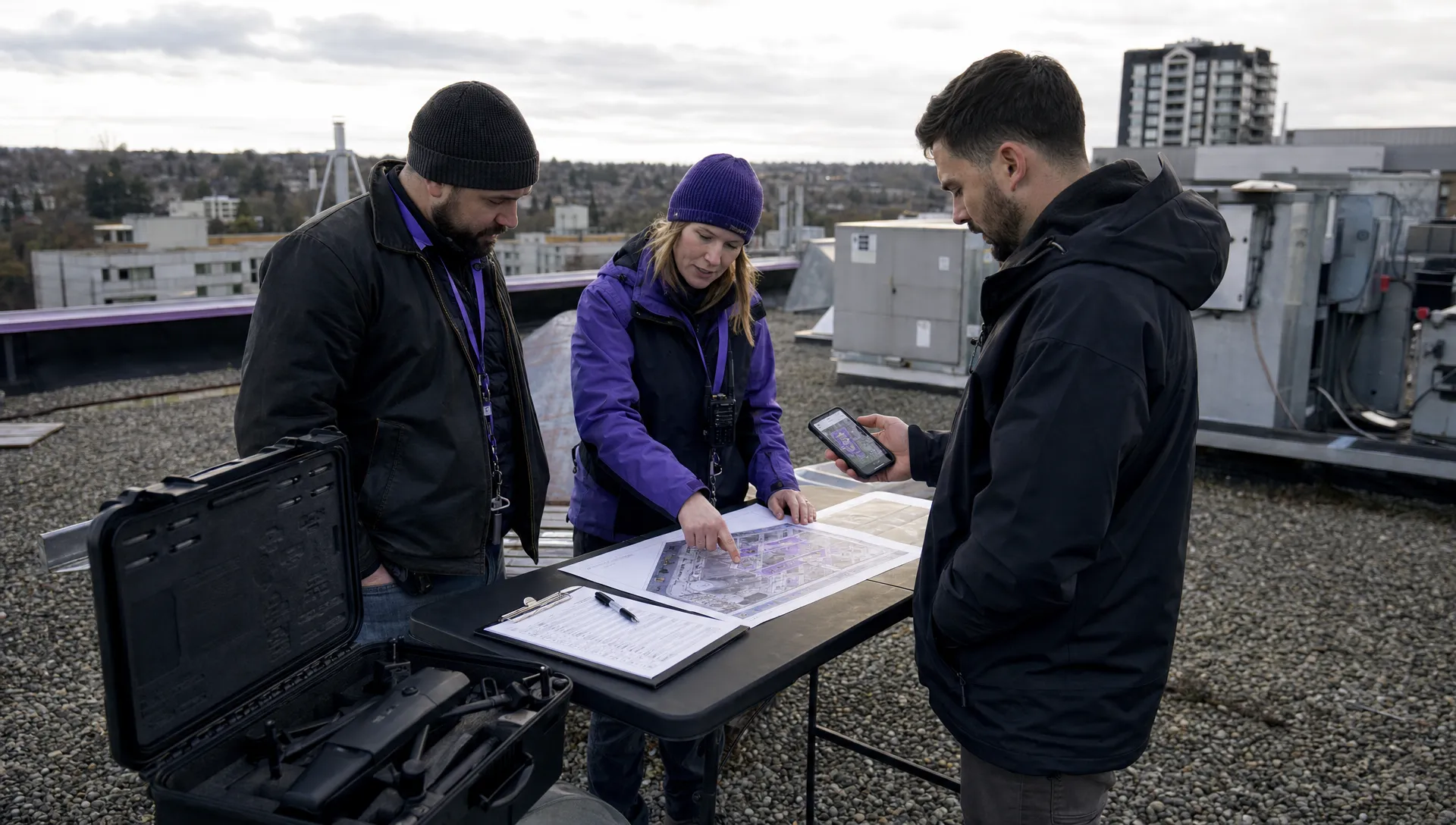
- Pre-flight planning: Site review, airspace check, weather, crew allocation
- Mission execution: Defined flight method, payload settings, field notes
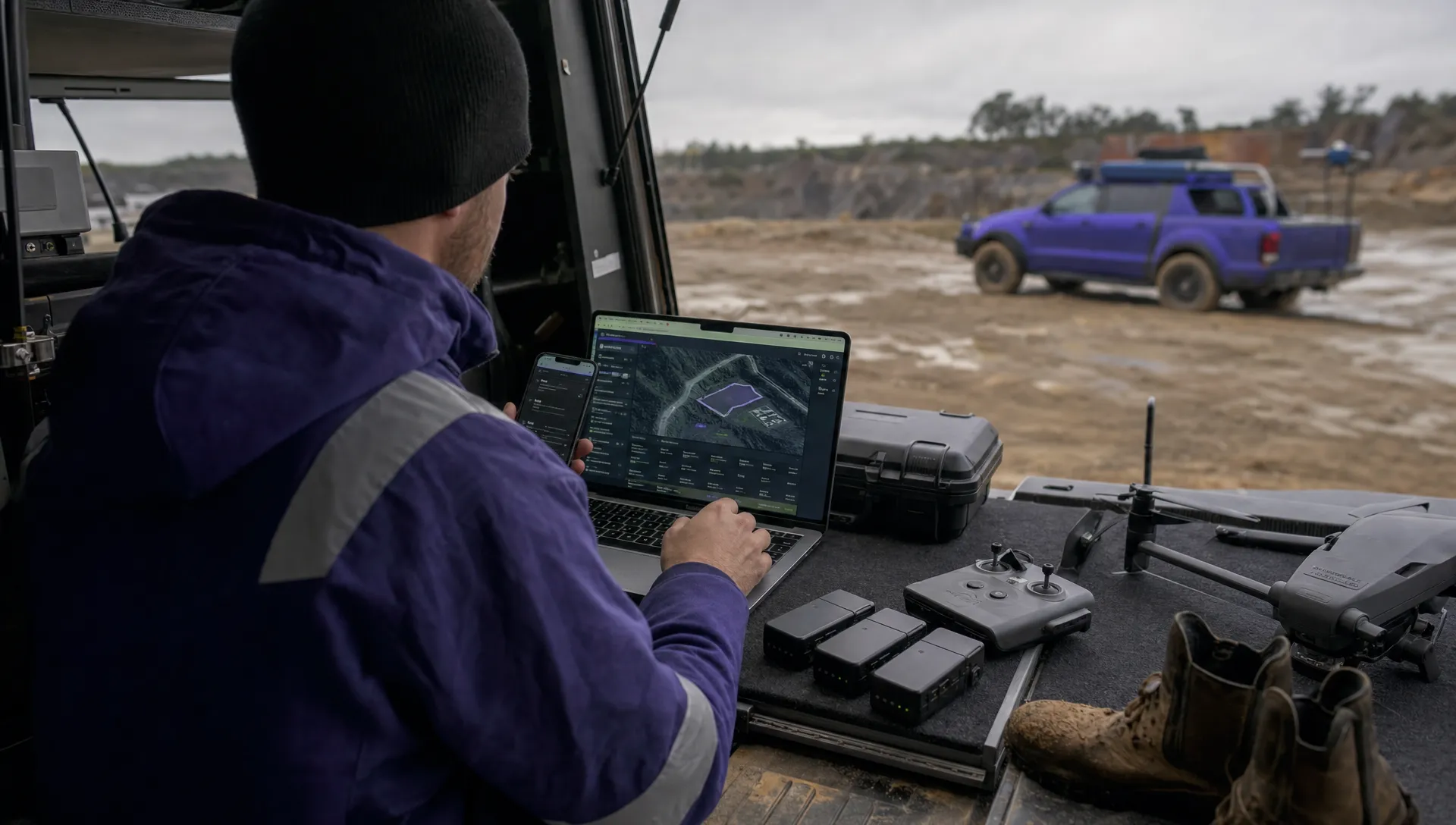
- Post-flight control: Log entry, file transfer, maintenance notes, output review
Fleet visibility is what protects ROI
Once you operate more than one aircraft, memory stops being a system. You need to know which aircraft flew, who flew it, whether maintenance is due, and what records are complete.
Many procurement plans often fall short. They budget for hardware but not for the administrative structure that keeps the fleet compliant and usable.
The most expensive drone in the fleet is the one that can't be dispatched because its records, batteries, or maintenance status are unclear.
Use one system for planning, records, and oversight
A proper operations platform solves a problem that hardware alone can't solve. It connects aircraft, pilots, jobs, logs, maintenance, and reporting in one place.
That matters for solo operators, but it matters even more for teams. Once several people share aircraft and client deliverables, a central system cuts friction fast. Planning gets cleaner. Logging gets more reliable. Maintenance stops being reactive. Management gets a clear view of asset use and operational load.
The best UAV purchase is the one that fits this wider system. Not the one with the flashiest brochure.
If you want a practical way to turn a new aircraft purchase into a controlled, scalable operation, Dronedesk gives professional drone teams one place to manage planning, compliance, fleet records, pilots, and job workflows without burying everything in spreadsheets.
 FAA Drone License Costs Beyond the Knowledge Test →
 Drone Part 107 Operations: When a Waiver May Be Needed →
 Drone Operating Rules for Managing Contractors and Employees →
 BVLOS Drone Requirements for Building a Safety Case →
 Drone Pilot Test Mistakes That Cost Candidates Marks →
 FAA 107 License vs Part 107 Certificate: What’s the Difference? →
 Drone Airport Rules: A Field Checklist for Site Assessments →
 FAA Part 107 Record-Keeping Rules for Commercial Teams →
 How to Review a DJI Flight Log After an Unexpected Event →
 Drone Laws Around the World: A Pre-Flight Research Framework →