
Drone Data Analysis and Management: Achieve Peak Performance
Let's be honest, data analysis and management isn't the sexiest topic. But for any serious drone operator, it’s the absolute bedrock of a safe, compliant, and profitable business. It’s the practice of gathering, organising, and actually using the information from your operations to make smarter decisions.
This isn't just about dumping video files onto a hard drive. We're talking about turning your flight logs, client details, and maintenance records into a real strategic advantage.
Data Is The New Cockpit For Drone Operations
Welcome to modern drone operations, where the data you generate is just as critical as your drone's battery life. Thinking about data management as a boring admin task is old news. Today, it’s the engine driving your entire business.
Think of your drone as a flying data factory. Every single mission, from a simple roof inspection to a complex survey, produces a mountain of information. If you manage it right, this data gives you a crystal-clear dashboard view of your entire operational health.
This new mindset shifts you from constantly putting out fires to planning ahead. Instead of just reacting to a maintenance issue or a client complaint, you can start to anticipate needs, get the most out of your fleet, and prove your compliance with an unshakeable audit trail. This is where the real money is made.
From Raw Data To Competitive Edge
Every bit of information, from pre-flight checks and in-flight logs to post-flight analysis, is packed with business intelligence. Without a solid system to bring it all together, you're essentially flying blind and leaving opportunities on the table. This is where a unified platform like Dronedesk acts as your central command, turning raw data into decisive action.
- Improved Safety: Track pilot hours, equipment maintenance schedules, and incident reports to spot risks before they turn into real problems.
- Guaranteed Compliance: Keep a complete, easy-to-access record of all flight activities, certifications, and risk assessments for when the regulator comes knocking.
- Increased Profitability: Analyse job costs, team efficiency, and asset usage to fine-tune your pricing and beef up your bottom line.
This focus on data-driven decisions isn’t just a drone thing; it’s a global trend. The worldwide data analytics market is booming, which shows just how vital these insights have become for any business that wants to stay in the game. You can read the full research about the data analytics market growth to see the bigger picture.
A structured approach to your data gives you a serious competitive edge. When you master your data, you’re not just managing flights; you’re building a smarter, safer, and more profitable business. Dronedesk provides the framework to connect every piece of the puzzle, giving you the complete picture you need to make informed decisions and drive real growth.
Navigating The Complete Drone Data Lifecycle
If you're going to get a real handle on data analysis and management, you have to see the bigger picture. Your data goes on a journey, and understanding each step is what turns a pile of raw information into a genuinely powerful business asset.
This workflow breaks down the drone data journey, from your initial pre-flight checks all the way through to your post-flight review and strategy sessions.
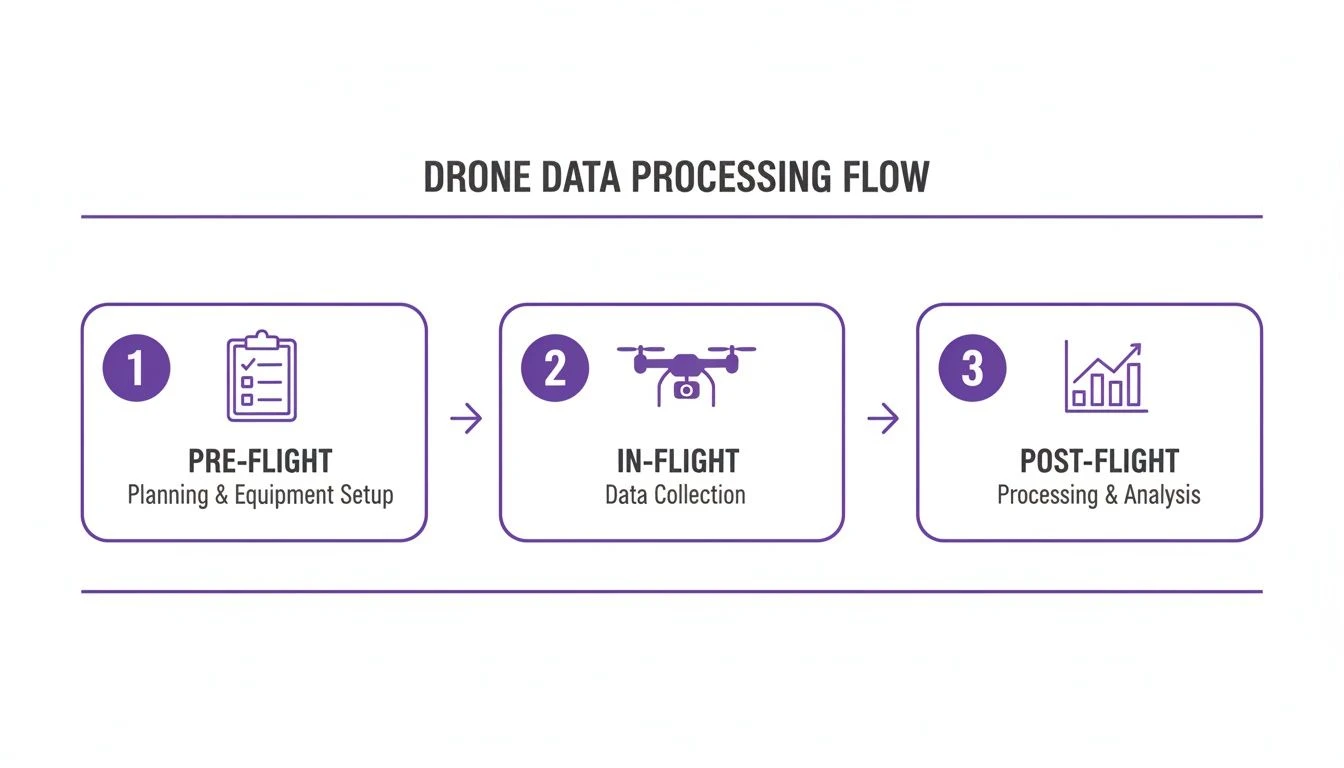
Think of it as a connected process. The data you gather in the pre-flight stage feeds directly into what you do in the air, and that, in turn, fuels your post-flight analysis. Let's walk through each step.
Data Collection and Ingestion
The whole lifecycle kicks off the second you start planning a mission. Data collection isn't just the photos and videos you capture in the air. It’s every single bit of operational info, from risk assessments and client details to pilot qualifications and flight logs.
This is where a solid platform like Dronedesk shows its value right away. Forget juggling spreadsheets and paper logs. All your pre-flight and in-flight data gets captured in one standard, consistent way. For example, automatically syncing your DJI flight logs pulls that crucial telemetry data straight into your project records without you lifting a finger.
Ingestion is simply getting that data into your system. Doing it manually—like typing up flight times from a notebook—is a recipe for mistakes and wasted hours. Automated ingestion, where Dronedesk syncs your flight data for you, is the only way to go for speed and accuracy.
Data Cleaning and Secure Storage
Once your data is in the system, it needs a good scrub. Raw data is almost always messy. You’ll find oddities like a GPS glitch that throws off a flight path, or you'll have incomplete records, like a missing battery serial number.
Data cleaning is the vital step of fixing these errors and filling in the blanks. It’s what makes your data trustworthy enough to base decisions on. A practical example is cross-referencing a pilot's logged hours against their official record to make sure you’re staying compliant.
After it's clean, the data goes into secure storage. This isn't about just chucking files onto a hard drive. It means organising everything logically in a secure, cloud-based system. Dronedesk handles this by automatically linking all records—flight logs, maintenance reports, client paperwork—to the right project and asset. This creates an organised, searchable database that actually works.
"Data isn’t the new oil. It’s the new soil. It's fertile ground that, when cultivated with care, can yield incredible insights and growth for your business."
This kind of organised storage builds the foundation for the really valuable stuff: analysis and reporting. Proper flight data acquisition is where that foundation begins.
Analysis, Reporting, and Archiving
Right, this is where all your prep work really pays off. Data analysis is where you dig into your clean, organised data to spot trends, find patterns, and pull out insights you can actually use. You stop just having data and start understanding what it means for your business.
So, what does that look like in the real world?
- Operational Efficiency: You could calculate the average flight time per battery to figure out if you're buying the right amount, or if you need to adjust your purchasing strategy.
- Financial Performance: Tracking the total cost per job, including pilot time and equipment depreciation, is the only way to know for sure if you're actually profitable.
- Risk Management: You can easily spot pilots who are getting close to their maximum flight hours, helping you prevent fatigue and potential incidents before they happen.
Reporting is how you share what you've found. Using Dronedesk, you can create reports tailored for different people. A client might just need a simple job summary with a few key images, while your operations manager needs a full breakdown of team productivity and fleet health.
Finally, archiving is about storing data for the long haul, mainly for compliance and historical review. Many regulations require you to keep operational records for several years. An organised archive means you can pull up any document instantly, whether it's for an audit or just to see how a project went two years ago. This closes the loop on the data lifecycle, turning old info into a resource for future planning.
Building An Efficient Drone Data Management System
Knowing the data lifecycle is one thing, but actually making it run like a well-oiled machine is what separates the most successful drone operators from the pack. A solid system for data analysis and management doesn't just happen—it’s built with smart habits and the right tools. This is the difference between a garage full of unlabelled hard drives and a clean, searchable database that actually helps you grow your business.
Think of it like building a library. If you just toss books into a room, good luck finding what you need. But if you set up a cataloguing system, label the shelves, and have a clear process for everything, you create an incredible resource. Your drone data deserves that same level of discipline.
Establish A Foundation Of Consistency
The first, and most critical, step is consistency. If every pilot on your team logs flights a little differently or names files using their own personal method, you're just creating chaos. A standardised approach means every piece of data you collect is uniform, comparable, and easy to find later on.
It all starts with a few simple but powerful habits:
- Standardised Naming Conventions: Create a clear, mandatory format for all your files and folders. Something like
[ClientName]_[ProjectID]_[Date]_[DataType]instantly makes your data searchable and kills confusion before it starts. - Consistent Data Collection: Use the same digital checklists and logging procedures for every single job. When you use Dronedesk to manage pre-flight checks, for instance, every pilot is guided through the exact same steps, making sure no detail is ever missed.
- Centralised Project Structure: Keep all job-related info in one place. Instead of scattering client briefs, risk assessments, and flight logs across different apps, a platform like Dronedesk bundles everything under a single project. This builds a structured data environment right from the get-go.
An efficient data system isn't just about being tidy; it’s about creating a single source of truth. When your data is consistent and reliable, you can trust the insights it gives you. That means making confident decisions about safety, compliance, and your bottom line.
Getting this foundation right sets you up for more advanced data strategies down the line. It ensures the information flowing into your system is high-quality from the moment it’s created.
Define Roles And Automate Safeguards
As your operation gets bigger, knowing who is responsible for what becomes essential. Defining clear roles for data ownership stops information from falling through the cracks. You could, for example, make one team member responsible for verifying the accuracy of all flight logs at the end of each week.
This clarity builds accountability and makes your whole data management process stronger. Alongside clear roles, you absolutely have to implement automated safeguards to protect all that hard work. Manually backing up data is a recipe for disaster—it's unreliable and easily forgotten.
Put these two key practices into place:
- Define Data Ownership: Clearly outline who handles each stage of the data lifecycle. This might mean one person is in charge of data ingestion while another is responsible for creating client reports.
- Automate Your Backups: Forget manual backups. Rely on cloud-based systems that automatically back up your data. This gives you peace of mind and protects your most valuable business asset from hardware failure or an accidental "delete."
As drone operations become more involved, the need for better analytics is exploding. The market for high-performance data analytics is growing fast, reflecting the demand for real-time processing and the ability to predict what's next. Prescriptive analytics—the kind that recommends specific actions—is the fastest-growing segment, showing a clear shift toward automated decision-making. You can explore more data analytics statistics to see how these trends are shaping different industries.
Ultimately, building an efficient system is a huge part of setting up a successful drone data management program. It's all about being deliberate with your processes so that your data starts working for you, not against you.
Turning Flight Data Into Actionable Business Intelligence
Let’s be honest, raw data is just a pile of digital noise. It’s your flight logs, maintenance records, and project details sitting in a folder, not doing much. The real magic happens when you master data analysis and management, transforming that noise into business intelligence that actually helps you make smarter, more profitable decisions.
This is the point where you stop being a data collector and start making your data work for you.
Think about it like this: a single flight log is just one data point. But when you start analysing all your logs together, you can suddenly see a pilot's total flight hours, their average mission length, and whether their certifications are about to expire. That's data becoming intelligence.
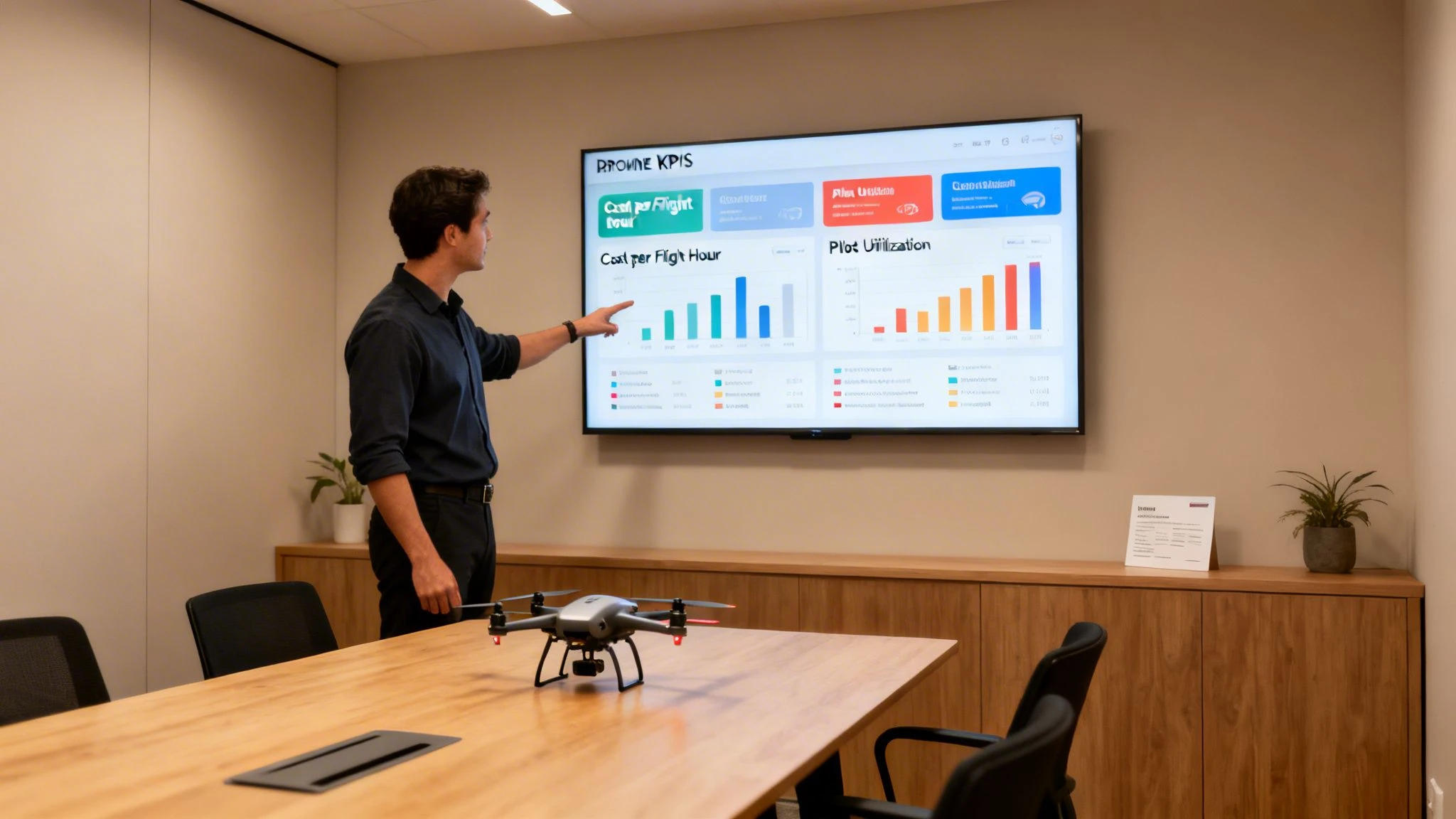
A good dashboard brings your numbers to life. It helps you spot trends you’d never see in a spreadsheet, like one piece of gear that’s costing you a fortune or another that’s gathering dust.
Tracking The Right Key Performance Indicators
To get anywhere meaningful, you need to track the right metrics. Key Performance Indicators (KPIs) are just specific, measurable numbers that tell you if you're hitting your business goals. They replace guesswork with hard facts about what’s working and what’s not.
Knowing which KPIs to watch is half the battle. They provide the context needed to understand the story your data is trying to tell you.
Here’s a breakdown of some of the most important KPIs for any drone business.
Essential KPIs For Drone Operations
| KPI (Key Performance Indicator) | What It Measures | Why It's Important |
|---|---|---|
| Cost Per Flight Hour | The total expense of operating a drone for one hour, including pilot pay, maintenance, insurance, and depreciation. | This is fundamental for pricing jobs correctly and knowing your actual profit margins. |
| Pilot Utilization Rate | The percentage of a pilot's paid time spent on billable flight activities. | A low rate signals scheduling problems or a lack of work. A high rate could mean your best pilots are heading for burnout. |
| Asset Maintenance Cycles | The time and cost between maintenance sessions for each drone and major piece of equipment. | This helps you budget for future repairs and replacements, preventing surprise downtime when an asset fails. |
| Revenue Per Project | The total income generated from a single project. | Tracking this helps you identify your most profitable types of work so you can focus your sales efforts there. |
| Client Acquisition Cost (CAC) | The total sales and marketing cost required to gain a new client. | If this number is too high compared to the revenue a client brings in, your growth strategy isn't sustainable. |
By keeping a close eye on these numbers, you start to connect the dots. For instance, if your Cost Per Flight Hour is creeping up, you can dive into the data to see if it’s an aging drone needing more repairs or a jump in insurance costs, and then tackle the problem at its source.
Generating Reports That Drive Decisions
Once you're tracking your KPIs, the next job is to share what you've found through clear, straightforward reports. This is where a solid reporting tool becomes indispensable, letting you package your insights for different people who all have different questions.
The point of a report isn't just to show off data; it's to spur action. A good report tells a story, flags a problem, or proves a success, giving the reader a clear next step.
When all your operational data lives in one place—like in Dronedesk—you can generate all your reports from a single source of truth. This means no more conflicting numbers or inconsistencies. If you want to dig deeper into this, check out our guide on how to plan for data analysis.
Tailoring Reports For Every Audience
The report you give your accountant is going to look completely different from the summary you send a client. Smart reporting means knowing your audience and giving them only what they need to know.
- Financial Reports: These are all about the bottom line. They track revenue against costs for each project, giving you a clear, no-nonsense view of your company's financial health.
- Operational Reports: Built for your operations manager, these focus on fleet health, pilot hours, and equipment usage. They’re critical for optimising schedules and keeping the team running like a well-oiled machine.
- Compliance Reports: For regulators or internal audits, these reports are your proof. They provide an ironclad record of flight logs, risk assessments, and pilot certifications, showing you’re following the rules.
- Client Summary Reports: These are simple, professional wrap-ups for a finished job. They confirm mission details and deliverables, proving the work was done safely and on time. It’s a small touch that reinforces your value.
A perfect real-world example is how some companies use aerial roof measurement services. They turn raw drone data into precise measurements, which lets them create much smarter, more competitive bids. That’s taking operational data and turning it directly into a commercial win.
Ultimately, a good reporting process gives you the confidence to make data-driven decisions that make your business more efficient and, more importantly, more profitable.
Ensuring Data Security And Regulatory Compliance
When you're running a professional drone business, the data you collect is easily one of your most valuable assets. But, if you don't handle it right, it can also become your biggest liability. Data analysis and management isn't just about crunching numbers; it's about building a solid, secure framework around all your operational and client information.
Every single flight generates a data trail, from the initial mission plan and risk assessment right through to the final images delivered to the client. This data often contains sensitive details, like client names, addresses, or even unintentional images of people and private property. Protecting this isn't just good business—it’s a legal and ethical duty that builds trust and shields your business from significant risk.
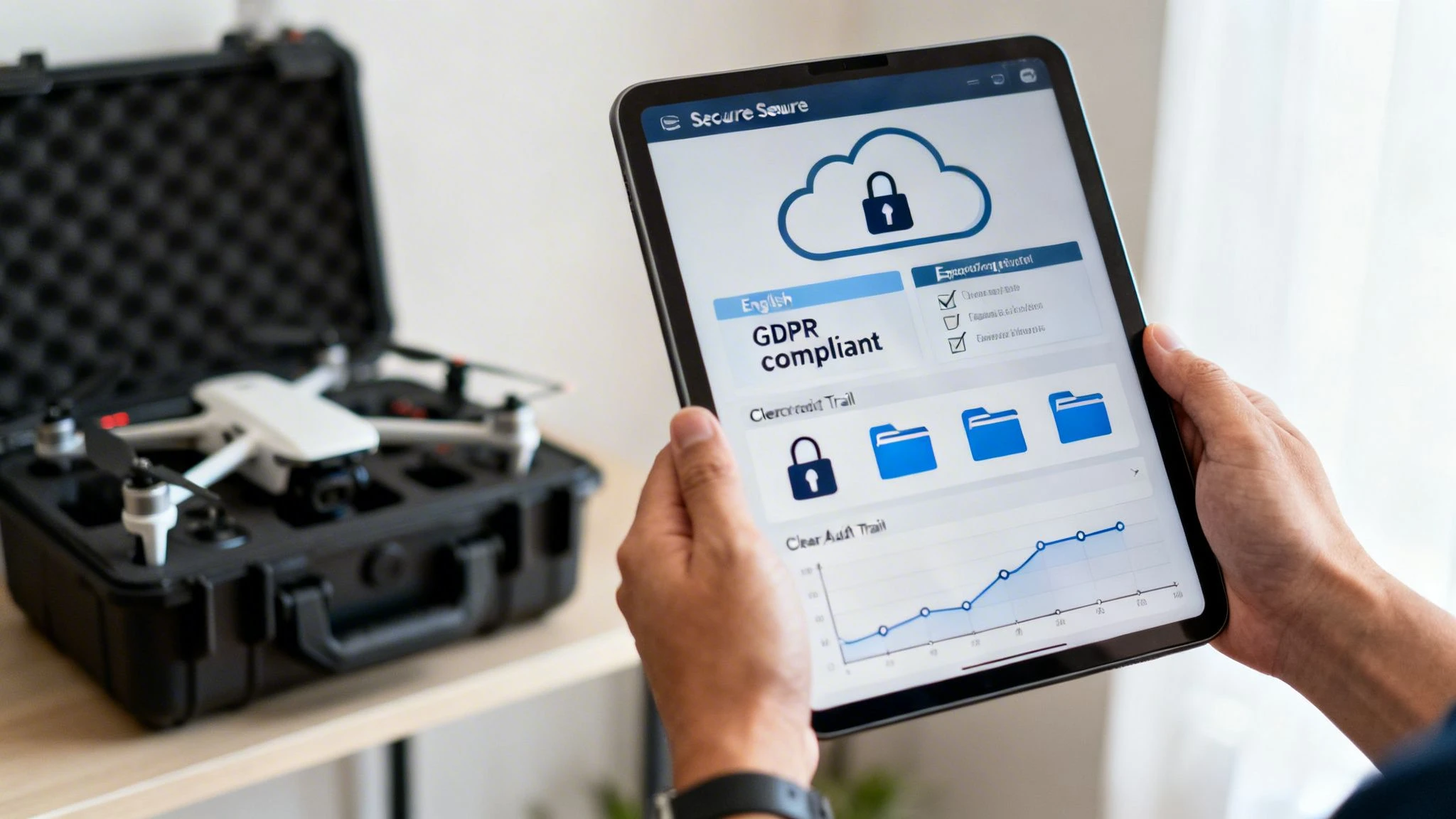
Navigating The Regulatory Landscape
Regulations like the General Data Protection Regulation (GDPR) in Europe have set a very high standard for data privacy. These rules are a big deal for drone operators because they apply to any data you gather that could identify a person, which is known as Personally Identifiable Information (PII). Think of a person's face in an aerial shot or their address in a project file.
Getting this wrong can lead to hefty fines and can seriously tarnish your professional reputation. The trick is to have a system in place that makes compliance a natural part of your workflow, not an afterthought. This is becoming even more critical as client expectations for security grow. In fact, North America is projected to make up about 45% of the global data analytics market by 2025. This means operators there will feel more pressure to offer transparent, secure data handling as a standard service. You can discover more insights about the data analytics market to stay ahead of these regional trends.
Implementing Core Security Best Practices
Securing your data isn't a one-and-done task; it’s a multi-layered strategy. It’s about putting a combination of proactive measures in place to protect data at every point in its journey. These practices are fundamental for reducing risk and showing clients and regulators you're doing your due diligence.
A few non-negotiable security practices include:
- Role-Based Access Controls: Make sure team members can only see the data they absolutely need for their job. A pilot doesn't need to view your company's financials, and an admin probably doesn't need to access raw client imagery.
- Data Encryption: Any sensitive data, whether it’s sitting on a hard drive or floating in the cloud, must be encrypted. Encryption turns the information into unreadable code, making it useless to anyone who gets unauthorized access.
- Secure Cloud Storage: Using a reputable cloud platform designed for business is far more secure than relying on local hard drives that can be easily lost, stolen, or damaged.
The ultimate goal is to create a clear, unbroken chain of custody for your data. From the moment it's collected to its final archival, you should be able to prove who accessed it, when, and why.
This is where having an all-in-one system like Dronedesk becomes so important. By centralizing every flight log, maintenance record, and pilot qualification in one secure place, you automatically build a strong audit trail. This makes it straightforward to prove compliance if the authorities come knocking. It's also worth getting familiar with guidelines like the NIST SP 800-88 for secure data sanitization to meet strict standards.
At the end of the day, building a secure and compliant operation isn't just about dodging fines; it’s about building a reputation for professionalism that clients will trust and rely on.
Alright, let's get down to business. All this theory about data is great, but it's useless until you put it into practice. This is your action plan for setting up a proper data analysis and management system using Dronedesk.
Think of it as your pre-flight checklist. Following these steps will build a solid foundation that turns Dronedesk from a simple logging tool into the central nervous system of your business, driving real growth through smart data.
Step 1: Set Up Your Core Assets
First things first, you need to get your operational fundamentals loaded into the system. This initial setup is what makes all your future data collection consistent and organised. If your data starts clean, it stays clean, which makes analysis a whole lot easier down the line.
- Load Your Fleet: Add every drone, battery, and major piece of kit into your fleet management dashboard. Don't skimp on the details—include purchase dates and serial numbers to create a complete asset registry from day one.
- Onboard Your Team: Create profiles for every pilot and crew member. Make sure to upload their certifications and track expiry dates. This automates your compliance monitoring and ensures everyone is qualified for the job at hand.
Once your assets and team are in place, Dronedesk starts connecting the dots between pilots, equipment, and jobs. This is the backbone of the structured database you'll need for any meaningful analysis.
This initial setup is your first big win in data management. It immediately pulls all your critical information into one place, getting rid of scattered spreadsheets and creating a single source of truth for your entire operation.
Step 2: Standardise Project Creation and Logging
Next up, you need to make sure every job follows a consistent pattern. When you create a new project in Dronedesk, use the same data fields for client info, site details, and mission objectives every single time. This uniformity is key to capturing the same crucial information for every job.
Then, you have to commit to using the flight logging feature for every single mission. Consistent logging is non-negotiable if you want reliable data. This simple habit populates your dashboard with the raw material you need to spot trends, calculate real job costs, and monitor performance over time.
Step 3: Explore Your Data and Find Your First Insight
Finally, it's time to dive into the reporting dashboard. Don't wait for a six-month review—start poking around now. Your goal is simple: find one actionable insight.
Maybe you'll spot your most-flown drone, signalling it's time to schedule its next maintenance check. Or perhaps you'll notice one client makes up 30% of your flight hours, which could be a perfect opportunity to offer them a retainer package. Finding that first insight proves the value of the system and builds momentum for making data-driven decisions a regular part of your business rhythm. This is where you start to build true operational intelligence.
Frequently Asked Questions
Got questions about handling all the data your drone operations generate? You're not alone. We'll get straight to the point and tackle some of the most common questions we hear from operators every day.
What Is The Best Way To Store Drone Data?
Stop juggling multiple hard drives and local computer folders right now. That approach creates "data silos"—isolated pockets of information that make it impossible to get a clear picture of your operations. The best way is to use a centralized, cloud-based system.
Think of a platform like Dronedesk as the single source of truth for your entire business. It brings all your flight logs, project media, and client records into one secure, searchable place. This doesn't just protect you from a crashed hard drive; it ensures your whole team is on the same page, working from the same data. It's the absolute foundation for any smart data strategy.
How Much Data Should I Keep For Compliance?
This can change depending on where you fly, but a solid rule of thumb is to keep your operational records for at least three to seven years. We're talking about flight logs, maintenance reports, pilot certificates, and risk assessments. Having a system that automatically archives this stuff is a lifesaver if an auditor ever comes knocking.
Failing to produce these records can lead to some hefty penalties. An organised digital archive means you can pull up any document you need in minutes, even years after you've closed the job.
How Can I Start Analyzing My Data Without Being A Data Scientist?
You definitely don't need a PhD in statistics to get started. The trick is to begin small and focus on a few key performance indicators (KPIs) that have a real impact on your bottom line.
- Track Flight Hours Per Pilot: This is great for managing workload and making sure no one is exceeding flight time limits.
- Monitor Maintenance Cycles: Keep an eye on the time between services for each drone. This helps you predict future costs and, more importantly, avoid unexpected downtime on a job.
- Calculate Revenue Per Project: It's a simple calculation, but it quickly shows you which services and clients are your most profitable.
A platform with a built-in reporting dashboard makes this easy, turning your raw numbers into simple charts and graphs you can actually understand. The goal isn't to build complex models—it's to spot trends, ask better questions, and make smarter decisions.
The demand for these capabilities is exploding. The U.S. data analytics market, which was estimated at $20.40 billion in 2025, is expected to skyrocket to $252.55 billion by 2035. This growth shows that analytics are no longer a "nice-to-have"; they're becoming a standard expectation. You can read the full research about the data analytics market trends for all the details.
How Do I Ensure My Client's Data Is Secure?
Securing client data isn't about one single thing; it's a layered approach. First, use role-based access controls so only the right people on your team can see sensitive info. Second, make sure all your data is encrypted, both when it's sitting on a server (at rest) and when it's being sent (in transit).
Finally, and this is a big one, tell your clients what you're doing. A simple line in your proposal explaining that you use a secure, compliant platform to manage their project builds incredible trust. It instantly sets you apart from competitors who don't think about it. Being transparent is the best way to give your clients peace of mind.
Ready to stop guessing and start making data-driven decisions? Dronedesk gives you the all-in-one platform you need to manage your fleet, team, and projects with confidence. Start your free trial today and see how Dronedesk can transform your operations.
 How to Prepare for the Drone Licence Test →
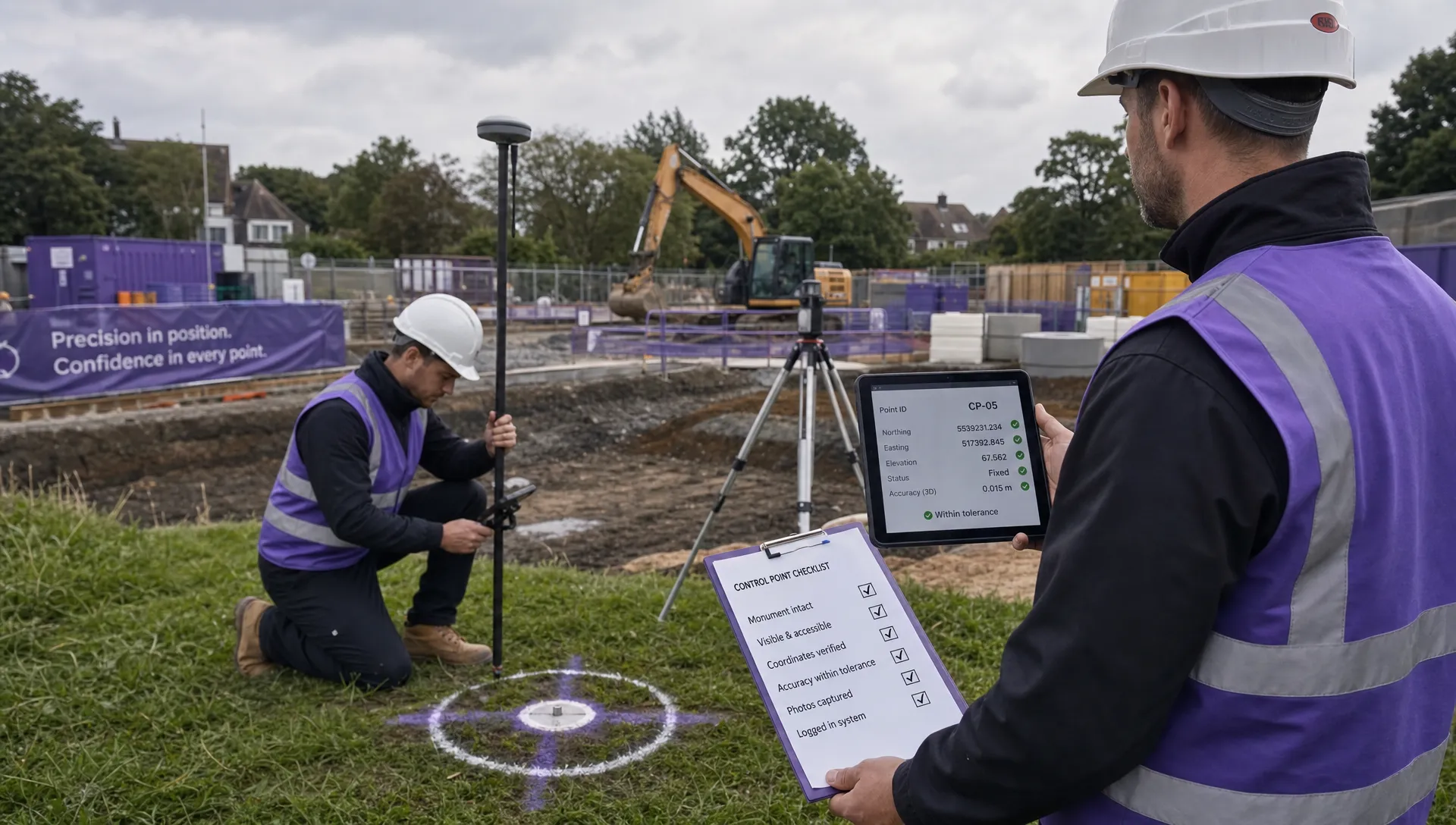 How to Choose a Drone Mapping Service for Your Project →
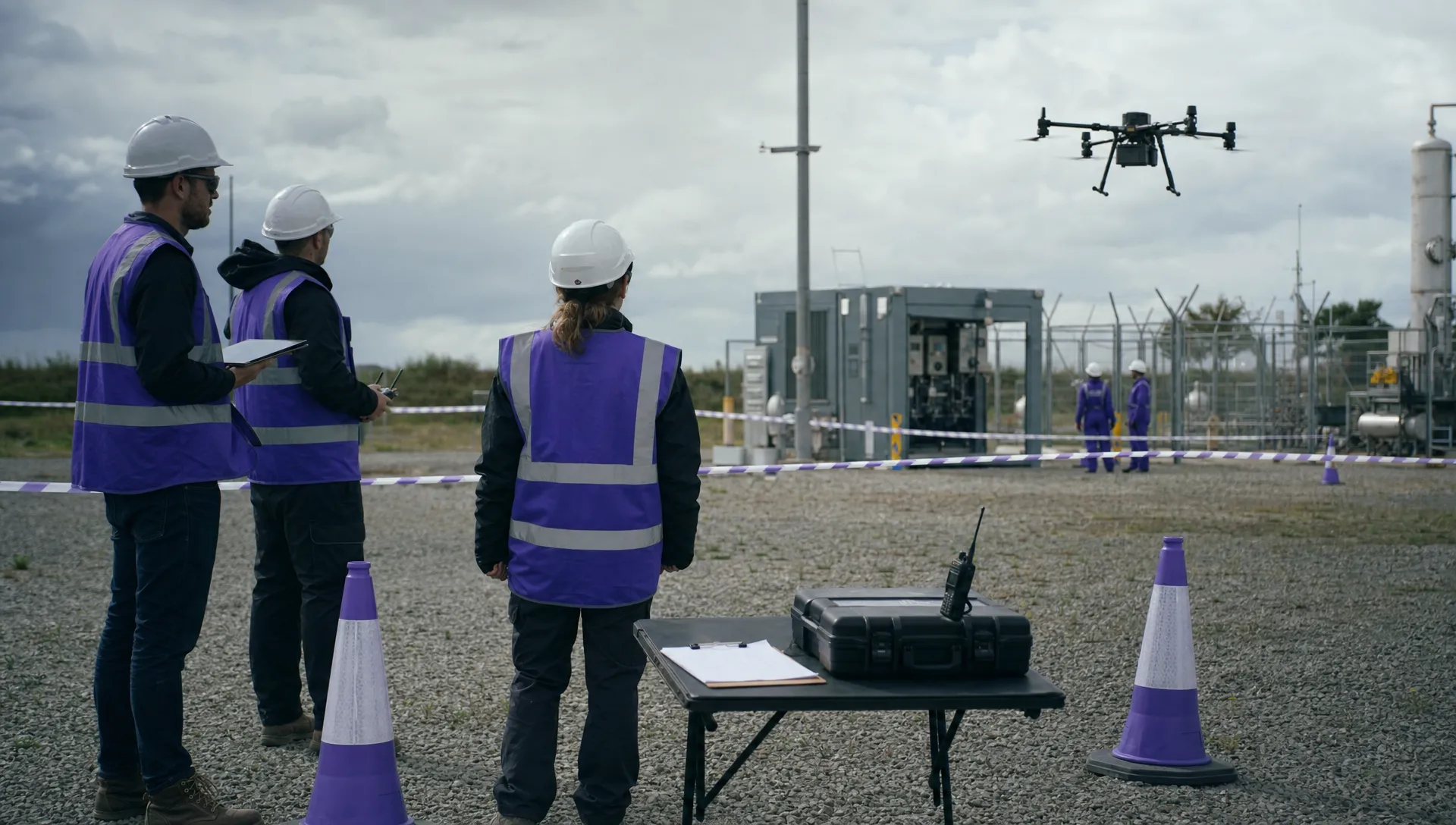 Drone Safety Rules That Every Commercial Team Needs →
 Airport Drone Rules: How to Plan Flights Without Surprises →
 FAA Part 107 Licence: Your Step-by-Step Application Guide →
 How to View DJI Flight Logs Online Safely →
 What Part 107 Covers Beyond the Pilot Certificate →
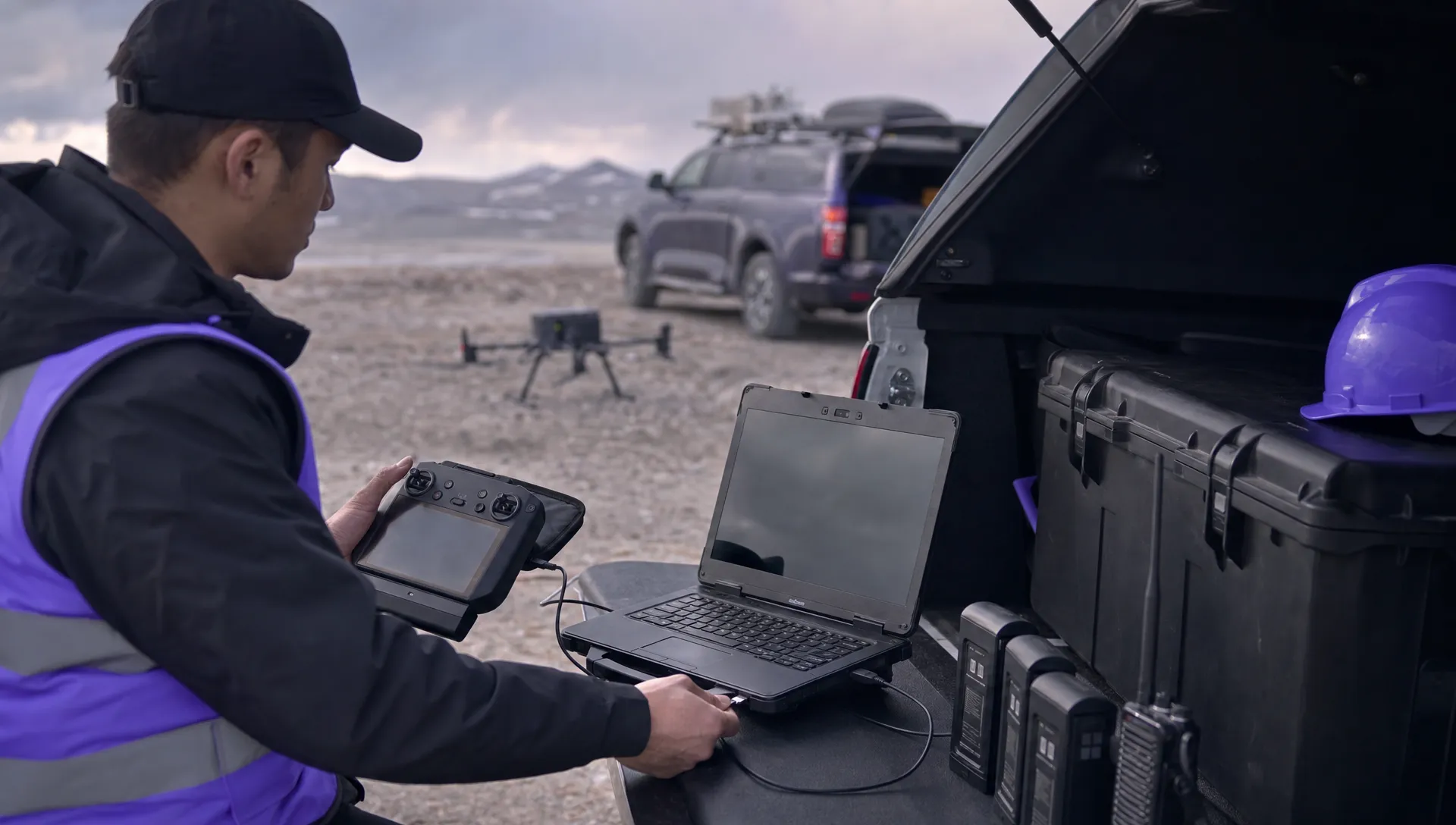 How to Download and Read a DJI Flight Log →
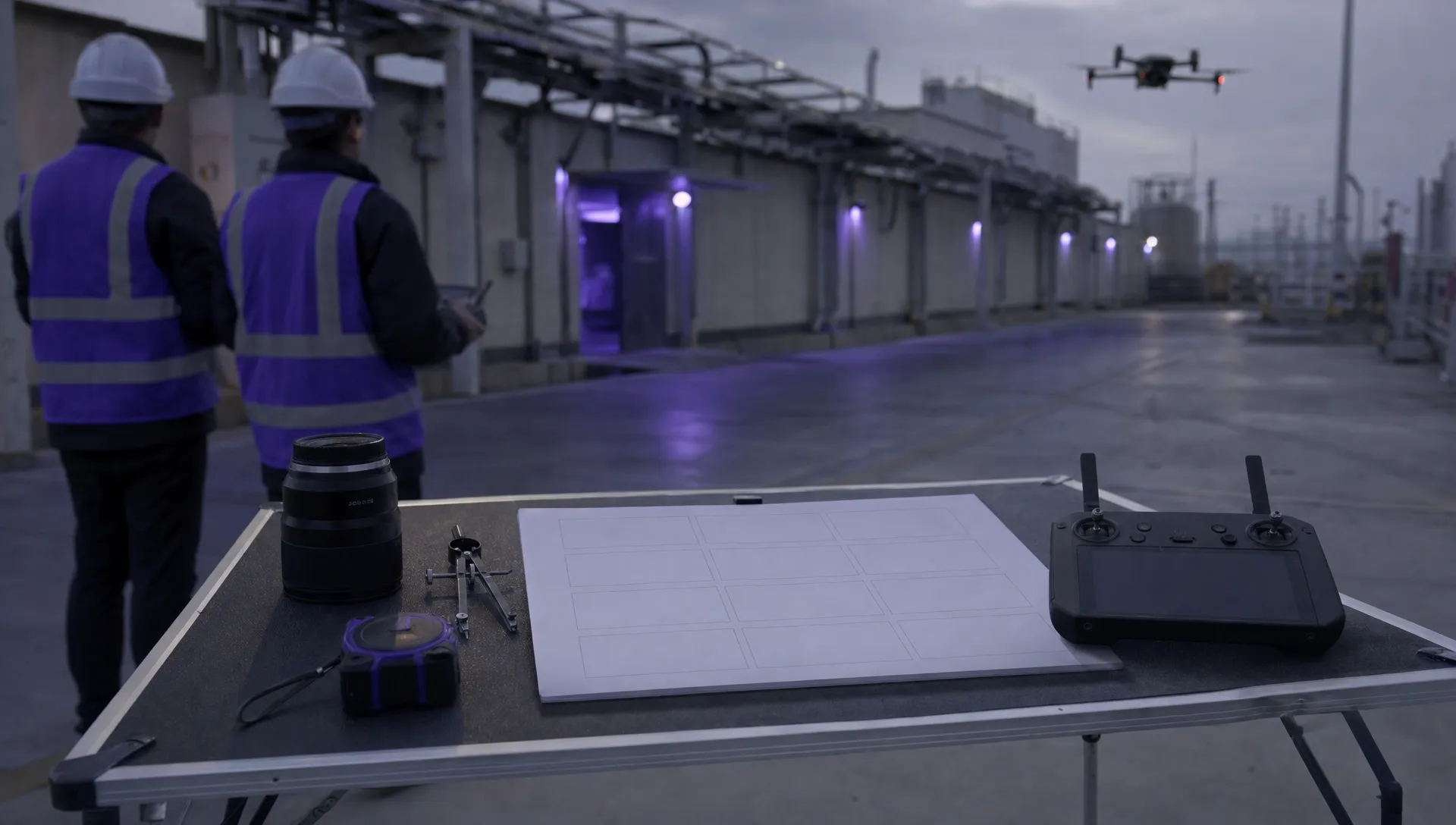 Drone Videography Planning Tips for Professional Crews →
 EU Drone Rules for Sub-250g Aircraft Explained →