
Drone Pilot Film: Your 2026 Career Guide
You roll onto set thinking the hard part is flying. Then the 1st AD asks when you can be wheels up, the DP wants to know if your path will cross the sun angle, production asks for proof of certification and insurance, and someone from sound wants to know how long the aircraft will be noisy over dialogue.
That’s the drone pilot film job.
A hobby pilot can launch, hover, and bring home a clean clip. A working aerial cinematographer has to fit into a machine that’s already moving. You’re there to solve a shot, keep the set safe, stay compliant, protect the schedule, and hand off footage without creating extra work for anyone else.
Opportunity is available. The market has grown fast enough that aerial work is no longer a novelty. It’s a standard production tool. But that also means expectations are higher. Directors assume you can fly. Producers assume you can manage risk. DPs assume you understand framing, movement, light, and lensing. If any one of those is missing, you become the person they stop calling.
Beyond the Sticks Becoming a True Aerial Cinematographer
A film set exposes weak spots fast.
The pilot who only thinks about stick control usually gets found out in the first hour. They can fly a smooth arc, but they can’t answer practical questions. How many takes before a battery swap? Can the move be repeated at the same speed? Is there a safer launch position that won’t put crew in your fallback path? Can you hold for lighting, then hit the move on cue?
The pilot who works consistently thinks differently. They arrive with a plan, not just a drone.
What production pays for
Production doesn’t hire you because drones are cool. They hire you because you can deliver a shot that used to be difficult, expensive, or impossible.
That shift has been massive. The global commercial drones market is projected for significant growth by 2029, and filming and photography were identified as the largest segment. In the US alone, over 316,000 drones were registered for commercial use with the FAA as of May 2022 (Adorama on drones in the film industry).
That tells you two things.
- The market is crowded: Being able to pilot isn't enough on its own.
- The market is professionalized: Clients expect repeatable process, not improvised flying.
The difference between pilot and production partner
A good on-set drone operator understands three layers at once:
- Flight layer: aircraft performance, battery state, wind behavior, safety margins
- Camera layer: movement, timing, shutter, horizon control, lens choice
- Production layer: call sheets, blocking, crew communication, reset time, approvals
Practical rule: If the crew has to stop and organize your operation for you, you’re not helping the set.
That’s why the strongest drone pilot film careers don’t come from flashy reels alone. They come from being easy to trust under pressure. When the set is behind, light is dropping, and the director wants one more pass, the professional stays calm, gives realistic options, and executes the cleanest version of the shot the conditions allow.
That’s the job.
The Foundation Roles Rules and Certifications
Crew call is in 45 minutes. The producer wants your COI. The 1st AD wants to know your setup time. The location manager says you can fly, but the airspace says something else. That gap, between being allowed on property and being cleared to operate, is where amateur drone work falls apart.
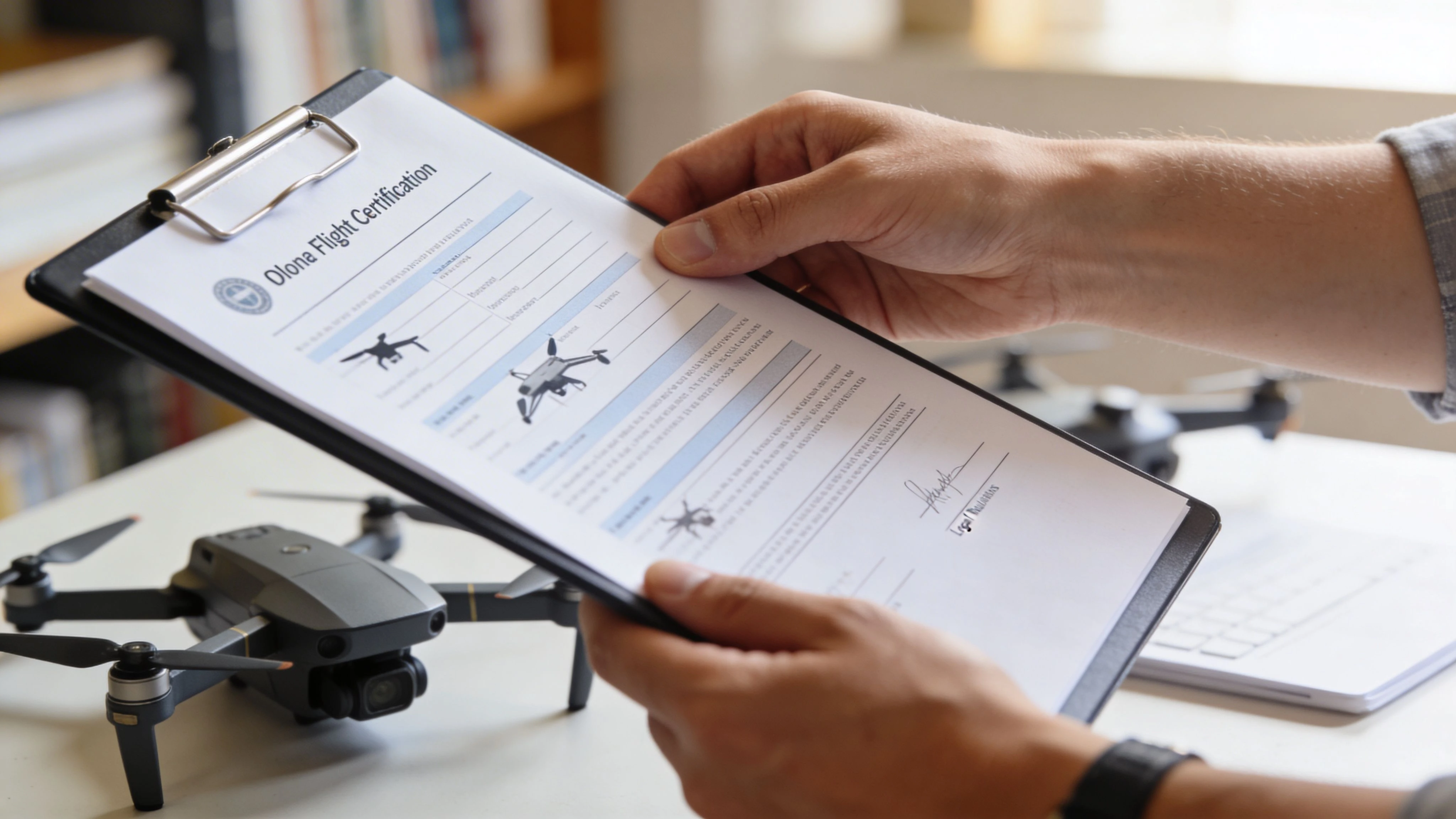
On a film set, certification and compliance are not side paperwork. They are part of the job. If you are checking controlled airspace at the van door or digging through email for insurance documents while the crew waits, you are already creating friction.
Start with certification and current legal knowledge
In the US, commercial film work usually starts under Part 107. Outside the US, the local equivalent matters just as much. The card gets you in the door. Current operating knowledge keeps you employable.
The FAA continues to publish enforcement actions and civil penalties for unsafe or unauthorized operations through its drone enforcement and compliance actions pages. Production companies pay attention to that risk. So do agencies, line producers, and insurers.
Strong operators build a repeatable system around four checks:
- Certification status: Keep credentials current and easy to send.
- Airspace review: Check restrictions before the tech scout or shoot day, then confirm again before launch.
- Permission workflow: Separate property permission from flight authorization. They are different approvals with different consequences.
- Set-specific risk review: Assess crew positions, vehicle movement, reflective surfaces, RF interference, weather shifts, and emergency landing options.
Pilots who are still building that foundation should start with this guide on becoming a commercial drone pilot.
Insurance is part of your craft
A lot of newer pilots focus on prop guards and forget the documents that protect the job.
For film work, insurance has to match the work you take. A small branded shoot, a narrative set, an event, and vehicle work all create different exposure. Producers want a simple answer to one question. If something goes wrong, does your coverage respond cleanly or does the problem land on them?
Keep proof ready. Keep it current. Make sure the named operator, aircraft, and use case match the job you are accepting.
Know the set hierarchy
Good flying does not save poor set etiquette.
A drone operator serves the shot through a chain of communication. Creative direction may come from the director or DP. The pace of the day usually runs through the 1st AD. Budget, paperwork, and liability concerns often sit with the producer or production manager. If you freelance long enough, you learn that many avoidable problems start with speaking to the wrong person at the wrong time.
Here’s the practical version:
| Role | What they care about from you |
|---|---|
| Director | Whether the shot supports story and performance |
| DP | Framing, movement, light, lens behavior, repeatability |
| 1st AD | Timing, safety, set coordination, resets, noise, delays |
| Producer or production manager | Paperwork, insurance, cost exposure, reliability |
| DIT or media team | Clean card handoff, file clarity, metadata, workflow discipline |
This is also where a lot of capable pilots get stuck. They can fly. They cannot manage approvals, communicate timing, or keep documents organized under pressure. That is the gap between a skilled operator and a production partner. It is also why many working pilots rely on management systems like Dronedesk to keep permissions, aircraft records, crew details, and flight plans in one place instead of scattered across texts, folders, and inboxes.
What works on a real set
The operators who get rehired are predictable in the right ways.
- Check in before unpacking: Let production know you are on site, where you plan to stage, and how long you need.
- Speak in operational terms: Give battery windows, reset times, noise impact, and realistic shot counts.
- Push back cleanly: If the requested move is unsafe or unrealistic, offer the closest safe option that preserves the intent.
- Document everything: Certifications, permissions, insurance, maintenance status, and flight logs should be easy to produce without a scramble.
Your paperwork affects whether people trust you with pressure, money, and time.
What doesn’t work
Certain habits burn trust fast:
- Freestyling near crew: Set work is not the place to test ideas in live airspace.
- Using vague language: “I think it should be okay” tells the AD and producer you do not have control of the operation.
- Confusing location access with airspace approval: A property owner can say yes and you can still be grounded.
- Treating compliance as admin clutter: On paid shoots, compliance is operational control.
A sustainable drone pilot film career starts with being easy to clear, easy to insure, and easy to work with. Producers remember the operator who sends the paperwork fast, gives accurate timing, and keeps the day moving. DPs remember the one who understands the image. ADs remember the one who does not create preventable problems.
Assembling Your Professional Film Drone Kit
Your kit should solve production problems, not advertise your shopping habits.
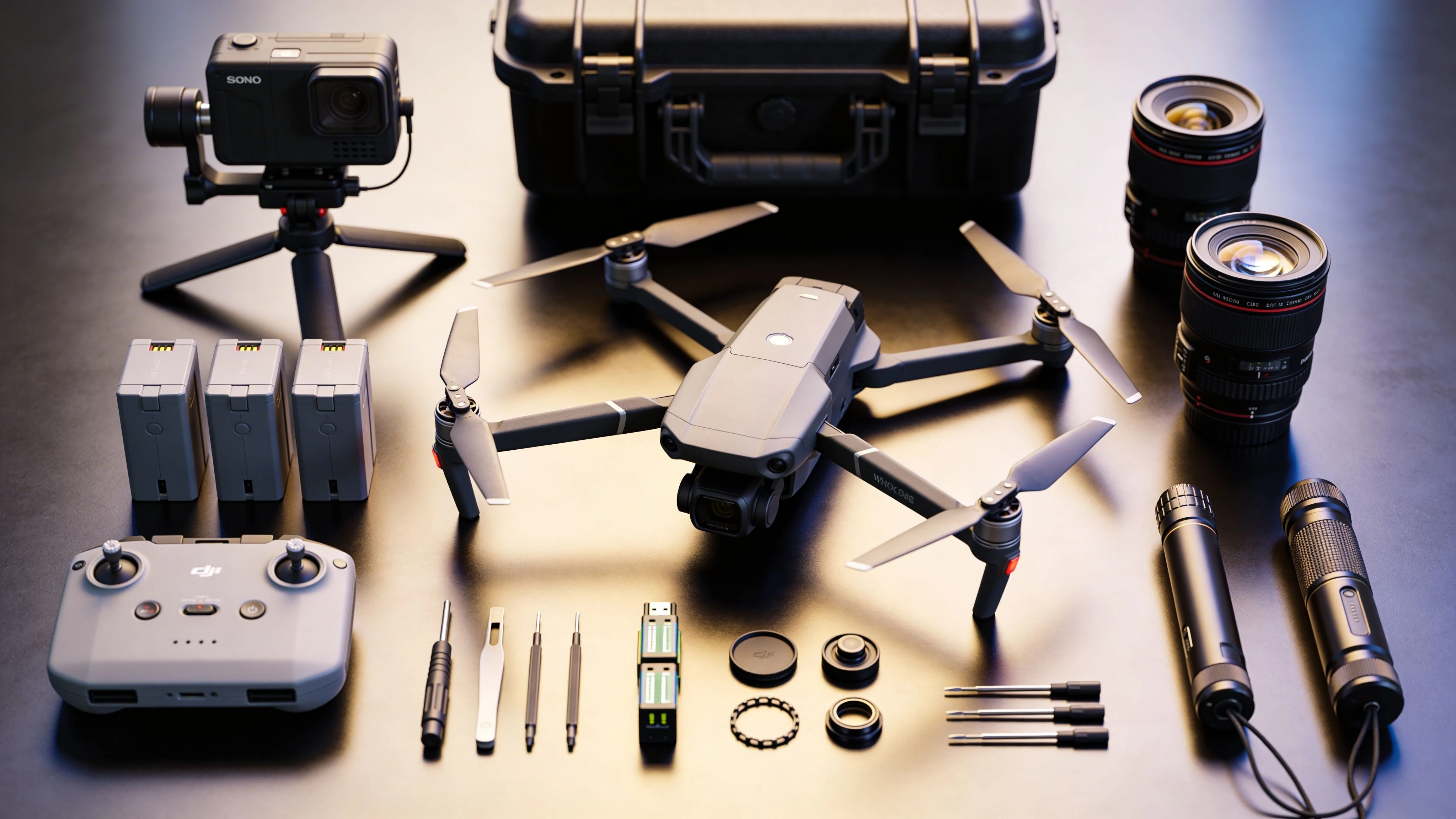
A lot of pilots build backwards. They buy for headline specs, then discover the primary weak point is battery rotation, media handling, monitoring, or whether the aircraft can repeat the same move without drift and fuss. Film work punishes that mistake.
Choose aircraft by job type
One aircraft rarely covers every useful production need.
For practical purposes, your film kit usually falls into a few categories:
- Main cinema platform: built for stable, controlled work where image quality and dependable motion matter more than aggression
- Compact production drone: fast to deploy, easier to move between setups, useful when the schedule is tight
- FPV platform: used for speed, proximity, transitions, and action-driven movement
- Backup aircraft: not glamorous, but often the difference between saving and losing the day
The wrong move is trying to force one setup into every shot. Heavy, deliberate scenic work and tight dynamic passes ask different things of the aircraft and the pilot.
For a useful gear overview by use case, this cinematography drone guide is worth reviewing.
Camera priorities that matter
Resolution gets too much attention. On set, people notice other things first.
They notice whether your footage holds together in mixed light. They notice whether highlights clip harshly. They notice whether the motion looks natural and whether the image cuts well with the ground cameras.
Prioritize these instead:
- Dynamic range: helps when bright sky and dark terrain live in the same frame
- Color behavior: footage needs to grade cleanly with the rest of the project
- Reliable codec options: if post hates your files, your spec sheet won’t save you
- Gimbal stability: tiny horizon issues become obvious on large displays
The accessories that separate pros from hobbyists
A professional drone kit isn’t just aircraft plus controller. It’s the support gear that keeps the operation calm.
Filters and exposure control
You need solid ND options. Polarization can help in some scenes, but don’t treat it like a default. Reflections, sky tone, and angle to the sun all change fast in aerial work.
If your shutter is too fast, movement starts to look brittle. If your exposure choices force you into ugly compromises, the image stops feeling cinematic.
Battery management
Good battery management is a production skill.
Label packs clearly. Track cycles and health. Separate ready, used, and suspect batteries. Keep charging organized so no one has to ask which pack is safe to fly.
A messy battery system creates avoidable mistakes. On a long day, avoidable mistakes become expensive mistakes.
Monitoring and viewing
Directors and DPs make better decisions when they can see what the aircraft sees. That means your monitoring setup should be fast, readable, and not held together with adapters you barely trust.
Bring what you need for:
- Operator view
- Spotter or crew coordination
- Client or creative viewing when appropriate
Build for repeatability, not just performance
The best film kit is the one you can run smoothly under time pressure.
A fragile setup with amazing image quality is still a weak production tool if it takes too long to prep, balance, cool, charge, or troubleshoot.
That’s why experienced operators lean toward systems they can deploy cleanly, reset quickly, and maintain without drama. On a real job, the ability to repeat a move three times the same way matters more than owning a technically impressive rig you only trust in perfect conditions.
Use the gear that lets you stay calm. That usually means fewer points of failure, cleaner case organization, consistent media handling, and a backup plan for the one component most likely to fail on the day.
Mastering Cinematic Drone Shots and Techniques
Most drone footage looks like drone footage. That’s the problem.
A 2025 survey found that 65% of professional videographers struggle to apply Hollywood-inspired aerial techniques, and only 15% of typical drone footage makes the final cut due to generic execution (survey summary on cinematic aerial techniques). That lines up with what many editors and DPs already know. Plenty of footage is flyable. Much less is usable.
Start with movement that has a reason
A cinematic drone shot needs intent. If the camera moves just because it can, the shot usually gets cut.
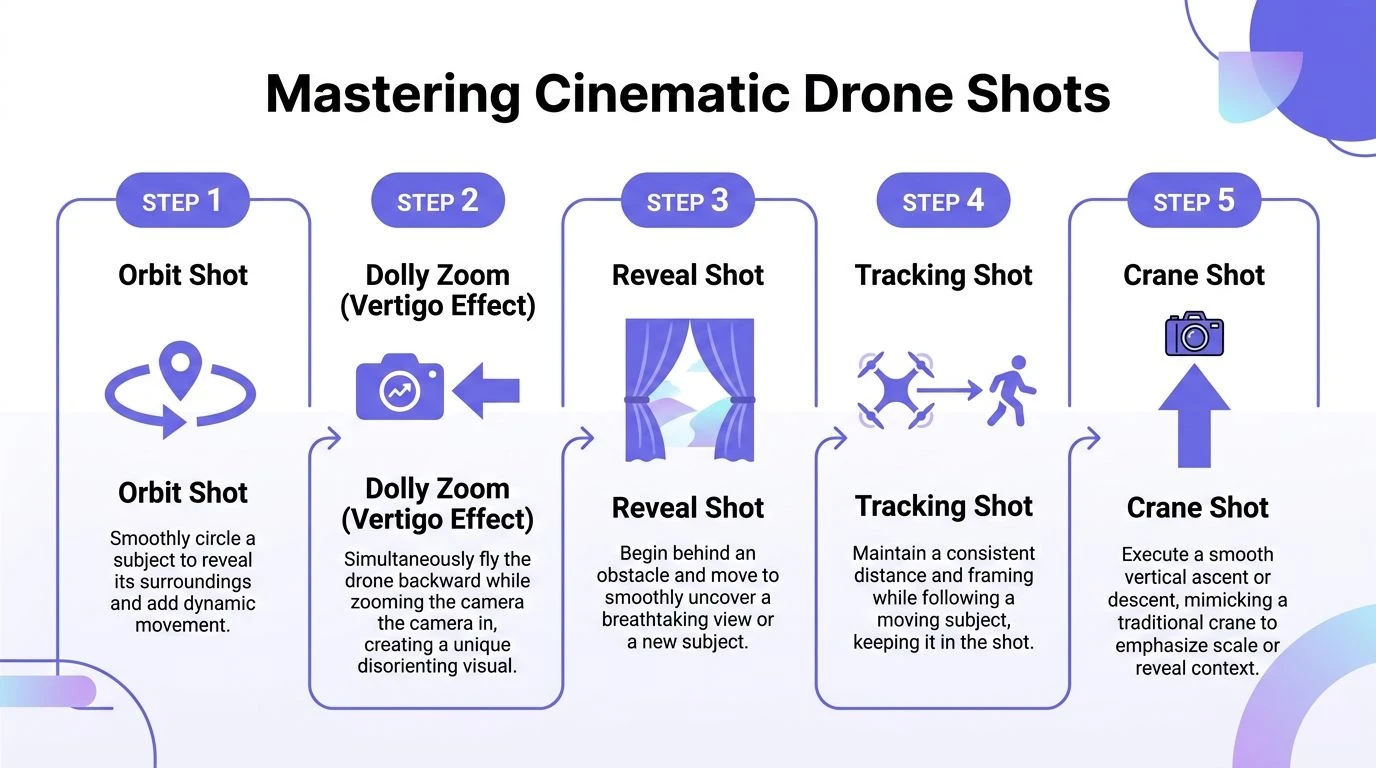
Three moves carry a lot of professional work.
The slow reveal
Use foreground to hide the subject, then uncover it with controlled motion.
This works well when a director wants scale, tension, or a sense of discovery. Trees, walls, ridgelines, door frames, and architectural edges all give you natural masks. The reveal only works if the pace is restrained. Push too fast and it feels like a demo reel, not a film shot.
The orbit
An orbit gives context without feeling static. It’s useful for buildings, vehicles, talent marks, and location opens.
The mistake is orbiting with no subject discipline. Keep the center consistent. Watch your background. If the horizon wobbles or the subject drifts in frame, the shot loses authority quickly.
The parallax track
Parallax is one of the cleanest ways to add depth. You track laterally while maintaining a meaningful foreground-middle-background relationship.
Many pilots level up by mastering this. The move doesn’t have to be dramatic. It has to be intentional. A small amount of layered motion often feels more expensive than a big sweeping move with no visual structure.
Field note: If you can explain what the foreground is doing for the shot, you’re more likely to be designing a useful move instead of just traveling through space.
Camera settings matter more than most pilots think
Bad settings can ruin a good move.
For cinematic motion, the 180-degree shutter rule is the baseline. The FPV production workflow outlined by Extreme Aerial Productions calls out 180-degree shutter speeds, such as 1/60s at 30fps, to preserve natural motion blur and avoid jittery footage (FPV drone videography workflow).
That principle applies well beyond FPV. If your shutter is too high, movement gets staccato and harsh. It may look sharp on your controller. It often looks wrong in the edit.
Keep an eye on:
- Frame rate and shutter relationship: protect motion blur
- White balance consistency: don’t let auto modes shift mid-shot
- Profile choice: give post room, but don’t hand them unusable noise
- Horizon and tilt discipline: small errors read as amateur immediately
A practical progression for better flying
Pilots improve faster when they stop trying to master everything at once.
A clean progression looks like this:
-
Stabilized practice first Build orientation and smooth starts and stops. If takeoffs, line holding, and braking are inconsistent, cinematic work won’t be consistent either.
-
Add cinematic mode work Use softer response to learn timing, framing, and smoother arcs.
-
Move into manual or acro where it fits For dynamic FPV sequences, manual control opens up dives, close passes, and aggressive transitions. But only once the line is planned. Unplanned aggression rarely survives client review.
-
Storyboard repeatable moves Film sets value consistency. A shot you can repeat is worth more than a shot you improvised once.
Adapting big-screen style to smaller jobs
You don’t need a blockbuster budget to borrow blockbuster discipline.
What works on smaller shoots is simpler: one strong move, one clear subject, controlled speed, clean light, and a path that doesn’t call attention to itself. The trick is restraint. Many lower-budget projects get better results by using fewer moves and executing them well.
Common mistakes on smaller productions:
- Flying too high too soon: the subject becomes generic
- Overusing speed: energy replaces storytelling
- Ignoring foreground: depth disappears
- Changing direction mid-move: the shot feels indecisive
The drone pilot film operator clients trust is usually the one who can say, “We don’t need five moves here. We need one good one.”
The On-Set Workflow From Briefing to Debriefing
A strong set day feels organized long before the first take.
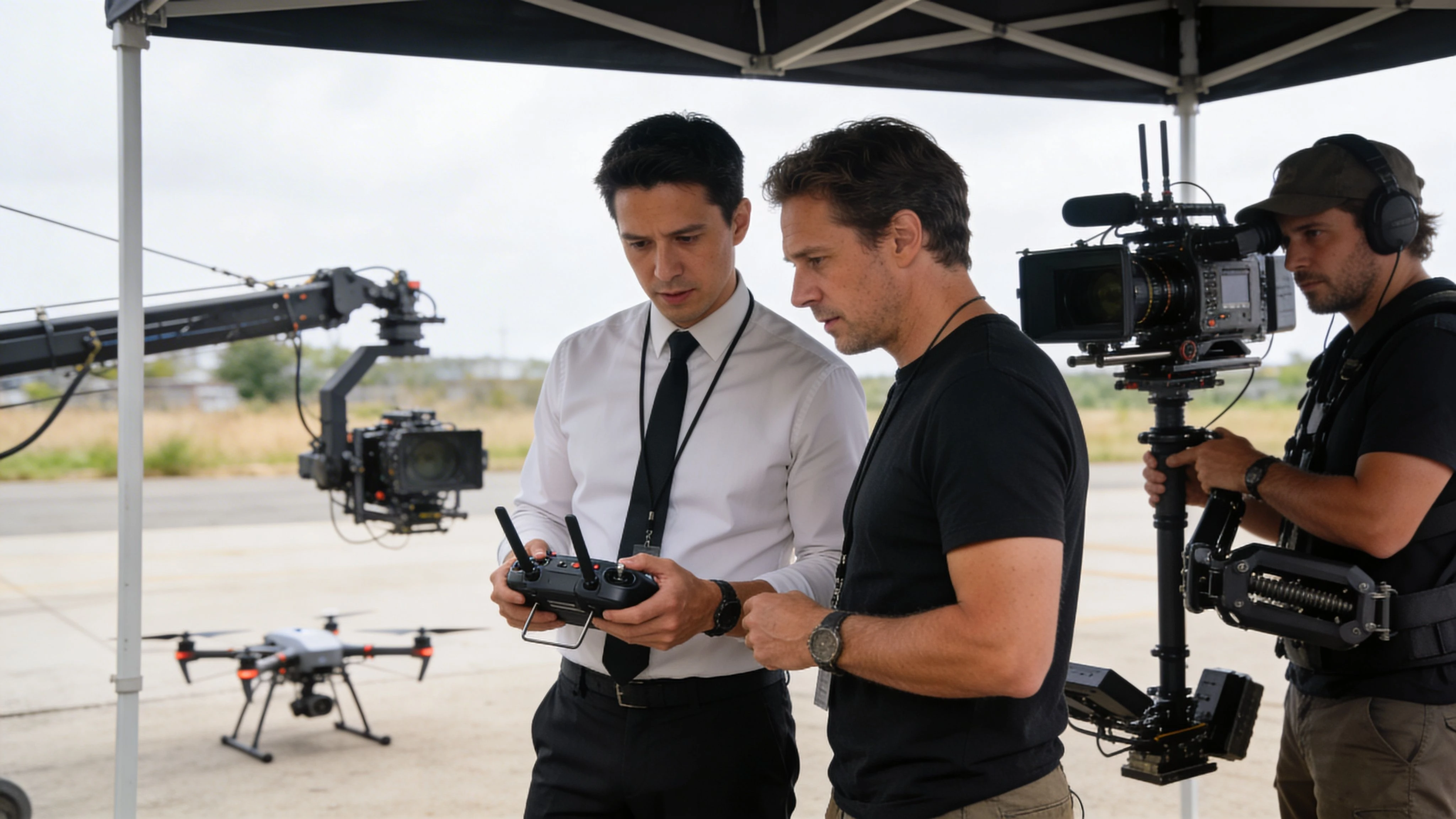
When I watch less experienced pilots struggle on set, it’s rarely because they can’t fly. It’s because they arrive in pilot mode instead of production mode. They’re thinking about launch. The crew is thinking about timing, safety, blocking, glare, sound, and whether the shot can be turned around fast enough to stay on schedule.
Arrival and alignment
Get in early enough that nobody feels rushed by your presence.
Your first important conversation is usually not creative. It’s operational. Check in with the 1st AD or the person production has designated. Confirm where you can stage, where launch and recovery can happen, and what other departments need to know before you go active.
Then speak to the DP or director in their language. Ask about the intention of the shot, not just the path of the drone.
Useful questions include:
- What does this shot need to communicate
- What can’t be in frame
- Do you want this to feel observational, dramatic, or kinetic
- Is the endpoint more important than the move
For production teams building service packages around this kind of work, drone videography service planning helps clarify how clients think about deliverables.
The safety briefing that helps
A safety briefing shouldn’t sound theatrical. It should be short, specific, and useful.
Tell people what matters:
| Briefing item | What crew needs to know |
|---|---|
| Flight area | Where the aircraft will operate |
| Exclusion zone | Where crew and talent should not drift |
| Start and stop cues | How the set knows you’re active or clear |
| Emergency action | What happens if you abort or lose the shot |
| Noise window | When dialogue or sync sound may be affected |
If there’s a spotter, make that clear. If there’s an emergency landing area, point to it. If a move comes close to practical lighting, vehicles, reflective glass, or smoke effects, say it plainly before the take.
The safest operators don’t sound nervous. They sound clear.
During the take
Once the set turns over to the shot, your job is to reduce surprises.
That means no experimental line changes unless the agreed plan changes. If the move won’t work as discussed, say so before takeoff. If wind or light has changed enough to affect the result, say that too.
Good on-set communication is brief:
- Ready in thirty seconds
- Need one battery swap
- Can do that move, but not over crew
- Recommend a lower line to hold the background
That kind of language builds trust because it helps other departments make decisions fast.
After landing
A lot of professional value shows up after the motors stop.
Confirm whether the shot is complete. If it isn’t, propose the next realistic adjustment. Don’t disappear into your case while the director is still deciding. Stay available, but not intrusive.
Then handle the boring part cleanly:
- Media handoff: cards or files go where production expects them
- Flight notes: log what was flown and any issues that matter later
- Battery reset: rotate and prep without cluttering the set
- Crew debrief: flag anything that changes the next setup
Organized pilots pull ahead here. They leave behind usable footage, clear records, and no confusion.
Streamlining Operations with Professional Management
A producer calls at 6 p.m. for a dawn shoot. The location changes twice before wrap. Airspace needs checking, batteries need tracking, and production wants paperwork they can forward to a client without cleaning it up first. Plenty of pilots can fly that job. Fewer can run it properly.
That gap matters.
The pilots who stay busy in film build repeatable systems around the flying. Skill in the air gets attention. Clean planning, records, and communication get repeat bookings.
Poor admin causes expensive problems fast. A missing permission, an outdated maintenance note, a battery issue nobody logged, or a shot list that only exists in your head can stall a setup and put your name in the wrong kind of production chat. On a film job, that is rarely treated as a small mistake.
What professional operations management needs to cover
A usable backend for drone film work has to support the whole job, not just legal minimums.
It should cover:
- Job planning: locations, call times, client notes, crew contacts, deliverables
- Airspace review: restrictions, nearby hazards, local sensitivities, access limits
- Fleet status: aircraft readiness, maintenance history, firmware status, battery health
- Flight logging: accurate records tied to the actual production day
- Documents: permissions, risk notes, insurance details, reports production may request later
If you still run jobs from scattered notes, screenshots, and memory, you can survive on small shoots. It gets messy as soon as the days become tighter, the clients bigger, or the team less forgiving.
Why platforms matter on set
A management platform will not make your footage better. It will make your operation easier to trust.
That is the difference clients remember. Production does not only judge the final shot. They judge whether you showed up prepared, answered quickly, kept records straight, and solved admin without dragging them into it.
Tools like Dronedesk help handle flight planning, logging, airspace and proximity checks, team coordination, fleet records, and DJI data syncing in one place. Used well, that cuts down on manual admin and gives you cleaner records when a producer, PM, or client asks for documentation after the shoot.
If you want production to treat you like a department, your paperwork has to look like one.
A written shot plan saves time twice
It saves time before takeoff, and it saves time later when the schedule slips and somebody asks what still needs to be flown.
Here is a simple format that holds up on real jobs.
| Scene/Shot # | Shot Description | Drone/Lens | Movement Type (e.g., Orbit, Reveal) | Altitude (AGL) | Safety Notes |
|---|---|---|---|---|---|
| 1A | Opening pass over road toward house | Main production drone / wide | Reveal | As planned for the location | Keep crew clear of fallback path |
| 2C | Follow vehicle through bend | Compact drone / standard | Tracking | As planned for the location | Confirm road lockup and reset point |
| 3B | Rise from behind wall to courtyard | Main production drone / wide | Crane | As planned for the location | Watch reflective windows and extras position |
It does not need pretty formatting. It needs to be clear enough that you, the AD, and the client can all read the same plan and know what is happening.
What changes once your operation is organized
The benefit is not abstract. It shows up in the parts of the day that usually go wrong.
- Fewer missed details: because the process lives in one visible system
- Faster producer replies: because documents are ready to send
- Better repeatability: because previous jobs leave a usable record
- Less set friction: because prep happened before wheels up
Pilots often focus on control inputs, camera moves, and reel footage. The operators who build careers pay equal attention to records, planning, and client handling. That is how you close the gap between being good with a drone and being valuable on a film set.
Your Next Steps in Aerial Cinematography
The path is straightforward, even if the work isn’t easy.
Learn the rules well enough that compliance feels normal, not annoying. Build a kit that supports repeatable production work. Practice movements that serve story instead of showing off control inputs. On set, communicate like someone who understands timing, hierarchy, and risk. Off set, keep records like someone planning to stay in business.
That combination is what turns a pilot into a production partner.
Your reel still matters. So does your eye. But in drone pilot film work, the people who build careers are the ones who make the day easier for everyone around them. They protect the schedule, protect the client, and protect the shot.
Keep practicing with intent. Build a showreel that proves control and restraint. Meet producers, line producers, directors, DPs, and editors. Ask what makes drone footage usable in their workflow, then adapt. That feedback is worth more than another random sunset clip.
When your flying, planning, and client handling all start reinforcing each other, the work changes. You stop being the person with a drone. You become the person production trusts to solve an aerial problem properly.
If you want a cleaner operational backbone behind your aerial work, Dronedesk gives you one place to handle planning, logging, airspace awareness, fleet records, and team coordination so you can spend less time chasing admin and more time focused on the shot.
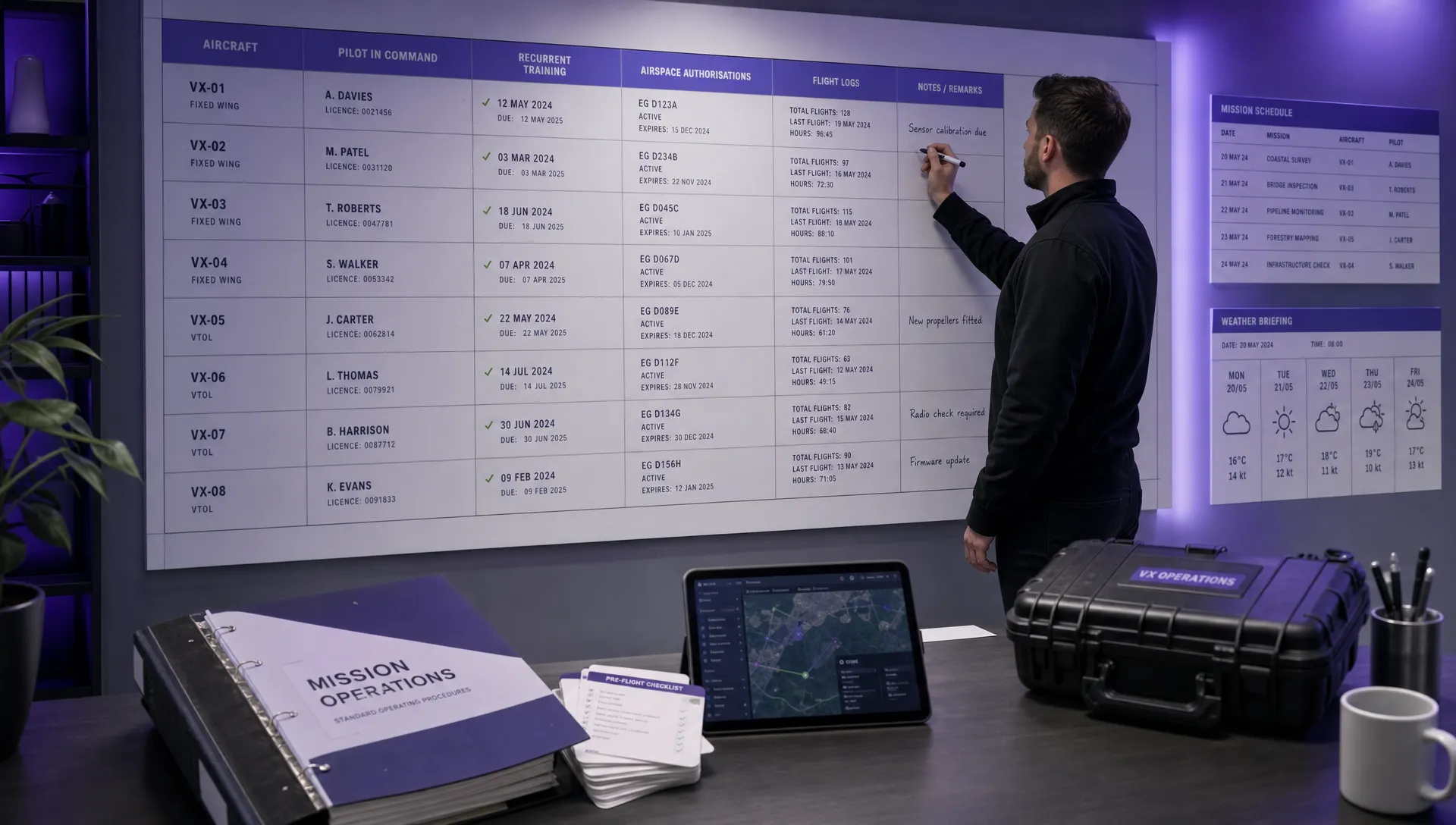 FAA Drone Licence Requirements for Commercial Pilots →
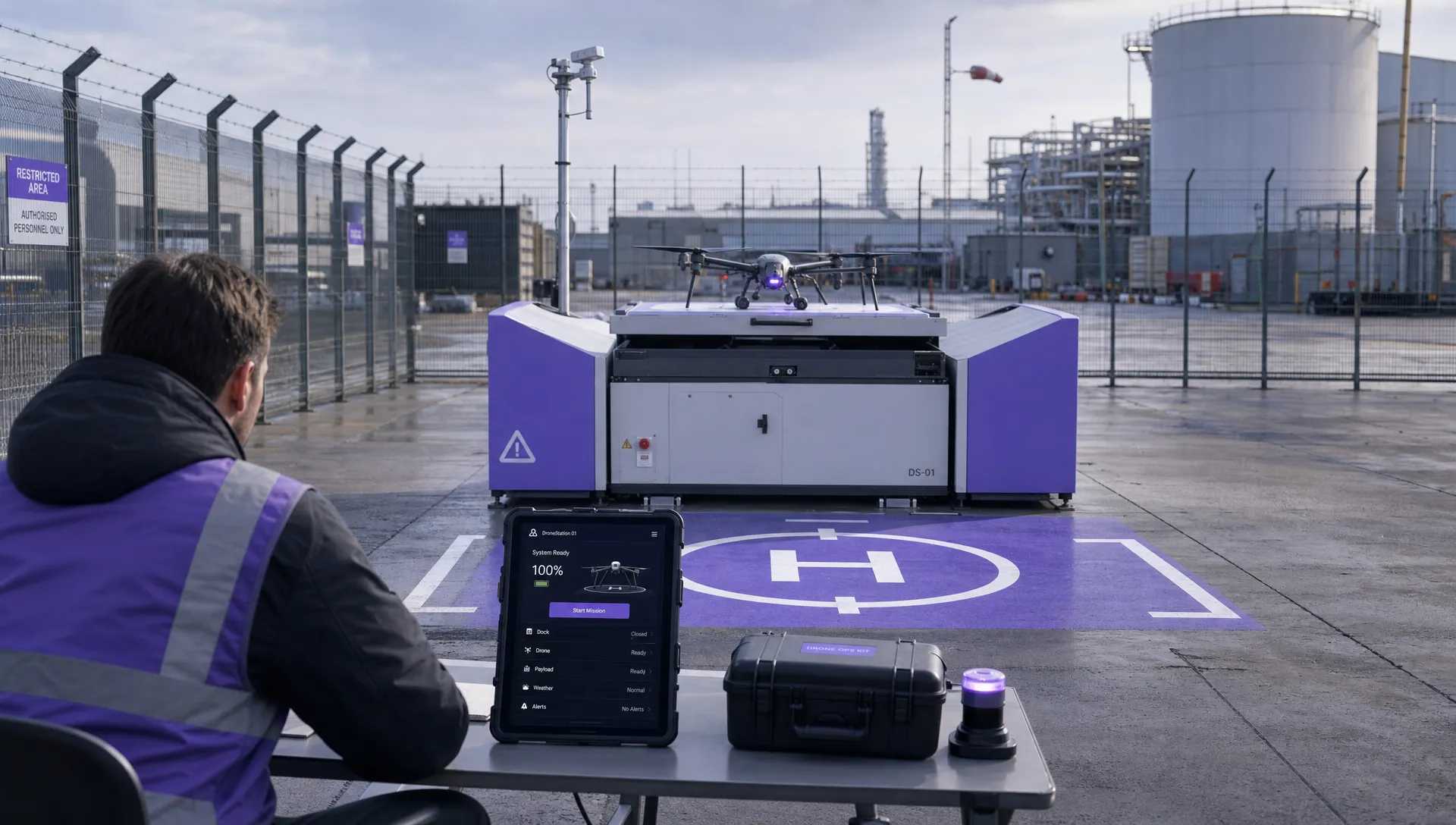 FAA BVLOS Waivers Granted: What Successful Cases Show →
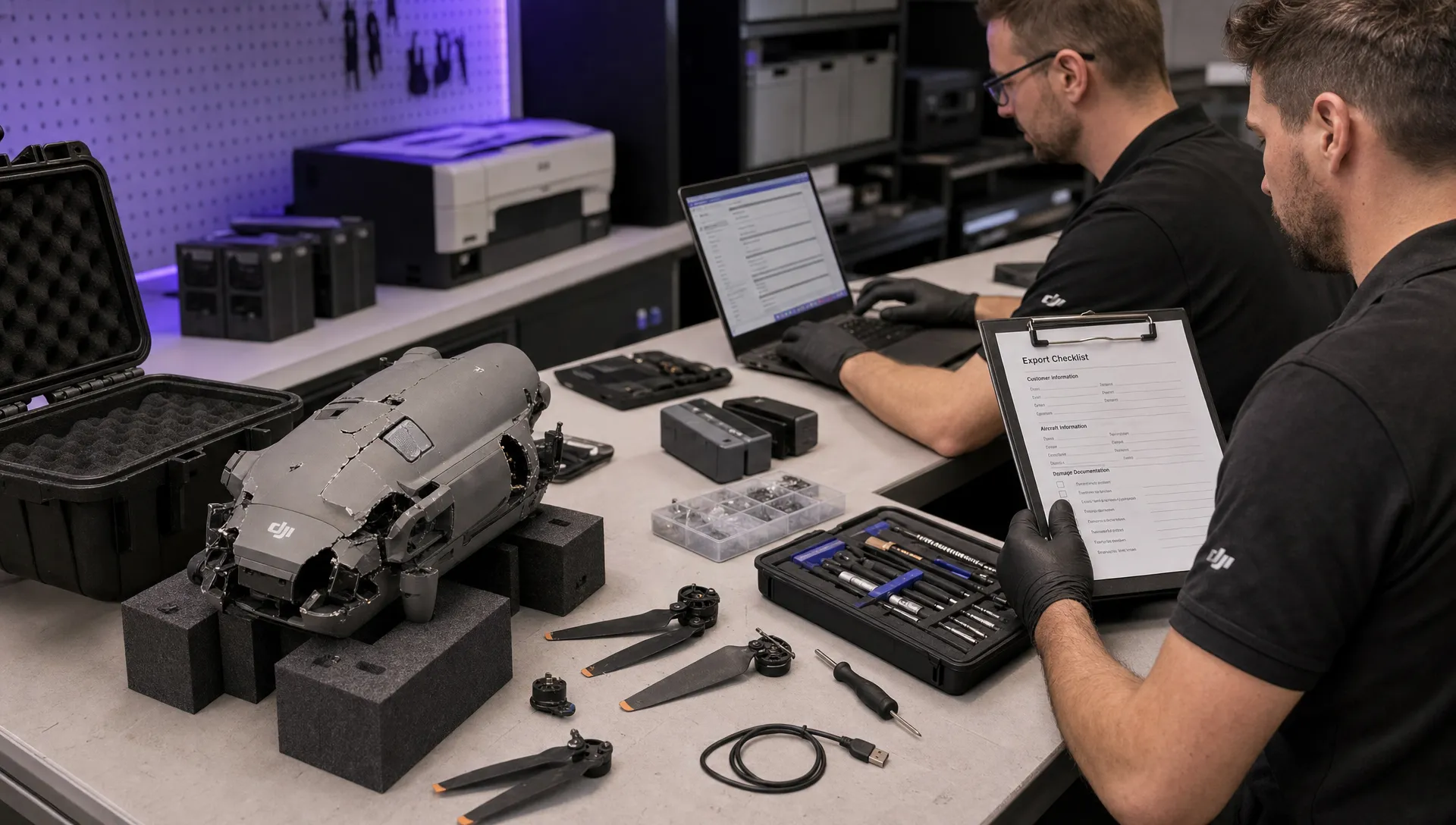 How to Export DJI Flight Logs for Incident Reviews →
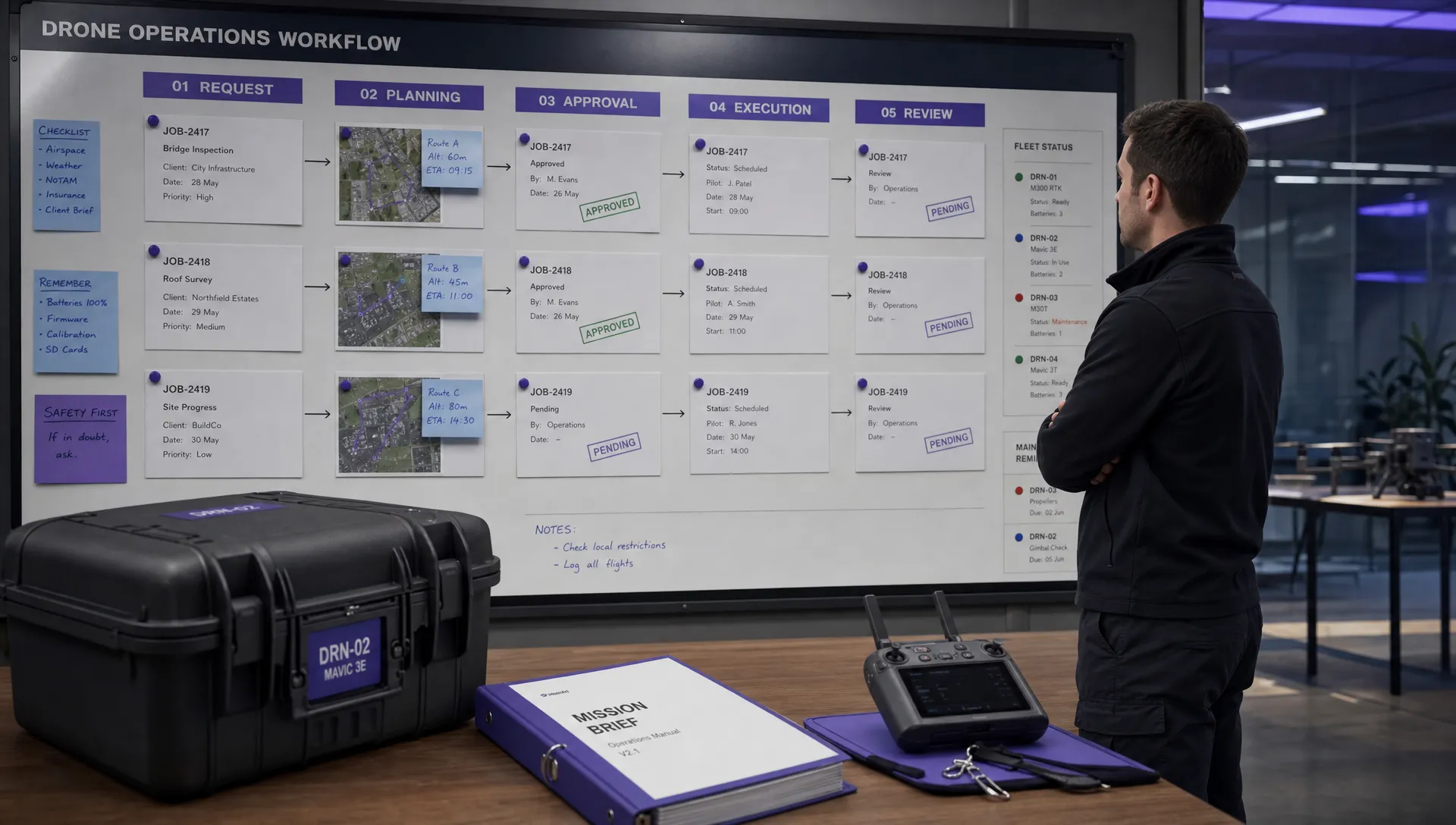 Drone Safety and Legal Duties for Business Operations →
 EASA Drone Regulations: Open, Specific and Certified Categories →
 What the BVLOS ARC Report Means for UAS Operators →
 Free Drone Pre-Flight Checklist for Commercial Missions →
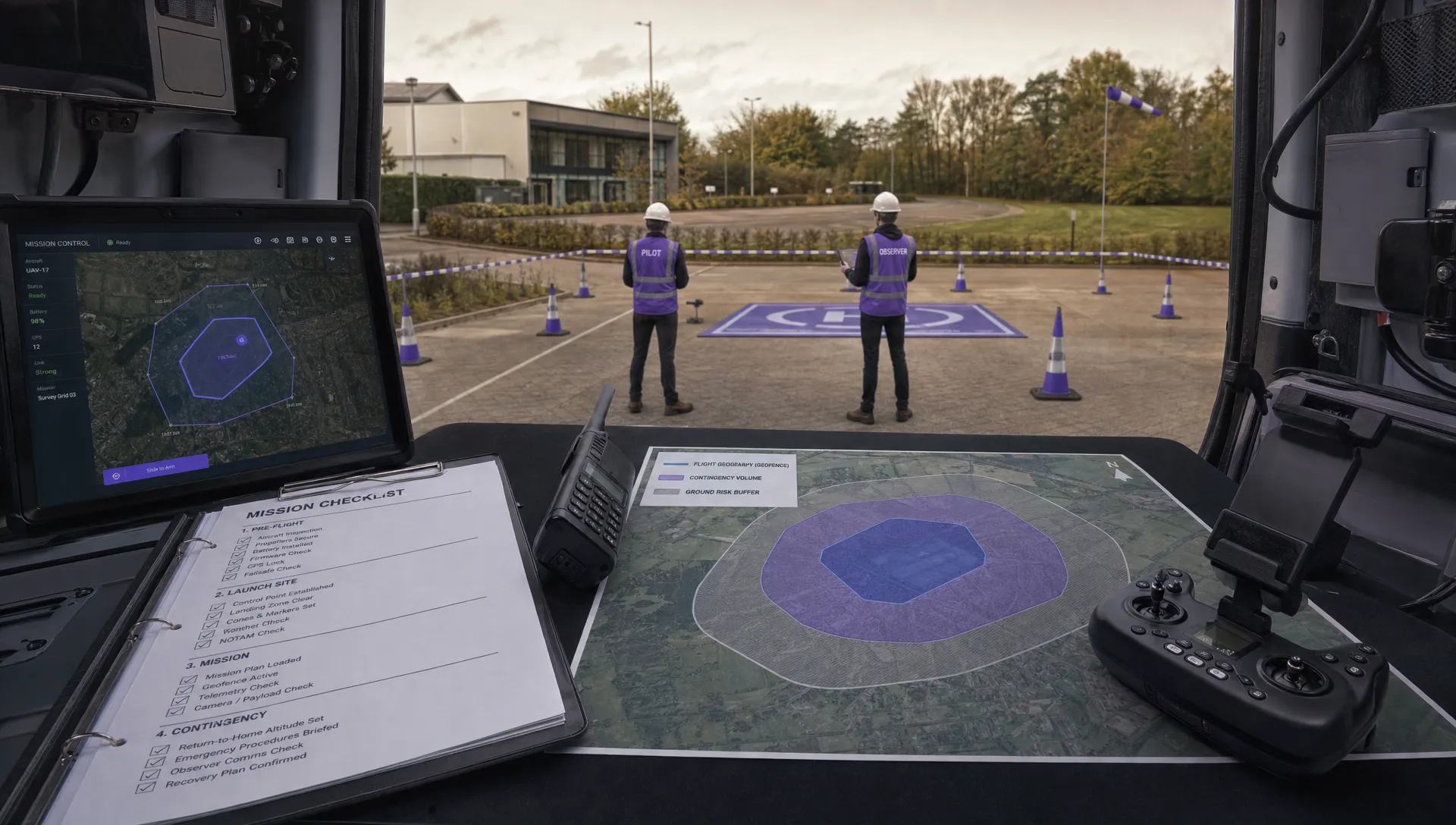 Contingency Volume and Flight Risk Buffer Explained →
 FAA Policy Changes That Commercial Drone Teams Should Track →
 Drone Night Flying Rules and Pre-Flight Checks →