
A Complete Guide to Drone Videography Services
Think back a few years. Getting those stunning, sweeping aerial shots you see in movies was a massive production, reserved for crews with Hollywood-sized budgets. Today, that same high-flying camera capability is accessible to almost everyone, and that's the power of professional drone videography services.
At its core, it's about using unmanned aerial vehicles (UAVs) equipped with high-definition cameras to capture polished, cinematic video from the sky.
What Exactly Are Drone Videography Services?
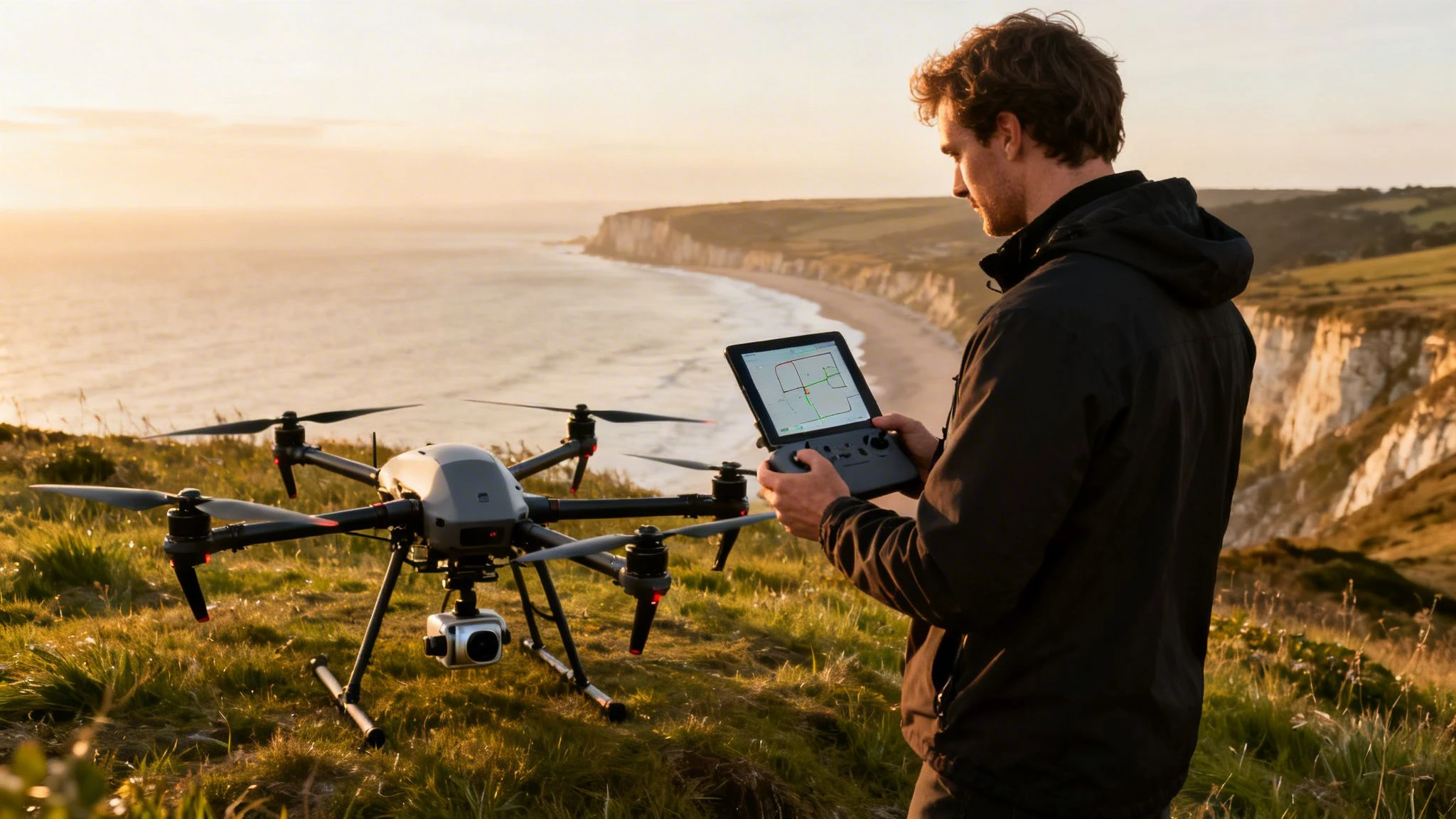
Here’s the thing: a true professional service is much more than just someone who knows how to fly a drone. When you hire a pro, you’re not just getting a pilot. You’re getting a licensed pilot, a skilled cinematographer, and a post-production editor all rolled into one.
They manage the entire project from start to finish, turning your initial concept into a finished video. This end-to-end approach is what separates amateur YouTube footage from a professional asset that can genuinely elevate your brand or project.
Core Components of a Professional Service
A professional drone videography service is a lot more involved than just showing up and flying. It's a structured process that ensures safety, compliance, and top-notch results. Here are the key pieces that make up a comprehensive service.
| Core Components of a Professional Drone Videography Service | | :--- | :--- | :--- | | Component | Description | Key Function | | Pre-Flight Planning | Involves risk assessments, airspace checks, and creating a detailed flight plan. | Ensures every flight is safe, legal, and designed to capture the exact shots needed. | | On-Site Execution | The licensed pilot operates the drone, using cinematic techniques to get smooth, dynamic footage. | Captures the high-quality raw footage that forms the basis of the final video. | | Post-Production | Raw footage is edited, color-graded, and assembled into a final video with music and graphics. | Transforms raw clips into a polished, compelling story that meets the client's goals. |
As you can see, this isn't a simple point-and-shoot operation. It's a specialized discipline within the broader world of video production services, and it delivers a perspective that ground-based cameras simply can't match.
The Value Beyond the Flight
Hiring a professional isn't just about getting a pretty video; it's an investment in quality, safety, and peace of mind. You’re paying for expertise.
The market itself tells the story. Demand for high-quality aerial footage is booming across real estate, construction, marketing, and more.
In 2025, the drone photography services market was valued at USD 1.2 billion. It's projected to hit USD 8.7 billion by 2034, growing at an incredible compound annual growth rate of over 25%.
A professional provider shields you from the complexities of aviation law, insurance requirements, and equipment maintenance. They handle the technical and legal headaches, so you can focus on the creative vision. That’s what you’re really paying for—the entire professional package, not just the flight time.
How Industries Use Aerial Videography to Gain an Edge
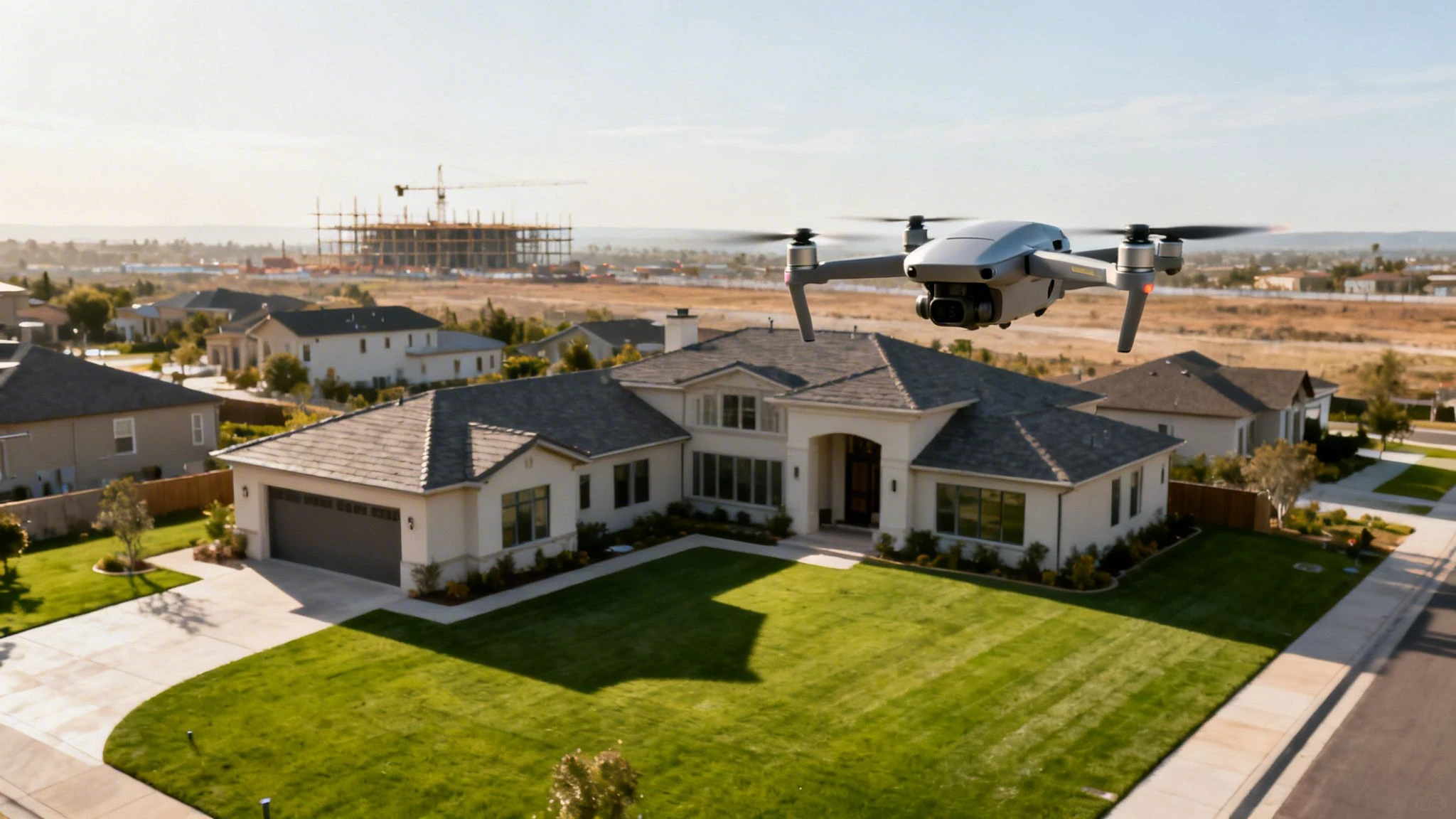
The unique bird's-eye view from professional drone videography services is far more than just pretty footage; it’s a serious business tool that gives companies a real competitive edge. Across a whole host of industries, people are using aerial video to solve tough problems, grab an audience's attention, and boost their bottom line.
It’s all about seeing your work—and the world—from an angle that used to require a helicopter and a Hollywood-sized budget.
Imagine trying to sell a luxury home. A standard photo gallery shows the rooms, but it can’t capture how the property sits in its environment. This is where a drone completely changes the game.
Real Estate and Property Marketing
For real estate agents, aerial video has gone from a nice-to-have to a must-have marketing tool. A cinematic drone tour can sweep over a home, showcasing its stunning architecture, sprawling garden, and how close it is to local parks, schools, or a beautiful coastline.
This isn't just about showing off; it creates an emotional hook and provides a level of context that static photos could never match. The results speak for themselves. Properties marketed with high-quality aerial footage tend to attract more serious buyers, spend less time on the market, and can even fetch higher asking prices. It turns a simple property listing into a story about a lifestyle.
Beyond homes, drone videography is a key player for:
- Commercial Real Estate: Showing the sheer scale of a warehouse, the easy access to a retail park, or the incredible views from a new office block.
- Land Development: Giving developers and investors a crystal-clear overview of a piece of land, its layout, and what’s possible.
- Hospitality: Crafting breathtaking promo videos for resorts, hotels, and golf courses that make people want to book a trip right away.
Construction and Project Management
In the construction world, a picture isn't just worth a thousand words—it can be worth thousands of dollars in saved costs and avoided delays. Weekly or bi-weekly drone flyovers create a visual diary of a project's progress, offering an incredible view for stakeholders who can’t be on-site.
This isn't about making a movie; it's about data and documentation. Project managers use this footage to check progress against the plans, verify contractor work, and spot potential safety risks or logistical jams before they become big, expensive problems. Think of it as a time-lapse on steroids, giving you objective proof of a project’s journey from groundbreaking to handover.
An aerial video gives you a high-level overview that's simply impossible to get from the ground. It lets managers spot issues in construction sequencing or material staging, so they can make smart decisions that keep the project on time and on budget.
Marketing, Events, and Tourism
For marketers, drone footage is a powerful way to cut through the noise. The dynamic, sweeping shots a drone can capture are perfect for creating high-impact commercials, brand films, and social media content that actually stops people from scrolling.
Whether it’s tracking a car along a scenic road or revealing a massive crowd at a music festival, the aerial view adds a sense of scale and energy that’s hard to beat.
Here’s how different sectors are putting it to work:
- Event Organizers: Capturing the buzzing atmosphere of concerts, festivals, and sporting events to create promo material that shows the true scale of the experience.
- Tourism Boards: Producing jaw-dropping videos of natural landmarks and cityscapes to attract visitors from all over the world.
- Automotive Brands: Filming slick car commercials with thrilling tracking shots that highlight a vehicle's performance and design.
Inspections, Surveying, and Mapping
While the cinematic stuff gets all the attention, some of the most important uses of drone videography are purely technical. The ability to safely and quickly inspect hard-to-reach assets is a game-changer for infrastructure and utility companies.
Instead of sending a crew up a dangerous cell tower or across a huge solar farm, a drone can capture high-resolution video in a fraction of the time. This slashes both risk and operational costs.
This technical side of things is a massive part of the industry. In fact, the mapping and surveying segment of the drone services market held over 32% market share in 2025 and is expected to blow past USD 2.9 billion by 2034. For surveyors, a single flight can map acres in minutes—a task that would take days on foot. You can discover more insights about this drone services market growth and see just how vital this tech has become.
Understanding Drone Videography Pricing and ROI
So, what's the real cost of professional drone videography? It's a fair question, and the answer isn't a simple one-size-fits-all number. Think of it like hiring a builder: a simple garden wall won't cost the same as a two-story extension. The final price tag for a drone project works the same way—it's tied directly to what the job actually involves.
You'll see a few common pricing models out there. Some operators charge an hourly rate for quick, simple jobs. For more complex shoots, you’ll likely get a project-based fee. And for recurring work, like monthly construction updates, a retainer agreement is pretty standard.
Key Factors That Influence the Cost
Getting a handle on the variables that shape a quote will help you see exactly what you're paying for. A quick flyover of a house in the countryside is always going to be cheaper than filming a complex sequence in a busy city. It just makes sense.
Here are the main cost drivers:
- Project Complexity: Are we talking about a straightforward shot of a static building? Or are we tracking a moving car and flying through tight arches? The more skill and planning required, the more it will cost.
- Risk Level: Flying in a wide-open field is low-risk. But flying in a city centre, near an airport, or over people? That's a different story. It involves more detailed safety planning, extra permissions, and higher insurance, all of which factor into the price.
- Equipment: The gear makes a huge difference. A simple social media clip shot on a DJI Mini will be far less expensive than a high-end TV commercial filmed on a DJI Inspire with a bag full of cinema lenses.
- Post-Production: Getting the footage is only half the battle. The amount of editing, colour grading, adding motion graphics, licensing music, and handling client revisions all add to the final cost.
For a much deeper dive into how these factors add up, check out our guide on how to price drone services effectively. It's packed with useful info for both clients and operators.
Shifting from Cost to Return on Investment
It’s easy to get hung up on the initial cost, but the real conversation should be about the value you get back—the Return on Investment (ROI). Professional drone videography isn't just another expense; it's an investment that should bring a real, tangible return to your business.
Viewing drone services as a strategic investment shifts the focus from "How much does it cost?" to "What value will it create?" The right footage can pay for itself many times over by accelerating sales, reducing project costs, or boosting marketing engagement.
Calculating that ROI means looking at specific, measurable results. The exact metrics will depend on your industry, but the idea is the same. You're using a powerful visual tool to hit a business goal faster or more effectively than other methods.
Examples of Calculating Your ROI
Let's see how this plays out in the real world.
1. For Real Estate Agents: A luxury home has been sitting on the market for three months with just standard ground photos. The carrying costs—mortgage, taxes, utilities—are $5,000 a month. You invest $1,500 in a stunning drone video tour. That new listing grabs the attention of a qualified buyer, and the sale closes in two weeks, two and a half months sooner than it was heading.
- Investment: $1,500
- Savings: $12,500 (2.5 months x $5,000)
- Net ROI: $11,000
2. For Construction Firms: A project manager pays for weekly drone flyovers at $800 per month. In month two, the footage catches a subcontractor installing structural supports incorrectly. Fixing it now costs $5,000. If it had gone unnoticed until the next phase, the rework would have been over $50,000 and caused a three-week delay.
- Investment: $1,600 (for two months)
- Savings: $45,000 (the difference in rework cost)
- Net ROI: $43,400
These examples aren't hypotheticals; they show how drone services deliver real financial wins, turning what looks like a budget item into one of the smartest decisions you can make.
When you hire someone for drone videography services, you're not just paying for pretty aerial shots. You're handing over a serious responsibility. Flying a drone commercially is governed by strict aviation laws and demands a rock-solid commitment to safety.
Think of it like hiring an electrician. You wouldn't let a weekend hobbyist rewire your house; you'd want a licensed, insured professional. It's the exact same principle for drone work.
Understanding the rules of the sky is non-negotiable for any legitimate drone pilot. In the United States, for instance, commercial operators absolutely must hold a Part 107 certificate from the Federal Aviation Administration (FAA). This isn't just a piece of paper. It proves the pilot has passed a tough aeronautical knowledge exam and knows how to fly safely within the National Airspace System.
Hiring a certified pilot is the first and most critical step to ensure your project is legal and safe. An uncertified operator isn't just risking hefty fines for themselves—they're putting your project, and your reputation, on the line.
Understanding Key Compliance Rules
Beyond the basic certificate, a pro has to navigate a maze of rules for every single flight. They can't just pop a drone up anywhere they feel like it. A huge chunk of their job happens before the drone even comes out of its case, involving meticulous pre-flight planning to stay compliant.
Here are a few key areas a professional pilot manages:
- Controlled Airspace: Pilots need to know how to identify and get authorization to fly in controlled airspace, like the areas around airports. Flying without permission is illegal and incredibly dangerous.
- Altitude and Visual Line of Sight: Regulations cap drone altitude at 400 feet above the ground in most cases. Pilots must also keep the drone within their visual line of sight at all times, unless they've secured a specific waiver.
- Flying Over People: This is a big one. Flying over people is heavily restricted. It often requires a drone with specific safety features and, you guessed it, additional permissions. This is crucial for events or projects in busy urban areas.
- Privacy Considerations: A true professional respects privacy. They won't film over private property without getting explicit permission first.
This flowchart gives you a peek into the kind of thinking that goes into planning a compliant and safe flight.
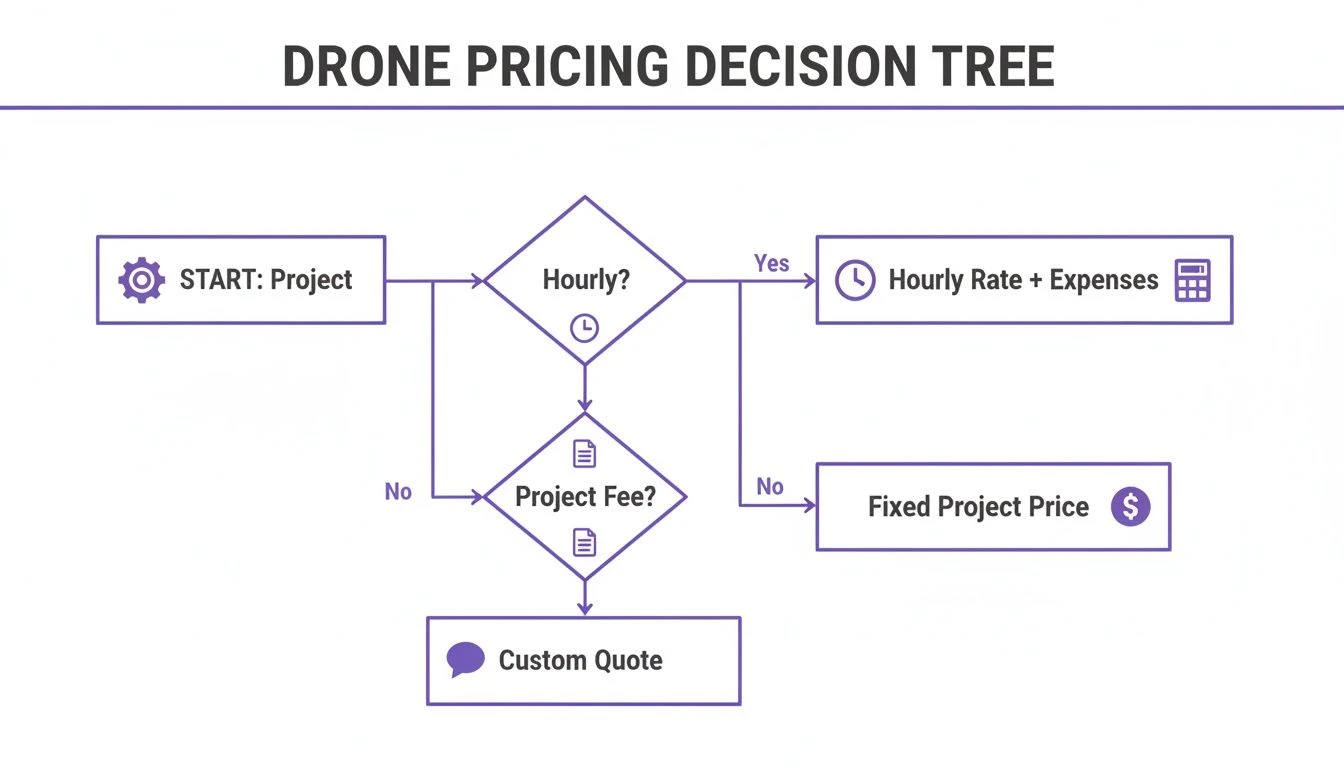
The legal landscape for drones is always shifting. To stay current, it's a good idea to review guides on new drone laws and regulations.
On-The-Ground Safety Is Paramount
Legal compliance is one piece of the puzzle, but what happens on the ground is just as important. A real pro follows a strict set of safety protocols before the props ever start spinning. Safety isn't just a buzzword; it's a systematic process.
A professional pilot's number one priority is the safety of people and property on the ground. The perfect shot is never worth putting someone at risk, and their entire workflow is built around minimizing risk from start to finish.
This commitment to safety shows up in several key actions:
- Comprehensive Pre-Flight Checklists: This means a thorough inspection of the drone's hardware, checking battery levels, and verifying all the controller settings to head off equipment failure before it happens.
- Weather and Environmental Analysis: The pilot will carefully assess wind speed, rain, and visibility to make sure conditions are safe for flying. No one wants their drone (or your project) blown into the next county.
- Establishing a Secure Launch Zone: They'll clear a takeoff and landing area, manage any foot traffic, and brief the on-site crew about the flight plan and what to expect.
When you're vetting a drone service provider, don't be shy. Ask about their safety procedures. A professional will be more than happy to walk you through their process, which should give you all the confidence you need that your project is in safe, capable hands.
How to Hire the Right Drone Service Provider
Trying to find the right professional for your drone videography services can feel like a minefield. The market is packed with operators, but their skill, professionalism, and legal standing can vary wildly.
To make sure you hire a true expert and not just a hobbyist with a flashy showreel, you need a solid vetting process. This isn't just about finding someone who can fly a drone; it's about finding a partner who operates safely, legally, and can deliver the quality your project deserves.
Start with the Non-Negotiables
Before you even glance at a portfolio, there are two items you absolutely must verify. Think of these as the bare minimum for any professional drone operator—they're completely non-negotiable for commercial work.
- Commercial Pilot Certification: In the US, this is the FAA's Part 107 certificate. Ask to see it. A pilot flying commercially without this is operating illegally, which puts your project and your business at serious risk.
- Liability Insurance: Even with the most experienced pilots, accidents can happen. A professional will always carry substantial liability insurance to cover any potential damage. Ask for their certificate of insurance.
If a potential provider hesitates or can't produce both of these documents right away, walk away. It’s the clearest red flag that they aren't a legitimate, professional business.
Scrutinize Their Portfolio for Relevance
Once you've got the legal basics sorted, it's time to dive into their creative work. A stunning reel of cinematic mountain ranges is impressive, for sure. But it’s totally irrelevant if you need tight, technical shots for a construction site inspection.
You need to look for experience that matches your specific industry and project.
- For Real Estate: Do they have examples of smooth, elegant fly-throughs that make a property look irresistible?
- For Construction: Can they show you videos that demonstrate progress tracking or detailed site mapping?
- For Marketing: Is their portfolio filled with dynamic, high-energy shots that actually tell a compelling brand story?
A provider's portfolio should give you confidence that they understand the unique visual language and technical demands of your industry. Don't be swayed by pretty pictures alone; demand to see relevant work.
Dig Deeper with Key Questions
A strong portfolio and the right credentials are a great start. The final step is to ask specific questions to get a feel for their entire workflow. Their answers will tell you everything you need to know about their level of professionalism.
Here’s a quick checklist of essential questions for any potential provider:
- Safety Procedures: "Can you walk me through your standard safety and pre-flight checklist process?"
- Equipment: "What kind of drones and cameras will you use for my project? Does the equipment shoot in 4K or higher?"
- Post-Production: "Does your fee include professional editing, color grading, and licensed music?"
- Deliverables: "What is the final output I will receive? What video formats will you provide, and how will they be delivered?"
- Contingency Plans: "What's your process for handling bad weather or other unexpected delays on the day of the shoot?"
Asking these questions helps you set clear expectations from the get-go and ensures there are no nasty surprises down the road. For more on managing providers effectively, explore our insights on vendor management best practices.
Making an informed decision now will save you a ton of time, money, and headaches later.
How Dronedesk Tames the Admin Beast
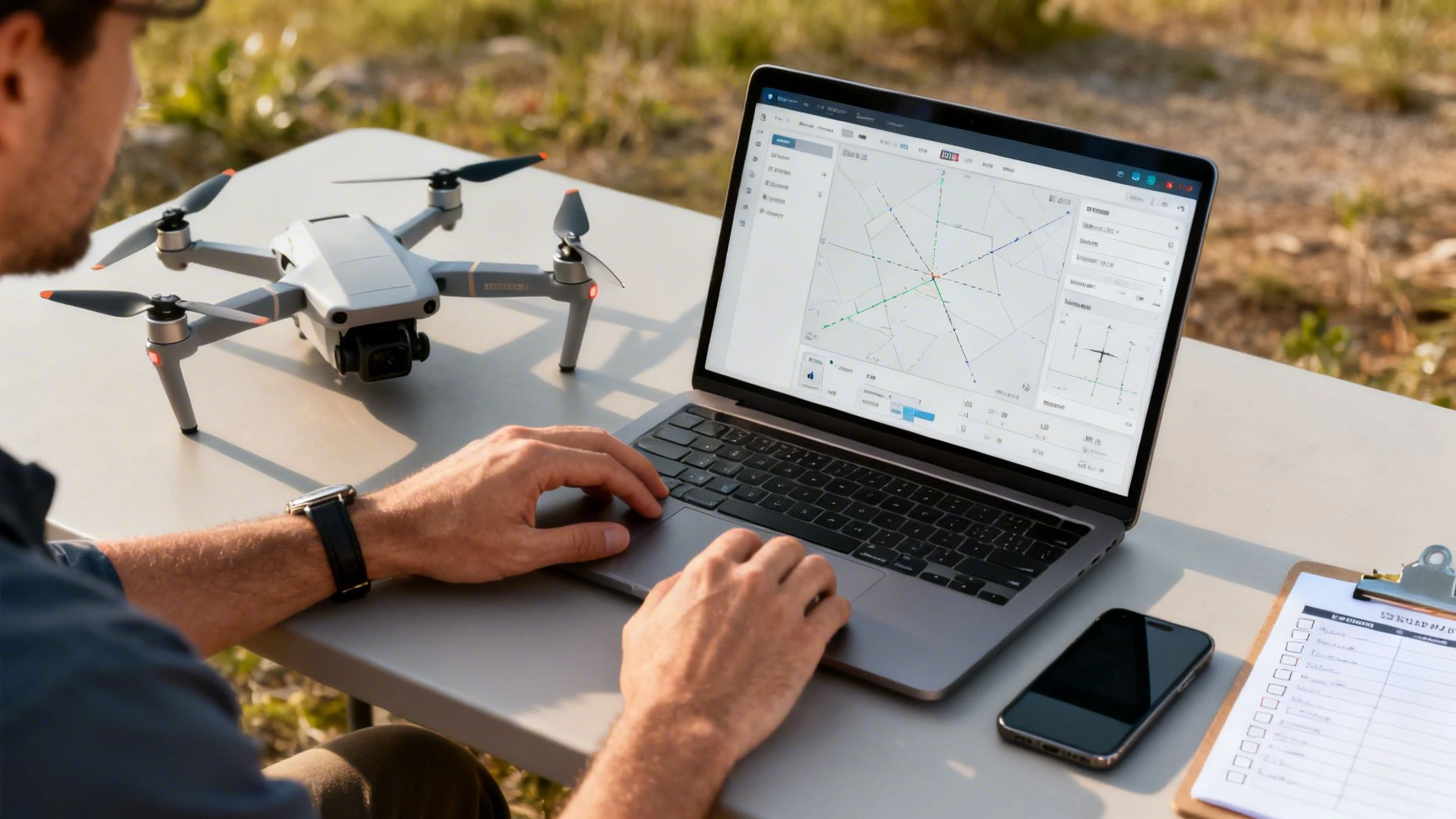
For any professional pilot, turning a passion for flying into a real business means dealing with a lot more than just the drone. The admin side of running drone videography services—managing clients, scheduling jobs, and nailing compliance—can quickly become a full-time job in itself. This is exactly where a dedicated drone operations platform like Dronedesk comes in.
Think of it as the ultimate co-pilot, but for your business operations. It was built by pilots who got tired of the administrative grind, so it’s designed to tackle the biggest headaches that slow you down and eat into your profits.
The whole point is to bring all your essential tasks into one organised system, helping you run a safer, more efficient, and more professional outfit. It’s about spending less time buried in paperwork and more time in the air where you belong.
One Place for Everything
One of the biggest struggles for any drone entrepreneur is juggling a dozen different tools. You might have one app for client emails, a spreadsheet for quotes, and yet another for logging flight hours. Dronedesk gets rid of that chaotic mess and replaces it with a single, logical workflow.
This unified approach means information flows seamlessly from one step to the next. A new client enquiry can be turned into a job, planned, flown, and invoiced, all without ever leaving the platform. This is a huge time-saver and dramatically cuts down on the risk of mistakes.
A study of small businesses found that employees can spend up to 552 hours a year just on repetitive admin. Dronedesk is built to give you that time back, turning administrative hours into billable flight time.
Automated Compliance and Flight Planning
Staying on the right side of aviation regulations isn't optional; it's a core part of being a professional. Dronedesk bakes safety and compliance right into your flight planning, making it almost second nature to meet your legal duties.
The platform has advanced airspace intelligence built in, automatically flagging potential hazards, restrictions, and nearby airports. This lets you plan your flights with confidence, giving you a clear picture of the airspace before you even set foot on site.
This dashboard shows how Dronedesk consolidates job planning, from client details to flight checks, into one view.
The integrated risk assessment tools walk you through creating the kind of detailed safety plans that keep both clients and regulators happy.
Managing Your Fleet and Team
As your business grows, so does your gear. Keeping track of your drones, batteries, and other equipment becomes a major chore. Dronedesk has powerful fleet management tools that help you stay organised.
Here’s what you can manage:
- Maintenance Tracking: Set up alerts for routine maintenance. This ensures your drones are always in top shape and gives you a complete service history for insurance and compliance records.
- Automated Flight Logging: The system automatically logs flight hours for each drone, pilot, and even battery, so you have an accurate record of how much use your assets are getting.
- Team Management: If you have a team of pilots, you can assign jobs, track their certifications, and oversee all operations from one central dashboard. It’s the best way to make sure everyone is working to the same professional standard.
By putting every part of your drone business in one place—from the first client call to the final invoice—Dronedesk gives you the framework to grow without the chaos. It provides the structure and efficiency you need to compete in the expanding market for drone videography, helping you run a safer and more profitable business.
Frequently Asked Questions About Drone Videography
Whether you’re a client thinking about hiring a drone pilot or an aspiring pilot yourself, you probably have a lot of questions. Getting straight answers from the get-go is the best way to make sure a project goes off without a hitch.
Here are the questions we hear all the time.
How Long Does a Typical Shoot Take?
There's no one-size-fits-all answer here. The time on-site depends entirely on what we're trying to capture.
A simple real estate fly-by might only take an hour. But if we're talking about a bigger commercial project with shots in multiple spots and complex, cinematic movements, you could be looking at a full day, or sometimes even longer.
A pro pilot will have the whole mission planned out to be as efficient as possible. This means thinking about the order of shots, planning for battery swaps, and working with the changing light to get everything needed in the time booked.
What Kind of Video Quality Can I Expect?
Most professional drone outfits offer a few different video resolutions to match your project and your budget. Today, 4K is pretty much the standard. It’s perfect for top-notch web content, social media posts, and corporate videos.
But for those projects that need the absolute best—like a TV commercial or a film production—many of us can offer even higher quality.
- Standard Quality: 4K UHD is what you’ll find most of the time. It’s crisp, detailed, and looks fantastic.
- Premium Quality: For the real high-end stuff, 6K or even 8K resolution is doable with cinema-grade drone rigs.
The best thing to do is have a chat with your pilot about what you need. That way, you can be sure their gear is up to the task and can deliver the look and feel your project is after.
Is It Legal to Fly a Drone Anywhere?
No, it is absolutely not legal to fly a drone wherever you feel like it. Commercial drone flying is serious business, governed by strict aviation rules like the FAA's Part 107 in the US or similar regulations from the CAA in the UK. The licensed pilot is the one legally on the hook for making sure every flight is by the book.
There are many places where flying is a big no-no without getting special permission first. These include:
- Near airports and in controlled airspace.
- Over big crowds of people.
- Inside national parks and over most government buildings.
A huge part of any professional pilot’s job is checking airspace maps and getting any needed permissions before the drone's wheels ever leave the ground. It’s a non-negotiable part of doing this job legitimately.
Do I Need to Be On-Site During the Flight?
It’s not always a must, but having you on-site can be a real game-changer. It means we can work together in real-time, and you can give instant feedback to make sure I’m getting the exact shots you have in your head. This is a massive help on creative jobs where the artistic direction is everything.
That said, if the goals and shot list are crystal clear beforehand, a pro pilot can get the job done on their own. This can save you a chunk of time while still getting you the killer footage you paid for.
Ready to streamline your operations and tame the admin beast? See how Dronedesk can help you manage clients, stay compliant, and grow your drone business. Learn more at Dronedesk.
 Drone Pilot Test Mistakes That Cost Candidates Marks →
 FAA 107 License vs Part 107 Certificate: What’s the Difference? →
 Drone Airport Rules: A Field Checklist for Site Assessments →
 FAA Part 107 Record-Keeping Rules for Commercial Teams →
 How to Review a DJI Flight Log After an Unexpected Event →
 Drone Laws Around the World: A Pre-Flight Research Framework →
 How to Compare Drone Survey Services for Complex Sites →
 How to Start a Drone Mapping Business With a Clear Workflow →
 Class C Airspace Drone Rules for Commercial Flights →
 How to Create a Drone Job Pack for Every Mission →