
BVLOS Drones Unlocking Long-Range Flight
When you hear people talk about Beyond Visual Line of Sight (BVLOS), what they really mean is flying a drone so far away that the pilot can't see it with their own eyes. This is the single biggest leap forward for the industry, transforming drones from localised, remote-controlled gadgets into a genuine long-range, autonomous workforce capable of covering huge distances.
What Are BVLOS Drone Operations Really?

Picture this: you need to inspect a 50-mile pipeline. Using a standard drone, a pilot would have to stop, pack up, drive to a new spot, and relaunch every few thousand feet. It’s a painfully slow and inefficient way to work.
Now, imagine launching a single drone that flies the entire route on its own, sending back critical data from miles away. All the while, the pilot is comfortably monitoring the mission from a central command centre. That’s the game-changing shift that BVLOS brings to the table. It's not just about flying further; it’s about unlocking true operational scale and efficiency.
This capability is what really separates hobbyist flying from industrial-grade drone solutions.
The Leap from VLOS to BVLOS
The vast majority of drone flights today are conducted under Visual Line of Sight (VLOS) rules. You can think of this as keeping the drone on a short, visible leash. The pilot has to be able to physically see the aircraft at all times, which naturally limits missions to a fairly small area around them.
BVLOS cuts that leash completely. It allows drones to operate over the horizon, behind buildings, or through dense forests—places a ground-based pilot could never hope to see. This isn't just a quantitative jump in distance; it's a qualitative change in what we can achieve with drones.
- VLOS: Limited to the pilot's direct eyesight, which in practice is rarely more than a mile.
- BVLOS: Can extend for many miles, limited only by the drone's technology and regulatory approvals.
This transition is the absolute key to unlocking the massive commercial and societal value of drone technology. By removing the constraint of sight, we allow drones to take on complex, long-duration tasks that are simply too dangerous, expensive, or time-consuming for people to do.
The economic impact is already making waves. The global market for autonomous BVLOS drones, recently valued at $1.33 billion, is projected to rocket to $3.74 billion in the coming years. This shows a massive industry-wide push towards long-range, autonomous operations. If you're interested, you can explore more about these market trends and the future of BVLOS drone technology.
Why BVLOS Matters So Much
The ability to fly beyond the horizon is a game-changer for countless industries. For public safety, it means delivering medical supplies to a remote crash scene or searching a huge area for a missing person in minutes, not hours. For logistics, it's the very foundation of the drone delivery networks we're starting to see pop up.
In infrastructure, BVLOS drone operations allow for inspecting miles of power lines, railways, and bridges in a fraction of the time it would take a ground crew. This doesn’t just save money; it dramatically improves safety by keeping human inspectors out of harm's way. It’s setting the stage for a future where autonomous aircraft are just another integrated part of our economic infrastructure.
Navigating The Complex World Of BVLOS Regulations
For a lot of drone operators, the biggest thing holding them back from flying beyond the horizon isn’t the tech—it’s the paperwork. Aviation authorities like the Federal Aviation Administration (FAA) are laser-focused on one thing: keeping the national airspace safe for everyone. This means any unmanned flight has to prove, without a doubt, that it won't be a risk to other aircraft or people on the ground.
You can think of the sky as a massive, multi-lane motorway. Before you’d let a self-driving car merge onto it for a long-haul journey, you’d want to be absolutely sure it can see other traffic, follow the rules of the road, and stay reliably connected to its home base. It’s the exact same principle for BVLOS drone operations.
Instead of getting bogged down in legal jargon, it's much more useful to understand the core safety questions that regulators need clear answers to before they'll give a BVLOS mission the green light.
The Two Pillars Of BVLOS Safety
At the heart of every BVLOS regulation, you'll find two non-negotiable safety concepts. These are the foundations of any successful application.
First up is Detect and Avoid (DAA). This is simply the drone's ability to "see" other air traffic—think planes, helicopters, even other drones—and get out of the way. Since the pilot can't physically see what's happening miles away, the drone has to take on that responsibility itself, using advanced gear like radar, LiDAR, or powerful onboard cameras.
The second pillar is the Command and Control (C2) link. This is the digital tether connecting the drone to the pilot. If that connection drops, the pilot is flying blind, and a valuable piece of equipment instantly becomes a major liability. Regulators demand incredibly robust and often redundant communication systems, like satellite or multi-network cellular links, to make sure the pilot is always in control.
When you boil it all down, regulators just want to know two things: "Can your drone see everything it needs to, and can you promise you'll never lose control of it?" If you can answer "yes" with solid technology and well-documented procedures, you're on the right track.
To help you get a clear picture of what regulators are looking for, we've broken down the main hurdles you'll need to clear for BVLOS approval.
Key Regulatory Hurdles For BVLOS Approval
| Regulatory Requirement | Description | Why It's Critical For Safety |
|---|---|---|
| Detect and Avoid (DAA) | The drone must have onboard systems (e.g., radar, ADS-B, cameras) to identify and safely manoeuvre around other manned and unmanned aircraft. | Prevents mid-air collisions. Since the pilot can't see the airspace, the drone must act as its own set of eyes and ears. |
| Command and Control (C2) Link | A highly reliable and secure data link between the ground control station and the drone. Often requires redundant systems (e.g., cellular plus satellite). | Guarantees the pilot can maintain control at all times. A lost link could lead to a "flyaway" drone, posing a risk to people and property. |
| Airspace Deconfliction | A robust plan to manage the drone's flight path to avoid restricted airspace, high-traffic areas, and known flight corridors for traditional aircraft. | Ensures the drone operates predictably and doesn't interfere with established air traffic, like flights near airports. |
| Contingency and Emergency Procedures | Detailed, pre-planned actions for every conceivable failure, such as lost C2 link, GPS failure, or system malfunction (e.g., return-to-home, automated landing). | Provides a clear, safe "plan B" for when things go wrong, ensuring the drone fails safely without becoming a hazard. |
| Human Factors and Training | Proof that pilots and ground crew are thoroughly trained not just to fly the drone, but to manage BVLOS-specific challenges, monitor automated systems, and handle emergencies. | Acknowledges that even with automation, a skilled human is the ultimate backstop for safety, capable of making critical decisions under pressure. |
Meeting these requirements with a well-thought-out safety case is the key to unlocking BVLOS operations for your organization.
The Path To Approval Is Getting Clearer
For a long time, getting BVLOS approval felt like a one-off science project, involving mountains of paperwork and custom testing. Thankfully, as the technology has matured and regulators have gathered more data, the path is becoming much more straightforward.
This image gives you a bird's-eye view of the current regulatory climate, highlighting the progress in approvals and the worldwide adoption of BVLOS rules.

The trend is undeniably positive. More waivers are being granted, and an increasing number of countries are setting up formal frameworks for these advanced flights. It’s a clear signal that the industry is moving towards making BVLOS a standard part of our airspace.
For operators, this means the dream of running large-scale, efficient missions is fast becoming a practical reality. Understanding these core principles and keeping an eye on the shifting regulations is crucial. If you want to dig deeper into the details, our guide on BVLOS compliance and the future of drone ops is a great place to start. Turning those ambitious plans into routine, approved flights is more achievable today than ever before.
The Core Technologies Powering BVLOS Flights

So, how exactly does a drone fly safely for miles when the pilot can't see it? It’s not magic. It’s a sophisticated collection of technologies acting as the drone's eyes, ears, and brain, creating a sort of "virtual pilot" that can navigate complex spaces and make smart decisions from a distance.
Think of it like the driver-assist systems in a new car. Features like adaptive cruise control and lane-keeping assist don’t replace the driver, but they create a powerful safety bubble around the vehicle. The tech behind BVLOS works on the same principle, layering in awareness and control systems that make long-range flights not just possible, but safe.
These systems aren’t just nice-to-haves. They're the core components that regulators need to see to be convinced that a mission can be flown safely without a human pilot's eyes on the aircraft.
The Drone's Digital Eyes and Ears
The single biggest hurdle in BVLOS flight is giving a drone the ability to see and avoid other aircraft, just like a human pilot would. This is where Detect and Avoid (DAA) technology steps in. It's a network of sensors constantly scanning the airspace for potential conflicts.
DAA isn't one single gadget; it's a clever fusion of different sensors working in harmony. Each has its own strengths, and by combining them, you get a much more reliable and complete picture of what's going on in the sky.
- Radar: This is the workhorse. It bounces radio waves off objects to figure out their distance, speed, and direction. Crucially, it works day or night, in any weather, making it brilliant for spotting other aircraft from far away.
- LiDAR (Light Detection and Ranging): Think of this as a high-precision, close-range version of radar that uses lasers. It creates incredibly detailed 3D maps of the drone's immediate surroundings, making it perfect for dodging things like trees, buildings, and power lines.
- ADS-B (Automatic Dependent Surveillance-Broadcast): Many modern aircraft automatically broadcast their location, altitude, and speed using ADS-B. Drones with an ADS-B receiver can "listen in" on this traffic, getting a clear picture of other participating aircraft long before they pose a risk.
- Optical Sensors: These are high-resolution cameras, but the real magic is the AI behind them. The software can visually spot objects and classify them as a threat or something benign, much like a human pilot's brain would process what it sees.
This multi-sensor approach means there are no blind spots. If one system struggles in a particular situation, another one picks up the slack. It’s this redundancy that keeps regulators happy. The constant improvement in this area is a big part of how AI and automation are changing drone operations, making autonomous flight safer and more capable every year.
The Unbreakable Digital Leash
Once a drone can "see," it needs a rock-solid, constant connection back to its pilot on the ground. This is the job of the Command and Control (C2) link. It's the two-way data stream that carries the pilot's commands to the drone and sends flight data and video back. If the C2 link drops during a BVLOS flight, you're in serious trouble.
To prevent this, modern BVLOS operations use a multi-layered communications strategy.
Relying on a single communication system during BVLOS missions is impractical and risky. True connection confidence is only achieved by blending multiple, redundant technologies into a single, seamless data pipe.
This is often called a "multilink" or "network meshing" approach. Instead of just relying on one signal type, the drone’s software intelligently switches between several to maintain the strongest possible connection at all times. The key players here are:
- Cellular Networks (4G/5G): Using the same mobile networks as your phone gives you fantastic bandwidth for high-quality video and data. To add another layer of safety, systems often use SIM cards from multiple carriers (like EE and Vodafone) at the same time.
- Satellite Communications: When a drone flies into remote areas with no mobile signal, satellite links become the essential lifeline, ensuring that C2 connection is never lost.
- Radio Frequency (RF) Links: These are direct, point-to-point radio links. They provide a highly secure and very low-latency connection, often serving as the primary link or a bulletproof backup.
Of course, these systems are only as good as the batteries powering them. The power management tech needed for long BVLOS flights often benefits from wider innovations in e-mobility, which are pushing the limits of efficiency and endurance. Together, DAA and C2 are the digital foundations of every safe and successful BVLOS flight.
Overcoming The Operational Challenges Of BVLOS
Getting the green light from regulators is a massive win, but it’s just the starting line for a real-world BVLOS operation. The true test starts when the wheels leave the ground and you have to manage a live mission. This is where the gap between a safety case on paper and operational reality becomes crystal clear.
Executing a flawless BVLOS mission isn't just about launching a drone and hoping for the best. It's more like choreographing a long-distance ballet, demanding perfect timing, constant awareness, and a solid plan for every curveball.
From Paper To Practice
Making the leap from a controlled, theoretical safety plan to live flights introduces variables that are tough to predict on paper. One of the biggest hurdles is simply managing the mission environment over vast distances, where conditions can flip in an instant.
Take unpredictable weather, for example. You might take off in clear skies, but 20 miles down your route, a storm cell could be brewing. Long-range flights demand advanced weather monitoring and the ability to dynamically reroute to keep the aircraft safe and the mission on track.
Getting a waiver is proof that your plan is safe. Operating at scale is proof that your plan is resilient. The difference lies in mastering the countless small details that emerge only during real-world flight operations.
Battery life is another huge one. A drone's spec sheet might promise a 45-minute flight time, but real-world factors like wind speed, altitude changes, and payload weight can slash that figure dramatically. A solid BVLOS program needs precise energy consumption models to avoid the dreaded scenario of a dead battery miles from your landing zone.
The Human Element In Remote Operations
Even with all the automation in the world, the human pilot is still the anchor of safety. But their role changes dramatically. They're no longer a hands-on pilot with eyes on the aircraft; they're a remote systems manager. This shift brings its own unique set of challenges, mostly revolving around situational awareness.
Instead of looking up at the sky, a BVLOS pilot is glued to multiple data streams on a screen—flight telemetry, live video feeds, airspace traffic, and system health alerts. This takes immense focus and the ability to process complex information to make split-second, critical decisions. Keeping that level of engagement up during long flights is a serious operational and training challenge.
The Gap Between Approval And Scalability
Recent data shows just how wide the chasm is between getting permission and flying consistently. The FAA's BEYOND program, which was set up to push BVLOS forward, is a perfect case study. While all the lead participants successfully got approval to fly BVLOS without visual observers—a huge regulatory milestone—only 37.5% of them actually went on to complete eight or more flights. You can read more about these findings and the state of BVLOS deployment on the OIG website.
This tells us that while the rules are getting clearer, the next great challenge is building a BVLOS program that is both reliable and scalable. Success hinges on solving very practical, real-world problems like:
- Public Safety Over Varied Terrain: Flying over populated areas, roads, or private land means you need rock-solid contingency plans, like designated emergency landing spots and parachute systems.
- Maintenance and Logistics: A fleet of long-range drones needs a tight maintenance schedule and slick logistics to handle batteries, repairs, and pre-flight checks without a hitch.
- Data Management: BVLOS missions produce a staggering amount of data. You need a system to securely transmit, store, and analyze all that information to actually deliver value.
Building a truly effective program means creating robust workflows that account for all these variables. This is especially true for jobs like large-scale site surveys, where drone operations are transforming infrastructure inspections by gathering data that was once impossible to get safely. It's by nailing these operational details that you turn a one-off successful flight into a repeatable, value-generating BVLOS operation.
Real-World BVLOS Applications Transforming Industries

While the tech and the rules are interesting, the real story of BVLOS is how it's solving actual problems on the ground. Flying beyond the horizon is already delivering huge results across key industries, boosting efficiency and safety in ways that just weren't possible before. These aren't just ideas on a whiteboard; they are proven applications creating value today.
From saving lives to keeping our critical infrastructure online, the stories of BVLOS in action really bring its potential to life.
Protecting Critical Infrastructure
Think about how you'd normally inspect a 100-mile pipeline or power line. It’s a massive job involving crews in trucks or low-flying helicopters—a process that’s slow, incredibly expensive, and puts people at risk.
Now, picture this: a single BVLOS drone can cover that exact same distance from one launch point, in a fraction of the time. Kitted out with high-res and thermal cameras, it streams back incredibly detailed data, spotting tiny leaks, structural weak points, or overgrown vegetation with pinpoint accuracy. This shifts the whole game from costly, reactive repairs to smart, proactive management, all while keeping workers safely on the ground.
The core benefit of BVLOS for infrastructure is a fundamental shift from slow, reactive maintenance to fast, predictive asset management. It allows companies to see problems developing from miles away, long before they become critical failures.
This table really drives home the operational differences between the old way and the new.
BVLOS Vs VLOS Operations: A Comparative Overview
| Operational Aspect | VLOS (Visual Line of Sight) | BVLOS (Beyond Visual Line of Sight) |
|---|---|---|
| Coverage Area | Limited to a small radius around the pilot (typically <1 mile). | Covers vast distances (10s to 100s of miles) from a single point. |
| Efficiency | Inefficient for linear inspections; requires constant relocation. | Extremely efficient for inspecting long assets like pipelines or coastlines. |
| Safety Exposure | Higher risk for ground crews or pilots in hazardous environments. | Dramatically reduces human exposure to risk by operating remotely. |
| Data Consistency | Can be inconsistent due to multiple stop/start cycles. | Provides continuous, uniform data over the entire asset length. |
The differences in scale and safety are stark, making BVLOS the obvious choice for any large-scale linear inspection.
Revolutionising Agriculture And Delivering Life
The impact doesn't stop at industrial sites. In large-scale farming, BVLOS drones can survey thousands of acres to check on crop health, see where water is needed most, and apply treatments with incredible precision. This is a level of "precision agriculture" that was simply a fantasy with ground-based methods, leading to better yields while using less water and fewer chemicals.
But perhaps the most powerful use case is in emergency services. When disaster strikes a remote area, getting medical supplies to people is a desperate race against time. Companies are now using BVLOS drones to deliver blood, medicine, and even defibrillators straight to accident scenes or cut-off communities.
Imagine a drone bypassing a washed-out road to deliver life-saving antivenom in minutes—a journey that would take an ambulance over an hour. This isn’t about making things more convenient; it’s about using technology to collapse the distance between help and need. These missions prove that the value of flying further is measured not just in pounds and pence, but in saving lives.
The Future is Looking Up: What's Next for BVLOS?
Beyond Visual Line of Sight operations are really just getting started. The applications we see today are only scratching the surface of what’s possible. The future isn't about one single breakthrough, but rather a powerful mix of smarter technology, clearer regulations, and a hungry market. It’s this combination that will take BVLOS from a niche capability to a standard, everyday part of how we work and live. The groundwork being laid today is paving the way for a truly autonomous future in the skies.
As we look ahead, the story of BVLOS will be all about increasing autonomy and making the technology more accessible. We're steadily moving towards a reality where drones aren't just flown by a pilot miles away, but can actually make complex decisions all on their own.
Smarter Drones And On-Demand Deployment
Artificial intelligence is what will fuel the next great leap forward. The BVLOS drones of tomorrow won't just follow a pre-planned route; they'll use AI to react to their surroundings in real-time. Picture a drone inspecting a wind turbine that notices a small anomaly on a blade. Instead of just flagging it, it decides on its own to spend more time gathering detailed data on that specific spot—all without a human needing to intervene. That level of independent decision-making is going to make operations worlds more efficient and effective.
Another huge development on the horizon is the rise of "drone-in-a-box" systems. These are essentially self-contained, automated docking stations that can be installed in remote or strategic locations.
A drone-in-a-box system is like a fully automated hangar. It allows a drone to launch, carry out its mission, return to base, recharge its batteries, and upload all its data, with absolutely zero human presence on-site. This is the key that unlocks truly on-demand aerial services.
This tech completely removes the need for a pilot to travel to a launch site, which drastically cuts down response times for everything from emergency first response to routine security patrols.
The Dawn Of Urban Air Mobility
While most of the focus today is on industrial uses, the technologies being perfected for BVLOS are the very same building blocks for a much bigger, more ambitious idea: Urban Air Mobility (UAM). The concept is simple, if a bit sci-fi: using autonomous flying vehicles to ferry people and goods around cities, basically adding a whole new transport layer above our congested streets.
The challenges are massive, of course, but solving them comes down to mastering the same core principles we're working on with BVLOS today:
- Advanced Detect and Avoid: These systems will need to be flawless, capable of navigating a crowded, fast-moving, and unpredictable urban airspace.
- Rock-Solid C2 Links: When you're carrying passengers or high-value cargo over populated areas, you can't afford a single dropped connection. The link has to be unbreakable.
- Regulatory Integration: A sophisticated air traffic management system for drones, often called Unmanned Traffic Management (UTM), is an absolute must-have.
The BVLOS space is where technology, regulation, and real-world needs are all colliding and evolving at a blistering pace. For any professional in this field, this isn't some far-off future; it's an opportunity that's knocking right now. This is the time to start thinking about how this technology could completely redefine what's possible for your own operations.
Your Top BVLOS Questions, Answered
Once you get your head around the theory of BVLOS, a whole host of practical questions naturally pop up. This is where the rubber meets the road. So, let's tackle some of the most common queries operators have when they start thinking seriously about long-range drone flights.
What’s The Biggest Hurdle To Flying BVLOS Today?
It's not one single thing, but a tricky combination of two major factors: navigating the complex, ever-changing regulations while simultaneously getting the right, high-reliability technology in place.
It's a bit of a chicken-and-egg situation. You can't get regulatory approval without the right tech, but you can't be sure you're buying the right tech until you understand the rules inside and out. Getting a BVLOS operation off the ground isn't about solving one big problem; it’s about making sure the legal and technical pieces of the puzzle fit together perfectly.
How Much Does It Really Cost To Get Started With BVLOS?
Pinning down an exact figure is tough because it depends so much on what you’re trying to do. The cost for a simple mapping drone is worlds apart from one kitted out with advanced LiDAR and gas sensors for inspecting industrial sites.
But here's the good news: the financial barrier to entry is dropping. Fast.
One of the biggest shifts we're seeing is the move away from huge upfront capital costs. The rise of Drone-as-a-Service (DaaS) models is making advanced BVLOS capabilities accessible without needing a massive initial investment.
Instead of shelling out for aircraft, sensors, and regulatory support, you can now partner with a specialist provider. This DaaS approach means you pay for the capability as you need it, making it far easier to budget for and scale up your operations when the time is right. It’s a game-changer that's opening up high-end BVLOS to a much wider audience.
Can A Small Business Realistically Use BVLOS?
Absolutely. The old idea that BVLOS is exclusively for giant corporations with bottomless pockets is well and truly outdated. With the growth of specialized service providers and those DaaS models we just talked about, small and medium-sized businesses are perfectly placed to benefit.
Think about a small surveying firm. They might not have the in-house team or capital to build a BVLOS program from the ground up. But now, they can hire a DaaS provider for a single, large-scale project that would have been completely out of reach just a few years ago.
This really levels the playing field. It allows smaller, nimbler companies to compete for major projects, giving them access to world-class BVLOS tech without the enormous overhead of owning and maintaining a fleet. For many, it’s the key to unlocking new revenue streams and serious growth.
Ready to master your drone operations, from initial planning to final reporting? Dronedesk provides the end-to-end management platform you need to ensure safety, compliance, and productivity on every flight. Discover how Dronedesk can transform your workflow today.
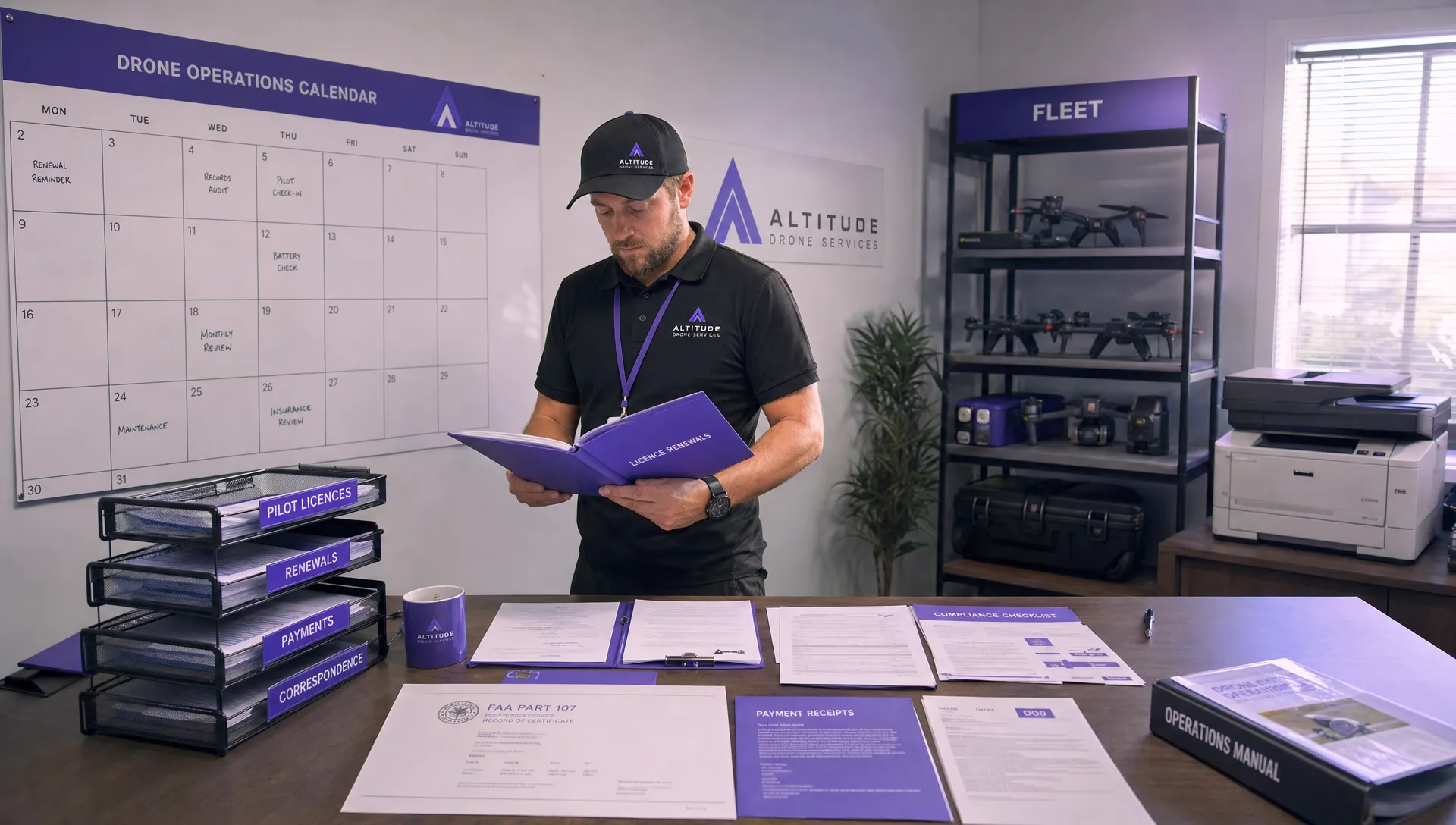 FAA Drone License Costs Beyond the Knowledge Test →
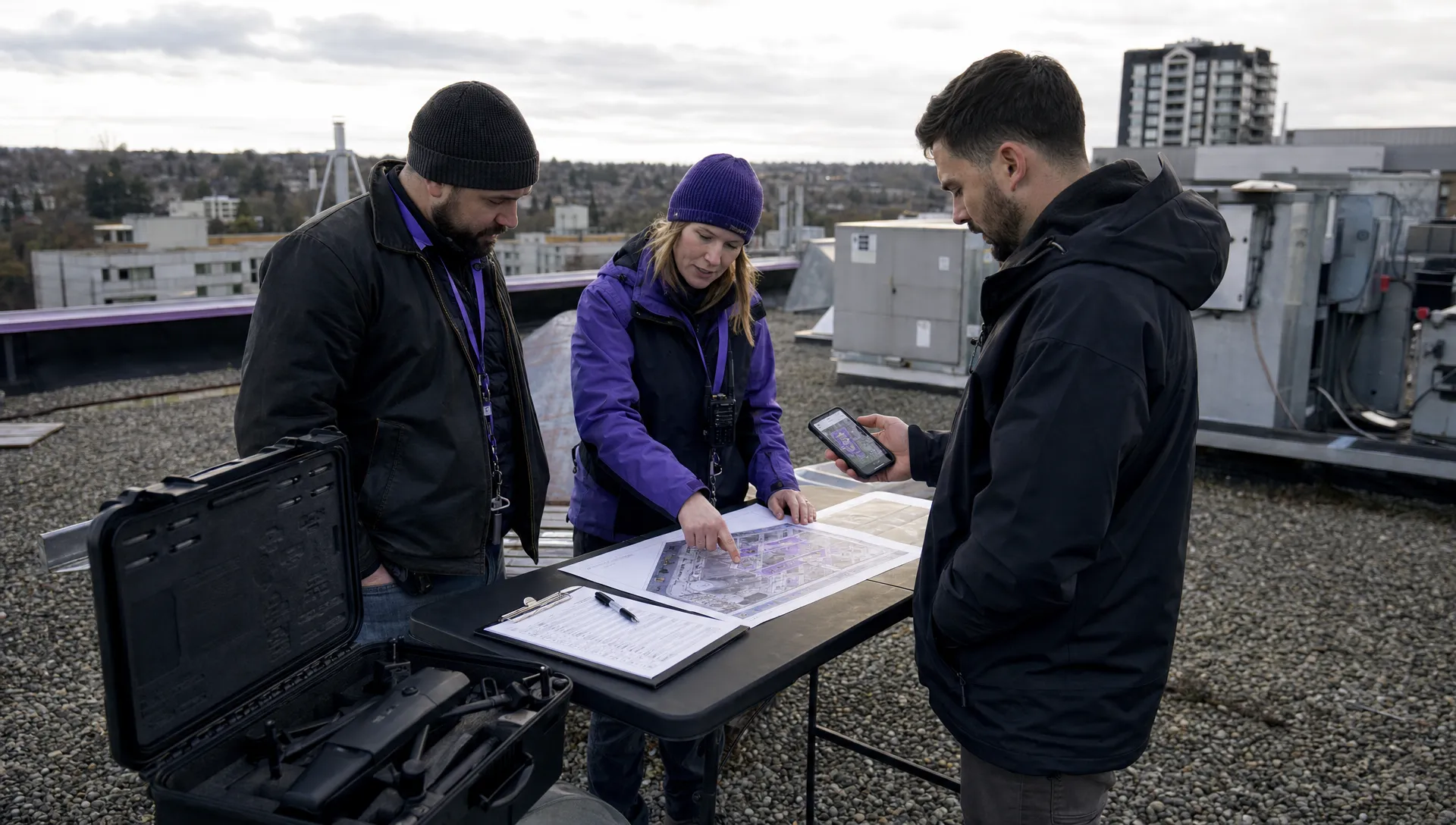 Drone Part 107 Operations: When a Waiver May Be Needed →
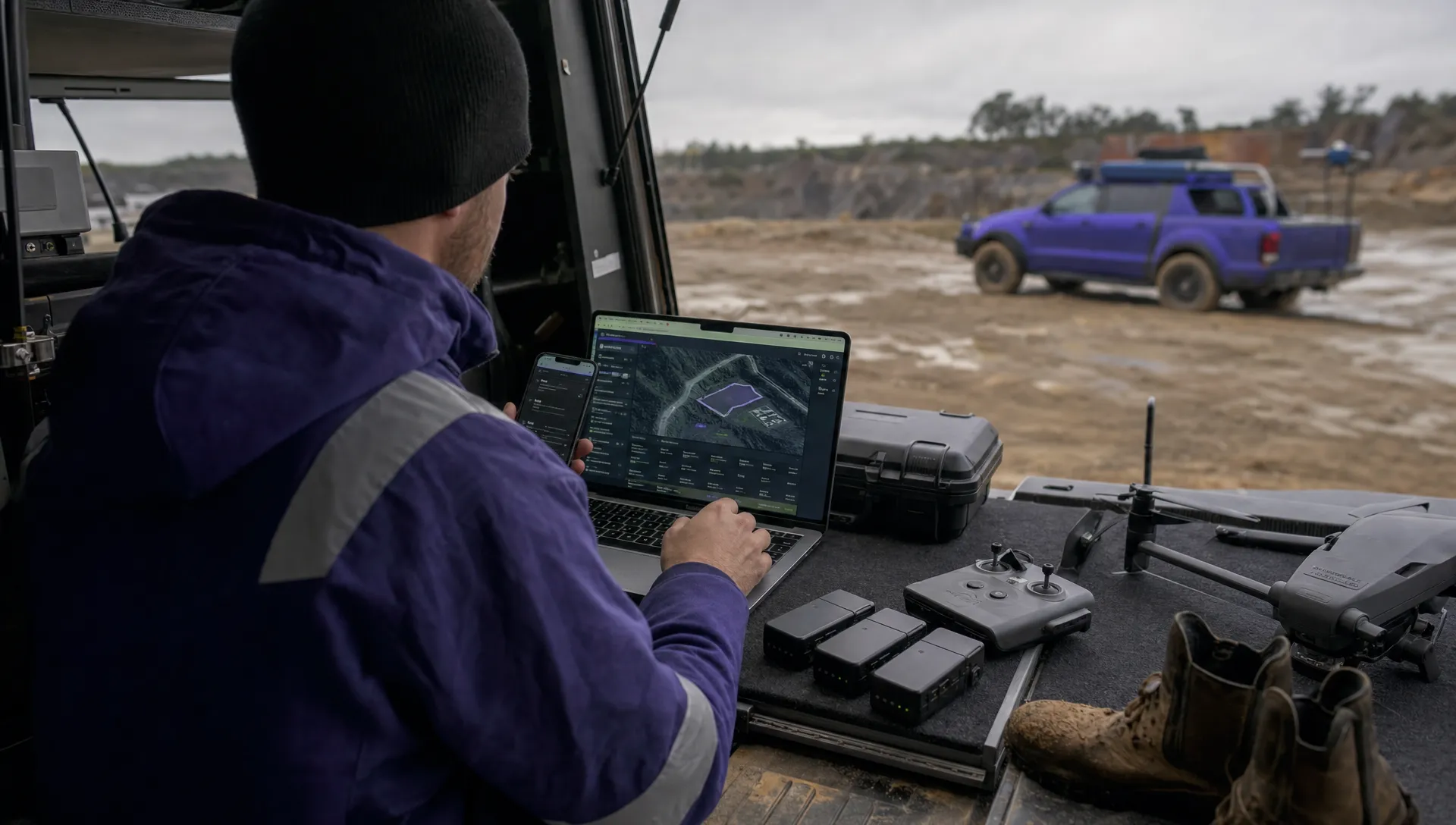 Drone Operating Rules for Managing Contractors and Employees →
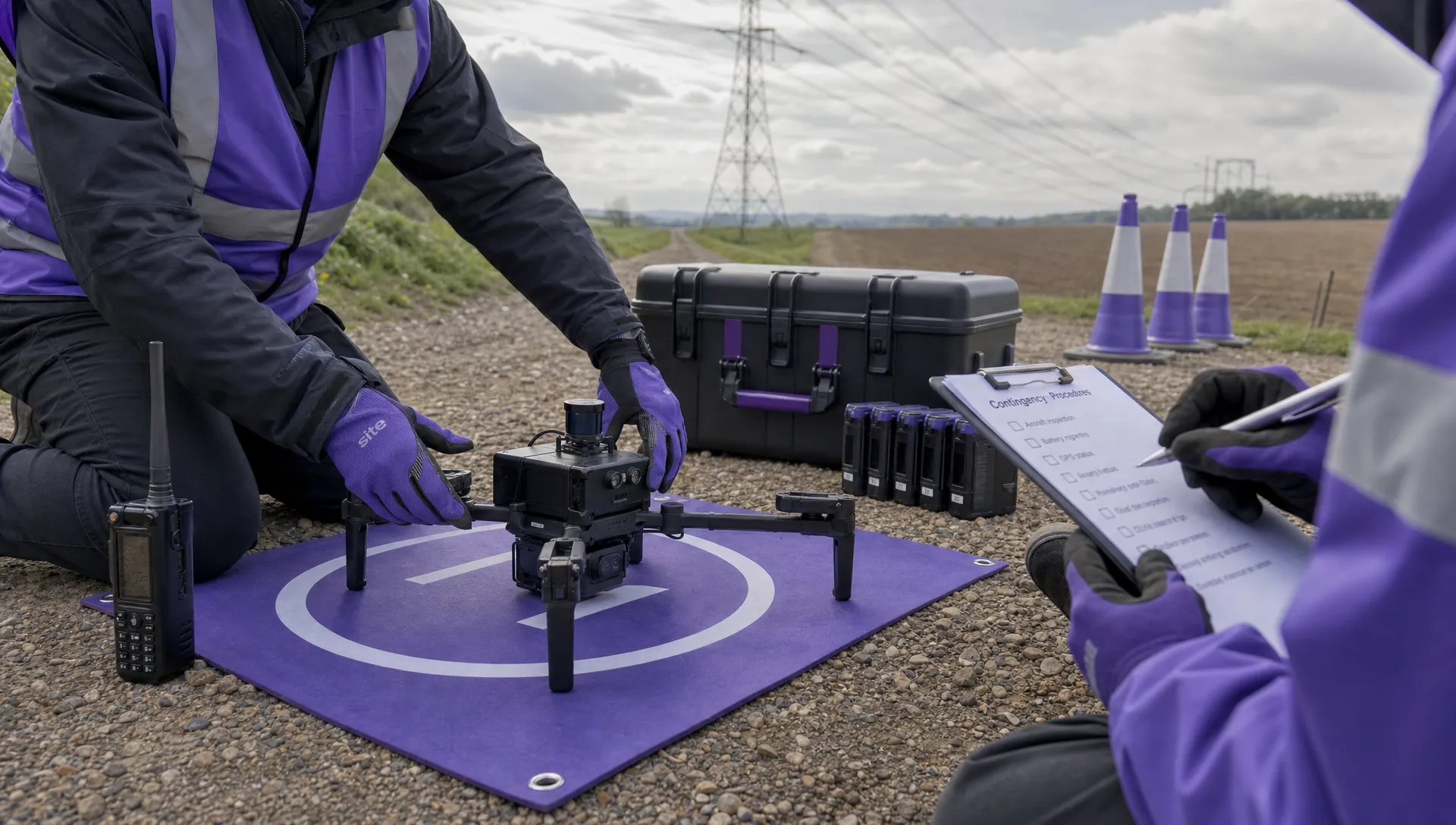 BVLOS Drone Requirements for Building a Safety Case →
 Drone Pilot Test Mistakes That Cost Candidates Marks →
 FAA 107 License vs Part 107 Certificate: What’s the Difference? →
 Drone Airport Rules: A Field Checklist for Site Assessments →
 FAA Part 107 Record-Keeping Rules for Commercial Teams →
 How to Review a DJI Flight Log After an Unexpected Event →
 Drone Laws Around the World: A Pre-Flight Research Framework →