
Drone Logbook vs Flight Log: What Operators Should Keep
Ask ten drone professionals what should go in a drone logbook and you will hear ten slightly different answers. Some will talk about aircraft hours, others will mean pilot flying time, and others will point to the telemetry file created by the controller app after every sortie.
That confusion is understandable. In everyday use, terms such as flight log, pilot logbook, aircraft log, operations records and drone logbook often overlap. For professional operators, though, the distinction matters.
The practical answer is simple: keep a flight log for every flight, and keep a drone logbook that connects those flights to the aircraft, batteries, pilots, permissions, risk assessments, checklists, maintenance and incidents behind them.
A flight log records what happened on one mission. A drone logbook proves how your operation is managed over time.
Drone logbook vs flight log: the practical difference
A flight log is a record of a specific flight or sortie. It is usually created during or immediately after the operation and answers questions such as who flew, where, when, with what aircraft, for what purpose, and whether anything abnormal happened.
A drone logbook is the wider system of record. It may include all flight logs, but it also tracks the ongoing history of aircraft, batteries, maintenance, pilot competency, risk controls, authorisations, defects, incidents and operational decisions.
| Question | Flight log | Drone logbook |
|---|---|---|
| What does it cover? | One flight, sortie or mission | The operational history of aircraft, pilots, batteries and jobs |
| When is it updated? | During or immediately after a flight | Continuously, before, during and after operations |
| What does it prove? | The details of a completed flight | That the operation is controlled, traceable and auditable |
| Typical users | Remote pilots, observers, operations managers | Accountable managers, safety managers, clients, insurers, auditors |
| Main risk if missing | You cannot evidence what happened on a specific flight | You cannot evidence safe management across the operation |
Think of the flight log as evidence of execution. Think of the drone logbook as evidence of control.
Why keeping both matters
In the UK, the CAA’s CAP 722 guidance is a key reference point for unmanned aircraft operations. Your exact record-keeping duties depend on the category you operate in, your Operational Authorisation where applicable, your operations manual, insurance requirements, client contracts and internal safety processes.
Even when a specific template is not mandated, good records are essential for professional drone operations. They help you show that flights were planned properly, aircraft were fit to fly, pilots were competent, batteries were managed, risks were considered and anomalies were dealt with.
That matters most when something goes wrong. After an incident, complaint, near miss, flyaway, data dispute or client audit, a well-kept drone logbook gives you a clear timeline. It can show what was planned, what changed on site, who made decisions, what checks were completed and what corrective actions followed.
It also matters when everything goes right. Logs reveal utilisation, recurring defects, pilot currency, battery performance, seasonal workload, job profitability and training needs. For survey companies, utilities and emergency services, that operational intelligence is often as valuable as the compliance evidence.
What a flight log should capture
A flight log should be concise, consistent and completed close to the time of the operation. If it is too complicated, pilots will delay it. If it is too vague, it will not stand up to review.
At a minimum, a professional flight log should make the flight identifiable, link it to the people and equipment involved, and record anything that could affect safety, compliance or maintenance.
| Flight log field | Why it matters |
|---|---|
| Date and local time | Establishes when the flight took place and supports pilot currency records |
| Site or operating area | Links the flight to location-specific permissions, hazards and client work |
| Job, task or incident reference | Connects the flight to the wider operational purpose |
| Remote pilot and crew roles | Shows who was responsible and who supported the operation |
| Aircraft, payload and battery identifiers | Links flight time to fleet, maintenance and battery history |
| Take-off, landing and duration | Supports aircraft utilisation, pilot hours and maintenance intervals |
| Weather and site conditions | Provides context for operational decisions and risk management |
| Airspace or permission reference | Helps evidence that constraints were checked and addressed where applicable |
| Abnormal events or deviations | Records issues, mitigations, defects, near misses or lessons learned |
| Post-flight status | Confirms whether the aircraft and batteries were serviceable afterwards |
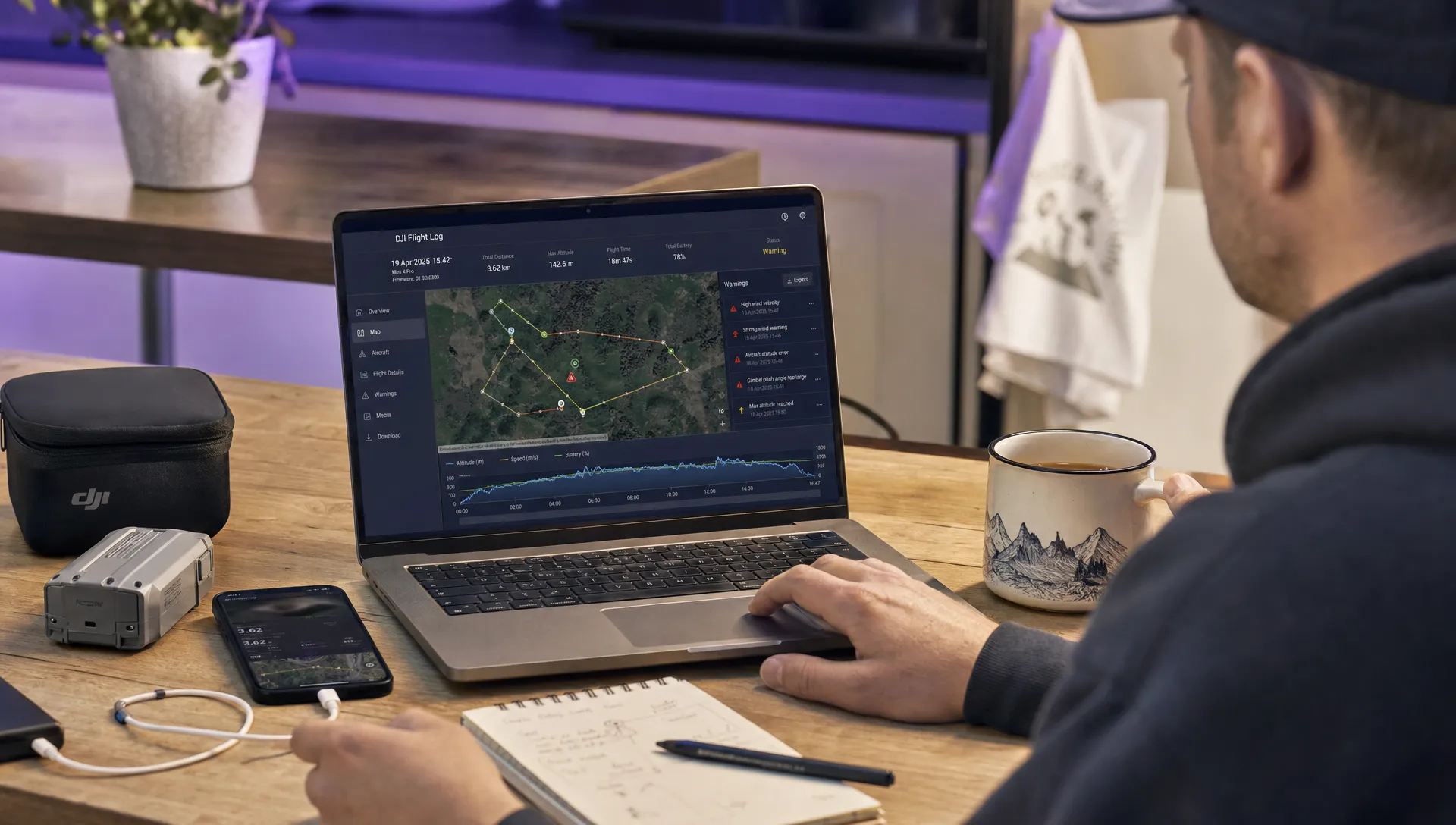
Controller or aircraft telemetry can form part of the flight log, especially where it records route, altitude, speed, controller connection and aircraft status. However, telemetry alone is rarely enough for professional record-keeping. It may not explain why the flight happened, who authorised it, which risk controls were in place, what the client requested, or what was decided on site.
For that reason, avoid treating exported controller files as your whole drone logbook. They are useful technical evidence, but they need operational context.
What a drone logbook should keep
A drone logbook should be the central archive for the full operational lifecycle. It should not simply be a long list of flight durations. It should connect every flight to the wider evidence that proves the operation was planned, conducted and reviewed properly.
| Logbook area | Examples to retain | Why keep it |
|---|---|---|
| Flight records | Flight logs, sortie times, crew, aircraft, batteries, notes | Creates the core operational history |
| Aircraft records | Registration or operator details where applicable, serial numbers, firmware, payload compatibility | Shows what was flown and whether it was appropriate for the task |
| Battery records | Battery IDs, cycles, condition, charging notes, retirement decisions | Supports safety, reliability and maintenance planning |
| Maintenance records | Inspections, defects, repairs, component changes, firmware updates | Demonstrates aircraft airworthiness and defect control |
| Pilot and team records | Qualifications, internal authorisations, training, currency, role assignments | Shows that the right people were used for the task |
| Planning records | Site assessments, airspace checks, land permissions, coordination notes | Demonstrates that the flight was prepared responsibly |
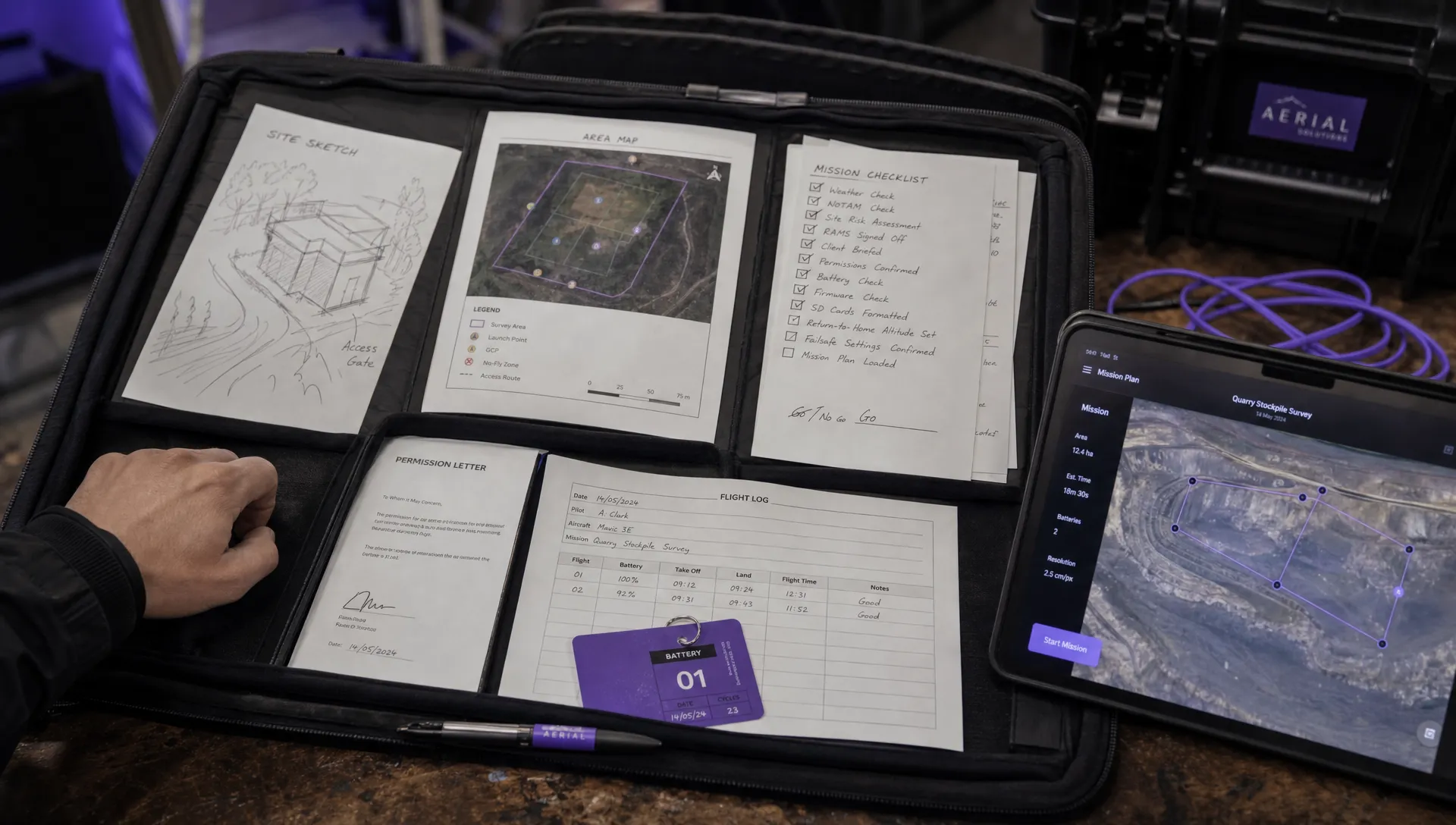
| Risk and checklist records | Risk assessments, method statements, pre-flight and post-flight checks | Provides evidence that known hazards were assessed and controlled |
| Incident and occurrence records | Near misses, abnormal events, complaints, corrective actions | Supports safety learning and defensible decision-making |
| Client or job records | Scope, location, asset references, deliverables, handover notes | Connects operational evidence to commercial or public service outcomes |
| Reporting records | Utilisation, flight hours, maintenance trends, compliance summaries | Helps managers improve performance and allocate resources |
Competence is not limited to holding a drone qualification. As organisations scale, pilots and managers may also need stronger skills in reporting, data handling, client communication, leadership and digital workflows. Broader professional development, including structured online upskilling programmes, can complement aviation-specific training and help teams make better use of the records they collect.
What different operators should keep
The core principles are the same for every professional operator, but the level of detail should match the risk, complexity and purpose of your work. A solo videographer flying low-risk jobs will not need the same operational archive as a utility company inspecting critical infrastructure or a police drone unit supporting live incidents.
| Operator type | Extra records worth keeping |
|---|---|
| Survey companies | Site control notes, asset or project references, payload details, ground access constraints, deliverable handover records |
| Utility companies | Infrastructure asset IDs, access permissions, stakeholder coordination, proximity hazards, repeat inspection history |
| Emergency services | Incident number, command structure, dynamic risk assessment notes, deployment rationale, handover and debrief records |
| Training organisations | Student flights, instructor sign-off, competency evidence, training syllabus links, assessment notes |
| Agricultural or specialist operators | Treatment area, payload configuration, product or sensor notes, environmental conditions, client acceptance records |
The key is proportionality. Keep enough evidence to explain and defend the operation, but avoid collecting information you do not need. Over-complicated logging creates friction, and friction leads to missing records.
How long should you keep drone logbook records?
There is no single universal retention period that fits every UK drone operator. Your retention policy should be based on your regulatory obligations, Operational Authorisation, operations manual, insurance conditions, client contracts and data protection responsibilities.
For professional operators, a sensible policy should distinguish between operational safety records, maintenance records, pilot competency records, incident records and personal data. Some records may need to be kept for years to support audits, claims, investigations or recurring client work. Other data, especially personal data, should not be retained longer than necessary.
The most important point is to decide your retention rules before you need them. If a client, insurer or regulator asks for evidence, you do not want to discover that logs were deleted inconsistently, stored on someone’s laptop, or mixed across multiple spreadsheets.
Paper, spreadsheet or digital drone logbook?
Paper can work for very small operations, but it is hard to search, back up, share or analyse. Spreadsheets are better, but they become fragile as soon as you manage multiple pilots, drones, batteries, sites and clients. Version control becomes a problem, and it is easy for flight logs to become disconnected from maintenance, risk assessments and job records.
A digital drone logbook is usually the better option for professional operators because it can link records together. The aim is not to create more admin. The aim is to reduce duplicate entry and make each record useful beyond the day it was created.
According to the Dronedesk features page, Dronedesk includes flight planning, flight logging, fleet management, team management, client management, airspace intelligence, proximity intelligence, data reporting, configurable checklists and risk assessments. Those capabilities are useful because they help connect individual flight logs with the surrounding operational evidence, rather than leaving records scattered across controller apps, PDFs, inboxes and spreadsheets.
Whether you use Dronedesk or another system, your digital logbook should make it easy to answer four questions quickly: what was planned, what was flown, what equipment and people were involved, and what follow-up action was required.
A simple record-keeping workflow
A good workflow starts before the aircraft leaves its case. If you wait until after the job to build the record, you will miss context and rely on memory.
- Create the job, client, site or incident record before planning begins.
- Attach or complete the planning evidence, including airspace checks, permissions, risk assessment and checklists where applicable.
- Assign the aircraft, batteries, payload and crew before the flight.
- Complete the flight log as soon as possible after each sortie, including any deviations or abnormal events.
- Record defects, battery concerns, maintenance actions or incident follow-up before closing the job.
- Review logs periodically for missing information, recurring issues, pilot currency and fleet utilisation.
This workflow keeps the flight log and drone logbook connected. It also avoids the common problem of having technically accurate flight times but no evidence of the planning and decisions that made the flight safe and compliant.
Common mistakes to avoid
Most record-keeping failures are not dramatic. They are small gaps that accumulate until an audit, insurance query or incident review exposes them.
| Mistake | Better approach |
|---|---|
| Relying only on controller telemetry | Keep telemetry where useful, but add operational context, crew, permissions, checks and outcomes |
| Recreating logs days later | Complete the flight log immediately while details are still accurate |
| Tracking aircraft but not batteries | Treat batteries as safety-critical assets with their own usage and condition history |
| Keeping planning records separate from flight logs | Link the job, risk assessment, checklist and flight record in one evidence chain |
| Recording defects without follow-up | Log the corrective action, serviceability decision and return-to-service status |
| Collecting unnecessary personal data | Keep what you need, protect it properly and delete it when retention is no longer justified |
The best drone logbook is not necessarily the one with the most fields. It is the one your team actually uses consistently, and the one that produces clear evidence when it matters.
Frequently Asked Questions
Is a drone logbook legally required in the UK? The UK CAA does not provide one single universal drone logbook template for every operator. Your record-keeping requirements depend on your operating category, Operational Authorisation where applicable, operations manual, insurance and client obligations. Professional operators should maintain structured records even where a specific format is not mandated.
Is a flight log the same as a drone logbook? No. A flight log records one flight or sortie. A drone logbook is the wider operational record that includes flight logs and connects them to aircraft, batteries, pilots, planning, maintenance, risk assessments and incidents.
Do controller app flight records count as flight logs? They can be part of the evidence, especially for technical flight data, but they are usually not enough on their own. They often lack operational context such as purpose, crew roles, permissions, risk controls, client reference and post-flight actions.
Should battery information be included in a drone logbook? Yes, for professional operations it is good practice to track battery identity, usage, condition, charging concerns and retirement decisions. Battery performance and handling can have direct safety implications.
What should Open Category operators keep? Even for lower-risk Open Category flights, professional operators should keep basic records of date, location, pilot, aircraft, purpose, flight duration, site conditions and any abnormal events. If the work is commercial, client-facing or repeated, a more complete logbook is usually worthwhile.
Can a digital drone logbook replace paper records? In many operations, yes, provided it captures the required information, is backed up, is accessible to the right people and supports your regulatory, insurance and client obligations. Your own operations manual and authorisation conditions should guide what is acceptable.
Build a drone logbook that works when you need it
A drone logbook should not be a paperwork burden. It should be a reliable operational memory for your business or organisation. It should help you prove compliance, understand performance, manage maintenance, support pilots and respond confidently when clients, insurers or auditors ask for evidence.
If your records are spread across spreadsheets, controller exports, email folders and paper checklists, Dronedesk can help bring core drone operations management into one workflow. Explore Dronedesk to see how flight planning, logging, fleet records, team management, checklists, risk assessments and reporting can support safer, more organised drone operations.
 Drone Pilot Test Mistakes That Cost Candidates Marks →
 FAA 107 License vs Part 107 Certificate: What’s the Difference? →
 Drone Airport Rules: A Field Checklist for Site Assessments →
 FAA Part 107 Record-Keeping Rules for Commercial Teams →
 How to Review a DJI Flight Log After an Unexpected Event →
 Drone Laws Around the World: A Pre-Flight Research Framework →
 How to Compare Drone Survey Services for Complex Sites →
 How to Start a Drone Mapping Business With a Clear Workflow →
 Class C Airspace Drone Rules for Commercial Flights →
 How to Create a Drone Job Pack for Every Mission →