
BVLOS - Compliance & the Future of Drone Ops Explained
Understanding BVLOS Operations - Breaking The Invisible Chains
Imagine running a delivery service, but your drivers can only deliver to places you can personally see. That’s the frustrating reality of traditional drone operations. BVLOS (Beyond Visual Line of Sight) changes everything. It unshackles drones, letting them fly beyond your immediate view. This has huge implications for industries from healthcare (think urgent medical deliveries) to agriculture (imagine surveying vast fields with ease). BVLOS isn't just about distance; it’s about enabling drones to operate independently and complete missions without constant human oversight.
This infographic highlights the core differences between VLOS and BVLOS, comparing their range, the approvals they require, and how long missions can last:
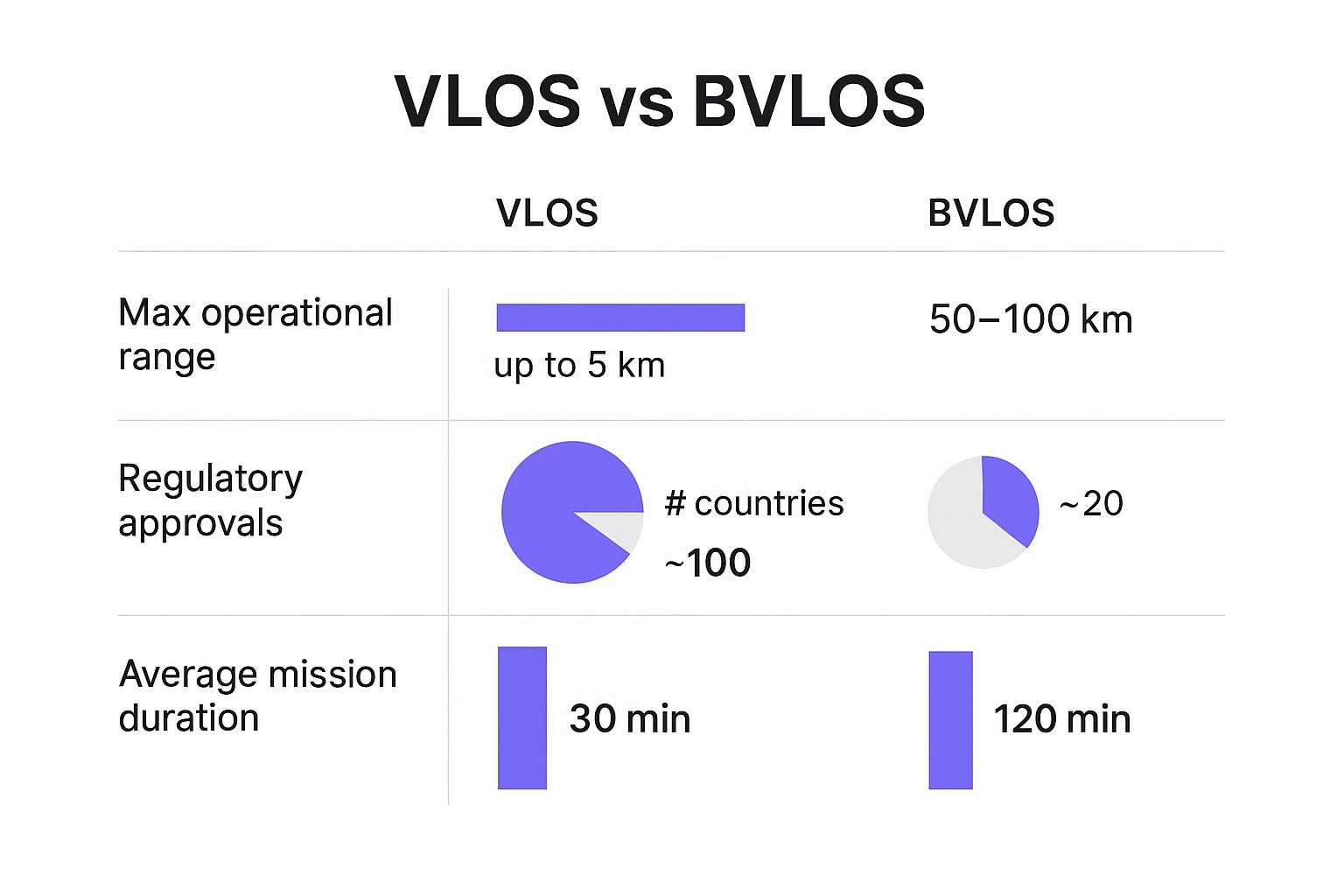
As you can see, BVLOS offers significantly greater range and mission duration. But the trade-off? More stringent regulations. The small number of countries with BVLOS approvals shows just how new this technology is, and how regulations are still catching up. This shift toward BVLOS is a major moment for the drone industry. Drones used to be tethered to the operator's vision, but changes in BVLOS regulations will push the industry forward, opening up new possibilities for drone delivery and emergency response. Even with different regulations around the world, the move to BVLOS is expected to bring significant economic advantages. Want a deeper dive into the changing BVLOS landscape? Check out this article: Progress in BVLOS Rulemaking.
Real-World BVLOS: More Than Just Distance
BVLOS allows drones to handle tasks that were simply impossible before. Picture a drone autonomously inspecting hundreds of miles of power lines – a job that would take a human crew weeks or even months. Or imagine emergency responders quickly deploying drones to disaster areas, providing vital real-time information and even delivering aid before ground crews can arrive. These examples only scratch the surface of BVLOS's potential to reshape entire industries.
To better understand the contrast between traditional drone operations and BVLOS, let's take a look at this comparison table:
BVLOS vs Traditional Drone Operations Comparison
Side-by-side comparison of operational capabilities, limitations, and applications between traditional line-of-sight and BVLOS drone operations
Aspect | Traditional VLOS | BVLOS Operations |
|---|---|---|
Operational Range | Limited to visual line of sight (typically a few kilometers) | Extended range, potentially hundreds of kilometers |
Supervision | Constant human monitoring required | Autonomous or remotely supervised operations |
Applications | Close-range inspections, photography, videography | Large-scale infrastructure inspections, deliveries, emergency response |
Regulations | Less complex approvals | More stringent regulatory requirements |
Mission Duration | Shorter flights due to range and battery limitations | Longer flight times possible |
Cost | Lower operational costs | Higher initial investment and regulatory compliance costs |
This table clearly illustrates the advantages and challenges associated with each type of operation. While VLOS excels in simplicity and lower costs, BVLOS unlocks greater potential but with increased complexity.
Why BVLOS Is the Future
BVLOS isn't just a tech upgrade; it’s a fundamental change in how industries handle logistics, monitoring, and services. As demand grows for faster deliveries, automated agriculture, and better infrastructure inspection, BVLOS is becoming crucial. It’s not simply about flying farther; it's about unlocking the true power of drones as autonomous systems. This opens up new possibilities and economic advantages for various sectors, transforming drones into genuinely valuable business tools and offering solutions that were previously unimaginable.
Navigating The Regulatory Maze: Your Compliance Roadmap
Think of drone regulations like the rules of the road. Essential for safety, they constantly evolve alongside technological advancements. BVLOS (Beyond Visual Line of Sight) compliance can sometimes feel like navigating a complex, ever-changing maze of federal, local, and even international regulations. This section will help you make sense of these rules, translating complicated jargon into practical guidance.
Understanding The Global Landscape
BVLOS drone operations face a patchwork of regulations worldwide. Europe, for example, is often considered to have a more forward-leaning approach, while North America has traditionally been more cautious, albeit with ongoing changes. Grasping these regional differences is the first critical step towards successful BVLOS operations. It allows operators to fine-tune their strategies, meeting regional requirements while still unlocking the full potential of BVLOS flight.
Compliance Checkpoints: From Limbo To Launch
Successful BVLOS operations hinge on meeting key compliance checkpoints. This goes beyond simply ticking boxes on forms; it's about understanding the reasoning behind the regulations. This deeper understanding helps operators anticipate potential problems and develop proactive solutions. It also allows you to distinguish between genuinely necessary documentation and unnecessary bureaucratic hurdles, saving valuable time and resources. For more on this, check out: Regulatory Compliance Solutions.
Building Bridges With Regulators
Rather than viewing regulators as roadblocks, consider them collaborators in innovation. A productive relationship with regulatory bodies is paramount for long-term success in BVLOS operations. Open communication and a willingness to work together can smooth the approval process and create a more supportive environment for drone activities. This proactive approach ensures you're not just following the rules, but also shaping the future of drone regulations.
The US Regulatory Landscape
The U.S. has faced its own set of hurdles in establishing standardized BVLOS rules. Compared to some other nations, the U.S. regulatory process has been slower to keep pace with the rapid progress in drone technology. This has prompted calls from industry leaders for more streamlined regulations. For instance, the Commercial Drone Alliance has highlighted how existing rules hinder U.S. competitiveness in the global drone market, particularly as countries like China rapidly expand their drone sectors. Regulatory progress is vital for safe and secure drone operations. Recent updates from the FAA indicate a shift towards simplifying BVLOS operations. Learn more here: FAA BVLOS and Counter UAS Update. These regulations will influence the global future of drone operations as the industry matures.
Proactive Compliance Is Key
Navigating the regulatory landscape demands proactive planning and a solid grasp of the ever-changing rules. By staying informed, fostering strong relationships with regulatory bodies, and concentrating on key compliance checkpoints, operators can position themselves to fully capitalize on the remarkable opportunities presented by BVLOS operations. This approach transforms compliance from a reactive burden into a strategic advantage, empowering operators to take the lead in the rapidly growing world of drone technology.
The Technology Stack That Makes BVLOS Possible
Behind every successful BVLOS (Beyond Visual Line of Sight) drone operation, there's a sophisticated network of technologies working together. Think of it like this: imagine a virtual co-pilot with lightning-fast reflexes, an air traffic controller with a complete view of the airspace, and a safety inspector constantly monitoring everything. That's the reality of BVLOS, where technology boosts human capabilities, allowing us to operate drones far beyond what we could see with our own eyes. And when you're setting up this tech, a clear SOP is key. A good standard operating procedure template excel can really help document your processes.
Detect-and-Avoid Systems: The Electronic Eyes
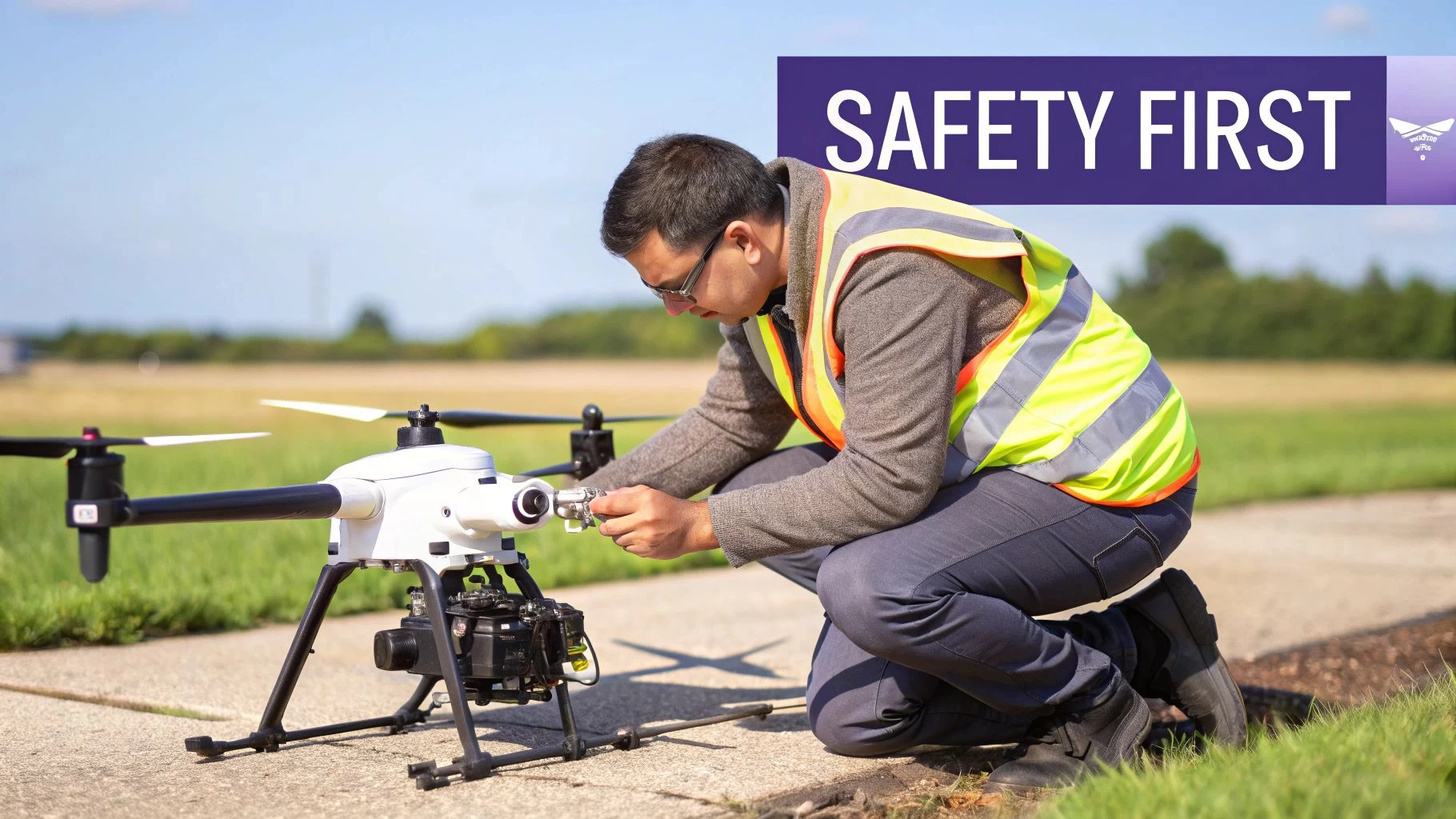
BVLOS drones depend heavily on detect-and-avoid (DAA) systems. These systems are like electronic eyes, constantly scanning the skies for potential hazards – everything from other aircraft to birds – things a human pilot couldn't possibly see from miles away. Using sensors like radar and lidar, DAA systems create a real-time 3D map of the drone’s surroundings. This allows the drone to automatically adjust its flight path to avoid collisions, ensuring safe operation even when the pilot can’t see it directly. Companies like PG&E are already using these systems for safe BVLOS inspections of their extensive infrastructure.
Robust Communication Links: The Unbreakable Tether
Imagine trying to fly a kite with a broken string. That’s why a continuous communication link between the drone and the operator is absolutely crucial for BVLOS operations. This connection is maintained using various technologies, ranging from satellite communication for long-distance missions to dedicated radio frequencies for shorter flights. This constant connection allows the operator to maintain control, receive real-time data from the drone, and send commands – even when the drone is beyond visual range. It's the unbreakable tether that makes BVLOS flight possible.
Precision Navigation: Always Knowing Where You Are
For BVLOS drone operations, knowing exactly where the drone is at all times isn't just important—it's essential. This pinpoint accuracy relies on a combination of GPS and other navigation systems working in harmony. These systems ensure the drone stays on course, even in challenging environments where GPS signals might be weak or unreliable. But what happens if the main navigation system fails? That's where backup navigation systems come in, providing an extra layer of safety and reliability – a critical requirement for BVLOS compliance.
The Power of AI: Split-Second Decision Making
Artificial intelligence (AI) is becoming increasingly important in BVLOS drone operations. Think of AI as a highly skilled assistant that can process massive amounts of data from the drone’s sensors and make critical decisions in a fraction of a second. For example, AI can optimize flight paths for efficiency, manage battery consumption, and even automate emergency procedures if needed. This ability to react instantly enhances safety and opens up exciting new possibilities for autonomous BVLOS operations.
Layered Safety Nets: Redundancy and Reliability
Safety in BVLOS operations is all about layers – layers of redundant systems and fail-safes. Imagine it like a safety net with multiple layers underneath. If one layer fails, there's another ready to catch you. This means that if one system malfunctions, a backup system automatically kicks in. For instance, if the primary communication link goes down, a backup system immediately takes over, ensuring the operator remains in control. This redundancy makes BVLOS remarkably safe and dependable, even in challenging situations.
Building Your Bulletproof Compliance Framework
Imagine building a house designed to withstand not just the everyday elements, but also rigorous inspections. That’s what creating a robust BVLOS compliance framework is like. You need a solid foundation, adaptable structures, and systems that work flawlessly under pressure. This section is your blueprint for building a compliance program that's practical, not just theoretical.
Standard Operating Procedures: Your Operational Backbone
The first step? Standard Operating Procedures (SOPs). Think of these as the foundation of your house. They should be detailed enough to satisfy regulators yet easy for your team to use every day. Imagine a pre-flight checklist. It should cover technical aspects, plus environmental conditions and communication protocols. This kind of detail builds consistency and reduces human error, crucial for BVLOS operations.
Documentation Systems: Audit-Ready Without The Paperwork Nightmare
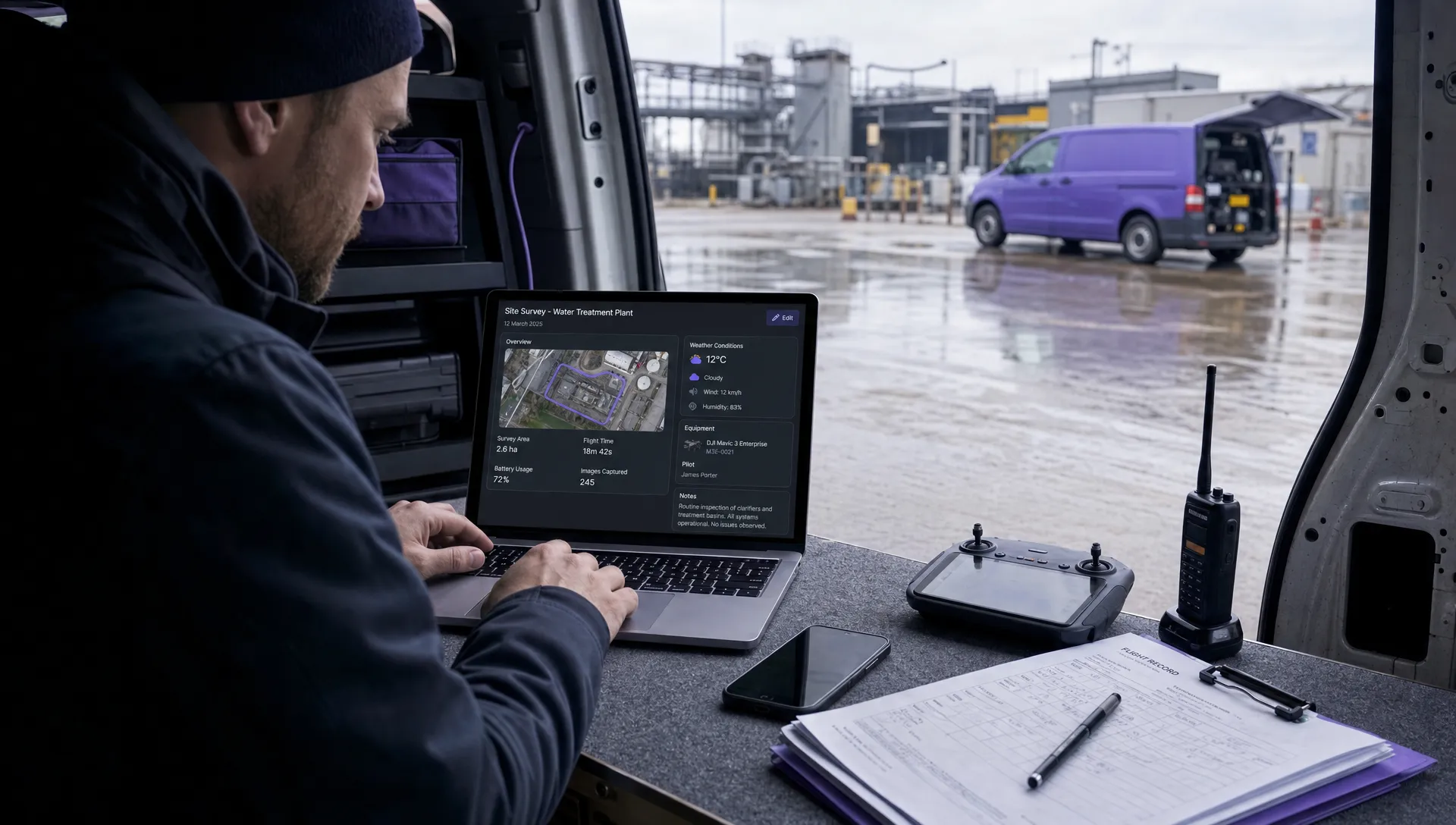
Next, a robust documentation system. This is like the walls of your house, protecting your operations. A well-designed system keeps you audit-ready without drowning your team in paperwork. Digital tools are key. Use them to log flight data, maintenance, and certifications. This streamlines audits and gives valuable operational insights. For more on documentation, you might find this interesting: Drone Remote Identification.
Training Your Team: Empowering Operational Excellence
Even with great SOPs and documentation, a well-trained team is essential. Think of this as your house’s electrical and plumbing – vital for everything to run smoothly. Your team needs to know not just what to do, but why. Regular training, scenario-based exercises, and open communication foster a culture of compliance where everyone is invested in operational excellence.
Learning From The Pros: Real-World Compliance Successes
Learn from those who’ve done it right. Companies like Pacific Gas and Electric (PG&E) have successful BVLOS programs. They use automated platforms like AirData for flight logging, maintenance, and reporting. This shows how powerful integrating technology into compliance workflows can be. BVLOS operations often rely on advanced connectivity. Consider the progress being made with Rural 5G Internet.
Avoiding Common Pitfalls: Staying Ahead Of The Curve
Understanding common compliance pitfalls is like installing smoke detectors in your house. Things like poor documentation, insufficient training, or ignoring regulation changes can be costly. By learning from others' mistakes, you can stay ahead and avoid common traps.
Building Your Custom Framework: Adapting To Your Needs
Finally, remember compliance isn't one-size-fits-all. Your framework should reflect your specific operations and risks. It's like customizing your house's interior. A small operation has different needs than a large one. Adapt proven frameworks to your circumstances and you'll build a truly robust compliance program that supports your growth and BVLOS operations.
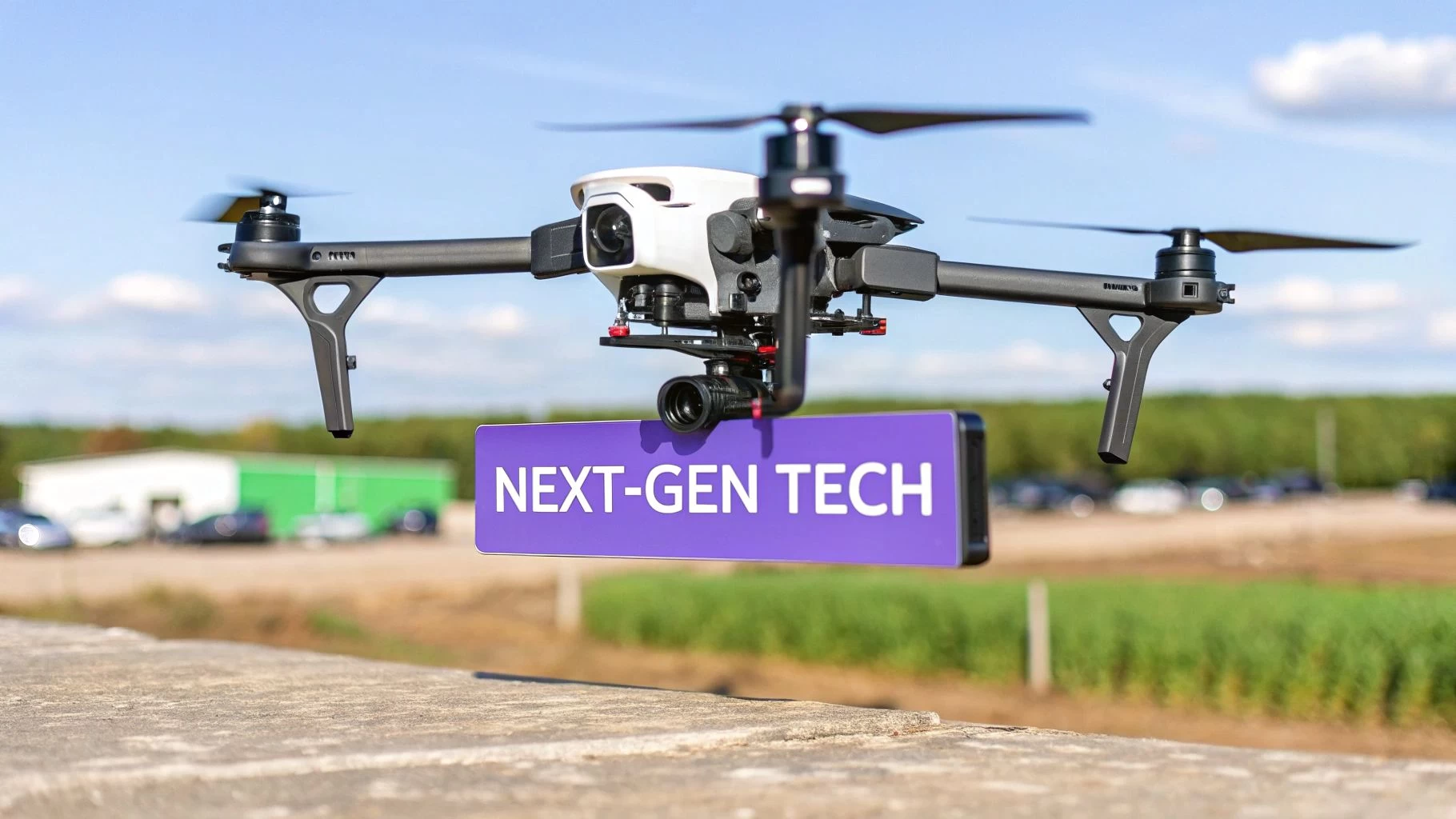
To help you visualize the key components and their interconnectedness, take a look at this checklist:
The following table provides a more detailed breakdown of compliance areas:
This checklist summarizes key compliance areas, required documentation, and recommended frequencies.
BVLOS Compliance Checklist and Requirements
Comprehensive breakdown of key compliance requirements, documentation needs, and operational standards for BVLOS operations
Compliance Category | Requirements | Documentation Needed | Frequency |
|---|---|---|---|
Pre-Flight Procedures | Verify aircraft airworthiness, check weather conditions, confirm airspace authorizations. | Pre-flight checklist, weather reports, airspace authorization documents. | Before each flight |
Operational Procedures | Adhere to flight plans, maintain communication with ATC, monitor aircraft performance. | Flight plan, communication logs, aircraft performance data. | During each flight |
Maintenance | Regular inspections and maintenance as per manufacturer’s guidelines. | Maintenance logs, component replacement records. | As per manufacturer’s schedule |
Training | Recurrent training for pilots and crew on BVLOS operations and emergency procedures. | Training records, certifications, competency assessments. | Regularly, typically annually or bi-annually |
Contingency Planning | Established procedures for lost link, emergencies, and other unforeseen events. | Contingency plan document, emergency contact list. | Reviewed and updated regularly |
Record Keeping | Maintain comprehensive records of all flights, maintenance, and training activities. | Flight logs, maintenance logs, training records. | Ongoing |
This table highlights the importance of proactive and consistent compliance efforts across all aspects of BVLOS operations. Regular review and updates are essential to ensure alignment with evolving regulations and best practices.
Game-Changing Applications Across Industries
BVLOS (Beyond Visual Line of Sight) drone operations are more than just a cool new tech trend. They're actually solving real-world problems that industries have faced for a long time. Imagine a single drone inspecting hundreds of miles of infrastructure in mere hours – a job that would typically take a human crew weeks to complete. Or picture crucial medical supplies reaching disaster victims faster than any ground vehicle could manage on damaged roads. These are the kinds of scenarios BVLOS is making possible.
Revolutionizing Agriculture with Data-Driven Insights
Imagine a farmer overseeing hundreds of acres, pinpointing areas that need attention without even stepping foot in the field. That’s the power of BVLOS in agriculture. Drones equipped with multispectral cameras act like high-tech scouts, providing detailed reports on crop health. They can spot things like nutrient deficiencies or disease outbreaks early on, allowing farmers to take action quickly. This precision agriculture not only boosts yields but also helps protect the environment by using resources more wisely. It's like giving farmers a superpower to see and understand their fields in a whole new way.
Infrastructure Inspection: Safer, Faster, and More Thorough
Inspecting miles of power lines, pipelines, or wind turbines used to be dangerous and time-consuming. Now, imagine drones with high-resolution cameras and sensors doing these inspections quickly and safely. They gather incredibly detailed data that traditional methods simply can't match. This approach not only keeps workers safe but also allows for more regular check-ups, preventing expensive breakdowns and ensuring the reliability of essential infrastructure. Companies like PG&E are already using BVLOS operations and platforms like AirData to streamline inspections and ensure compliance is automated.
Emergency Response: A Lifeline from the Sky
BVLOS drones are becoming indispensable for emergency responders. Picture this: a drone arrives at a disaster zone before human teams can even get there, providing live aerial footage and locating survivors. These drones can also quickly deliver medical supplies, communication equipment, and other vital resources to hard-to-reach areas. In emergency situations, this rapid response can be the difference between life and death, making BVLOS a true game-changer.
Real-World Successes and Lessons Learned
Putting BVLOS operations into practice successfully hinges on solid compliance procedures. Building a rock-solid compliance framework is key. You can delve into ways to ensure seamless compliance. While BVLOS has huge potential, there are obstacles to overcome. Early adopters have run into regulatory hurdles, technological limits, and operational complexities. But their experiences offer important lessons for others looking to use BVLOS. By learning from both the successes and the setbacks of these pioneers, organizations can better navigate the process and unlock BVLOS’s full potential.
Transforming Industries: From Concept to Reality
These examples show how BVLOS is changing the game across many different industries. By allowing drones to operate beyond the pilot's view, BVLOS opens up amazing new possibilities for collecting data, delivering services, and improving efficiency. As the technology keeps getting better and regulations adapt, BVLOS will become increasingly integrated into different sectors, shaping a future where autonomous drones play a major role in tackling tough problems and pushing innovation forward.
Market Forces Driving Explosive Growth

The drone industry, specifically Beyond Visual Line of Sight (BVLOS) operations, is experiencing a period of intense growth. It's reshaping how industries approach logistics, monitoring, and service delivery. Let's delve into the key factors driving this expansion.
Consumer Demand: The Need for Speed
Think about how much online shopping you do. Chances are, you appreciate a quick delivery. This growing expectation for speed and efficiency is a major force behind the rise of BVLOS drone deliveries. They offer a way to bypass traffic, reaching customers faster, particularly in remote or hard-to-reach areas. Businesses are now looking at BVLOS as a way to stay competitive and meet these ever-increasing consumer demands.
Aging Infrastructure: A Cost-Effective Solution
Our infrastructure – bridges, power lines, pipelines – is getting older, and inspecting it can be dangerous and expensive. Imagine a team having to climb a vast bridge for a thorough inspection. Now, picture a drone doing the same job, quickly and safely. This is the power of BVLOS. It offers a cost-effective and significantly safer alternative to traditional inspection methods, driving its adoption across various sectors.
Early Adopters: Gaining The Competitive Edge
Businesses that embrace BVLOS early are reaping the rewards. Imagine a utility company inspecting hundreds of miles of power lines in just a few hours, rather than days. Or a delivery service reaching customers in remote locations far faster than traditional methods ever could. These early adopters demonstrate the very real, practical benefits of BVLOS and inspire others to follow suit.
Investment and Funding: Reshaping The Landscape
The influx of investment and funding pouring into the drone technology sector is like adding fuel to a fire. Venture capitalists and large corporations recognize the transformative potential of BVLOS and are investing heavily. This financial boost accelerates research, development, and deployment of BVLOS technology, leading to rapid market expansion. The autonomous BVLOS drones market is projected to leap from $1.33 billion in 2024 to $1.64 billion in 2025, a 23.2% Compound Annual Growth Rate (CAGR). By 2029, the market is expected to reach $3.74 billion, maintaining a 22.9% CAGR. This growth is spurred by demand across diverse sectors like delivery services, automated agriculture, infrastructure inspection, and emergency response. Advancements in battery technology, improved safety and cybersecurity measures, the rise of Drone-as-a-Service (DaaS), 5G integration, and sophisticated payload systems are all playing their part. These numbers paint a clear picture of the transformative impact of BVLOS. Discover more insights.
Economic Ripple Effects: New Jobs and Business Models
As BVLOS operations expand, so too do the job opportunities. Demand is rising for specialized roles like drone pilots, technicians, data analysts, and software developers. New businesses are also emerging, offering niche services such as drone maintenance, data processing, and consulting. This ripple effect extends beyond the drone industry itself, impacting related sectors and contributing to broader economic growth.
The Future Is Taking Shape: What's Next For BVLOS
The future of Beyond Visual Line of Sight (BVLOS) drone operations is currently unfolding. The choices we make in the next few years will decide whether autonomous drones become as commonplace as delivery trucks or remain specialized tools. We're at a crucial point, with technology and regulations evolving together to open up new possibilities. Let’s explore what's coming up for BVLOS.
5G and Enhanced Connectivity: Real-Time Control and Data
The arrival of 5G networks is a game-changer for BVLOS. Imagine upgrading your drone's internet connection from dial-up to broadband. 5G allows for live streaming of high-definition video, giving pilots a crisp, clear view of what their drone sees, miles away. This improved connectivity also allows for nearly instant command responses, a necessity for safe and effective BVLOS operations.
Urban Air Mobility: Passenger Drones in Our Skies?
Picture commuting to work not by car or train, but by air taxi. This seemingly far-off scenario is becoming more real with advancements in Urban Air Mobility (UAM). Companies are designing advanced passenger drone systems that have the potential to reshape transportation in busy cities. These systems will heavily depend on BVLOS technology, needing sophisticated air traffic control and strong safety measures to guarantee safe and smooth operation in complex city environments.
The Expanding Role of Artificial Intelligence
Artificial intelligence (AI) is rapidly becoming essential for BVLOS drone operations. Think of AI as a highly skilled virtual co-pilot, processing huge amounts of data and making intricate decisions in real-time. As AI algorithms improve, drones will handle tougher tasks on their own, from navigating challenging terrain to handling unexpected issues. You might find this interesting: How AI and automation are changing drone operations.
Drone Traffic Management: Coordinating the Skies
As more BVLOS drones take to the sky, efficient traffic management becomes vital. Imagine a highway with no traffic signals—it would be pure chaos. Drone Traffic Management (UTM) systems are being created to bring the structure and order needed to ensure safe and smooth BVLOS operations on a larger scale. These systems will manage flight routes, organize airspace, and share real-time data with drone operators to avoid collisions and improve traffic flow.
Regulatory Evolution: Balancing Innovation and Safety
Regulations are key to the future of BVLOS. Regulators have to balance encouraging development and guaranteeing safety. The rules and guidelines are constantly changing. Staying informed about these changes is crucial for anyone wanting to use BVLOS. For instance, the FAA's current work to simplify BVLOS regulations in the U.S. will greatly influence how these operations grow and spread.
The image below from Wikipedia shows different types of unmanned aerial vehicles, demonstrating how drone technology is quickly advancing:
This illustration shows the many drone designs, from fixed-wing aircraft to multirotor platforms, each with its own strengths and uses. The continuing progress in these technologies, especially in autonomous flight and sensor integration, will be important in shaping BVLOS operations in the years to come.
Preparing for What's Next
The future of BVLOS is full of promise, but it needs careful planning. Those who understand the evolving technology and regulations will be best placed to make the most of the opportunities BVLOS presents. From adopting new technologies like 5G and AI to collaborating with regulators, taking steps today is essential for success in the fast-moving world of BVLOS.
Ready to improve your drone operations and ensure BVLOS compliance? Dronedesk offers a complete drone operations management platform, with tools for flight planning, compliance monitoring, and team management. Simplify your workflows and stay ahead with Dronedesk. Learn more and get started today.
 Drone Airspace Rules: How to Document Your Site Checks →
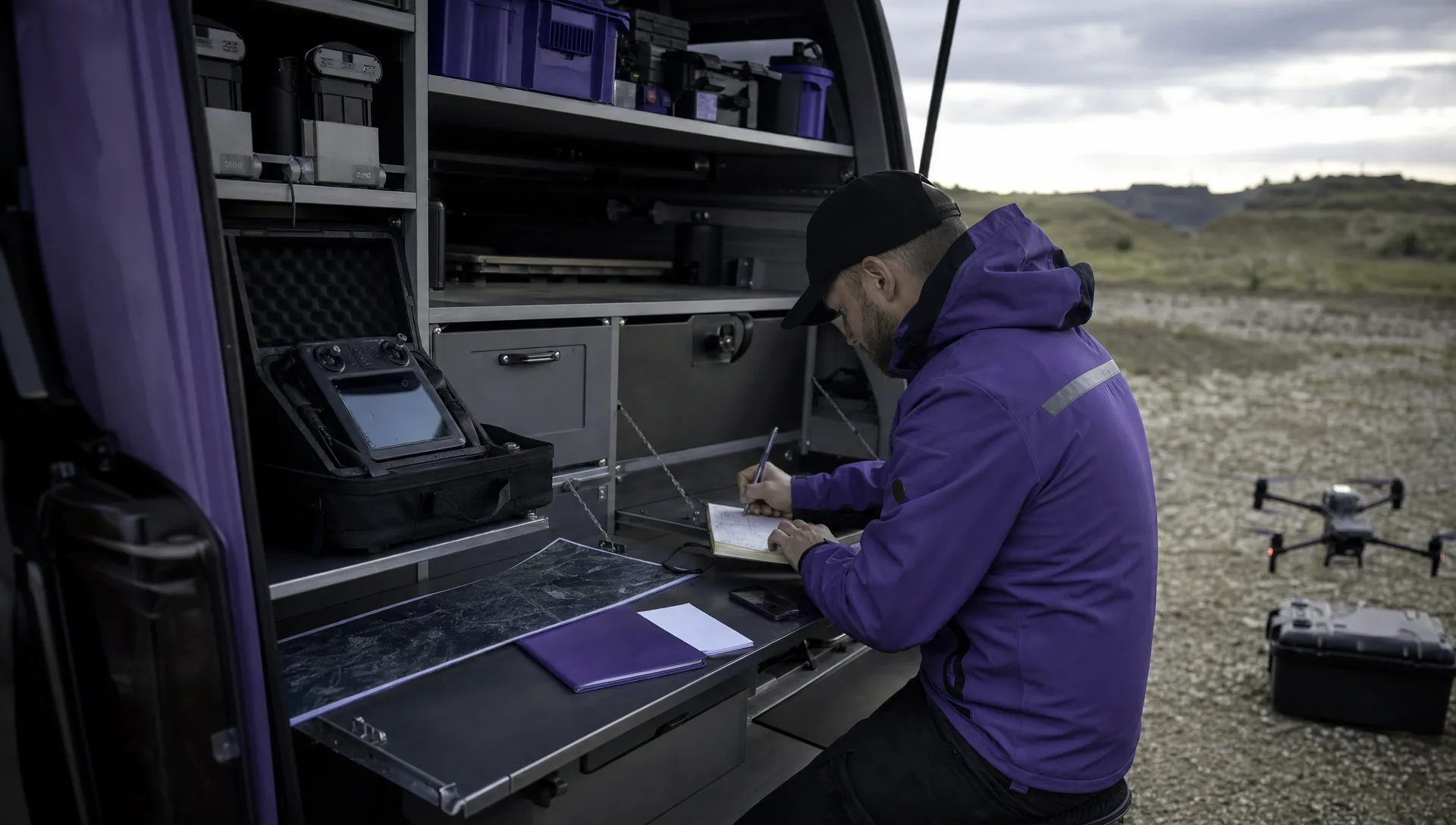 How to Evaluate a Free Drone Logbook Before Using It →
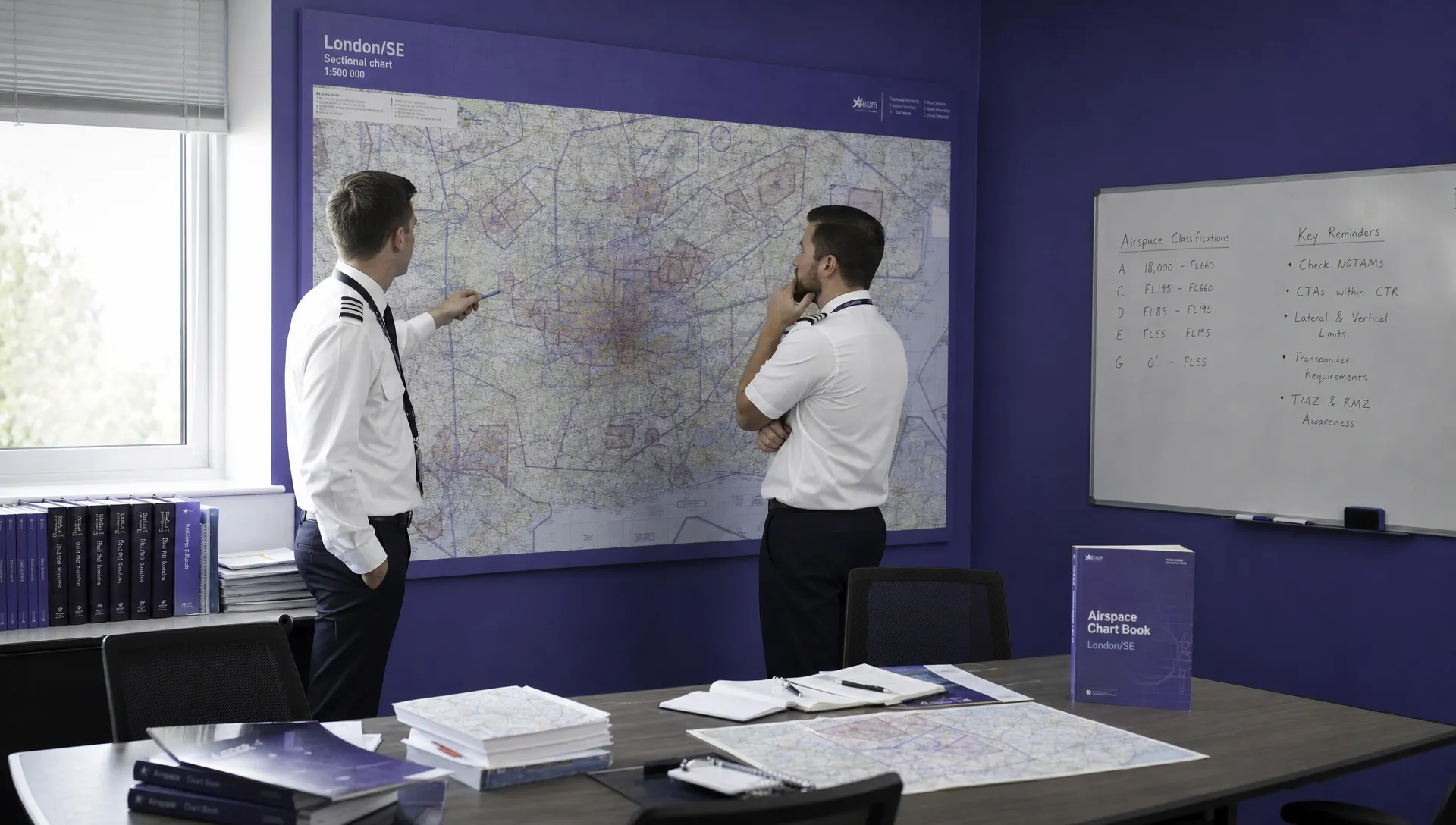 FAA Part 107 Test: How to Master Airspace Questions →
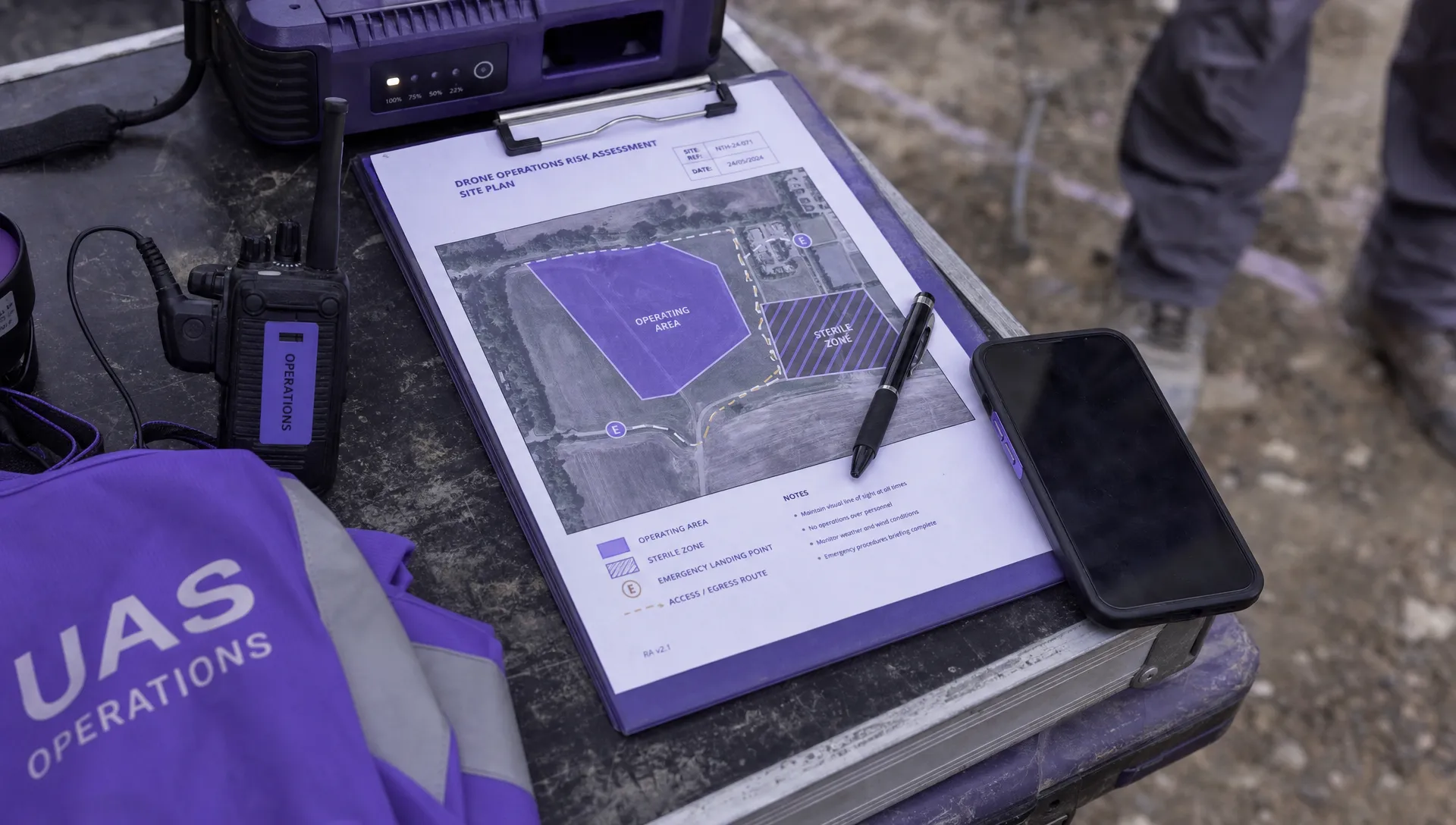 Drone Risk Assessment Controls That Work in the Field →
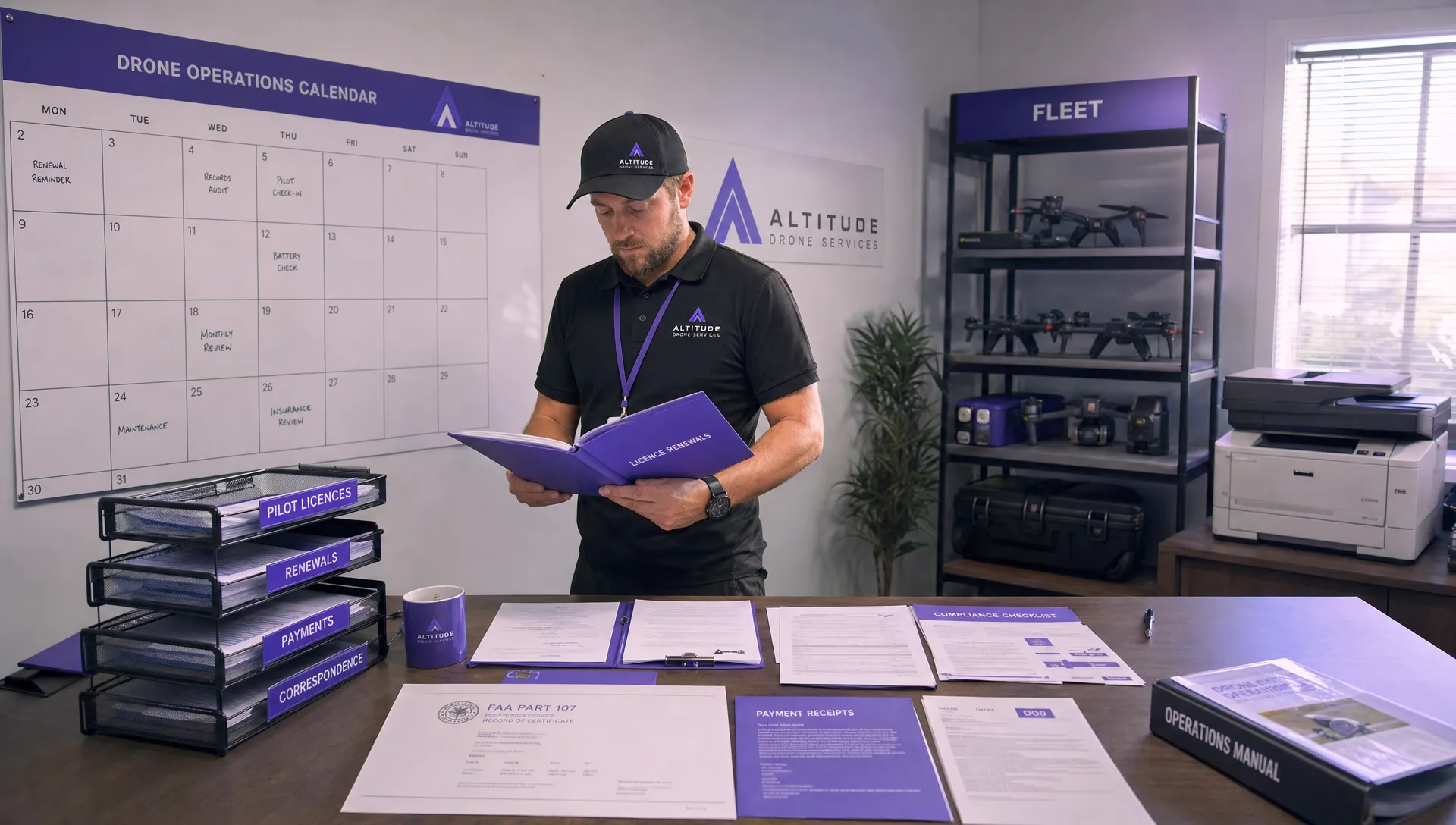 FAA Drone License Costs Beyond the Knowledge Test →
 Drone Part 107 Operations: When a Waiver May Be Needed →
 Drone Operating Rules for Managing Contractors and Employees →
 BVLOS Drone Requirements for Building a Safety Case →
 Drone Pilot Test Mistakes That Cost Candidates Marks →
 FAA 107 License vs Part 107 Certificate: What’s the Difference? →