
What Is a Flight Recorder? The Ultimate Guide to Black Boxes
Think of a flight recorder as an aircraft's nearly indestructible diary. Its one job is to meticulously record the final, critical moments of a flight, survive a crash, and give investigators the data they need to figure out what went wrong. You probably know it by its more common name: the black box.
The Indispensable Guardian of the Skies

Imagine trying to solve a complex puzzle with most of the pieces missing. That was the grim reality for early air crash investigators. Without reliable data, figuring out the cause of an incident was often just speculation. The flight recorder changed all that, playing a massive role in making aviation the safest way to travel long distances today.
Here's a fun fact: the "black box" isn't black at all. To make it easy to spot among wreckage, it's painted a bright, fluorescent "international orange." This simple but brilliant design choice dramatically boosts the chances of recovery, which is always the first step in a successful investigation.
Core Components and Purpose
At its heart, a modern flight recorder system is actually made up of two key devices. Think of them as two different storytellers, each capturing a unique part of the story to create a complete picture.
- Flight Data Recorder (FDR): This is the aircraft's objective historian. It tracks hundreds of specific parameters with incredible precision—things like airspeed, altitude, engine performance, and control movements. It creates a detailed digital timeline of exactly what the plane was doing.
- Cockpit Voice Recorder (CVR): This device captures the human element. It records conversations between the pilots, communications with air traffic control, and any other sounds inside the cockpit, like automated warnings or unusual noises.
Together, these two streams of information give investigators both the "what" and the "why" of an incident. The FDR explains what the aircraft was physically doing, while the CVR offers crucial context on the decisions and reactions of the flight crew.
To give you a clearer picture, here’s a quick breakdown of what these components do.
Flight Recorder At a Glance
| Component | Primary Function | Data Recorded |
|---|---|---|
| Flight Data Recorder (FDR) | Records aircraft performance and flight parameters. | Altitude, airspeed, heading, engine thrust, control inputs. |
| Cockpit Voice Recorder (CVR) | Captures audio from the cockpit. | Pilot conversations, radio transmissions, ambient sounds. |
| Protective Casing | Protects the memory units from extreme impact, fire, and pressure. | N/A - This is the rugged, orange housing. |
| Underwater Locator Beacon | Emits an ultrasonic "ping" to help locate the recorder if submerged. | N/A - An essential recovery tool. |
This combination of data is what makes the flight recorder such a powerful tool for improving aviation safety.
A flight recorder isn't just a reactive tool for crash analysis; it is a proactive instrument of prevention. Each recovered recorder contributes to a global safety database that has led to countless design improvements and procedural changes, saving lives by learning from the past.
This idea of capturing detailed operational data isn't just for commercial airliners anymore. A modern parallel has popped up in the world of unmanned aviation. Commercial drones generate their own versions of flight logs, capturing telemetry data that serves a very similar purpose—from proving regulatory compliance to analyzing flight performance.
In this guide, we’ll dig into the vital role of flight recorders in both manned and unmanned aviation, tracing their journey from historic origins to their modern-day applications, including how tools like Dronedesk help manage this crucial data.
The Evolution of the Black Box
The flight recorder wasn't dreamed up in a single flash of genius. It was forged in the crucible of necessity, evolving step by step with each aviation breakthrough—and tragically, with each accident. Its story starts long before the jet age, in an era where figuring out why a plane crashed was often little more than educated guesswork. The core idea, though, was simple and powerful: if you could just create a log of a flight’s key moments, you could learn from failure.
Early concepts were incredible mechanical marvels, using basic tools to physically scratch data onto different media. They were the ancestors of the sophisticated digital systems we rely on today, proving that the hunger for flight data is as old as aviation itself.
The First Flight Recorders
While Australian scientist Dr. David Warren usually gets the credit for inventing the modern black box, others were laying the groundwork decades earlier. The real push for flight recorders kicked off during the 1930s and WWII, driven by the urgent needs of military aviation.
Pioneers across Europe were all trying to solve the same problem at the same time. In 1939, French engineers François Hussenot and Paul Beaudouin developed a device called the 'hussenograph,' which cleverly used photographic film to record critical parameters like altitude and speed. For its time, it was an incredibly advanced piece of kit and was eventually deployed in over 1,000 aircraft by the end of the war.
Engineers in the UK and Finland were also busy creating their own versions, using everything from needles etching data onto copper foil to purely mechanical systems built for fighter test flights. You can explore more on these early flight recorder innovations to see how the initial concepts took shape.
These early devices were game-changers. For the first time, they captured objective, factual data, moving accident investigation away from pure speculation.
A Catalyst for Modern Innovation
The true turning point for the flight recorder came in the 1950s with the dawn of commercial jet travel. The De Havilland Comet, the world's first commercial jetliner, was a symbol of progress. But a series of mysterious and catastrophic crashes in 1953 and 1954 completely shook public confidence. Investigators were stumped, lacking the evidence they needed to pinpoint the cause.
It was this very mystery that sparked the imagination of Dr. David Warren. As a chemist at Australia's Aeronautical Research Laboratory, he was part of the team looking into the Comet disasters. He realised that if investigators just had a recording of the cockpit conversations and instrument readings from those final moments, the puzzle could be solved.
His idea was deceptively simple: create a memory unit that could survive a crash and tell the tale of what went wrong. Warren envisioned a device that could capture not just the "what" (instrument data) but also the "why" (pilot conversations).
At first, his concept was met with a wall of resistance. Aviation authorities were skeptical, and pilot groups immediately raised privacy concerns. It was a classic case of an idea being ahead of its time.
From Skepticism to Global Standard
Despite the initial pushback, Warren didn't give up. In 1957, he created a prototype he called "The ARL Flight Memory Unit." The device could store an impressive four hours of cockpit audio and eight critical flight instrument readings on a single steel wire—a remarkable feat for the time.
A demonstration of the prototype in the United Kingdom finally got the attention of aviation officials. Then, following another unexplained crash in Queensland, Australia, in 1960, the inquiry judge strongly recommended that flight recorders be made mandatory on all airliners. Australia became the first country in the world to do so, cementing the black box's role in air safety for good.
From there, the technology advanced at a breakneck pace, driven by the lessons learned from each new accident investigation.
- Magnetic Tape: Early recorders moved from wire to more robust magnetic tape, which allowed for a lot more data to be stored.
- Solid-State Memory: The biggest leap forward came with the shift to solid-state memory boards. Unlike tape, these have no moving parts, making them far more resistant to the extreme G-forces of an impact.
- Expanded Parameters: Modern Flight Data Recorders (FDRs) can now track thousands of parameters, a world away from the handful captured by their predecessors.
This constant improvement reflects a core principle of aviation safety: every incident, no matter how tragic, offers a chance to learn and prevent future disasters. The flight recorder evolved from a novel, almost outlandish idea into the indispensable guardian it is today.
Deconstructing a Modern Flight Recorder
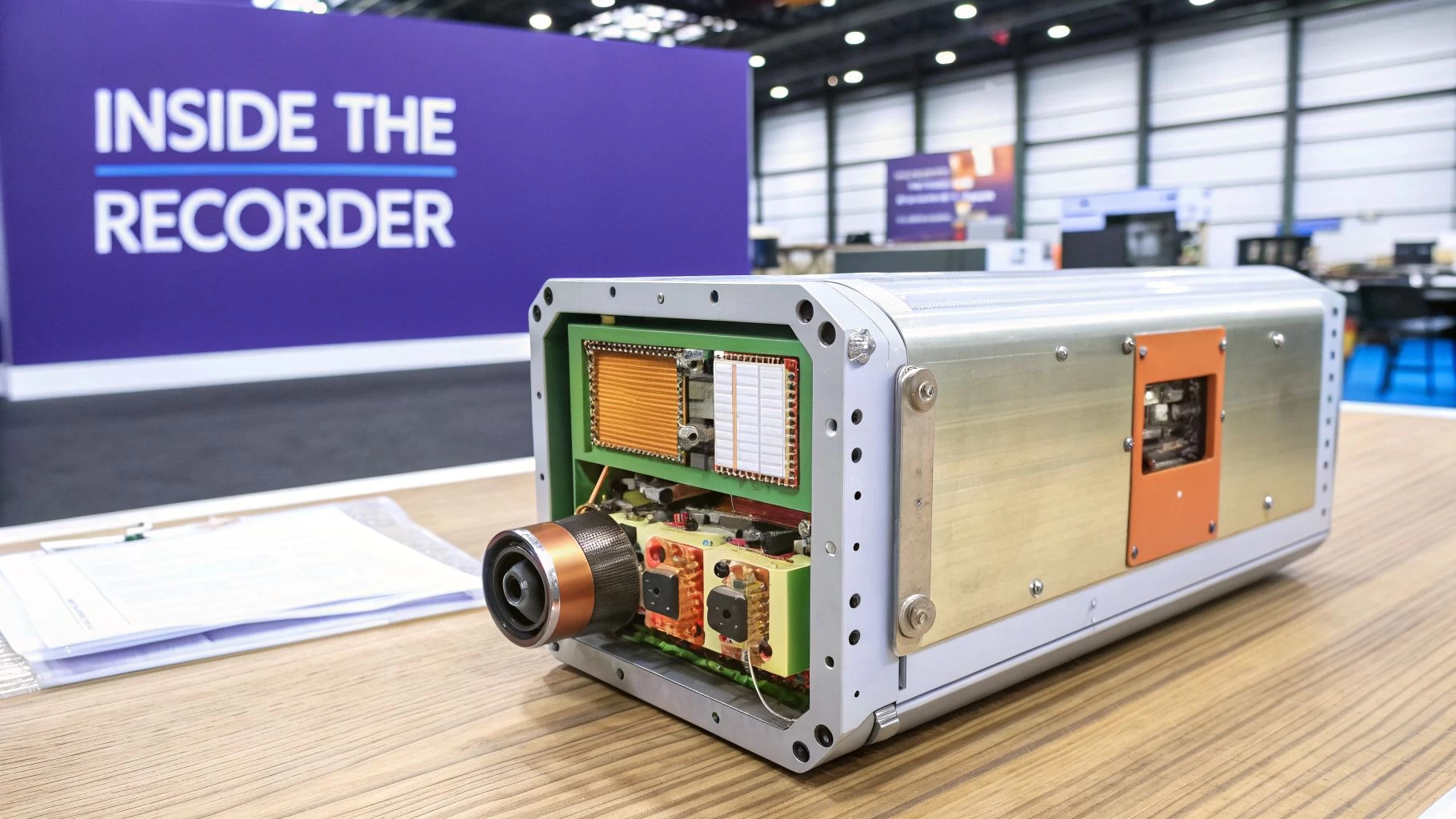
To really get what a flight recorder is, you have to look past that famously tough, bright orange shell. It isn't just one single gadget; it's a sophisticated system made of two distinct parts, each telling a crucial piece of a flight's final story.
Think of it as a high-tech time capsule, purpose-built to survive the unsurvivable and hand over its precious data completely intact.
This system is built around two key functions, each handled by its own dedicated recorder. Put them together, and they give investigators a complete picture of an aircraft's performance right alongside the human factors playing out in the cockpit.
The Two Storytellers Inside the Box
A modern flight recorder setup actually houses two separate devices: a Flight Data Recorder (FDR) and a Cockpit Voice Recorder (CVR). While they work in concert, their jobs are completely different.
The Flight Data Recorder (FDR) is the aircraft's objective memory. It’s a number cruncher, meticulously logging hundreds—sometimes thousands—of specific flight parameters every single second. This stream of digital information lets investigators reconstruct the flight with astonishing accuracy, creating a virtual replay of the aircraft’s final moments.
In contrast, the Cockpit Voice Recorder (CVR) captures the human element. It records audio from several microphones placed around the cockpit, preserving everything from pilot conversations and radio calls to automated system alerts and even the ambient drone of the engines. This provides invaluable context to the raw numbers coming from the FDR.
FDR vs. CVR: What's the Difference?
To make it crystal clear, let's put the two recorders head-to-head. While both are essential for a full investigation, they capture fundamentally different types of information. One tells us what the plane was doing, and the other helps explain why.
| Feature | Flight Data Recorder (FDR) | Cockpit Voice Recorder (CVR) |
|---|---|---|
| Data Type | Quantitative (Numbers and values) | Qualitative (Audio and sounds) |
| Primary Focus | The aircraft's mechanical and electronic state. | The flight crew's actions and environment. |
| Typical Data Points | Airspeed, altitude, engine thrust, control surface positions. | Pilot-to-pilot communication, air traffic control calls. |
| Recording Duration | 25 hours or more on a continuous loop. | 2 hours (older models) to 25 hours (newer models). |
This dual-system approach ensures that investigators get both the hard data and the crucial human context needed to solve the puzzle of an accident.
Built to Survive the Unthinkable
Honestly, the most incredible thing about a flight recorder isn't what it records, but its sheer resilience. The core of the device is the Crash-Survivable Memory Unit (CSMU), a cylindrical fortress designed to shield the memory boards holding all that vital data.
This engineering marvel is built in layers, each with a specific job:
- Aluminum Housing: The memory boards are first wrapped in a thin layer of aluminum.
- High-Temperature Insulation: Next comes a thick, one-inch layer of dry silica insulation. This can withstand post-crash fires hitting 1,100°C (2,000°F) for at least an hour.
- Titanium or Steel Shell: The final protective layer is a corrosion-resistant shell of stainless steel or titanium, which gives the unit its immense structural strength.
This construction allows the CSMU to endure crushing forces of up to 5,000 pounds per square inch and impacts of 3,400 Gs—an acceleration 3,400 times greater than gravity. It's an almost indestructible vault for the flight's final secrets.
The Genesis of a Lifesaving Idea
This incredible technology was born from tragedy. The idea for a practical, combined flight recorder came from Dr. David Warren, an Australian scientist investigating the mysterious crashes of the De Havilland Comet jetliners in 1953. These accidents left investigators with hardly any clues and claimed dozens of lives without a clear cause.
After spotting a miniature tape recorder at a trade show, Warren had a lightbulb moment. He realised a similar device could capture cockpit conversations and instrument data right up to the point of impact. By 1957, his team had built a prototype called the ARL Flight Memory Unit, laying the foundation for the modern black box. You can learn more about Dr. Warren's pioneering work and how it changed aviation forever.
The flight recorder's design philosophy is simple yet profound: the story it tells is so vital that the container must be engineered to survive forces far beyond what the aircraft itself can withstand. It is the ultimate silent witness, preserving truth amidst chaos.
This core function ensures that no matter how severe an incident, the data needed to prevent it from happening again has the highest possible chance of being recovered.
How Flight Recorders Changed Air Safety Forever
It’s one thing to understand the mechanics of a flight recorder, but its true worth is measured in the lives it has saved. These devices aren’t just data collectors; they are the silent witnesses that have fundamentally reshaped aviation, turning catastrophic failures into critical lessons. Every recorder recovered from a crash site provides a roadmap of what went wrong, allowing investigators to find the root cause and, crucially, stop it from ever happening again.
The entire history of modern aviation safety is written in the data pulled from these bright orange boxes. Before they were widely used, figuring out why a plane crashed was often a painful process of elimination and educated guesswork. The "black box" completely changed the game, replacing speculation with hard evidence of mechanical failures, design flaws, or procedural mistakes.
This shift from mystery to clarity has had a profound, measurable impact. Since becoming mandatory on commercial aircraft in the 1960s, flight recorders have been instrumental in over 95% of major investigations. Since the year 2000 alone, the global fatal accident rate has plummeted by a staggering 52%. A huge part of that is because these devices help investigators determine the probable cause in about 90% of cases—a dramatic improvement from the coin-flip odds of the pre-recorder era.
From Accident Data to Global Regulations
The real power of the flight recorder lies in its ability to drive meaningful change. The data recovered from an accident doesn't just solve a single mystery; it frequently leads to sweeping safety mandates that affect every airline on the planet. Regulatory bodies like the Federal Aviation Administration (FAA) in the U.S. and the International Civil Aviation Organization (ICAO) lean heavily on this data to craft and enforce global safety standards.
Let's look at a few powerful examples of this cycle in action:
- TWA Flight 800 (1996): The Flight Data Recorder was crucial in helping investigators figure out that a fuel tank explosion was the likely cause. That discovery led directly to new FAA regulations requiring design changes to prevent it from happening again, including the rollout of inerting systems that reduce oxygen levels in fuel tanks.
- ValuJet Flight 592 (1996): The CVR and FDR data pieced together the horrifying story of a fire in the cargo hold started by improperly stored oxygen generators. The investigation resulted in strict new rules for handling hazardous materials and made smoke detectors and fire suppression systems mandatory in cargo holds across the industry.
- Swissair Flight 111 (1998): The Cockpit Voice Recorder captured the crew's desperate struggle as a fire, sparked by faulty wiring, spread through the aircraft. This tragedy exposed serious vulnerabilities in aircraft wiring and insulation, triggering widespread upgrades and much tougher standards for material flammability.
In each case, the flight recorder provided the irrefutable evidence needed to push through life-saving changes.
The Future of Aviation Safety
The flight recorder's role is still evolving. As technology gets better, regulators are pushing for even more capable systems. Innovations like deployable flight recorders—which eject from the aircraft on impact and can float—are designed to make recovery faster, especially in deep-water incidents.
On top of that, the rise of real-time data streaming promises to one day send critical flight information to ground stations before an accident even happens. This proactive approach mirrors the principles of modern flight data monitoring, where data is constantly analyzed to spot trends and head off problems.
The ultimate goal is to move from a reactive model of accident investigation to a proactive system of accident prevention. Flight recorders are the cornerstone of this philosophy, providing the data not only to solve past tragedies but to build a future where they never happen at all.
This continuous loop of data collection, analysis, and improvement is the engine driving aviation safety forward, ensuring the lessons learned in the sky are never forgotten.
Flight Recorders in the Modern Drone Era
The whole idea of a flight recorder—capturing critical data to keep people safe and understand how an aircraft performs—has found a powerful new home in the world of drones. While a commercial drone isn't carrying a bright orange, crash-proof box, it's generating something just as valuable: a detailed digital "black box" made up of flight logs and real-time telemetry.
This digital-first approach completely flips the script on how data is handled. Instead of a rugged piece of hardware built to survive a crash, a drone’s flight recorder is a constant stream of information. This data is created on the drone, sent to the remote controller, and often synced to the cloud, making it available almost instantly.
The Digital Black Box of a Drone
So, what’s actually inside a drone's flight log? Think of it as a moment-by-moment diary of the entire flight, recording hundreds of data points every second. This goes way beyond a simple flight path, creating a rich dataset that’s essential for any professional operator.
Here’s a look at what’s typically logged:
- Positional Data: This is the bread and butter—precise GPS coordinates, altitude, ground speed, and heading. It lets you perfectly reconstruct the drone's flight path in 3D.
- System Health Metrics: Absolutely vital for maintenance and safety. You’ll see data on battery voltage, individual cell health, remaining capacity, motor RPMs, and internal temperatures.
- Pilot Commands: The log captures every single stick movement from the pilot. This is crucial for reviewing pilot performance, for training, and for piecing together the sequence of events if something goes wrong.
- Sensor and Payload Readings: Data from onboard sensors like accelerometers and gyroscopes gets recorded. For more advanced missions, this can also include data from specialised payloads like LiDAR scanners or multispectral cameras.
This incredible level of detail gives you the complete operational picture, turning the classic flight recorder from a reactive device into a proactive tool. To get a deeper look into how this information is structured, check out our guide on flight data systems for drones.
From Post-Crash Analysis to Proactive Management
The biggest shift between traditional and drone flight recorders is when the data becomes useful. A classic black box is almost exclusively a reactive tool, used only after an accident. A drone's flight log, on the other hand, is a proactive asset you can use every single day.
For commercial drone operators, the flight log isn't just an insurance policy for accidents; it's a daily tool for compliance, efficiency, and safety. The real-time, cloud-based nature of this data allows for immediate analysis and continuous improvement.
This new reality opens up possibilities that are simply out of reach with old-school hardware. For example, operators trying to get regulatory approval for complex missions, like Beyond Visual Line of Sight (BVLOS) flights, can use their flight log history to prove to authorities like the FAA just how reliable and safe their systems are.
This data is also a game-changer for maintenance. By spotting trends in battery performance or motor strain over dozens of flights, operators can predict component failures before they happen and ground an aircraft for service at just the right time. This data-driven approach moves drone maintenance from a fixed schedule to a predictive model, boosting both safety and uptime.
Ultimately, the drone's digital flight recorder is less about finding out why something failed and more about making sure it never fails in the first place.
Managing and Analyzing Drone Flight Data
Having a detailed digital flight log is one thing, but knowing how to turn that raw data into a real business asset is where you unlock its true power. For professional drone operators, managing and analyzing flight data is no longer a painstaking manual chore. It's an automated workflow that sharpens both safety and efficiency.
Modern drone operations platforms are built to do the heavy lifting for you. The moment a flight ends, the log file—your drone’s digital flight recorder—syncs directly from the pilot's app to a central dashboard. This instantly creates a secure, unbroken chain of custody for all your flight records.
This simple but powerful process is summed up in the flow below.

This automated flow takes raw telemetry straight from the drone and transforms it into a structured, analyzable format in the cloud, ready for you to review.
Turning Data into Actionable Insights
Once the data is synced, the magic really begins. Instead of sitting as isolated files on an SD card, your flight logs are automatically tied to specific jobs, clients, pilots, and even the individual drones in your fleet. That level of organization is the foundation for building a comprehensive operational history.
This centralized approach makes it incredibly easy to:
- Visualize Flight Paths: Replay entire flights in 2D or 3D. This is perfect for reviewing mission execution, spotting potential hazards you might have missed, or clearly demonstrating flight paths to clients and regulators.
- Generate Compliance Reports: Need to prove flight times, locations, or adherence to airspace rules? You can pull all the necessary data for regulatory requirements with just a few clicks. No more digging through spreadsheets.
- Analyze Performance Trends: Keep an eye on key metrics like battery health across your fleet, average flight durations, and even pilot performance over time. This helps you spot areas for improvement or flag potential maintenance needs before they become problems.
Effective data management starts before the drone even takes off. By using a structured flight planning interface, you ensure every log file has a clear purpose and context right from the start.
Centralized Management for Safety and Security
A structured management system is about more than just keeping things tidy; it’s a massive boost to your security and operational integrity. Drone operations generate a huge amount of information, making a solid approach to securing big data absolutely essential for protecting sensitive mission details.
By keeping all your records in one secure, central location, you create a single source of truth for your entire operation. If you want to dive deeper into the nuts and bolts, check out our detailed guide on the essential components of a UAV flight log.
When you transform abstract flight data into clear, visual, and reportable insights, you shift from simply reacting to incidents to proactively managing your safety culture, maintenance schedules, and regulatory obligations. The modern drone flight recorder isn't just a black box; it's a tool for continuous business improvement.
Flight Recorder FAQs
Even after getting the basics down, a few questions always seem to pop up about flight recorders. Let's tackle some of the most common ones to really round out your understanding of this vital piece of kit.
Why Are Flight Recorders Called "Black Boxes"?
It’s one of those catchy names that just stuck, but "black box" is actually a total misnomer. The nickname is thought to come from the early days of military aviation, when complex electronic components were often housed in simple, non-descript black containers. The slang just carried over.
In reality, modern flight recorders are painted a brilliant, high-visibility "international orange." There’s a very good reason for this – it makes them much easier to spot amongst the debris of an accident site, which can make all the difference in a recovery operation.
How Long Do the Batteries Last?
This is a common point of confusion. A flight recorder doesn't run on batteries during normal operation; it’s powered by the aircraft's own electrical system. The battery is there for one specific, critical job: to power the underwater locator beacon (ULB), or "pinger."
Regulations on this have become much stricter over the years, especially after some challenging deep-water recovery missions. Today, a ULB's battery must be capable of sending out its ultrasonic pulse for at least 90 days once it's activated by contact with water. That's a huge improvement on the old 30-day standard.
Can the Data Be Erased?
Flight data is recorded on a continuous loop, but for all practical purposes, the data is permanent after an incident. As soon as the aircraft loses power, the final moments of the flight are locked into the solid-state memory boards.
The cockpit voice recorder (CVR) is a little different. It typically records on a two-hour loop, although some newer models can now store up to 25 hours of audio. To protect privacy, flight crews can erase the CVR on the ground after a flight has been completed safely. But this function is completely disabled the moment the aircraft is in the air, ensuring that crucial data is always preserved in an emergency.
Managing your drone's flight logs doesn't have to be complicated. With Dronedesk, you can automatically sync, analyse, and store all your flight data in one secure platform, turning your logs into a powerful tool for safety and compliance. Take control of your entire operation by visiting https://dronedesk.io to see how it works.
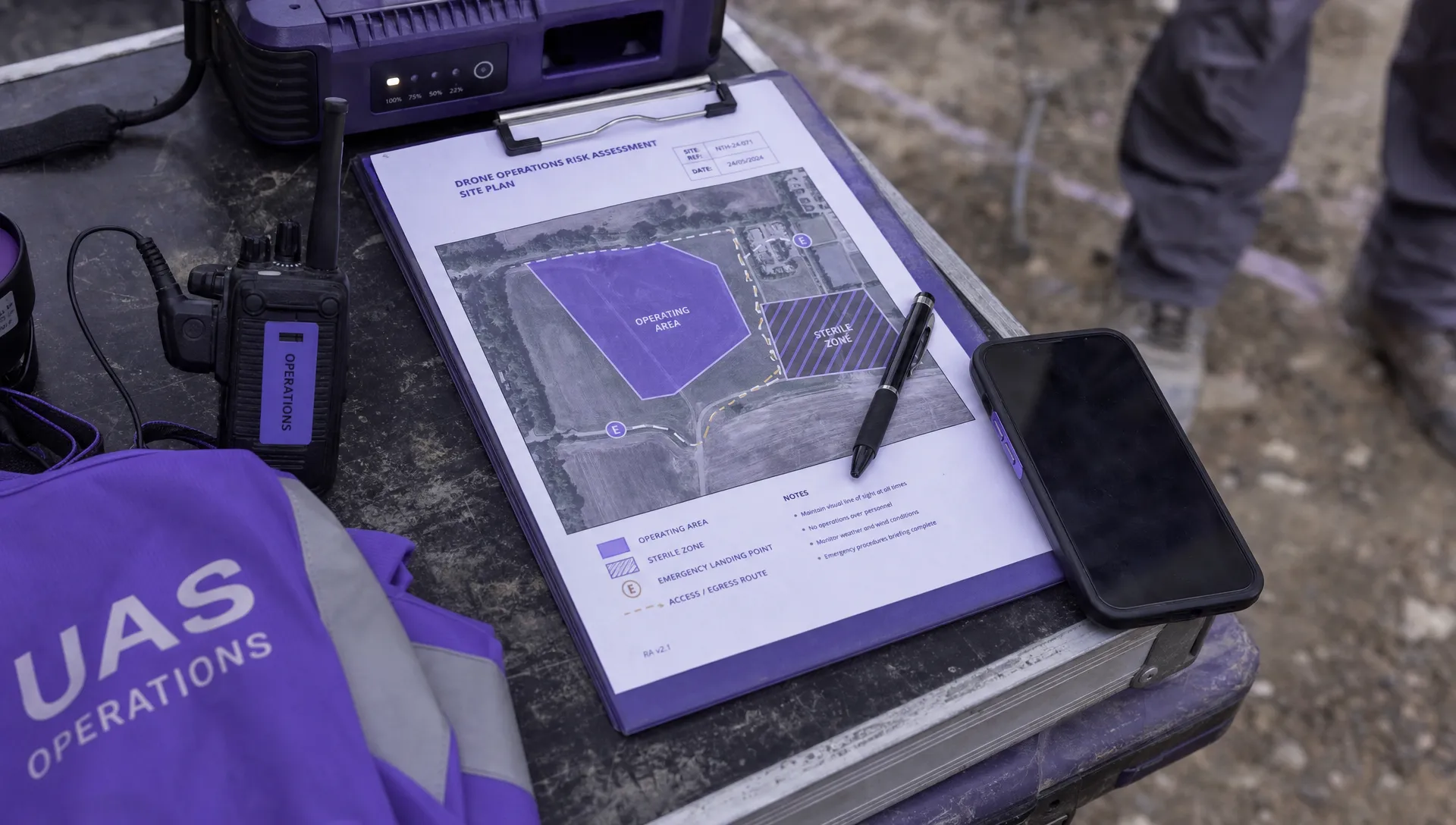 Drone Risk Assessment Controls That Work in the Field →
 FAA Drone License Costs Beyond the Knowledge Test →
 Drone Part 107 Operations: When a Waiver May Be Needed →
 Drone Operating Rules for Managing Contractors and Employees →
 BVLOS Drone Requirements for Building a Safety Case →
 Drone Pilot Test Mistakes That Cost Candidates Marks →
 FAA 107 License vs Part 107 Certificate: What’s the Difference? →
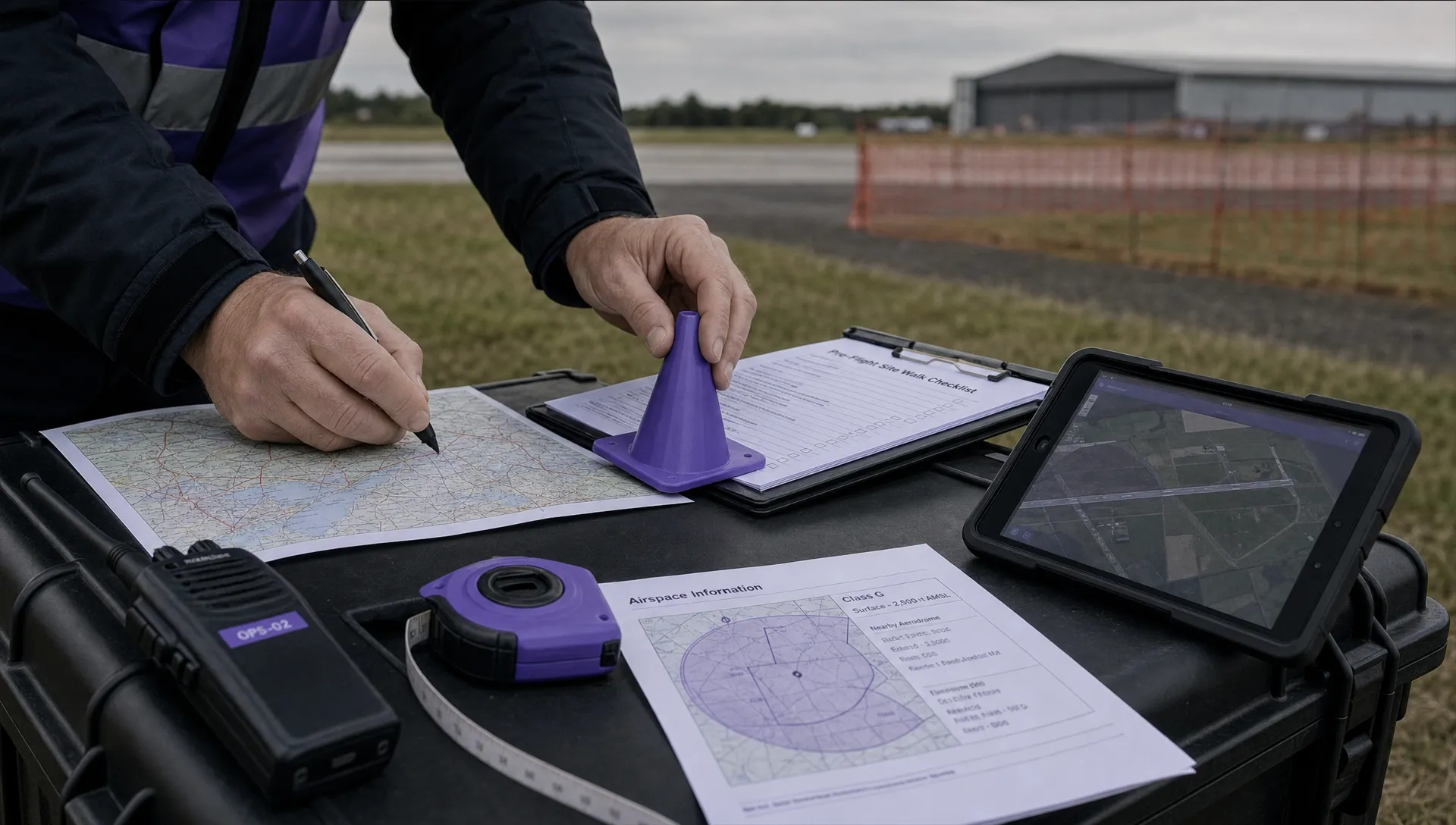 Drone Airport Rules: A Field Checklist for Site Assessments →
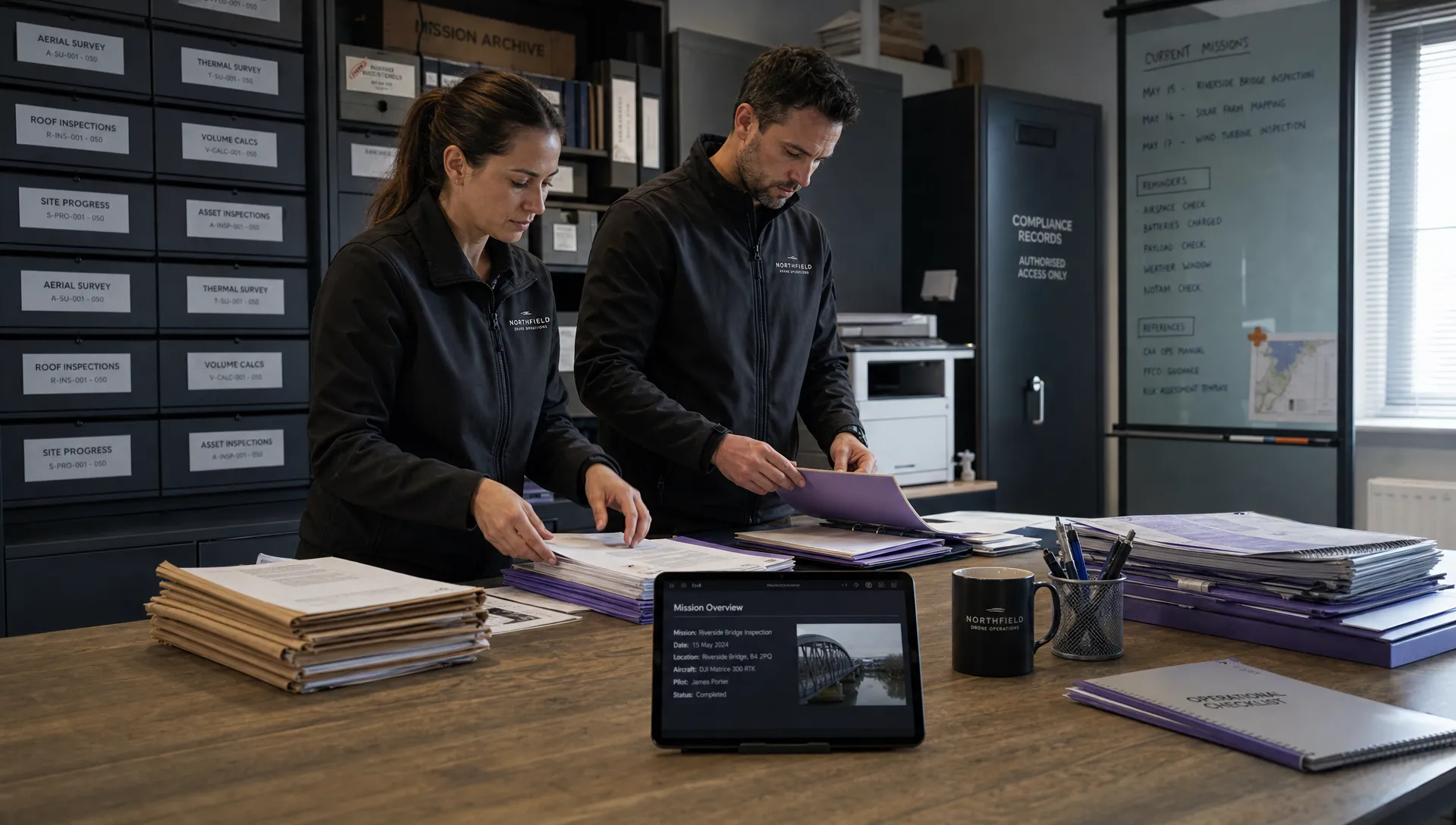 FAA Part 107 Record-Keeping Rules for Commercial Teams →
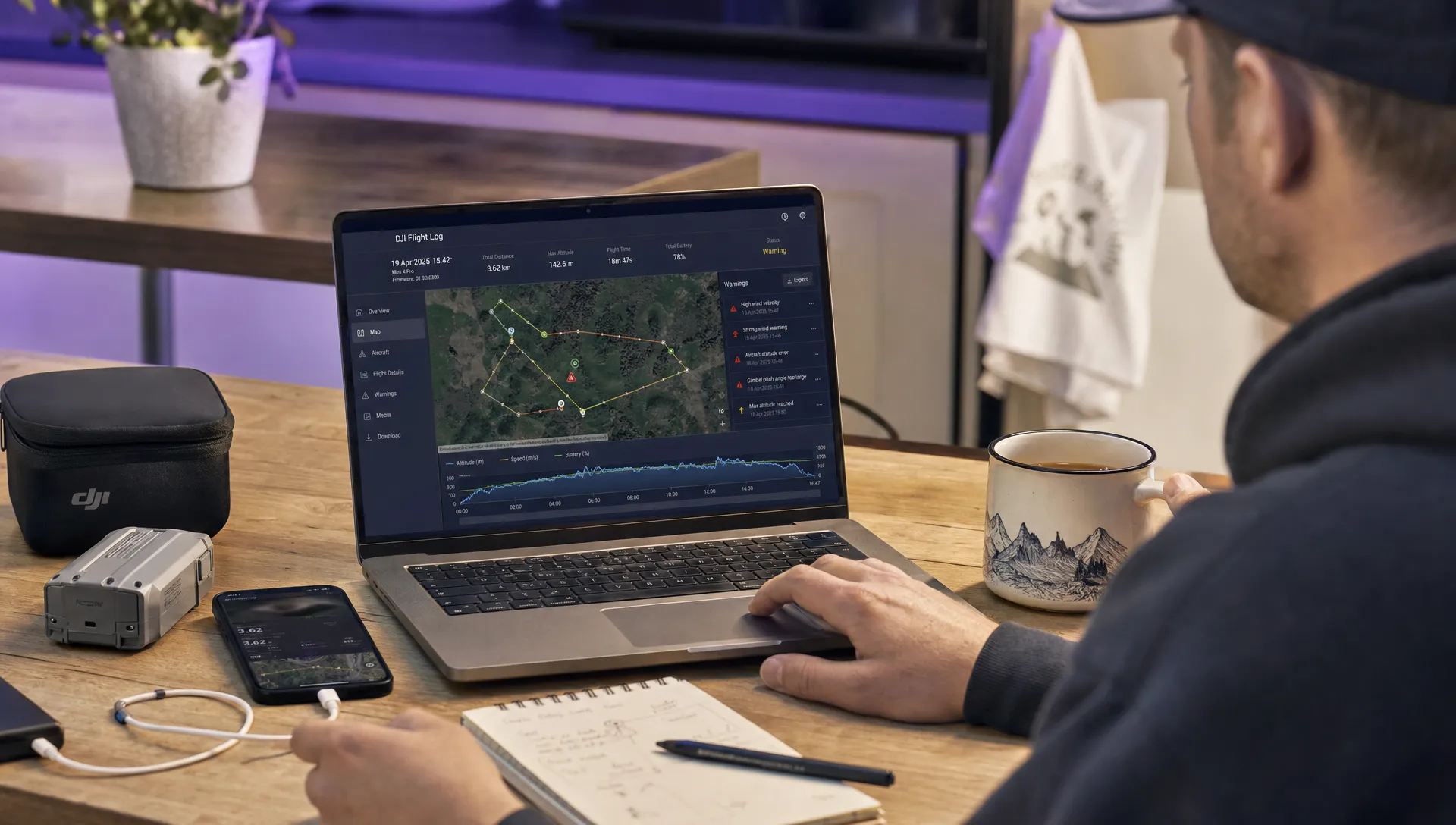 How to Review a DJI Flight Log After an Unexpected Event →