
How to Set Up a Drone Pilot Logbook That Stands Up to Audits
A drone pilot logbook is more than a list of flights. For professional operators, it is the evidence trail that proves a job was planned, flown, supervised and closed out in line with your procedures.
That matters when the Civil Aviation Authority, an internal safety manager, an insurer, a utility client or an emergency services lead asks a simple question: can you show exactly what happened?
The strongest logbooks are not the most complicated. They are complete, consistent, easy to search and connected to the supporting documents behind each flight. Here is how to set up a drone pilot logbook that can stand up to audits without turning every operation into a paperwork exercise.
What an audit-ready drone pilot logbook needs to prove
An audit is not just a check that you have recorded take-off and landing times. It is usually looking for evidence that your operation is controlled.
For UK operators, the exact record-keeping requirements depend on your operating category, Operational Authorisation, Operations Manual, client contracts and insurance conditions. The CAA Drone and Model Aircraft Code sets out baseline responsibilities for drone users, while more complex commercial operations should also refer to relevant CAA guidance, such as CAP 722.
In practice, an auditor may want to see that:
- The remote pilot was competent and authorised for the flight.
- The aircraft, payload and batteries were suitable and serviceable.
- The location, airspace and nearby hazards were checked before flight.
- A risk assessment and appropriate checklist were completed.
- The actual flight matched the planned operation, or any changes were recorded.
- Incidents, defects, maintenance actions and lessons learned were followed up.
The goal is to create a logbook that answers these questions quickly. If your team needs half a day to search inboxes, spreadsheets, WhatsApp messages and paper forms, the logbook is not audit-ready.
Pilot logbook, flight log, aircraft log and battery log: know the difference
Many operators use the term drone pilot logbook to describe all flight records, but it helps to separate the different types of evidence.
| Record type | What it proves | Typical contents |
|---|---|---|
| Pilot logbook | Who flew, when and under what conditions | Pilot name, role, flight time, operation type, currency, training relevance |
| Flight log | What happened during a specific operation | Job ID, site, timings, aircraft, crew, weather, airspace notes, outcomes |
| Aircraft log | The usage and condition of each drone | Airframe hours, defects, maintenance, firmware, repairs, inspections |
| Battery log | Battery use and health history | Battery ID, cycles, use, charging, faults, retirement notes |
| Compliance pack | Evidence that procedures were followed | Risk assessment, checklists, permissions, client brief, site survey, approvals |
For a hobby pilot, a simple pilot log may be enough. For a commercial survey company, utility inspection team or emergency services unit, the audit trail needs to connect all of these records.
A good setup lets you start from any point. If someone asks about a pilot, you can show their recent flights and competence. If they ask about a drone, you can show where it flew and whether it was serviceable. If they ask about a specific client job, you can show the plan, risk controls, crew, aircraft, logs and close-out notes together.
Use the ALCOA+ test for audit-proof records
A useful way to assess any logbook is the ALCOA+ principle, often used in regulated environments. Your records should be attributable, legible, contemporaneous, original and accurate. The extra qualities are that they should be complete, consistent, enduring and available.
Translated into drone operations, this means every log entry should show who created it, be readable, be completed at the right time, reflect the original record and be accurate enough to rely on. It should also be complete, follow the same format every time, remain accessible over time and be easy to retrieve when requested.
This is where many spreadsheet-based logbooks fail. They may work for a solo operator, but they often become fragile as soon as multiple pilots, aircraft, batteries and clients are involved.
The minimum fields to include in a drone pilot logbook
Your exact fields should reflect your Operations Manual and authorisations, but the following structure is a strong baseline for professional operations.
| Logbook field | Why it matters in an audit | Practical tip |
|---|---|---|
| Unique job or flight ID | Links the log to the wider operation | Use one ID across planning, risk assessment, flight log and invoice records |
| Date and time | Proves when the flight occurred | Record planned and actual timings if they differ |
| Location | Shows where the operation took place | Include coordinates, site name and operating area where appropriate |
| Client or task reference | Connects the flight to the business purpose | Useful for survey, inspection, media and emergency response records |
| Remote pilot and crew | Confirms who was responsible | Include observers, payload operators and supervisors where relevant |
| Aircraft and payload ID | Links the flight to fleet records | Use asset IDs, not just model names |
| Battery IDs | Supports battery traceability | Record batteries used, especially for larger fleets |
| Operating category or authorisation | Shows the rule set used | Reference Open Category, Specific Category or internal authorisation route as applicable |
| Airspace and proximity checks | Shows pre-flight awareness | Attach or reference the airspace review and any required permissions |
| Weather conditions | Supports the decision to fly | Record relevant limits such as wind, visibility and precipitation |
| Risk assessment reference | Proves hazards and controls were considered | Link to the approved risk assessment rather than duplicating it in full |
| Checklist completion | Shows procedures were followed | Use pre-flight, on-site and post-flight checklists consistently |
| Flight duration | Supports pilot currency and asset usage | Record actual airborne time, not just time on site |
| Deviations or changes | Explains differences from the plan | Capture dynamic risk decisions and who approved them |
| Defects, incidents or near misses | Shows safety follow-up | Record even minor issues and link to corrective action |
| Close-out confirmation | Confirms the job was completed properly | Include post-flight notes, data handover and maintenance triggers |
The most important design choice is consistency. A smaller set of fields completed every time is better than an ambitious template that pilots avoid because it is too slow.
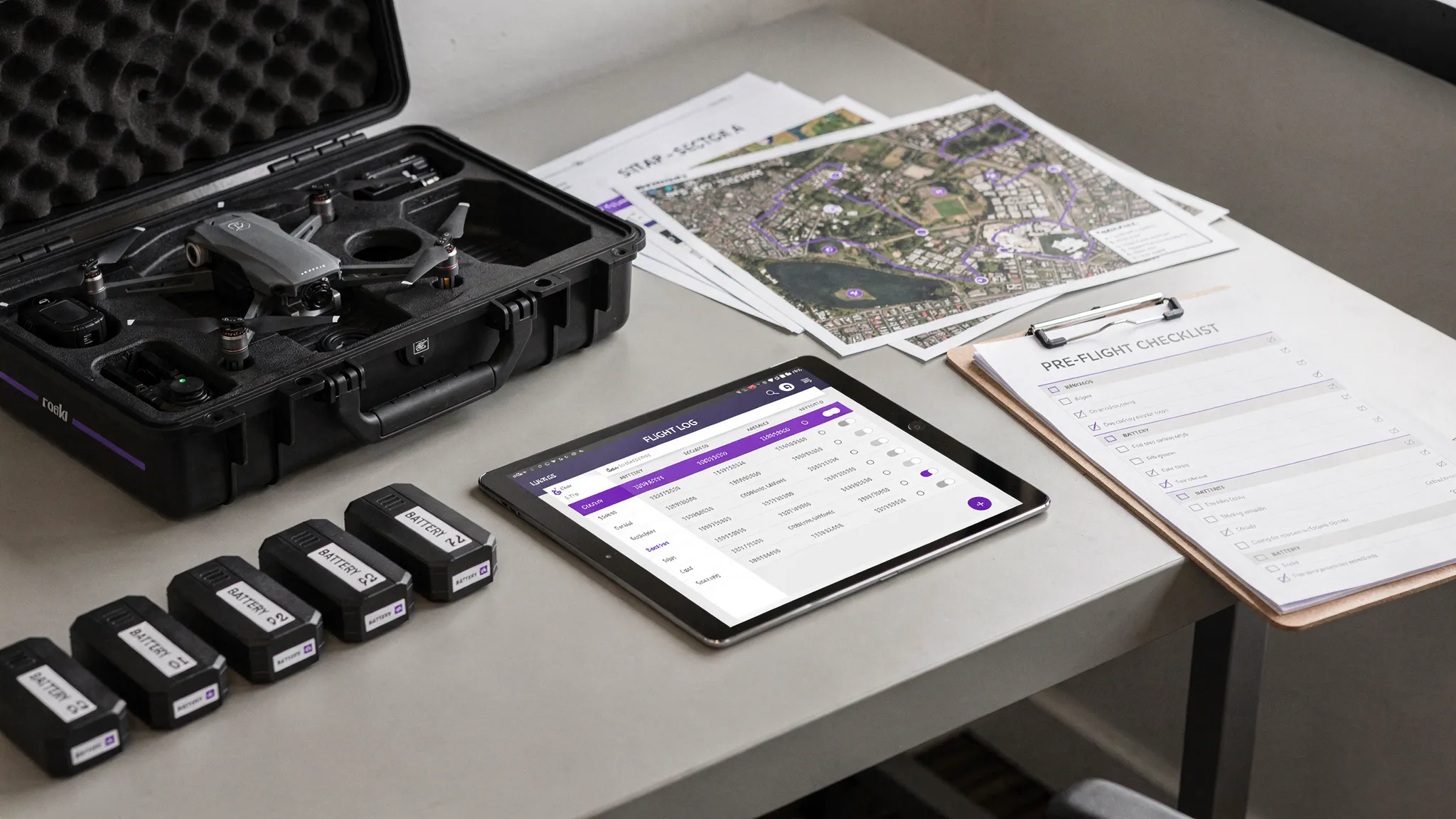
Build the logbook around your audit questions
Before choosing software or redesigning your spreadsheet, write down the questions you are most likely to be asked.
A survey company might need to prove that flights over construction or quarry sites were planned against site hazards, permissions and client requirements. A utility operator may need to show which pylons, substations or assets were inspected, by whom, and with which aircraft. Emergency services may need rapid incident review, clear crew accountability and reliable evidence that operational decisions were made under pressure.
Your logbook should make those answers obvious. For example, if your audits often start with an asset, structure your system so each aircraft, battery and payload has its own history. If audits start with a client job, make the job record the centre of the evidence trail.
This also has a commercial benefit. Clients increasingly expect professional drone suppliers to demonstrate mature governance, not just attractive imagery or accurate data. Marketing can bring an enquiry, especially if you invest in visibility through partners such as an SEO agency in Cheshire, but strong operational records help you win and retain serious clients once due diligence begins.
Set rules for when records are created
Audit problems often happen because records are created too late. A logbook completed days after the job is more likely to contain gaps, assumptions or copied details.
Set a simple timing rule for each record type. Planning records should be created before the job. On-site checks should be completed before take-off. Flight details should be logged as soon as practical after landing. Defects and incidents should be recorded immediately, with follow-up actions assigned before the operation is closed.
For emergency services, the workflow may need to reflect operational urgency. A deployment record can be created rapidly with essential information first, then completed after the incident when the team has time to add supporting notes, evidence and review outcomes. The key is that your procedure explains this and your records follow the procedure.
Make every entry attributable
An audit-ready logbook must show who did what. Avoid shared accounts, anonymous spreadsheet edits and vague notes such as checked by team.
Each record should identify the person responsible for the entry or approval. This does not need to be heavy-handed. It simply needs to show accountability. For example, the remote pilot confirms the aircraft was serviceable, the operations manager approves a higher-risk plan, and the maintenance lead closes a defect after inspection.
If your operation has several pilots, define roles clearly. Remote pilot, observer, payload operator, planner and authorising manager are different responsibilities. Your logbook should not blur them.
Link the logbook to supporting evidence
A flight log that says risk assessment completed is useful. A flight log that links to the exact risk assessment is much stronger.
The same applies to permissions, NOTAM checks, landowner consent, client briefs, site maps, weather records, checklists and post-flight reports. You do not have to store every detail inside the pilot logbook itself, but you do need a reliable way to retrieve the supporting evidence.
For larger operations, use unique IDs and naming conventions. A simple format such as client, site, date and job number can prevent confusion later. Avoid file names like final version 2 or new risk assessment. They may make sense today, but they will not help during an audit six months from now.
Protect data integrity and access
Your logbook may contain client information, site security details, personal data and operationally sensitive records. That means access control, backups and retention rules are part of audit readiness.
At minimum, decide who can create, edit, approve, export and delete records. Keep backups in a controlled location. If you handle personal data, align your process with UK data protection expectations and guidance from the Information Commissioner's Office.
Do not rely on one laptop, one pilot's cloud folder or one admin inbox. If that person is unavailable, the operation should still be able to retrieve records.
Decide how long to keep records
There is no single retention period that suits every drone operation. Your requirements may come from your Operational Authorisation, Operations Manual, insurance policy, client contract, internal quality system or sector-specific rules.
The safest approach is to document a retention policy and apply it consistently. Keep records for at least as long as your strictest relevant requirement. Do not delete records linked to an incident, complaint, claim or investigation until the matter is fully resolved and you are confident retention obligations have been met.
For enterprise operators, retention should also cover pilot competence evidence, fleet maintenance, battery history and risk assessment versions. These records often become important long after the flight itself.
Review the logbook before someone else does
An audit-ready logbook is maintained continuously, not repaired in a panic. Schedule internal reviews so you can spot gaps early.
For a small operator, a monthly check may be enough. For multi-pilot teams, higher-risk work or public-sector operations, review more frequently. Sample recent jobs and ask whether a third party could understand the full story without speaking to the pilot.
Common issues are easy to find if you look for them:
| Audit weakness | What it looks like | How to fix it |
|---|---|---|
| Missing links | Flight logged but no risk assessment attached | Require a job ID across all records |
| Inconsistent terminology | Same aircraft listed under several names | Use fixed asset IDs and dropdowns where possible |
| Late entries | Logs completed days after flights | Set close-out deadlines and review exceptions |
| Weak defect tracking | Fault noted but no resolution recorded | Link defects to maintenance actions and release back to service |
| Unclear approvals | Risky flights planned without named approval | Define approval thresholds and record the approver |
| Scattered evidence | Permissions and notes held in inboxes | Centralise storage or link documents from the job record |
Treat these reviews as safety improvement, not blame. The aim is to make the system easier for pilots to use and easier for managers to trust.
Spreadsheet or digital drone pilot logbook?
Spreadsheets are familiar, cheap and flexible. They can work for a solo pilot with a small number of simple jobs. The problem is that they become harder to control as soon as the operation grows.
A spreadsheet-based drone pilot logbook often struggles with version control, attachments, audit trails, mobile access, asset history and team accountability. It may also duplicate data across planning sheets, aircraft logs, battery records and client folders.
Digital operations platforms are designed to connect those records. The key is not just logging flights, but linking flight planning, aircraft, pilots, checklists, risk assessments and reporting in one operational workflow.
According to the Dronedesk features page, Dronedesk includes flight planning, flight logging, fleet management, team management, client management, airspace intelligence, proximity intelligence, configurable checklists, risk assessments and data reporting. For operators who need a logbook that supports wider compliance, those connected features can reduce the need to manage separate disconnected files.
A practical setup workflow
If you are building or improving your drone pilot logbook, start with a controlled rollout rather than a huge redesign.
First, map your current records. Identify where pilot logs, aircraft logs, battery notes, maintenance records, checklists, permissions and risk assessments currently live. Then compare that map against your Operations Manual and client requirements.
Next, create one standard flight record template. Include the minimum fields needed for audit evidence, then test it on recent jobs. If pilots cannot complete it easily, simplify it before rollout.
After that, connect supporting documents. Decide whether evidence will be attached to each job record, stored in a central folder with links, or managed in a dedicated operations platform. Whatever you choose, make retrieval part of the test.
Finally, run a mock audit. Pick three completed jobs and ask a manager who was not involved to reconstruct each operation. If they can identify the pilot, aircraft, location, risk controls, permissions, checklist status, flight outcome and any follow-up actions within minutes, your logbook is moving in the right direction.
Frequently Asked Questions
Do UK drone pilots legally need a logbook? It depends on the type of operation, authorisations and procedures that apply to you. Even where a simple Open Category flight has lighter requirements, commercial operators should keep reliable records for safety, insurance, client assurance and internal governance.
What is the difference between a drone pilot logbook and an aircraft log? A pilot logbook focuses on the remote pilot's flying activity, experience and currency. An aircraft log focuses on the drone's usage, condition, defects and maintenance history. Professional operations usually need both.
Can I use a spreadsheet as my drone pilot logbook? Yes, if it is controlled, backed up, consistently completed and suitable for the size of your operation. As teams and fleets grow, spreadsheets often become harder to audit because evidence is spread across multiple files and folders.
What should I record after every drone flight? Record the job reference, date, location, pilot, crew, aircraft, batteries, flight duration, weather, checklist status, risk assessment reference, deviations, defects, incidents and close-out notes. Adapt the fields to your own procedures and authorisations.
How often should I audit my own drone logbook? Small operators may review monthly, while larger teams or higher-risk operations may review weekly or after each major project. The important point is to check records before an external auditor, insurer or client asks for them.
Make your logbook part of the operation, not an afterthought
The best drone pilot logbook is not a separate admin burden. It is part of how you plan, fly, review and improve each operation.
If your records are scattered across spreadsheets, emails and paper forms, Dronedesk can help bring core drone operations management into one place, including planning, logging, risk assessments, checklists, fleet information, team information and reporting. Explore the platform at Dronedesk and see how a more connected workflow can support safer, cleaner and more audit-ready drone operations.
 Drone Pilot Test Mistakes That Cost Candidates Marks →
 FAA 107 License vs Part 107 Certificate: What’s the Difference? →
 Drone Airport Rules: A Field Checklist for Site Assessments →
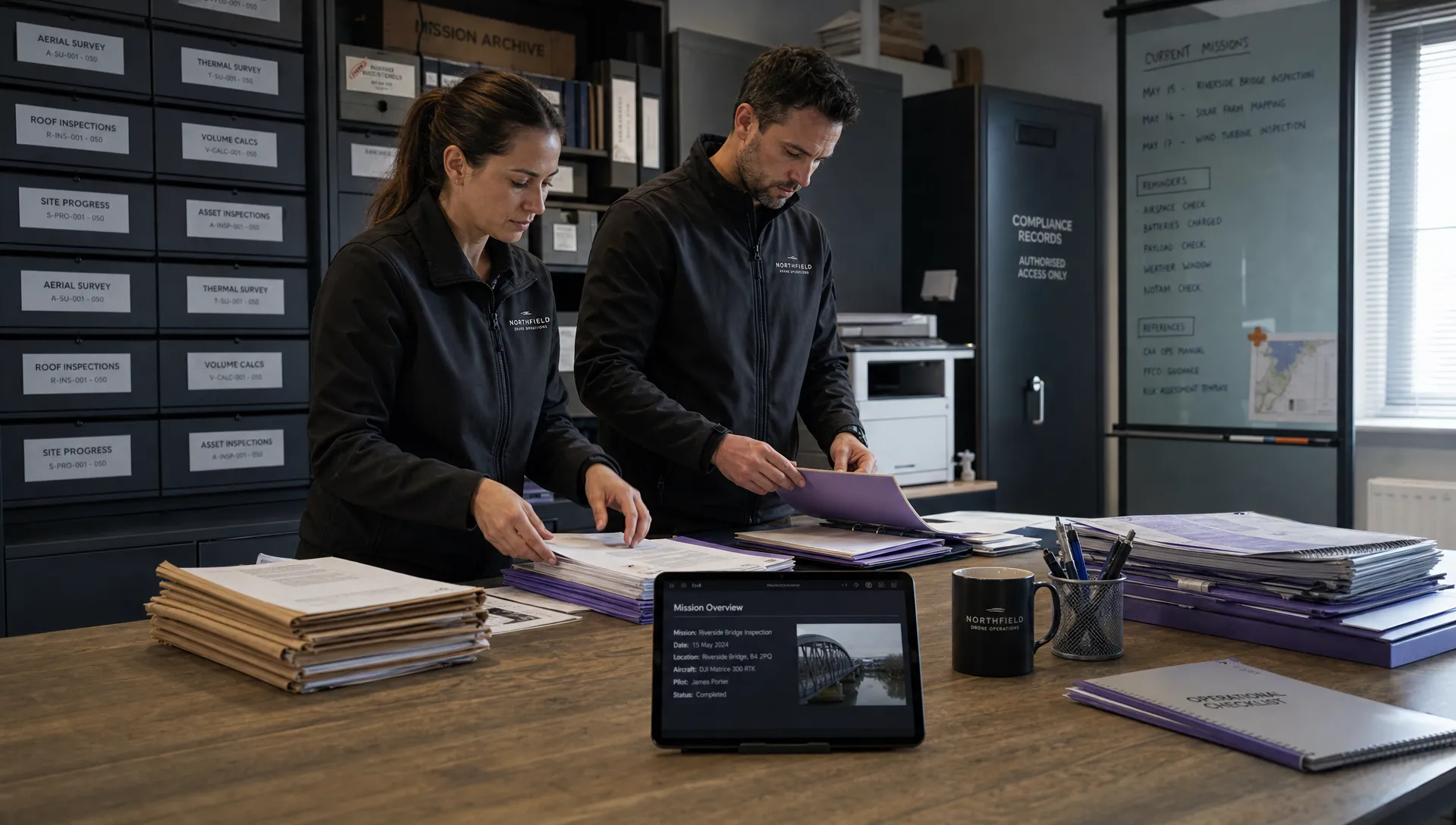 FAA Part 107 Record-Keeping Rules for Commercial Teams →
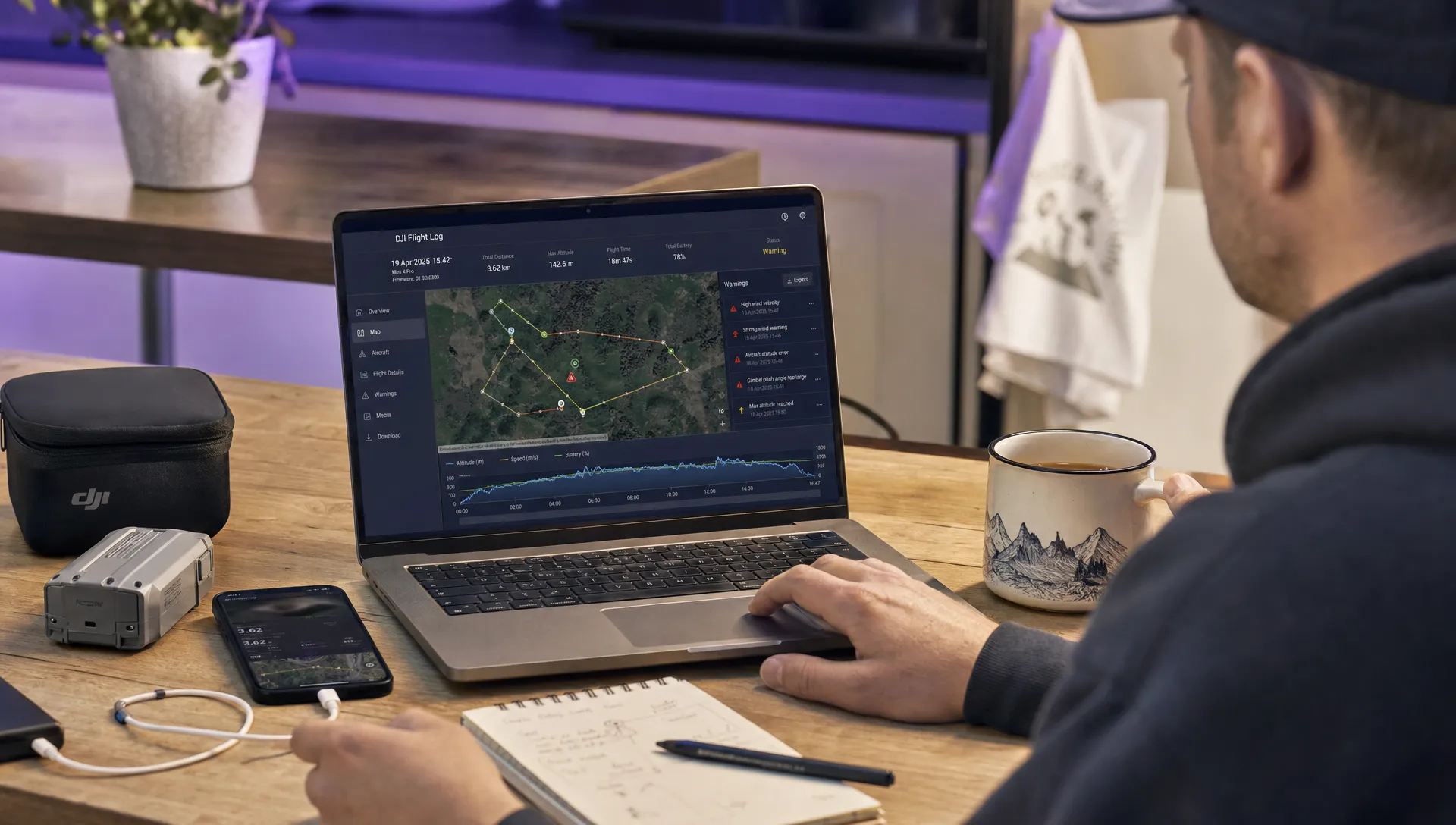 How to Review a DJI Flight Log After an Unexpected Event →
 Drone Laws Around the World: A Pre-Flight Research Framework →
 How to Compare Drone Survey Services for Complex Sites →
 How to Start a Drone Mapping Business With a Clear Workflow →
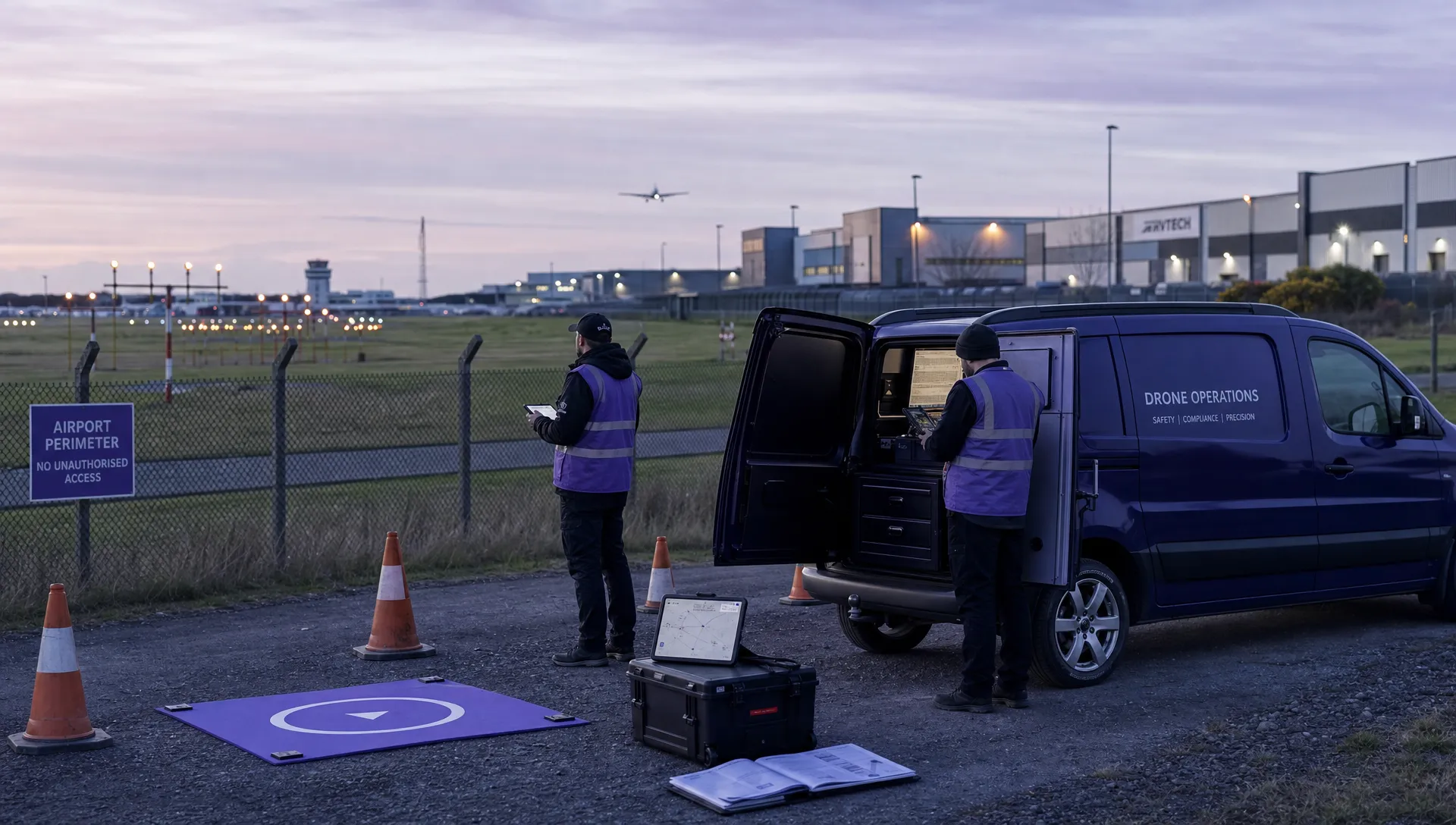 Class C Airspace Drone Rules for Commercial Flights →
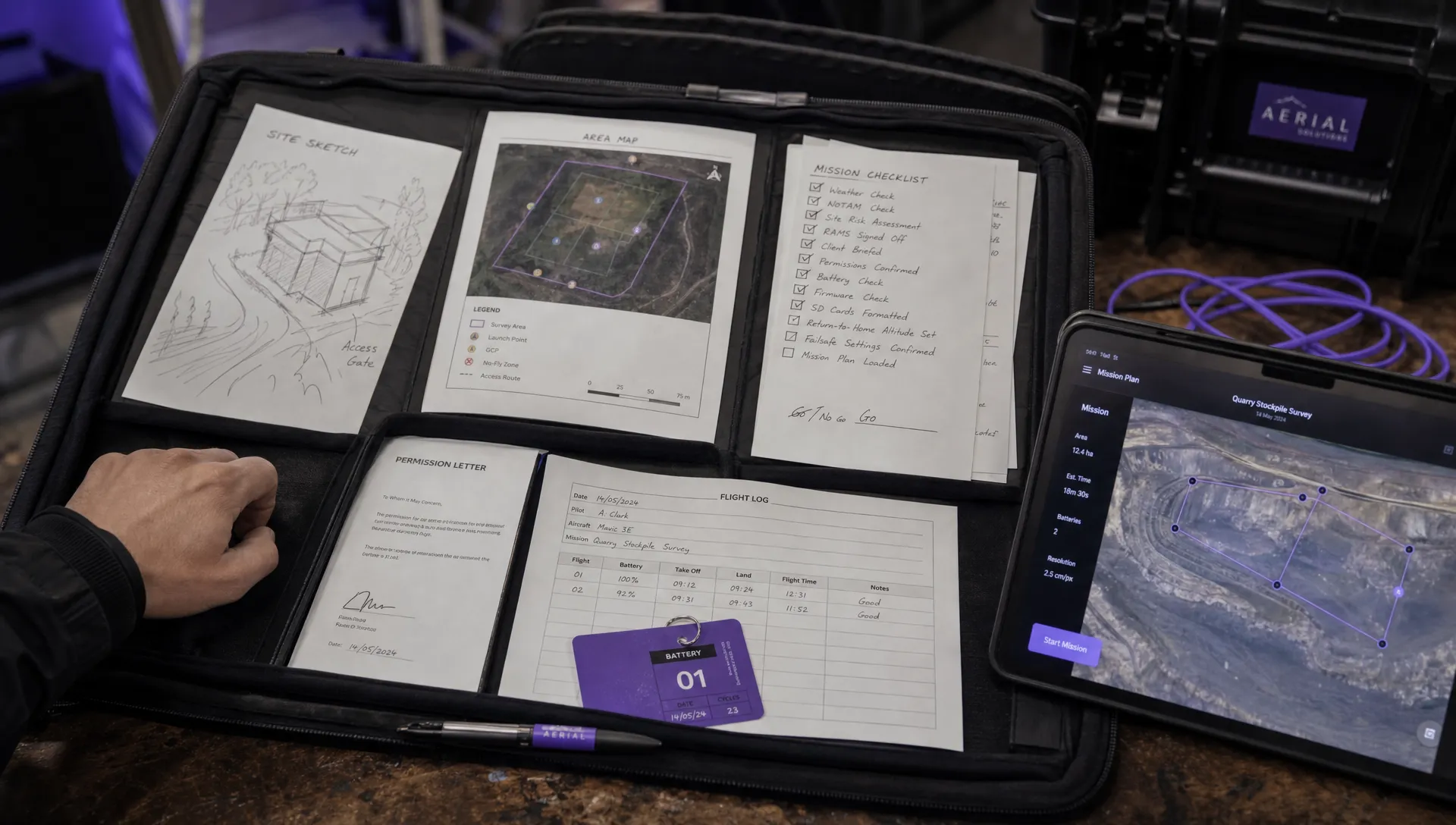 How to Create a Drone Job Pack for Every Mission →