
The History of UAVs: From WWI Prototypes to Modern Drones
I've watched experienced pilots treat a dropped video feed like a modern glitch, when it's really an old aviation problem in new packaging. The history of uavs matters because most of today's operational headaches, navigation trust, link resilience, payload limits, and airspace discipline, were visible in earlier forms long before quadcopters became common.
The Dawn of Pilotless Aircraft
Long before pilots worried about telemetry dropouts, return-to-home logic, or whether an aircraft could finish a job without constant stick input, engineers were trying to solve the same operating problem with far less capable tools. The first pilotless aircraft were early attempts to send an aircraft into risk while keeping the crew out of it. That basic mission logic still sits underneath modern UAV operations.
Britain and the United States were both testing pilotless aircraft during World War I. Britain's Aerial Target and the American Kettering Bug showed that the idea arrived early. What held them back was not imagination. It was the hard part every operator still respects today: keeping the aircraft stable, on course, and useful long enough to complete the mission.
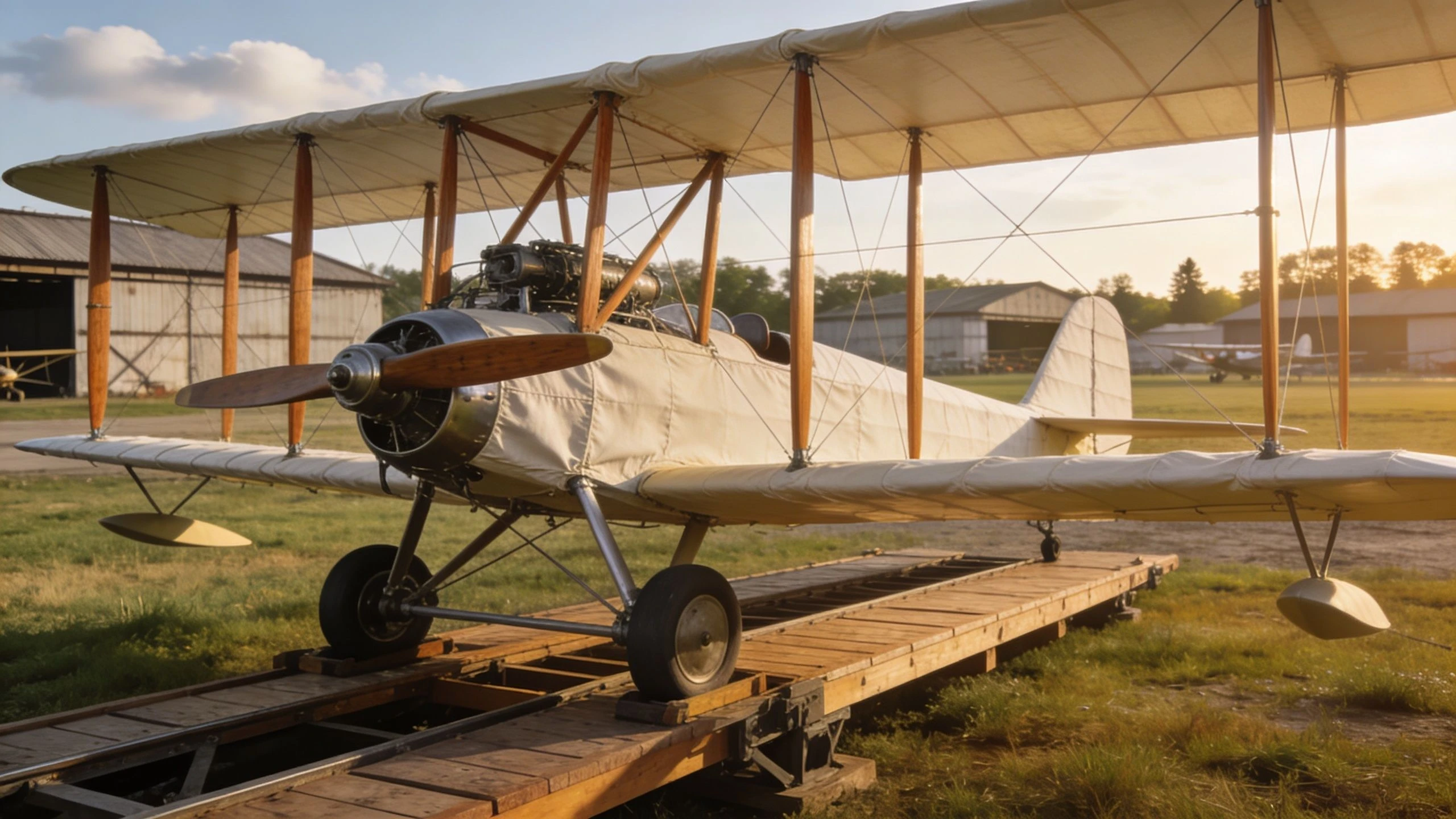
Early machines solved an operations problem first
The Kettering Bug still matters because its design priorities are familiar. It used a gyrostabilized autopilot and altitude control to follow a preset flight profile toward a target. Primitive hardware, same chain of requirements. Hold attitude. Manage direction. Estimate progress. Complete the task before error builds too far.
That should sound familiar to anyone running waypoint surveys, corridor mapping, or repeat inspection routes.
A key lesson is that autonomy did not begin with artificial intelligence or computer vision. It began with control discipline. Early unmanned aircraft only worked when guidance, stabilization, and mission planning worked together well enough for a narrow job. Modern systems add better sensors, stronger links, satellite positioning, and onboard computing, but they still inherit the same trade-off. More capability usually means more dependencies.
A lot of operators treat "drone" as a recent consumer term, but the word came out of earlier remote aircraft programs, including British target aircraft in the 1930s. That matters because the history is broader than a battlefield timeline. From the start, unmanned aircraft sat at the intersection of military need, remote control, training use, and repeatable aircraft behavior. That mix is the primary origin point of today's industry.
It also helps explain modern terminology. A UAV is the aircraft itself, whether it is flying a reconnaissance task, a mapping mission, or a roof inspection. The surrounding system includes the pilot, control link, procedures, payload, and airspace method. If you want a clean definition, this guide on what a UAV actually is separates the aircraft from the wider operating system around it.
Why this period still matters to current pilots
Three patterns from this early era still shape good drone operations now:
- Mission beats platform hype: The aircraft only has value if it completes a defined job.
- Control and comms come before payload ambition: Better sensors do not save a weak guidance or link setup.
- Repeatability decides whether a UAV is practical: One successful flight proves very little. Consistent flights build trust.
That is the part of UAV history many summaries skip. The drone revolution did not come from one sector alone. Military programs pushed risk reduction, civilian users pushed practical utility, and hobbyist adoption later pushed affordability and usability. The first chapter already contained the same ingredients. Remote control, basic autonomy, and mission-focused design came first. Everything else built on top of them.
Military Acceleration During The Cold War
A military aircraft crew in the Cold War could launch a drone into defended airspace, recover the imagery, and send people home without putting a pilot over the target. That changed how commanders judged risk, and it still explains why UAVs keep winning work today.
During the Vietnam War, unmanned aircraft moved from support roles into repeatable surveillance operations. The Smithsonian's history of early drone programs describes AQM-34 missions launched from DC-130 aircraft across Southeast Asia from 1964 to 1975. The standout fact is not just that they flew often. It is that they returned often enough to prove a reusable unmanned system could deliver intelligence on schedule. For modern operators, that is the defining milestone. Reliability started to matter as much as the airframe.
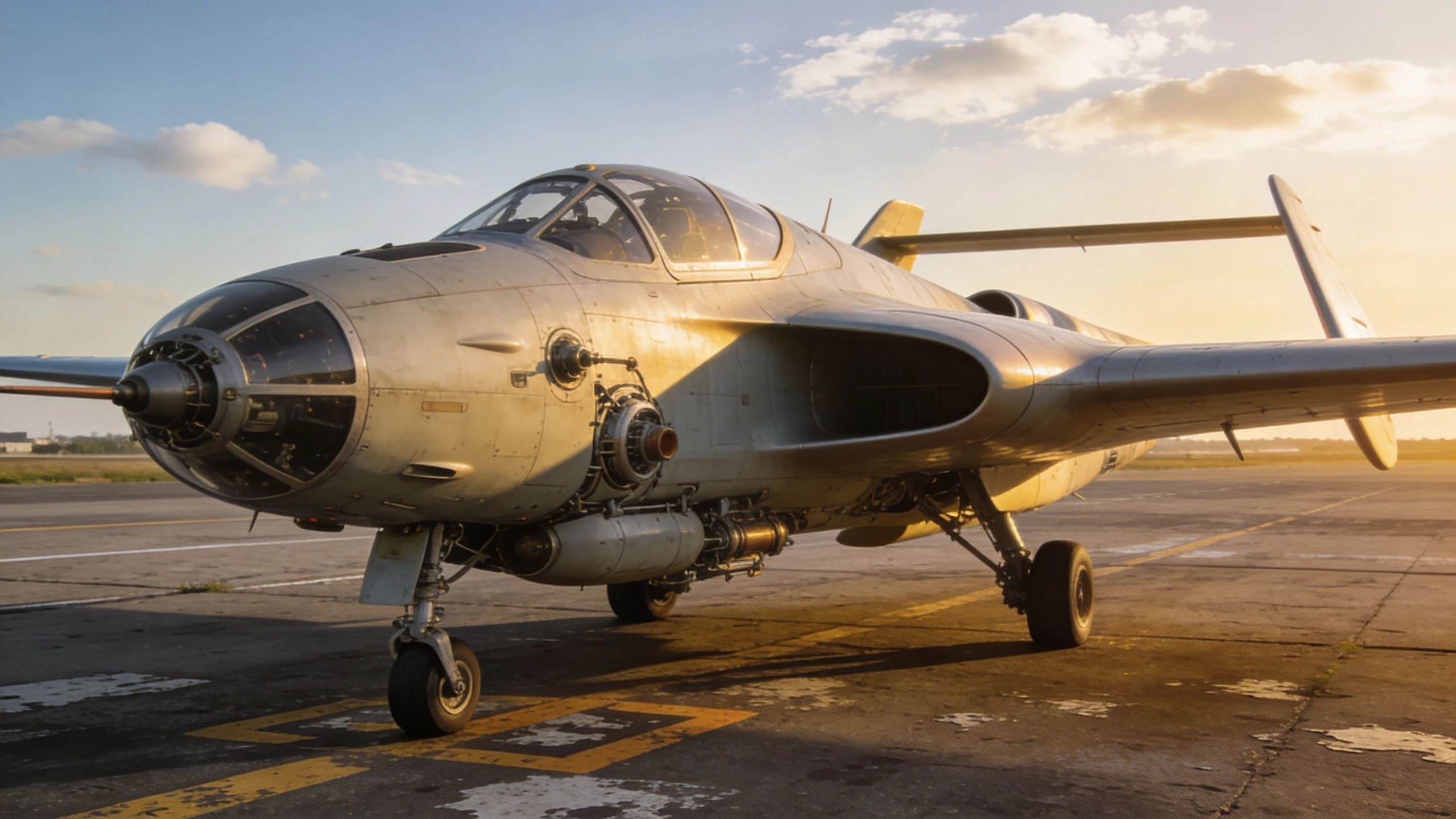
Vietnam proved that the mission chain mattered
Cold War drone programs forced a hard operational lesson. A UAV had value only if the whole chain worked: launch, control link, payload collection, recovery, and intelligence use.
That lesson still holds.
In Vietnam, the aircraft itself was not the main asset. The surveillance product was. That is a familiar calculation for current pilots flying inspections near unstable structures, documenting a hazmat scene, or checking industrial equipment in places where human access adds cost and risk. The aircraft can be small, imperfect, and even disposable in some cases. The output still has to be usable, timely, and safe to collect.
Military users also widened the role of unmanned aircraft fast once trust in the system improved. Reconnaissance remained the anchor mission, but decoy work, strike support, and other specialized tasks followed. The pattern matters because it shows how drone adoption spreads. One proven use case gets the aircraft into service. Better sensors, better comms, and better autonomy then pull it into adjacent jobs. That same progression now shows up in civilian fleets that start with mapping and later add inspections, emergency response, or automated reporting with AI tools for drone operations.
Israel set the pattern for modern tactical UAV use
The next major shift came from operational design, not raw size or speed.
Israeli drone use in the late 1970s and early 1980s showed what a modern UAV concept looked like in practice: smaller aircraft, faster deployment, tighter integration with frontline decision-making, and payloads chosen for a specific tactical job. That convergence of military need, miniaturized electronics, and improving data links is one of the clearest bridges between defense programs and the later civilian and hobby markets. Once a drone could get useful imagery quickly and repeatedly, the same logic scaled outward. Armies used it for battlefield awareness. Civil agencies used it for observation and public safety. Hobbyists later benefited from the same cheaper sensors and radio systems.
For pilots and program managers now, the trade-off is familiar. A larger platform may stay up longer, but a smaller tactical aircraft can launch faster, fit tighter sites, and turn data around sooner. Cold War history shows that speed to usable information often beats impressive flight specs on paper.
| Historical shift | What it means for pilots now |
|---|---|
| Target drone to surveillance asset | Choose aircraft around the payload and decision required after landing |
| Strategic program to tactical deployment | Build for quick setup, clear crew roles, and fast data handoff |
| Experimental flights to routine operations | Standard procedures, maintenance discipline, and recovery planning decide mission success |
Pilots often get drawn to endurance figures and camera resolution because those numbers are easy to compare. Operational history points somewhere else. The winning system is the one that keeps its link, captures usable data, recovers safely, and fits the user's workflow. That was true in Cold War military programs, and it is still true for commercial teams and advanced hobby operators trying to run reliable missions instead of isolated demos.
The Technological Leaps That Built Modern Drones
A drone became operationally useful when it could hold position, keep a reliable link, and bring back usable data on demand. That shift came from sensors, communications, computing, and guidance improving together. Airframes mattered, but they were only one layer of the system.
Older UAVs proved that unmanned flight was possible. Modern drones proved that unmanned flight could be repeatable, safe enough to scale, and tied to a decision after landing. That distinction still matters for buyers and pilots now. A platform that flies well but produces inconsistent data, drops link in cluttered RF conditions, or drifts under weak positioning is still an incomplete tool.
The Wikipedia overview of unmanned aerial vehicles captures the broad pattern well. UAV capability expanded as payloads got smaller, radio links improved, and mission systems became more specialized. For operators, the lesson is straightforward. Aircraft performance only matters if the rest of the stack supports the mission.
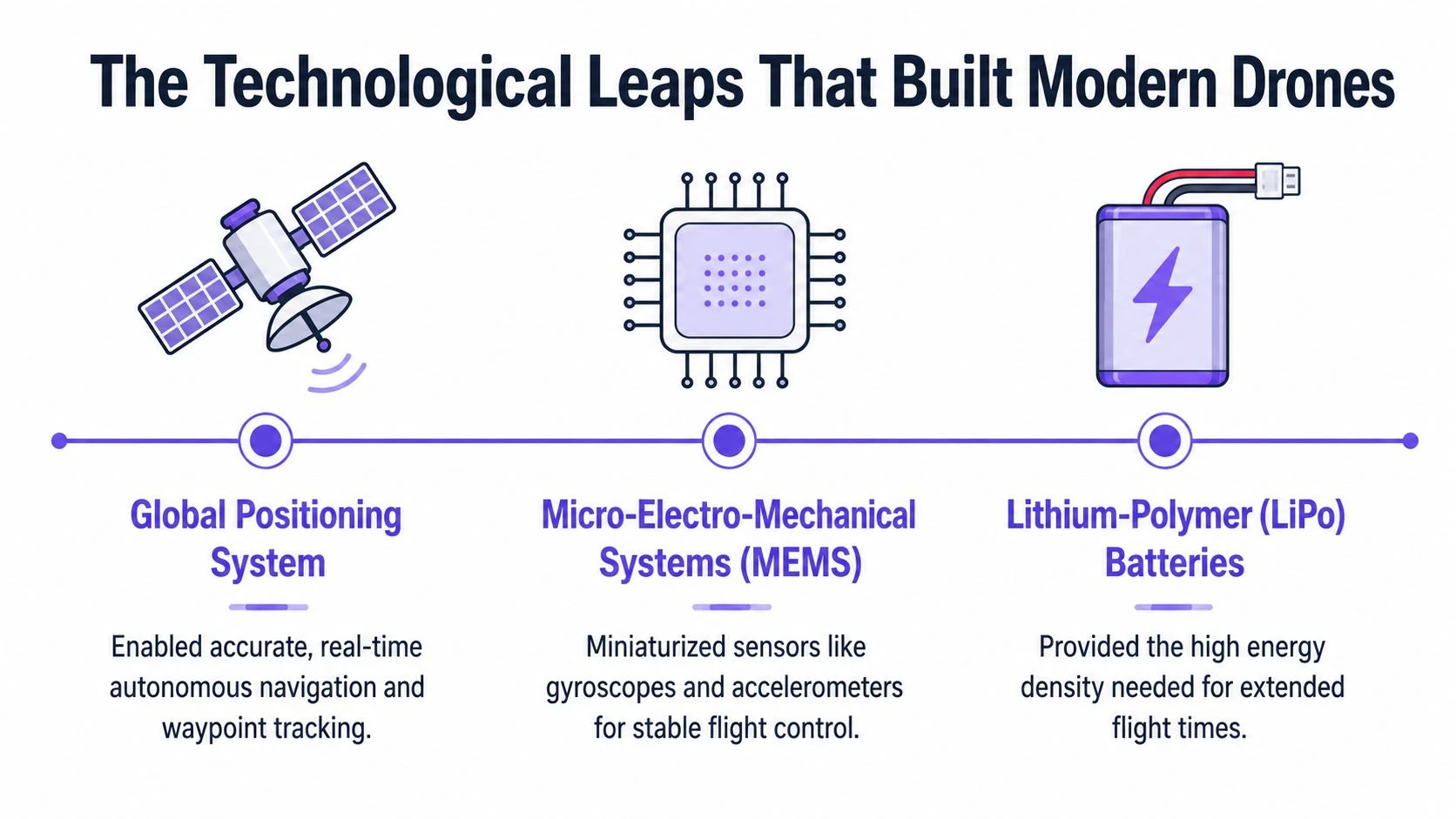
Modern capability came from the stack
In field operations, “the drone” is really several systems that succeed or fail together.
- Position and navigation: The aircraft needs dependable location awareness for route accuracy, return-to-home behavior, and controlled recovery.
- Stability sensing and control logic: Gyros, accelerometers, and tuned flight control software turn a nervous aircraft into one that can hover, track, and repeat a path.
- Command and data link quality: A weak control link or poor video downlink limits safe range and makes inspections, search work, and overwatch less useful.
- Payload performance: Cameras, thermal sensors, and other instruments have to produce data that someone can act on.
- Power delivery: Battery performance has to stay predictable under wind, temperature shifts, payload load, and repeated cycles.
This is why two aircraft with similar spec sheets can produce very different results on site.
The breakthroughs operators still feel today
Three technology jumps changed daily UAV work more than any cosmetic airframe improvement.
First, miniaturized sensors changed what a small aircraft could carry. Lighter cameras, better thermal payloads, and more compact navigation hardware opened the door to mapping, inspection, public safety, and agriculture on platforms that would once have been too small to do useful work.
Second, better onboard stabilization and autonomy made repeatability possible. Hovering, waypoint missions, return-to-home logic, and assisted flight modes reduced pilot workload, but they also introduced a trade-off I see often in operations. More automation improves consistency until crews stop understanding what the aircraft is doing. Good operators use automation, but they also train for degraded modes, manual intervention, and bad GNSS conditions.
Third, stronger communications and computing turned the aircraft into part of a live workflow. Real-time video, telemetry, geotagged imagery, and onboard processing changed the value of a flight. The mission no longer ended at landing. It ended when the crew could pass a clear result to the person making the decision.
That is the point where military, civilian, and hobbyist development paths started reinforcing each other. Defense demand pushed links, sensors, and autonomy. Consumer electronics drove down the size and cost of chips, cameras, and batteries. Hobbyist experimentation pushed controllers, firmware, and radio gear through fast real-world testing cycles. Commercial operators inherited the benefits of all three.
What that history means in practice
Pilots often compare endurance, speed, and camera resolution because those numbers are easy to read in a brochure. Operational reliability comes from system fit.
A fast aircraft with poor interference tolerance is a bad choice around steel structures, dense urban RF noise, or industrial sites. A high-quality camera without accurate metadata creates extra office work and weakens confidence in inspections and maps. An aircraft with advanced automation can still be the wrong platform if the crew cannot predict its behavior near obstacles, in wind, or after a link interruption.
The revolution was in systems convergence. That is why current UAV teams spend as much time on software behavior, data flow, firmware discipline, and mission planning as they do on props and motors. Tools built around AI in drone operations follow the same pattern. They can reduce workload and speed up review, but the operator still carries responsibility for airspace compliance, sensor output, and safe decision-making.
Strong drone operations come from aircraft, sensors, comms, software, and crew procedures working together.
That has been true since the technology matured enough to leave the lab and the test range. It is still the clearest lesson from the history of UAVs for any pilot choosing equipment today.
The Commercial Boom and Hobbyist Revolution
The commercial drone market didn't emerge as a clean spin-off from defense programs. It grew through a messier and more productive convergence of radio control culture, consumer electronics, software, and practical field work.
That's the part many histories flatten. They jump from military prototypes to professional drones and skip the hobbyist layer that trained a generation of builders, pilots, and tinkerers.
Civilian experimentation never disappeared
The UAV story includes a much longer civilian and experimental thread than many people realize. The Axon overview of drone history points to Nikola Tesla's 1898 radio-controlled craft concept and the 1937 Radioplane line, which became the first mass-produced U.S. UAV. That lineage matters because it breaks the myth that drone development followed one straight military path.
Hobbyists kept the category alive in ways formal procurement never could. They accepted rough edges. They modified airframes. They swapped components. They tested flight controllers, radios, cameras, and batteries in garages, fields, and club environments long before many commercial buyers understood the category.
Why the hobbyist path mattered to professionals
That hobbyist culture changed three things that operators still benefit from.
- Cost dropped: Components became easier to source and compare.
- Knowledge spread: Pilots learned tuning, maintenance, radio behavior, and power management from community practice, not just manuals.
- Expectations changed: Buyers started demanding easier setup, more stable flight, and integrated cameras.
That set the stage for user-friendly multirotors from companies such as DJI. The big shift wasn't just that drones became cheaper. It was that complete systems became accessible to non-engineers. You no longer had to assemble a platform from parts to get useful aerial imagery or mapping output.
Commercial drone adoption followed a hobbyist-to-workflow path as much as a military-to-civilian path.
That's still visible in the field today. Media teams, surveyors, roof inspectors, and utility crews often use tools shaped as much by consumer product design as by aerospace tradition. Fast setup, automated return-to-home, integrated camera payloads, app-based mission planning, and simple battery management all owe a lot to that crossover.
What operators should take from this phase
The commercial boom made UAVs easier to buy. It didn't make operations automatically professional.
A lot of the friction people hit today comes from using consumer-era assumptions in commercial work. Easy launch doesn't equal complete risk planning. A slick interface doesn't replace maintenance discipline. A stable hover doesn't mean the data product is survey-grade.
The upside is that the same hobbyist roots that sped adoption also encouraged practical learning. The best operators still keep that mindset. Test in controlled conditions. Understand your equipment. Don't assume software protects you from poor mission planning.
How Regulation and Airspace Rules Matured
Once drones moved from specialist use into mainstream commercial work, informal flying habits stopped being good enough. Regulation didn't appear because authorities disliked drones. It appeared because more aircraft, more pilots, and more mission types were sharing the same airspace.
A professional operator should read that as a sign of maturity. Rules are what turn a capable aircraft into a defensible business tool.
Why compliance grew from technical limits
A lot of modern regulation makes more sense when you look at earlier UAV limitations instead of today's polished interfaces. The historical overview of unmanned aerial vehicles on Wikipedia notes that early systems exposed failure modes that still matter, including autopilot drift and telemetry dropouts. It also describes how the 1917 Kettering Bug established basic stabilization and navigation principles, while later target drones such as the AQM-35 provided data on aerodynamic loads and control response.
That's the hidden backbone of current rules. Airspace frameworks are built around the fact that remote aircraft can lose positional accuracy, degrade under poor link conditions, or behave differently from pilot expectations when systems stack up small errors.
What that means in practice
If you strip away the paperwork, most compliance requirements are asking the same operational questions:
| Regulatory concern | Practical operator question |
|---|---|
| Airspace access | Who else is using this airspace, and how do you avoid conflict? |
| Pilot competence | Can the person flying manage normal and abnormal conditions? |
| Aircraft condition | Is the platform fit for this exact mission today? |
| Operational limitations | Are you staying inside the boundaries your equipment and approval actually support? |
| Record keeping | Can you prove what happened if a flight is questioned later? |
This is why serious operators build repeatable workflows around briefings, maintenance, permissions, logs, and incident reporting. Those aren't admin extras. They're how you reduce uncertainty.
The old lessons still apply to modern BVLOS thinking
Beyond visual line of sight operations often get framed as the next frontier, but historically they're just the latest version of an old challenge. How much trust can you place in your guidance, navigation, communication, and contingency planning when the aircraft is no longer within direct visual confirmation?
That's why regulators care so much about link resilience, lost-link procedures, geospatial awareness, and operating envelopes. If telemetry degrades or navigation quality slips, the mission can unravel quickly unless procedures are already defined.
For teams trying to stay current, this guide to the new drone laws is a practical reference point because it connects changing rules back to everyday operating decisions rather than treating regulation as abstract policy.
A simple field rule works well here:
- Plan for degraded states, not just ideal states
- Log enough detail to reconstruct the mission
- Match the mission to the approval, not the other way around
- Treat software warnings as operational information, not background noise
Compliance is what turns drone flying into drone operations.
The history of uavs shows why. The aircraft got more capable, but they didn't stop being aircraft. As complexity increases, discipline becomes more valuable, not less.
Practical Lessons and The Future of UAVs
A drone program usually stops scaling for the same reason early unmanned aircraft failed in the first place. The aircraft may fly well, but the mission breaks down somewhere between planning, communication, data capture, handoff, and recordkeeping.
That pattern shows up across military, commercial, and hobbyist history. Better airframes helped. Better sensors helped. Better links helped. The operators who lasted were the ones who learned to run those pieces as one working system.
That matters now because modern UAV work is no longer defined by flight alone. A mapping team needs dependable positioning and clean data outputs. An inspection team needs repeatable capture, asset context, and client-ready reporting. A public safety team needs stable comms, clear tasking, and logs that hold up after the fact.
What history says about future winners
The next group of strong operators will not be the ones with the newest aircraft on the shelf. They will be the ones who understand the trade-offs between automation, payload quality, link reliability, crew workload, and airspace limits, then build procedures around those realities.
In practice, that points to five areas:
- Autonomy with supervision: Automated flight modes save time and reduce pilot workload, but they also create new failure points. Operators still need to know what the aircraft will do after a link drop, GNSS issue, or obstacle detection fault.
- Sensor quality over raw capture volume: More imagery does not automatically mean better results. Good operators match the sensor, altitude, overlap, and lighting conditions to the job before takeoff.
- Remote operations with tight boundaries: Drone-in-a-box and persistent deployment can work well on fixed sites with stable procedures. They are far less forgiving on dynamic sites with changing hazards and mixed airspace users.
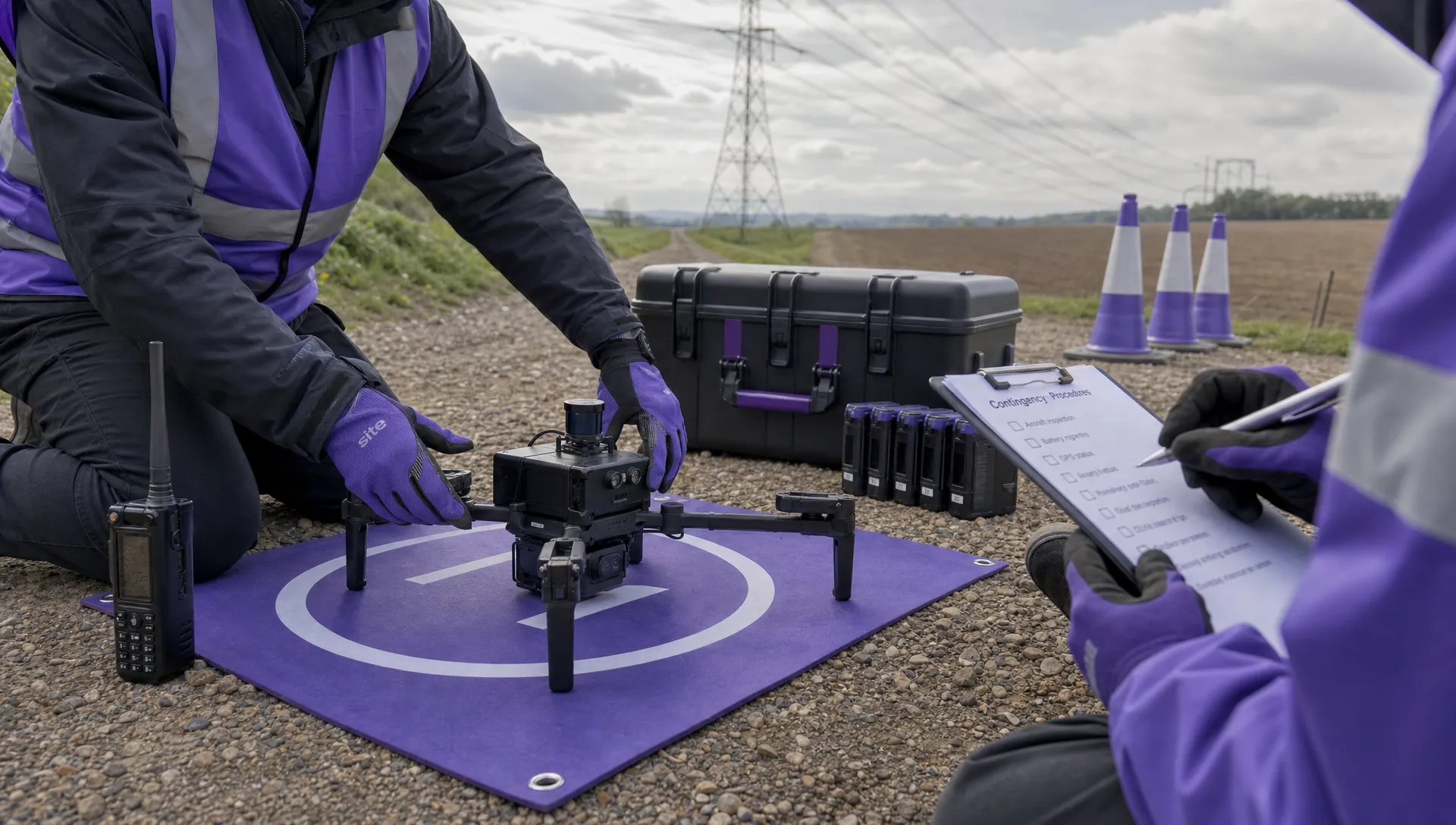
- BVLOS backed by evidence: The opportunity is clear, but approvals depend on how well a team can prove command and control reliability, detect problems early, and execute contingency procedures.
- Airspace coordination as a daily task: As more aircraft share lower airspace, operators need to treat deconfliction, notifications, and airspace checks as part of mission design, not as an afterthought.
What works and what fails under pressure
The strongest UAV teams tend to look ordinary from the outside. They use checklists. They maintain batteries properly. They standardize repeat jobs. They brief the mission clearly. They know which warnings can be managed and which ones should stop the flight.
That is less exciting than buying a new platform, but it is what keeps operations stable.
What holds up in the field:
- Standard preflight, inflight, and postflight routines.
- Maintenance records that track firmware, batteries, payload changes, and defects.
- Mission templates for recurring work, especially across multiple sites or crews.
- Data handling rules set before launch, including naming, storage, QA checks, and delivery format.
- Clear human decision points for automated missions.
What usually causes trouble:
- Using better hardware to cover weak planning.
- Treating calibration, firmware updates, and battery health as admin tasks.
- Running teams across chat messages and disconnected spreadsheets.
- Assuming obstacle avoidance or return-to-home will solve every bad situation.
- Letting the client workflow dictate the flight when the site conditions say otherwise.
For property, inspection, and survey operators, that shift is already visible. Clients are buying reliable outputs and predictable turnaround, not aircraft specs. Survey Merchant's drone survey guide is a useful example because it frames drones as part of a property workflow, where capture quality, processing, and reporting matter as much as the flight itself.
Why integrated operations matter more now
As autonomy improves and regulations mature, operational control becomes more demanding. Teams need a consistent way to track aircraft status, pilot currency, site details, risk assessments, maintenance history, and flight logs.
Dronedesk is one example of the kind of system operators use for planning, logging, compliance records, fleet tracking, and team coordination. The specific software matters less than the operating principle. Keep planning, execution, and records connected, and errors are easier to catch before they become incidents.
The future of UAVs points in the same direction the history does. Military programs pushed endurance, sensors, and comms. Civil operators pushed usability and workflow value. Hobbyists pushed affordability and rapid adoption. Modern drone operations sit where those paths meet.
The teams that perform well from here will manage the whole mission lifecycle with the same care they give the aircraft.
Better UAV operations come from better control of planning, execution, data, and compliance.
That is the lasting lesson from the history of uavs. The hardware keeps improving. The operator's job stays the same. Build a system you can trust to complete the mission safely, legally, and with usable results.
 BVLOS Drone Requirements for Building a Safety Case →
 Drone Pilot Test Mistakes That Cost Candidates Marks →
 FAA 107 License vs Part 107 Certificate: What’s the Difference? →
 Drone Airport Rules: A Field Checklist for Site Assessments →
 FAA Part 107 Record-Keeping Rules for Commercial Teams →
 How to Review a DJI Flight Log After an Unexpected Event →
 Drone Laws Around the World: A Pre-Flight Research Framework →
 How to Compare Drone Survey Services for Complex Sites →
 How to Start a Drone Mapping Business With a Clear Workflow →
 Class C Airspace Drone Rules for Commercial Flights →