
Your Guide to Commercial UAVs and Drones
First things first, let's get the terminology straight. You'll hear people talk about UAVs (Unmanned Aerial Vehicles) and drones. For pretty much any commercial work you'll be doing, they mean the same thing. Think of it like "automobile" versus "car"—UAV is the formal, technical term, but "drone" is what everyone actually says.
The Shift From Gadget to Essential Business Tool
Not too long ago, drones were seen as just hobbyist toys or expensive gadgets. That's all changed. Today, knowing how to use this technology isn't just a nice-to-have; it's a real competitive edge. These aerial platforms are now indispensable tools for businesses all over the world.
They've become the eyes in the sky that keep workers out of harm's way, the data collectors that help farmers get better crop yields, and the creative cameras that capture stunning cinematic shots once reserved for Hollywood budgets. This guide is your practical roadmap to using drones safely, legally, and, most importantly, profitably.
Why Drones Are a Business Imperative
The real value of a commercial drone is simple: it gathers high-quality data from places that are dangerous, expensive, or flat-out impossible for a person to reach. This simple capability opens up a world of benefits for all sorts of industries.
Just look at a few examples:
- Construction and Surveying: Drones can create incredibly detailed 3D models of a job site, track progress daily, and calculate material volumes in a fraction of the time it would take a ground crew.
- Public Safety: First responders are using drones with thermal cameras to find missing people or get a quick, safe look at a disaster scene without putting their own teams at risk.
- Filmmaking and Real Estate: They deliver those breathtaking aerial shots that used to require a helicopter, a pilot, and a massive crew.
- Agriculture: Drones with multispectral sensors can spot crop stress before the human eye can see it. This allows for pinpoint-accurate application of water and fertilizer, saving a fortune in resources and boosting yields.
Understanding the Explosive Market Growth
The rapid switch to using drones in business isn't just a passing trend—it's completely changing how industries get work done. This massive growth is creating huge opportunities for operators who can run a tight, professional, and compliant ship.
The global drone market is set to rocket from US$69 billion in 2026 to an incredible US$147.8 billion by 2036. For solo pilots just starting out and for teams looking to expand, those numbers mean one thing: a massive, growing demand for well-managed, professional drone services. You can learn more about what this massive industry growth means for commercial operators.
Choosing the Right Drone for the Job
Picking the right drone for your business isn't about chasing the “best” model on the market. It’s about choosing the right tool for the job. You wouldn't use a sledgehammer to hang a picture, and you shouldn't use a short-range quadcopter to map a 500-acre farm.
Getting this choice right from the start is fundamental to running an efficient, safe, and profitable operation. The world of commercial drones is surprisingly diverse, and understanding the core types of aircraft is the first step toward building a capable fleet.
Multirotor Drones: The Agile Hovercraft
Think of a multirotor drone as a helicopter. Its superpower is agility. It can take off from almost anywhere, hover perfectly still, and manoeuvre in tight spaces with incredible precision. This makes them the obvious choice for any job that requires close-up, stable camera work.
A multirotor is your go-to for:
- Detailed Inspections: Getting high-resolution shots of a wind turbine blade, a cell tower, or a specific part of a building façade.
- Real Estate & Media: Capturing those dramatic low-altitude property photos or smooth video fly-throughs.
- Close-Quarters Mapping: Creating detailed 3D models of a single building or a small, complex construction site.
The trade-off for all that agility is endurance. Multirotor drones are sprinters, not marathon runners. With a typical flight time of 25 to 45 minutes, you’ll be planning missions around frequent battery swaps, making them less practical for covering huge areas in one go.
Fixed-Wing Drones: The Endurance Flyers
If a multirotor is a helicopter, a fixed-wing drone is an airplane. These machines are built for one thing: endurance. They are designed to glide efficiently through the air, covering massive areas much faster and on a single battery.
This makes them the clear winner for large-scale projects like:
- Agricultural Surveying: Mapping hundreds of acres of farmland to monitor crop health.
- Large-Scale Mapping: Creating detailed topographical maps for environmental studies or land management.
- Linear Inspections: Surveying long stretches of pipelines, power lines, or railway tracks efficiently.
The catch? They can't hover. Just like an airplane, a fixed-wing drone has to keep moving forward to stay in the air. This also means they need a bit of room to take off and land, either with a small runway or a catapult launcher, which isn't always practical in confined areas.
VTOL Hybrids: The Best of Both Worlds?
A third category, the VTOL (Vertical Take-Off and Landing) hybrid, tries to give you the best of both multirotor and fixed-wing designs. These aircraft are a clever bit of engineering—they take off and land vertically like a helicopter but then transition into forward flight like an airplane for the bulk of the mission.
VTOLs give you the launch-anywhere flexibility of a multirotor combined with the long-range endurance of a fixed-wing. This makes them incredibly versatile for missions that need both.
They are perfect for surveying large, hard-to-reach areas where you don't have a clear runway for a fixed-wing. While they offer a powerful and flexible solution, this advanced capability usually comes with a higher price tag and more mechanical complexity.
Before diving deeper into hardware, this decision guide helps with the first question every operator must answer: is your flight for professional or hobbyist purposes? The answer determines the entire regulatory path you must follow.
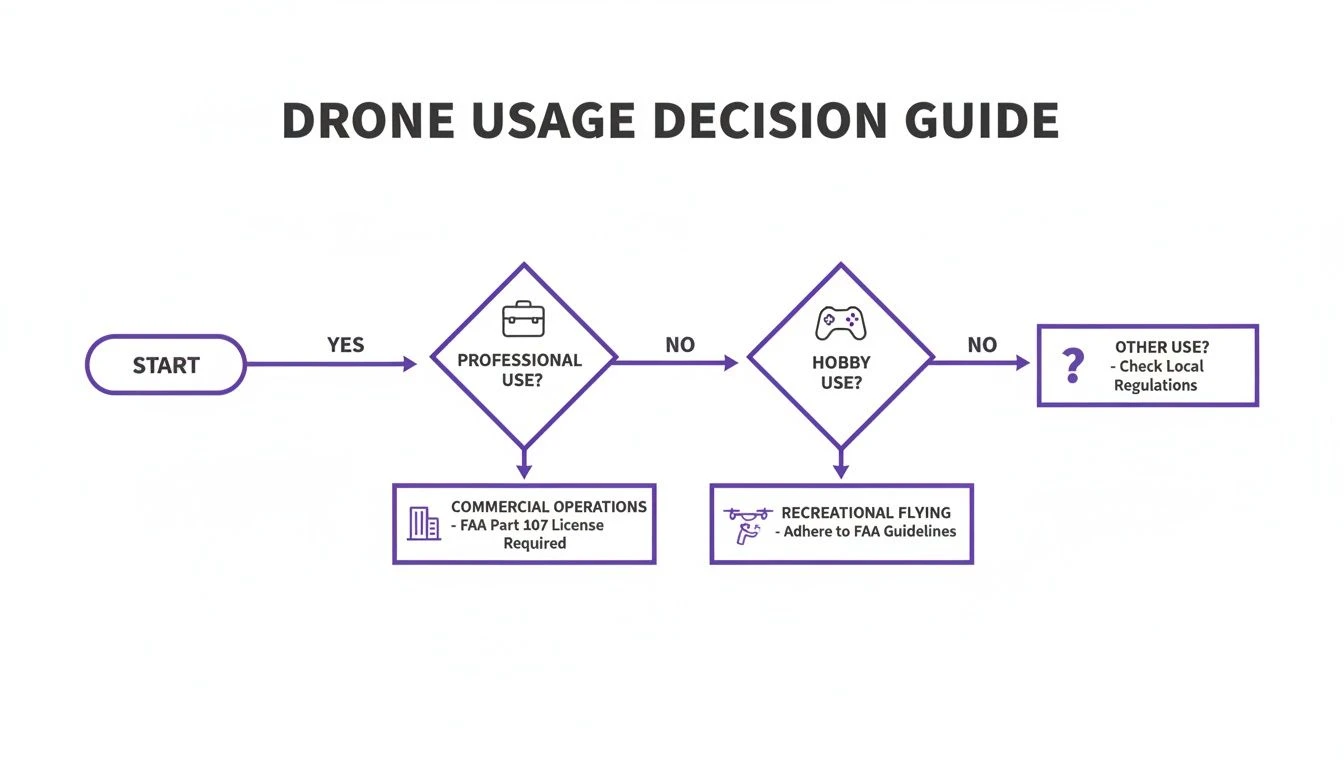
As the flowchart shows, any flight conducted for business purposes—no matter how small—falls under stricter commercial regulations.
Commercial Drone Types Compared
To help you decide, here’s a quick breakdown of how these drone types stack up against each other for different operational needs.
| Drone Type | Key Strength | Best For | Primary Limitation |
|---|---|---|---|
| Multirotor | Agility & Hovering | Close-range inspections, photography, small-site mapping | Short flight time and limited range |
| Fixed-Wing | Endurance & Speed | Large-area mapping, agriculture, linear inspections | Cannot hover, needs space for launch/landing |
| VTOL | Hybrid Flexibility | Large-area mapping in confined spaces, complex missions | Higher cost and increased mechanical complexity |
Ultimately, the best drone is the one that fits your specific mission profile and budget.
Matching Payloads to Your Mission
Finally, remember that the drone itself is just the platform. The real work is done by the payload—the equipment it carries. The "tool belt" is what actually captures the data you need. A great commercial drone is one that can reliably carry the specific payload your job requires.
Common payloads you'll encounter include:
- High-Resolution RGB Cameras: The workhorse for standard photography, videography, and visual inspections.
- Thermal Cameras: Used for detecting heat signatures, essential for solar farm inspections, building insulation audits, and search and rescue.
- LiDAR Scanners: For creating incredibly precise 3D point clouds used in high-accuracy surveying and forestry.
- Multispectral Sensors: The go-to tool in agriculture for analysing crop health by capturing light from different parts of the spectrum.
How Drones Are Transforming Industries
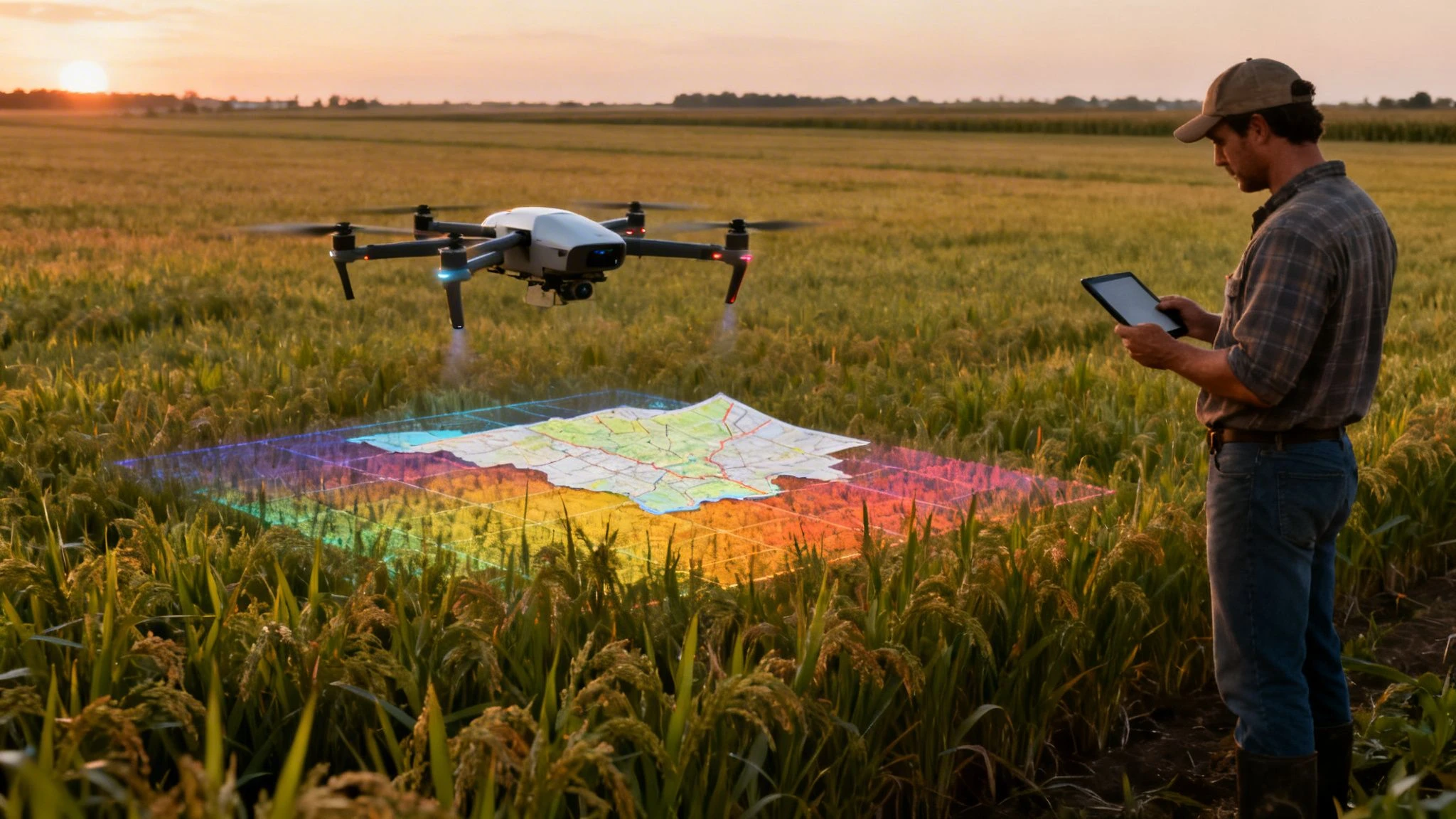
The true impact of commercial UAVs isn’t found on a spec sheet—it’s seen in the field. This isn't about fancy new gadgets; it’s about a fundamental change in how work gets done, bringing huge gains in safety, efficiency, and the quality of data we can gather. These aren't just flying cameras. They're business tools that solve real, expensive problems.
The value here isn't abstract. It’s measured in lives saved, crops protected, and infrastructure maintained without putting people in harm's way. We're seeing jobs that were once considered dangerous or impossibly time-consuming now wrapped up in a matter of hours, not weeks.
Public Safety and Emergency Response
Think about a search and rescue mission in a thick forest. A hiker is missing, daylight is fading, and ground teams are facing a massive, rugged search area. Deploying a multirotor drone with a thermal camera completely changes the game.
In minutes, that drone can scan acres of terrain that would take a ground team hours to cover. The thermal payload picks up the hiker's body heat against the cool forest floor, giving rescuers an exact location with incredible speed. This isn't science fiction; it’s how drones are directly saving lives by slashing search times.
The ability to get an aerial asset with specialised sensors in the air in minutes gives first responders critical situational awareness, allowing them to make faster, more informed decisions when every second counts.
This same rapid response is a lifesaver for fire departments assessing a burning building's structural integrity from a safe distance, or for police creating precise 3D models of accident scenes without shutting down roads for hours on end.
Precision Agriculture and Environmental Monitoring
Now, picture a farmer trying to manage hundreds of acres of corn. One small, unseen patch of disease or a nutrient issue can spread like wildfire, costing thousands in lost crops. A fixed-wing drone equipped with a multispectral sensor can fly over the entire farm in a single morning.
This sensor sees what the human eye can't, identifying crop stress long before it’s visible from the ground. The data map it generates shows the farmer exactly where to apply water or fertiliser. This is precision agriculture in action—using data to make targeted, highly efficient decisions that lead to big savings and a healthier harvest.
It’s the same story for environmental scientists, who use drones for all kinds of monitoring:
- Wildlife Monitoring: Counting animal populations without disturbing their natural habitats.
- Coastal Erosion Tracking: Creating precise maps over time to measure how shorelines are changing.
- Forestry Management: Checking tree health and calculating timber volume across huge, remote forests.
Infrastructure Inspection and Cinematography
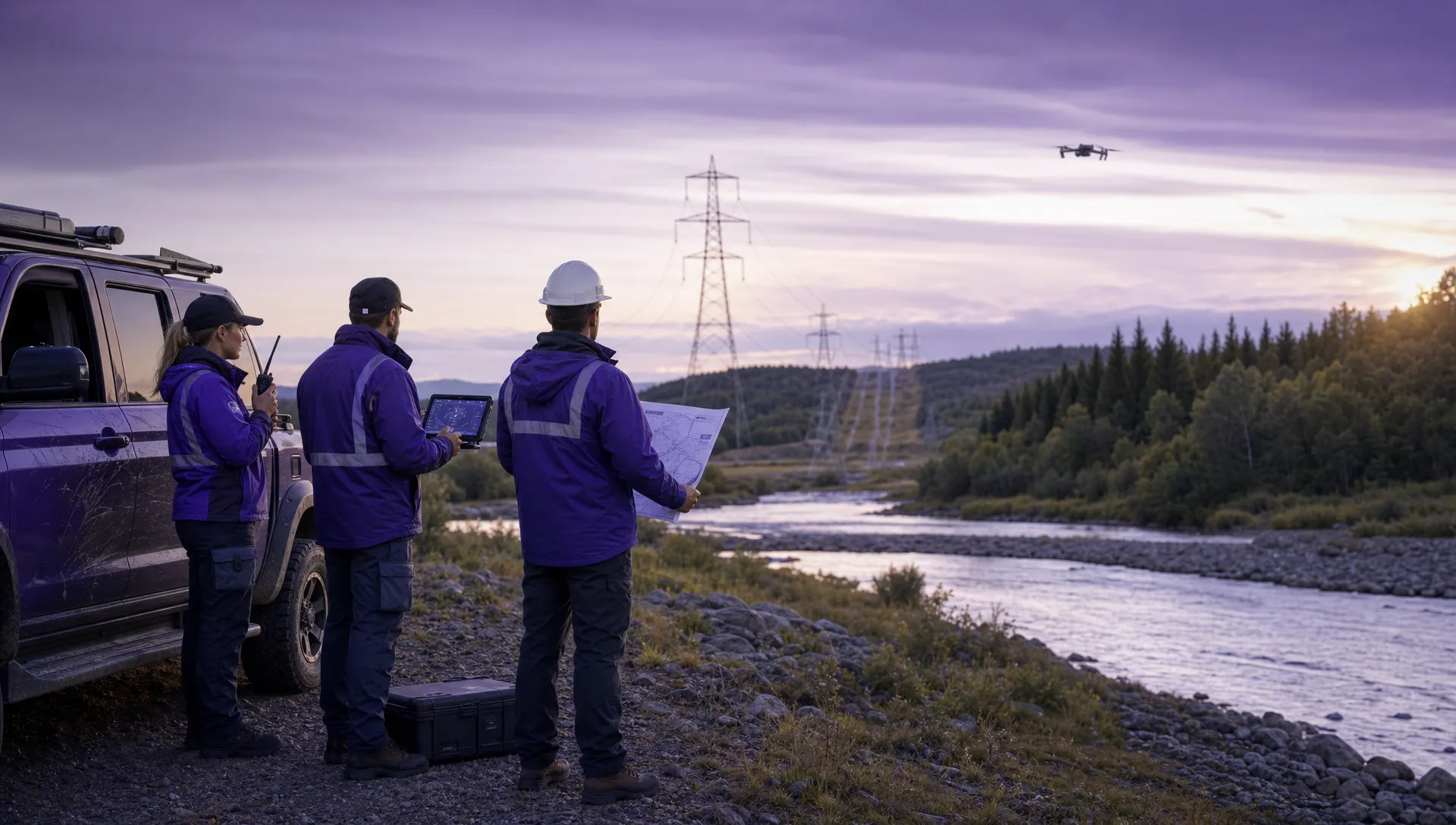
Inspecting a bridge or a wind turbine used to be a high-risk, expensive job that called for rope access teams or heavy machinery. Today, a drone can do the same inspection with better detail and zero risk to human life. A pilot on the ground can safely capture high-resolution images of every single bolt and weld, spotting problems before they become catastrophic failures.
Contractors, for example, are increasingly using drones for home inspections to improve safety, cut costs, and win more work. It’s a simple change to the workflow that saves time and money while delivering far better data.
And in the world of media and entertainment, drones have completely democratised the aerial shot. Those sweeping, cinematic views that once required a helicopter and a five-figure budget can now be captured by a skilled pilot with a quality camera drone. From Hollywood blockbusters to local real estate videos, drones deliver a dynamic perspective that hooks audiences and adds serious production value.
Flying Right: Your Guide to Drone Regulations
For any professional pilot, compliance isn't just a box to tick—it's the very foundation of your business. The rules of the sky can feel a bit tangled at first, but they all boil down to two things: keeping the public safe and respecting people's privacy. Getting this right protects your clients, your reputation, and ultimately, your bank balance.
Think of it like getting a driver's license. You need the right credentials to operate, you have to follow the rules of the road, and you absolutely must know which areas are off-limits. The same logic applies directly to flying a drone for work.
The Fundamental Rules of the Sky
Every professional pilot works within a clear set of rules. While the specifics can change from country to country, a few core principles are pretty much universal. One of the first concepts you'll need to master is Visual Line of Sight (VLOS).
Simply put, VLOS means you must be able to physically see your drone with your own eyes, without binoculars, at all times. This is a cornerstone of safe flying, ensuring you can react and steer clear of obstacles like trees, power lines, or other aircraft.
Understanding airspace is just as critical. The sky isn't a free-for-all; it's divided into different zones, much like the road network. Some areas are open for flying, but others, especially near airports or sensitive sites, are "controlled" and require specific permission to enter. Flying in the wrong spot isn't a minor slip-up—it can create serious danger and bring down heavy penalties.
Why Compliance Is Non-Negotiable
Cutting corners on regulations is the fastest way to kill a drone business. The fallout from non-compliance can range from eye-watering fines and losing your certification to, in a worst-case scenario, criminal charges if an accident happens. A single serious incident can destroy your reputation for good.
True professionalism is built on safety and accountability. This is exactly why a solid compliance workflow isn't just "good practice"—it’s a powerful competitive advantage. To dive deeper into building a compliant operation, check out our comprehensive commercial drone compliance guide.
Mastering Your Pre-Flight Workflow
A safe flight starts long before your drone's props even start spinning. A disciplined, structured pre-flight workflow is your single best defence against accidents and compliance headaches.
Every professional pre-flight check should cover these essentials:
- Airspace Check: Use a reliable tool to check for airspace restrictions, temporary flight restrictions (TFRs), and any other potential hazards at your flight location.
- Weather Assessment: Look at the forecast for wind speed, precipitation, and visibility. Make sure the conditions are well within the safe operating limits for your specific drone.
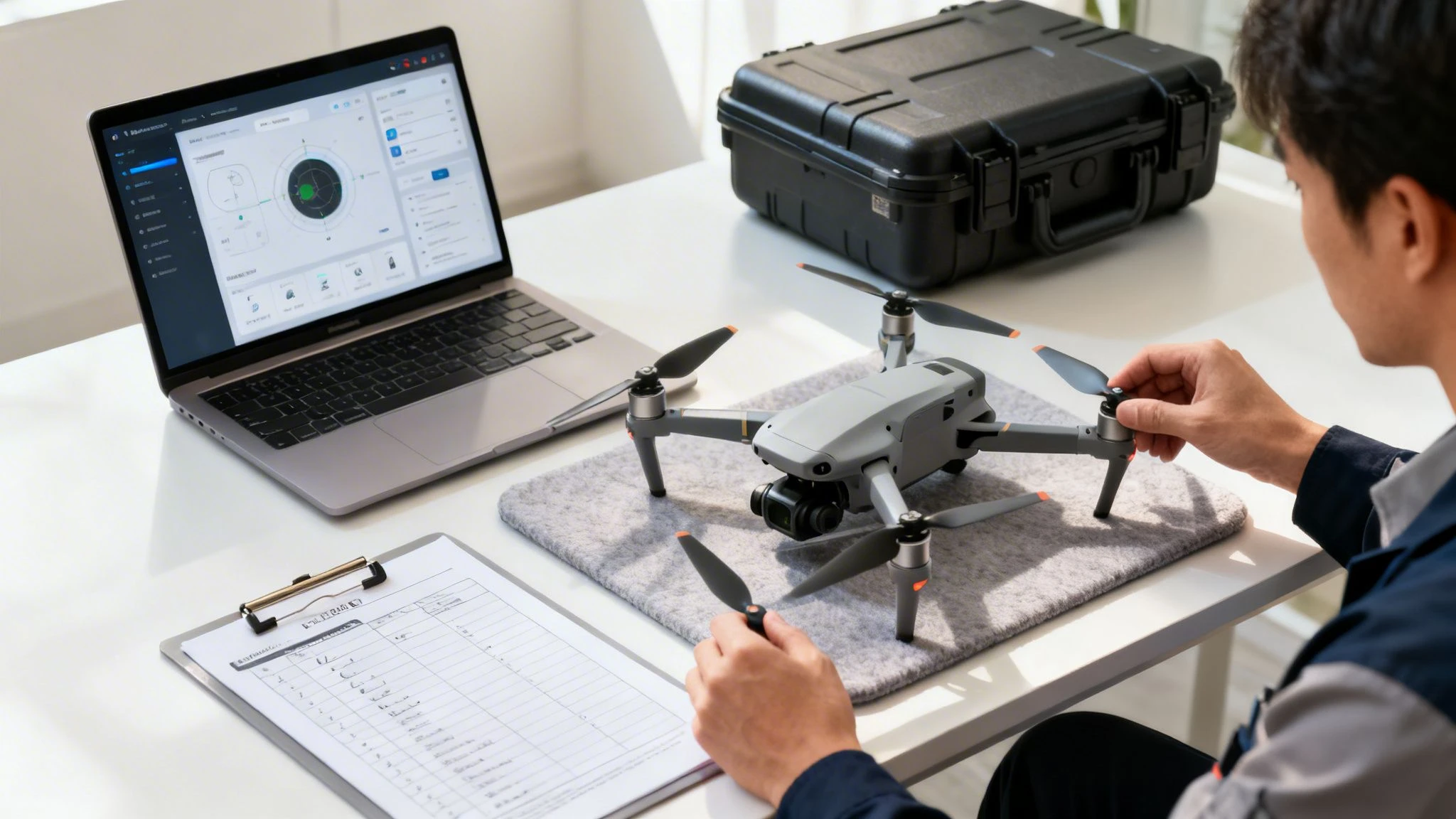
- Hardware Inspection: Do a full physical check of the drone. Look over the props, batteries, gimbal, and sensors to make sure everything is in perfect working order.
- Risk Assessment: Formally identify the potential hazards for that specific job—from power lines to public footpaths—and document exactly how you plan to manage them.
This process might seem repetitive, but it’s precisely what separates a professional operator from a hobbyist.
It's also worth noting how the hardware itself has evolved. China's manufacturing muscle, accounting for 70-80% of global production with DJI as the clear leader, has completely reshaped the market. This has driven incredible innovation and made advanced aircraft more affordable, which in turn has fuelled massive growth across the industry.
For operators in fields like surveying or inspection, this means better and cheaper access to high-spec hardware. Find more insights in this detailed drone market research report. Operations management platforms that offer direct DJI integration make it dead simple to sync flight logs automatically, which is a huge help for maintaining compliance and tracking flight data.
How to Manage and Scale Your Drone Operations
So, you've gone from being a solo pilot with a single drone to juggling multiple aircraft, pilots, and a growing list of clients. It's an exciting time, but it also brings a whole new set of headaches. The skills that make you a great pilot—steady hands and a sharp eye—are worlds apart from what it takes to manage the admin side of a scaling business. This is where many promising drone businesses hit a wall.
As you grow, the paperwork and administrative jobs can quickly spin out of control. Suddenly, you're buried under client contracts, pilot certifications, aircraft maintenance logs, and an endless stream of pre-flight risk assessments. This is the moment you have to switch gears, thinking less like a drone operator and more like a business manager.
The Growing Pains of a Drone Business
Managing one drone for a few local jobs is one thing. Running a fleet is another beast entirely. As your client list and team expand, you'll start to feel the friction in a few key areas. These aren't just minor irritations; they're genuine business risks that can halt your growth and leave you exposed to serious compliance issues.
Some of the most common pain points include:
- Scattered Information: Client details are in one spreadsheet, flight logs are scribbled in a notebook, maintenance records are in a forgotten folder, and your risk assessments are lost somewhere in your email inbox. This chaos makes it nearly impossible to get a clear, up-to-date view of your operation.
- Repetitive Admin Work: You find yourself filling out the same risk assessment from scratch for similar jobs, manually typing up flight data after every mission, and chasing pilots for their paperwork. All this is time you could be spending on billable work.
- Proving Compliance: If a client or a regulator asks for a pre-flight check or a maintenance record for a specific flight, could you pull it up in minutes? For many growing companies, this triggers a frantic search through disorganised files, which looks unprofessional and immediately raises red flags.
The real challenge of scaling is that your admin workload explodes with every new pilot, drone, and client you add. Without a proper system, you'll soon spend more time managing paperwork than flying missions.
This is exactly the problem that drone operations management platforms were created to solve. They bring order to the chaos, acting as a central command centre for your entire business.
Introducing the Drone Operations Command Center
A drone operations management platform is essentially the single source of truth for your business. It pulls all the disconnected pieces of your workflow—planning, flying, logging, reporting—into one cohesive system. Instead of juggling half a dozen different apps and spreadsheets, you manage everything from a single dashboard.
Think of it as the air traffic control tower for your business. It gives you a complete, real-time overview of every moving part, from the initial client enquiry all the way through to final project delivery.
A solid platform will help you:
- Plan Efficiently: Create job plans, assign pilots and equipment, and generate professional quotes and invoices, all from one place.
- Ensure Compliance: Build standardised, location-aware risk assessments, check airspace intelligence, and make sure all required pre-flight checks are completed and logged.
- Automate Logging: Automatically sync flight logs directly from your aircraft (especially with direct DJI integration), which gets rid of manual data entry and builds a perfect record of every flight.
- Manage Your Fleet: Track maintenance schedules, log any repairs, and keep an eye on the health and status of every drone and piece of kit you own.
This kind of centralised system completely changes how you manage multiple projects and team members, making sure important details never slip through the cracks. It provides a structured way to handle everything from project planning to client information, as shown on the Dronedesk features page.
From Doing Admin to Running a Business
Ultimately, bringing in an operations management platform is about freeing yourself up to focus on what really matters. By automating the tedious but essential admin tasks, you can shift your energy from just "doing admin" to strategically growing your business.
This means you suddenly have more time to network with potential clients, dream up new services, and train your team. You’re no longer just reacting to the daily grind of paperwork; you're proactively building a scalable, professional, and profitable drone business.
A system like Dronedesk gives you the framework to make this happen. It’s designed to help solo operators look and feel like a major enterprise while also giving large teams the consistency and control they need across all their operations. When you adopt this kind of technology, you're not just buying software; you're investing in a system that allows your business to grow without being buried alive in administrative overhead. It's the key to unlocking true scalability and long-term success.
Frequently Asked Questions About Commercial Drones
Jumping into the world of commercial UAVs and drones can feel like a lot to take in. There are always questions swirling around about costs, compliance, and what the day-to-day actually looks like. We hear the same queries from new pilots and seasoned pros alike, so we've put together some straight, practical answers to clear things up and help you make smarter moves for your business.
Getting these fundamentals right from the start is what separates a sustainable, profitable drone business from one that never really gets off the ground.
What Does It Cost to Start a Drone Business?
Starting a professional drone business isn't just about buying a drone off the shelf. It’s like setting up any other professional service – you've got equipment, licenses, insurance, and software to think about. A realistic budget from day one is your key to starting on the right foot, without cutting corners where it really matters, like safety and compliance.
Your initial investment will break down into a few key areas:
- The Drone Itself: A solid "prosumer" model perfect for real estate or basic inspections, like a DJI Mavic, will run you between $1,500 and $3,500. If you're aiming for high-accuracy survey work, be prepared for enterprise-level drones that can easily top $20,000.
- Certification and Training: In most places, you’ll need a professional drone pilot certificate. The courses and exam fees usually fall somewhere between $300 and $1,000.
- Liability Insurance: This is absolutely non-negotiable. For a solo operator, annual premiums are typically in the $500 to $1,500 range, but this will vary based on your coverage and the kind of jobs you're doing.
- Essential Software: This includes processing software for things like mapping, but more importantly, a drone operations management platform. This isn't a "nice-to-have"; it's a critical investment from the get-go.
A realistic starting budget for a solo pilot looking to break into markets like real estate photography or local marketing would be between $3,000 and $5,000. This covers a quality drone, your certification, first-year insurance, and a subscription to an essential management platform.
What Is the Most Important Part of Running a Drone Business?
While being a great pilot with a creative eye is obviously important, the single most critical part of a successful drone business is an unwavering commitment to safety and compliance. This is the bedrock of your entire operation. It only takes one safety incident or a hefty regulatory fine to ground your business for good, no matter how good your aerial shots are.
This commitment is about more than just knowing how to fly. It's about having a disciplined, repeatable process for every single mission.
In the drone industry, professionalism is all about your process. This means:
- Thorough Risk Assessments: Documenting every potential hazard before you even think about taking off and having a solid plan to mitigate it.
- Meticulous Record Keeping: Keeping detailed logs for every flight, all your equipment maintenance, and pilot training records.
- Deep Airspace Awareness: Knowing the rules of the sky for every location and getting the proper authorisations every time.
This is exactly where a dedicated operations management system proves its worth. It gives you the structure and checklists to make sure no safety step is ever missed, creating a complete, defensible record of every professional call you make. In the world of commercial drones, your reputation for safety is your most valuable asset.
Can I Use a Hobby Drone for Commercial Work?
Yes, you absolutely can. Many successful drone businesses got their start using high-end consumer or "prosumer" drones from popular lines like the DJI Mavic, Air, or Phantom series. These aircraft pack a fantastic camera, offer stable flight, and have a ton of smart features that make them more than capable for a wide range of commercial jobs.
The real difference between hobby and commercial use isn't the drone itself—it's the pilot and the operation. The moment you fly for any business purpose, even just snapping a few photos for a friend's real estate listing, you're operating commercially.
That means you have to:
- Be Certified: Hold the correct commercial drone pilot license for your country.
- Register Your Aircraft: Make sure your drone is registered with the aviation authority for commercial use.
- Follow All Rules: Stick to all regulations governing commercial drone operations, from airspace rules to flight limitations.
While a prosumer drone is a brilliant, cost-effective way to get started in services like photography and content creation, you'll likely need to upgrade as your business finds its niche. More advanced work like thermal inspections or LiDAR surveying demands enterprise-grade UAVs with specific payload capabilities. But to get your business off the ground, a prosumer drone is a powerful and accessible tool.
How Does a Management Platform Help a Solo Drone Pilot?
For a solo drone pilot, an operations management platform is a complete game-changer. Think of it as your admin assistant, compliance officer, and business analyst, all wrapped into one affordable subscription. It slashes the time you waste on tedious, non-billable admin, freeing you up to do what actually makes you money: flying missions.
Instead of juggling a mess of spreadsheets for flight logs, different apps for weather checks, and government sites for airspace, you can run your entire workflow from a single, clean dashboard.
A solo pilot using a platform like Dronedesk can plan a new job, generate a location-specific risk assessment, check airspace, log the flight, and create a professional client report in a tiny fraction of the time it would take to do it all manually.
This boost in efficiency means you can take on more work without getting swamped by paperwork. Even better, it establishes a level of professionalism and documented safety that helps you land and keep those bigger, higher-value clients who demand proof of compliance. It’s easily the best investment a solo pilot can make to operate like a much larger, more established business.
Ready to bring professional-grade efficiency and compliance to your operations? Dronedesk provides the end-to-end platform to manage your clients, fleet, and jobs, all while automating the tedious administrative work. Start streamlining your drone business today by exploring our features at https://dronedesk.io.
 BVLOS Drone Meaning and Why It Matters →
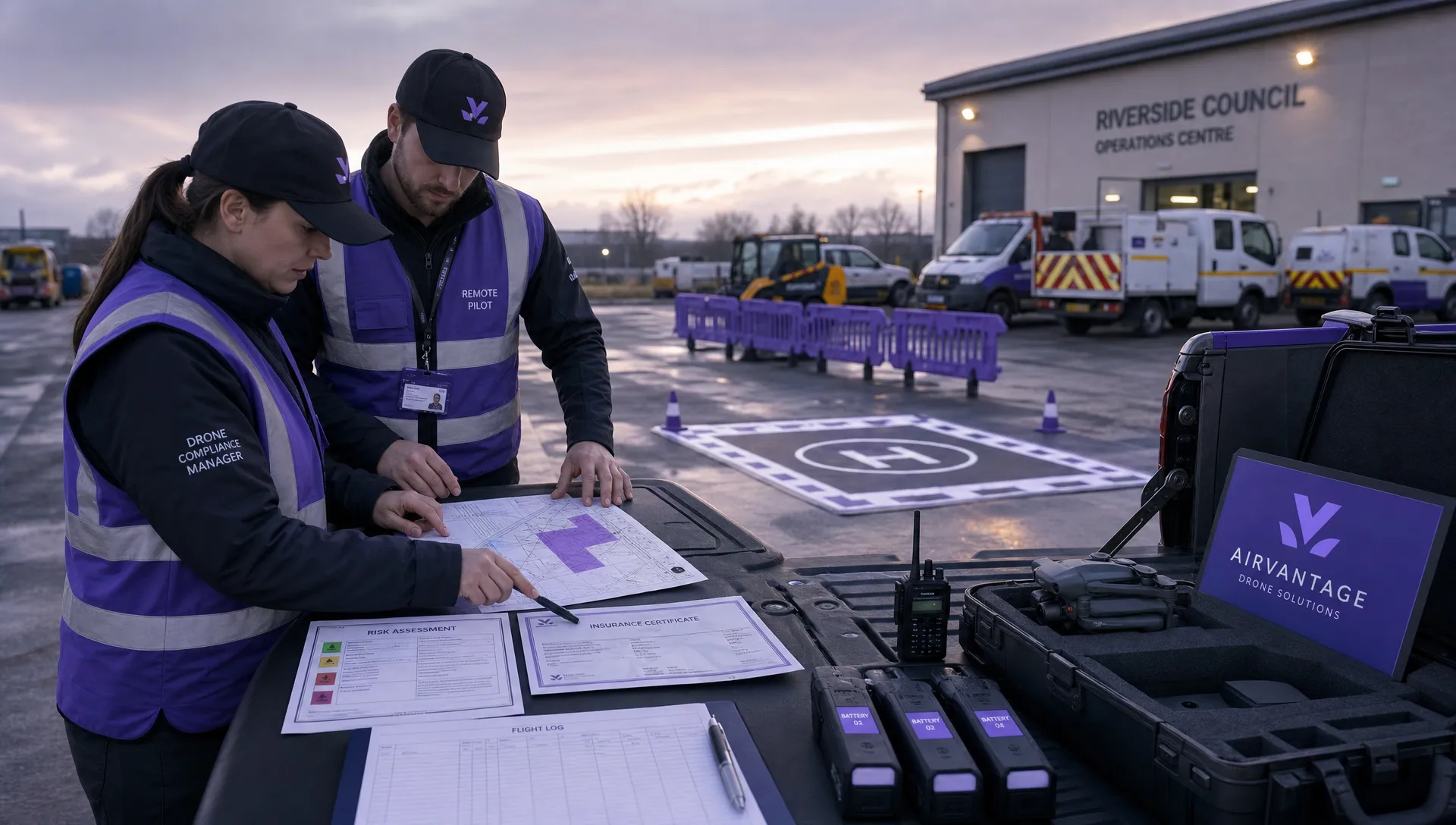 Drone Operation Regulations Explained for Businesses →
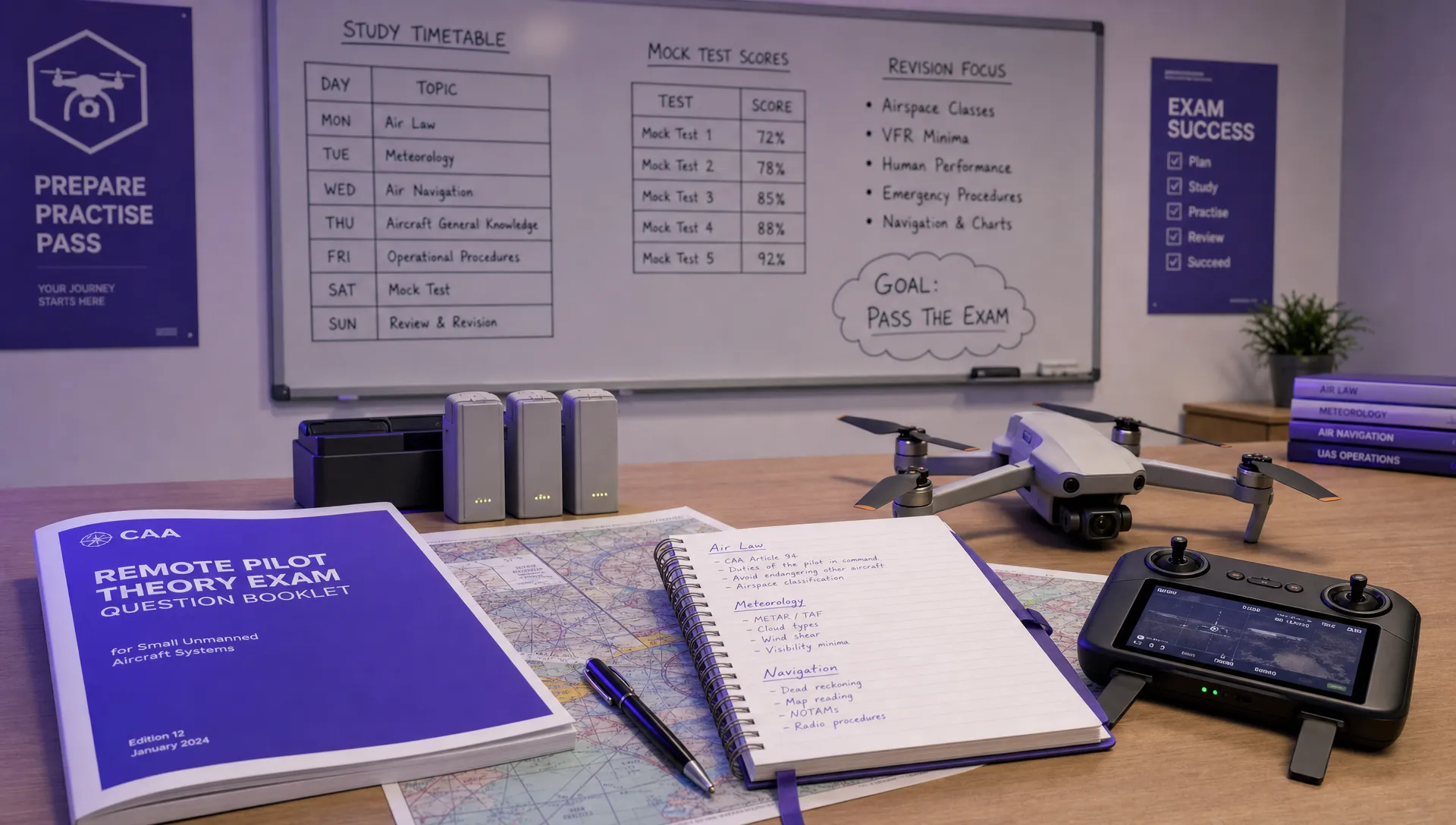 How to Pass Your Drone Pilot License Test →
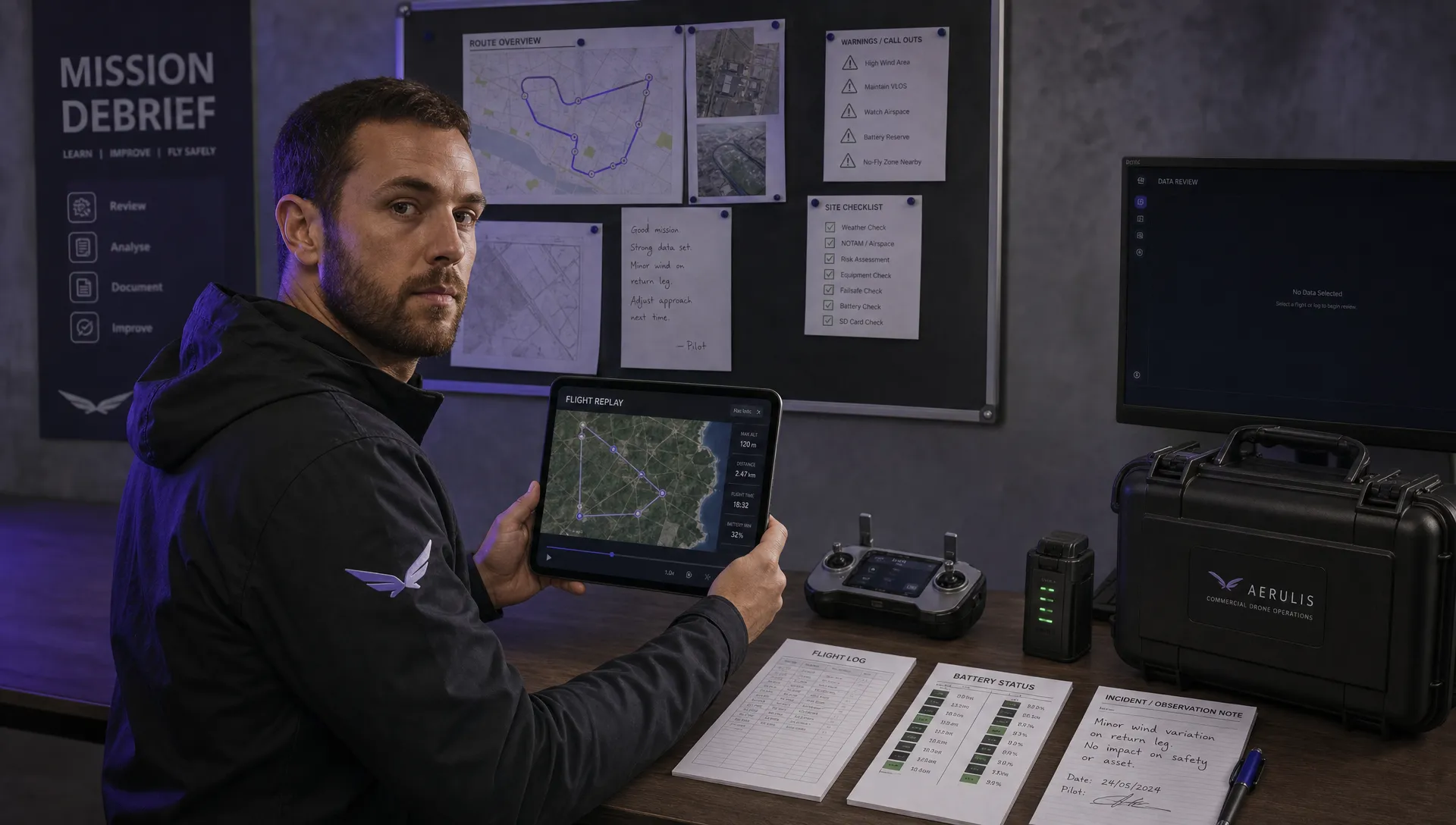 How to Review a DJI Flight Record After a Mission →
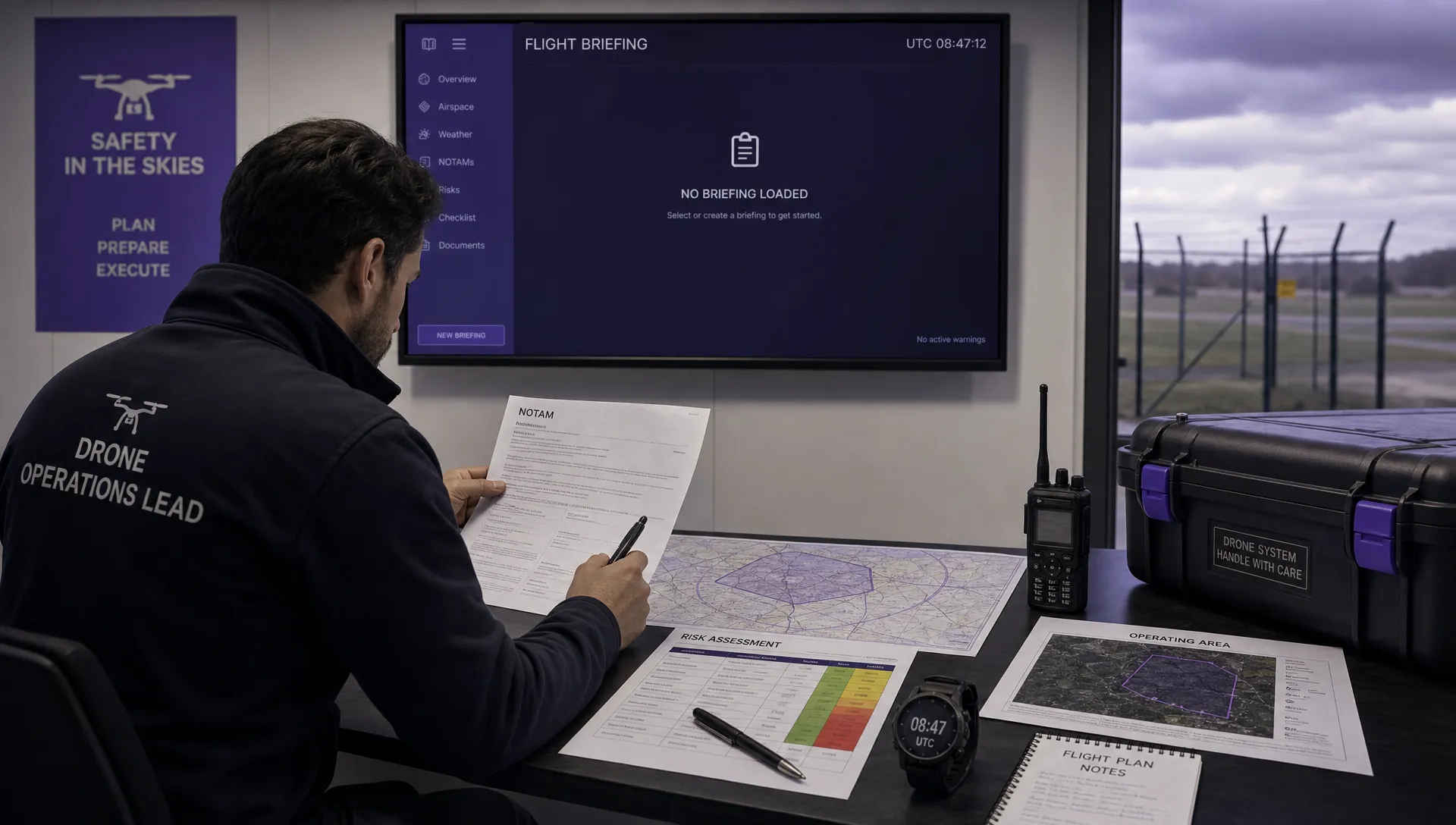 How to Check a Drone NOTAM Before You Fly →
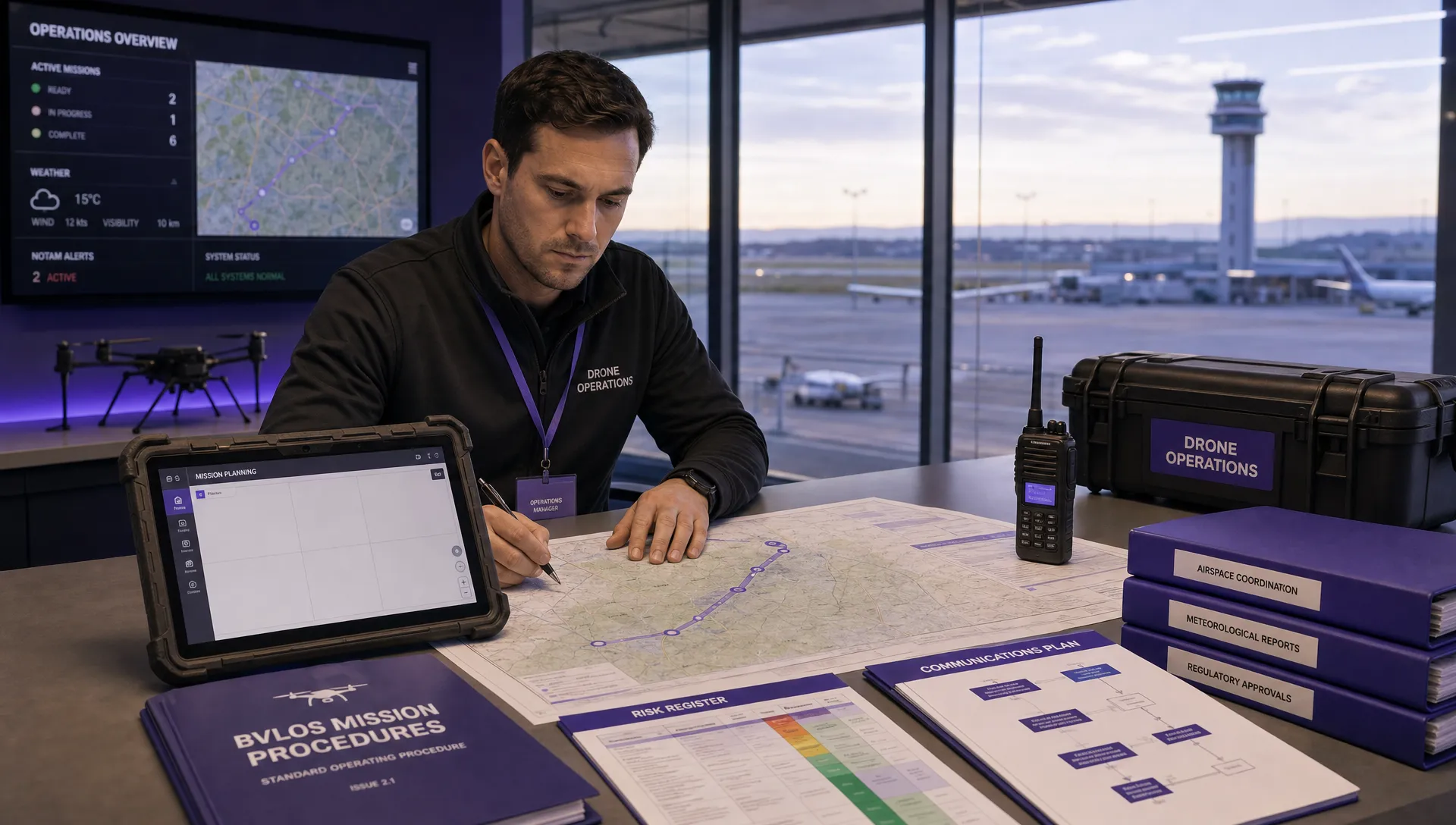 Part 108: What Drone Operators Should Expect →
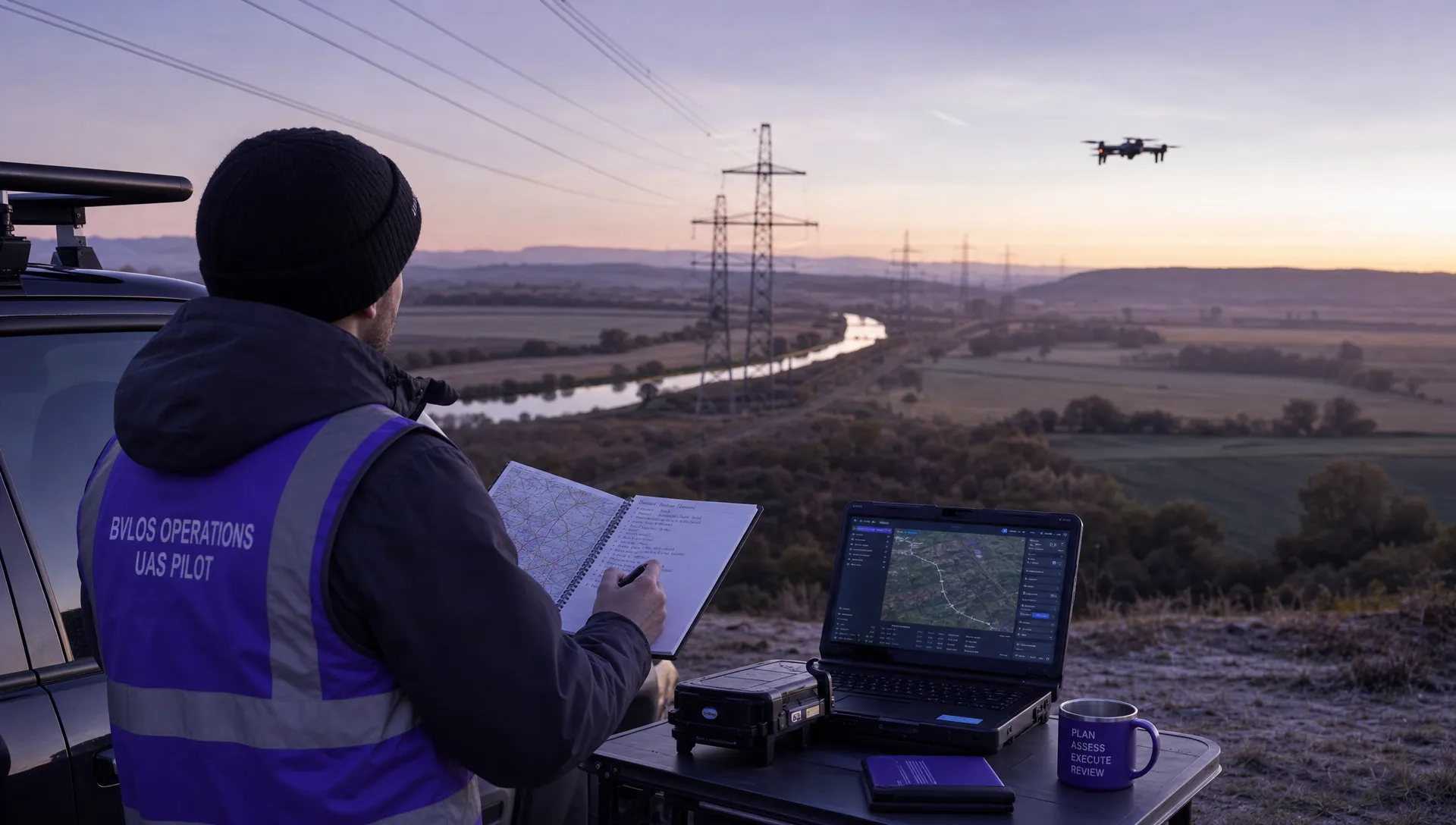 Beyond Visual Line of Sight BVLOS Explained →
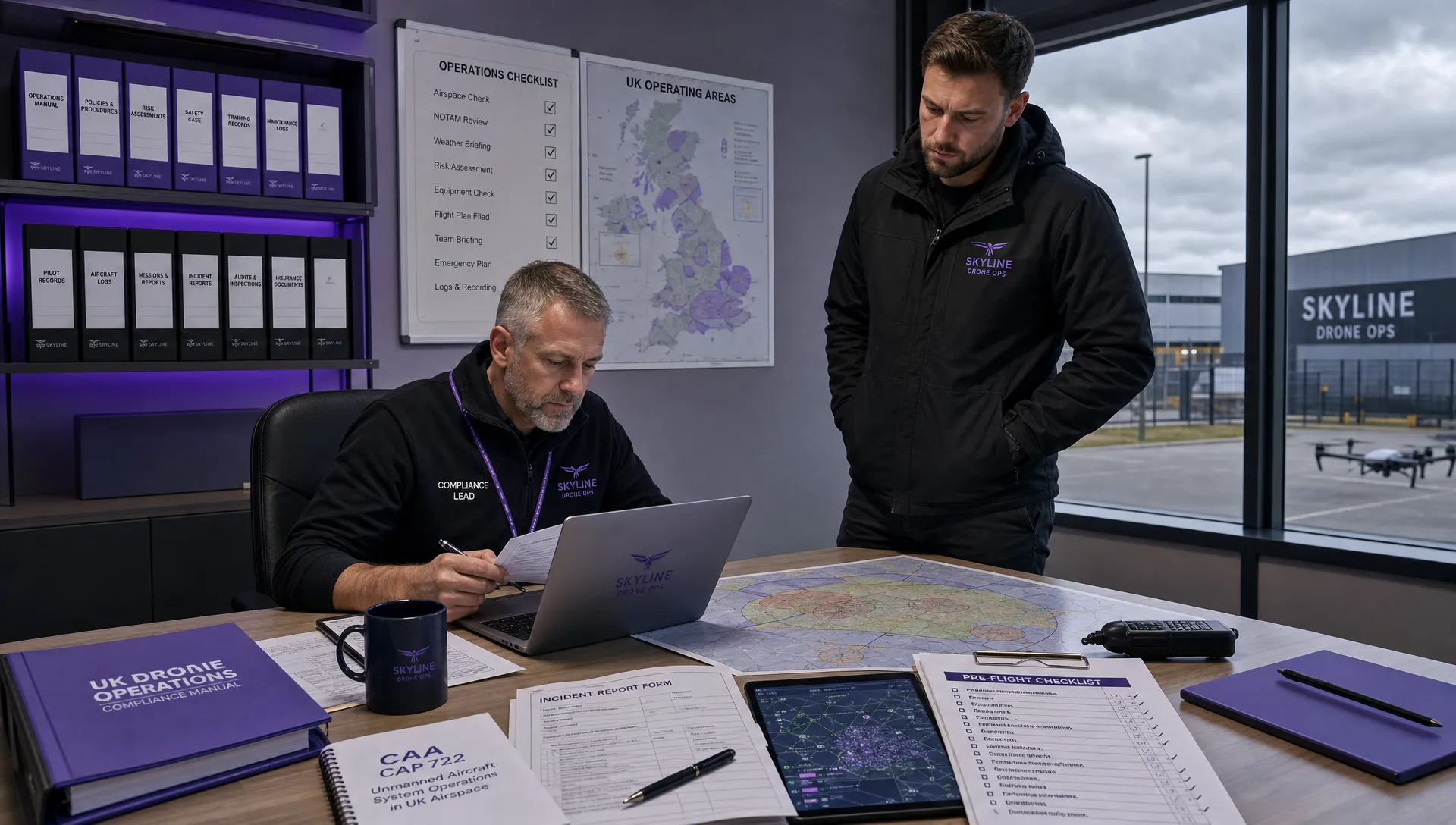 Drone Laws and Regulations Every Team Should Review →
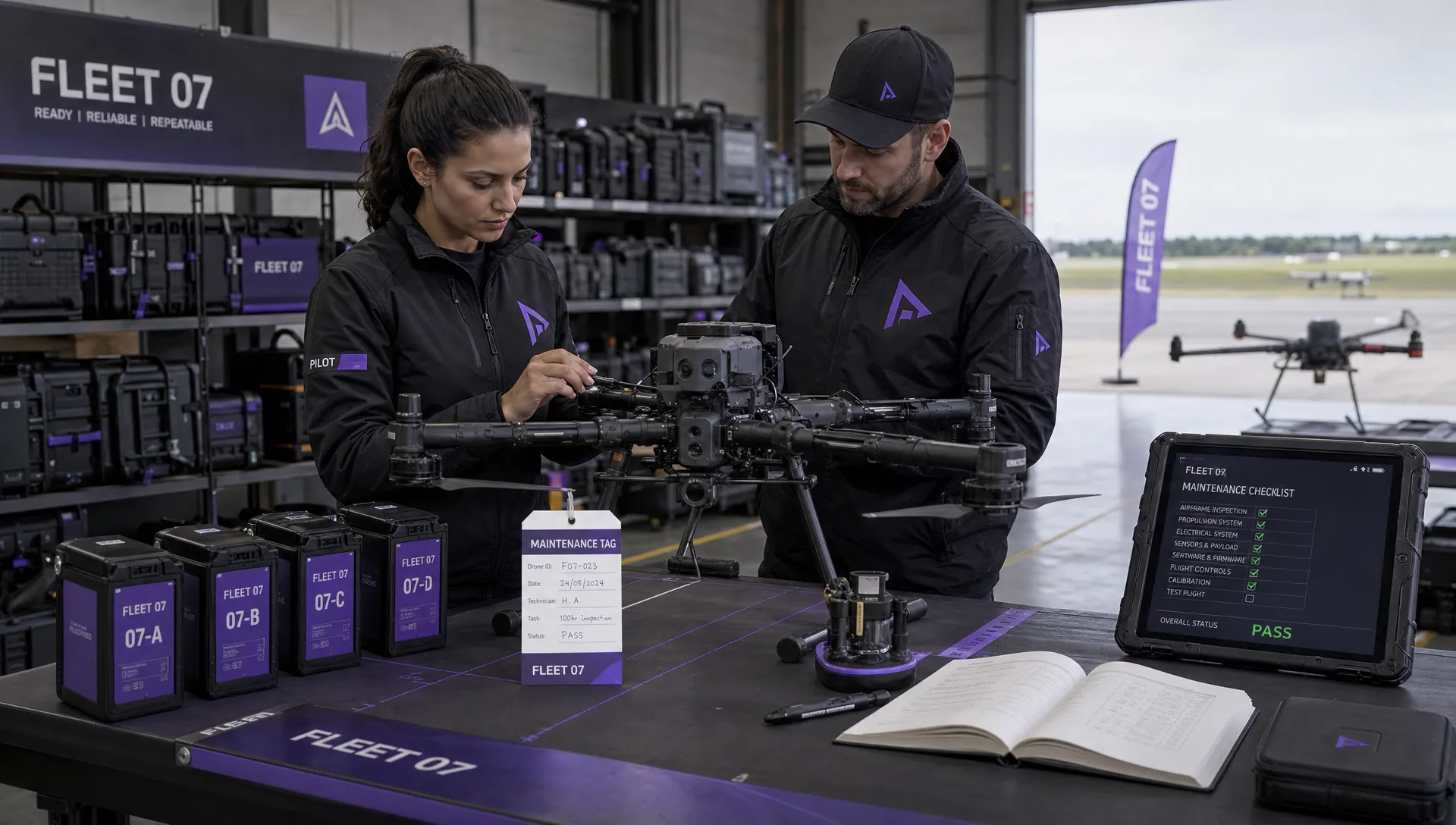 Current Drone Laws: What Changed in 2026? →
 JARUS SORA Explained in Plain English →