
A Guide to UAV Mapping Services From Planning to Profit
UAV mapping is, at its heart, the art of creating a massive, high-resolution digital quilt of a real-world location. But instead of fabric and thread, we’re using hundreds—sometimes thousands—of meticulously captured aerial photos stitched together by incredibly powerful software.
What you get isn't just a pretty picture from above. It’s a rich, data-packed model of your site that gives you a powerful competitive edge. This isn't just about cool tech; it's about turning raw aerial images into actionable intelligence that drives smarter decisions on the ground.
What Are UAV Mapping Services and Why Are They Essential?
The ability to quickly generate photorealistic 3D models and centimetre-accurate orthomosaic maps has become an indispensable tool for anyone managing a physical project. Whether you're in construction, agriculture, or land management, this is how you stay ahead.
The Shift from Traditional to Digital Surveying
For decades, surveying land was a slow, labour-intensive job. It meant boots on the ground, specialized gear, and teams battling the elements and tricky terrain. It was often hazardous and always time-consuming.
UAV mapping completely flips that script. It replaces painstaking groundwork with hyper-efficient aerial data capture. A single drone operator can survey a massive construction site or hundreds of acres of farmland in a fraction of the time it would take a traditional crew.
The benefits are immediate and obvious:
- Speed: A survey that used to take weeks can now be wrapped up in a matter of hours.
- Safety: Operators can map dangerous or completely inaccessible areas—think steep slopes, active work sites, or unstable ground—all from a safe distance.
- Detail: Drones capture an astonishing level of detail, revealing crucial insights that are simply impossible to see from ground level.
A Rapidly Expanding Market
This isn't just a niche trend; it's a fundamental market shift. The global drone mapping sector is set to rocket from USD 1.3 billion in 2025 to a staggering USD 6.7 billion by 2035. That's a compound annual growth rate of 17.1%.
This explosive growth is being driven by breakthroughs in AI-driven analytics, more sensible regulatory frameworks, and a huge demand for faster, cheaper, and safer surveying solutions across countless industries. You can dig into the full market analysis to see what's powering this expansion.
This shift underscores a critical point: drone mapping is no longer just a supplementary tool. It's becoming a foundational part of modern, data-driven decision-making.
Ultimately, UAV mapping services deliver a clear, accurate, and up-to-date "digital twin" of a physical location. This empowers project managers, surveyors, and engineers to make genuinely informed decisions, track progress with pinpoint precision, and spot potential problems long before they become expensive disasters. It’s about turning a bird's-eye view into measurable business intelligence.
What’s Under the Hood of a Drone Mapping System?
To really get what UAV mapping services can do, it helps to peek behind the curtain at the technology making it all happen. It’s like a high-tech orchestra—every piece has a vital role in creating the final masterpiece. And it all begins with the drone itself, the aerial platform that does the heavy lifting of data capture.
These Unmanned Aerial Vehicles (UAVs) generally come in two flavours, each built for different kinds of jobs. Multirotor drones, like the quadcopters you've probably seen, are the nimble acrobats of the sky. They can hover in place, take off straight up, and get into tight, tricky spots, which makes them perfect for detailed inspections or mapping complex construction sites.
Then you have the fixed-wing drones, which are the marathon runners. They look more like small airplanes and are all about covering huge areas efficiently. A fixed-wing UAV can map hundreds, sometimes thousands, of acres in one go. That makes it the go-to choice for massive agricultural projects or sprawling land surveys.
The Specialized “Eyes” Capturing the Data
Bolted onto these drones are highly specialized sensors—the UAV’s “eyes,” so to speak. The sensor you pick depends entirely on the kind of information you need to pull from the site.
- RGB Cameras: These are the most common sensors, capturing light just like our own eyes. They produce the stunning, high-resolution colour images that form the basis of photorealistic 3D models and orthomosaic maps.
- Multispectral Sensors: These gadgets see beyond the visible spectrum. They pick up specific bands of light that tell a detailed story about plant health, letting farmers spot stressed crops and target resources with incredible precision.
- LiDAR Systems: Short for Light Detection and Ranging, LiDAR sends out laser pulses to measure distances with mind-boggling accuracy. It can even see through a dense forest canopy to map the bare ground beneath—something a regular camera could never do.
This combination of speed, safety, and detail is what sets UAV mapping apart from traditional methods.

As you can see, the technology delivers faster results, keeps people out of harm's way, and provides a level of detail that was once unimaginable.
Ground Truth: Achieving Pinpoint Accuracy
Snapping pictures from the air is one thing, but making sure they line up perfectly with reality is where the real value lies. For survey-grade accuracy, operators rely on Ground Control Points (GCPs). These are just physical markers placed on the ground in locations where we know the exact coordinates.
Think of GCPs as pushpins on a map. They anchor the digital data from the drone to precise spots on Earth, correcting for any tiny GPS drift and ensuring the final map is accurate down to the centimetre. It’s a non-negotiable step for any professional UAV mapping service. You can learn more about these field methods by exploring our guide on UAV data collection strategies.
Key Takeaway: The magic recipe is the right drone, the right sensor, and precise ground control. This combination turns a simple aerial photo into a reliable, survey-grade data asset that businesses can trust for make-or-break decisions.
This level of precision is fuelling incredible growth. The global market for drone data services hit USD 2.4 billion in 2024 and is expected to blast off to USD 23.7 billion by 2033. This boom is powered by AI and cloud platforms that make processing this complex data easier than ever, with mapping and surveying leading the charge. You can read more about the drone data services market growth on IMARC Group.
The Software That Weaves It All Together
The final piece of the puzzle is the powerful software that takes thousands of individual images and turns them into a single, cohesive, and measurable map. Using a process called photogrammetry, the software finds common points across overlapping photos and uses them to calculate depth and geometry.
It meticulously stitches everything together, corrects for lens distortion, and applies the GCP data to lock the entire model to its real-world location. What you get at the end is a seamless, high-resolution digital twin of your site, ready for deep analysis. This software is the digital weaver that transforms a pile of raw data into the actionable deliverables—like orthomosaics, 3D point clouds, and Digital Surface Models (DSMs)—that clients depend on.
How UAV Mapping Drives Real-World Results

The real magic of UAV mapping services isn't in the tech itself, but in the results it delivers on the ground. This is where high-res data stops being a buzzword and starts solving expensive, real-world problems.
From chaotic construction sites to sprawling farmlands, drone-based intelligence is proving its worth with a clear, undeniable return on investment.
Picture a construction manager getting a fresh drone map delivered to their inbox every Monday morning. Suddenly, they're not just relying on dusty blueprints and secondhand progress reports. They can see what’s really happening, track earthwork, check installations, and stack the "as-built" reality right up against the original design.
This isn’t just a fancy progress photo. It's a measurable dataset that can head off six-figure mistakes before they happen.
Construction and Earthworks
On a construction site, a drone is way more than just a camera—it's a project management beast. Regular flights create a single source of truth, cutting down on disputes and keeping everyone on the same page.
- Progress Tracking: Weekly orthomosaic maps give you an objective, visual record of progress. This makes it a breeze to verify contractor work and keep payment schedules honest.
- Volumetric Calculations: Need to know how much dirt is in that stockpile? A drone can calculate volumes with stunning accuracy in minutes. The old way would have taken a survey crew hours, if not days.
- Safety and Compliance: Spotting hazards like unsecured slopes or poorly staged equipment is easy from the air. Operators can flag these risks from a safe distance before they turn into accidents.
This kind of proactive site management is a game-changer for project timelines and budgets. By catching problems early, construction firms can save a fortune on rework and keep a much tighter grip on their schedules.
Agriculture and Land Management
For farmers, UAV mapping services offer insights that were pure science fiction just a decade ago. Drones equipped with multispectral sensors can see things the human eye can't, revealing vital clues about crop health and soil variations.
A farmer can take that data and create a "prescription map" that tells their precision equipment exactly what to do. This means applying fertilizer, pesticides, or water only where needed. The result? A massive cut in input costs and a much smaller environmental footprint.
This kind of precise site data is also the foundation for next-gen design tools, like a free AI landscape generator for instant yard design, which needs accurate ground truth to produce realistic and viable plans.
Surveying and Infrastructure Inspection
Land surveyors were quick to see the value in drone tech, using it to speed up projects and capture richer data. A single drone can produce a high-resolution topographic map of hundreds of acres in an afternoon, delivering survey-grade data that’s both accurate and incredibly detailed.
This speed and detail are being put to work across other critical industries, too.
UAV Mapping Applications Across Key Industries
Here’s a quick look at how different sectors are using drone mapping to get a competitive edge, turning complex challenges into straightforward, data-driven tasks.
| Industry | Common Application | Key Benefit |
|---|---|---|
| Mining | Stockpile Measurement | Provides rapid, safe, and highly accurate volume calculations for inventory management. |
| Utilities | Power Line Inspection | Allows for detailed inspection of miles of infrastructure without shutting down power or risking personnel. |
| Energy | Solar Farm Audits | Identifies malfunctioning panels quickly using thermal imagery, maximizing energy output. |
Each of these applications replaces a slower, more expensive, and often riskier manual process. This is why the market is absolutely exploding.
The global drone services market was valued at USD 16.50 billion in 2025 and is on track to hit a staggering USD 123.82 billion by 2034. Here in the United States, the growth is even more dramatic, with the market expected to jump from USD 8.45 billion in 2025 to an incredible USD 202.79 billion by 2034.
These numbers aren't just hype; they reflect the fundamental shift happening in how we manage the physical world. Drones are no longer a novelty but a core part of the toolkit for modern surveying, mapping, and inspection.
Choosing the Right UAV Mapping Provider
Picking a partner for your UAV mapping is a big deal. It’s about way more than just who sends you the cheapest quote. The right provider gets you reliable, actionable data that makes your project a success. The wrong one? They can leave you with costly delays and data that’s just plain wrong. It’s a choice that demands a close look at experience, technology, and sheer professionalism.
First stop: their portfolio. Don't get distracted by a few pretty pictures. You're looking for proof they've handled projects just like yours, both in scale and complexity. A crew that excels at small real estate shoots probably isn't the right fit for a 500-acre topographic survey.
You want to see a track record that proves they get the specific challenges and data needs of your industry.
Are Their Tech and Equipment Up to Scratch?
The gear a provider uses has a direct line to the quality of your final data. A true professional will be totally upfront about their fleet and sensors, and they should be able to explain exactly why a certain drone or camera is the right tool for your job.
Don't be shy; ask some pointed questions about their hardware:
- Drones: Are they using multirotor drones for up-close inspections or fixed-wing models for mapping huge areas? A varied fleet is a great sign they can adapt to different project demands.
- Sensors: Do they just have standard high-resolution RGB cameras, or can they offer specialized sensors like LiDAR for forestry work or multispectral for agriculture? The sensor has to match what you’re trying to achieve.
- Accuracy Tools: How do they guarantee precision? Ask if they use RTK/PPK-enabled drones or if they rely on Ground Control Points (GCPs) to hit survey-grade accuracy. Their answer tells you a lot about their commitment to quality.
If a provider fumbles when trying to explain their tech and how it helps your project, that's a massive red flag. They should be able to clearly define the Ground Sample Distance (GSD) they expect to achieve—that’s the real-world size of a single pixel in their images—and explain how that meets your accuracy specs.
Don't Skip the Safety and Compliance Checks
In the drone world, professionalism is built on a solid foundation of safety and following the rules. Never just assume a provider is compliant; you have to verify it. This part is absolutely non-negotiable for protecting your project, your assets, and your company’s reputation.
An experienced UAV mapping provider knows that safety protocols and regulatory compliance are not optional extras—they are the foundation of a successful and legally sound operation. A casual approach to either is a clear signal to look elsewhere.
Before you even think about signing a contract, you need to see proof of these things:
- Certification and Licensing: In the U.S., any commercial drone flight requires the operator to have a valid FAA Part 107 certificate. Ask to see it.
- Insurance Coverage: Make sure they have significant liability insurance that specifically covers commercial drone operations. Ask for a certificate of insurance to prove it.
- Safety Procedures: A proper professional outfit will have their safety game locked down with documented standard operating procedures (SOPs), pre-flight checklists, and emergency plans. Ask them to walk you through their process.
Doing this homework protects you from serious liability and guarantees your project is in the hands of a team that respects the risks. Chasing the cheapest price without checking these boxes can expose your whole organization to huge legal and financial trouble. By asking the right questions, you can find a true partner who will deliver the goods—high-quality, actionable data—safely and reliably, every time.
Scaling Your Mapping Operations with Dronedesk

Getting good at the technical side of drone mapping is one thing. But turning that skill into a profitable, compliant, and scalable business? That’s a whole different ball game. It’s not hard to fly a single mission, but try juggling a dozen projects, a team of pilots, and a fleet of aircraft while keeping up with regulations. That's where things get complicated.
This is the point where operational management becomes the make-or-break factor. Without a solid system in place, you’ll quickly find yourself buried in administrative tasks, taking you away from the core work of capturing and delivering top-notch data. Trying to manually manage flight logs, risk assessments, client comms, and equipment maintenance is a surefire recipe for inefficiency and costly mistakes.
This is exactly the problem a dedicated drone operations platform like Dronedesk was built to solve. Think of it as a central command centre for your entire business, turning all those disjointed tasks into one smooth, automated workflow. It lets you get back to focusing on what actually grows your business: delivering fantastic mapping results.
Bringing Your Entire Mapping Workflow Under One Roof
Imagine managing every single aspect of a mapping job—from the initial quote to the final report—all from a single dashboard. Dronedesk pulls together flight planning, compliance checks, project management, and reporting into one system. This removes all the friction that slows you down and eats away at your profit margins.
The platform is designed to handle the real-world headaches of running a professional drone company. Its key features are built to automate the most tedious and time-consuming admin work.
- Integrated Flight Planning: Plan your mapping missions with detailed airspace intelligence, including NOTAMs and ground hazard data, all in one place.
- Automated Compliance: Instantly generate pre-flight risk assessments and checklists, making sure every mission ticks all the safety and regulatory boxes.
- Centralised Record Keeping: Automatically log flight times, manage pilot certifications, and track fleet maintenance. This gives you a complete, clean audit trail whenever you need it.
From Technical Skill to Business Excellence
By getting your operations organised, you free up an incredible amount of time and mental energy. Instead of battling with spreadsheets and chasing paperwork, you can focus on building client relationships, ensuring data quality, and planning your next move. This is the secret to scaling your UAV mapping services without burning out.
For a professional drone service, operational excellence isn't a luxury; it's a necessity. A platform like Dronedesk provides the structure needed to ensure every flight is planned, executed, and documented with the same high standard of professionalism.
This efficiency hits your bottom line directly. Less time spent on admin means higher profit margins on every job. Faster project turnarounds let you take on more clients. And having impeccable compliance records builds trust, opening the door to bigger, more valuable contracts.
It’s the framework you need to turn your technical expertise into a thriving, respected mapping business. You can dive deeper into this topic in our article about how Dronedesk supports scaling your drone business.
Navigating Regulations and Safety in Drone Mapping
When it comes to professional UAV mapping services, safety and strict regulatory compliance are the bedrock of the entire operation. This isn't just about avoiding a fine; it's about being a responsible, certified aviator. Flying a drone for commercial work means you're operating within a complex legal framework, and cutting corners jeopardizes client projects, public safety, and your entire business.
In the United States, the conversation starts with the FAA's Part 107 rule. Think of this as the essential pilot's license for commercial drone work. It's not an optional extra or a nice-to-have. It is the absolute minimum requirement, and the very first thing you should verify with any drone service provider you're considering.
Understanding the Rules of the Sky
Getting a Part 107 certificate is really just the entry ticket. From there, professional operators have to navigate a maze of airspace rules and restrictions. This means knowing precisely how to request authorization to fly in controlled airspace, like the areas around airports, using systems like the FAA's LAANC (Low Altitude Authorization and Notification Capability).
More complex missions, like those flying over people or conducting work at night, often require specific operational waivers. A deep understanding of how to obtain these is what really separates a true professional from a hobbyist with a drone. If a provider seems a bit too casual about these rules, that’s a massive red flag. For a more detailed look at the specifics, this complete commercial drone compliance guide breaks down everything you need to know.
A true professional knows that meticulous planning and following the rules aren't obstacles. They're what make a successful mission possible in the first place. Safety and compliance are part of the service itself.
From Rules to Real-World Practice
Regulations on paper are one thing; putting them into practice on the ground is another. A genuine culture of safety is built on consistent, repeatable processes that minimize risk and prepare for anything that could go wrong. Every single mapping mission has to start with a solid plan.
This plan isn't just a quick once-over. It involves several critical steps:
- Tailored Pre-Flight Checklists: These go way beyond the basic "is the battery charged?" checks. For mapping, this means verifying camera settings, ensuring the right flight plan is uploaded, and double-checking that all sensors are properly calibrated.
- On-Site Risk Assessments: Before a drone's motors even spin up, a thorough site assessment is essential. The pilot needs to identify potential hazards like power lines, pedestrians, or sudden changes in weather that could pop up.
- Emergency Procedures: What's the plan if the drone loses its GPS signal or a battery fails mid-flight? A pro operator has a clear, practiced response for these scenarios to make sure everyone and everything stays safe.
This methodical approach to safety and regulation is the hallmark of a UAV mapping provider you can trust. It guarantees that the high-quality data you're paying for is captured not just accurately, but also safely and legally, protecting everyone involved from takeoff to landing.
Got Questions About UAV Mapping? We've Got Answers.
Even after you get the hang of the basics, a ton of practical questions pop up when you start looking into UAV mapping services. Let's cut through the noise and get you some clear, straightforward answers to the most common ones.
Think of this as the real-world cheat sheet for what comes up before, during, and after a mapping project.
How Accurate Is Drone Mapping Really?
It can be astonishingly accurate—we're talking survey-grade precision. When you bring in tools like Ground Control Points (GCPs) or use drones kitted out with RTK/PPK tech, you can nail down an absolute accuracy of 1-3 centimetres. That's tight.
Now, if you skip those advanced methods, you're more likely looking at an accuracy within a few meters. That’s perfectly fine for things like visual progress reports on a construction site, but it's not going to cut it for precise measurements. It all boils down to what the job needs; a survey for a new building foundation demands a whole lot more precision than a fly-over video for a real estate listing.
What Is the Difference Between Photogrammetry and LiDAR?
Both of these technologies give you incredibly detailed 3D models, but they go about it in completely different ways. Knowing the difference is the key to picking the right tool for the job.
-
Photogrammetry: This is all about taking hundreds, sometimes thousands, of high-resolution, overlapping photos and stitching them together digitally to rebuild a site. It's fantastic for creating those visually stunning, full-colour 3D models and orthomosaics. For most visual mapping and surveying jobs, it's the go-to, cost-effective choice.
-
LiDAR (Light Detection and Ranging): Instead of photos, a LiDAR sensor shoots out laser pulses and times how long they take to bounce back. Because it's using light pulses, it can punch through dense tree canopies to map the actual ground underneath. This makes it the undisputed champ for forestry, tricky terrain analysis, and any project where knowing the true ground elevation is everything.
How Long Does a UAV Mapping Project Take?
This is a classic "how long is a piece of string?" question. Project timelines can swing wildly depending on the size of the area, how complex the terrain is, and exactly what kind of data the client needs at the end of it all.
A big misconception is that drone mapping is instant. The flying part is lightning-fast compared to old-school methods, but turning that raw data into accurate, quality maps and models takes serious time and skill.
For a simple, relatively flat 50-acre site, the flight itself might only take a couple of hours. The data processing could be wrapped up in a day or two. But if you're talking about a massive project covering thousands of acres with hills and valleys, you could be looking at several days of flying and a full week or more of number-crunching before the final models and maps are ready.
Ready to streamline your entire drone operation from flight planning to final report? Dronedesk provides the end-to-end management platform you need to ensure every mapping project is safe, compliant, and profitable. Plan, fly, and manage with confidence at https://dronedesk.io.
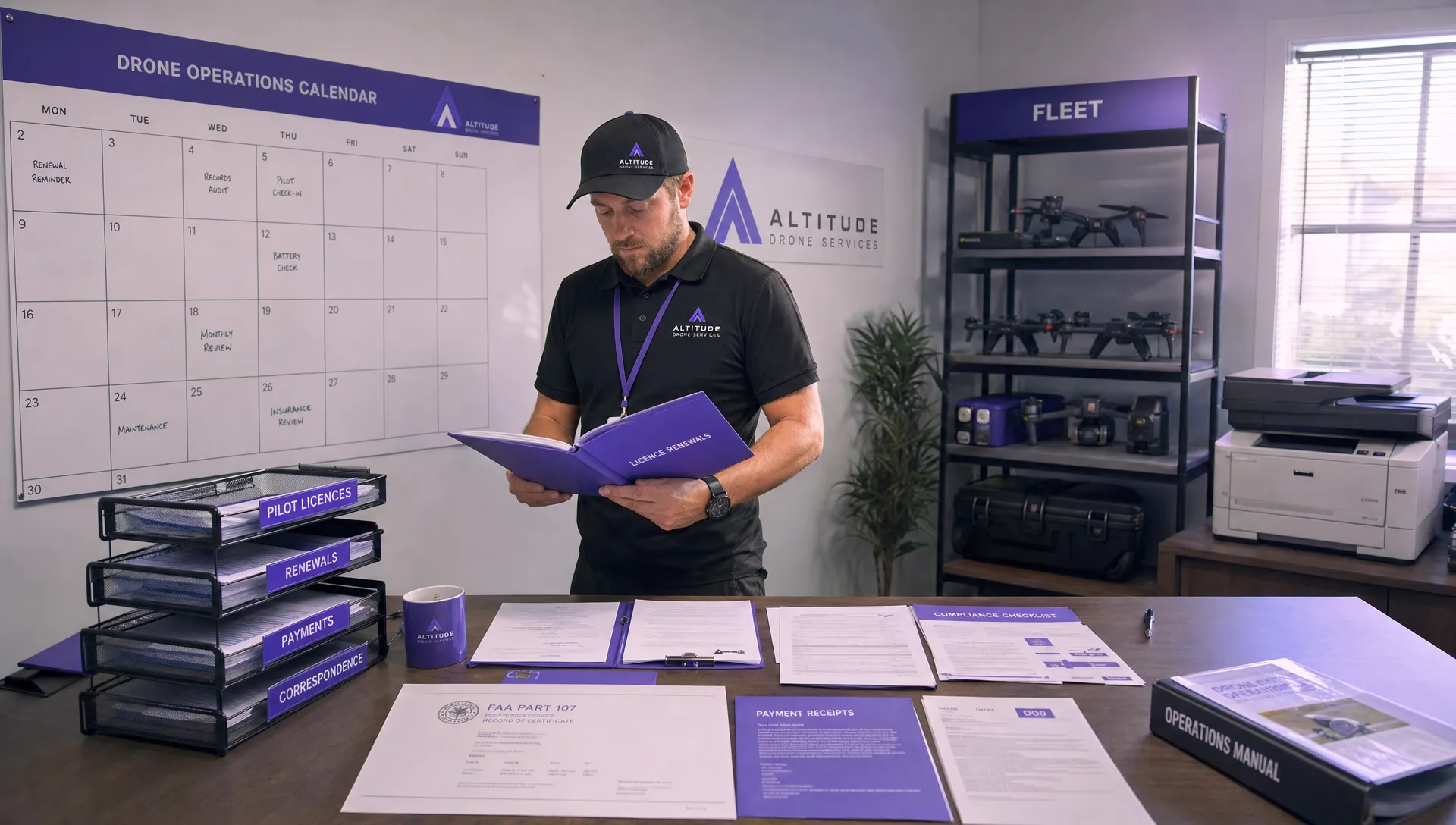 FAA Drone License Costs Beyond the Knowledge Test →
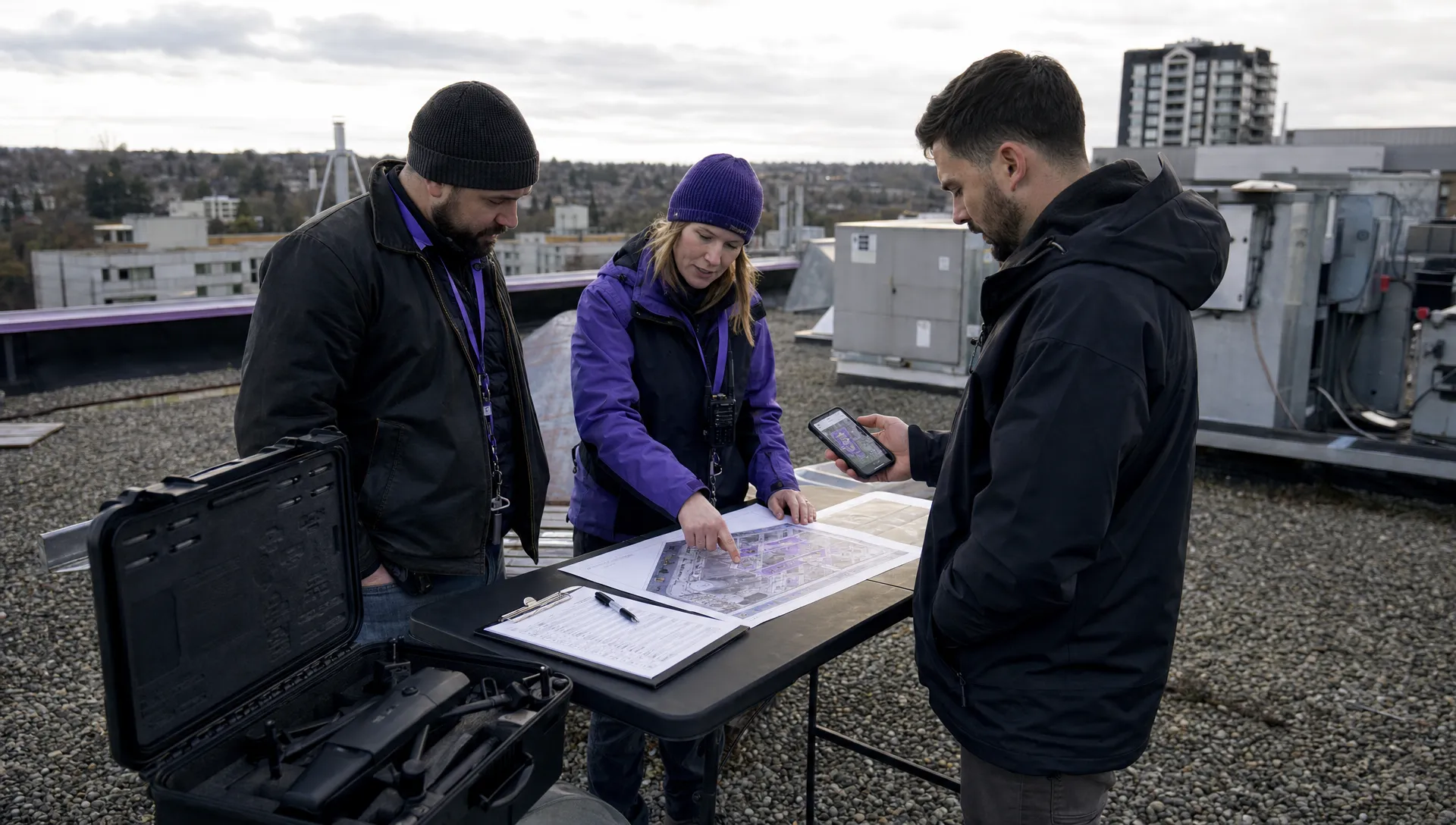 Drone Part 107 Operations: When a Waiver May Be Needed →
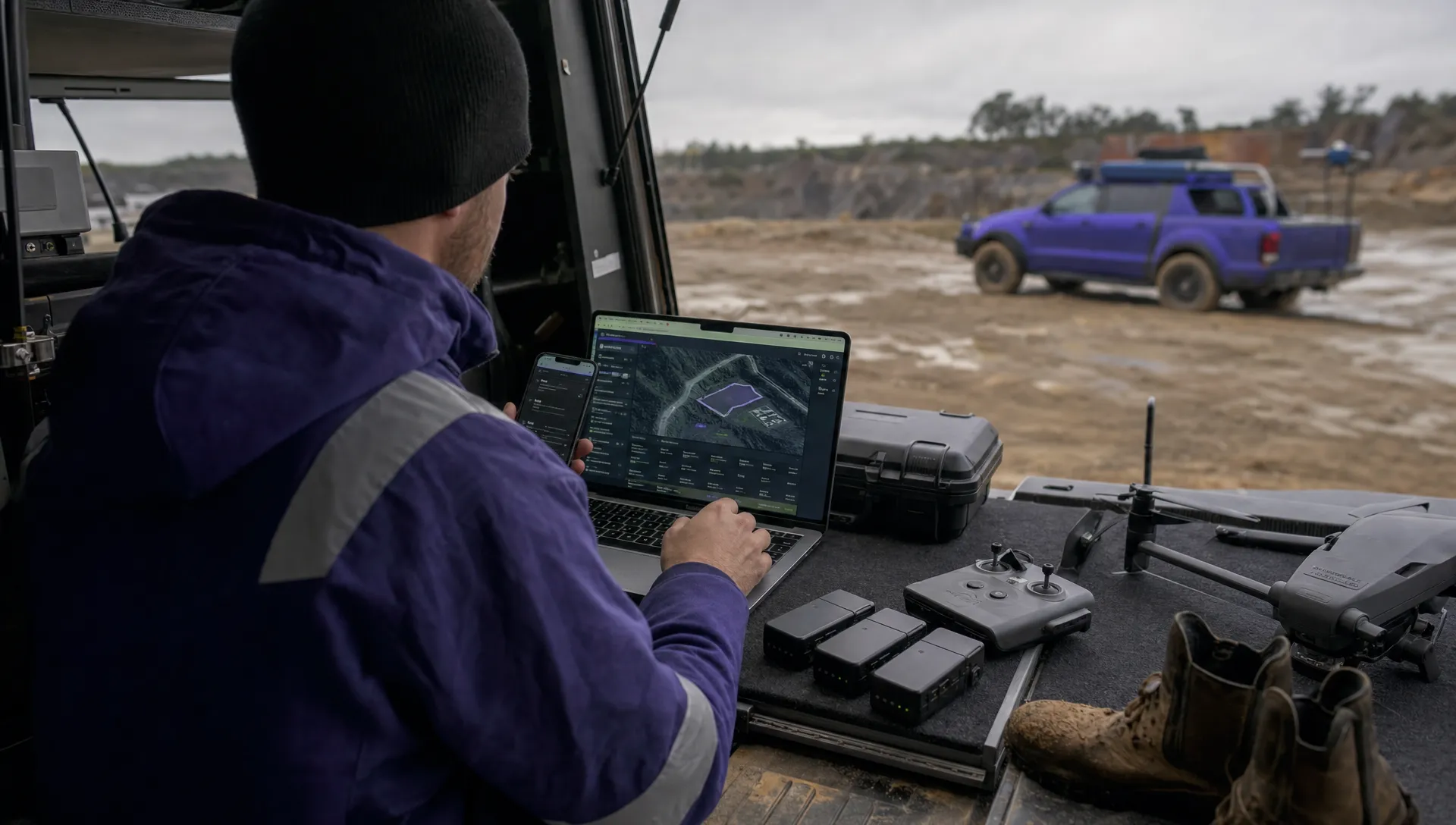 Drone Operating Rules for Managing Contractors and Employees →
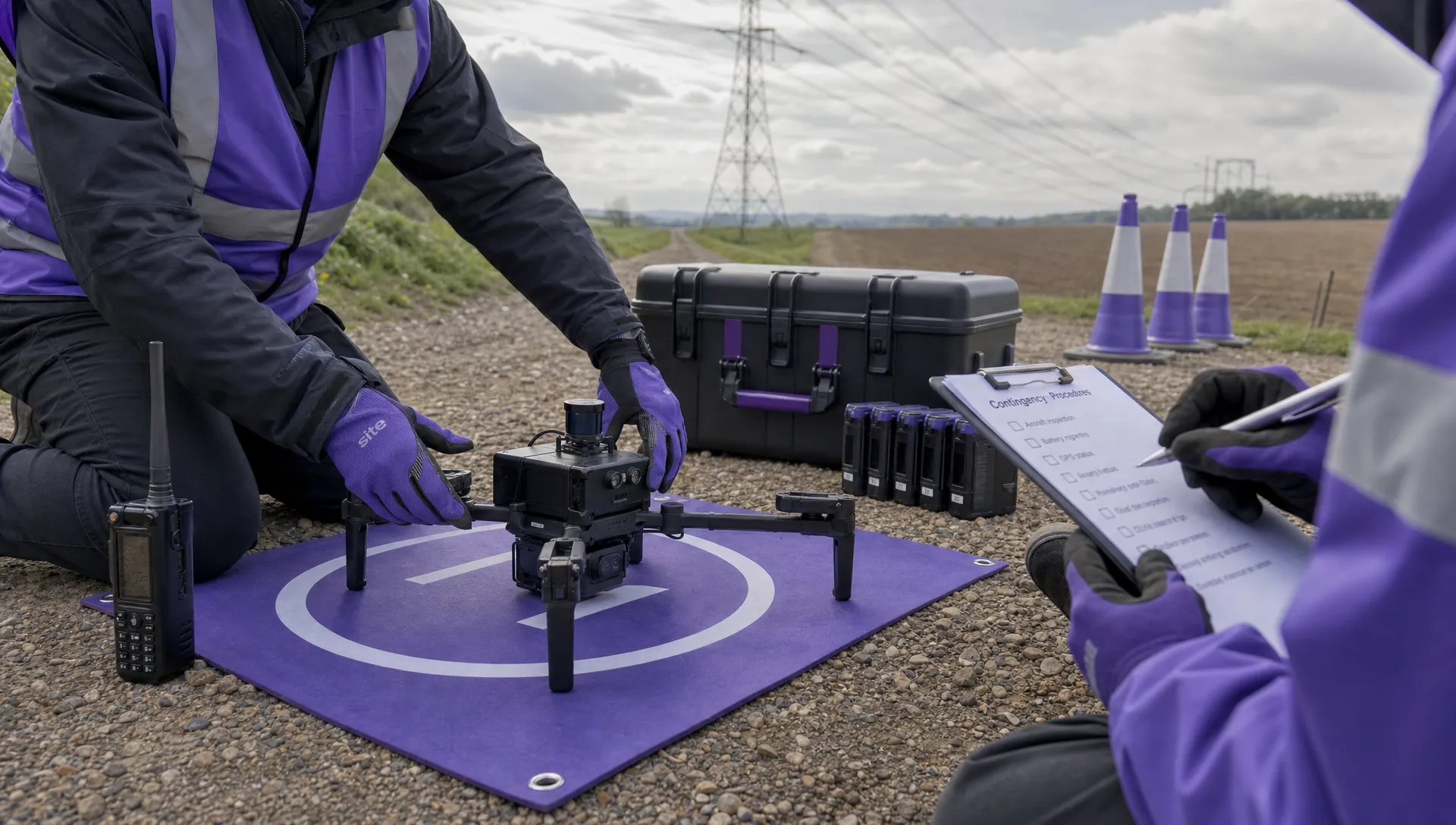 BVLOS Drone Requirements for Building a Safety Case →
 Drone Pilot Test Mistakes That Cost Candidates Marks →
 FAA 107 License vs Part 107 Certificate: What’s the Difference? →
 Drone Airport Rules: A Field Checklist for Site Assessments →
 FAA Part 107 Record-Keeping Rules for Commercial Teams →
 How to Review a DJI Flight Log After an Unexpected Event →
 Drone Laws Around the World: A Pre-Flight Research Framework →