
A Guide to UAV Detection Radar Systems
At its core, a UAV detection radar is a purpose-built system that uses radio waves to find, follow, and even identify drones in your airspace. Think of it as the cornerstone technology for modern airspace security, giving you reliable, all-weather detection over long distances.
Why UAV Detection Is Now a Critical Need
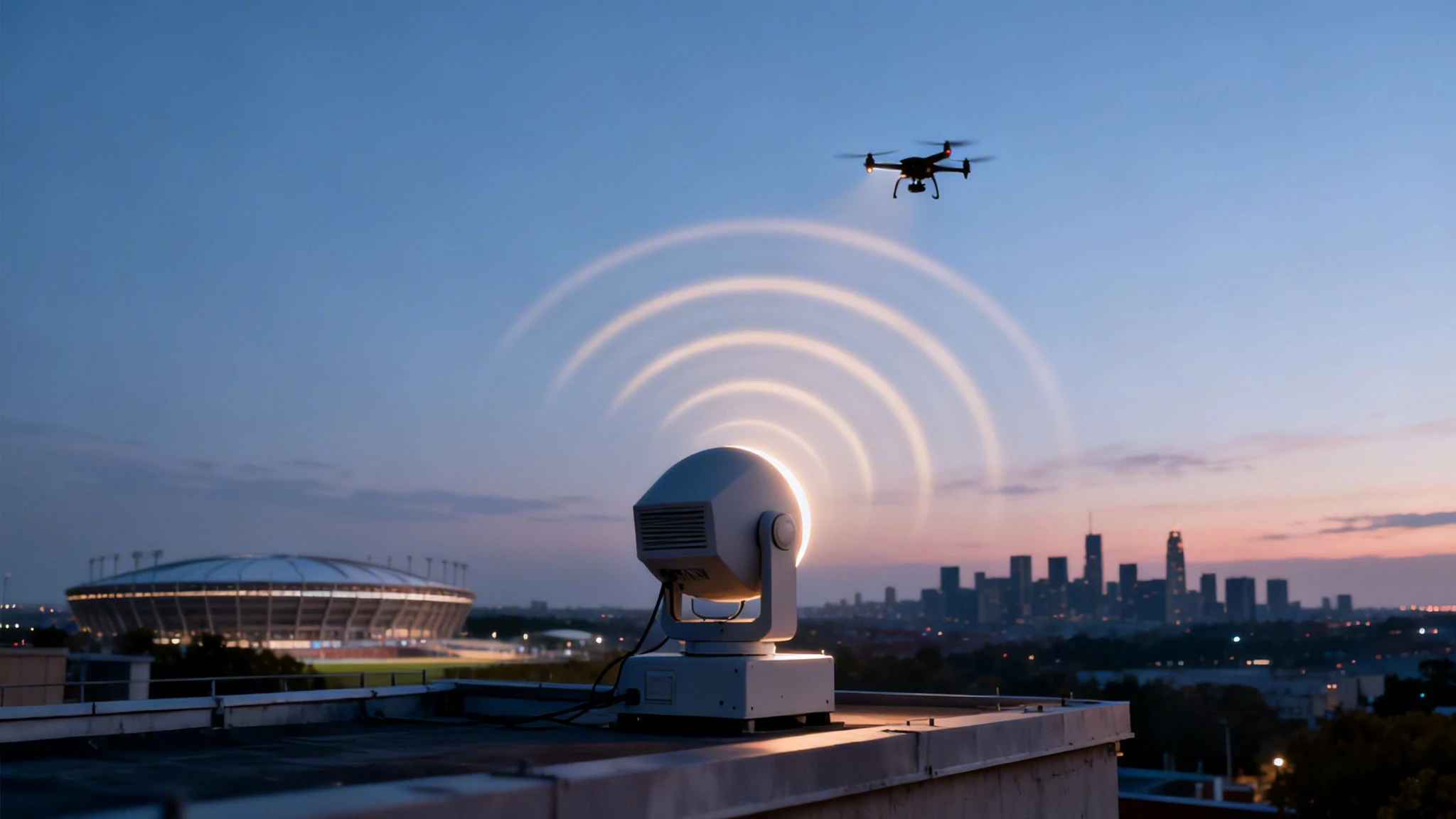
Picture our skies as an ever-busier motorway. Millions of drones are taking flight, from professionals using platforms like Dronedesk for safe, compliant work, to clueless operators—and worse, malicious ones—creating serious hazards. This new reality needs a new kind of watchfulness.
Your traditional security, like fences and cameras, is stuck on the ground. It’s simply not built to manage a threat that comes from above. This is exactly where UAV detection radar steps in. It's like having superhuman hearing for the sky, picking up on objects long before you could ever see or hear them.
Filling a Critical Security Gap
Let's be honest, radar just does things other systems can't. It shines where other technologies stumble.
- All-Weather Performance: Rain, fog, snow, or the dead of night? No problem. Radar cuts right through conditions that would leave optical cameras completely blind.
- Long-Range Coverage: It can spot a potential threat from miles away, giving your security team that all-important time to assess the situation and react.
- Detecting 'Silent' Drones: Many modern drones fly pre-programmed routes without sending out any radio signals. They're completely invisible to common RF scanners, but a radar system sees the physical drone itself, no matter how "silent" it is.
This isn't just a nice-to-have feature; it’s a proven must-have. The global drone detection market, which relies heavily on radar, is expected to balloon to $6,123.5 million by 2034. That explosive growth is happening for one reason: it's the best answer we have for countering drones that are designed to be missed by other sensors.
From Nuisance to Coordinated Threat
Drones are everywhere, and their numbers are climbing fast. With the rise of accessible manufacturing like UAV 3D printing, the sheer volume and sophistication of drones in the air is making effective detection more vital than ever. For every legitimate operator out there, there's a growing need to keep an eye on all airborne traffic to protect everything from critical infrastructure to public events.
A good UAV detection radar system does more than just spot a threat. It creates a bubble of known airspace, giving you the confidence that legitimate drone operations can go ahead safely and securely. It’s about getting the fundamental airspace intelligence that any modern operation needs.
Ultimately, radar fills a gaping hole in a security plan. It gives you a baseline of awareness by answering the first, most basic question: "what's up there?" Only then can you move on to the next question: "what are we going to do about it?" As we cover in our guide to using drones in security, getting that proactive awareness is the first and most important step in the entire process.
How Radar Technology Pinpoints Drones in the Sky
Ever shouted into a canyon just to hear your voice echo back? At its core, that’s exactly how a UAV detection radar works. The system sends out a pulse of radio waves—the "shout"—and then listens intently.
When those waves hit an object, like a drone, some of that energy bounces back as an "echo." By measuring the time it takes for this echo to return, the system can calculate the drone's distance with pinpoint accuracy. A quick echo means the drone is close; a longer delay means it’s much farther away.
Seeing Speed with the Doppler Effect
But a good UAV detection radar tells you more than just where a drone is. It also reveals if it's moving toward you, away from you, or just hovering in place. For this, it uses a principle you experience every day: the Doppler effect.
Think of an ambulance siren. As it races towards you, the pitch gets higher. As it speeds away, the pitch drops. The sound waves get squeezed together as it approaches and stretched out as it leaves.
Radar waves do the exact same thing. The system checks the frequency of the returning echo against the original signal it sent out.
- Higher Frequency: If the echo’s frequency is slightly higher, the drone is moving toward the radar.
- Lower Frequency: If the frequency is lower, the drone is flying away.
- No Change: If the frequency is the same, the drone is either stationary or flying across the radar's line of sight, not directly toward or away from it.
By combining distance and speed, the radar builds a clear, real-time picture of a drone's behaviour, which is absolutely vital for any security team. This data forms the foundation of effective airspace monitoring and is a core component of advanced drone tracking and aviation management software.
Understanding a Drone’s Radar Signature
Not all echoes are created equal. A small hobby drone and a large delivery drone look completely different to a radar system. This difference is captured in a metric called the Radar Cross Section (RCS), which is basically the drone’s unique "radar signature."
You can think of RCS as how "bright" an object appears on a radar screen. It’s simply a measurement of how much radar energy an object reflects back.
An object’s RCS is determined by its size, shape, and the materials it's made from. A small, stealthily-designed drone made of composite materials will have a very small RCS, making it a faint blip. A larger, metallic drone will have a large RCS, showing up as a bright, unmissable target.
Understanding RCS is crucial. It doesn’t just help a radar system detect a drone; it helps the system start to classify it. The best UAV detection radars are sensitive enough to spot even those drones with a tiny signature, which are often the hardest ones to find.
The Brains Behind the Brawn
Of course, modern radar systems are far more sophisticated than these basic principles suggest. They have to deal with the messy reality of the real world. Many top-tier UAV detection radars today use frequency-modulated continuous wave (FMCW) technology, which is known for its incredible precision and reliability in all kinds of weather.
The real magic, though, is in the processing. To tell a small drone apart from clutter like birds or even swaying trees, these systems rely on advanced algorithms. For instance, they analyze the unique micro-Doppler signatures created by a drone's spinning propellers—a tell-tale sign that birds just don't have. You can get into the nitty-gritty of these techniques in this in-depth research on drone discrimination methods.
By combining this analysis with sophisticated tracking filters, the radar can confidently lock onto a UAV and follow its path through the sky.
Exploring Different Types of UAV Radar Systems
When you're looking at radar for drone detection, it's easy to get lost in the jargon. The truth is, not all systems are built the same, and picking the right one is about matching the tech to your specific needs. Think of it like choosing a vehicle – you wouldn't take a sports car off-roading.
At its core, every radar system does the same thing: it sends out a radio signal, waits for it to bounce off something (like a drone), and then analyses the echo that comes back. But how it sends and listens for that signal makes all the difference in what it can tell you.
This simple diagram shows you the basic idea behind how any drone detection radar works.
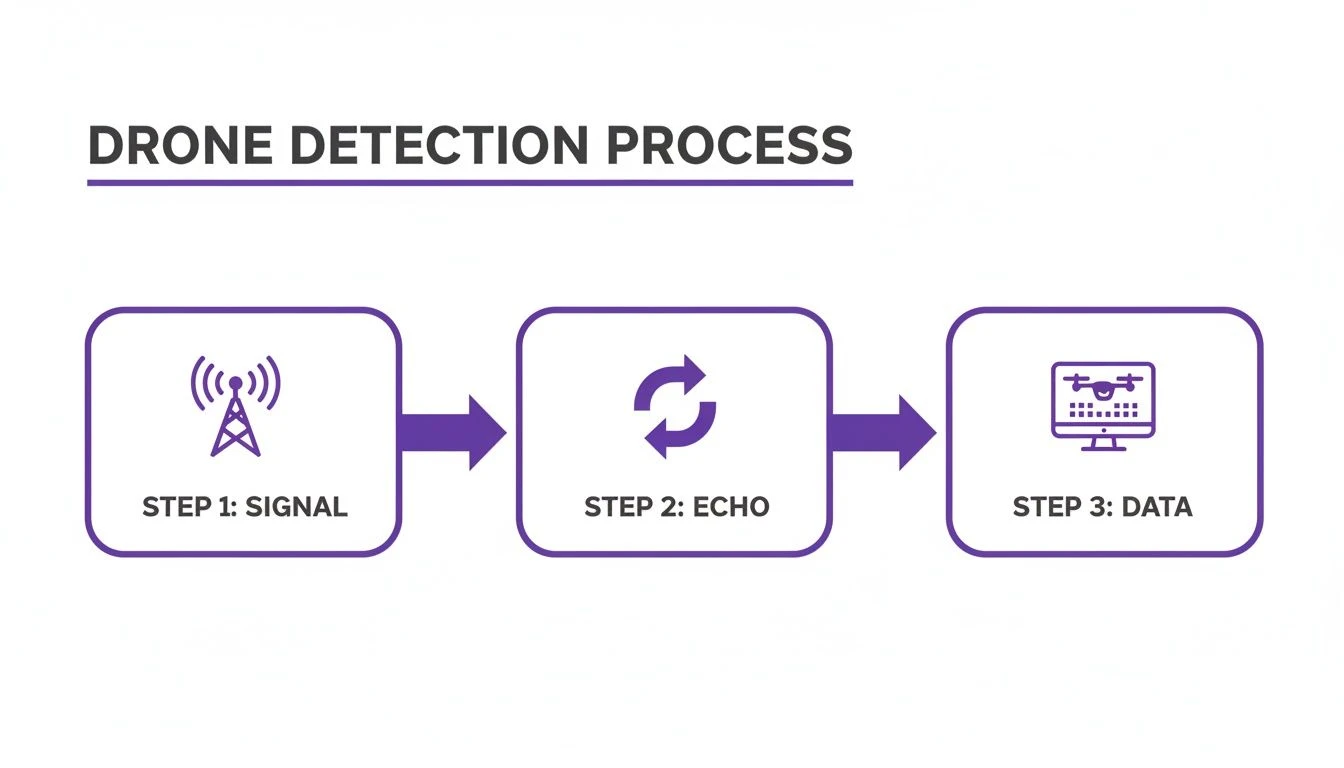
It really boils down to this three-step process: send a signal, receive an echo, and turn that echo into useful data. Let's look at the different ways modern systems do this.
Pulsed-Doppler Radar: The Quick Burst
This is one of the most classic forms of radar. The best way to picture a Pulsed-Doppler system is to think of a powerful camera flash in a pitch-black room.
The radar fires off a very short, high-energy burst of radio waves—the "pulse." Then it immediately switches to listening mode for any echoes. By timing how long it takes for the echo to return, it can figure out the drone's distance. It also checks for the Doppler shift in the returning pulse, which tells it how fast the drone is moving.
Because it transmits in powerful bursts, Pulsed-Doppler radar often achieves very long detection ranges, making it a reliable choice for monitoring large perimeters and providing early warnings.
Continuous Wave Radar: The Steady Spotlight
Unlike the on-off method of pulsed systems, a Continuous Wave (CW) radar works more like a steady spotlight that never flickers. It constantly floods an area with radio waves.
This constant stream of energy makes it incredibly good at measuring one thing: speed. By continuously tracking the frequency shift (the Doppler effect) of the signal bouncing back, a CW radar can determine a drone's velocity with amazing accuracy. The trade-off? A basic CW system can't measure distance because there are no distinct pulses to time.
Frequency-Modulated Continuous Wave: The Smart Spotlight
This is where things get really clever. Frequency-Modulated Continuous Wave (FMCW) radar essentially combines the best of both worlds. Imagine that spotlight is now a "smart" one—it not only stays on but also constantly changes its colour (frequency) in a very specific pattern.
An FMCW system transmits a continuous signal, but its frequency is always sweeping up or down. When the echo comes back, the radar compares the frequency of the returning signal with the frequency it’s transmitting at that very instant.
- This frequency difference is directly related to the signal's travel time, giving you a highly precise distance measurement.
- At the same time, the Doppler effect is still there in the signal, which provides an equally precise speed measurement.
Because FMCW can nail down both range and velocity accurately, and does it with lower power, it has become a go-to technology for modern UAV detection radar systems.
Physical Deployment: Fixed vs. Mobile Systems
Beyond the tech inside, the way a radar is set up in the real world is just as crucial. You'll generally find two types of deployments, each for different jobs.
-
Fixed Radar Systems: These are your permanent sentinels, installed for 24/7 security at a specific site. Think airports, data centres, power plants, or government facilities. They are usually larger, more powerful, and wired directly into the location’s main security infrastructure.
-
Mobile Radar Systems: Built for flexibility. These units are mounted on vehicles or trailers and can be driven to a temporary location and set up quickly. They're perfect for securing one-off events like outdoor concerts, major sporting events, or protecting a VIP. This lets security teams create a robust detection bubble exactly where and when they need it.
Comparing Radar with Other Detection Technologies
A UAV detection radar is a seriously powerful piece of kit, but let's be honest—it’s rarely the only player on the field. The best security setups don’t put all their eggs in one basket. Instead, they use a "layered" approach, where different technologies work together to cover each other's blind spots.
Think of it as building a security team. Your radar is the long-range, all-weather lookout, providing the first critical alert. But you still need other specialists to provide different kinds of intelligence. Understanding how these systems stack up is key to building a C-UAS strategy that actually works.
Let's break down the main alternatives and see where radar holds its ground and where others shine.
Radio Frequency (RF) Analysis
RF sensors are essentially highly-specialised radio listeners. They’re tuned to sniff out the communication signals zipping back and forth between a drone and its pilot's controller.
When they pick up a known drone frequency, they can do some pretty neat things, like identifying the drone model and even pinpointing the pilot's location. This is great for dealing with your average hobbyist.
But RF sensors have a massive Achilles' heel: they are completely deaf to autonomous drones. A drone flying a pre-programmed mission isn’t chatting with a pilot, so there are no signals for the RF sensor to detect. This makes an RF-only solution a huge gamble against more sophisticated threats.
- Strength: Excellent for identifying the drone and finding the pilot.
- Weakness: Useless against autonomous drones flying "radio silent."
Electro-Optical and Infrared (EO/IR) Cameras
EO/IR systems are your eyes on the target. These setups use powerful cameras to visually identify and track drones. Electro-optical (daylight) cameras give you crisp, detailed images, while infrared cameras pick up the heat from a drone's motors, making them invaluable after dark.
Their main job is classification and identification. Once another system—like radar—gets a primary detection, a camera can be cued to zoom in and give operators a clear look. It’s what helps you answer that all-important question: "Is that a drone, or just a bird?" Beyond just radar, a whole range of vision technology is also advancing to tackle these challenges.
The big knock against cameras is their reliance on perfect conditions. Fog, heavy rain, snow, or even thick haze can make them practically blind. This is precisely where radar’s all-weather muscle becomes so vital.
Acoustic Sensors
Acoustic sensors use arrays of super-sensitive microphones to listen for the distinctive whir of drone propellers. By analyzing that sound, these systems can tell you a drone is nearby and sometimes even give a rough idea of its direction.
They work best in quiet, rural areas. Try to use one in a noisy city centre or next to an active industrial site, and the high ambient noise will simply drown out the drone's sound signature. This leads to a frustrating mix of missed detections and false alarms. Their detection range is also much shorter than radar.
Comparison of Drone Detection Technologies
Seeing these technologies compared side-by-side really helps clarify their specific roles. Each one has a unique profile of strengths and weaknesses that dictates where it fits best in a layered security system.
| Technology | Detection Principle | Pros | Cons | Best Use Case |
|---|---|---|---|---|
| UAV Detection Radar | Radio waves | Long range, all-weather, detects autonomous drones. | Higher cost, can require more space. | Primary, long-range detection and early warning. |
| RF Analysis | Drone-to-controller signals | Can identify drone type and locate the pilot. Low cost. | Fails against autonomous drones. | Identifying operator-piloted threats in low-risk areas. |
| EO/IR Cameras | Visual/Thermal imaging | Provides positive visual ID. Excellent for evidence. | Poor performance in bad weather. Shorter range. | Target classification and identification after initial detection. |
| Acoustic Sensors | Propeller noise | Low cost, passive detection. | Short range, easily confused by ambient noise. | Low-cost, close-range detection in very quiet environments. |
As the table makes clear, UAV detection radar is the undisputed champion for reliable, long-range, all-weather detection. This is especially true as the threat of autonomous drones continues to grow.
While other sensors provide crucial classification and identification muscle, radar is the one that consistently delivers the foundational alert your security system is built on. It’s the backbone that ensures nothing goes unnoticed, whatever the weather or time of day.
How Radar Data Enhances Your Drone Operations
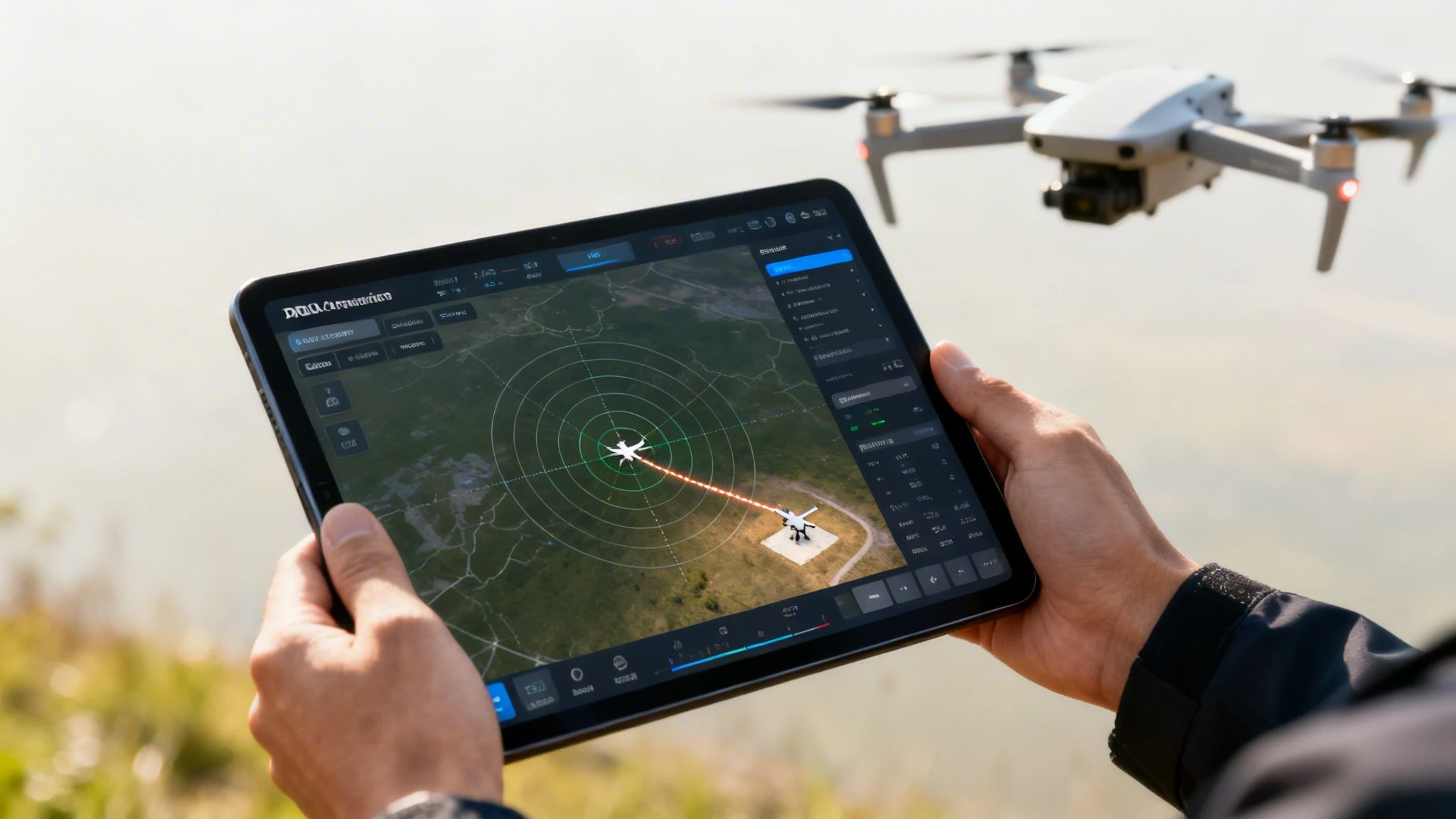
A UAV detection radar does a lot more than just sound an alarm. When you plug that stream of airspace intelligence into a drone operations platform like Dronedesk, it stops being a simple security alert and becomes a powerful tool for your day-to-day work. It's no longer just a defensive measure; it’s a source of proactive intel for every flight.
Think about it. As a professional pilot, showing up to a job at a critical infrastructure site knowing you have an integrated radar system is a massive advantage. You get a real-time, 3D picture of everything happening in the sky around you.
This isn't just about spotting bad guys, either. It’s about having a complete understanding of your airspace, which leads to much stronger flight planning and risk assessments. You can confidently keep your own flight paths clear of any unknown aircraft, which is a huge tick in the box for safety and shows your clients you’re operating at a higher professional standard.
Turning Alerts into Actionable Intel
When your radar system talks to your ops management platform, every detection becomes a valuable piece of data. Instead of being a temporary blip on a screen, the system can automatically log the entire event with all the important details.
This kind of automatic logging captures everything you need:
- Time and Date: Pinpointing exactly when an unauthorized drone showed up.
- Flight Path: Mapping the intruder's full trajectory, including its speed and altitude.
- Duration: Recording exactly how long the drone hung around in your monitored airspace.
This creates a permanent record that’s worth its weight in gold. Security teams can review these logs to spot patterns, and ops managers can use the data for post-flight debriefs and planning future missions. You can dive deeper into the benefits of solid data analysis and management in our detailed guide.
A Proven Idea from the Military
The value of this kind of integrated setup has been proven time and again in the defence world. The military’s use of radar for UAV detection has completely changed the game, closing serious gaps in perimeter security.
Top-tier systems like the AX250 3D Dome radar from Spotter Global deliver full airspace coverage and use AI to cut down on false alarms from things like birds. They can automatically classify targets using micro-Doppler signatures, giving a level of precision that’s only possible because radio waves punch right through bad weather and darkness. You can read more about how radar is a game-changer for military applications on SpotterGlobal.com.
Boosting Safety and Professionalism
For a commercial operator, all this airspace intelligence means safer, more efficient flights. An integrated system gives you a single, clear view of your own authorized drones alongside any other objects the radar picks up.
By integrating radar data, you aren't just reacting to threats; you're proactively managing your airspace. It gives you the full picture, allowing you to operate with a new level of confidence and control.
This complete awareness shows an unmatched commitment to safety and professionalism. It proves to clients and regulators that you've taken every possible step to reduce risk. Ultimately, adding radar data turns your operational platform into a true command centre, giving you the intel you need to fly smarter and safer.
A Practical Checklist for Evaluating Radar Systems
Choosing the right UAV detection radar can feel like navigating a minefield of tech specs and sales pitches. It’s overwhelming, but it really doesn't have to be.
By asking the right questions upfront, you can cut through the marketing fluff and find a system that’s genuinely right for your site. Think of this as your practical guide to making a smart, confident decision.
First things first: your operational reality. A radar that’s a star performer in a wide-open field might fall flat in a cluttered urban canyon, bouncing signals off every building. You need to be brutally honest about your environment and the specific drone threats you’re likely to face.
Define Your Core Requirements
Before you even glance at a spec sheet, you need to be crystal clear on what you're protecting and what a "win" actually looks like for your security team. This homework is the single most important step in the entire process.
Start by asking yourself these fundamental questions:
- What is my operational environment? Are we talking about a dense urban core with towering skyscrapers, a flat and open industrial park, or a remote, sprawling rural site? Each presents its own unique challenges for a UAV detection radar.
- What is the required detection range? Do you need to spot a drone from five miles out to give your team enough time to react, or is a shorter-range system for your immediate perimeter enough? Be realistic about your response time capabilities.
- What is the smallest drone I need to detect? The system has to be sensitive enough to see the small, low-RCS drones that are becoming common threats. It's no good if it can only spot large, easy-to-find models.
Evaluate Performance and Reliability
Once you've nailed down your core needs, you can start digging into the performance metrics that actually matter. This is where you separate the systems that work in the real world from the ones that just look good on paper.
A critical factor is the system's ability to tell a drone from all the other "stuff" out there. Birds, swaying trees, and even heavy rain can all generate radar returns that look like a threat.
A low false alarm rate isn't a luxury; it's a necessity. A system that constantly cries wolf will quickly lead to operator fatigue, creating a dangerous sense of complacency. A truly reliable UAV detection radar uses sophisticated processing to filter out this clutter effectively.
When you're talking to vendors, don't be afraid to push for clear answers on performance. Specifically, ask about:
- Bird vs. Drone Discrimination: How, exactly, does the system tell the difference between the erratic flight of a bird and the more deliberate path of a drone? Ask for proof or a live demo.
- False Alarm Rate (FAR): What is the documented FAR in a real-world environment that’s similar to yours? Don't accept lab results.
- Regulatory Compliance: Is the system certified for use in your region? You need to be sure it meets all local regulations for frequency emissions.
Consider the Total Cost of Ownership
Finally, it's time to look beyond the initial purchase price. The total cost of ownership (TCO) is a much bigger picture that includes several crucial, but often overlooked, factors.
A system that seems cheaper upfront can quickly become a money pit if it requires constant maintenance, specialized power infrastructure, or expensive software subscriptions.
Think about the long-term investment. Consider ongoing power requirements, the cost and frequency of software updates, and the level of technical support included. A full understanding of the TCO ensures the UAV detection radar you choose is not only effective on day one but also sustainable for your operation for years to come.
Frequently Asked Questions About UAV Radar
As you start looking into airspace security, a few common questions always pop up. A UAV detection radar is a seriously powerful piece of kit, but it’s crucial to get your head around the practical side of how it works and where it fits into your day-to-day operations.
Let's cut through the jargon and get straight to the answers you actually need.
What Is the Difference Between 2D and 3D Radar?
Think of a 2D radar as a basic, flat map of your airspace. It’s pretty good at telling you two things: a drone's direction (azimuth) and how far away it is. This gives you a simple top-down view, which is fine for basic awareness, but it’s missing a vital piece of the puzzle.
A 3D radar, on the other hand, adds that all-important third dimension: altitude. It doesn’t just show you the drone on a map; it tells you exactly how high it's flying. For any serious security setup, this is a must-have. Knowing a drone's altitude is what lets you properly assess its threat level and figure out how to respond.
Can a Detection Radar Interfere with My Own Drone?
This is a great question and a totally valid concern. The short answer is no, it won’t.
Your detection radar isn't broadcasting commands or trying to talk to your drone. It’s essentially a listening device, sending out its own radio waves and then listening for the echoes that bounce back. Your drone’s control link and GPS operate on completely different frequencies.
They are in two separate worlds. You can confidently fly your own fleet within the radar's coverage zone without worrying about any interference.
How Does Radar Distinguish a Drone from a Bird?
This is where the magic happens and what separates a high-quality system from a noise-maker. Telling a small drone apart from a bird is the key to avoiding a command centre filled with false alarms. Modern radars have some clever tricks up their sleeves for this.
- Micro-Doppler Analysis: A drone’s propellers spin at incredible speeds, creating a tiny, unique frequency shift in the radar signal that bounces off them. This "micro-Doppler signature" is a dead giveaway that a machine is in the air, not an animal. A bird’s flapping wings just can't fake it.
- Flight Path Analysis: Birds are erratic. They glide, they dart, they fly in flocks. Drones, even when piloted manually, tend to move with more purpose and stability. The radar's software watches how a target moves over time to help classify it correctly.
By combining these methods, a good radar can filter out the local wildlife and focus on the actual threats.
What Legal and Privacy Considerations Should I Know?
Putting a radar system in place does mean you have a few boxes to tick. Because these systems actively transmit radio energy, they have to comply with national regulations on frequency use and power output, like those from the Federal Communications Commission (FCC) in the US.
On the privacy front, radar is generally a much less intrusive option than other sensors. It tracks objects based on their movement and physical signature—it sees a "blip" on a screen, not a person's face or the contents of a package like a camera would.
That said, it's always smart to be open about using any kind of monitoring technology. Make sure your deployment is fully compliant with all local, state, and federal laws before you switch it on.
Dronedesk is the all-in-one platform for managing your professional drone operations, from flight planning and risk assessments to client and fleet management. Simplify your workflow and ensure compliance on every job. Discover a smarter way to manage your drone business at https://dronedesk.io.
 FAA Part 107 Record-Keeping Rules for Commercial Teams →
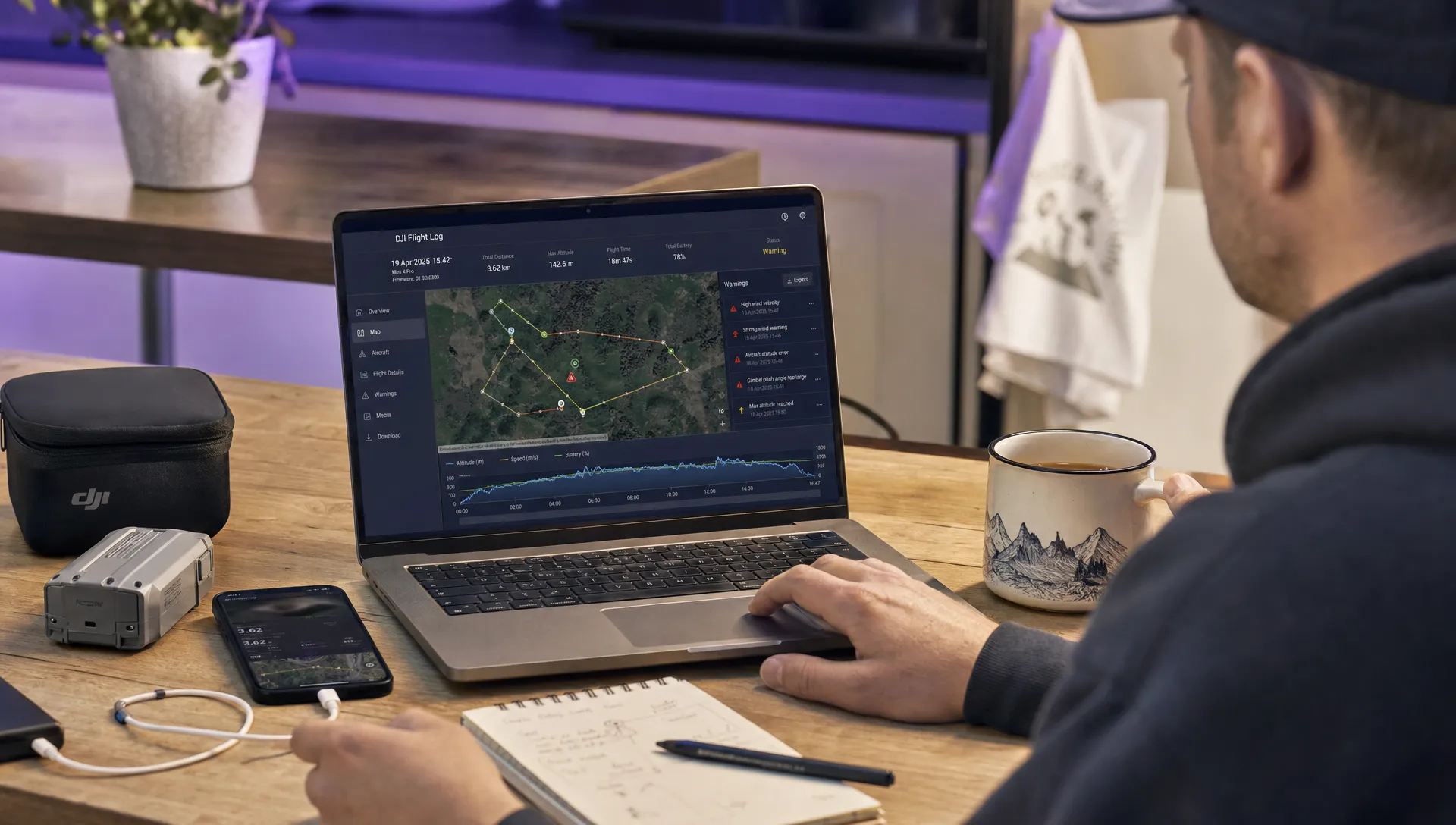 How to Review a DJI Flight Log After an Unexpected Event →
 Drone Laws Around the World: A Pre-Flight Research Framework →
 How to Compare Drone Survey Services for Complex Sites →
 How to Start a Drone Mapping Business With a Clear Workflow →
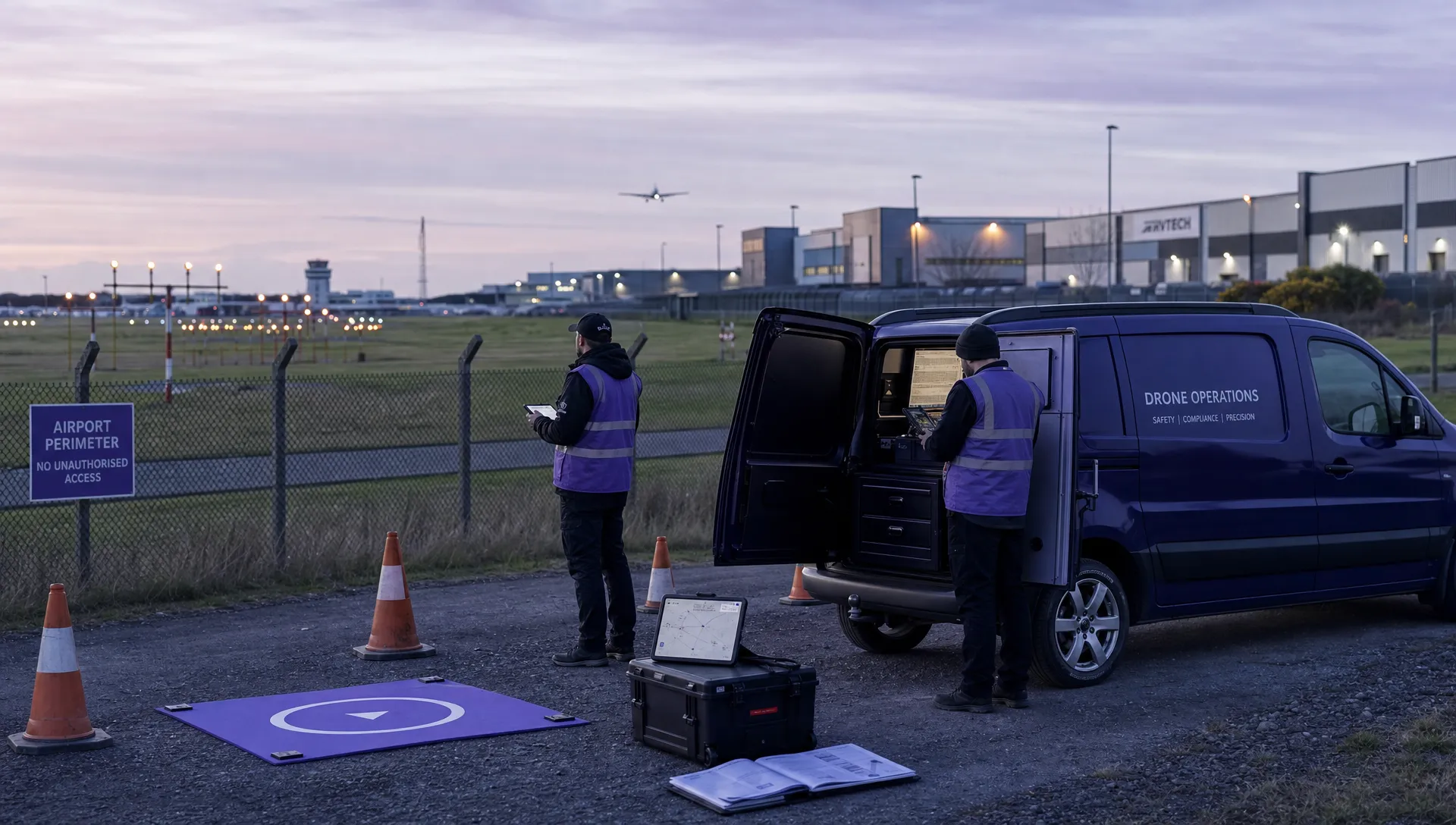 Class C Airspace Drone Rules for Commercial Flights →
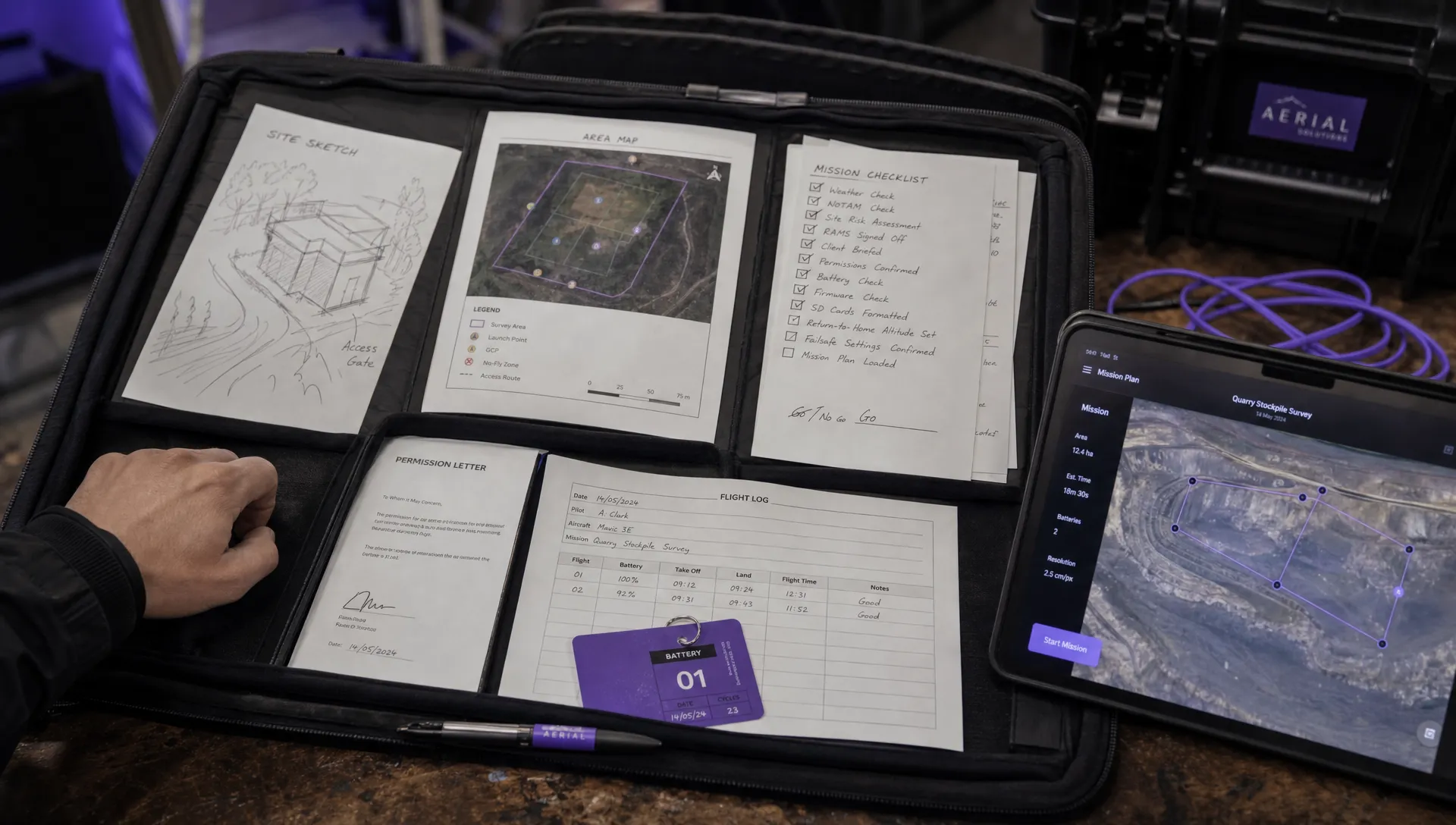 How to Create a Drone Job Pack for Every Mission →
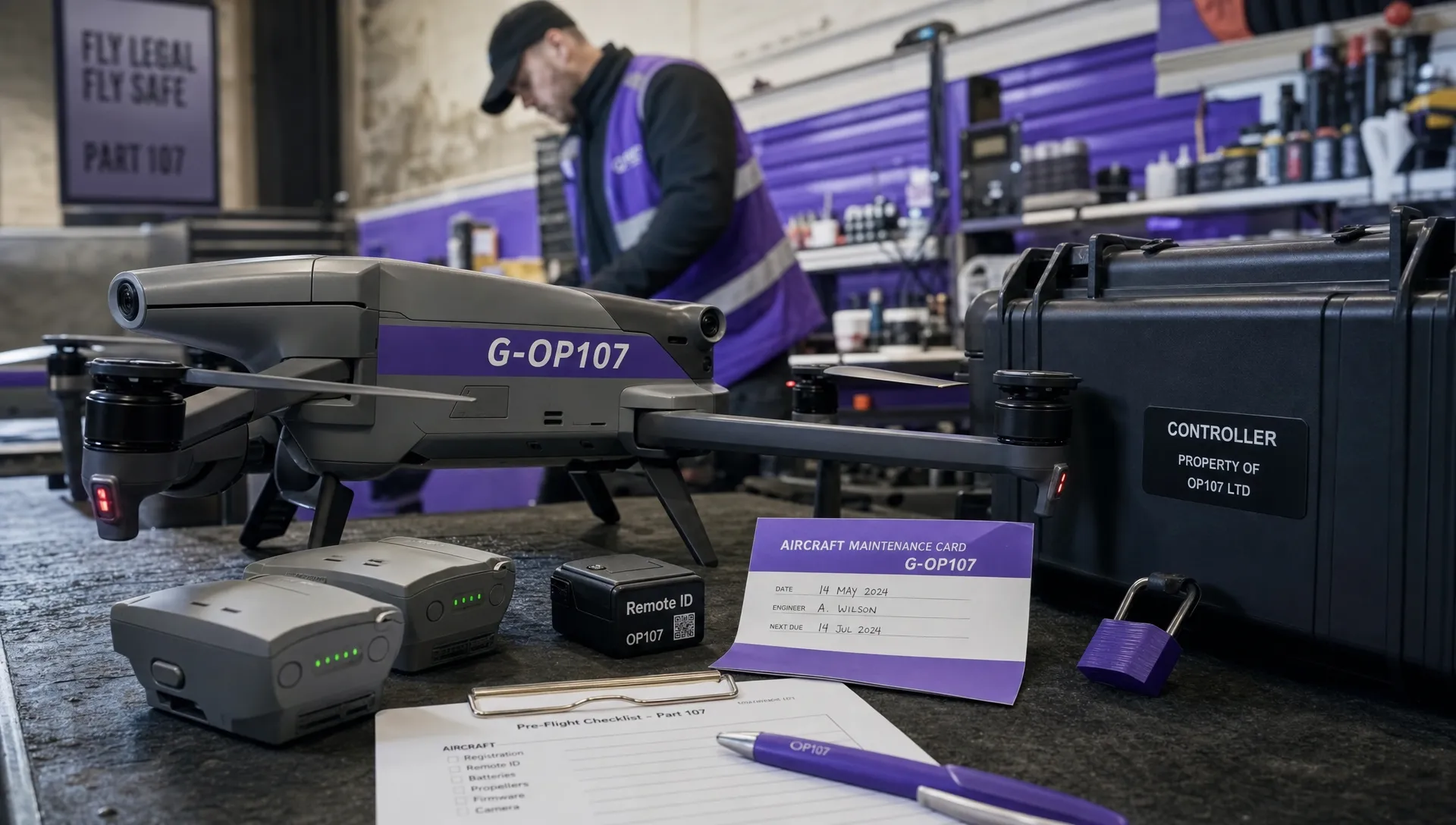 FAA Small UAS Rule: Key Requirements for Operators →
 How to Build a Drone Pilot Flight Log That Is Audit Ready →
 FAA Drone Licence Requirements for Commercial Pilots →