
Eyes in the Sky: A Guide to Drones in Security and Surveillance
Drones are completely changing the game in security surveillance. Think of them as mobile, aerial guard towers you can deploy anywhere, anytime. This isn't just about sticking a camera in the sky; it's about having intelligent, autonomous assets that give you incredible situational awareness and the ability to react in a heartbeat.
The Evolution of Aerial Surveillance
Picture this: you're trying to secure a massive industrial complex, a sprawling solar farm, or a crowded outdoor event. The old way of doing things—fixed cameras and ground patrols—has its limits. Guards follow predictable routes, and static cameras create unavoidable blind spots. A security officer can only be in one place at a time, and a camera can't see around a corner or over a building.
This is where drones tear up the old playbook.

Unmanned aerial vehicles (UAVs) aren't just flying cameras; they're dynamic, data-gathering platforms that solve age-old security headaches. They break through the barriers of geography and human speed. Instead of a slow, expensive vehicle patrol, an automated drone can cover a five-mile perimeter in minutes, streaming high-definition video straight to your security operations center.
A New Perspective on Safety
Having eyes in the sky gives security teams a fundamental advantage over any ground-based system. It means you can get instant situational awareness without putting people in harm's way. This is a massive deal during an emergency, where a quick overview of the scene can be the difference between a controlled response and a full-blown crisis.
It really boils down to a few key benefits:
- Rapid Incident Response: Drones can be on their way to an alarm trigger in seconds, giving operators live video before ground teams have even started their engines.
- Enhanced Perimeter Control: Automated patrols can monitor fence lines, entry points, and vast open areas on a regular but unpredictable schedule, making any potential intruder think twice.
- Effective Crowd Monitoring: An overhead view helps security spot disturbances, manage foot traffic, and identify safety issues in large gatherings long before they escalate on the ground.
The Growing Demand for Drone Security
Bringing drones into security isn't just a fleeting trend; it’s a major shift in how the industry operates. As threats get more sophisticated, the demand for smart, responsive surveillance tools is only going up. Interestingly, this has also kickstarted a parallel market for protecting sites against unauthorized drone activity.
The global drone detection market is a perfect example of this shift. It was valued at USD 729.8 million in 2024 and is expected to rocket to USD 3,362.1 million by 2030. That kind of explosive growth tells you everything you need to know about the rising concerns over public safety and threats to critical infrastructure.
This growth highlights the dual role of drones—they're both a powerful security asset and a potential threat. It's what's driving so much innovation on both sides of the fence. As we dig into their applications, it becomes obvious why this technology is fast becoming a cornerstone of modern security strategy. You can dig into more of this market data over on Grand View Research.
Where Drones Really Make Their Mark on Security
The true value of adding drones to your security toolkit isn't just theory—it's what happens out in the field. These aren't just gadgets; they are hardworking assets solving tough problems every day. By breaking free from the limitations of fixed cameras and predictable ground patrols, drones introduce a flexible, fast-reacting layer to your security that was simply out of reach before.

Let's dig into the specific ways these aerial platforms are changing the game across different security scenarios, turning abstract ideas into real-world operational wins.
Automated Perimeter Patrol and Asset Protection
Picture a massive industrial site or a remote solar farm that sprawls for miles. Trying to secure that kind of perimeter with guards on foot or in vehicles is slow, costly, and, frankly, not always effective. An automated drone can fly a full patrol of a five-mile fence line in less than 15 minutes, a job that would easily take a guard on the ground over an hour.
But this isn't just about being faster; it's about being smarter and more consistent. Drones can be set to fly precise, pre-planned routes or be launched automatically the second a perimeter sensor is tripped. They stream crisp, high-definition or thermal video straight to your security operations center, giving your team instant eyes on a potential problem.
This is a game-changer for protecting high-value assets, too. Think about these situations:
- Logistics and Shipping Yards: Drones can patrol over huge yards packed with containers and vehicles, spotting anyone who shouldn't be there from angles your fixed cameras will always miss.
- Critical Infrastructure: For inspecting things like pipelines, railways, or power lines, a drone can quickly spot damage, tampering, or people getting too close, giving you clear visual proof for your security or maintenance crews.
An automated drone is a genuine force multiplier. It doesn't replace your guards; it empowers them. A small team can suddenly cover a massive area, focusing their energy and attention exactly where it's needed most.
Proactive Crowd Management and Event Security
Big events like concerts, festivals, or sports matches come with their own unique security headaches. Keeping a handle on thousands of people is next to impossible from ground level. A drone, however, gives you a constant "eye in the sky," turning crowd management from a reactive scramble into a proactive strategy.
From above, your team can see how dense a crowd is getting, spot potential bottlenecks, and identify issues like fights or medical emergencies long before they blow up. For example, at a huge outdoor festival, a drone can spot an overcrowded area near an exit and help ground staff redirect people, preventing a dangerous crush before it even starts.
The drone becomes the central information hub, feeding live video back to a command post. This allows for smart, coordinated decisions, making sure you send your resources exactly where they're needed.
Enhancing Emergency and First Responder Operations
When an emergency hits—a fire, a chemical spill, a major security breach—those first few minutes are absolutely critical. But sending your people into an unknown, potentially hazardous situation is a huge risk. A drone can be in the air in seconds to give you a safe, immediate overview of the entire scene.
This initial intel is priceless for first responders. In a fire, a drone with a thermal camera can pinpoint hotspots, help locate trapped individuals, and track how the fire is spreading—all without putting a single firefighter in harm's way. This lets the incident commander build a safer, more effective plan right from the start.
It doesn't stop there. A drone can also act as an aerial communications relay or even drop off small but critical supplies, like a first aid kit or a radio, to a spot that's hard to reach. This ability to assess and support so quickly can dramatically cut down response times and lead to much better outcomes in the most critical situations.
Choosing the Right Drone and Payload for Your Mission
Picking the right drone for a security operation is a lot like a mechanic choosing a tool. It’s not about finding the single “best” one, but the right one for the job you need to do, right now. This decision is about much more than just the aircraft; it’s about matching the hardware’s capabilities to your specific security challenges.
Think of the drone as the vehicle and its sensor payload as the specialized equipment it carries. A fire truck is pretty useless without hoses, and a security drone is just an expensive toy without the right camera. If you focus on the complete package, you’re investing in a genuine security solution, not just a gadget.
Core Drone Features for Security
Before you even start looking at cameras, the drone platform itself has to meet some non-negotiable standards for security work. These core features ensure the drone can operate reliably, safely, and effectively in demanding environments where failure is simply not an option.
Here’s what you should be looking for:
- Weather Resistance: Security doesn't stop when it rains or the wind picks up. Look for an IP rating (like IP43 or higher) which certifies the drone can handle bad weather, making sure your operations can continue uninterrupted.
- Extended Flight Times: A drone with a 15-minute battery life is a massive liability. You should be aiming for platforms that offer 30-45 minutes or more of flight time to maximize how much ground you can cover and minimize the downtime for battery swaps.
- Encrypted Data Links: Your drone’s video feed and command signals are highly sensitive. End-to-end AES encryption is absolutely critical to prevent anyone from hijacking your drone or intercepting your surveillance data.
- Redundancy Systems: Professional-grade drones often come with redundant batteries, GPS units, and motors. This built-in backup system means that if one component fails, the drone can still make it back to base safely.
Matching the Payload to the Threat
The real power of drones in security comes from their payloads—the sensors they carry. Think of these as your toolkit: you've got your daytime eyes, your night-vision goggles, and your high-powered binoculars. Knowing when to use each one is what separates a novice from a pro.
The most common mistake people make is assuming a standard high-resolution camera is all they need. While it’s great for daytime patrols, it becomes almost useless after dark. This is where a multi-sensor approach becomes absolutely essential for around-the-clock security. You can find some excellent model breakdowns in our guide to the top commercial drones of 2025.
Your choice of sensor payload directly determines what you can and can’t do. A thermal camera can spot an intruder in total darkness from over half a mile away, turning the night from a security weakness into a real strategic advantage.
Let's break down the main tools in your aerial security toolkit. The table below compares the most common sensor types, what they do, and where they really shine.
Security Drone Sensor and Payload Comparison
When you’re equipping a security drone, the payload you choose is everything. It dictates what you can see, when you can see it, and how you can respond. This table breaks down the most common sensors to help you understand their strengths and weaknesses in the field.
| Sensor Type | Primary Function | Ideal Use Case | Limitations |
|---|---|---|---|
| High-Resolution (4K) Camera | Capturing detailed visual evidence during the day. | Reading license plates, identifying individuals, documenting site conditions. | Ineffective in low-light or nighttime conditions without external lighting. |
| Thermal (Infrared) Camera | Detecting heat signatures from people, vehicles, or animals. | Nighttime perimeter patrols, search and rescue, spotting intruders in foliage. | Cannot see through glass; detail is based on heat, not light. |
| Zoom (Telephoto) Lens | Observing subjects from a safe, standoff distance without being detected. | Discreet surveillance of a specific target, inspecting high-value assets without getting too close. | A narrow field of view can make it easy to lose track of a moving subject. |
| Loudspeaker/Spotlight | Actively deterring intruders or communicating with people on the ground. | Warning off trespassers, illuminating a dark area, guiding first responders. | Limited range and effectiveness depends on environmental noise and light. |
Ultimately, choosing the right payload is about anticipating the threats you’ll face. A single sensor might solve one problem, but a combined payload offers the flexibility needed for comprehensive security operations.
Many advanced security drones now use a "gimbal" that combines several of these sensors into a single unit. For example, a dual-payload system might feature both a thermal and a zoom camera. This allows an operator to first detect a heat signature at night and then immediately zoom in with the visual camera to positively identify the source. This multi-tool approach gives you the flexibility to handle pretty much any situation, day or night.
Navigating Drone Regulations and Privacy Concerns
A top-tier security drone program isn't just about impressive hardware. It’s built on a bedrock of compliance and public trust. The moment you put drones in security, you're stepping into a complex world of legal and ethical rules. Getting to grips with this landscape isn't just about dodging fines—it's about running an operation that’s professional, sustainable, and earns respect.
Think of regulations as the rules of the road, but for the sky. A driver needs a license and has to obey traffic laws; a drone pilot needs to be certified and follow specific aviation rules. In the United States, it's the Federal Aviation Administration (FAA) that sets this framework for any commercial operation.
Understanding Operational Compliance
The absolute cornerstone for legal drone flights in the U.S. is the FAA's Part 107 rule. This is the certification every single commercial pilot needs, including your security team. It's designed to make sure pilots understand the critical safety stuff before they even think about taking off.
Beyond just getting the pilot certified, your day-to-day operations need to tick several key boxes:
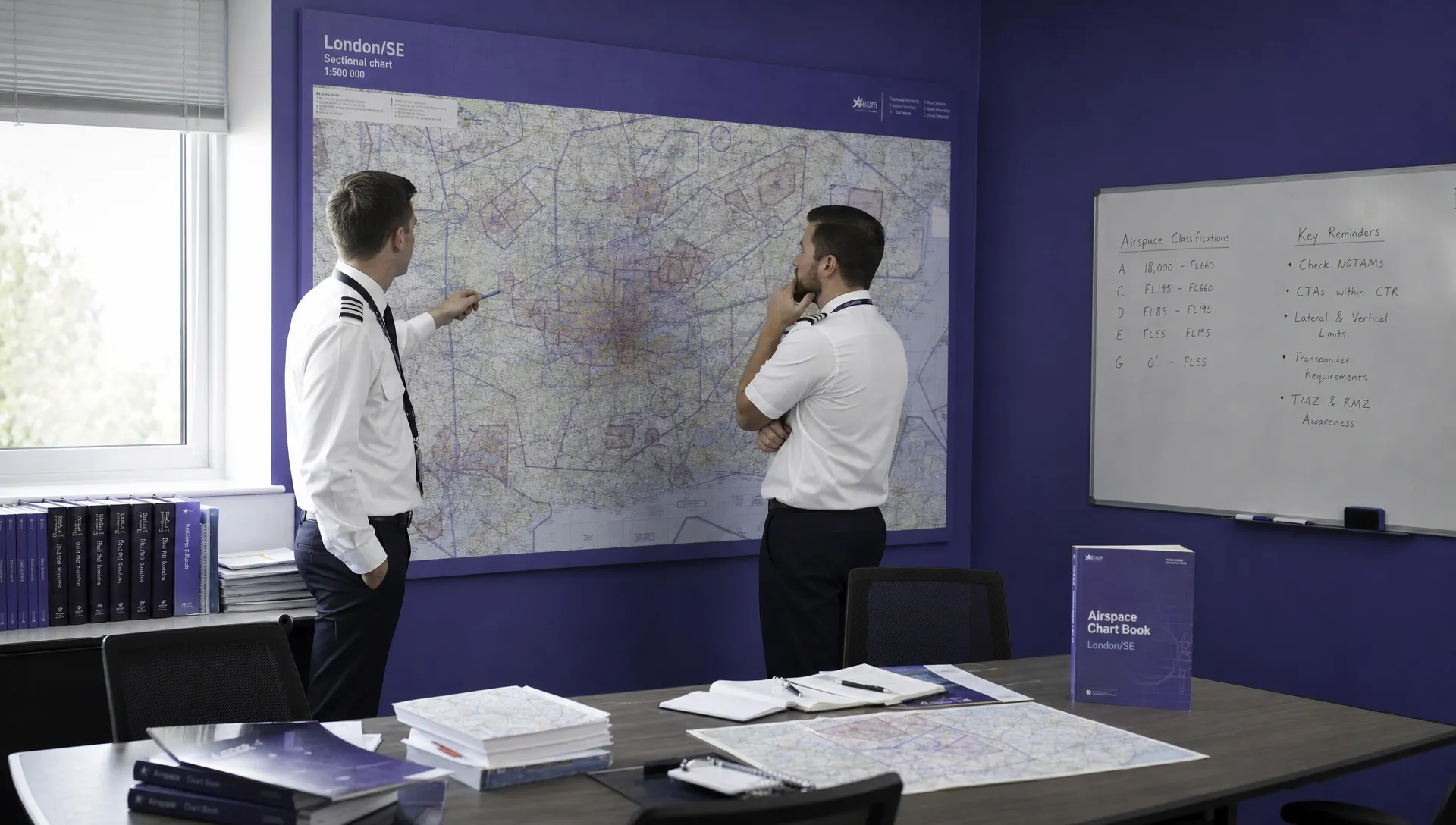
- Airspace Awareness: You can't just launch a drone wherever you feel like it. Security teams must use tools to check for airspace restrictions, like being too close to an airport, a military base, or a national park.
- Visual Line of Sight (VLOS): Standard Part 107 rules are clear: the pilot or a dedicated spotter has to be able to see the drone with their own eyes at all times. This is a massive factor to consider for patrolling large perimeters.
- Remote ID Compliance: Modern rules demand that most drones broadcast their ID and location, kind of like a digital license plate for the sky. We've got a deep dive into what this means in our guide to understanding Remote ID for drones.
Flying Beyond Visual Line of Sight (BVLOS) is the game-changer for truly automated patrols, but it’s not something you can just do. It requires special waivers from the FAA, and getting one means proving you've got a rock-solid safety case backed by technology and strict operational protocols.
Building Public Trust Through Privacy
While following the law is non-negotiable, it's the ethical side of things that builds trust with the public and your own employees. Let's be honest, a drone with a camera buzzing overhead can be unnerving if people don’t know what it’s for. Tackling these privacy worries head-on isn't a roadblock; it's a fundamental part of a responsible program.
It is absolutely vital to understand the wide range of privacy considerations when using drones for surveillance, especially to stay on the right side of constantly changing regulations.
A transparent drone program is a trusted drone program. The goal is to demystify your operations, showing that your drones are there to enhance safety, not to intrude on personal lives.
This proactive stance is more important than ever. The growth of drones in security is part of a much bigger industry-wide explosion. The global commercial drone market is showing some serious momentum and is predicted to rocket past US$90 billion by 2036. As this tech becomes more everyday, public scrutiny is only going to ramp up, making transparent policies an absolute must-have.
Practical Steps for Ethical Operation
Creating a program that respects privacy isn't rocket science, but it does require deliberate action. It all comes down to creating clear policies and then communicating them well.
Here are a few practical strategies you can put in place right away:
- Develop a Clear Data Policy: Spell out exactly what data you collect, how long you keep it, who can see it, and for what specific security reasons. Then, make this policy easy for people to find.
- Anonymize Data When Possible: If you’re just monitoring crowd density or how traffic is flowing, use tech to blur faces or other personal details that aren't relevant to what you're trying to achieve.
- Communicate Your Operations: Use signs or community notices to give people a heads-up about drone activity in the area. A simple explanation that a drone is doing a routine patrol can go a long way in easing public concern.
By marrying strict regulatory compliance with a transparent, ethical approach to privacy, you can build a drone program that's not only effective but also accepted. This dual focus ensures your "eyes in the sky" are seen as a welcome layer of protection.
Weaving Drones into Your Existing Security Workflow
Bringing drones into your security operations isn't about buying a cool new gadget; it’s about building a whole new capability. To really make it work, you have to move beyond a few one-off pilot projects and build a system that’s efficient and can grow with you. This means you need a central command center to wrangle the dozens of moving parts that come with a serious drone program.
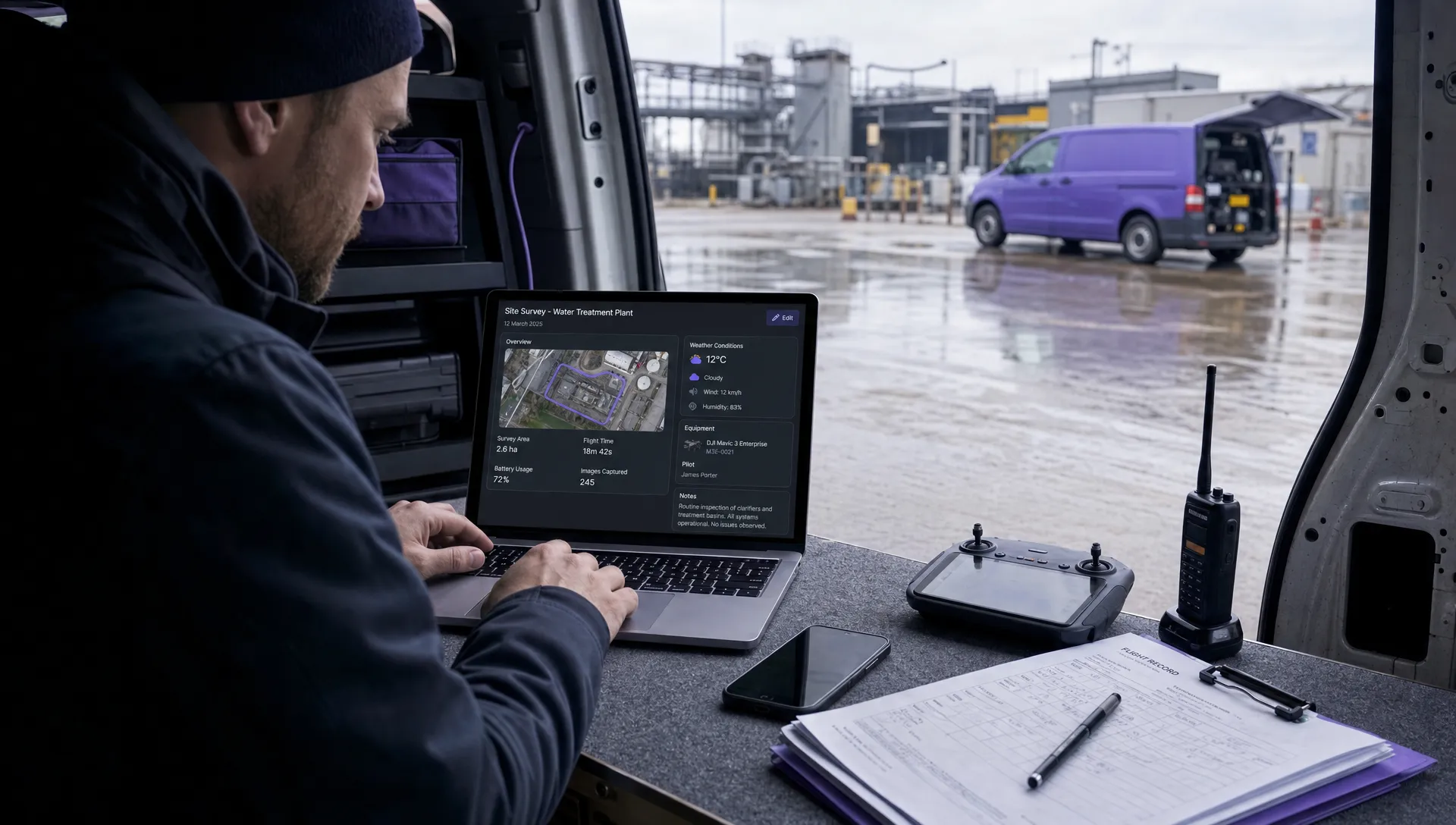
Think about what a typical drone security mission looks like without a proper system. The operator is jumping between a handful of different apps and websites. One for the weather forecast, another for temporary flight restrictions, and a third for local airspace rules. After the flight, it’s back to manual work: filling out a paper logbook, uploading gigabytes of video to a separate server, and maybe tracking battery cycles in a spreadsheet if they remember. It’s a mess—a time-consuming process just begging for human error.
Now, picture this instead: a single, clean dashboard that handles everything. That’s the job of a drone operations management platform.
From Chaos to Cohesion with a Central Platform
A dedicated platform like Dronedesk acts as the digital nerve center for your entire drone operation. It takes that tangled, manual workflow and turns it into a smooth, safe, and scalable system. Instead of data scattered across different apps and pilots doing their own thing, your team gets one source of truth for every single mission.
This integrated approach is the secret to scaling your drones in security program without pulling your hair out. It guarantees every flight is planned, flown, and logged with the same high standard of safety and compliance, no matter who is at the controls.
The platform pulls several critical jobs into one place:
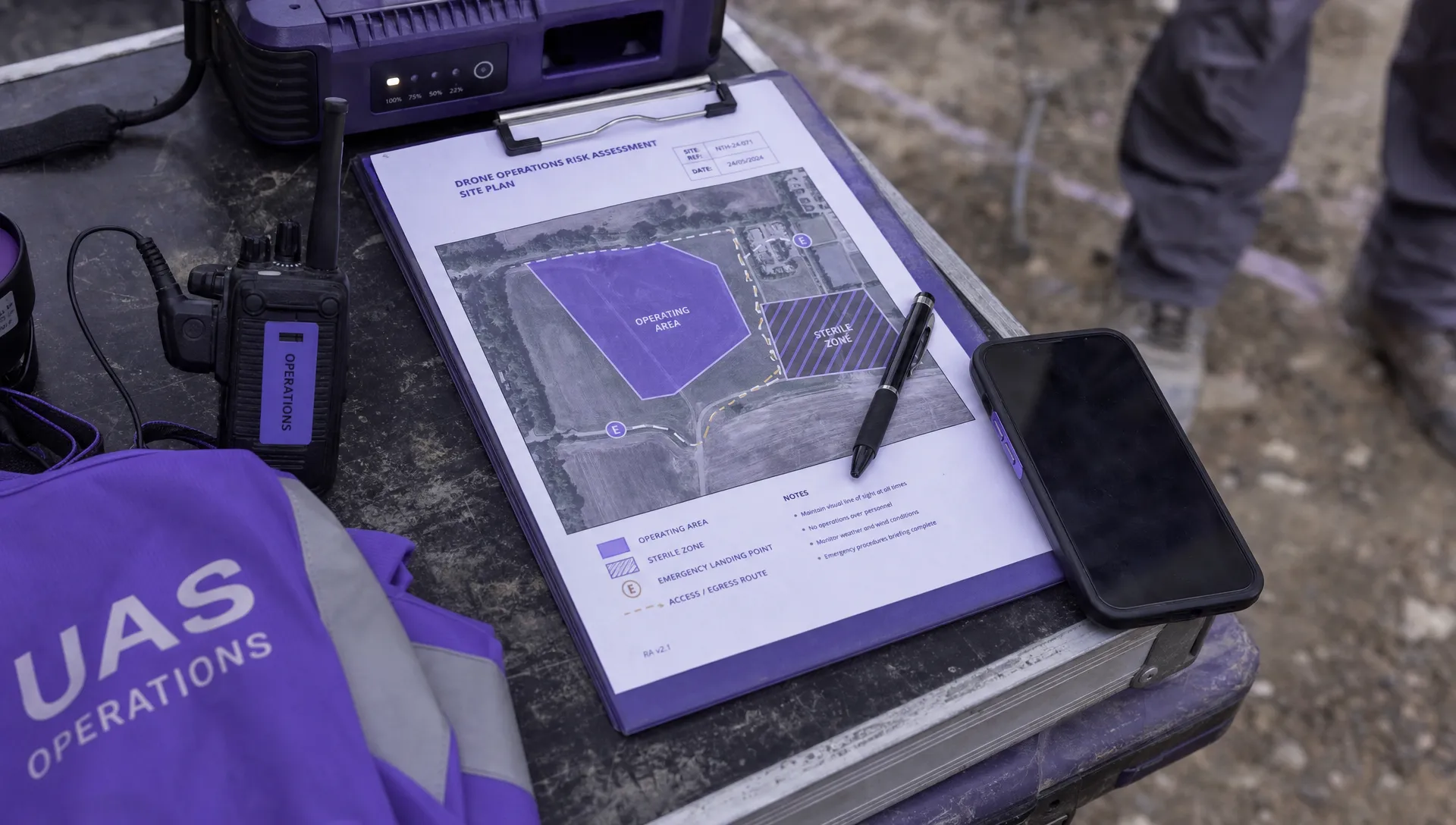
- Automated Pre-Flight Checks: It automatically grabs weather data, airspace advisories, and risk assessments. This saves pilots a ton of time and, more importantly, reduces the chance of missing something critical.
- Compliance and Reporting: Flight logs, maintenance records, and pilot certifications are all tracked in one spot. This makes staying compliant a breeze and keeps you ready for any audit.
- Team and Fleet Management: You get a bird's-eye view of your whole operation. See which pilot is assigned to which job, monitor the health of your drone fleet, and make sure every piece of gear is maintained and accounted for.
The process below shows the core pillars of a compliant drone operation—all things a good management platform helps you stay on top of.

This flowchart really drives home how certification, airspace awareness, and privacy are all linked. When you manage them from a central dashboard, nothing falls through the cracks.
Unifying Your Security Posture
True integration goes beyond just managing the drones. It’s about making the intel they gather a seamless part of your entire security infrastructure. The last thing you want is another data silo; the goal is a truly unified security posture.
This means your drone platform needs to talk to the systems you already count on. For instance, when a drone spots an intruder on a perimeter patrol, its live video feed can be streamed directly into your existing Video Management System (VMS).
Integrating drone feeds with your VMS and alarm systems closes the loop between eyes in the sky and boots on the ground. An alert from a fence sensor can automatically trigger a drone launch, and the live video pops up on the same screen your guards are already watching.
This creates a powerful, cohesive system where the drone becomes a natural extension of your security toolkit, not just another gadget your team has to manage separately.
By taking a platform-first approach, security managers can build a drone program that is not only effective but also organized, compliant, and ready to scale. This structured workflow is what separates a short-lived experiment from a core component of your security strategy.
Proving the Value of Your Drone Program
Getting stakeholders to sign off on a new investment always boils down to one simple question: what’s the return? For drones in security, the answer is about a lot more than just saving a few quid. A well-run drone program delivers a powerful Return on Investment (ROI) measured in faster incident response, dramatically lower risk, and a more efficient operation overall.
To build a business case that sticks, you need to be tracking the right Key Performance Indicators (KPIs). Think of these as the vital signs for your security team. They give you the hard data to show the people holding the purse strings exactly how drones are making the site safer and protecting the bottom line.
Key Metrics That Demonstrate Drone ROI
You need to move past anecdotes and focus on the numbers. The goal is simple: show a clear "before and after" picture of your security operations. Start by tracking these core metrics:
- Incident Response Time: Get a stopwatch out. Measure the average time it takes a drone to get eyes on a situation versus a guard in a vehicle. A drop from 10 minutes down to 90 seconds is a massive win that anyone can understand.
- Patrol Coverage and Frequency: Do the maths. How much ground can a drone cover in an hour compared to a foot or vehicle patrol? It’s not uncommon for a drone to patrol a perimeter 4-5 times in the same time it takes a guard to do it once.
- Reduction in Security Incidents: Keep a log. Track the number of incidents like vandalism, theft, or trespassing before and after you put the drone in the air. A noticeable drop is direct proof that the drone is a powerful deterrent.
- Labor Cost Optimisation: A drone program lets a single operator act as an eye in the sky for a huge area. This doesn't necessarily mean cutting staff; it means you can reassign your ground team to more important tasks instead of just walking the fence line all day.
The real value is that a drone acts as a force multiplier. It empowers a smaller, more agile team to secure a larger area more effectively. You’re turning a fixed labour cost into a dynamic, highly responsive security asset.
Calculating Your Program’s Financial Impact
Once you’ve got your operational KPIs, you can translate them into a clear financial argument. The formula is straightforward: compare the total cost of ownership against the tangible financial benefits.
Total Cost of Ownership (TCO): This is everything you spend over a set period, like one year. Make sure you factor in all of it:
- Hardware (drones, batteries, payloads)
- Software (operations management platforms, analytics tools)
- Training and certifications for your pilots
- Maintenance and insurance costs
Tangible Financial Benefits: These are the direct savings and prevented losses your program delivers.
- Reduced Labor Costs: Calculate the savings from having more efficient guard patrols.
- Lowered Insurance Premiums: Many insurers will offer discounts for sites that can show they have robust aerial surveillance in place.
- Mitigated Losses: Look at your historical data. Quantify the financial hit from thefts or vandalism that you've now prevented.
When you present this clear cost-benefit analysis, you’re giving stakeholders the data they need to see drones not as an expense, but as a strategic investment in a safer, more efficient operation. For a deeper look at how management software contributes to these savings, you can learn more about achieving real-world results and reducing administrative time. This data-driven approach is absolutely essential for getting your program the backing it deserves.
A Few Common Questions About Drones in Security
When security professionals start looking into adding drones to their toolkit, the same few questions always pop up. It's perfectly normal. Getting straight answers to these is the first step toward building a program that actually works and making a smart investment. Here’s what we hear most often from folks in the field, with no-nonsense answers.
How Much Does a Security Drone Program Really Cost?
This is the big one, and the honest answer is: it depends entirely on what you need to do. You could get a basic setup off the ground with a single, high-quality prosumer drone for around $5,000. But if you're serious about it, a professional program with multiple aircraft, advanced thermal cameras, and proper management software is a different ballgame. You're likely looking at an investment of $25,000 to $100,000+ per year.
It's better to think about the total cost of ownership, not just the price tag on the drone. That includes:
- The Hardware: The drones themselves, plus extra batteries and crucial sensor payloads.
- The Software: A drone operations management platform isn't a luxury; it's essential for keeping things efficient and compliant.
- The People: Getting your pilots certified under FAA Part 107 rules is a must.
- The Upkeep: Ongoing maintenance and insurance are required to keep your fleet in the air and your organization protected.
What Kind of Training Will My Security Staff Need?
Anyone flying a drone for work—and that absolutely includes security surveillance—is required by law to have a Federal Aviation Administration (FAA) Part 107 Remote Pilot Certificate. To get this, they need to pass a written knowledge test that covers the rules of the sky, weather patterns, and how to operate safely.
But passing a test is just the beginning. Real-world, hands-on flight training is what makes a pilot effective. Your team needs to be completely comfortable with manual flight, know exactly what to do in an emergency, and be experts at using the specific gear you’ve invested in, especially tricky thermal and long-range zoom cameras. Regular practice is the only way to make sure they can handle the drone confidently when a real security situation unfolds.
Can Drones Fly in Bad Weather or at Night?
Yes, they can, but there are some important "ifs" and "buts." Many professional-grade drones in security are built to be weather-resistant (you'll see this listed as an IP rating) and can handle a bit of rain and some wind. But their performance will suffer in a downpour or strong gusts, so you absolutely must have clear rules on what weather is a "go" and what's a "no-go."
Night flying is where these tools truly shine. It's allowed under Part 107 rules, as long as the drone has anti-collision lights that can be seen from at least three miles away. When you pair this capability with a thermal camera, the drone becomes a powerful surveillance asset that basically turns darkness into your biggest advantage.
The FAA also requires pilots to complete specific online training and pass an updated test for night operations. This makes sure they understand the unique challenges and risks that come with flying after the sun goes down.
Ready to pull your entire drone security operation together in one simple, intuitive dashboard? Dronedesk gives you the tools you need for compliant flight planning, managing your team, and automating reports. See how much time you can get back at https://dronedesk.io.
 Drone Airspace Rules: How to Document Your Site Checks →
 How to Evaluate a Free Drone Logbook Before Using It →
 FAA Part 107 Test: How to Master Airspace Questions →
 Drone Risk Assessment Controls That Work in the Field →
 FAA Drone License Costs Beyond the Knowledge Test →
 Drone Part 107 Operations: When a Waiver May Be Needed →
 Drone Operating Rules for Managing Contractors and Employees →
 BVLOS Drone Requirements for Building a Safety Case →
 Drone Pilot Test Mistakes That Cost Candidates Marks →
 FAA 107 License vs Part 107 Certificate: What’s the Difference? →