
UAS Fleet Management System Guide for Drone Ops
A UAS fleet management system is basically a centralized software platform that lets you oversee, coordinate, and maintain your entire drone fleet from one spot. Think of it as the command center you need to scale your drone operations safely and efficiently.
Moving Beyond One Drone to Full Fleet Command
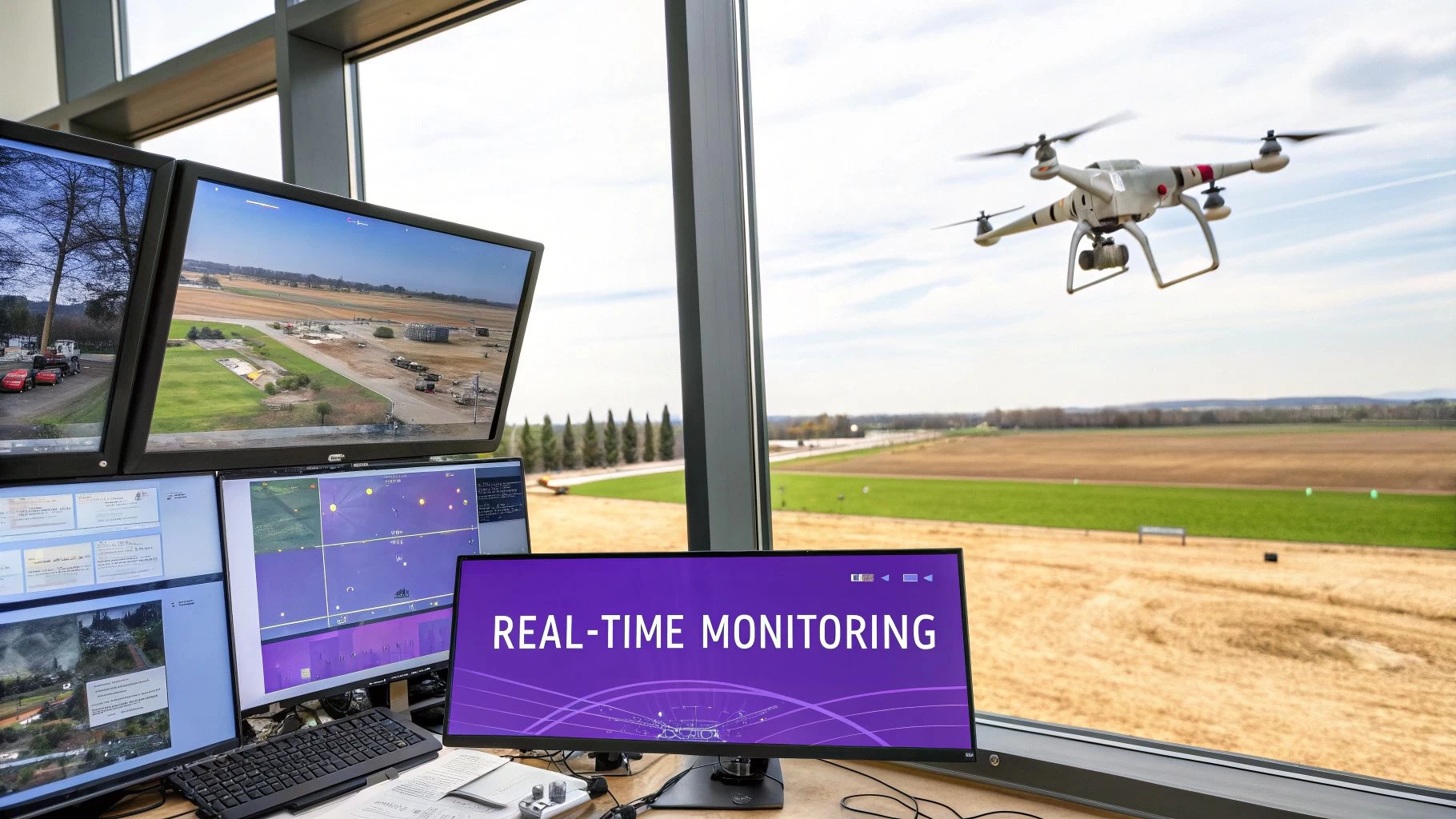
Managing a single drone is simple enough. You've got one aircraft, one set of batteries, and one flight log to keep an eye on. But what happens when you scale up to five, ten, or even a hundred drones? Suddenly, things get complicated—fast.
This is exactly where a UAS fleet management system becomes a non-negotiable tool. It's like the conductor's podium for an orchestra. Sure, each musician (or drone) can play on its own, but it's the conductor who ensures they all play in harmony to create something powerful. Without that central coordination, you just have noise.
The Shift From Manual Tracking To Centralized Control
Not so long ago, operators were stuck juggling a messy combination of spreadsheets, paper logs, and manual check-ins. That old-school approach isn't just inefficient; it's a breeding ground for human error, especially with compliance and maintenance schedules on the line. A dedicated system kicks that fragmented process to the curb, creating a single source of truth.
To really get what it takes to manage a fleet, it helps to understand the basics. The core ideas are similar to what's outlined in guides on What is a Fleet Management System for ground vehicles. The challenges—tracking assets, scheduling maintenance, keeping operators accountable—are almost identical. A UAS platform just tailors those principles for the unique world of aviation.
This software becomes the digital nerve center for your whole program, connecting pilots, aircraft, and mission data in real time. It answers all the critical questions that pop up when you start to grow:
- Asset Availability: Which drones are ready to fly, and which are grounded for maintenance?
- Pilot Certification: Is the assigned pilot certified and current on their training for this specific drone?
- Mission History: Where has each drone been, for how long, and what data did it capture?
- Regulatory Compliance: Are all our flight logs complete and ready for an audit?
By centralizing these functions, a UAS fleet management system transforms a simple collection of drones into a cohesive, efficient, and compliant operational force. It moves your organization from reactive problem-solving to proactive, data-driven management.
Ultimately, bringing this software on board is the key to professionalizing your drone program. It’s what allows industries like public safety, agriculture, logistics, and infrastructure inspection to unlock the real power of their fleets. For a deeper dive, exploring resources on UAV fleet management can offer even more insight into building a solid operational framework.
Without this centralized control, you're not really managing a fleet; you're just juggling a bunch of individual assets.
The Core Features of a Powerful Drone Fleet System
A simple spreadsheet might tell you when you bought a drone, but it won’t warn you that its battery is about to give out mid-flight over a critical site. That's where a real UAS fleet management system comes in. The difference between a basic logbook and a true command center is all in the features.
These platforms are much more than just digital filing cabinets. Think of them as a digital co-pilot for your entire operation, taking over complex tasks and flagging critical information right when you need it. From planning a mission to filing the final compliance report, these systems ensure every flight is safe, efficient, and perfectly documented.
A quality system is built on a few essential pillars. Let's break down the core functionalities you should expect to see.
Essential Features of a Modern UAS Fleet Management System
To truly grasp what these systems offer, it helps to see the key features laid out and understand the direct benefit each one brings to your drone program. The table below covers the non-negotiables for any serious operation.
| Feature Category | Key Functionality | Primary Benefit |
|---|---|---|
| Live Operations | Real-time telemetry, location tracking, and status alerts for every active drone. | Provides complete situational awareness, crucial for safety, multi-drone coordination, and BVLOS flights. |
| Mission Management | Tools for automated flight path generation, waypoint setting, and mission parameter definition. | Saves significant time, reduces human error, and ensures consistent, repeatable data capture. |
| Asset Health | Automated tracking of flight hours, battery cycles, and component usage with predictive alerts. | Shifts maintenance from reactive to proactive, maximizing drone uptime and preventing costly field failures. |
| Compliance & Admin | Automatic logging of all flight data, pilot hours, and maintenance records for regulatory reporting. | Dramatically reduces administrative workload and makes FAA audits simple and stress-free. |
Each of these features tackles a major operational headache, turning manual, error-prone tasks into automated, reliable processes. Let's dig a little deeper into what each one looks like in practice.
Real-Time Telemetry and Live Tracking
Imagine yourself as an air traffic controller, but with a perfect, data-rich view of every single aircraft under your command. That's exactly what real-time telemetry and live tracking deliver. This is the absolute bedrock of any UAS management platform, giving you a live dashboard packed with critical data for every drone in the sky.
This is way more than just a dot moving on a map. You get a constant feed of vital signs, including:
- Precise Location: Know exactly where each drone is, its altitude, and its ground speed.
- Battery Health: Keep an eye on voltage, temperature, and estimated flight time left to avoid any nasty surprises.
- Aircraft Status: Get instant alerts for any system errors or warnings from the drone's own diagnostic checks.
- Signal Strength: Monitor the link between the drone and the controller to make sure you don't lose contact.
This live view is non-negotiable for Beyond Visual Line of Sight (BVLOS) operations and is essential for safely managing multiple drones in the same airspace, like during a large-scale survey or an emergency response mission.
Automated Mission Planning and Execution
Trying to manually plot complex flight paths for several drones is a recipe for headaches and mistakes. Automated mission planning lets your operators design intricate flights with just a few clicks. You can outline a survey area, define specific waypoints, and lock in parameters like altitude and camera angles—the software takes care of the heavy lifting.
For instance, a team inspecting a solar farm can simply draw a polygon over the site on a map. The system then automatically calculates the most efficient grid pattern to cover the entire area, even accounting for terrain changes and no-fly zones. This is the key to executing complex, multi-drone jobs with pinpoint precision, time and time again.
Integrated Maintenance and Health Monitoring
A drone sitting on the shelf is a drone that's not making you money. Integrated maintenance features are designed to keep your fleet in the air by moving from reactive repairs to predictive care. The system automatically logs flight hours, battery cycles, and component wear for every single piece of gear.
A robust system doesn’t just record maintenance history; it actively predicts future needs. By analyzing usage data, it can alert managers when a specific drone is approaching a scheduled service interval or when a component is showing signs of wear.
This image shows how a technician might interact with a digital maintenance schedule, a core part of this feature.

This proactive approach helps you catch problems before they lead to a crash, ensuring every drone is ready to fly when you need it.
This digital-first approach goes beyond the aircraft itself. Many platforms now use QR codes for an automated check-in/check-out system for all equipment, from batteries to expensive sensors. This gives managers a real-time view of who has what and where it is, boosting accountability across the team.
Automated Compliance and Reporting
Keeping regulators like the FAA happy demands obsessive record-keeping. Manually pulling together flight logs, pilot hours, and maintenance histories is a massive administrative drain. One of the most valuable features of a top-tier UAS fleet system is its ability to automate this entire process.
The platform captures and organizes all the necessary data from every single flight, building a detailed, audit-ready trail. When you need to prove compliance, you can generate comprehensive reports with just a few clicks. As Data Bridge Market Research highlights, the blend of GNSS, cellular, and RFID tech enables the precise tracking needed for accurate logging, especially as large fleets move to cloud-based management.
This automation frees your team from drowning in paperwork, letting them focus on flying missions and analyzing the data they gather. It turns a huge operational headache into a simple, background process—the digital backbone that supports a professional, legally sound drone program.
Unlocking New Levels of Operational Excellence

It’s one thing to understand the features of a UAS fleet management system, but it's another thing entirely to see the impact they have in the real world. When we move past the "what" and get to the "why," it becomes clear these platforms are far more than a simple convenience. They're a strategic asset.
The real magic happens when you see the before-and-after. Operations transform from a chaotic mess of manual spreadsheets and phone calls into a centralized, automated command center. This shift doesn’t just make things easier; it creates compounding benefits that ripple through your entire organization, letting you do more with the same resources.
Drive Radical Operational Efficiency
Before a dedicated system, every mission is bogged down by manual work. A pilot might burn hours plotting flight paths, manually checking weather forecasts, and ticking off paper pre-flight checklists. Now, multiply that by a fleet of ten drones, and you see how fast that administrative drag eats into productive flight time.
A UAS fleet management system puts all those repetitive tasks on autopilot. You can create, save, and duplicate flight plans in minutes. Weather data and airspace restrictions get pulled in automatically. Digital checklists ensure no one skips a critical step. Suddenly, a single operator can handle more missions and more aircraft without drowning in paperwork.
Think about a large-scale agricultural survey. Instead of planning each drone's route one by one, a manager can just define the survey area. The software then automatically splits the job among the available drones. The result? A massive jump in the acreage you can cover in a day.
Enhance Safety and Reduce Operational Risk
Without a central system, managing risk is a constant headache. How can you be sure every pilot is following standard procedures? Or stop a drone with a known battery fault from being used on a crucial job? The potential for human error is huge, and the consequences can be disastrous.
A fleet management system is like having a digital safety officer on duty 24/7. It gives you a single dashboard with a complete, real-time view of every operation. This oversight is backed by powerful safety features that slash your risk profile:
- Geofencing: Set up virtual boundaries to keep drones out of restricted airspace or hazardous zones.
- Automated Pre-Flight Checks: Enforce digital checklists that must be completed before takeoff, guaranteeing consistent safety protocols across the board.
- Real-Time Alerts: Get instant notifications for low batteries, high winds, or signal loss, so you can step in before a problem escalates.
This centralized control turns safety from a matter of individual discipline into a system-wide, enforceable standard. It gives you the confidence to scale your operations without scaling your risk.
Achieve Significant Cost Savings
The cost of a drone fleet goes way beyond the initial purchase. You've got maintenance, asset tracking, and even fuel for ground crews to think about. In ground-based vehicle fleets, GPS tracking is essential for optimizing routes and cutting fuel costs, a principle just as vital for UAS operations, as detailed in this analysis of how fleet management optimization impacts costs.
A UAS fleet management system opens up several ways to cut costs. Predictive maintenance is a massive one. By tracking flight hours and component health, the system can flag potential failures before they ground an aircraft. This proactive approach saves you from expensive field repairs and potentially catastrophic equipment losses.
On top of that, smarter resource allocation ensures you’re getting the most out of every piece of gear. The system gives you hard data on which drones are being overworked, which batteries are starting to fade, and even which pilots are the most efficient. This lets you make sharp, data-driven decisions on future purchases and how you deploy your assets, cutting out waste and maximizing your return on investment.
How Top Industries Put Drone Fleets to Work
A UAS fleet management system stops being a nice-to-have and becomes a must-have the second you see it in action. Across a whole host of industries, this technology is the backbone of any serious drone operation, turning chaotic, complex jobs into smooth, automated workflows.
Of course, not every industry uses these platforms the same way. Let's dig into how some of the big players are deploying drone fleets to get a leg up, make their operations safer, and simply get more done.
Logistics and Last-Mile Delivery
Everyone knows the "last mile" of a product's journey is a notoriously expensive and clunky process. Drones are a fantastic answer to this problem, but trying to manage a sky full of delivery drones over a busy city is a logistical nightmare. This is where a UAS fleet management system steps in to play air traffic controller.
For a delivery company, the system is juggling a ton of critical tasks:
- Route Optimization: It’s constantly crunching the numbers to find the fastest, most battery-efficient routes for dozens of drones at once, all while dodging things like bad weather or new flight restrictions.
- Live Tracking: Operators get a real-time view of every single package. This means customers get spot-on delivery times and the whole process is transparent from start to finish.
- Battery Management: The platform is the ultimate micromanager for batteries. It monitors the health and charge of every battery, sending out drones with enough juice for their trip and automatically scheduling swaps when needed.
The push for faster deliveries, coupled with the need for safer and cleaner operations, is really accelerating the adoption of these systems. This is all part of a bigger picture in the U.S. fleet management world, where the focus is on blending real-time data and smart insights to manage all sorts of vehicles—including drones. You can get a deeper look at how technology is shaping the future of fleet management in the broader industry.
Agriculture and Precision Farming
Picture this: you're trying to keep an eye on a massive 5,000-acre farm, looking for early signs of pests or dry spots. Doing that on foot or with a tractor is pretty much impossible. Today's mega-farms are sending up swarms of drones to do the scouting, and a management system is the only way to keep that effort from descending into chaos.
In agriculture, a fleet management platform transforms drones from simple cameras into a cohesive team of digital farmhands. It lets a single operator survey vast areas with a speed and precision that was unthinkable just a few years ago.
Big agricultural operations use these systems to automate complex jobs, like using special cameras to check on crop health. The platform plans the flights to cover every inch of the property, sends multiple drones to different fields at the same time, and then stitches all that data into a single, easy-to-read map. This lets farmers be incredibly precise with fertilizer or water, saving a boatload of money and being much kinder to the environment.
Public Safety and Emergency Response
When someone is lost, every second counts. Emergency response teams use drone fleets to get eyes in the sky immediately, but trying to coordinate several aircraft in a high-stress, fast-moving situation is incredibly difficult.
A UAS fleet management system gives first responders the clear, unified view they desperately need. A command center can see live video from multiple drones on one screen, allowing them to search a huge area without missing a spot. The platform also logs flight paths and records video, which is absolutely critical for reviewing the operation later and for any legal documentation. Better yet, operators can share access with other agencies on the fly, making sure everyone is on the same page during a crisis.
Energy and Infrastructure Inspection
Inspecting hundreds of miles of pipeline or an entire field of wind turbines is dangerous, slow work when you do it the old-fashioned way. It's also shockingly expensive. Energy companies now lean on drone fleets to do these inspections much more safely and efficiently, and a fleet system is the engine that drives these large-scale missions.
It allows an operations manager to set up recurring inspections for hundreds of assets, like wind turbines. The system can automatically send drones out on pre-planned routes around each turbine, snapping high-resolution photos to spot any wear and tear. This kind of proactive maintenance helps catch small problems before they become catastrophic failures, preventing costly downtime and making the entire energy grid that much more reliable.
How to Choose the right UAS Fleet Management System
Picking a UAS fleet management system is a huge decision. It’s one that will define your entire drone program for years to come. This isn't just about buying software; it's about choosing a central partner for your operations. Get it right, and the platform will feel like a natural extension of your team. Get it wrong, and you're in for a world of constant friction and headaches.
To avoid a serious case of buyer's remorse, you need a clear game plan for evaluating potential vendors. This is about more than just ticking boxes on a feature list. It's about finding a system that truly clicks with how you work, where you plan to grow, and the tech you already use.
Ensure It Can Grow with Your Fleet
Scalability is the first—and arguably most critical—test. That system that works like a dream for your current five drones might completely buckle when you’re trying to manage fifty. A genuinely scalable platform needs to handle an expanding roster of aircraft, pilots, and missions without breaking a sweat.
When you're talking to vendors, ask the tough questions about their architecture. Can it handle hundreds of simultaneous real-time data streams? How does the pricing model change as you add more assets? You're looking for a partner that supports your growth, not one that penalizes you for it.
Prioritize Seamless Integration Capabilities
Your UAS fleet management system can't be an island. It has to communicate flawlessly with the other tools you rely on every single day. This is where integration becomes a make-or-break factor. A system that can’t talk to your other software will just create data silos and frustrating manual workarounds.
Think about these key connection points:
- Drone Hardware: Can the system handle a mixed bag of drones from different manufacturers, like DJI, Parrot, and Autel? A vendor-agnostic platform gives you so much more flexibility down the road.
- Existing Software: Does it play nice with your current GIS tools, asset management platforms, or project management software?
- Data Export: How easily can you pull out flight logs, compliance reports, and mission data into formats that your other business systems can actually use?
A system with a robust API (Application Programming Interface) is a massive green flag. It shows the vendor built their software with connectivity in mind from the start, giving you the power to create custom connections if you need them.
Evaluate the User Interface and Experience
The most feature-packed system in the world is completely useless if your pilots find it clunky and avoid using it. The user interface (UI) and overall user experience (UX) are non-negotiable. A clean, intuitive design slashes training time, minimizes human error, and gets your whole team on board.
During a demo, watch the workflow like a hawk. Does planning a mission feel logical? Can you find critical info—like a drone's maintenance history or a pilot's certifications—in just a couple of clicks? If the interface feels cluttered or confusing during a slick sales pitch, it's going to be an absolute nightmare to use out in the field. For a deeper dive into making daily tasks more efficient, you might find some useful perspectives on professional drone operations management, which often stresses the value of user-friendly design.
Scrutinize Security and Support
Finally, it's time to dig deep into security protocols and customer support. Your mission data is a valuable—and often sensitive—asset. You need rock-solid assurance that it's protected by strong encryption, both when it's being sent and when it's stored. Ask potential vendors pointed questions about their data security policies, where their servers are located, and what access control features they offer.
Just as important is the quality of their customer support. When you’ve got a critical issue in the field, you need a responsive and knowledgeable support team on the other end of the line. Look for vendors who offer multiple ways to get in touch (phone, email, chat) and have a reputation for actually solving problems fast. A great vendor acts like a partner who's invested in your success, not just someone who sold you a product.
A Practical Roadmap for Successful Implementation
Look, even the most powerful UAS fleet management system is only as good as its rollout. A rushed or poorly planned deployment can lead to frustrated teams, operational chaos, and a complete failure to see any of the promised benefits. The trick is to treat this implementation not as a simple software install, but as the major strategic upgrade it is.
To build a successful roadmap, it helps to borrow from established principles, like mastering project management fundamentals which apply across just about any industry. This mindset helps you structure the process, get ahead of challenges, and ensure a smooth switch from your old workflows to the new, centralized system. The goal here is to build momentum and show value from day one.
A phased approach is almost always the smartest way to go. Instead of flipping a switch and moving your entire fleet over at once, start small with a focused pilot program.
Begin With a Pilot Program
Pick a small, dedicated team to be your first users—maybe two or three pilots and one administrator. This controlled test run lets you work out all the kinks on a small scale, where mistakes are far less disruptive. This phase is your golden opportunity to validate workflows, test integrations, and gather honest feedback without messing with fleet-wide operations.
Your pilot program needs clear goals:
- Test Core Workflows: Can the team actually plan, execute, and log a mission from start to finish without any major hiccups?
- Identify Integration Gaps: Is the new system talking correctly with your existing drones, cameras, and other software?
- Gather User Feedback: What parts of the platform feel intuitive, and which bits are clunky and need better training?
Once you’ve ironed out the process with this small group, you'll have a proven model ready for a wider rollout.
Prioritize Comprehensive Team Training
With a successful pilot in the bag, the next step is solid, comprehensive training. Your goal is to get every single pilot, administrator, and stakeholder feeling completely confident on the new platform. And I don't just mean a one-hour webinar; this is about hands-on learning designed for different roles.
Pilots need to master mission planning and logging. Admins have to get a handle on compliance reporting and asset management. You can get a better sense of the tools available by exploring the different types of drone fleet management software on the market.
A well-trained team is an engaged team. When people understand how the system makes their jobs easier, adoption rates go through the roof, and you'll see a much faster return on your investment.
Digitize Your Standard Operating Procedures
Finally, use this implementation as a chance to formalize and digitize your Standard Operating Procedures (SOPs). Document every process inside the new system, from your pre-flight checklists to your data handling protocols. Doing this creates a single source of truth that guarantees consistency and safety across every single operation.
This is more important than ever. Modern fleet management platforms are now built for things like hybrid deployment models and 5G connectivity, which allow for ultra-low latency in real-time situations. These advances seriously boost efficiency and safety, making robust, digitized SOPs a non-negotiable for today's connected fleets.
Got Questions About Fleet Management? We've Got Answers.
Jumping into a UAS fleet management system is a big step, and it's natural to have a few questions swirling around. These aren't just about the tech; they're about your budget, your data security, and what your drone program will be capable of down the road. Let's clear the air and tackle the big ones head-on.
Probably the first thing on your mind is hardware. "Can one system really handle my mix of DJI, Autel, and Parrot drones?" The short answer? Absolutely. Modern fleet management platforms are built to be brand-agnostic. This means they can pull data from all sorts of different aircraft into one unified dashboard.
This is a huge deal because it saves you from getting locked into a single manufacturer. You get the freedom to pick the best tool for each job, knowing it'll all play nicely together on one screen.
How Do These Systems Actually Help with BVLOS Flights?
Beyond Visual Line of Sight (BVLOS) is where the industry is heading, but it’s a whole different ball game. The safety and regulatory hurdles are significantly higher. A solid UAS fleet management system isn't just helpful here—it's the command-and-control backbone that makes it possible.
For a pilot to safely fly a drone from miles away, they need real-time telemetry, live video, and rock-solid communication links. These platforms provide all of that. They also layer in critical safety features like detect-and-avoid alerts and dynamic geofencing, which are non-negotiable for proving to regulators that you’ve got your risks covered. Trying to run BVLOS missions at scale without this kind of central hub is, frankly, a non-starter.
What's the Real Story on Data Security?
Okay, let's talk about the elephant in the room: security. The idea of uploading sensitive flight logs, client imagery, and mission plans to a cloud platform can make anyone a little nervous. The primary risks are pretty straightforward—unauthorized access to your operational data.
To combat this, the best platforms use end-to-end encryption. This scrambles your data while it's in transit and keeps it locked down on their servers. What you really want to look for are systems with granular access controls, letting you decide precisely who on your team can view or touch specific mission files.
Where Does AI Fit into All This?
AI isn't just some buzzword for the future; it's already making a tangible difference in fleet management today. For example, AI algorithms can take the headache out of complex mission planning. They can analyze a huge area of terrain and automatically plot the most efficient flight paths for a survey, saving a ton of time.
It's also getting smarter about maintenance. By crunching the numbers on flight hours and component wear, the system can actually predict when a part might fail before it happens. This predictive maintenance allows you to swap out parts on your schedule, not in the middle of a critical job. It's this kind of intelligent automation that really drives efficiency and keeps your fleet in the air.
Ready to stop juggling spreadsheets and start commanding your fleet with confidence? Dronedesk provides a single, intuitive platform to manage your pilots, aircraft, and missions with unparalleled ease.
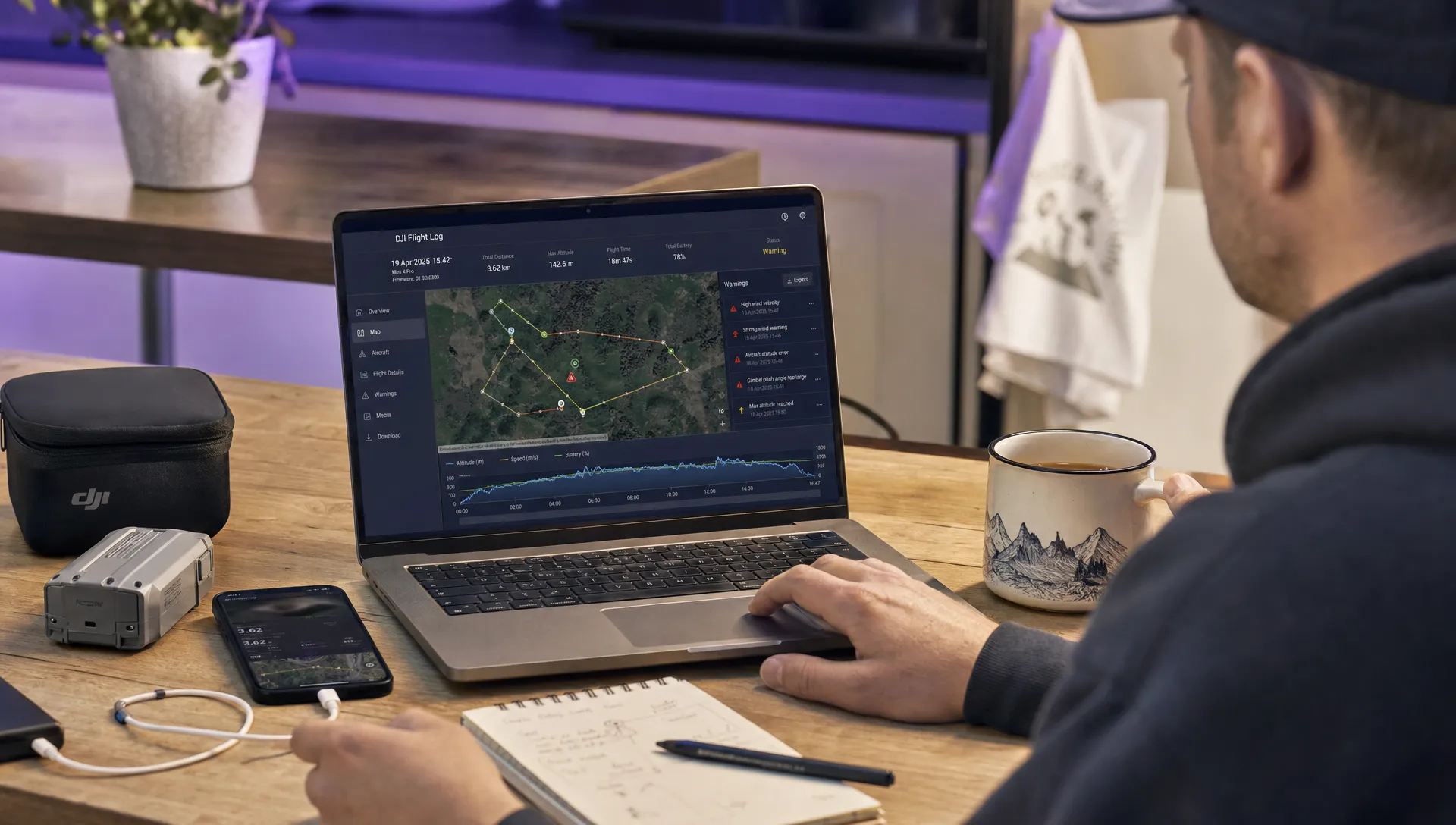 How to Review a DJI Flight Log After an Unexpected Event →
 Drone Laws Around the World: A Pre-Flight Research Framework →
 How to Compare Drone Survey Services for Complex Sites →
 How to Start a Drone Mapping Business With a Clear Workflow →
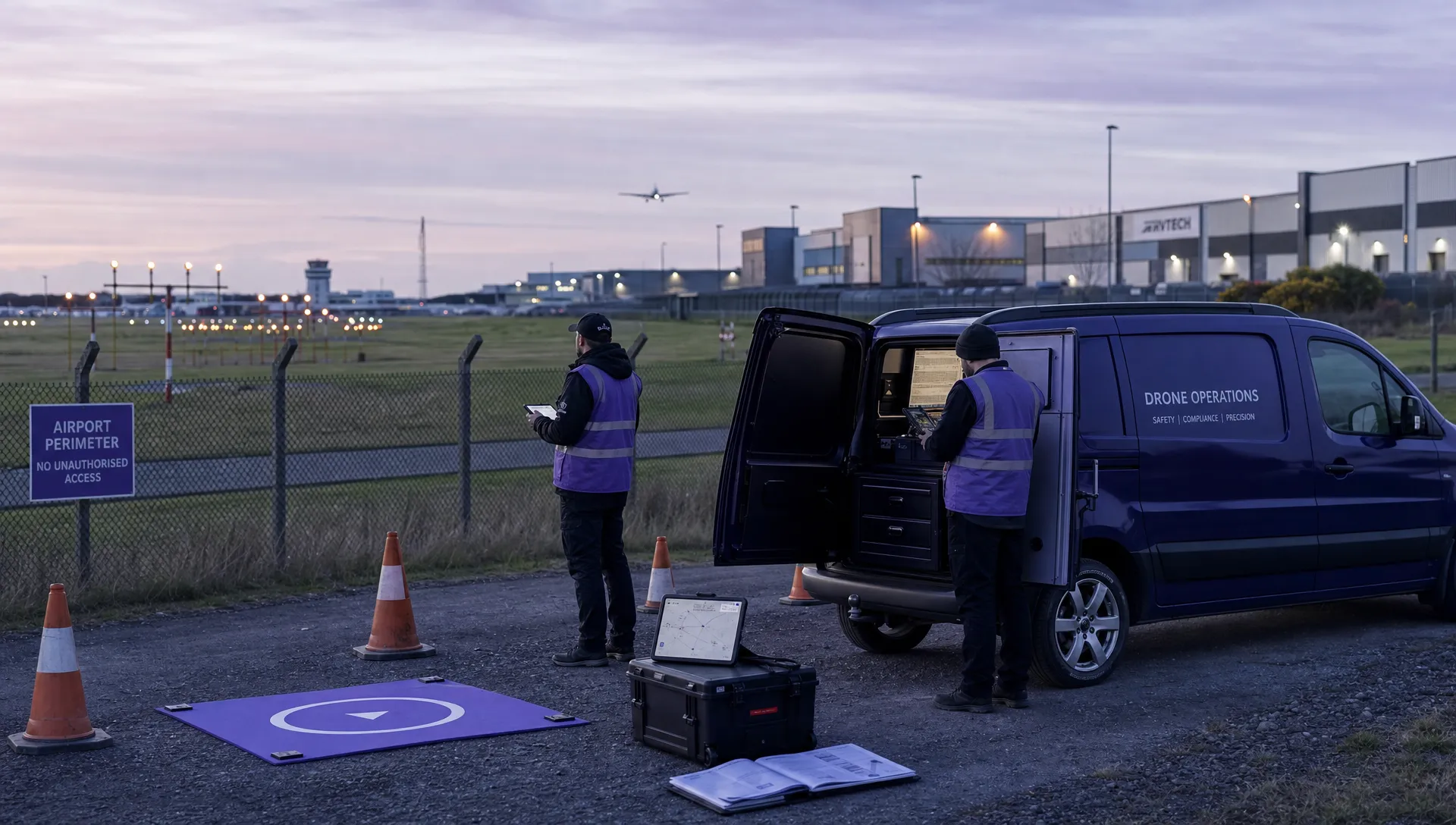 Class C Airspace Drone Rules for Commercial Flights →
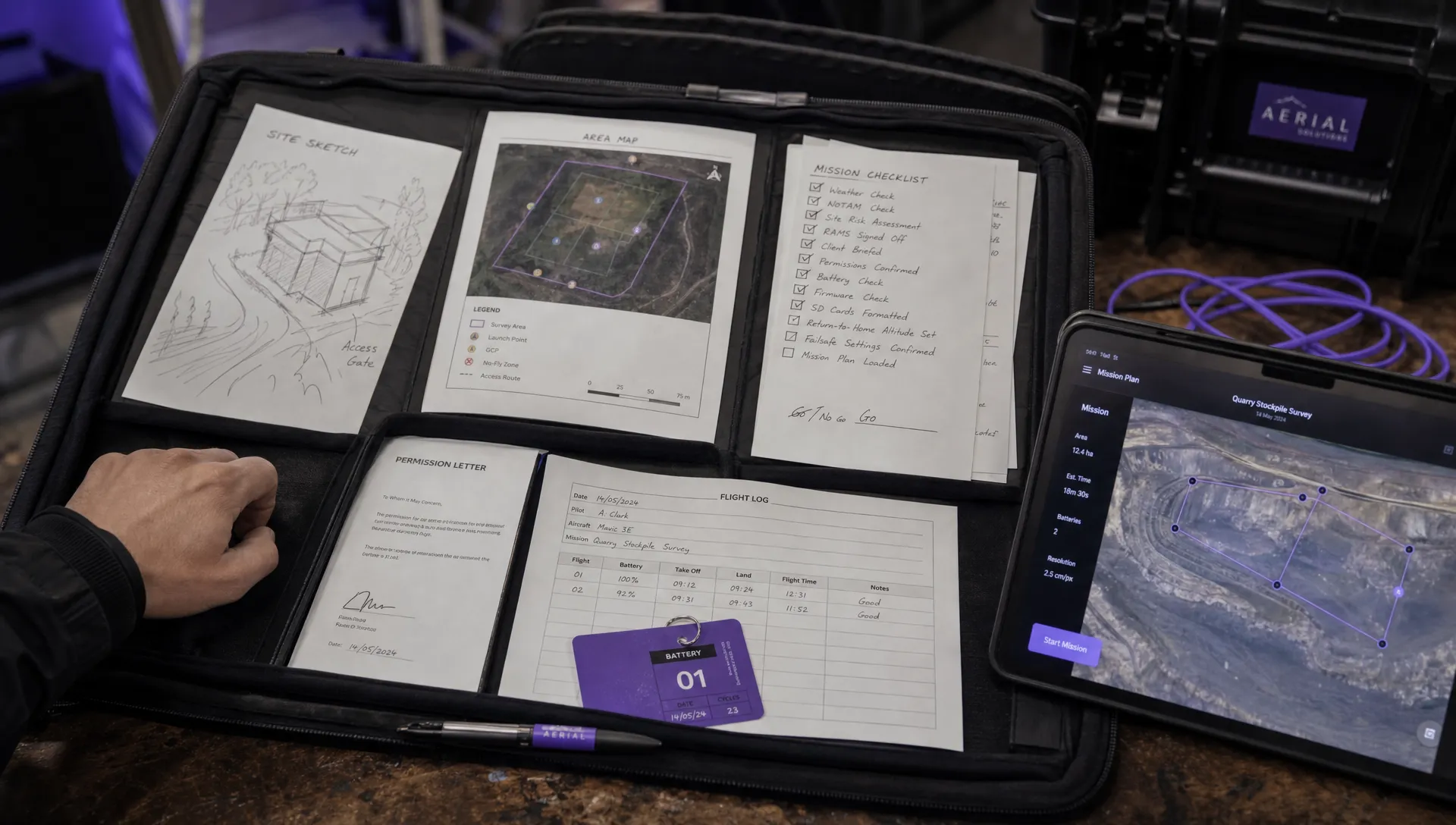 How to Create a Drone Job Pack for Every Mission →
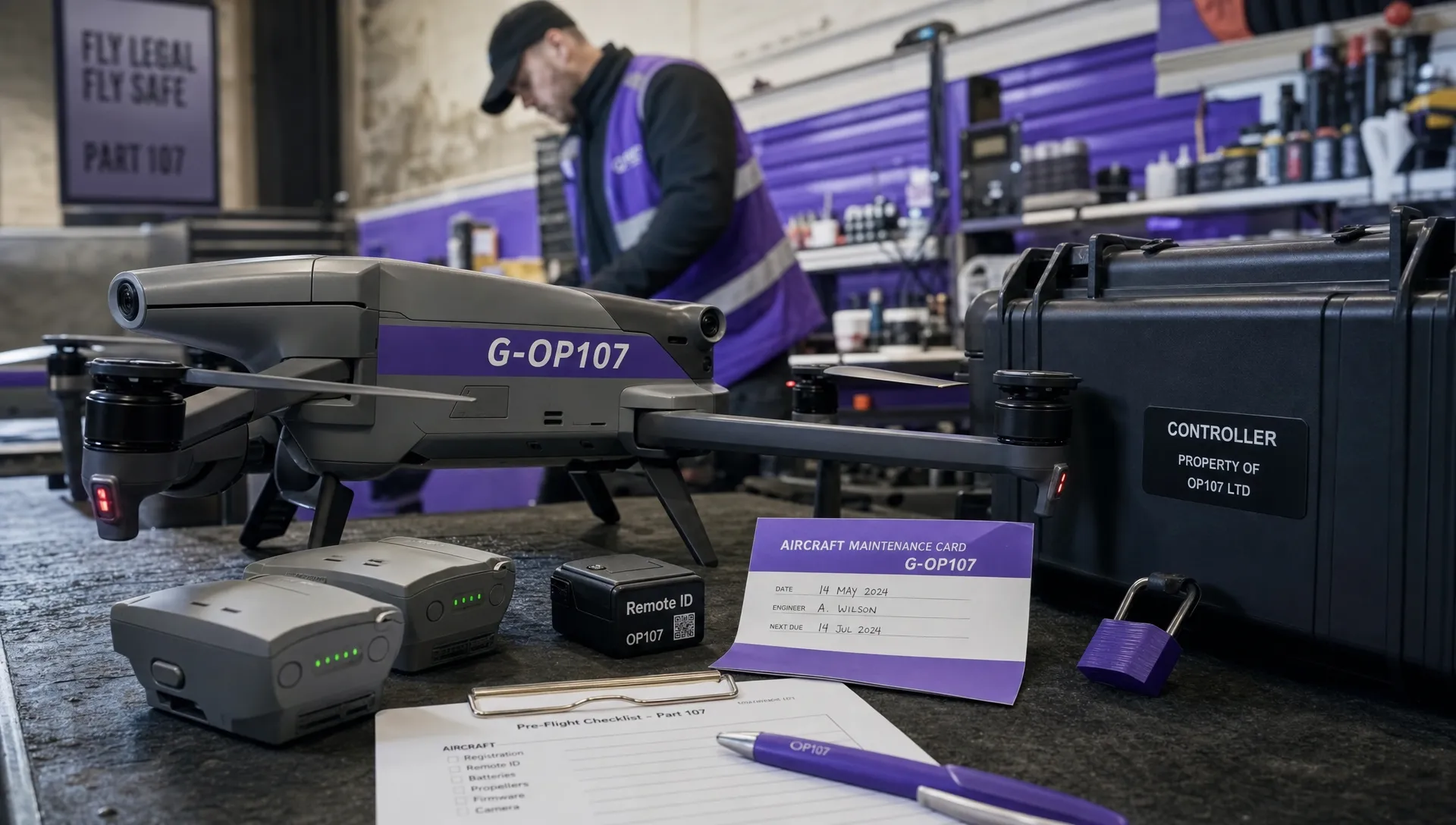 FAA Small UAS Rule: Key Requirements for Operators →
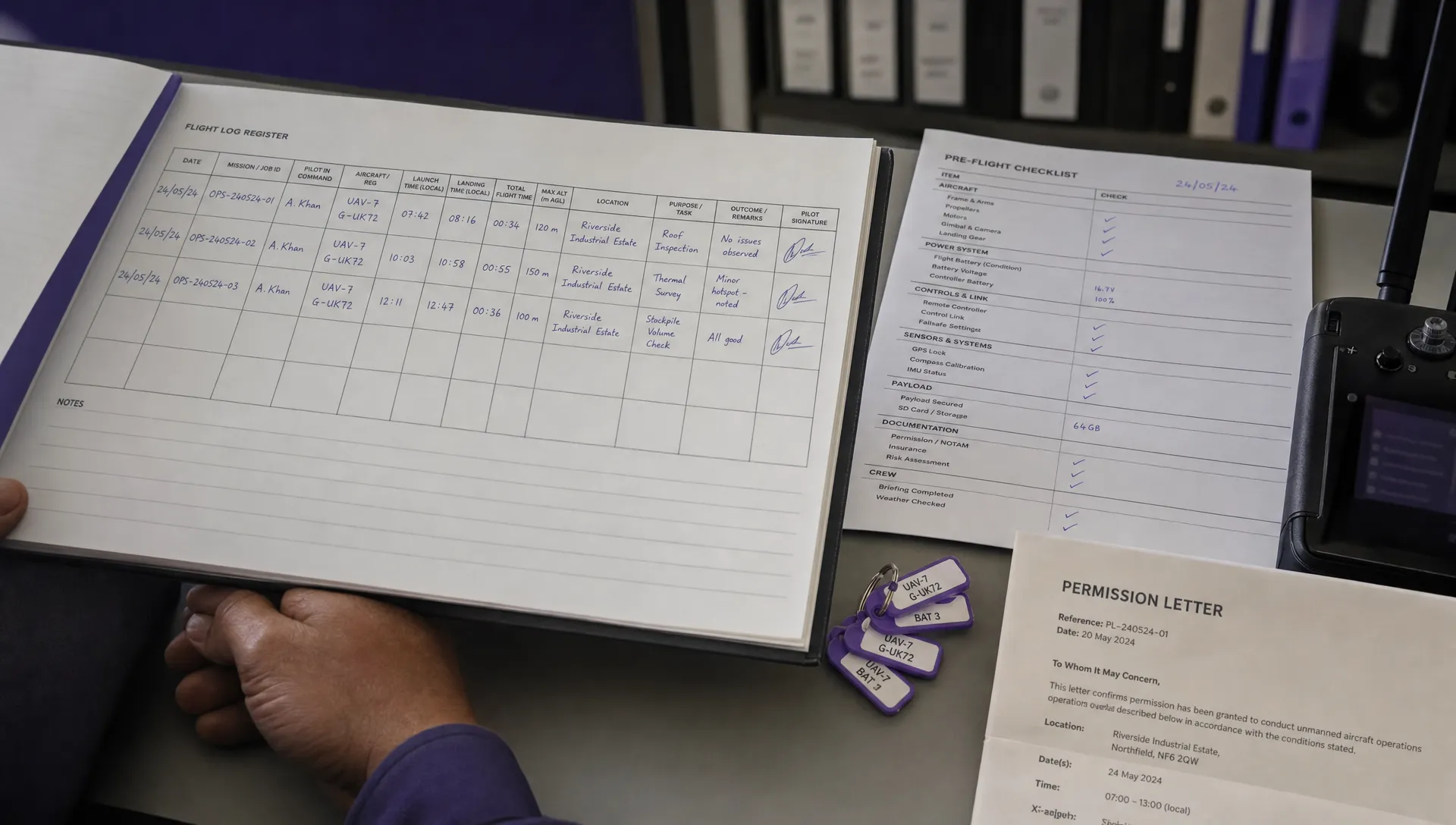 How to Build a Drone Pilot Flight Log That Is Audit Ready →
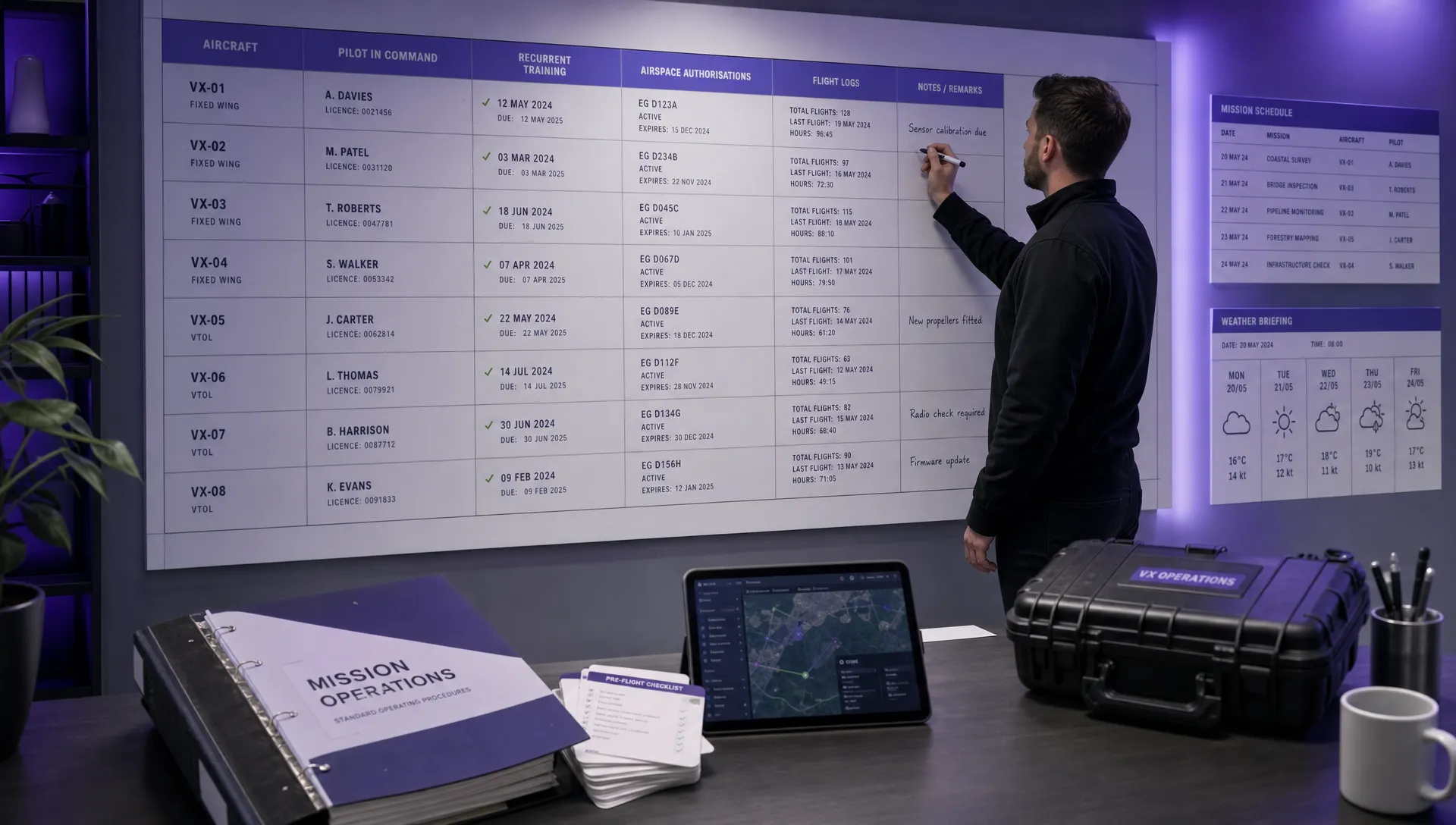 FAA Drone Licence Requirements for Commercial Pilots →
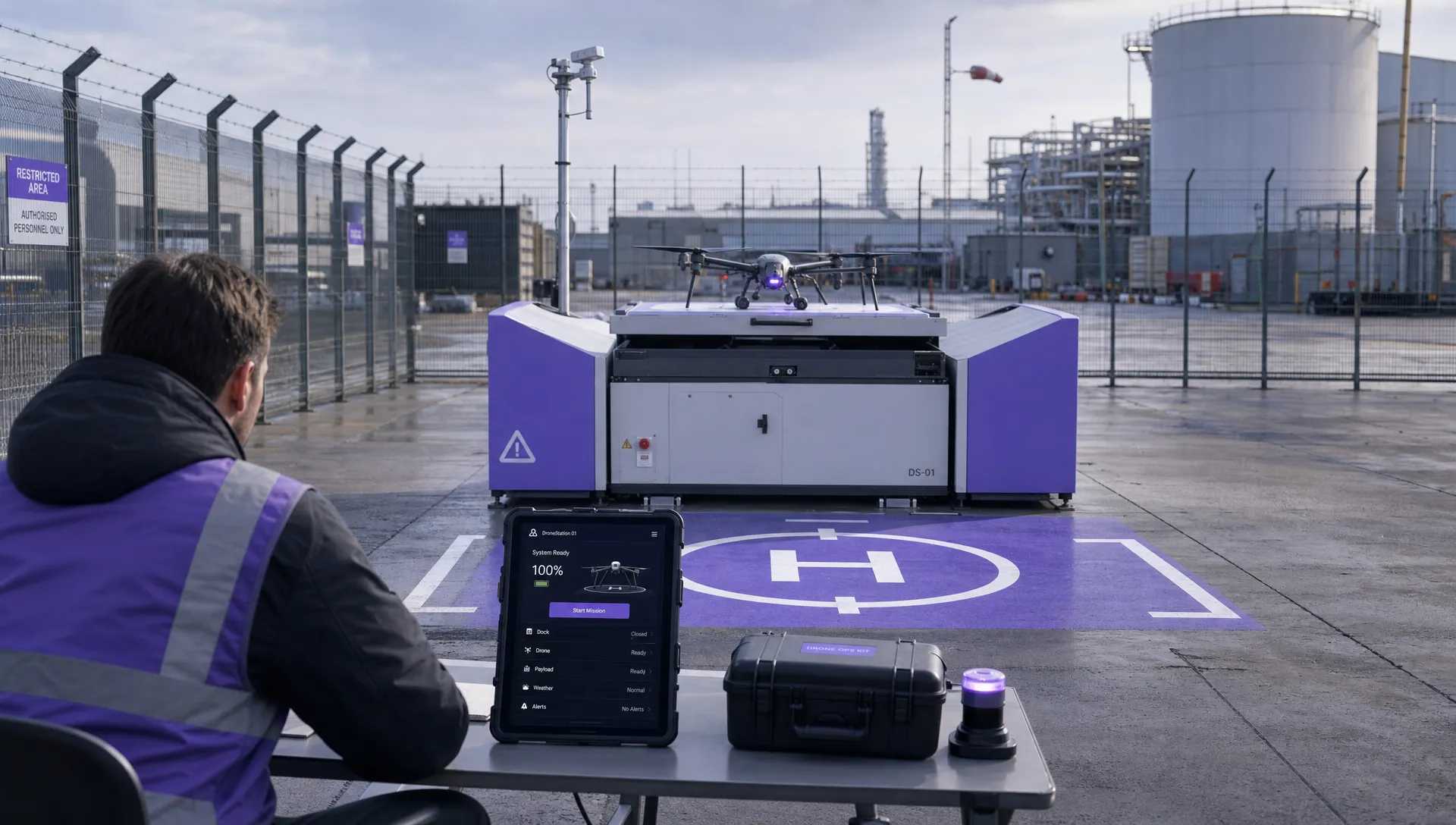 FAA BVLOS Waivers Granted: What Successful Cases Show →