
Top Drone Fleet Management Software for Business
Taking Your Drone Operations to the Next Level
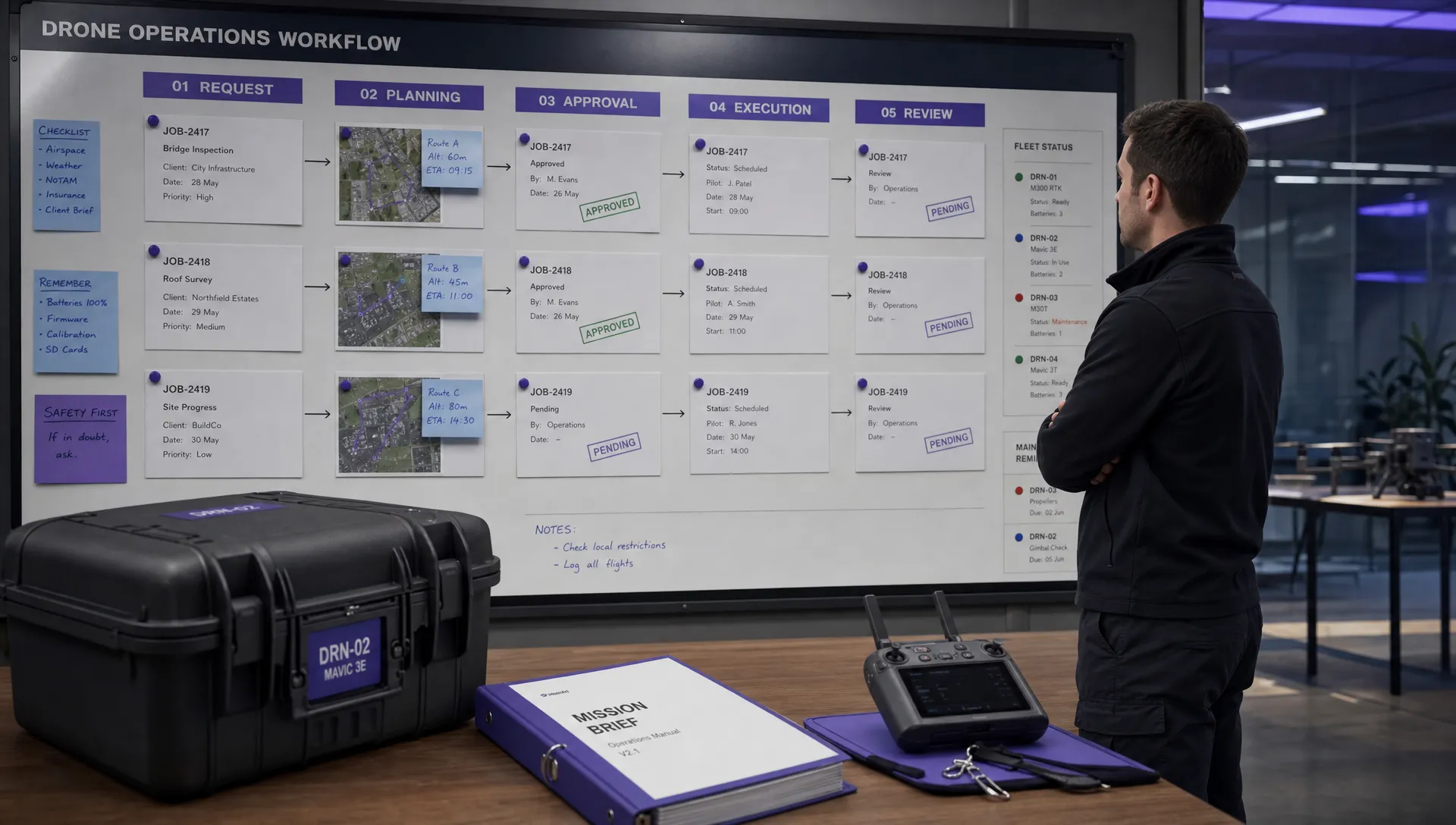
Managing multiple drones, pilots, and missions gets complicated. Effectively tracking flight logs, maintaining aircraft, and ensuring regulatory compliance quickly becomes overwhelming. This listicle presents seven leading drone fleet management software solutions to simplify these complexities. Discover how these tools can streamline your workflow, improve data analysis, and boost your operational efficiency in 2025 and beyond. We'll cover Dronedesk, DroneDeploy, Airdata UAV, Skyward, Kittyhawk (now Aloft), FlytBase, and Propeller.
1. Dronedesk
Dronedesk stands out as a leading drone operations management platform designed to streamline workflows for drone professionals. From individual pilots to large enterprises, Dronedesk tackles the complexities of drone operations by centralizing client management, flight planning, fleet maintenance, and regulatory compliance, ultimately freeing up valuable time and resources. Imagine a scenario where a drone service provider needs to manage multiple client projects, track flight logs for different pilots, ensure regulatory compliance, and generate insightful reports for stakeholders. Dronedesk simplifies these tasks, offering a unified dashboard to manage all aspects of the operation. For a surveyor using drones for aerial mapping, Dronedesk can significantly reduce pre-flight planning time by integrating airspace information and automating flight logging, allowing them to focus on data acquisition and analysis.

Key features of Dronedesk include its intuitive flight planning tools, real-time airspace monitoring with proximity alerts, detailed flight logging, and automated reporting. The platform’s direct integration with DJI drones allows for seamless data synchronization, simplifying pre-flight checks, data transfer, and maintenance tracking. Learn more about Dronedesk and its robust features designed to optimize fleet management. Dronedesk’s focus on streamlining workflows makes it particularly beneficial for time-sensitive operations like emergency response or infrastructure inspection, where quick deployment and accurate data are crucial.
While pricing details aren't explicitly available on the main website, Dronedesk offers scalable pricing plans tailored for solo operators, small teams, and enterprise-level operations. This flexibility allows businesses to choose a plan that best suits their needs and budget. Though technical requirements are not readily available, the platform is web-based, suggesting compatibility across various devices with internet access. Implementation involves creating an account, connecting your drone(s), and configuring the system to match your operational requirements. The intuitive interface and robust customer support ease the transition for users, even those migrating from traditional spreadsheet-based management.
Pros:
- All-in-one platform for client, fleet, and team management, encompassing flight planning, execution, and logging.
- Direct DJI integration facilitates seamless data synchronization and enhances safety through advanced airspace intelligence.
- Scalable pricing caters to a wide range of users, from individual pilots to large organizations.
- Powerful reporting tools simplify financial oversight and streamline asset maintenance.
- High user satisfaction and robust customer support contribute to a positive user experience.
Cons:
- Primary DJI drone integration may limit compatibility with other drone brands.
- Users accustomed to traditional management methods might experience an initial learning curve.
Dronedesk deserves its place on this list due to its comprehensive approach to drone fleet management. It tackles the multifaceted challenges faced by drone operators, providing a centralized platform to improve efficiency, enhance safety, and ensure compliance. Its commitment to user satisfaction and scalable pricing model makes it a valuable tool for anyone serious about optimizing their drone operations. You can explore Dronedesk and its features further on their website.
2. DroneDeploy
DroneDeploy is a comprehensive drone fleet management platform ideal for scaling drone operations across various industries. It empowers businesses to plan missions, execute flights, and analyze collected data efficiently. Its powerful mapping and 3D modeling capabilities, coupled with real-time data processing, make it a valuable tool for applications ranging from construction site surveys to agricultural assessments and infrastructure inspections. Integrations with various enterprise systems further enhance its utility for larger organizations. DroneDeploy is designed to handle the complexities of managing multiple drone teams across diverse locations, all while maintaining crucial compliance and safety standards. This makes it suitable for a broad audience, from solo drone operators to enterprise-level drone program managers.

DroneDeploy stands out due to its focus on streamlining the entire drone workflow. Features like automated flight planning and execution significantly reduce manual effort and ensure consistent data acquisition. Real-time data processing and sharing allows stakeholders to access critical information quickly, facilitating faster decision-making. The platform’s advanced analytics and reporting tools go beyond basic data visualization, providing actionable insights for improved operational efficiency. For instance, construction teams can track project progress, identify potential delays, and generate accurate volume calculations. In agriculture, DroneDeploy can be used for crop health monitoring, identifying areas needing irrigation or fertilization, thus optimizing resource allocation. Learn more about DroneDeploy for specific applications in surveying.
The comprehensive fleet management dashboard provides a centralized view of all drone operations, allowing managers to monitor aircraft status, pilot activity, and flight logs. Built-in regulatory compliance tools and airspace intelligence features help ensure safe and legal operations. This is crucial for organizations operating in complex regulatory environments.
Pros:
- Intuitive User Interface: DroneDeploy offers a user-friendly interface suitable for both beginners and experienced drone pilots.
- Strong Integration Capabilities: Seamlessly integrates with existing enterprise systems for streamlined data management.
- Powerful Data Visualization and Analysis Tools: Provides rich data analysis capabilities, enabling users to extract meaningful insights from collected data.
- Excellent Mobile App Functionality: Allows for efficient field operations and real-time data access.
Cons:
- Higher Pricing: Compared to some competitors, DroneDeploy's pricing can be higher, especially for access to advanced features.
- Tiered Subscription Model: Access to advanced features often requires subscribing to higher-tier plans, which may increase costs for smaller businesses.
- Learning Curve: While user-friendly, fully utilizing all of DroneDeploy's features may require some initial training and exploration.
Website: https://www.dronedeploy.com/
While pricing information isn't readily available on the website, it typically follows a tiered subscription model based on the number of users, drones, and required features. Technical requirements include compatible drones, a computer or mobile device with internet access, and, depending on the features used, potentially specific software or hardware integrations. DroneDeploy is a robust solution, offering a valuable suite of tools for efficient drone fleet management and data analysis, making it a worthy contender for businesses looking to scale their drone operations.
3. Airdata UAV
Airdata UAV stands out as a robust cloud-based drone fleet management solution specifically designed to streamline operations, meticulously track maintenance, and ensure regulatory compliance. This platform is a valuable asset for a wide range of users, from solo drone operators to enterprise-level teams, thanks to its automated flight logging, real-time data analysis, and comprehensive fleet health monitoring. Imagine having a digital command center for your drones, providing actionable insights to maximize efficiency and minimize downtime. That's the power of Airdata UAV. For instance, a drone service provider inspecting cell towers can leverage Airdata to automatically log flights, track pilot certifications, and schedule preventative maintenance on their fleet, ensuring smooth and compliant operations. Similarly, a surveyor using drones for mapping can benefit from the detailed battery analytics to optimize flight plans and minimize the risk of in-flight failures.

One of Airdata UAV's key strengths lies in its preventative maintenance capabilities. The platform offers automated alerts for upcoming maintenance tasks based on flight hours, component age, and other relevant metrics. This allows drone operators to proactively address potential issues before they escalate into costly repairs or in-flight failures. Detailed battery analytics provide insights into cycle counts, discharge rates, and overall battery health, helping extend battery lifespan and optimize performance. Furthermore, Airdata UAV assists with compliance documentation and reporting, simplifying the process of adhering to complex regulations. This feature is invaluable for businesses operating in regulated industries, ensuring they meet all necessary requirements. Learn more about Airdata UAV and its flight log features.
Airdata UAV supports a wide range of drone manufacturers, making it a versatile solution for diverse fleets. Its focus on operational efficiency, maintenance tracking, and compliance makes it particularly well-suited for professional drone operations. While pricing information isn't readily available on the website, they offer different tiers to cater to various needs and budgets. Technical requirements are minimal, primarily requiring a stable internet connection for data syncing and access to the web-based platform.
Features:
- Automated flight logging and record-keeping
- Comprehensive fleet health monitoring and maintenance tracking
- Pilot management and certification tracking
- Detailed battery analytics and lifecycle management
- Compliance documentation and reporting tools
Pros:
- Excellent maintenance tracking and alerting system
- Comprehensive battery health analysis
- Strong focus on regulatory compliance
- Supports a wide range of drone manufacturers
Cons:
- Limited mapping and data processing capabilities compared to specialized mapping platforms (e.g., DroneDeploy, Pix4D). For heavy mapping workloads, consider integrating Airdata UAV with a dedicated mapping software.
- Some advanced features are only available in premium tiers. Carefully evaluate your needs to choose the appropriate subscription level.
- The user interface can be complex for new users. Take advantage of the available tutorials and documentation to get up to speed quickly.
Website: https://airdata.com/
Airdata UAV deserves its place on this list because it offers a powerful and comprehensive solution for managing drone fleets, focusing on the critical aspects of operations, maintenance, and compliance. While it might not be the ideal choice for users requiring advanced mapping features, its strengths in preventative maintenance and regulatory compliance make it a top contender for professional drone operations.
4. Skyward, A Verizon company
Skyward, a Verizon company, positions itself as a comprehensive drone operations management platform built for scaling enterprise drone programs. It offers a suite of tools covering flight planning, risk assessment, airspace intelligence, fleet management, and regulatory compliance, all backed by Verizon's robust network infrastructure. This makes it a strong contender for organizations looking for a secure, scalable, and connected solution.
Practical Applications and Use Cases:
Skyward excels in scenarios requiring meticulous planning, regulatory adherence, and real-time operational oversight. Think:
- Large-scale infrastructure inspections: Managing multiple drone teams inspecting power lines, pipelines, or cell towers across a wide geographical area. Skyward's airspace intelligence and connected operations features shine here.
- Public safety operations: Utilizing drones for search and rescue, accident reconstruction, or surveillance requires secure communication and detailed record-keeping. Skyward offers the necessary tools for these critical missions.
- Precision agriculture: Monitoring crop health, spraying pesticides, and conducting aerial surveys benefit from automated flight planning and data management capabilities.
- Enterprise drone delivery programs: Skyward's focus on scalability and compliance makes it a potential fit for organizations building out complex delivery networks.
Key Features and Benefits:
- Comprehensive Airspace Intelligence: Skyward provides real-time airspace information, including temporary flight restrictions (TFRs), manned aircraft activity, and controlled airspace boundaries. This helps pilots make informed decisions and operate safely.
- Detailed Flight Planning and Risk Assessment: The platform allows for meticulous flight planning with integrated risk assessment tools, allowing operators to identify and mitigate potential hazards before takeoff.
- Equipment and Personnel Management: Track drone maintenance schedules, pilot certifications, and other crucial operational details within a centralized system.
- Automated Record-Keeping and Compliance: Skyward automatically logs flight data and generates reports, simplifying regulatory compliance and internal audits.
- Verizon Network Integration: Leveraging Verizon's network provides enhanced connectivity for beyond visual line of sight (BVLOS) operations and real-time data transmission.
Pros:
- Strong Enterprise-Grade Security and Scalability: Designed to meet the demands of large organizations with robust security protocols and scalable infrastructure.
- Excellent Regulatory Compliance Tools: Streamlines compliance with FAA regulations and other relevant guidelines.
- Robust Planning and Risk Assessment Capabilities: Provides in-depth tools for pre-flight planning and risk mitigation.
- Verizon Network Integration for Enhanced Connectivity: Offers reliable communication links for extended range operations.
Cons:
- Higher Price Point for Enterprise Customers: Skyward's enterprise-focused features come at a premium, potentially making it less accessible for smaller businesses or individual operators. Pricing is not publicly available and requires contacting their sales team.
- Some Users Report Limitations in Customization Options: While offering a comprehensive feature set, some users have noted limited flexibility in customizing certain aspects of the platform.
- Less Specialized in Data Processing Compared to Mapping-Focused Platforms: While capable of basic data management, Skyward may not be the ideal choice for operations heavily reliant on complex data processing and analysis. Users might need to integrate with third-party software for advanced mapping and analytics.
Implementation and Setup Tips:
Implementing Skyward typically involves a consultation with their team to determine the specific needs of your organization. They provide onboarding and training to ensure smooth adoption of the platform. Integrating existing drone hardware and software systems is possible, but requires careful planning and coordination.
Why Skyward Deserves Its Place on This List:
Skyward earns its spot due to its robust enterprise-grade features, strong focus on security and compliance, and unique integration with Verizon's network. For organizations requiring scalable, secure, and connected drone operations management, particularly those operating in complex environments or conducting BVLOS operations, Skyward offers a compelling solution.
Website: https://skyward.io/
5. Kittyhawk (Now Aloft)
Kittyhawk, now operating under the name Aloft, stands out as a premier drone operations platform with a strong emphasis on airspace intelligence, regulatory compliance, and efficient flight logging. This makes it an invaluable tool for drone operators navigating the increasingly complex regulatory landscape. Aloft simplifies pre-flight planning by providing real-time airspace data, automating LAANC (Low Altitude Authorization and Notification Capability) authorizations, and offering comprehensive fleet management tools. Its focus on seamless regulatory workflows and integration with the FAA streamlines compliance processes, proving especially beneficial for operations in congested or restricted airspace.

Aloft caters to a wide range of users, from solo drone operators capturing breathtaking aerial footage to large enterprise teams managing complex drone operations. For instance, a professional photographer can utilize Aloft's mobile app to quickly check airspace restrictions and obtain LAANC authorization before a shoot, ensuring a smooth and legal operation. Meanwhile, a utility inspector can leverage the platform's maintenance tracking features to schedule preventative maintenance and monitor the health of their drone fleet, minimizing downtime and maximizing operational efficiency. Surveyors can benefit from the flight logging capabilities to meticulously document flight paths and data acquisition points, guaranteeing data integrity and project accuracy.
Key Features and Benefits:
- Real-time Airspace Intelligence and LAANC Authorization: Stay informed about temporary flight restrictions (TFRs), no-fly zones, and other airspace hazards with up-to-the-minute data. The automated LAANC authorization process significantly reduces the time and effort required to obtain flight approvals in controlled airspace.
- Flight Logging and Operations Management: Log flight details, including pilot information, aircraft data, and flight paths, for comprehensive record-keeping and analysis. Manage multiple drones and pilots within a single platform, streamlining operations and improving team coordination.
- Team and Permission Management: Assign roles and permissions to team members to control access to sensitive data and maintain operational security. This is crucial for larger organizations managing multiple drone teams and projects.
- Maintenance Tracking and Fleet Health Monitoring: Schedule and track drone maintenance, ensuring that aircraft are always in optimal condition. Monitor battery health, flight hours, and other critical parameters to prevent costly repairs and maximize the lifespan of your drone fleet.
- Regulatory Compliance Workflows and Documentation: Streamline compliance processes by automating documentation and reporting requirements. Maintain a comprehensive audit trail of all flight operations to demonstrate adherence to regulatory guidelines.
Pros:
- Industry-leading airspace intelligence and authorization tools
- Streamlined LAANC approval process
- Intuitive mobile app experience
- Strong focus on regulatory compliance
Cons:
- Less comprehensive data analysis capabilities compared to specialized platforms like AirData or DroneDeploy.
- Premium features, such as advanced fleet management and reporting tools, require higher-tier subscriptions.
- Limited advanced mapping functionality compared to platforms specifically designed for mapping and surveying.
Website: https://www.aloft.ai/
Pricing and Technical Requirements: Aloft offers various subscription tiers tailored to different user needs, ranging from free individual plans to enterprise-level solutions. Detailed pricing information is available on their website. The platform is accessible via web browser and mobile apps for iOS and Android devices. Specific technical requirements for optimal performance will depend on the chosen subscription tier and features used.
Implementation/Setup Tips:
- Begin by creating a free account and exploring the platform's core features.
- Familiarize yourself with the airspace intelligence tools and LAANC authorization process.
- Configure your drone fleet and pilot profiles within the platform.
- Explore the various integrations available to connect Aloft with other drone software and hardware.
- Consider upgrading to a paid subscription to unlock advanced features based on your specific operational needs.
Aloft earns its place on this list due to its user-friendly interface, powerful airspace management tools, and unwavering commitment to regulatory compliance. While it may not offer the same depth of data analysis capabilities as some specialized platforms, its focus on streamlining flight operations and simplifying regulatory hurdles makes it an invaluable asset for a wide range of drone operators.
6. FlytBase
FlytBase distinguishes itself as a robust drone automation platform tailored for sophisticated autonomous fleet operations and remote drone management. It's not just about flying a single drone; FlytBase empowers users to orchestrate complex missions involving multiple drones, particularly in industrial settings. Imagine coordinating a swarm of drones for security patrols across a large facility, or automating inventory checks in a sprawling warehouse – these are the scenarios where FlytBase truly shines. This platform offers a compelling blend of ready-to-use solutions and developer tools, making it suitable for both immediate deployment and custom application development.

FlytBase's strength lies in its advanced automation capabilities. Beyond visual line of sight (BVLOS) operations are readily supported, enabling drones to fly beyond the operator's direct vision, significantly expanding the range and complexity of missions. Multi-drone coordination features allow users to manage and control fleets of drones, executing synchronized tasks with precision. This positions FlytBase as a valuable tool for enterprise drone operations managers, surveyors, utility inspectors, and drone service providers seeking to scale their operations.
Key features include remote drone operations and control via 4G/5G/LTE networks, autonomous flight capabilities with comprehensive mission planning tools, and multi-drone coordination and fleet automation. The platform also provides API and SDK access, offering developers the flexibility to build custom drone applications tailored to specific industry needs. Furthermore, its integration with both edge and cloud computing resources ensures efficient data processing and analysis for real-time decision-making.
While FlytBase provides robust features, it's important to acknowledge its complexity. The platform's advanced capabilities come with a steeper learning curve for non-technical users. Setting up and integrating FlytBase may require a higher level of technical expertise compared to consumer-oriented drone software. This is a trade-off for the platform's power and flexibility, making it more suitable for users with some technical proficiency or organizations with dedicated technical teams.
Pros:
- Advanced automation and autonomy capabilities, including BVLOS support
- Powerful remote operation functionality over cellular networks
- Strong developer tools (APIs and SDKs) and customization options
- Designed for industrial and enterprise applications with a focus on scalability
Cons:
- Steeper learning curve for non-technical users
- Higher complexity for setup and integration
- Requires more technical expertise than consumer-oriented platforms
Pricing: FlytBase offers tiered pricing plans based on features and usage. Contact their sales team for detailed pricing information.
Technical Requirements: System requirements vary depending on the chosen deployment method (cloud or on-premise) and the complexity of the drone operations. Consulting FlytBase's documentation and support team is recommended for specific technical requirements.
Implementation Tips:
- Start with a clear understanding of your specific use case and operational requirements.
- Leverage FlytBase's documentation and support resources to familiarize yourself with the platform's features.
- Consider engaging FlytBase's professional services team for assistance with complex deployments or custom integrations.
Comparison with Similar Tools: While other platforms offer drone management features, FlytBase stands out with its focus on advanced automation, BVLOS operations, and multi-drone coordination. This makes it a strong contender for industrial and enterprise applications where scalability and complex autonomous operations are paramount.
Website: https://flytbase.com/
FlytBase deserves its place on this list due to its specialization in complex drone automation scenarios. It's a powerful tool for organizations and professionals looking to push the boundaries of drone technology in industrial applications. While it caters to a more technically inclined audience, its capabilities represent the future of drone fleet management.
7. Propeller
Propeller (https://www.propelleraero.com/) distinguishes itself as a powerful drone data platform specializing in 3D mapping and analytics, particularly within the construction, mining, and earthwork sectors. While not a comprehensive fleet management solution in the same vein as some other entries on this list, its robust data processing capabilities make it an invaluable tool for professionals requiring highly accurate measurements and progress tracking. This focus on precision and specialized workflows earns Propeller a spot on this list, especially for those in its target industries.
Propeller empowers users to transform drone-captured imagery into actionable insights. Imagine overseeing a large construction site: with Propeller, you can easily generate high-precision 3D models for accurate volumetric calculations of earth moved, materials stockpiled, and overall site progress. This allows for precise estimations, efficient project management, and minimized discrepancies between planned and actual work completed. In mining operations, Propeller facilitates accurate surveys, tracks extraction volumes, and monitors slope stability – all critical for safe and efficient operations.
Key Features and Benefits:
- High-precision 3D mapping and visualization: Propeller’s strength lies in its ability to generate highly detailed 3D models from drone imagery. This allows for comprehensive site visualization and detailed analysis.
- Volumetric measurement and earthwork calculations: Accurately measure stockpile volumes, calculate cut and fill quantities, and track earthwork progress with ease, saving time and resources compared to traditional surveying methods.
- Progress tracking and timeline comparisons: Overlay 3D models from different dates to visualize progress, identify potential issues, and ensure projects stay on schedule. This feature is particularly useful for demonstrating progress to clients or stakeholders.
- Collaborative tools for team data sharing and annotation: Propeller facilitates seamless collaboration by allowing teams to share data, annotate 3D models, and communicate effectively within a centralized platform.
- AeroPoints integration for survey-grade accuracy: Integrating with AeroPoints ground control points (GCPs) enhances the accuracy of the 3D models, achieving survey-grade precision essential for critical measurements.
Pros:
- Industry-leading accuracy for volumetric measurements: Propeller's focus on accuracy makes it ideal for industries where precise measurements are paramount.
- Excellent visualization and comparison tools: The platform's intuitive interface makes it easy to visualize and compare data, even for non-technical users.
- User-friendly interface for non-technical users: While powerful, Propeller remains accessible to users without extensive technical expertise.
- Specialized solutions for construction and mining workflows: The platform's tailored features address the specific needs of these industries, streamlining workflows and maximizing efficiency.
Cons:
- More focused on data processing than comprehensive fleet management: While offering some workflow management features, Propeller doesn't provide comprehensive tools for fleet maintenance, pilot scheduling, or flight logging like some other platforms.
- Higher cost compared to general-purpose mapping tools: Due to its specialized features and high accuracy, Propeller comes at a premium compared to more basic mapping software. Pricing is typically quote-based and varies based on the specific needs and usage of the customer. Contact Propeller directly for accurate pricing.
- Primarily designed for specific industries rather than general applications: While powerful within its niche, Propeller may not be the best fit for drone operators outside of construction, mining, and related industries.
Implementation and Setup Tips:
- Plan your drone flights carefully: Ensure adequate image overlap and appropriate flight altitude for optimal 3D model generation.
- Utilize AeroPoints for enhanced accuracy: Investing in AeroPoints significantly improves the accuracy of your measurements, particularly for critical applications.
- Explore the platform's tutorials and resources: Propeller provides comprehensive documentation and support to help users get started and maximize the platform's potential.
For professionals in construction, mining, and earthwork operations, Propeller's powerful data processing and analysis tools make it a valuable asset. While its focus is narrower than some full-fleet management platforms, its specialized features and industry-leading accuracy provide substantial benefits for its target audience. If precise measurements and streamlined workflows are paramount, Propeller deserves serious consideration.
Drone Fleet Management Software: 7-Point Comparison
| Platform | Core Features (✨) | User Quality (★) | Value Proposition (💰) | Target Audience (👥) |
|---|---|---|---|---|
| 🏆 Dronedesk | All-in-one management, direct DJI sync | 5.0 Rating, Stellar Support | Scalable Plans, 50% time-saving | Solo to Enterprise |
| DroneDeploy | Mapping & 3D modeling, automated flight planning | Intuitive UI, robust analytics | Higher Tier, enterprise integration | Construction, Agriculture, Energy, Mining |
| Airdata UAV | Fleet health, maintenance alerts, real-time logs | Reliable & compliant | Mid-Priced, safety-driven | Drone Fleet Operators |
| Skyward, A Verizon company | Advanced airspace intelligence, risk assessment, automated record-keeping | Secure & compliant | Enterprise Premium, connected ops | Enterprises & Regulators |
| Kittyhawk (Now Aloft) | Real-time airspace data, LAANC authorization, comprehensive logging | Streamlined compliance | Premium Options, regulatory ease | Commercial Pilots & Operators |
| FlytBase | Autonomous flight, multi-drone coordination, API/SDK for custom applications | Innovative automation | Custom Pricing, industrial focus | Industrial & Tech Developers |
| Propeller | High-precision 3D mapping, volumetric measurement, earthwork analytics | Precision mapping | Industry-Specific, accurate analytics | Construction & Mining |
Choosing the Right Drone Fleet Management Software
From flight logging and maintenance tracking to data analysis and team collaboration, the right drone fleet management software can significantly enhance the efficiency, safety, and profitability of your drone operations. We've explored seven leading platforms – Dronedesk, DroneDeploy, Airdata UAV, Skyward, Kittyhawk (now Aloft), FlytBase, and Propeller – each offering a unique set of features catering to different needs and budgets. Key takeaways include the importance of scalable solutions for growing fleets, the power of automated data processing for actionable insights, and the increasing need for robust security and compliance features.
Choosing the right drone fleet management software involves careful consideration of various factors. A comprehensive guide to software evaluation criteria from Pickalternative offers valuable insights into the key aspects to consider in your 2025 software selection process. Think about your specific requirements, such as the size of your fleet, the complexity of your operations, the types of data you need to collect and analyze, your budget constraints, and the necessity for integration with your existing systems. Implementing these tools effectively requires careful planning, team training, and ongoing evaluation to ensure the software continues to meet your evolving needs.
The drone industry is rapidly evolving, and staying ahead of the curve requires leveraging the best tools available. By carefully evaluating your options and choosing the right drone fleet management software, you can optimize your workflows, reduce operational costs, and unlock the full potential of your drone program. Ready to streamline your drone operations and elevate your business? Explore the powerful features of Dronedesk, a comprehensive drone fleet management solution designed to empower drone teams of all sizes. From flight planning and maintenance scheduling to data analysis and reporting, Dronedesk provides the tools you need to succeed in the ever-evolving drone landscape.
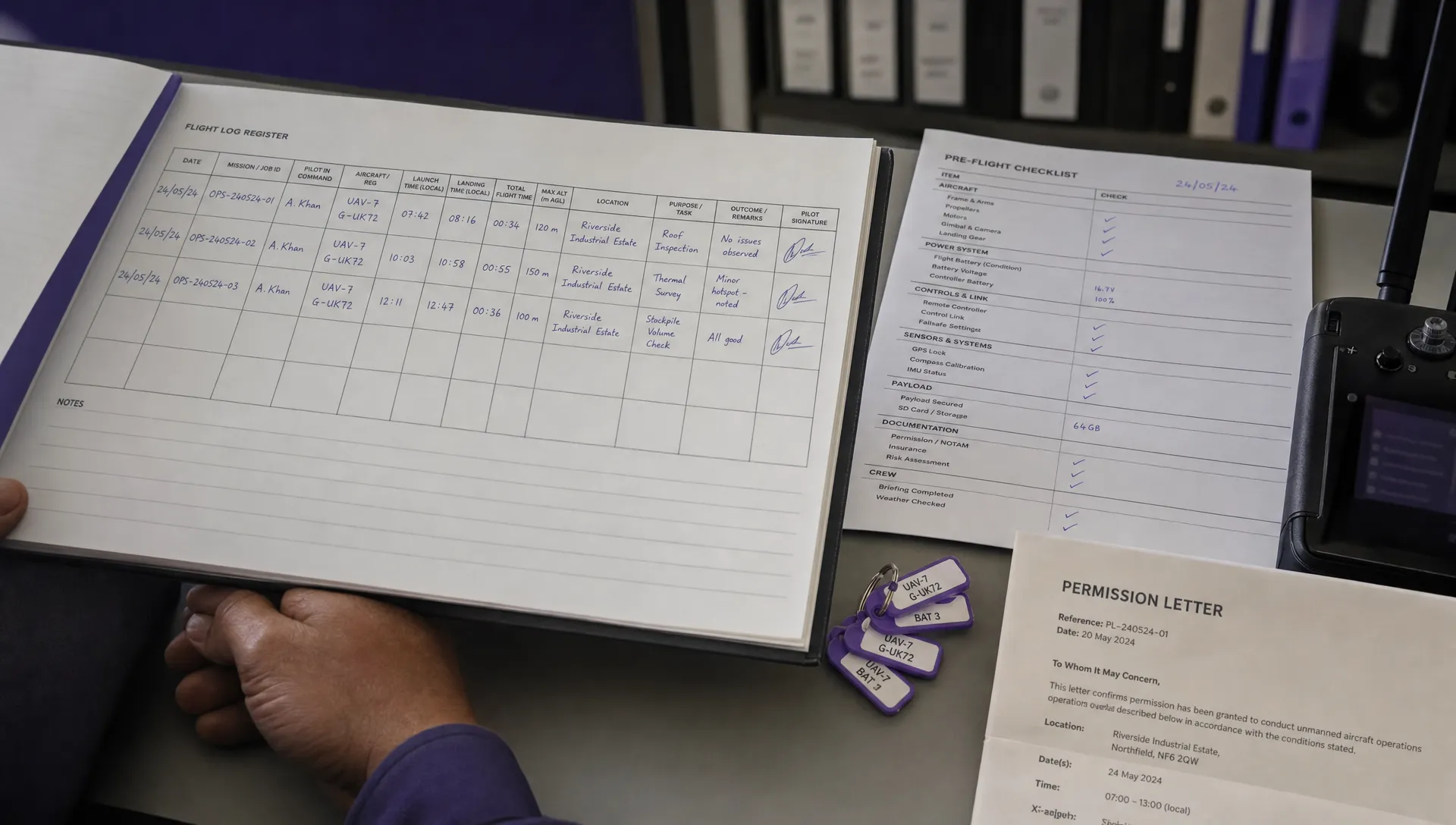 How to Build a Drone Pilot Flight Log That Is Audit Ready →
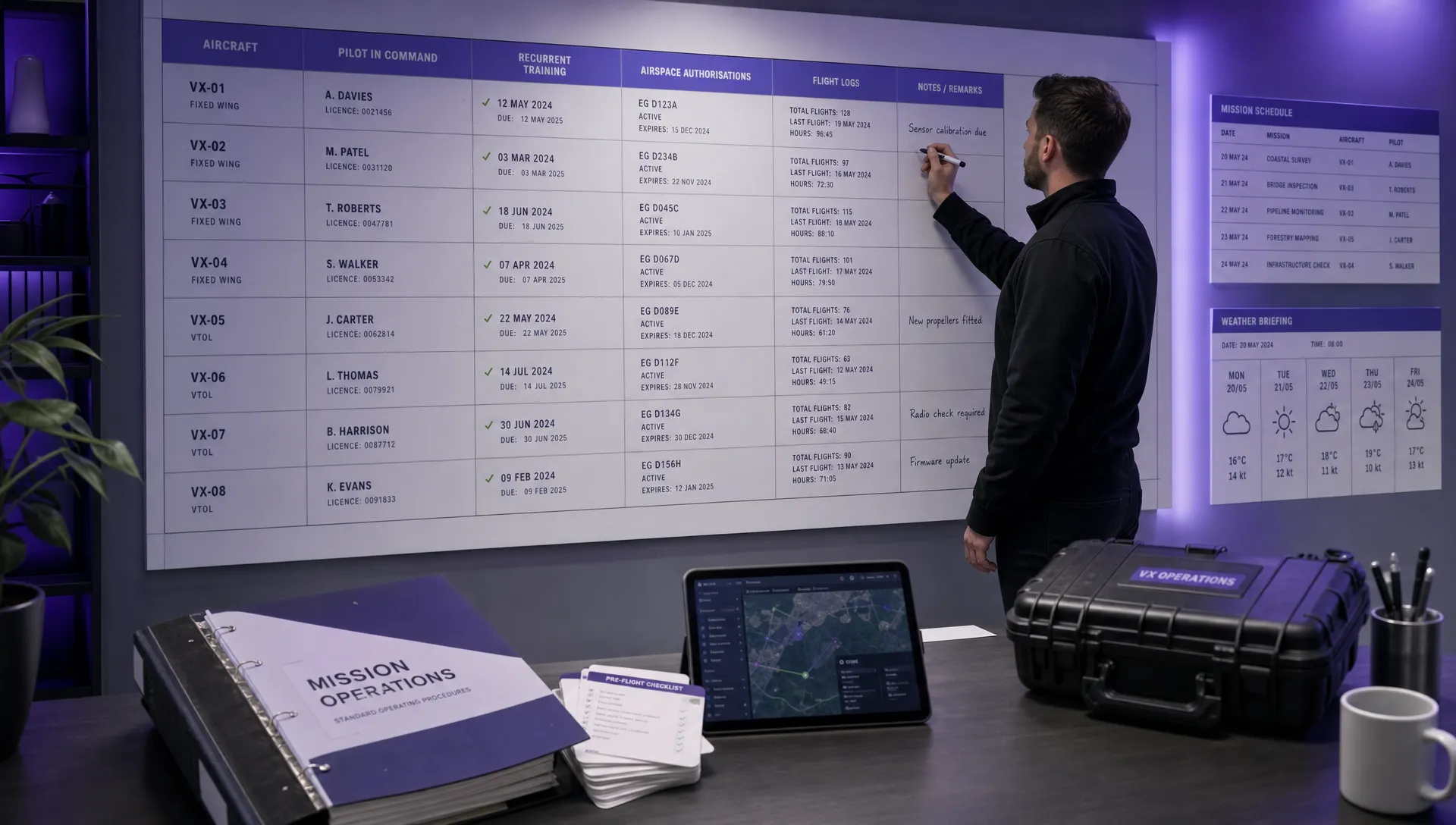 FAA Drone Licence Requirements for Commercial Pilots →
 FAA BVLOS Waivers Granted: What Successful Cases Show →
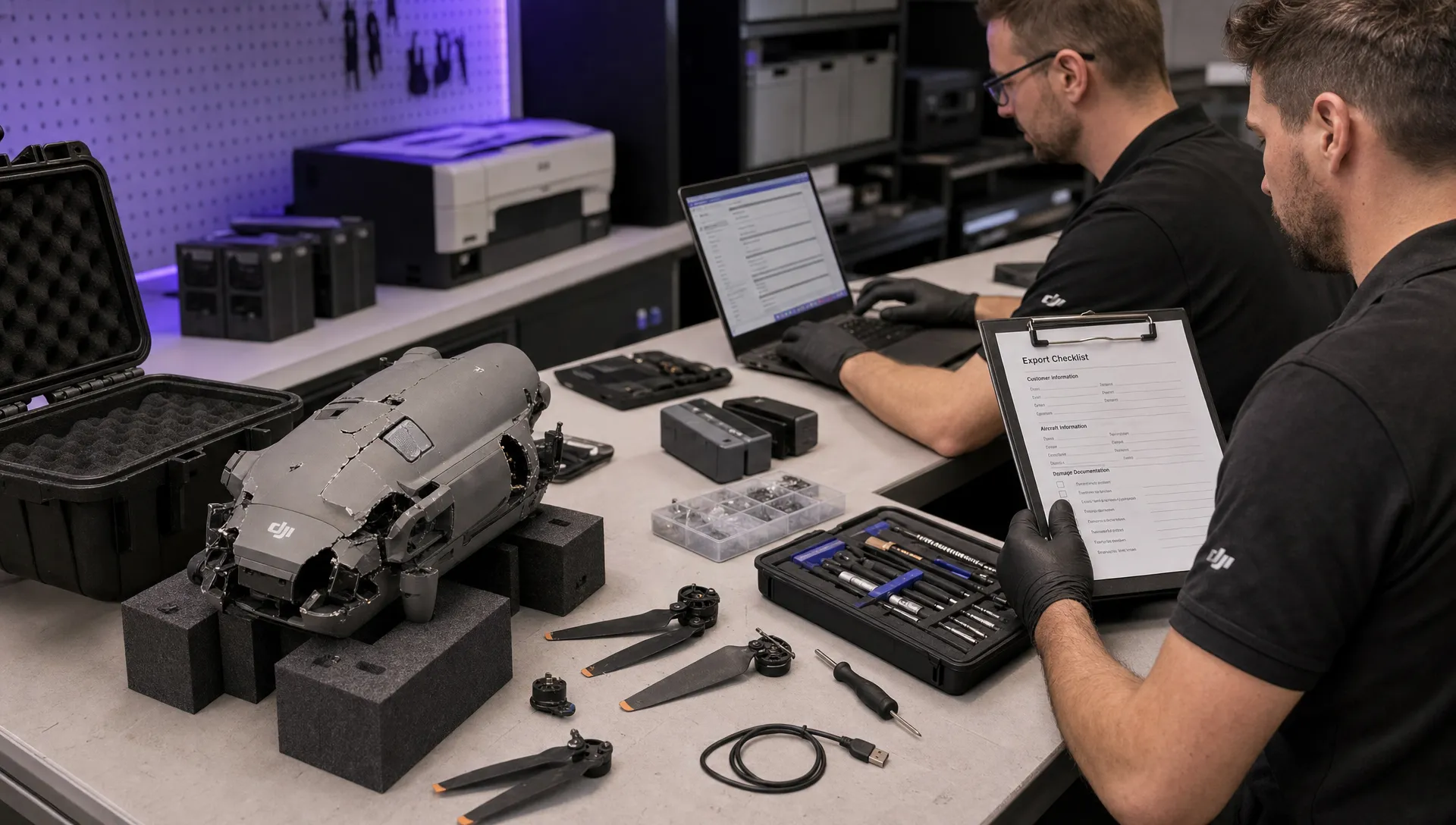 How to Export DJI Flight Logs for Incident Reviews →
 Drone Safety and Legal Duties for Business Operations →
 EASA Drone Regulations: Open, Specific and Certified Categories →
 What the BVLOS ARC Report Means for UAS Operators →
 Free Drone Pre-Flight Checklist for Commercial Missions →
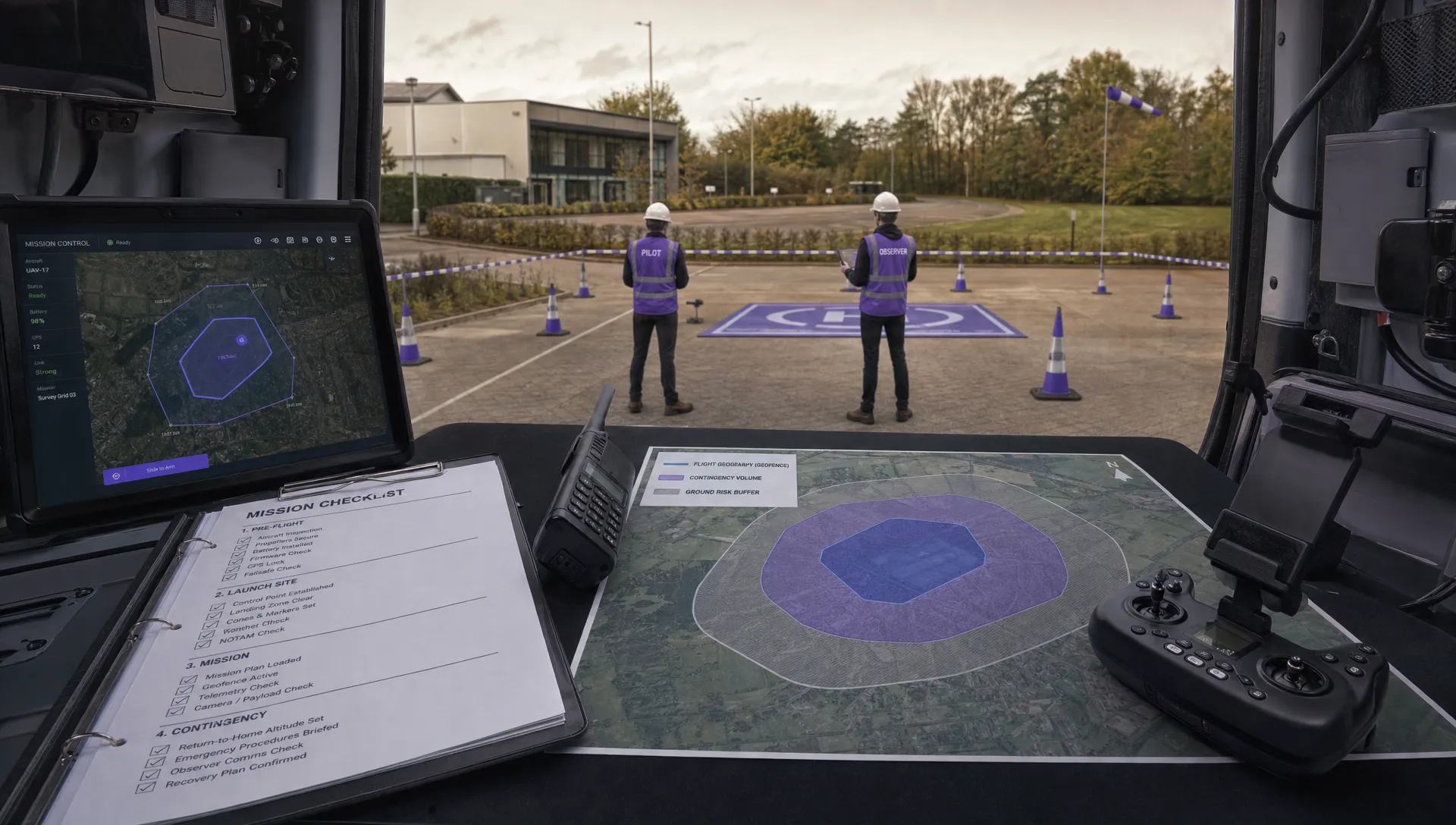 Contingency Volume and Flight Risk Buffer Explained →
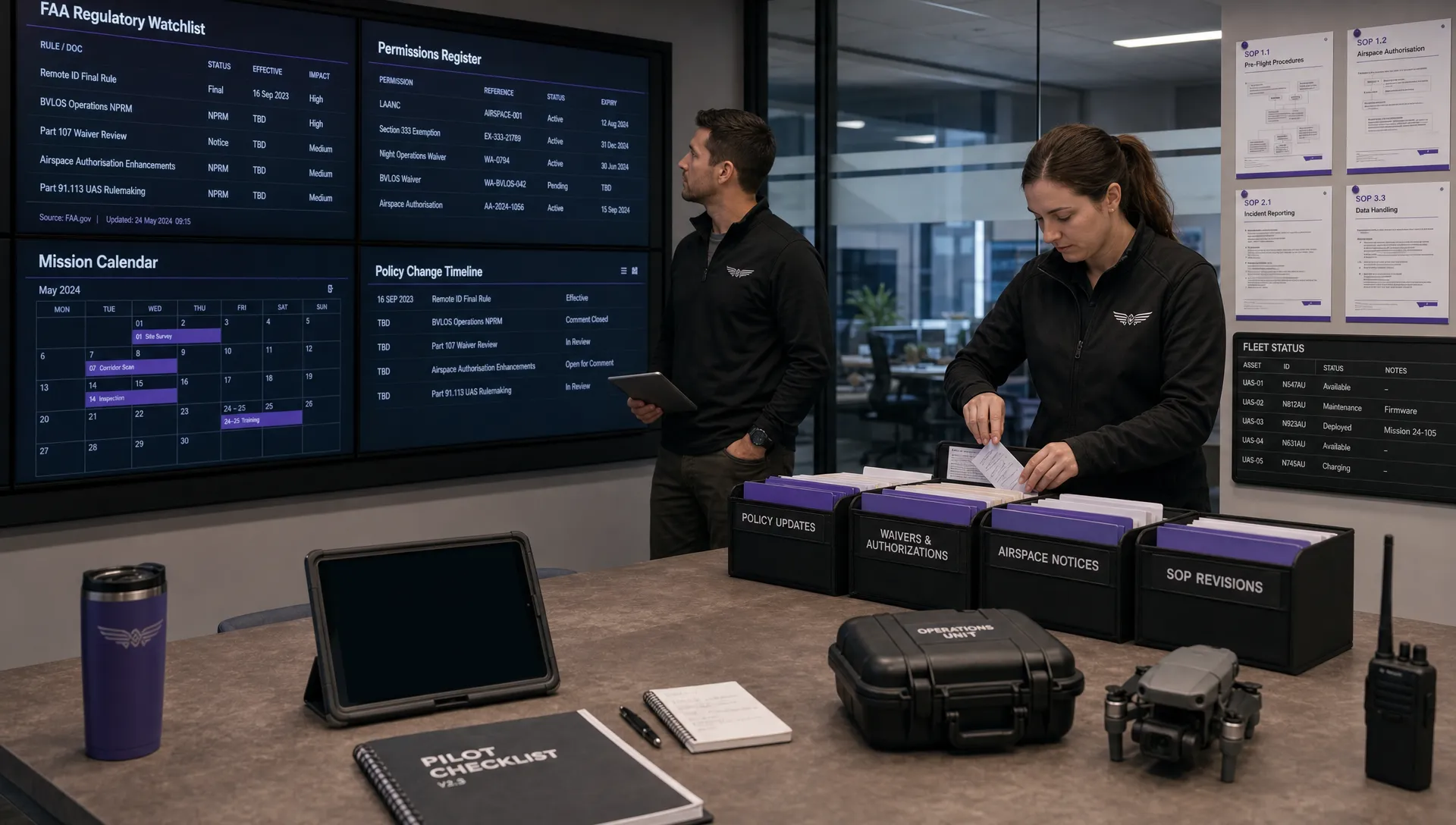 FAA Policy Changes That Commercial Drone Teams Should Track →