
Drone Operations Management - Streamline & Scale Your Business
Drone operations management is the command centre for any serious commercial UAV program. It's what turns a collection of individual flights into a professional, scalable business. Think of it as the comprehensive framework that oversees everything from mission planning and compliance checks to fleet maintenance and data delivery. Frankly, it's a non-negotiable foundation for success in this industry.
What Is Drone Operations Management Really
Imagine trying to run an airline with just pilots and planes. No air traffic control, no maintenance crews, no scheduling department. Absolute chaos, right? That's precisely what commercial drone programs look like without a solid management system in place. It’s so much more than just flying; it's the entire operational backbone ensuring every single mission is safe, compliant, and ultimately, profitable.
At its core, drone operations management is the discipline of organising the three critical pillars of any drone program: people, assets, and processes. It creates a single source of truth, getting rid of the dangerous and wildly inefficient practice of juggling spreadsheets, separate weather apps, and paper logbooks.
This systematic approach answers the crucial operational questions on every job:
- Who is flying? Are they certified, insured, and scheduled correctly for this mission?
- What is flying? Is the drone properly maintained? Are its flight hours logged accurately? Is it the right tool for the job?
- Is the mission legal? Have we run all the necessary airspace checks, completed risk assessments, and accounted for local regulations?
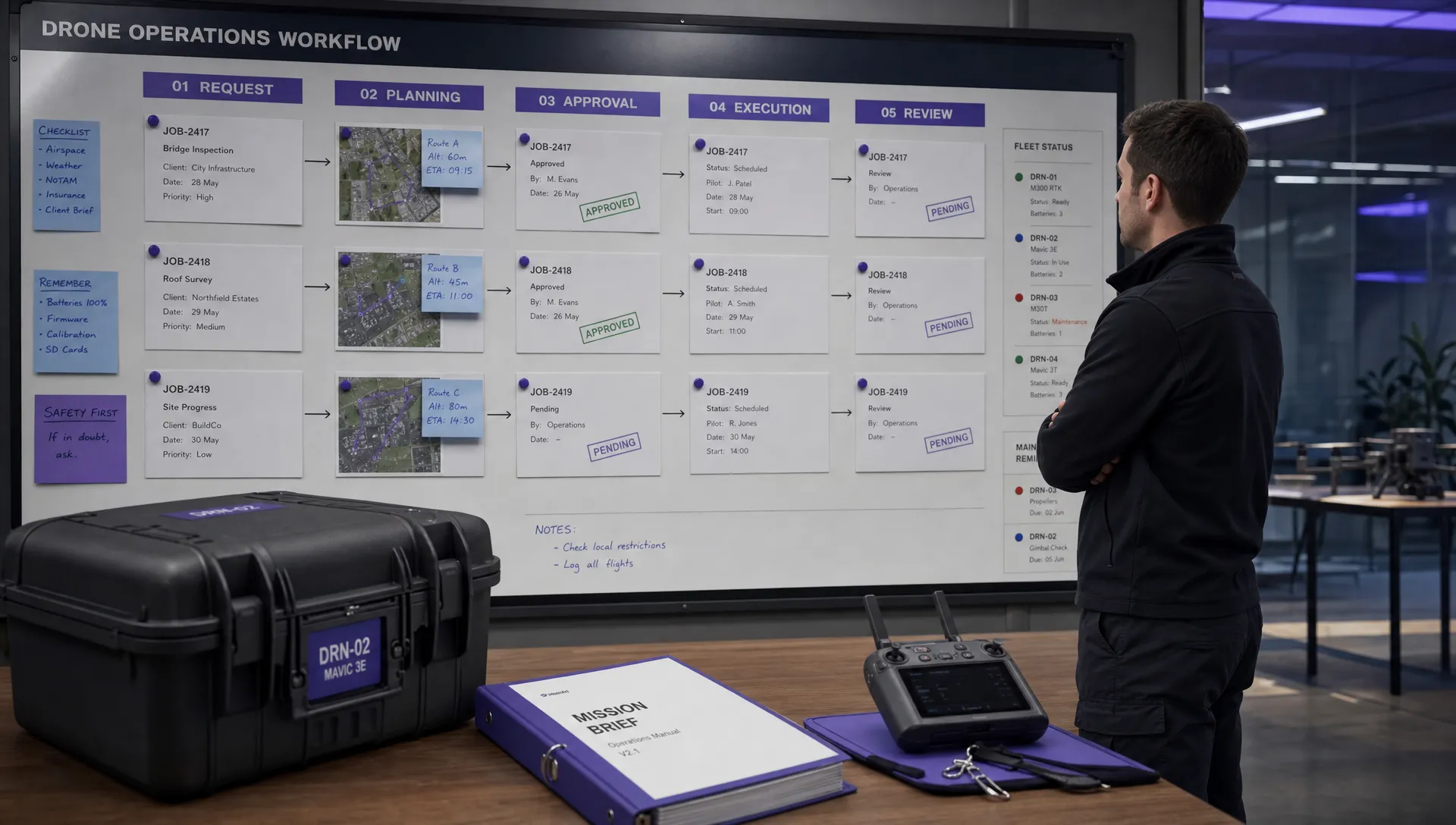
Having a central dashboard view gives you a holistic, real-time look at all your activities.

An integrated platform like this moves you from reactive fire-fighting to proactive management, giving operators complete control and visibility over their entire operation.
To really nail this down, it helps to see these components broken out. A robust system is built on these foundational pillars, each addressing a specific part of the operational puzzle.
Core Pillars of Drone Operations Management
| Pillar | Description | Key Objective |
|---|---|---|
| People Management | Organising pilots, crew, and support staff. This includes scheduling, tracking qualifications and certifications, and managing contact details. | Ensure the right person, with the right qualifications, is assigned to every mission. |
| Asset Management | A complete inventory of all drones, batteries, sensors, and other equipment. It involves logging flight hours and scheduling maintenance. | Maintain a safe, airworthy fleet and maximise the lifespan of expensive equipment. |
| Process Management | Standardising workflows for every stage of a mission, from initial planning and risk assessment to flight execution and data delivery. | Create repeatable, compliant, and efficient procedures that guarantee consistent quality and safety across all operations. |
Viewing your operations through the lens of these three pillars helps clarify where you might have gaps and how a dedicated system can fill them, tying everything together into one cohesive whole.
The Shift from Hobby to Profession
Let’s be blunt: without a formal management system, a drone business is just a collection of individual flights. With one, it becomes a scalable operation.
This structure is what allows a solo operator to compete with larger firms on professionalism and reliability. It’s also what enables enterprise teams to maintain consistency and safety across hundreds, or even thousands, of missions. It provides the framework for repeatable success, turning a hobbyist's passion into a professional, bankable service.
A robust management system is the difference between simply owning drones and running a successful drone business. It’s the operational engine that drives safety, efficiency, and growth.
The importance of this discipline is reflected in the industry's explosive growth. The global drone market is projected to hit USD 54.6 billion by 2025, supported by over 33,000 companies. This expansion has created a massive need for systems that can handle the complexity, with the sector adding 126,000 jobs in just the last year. You can discover more insights about the booming drone industry and see the numbers for yourself.
By putting a dedicated management platform at the heart of their business, operators are far better positioned to capture a share of this expanding market—safely and efficiently.
Breaking Down the Four Critical Workflows
Every single successful drone mission, whether it’s a quick real estate shoot or a sprawling infrastructure inspection, is built on four interconnected workflows. Miss one, and the whole operation gets shaky. Think of them as the four legs of a table—if one is weak, the entire structure is unstable.
Getting these processes down is the secret sauce to effective drone operations management. They’re what turn a simple flight into a professional, documented, and repeatable service. It’s the structure you need to guarantee safety, tick all the legal boxes, and deliver consistent, top-notch results every time.
Let’s walk through each one using a real-world example: a detailed survey of a new construction site.
Workflow 1: Mission Planning and Preparation
Long before a drone’s propellers start spinning, the most important work is already underway. Mission planning is the blueprint for success. This is where you map out exactly what the job needs to achieve and how you’ll pull it off safely and efficiently.
For our construction site survey, this first phase involves a few key steps:
- Defining Objectives: The client needs a high-res orthomosaic map to track weekly progress and a 3D model to check against the architectural plans. Simple enough.
- Site Reconnaissance: This means jumping on satellite and mapping tools to scope out the area. You’re looking for potential hazards like cranes or power lines and finding the best spots for takeoff and landing.
- Flight Path Automation: You’ll plan the specific grid pattern the drone needs to fly. This ensures you get complete data coverage and the right image overlap—absolutely crucial for accurate mapping.
This stage is all about meticulous prep. A well-planned mission means fewer surprises in the field and is your first line of defense against things going wrong.

As you can see, the mission's goals directly shape the waypoints and the final flight path, building efficiency right in from the start.
Workflow 2: Compliance and Risk Management
With a solid plan in hand, the next workflow is non-negotiable: making sure the mission is legal and safe. This part involves a deep dive into regulations and a methodical look at everything that could possibly go sideways. Skipping this isn't just unprofessional; it's a huge legal and financial risk.
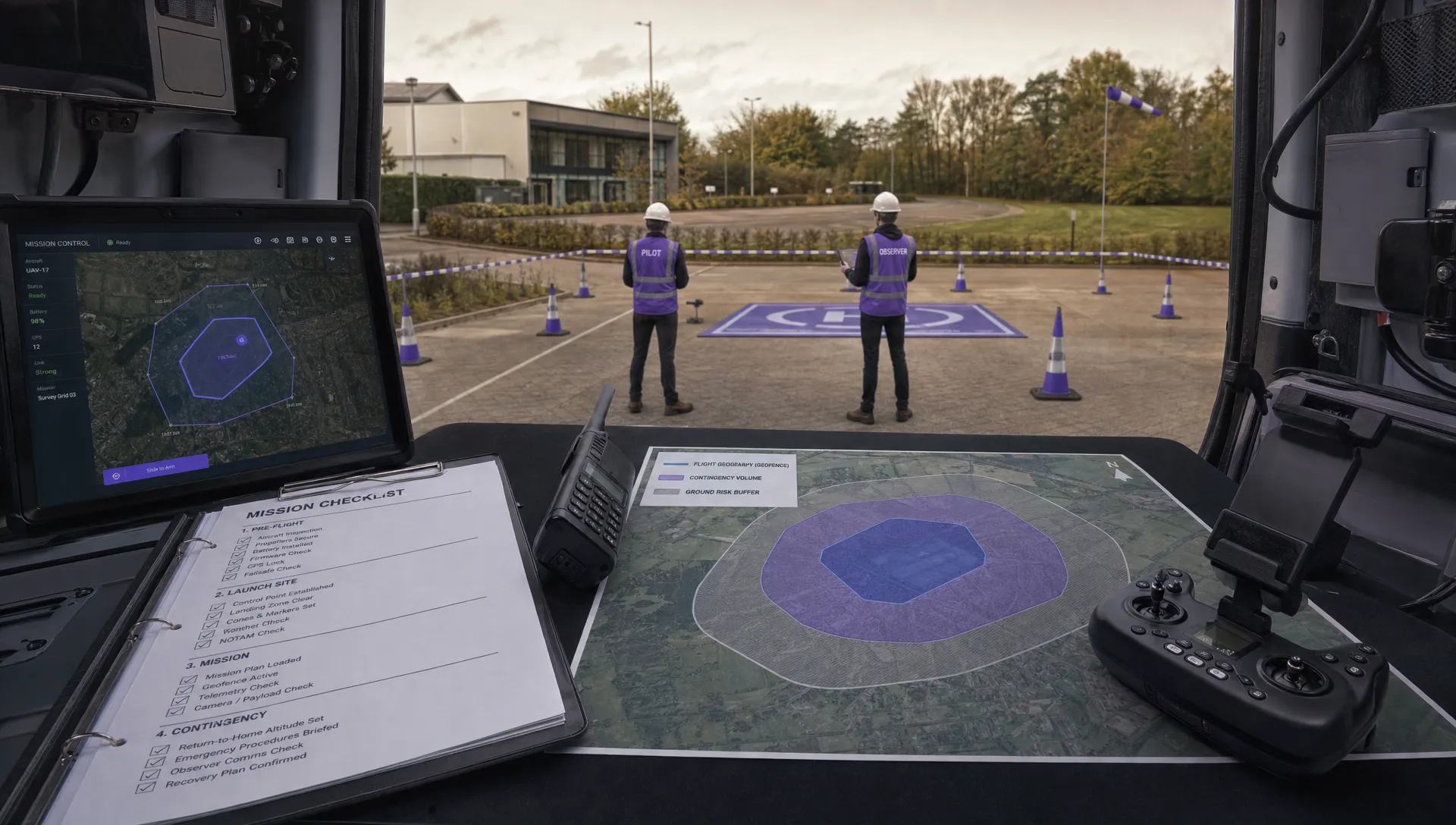
For the construction site job, this means running a series of checks. You’re looking for airspace restrictions, like being too close to an airport or any temporary flight restrictions (TFRs). You'd also complete a site-specific risk assessment, flagging hazards like high winds, public access points, or other aircraft in the area.
A comprehensive risk assessment isn't just a document; it's a dynamic process. It forces you to think through potential failures and establish clear mitigation strategies before they become emergencies.
This is a critical area to get right. For a deeper look, this comprehensive drone risk management guide offers some excellent insights.
Workflow 3: Fleet and Pilot Management
You can have the perfect plan and a bulletproof risk assessment, but without the right gear and the right people, you’re grounded. This workflow is all about the human and hardware elements of your operation. It’s about ensuring both are ready, certified, and properly documented for the task at hand.
Back to our construction project, this workflow confirms:
- Pilot Assignment: Is the assigned pilot certified, properly insured, and familiar with the specific drone and sensor being used?
- Equipment Readiness: Has the drone had its scheduled maintenance? Are all batteries fully charged and logged? Is the camera payload working correctly?
Proper fleet and pilot management creates an unbroken chain of accountability. It gives you a detailed record showing you used a qualified pilot and a well-maintained, airworthy aircraft for every single flight.
Workflow 4: Data Management and Delivery
The final workflow kicks in the moment the drone lands. The flight itself is just the data collection phase; the real value for the client is in the processed, analyzed, and delivered information. This is where you turn all those raw aerial images into something the client can actually use.
For our construction survey, this means stitching together thousands of photos with photogrammetry software to create the orthomosaic map and 3D model. The final products are then securely sent to the client with a report highlighting key progress points.
A solid data management process makes sure large files are handled efficiently, stored securely, and presented in a way the client can easily use to make decisions. This is where the true return on investment is realized.
Why Integrated Platforms Are a Game Changer
If you're still juggling spreadsheets, a handful of different weather apps, paper flight logs, and a mountain of compliance checklists, you know the pain. It’s like trying to build a house with your tools spread across three different towns—it's slow, incredibly frustrating, and things inevitably fall through the cracks. For any serious drone business today, a single, integrated platform isn't just a nice-to-have; it's a fundamental shift in how professionals get the job done.
An all-in-one system creates a single source of truth, cutting through the chaos of disconnected tools. Imagine your flight planning software automatically pulling in real-time weather and airspace restrictions, all without you having to open three different apps. That's the power of integration.

This kind of connected environment gets rid of tedious manual data entry, which, let's be honest, is where most human error creeps in. When a pilot logs a flight, the hours are automatically added to the drone’s maintenance schedule, the project’s operational report, and even the company's financial records. Nothing gets forgotten or mis-typed.
The Problem with Disconnected Systems
Operating with a patchwork of different apps creates a huge amount of operational friction. Every single time data is moved from one system to another—say, from a scheduling app to a risk assessment form—you're introducing a potential point of failure.
This fragmentation leads to some major headaches:
- Data Silos: Information gets trapped inside individual apps or spreadsheets, completely invisible to the rest of the team. A maintenance issue logged in one place might never be seen by the person planning the next mission for that same drone.
- Wasted Time: Pilots and admins spend countless hours just copying and pasting information between systems. That’s time they could be spending on high-value tasks like talking to clients or actually executing missions.
- Compliance Gaps: Without a central hub, it's incredibly difficult to maintain a complete, unbreakable audit trail. Proving you're compliant to a regulator turns into a stressful scramble to piece together records from a dozen different sources.
These issues hit your profitability and professionalism right where it hurts, making it nearly impossible to scale an operation beyond a handful of missions. For complex jobs, like those detailed in our guide to infrastructure monitoring best practices, a fragmented approach just isn't an option.
The Power of a Single Source of Truth
An integrated platform solves these problems by creating a seamless flow of information from start to finish. It acts as the central nervous system for your entire operation, connecting every piece of data to give you a complete picture of your business.
By unifying planning, flight operations, and post-mission analysis into one system, you create an unbreakable chain of custody for your data and a clear, auditable history of every action taken. This isn't just about efficiency; it's about building a more professional and risk-averse operation.
This unified approach is becoming essential as the industry matures. The value of a drone mission is increasingly tied to the data it produces. The drone analytics market, a critical piece of the puzzle, saw revenues rebound to USD 39.3 billion in 2025 after a temporary dip. Projections show that growth is set to continue, and much of this market relies on solid on-premise data processing, which shines a light on the need for efficient fleet management systems.
At the end of the day, an integrated platform does more than just save you time. It builds a foundation of consistency, safety, and accountability, allowing drone businesses of any size to operate with the precision and professionalism of a major enterprise.
Seeing Drone Management in Action
Talk is cheap. It’s one thing to map out workflows on a whiteboard, but the real magic of a solid drone operations management system happens out in the wild. This is where a central platform stops being a nice-to-have and becomes the absolute backbone of a project, solving messy, real-world problems.
Let’s jump into the cockpit with drone teams across three demanding industries—construction, agriculture, and energy—to see how they get the job done, from the initial client call to the final report. Each story shows how having one place to manage everything helps them tackle unique challenges, whether that’s navigating tricky airspace for a utility inspection or crunching massive datasets for a precision farming job.
Construction Progress Tracking
A big construction firm needs weekly progress reports on a sprawling commercial development. Their goal? To stack up the as-built reality against the original blueprints, catch any mistakes early, and keep the project stakeholders in the loop. Trying to manage a recurring job like this with spreadsheets and email chains would be a one-way ticket to chaos.
Instead, the team lead fires up their drone ops platform and plugs in the client and project details. Just like that, they’ve created a central command post for the entire job.
- Planning the Mission: The lead draws a box around the survey area, and the platform spits out an automated grid flight path. The system is smart enough to check the location against airspace maps, immediately flagging a nearby regional airport and auto-generating the paperwork for the necessary flight authorization.
- Executing the Flight: Out on site, the pilot runs through a digital pre-flight checklist tailored to the specific drone they’re flying that day. After the flight, the drone lands, and the logs—flight time, battery cycles, the lot—are automatically beamed back to the platform. This instantly updates the drone’s maintenance schedule. No guesswork needed.
- Delivering the Data: The images are stitched together into a super-detailed orthomosaic map. This map, along with a progress report, gets uploaded straight to the client’s portal within the platform. The client gets an alert and can log in to see exactly what’s changed week-over-week.
This whole process means every flight is by the book, every piece of kit is accounted for, and every deliverable is logged, secure, and easy for the client to find.
Precision Agriculture and Crop Health
Next up, a huge agricultural co-op wants to check crop health across thousands of acres of corn to be smarter with their fertilizer. The job calls for a drone kitted out with a multispectral sensor, which can see things the human eye can’t.
The challenge here isn’t just the sheer size of the area, but the beastly amount of data they’ll collect. A drone management platform is non-negotiable for handling the logistics and making sure the data actually tells a useful story. The team starts by carving the massive farm into smaller, manageable sectors and scheduling multiple pilots and drones over a few days.
A centralized system ensures that even when a project is split among multiple pilots and aircraft, the data remains consistent and the operational standards are upheld across the board.
After each flight, the multispectral data is uploaded and crunched into a vegetation health map. This map uses simple color-coding to show stressed areas, letting the agronomist pinpoint exactly which spots need a little TLC. The final report, generated right from the platform, gives them precise GPS coordinates for targeted fertilizer spraying. This saves the client a fortune in costs and is way better for the environment.
Energy Sector Power Line Inspections
Finally, an energy company has to inspect 50 miles of high-voltage power lines snaking through remote, rugged country. Sending crews to climb these towers is dangerous, slow, and costs a bomb. Drones are the obvious safer, faster choice, but flying them out here comes with its own serious risks.
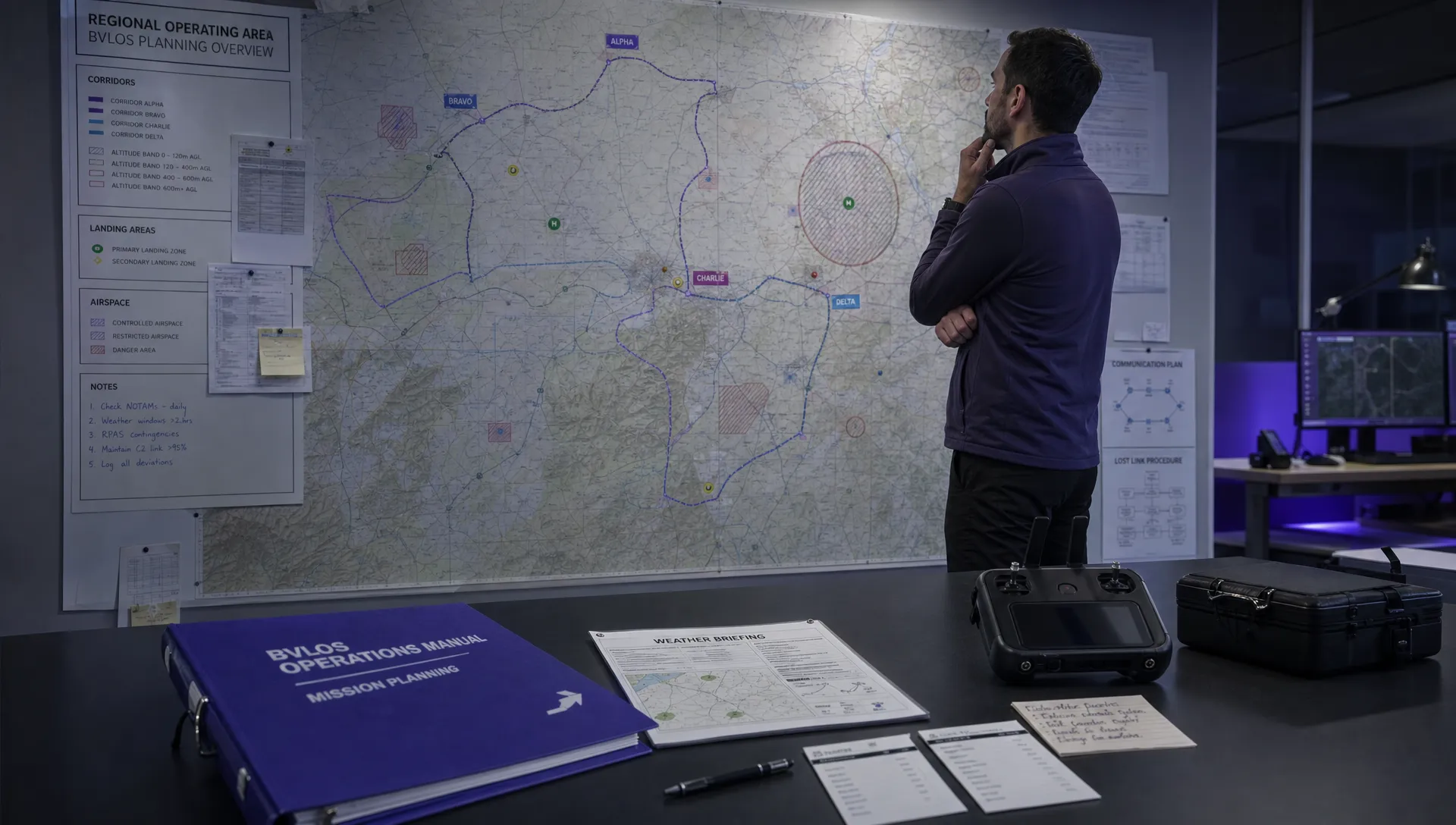
The drone team uses their management platform to meticulously plan a Beyond Visual Line of Sight (BVLOS) mission—a complex operation that regulators watch like a hawk. The platform’s risk assessment tool is crucial here, helping the team spot and plan for hazards like high winds, potential signal loss, and flying near public roads.
Each flight is all about grabbing crystal-clear pictures of insulators, connectors, and tower parts. The platform logs every single detail, creating an unbreakable audit trail that keeps the regulators happy. If a pilot spots a problem, like a cracked insulator, they can tag it with GPS coordinates and make notes right in the system. The energy company can then send a repair crew to the exact spot, armed with a clear picture of what they’re walking into. This slashes repair times and helps prevent power outages before they happen.
To get a clearer picture of how different industries lean on specific drone management features, take a look at the table below. It breaks down what's most important for each sector and why.
Drone Management Features by Industry
| Industry | Most Critical Feature | Primary Benefit |
|---|---|---|
| Construction | Project & Client Management | Centralizes all data, reports, and communication for recurring jobs, making it easy to track progress over time and keep stakeholders informed. |
| Agriculture | Data Processing & Analysis | Turns massive, complex datasets (like multispectral imagery) into simple, actionable health maps for targeted interventions. |
| Energy | Risk Assessment & Compliance | Provides robust, auditable risk assessments and flight logs essential for gaining approval for high-risk operations like BVLOS inspections. |
| Real Estate | Asset & Maintenance Tracking | Ensures smaller fleets are always flight-ready, minimizing downtime and protecting equipment investment for high-volume photo/video shoots. |
| Public Safety | Team & Role Management | Allows incident commanders to quickly deploy pilots with the right qualifications and aircraft for specific emergency response scenarios. |
As you can see, while the core need for organization is universal, the "make or break" feature often comes down to the unique pressures and goals of the industry itself. A good system is flexible enough to be the perfect tool for each one.
How AI Is Shaping the Future of Operations
If you want to know what the next big jump in drone operations management looks like, the answer is simple: Artificial Intelligence. This isn’t some sci-fi fantasy; it’s happening right now, turning good drone programs into incredibly efficient ones by automating the really tricky stuff. Think of AI as the invisible co-pilot, helping human operators make smarter, faster, and safer calls at every single stage of a mission.
Here’s a practical way to look at it: a standard drone platform helps you keep track of what you’ve already done. An AI-powered one helps you figure out what you should do next. It crunches huge amounts of data from all your past missions—flight paths, weather patterns, gear performance—to spot trends a human brain would almost certainly miss. This shift from reactive to proactive is changing the game entirely.
From Manual Tasks to Intelligent Automation
The real magic of AI in our field is its knack for handling the brain-heavy tasks that used to eat up so much of a pilot's time. It's not just about automating a flight path anymore. Now, it's about optimizing that path on the fly, reacting to things like wind shear or unexpected obstacles to save precious battery life and mission time.
But this intelligence goes way beyond just flying the drone. AI algorithms are now being put to work on:
- Predictive Maintenance: Forget sticking to a rigid service schedule. AI can analyse a drone's flight logs and component stress to flag when a part is about to fail, long before it actually does. This means less surprise downtime and a healthier fleet.
- Automated Data Analysis: Imagine being an inspector staring at thousands of images from a bridge survey. AI can automatically scan every single one and flag potential defects like cracks or corrosion, slashing analysis time from days down to a few hours.
- Dynamic Mission Planning: A smart system learns from every job. If it notices that a particular flight path always runs into signal issues, it'll automatically suggest a better, more reliable route for the next time you're working in that area.
This move towards intelligent automation is exactly why the autonomous drone market is expected to hit USD 25.24 billion by 2025. That growth is being driven by AI that handles navigation and real-time analysis, which dramatically cuts down on the need for a human to be at the controls 100% of the time. This opens the door to far more complex and demanding missions.
What This Means for Your Operations
Bringing AI into your drone operations isn't about adding gimmicks. It's about building a smarter, more resilient, and more proactive program from the ground up. It gives your team the power to take on bigger, more complicated jobs with more consistency and a higher degree of safety.
The point of AI in drone management isn't to replace the pilot, but to supercharge their abilities. It takes the tedious admin and number-crunching off their plate so they can focus on what really matters: high-level decision-making and nailing the mission.
This is where the industry is heading. The future isn't a system that just holds your data, but one that actively learns from it to help you run a safer and more profitable business. For a deeper dive into this evolution, check out our guide on how AI and automation are revolutionising drone operations. The arrival of these smart technologies is setting a whole new benchmark for what’s possible.
Your Roadmap to a Smarter Drone Program

Alright, let's get practical. Moving from theory to action is where the real work begins in building a top-tier drone operation. This isn't just about flying drones; it's about creating a robust, professional system that boosts your efficiency and keeps you compliant.
Think of this as your roadmap. It’s designed to help you move beyond just managing individual flights and start building a scalable, resilient foundation for your business to grow on.
The journey starts with a bit of honest self-assessment. Before you even glance at any software, you need a crystal-clear picture of your own operational headaches. Are you drowning in pre-flight paperwork? Is tracking aircraft maintenance turning into a spreadsheet nightmare? Nailing down these specific challenges gives you a concrete shopping list of must-have features.
Assess Your Operational Needs
First things first: map out your current workflow. Trace the entire process from the moment a client calls to the minute you send the final invoice. Pinpoint exactly where the biggest bottlenecks and risks are hiding.
This kind of self-audit is crucial. It ensures you pick a solution that solves your actual problems, not one that just boasts a long list of features you'll never touch. A clear understanding of your needs will guide you toward a platform that provides a genuine return on your investment.
For a lot of operators, the biggest pains are tied to juggling a growing fleet of drones and all the associated gear. If that sounds familiar, you might find some valuable insights in our deep dive into drone fleet management software.
Select the Right Software Solution
Once you know what you need, you can start checking out different platforms. The goal is to find a solution that fits your current scale but also has room for your future ambitions. Whether you’re a solo pilot looking to be more efficient or a large team needing to standardize procedures, the right software should feel like a natural extension of your business.
Look for a system that offers:
- An all-in-one approach that handles planning, logging, compliance, and reporting.
- Scalability to grow with your business without forcing a costly switch down the line.
- An intuitive design that your team will actually want to use out in the field.
A trial period is non-negotiable. Use it to run a complete, real-world project through the system from start to finish. This is the only way to truly know if a platform's workflow clicks with your own.
Onboard Your Team and Standardize Procedures
After you've picked your platform, getting it implemented successfully all comes down to team adoption and standardizing your processes. Don't just hand over a login and hope for the best.
Provide structured training and establish clear Standard Operating Procedures (SOPs) built around the new system. This makes sure everyone is working from the same playbook, which is key for consistency and quality control.
A great way to kick things off is with a small pilot program. Choose one or two team members to test the platform on a few projects. Their feedback will be gold for refining your SOPs and will help demonstrate the platform's value to the rest of the team, ensuring a much smoother rollout across your entire operation.
Frequently Asked Questions
Even after getting your head around the workflows and benefits, a few specific questions tend to pop up when you're thinking about switching to a proper drone operations management system. Let's tackle some of the most common ones to clear up any lingering doubts.
What Is the Biggest Challenge in Managing a Drone Fleet?
Hands down, the single biggest challenge is keeping a complete and accurate picture of everything that’s going on. You're juggling countless moving parts: pilot qualifications, drone maintenance schedules, battery health, flight logs, and mission-specific risk assessments. When you’re trying to track all that with separate spreadsheets, paper logbooks, and random apps, critical details are bound to fall through the cracks.
This scattered approach isn't just messy; it's a real threat to safety and compliance. A central platform solves this by becoming your single source of truth. It ensures that a drone with an overdue service check is automatically flagged and grounded before anyone can even think about assigning it to a new job.
How Exactly Does Software Help with Legal Compliance?
Drone management software takes compliance from a tedious, manual chore into something that’s automated and built right into your process. Instead of hopping between multiple websites to check for airspace restrictions, the software pulls in that data for you, showing real-time info from aviation authorities directly on your map.
But it goes deeper than that by making sure crucial steps are standardized and documented. For instance, a platform like Dronedesk won’t even let you finalize a flight plan until a digital risk assessment is completed. This creates an unbreakable, time-stamped audit trail for every single mission. That kind of documentation is gold when you need to show regulators or clients that you’ve done your due diligence and every flight was planned and executed by the book.
A dedicated platform makes compliance the path of least resistance. By building safety checks directly into the pre-flight workflow, it ensures that best practices are followed every single time, not just when it’s convenient.
Is a Management Platform Overkill for a Small Business?
This is a common one, but it’s a total misconception. While big companies definitely need these systems to handle their scale, a drone operations management platform can have an even bigger impact on a small business or solo operator. For a small team, your time is your most precious resource.
A dedicated platform automates the mountain of admin—the planning, logging, and reporting—that can eat up up to 50% of an operator's non-flying time. That boost in efficiency means a small business can take on more work without having to hire more people. It also helps you project a level of professionalism and reliability that lets you go toe-to-toe with much larger, more established firms. It’s not about the size of your business; it's about building a solid, scalable foundation right from the start.
Ready to eliminate administrative headaches and build a truly professional drone operation? Dronedesk provides an all-in-one solution that automates your workflows, ensures compliance, and frees you up to focus on flying. Start your free trial today and experience the future of drone operations management.
 How to Build a Drone Pilot Flight Log That Is Audit Ready →
 FAA Drone Licence Requirements for Commercial Pilots →
 FAA BVLOS Waivers Granted: What Successful Cases Show →
 How to Export DJI Flight Logs for Incident Reviews →
 Drone Safety and Legal Duties for Business Operations →
 EASA Drone Regulations: Open, Specific and Certified Categories →
 What the BVLOS ARC Report Means for UAS Operators →
 Free Drone Pre-Flight Checklist for Commercial Missions →
 Contingency Volume and Flight Risk Buffer Explained →
 FAA Policy Changes That Commercial Drone Teams Should Track →