
Your Essential Template for Operations Manual Drone Compliance
A solid template for operations manual is much more than a document to keep regulators happy; it's a foundational piece of your entire business. It’s what turns abstract safety rules into concrete, daily actions that protect your gear, your team, and your clients. Think of it as the central pillar of a professional, and profitable, drone operation.
Why a Standardized Operations Manual Is a Core Business Asset

So many pilots view the ops manual as just another tedious box to tick for the aviation authorities. That’s a huge missed opportunity. In reality, a well-crafted manual is your business's shield and playbook, preventing costly mistakes, locking in high-value clients, and making team training a breeze. It’s the single biggest difference between running a hobby and running a professional enterprise.
Let’s imagine a real-world scenario. You're in the middle of a critical inspection flight when a sudden, unforecasted microburst of wind hits. A pilot without a manual might panic, making a split-second decision that endangers the drone and the property below. But a pilot guided by a standardized manual? They know the exact emergency procedure for "Sudden Adverse Weather," including immediate altitude adjustments and safe landing protocols. No guesswork involved.
A strong operations manual is the single source of truth for your entire team. It eliminates hesitation during high-stress situations and ensures everyone, from the chief pilot to the newest hire, operates from the same set of proven procedures.
Building a Foundation for Scalability
Whether you’re a one-person show or a growing team, standardization is the only way to scale successfully. A documented set of procedures creates consistency, which is absolutely vital for building a brand people trust. Let’s be honest, high-value corporate clients aren't just hiring a drone; they're hiring a professional, predictable service provider. A comprehensive manual is tangible proof of that professionalism.
As the drone sector matures, this level of documentation is becoming a serious competitive advantage. With market expectations for 2025 scoring a solid 6.8 out of 10 for positivity among 768 global companies, a professional template for operations manual helps close the gap between what clients expect and what you deliver. This is especially true when using platforms like Dronedesk, which help embed these procedures directly into your daily workflows. You can read the full research about the state of the drone industry to learn more.
This structured approach pays off in several key ways:
- Reduced Risk: Clear guidelines for pre-flight checks, emergency responses, and maintenance drastically minimize the chance of accidents.
- Improved Efficiency: Standardized processes for flight planning and data capture save time and cut down on admin for every single job.
- Enhanced Team Training: New team members can get up to speed quickly and effectively, making sure they stick to your company's safety standards from day one.
- Client Confidence: Handing a detailed operations manual to a potential client shows a commitment to safety and quality that immediately sets you apart from the crowd.
From Compliance to Competitive Edge
Ultimately, your operations manual is a core business asset that supports every flight you make. The principles behind a robust manual aren’t unique to drones; they apply across any industry that prioritizes safety and compliance. You can see similar concepts in guides on building an effective safety program that serves as the backbone of an organization.
By shifting your mindset away from just compliance, you can use your manual to build a resilient, professional, and profitable drone business. It becomes less about satisfying regulators and more about defining your company's standard of excellence.
Building Your Core Drone Operations Manual Template

Alright, this is where the rubber meets the road. Building your own template for operations manual isn’t just a box-ticking exercise; it’s about creating a solid, adaptable foundation for your entire drone operation. We’re going to walk through this, section by section, with real-world examples you can tweak to fit your business.
Remember, a great manual is more than just a rulebook. It’s a direct reflection of your company's commitment to safety and professionalism. Every part of it should be written with your specific aircraft, your team, and your typical missions in mind.
The Foundational Sections Every Manual Needs
First things first, let's nail down the non-negotiables. These sections are the backbone of your manual, laying out the high-level policies and procedures that govern every single flight. Think of this as the constitution for your drone operations.
- Company Safety Policy: This is your public promise on safety. It's usually a brief statement, signed by the Accountable Manager, that makes it crystal clear that safety trumps everything else—no exceptions.
- Introduction and Scope: Clearly state what the manual actually covers. Which drones? What kinds of operations? Outline the document's purpose so anyone picking it up knows exactly what they're looking at.
- Definitions and Abbreviations: Your manual will be filled with industry jargon. This section is a lifesaver, ensuring that everyone from a brand-new pilot to an external auditor understands the terminology you're using.
Getting these initial sections right sets a professional tone from page one. It shows clients and regulators you have a structured, thoughtful approach to your work.
A well-structured manual immediately signals professionalism. It's not just about what you say, but how you organize it. A logical flow shows you've thought deeply about every aspect of your operation.
The table below breaks down the essential components you'll need to build a comprehensive and compliant operations manual. Think of it as a checklist to make sure you're not missing anything critical.
Essential Components of a Drone Operations Manual
| Section | Purpose | Key Information to Include |
|---|---|---|
| Safety Policy | To declare an unwavering commitment to safety. | Statement signed by the Accountable Manager prioritizing safety over commercial pressures. |
| Introduction & Scope | To define the manual's coverage and purpose. | Types of aircraft (e.g., DJI Mavic 3), types of operations (e.g., VLOS), and manual structure. |
| Definitions | To ensure clarity of all technical terms and abbreviations. | Glossary of terms like VLOS, A2 CofC, GVC, NOTAM, and company-specific acronyms. |
| Roles & Responsibilities | To clearly define who does what. | Job descriptions for Remote Pilot, Accountable Manager, Observers, etc. |
| Normal Procedures | To outline standard flight operations from start to finish. | Pre-flight planning, on-site setup, checklists, in-flight rules, and post-flight actions. |
| Emergency Procedures | To provide clear, actionable steps for unexpected events. | Step-by-step plans for flyaways, battery failures, weather changes, and other incidents. |
| Pilot Training | To detail pilot competency and currency requirements. | Initial training, recurrent training schedules, and minimum flight hours to remain current. |
| Record Keeping | To document compliance and operational history. | Flight logs, maintenance records, battery logs, and incident reports. |
| Manual Amendments | To manage document updates and revisions. | Version control log, procedure for proposing and approving changes. |
Each of these sections plays a vital role in creating a living document that guides safe, repeatable, and professional drone operations.
Outlining Operational Procedures
Now we get to the heart of the manual—the part that details exactly how you fly. These procedures need to be specific enough to provide clear guidance but flexible enough to work on different job sites. Ambiguity is your enemy here.
A solid section on normal flight procedures should cover the entire workflow of a mission, from the initial planning stages right through to packing up at the end of the day.
- Pre-Flight Planning: Detail your process for checking airspace, weather, and any site-specific restrictions. This is where you'd mention using tools like Dronedesk to pull all this information together.
- On-Site Arrival and Setup: Describe your protocol for setting up a safe take-off/landing zone, doing an on-the-spot risk assessment, and briefing everyone involved.
- Pre-Flight Checks: List the specific physical and system checks you run on the drone and controller before every flight. Make it a real checklist, not a vague instruction.
- In-Flight Procedures: Lay down the rules for maintaining visual line of sight (VLOS), how you communicate with observers, and how data is captured during the flight.
- Post-Flight Actions: Detail your process for securing the aircraft, backing up your data, and filling out all the necessary flight logs.
Handling Unforeseen Events
No matter how meticulous your planning, things can go sideways. A robust template for operations manual absolutely must include clear emergency procedures. This is often the most scrutinized section during an audit because it shows how you handle pressure.
Your goal here is to turn potential panic into a structured, predictable response. For every plausible scenario, you need a clear, step-by-step action plan.
| Emergency Scenario | Primary Pilot Action | Secondary Action |
|---|---|---|
| Drone Flyaway | Immediately attempt to regain control via return-to-home (RTH). | Notify air traffic control (if applicable) and begin search procedures. |
| Sudden Weather Change | Abort the mission and land the aircraft at the nearest safe location. | Document the event and update risk assessment protocols for future flights. |
| On-Site Client Incident | Prioritize human safety first. Cease flight operations immediately. | Administer first aid if trained and contact emergency services. |
| Battery or System Failure | Initiate a controlled emergency landing away from people and property. | Isolate the faulty equipment and file an internal incident report. |
The principles of creating clear, structured documentation aren't unique to drone operations. For a broader look at how procedural documents are built, this Your Essential UK Employment Handbook Template Guide offers useful insights into structuring policies, even though it's for a different business need.
Administration and Record Keeping
Your manual isn't just about what happens in the air; it's also about proving you flew safely and within the rules. This section covers the administrative backbone of your operation—it’s where you demonstrate your accountability.
Key elements you have to include are:
- Flight and Maintenance Logs: Specify exactly what data must be recorded for every flight and any maintenance work. This includes pilot, date, duration, and any snags or issues noted.
- Pilot Training and Currency: Outline your requirements for initial and ongoing pilot training. Define how you track flight hours to make sure your pilots stay sharp and proficient.
- Incident Reporting: Create a formal process for reporting any accident, incident, or even a near-miss. This process should include an investigation to find the root cause and prevent it from happening again.
Many operators find it helpful to look at existing frameworks to make sure they haven't missed anything. You can explore various operational manual templates to get different ideas for layouts and content. Tying all this record-keeping into a platform like Dronedesk can automate a huge chunk of the work, ensuring your logs are always accurate, complete, and easy to find.
Carving Out Clear Roles and Responsibilities for Your Team
An ops manual gathering dust on a shelf is worse than useless—it’s a missed opportunity. Its real power comes alive when every single person on your team knows exactly what they’re supposed to do, when, and why. Ambiguity is the enemy of safe and efficient drone operations, making this step an absolute non-negotiable.
This isn't just for big teams, either. If you're a solo pilot, defining these roles helps you mentally switch hats. One minute you're the maintenance manager meticulously logging battery cycles; the next, you're the Pilot in Command making a critical go/no-go call on site. For growing teams, it stops crucial tasks from falling through the cracks and prevents the dreaded "I thought you were doing that" conversation.
The Core Roles of Any Professional Drone Operation
To build a structure that not only works but also impresses clients and regulators, you have to formally define the key positions in your operation. Even if one person wears multiple hats (and let's be honest, most of us do starting out), documenting the distinct responsibilities for each title is vital.
Here are the big three you need to outline in your manual:
- Accountable Manager: This is the person with the ultimate authority. They hold the corporate power to ensure every operation is properly financed and conducted to the highest safety standards. The buck stops with them on all operational policy.
- Chief Pilot: This individual is responsible for the professional standards of all your flight crew. Think of them as the guardian of pilot proficiency—managing training, checking currency, and overseeing day-to-day flights to make sure everything lines up with the ops manual.
- Remote Pilot in Command (RPIC): For any given flight, the RPIC is in charge. Their authority for that specific mission is absolute, covering everything from pre-flight checks and on-site risk assessments to the final decision to launch.
This isn't just about looking professional; it's about being professional. With over 33,000 drone companies globally trying to get a handle on operational standards last year alone, a clearly defined structure sets you apart. If you want to learn more about drone industry growth, you'll see how formalizing roles is a cornerstone of scalable, successful businesses.
The Power of a Responsibility Matrix
One of the simplest and most powerful tools you can add to your manual is a responsibility matrix. It’s just a simple table, but it instantly shows who is accountable for what. No guesswork, no confusion—just at-a-glance clarity that demonstrates a mature approach to safety management.
Here’s a basic example you can pinch and adapt for your own manual:
| Task / Responsibility | Accountable Manager | Chief Pilot | Remote Pilot (RPIC) |
|---|---|---|---|
| Final Approval of Manual | Responsible | Accountable | Consulted |
| Authorizing High-Risk Flights | Responsible | Accountable | Consulted |
| Scheduling Drone Maintenance | Consulted | Responsible | Accountable |
| Conducting Pre-Flight Checks | Informed | Informed | Responsible |
| Completing Flight Logs | Informed | Accountable | Responsible |
| Managing Pilot Training Records | Informed | Responsible | Accountable |
| On-Site Safety Briefings | Informed | Consulted | Responsible |
This kind of clear-cut system is precisely what regulators and high-value commercial clients look for. It proves you’re not just winging it.
A well-defined role structure transforms your ops manual from a static document into a living, breathing management tool. It assigns ownership to every critical task, building a culture of accountability from the ground up.
Bringing Your Roles to Life with Digital Workflows
Okay, the final piece of the puzzle is connecting these well-defined roles to the tools you use every day. This is where a platform like Dronedesk closes the loop. Inside the system, you can assign these exact roles—Accountable Manager, Pilot, and so on—to your team members.
Suddenly, your manual and your workflow are perfectly in sync.
When a pilot logs a flight, the system knows who they are and what their responsibilities include. When an aircraft is due for maintenance, the platform can ping the person assigned that duty. This practical integration ensures the responsibilities you’ve painstakingly defined in your manual are actually being followed, tracked, and recorded as part of your normal business day.
Integrating Actionable Checklists for Safety and Compliance
Your operations manual explains the "why" and "how" of your drone business, but it's the checklists that bring those principles to life on every single job. This is where you turn a static document into a dynamic tool that actively prevents things from going wrong.
Checklists are the absolute backbone of your safety culture. They transform the rules in your manual into repeatable, verifiable actions that every pilot follows, every single time. Without them, your carefully written procedures are just suggestions. With them, you build the kind of consistency that clients and regulators love to see.
From Static Rules to Dynamic Actions
The whole idea is to get your procedures off the page and into the field. This means creating detailed, mission-specific checklists that you can attach as appendices to your core manual. These aren't just tick-box exercises; they're methodical workflows designed to catch the small stuff before it becomes a big problem.
A solid template for operations manual will have dedicated spots for these checklists, making sure every phase of a mission is covered. This structure ensures nothing gets missed, especially when you’re under pressure.
At a minimum, you'll want to build out checklists for:
- Pre-Flight: This is your A-to-Z inspection. It covers the physical drone check (props, batteries, gimbal) and the software side of things (firmware, controller settings, GPS lock).
- On-Site Arrival: Your protocol for hitting a new location. Think assessing the takeoff/landing zone, spotting any new hazards that weren't in your desk-based survey, and running a final on-the-spot risk assessment.
- Post-Flight: This ensures the aircraft is powered down correctly, the data is backed up, and any little snags or equipment issues are logged immediately for maintenance.
- Emergency Procedures: These are your grab-and-go guides for when things go south. Simple, numbered steps for a flyaway, signal loss, or a critical battery warning.
A checklist isn’t a test of your memory; it's a tool to prevent failure. The most experienced pilots I know swear by them because they understand that disciplined, repeatable processes are the bedrock of aviation safety.
Customizing Checklists for Specific Missions
A one-size-fits-all checklist just doesn't cut it. The checks you run for a cinematic shoot in a busy town centre will be worlds away from what's needed for a rural agricultural survey. Your manual needs to be flexible enough to handle this, providing a master template that your team can adapt.
For instance, a technical survey mission might have extra items like:
- Verifying sensor calibration before you even think about taking off.
- Confirming the flight plan has the right image overlap for photogrammetry.
- Checking the status of your RTK/PPK connections for survey-grade accuracy.
On the other hand, a cinematic shoot might add checks for:
- Briefing the on-screen talent about drone safety zones and what to expect.
- Confirming ND filters are fitted correctly and aren't going anywhere.
- Verifying comms protocols with the camera operator or director.
Adding these specific checks shows a real, mature understanding of risk management. If you want to dive deeper into building these critical documents, we’ve got more detailed guidance on creating effective risk assessment checklists that will perfectly complement your ops manual.
The Power of a Digital, Auditable Trail
Paper checklists are a decent start, but they truly come into their own when you digitize them. This is where a platform like Dronedesk connects your operations manual directly to your daily workflow.
When a pilot completes a digital pre-flight check within their job pack, they're doing more than just ticking boxes—they're creating an undeniable, time-stamped, and auditable record of compliance.
This digital trail is worth its weight in gold. If there's ever an incident or an audit, you can instantly pull up the evidence showing your team followed the exact procedures laid out in your manual. You can prove the pre-flight checks were done, the on-site risk assessment was signed off, and every safety protocol was followed to the letter.
This transforms your manual from a document that describes your safety standards into a system that actively enforces and records them on every flight. It's the ultimate proof that your commitment to safety is more than just words on a page—it's baked into your operational DNA.
Connecting Your Manual to Digital Workflows
Let's be honest, a paper operations manual gathering dust on a shelf is pretty much useless. A digital one is a massive step up, but the real magic happens when you integrate it directly into your daily workflow. This is where you close the gap between theory and practice. Suddenly, your manual isn't just a static document; it becomes the living, breathing central nervous system of your entire drone operation.
When your procedures live inside the same system you use for planning and logging flights, something powerful happens: compliance becomes the default, not an extra chore you have to remember. The goal is to make doing the right thing the easiest thing to do.
Storing your manual within a platform like Dronedesk makes it instantly accessible to everyone on your team, whether they're in the office or out on a windswept hillside. This completely kills any version control headaches and guarantees everyone is working from the same, most up-to-date procedures.
Making Your Manual a Living Document
A truly effective template for an operations manual isn't meant to be just read; it's meant to be used. Its real power is unlocked when you link its procedures directly to your digital pre-flight checklists.
Think about it. When a pilot kicks off a job in Dronedesk, the checklist they run through isn't just some generic list. It's a direct reflection of the specific safety protocols you've painstakingly laid out in your manual for that exact drone.
This creates a fantastic, closed-loop system:
- The Manual sets the standard: It clearly defines the pre-flight inspections required for your DJI Mavic 3, for instance.
- The Digital Checklist enforces the standard: The pilot has to physically tick off each check before they can move forward with the flight.
- The Job Report proves the standard: The final, automated report contains a timestamped record proving the checklist was followed to the letter, giving you an undeniable audit trail.
This simple connection transforms what can feel like a box-ticking exercise into genuine operational efficiency. More importantly, it proves your commitment to safety on every single flight.
The drone market is exploding, with some projections showing its value jumping from USD 26.12 billion in 2025 to USD 40.56 billion by 2030. For any serious drone service provider trying to ride that wave, using a digital platform to manage the ops manual is the only sane way to tame the admin and scale professionally.
Automating Compliance and Maintenance
It’s not just about checklists. A proper digital workflow also props up other critical parts of your manual, especially when it comes to managing your fleet. That maintenance section in your manual isn't just a suggested schedule; it's your commitment to airworthiness. Digital tools automate the tedious tracking required to actually live up to that commitment.
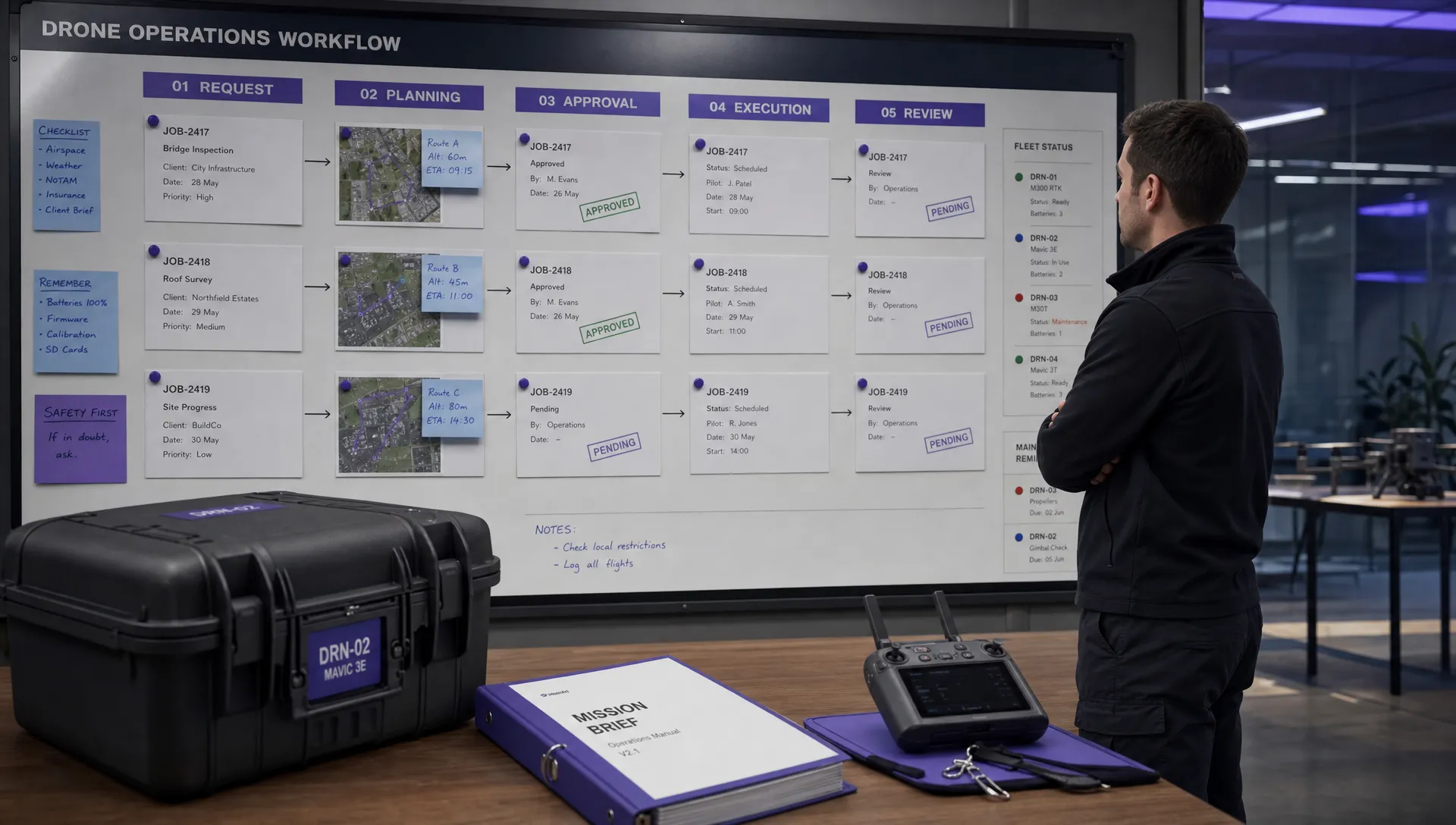
This workflow illustration shows how everything connects—from pre-flight prep to what happens on-site and the review process afterward—all in one seamless digital flow.

Each of these steps generates data that automatically proves you're sticking to your manual's procedures, from the first check to the final log entry.
Instead of messing around with spreadsheets to tally up flight hours, the system just does it for you. When a drone gets close to a service interval you’ve defined in your manual, the platform flags it for maintenance automatically. This proactive approach means you’ll never accidentally fly an aircraft that's overdue for a service, which is crucial for protecting your gear and your reputation.
By connecting your manual to your digital workflow, you create a system where safety and compliance are not just documented but are actively managed and verified in real-time.
This level of integration is what separates the amateurs from the professionals in modern drone operations. It shows a sophisticated approach to risk management that both clients and regulators absolutely love to see. For those wanting to manage every facet of compliance in one spot, looking into a dedicated regulatory management tool for drones can give you a serious edge.
Centralizing Your Operational Truth
Ultimately, bringing your manual into a platform like Dronedesk creates a single source of truth for your whole operation. No more confusion over which version of a procedure to follow. No more wondering if a maintenance check was actually completed. Everything is logged, tracked, and easy to find.
This centralized hub ensures that from the moment you start planning a flight to the final post-flight analysis, every single action is guided by and measured against the high standards you’ve set in your operations manual. It’s the most effective way I know to make sure your documented procedures are your lived, day-to-day reality.
Common Questions About Drone Operations Manuals
Look, even with the best framework in front of you, questions are going to pop up as you build and maintain your drone operations manual. Let’s tackle some of the most common ones we hear from pilots. Getting these sorted now will save you a ton of headaches later.
Think of your manual less like a static, one-and-done document and more like a living, breathing part of your business. It needs to grow and adapt right along with you.
How Often Should I Update My Operations Manual?
Your ops manual is a dynamic tool, not a museum piece. The rule of thumb is a full review at least annually, but that's the bare minimum. The real answer is: you update it the moment anything significant changes in your business. Waiting for that annual review could leave you non-compliant or, worse, operating with outdated and unsafe procedures.
So, when is an immediate update required?
- You've added a new type of drone to your fleet, especially if it has different flight characteristics or limitations.
- You're now offering a new service, like thermal inspections or LiDAR surveys, which brings new risks into the picture.
- You've had a change in key personnel, particularly the person legally responsible for your operations (the Accountable Manager or Chief Pilot).
- You've had an incident or even a near-miss. These are learning opportunities that often reveal gaps in your procedures that need to be closed.
And, of course, you absolutely must revise your manual to reflect any new regulations that come down from your national aviation authority. Using a digital platform makes pushing these updates to your team instant, ensuring everyone is always on the same page and working from the correct version.
Can I Use a Generic Template I Found Online?
A generic template for operations manual can be a great starting point, but you absolutely cannot just download one and call it a day. Think of it like a blueprint for a house—it shows you the basic structure, but you still have to frame the walls, run the wiring for your appliances, and choose the fixtures that fit your life.
Regulators, and increasingly, sharp commercial clients, can spot a copy-paste job from a mile away. A manual describing procedures for a drone you don't even own is a massive red flag. It instantly kills your credibility and screams "lazy approach to safety."
Your manual has to be a true and accurate reflection of your specific operations. That means your gear, your team, your typical flight environments, and the real-world mitigations you actually use. Its value is in its authenticity.
Use a solid framework (like the one in this guide) as your foundation, but then get ready to put in the work. Customize every single section. Detail the drones you fly, the software you use, and the unique challenges your business faces. This is what turns a generic document into a powerful operational tool that genuinely makes you a safer, more professional pilot.
Does My Operations Manual Need Official Approval?
This is a big one, and the answer comes down to where you are and what you’re doing. There's no single global standard, so checking your local rules is non-negotiable.
Here’s the general lay of the land:
- In the UK (CAA) and across Europe (EASA): Yes, absolutely. An operations manual is a mandatory part of applying for an Operational Authorisation (like the GVC). It goes through a formal review process and has to be approved before you can legally fly under that authorisation.
- In the United States (FAA): For standard Part 107 operations, you're not required to submit a formal operations manual to the FAA for approval. However, it is widely considered an industry best practice. Don't be surprised if insurance providers and high-value corporate clients ask to see it—they want to know you're managing risk properly.
Always, always double-check the specific requirements for your jurisdiction and the types of flights you plan to do. Even when it’s not legally required, having a comprehensive manual is one of the clearest signals you can send that you're a serious, safety-first professional.
Ready to stop wrestling with spreadsheets and scattered documents? Dronedesk integrates your flight planning, risk assessments, and compliance records into one seamless workflow, making it simple to keep your operations manual aligned with your daily reality. See how thousands of pilots are saving time and flying safer by visiting https://dronedesk.io.
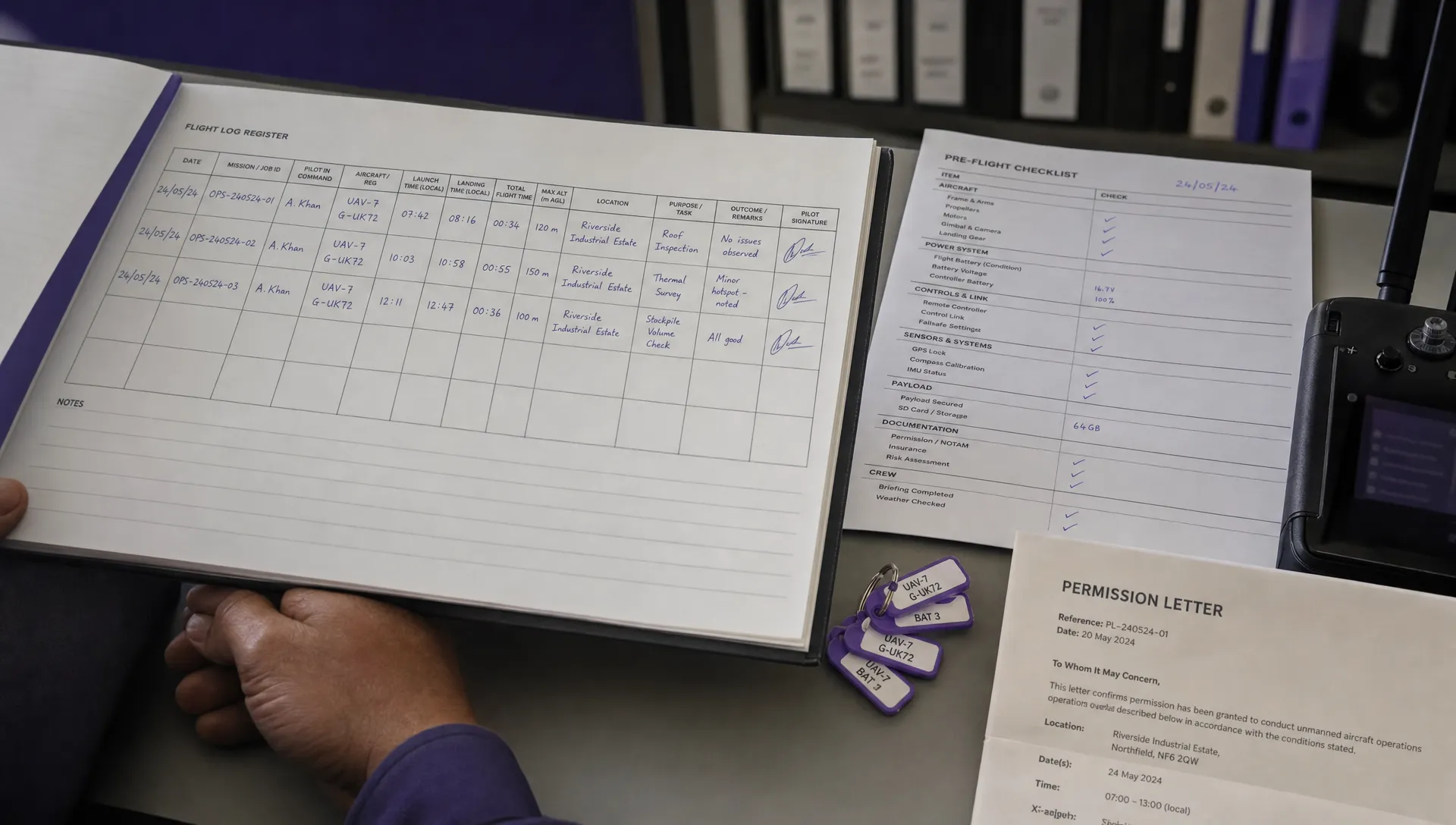 How to Build a Drone Pilot Flight Log That Is Audit Ready →
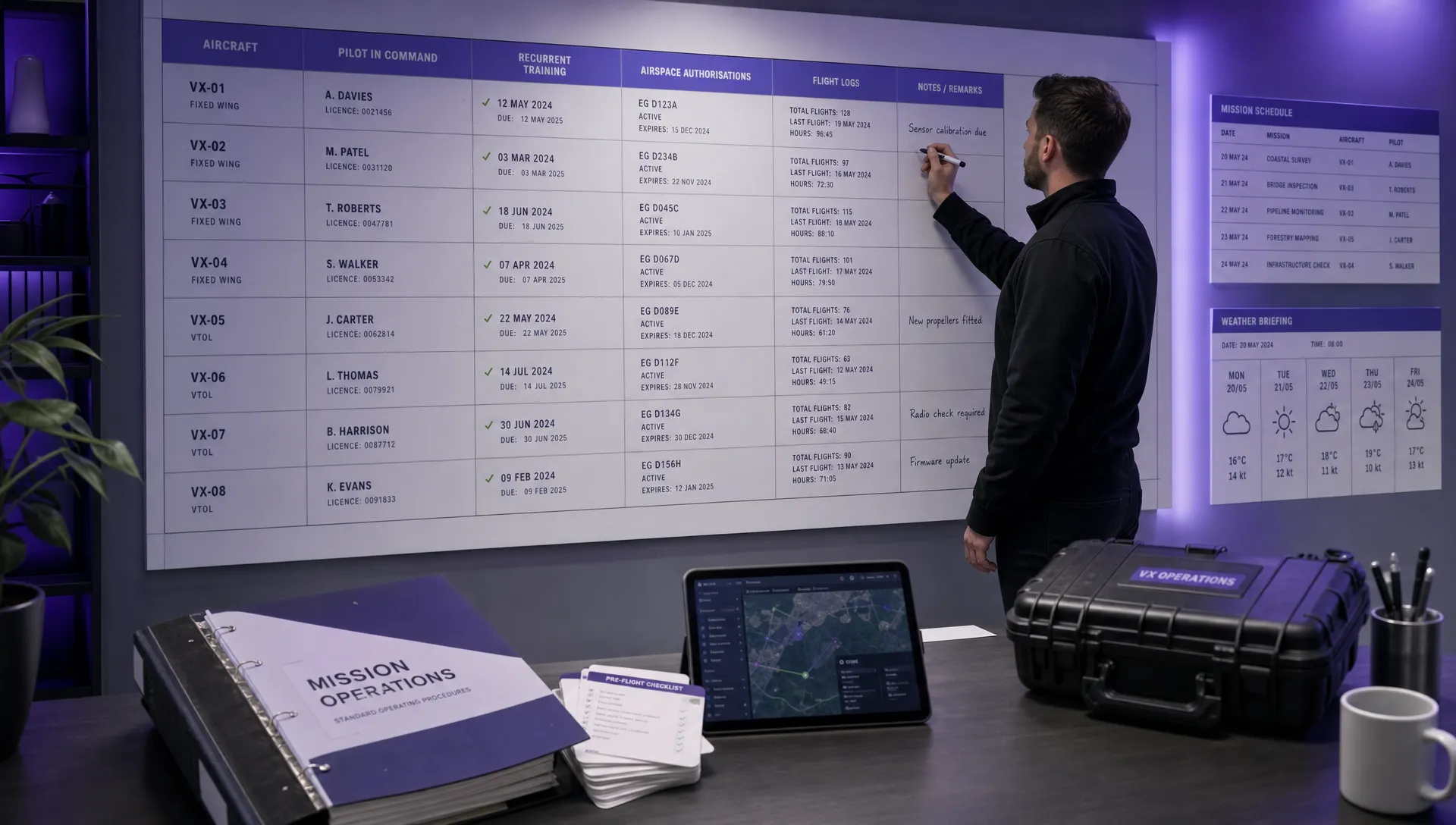 FAA Drone Licence Requirements for Commercial Pilots →
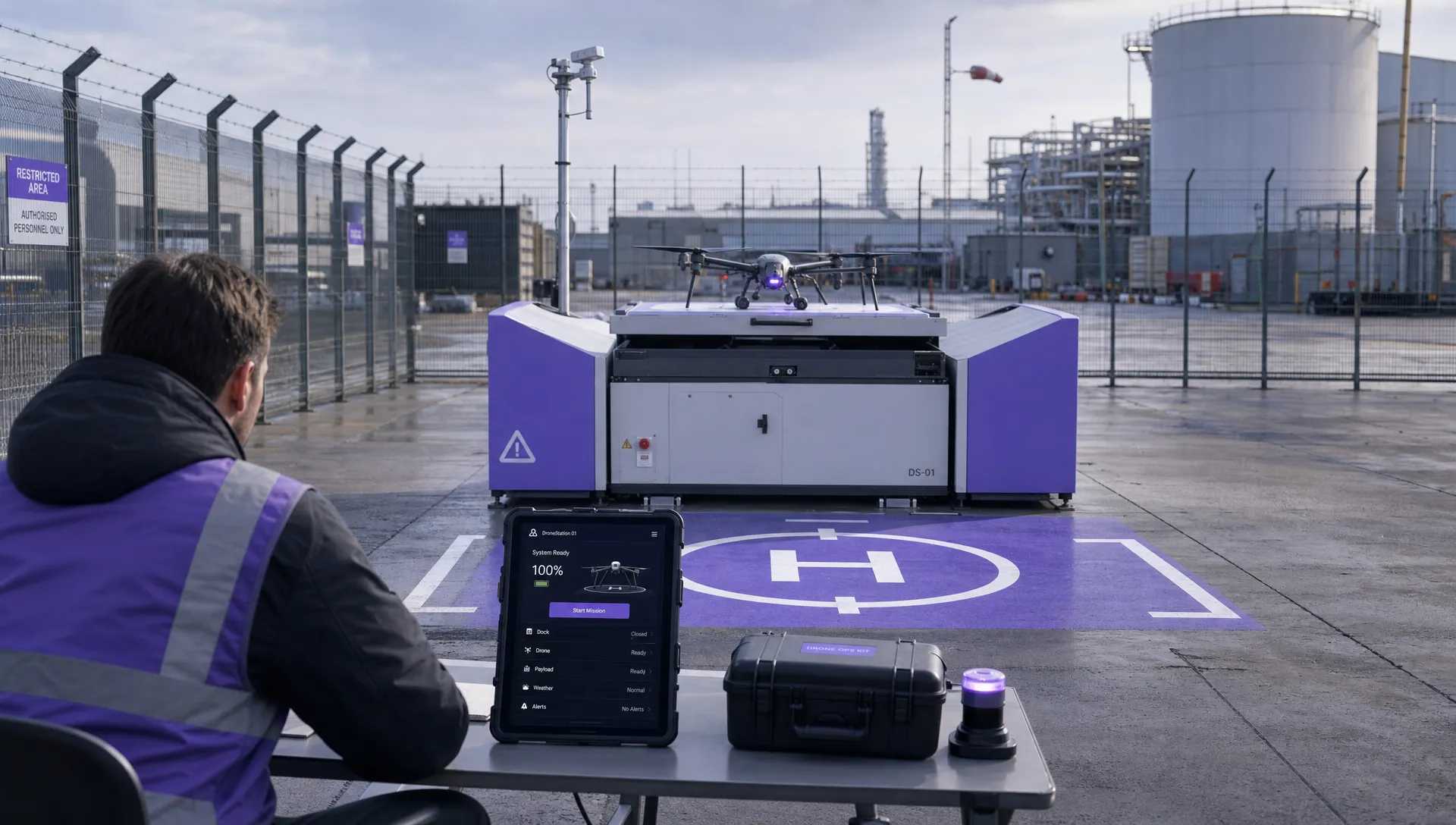 FAA BVLOS Waivers Granted: What Successful Cases Show →
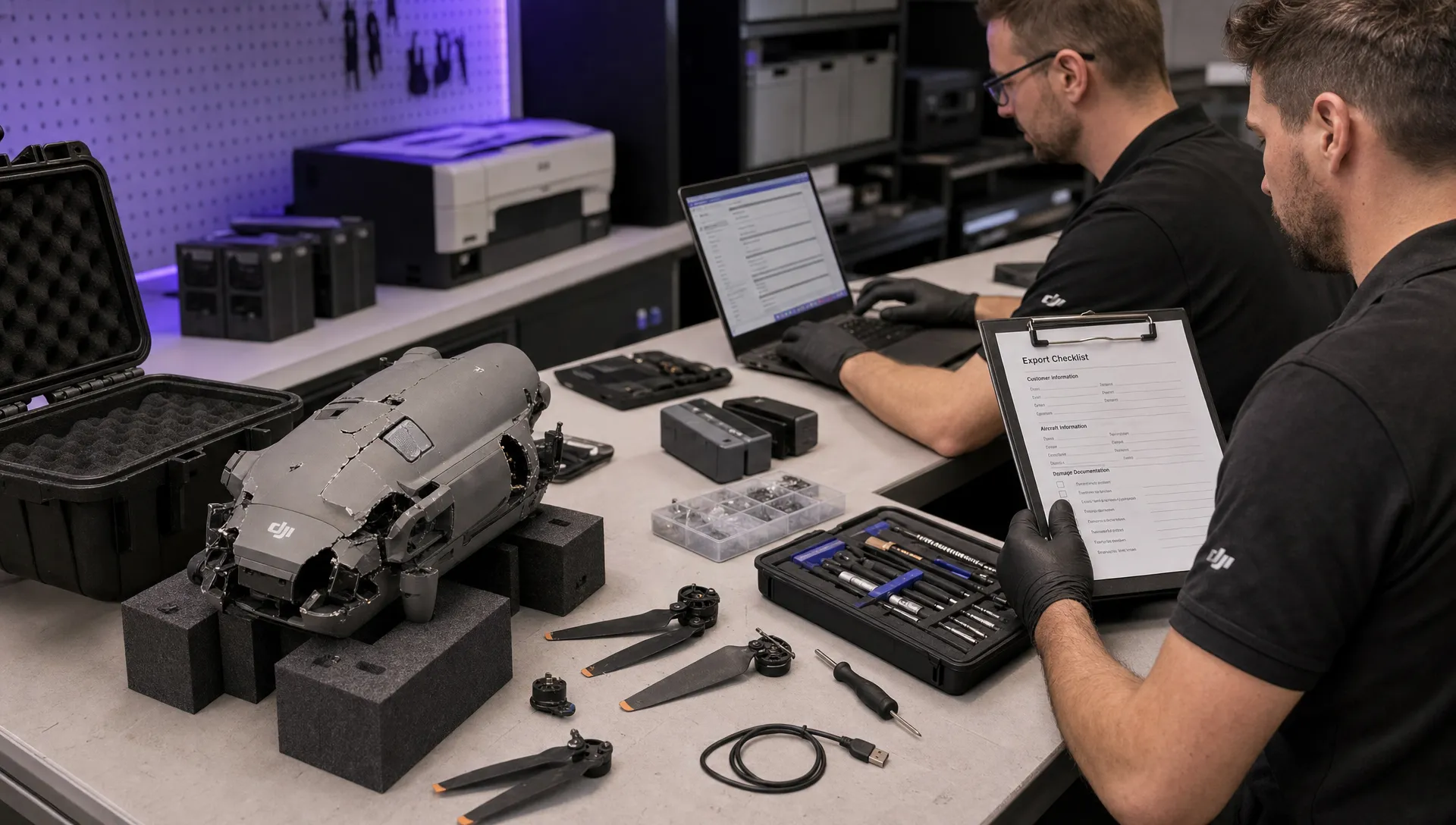 How to Export DJI Flight Logs for Incident Reviews →
 Drone Safety and Legal Duties for Business Operations →
 EASA Drone Regulations: Open, Specific and Certified Categories →
 What the BVLOS ARC Report Means for UAS Operators →
 Free Drone Pre-Flight Checklist for Commercial Missions →
 Contingency Volume and Flight Risk Buffer Explained →
 FAA Policy Changes That Commercial Drone Teams Should Track →