
Find Drone Pilots Near Me: 7 Top Providers for 2026
A facilities manager needs roof imagery for an insurance claim. A marketing team wants launch footage by Friday. A construction director needs progress mapping every two weeks across five sites. All three might search “drone pilots near me,” but they should not hire the same way.
Location helps. It does not tell you whether the operator can fly in controlled airspace, produce usable inspection data, carry proper insurance, or repeat the same standard across multiple jobs. That is the core buying problem. This guide addresses it from both sides. It highlights national providers that can handle scale, and it gives you a practical process for screening local pilots and managing ongoing work without losing control of compliance, scheduling, or deliverable quality.
The field is crowded, which makes simple directory-style searching a weak filter. Buyers need a shortlisting method that separates a capable commercial operator from a pilot with a good reel and thin operations.
The Required Vetting Checklist
- FAA Part 107 certification: Ask to see the pilot’s Remote Pilot Certificate. If they are charging for drone work without it, remove them from consideration.
- Liability insurance you can verify: Request a current COI and confirm it covers commercial drone operations. If your team requires additional insured status, confirm that before scheduling.
- Portfolio that matches the assignment: Real estate video, orthomosaic mapping, thermal inspection, and façade documentation require different capture methods and different post-processing discipline.
- Airspace and site-planning competence: A qualified operator should explain the airspace around your site, whether authorization is required, what restrictions apply, and how those constraints affect timing.
Questions that prevent expensive problems later
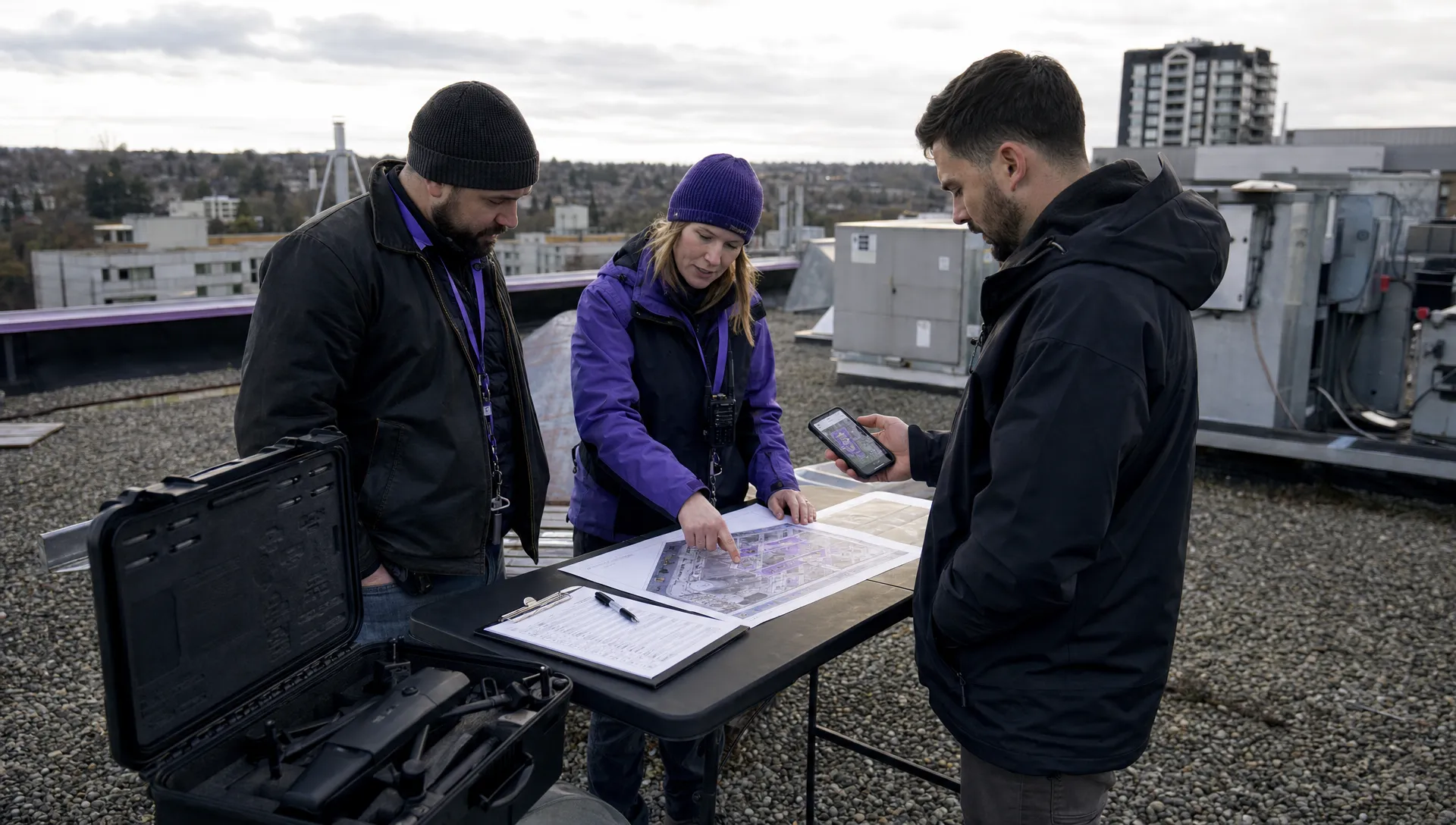
- What is your pre-flight planning process? Look for a clear answer that includes weather review, airspace checks, site hazards, equipment readiness, and backup plans.
- How do you handle delays or mission interruptions? Strong operators can explain what happens if weather shifts, batteries fail, access changes, or the site superintendent pauses the flight.
- How is data delivered, stored, and protected? Ask this early if the job involves critical infrastructure, legal documentation, or client-sensitive property records.
Practical rule: If a pilot answers operational questions vaguely before the contract is signed, expect avoidable problems on the job.
- Can you provide a COI and add our company as additional insured?
- What exactly will we receive, in which file formats, and by when? Put deliverables, revision terms, and turnaround in writing.
Once a business starts hiring drone pilots regularly, vetting the pilot is only part of the job. The harder part is managing recurring flights, documents, pilot records, approvals, and site history in a way that stands up under procurement and compliance review. That is where an operations system matters. Teams running repeat missions across multiple sites often use platforms such as Dronedesk to keep flight records, paperwork, and scheduling organized instead of rebuilding the process for every job.
If you’re trying to get found locally as a provider yourself, this Google Business Profile optimization guide is worth reviewing. For buyers, local discovery is only the starting point. The providers below are the ones worth reviewing when the work needs to be handled properly.
1. Zeitview (formerly DroneBase)
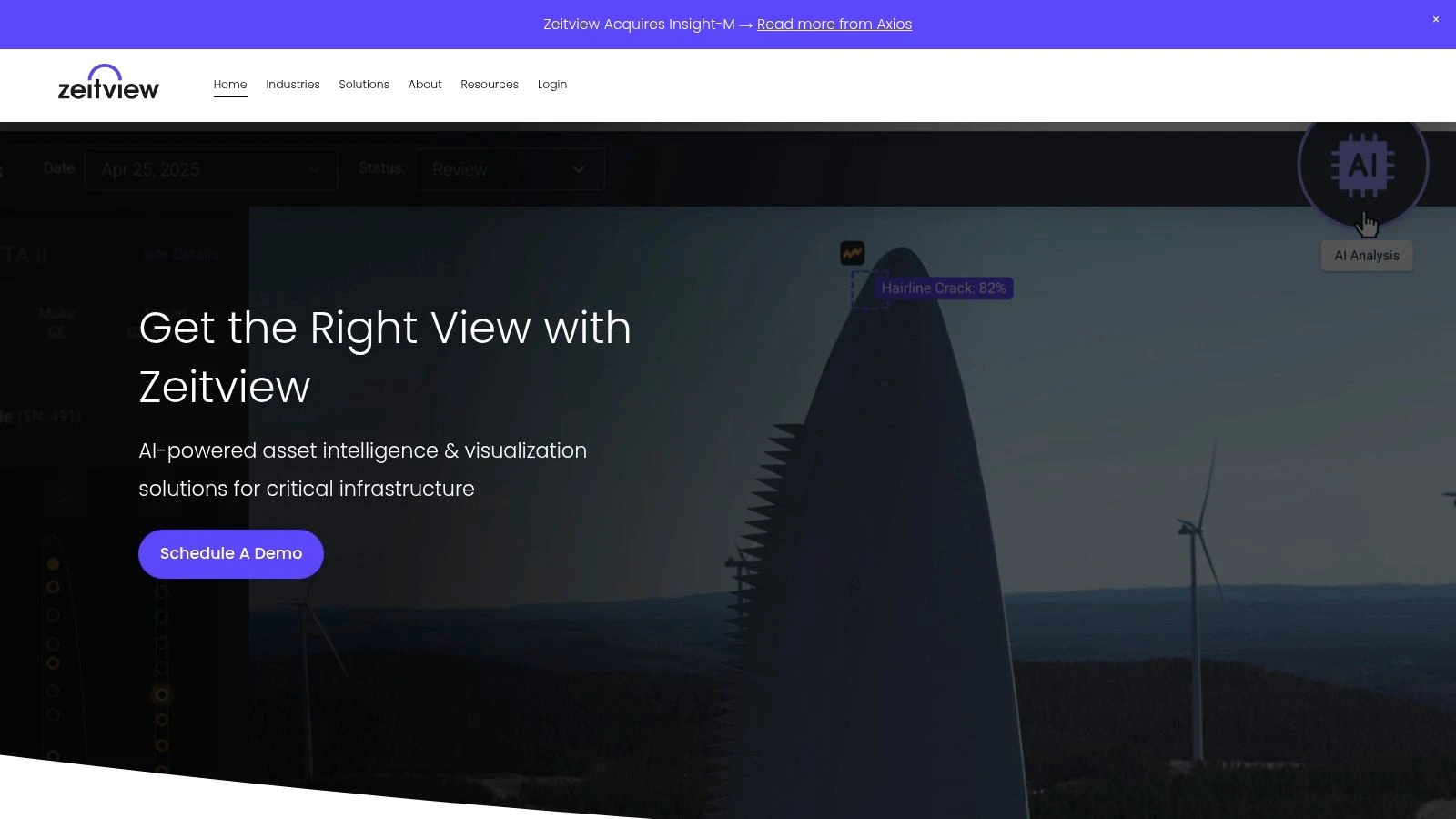
Zeitview is the name I’d start with for enterprise inspection programs, especially when the job isn’t a single shoot but an ongoing operational need. Property portfolios, utility assets, renewable sites, and commercial real estate programs all fit this model. The strength isn’t just pilot access. It’s standardization across locations.
That matters when your internal team needs the same type of deliverable every time, no matter which city the asset is in. A lot of local operators can fly one good mission. Far fewer can plug into a repeatable, documented workflow that still works on site ten, site fifty, and site two hundred.
Where Zeitview fits best
Zeitview is a strong option when your buying criteria include consistency, compliance, and reporting discipline.
- Enterprise inspection programs: Good fit for recurring asset inspections and multi-site rollouts.
- Standardized capture methods: Helpful when internal stakeholders need comparable outputs across properties or regions.
- Operational reach: Better suited than a single local vendor when jobs span several states.
Recent regulatory momentum also favors providers built for repeat operations. In a market where routine enterprise flights are becoming easier to scale, process-heavy vendors have an advantage over ad hoc local hiring.
Compliance-heavy drone work rewards systems more than personality.
Trade-offs to know before you engage
Zeitview isn’t my first recommendation for a small creative shoot where you just need a half day of cinematic footage for a local brand. It’s built more like an enterprise service layer than a boutique production crew. That’s a strength for inspections. It can feel heavy for one-off creative jobs.
Pricing also isn’t public, so expect a scoping conversation rather than an instant checkout. That’s normal at this level, but it means you need your scope ready before you contact them. Be clear on site count, asset type, deliverables, airspace constraints, and reporting needs.
For businesses comparing “drone pilots near me” results against a national provider, this is the practical distinction. A local pilot may be faster to book for a simple shoot. Zeitview is the safer call when you need cross-site consistency, internal reporting discipline, and a vendor that already understands enterprise inspection workflows.
Website: Zeitview
2. FlyGuys
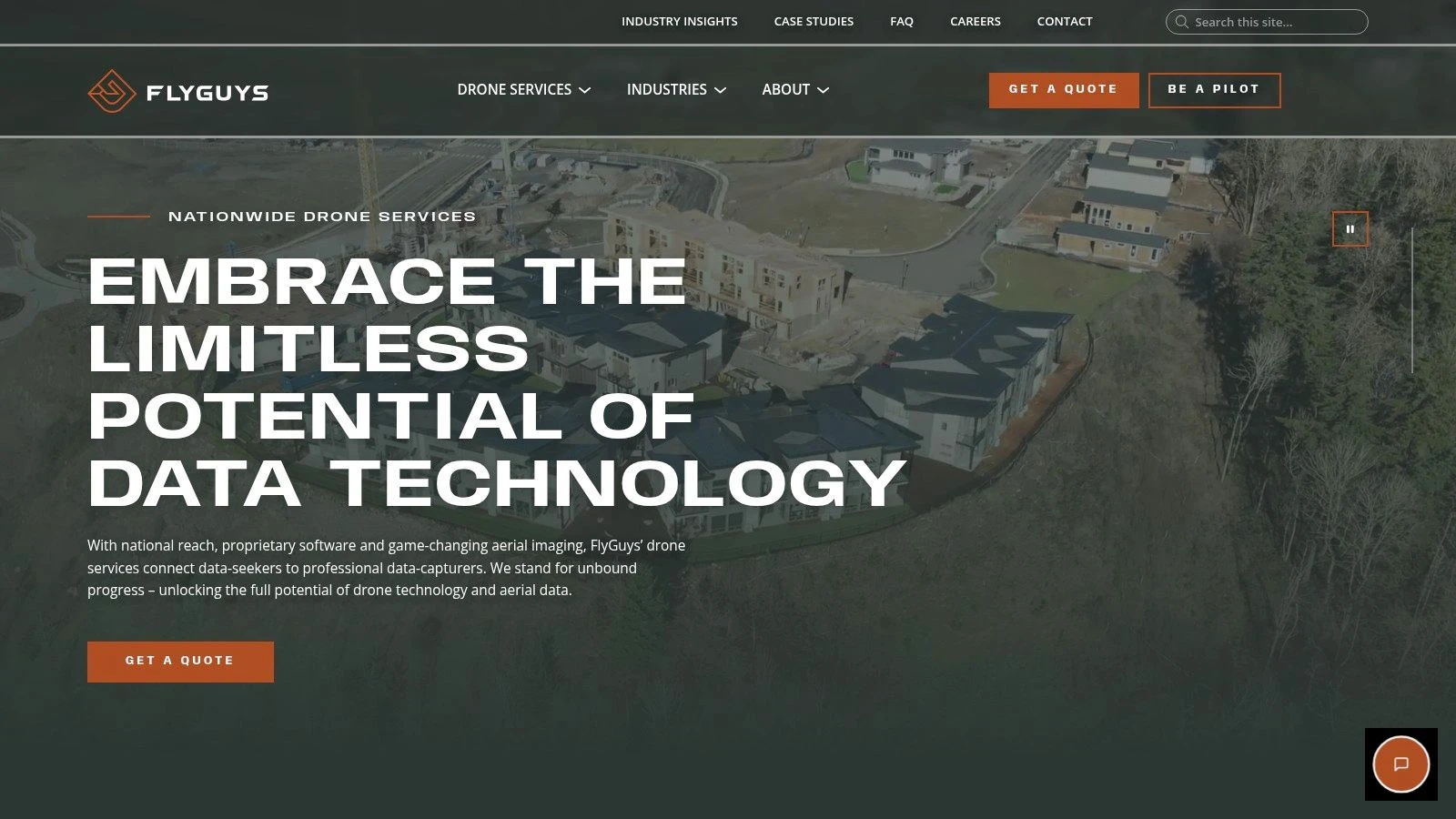
FlyGuys stands out when the conversation moves beyond basic aerial photos and into technical capture. If you need mapping, LiDAR, thermal, progress monitoring, or inspection support that may tie into another analytics workflow, this is one of the first providers I’d check.
A lot of buyers search “drone pilots near me” when what they really need is a sensor capability, not just a nearby operator. That difference is expensive when you discover it late. A pilot who can shoot sharp RGB imagery isn’t automatically set up for LiDAR or thermal work, and even when they have the hardware, their delivery process may not match your downstream needs.
Why technical buyers look here
FlyGuys is attractive for teams in construction, infrastructure, and energy because the service menu reaches past marketing imagery into more technical field capture.
- Advanced sensors: RGB, thermal or IR, LiDAR, and photogrammetry options are a major advantage.
- Broad coverage: Useful if projects move between regions.
- Platform-minded delivery: Better fit when aerial data needs to feed another system, not just arrive as standalone files.
The broader market supports that direction. North America is projected to hold over 40% of global drone market revenue share in 2025, with commercial segments growing fastest through 2030, particularly around mapping, surveying, and inspections (Grand View Research drone market analysis). That’s exactly the type of demand FlyGuys is positioned to serve.
What to pin down in scope
My advice with FlyGuys is simple. Don’t stop at “Can you do LiDAR?” Ask what aircraft, what sensor, what control process, what output, and what turnaround. Technical service breadth is useful, but your job still depends on local availability, asset access, and post-processing workflow.
You also won’t find public pricing, so this is a quote-led engagement. That’s not a negative. It just means buyers should arrive prepared with a real brief. Include required accuracy expectations, coordinate system needs, site constraints, and any client-facing output expectations.
If your project is inspection-heavy and your team cares more about usable data than pretty footage, FlyGuys deserves serious consideration.
Website: FlyGuys
3. Dronegenuity
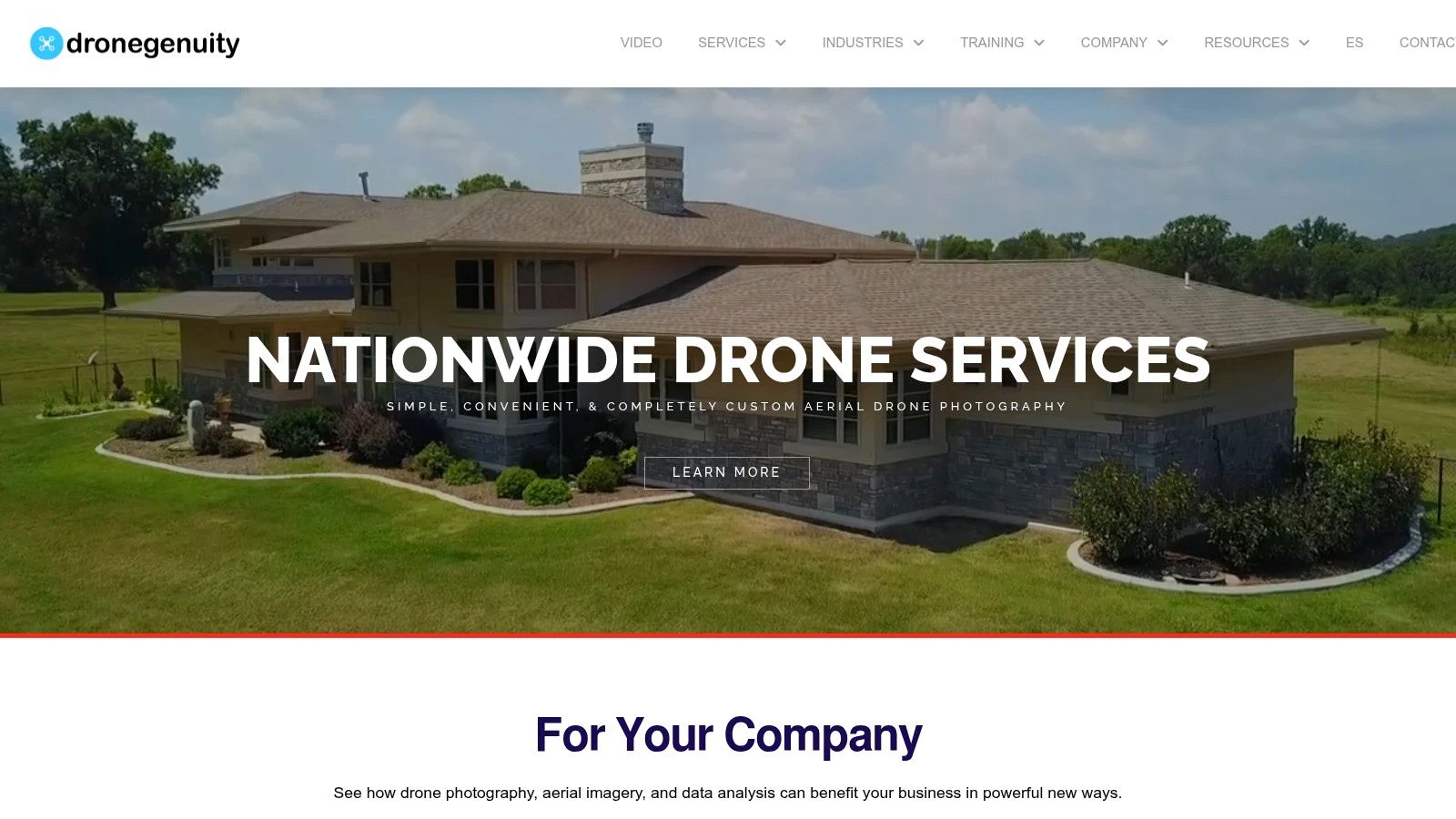
A common hiring scenario looks like this. A property team needs fresh aerials for a portfolio update, an operations manager wants roof photos for documentation, or a developer needs a clean site overview for a meeting next week. The job matters, but it does not justify a long technical scoping process or a custom sensor plan.
Dronegenuity is a strong fit for that middle ground. The company is built around standardized drone services that are easier for non-technical buyers to purchase and manage. For businesses searching “drone pilots near me,” that matters. A large part of the buying problem is not finding a pilot. It is finding a provider with a repeatable process, national coverage, and deliverables that match the business need without forcing the client to become an aviation expert first.
Where Dronegenuity fits best
Dronegenuity makes the most sense when the output is clear and the mission profile is relatively standard.
- Aerial photo and video: Good for commercial real estate, hospitality, asset marketing, and location overviews.
- Visual inspection capture: Useful for roofs, building exteriors, and general condition documentation where stakeholders mainly need clear imagery.
- Basic mapping products: Suitable for orthomosaics, site progress views, and other light mapping use cases.
That positioning is useful for companies that need drone work occasionally or across multiple sites, but do not want to build internal flight workflows for every request.
What to verify before you hire
The trade-off is specialization. Dronegenuity is not the first provider I would call for engineering-grade survey work, advanced industrial inspection, or projects with unusual regulatory constraints. Buyers should treat it as a standardized service provider, not a blank-check technical operator.
Ask direct questions. Confirm the exact deliverable format, expected image quality, revision policy, turnaround time, and whether post-processing is included in the quoted scope. If the project touches compliance-sensitive sites or recurring operations, also ask how pilot assignment, documentation, and operational oversight are handled. That is where businesses often outgrow simple directory-style hiring and need a more managed system behind the work.
That gap is one reason local search creates bad comparisons. A real estate media operator, a roof inspection pilot, and a survey-focused crew can all appear similar in search results, even though their workflows and output standards are very different. Businesses often struggle to verify vertical experience from a local listing alone, which is a recurring problem across construction, insurance, real estate, surveys, and events (industry specialization gap in local drone search).
Dronegenuity belongs on the shortlist for buyers who want a straightforward path to standard aerial deliverables. If your operation later needs tighter compliance control, repeat scheduling, or multi-site coordination, that is the point where a managed workflow layer becomes just as important as the pilot network itself.
Website: Dronegenuity
4. Soaring Cinema
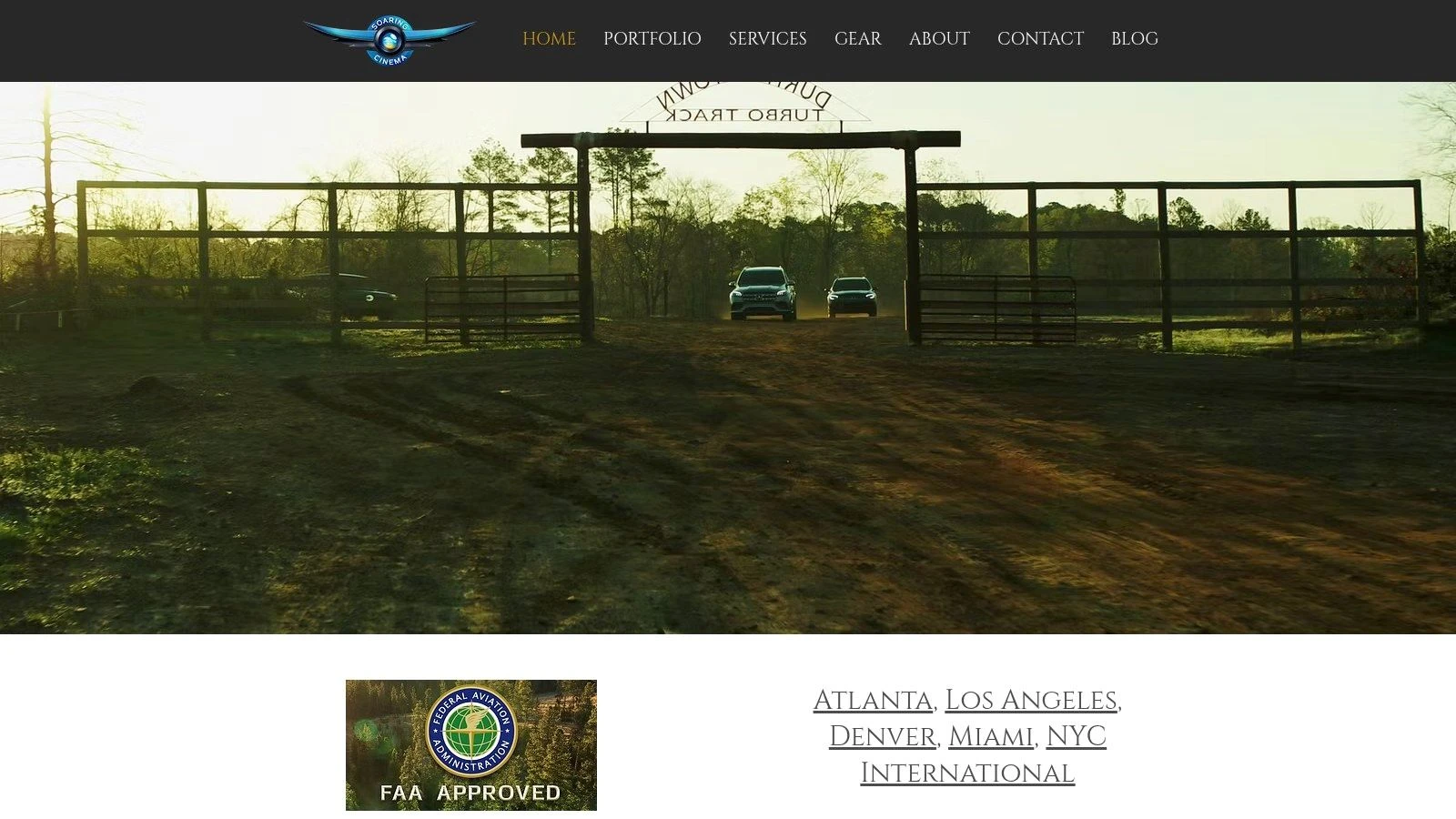
Soaring Cinema sits in a different category from most of the providers on this list. This is for production work. If you’re hiring for film, television, advertising, broadcast, or high-end branded content, technical inspection vendors won’t solve that problem well. Cinematic flying is its own discipline.
That distinction gets lost in local search. Businesses type “drone pilots near me” and often end up comparing a roof inspector, a real estate shooter, and a production crew as if they’re substitutes. They aren’t. Good cinema operators understand movement, lensing, blocking, crew coordination, safety on active sets, and the pace of professional production.
What Soaring Cinema does well
The advantage here is production readiness. You’re not just hiring someone who owns a drone. You’re hiring a crew that knows how to work inside production constraints.
- Cinematic operation: Better for dynamic camera movement and polished storytelling footage.
- Major market presence: Helpful for projects in production hubs with travel support for other locations.
- Crew scalability: Useful when the aerial unit needs to slot into a larger production.
If the footage has to cut cleanly into a professional edit, hire for production experience, not general drone availability.
Practical caution
This isn’t the vendor to call for engineering survey work, orthomosaic deliverables, or industrial inspection programs. You can ask, but that’s not the core strength. The value is in production capability, and production pricing typically reflects that.
If your internal team is cost-sensitive, be clear whether you need a cinema-grade aerial unit or competent commercial footage. Those are different buys. Overbuying here is as real a problem as underbuying elsewhere.
I’d shortlist Soaring Cinema when the aerial footage is on-screen product, not supporting documentation. Brand films, automotive work, network content, live-event capture, and agency campaigns are the right conversations.
Website: Soaring Cinema
5. NADAR Drone Company
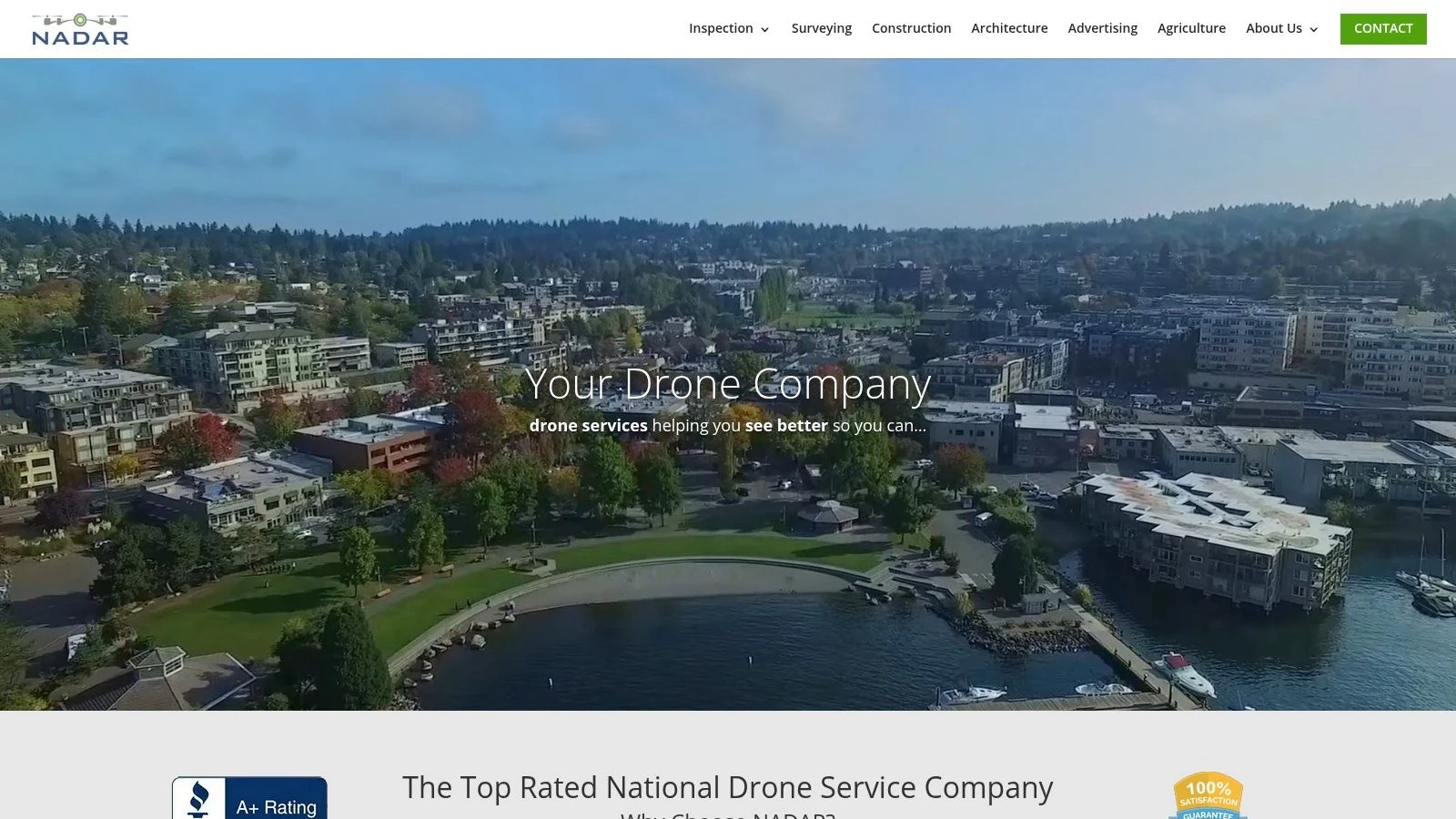
A regional business starts with a simple request: updated property photos. Three months later, the same team wants roof imagery, a construction progress visit, and basic inspection documentation across multiple locations. That is the kind of buying pattern NADAR fits well.
NADAR is a practical choice for companies that need one provider for several mainstream commercial drone jobs. Its service mix covers real estate, construction progress, inspections, AEC support, and agriculture. That breadth helps when the internal owner of the project is still defining what the drone program will include over the next year.
I usually rate providers like this on operational flexibility, not just the service menu. A broad menu is easy to publish. The harder part is handling changing scopes, dispatching qualified pilots in the right markets, and keeping communication tight when requests come from different departments.
Why buyers choose NADAR
NADAR makes sense for businesses that do not want to source a new vendor every time the use case changes.
- Wide service coverage: Useful when marketing, operations, and facilities teams all need different aerial outputs.
- Local pilot access through a larger network: Helpful for multi-site work without rebuilding the vendor list in each city.
- Mainstream commercial fit: Stronger for common business requests than highly specialized sensor programs.
This is often the right middle-ground buy. You get more capability than a one-person local operator can usually support, without jumping straight into a highly specialized enterprise provider.
That matters for contractors and home-service companies in particular. Aerial content can support inspection records, project updates, and sales collateral at the same time. If your team is also working out how to get your phone ringing, that overlap has real value because one flight can feed operations and marketing.
The main thing to verify
NADAR’s range is the selling point, but it also creates the main buying risk. Scope needs to be pinned down early.
If your project requires RTK capture, LiDAR, thermography, engineering-grade mapping, or a specific reporting format, ask direct questions before kickoff. Confirm who is flying, what aircraft and sensors are being used, what the final deliverable looks like, and whether that workflow is routine for the assigned pilot or something arranged case by case.
A directory-style search typically falls short. Finding drone pilots near you is the easy part. Verifying repeatability, compliance, and output standards is the actual job. If you expect recurring work across sites, manage the relationship like an operation, not a one-off booking. A system like Dronedesk helps keep pilot records, documentation, and scheduling organized as volume grows.
For companies that want a flexible commercial drone partner without turning every request into a fresh procurement cycle, NADAR is a sensible shortlist.
Website: NADAR Drone Company
6. Drone Brothers (Construction-focused)
A superintendent needs updated site photos before the owner call at 3:00. The PM wants the same flight to support progress records, a lender update, and next week’s marketing post. That is the kind of job Drone Brothers is built for.
Drone Brothers is a construction-first provider, and that specialization matters. Construction teams usually are not buying drone services as a one-off creative asset. They are buying a repeatable field process that fits active jobsites, supports reporting, and gives stakeholders consistent visual records across the life of a project.
Why construction teams hire it
The value here is operational fit. A provider that already understands progress flights, repeat capture points, site access issues, and stakeholder reporting will usually create less friction than a general aerial vendor learning the job on the fly.
- Recurring progress capture: Well suited to weekly or monthly flights tied to schedules, pay apps, and milestone reporting.
- Consistent framing and deliverables: Useful across multiple sites when owners, executives, or marketing teams expect the same format every time.
- Multi-use output: One flight can support field documentation, client communication, recruiting, and sales material.
That last point matters more than many buyers expect. On construction accounts, the cheapest flight is not always the best buy. The better option is often the provider that can produce dependable, organized output your team can keep using after the initial report is sent.
Best-fit buyer
Drone Brothers fits contractors, developers, and owners who already know they need routine site coverage and do not want to rebuild the workflow for every property. If your team manages several active projects, ask how they handle shot lists, recurrence schedules, naming conventions, and delivery standards across locations. Those details decide whether a drone vendor saves time or creates more admin.
I would not put them first on the list for utility inspections, agriculture, or brand-heavy cinematic work. The focus is narrower than that. For construction buyers, that is usually a strength.
If you want help getting your own contracting business found locally before you outsource media support, this guide on how to get your phone ringing is useful alongside any drone strategy.
Website: Drone Brothers
7. AeroDeploy UAV
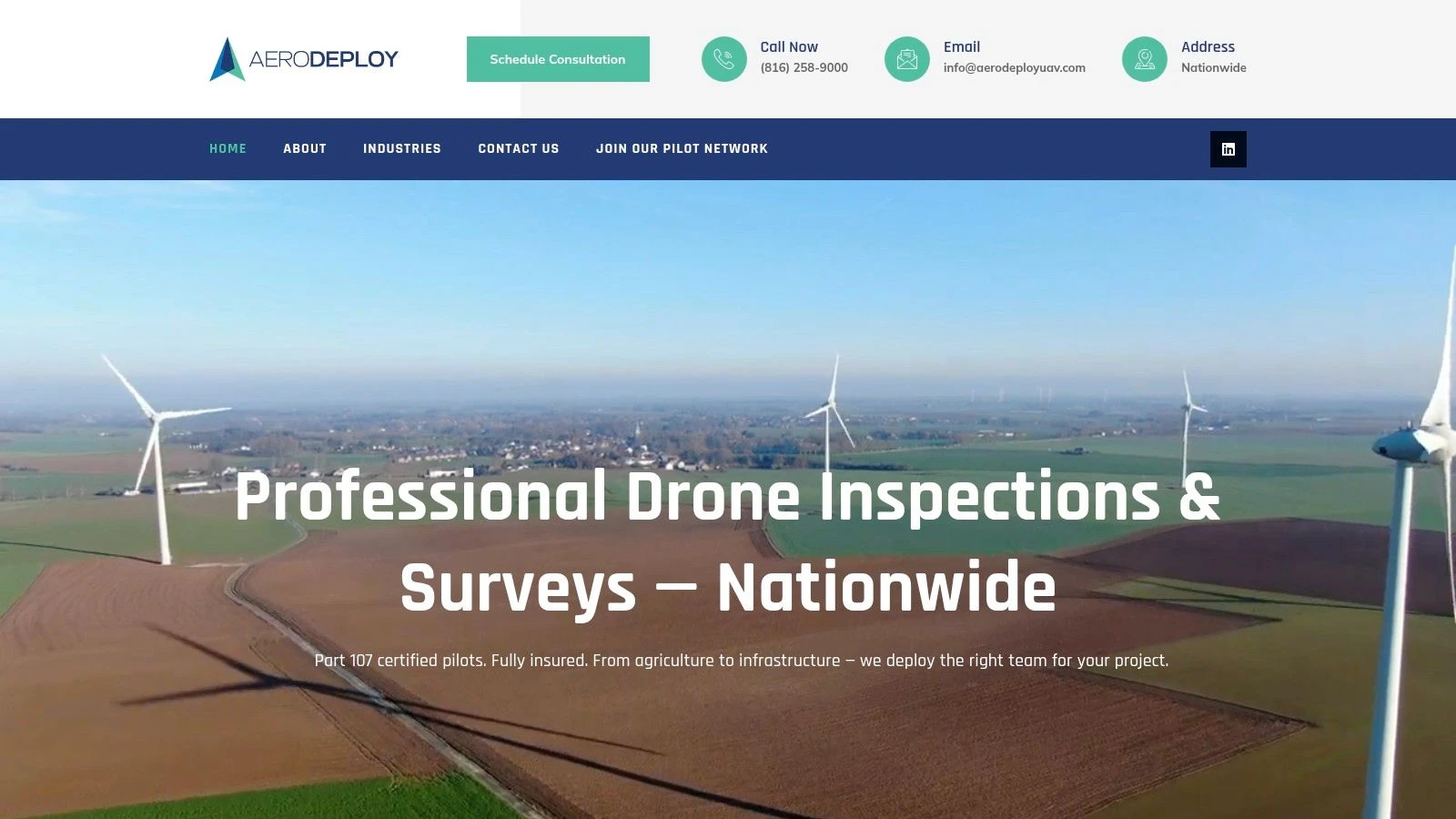
AeroDeploy UAV is the technical-industrial choice on this list. Telecom, wind, renewables, and industrial asset inspection are the natural fit. If your project involves regulated environments, asset integrity concerns, or government-adjacent procurement standards, this is the type of provider to examine closely.
The NDAA-compliant fleet option is especially relevant for buyers who can’t treat aircraft selection as an afterthought. That won’t matter to every client. It matters a lot to the ones it matters to.
Where AeroDeploy has the edge
Industrial inspections reward discipline. You need a provider that understands site rules, reporting expectations, and the difference between “we got footage” and “we completed an inspection mission.”
- Industrial sector alignment: Telecom, energy, and renewables are a clear fit.
- Compliance-minded equipment posture: Important for regulated or security-sensitive work.
- Standardized reporting orientation: Better for asset programs than ad hoc creative work.
Airspace complexity is part of that equation too. In places like Washington, D.C., providers with specialized restricted-airspace experience advertise that capability heavily because the region is described as one of the hardest places in the United States to fly, and smaller operators often lack clear guidance on how to manage that process (Washington D.C. FRZ service context).
Where it’s not the right hire
AeroDeploy isn’t the vendor I’d call for a hospitality promo video or a cinematic social campaign. The strength here is technical inspection and industrial seriousness, not creative polish.
Buyers in regulated sectors should ask about aircraft compliance, pilot qualification records, reporting format, and airspace authorization process before discussing footage style.
If your shortlist for “drone pilots near me” includes both lifestyle-content shooters and industrial inspection vendors, separate those conversations immediately. AeroDeploy belongs firmly in the second group.
Website: AeroDeploy UAV
Local Drone Pilot Services: 7-Provider Comparison
| Provider | Complexity 🔄 | Resource requirements ⚡ | Expected outcomes ⭐📊 | Ideal use cases 💡 | Key advantages 📊 |
|---|---|---|---|---|---|
| Zeitview (formerly DroneBase) | High 🔄, enterprise workflows, compliance-heavy | Large vetted pilot network, sector software, wide-area airspace authorization ⚡ | Standardized, compliance-ready inspection data and reports ⭐📊 | Multi-site/multi-city inspections, utilities, renewables, CRE | Scale and compliance expertise; strong enterprise references |
| FlyGuys | Moderate–High 🔄, sensor integration and QA processes | Advanced sensors (LiDAR, thermal, RGB), analytics/data integrations ⚡ | Engineering-grade surveys and analytics; deliverables vary by sensor/location ⭐📊 | Surveying/mapping, LiDAR projects, infrastructure and construction analytics | Broad technical services (LiDAR) and analytics partnerships |
| Dronegenuity | Low 🔄, straightforward, standardized imagery workflows | Nationwide Part 107 pilots, fast scheduling and basic mapping tools ⚡ | Fast-turnaround aerial imagery/video and orthomosaics suitable for marketing/inspections ⭐📊 | Property marketing, simple inspections, quick one-off shoots | Simple business-friendly process and rapid delivery |
| Soaring Cinema | High 🔄, production workflows, union/insurance alignment | Cinema-grade crews, specialty camera ops, scalable production equipment ⚡ | Cinematic, production-ready aerials and broadcast deliverables ⭐📊 | Film, TV, advertising, high-end cinematic shoots | Deep film/TV expertise and production-ready compliance |
| NADAR Drone Company | Low–Moderate 🔄, responsive local dispatch model | Local pilot dispatch across states for marketing and inspection work ⚡ | Versatile imagery and inspection deliverables with strong customer service ⭐📊 | Real estate, construction, AEC, precision agriculture | Versatile service catalog and emphasis on responsiveness |
| Drone Brothers (Construction-focused) | Moderate 🔄, recurring program standardization | Standardized capture processes, in-house editing/mapping teams ⚡ | Frequent progress documentation, standardized portfolio reporting ⭐📊 | General contractors, owners, recurring construction site capture | Purpose-built construction workflows and consistent deliverables |
| AeroDeploy UAV | Moderate–High 🔄, technical inspection procedures | Part 107 pilots, NDAA-compliant aircraft options, standardized reporting ⚡ | Technical inspection imagery and compliance-ready reports for industrial assets ⭐📊 | Telecom, wind/renewables, industrial and government-regulated inspections | NDAA-compliant fleet and focus on regulated/industrial clients |
From Hired to Managed Scaling Your Drone Operations with Confidence
A regional contractor hires a good pilot for one site. Six months later, that same contractor is coordinating flights across multiple projects, pulling in subcontracted crews, answering client questions about prior missions, and chasing insurance documents before the next job can go out. The problem is no longer finding a pilot. The problem is running drone work like an operation instead of a string of isolated bookings.
That shift catches a lot of teams off guard. Searching for "drone pilots near me" solves the first job. It does not solve recurring scheduling, pilot records, aircraft maintenance history, flight logs, approval trails, or consistent file delivery across dozens of missions.
The market is also getting bigger and more structured. One recent industry roundup notes strong long-term growth in commercial drone services across inspection, mapping, real estate, construction, and defense (global drone services market projections). As volume increases, the weak point usually becomes administration, not flight capability.
What breaks first in growing drone programs
The first failures are usually boring, and expensive.
A pilot certificate expires and no one notices until a client asks for current documentation. One project manager names folders by site address, another uses job numbers, and a third leaves files in email attachments. Different pilots submit different pre-flight notes, so reviewing risk decisions later becomes guesswork. None of this looks serious on day one. It becomes serious when you need to prove what happened, who approved it, and whether the crew was current and insured at the time.
Common failure points look like this:
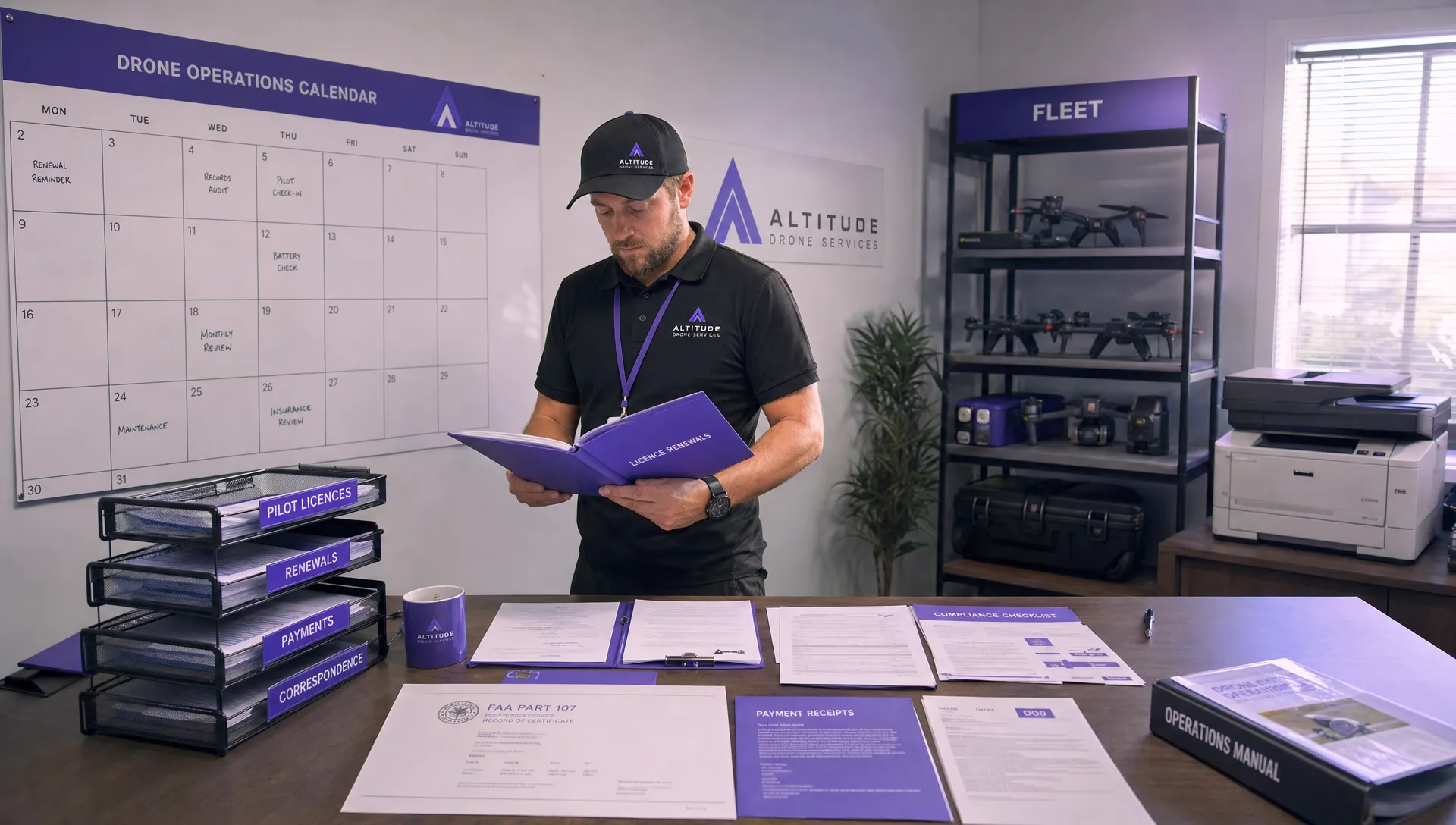
- Documentation drift: Insurance, waivers, certificates, and maintenance records fall out of date or get buried in inboxes.
- Planning inconsistency: Each pilot uses a different method, which makes oversight harder and repeat jobs less reliable.
- Scattered deliverables: Photos, maps, and reports end up across shared drives, text threads, and personal upload links.
- Weak audit trails: Client questions and flight decisions sit in email chains instead of a usable operational record.
Good programs standardize these basics early. That is what lets them scale without creating admin drag.
Key insight: Strong drone operations depend on repeatable planning, recordkeeping, and oversight. Pilot skill matters, but process is what holds up under growth.
Where Dronedesk fits
Dronedesk handles the management layer that starts to matter once drone work becomes recurring. It gives operators, internal teams, and contractor-heavy programs one place to organize planning, compliance tasks, pilot records, fleet information, flight logs, and job history.
The practical benefit is straightforward.
- Centralized pilot and contractor oversight: Keep qualifications, insurance documents, and assignments in one operational system.
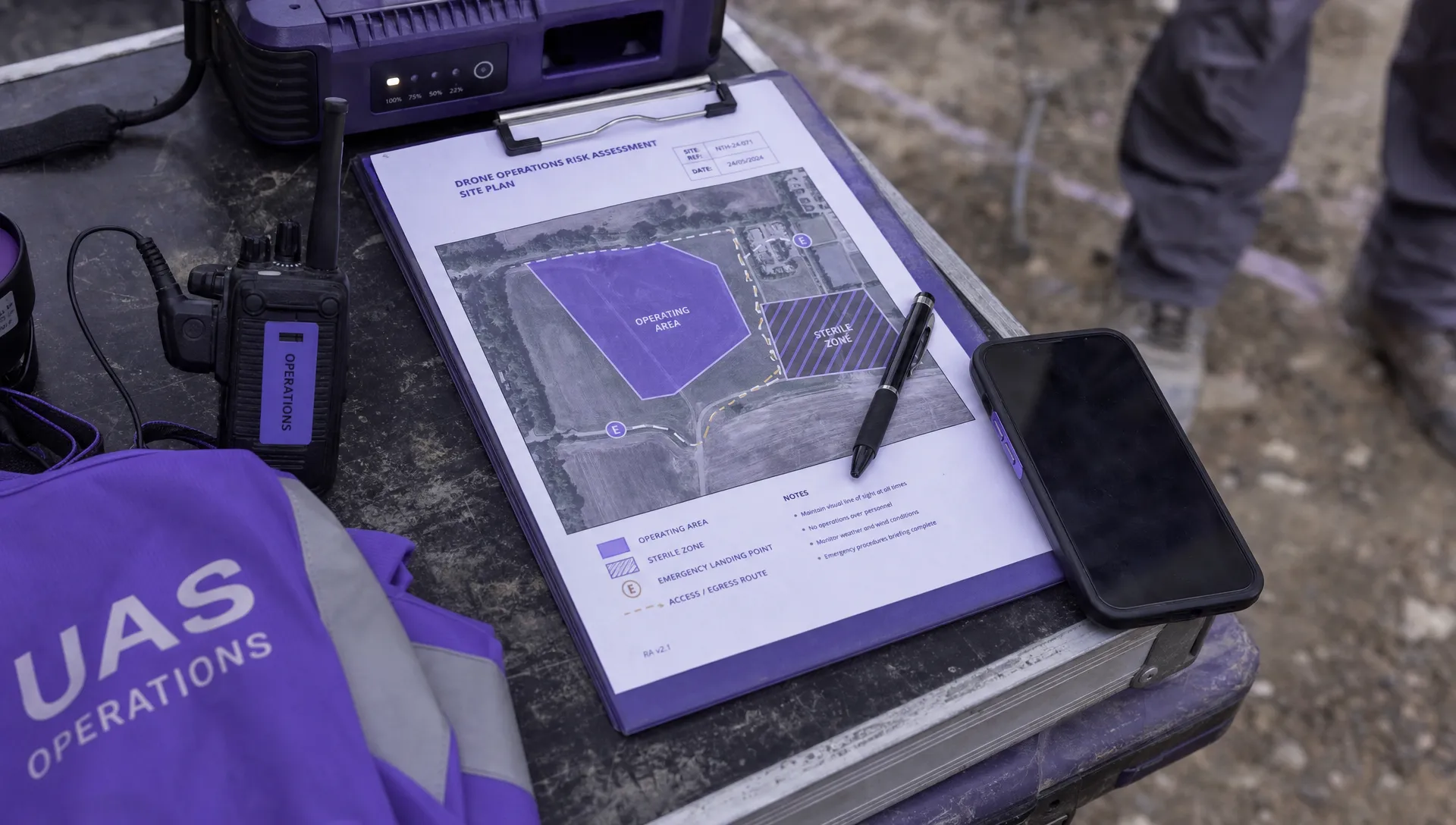
- Structured mission planning: Standardize risk assessments, airspace checks, and job setup so every mission follows the same process.
- Cleaner records: Store logs, job notes, and deliverables in a way that is easier to review later.
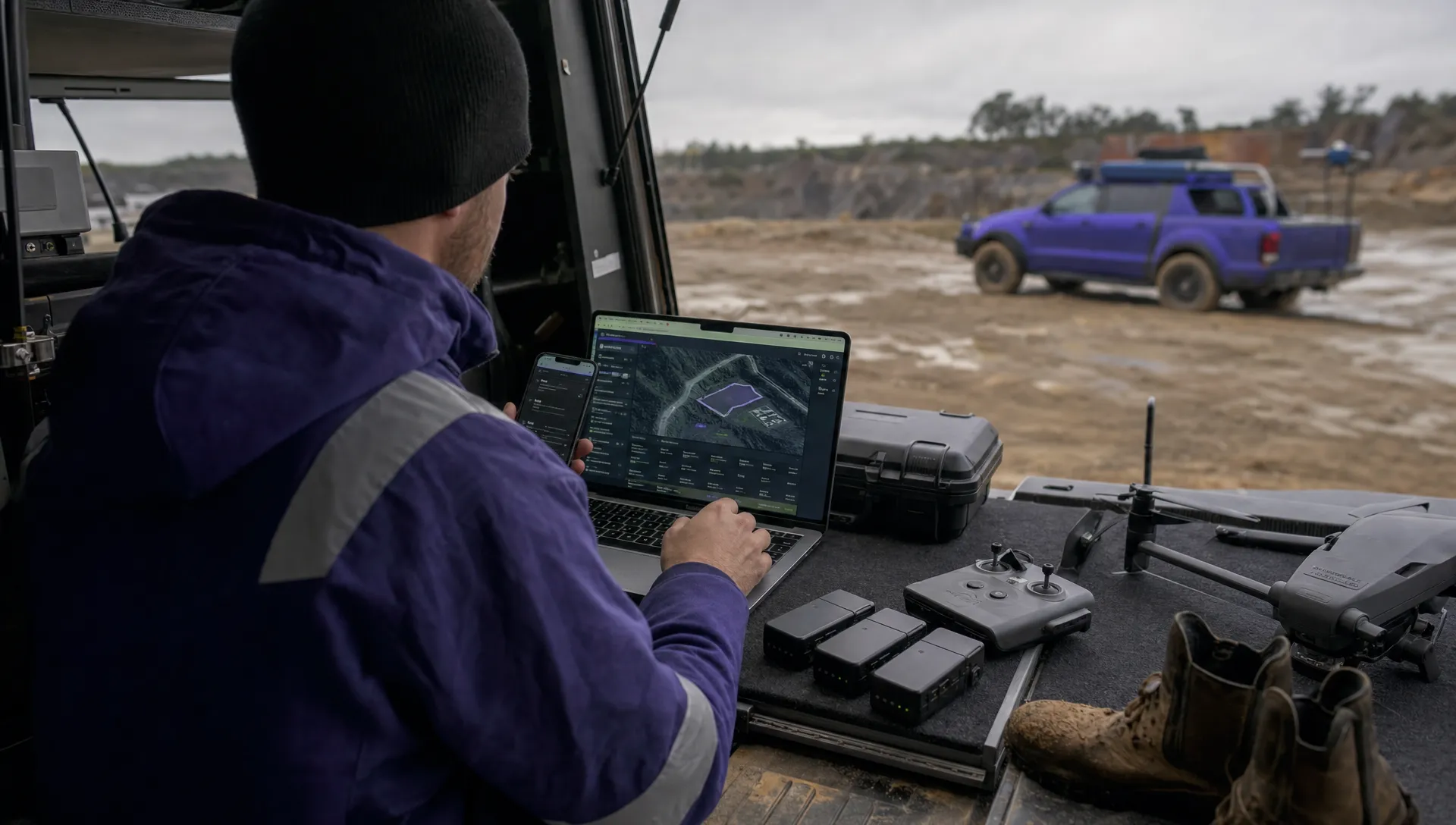
- Lower admin friction for common field workflows: If your crews already fly DJI equipment, synced flight data and standardized records reduce manual entry and missed details.
That last point matters in practice. A management system only saves time if crews will use it under field conditions. If the process adds steps, pilots work around it. If it fits the way jobs are already run, adoption is much easier.
What works and what does not
The teams that scale well make a few disciplined choices. They use one planning standard. They require the same core records for every mission. They define where deliverables live, how projects are named, who approves flights, and how contractor credentials are checked before work starts.
The teams that struggle usually treat drone work as an occasional add-on, even after it becomes business-critical. That approach can survive a few one-off flights. It falls apart with recurring inspections, regulated clients, multi-site programs, or any customer that expects traceable records.
The fix is operational, not glamorous. Set a standard. Use the same workflow every time. Make compliance records easy to verify. Make flight history easy to retrieve. Make deliverables easy to find.
That is how a hired pilot turns into a managed drone operation with fewer surprises.
 How to Evaluate a Free Drone Logbook Before Using It →
 FAA Part 107 Test: How to Master Airspace Questions →
 Drone Risk Assessment Controls That Work in the Field →
 FAA Drone License Costs Beyond the Knowledge Test →
 Drone Part 107 Operations: When a Waiver May Be Needed →
 Drone Operating Rules for Managing Contractors and Employees →
 BVLOS Drone Requirements for Building a Safety Case →
 Drone Pilot Test Mistakes That Cost Candidates Marks →
 FAA 107 License vs Part 107 Certificate: What’s the Difference? →
 Drone Airport Rules: A Field Checklist for Site Assessments →