
Regulatory Management Tool for Drones - Your Complete Guide
Think of a regulatory management tool for drones as your digital co-pilot. It’s the essential bit of kit that helps you make sense of the tangled web of aviation law, translating complex regulations into clear, practical guidance for every flight.
Why Every Drone Pilot Needs a Digital Co-Pilot

Ever tried navigating a huge, unfamiliar city with nothing but a crumpled, out-of-date paper map? That’s pretty much what flying a drone feels like without the right software. The sky is full of invisible boundaries—no-fly zones, temporary flight restrictions (TFRs), and a patchwork of local rules that can pop up overnight.
Trying to keep track of all that manually isn't just a headache; it's a huge risk. A good regulatory management tool is like having Google Maps for the sky. It swaps guesswork for genuine, data-driven confidence and goes way beyond basic mapping by pulling every part of your compliance workflow into one place.
From Pre-Flight Checks to Final Reports
This kind of software quickly becomes an indispensable partner for the entire mission. Before your props even start spinning, it’s helping you plan your flight, carry out your risk assessments, and make sure every job is set up for success from the get-go.
It’s not just about dodging restricted airspace. It’s about building a solid, verifiable record of your professionalism and due diligence. This digital co-pilot takes care of all the crucial details that separate the hobbyists from the pros.
A good tool will have your back at every stage:
- Mission Planning: Instantly flagging airspace restrictions, checking for ground hazards, and pulling in the latest weather reports.
- In-Flight Monitoring: Giving you real-time alerts and situational awareness to keep your operations safe while you're in the air.
- Post-Flight Logging: Automatically creating detailed, compliant logs for every single flight—an absolute lifesaver for audits or client reports.
Building a Foundation of Safety and Trust
At the end of the day, using a dedicated regulatory management tool is about more than just ticking boxes. It’s about building a rock-solid foundation of safety that protects your business, your clients, and the public. As the drone industry grows up, being able to prove your commitment to compliance is a massive advantage.
By pulling a whole series of complicated, disconnected tasks into a single, smooth workflow, this technology makes safe, legal drone operations a reality for everyone—from solo operators to large enterprise fleets. It's the key to flying with confidence and scaling your business professionally.
The Hidden Risks of Manual Drone Compliance

Trying to manage drone compliance manually is a bit like trying to navigate a minefield with a paper map. You might have a general idea of where you are, but you’re completely blind to the hidden dangers that could pop up at any moment.
For drone pilots, the reality isn't much different. You're dealing with a sea of regulations from authorities like the FAA and EASA that are constantly changing.
This forces you to juggle dozens of websites, spreadsheets, and random apps just to plan one mission. You might check a list of no-fly zones, only to completely miss a new Temporary Flight Restriction (TFR) that popped up overnight for a local concert. The amount of information is just too much, and the risk of human error is sky-high.
Forgetting a single step or misreading a complex rule isn't a small mistake. It can lead to serious consequences, including massive fines, having your license suspended, or even facing legal action. That kind of stress is a heavy weight for any operator to carry.
The True Cost of Juggling Compliance
Picture this: a commercial pilot is prepping for a straightforward aerial survey. The manual process is a total time-waster. They’ve got one browser tab open for airspace maps, another for TFRs, a spreadsheet to track pilot licenses, and a separate folder for maintenance logs. It’s not just inefficient; it's a disaster waiting to happen.
A single slip-up—like forgetting a firmware update or not logging a pre-flight check correctly—could make an entire mission’s data useless or, far worse, put people in danger. And this risk only gets bigger as your operations expand. Just like other industries lean on robust quality assurance frameworks to keep standards high, drone pros need a better system.
Relying on memory and manual checklists in a dynamic regulatory environment is no longer sustainable. The hidden costs—lost time, high error rates, and professional risk—make a compelling case for a dedicated solution.
The Need for a Smarter System
The drone industry is growing so fast that doing compliance by hand has become nearly impossible. The global drone market, valued at around $73 billion, is expected to shoot past $163 billion by 2030.
This boom has led to tougher rules, like the FAA's Remote ID mandate, which requires real-time drone identification. Keeping up with these changes just isn’t feasible with the old methods.
It’s clear that a regulatory management tool for drones isn't just a "nice-to-have" anymore—it’s an absolute must. It automates the tedious, high-stakes compliance work, freeing pilots up to focus on what really matters: flying safely and getting great results. To see how this tech can change your operations, check out our deep dive into drone compliance software.
Core Features of an Effective Drone Management Tool
So, what separates a basic flight app from a serious compliance system? It boils down to a few core features that turn a simple map into a full-blown operational hub. These aren't just flashy add-ons; they're the engine room of any professional drone operation, driving safety, efficiency, and compliance.
Real-Time Airspace Intelligence
Top of the list is real-time airspace intelligence. Think of it as your own personal air traffic controller, keeping a constant eye on the sky for you. This is so much more than just a map with static no-fly zones. We're talking about live data feeds that pull in Temporary Flight Restrictions (TFRs) for things like major sporting events or emergency situations.
A top-tier tool will have LAANC (Low Altitude Authorization and Notification Capability) baked right in. This is a game-changer, allowing you to request near-instant flight authorization in controlled airspace directly from the app. It’s the difference between being grounded by red tape and flying with documented, official clearance. No more guesswork.
Automated Safety and Risk Management
Once you know where you can fly, you need to prove you can do it safely. This is where automated risk assessments come in, and frankly, they're worth their weight in gold. Forget about wrestling with clunky spreadsheets and endless checklists. The software walks you through a standardised process every single time.
It prompts you to think through mission-specific hazards—things like dodgy weather, power lines on site, or how close you'll be to the public. The tool then spits out a professional, shareable risk assessment document. This isn't just about ticking a box for the CAA; it’s about showing clients you're a safe, diligent, and reliable operator. It builds trust.
The image below shows just how much cleaner this process becomes.

As you can see, it takes a messy, disjointed manual workflow and turns it into a simple, three-step flow. This drastically cuts down on errors and saves a massive amount of time.
Manual vs Automated: A Quick Comparison
It's one thing to talk about these features, but seeing the difference side-by-side really drives the point home. Manual methods might seem "free," but they come with hidden costs in time, risk, and potential for human error.
Manual Compliance vs Automated Regulatory Management
| Compliance Task | The Manual Method (High Risk) | The Automated Tool (Smart & Safe) |
|---|---|---|
| Airspace Checks | Juggling multiple websites and apps for NOTAMs, TFRs, and local advisories. It's easy to miss something critical. | Integrated, live airspace data with automated alerts. One single source of truth. |
| Risk Assessments | Filling out a generic paper or spreadsheet template. Prone to copy-paste errors and often overlooks site-specific hazards. | A dynamic, guided workflow that forces consideration of relevant risks. Generates a professional, consistent document every time. |
| Flight Logging | Scribbling in a paper logbook (if you remember!). Details are often inaccurate, incomplete, or easily lost. | Automatic, tamper-proof digital logs. Captures GPS path, altitude, duration, and more without you lifting a finger. |
| Team & Asset Tracking | Relying on memory or a separate spreadsheet to track pilot licenses and drone maintenance. High risk of expired certs or missed services. | Centralised dashboard tracks all pilot qualifications and hardware maintenance schedules with automated reminders. |
The takeaway is clear: automation doesn't just make things faster, it makes your entire operation fundamentally safer and more professional.
Comprehensive Logging and Asset Tracking
Finally, a truly effective tool acts as your digital evidence locker. Let’s be honest, manual flight logs are a pain. They get lost, the details are fuzzy, and they're prone to errors. An automated system solves this by creating detailed, tamper-proof records for every single mission. It captures all the critical data: flight duration, max altitude, GPS paths, the lot.
These logs are more than just records; they are your proof of professionalism. If the CAA ever comes knocking, or you have an incident or a client dispute, your digital flight records provide an unshakeable account of your compliant operations.
This same logic applies to your pilots and hardware. The system keeps tabs on pilot certifications, flagging anyone whose license is about to expire. It also monitors drone maintenance schedules, sending alerts for required check-ups and logging every repair. It turns what was once a stressful chore into a simple, automated background process, ensuring your entire fleet is safe, compliant, and ready to fly.
Navigating Global Drone Regulations

Flying a drone internationally throws a whole new level of complexity into the mix. Just because you're compliant in one country doesn't mean you're legal in another, which can quickly turn a global project into a regulatory nightmare. Think of each nation's airspace as a unique puzzle with its own set of rules, restrictions, and hoops to jump through.
This messy patchwork of laws comes from different aviation authorities, each with its own ideas about how to manage drone traffic. What gets you in the air in the United States is often completely irrelevant for a mission in the European Union. Trying to use a one-size-fits-all approach to drone compliance isn't just a bad idea; it’s a guaranteed failure.
FAA vs EASA: A Tale of Two Systems
To really get a feel for this challenge, let's look at the two giants of aviation regulation: the Federal Aviation Administration (FAA) in the U.S. and the European Union Aviation Safety Agency (EASA). While both are shooting for the same goal—safety—their methods are worlds apart, creating very different day-to-day realities for drone pilots.
These agencies set the tone for everyone else. The FAA, for instance, mandates Remote ID for most drones and relies on systems like LAANC (Low Altitude Authorization and Notification Capability) to safely get drones into controlled airspace.
These differences create very real problems for pilots crossing borders. Some of the key things that trip people up include:
- Drone Categorization: The way drones are classified by weight and risk can be wildly different, directly impacting where and how you’re allowed to fly.
- Pilot Certification: The training and licenses you need to fly commercially can be completely different from one region to the next, and your home country’s certification might not be recognized at all.
- Airspace Systems: The U.S. leans heavily on the automated LAANC system for airspace access, while Europe is busy building out its own U-Space framework, which is a set of services designed for dense drone traffic.
The biggest hurdle for any international drone operation is becoming fluent in all these different regulatory languages. A pilot has to become an expert in multiple legal frameworks, which is not only time-consuming but also incredibly risky if you get it wrong.
The Software Solution: A Universal Translator
This is exactly where a smart regulatory management tool for drones becomes a non-negotiable part of your kit. Instead of forcing pilots to manually decode a dozen different legal books, the software acts as your universal translator. It holds a global database of regulations and automatically applies the right local rules based on where your mission is happening.
Planning a flight in Paris? The system instantly pulls up EASA and French regulations. Next job is in Dallas? It seamlessly switches to FAA rules and LAANC requirements. This intelligent, location-aware approach turns what used to be a high-stakes research project into a simple, automated, and reliable process. You can learn more about keeping up with these changes by reading our guide on the new drone laws.
How a Centralized Platform Simplifies Your Life
Let's move from the theory of regulations to what actually happens on the ground. This is where a single, unified platform completely changes the game for compliance. Forget juggling a dozen different apps, spreadsheets, and weather forecasts. A modern regulatory management tool for drones pulls every single task into one straightforward, efficient workflow. This immediately breaks down those frustrating data silos and slashes the risk of human error by creating one reliable source of truth for your entire operation.
Picture planning a typical commercial flight. A centralized system like Dronedesk puts the whole pre-flight checklist on autopilot. The software runs instant airspace checks, pulling in live data on restrictions, NOTAMs, and temporary advisories. At the same time, it generates a risk assessment tailored to that specific job and flight plan, making sure nothing gets missed.
This all-in-one approach means the system also confirms the drone you’ve assigned has had all its maintenance done and the pilot’s certifications are current and valid for that mission. What used to be a long, disjointed list of manual checks becomes one smooth, automated sequence.
A Single Pane of Glass View
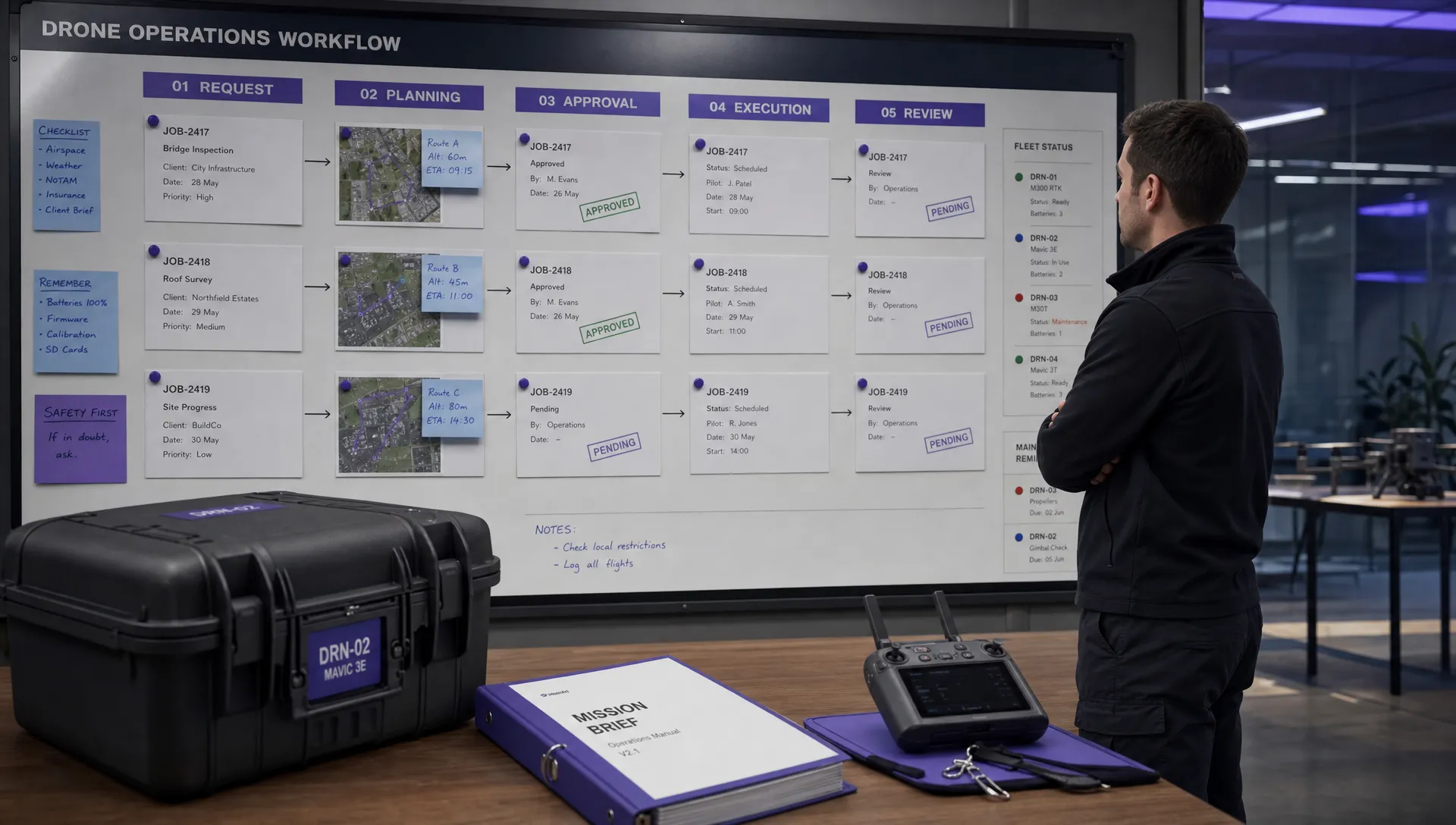
The real magic of this model is giving operators a "single pane of glass" view. The dashboard gathers all your critical compliance data—flight logs, risk assessments, pilot qualifications, and drone maintenance status—and presents it in one organised, easy-to-read place.
Here’s what that looks like in practice:
This kind of visual clarity lets you see the complete status of any job, asset, or team member with a quick glance. It makes managing complex projects far easier and gives you the confidence to scale your operations without dropping the ball.
The benefits of bringing everything together aren't unique to the drone world. Lots of other industries use similar automated compliance strategies to make their lives easier and stay on the right side of complex rules.
From Pre-Flight Checks to Post-Flight Reports
This streamlined process doesn't just stop at takeoff. It follows you through every phase of the mission. Once a flight is done, the platform automatically creates detailed logs and reports. This data is gold for invoicing clients, running internal audits, or showing a solid history of compliant flying to regulators or your insurance company.
By pulling every part of compliance under one roof, a centralized tool transforms a stressful, reactive chore into a proactive, manageable system. It lets pilots get back to focusing on what they do best: flying safely and getting great results for their clients.
Ultimately, a dedicated regulatory management tool delivers:
- Automated Verification: The system checks pilot licenses, drone maintenance schedules, and airspace restrictions without you having to lift a finger.
- Standardized Workflows: It makes sure every mission follows the exact same safety and compliance steps, guaranteeing consistency no matter who on your team is flying.
- Effortless Documentation: You get comprehensive, audit-ready reports generated automatically, saving countless hours of boring admin work.
This consolidation doesn’t just make compliance easier; it makes your entire business more professional, scalable, and resilient.
Unlock Business Growth with Smarter Compliance
It's easy to look at compliance as just another cost of doing business. That's a common view, but it's a seriously limiting one. The truth is, adopting a regulatory management tool for drones is a direct investment in your company's future. It turns a chore you have to do into a powerful advantage that fuels real growth.
Think about it from a client's perspective. Showing up with a professional system for managing safety and legal duties builds instant trust. It immediately sets you apart from the competition who are still juggling spreadsheets and paper. That's how you build an unshakeable reputation.
From Administrative Burden to Strategic Asset
By automating the tedious, repetitive compliance tasks, a dedicated tool gives your team back its most precious resource: time. Instead of spending hours buried in paperwork and manual checks, your pilots can focus on what actually makes you money—flying more missions and looking after your clients.
This simple shift has a direct and obvious impact on your bottom line.
An investment in a compliance platform isn't an expense. It's a strategic asset that unlocks professionalism, enables you to scale, and drives profitability by turning regulatory adherence into a competitive edge.
Gaining Tangible Financial Advantages
The benefits go well beyond simple efficiency. When you have verifiable digital flight logs, you have solid proof of your safe operating history. This is exactly what insurers want to see, and it can lead to lower premiums.
And if an incident ever does happen, those detailed, tamper-proof records become your most critical defense, providing a clear, indisputable account of your due diligence.
The need for systems that can keep up is growing fast. Regulations are a complex patchwork across the globe, from the FAA’s registration requirements in the U.S. to the EU's risk-based categories. With worldwide drone flights surging by 25% and Europe seeing a 34% jump, the demand for adaptable regulatory tools has never been higher, as highlighted in recent drone analytics and statistics.
Ultimately, a centralized system makes your entire business more resilient and professional. By bringing every part of compliance under one roof, you create a solid foundation for safe, scalable, and profitable growth. You can explore how a unified approach improves every mission in our guide to drone operations management.
A Few Common Questions
If you're new to drone management software, you probably have a few questions. Let's tackle some of the most common ones we hear from pilots.
How Is This Different From a Basic Flight App?
It’s a fair question. Your standard flight planning app is great for one thing: mapping out a single mission. A proper regulatory management tool for drones, on the other hand, gives you a command-and-control view of your entire operation.
Think bigger picture. We’re talking about tracking pilot licenses, staying on top of drone maintenance schedules, knocking out detailed risk assessments, and keeping long-term compliance records for your business. It's the difference between a single map for one journey and a full-blown air traffic control tower for your whole fleet.
To put it simply: a flight app helps you fly one mission. A management tool helps you run an entire professional and safe drone business.
Can a Tool Guarantee I Am 100% Compliant?
No tool on earth can offer a 100% compliance guarantee, and anyone who says they can isn't being straight with you. The final responsibility always, always rests with the pilot-in-command.
What the software does do is give you all the data, automated checks, and solid workflows you need to get there. It’s like having an expert co-pilot, not an autopilot. It feeds you the right information at the right time to back up your professional judgment, but it never replaces it.
Is This Software Only for Large Commercial Fleets?
While it’s an absolute must-have for big operations, the core ideas of safety and compliance don’t change whether you have one drone or one hundred. Sole traders and small outfits get a massive leg up from automated logging, easy planning, and having all the airspace intelligence in one place.
It frees up your time to focus on flying and helps you build a professional, scalable business from the word go.
Ready to stop wrestling with spreadsheets and manual checklists? It's time to run your drone operations like the professional business it is. Dronedesk brings everything you need into one simple, powerful platform. Start your free trial today and see for yourself.
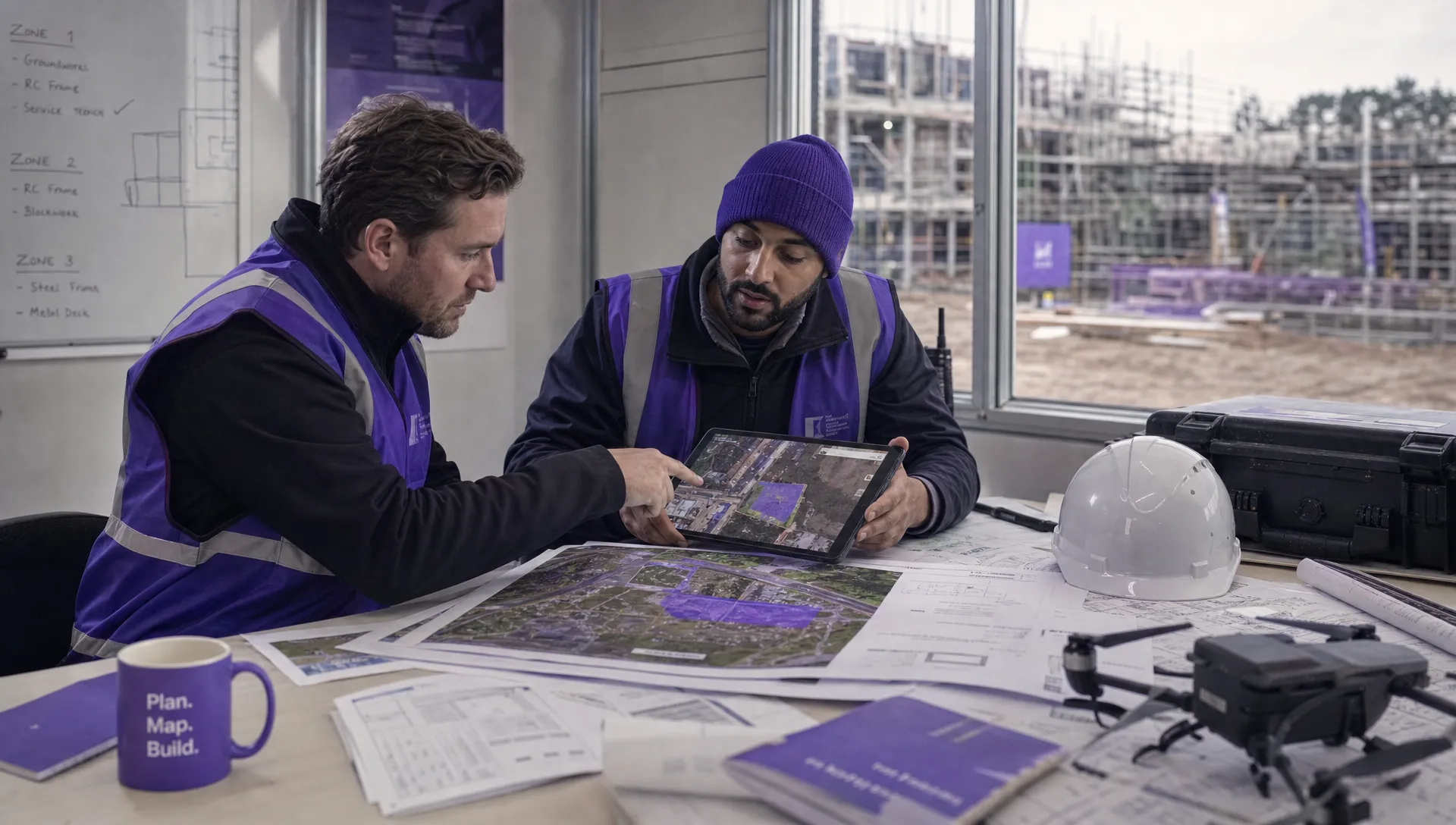 How to Start a Drone Mapping Business With a Clear Workflow →
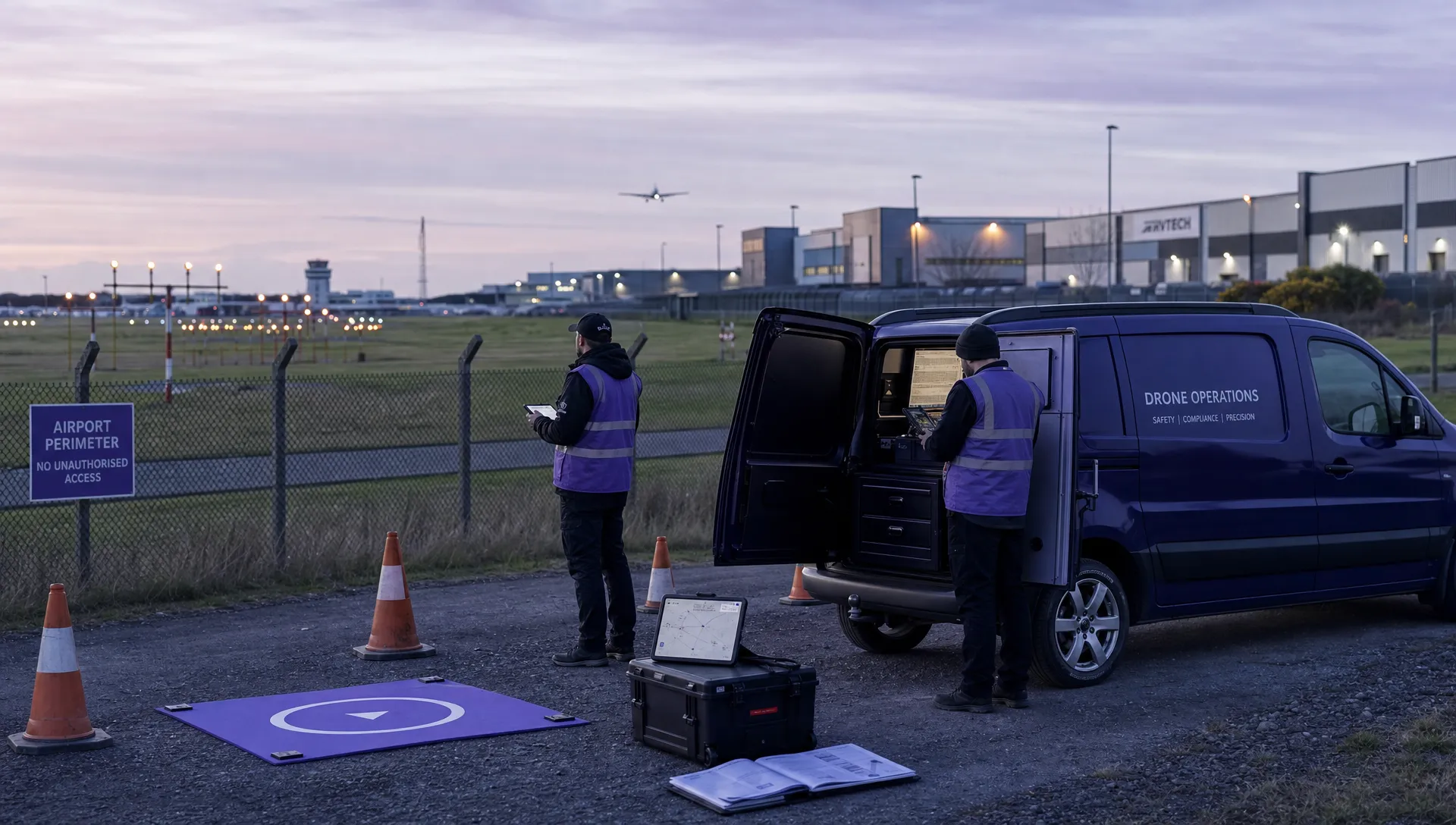 Class C Airspace Drone Rules for Commercial Flights →
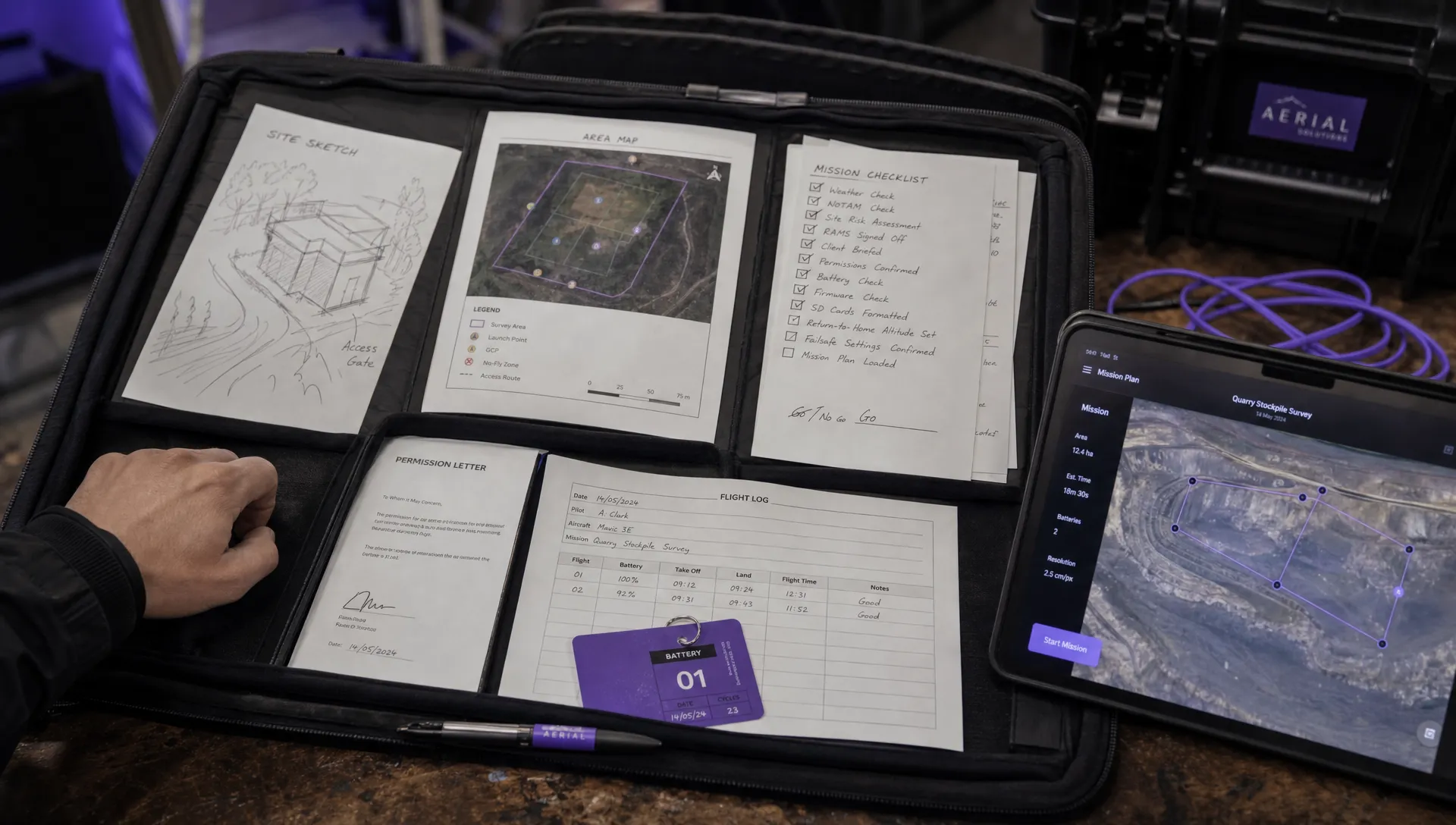 How to Create a Drone Job Pack for Every Mission →
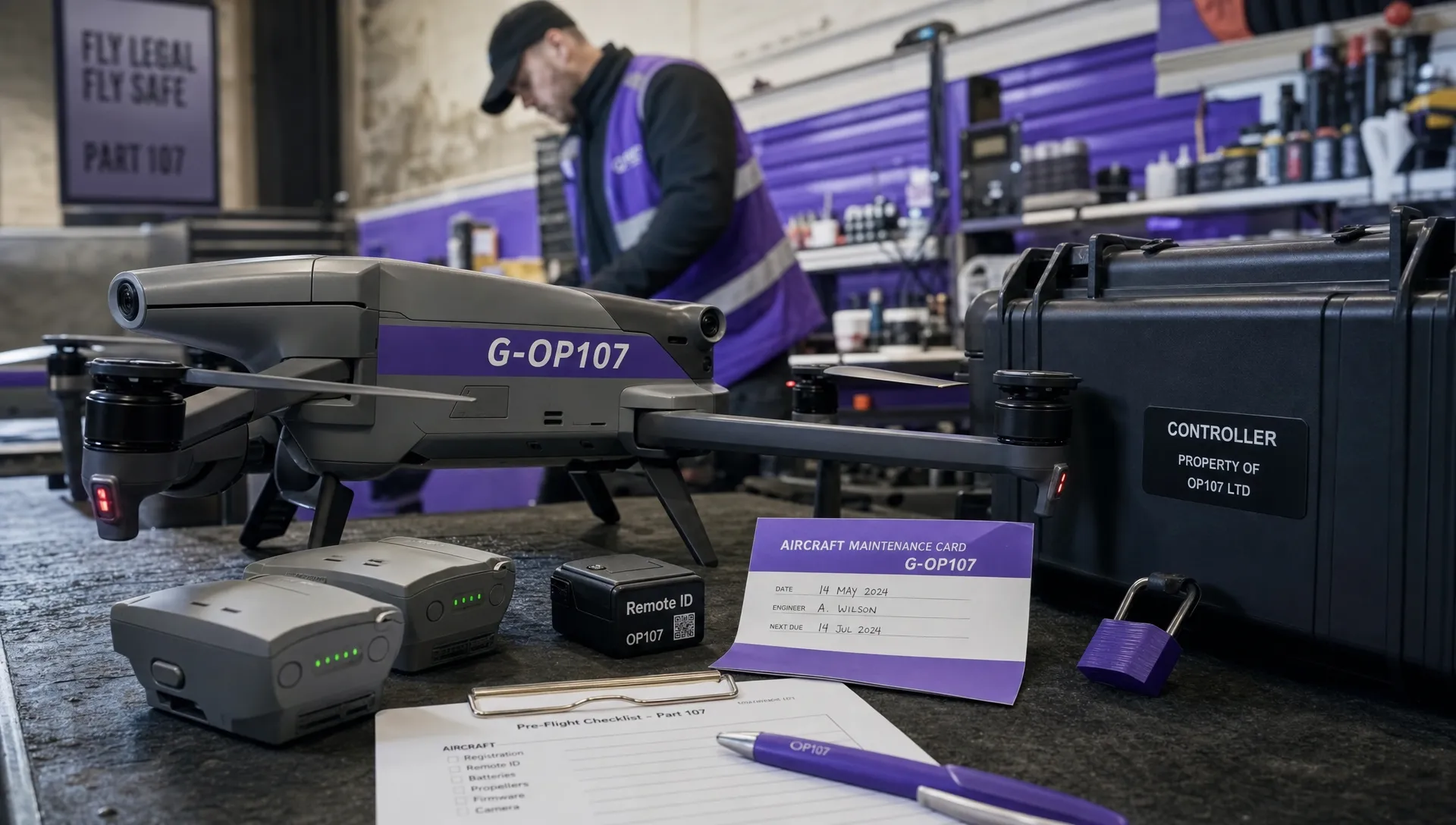 FAA Small UAS Rule: Key Requirements for Operators →
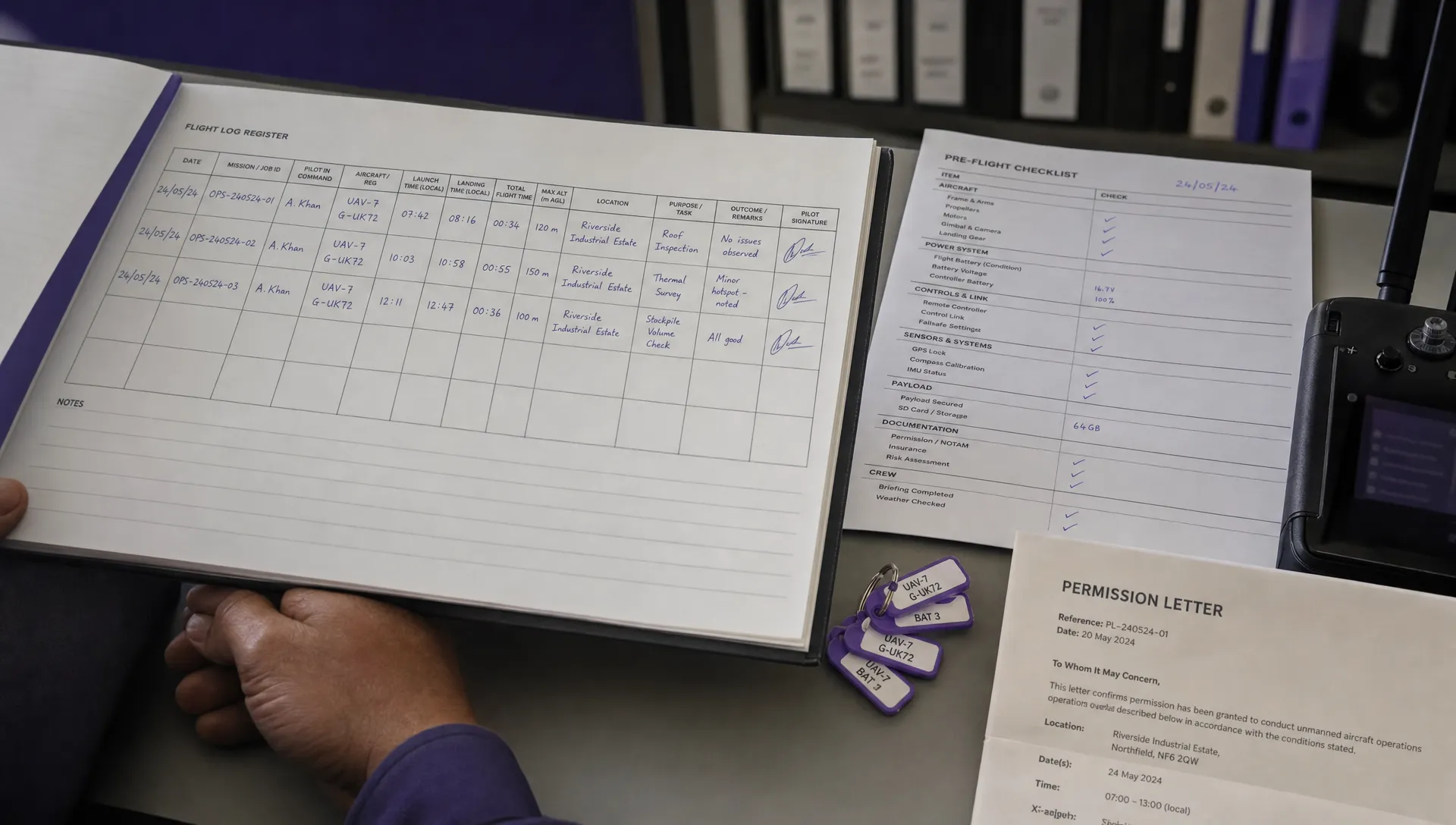 How to Build a Drone Pilot Flight Log That Is Audit Ready →
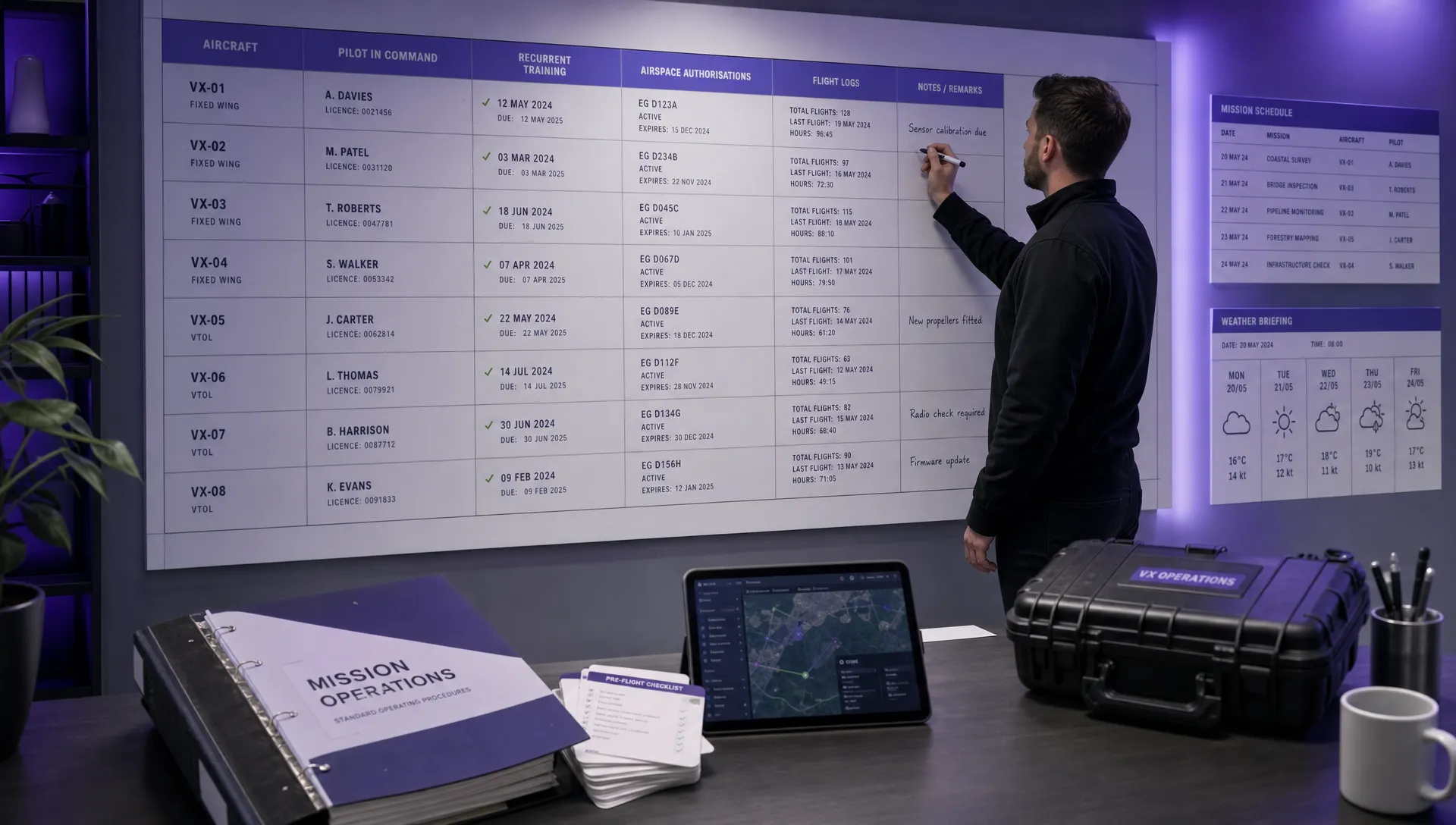 FAA Drone Licence Requirements for Commercial Pilots →
 FAA BVLOS Waivers Granted: What Successful Cases Show →
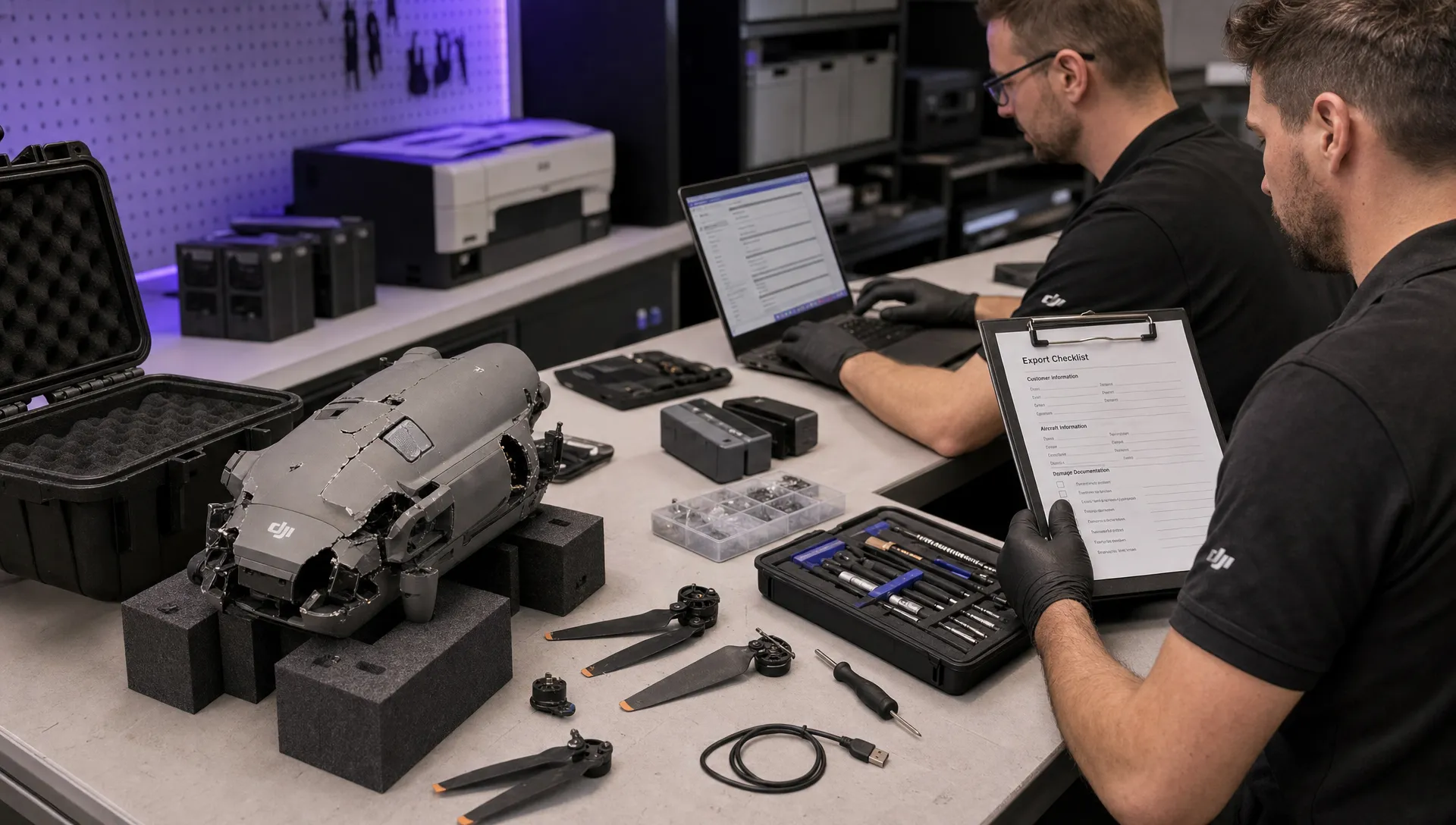 How to Export DJI Flight Logs for Incident Reviews →
 Drone Safety and Legal Duties for Business Operations →
 EASA Drone Regulations: Open, Specific and Certified Categories →