
Drone Safety and Legal Duties for Business Operations
Commercial drone work sits at the intersection of aviation, workplace safety, data protection and client assurance. A pilot may be technically capable, but a business operation also has to prove that each flight was planned, authorised, risk assessed, logged and carried out by competent people.
For survey companies, utilities, emergency services and professional drone operators, drone safety and legal duties are not paperwork for its own sake. They protect people on the ground, keep aircraft separated, reduce the chance of enforcement action and give clients confidence that the work can stand up to scrutiny.
This guide focuses on the practical duties UK business operators should build into everyday operations. It is not legal advice, and you should always check the latest Civil Aviation Authority guidance before flying, but it gives you a working structure for safer, more defensible operations.
The legal foundation for business drone operations
In the UK, drone operations are regulated by the Civil Aviation Authority (CAA). The CAA’s drone guidance and the Drone and Model Aircraft Code set out baseline requirements for safe, lawful flying.
A key point for businesses is that the old mental split between “commercial” and “recreational” flying is no longer the best way to think about compliance. The rules are primarily based on operational risk. What aircraft are you using? Where are you flying? How close will you be to uninvolved people? Are you near controlled airspace, infrastructure, emergency activity or congested areas?
Most UK drone flights fall into one of three broad categories:
| Operational category | Typical use | Legal significance |
|---|---|---|
| Open | Lower-risk flights within strict limits | No CAA operational authorisation is required if all Open category rules are met |
| Specific | Higher-risk work, often closer to people, buildings or complex sites | Requires appropriate CAA authorisation or a recognised route to approval |
| Certified | Highest-risk operations, such as some passenger or very high-risk cargo use cases | Subject to more stringent certification and oversight |
For many business operations, especially inspection, mapping, surveying, infrastructure work, public safety support and complex urban filming, the Specific category is often where detailed safety management becomes essential. That usually means documented procedures, an operations manual, pilot competency, risk assessment, site planning and evidence that the operation is being managed by a responsible operator.
The operator and the remote pilot may be the same person in a small business, but they are not the same role. The operator is responsible for managing the aircraft and ensuring the operation is lawful. The remote pilot is responsible for safely conducting the flight. Larger teams need to make this distinction clear so responsibilities do not fall between job titles.
Core legal duties before you accept a job
Compliance starts before anyone reaches the launch site. The way you quote, scope and accept work should identify whether the task is legally achievable, what permissions are needed and whether the risk profile fits your authorisations.
Confirm the operational category
Before agreeing to a client brief, decide whether the flight can be conducted in the Open category or whether it falls into the Specific category. A job that sounds simple, such as “inspect this roof” or “map this substation”, can quickly become more complex if it involves uninvolved people, roads, railways, controlled airspace, sensitive infrastructure or restricted land.
Do not assume a short flight is a low-risk flight. A five-minute roof inspection above a busy high street can require far more planning than a 40-minute mapping flight over private rural land.
Check registration and pilot competency
UK operators must meet the relevant registration requirements for the aircraft and operation. In many cases, this includes an operator ID for the organisation or person responsible for the drone and a flyer ID for the person flying, depending on the aircraft and circumstances.
Competency also matters. For business operations, it is rarely enough to say that a pilot is “experienced”. You should be able to show suitable training, familiarisation with the aircraft, knowledge of the operating procedures and evidence that competence is current.
For teams, this becomes a management issue. If three pilots can be assigned to a utility inspection, who checks that each one has the right competency, currency, authorisations and aircraft-specific experience? A spreadsheet may work for a small team, but it becomes fragile as aircraft, pilots and job types increase.
Verify airspace, restrictions and site permissions
Airspace checks should be part of every business workflow. That includes controlled airspace, flight restriction zones around aerodromes, temporary restrictions, NOTAMs, danger areas and local issues around prisons, military sites or major events.
Airport and aerodrome proximity needs special care because assumptions can create legal and safety problems. Dronedesk has a separate guide on planning flights around airport drone rules if your work often takes you near aerodromes or flight restriction zones.
Legal access to the take-off and landing site is separate from permission to fly in airspace. You may need landowner consent, client authority, permits from a local authority or coordination with a site manager. For emergency services, the legal basis for access may be different, but it should still be documented through the organisation’s own command and governance structure.
Put insurance in place
Commercial operators should not treat insurance as an afterthought. Many UK business operations require aviation liability insurance, and clients often ask for evidence before granting site access. The level and type of cover should match the work, aircraft, operating environment and contractual requirements.
If you operate across borders, do not assume UK cover automatically satisfies another jurisdiction. Survey companies and utilities working internationally should check insurance, registration and local aviation requirements before mobilising.
Consider privacy and data protection
Drone operations often collect identifiable images, video, thermal data, geospatial records or information about private property. If people can be identified, UK GDPR and the Data Protection Act 2018 may apply.
The Information Commissioner’s Office provides guidance on video surveillance and data protection, which is relevant when drones capture images of people, vehicles, homes or workplaces.
Business operators should define what data is collected, why it is needed, how long it is retained, who can access it and how it is protected. For public-sector and emergency service use, proportionality and necessity should be clear, particularly where operations involve crowds, private homes or sensitive incidents.
Safety duties during flight planning
A safe drone operation is planned around the specific aircraft, crew, site and task. Generic paperwork is weak evidence if an incident occurs. Regulators, insurers and clients will expect to see that the actual risks were considered.
A practical plan normally covers:
- The purpose of the flight and the operating area
- Aircraft suitability, battery plan and equipment condition
- Remote pilot, observers and crew roles
- Airspace status, site access and local restrictions
- Ground risk, including uninvolved people, traffic and nearby property
- Weather limits, lighting and visibility
- Lost link, flyaway, battery, injury and incursion procedures
- Communication with the client, site manager and crew
- Go or no-go criteria for stopping the operation
Risk assessment should not be a copy-and-paste exercise. A railway inspection, search and rescue deployment, solar farm survey and city-centre roof inspection all require different controls. If your process needs tightening, this guide to building a drone flight risk assessment that works covers the structure in more depth.
The strongest planning processes also include dynamic risk assessment. Conditions can change after approval: wind picks up, a delivery vehicle blocks the landing zone, members of the public enter the area or an emergency helicopter becomes active nearby. The remote pilot must have clear authority to delay, change or cancel the flight.
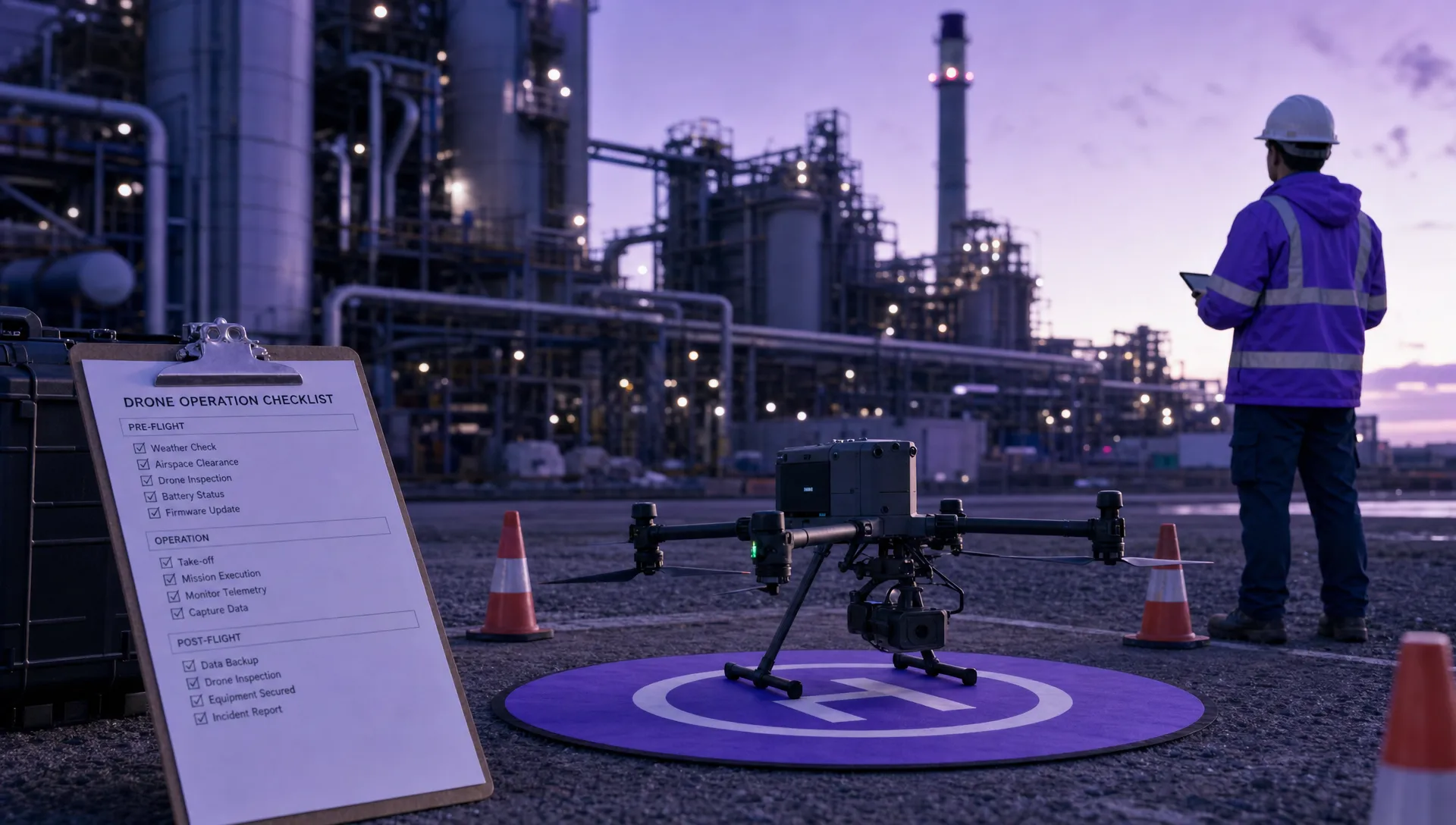
Legal and safety duties during the operation
Once on site, the remote pilot in command must operate within the law, the authorisation, the operations manual and the agreed plan. Site pressure is one of the biggest risks in commercial work. A client may want “just one more shot” or ask for a closer view than originally planned, but a business operator needs a culture where safety limits are not negotiated in the field.
The pre-flight briefing should confirm crew roles, operating boundaries, emergency actions and communication methods. If visual observers are used, they need to understand exactly what they are watching for and how they will alert the pilot. If the work is on a live utility site, construction site or emergency scene, the drone crew also needs to fit into the site’s command structure.
Good practice during the operation includes maintaining separation from uninvolved people, keeping the aircraft within the authorised limits, monitoring weather and battery status, controlling the take-off and landing area and pausing if a new hazard appears.
For beyond visual line of sight operations, operations near critical infrastructure or flights supporting emergency response, the planning and authorisation burden is higher. These operations may require additional procedures, coordination and technical mitigations. The principle stays the same: the more serious the consequence of failure, the stronger the evidence of control needs to be.
Duties after the flight
Post-flight work is part of compliance. If you only document the plan and ignore what actually happened, you lose valuable safety evidence and make continuous improvement harder.
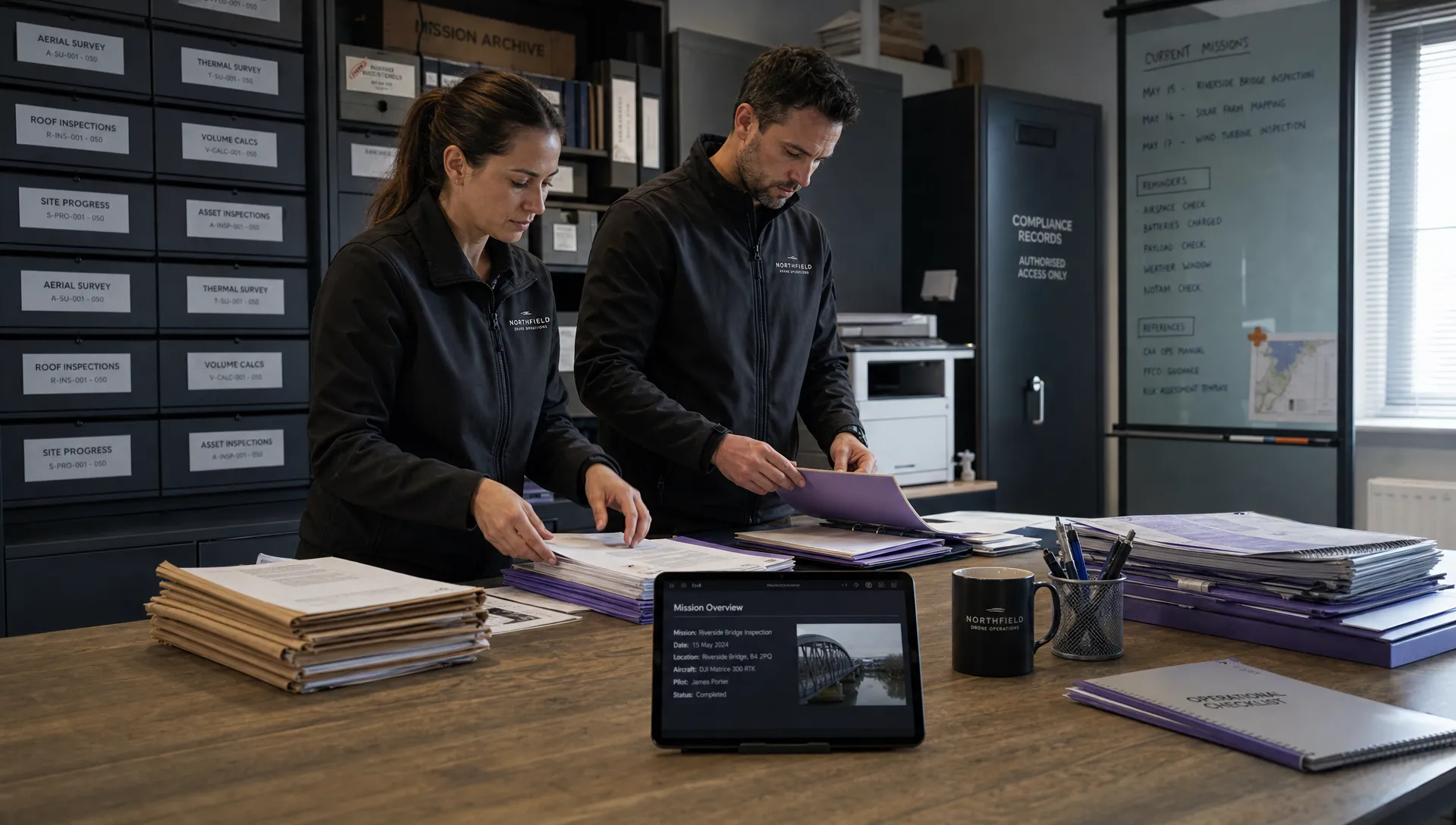
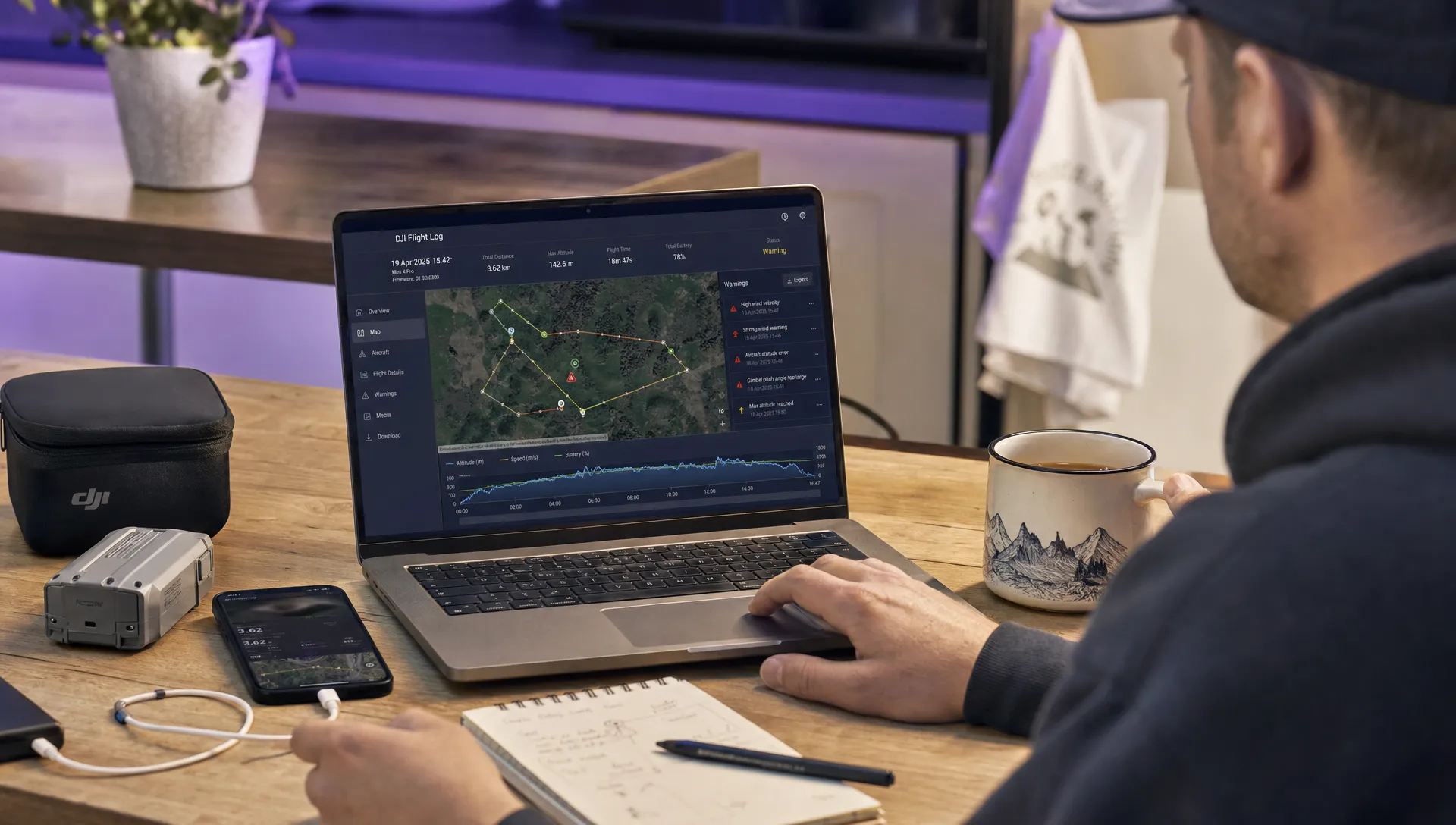
Business operators should keep accurate flight logs, including aircraft used, pilot, location, time, battery details where relevant, task outcome and any anomalies. Maintenance and defect records should be updated promptly. If a propeller strike, hard landing, battery fault or lost-link event occurs, it should not disappear into a pilot’s memory.
Some events may need formal reporting. Serious incidents, accidents, airspace infringements, near misses or events affecting aviation safety may fall under CAA occurrence reporting routes or other reporting obligations. Workplace injuries may also trigger health and safety reporting duties. Your operations manual should tell pilots and managers what must be reported, who reports it and how quickly.
Post-flight review is especially useful for repeatable work. A utility inspection team may discover that a particular substation always creates compass issues. A survey company may learn that one type of site needs a larger exclusion zone. Emergency services may identify that a launch location works well during training but fails during live response because of vehicle access.
Sector-specific considerations for business operators
The legal framework is shared, but the operational emphasis changes by sector.
| Sector | Common safety and legal focus | Practical control |
|---|---|---|
| Survey companies | Accuracy, repeatability, land access, privacy and flights near people or property | Standardised planning, client permissions, data handling procedures and robust logs |
| Utility companies | Critical infrastructure, live hazards, electromagnetic interference and site inductions | Site-specific risk controls, coordination with asset owners and clear emergency procedures |
| Emergency services | Dynamic scenes, public interest, command structures and evidence handling | Pre-approved procedures, trained crews, incident logging and strict data governance |
| General drone operators | Varied sites, client pressure, changing airspace and subcontractor management | Consistent job scoping, authorisation checks, pilot competency records and post-flight review |
For emergency services, speed matters, but speed should come from preparation rather than skipped process. Pre-defined operating procedures, trained pilots, equipment readiness and clear governance allow faster deployment without abandoning legal safeguards.
For utilities, the main risk is often complexity hidden inside routine work. A linear asset inspection may cross different land parcels, controlled airspace boundaries, roads, railways, public rights of way and sensitive sites. The planning process has to follow the route, not just the launch point.
For survey companies, data governance deserves more attention than it often receives. Orthomosaics, 3D models and inspection imagery can reveal private activity, security layouts or commercially sensitive asset information. Legal compliance does not end when the aircraft lands.
Building a defensible compliance workflow
A defensible workflow is one that a manager, client, insurer or regulator can understand after the event. It should show who made decisions, what information they used and how risks were controlled.
A simple operating rhythm can help:
- Scope the job and identify the operational category
- Confirm operator registration, pilot competency and aircraft suitability
- Check airspace, restrictions, land access and client permissions
- Complete a site-specific risk assessment and flight plan
- Brief the crew and site contact before take-off
- Record deviations, incidents and decisions during the job
- Log the flight, update maintenance records and review lessons learned
The point is not to create paperwork for every possible scenario. The point is to create enough structure that safe decisions are made consistently, even when teams are busy, sites are changing and clients are waiting.
As teams grow, the workflow also needs to scale. Fleet records, pilot credentials, checklists, risk assessments and flight logs become operational controls rather than admin files. Dronedesk’s drone fleet management guide explores that wider governance challenge for operators moving beyond ad hoc spreadsheets.
How Dronedesk supports safer drone operations management
Dronedesk is designed for drone operators that need to manage operations in one place rather than across disconnected documents, calendars and spreadsheets. Its published features include client management, fleet management, team management, airspace intelligence, proximity intelligence, flight planning, flight logging, data reporting, configurable checklists and risk assessments.
Those capabilities are directly relevant to business compliance because they support the evidence trail around each job: who the client is, what aircraft and crew are involved, what hazards were identified, what checks were completed and what happened during the flight. You can review the full set of Dronedesk features to see how the platform fits into operational planning and record-keeping.
Software does not replace legal responsibility. The operator and remote pilot still need judgement, competence and current knowledge of the rules. What software can do is make the right process easier to follow and easier to prove.
Frequently Asked Questions
What are the main legal duties for a UK business drone operator? A UK business drone operator should confirm the correct operational category, meet registration and competency requirements, comply with CAA rules, check airspace and site permissions, maintain suitable insurance, protect personal data, complete risk assessments and keep accurate operational records.
Do commercial drone flights always need CAA authorisation? Not always. Some business flights can be conducted in the Open category if all relevant limits are met. Higher-risk operations usually fall into the Specific category and require appropriate authorisation or approval. The task, aircraft, location and proximity to people all matter.
Who is legally responsible, the pilot or the company? Both may have duties. The operator is responsible for managing the drone operation and ensuring legal compliance. The remote pilot is responsible for the safe conduct of the flight. In small businesses they may be the same person, but larger organisations should define the roles clearly.
Does drone footage create data protection duties? It can. If footage or imagery can identify people, vehicles, homes or other personal information, UK GDPR and data protection principles may apply. Operators should define the purpose of collection, minimise unnecessary capture, control access and set retention rules.
What records should a business keep after a drone flight? Useful records include the flight plan, risk assessment, pilot and aircraft details, airspace checks, permissions, checklists, flight log, maintenance notes, battery or defect records and any incident or deviation reports.
Put safety and compliance into your daily workflow
Strong drone safety and legal compliance comes from repeatable habits: plan the job properly, brief the team, fly within limits, record what happened and learn from each operation.
If your business is managing clients, pilots, aircraft, checklists, risk assessments and flight logs across multiple tools, Dronedesk can help bring those core operational records together in one web platform built for professional drone teams.
 FAA Drone License Costs Beyond the Knowledge Test →
 Drone Part 107 Operations: When a Waiver May Be Needed →
 Drone Operating Rules for Managing Contractors and Employees →
 BVLOS Drone Requirements for Building a Safety Case →
 Drone Pilot Test Mistakes That Cost Candidates Marks →
 FAA 107 License vs Part 107 Certificate: What’s the Difference? →
 Drone Airport Rules: A Field Checklist for Site Assessments →
 FAA Part 107 Record-Keeping Rules for Commercial Teams →
 How to Review a DJI Flight Log After an Unexpected Event →
 Drone Laws Around the World: A Pre-Flight Research Framework →