
EASA Drone Regulations: Open, Specific and Certified Categories
EASA drone regulations are designed around one central idea: the level of regulation should match the level of operational risk. A small drone flown within visual line of sight over open countryside does not need the same approval pathway as a BVLOS utility inspection near infrastructure or a passenger-carrying unmanned aircraft.
For commercial drone operators, survey companies, utilities and emergency service teams, that risk-based structure is useful, but only if you can quickly work out which category your mission falls into. The three categories, Open, Specific and Certified, determine your training requirements, aircraft requirements, operational limits and whether you need an authorisation from a national aviation authority.
This guide explains how the categories work, where the boundaries sit and how to approach planning in 2026 without turning every job into a regulatory research project.
The structure of EASA drone regulations
The main operating rules for unmanned aircraft in the EASA system come from Commission Implementing Regulation (EU) 2019/947, which covers UAS operations and operator obligations. Product and class marking requirements sit mainly under Commission Delegated Regulation (EU) 2019/945.
EASA sets the common European framework, but national aviation authorities still play a major role. They manage operator registration, geographical zones, operational authorisations, standard scenario declarations and enforcement within their own states. That means a mission can be compliant under the EU framework but still blocked by a local UAS geographical zone, controlled airspace requirement or site-specific restriction.
At the highest level, the categories look like this:
| Category | Risk level | Typical approval position | Common operational examples |
|---|---|---|---|
| Open | Low | No operational authorisation required if all limits are met | Simple VLOS surveys, rural mapping, basic photography away from crowds |
| Specific | Medium or increased | Operational authorisation, standard scenario declaration or LUC privileges usually required | BVLOS inspections, urban infrastructure surveys, work close to people or sensitive sites |
| Certified | High | Aircraft certification, operator certification and licensed remote pilot requirements may apply | Passenger transport, high-risk dangerous goods carriage, large UAS over assemblies of people |
The category is not determined by whether the flight is commercial. A paid survey flight can be in the Open category if it meets all Open limits. A non-commercial flight can fall into the Specific category if it goes beyond those limits.
Open category: low-risk operations with strict boundaries
The Open category is intended for lower-risk drone operations. It is often the simplest route for operators because it does not require an operational authorisation before each flight, but it is not a paperwork-free environment.
To remain in the Open category, the operation must stay within core limits. In broad terms, the aircraft must have a maximum take-off mass below 25 kg, the remote pilot must keep the drone within visual line of sight, the flight must normally stay no higher than 120 metres from the closest point of the earth’s surface and the operation must not involve carrying dangerous goods or dropping material.
The remote pilot must also follow the relevant training and competency rules, the operator must register where required and the flight must comply with national UAS geographical zones. Registration is generally required where the drone is 250 g or more, or where it has a sensor capable of capturing personal data, unless a narrow toy exemption applies.
Open category operations are divided into A1, A2 and A3. These subcategories are mainly about proximity to uninvolved people and the type of drone being flown.
| Open subcategory | Where it can be used | Typical drone classes | Remote pilot competency |
|---|---|---|---|
| A1 | Operations with the least exposure to uninvolved people, but never over assemblies of people | C0, C1 and some sub-250 g aircraft | C0 has minimal formal training requirements, C1 requires online training and an online exam |
| A2 | Operations close to people, but not over uninvolved people | C2 aircraft | A1/A3 competency plus self-practical training and an additional theory exam |
| A3 | Operations far from uninvolved people and at least 150 m from residential, commercial, industrial or recreational areas | C2, C3, C4, privately built aircraft under 25 kg and many legacy aircraft | A1/A3 online training and exam in most cases |
A1 does not mean you can deliberately overfly crowds. EASA uses the term “assemblies of people” for groups where individuals are so densely packed that they cannot easily move away. Open category flights are not permitted over assemblies of people.
A2 is often relevant to professional operators using C2 aircraft for jobs near buildings, assets or controlled work areas. It allows closer operation to uninvolved people than A3, but the 30 m horizontal distance rule, or 5 m in low-speed mode where permitted, needs to be respected.
A3 is the more conservative Open subcategory. It is often suitable for rural mapping, agricultural surveys and some utility work in remote areas, provided the remote pilot can keep the aircraft in sight and remain well clear of uninvolved people and built-up areas.
Legacy and class-marked drones in 2026
Since 1 January 2024, the old transitional Open category allowances for many non-class-marked drones no longer apply. In 2026, a drone without a C0 to C6 class identification label may still be usable in Open operations, but with tighter limits.
In practical terms, many sub-250 g legacy drones can continue in A1, while non-class-marked drones below 25 kg are generally limited to A3. A CE mark alone is not the same as an EASA class identification label. Operators buying aircraft for European work should check the actual C class marking, not just the marketing description.
Specific category: when Open is not enough
The Specific category covers operations where the risk is higher than Open, but not so high that the Certified category is required. This is where many professional drone operations sit, especially when the work involves BVLOS, urban areas, infrastructure, complex airspace, heavier aircraft or proximity to uninvolved people.
Examples that often push an operation into the Specific category include linear utility inspections beyond visual line of sight, work above or close to congested areas, operations above 120 m where no Open category exception applies and missions where the ground or air risk cannot be managed within A1, A2 or A3.
There are several ways into the Specific category:
| Route | What it means | Best suited to |
|---|---|---|
| Operational authorisation | The operator applies to the national aviation authority with a risk assessment and operating procedures | Bespoke or higher-complexity missions |
| Standard scenario declaration | The operator declares compliance with a published EASA standard scenario, where available and accepted | Repeatable operations that exactly match the scenario |
| Pre-defined risk assessment | The operator uses a recognised risk assessment template to support an authorisation | Common mission types with known risk profiles |
| Light UAS Operator Certificate | A mature operator gains privileges to authorise certain operations internally | Organisations with strong safety management systems and recurring Specific category work |
For bespoke authorisations, the risk assessment is usually built around SORA, the Specific Operations Risk Assessment methodology developed by JARUS and used within the EASA framework. SORA looks at ground risk, air risk, containment, operational safety objectives, technical mitigations and organisational controls.
This is not just a regulatory exercise. A weak risk assessment can delay an authorisation, create unclear instructions for the crew and leave the operator exposed if an incident occurs. If your team is building or revising its process, this guide to creating a drone flight risk assessment that works is a useful companion to the regulatory requirements.
Standard scenarios, C5 and C6 aircraft
EASA standard scenarios are intended to make certain Specific category operations easier to declare, rather than requiring every operator to write a completely bespoke safety case. STS-01 covers qualifying VLOS operations over a controlled ground area using a C5 aircraft. STS-02 covers qualifying BVLOS operations over a controlled ground area in a sparsely populated environment using a C6 aircraft and airspace observers.
The key word is “qualifying”. If the mission does not match the standard scenario conditions, the declaration route is not available and an operational authorisation will normally be needed. Operators also need to check how their national aviation authority is implementing declarations, fees and supporting procedures.
Certified category: the highest-risk UAS operations
The Certified category is for operations where the risk profile starts to resemble traditional aviation. For most survey, inspection and emergency support operators, it will not be the day-to-day category, but it matters for advanced operations and future business models.
Under the EASA framework, the Certified category is triggered by operations such as transporting people, carrying dangerous goods where an accident could create high risk for third parties, or operating certain large unmanned aircraft over assemblies of people. A national aviation authority can also determine that a Specific category risk assessment is not enough and that certification-level controls are needed.
Certified category operations can require a certified aircraft, an approved operator, licensed remote pilots and continuing airworthiness arrangements. The exact requirements depend on the aircraft and operation. For emerging areas such as passenger-carrying UAS, heavy cargo and complex automated operations, operators should involve their national aviation authority early rather than trying to retrofit compliance after the aircraft and concept of operations have already been chosen.
The practical takeaway is simple: if the mission involves people on board, high-risk dangerous goods or large aircraft over crowds, do not start from the Open or standard Specific category assumption. Treat it as a specialist certification project from the outset.
How to decide which category your mission falls into
The fastest way to classify an operation is to start with the actual mission profile, not the aircraft brochure. A C2 drone might be suitable for Open A2 on one job and Specific on another, depending on airspace, people, site control and operating method.
Before quoting, planning or assigning crew, work through these questions:
- Will the drone remain within visual line of sight for the whole flight?
- Is the maximum height within the Open category limit and any local geographical zone limits?
- Will the operation take place over or close to uninvolved people?
- Is the site in a residential, commercial, industrial or recreational area?
- Does the drone have the correct EASA class identification label for the intended Open subcategory?
- Are there airports, heliports, prisons, critical infrastructure sites or restricted areas nearby?
- Will the aircraft carry anything unusual, drop material or transport goods?
- Can the ground area be controlled with barriers, briefings, cordons or access management?
- Is the operation private, commercial, public safety or a contractor mission for a state body?
The answer often becomes clear once the location and people risk are mapped. Here are common examples:
| Mission | Likely category starting point | Why |
|---|---|---|
| Rural photogrammetry with a sub-25 kg drone, VLOS and no uninvolved people nearby | Open A3 | Low ground risk and separation from built-up areas may fit A3 |
| Roof inspection in a town using a C2 aircraft with controlled separation from uninvolved people | Open A2 or Specific | A2 may work if distance rules are met, otherwise Specific is likely |
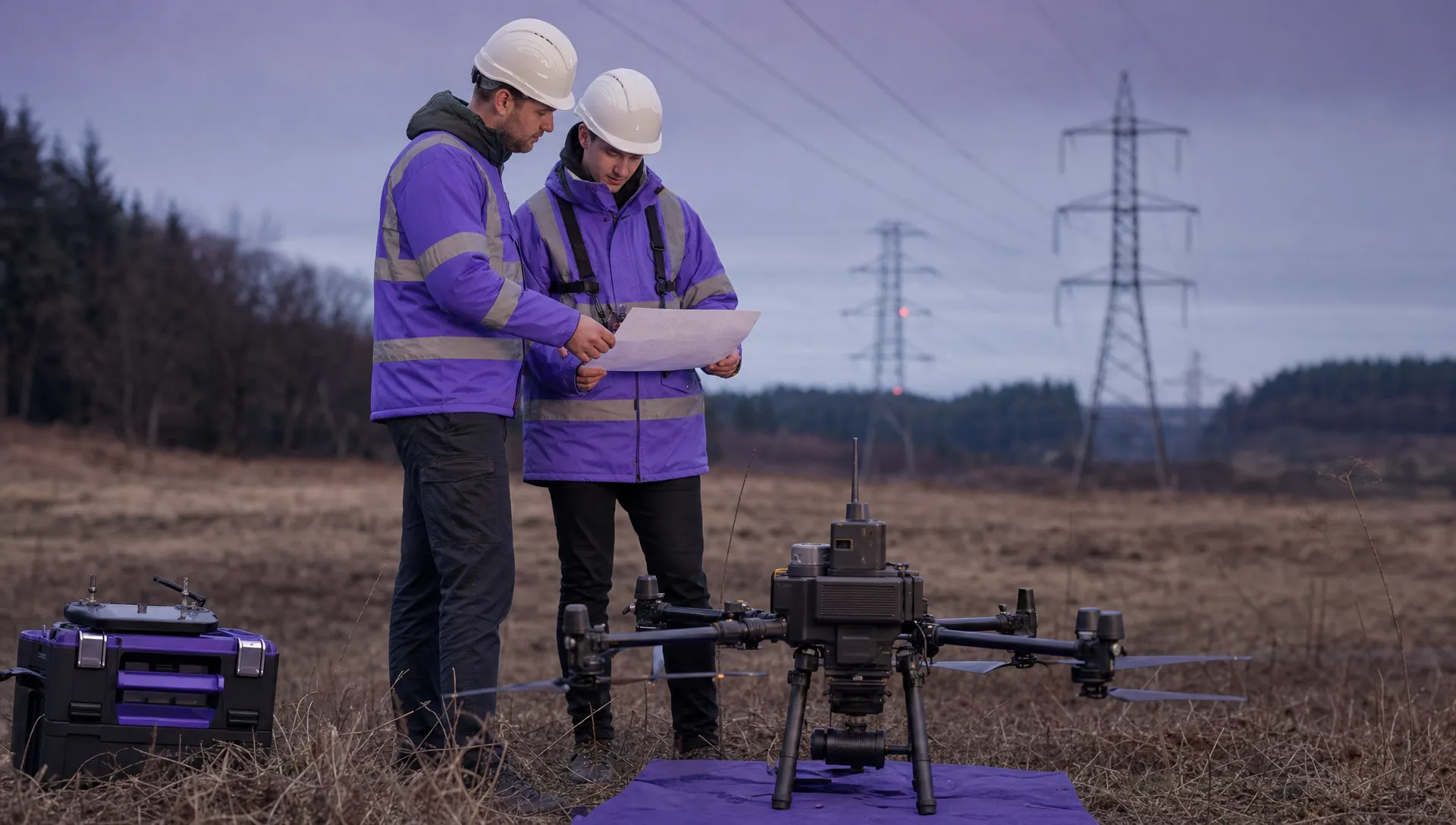
| BVLOS inspection of a power line across mixed rural and suburban terrain | Specific | BVLOS and variable ground risk generally exceed Open limits |
| Drone support at an emergency incident with cordons in place | Open, Specific or national state aircraft framework | The answer depends on aircraft, operating method, site control and legal status |
| Carrying dangerous goods with potential risk to third parties | Specific or Certified | The risk profile may require authorisation or certification-level controls |
| Passenger-carrying unmanned aircraft | Certified | Transporting people is a Certified category trigger |
Cross-border operations and the UK position
EASA rules apply across EU Member States and other states that participate in the EASA aviation safety system. Even so, local implementation matters. A remote pilot competency certificate or operator registration may be recognised under the EU framework, but UAS geographical zones, language requirements, insurance rules, privacy expectations and application processes can vary by country.
For operators working across borders, the most common compliance gap is assuming that an authorisation or routine developed in one country automatically covers the next. Specific category authorisations can sometimes be used cross-border, but the operator normally needs to follow the process for notifying or obtaining confirmation from the state of operation.
UK operators need an extra check. Since Brexit, the UK Civil Aviation Authority regulates UK drone operations outside the EASA system. The UK framework is similar in many concepts, including Open, Specific and Certified categories, but it is not identical and EASA approvals should not be treated as UK approvals. If your organisation works in both the UK and the EU, build your operations manual, training records and aircraft register so they can support both regimes without blurring the differences.
Emergency services should also check their legal status carefully. Some police, fire, search and rescue, coastguard or similar state-controlled activities can fall outside the normal civil EASA framework depending on national law. Contractors supporting those organisations may still be operating under civil rules, so the contract should be clear about who is the UAS operator and which regulatory framework applies.
Common compliance mistakes under EASA drone regulations
Open category mistakes often begin with the phrase “it is only a small drone”. Small aircraft can still create legal problems if the operator ignores people, airspace, privacy or geographical zones. A sub-250 g drone may reduce some requirements, but it does not remove the need to fly safely and respect local restrictions.
Another common issue is treating airspace as separate from category selection. A flight can be Open A3 from a ground risk perspective but still require permission because it sits near an airport or inside a restricted geographical zone. If controlled airspace or airport proximity is part of your planning, this practical article on airport drone rules and flight planning covers the operational thinking in more detail.
Specific category applications can fail or stall because the concept of operations is too vague. Authorities need to understand where the aircraft will fly, how the ground area is controlled, what happens if command and control is lost, how airspace conflicts are detected and what training the crew has completed. Generic statements such as “the pilot will maintain situational awareness” are rarely enough for higher-risk work.
Fleet procurement is another weak point. Buying drones before checking the operational category can leave a company with aircraft that are technically capable but poorly matched to EASA class requirements, standard scenarios or customer contracts. For repeated European work, procurement should involve the accountable manager, chief remote pilot or safety lead, not only the technical team.
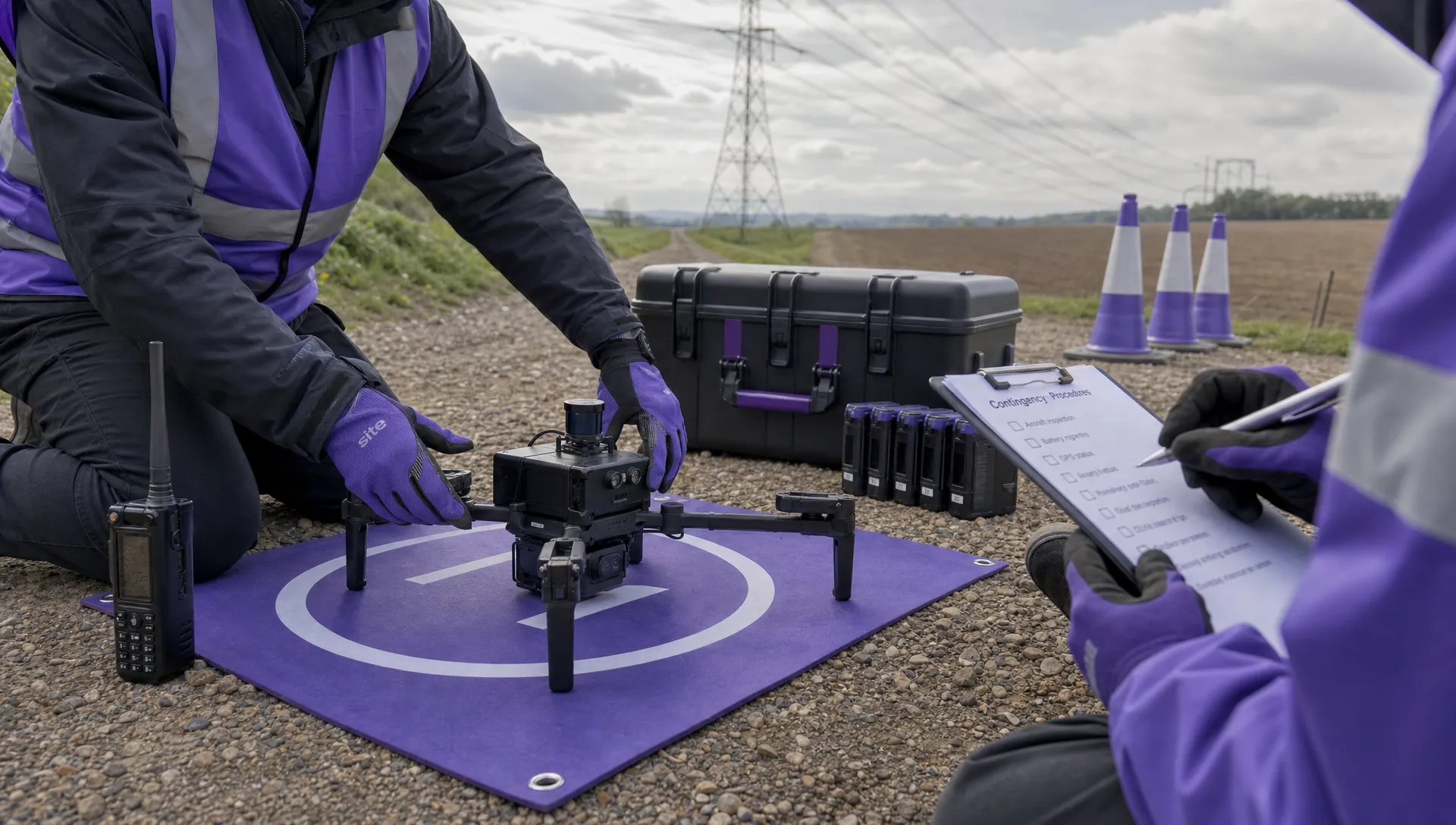
Record keeping is the final recurring problem. If an incident, audit or client review happens, the operator needs evidence: pilot competency, aircraft maintenance, battery condition, site assessment, airspace checks, briefing records, flight logs and post-flight notes. Compliance that cannot be evidenced is fragile.
Building an EASA-ready operating workflow
A strong workflow makes category selection part of normal planning rather than a last-minute hurdle. For professional teams, that usually means linking the client brief, site survey, airspace review, aircraft selection, crew assignment, risk assessment, checklists, flight logs and reporting.
For Open category work, the workflow should prove that the flight stayed inside A1, A2 or A3 conditions. For Specific category work, it should show that the operation matched the authorisation, declaration or LUC privilege being used. For Certified category projects, the workflow needs to connect with broader aviation-grade safety, maintenance and approval systems.
Dronedesk is built around drone operations management, and its platform features include client management, fleet management, team management, airspace intelligence, proximity intelligence, flight planning, flight logging, data reporting, configurable checklists and risk assessments. Those are the kinds of records and planning steps operators need to keep aligned when working under EASA-style regulatory categories.
Frequently asked questions
Do EASA drone regulations apply to commercial flights only? No. EASA categories are based on operational risk, not whether the flight is paid. A commercial mapping job can be Open category if it meets all Open limits, while a recreational BVLOS flight would fall outside Open because of the operating method.
Can I fly over people in the Open category? Only within strict limits. A1 allows some limited exposure to uninvolved people depending on the aircraft class, but Open category flights must never take place over assemblies of people. A2 allows flight close to uninvolved people with distance rules, while A3 requires much greater separation.
What category applies to BVLOS drone operations? BVLOS operations are normally in the Specific category unless they form part of a Certified category operation. They require an appropriate authorisation, declaration route or LUC privilege, depending on the mission and national aviation authority process.
What is the difference between an operational authorisation and a standard scenario declaration? An operational authorisation is granted by the national aviation authority after reviewing the operator’s risk assessment and procedures. A standard scenario declaration is used when the operation exactly matches a published scenario and the operator declares compliance with its conditions.
Can I still use a drone without an EASA class mark in 2026? Yes, in some Open category cases, but options are more limited. Many sub-250 g legacy drones can continue in A1, while non-class-marked drones below 25 kg are generally restricted to A3. For Specific category work, suitability depends on the authorisation pathway and technical requirements.
Does the UK follow EASA drone regulations? No. The UK has its own CAA drone rules. They share similar concepts with EASA, but approvals, class marking treatment and operational authorisations should be checked under the UK system when flying in the UK.
Do emergency services always operate under EASA rules? Not always. Some state-controlled emergency, police, fire, search and rescue, coastguard or similar activities may be governed by national state aircraft rules. Contractors and mixed teams should confirm who the UAS operator is and which framework applies before the mission.
Plan the paperwork before the flight
EASA compliance is much easier when the category decision, aircraft suitability, crew competency, risk controls and flight records are planned together. Before accepting a mission, confirm whether it fits Open, needs a Specific category pathway or raises Certified category triggers. That single decision shapes the rest of the job.
 Drone Part 107 Operations: When a Waiver May Be Needed →
 Drone Operating Rules for Managing Contractors and Employees →
 BVLOS Drone Requirements for Building a Safety Case →
 Drone Pilot Test Mistakes That Cost Candidates Marks →
 FAA 107 License vs Part 107 Certificate: What’s the Difference? →
 Drone Airport Rules: A Field Checklist for Site Assessments →
 FAA Part 107 Record-Keeping Rules for Commercial Teams →
 How to Review a DJI Flight Log After an Unexpected Event →
 Drone Laws Around the World: A Pre-Flight Research Framework →
 How to Compare Drone Survey Services for Complex Sites →