
Drone Compliance Software - Simplify Regulations & Ensure Safety
Think of drone compliance software as your automated co-pilot. It takes the mountain of complex aviation rules and translates them into a simple, step-by-step workflow for your business. It's the one tool that ensures every flight is planned, executed, and logged according to the letter of the law.
Essentially, it turns compliance from a headache into a built-in safety net for your entire operation.
Why Manual Drone Compliance Is No Longer Enough
The drone industry is absolutely booming. What started as a niche hobby has become a mission-critical tool for everyone from construction firms and real estate agents to farmers and first responders. But this explosion in popularity comes with a catch: a dense and constantly shifting web of regulations.
Trying to keep up with all the rules using old-school spreadsheets, paper logbooks, and manual airspace checks is quickly becoming a recipe for disaster. It's not just inefficient; it's incredibly risky.
Imagine a pilot juggling multiple websites to check flight restrictions, scribbling risk assessments on a notepad, and then trying to remember to fill out flight logs by hand after a long day on site. That’s a process just waiting for a mistake to happen. A single missed temporary flight restriction (TFR) or an incorrectly logged maintenance cycle can lead to massive fines, a suspended license, or worse—a serious accident.
Let's take a look at how manual methods stack up against automated software.
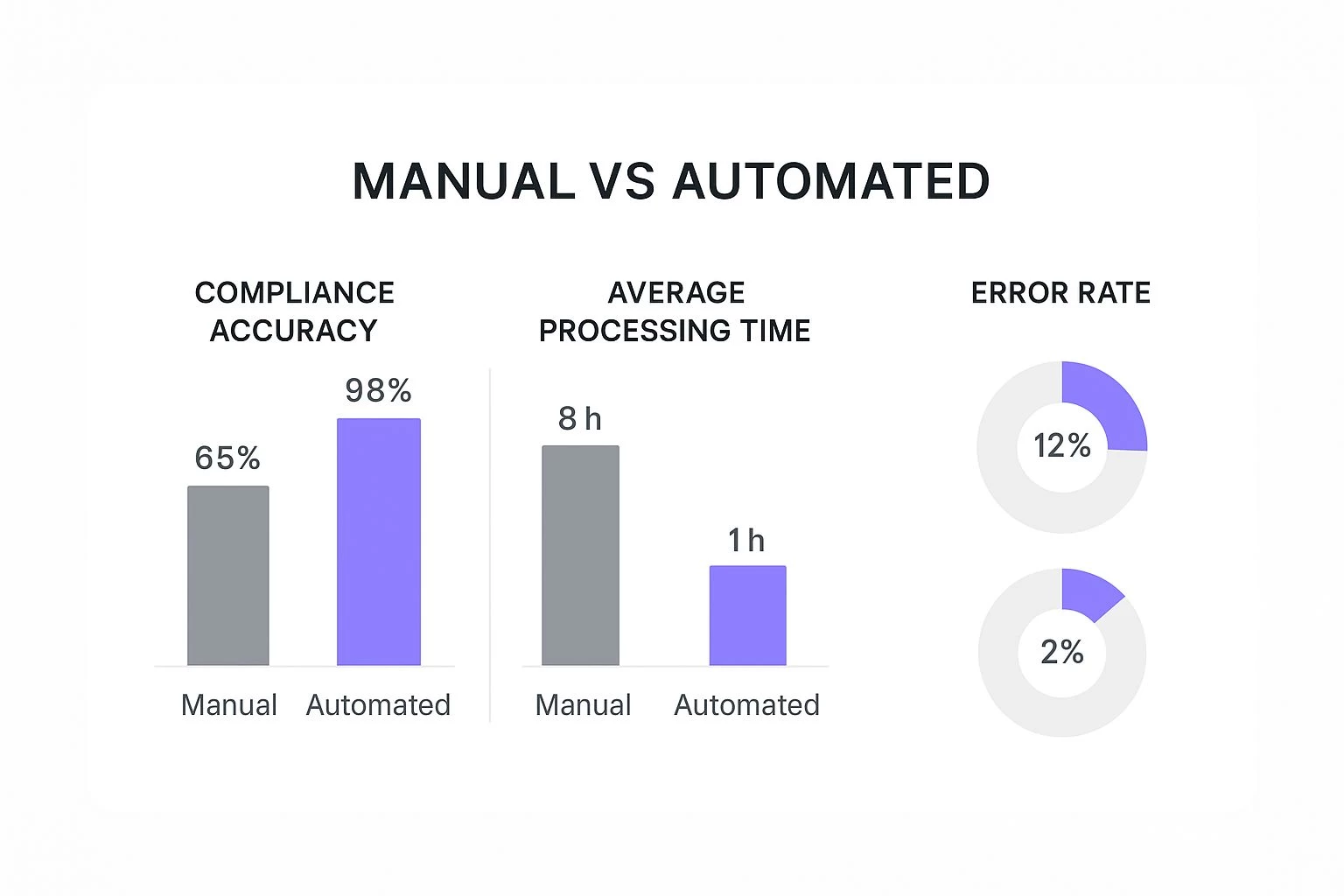
The numbers speak for themselves. Automation boosts accuracy to 98% and cuts down the time spent on compliance tasks from a full eight-hour day to just one.
The Problem of Scale and Complexity
This challenge isn't just about one pilot. It's magnified by the sheer number of drones taking to the skies. In the US alone, commercial drone registrations blew past 873,000 in 2022—that's a whopping 44% jump from the year before. This surge is what's driving the need for smarter tools like drone compliance software, which can handle things like geo-fencing and automated flight authorisations. For a deeper dive, check out this detailed report on the drone software market.
For any professional operator, compliance is so much more than just dodging fines. It's about showing you’re a pro, keeping the public safe, and building a rock-solid reputation that clients can rely on. Manual methods simply leave too much to chance.
Ultimately, the real issue is that manual compliance just doesn't scale. As your business grows—more pilots, more drones, more complex jobs—the paperwork and admin burden grows exponentially. Drone compliance software fixes this by becoming the central nervous system for your entire operation. It's not just a fancy logbook; it’s a dynamic, always-on legal and safety advisor that protects your business, your clients, and your future in this industry.
Here's a quick comparison to really spell out the difference.
Manual Compliance vs Automated Software
| Compliance Task | Manual Method (The Hard Way) | Using Drone Compliance Software (The Smart Way) |
|---|---|---|
| Airspace Checks | Juggling multiple websites and apps, manually cross-referencing maps for restrictions. | Integrated, real-time airspace maps with automated alerts for TFRs, airports, and controlled airspace. |
| Risk Assessments | Filling out paper forms or clunky spreadsheets, often based on guesswork. | Guided, customisable risk assessment templates (like SORA or RAMS) that auto-populate job details. |
| Flight Logging | Writing logs by hand after the flight, hoping you remember all the details accurately. | Automatic logging of flight times, locations, and aircraft data, synced directly from the drone or app. |
| Maintenance Tracking | Relying on calendar reminders or sticky notes to track service intervals for drones and batteries. | Centralised dashboard that tracks usage hours and sends automated alerts for upcoming maintenance. |
| Team Management | Manually checking pilot licenses and qualification expiry dates in a spreadsheet. | A single system to manage pilot profiles, track certifications, and assign roles for each mission. |
As you can see, the "smart way" isn't just about saving time—it's about building a safer, more professional, and more scalable operation from the ground up.
What Exactly Is a Digital Co-Pilot, Anyway?
Let's cut through the noise and talk about what drone compliance software really is. It’s not just another app cluttering up your tablet; think of it as the central nervous system for your entire drone operation. It’s the smart connection between your pilots, your aircraft, your missions, and the rulebook that’s always changing.
A good way to picture it is like the air traffic control system for traditional aviation. That system juggles thousands of planes, making sure they all stick to the script to prevent chaos and keep everyone safe. Drone compliance software does the exact same thing for unmanned aircraft, but it's built from the ground up for the unique headaches of drone ops.
At its heart, its job is to take all that dense legal text from authorities like the FAA or EASA and turn it into simple, manageable steps. This isn't something you do after the fact; it's woven right into your daily workflow, making compliance feel like second nature instead of a painful chore.
From Legal Jargon to Actionable Checklists
Imagine trying to wade through hundreds of pages of aviation law before every single flight. You wouldn't get anything done. This is where the software steps in, acting as your digital interpreter, transforming complex regulations into clear, straightforward tasks.
This approach ensures nothing slips through the cracks. The system automatically creates an unbreakable, auditable record of every single mission, from the first spark of a plan and the initial risk assessment to the final flight log. This digital paper trail is your best friend if an audit comes knocking, and it’s solid proof of your professionalism.
A robust compliance platform doesn't just recite the rules—it builds them right into your workflow. It guides you through pre-flight checks, helps verify airspace, and logs every last detail, building a powerful, automated safety and legal framework around every flight.
Essentially, it gives you a solid, organised structure to make sure every mission is planned, approved, and flown by the book. This system has you covered on everything, from pre-flight checks and airspace authorisations to post-flight analysis and reporting. For a complete rundown on what you need to cover, our ultimate commercial drone compliance guide is the perfect place to start.
The Unbreakable Digital Record
This automated record-keeping is absolutely critical. If a regulator ever questions one of your operations, you won’t be left frantically searching through paper logs or scattered digital files. Instead, you'll have a clean, time-stamped digital record of every decision made and every procedure followed.
Here’s a snapshot of what that digital record typically includes:
- Pilot and Aircraft Details: Who flew the mission and with which specific drone and payload.
- Pre-Flight Checklists: A completed checklist showing all safety procedures were ticked off.
- Risk Assessments: A formal record of identified hazards and the steps you took to mitigate them.
- Flight Logs: Automated data on flight duration, location, and altitude.
- Maintenance History: Records proving the aircraft is well-maintained and airworthy.
This kind of comprehensive documentation doesn't just protect you from liability; it builds incredible trust with high-value clients who demand the highest safety standards. It shows a commitment to doing things right that immediately sets you apart from any competitors still stuck managing compliance the old, hard way.
The Core Features That Ensure Safe Operations
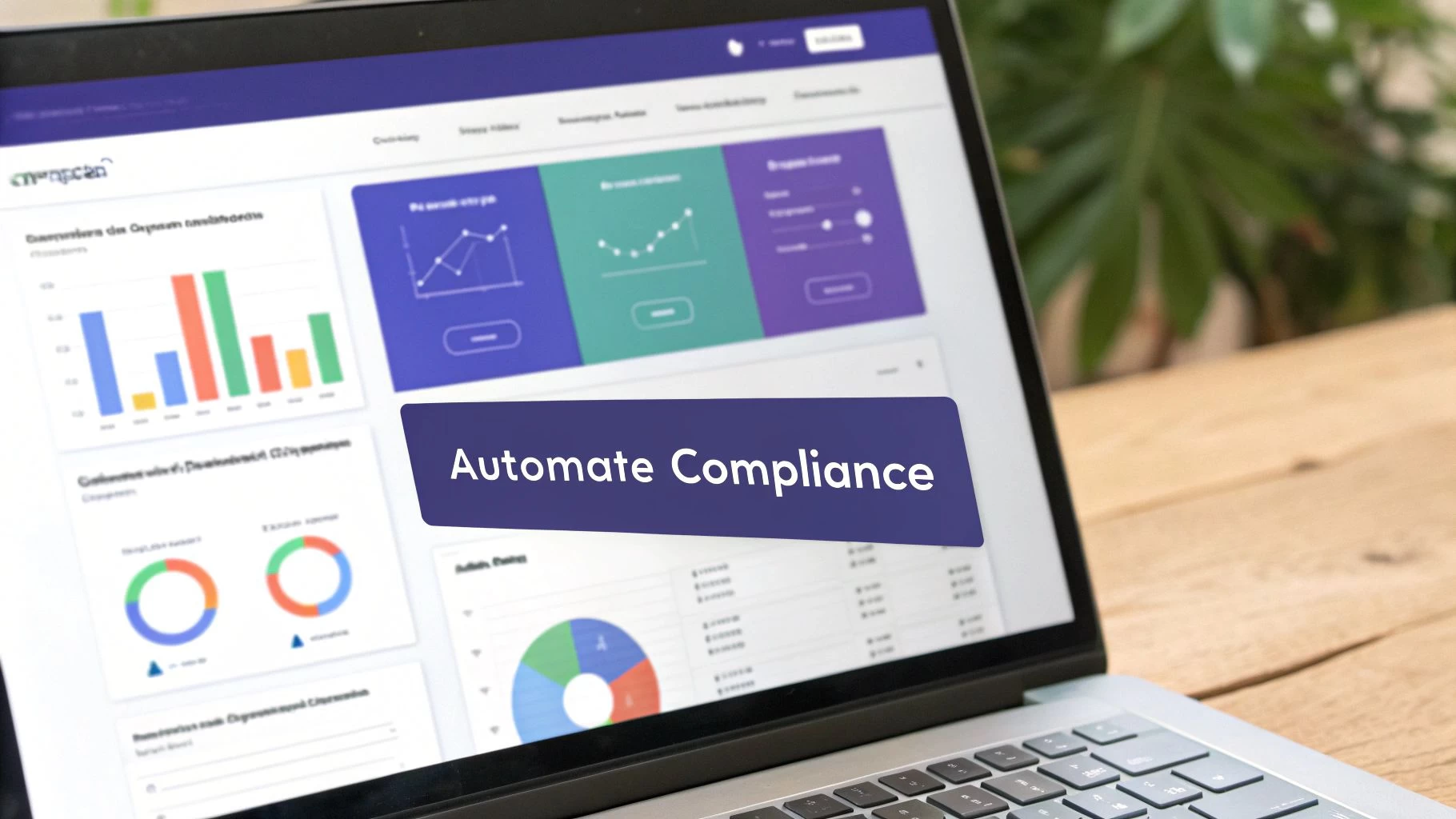
Modern drone compliance software is packed with powerhouse features, and each one is there to solve a specific, real-world operational headache. These aren't just nice-to-haves; they are the gears that turn a complex, high-risk job into a smooth and safe process. They work together to handle the repetitive tasks, give you the intel you need for a safe flight, and keep a perfect digital paper trail.
Think of these features as your own specialist crew, all working in sync. You get a meticulous record-keeper, a sharp-eyed airspace analyst, a quick-thinking logistics coordinator, and a diligent fleet manager, all available right from your dashboard.
Let's break down the essential functions that make this happen.
Automated Flight Logging And Record Keeping
Let’s be honest, manual flight logs are a relic. They’re prone to mistakes and always seem to be missing something when you need them most. Automated logging is the bedrock of any modern, compliant operation, capturing every important detail of a flight without the pilot having to lift a finger.
This feature automatically records all the vital stats, creating a perfect, audit-proof history of your missions. It’s the difference between guessing your flight time and knowing it down to the second.
- What it logs: Takeoff and landing times, total flight duration, GPS location data, and maximum altitude.
- Why it matters: It gives you an undeniable record for regulatory audits, client reports, or insurance claims.
- Real-world scenario: A construction firm uses automated logs to prove flight activity during a project audit. They pass with flying colours because their records are flawless and ready to go instantly.
Intelligent Airspace Awareness
Flying blind is simply not an option in this industry. Intelligent airspace awareness gives you a dynamic, multi-layered map of the sky, showing you a complete picture of your operating environment in real-time. It’s like having a direct line to air traffic control constantly feeding you updates.
This is much more than a basic map. It pulls in live data to warn you of potential conflicts before they become problems. The software flags no-fly zones, temporary flight restrictions (TFRs) for events, and nearby airports, making sure you never accidentally stray into airspace you shouldn’t be in.
The real power here is how proactive it is. It doesn't just show you where you can't fly; it actively warns you if your flight plan crosses into a restricted area, preventing mistakes before you even leave the ground.
This kind of functionality is becoming more crucial every day. The global drone software market, currently around USD 9.25 billion, is expected to hit a staggering USD 35.76 billion by 2035. This growth is being driven by the need for advanced safety tools.
Streamlined LAANC Authorization
For anyone needing to fly in controlled airspace near airports, the Low Altitude Authorization and Notification Capability (LAANC) system is a must. Applying for this manually used to be a painfully slow and clunky process.
Good compliance software connects directly with the FAA's LAANC system, letting pilots request and get near-instant approval to fly in controlled zones. This feature transforms a potential week-long wait into a matter of seconds, opening up jobs that were once too much of a hassle to even consider. For a closer look, see how SaaS platforms like Dronedesk are simplifying drone compliance.
Comprehensive Fleet And Pilot Management
Finally, a solid platform acts as a central hub for your most important assets: your drones and your pilots. This function keeps track of everything from aircraft maintenance schedules (based on actual flight hours) to the expiry dates for pilot certifications and insurance policies.
It sends out automated reminders for renewals and servicing, guaranteeing your gear is always airworthy and your team is always current. It’s peace of mind, automated.
Real-World Benefits of Automated Compliance

Let's move past the technical jargon for a minute. The real magic of drone compliance software isn't just in its features; it's about the tangible, real-world impact it has on your business. We're not just talking about ticking boxes here. It’s about fundamentally improving the safety, efficiency, and ultimately, the profitability of your entire operation.
The most immediate change you'll notice is a massive boost in operational safety. Think of automated airspace checks and geofencing as a digital safety net, catching potential mistakes before they ever happen. This proactive approach stops accidental flights into restricted zones and turns human error into a non-issue.
This safety net directly translates to serious risk mitigation. Having meticulous, automated records of every flight plan, risk assessment, and maintenance check is your best defence. If a client ever questions a procedure or a regulator comes knocking, you have a solid, time-stamped digital trail proving you did everything by the book.
Gaining an Edge Through Efficiency and Reputation
One of the biggest wins is what it does for your day-to-day workflow. This kind of software takes all those tedious, time-sucking admin tasks off your plate. Instead of drowning in paperwork, your pilots can focus on what they're best at: flying missions and delivering top-notch data to your clients.
This newfound efficiency is what allows a business to scale with confidence. Adding more drones and pilots to your fleet no longer means an exponential pile-up of admin headaches. The system just handles the extra load, paving the way for sustainable growth.
A flawless compliance history is more than just a legal shield; it's a powerful marketing tool. It demonstrates a commitment to professionalism and safety that sets you apart from the competition.
Finally, all of this builds a rock-solid professional reputation. Big-ticket clients, especially in sensitive sectors like energy and critical infrastructure, demand the absolute highest standards of safety and compliance. A perfect, easily verifiable compliance record is your key to unlocking those lucrative contracts.
To stay on top of your game, it's vital to keep up with how regulations are changing. You can learn more about the latest updates in our guide to the new drone laws, which is designed to help you fly safely and stay compliant. This reputation for excellence becomes your main differentiator, turning rigorous compliance into a clear competitive advantage in a crowded market.
Getting Software Integrated into Your Day-to-Day
Bringing new tech into your operation can feel like a huge job, but a well-designed drone compliance software platform is built to slide right into your existing workflow. The idea isn't to flip your whole business upside down overnight. Instead, it's about gradually automating the bits of your job that eat up the most time and carry the most risk.
Think of it less like a complicated software install and more like hiring a super-efficient operations manager who starts delivering value from day one.
It all kicks off with a simple data import. Most platforms, including Dronedesk, let you quickly upload all your existing records for pilots, drones, and gear. This one move immediately pulls all your critical info out of scattered spreadsheets and paper logbooks and into one organised dashboard. Right away, you've got a single, clear view of your entire fleet and team.
But the real magic happens when you start tweaking the software to match how you actually work.
Making the Software Work for Your Missions
Every drone business is different. A crew doing agricultural surveys has completely different pre-flight checks than a team shooting a movie. This is where you can set up custom checklists and automated alerts that mirror what you do in the real world.
- Custom Pre-Flight Checklists: You can build out specific checklists for different types of jobs. A LiDAR scanning mission, for instance, might need a checklist item to verify sensor calibration. A real estate shoot might have a check for putting the right ND filter on the camera.
- Automated Maintenance Alerts: Forget tracking flight hours on a whiteboard. You can set up the software to ping you automatically based on usage. Maybe you want an alert for a drone service every 50 hours of flight time, or a reminder to replace a battery after 200 cycles.
This kind of setup means compliance just becomes part of your process, not some extra chore you have to remember.
This Dronedesk dashboard gives you a taste of how all your crucial operational data can be pulled together and viewed in one spot.
Having instant access to job statuses, airspace intelligence, and who’s available makes decision-making and managing your resources so much faster.
A Real-World Example of Integration
Let's picture a small surveying business that’s been juggling paper logs and a bunch of different apps to manage their work. They decide to give Dronedesk a try.
- Day One: They block out an hour to upload their two pilots' certificates and the details for their three drones. They also import all their past flight logs directly from their DJI accounts.
- Day Two: They build a custom pre-flight checklist for their typical topo survey missions, adding specific checks for their RTK gear.
- End of Week One: The system automatically flags that one of their drones is getting close to its 100-hour service interval. The lead pilot gets an email alert, books the maintenance, and avoids a potential equipment failure down the line.
In just a few days, the business has shifted from a reactive, manual way of working to a proactive, automated one. This change immediately makes them more organised, frees up a ton of time, and gives them some serious peace of mind.
As the business scales up, this drone compliance software grows with them, handling more complex jobs and a bigger fleet without piling on the admin. The ability to manage and make sense of this operational data is driving huge growth in the market. In fact, the drone analytics market alone is expected to jump from USD 4.3 billion in 2025 to a massive USD 40.5 billion by 2035. You can dig into the full drone analytics market forecast on Future Market Insights. It just goes to show how valuable the data these platforms help manage has become.
Got Questions About Drone Compliance Software?
Jumping into any new bit of tech is bound to stir up a few questions. Even when the benefits seem obvious, you’ve got to think about the practical side of things. Does it really work for a one-person operation? How on earth does it keep up with laws that seem to change every other week? And what’s the real bottom line—is it actually worth the money?
Let's tackle the four questions we hear most often from drone professionals, whether they're flying solo or managing a whole fleet.
Is This Software Only for Big Drone Companies?
Not at all. While drone compliance software is an absolute lifesaver for managing large fleets, it’s just as valuable for solo pilots and small teams. Think of it as your automated safety officer and admin assistant rolled into one.
For the individual operator, it takes the tedious stuff off your plate—flight logging, airspace checks, keeping records straight—so you can focus on flying and landing clients. It also gives your business a serious professional polish. Handing a client a clean, compliant flight plan shows you mean business and gives you an edge. The biggest win? The peace of mind that comes from knowing you’re always ready for an audit, no matter how small your operation is.
How Does the Software Keep Up with Changing Drone Laws?
This is one of the most critical jobs of any decent platform. Reputable software providers have teams dedicated to tracking regulatory changes from bodies like the FAA in the US and EASA in Europe. They live and breathe this stuff so you don't have to.
When a new rule drops or airspace classifications are updated, those changes get baked right into the software. This means your flight planning maps, pre-flight checklists, and compliance warnings are always current. You stay on the right side of the law without having to become a legal eagle yourself.
Can I Connect This Software with Other Tools I Use?
Absolutely. Modern compliance platforms are designed to play nicely with others. The best ones offer what’s called an API (Application Programming Interface), which is just a fancy way of saying they can talk to the other business software you’re already using.
This creates a smooth, connected workflow. For instance, you can link your drone compliance software to:
- Project Management Systems: Sync your flight logs and mission reports directly to the right project board. No more manual updates.
- Accounting Software: Push accurate flight times and job details straight into your invoices to get paid faster.
- Data Processing Tools: Send your aerial imagery directly to platforms like Pix4D for analysis, cutting out the boring step of uploading everything by hand.
It’s all about eliminating double-entry, cutting down on mistakes, and making your entire operation run more efficiently.
What Is the True Cost and Is It Worth the Investment?
Most platforms run on a subscription model, with pricing that scales based on the number of pilots or drones you have. There are plans for everyone, from the solo operator just starting out to large-scale enterprise teams. But to figure out if it's "worth it," you have to look at the alternative.
A single fine for flying non-compliantly can easily cost you thousands, which is often way more than a year's subscription. Then, factor in the hours you'll save on paperwork, the massive reduction in operational risk, and the trust you build with clients. Suddenly, that subscription fee starts to look less like a cost and more like a smart investment in your business's security, efficiency, and growth.
Ready to see how an all-in-one platform can transform your drone operations? Dronedesk brings flight planning, risk assessments, and compliance management into a single, intuitive system. Start your free trial today and discover a smarter way to fly.
 BVLOS Drone Requirements for Building a Safety Case →
 Drone Pilot Test Mistakes That Cost Candidates Marks →
 FAA 107 License vs Part 107 Certificate: What’s the Difference? →
 Drone Airport Rules: A Field Checklist for Site Assessments →
 FAA Part 107 Record-Keeping Rules for Commercial Teams →
 How to Review a DJI Flight Log After an Unexpected Event →
 Drone Laws Around the World: A Pre-Flight Research Framework →
 How to Compare Drone Survey Services for Complex Sites →
 How to Start a Drone Mapping Business With a Clear Workflow →
 Class C Airspace Drone Rules for Commercial Flights →