
FAA Drone Licence Requirements for Commercial Pilots
For most commercial drone work in the United States, the FAA drone licence is officially called a Remote Pilot Certificate. It sits under 14 CFR Part 107, the FAA rule set for small unmanned aircraft systems, and it applies whether you are doing paid aerial photography, mapping, infrastructure inspection, surveying, emergency response support or internal business operations.
In practical terms, if a flight is not purely recreational, you should assume Part 107 applies unless your organisation is operating under another FAA-approved framework, such as a public aircraft Certificate of Waiver or Authorisation for certain government operations.
This guide explains the FAA drone licence requirements commercial pilots need to understand in 2026, from eligibility and testing to aircraft registration, Remote ID, operational limits and the records professional operators should keep.
Quick Answer: What Do Commercial Drone Pilots Need?
To fly a small drone commercially in the US under Part 107, you generally need to meet these requirements:
- Be at least 16 years old
- Be able to read, speak, write and understand English
- Be in a physical and mental condition to safely operate a drone
- Pass the FAA Unmanned Aircraft General, Small knowledge test, unless you qualify through an existing Part 61 pilot certificate route
- Apply for a Remote Pilot Certificate through the FAA’s IACRA system
- Pass TSA security vetting
- Complete recurrent training every 24 calendar months to keep operating privileges current
- Register any drone used for Part 107 operations
- Comply with Remote ID requirements, unless a valid exception applies
- Follow Part 107 operating rules or obtain FAA authorisations and waivers where needed
The FAA’s own Become a Drone Pilot guidance is the primary reference for the application process. If you want a more detailed walkthrough of the application sequence, Dronedesk also has a dedicated FAA Part 107 licence application guide.
Is an FAA Drone Licence the Same as Part 107?
In common language, people call it an FAA drone licence or commercial drone licence. The FAA term is Remote Pilot Certificate with a small UAS rating.
Part 107 is not just a test. It is the operating rule set that governs most commercial small drone flights in the US. Passing the knowledge test and receiving the certificate allows you to act as Remote Pilot in Command, often shortened to RPIC, for flights that comply with Part 107.
A recreational TRUST certificate is not enough for commercial work. TRUST is for recreational flyers operating under the recreational exception. If the flight supports a business, public agency, inspection programme, news organisation, utility, survey job or client deliverable, the operation normally falls outside pure recreation.
Who Needs a Remote Pilot Certificate?
The Remote Pilot in Command must hold a current Remote Pilot Certificate. That person is legally responsible for the safe conduct of the flight, including airspace checks, crew briefings, weather assessment, regulatory compliance and emergency decisions.
The person physically manipulating the controls does not always need to hold the certificate if they are directly supervised by a certificated Remote Pilot in Command who can immediately take control. In commercial operations, however, relying on supervision alone can create operational and insurance complications. Many companies prefer every active pilot to hold their own certificate.
For survey firms, utilities and emergency services, this distinction matters. A company does not receive a single blanket drone licence that automatically covers every employee. The organisation can build processes, manuals and approvals around drone operations, but the RPIC requirement sits with qualified individuals.
Eligibility Requirements for Commercial Drone Pilots
The baseline eligibility requirements are straightforward, but they are not a formality. The FAA expects certificated remote pilots to understand aviation decision-making and to recognise when a flight should not proceed.
| Requirement | What it means in practice |
|---|---|
| Minimum age | You must be at least 16 years old to qualify for the certificate. |
| English proficiency | You must be able to read, speak, write and understand English for aviation communications and documentation. |
| Safe condition | You must be physically and mentally fit to operate safely. Fatigue, impairment, illness or medication effects can make a flight unsafe. |
| Aeronautical knowledge | Most new pilots must pass the FAA initial knowledge test. |
| Security vetting | The Transportation Security Administration reviews applicants before certification is issued. |
These requirements apply to the person seeking the certificate, not the aircraft. Aircraft requirements are separate and include registration, Remote ID and operating limitations.
The FAA Knowledge Test: What It Covers
New commercial drone pilots usually take the Unmanned Aircraft General, Small (UAG) knowledge test at an FAA-approved knowledge testing centre. The test is designed to confirm that the applicant understands the aviation environment, not just how to fly a drone manually.
Topics include:
- Part 107 regulations
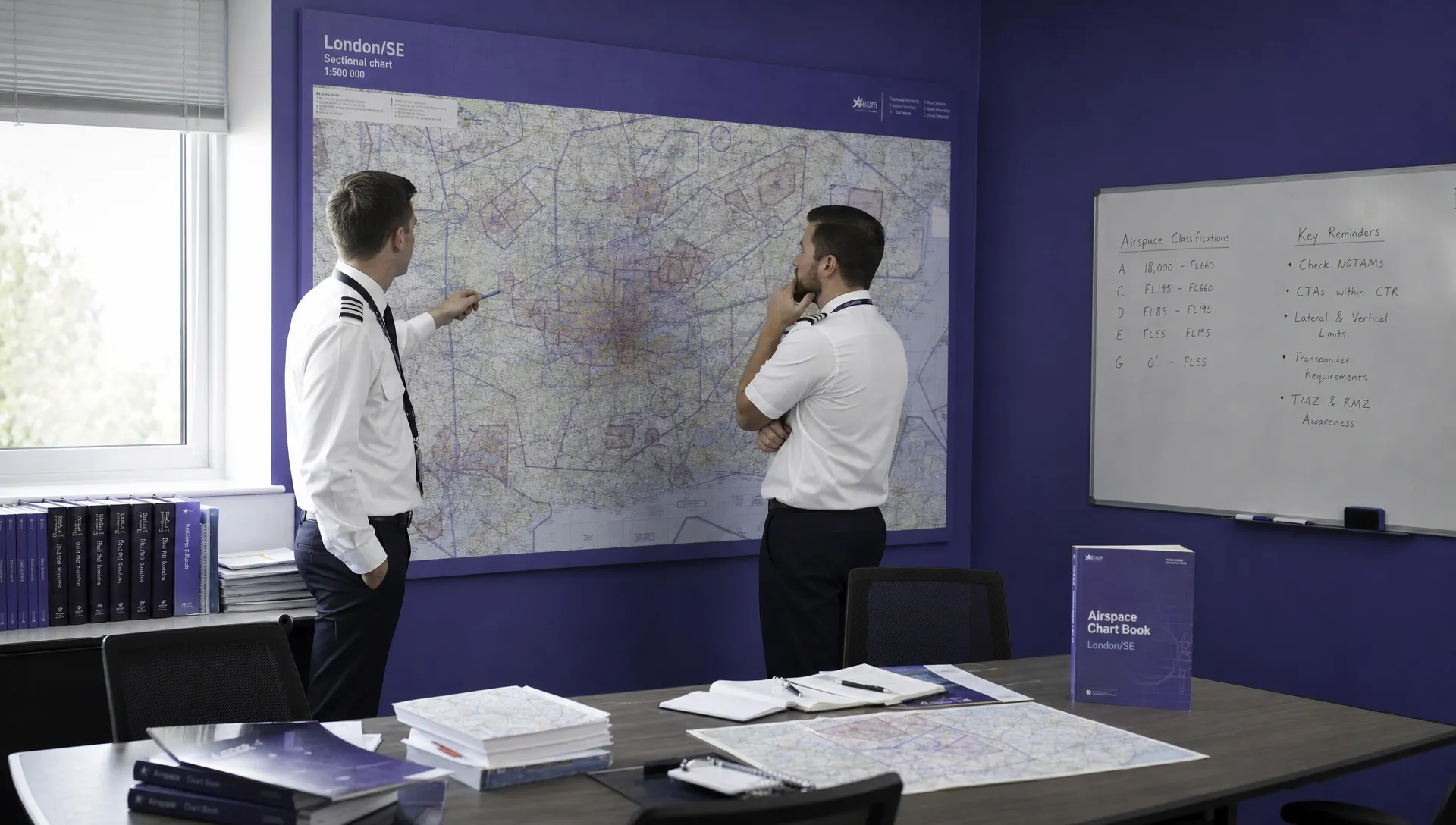
- Airspace classification and operating requirements
- Aviation charts
- Weather sources and weather effects on small drones
- Loading and performance
- Emergency procedures
- Crew resource management
- Radio communication procedures
- Airport operations
- Maintenance and preflight inspection
- Aeronautical decision-making
This is where many new commercial pilots underestimate the licence process. Flying skill helps, but the test is heavily focused on airspace, risk judgement and regulatory knowledge. A construction photographer and a utility inspection pilot may use very different payloads, but both need to know how controlled airspace, temporary flight restrictions and weather affect a safe go or no-go decision.
If you already hold a Part 61 pilot certificate, other than a student pilot certificate, and you have completed a flight review within the required period, you may be able to complete FAA online training instead of taking the initial UAG test. You still need to apply for the Remote Pilot Certificate.
Applying After You Pass
After passing the knowledge test, applicants use the FAA’s IACRA system to submit the application for a Remote Pilot Certificate. IACRA links the test result, applicant details and certification workflow.
The broad sequence is:
- Create or access an IACRA account.
- Start a Remote Pilot application.
- Enter the knowledge test exam ID.
- Submit the application for processing.
- Wait for TSA security vetting.
- Receive temporary authority once approved, then the permanent certificate later.
The test result is not the certificate. Commercial operations should wait until the pilot has appropriate authorisation to act as RPIC. Operators should also keep internal records of pilot certificates and recurrent training dates, especially when several pilots or regional teams are involved.
Recurrent Training: Keeping Your Privileges Current
The Remote Pilot Certificate itself is not a one-and-done permission to fly indefinitely without further training. To exercise Part 107 privileges, a remote pilot must complete recurrent training every 24 calendar months.
The recurrent process changed from the older recurrent test model. The FAA now provides recurrent training through FAASTeam for remote pilots. Completing recurrent training keeps the pilot current and also covers important updates, including night operations rules.
For commercial teams, recurrent training dates should be tracked like any other compliance requirement. A pilot who has not completed recurrent training on time may still physically hold a certificate, but they cannot legally exercise Part 107 privileges until they regain currency.
Aircraft Requirements: Registration, Remote ID and Marking
Commercial pilots often focus on their own certificate and forget that the aircraft has its own compliance obligations. Any drone flown under Part 107 must be properly registered, even if it weighs less than 0.55 lb, because the recreational weight exception does not apply to commercial operations.
The aircraft registration number must be displayed on the drone. Registration also needs to be kept up to date when aircraft are added, retired, transferred or replaced.
Remote ID is another core requirement. The FAA’s Remote ID rule requires most registered drones to broadcast identification and location information unless a recognised exception applies, such as certain operations in FAA-Recognised Identification Areas.
| Requirement | Commercial implication |
|---|---|
| FAA registration | Required for drones used under Part 107. |
| Registration marking | The registration number must be visible on the aircraft. |
| Remote ID | Most registered drones must comply through built-in Remote ID or an approved broadcast module. |
| Airworthiness condition | The RPIC must ensure the drone is safe to operate before flight. |
| Maintenance records | Not always prescribed in a single format, but strongly advisable for professional operations. |
Fleet management becomes more important as operations grow. A single pilot with one aircraft can manage basic records manually for a while. A survey company, utility contractor or emergency services unit with multiple aircraft, pilots and batteries needs a more disciplined system. Dronedesk’s drone fleet management guide explains the operational signs that a team has outgrown spreadsheets.
Core Part 107 Operating Rules
Holding a Remote Pilot Certificate does not mean every commercial flight is automatically allowed. Part 107 sets default operating limits, and deviations usually require an FAA waiver or specific authorisation.
The main operating rules include:
| Rule area | Part 107 baseline |
|---|---|
| Aircraft weight | Small UAS operations are limited to aircraft under 55 lb, including payload. |
| Visual line of sight | The RPIC or visual observer must be able to see the drone unaided, except for corrective lenses. |
| Maximum altitude | Generally 400 ft above ground level, or within 400 ft of a structure when allowed. |
| Maximum groundspeed | 100 mph. |
| Yielding | Drones must yield right of way to all other aircraft. |
| Night operations | Allowed if training requirements are met and the drone has compliant anti-collision lighting. |
| Operations over people | Allowed only when the operation fits the applicable FAA category or has a waiver. |
| Moving vehicles | Restricted unless conditions in Part 107 are met or a waiver applies. |
| Controlled airspace | Requires authorisation, commonly through LAANC or FAA DroneZone. |
Airspace is one of the most common sources of commercial flight delays. Airports, controlled airspace, temporary flight restrictions, national security restrictions and local site constraints can all affect whether a job can proceed as planned.
Authorisations and Waivers: When the Licence Is Not Enough
Many commercial jobs need more than a Remote Pilot Certificate. The FAA separates routine Part 107 permissions from operations that need specific authorisation or a waiver.
A common example is flying in controlled airspace. A certificated pilot still needs airspace authorisation before operating in controlled airspace around many airports. LAANC can provide near real-time authorisations in eligible areas, but not every request is automatic and not every location is covered.
Waivers are different. A waiver asks the FAA to permit an operation that would otherwise fall outside standard Part 107 rules. Examples may include certain beyond visual line of sight operations, operations over people that do not fit a standard category or other deviations from the rule.
Waiver applications need a credible safety case. The FAA will want to understand how the operator identifies hazards, mitigates risk, manages crew roles, handles lost link scenarios and protects other airspace users.
Documentation Commercial Operators Should Keep
Part 107 does not prescribe a single universal paperwork pack for every flight, but professional operators should maintain records that demonstrate safe planning and accountable decision-making. This is especially true for repeatable enterprise work, utility inspections, public safety deployments and higher-risk locations.
Useful records include:
- Pilot certificate and recurrent training evidence
- Aircraft registration and Remote ID compliance evidence
- Preflight inspection records
- Battery and maintenance logs
- Site survey notes
- Airspace authorisations
- Risk assessments
- Crew briefings
- Checklists
- Flight logs
- Incident, defect or near-miss reports
- Client permissions, landowner permissions or access approvals
Permission paperwork is often overlooked. If a job needs a formal property access letter, client authorisation or written notice to a site manager, an AI letter generator for professional correspondence can help create a polished first draft that you then review for accuracy and legal suitability.
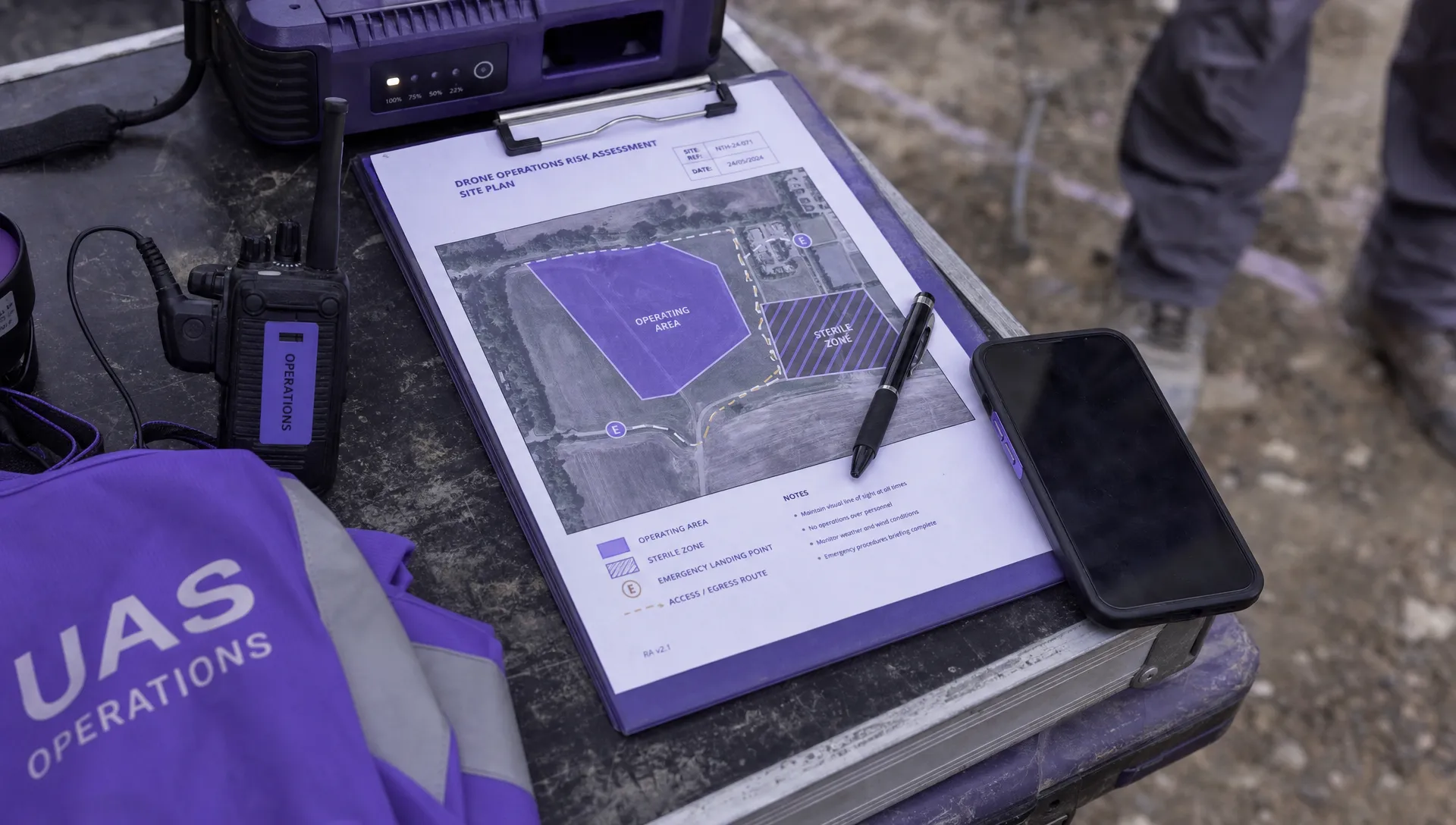
Risk assessment is where documentation becomes operationally useful rather than just administrative. A good assessment should identify airspace issues, ground hazards, people and property exposure, weather limits, emergency landing options and communication responsibilities. If you need a practical structure, Dronedesk has a guide on how to build a drone flight risk assessment that works.
Requirements by Commercial Use Case
The FAA requirements are broadly the same across commercial sectors, but the operational emphasis changes depending on the mission.
Survey and mapping companies need to pay close attention to repeatability, flight logs, battery performance, geofencing, airspace authorisations and data handover. Mapping missions can involve grid flights over large areas, so visual line of sight and crew positioning need to be planned carefully.
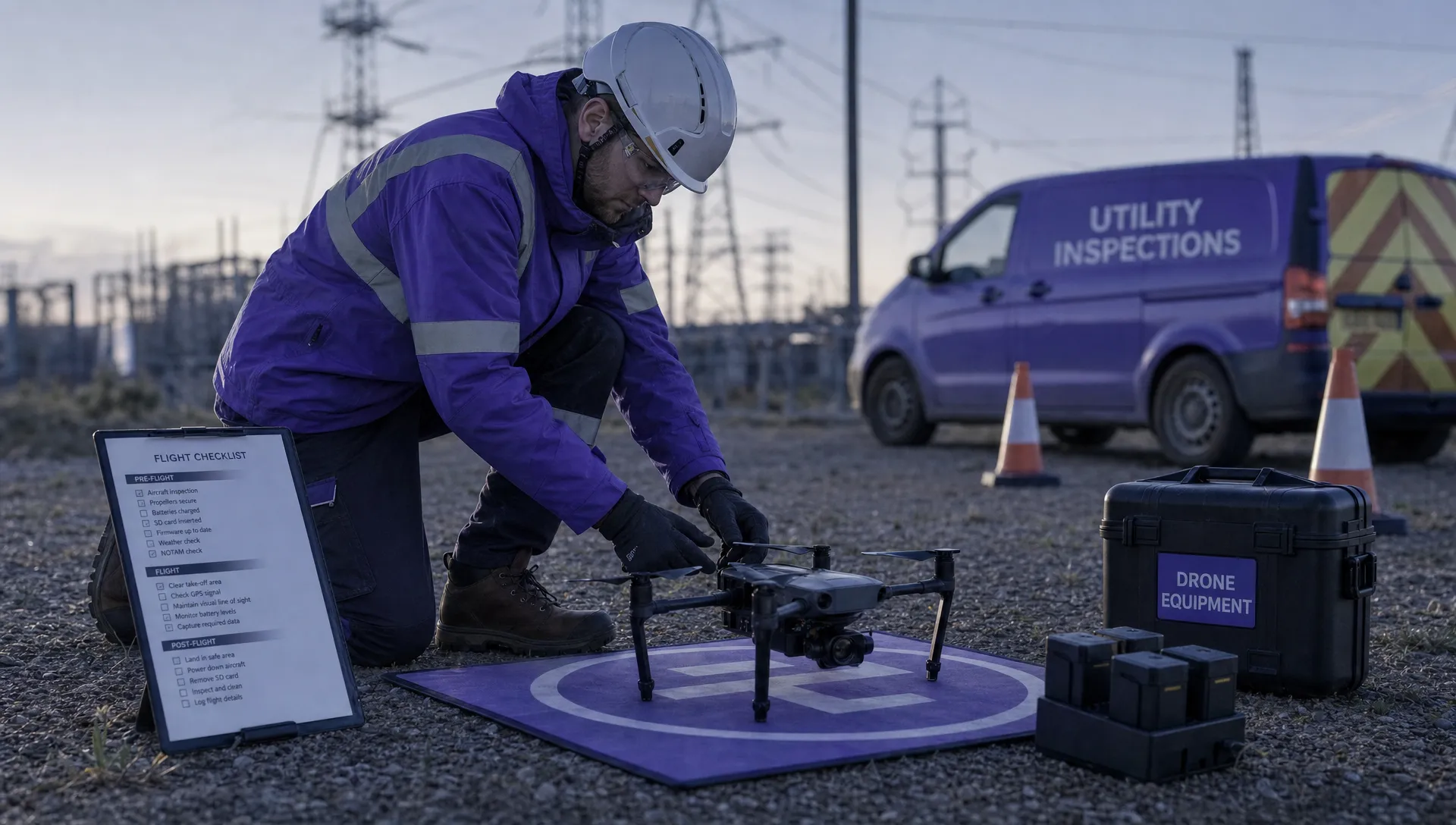
Utility companies often operate around critical infrastructure, roads, substations, pipelines, transmission corridors or restricted sites. The Remote Pilot Certificate is only one part of the picture. Site access, proximity hazards, electromagnetic interference, emergency procedures and stakeholder coordination can be just as important.
Emergency services may operate under Part 107, a public aircraft COA or both, depending on the agency and mission. Public safety teams should define which framework applies before an incident, not during one. Special Governmental Interest processes may help in urgent circumstances, but they do not replace the need for trained personnel and documented procedures.
Media and inspection pilots often face time pressure from clients or breaking news. Part 107 still applies. A commercial opportunity is not a reason to ignore airspace restrictions, operations over people rules or temporary flight restrictions.
What About Foreign Drone Pilots Flying Commercially in the US?
Foreign drone pilots cannot assume that a licence or certificate from another country automatically allows commercial operations in US airspace. Operations in the United States must comply with FAA requirements.
International operators should check current FAA rules before accepting US work. Depending on the aircraft, operator status and mission type, there may be additional requirements beyond the standard Part 107 pathway. For complex commercial projects, legal or aviation compliance advice is sensible before mobilising equipment and crew.
Common Mistakes That Put Commercial Pilots at Risk
Many compliance problems are not caused by a complete lack of training. They happen when a pilot treats the certificate as the whole compliance system.
Frequent mistakes include letting recurrent training lapse, flying in controlled airspace without authorisation, failing to register sub-250 g aircraft used commercially, assuming Remote ID does not apply, skipping site-specific risk assessment or accepting client pressure to fly over people without meeting the rules.
Another common issue is weak record-keeping. If a client, insurer, regulator or internal safety manager asks how a flight was planned, the operator should be able to produce more than a calendar entry and a set of images. Professional drone work benefits from a clear audit trail.
How Dronedesk Fits Into Part 107 Operations
Commercial drone compliance involves people, aircraft, locations, clients, documents and repeatable workflows. Dronedesk is designed as an all-in-one drone operations management platform, with features for client management, fleet management, team management, airspace intelligence, proximity intelligence, flight planning, flight logging, data reporting, configurable checklists and risk assessments.
That does not replace the FAA Remote Pilot Certificate, and it does not remove the pilot’s responsibility to make safe decisions. It gives operators a central place to manage the operational admin that surrounds commercial drone work, from planning and checks to logs and reporting.
For growing teams, this matters. A Part 107 certificate qualifies an individual pilot. A well-managed operation also needs consistent processes so that every job is planned, checked, flown and recorded to the same standard.
Frequently Asked Questions
Do I need an FAA drone licence for YouTube videos? If the flight is genuinely recreational, Part 107 may not be required. If the flight supports a business, monetised channel, client work, promotion or any non-recreational purpose, you should treat it as commercial and check Part 107 requirements.
What is the FAA drone licence called? The official FAA term is Remote Pilot Certificate with a small UAS rating. Many people call it a commercial drone licence or Part 107 licence.
How long does a Part 107 certificate last? The certificate is supported by recurrent training requirements. To keep exercising Part 107 privileges, remote pilots must complete recurrent training every 24 calendar months.
Do I need to register a drone under 250 g for commercial work? Yes. The recreational exception for very light drones does not apply when the aircraft is used for Part 107 commercial operations.
Can I fly at night under Part 107? Night operations are allowed if the pilot has completed the required training and the drone has compliant anti-collision lighting. The operation must still meet all other applicable rules.
Does Part 107 allow BVLOS flights? Standard Part 107 rules require visual line of sight. Beyond visual line of sight operations generally need a waiver or another FAA-approved framework.
Can a company hold one FAA drone licence for all pilots? No. The Remote Pilot Certificate is issued to an individual. A company can manage procedures and compliance systems, but the RPIC must be appropriately certificated and current.
Make Commercial Drone Compliance Easier to Manage
The FAA drone licence is the starting point for commercial pilots, not the whole system. Once you add aircraft registration, Remote ID, airspace checks, authorisations, risk assessments, client records, checklists and flight logs, the admin can spread quickly across files and spreadsheets.
Dronedesk helps commercial operators bring those workflows together so teams can plan, fly and record drone operations with clearer oversight. If you are building a professional Part 107 operation, start with the certificate, then make sure your processes are strong enough to support the work you want to win.
 How to Evaluate a Free Drone Logbook Before Using It →
 FAA Part 107 Test: How to Master Airspace Questions →
 Drone Risk Assessment Controls That Work in the Field →
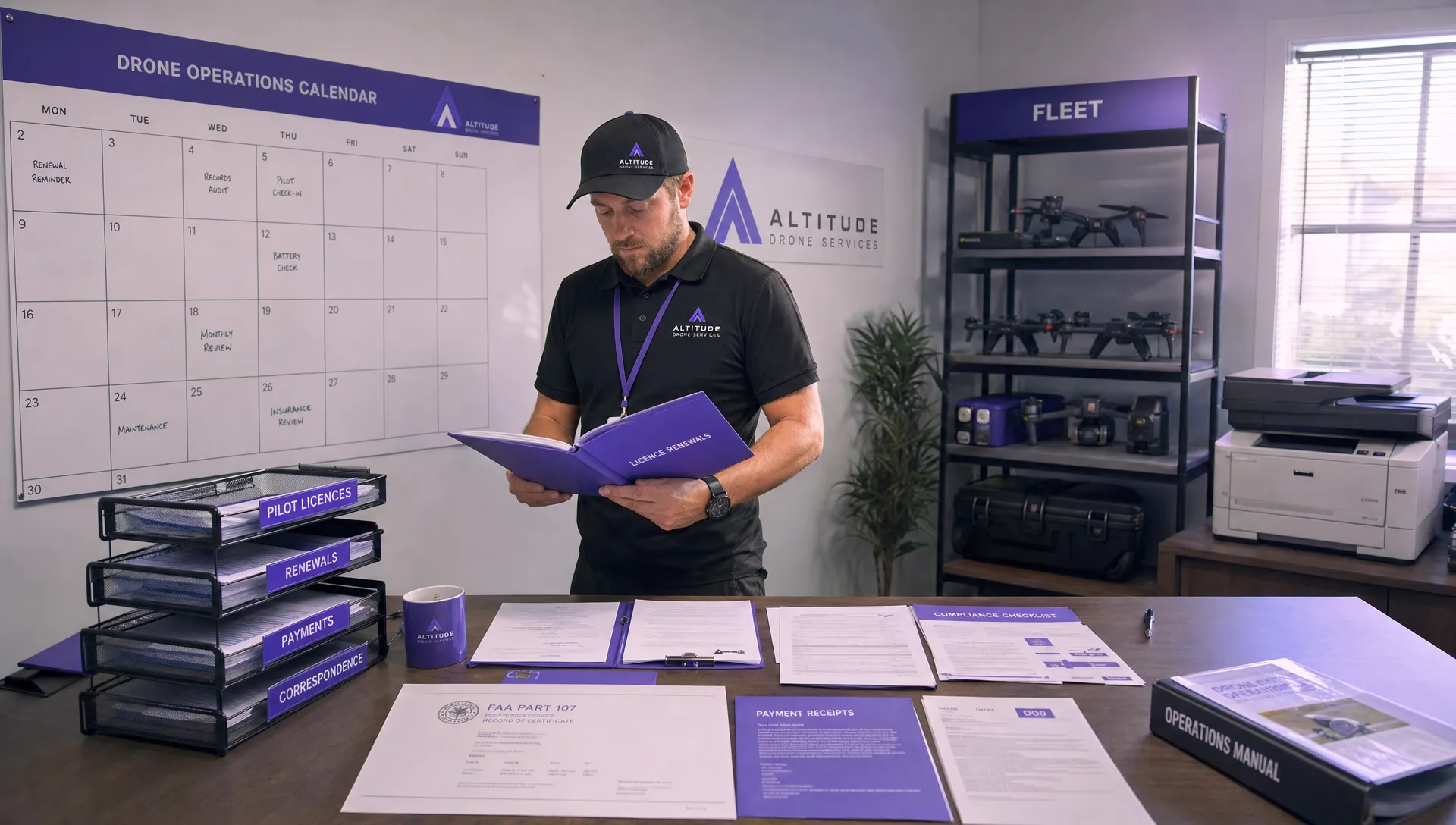 FAA Drone License Costs Beyond the Knowledge Test →
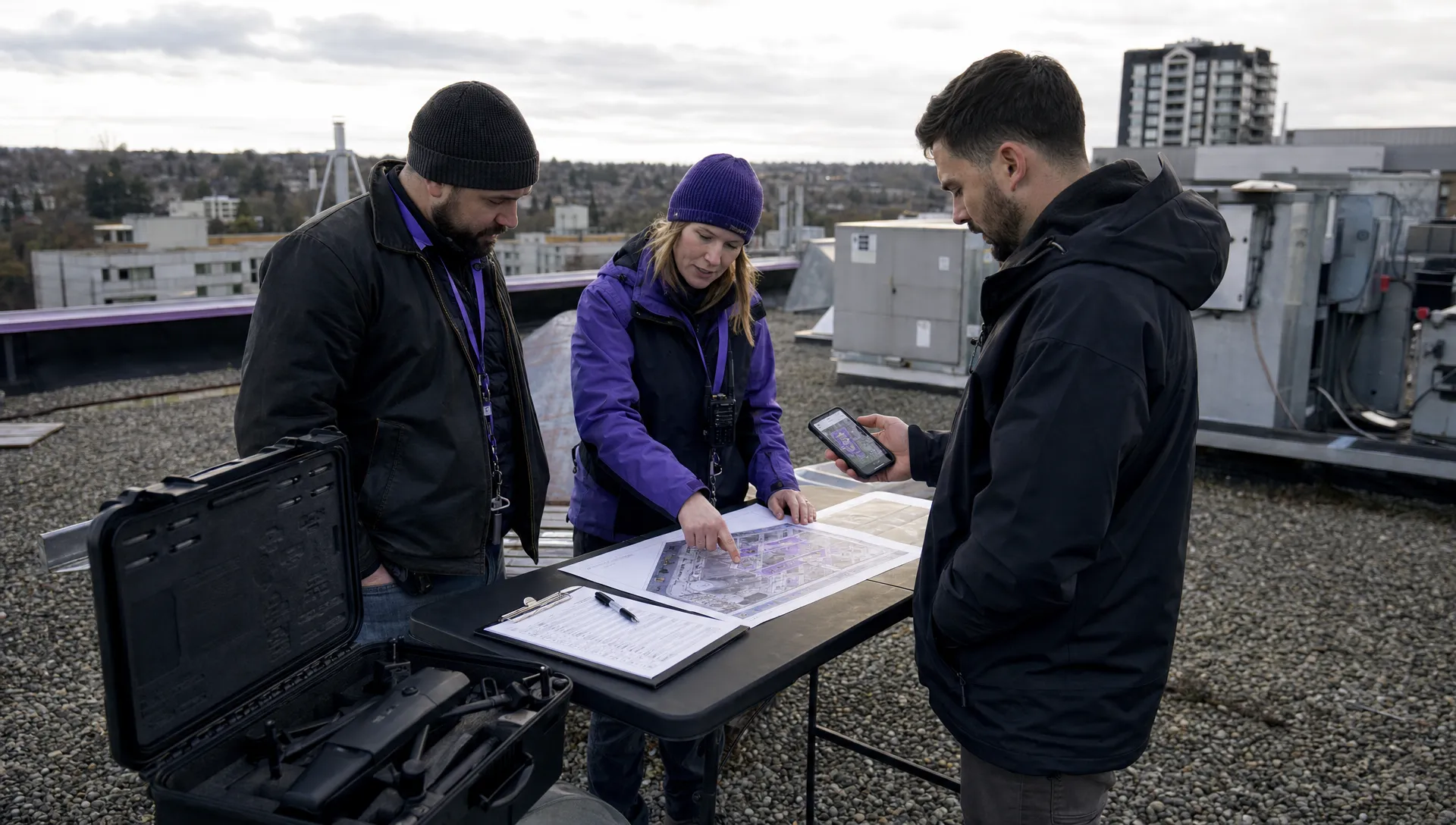 Drone Part 107 Operations: When a Waiver May Be Needed →
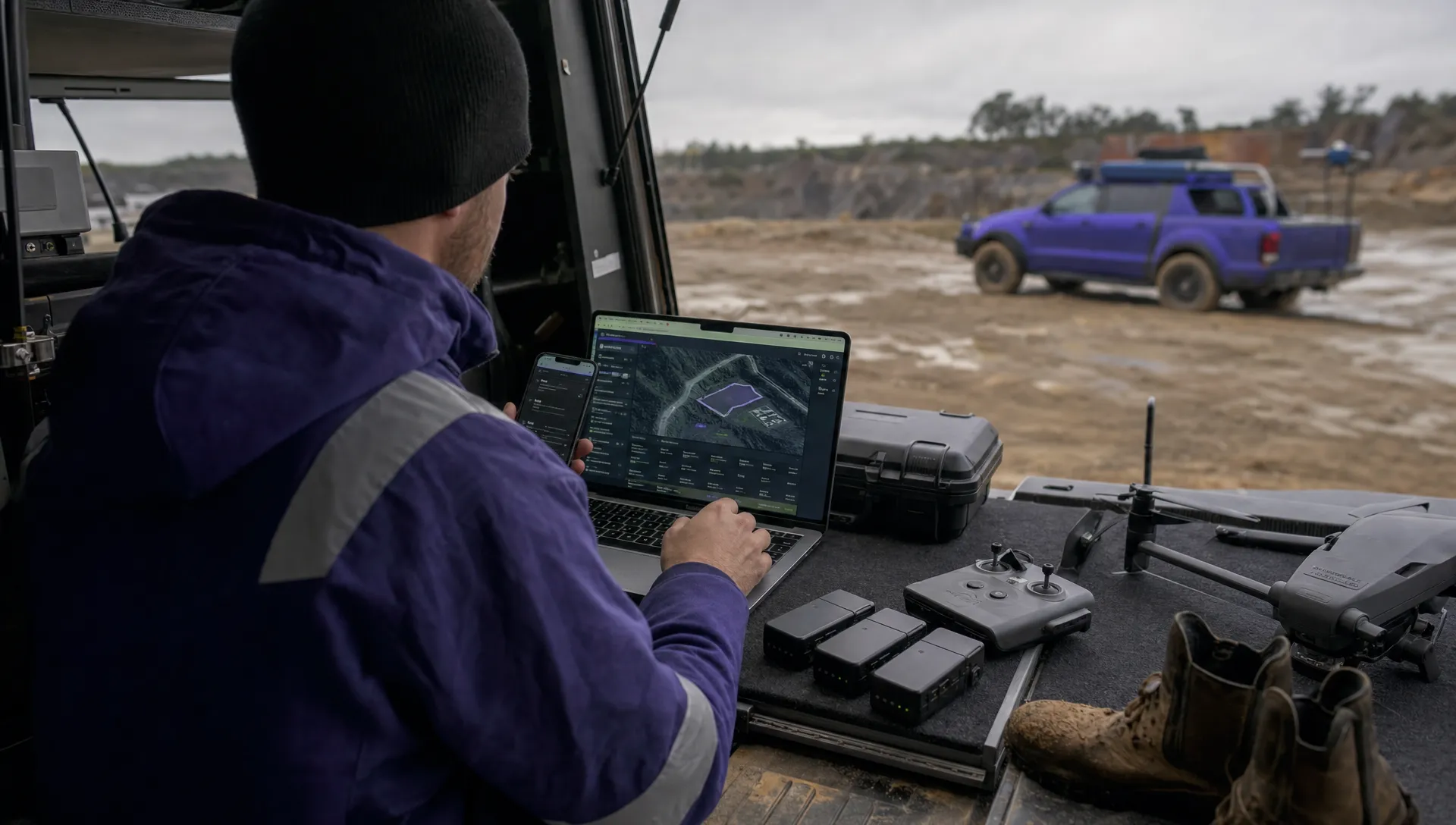 Drone Operating Rules for Managing Contractors and Employees →
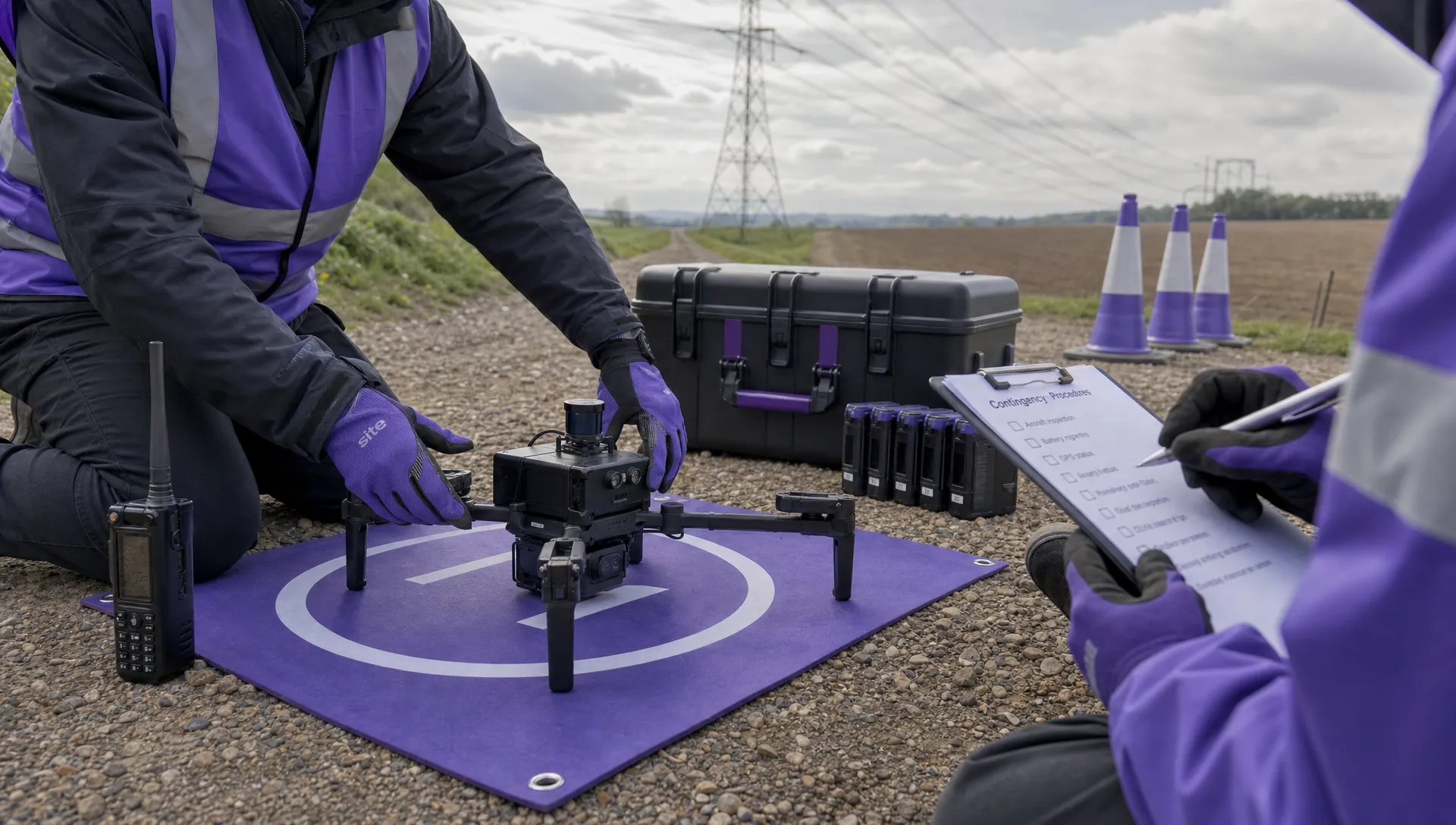 BVLOS Drone Requirements for Building a Safety Case →
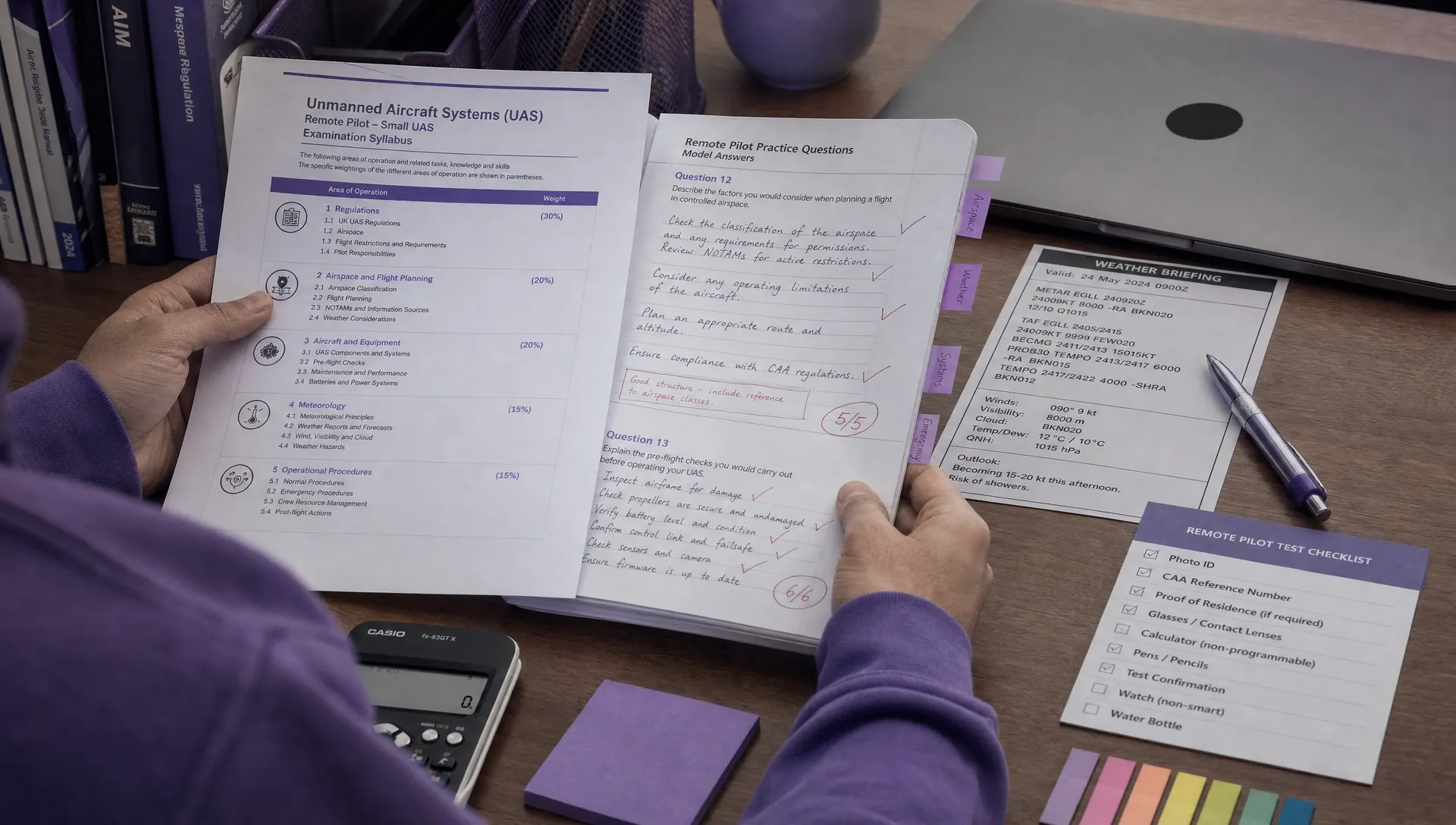 Drone Pilot Test Mistakes That Cost Candidates Marks →
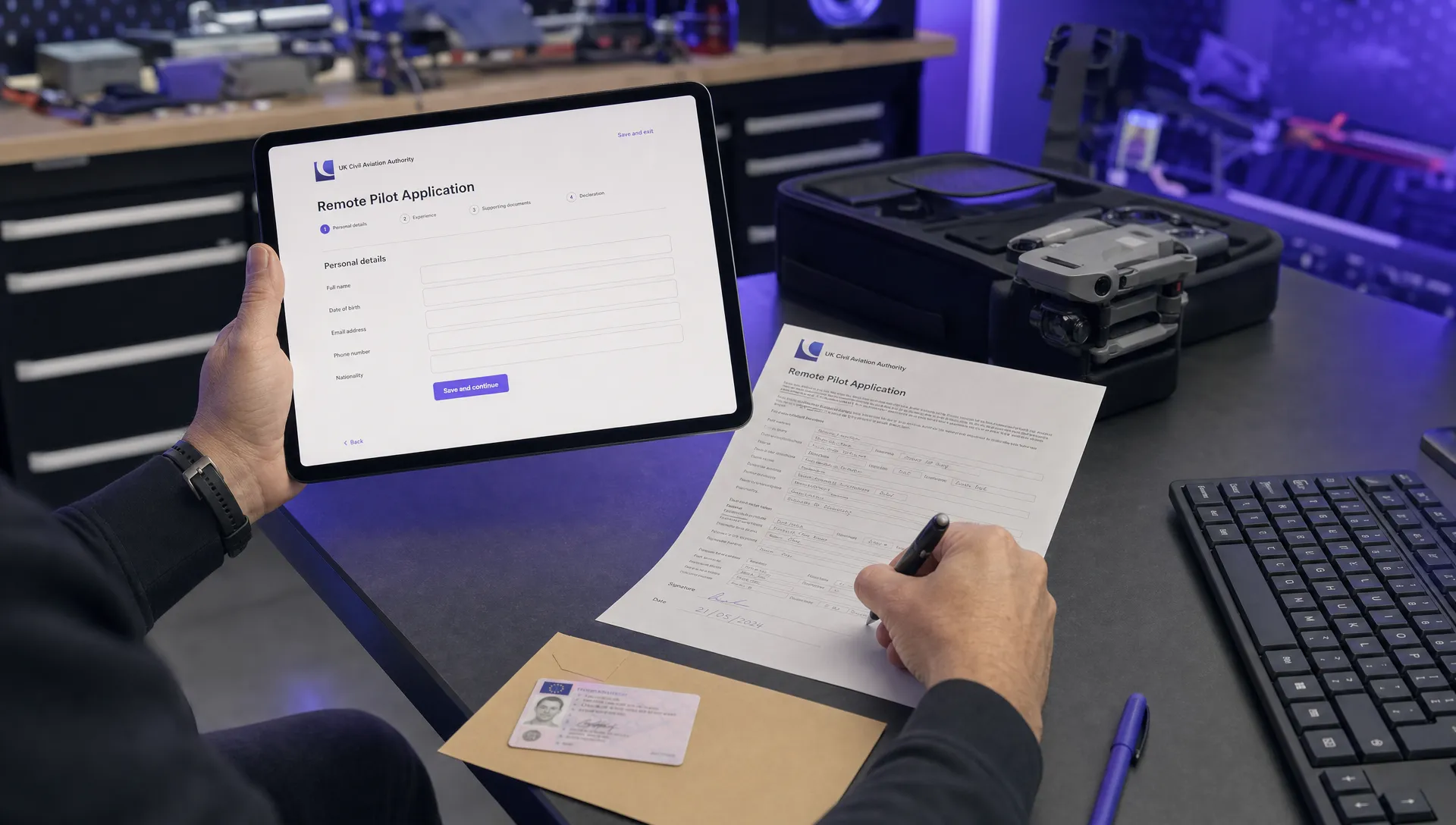 FAA 107 License vs Part 107 Certificate: What’s the Difference? →
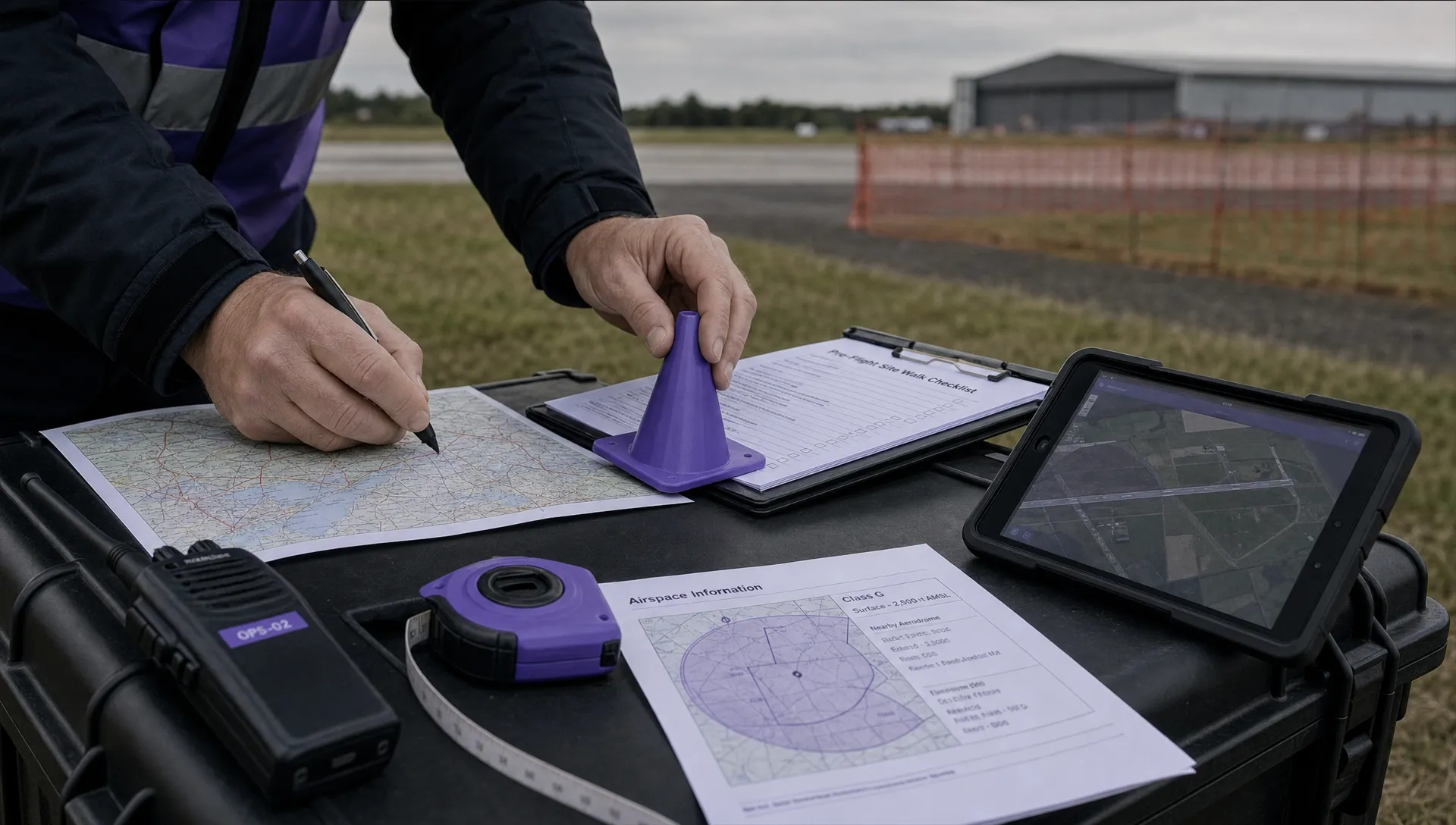 Drone Airport Rules: A Field Checklist for Site Assessments →