
FAA Small UAS Rule: Key Requirements for Operators
The FAA Small UAS Rule is the foundation for most commercial drone work in the United States. If you are flying for a client, inspecting utility assets, mapping a site, supporting emergency services or collecting data for your organisation, you are usually operating under 14 CFR Part 107 unless a different FAA approval applies.
For operators, the rule is not just a pilot licensing hurdle. It defines who can fly, which aircraft can be used, where flights can take place, what must happen before takeoff and when you need an FAA waiver or airspace authorisation. This guide breaks down the key requirements in practical terms so you can plan safer, cleaner and more defensible drone missions.
This article is a practical overview, not legal advice. Always check the FAA’s current Part 107 material and the actual regulation in 14 CFR Part 107 before relying on any operational interpretation.
What the FAA Small UAS Rule covers
The FAA Small UAS Rule applies to civil small unmanned aircraft systems used for non-recreational purposes. In everyday operator language, that means most commercial drone flights and many public agency flights where the aircraft weighs less than 55 lb, including payload.
A small UAS includes the aircraft itself and the elements required to operate it safely, such as the control station, command link and associated equipment. The rule is built around the Remote Pilot in Command, usually shortened to RPIC, who is responsible for the safe and lawful conduct of the flight.
Part 107 generally applies when the flight is not purely recreational. A flight may be Part 107 even if no money changes hands. For example, a drone image captured to support a roof inspection, land survey, insurance claim, internal asset audit or fire department situational awareness mission can fall outside recreational flying because it serves a business, organisational or public purpose.
The rule also sits alongside other FAA restrictions. Temporary Flight Restrictions, controlled airspace requirements, national security restrictions, airport procedures, Remote ID rules, state and local launch restrictions and privacy laws can all affect whether a specific flight is permissible.
Who can operate under Part 107?
To act as Remote Pilot in Command under the FAA Small UAS Rule, a person must hold a Remote Pilot Certificate with a small UAS rating or operate under the direct supervision of someone who does. The RPIC must be able to take direct control of the aircraft if needed.
In general, a Remote Pilot Certificate requires the applicant to be at least 16 years old, able to read, speak, write and understand English, physically and mentally fit to fly safely and able to pass the FAA aeronautical knowledge process. The FAA also conducts security vetting through the Transportation Security Administration.
Remote Pilot Certificates do not work like a one-time approval that can be ignored after the test. To exercise Part 107 privileges, the pilot must keep their aeronautical knowledge current, which normally means completing the required recurrent training within the previous 24 calendar months. If you are still at the application stage, Dronedesk has a separate step-by-step guide to the FAA Part 107 licence application.
For survey companies, utility teams and emergency services, it is worth separating the legal role from the operational job title. The RPIC may be the person flying the sticks, but they may also be coordinating with visual observers, payload operators, site safety staff, incident commanders or client representatives. Part 107 still needs one clearly identified RPIC for the flight.
Core operating limits under the FAA Small UAS Rule
The table below summarises the operating limits most teams need to build into their planning process.
| Requirement | Practical meaning for operators |
|---|---|
| Aircraft weight | The drone and payload must weigh less than 55 lb for standard Part 107 operations. |
| Registration | Drones used under Part 107 must be registered with the FAA and marked as required. |
| Remote ID | Most registered drones must broadcast Remote ID unless a recognised exception applies, such as operation in an FAA-recognised identification area. |
| Visual line of sight | The RPIC or visual observer must be able to see the aircraft unaided, except for corrective lenses. Standard Part 107 does not allow BVLOS without a waiver or other approval. |
| Maximum altitude | 400 ft above ground level, or within 400 ft of a structure and not more than 400 ft above that structure’s uppermost limit. |
| Maximum speed | 100 mph, or 87 knots. |
| Weather visibility | At least 3 statute miles of visibility from the control station. |
| Cloud clearance | At least 500 ft below clouds and 2,000 ft horizontally from clouds. |
| Night operations | Allowed if the pilot meets the FAA training requirement and the drone has anti-collision lighting visible for at least 3 statute miles. |
| Right of way | The small UAS must yield to all other aircraft and must not interfere with crewed aviation. |
| Multiple aircraft | One RPIC may not operate more than one small unmanned aircraft at the same time under standard Part 107. |
| Hazardous materials | Part 107 does not allow carriage of hazardous materials. |
| Careless or reckless operation | The RPIC must not operate in a way that endangers life or property. |
These limits should not be treated as isolated checklist items. A flight can meet the altitude rule and still be unsafe because of airspace, terrain, people, wires, weather, radio interference or emergency activity nearby. For that reason, Part 107 compliance works best when it is built into a full planning process rather than checked at the last minute.
Airspace authorisation and airport operations
Part 107 does not give operators automatic permission to fly anywhere below 400 ft. Airspace class matters.
In uncontrolled Class G airspace, Part 107 flights can usually take place without FAA airspace authorisation, provided all other rules and restrictions are met. In controlled airspace, including Class B, C, D and certain Class E surface areas, the operator must obtain FAA authorisation before flying.
The FAA’s Low Altitude Authorization and Notification Capability, better known as LAANC, provides near real-time authorisations in many controlled airspace areas. Where LAANC is unavailable or the requested operation falls outside automated limits, operators may need to use FAA DroneZone or another FAA process.
Airport work needs extra care because the legal question is not only “Am I under 400 ft?” A compliant plan also has to account for approach paths, heliports, hospital landing sites, nearby temporary restrictions, NOTAMs, local procedures and crewed traffic patterns. If airport proximity is a regular issue for your operation, this guide to airport drone rules and planning flights without surprises is a useful next step.
For utility inspections, construction mapping and emergency services work, airspace authorisation should be requested early. Leaving it until the day of the mission can create avoidable delays, especially when the job is near an airport, a stadium, a VIP movement, a wildfire, a disaster response zone or a security-sensitive site.
Remote ID, registration and aircraft condition
Remote ID is now a standard compliance item for US drone operations. The FAA describes Remote ID as a digital licence plate for drones, allowing a drone in flight to provide identification and location information. The FAA’s Remote ID guidance explains the accepted compliance paths, including Standard Remote ID drones and broadcast modules.
For Part 107 teams, Remote ID should be checked as part of aircraft readiness. A drone may be technically airworthy in the mechanical sense but still unsuitable for a mission if its Remote ID setup, registration marking, firmware, battery health or payload configuration is not correct for the flight.
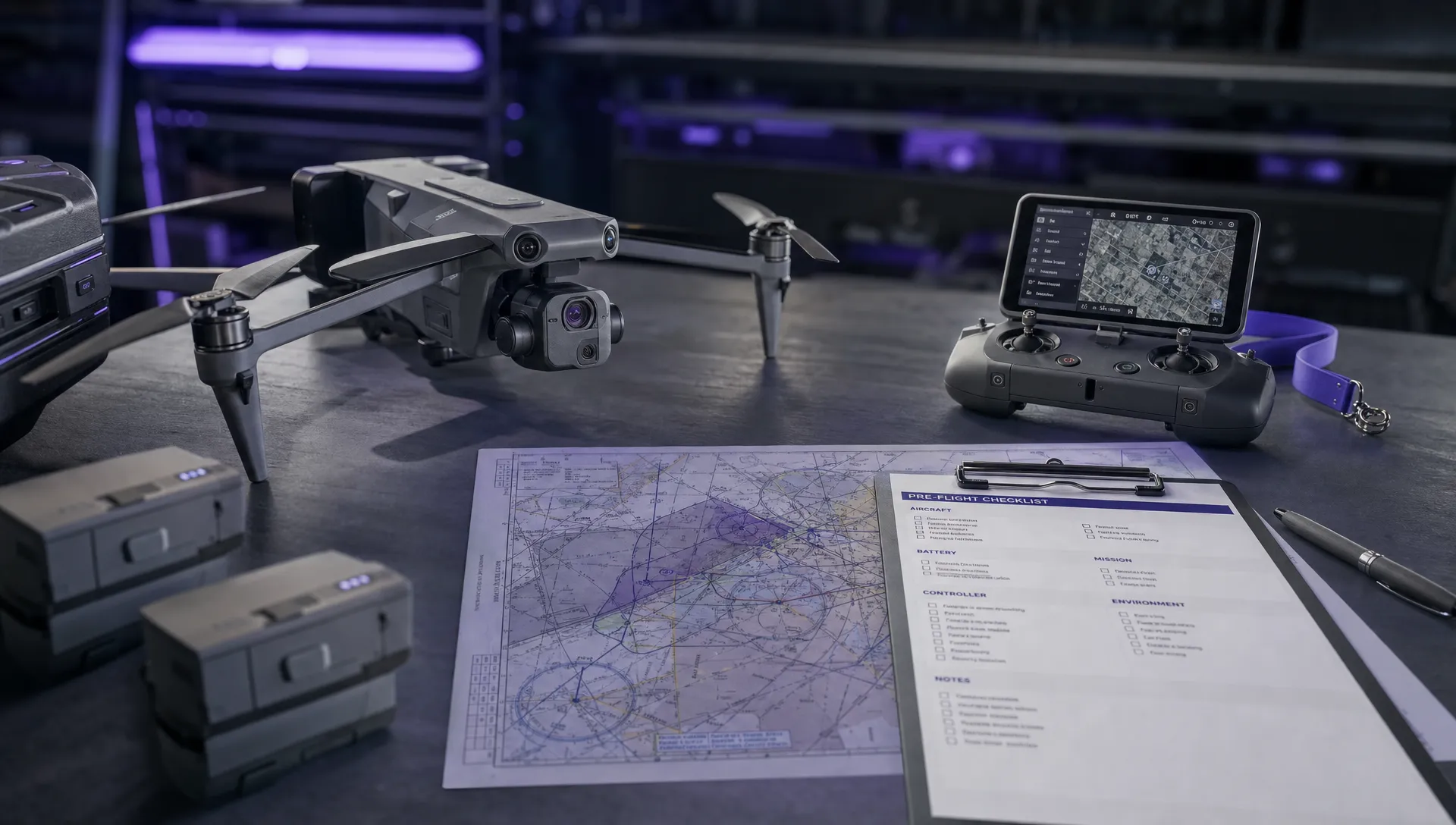
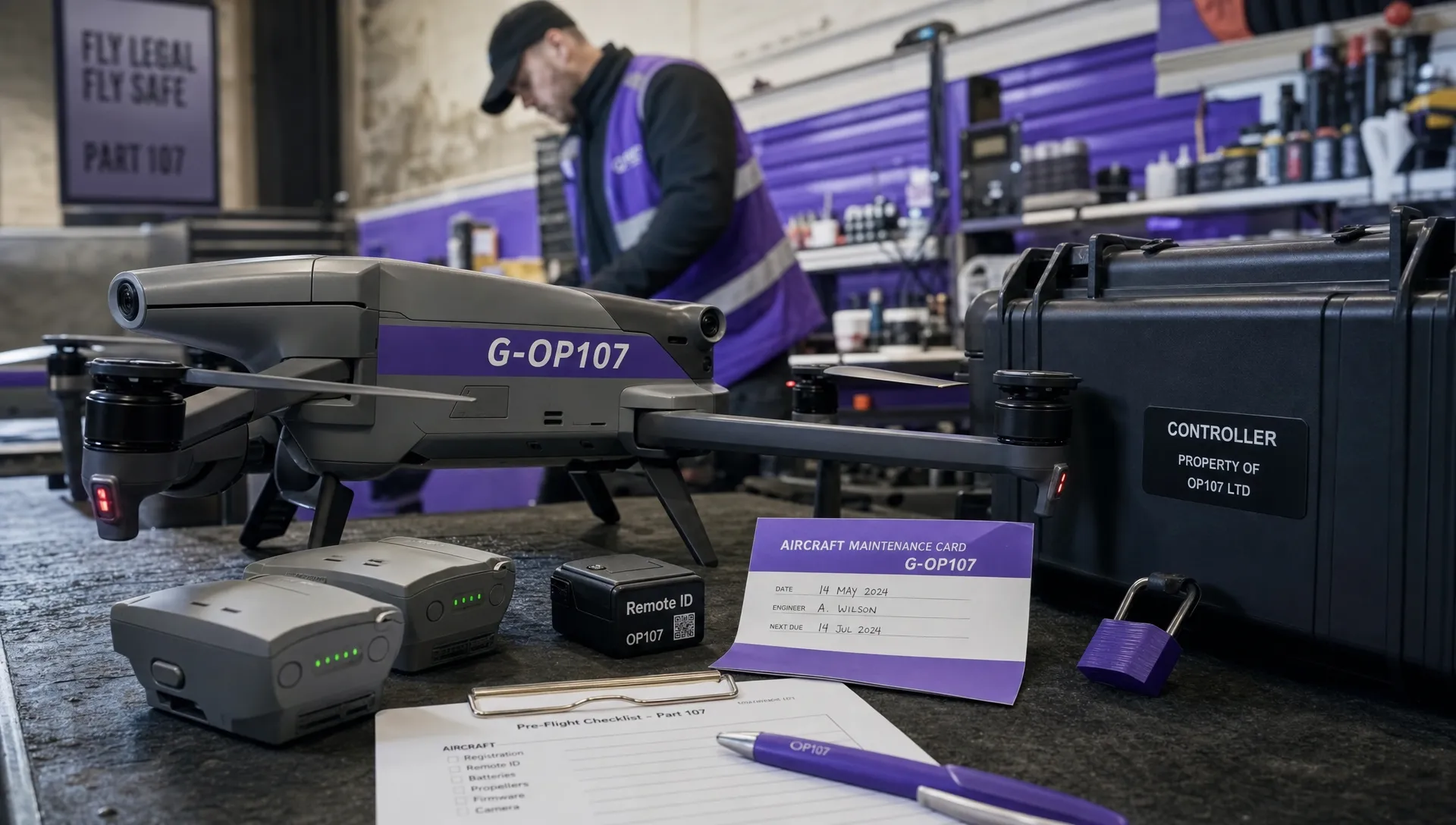
Part 107 also requires the RPIC to ensure the small UAS is in a condition for safe operation before flight. That does not prescribe one universal inspection format, but it does create a clear responsibility. A serious operator should be able to show how aircraft defects are identified, how batteries are managed, how payload changes are assessed and how maintenance issues are handled before the next job.
Operations over people and moving vehicles
The FAA Small UAS Rule includes specific provisions for operations over people and moving vehicles. This is especially relevant for public safety, media, construction, infrastructure and events work where people may enter the operating area unexpectedly.
The current framework uses categories for operations over people. In simplified terms, Category 1 covers very lightweight aircraft that meet the rule’s requirements, while Categories 2 and 3 involve FAA-accepted means of compliance and declarations of compliance for eligible aircraft. Category 4 involves aircraft with an airworthiness certificate. The exact category affects whether the flight can pass over people, whether sustained flight over open-air assemblies is allowed and what limitations apply.
Do not assume a drone is approved for flight over people because it is small, has propeller guards or is marketed as safe. Check the aircraft’s eligibility, your operating category, Remote ID status and the specific conditions in the rule. Operations over moving vehicles are also restricted and generally require careful control of the site, the people involved or the nature of the transit.
For emergency services, this is a common pressure point. A drone can be extremely useful at a collision, fire, search area or flood response, but Part 107 still applies unless the agency is operating under a different authority such as a public aircraft Certificate of Waiver or Authorization. Incident urgency does not remove the need for an accountable aviation decision-making process.
When you need a waiver
A Part 107 waiver is an FAA approval that allows a specific operation outside certain standard rule limits. Waivers are not a shortcut around planning. They require the operator to explain the proposed operation, the risk controls and the safety case in enough detail for the FAA to assess it.
Common waiver topics include BVLOS, operations above standard altitude limits, operations from a moving vehicle in cases not otherwise allowed and some operations over people or at night where the standard rule is not enough. The FAA decides waiver requests on their facts, so a method that worked for one operator may not be sufficient for another.
For professional teams, the strongest waiver applications tend to be backed by documented procedures, training records, aircraft data, communications plans, contingency procedures and site-specific risk assessments. If you are working towards more complex operations, treat every standard Part 107 mission as a chance to build operational evidence.
Accident reporting and FAA inspections
Part 107 requires certain accidents to be reported to the FAA within 10 calendar days. This applies if the operation causes serious injury to any person or loss of consciousness, or if it causes damage to property other than the small unmanned aircraft where the cost of repair or fair market replacement value exceeds $500.
Operators must also be ready to make required documents available to the FAA on request. That can include the Remote Pilot Certificate, aircraft registration and other records needed to show compliance. The rule also gives the FAA authority to inspect or test the small UAS, the RPIC and related documentation.
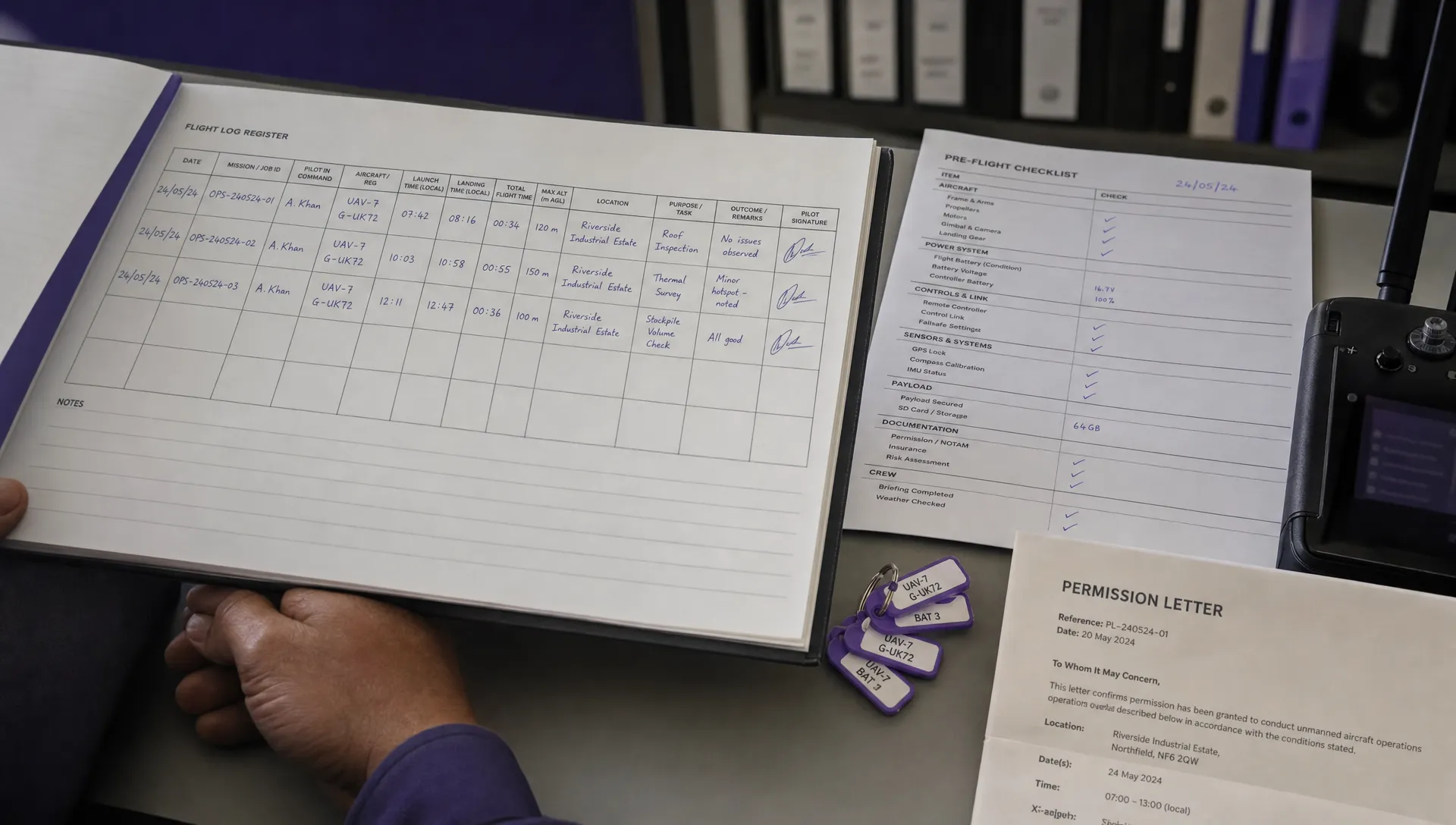
Good record keeping matters here. Part 107 does not require every operator to maintain a full airline-style technical log for every flight, but if something goes wrong, clear records can help show what was planned, who was responsible, which aircraft was used, what checks were completed and what decisions were made.
A practical Part 107 compliance workflow
A workable compliance process should be simple enough for field teams to use and structured enough to stand up to scrutiny. The goal is not paperwork for its own sake. The goal is to make sure the right questions are answered before the aircraft leaves the ground.
For most operators, a strong workflow covers these stages:
- Confirm the purpose of the flight and whether Part 107, a COA or another authority applies.
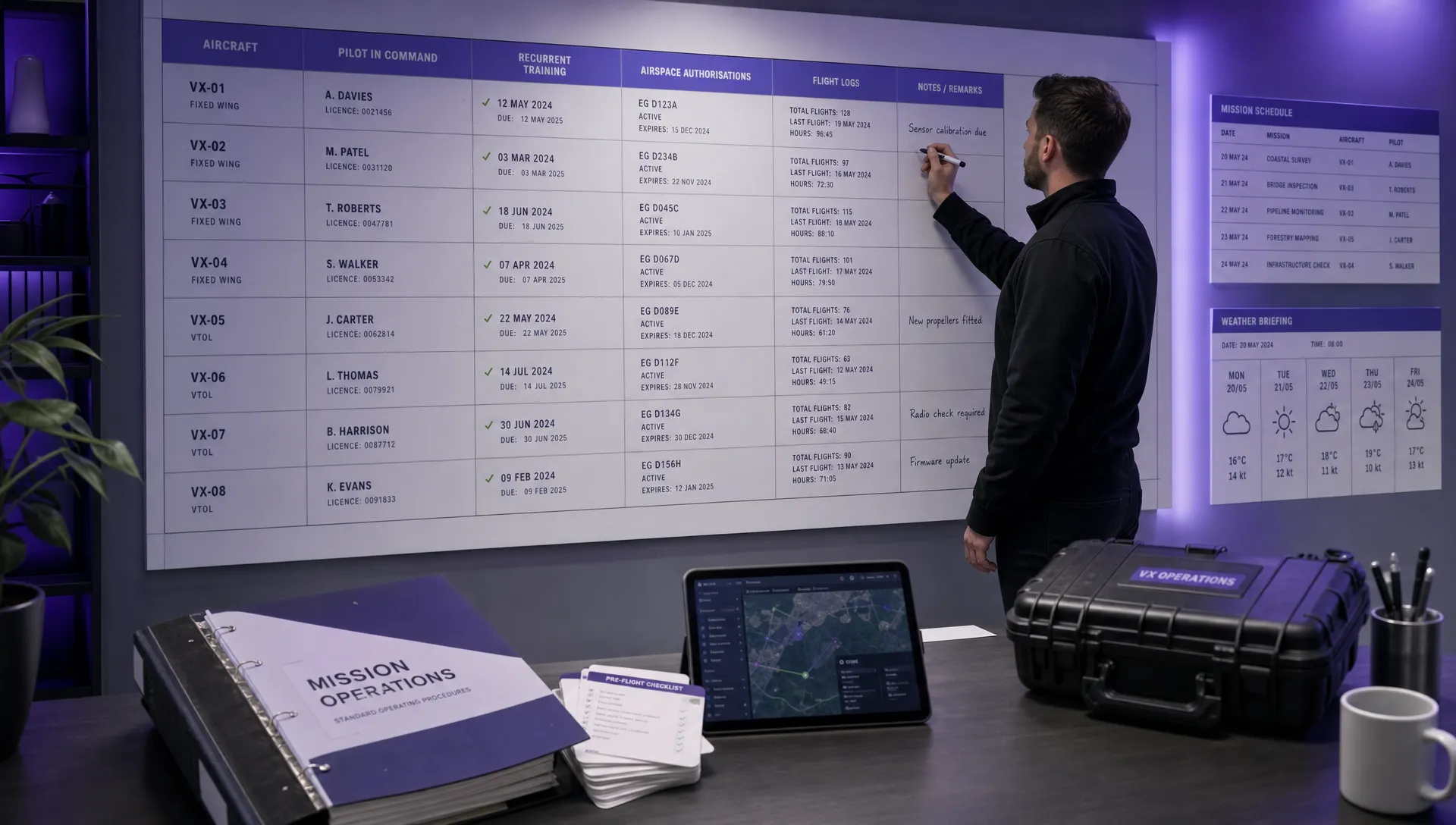
- Assign the RPIC and confirm pilot currency, crew roles and communication methods.
- Check aircraft registration, Remote ID, maintenance status, battery condition and payload configuration.
- Review airspace, LAANC requirements, TFRs, NOTAMs, nearby aerodromes and local restrictions.
- Assess site risks, including people, roads, rail, wires, water, structures, wildlife, terrain and emergency access.
- Prepare contingencies for lost link, flyaway, weather deterioration, crewed aircraft conflict and public incursion.
- Log the flight, decisions, issues and any post-flight defects or incidents.
Risk assessment is where many compliance problems become visible. A site might look straightforward from the map but become unsuitable when you account for wind funnel effects, public access, electromagnetic interference, poor emergency landing options or a helicopter route nearby. If you want a more detailed structure, Dronedesk covers this in its guide to building a drone flight risk assessment that works.
According to the Dronedesk features page, the platform brings together functions such as client management, fleet management, team management, airspace intelligence, proximity intelligence, flight planning, flight logging, data reporting, configurable checklists and risk assessments. Used properly, tools like these can support a consistent Part 107 workflow, although the legal responsibility for each flight remains with the operator and RPIC.
Sector-specific considerations for operators
Different teams feel the FAA Small UAS Rule in different ways. The core law is the same, but the operational pressure points vary.
| Operator type | Part 107 pressure point | Practical control |
|---|---|---|
| Survey companies | Repeated flights near roads, property boundaries, construction plant and controlled airspace. | Standard site survey templates, client permission checks, airspace review and documented launch and recovery areas. |
| Utility companies | Linear inspections that may tempt crews towards BVLOS or moving vehicle operations. | Segment missions into compliant VLOS sections unless a waiver or other approval supports the wider concept. |
| Emergency services | Time-critical deployments near people, aircraft, incident cordons and temporary restrictions. | Pre-planned response areas, trained RPICs, clear incident command integration and COA planning where appropriate. |
| Drone service providers | Varying client sites, unknown hazards and pressure to “just get the shot”. | A refusal process, standard pre-flight checks, documented risk assessments and client education before the job starts. |
The most mature operators make compliance repeatable. They do not rely on one experienced pilot remembering everything under pressure. They use documented processes, current airspace data, clear responsibility and post-flight review to keep improving.
Common mistakes to avoid
Many Part 107 breaches are not caused by a lack of basic knowledge. They happen because routine jobs become too familiar or because commercial pressure compresses planning time.
A few recurring issues deserve attention. First, do not confuse airspace authorisation with a waiver. LAANC may let you fly in controlled airspace, but it does not waive visual line of sight, operations over people, weather limits or other Part 107 requirements.
Second, do not assume the client’s permission is enough. A landowner can allow you to launch from their site, but they cannot authorise controlled airspace entry, override a TFR or approve flight over uninvolved people in a way the FAA rule does not allow.
Third, watch for scope creep. A simple roof survey can turn into a flight over a public footpath. A utility inspection can drift beyond visual line of sight. A construction progress flight can become an operation over moving vehicles at shift change. Good crews reassess when the job changes.
Finally, keep your procedures aligned with current FAA rules. Drone regulation is still developing, especially around BVLOS, critical infrastructure, security and more advanced operations. Build a habit of checking current FAA sources rather than relying on training notes from several years ago.
Frequently Asked Questions
What is the FAA Small UAS Rule? The FAA Small UAS Rule is the common name for 14 CFR Part 107, the main US regulation for civil non-recreational drone operations using small unmanned aircraft under 55 lb.
Do I need a Part 107 certificate for commercial drone work? In most cases, yes. If the flight is for business, public agency work, inspection, mapping, marketing or another non-recreational purpose, the RPIC generally needs a Remote Pilot Certificate or must operate under direct supervision of a certificated remote pilot.
Can I fly above 400 ft under Part 107? Standard Part 107 allows flight up to 400 ft above ground level. It also allows flight within 400 ft of a structure, provided the drone does not fly more than 400 ft above that structure’s uppermost limit. Other cases may require a waiver or different FAA approval.
Does Part 107 allow BVLOS flights? Standard Part 107 requires visual line of sight. BVLOS operations generally require a waiver, exemption or another FAA approval that specifically permits the operation.
Is LAANC the same as a Part 107 waiver? No. LAANC is an airspace authorisation tool for many controlled airspace operations. It does not waive other Part 107 requirements such as VLOS, operations over people, weather minimums or aircraft condition rules.
Do public safety agencies have to follow Part 107? Public safety agencies may operate under Part 107 or under a public aircraft COA, depending on their programme and mission. The correct route should be decided before deployment, not during an incident.
Bring Part 107 planning into one operational workflow
FAA compliance is easier to manage when flight planning, risk assessment, crew responsibilities, aircraft records, checklists and flight logs are connected rather than scattered across emails and spreadsheets.
Dronedesk is built for drone operations management and flight planning, with features that support the administrative and operational steps professional teams need to manage. If your organisation flies under Part 107 and wants a clearer process for planning, documenting and reviewing missions, explore Dronedesk and see how it fits your operational workflow.
 FAA Small UAS Rule: Key Requirements for Operators →
 How to Build a Drone Pilot Flight Log That Is Audit Ready →
 FAA Drone Licence Requirements for Commercial Pilots →
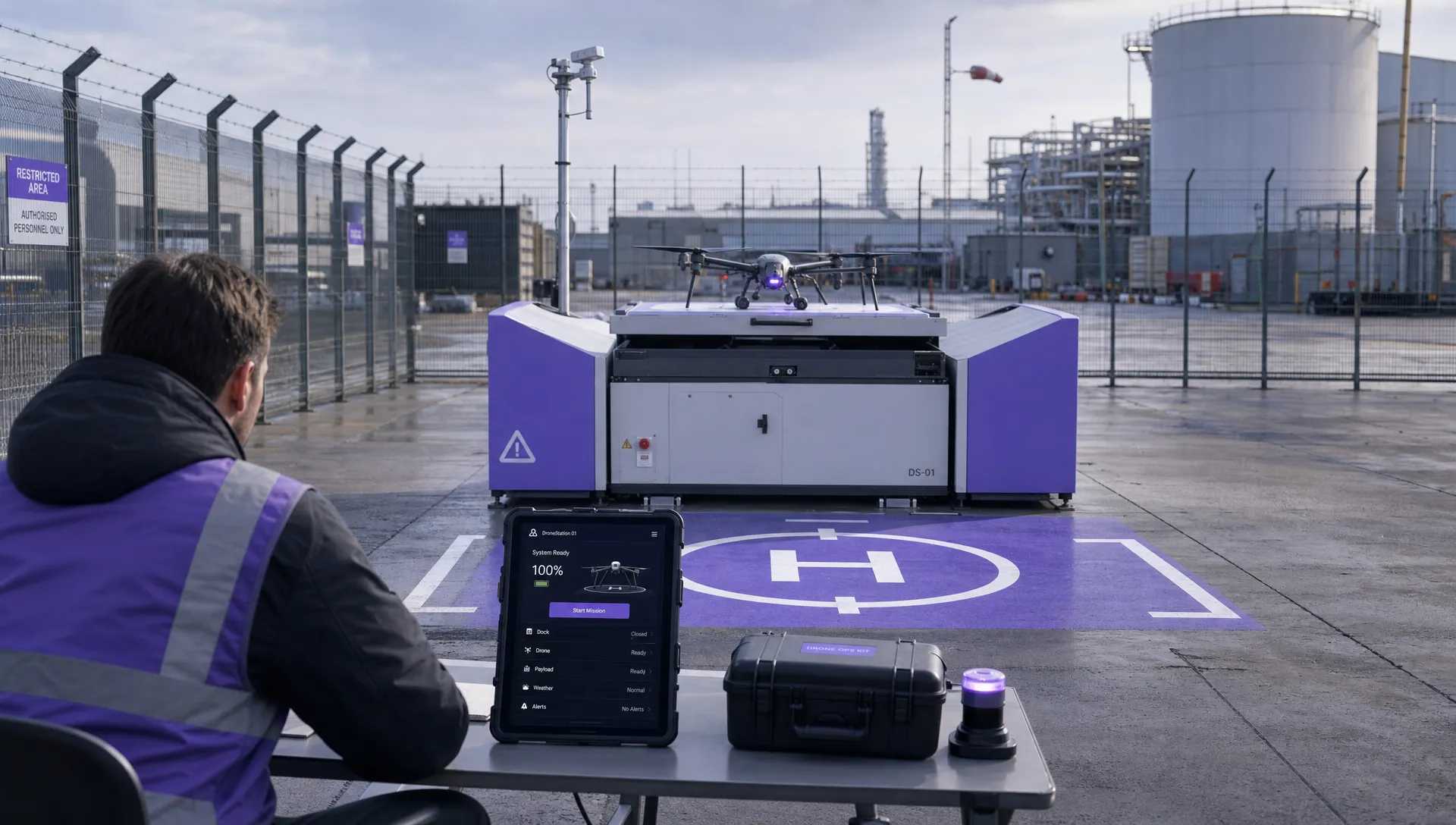 FAA BVLOS Waivers Granted: What Successful Cases Show →
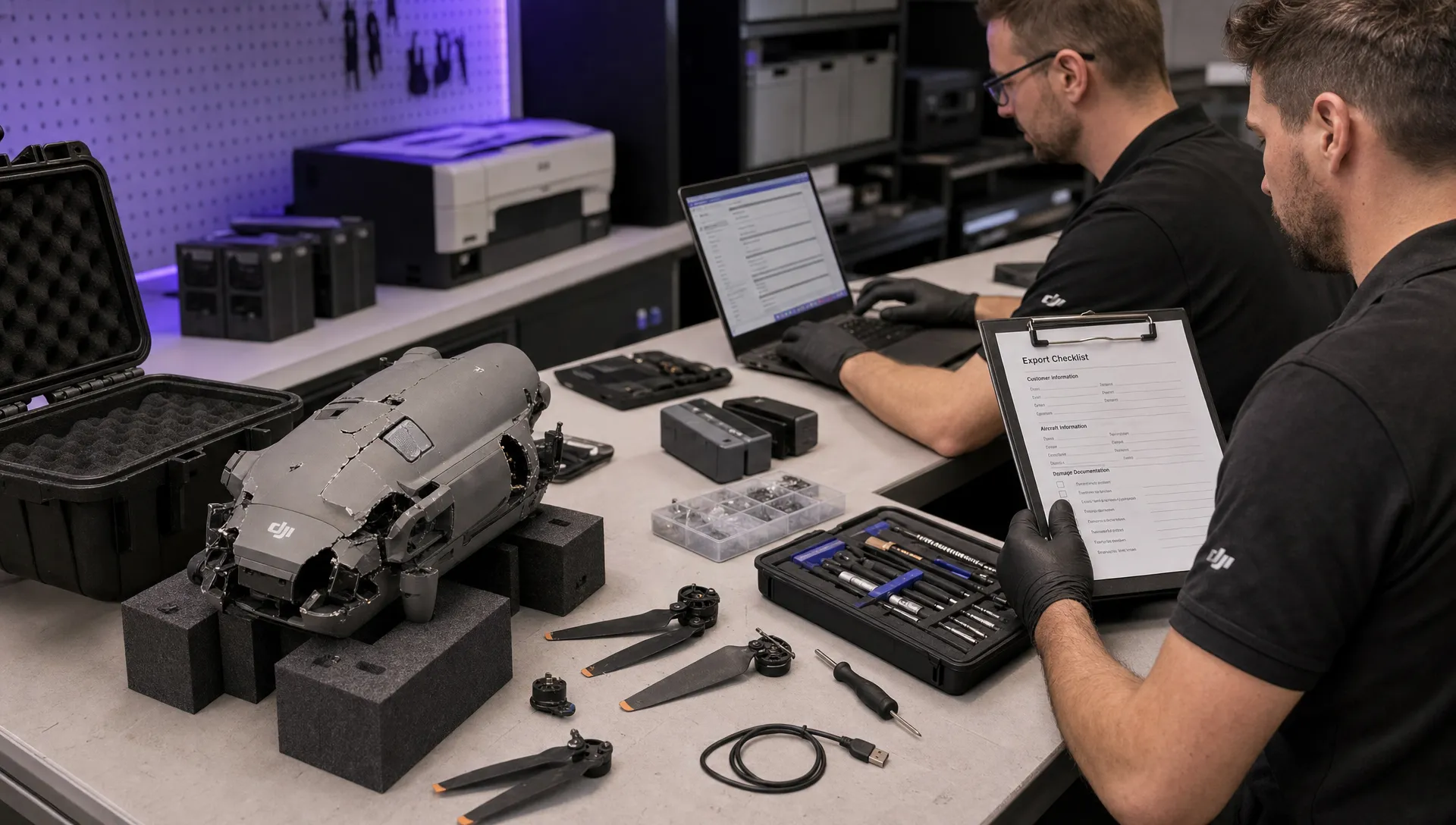 How to Export DJI Flight Logs for Incident Reviews →
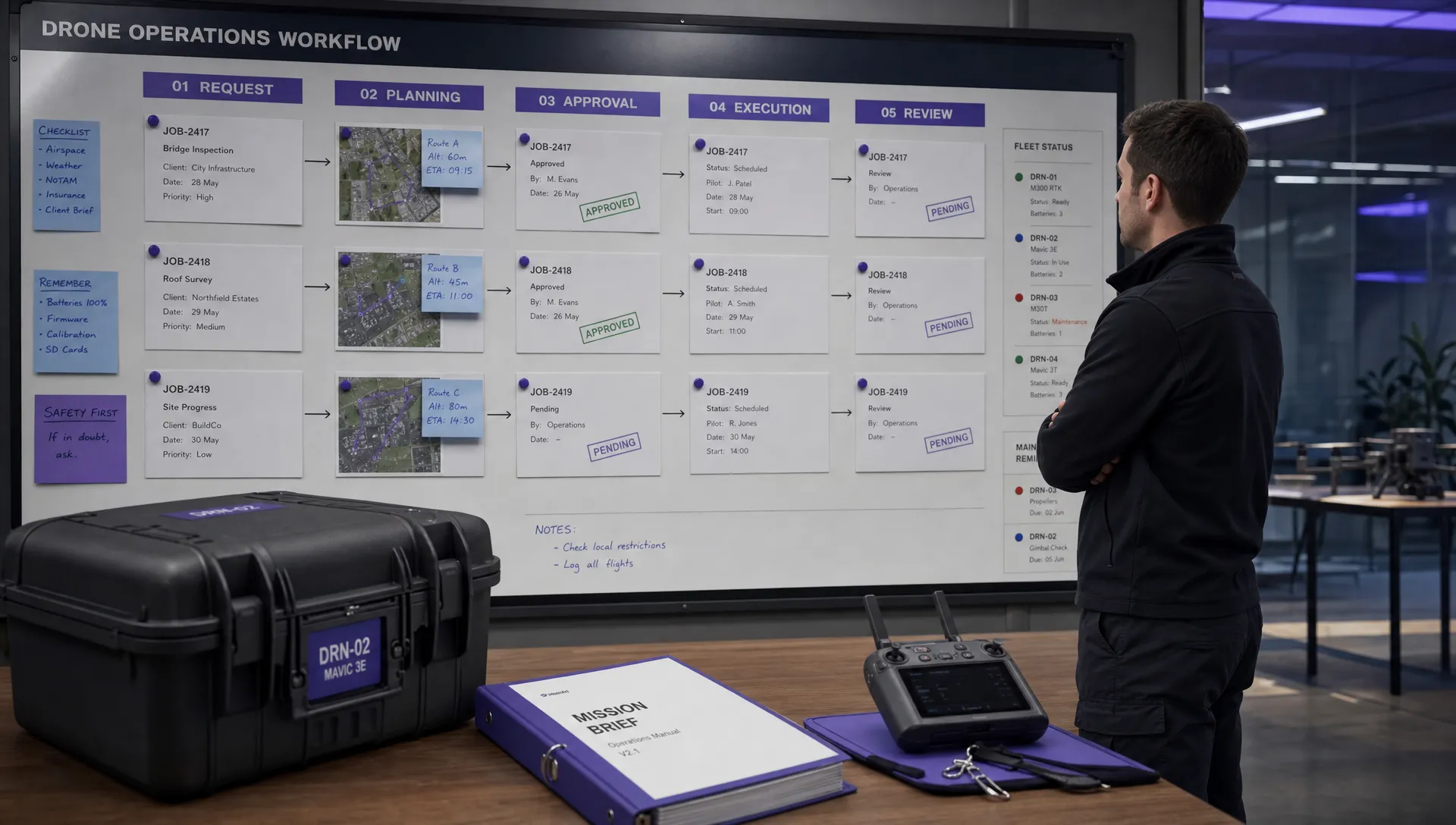 Drone Safety and Legal Duties for Business Operations →
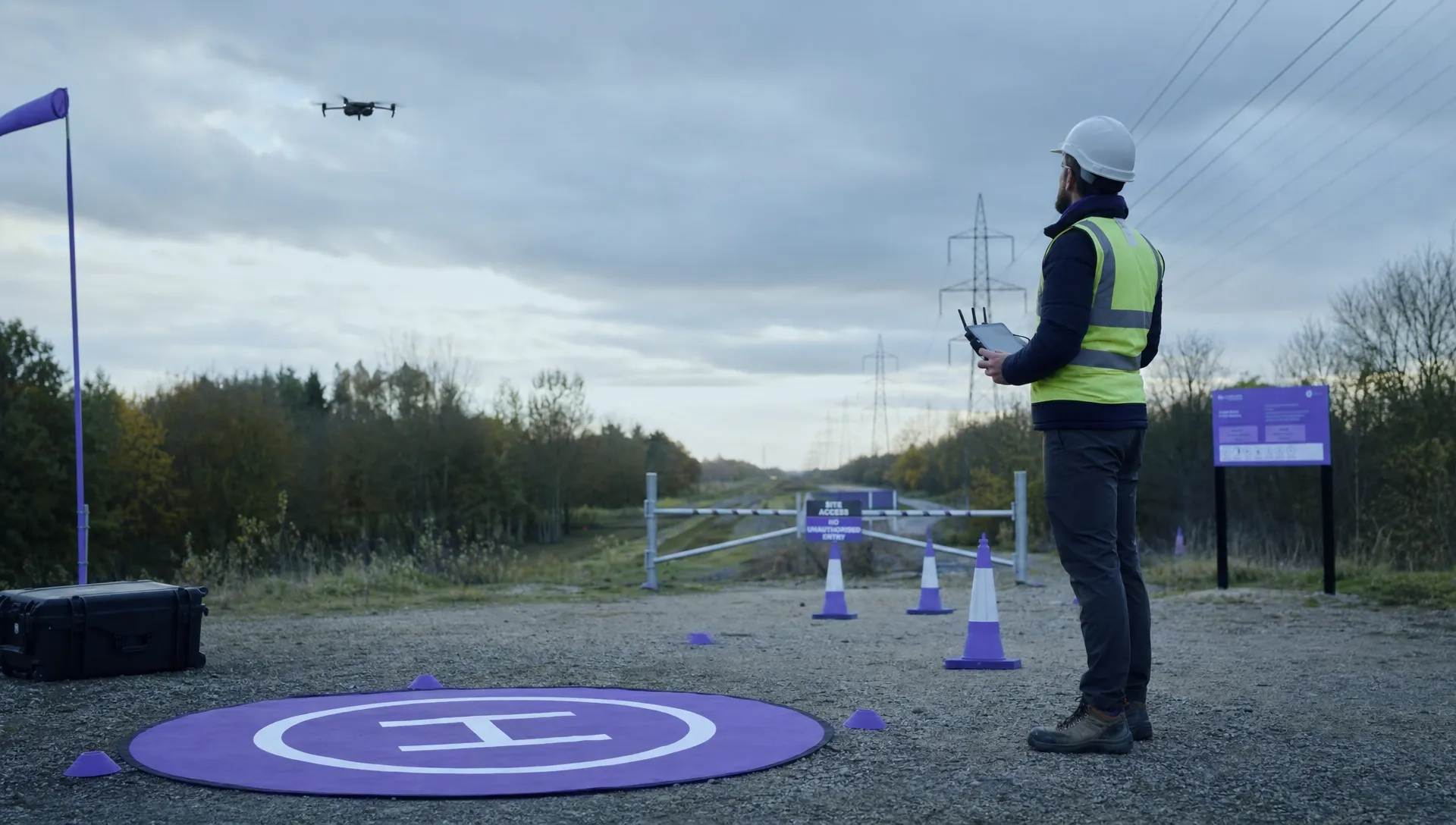 EASA Drone Regulations: Open, Specific and Certified Categories →
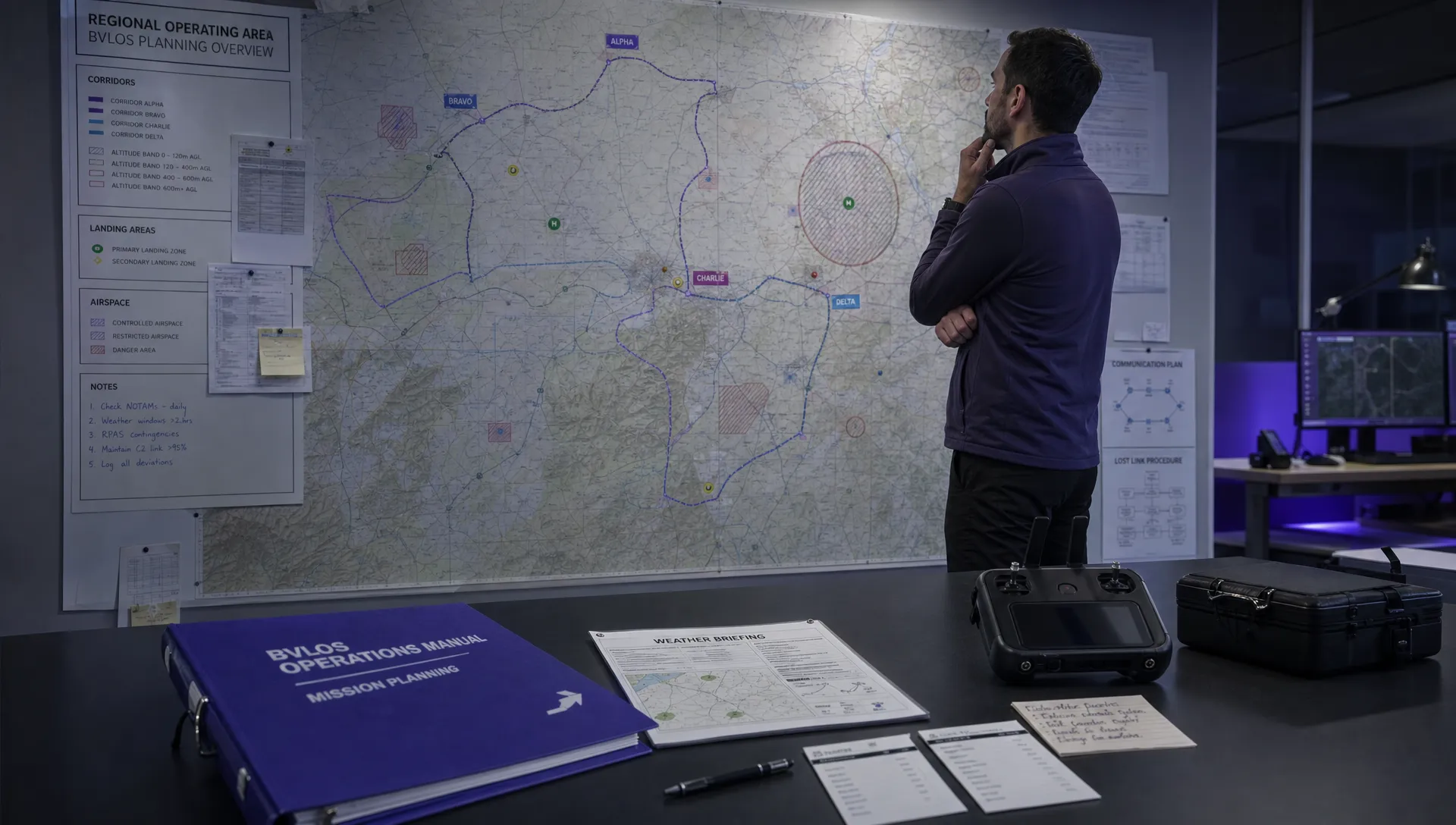 What the BVLOS ARC Report Means for UAS Operators →
 Free Drone Pre-Flight Checklist for Commercial Missions →
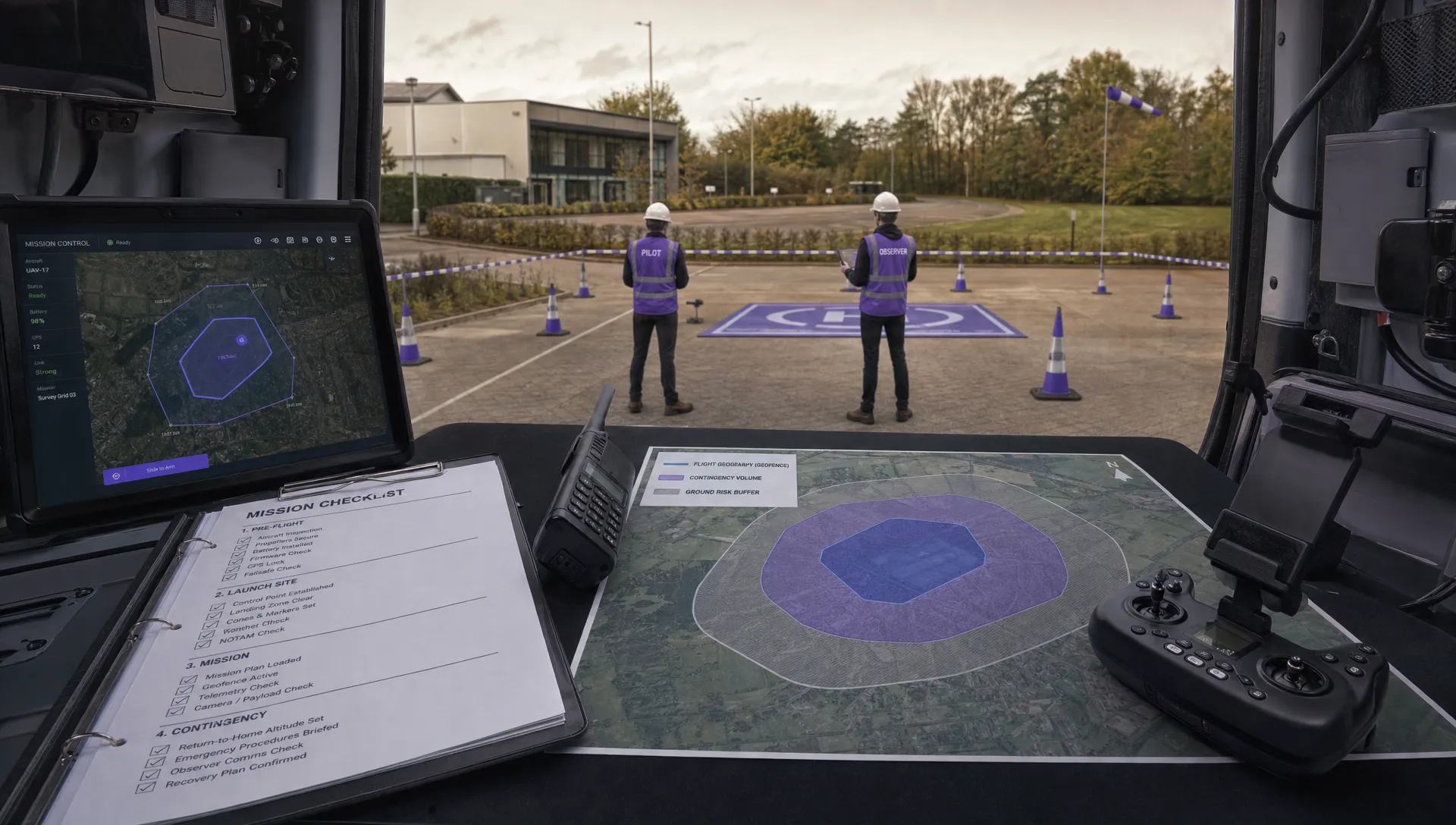 Contingency Volume and Flight Risk Buffer Explained →