
The Ultimate Guide to Your Online Pilots Logbook
If you've ever found yourself staring at a stack of paper flight logs, you know it feels completely out of place in such a high-tech industry. An online pilots logbook is the modern answer to this—a digital system that finally replaces traditional paper records. It's built to automate data capture, offer secure cloud storage, and even provide smart insights that today's pilots actually need. It turns the tedious chore of manual entry into an efficient, nearly error-free process.
Moving From Paper Logbooks To Digital Flight Records
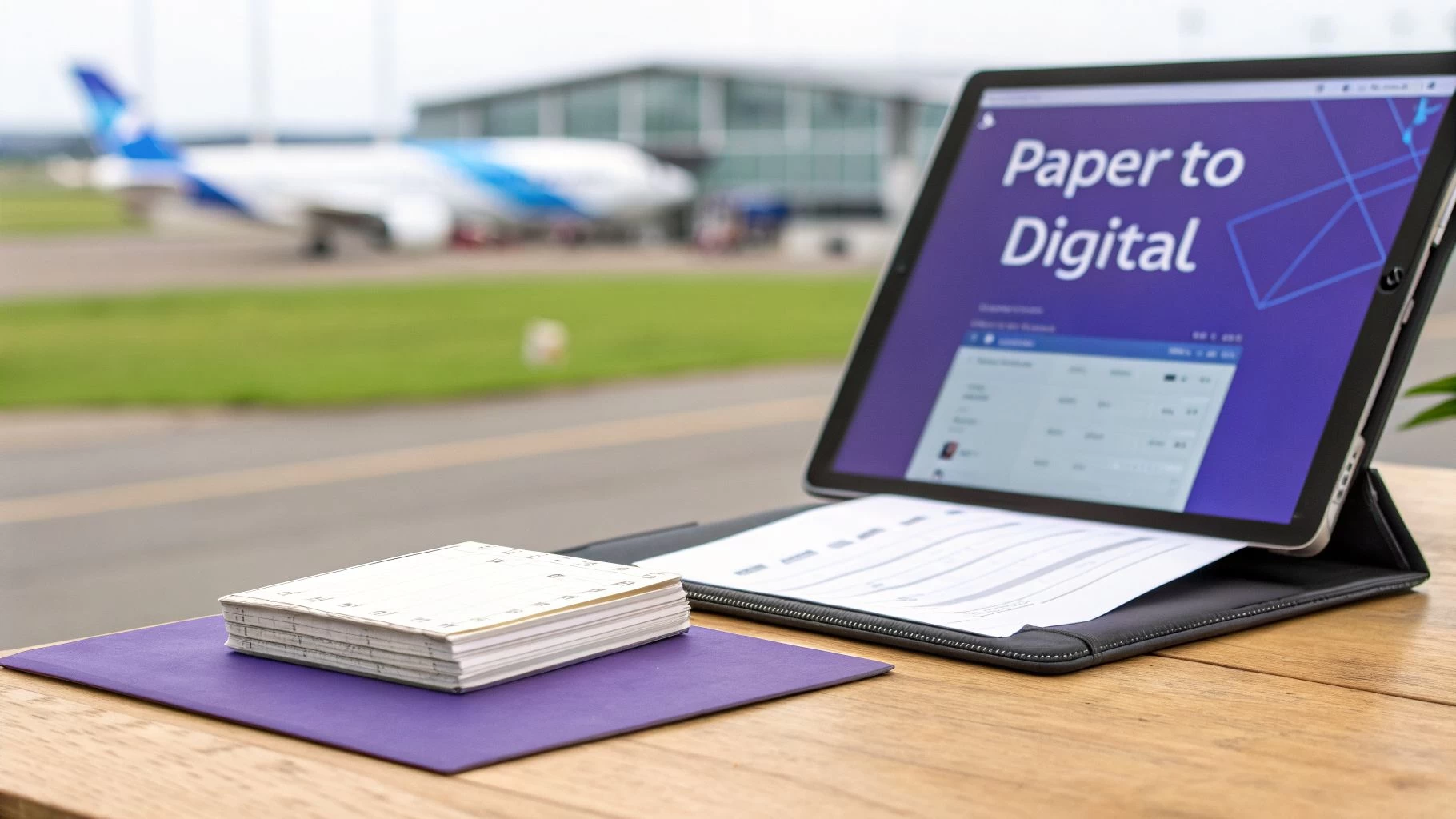
Making the switch from paper to a digital logbook is a lot like swapping an old paper road map for a live GPS. Sure, both can track your journey, but the GPS gives you real-time data, automatic route adjustments, and a level of insight that a static map just can't touch. In the same way, a digital logbook does more than just record flight hours; it becomes a dynamic tool for your entire operation.
This isn't just about convenience, either. It’s a direct response to the growing complexity of modern flight operations, especially in the drone world. Trying to manually log dozens of short flights, track individual battery cycles, and note the specific gear used for each mission is not just a time sink—it's practically begging for human error.
To put it in perspective, let's take a quick look at how the two stack up.
Paper Logbooks vs Online Logbooks at a Glance
This table offers a quick comparison, highlighting the fundamental differences between sticking with manual paper logs and moving to a modern online solution.
| Feature | Traditional Paper Logbook | Online Pilots Logbook |
|---|---|---|
| Data Entry | Manual, handwritten | Automated sync from flight data |
| Accuracy | Prone to typos, omissions, and errors | High accuracy with verified data |
| Accessibility | Limited to the physical book's location | Accessible anywhere via cloud |
| Reporting | Time-consuming manual compilation | Instant, customizable, audit-ready reports |
| Safety | Relies on manual maintenance tracking | Automated alerts for maintenance schedules |
| Security | Susceptible to loss, damage, or theft | Securely backed up with controlled access |
| Time Cost | Significant administrative overhead | Minimal admin time required |
It's clear that while paper has served its purpose, it simply can't keep up with the demands of modern aviation.
Why Digital Is No Longer Optional
Whether you're a solo operator or running an enterprise-level team, an online pilots logbook solves critical problems that paper records leave wide open. The benefits are immediate and tangible, taking you beyond simple record-keeping to actively improving how you manage your entire operation.
Here’s what you gain right away:
- Enhanced Accuracy: Automated syncing pulls data directly from your drones, which means no more typos or forgotten entries.
- Time Savings: It slashes your administrative workload, freeing you and your team to focus on what matters—flying.
- Improved Safety: You can track aircraft maintenance schedules and equipment usage automatically, flagging potential issues before they become real problems.
- Effortless Compliance: Generating audit-ready reports is as simple as a few clicks, ensuring you always meet regulatory standards.
An online logbook is more than a digital replacement for paper; it's a central hub for operational intelligence. It connects flight data to safety, compliance, and efficiency, providing a complete picture of your aviation activities.
This shift is only getting more critical as the industry grows. The global commercial drone market is absolutely exploding, with forecasts predicting unit shipments will blow past 9 million by 2036. That boom translates to millions upon millions of additional flights that will need meticulous logging. For anyone trying to manage that kind of volume, digital solutions are truly indispensable. You can find more great insights on the drone market from the Edge AI and Vision Alliance.
Ultimately, moving to an online system turns your logbook from a passive, historical document into an active, valuable asset. It gives you the reliable, accessible, and detailed data you need to operate safely and successfully in a fiercely competitive environment.
Core Features of a Professional Online Logbook

Let's be clear: not all digital logbooks are created equal. A basic app might let you jot down flight times, but a genuinely professional online pilots logbook is a completely different beast. It's less of a diary and more of an operational command center.
The real difference is in the automation and the sheer depth of features. A professional platform goes beyond just listing your flights; it becomes a tool that actively helps you manage every part of your operation—from the pilot in command to the individual drone batteries. Knowing what to look for is key to picking a system that actually helps you grow.
Automated Flight Syncing
If there's one feature that will change your life, it's automatic flight syncing. This is what frees you from the soul-crushing boredom of manual data entry. No more squinting at your controller after a long day on-site, trying to type in flight times and locations. The system just pulls it all in for you.
For example, platforms like Dronedesk link directly with DJI. The moment you land, it automatically imports all the detailed flight telemetry. Every single second of airtime is captured with pinpoint accuracy. When looking at any logbook solution, its data syncing capabilities are the foundation for everything else. Get this right, and the rest falls into place.
This goes way beyond just flight times. A solid system will grab:
- Detailed Telemetry: Think take-off and landing coordinates, max altitude, and total distance flown.
- Battery Data: It logs the specific battery you used, keeping tabs on its charge cycles and overall health.
- Environmental Conditions: It even records things like wind speed and temperature right at the time of your flight.
Comprehensive Asset and Crew Management
A proper logbook isn't just about you, the pilot. It’s about the whole ecosystem—every person and every piece of gear involved in a mission. It acts as the central hub for all your operational assets.
This means you can keep detailed records for every drone, battery, and controller in your fleet. Each piece of equipment gets its own history, tracking total flight hours, service dates, and any maintenance done. Trying to manage that level of detail on paper or a spreadsheet is a recipe for disaster.
It's the same for your crew. You can track pilot currency, certifications, and flight hours, making sure everyone is qualified and compliant for a given job. For growing teams, this isn't just helpful—it's absolutely critical.
A professional logbook treats every component of your operation—aircraft, equipment, and personnel—as a critical asset with its own data-rich history. This creates a complete, auditable trail that enhances both safety and accountability.
Intelligent Reporting and Maintenance Alerts
Collecting data is one thing; putting it to work is another. This is where a top-tier online logbook truly shines, turning raw data into insights you can actually use through smart reporting and automated alerts.
Instead of you trying to remember when a drone is due for its next service, the system does it for you. Based on the flight hours it has logged for a specific aircraft, the platform can trigger automatic maintenance alerts. It's a proactive approach that helps you catch potential equipment failures before they happen.
And the reporting is built for the real world. In just a couple of clicks, you can generate reports for:
- Regulatory Audits: Instantly pull the comprehensive flight records you need for bodies like the FAA or EASA.
- Client Invoicing: Quickly tally up the total flight time for a project to make sure your billing is spot-on.
- Operational Analysis: Look at pilot hours, aircraft usage, and even battery performance to spot trends and make your operation more efficient.
These tools are absolute game-changers, saving drone teams hours every single week. You can see just how much time you'll get back in our guide on how automated flight logging and reporting can save drone teams hours. This is what separates a simple digital notebook from a powerful operational platform.
How Digital Logs Enhance Safety and Ensure Compliance
Beyond just being convenient, the two biggest reasons to switch to an online pilot's logbook are safety and compliance. These aren't just industry buzzwords; they're the bedrock of responsible aviation. A digital logbook stops being a passive record-keeper and becomes an active partner in cutting down risks and meeting strict regulatory demands.
Think of each aircraft in your fleet as having its own detailed medical history. A paper log might note the big stuff, like an engine overhaul, but a digital log tracks every single heartbeat—every flight, every battery cycle, every component hour. This creates an incredibly rich set of data that's flat-out impossible to maintain by hand.
From Reactive Repairs to Predictive Maintenance
The real safety win with a digital system is its ability to enable predictive maintenance. Instead of waiting for something to break, you can see potential failures coming by analyzing historical data. It’s the difference between a surprise engine failure and a mechanic flagging a component that’s showing early signs of wear.
For instance, an online logbook can automatically track the total flight hours on a specific set of propellers or the number of charge cycles on a battery. This is where you start spotting subtle but crucial trends.
- Component Lifecycles: See exactly how many hours a part has been in service, making sure it gets replaced well before its recommended end-of-life.
- Performance Degradation: Notice if one battery's performance is dropping off faster than others in the fleet, flagging it for inspection before it can fail mid-flight.
- Wear Patterns: Identify if a specific aircraft model is showing consistent wear on a certain part across your whole fleet, which can inform your entire maintenance strategy.
This data-driven approach shifts you from a reactive stance to a proactive one—a cornerstone of any strong safety culture. Understanding the complex nature of workplace safety risks in air transport really highlights how vital this kind of comprehensive record-keeping is for pilots to manage their compliance and readiness.
Audit-Proof Compliance in Just a Few Clicks
Let's be honest, navigating the complex web of regulations from bodies like the FAA or EASA is a major headache for any operator. A surprise audit can be a high-stress event, sending teams scrambling to pull together scattered paper records that might be incomplete, illegible, or even lost.
This is where an online pilot's logbook becomes your best friend. Because all flight data, pilot certifications, and maintenance records are centralized and organized, pulling comprehensive reports is almost instantaneous.
Imagine an FAA inspector shows up at your hangar. Instead of a frantic search through filing cabinets, you simply log into your platform, select the aircraft and date range, and export a complete, tamper-evident report in minutes. This is the new standard of compliance.
This level of organization isn't just for audits; it ensures you're compliant every single day by making critical information easy to find. A team manager can quickly verify a pilot's currency or confirm an aircraft is cleared for a specific type of operation. These digital records are accurate, time-stamped, and create an unbroken chain of custody that regulators trust. It gets rid of ambiguity and replaces it with verifiable proof, ensuring you're always prepared and operating by the book.
Integrating Your Logbook Into Your Drone Operations
An online pilots logbook is at its best when it stops being just another record-keeping tool and starts acting as the central nervous system for your whole operation. It needs to be more than a digital filing cabinet for flight times; it should be an active hub that connects what happens in the air to every other part of your business. This is where you start to see the real muscle of an integrated platform like Dronedesk.
Think of it like this: a standalone logbook is like having a perfectly detailed shipping manifest that never leaves the warehouse. Sure, it’s accurate, but it doesn't help the accounts team send an invoice or tell the inventory crew it's time to restock. An integrated logbook, on the other hand, makes sure that as soon as a flight is over, its data automatically flows exactly where it needs to go.
From Flight Data to Business Intelligence
Every single flight you log is packed with information that goes way beyond just how long you were in the air and where you were. When everything is properly connected, this data can set off a whole chain of automated actions, turning a routine flight into a powerful business event. This seamless flow gets rid of administrative headaches and keeps everything accurate across your entire workflow.
The diagram below shows how a single logged flight kicks off a chain reaction that reinforces safety and compliance from start to finish.
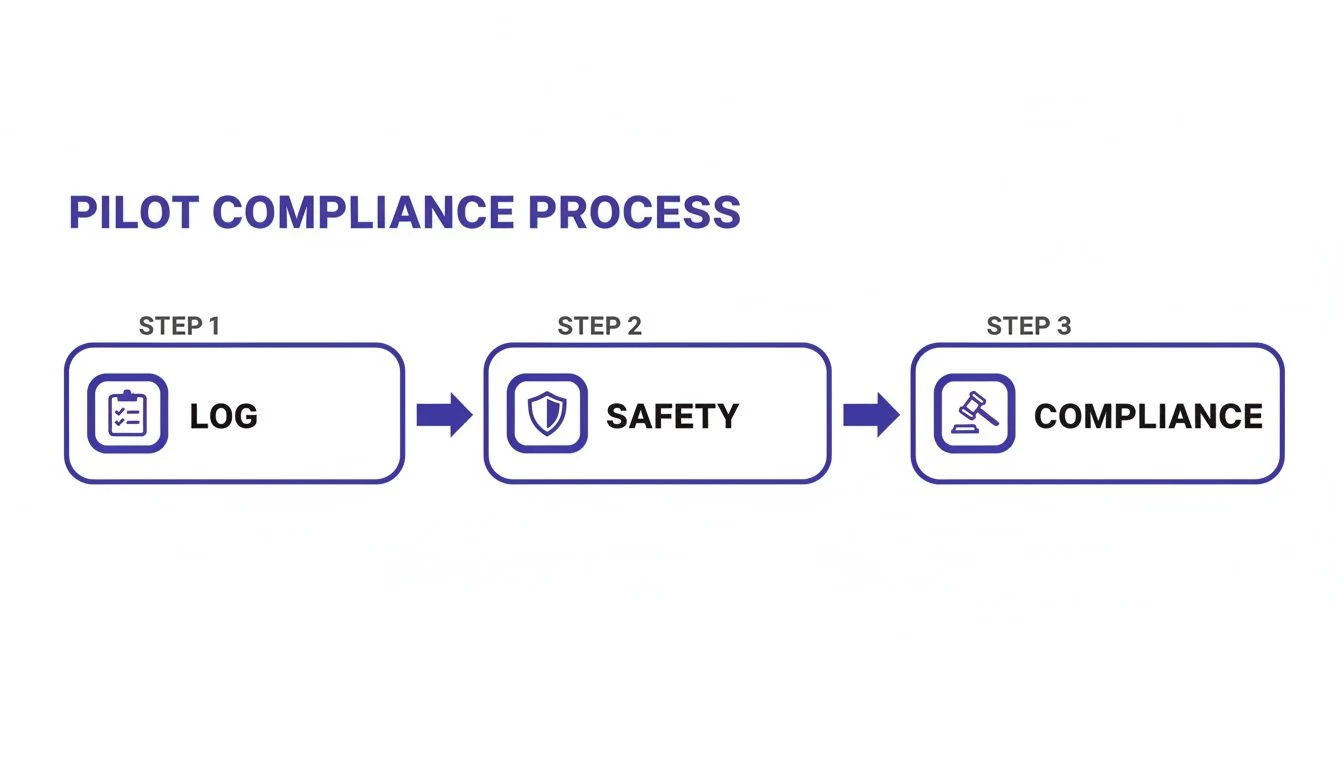
This process makes it clear that logging a flight isn't the end of the story. It's actually the beginning of a workflow that makes sure safety checks are triggered and compliance records are updated automatically, without you lifting a finger.
The Automated Operational Workflow
Let's say you've just wrapped up a two-hour aerial survey for a construction client. In a disconnected system, your work has only just begun. You'd have to manually update your flight log, add the hours to a spreadsheet for invoicing, make a note to check your drone’s service schedule, and then update the project status for your team. It's a lot of busywork.
With an integrated online logbook, the moment your drone lands and the flight syncs, the system does all that heavy lifting for you. Here’s how that one flight can ripple through your business:
- Financial Management: The 2.0 billable hours are instantly added to the client's project, ready for the next invoicing cycle. No manual entry means no forgotten hours and no billing mistakes.
- Maintenance and Fleet Health: The system adds two hours to that specific drone's total flight time. If this pushes it over a preset maintenance threshold—say, 50 hours—it automatically creates a service alert and schedules a maintenance task.
- Team and Pilot Currency: Your personal log is updated, which contributes to your total hours and keeps your currency records spot-on for any regulatory checks.
- Project Management: The project status is automatically updated to show the aerial survey is complete, notifying the project manager and other team members that things are moving forward.
This level of automation turns your logbook from a simple, passive record into a dynamic, active operational tool. It becomes the engine that drives your business forward.
The true value of an integrated online logbook is its ability to create a "single source of truth." When flight logs, maintenance schedules, pilot records, and client billing all draw from the same verified data, you eliminate discrepancies and build a more efficient, resilient, and profitable operation.
This kind of connectivity is absolutely vital for scaling your operations. For a solo pilot, it’s a massive time-saver. For a large team, it guarantees consistency and clear communication, preventing critical tasks from falling through the cracks. It also provides a complete, auditable trail for every action, from takeoff to the final invoice.
If you want to dig deeper into the technical side of things, you might be interested in our guide on how to analyze your flight log file to pull out even more valuable insights.
Choosing the Right Platform for Your Drone Business
Picking the right online pilot logbook is a massive decision for your drone business. It’s not just about downloading another app; it’s about bringing on a long-term partner that will shape your efficiency and compliance. The best platform won't feel like a chore—it will feel like a natural extension of your team, taking tedious tasks off your plate and giving you real insights.
Integration capabilities, data security, and whether the platform can grow with you should be front and centre in your thinking. A system that doesn’t play nicely with your existing gear (like DJI drones) or software is a non-starter. And let's be honest, your flight data is your business's history—it’s sensitive stuff. Rock-solid security isn’t just a nice-to-have, it’s essential.
Evaluating Your Core Needs
Before you dive into a rabbit hole of feature comparisons, take a step back and figure out what you actually need. The requirements for a solo operator flying a few jobs a month are worlds away from an enterprise team juggling hundreds of missions across different sites.
Ask yourself these questions to get a clear picture:
- Team Size: Is it just you, or are you managing a crew of pilots who need different permissions?
- Fleet Complexity: How many drones, batteries, and other bits of kit do you need to keep tabs on?
- Operational Scale: How many flights are you logging each week? Do you expect that number to jump in the next year?
- Client Reporting: Do you need to whip up detailed flight reports for invoicing or to keep clients in the loop?
Answering these will help you immediately cut through the noise and dismiss options that just aren’t built for you. For a deeper dive, check out our detailed comparison of popular pilot logbook apps to see how different platforms measure up.
The Migration Process Demystified
One of the biggest things that holds pilots back is the dread of moving years of flight data from paper logs or cluttered spreadsheets. The fear of losing precious records or spending endless hours typing everything in is real, but any decent platform makes this process surprisingly simple. Think of it as a one-time investment that will pay you back over and over again.
Migrating your logbook isn't a chore; it's about consolidating all your hard-earned flight history into a secure, searchable, and infinitely more valuable digital vault. Every hour you've flown is part of your professional story—it deserves to be kept safe and accurate.
The actual process is way less scary than it sounds and usually follows a few clear steps:
- Export Your Current Data: If you’re already using a spreadsheet, just save it as a CSV (Comma-Separated Values) file. For paper logs, you'll need to get them into a spreadsheet first.
- Use a Template: Most professional platforms will give you a pre-formatted CSV template. Your job is to simply copy and paste your existing data into the right columns.
- Upload and Verify: Upload that file to the new platform. The system will then pull in your entire flight history, usually in just a few minutes. You’ll get a chance to look everything over and make sure it’s all correct.
This systematic approach keeps your data intact and turns what feels like a massive headache into a straightforward and empowering upgrade for your drone business.
A Few Common Questions About Online Pilot Logbooks
Making the jump to a digital system always brings up a few questions. It’s a smart move to do your homework. Here are some straightforward answers to the things pilots ask most often when they're thinking about switching to an online pilot logbook.
Are Digital Logbooks Actually Legal?
Yes, one hundred percent. The big regulatory bodies like the FAA in the US and EASA in Europe are fully on board with digital records. What they care about is that your records are accurate, complete, and you can pull them up for inspection whenever they ask.
In fact, most inspectors actually prefer a good online logbook during an audit. It gives them a clean, chronological history of every flight that’s incredibly difficult to tamper with. Plus, it captures all that rich telemetry data that paper logs just can't, making your records that much stronger.
How Does the "Automatic Syncing" Thing Work?
Think of it as a direct line from your drone to your logbook. The system connects to your drone’s flight controller, usually through the manufacturer's app like DJI Fly. As soon as you land and finish a flight, the platform pulls all the critical data over automatically—no thumbs required.
This isn't just a flight duration timer. It grabs all the important details:
- Flight Timestamps: The exact start and end times, down to the second.
- Location Data: Where you took off and where you landed.
- Performance Metrics: Things like your max altitude and total distance covered.
- Equipment Details: Which specific battery you used and its current cycle count.
This automation is a massive time-saver, but more importantly, it pretty much eliminates the chance of human error. Every single second of your flight time gets logged perfectly, every time.
Can I Bring My Old Flight Logs Over?
Absolutely. Any professional online logbook platform worth its salt knows that pilots come with a history. They build tools specifically to import data from standard formats like CSV or other spreadsheets, letting you bring your entire flight history into one secure, searchable place.
Migrating your old logs is a core feature, not an afterthought. The goal is to give you a complete, unbroken record of your career, from your very first flight right up to your latest one.
You won't lose a single hour of that hard-earned time in the air. The process is usually as simple as formatting your current data into the platform’s template and uploading the file. It’s designed to be a smooth, painless transition.
Ready to streamline your operations with a logbook that does the work for you? Dronedesk provides a complete, compliant, and automated solution for drone professionals. Start your free trial today!
 FAA Small UAS Rule: Key Requirements for Operators →
 How to Build a Drone Pilot Flight Log That Is Audit Ready →
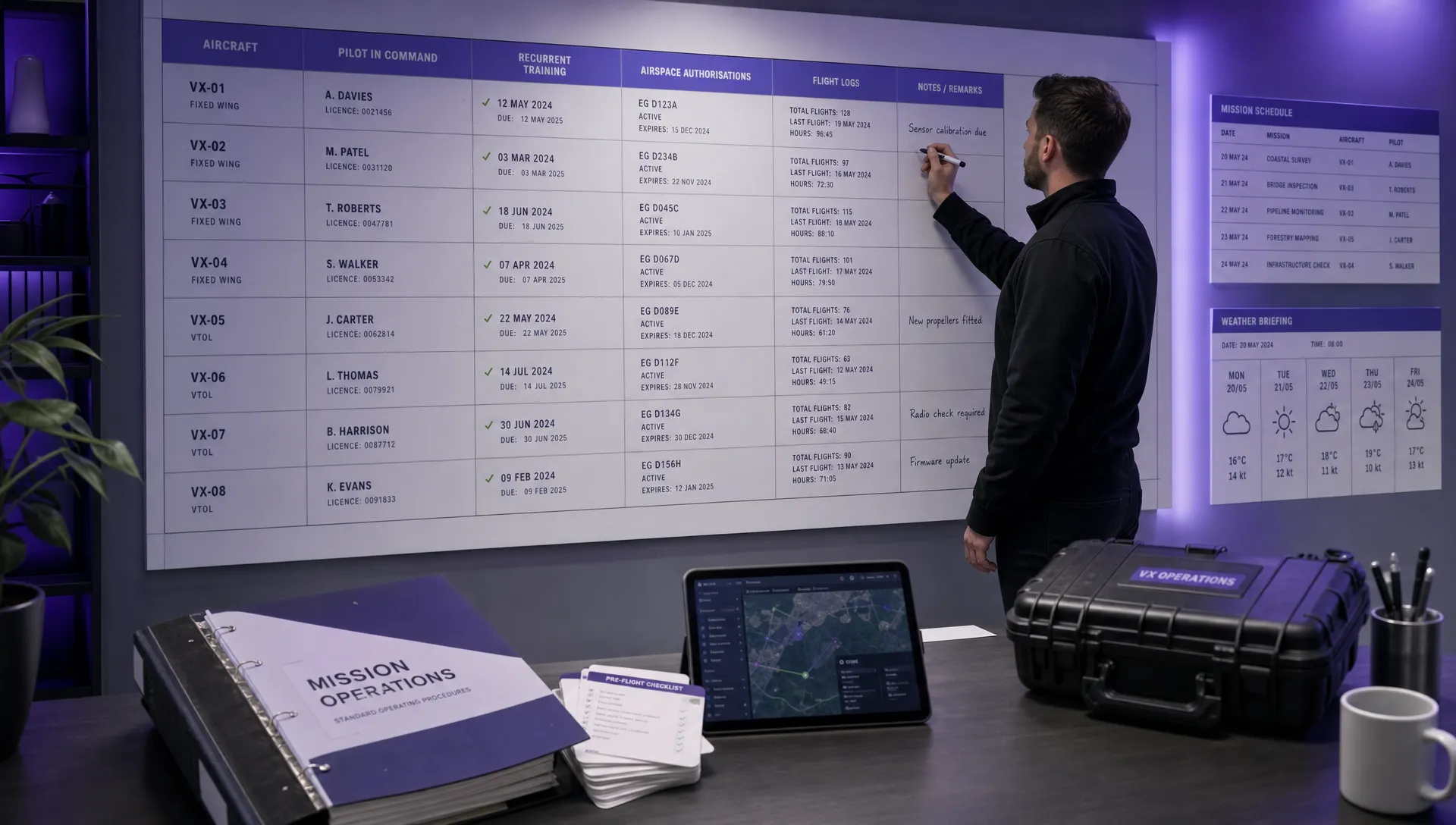 FAA Drone Licence Requirements for Commercial Pilots →
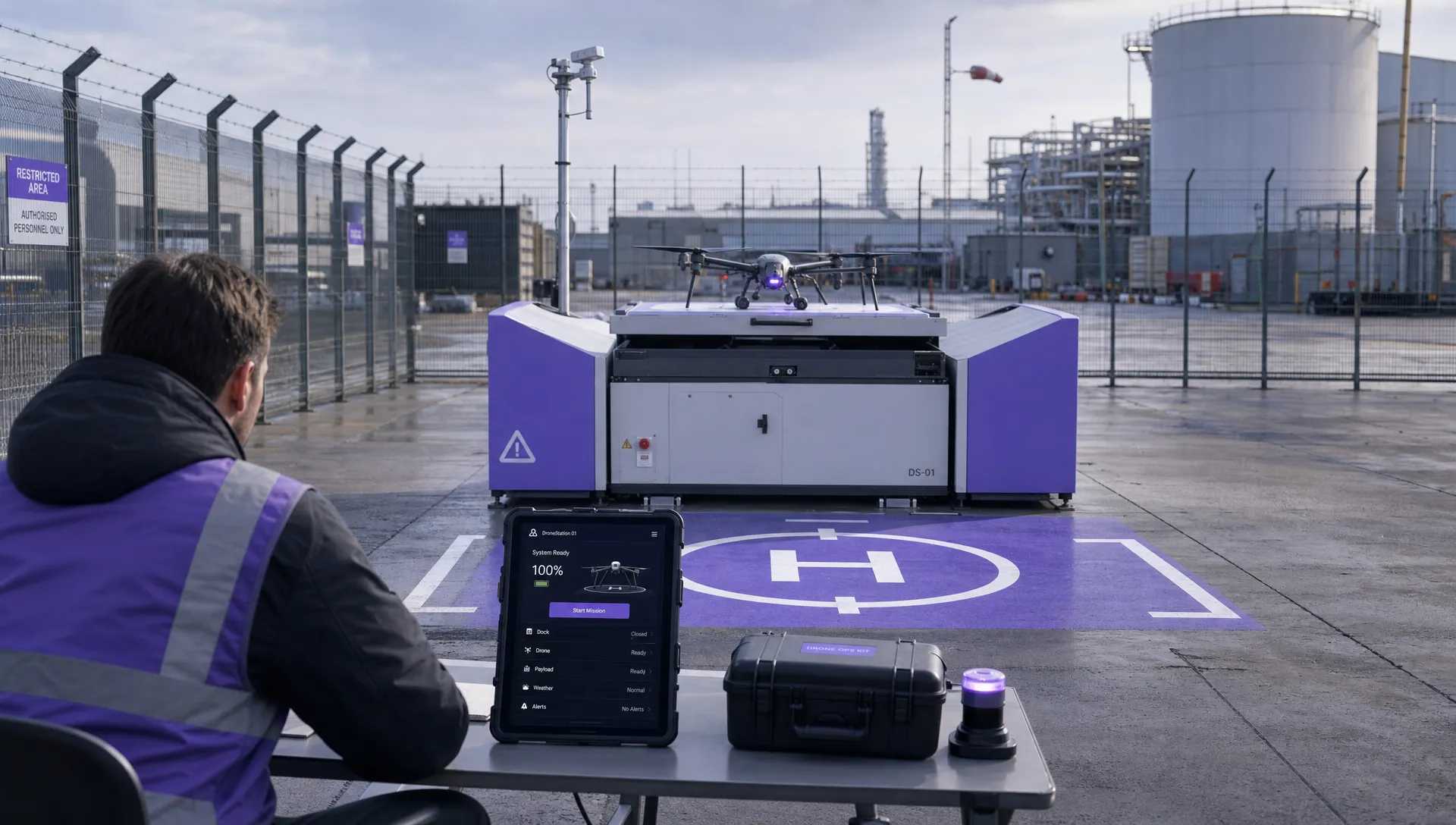 FAA BVLOS Waivers Granted: What Successful Cases Show →
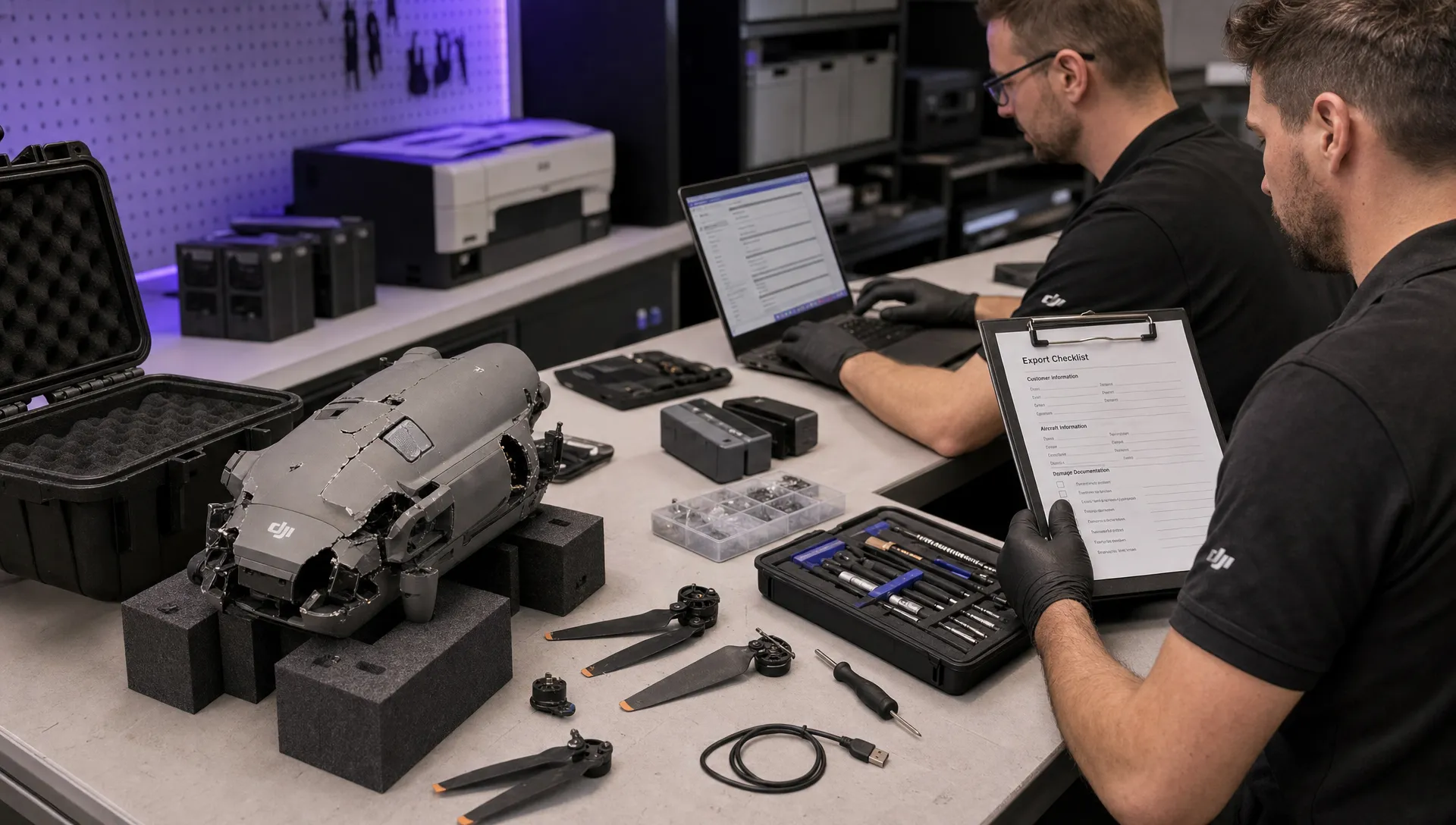 How to Export DJI Flight Logs for Incident Reviews →
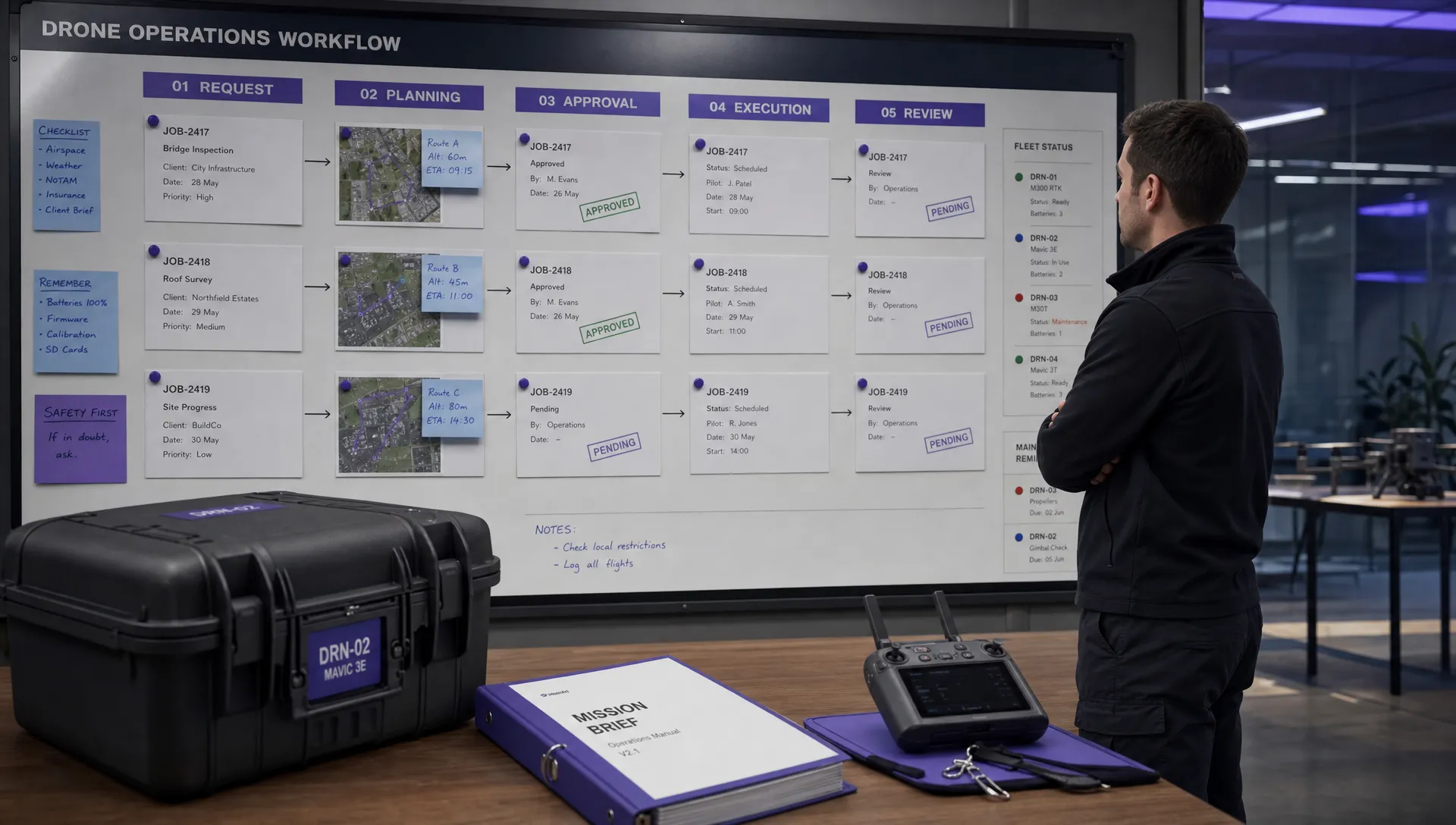 Drone Safety and Legal Duties for Business Operations →
 EASA Drone Regulations: Open, Specific and Certified Categories →
 What the BVLOS ARC Report Means for UAS Operators →
 Free Drone Pre-Flight Checklist for Commercial Missions →
 Contingency Volume and Flight Risk Buffer Explained →