
How to Analyze Log File Data from Your Drone Flights
To really get a handle on your drone operations, you need to look past the footage and dive into the data. I'm talking about your drone's flight log files. This is where the magic happens, turning raw telemetry—GPS coordinates, battery voltages, motor outputs, you name it—into real, actionable intelligence. This process is the key to enhancing safety, streamlining maintenance, and ensuring compliance.
Why You Need to Analyze Drone Log Files
Picture this: you spot a potential motor failure before it ever leads to a catastrophic crash. That's the kind of power hidden inside your drone's flight logs. This practice is so much more than just simple record-keeping; it’s about turning a stream of data into a strategic asset for proactive safety and maintenance. Every single flight your drone makes generates a goldmine of information, just waiting for you to tap into it.
When you make a habit of analyzing your log file data, you start to see some incredible benefits for your operations:
- Predictive Maintenance: You can spot the subtle signs of wear and tear on components like batteries or motors long before they give out. For example, a consistent dip in one motor's output compared to the others is a massive red flag that's easy to see in the logs.
- Concrete Incident Investigation: If an incident does happen, the log file provides an objective, second-by-second breakdown of exactly what went wrong. This data is priceless for figuring out the root cause and making sure it never happens again.
- Pilot Performance Reviews: You can objectively look at flight patterns, check if pilots are sticking to mission parameters, and even review their control inputs. This helps pinpoint training opportunities and keep standards high across your whole team.
- Simplified Compliance Reporting: Need to prove your flights were within regulated airspace or stayed inside geofences? Log files make it easy to generate reports that satisfy bodies like the FAA or CAA.
This discipline isn't just for drones; it's exploding across all tech sectors. The global log analysis software market is on an incredible growth path, projected to hit $12.5 billion by 2025 while holding a compound annual growth rate of 14% through 2033. This just goes to show how critical data management has become for any organization handling massive amounts of digital information. For drone platforms like Dronedesk, it reinforces just how vital deep flight logging and analysis features are. You can dig deeper into the log analysis software market growth trends.
Before we get into the "how-to," let's quickly break down the kind of valuable information you can pull from a standard drone log file.
Key Insights Available from Drone Log Files
| Data Category | Potential Insights | Primary Benefit |
|---|---|---|
| Flight Telemetry | Exact flight paths, altitude, speed, and heading data. | Verifying mission completion and compliance with airspace rules. |
| Battery Health | Individual cell voltage, current draw, temperature, and total capacity. | Identifying failing batteries before they cause an in-flight failure. |
| Motor & ESC Performance | RPM, current, and temperature for each motor/ESC. | Detecting motor strain or potential ESC issues early. |
| IMU & Sensor Data | Accelerometer, gyroscope, and magnetometer readings. | Diagnosing flight instability or control problems. |
| GPS & Connectivity | Satellite count, signal strength, and remote controller link quality. | Understanding environmental impacts on flight control and safety. |
| Pilot Inputs | Stick movements and mode changes recorded second-by-second. | Reviewing pilot performance and decision-making during flights. |
This table only scratches the surface, but it gives you a good idea of the depth of information available for analysis.
We've seen a real-world scenario where an operator noticed a gradual increase in battery cell drift over several flights. By retiring that battery based on the log data, they almost certainly prevented an in-flight power failure that could have cost them a high-value drone and its payload.
This proactive approach is what truly separates professional drone programs from the rest. It shifts your operations from being reactive—fixing things after they break—to a predictive model where you can anticipate issues and act first. By making log analysis a standard practice, you're turning abstract data points into tangible improvements in safety, efficiency, and reliability for your entire fleet.
Getting and Preparing Your Drone Flight Logs
Before you can pull any real insights from a flight log, you first have to get your hands on the raw data. This is the crucial first step, and while it sounds simple, it often comes with its own set of headaches. The goal is to get clean, usable data ready for analysis.
For most pilots, especially those flying DJI drones, the process starts inside the DJI GO or DJI Fly apps. These apps automatically log flight data and give you the option to sync it all to the cloud. This is usually the most straightforward way to go, as it centralizes your logs where platforms like Dronedesk can easily access them. We’ve got a detailed guide that walks you through exactly how Dronedesk handles these records, which you can find right here: https://blog.dronedesk.io/my-flight-log/.
But let's be realistic—direct syncing isn’t always a perfect solution. A spotty connection can leave you with an incomplete data transfer, and if you’re operating offline, syncing isn't an option at all.
Sourcing Logs From Different Drone Models
Once you step outside the DJI ecosystem, you’ll find that drone log files come in a few common flavours. Depending on the manufacturer, you could be working with:
- .txt files: Plain text logs. They're human-readable, which is a plus, but they can be a bit unstructured and messy.
- .dat files: These are binary data files. They often hold the most detailed information, but you'll need specialized software to make any sense of them.
- .csv files: Comma-separated values. These are great because they're easy to import into spreadsheets and just about any analysis tool out there.
To get these files, you’ll typically have to connect the drone or controller directly to a computer or just pull the SD card. It’s a more hands-on approach, but it guarantees you have the original source files, completely bypassing any cloud sync gremlins.
The whole process of turning this raw data into something you can actually use is pretty straightforward when you break it down.

As you can see, collecting and managing log data is just the starting point. The real magic happens during the analysis that follows.
The Critical Data Preparation Phase
Here's a hard truth: raw log files are almost never ready for analysis right out of the box. They're often a chaotic jumble of inconsistent timestamps, missing data points, and proprietary codes. This is where data preparation—or parsing and cleaning—comes in. It’s the unglamorous but absolutely essential job of turning that chaos into a structured, usable format.
This step is fundamental in any data-driven operation today. The world is swimming in data, with global generation projected to blow past 180 zettabytes by 2025. Drone operations are a big part of that trend, with every single flight pumping out detailed telemetry.
Good data prep involves a few key tasks:
- Standardizing Timestamps: You need to make sure all your time-based data uses a consistent format (like UTC). If you don't, trying to correlate events accurately is a nightmare.
- Handling Missing Data: Gaps in data are just a fact of life. You have to decide whether to fill in those gaps (interpolate) or just flag them so they don’t throw off your entire analysis.
- Converting Units: Your logs might record altitude in feet and speed in meters per second. Standardizing everything to one system is crucial for consistent reporting.
Using Tools to Automate the Cleanup
Manually cleaning log files is a soul-crushing, error-prone task that can eat up hours of your time. Thankfully, there are tools and platforms out there that can automate this whole process, giving you that time back.
Services like Airdata UAV are built specifically to parse all sorts of drone log formats. You just upload your raw file, and the platform does the heavy lifting of decoding the data, standardizing it, and spitting it out in a readable format. It can transform an encrypted .dat file into clear, actionable graphs showing battery health or motor performance.
Using an integrated platform has been a game-changer for us. Instead of manually downloading, cleaning, and uploading logs for every single flight, the system just does it all automatically. We estimate this saves our team at least four to five hours a week on admin work alone.
Platforms like Dronedesk take this automation even further by building log syncing directly into your operational workflow. Once your DJI logs are synced, Dronedesk automatically pulls them in, parses them, and gets them ready for analysis. This completely removes the manual steps, ensuring every flight record is clean, standardized, and ready for review without you having to lift a finger. That kind of automation is what makes log analysis a sustainable, routine part of your safety and compliance procedures.
Core Analysis Techniques for Safer Flights

Alright, you've got your data cleaned up and ready to go. This is where the real fun begins. Now we get to turn all those rows of numbers and telemetry data into a story that tells us exactly what happened on a mission—its health, its safety, and its compliance record.
To make sense of it all, it's best to break down your analysis into a few key areas, each focused on a different aspect of the flight.
The most obvious place to start is simply looking at where the drone actually went. Visualizing the flight path isn't just about making a cool map; it's a fundamental check for compliance. By plotting the 3D GPS data onto satellite imagery, you can instantly see if the drone stayed where it was supposed to be.
This visual check is your first line of defense. Did the aircraft steer clear of no-fly zones? Did it maintain the right standoff distance from that sensitive bit of infrastructure? A quick look at the plotted path answers these critical questions in seconds.
Visualizing Flight Paths for Compliance
Modern analysis tools can render flight paths in both 2D and 3D, giving you an immediate and easy-to-understand record of the operation. You can even scrub through the timeline to see the drone's precise position, altitude, and speed at any given moment.
Imagine you were flying a mission near a controlled airfield. Your log file's GPS track can generate a clear visual report proving the drone never once breached the restricted airspace. That kind of concrete evidence is invaluable if any questions from regulators come up. It's about turning compliance from a box-ticking exercise into something you can actually prove.
Hunting for Performance Anomalies
Beyond just where the drone flew, the real power of log analysis is in spotting hardware problems before they become catastrophic failures. This means diving deep into the performance metrics of the drone's core components, looking for those tiny deviations that are often the first sign of trouble. Think of it as a post-flight health checkup for your aircraft.
This is where you find the most value. Catching these things early moves you from a reactive maintenance schedule (fixing what's broken) to a predictive one (replacing parts before they fail). This approach dramatically boosts safety and cuts down on expensive downtime. This kind of comprehensive flight data analysis is really the cornerstone of any professional drone program today.
You just need to know what to look for. Here are the usual suspects—the hotspots where problems tend to show up first in the logs.
- Battery Health Scrutiny: Pay close attention to the individual cell voltages. On a healthy battery, all cells should discharge at almost the exact same rate. If you see cell drift—where one cell's voltage drops faster than the others—that's a huge red flag for a degrading battery that could fail mid-flight.
- Motor and ESC Evaluation: Look at the power commands being sent to each motor. Is one motor consistently asking for more juice than the others just to keep the drone stable? That could point to a failing bearing, a nick in the propeller, or a faulty Electronic Speed Controller (ESC).
- IMU Data Review: The Inertial Measurement Unit (IMU) is your canary in the coal mine for vibrations. Any excessive or weird vibration patterns can signal an unbalanced prop, a loose screw on the frame, or a motor issue that isn't even showing up in the power data yet.
I remember a case where an operator, just by regularly checking motor output graphs, noticed Motor 3 on their quadcopter was consistently pulling 5-7% more current during climbs. A quick physical check revealed a hairline crack in the propeller. It was a tiny issue that would have absolutely led to an in-flight failure down the line.
Spotting Geofence and Proximity Events
Another critical piece of the puzzle is tracking any interactions with virtual boundaries. Did the drone get close to a geofence you set up? Did it trigger a proximity alert for another aircraft or an obstacle? These events are gold for safety reviews and compliance paperwork.
Log files will usually have specific flags or event markers when these things happen. Digging into those markers helps you understand the full context. Was the pilot intentionally flying near a boundary for an inspection, or was it an unplanned deviation that calls for a debrief?
For example, if a log file from a recurring mission shows a bunch of geofence warnings in the same spot every time, it probably means the flight plan is cut a little too close to the edge. That data gives you a solid reason to tweak the mission parameters for next time and build in a bigger safety margin. It's a perfect example of how you can use log data to constantly refine and improve your procedures.
To make this even easier, many platforms will visualize these events right on the flight path map. You can see the exact point where an alert was triggered, check it against telemetry from that moment (like wind speed or pilot stick inputs), and get a complete picture of what happened. This turns a simple warning into a real learning opportunity for the whole team.
Troubleshooting Flight Issues with Log Data
When a flight goes sideways, your log files are the single most important tool you have. Think of them as the black box for your drone, holding all the digital evidence you need to figure out exactly what happened. Instead of guessing, you can dig into the data to pinpoint the precise moment an issue started and understand the chain of events that led to it.
The real skill is turning what looks like a mess of cryptic data points into a clear story. Let's say your drone suddenly drops out of the sky without warning. Was it a battery failure? A motor seizing up? A critical loss of signal? The logs have the answer. This data-first approach is at the heart of both preventive and corrective maintenance.
Decoding Erratic GPS Data
A messy GPS track is one of the most common headaches for any pilot. An erratic, jumpy flight path can make any post-flight analysis a nightmare, but the log data itself can often tell you why it’s happening.
The first thing to check is the recorded satellite count throughout the entire flight. If you see a low number, or especially a sudden drop, that’s a big clue pointing to environmental interference. Flying in a city surrounded by tall buildings or near large metal structures can wreak havoc on GPS signals.
But what if the satellite count looks solid and the track is still all over the place? The problem might be a bit more subtle. Keep an eye out for these indicators in your logs:
- High HDOP/VDOP Values: These stand for Horizontal and Vertical Dilution of Precision. High numbers here mean the satellite geometry is poor, which leads to inaccurate positioning even if you're connected to plenty of satellites.
- Compass Interference Flags: Modern drones are smart enough to log magnetic interference events. A spike in interference almost always lines up with erratic positioning because the drone is struggling to figure out which way it’s pointing.
Interpreting Cryptic Error Codes
Error codes are another goldmine of diagnostic info, but they can feel like you're trying to read a foreign language. Your log file will timestamp every single error, from minor warnings to critical system alerts, letting you match them up with specific flight behaviors.
When you spot an error code, the trick is to look at the data surrounding it. For instance, a "Motor Blocked" error is way more useful when you can see in the logs that it happened right after a spike in current draw to that motor and a sudden change in the drone's orientation. That context tells a much richer story than the code by itself.
Don't just skip to the final, critical error. The real insight often comes from the string of minor warnings that popped up in the minutes leading up to the main event. Those are your early warning signs.
Investigating Gaps in the Data
What if the log just… stops? A sudden gap in your data is a serious red flag and needs a close look. The way the gap appears can give you clues about the root cause.
If all data streams cut out cleanly and simultaneously, that often points to a catastrophic power failure. Go back and check the very last recorded battery voltage and current draw. A sharp, vertical drop to zero is the classic signature of a total power loss, maybe from a battery coming loose or a major internal failure.
On the other hand, if some data streams start getting patchy or drop out before others, the problem could be more complex. This might suggest a software glitch, a failing sensor, or an issue with the onboard data storage. Nailing down these partial failures helps you move from "the whole system died" to "this specific component is failing." This methodical approach is only getting more important as drone tech evolves. The global log management market is projected to more than double, jumping from $3.72 billion in 2025 to $7.65 billion by 2033, all because of the sheer volume of machine data modern systems produce.
Automating Analysis and Reporting for Compliance
After you’ve dug through the raw data, troubleshot issues, and hunted for anomalies, the final piece of the puzzle is packaging those findings into clear, professional documentation. This isn't just about creating a record for the sake of it. It’s about translating complex technical analysis into actionable reports that support safety, prove compliance, and guide your maintenance decisions.
Let's be honest, manually creating these reports after every single flight is a massive time sink. The process of grabbing screenshots, summarizing data points, and formatting documents can easily swallow hours of admin work each week. For log analysis to be a sustainable part of your operations, you have to find a way to automate the workflow.

Crafting a Comprehensive Post-Flight Report
A truly useful post-flight report does more than just spit out data; it tells the story of the mission. It needs to be easily understood by everyone, from pilots and maintenance crews to clients and, if it comes to it, regulatory bodies. A solid report will always contain a few key components that paint the full operational picture.
These are the core elements that turn a simple log file into a powerful compliance and safety tool:
- Flight Summary: The top-line overview. Think key metrics like total flight time, distance flown, max altitude, and the date and time of the op.
- Flagged Events: This is where the system earns its keep. The report should automatically highlight any anomalies or predefined events—high wind speed alerts, geofence breaches, or signal loss warnings.
- Visual Flight Path: A map overlay showing the drone's exact flight path is non-negotiable. It gives you immediate, visual proof that the mission was flown within the approved area.
- Maintenance Recommendations: Here’s where your analysis becomes proactive. The report should translate data into clear actions, like "Battery #12 shows significant cell drift and should be retired" or "Motor 4 is drawing 8% more current than average; inspect for damage."
Streamlining the Workflow with Integrated Platforms
This is exactly where platforms like Dronedesk become a complete game-changer. Instead of you having to manually analyze log file data and piece together reports, the system does the heavy lifting. By integrating directly with your DJI account, Dronedesk automatically pulls in the flight logs the moment they’re synced.
Once the log is in the system, the platform gets to work in the background. It visualizes the flight path, runs checks for system health anomalies, and cross-references the flight against mission parameters and airspace restrictions. All of this is then compiled into a clean, professional post-flight report, ready to go.
With just a few clicks, a process that used to take our team 30-45 minutes per flight is now done in seconds. This frees us up to focus on flying and interpreting the insights, not getting bogged down in paperwork.
The efficiency gains are huge. We’ve covered this in detail before, explaining how automated flight logging and reporting can save drone teams hours every week. This level of automation also brings consistency and accuracy to all your documentation, which is absolutely crucial during an audit or safety review.
Visualizing Data for Clearer Insights
One of the biggest wins from an automated system is how it presents complex data visually. A simple line graph showing battery cell voltages over the course of a flight is infinitely more intuitive than a spreadsheet packed with numbers.
These visualizations make it incredibly easy to spot trends and identify outliers at a glance. For instance, a good dashboard might display:
| Data Visualization | Insight Provided |
|---|---|
| Battery Cell Voltage Graph | Quickly identifies cell drift or sudden voltage drops. |
| Motor Output Chart | Highlights inconsistencies that may signal a failing motor. |
| Signal Strength Timeline | Shows any moments of weak RC or video transmission. |
| 3D Flight Path Replay | Provides a clear view of altitude and proximity to obstacles. |
This visual-first approach makes log analysis accessible to everyone. It empowers every member of your team—not just the data specialists—to understand the health and safety of each mission. Ultimately, automating the reporting process closes the loop, turning raw flight logs into the polished, actionable intelligence that defines a professional drone operation.
Common Questions Answered
As you get more hands-on with analyzing your drone logs, a few questions tend to bubble up. Getting these sorted clarifies the best way to handle your data, what to do if there's an incident, and how to stay on top of operational safety.
How Long Should I Keep My Drone Log Files?
This really comes down to your local regulations and the kind of work you do. For commercial operators in places like the US or UK, under the watch of the FAA or CAA, the unwritten rule and best practice is to hang on to all flight logs for at least 24 months.
Why so long? Because those logs are gold. They're your proof of compliance, the detailed history you need for maintenance planning, and absolutely essential if you're ever audited or face an official investigation. Honestly, the easiest way to manage this is with a platform that gives you secure cloud storage, so you're not juggling hard drives and can pull up a log in seconds when you need it.
Can Log Files Help Me in an Incident Investigation?
Absolutely, and this is probably their most critical role. If an incident or a dispute happens, your drone's flight log is the impartial, data-driven witness that tells the whole story. It can show, without a doubt, your drone's exact flight path, altitude, speed, and even the pilot's control inputs from one moment to the next.
Imagine someone accuses you of flying inside a restricted zone or getting too close to their property. Your log file is the single best piece of evidence you have to prove you were operating safely and by the book. This is why consistent, complete logging is a cornerstone of any solid risk management strategy.
This objective record can shut down false claims and provide the hard data needed for a proper investigation, turning a messy "he said, she said" argument into a simple review of the facts.
What Is the Most Important Metric to Watch in a Drone Log?
While you can get lost in all the data, if I had to pick just one thing, it would be battery voltage and cell deviation. Nothing grounds a drone faster than a bad battery, and these metrics are your early warning system.
A sudden, sharp drop in voltage while the drone is working hard, or a growing difference between the voltage of individual cells (often called "cell drift"), are classic red flags that a battery is on its way out.
Checking this data regularly lets you spot and retire failing batteries before they cause a total power failure mid-air. It's a simple check, but it delivers a massive return on safety, protecting your gear, your payload, and anyone on the ground below.
Ready to put your flight analysis on autopilot? Dronedesk is built to automatically pull in your flight logs, analyze the data, and generate the reports you need. Turn all that complex data into clear, actionable insights in just a few clicks. See how you can transform your safety and compliance workflow at https://dronedesk.io.
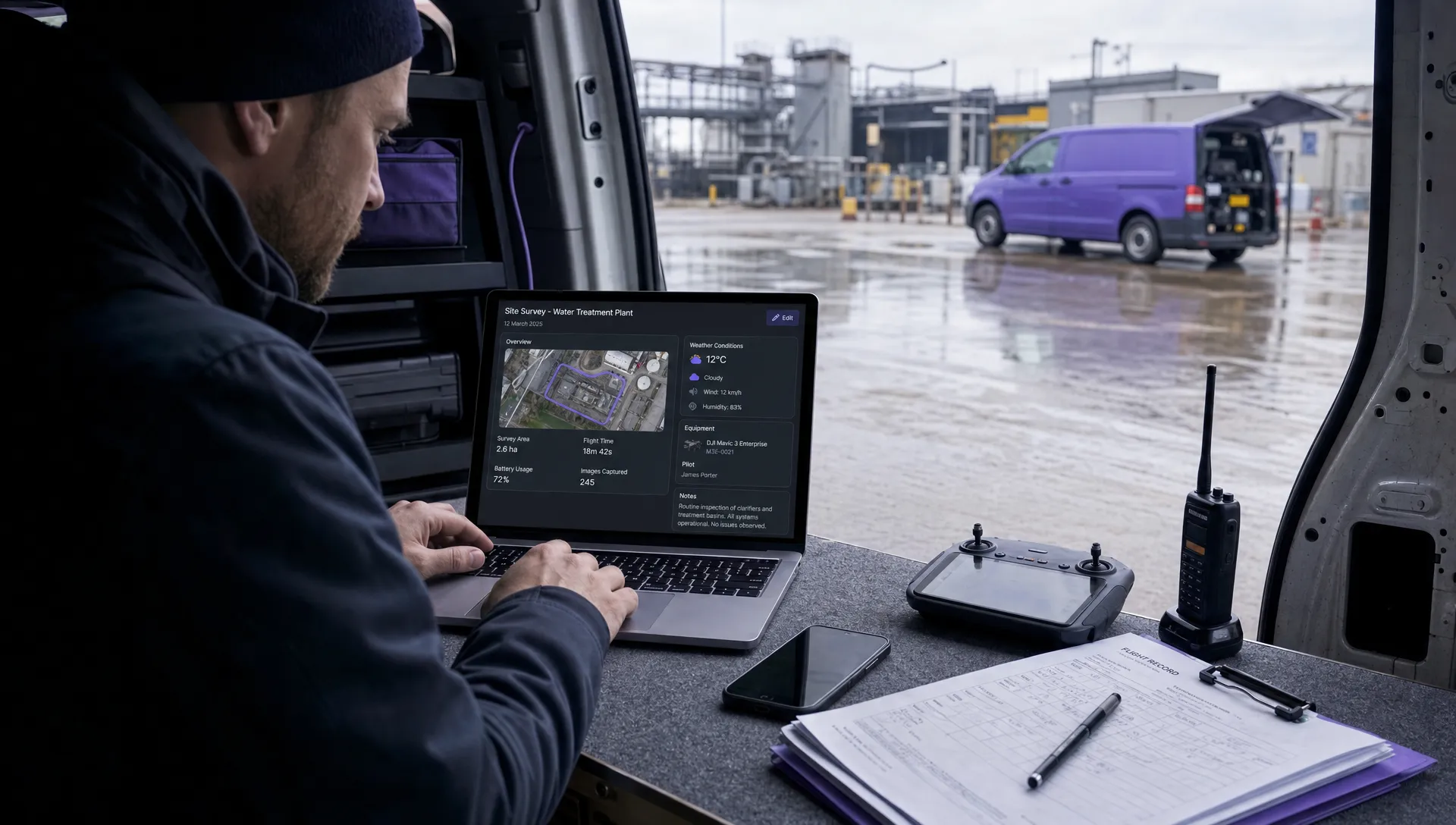 Drone Airspace Rules: How to Document Your Site Checks →
 How to Evaluate a Free Drone Logbook Before Using It →
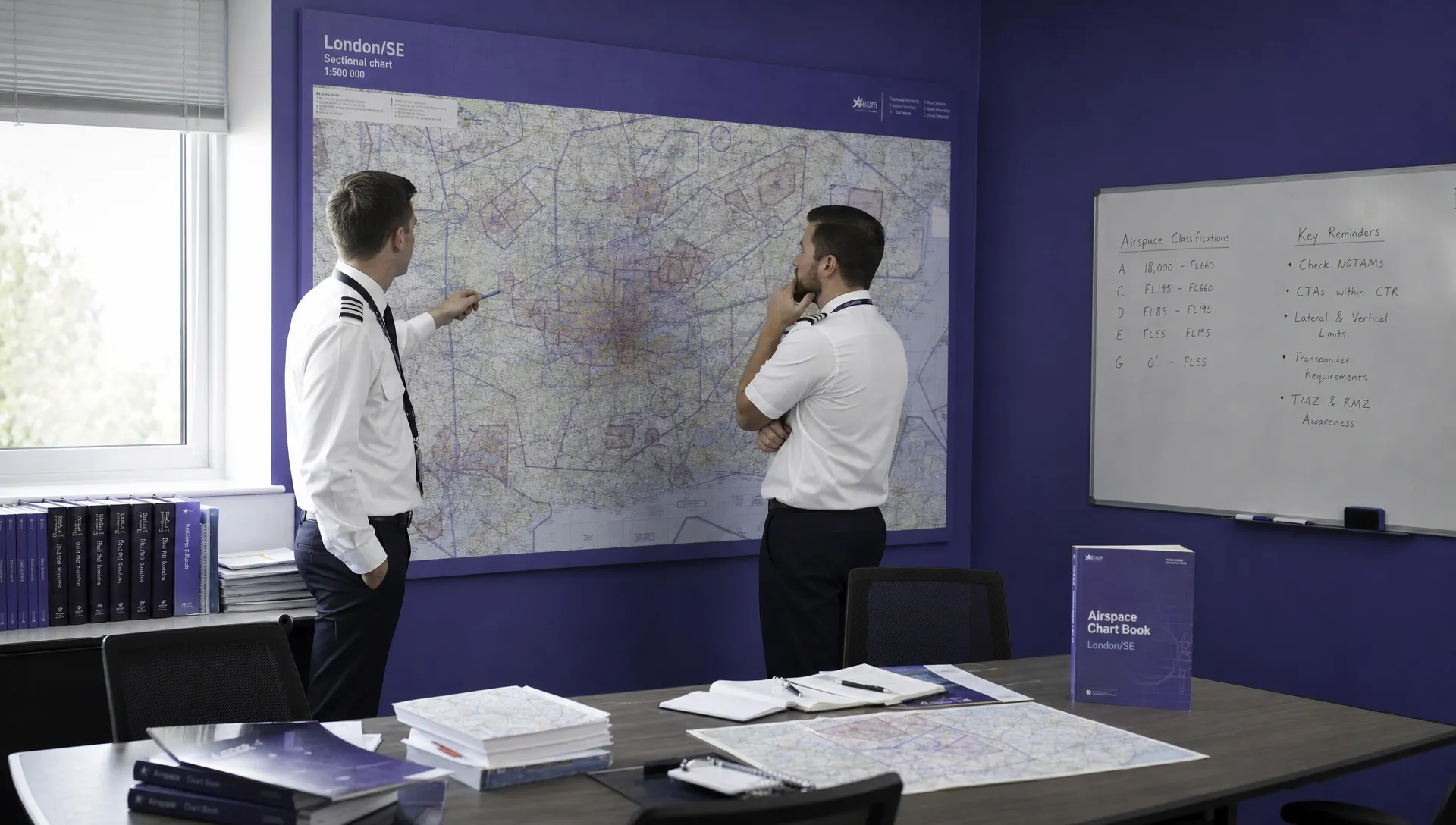 FAA Part 107 Test: How to Master Airspace Questions →
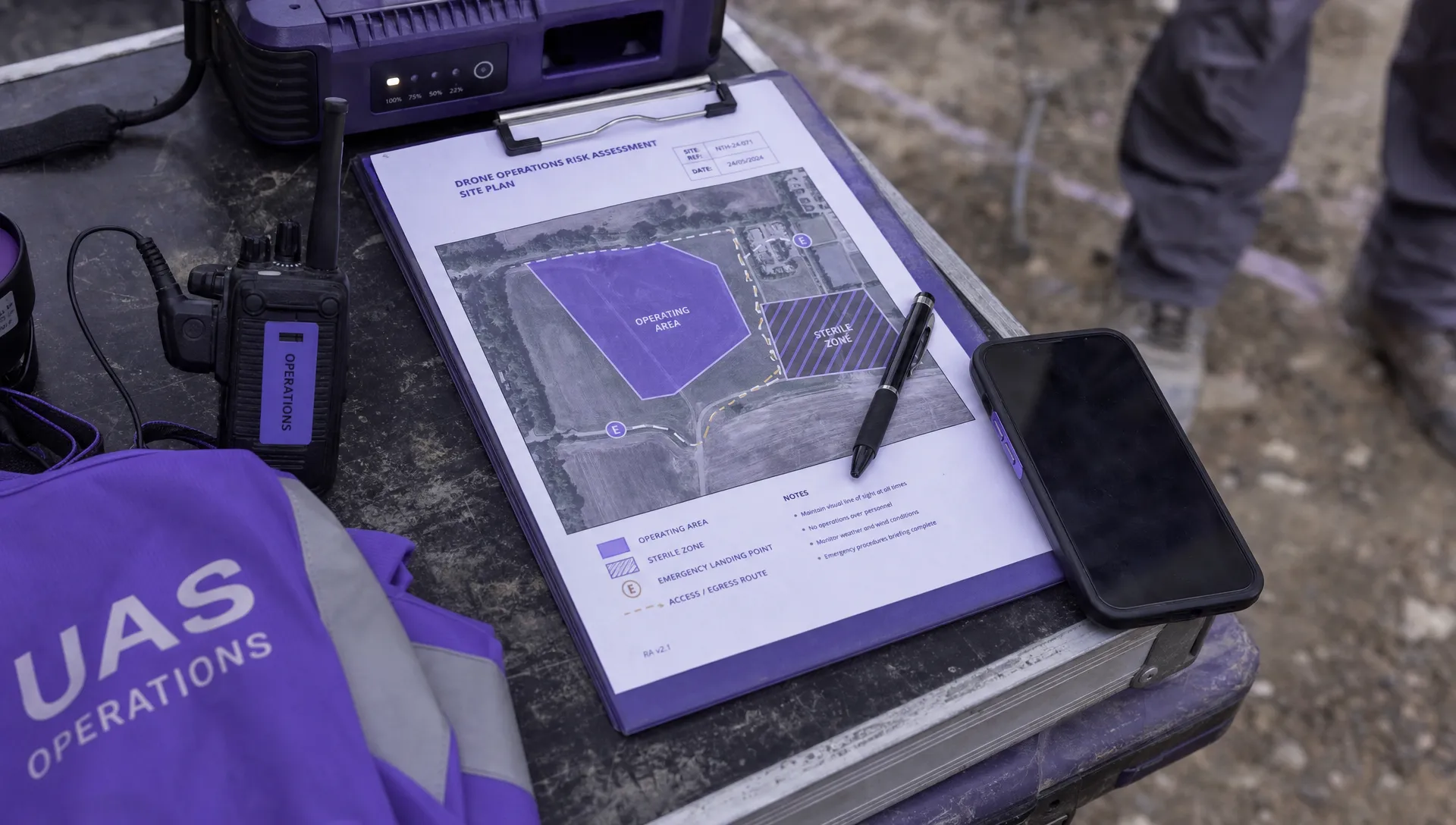 Drone Risk Assessment Controls That Work in the Field →
 FAA Drone License Costs Beyond the Knowledge Test →
 Drone Part 107 Operations: When a Waiver May Be Needed →
 Drone Operating Rules for Managing Contractors and Employees →
 BVLOS Drone Requirements for Building a Safety Case →
 Drone Pilot Test Mistakes That Cost Candidates Marks →
 FAA 107 License vs Part 107 Certificate: What’s the Difference? →