
How to Issue a Notam - A Practical Drone Guide (how to issue a notam)
For any professional drone pilot, issuing a Notice to Air Missions (NOTAM) isn't just another box to tick—it's a core responsibility. Think of it as your official heads-up to manned aircraft, a crucial safety alert that tells them you're operating in the area. It’s the established way we communicate potential hazards in the national airspace, making sure every pilot knows about temporary changes or activities.
Why NOTAMs Are Non-Negotiable for Professional Drone Pilots

Knowing when and how to issue a NOTAM goes way beyond basic compliance. It's a fundamental mark of a professional pilot who understands they're operating in shared airspace. This isn't just about following the rules; it's about actively contributing to the safety and predictability of the skies for everyone.
Let’s be real. A NOTAM is the vital link that prevents a potential mid-air conflict between your drone survey and a low-flying medical helicopter. It’s what separates a smooth, successful mission from a headline-grabbing incident that could damage your career and the entire drone industry's reputation.
The Hallmark of a Mature Drone Operation
Filing a NOTAM is an absolute must for any drone operator taking on complex or higher-risk missions. These kinds of jobs demand a much higher level of airspace awareness and communication. Some clear-cut examples include:
- Large-scale mapping projects covering a significant area.
- Utility inspections, especially those near private airstrips or heliports.
- Cinematic filming that involves repeated flight patterns in one spot.
- Any flight near an airport, no matter the altitude.
In these situations, filing a NOTAM signals that you run a mature, safety-first operation. It tells aviation authorities and other pilots that you've done your homework and are taking real steps to mitigate risk. This proactive mindset is a cornerstone of professional piloting, something we cover in-depth in our commercial drone compliance guide.
Navigating a Crowded System
The sky is a busy place, and the NOTAM system is a direct reflection of that. The sheer scale of this network is staggering. In 2020, the global aviation system saw over 1.7 million new NOTAMs issued. That breaks down to an average of 4,658 new notices every single day. This firehose of information is what all pilots, both manned and unmanned, have to sift through. You can learn more about the evolution of the NOTAM system and its challenges here.
For a drone pilot, this means the system isn't just about broadcasting your own flight plans. It's about being able to effectively filter and interpret notices from everyone else to ensure your own mission is clear of unexpected hazards.
Thankfully, you don't have to go it alone. Modern drone operations management platforms like Dronedesk are built to simplify this whole process. These tools turn what could be a bureaucratic nightmare into a streamlined safety protocol, baking airspace intelligence right into your mission planning. They make it far easier to figure out if a NOTAM is required and give you the data you need to file one correctly—making you a safer, more professional, and more efficient pilot.
When Does Your Drone Flight Actually Need a NOTAM?
Figuring out exactly when you need to file a NOTAM can feel like a bit of a grey area, but honestly, it’s more straightforward than you might think. It all comes down to a single, critical question: could my drone operation pose a hazard to other aircraft in the National Airspace System (NAS)?
If there's even a chance the answer is "yes," filing a NOTAM isn't just a good idea—it's your professional responsibility.
Now, let's be clear. The FAA doesn't expect a NOTAM for every single commercial drone flight. Plenty of standard Part 107 jobs, like a quick real estate shoot at 200 feet in an open field miles from any airport, won't need one. But the moment your mission deviates from the everyday and introduces new variables into the airspace, the game completely changes.
The Clear-Cut Scenarios Requiring a NOTAM
Some drone operations are so obviously a potential conflict that filing a NOTAM should be an automatic part of your workflow. These aren't edge cases; they're situations where the chances of interacting with manned aircraft are significantly higher. If your flight plan involves any of these, you should be thinking "NOTAM" from the get-go.
- Flights Above 400 Feet AGL: Got a waiver to fly above the standard 400-foot ceiling? You absolutely need a NOTAM. Manned aircraft simply aren't expecting to see a drone up there, making your heads-up crucial for collision avoidance.
- Beyond Visual Line of Sight (BVLOS) Operations: When you're flying BVLOS with a waiver, you've given up your primary safety tool: your own eyes. A NOTAM becomes a vital electronic signal flare, telling other pilots about your operational area.
- Operations Near Airports: Flying anywhere near an airport dramatically increases the risk, even if you're technically outside of controlled airspace. This includes those little private airstrips, helipads, or seaplane bases that might not even be on your VFR sectional. For a deeper dive, check out our guide on conducting a drone flight near an airport.
- Large-Scale or Unusual Operations: This is the catch-all for anything out of the ordinary. Think drone swarm light shows, flying an unusually large or fast aircraft, or conducting extensive night operations under a waiver. The unique nature of these flights demands a notification to the wider aviation community.
Using a Checklist for Clarity
To make the decision even easier, it helps to have a quick checklist to run through before any complex mission. This just ensures you're consistently looking at the flight from the perspective of other pilots in the sky.
Here’s a simple checklist to help you decide if a NOTAM is in order for your next flight.
NOTAM Requirement Checklist for Drone Operations
| Operational Scenario | NOTAM Likely Required? | Key Consideration |
|---|---|---|
| BVLOS Utility Inspection | Yes | You can't visually see and avoid other aircraft, making electronic notification essential. |
| Flying at 500 ft with a Waiver | Yes | Your drone is operating where manned aircraft do not expect to see unmanned traffic. |
| Mapping 200 Acres Near a Private Airstrip | Yes | Proximity to any aircraft landing zone, public or private, increases collision risk. |
| Night Filming in a Congested Area | Yes | Reduced visibility for all pilots at night makes a NOTAM a crucial deconfliction tool. |
| Standard Real Estate Flight (250 ft AGL) | No | This is a routine operation within standard parameters and away from air traffic patterns. |
Running through these scenarios helps build the right professional mindset. You'll stop seeing the NOTAM process as a chore and start viewing it as a fundamental part of your risk management toolkit.
The core principle here is proactive deconfliction. A NOTAM is your way of broadcasting to other pilots, "Hey, I'm working over here, during these times, and up to these altitudes." It's a professional courtesy that becomes a non-negotiable safety requirement as your missions get more complex.
This kind of thinking is what separates casual flyers from true aviation professionals who know how, and when, to integrate safely into the national airspace.
A Drone Pilot's Walkthrough to Filing an FAA NOTAM
Moving from theory to practice is where real confidence is built. Let's be honest, filing a NOTAM for the first time, especially in the FAA system, can feel a bit intimidating. You're faced with specific fields, technical jargon, and the pressure of getting it right. This walkthrough will cut through the noise, translate the required data into plain English, and show you exactly what to do.
The whole point of the process is clarity and safety in shared airspace. The interface might look a little dated, but every single field serves a critical purpose in telling manned aircraft what your drone is up to. Let's break down how to get a NOTAM issued for a typical UAS operation.
The graphic below is a great reminder of the common scenarios that absolutely require a NOTAM.

As you can see, high-altitude flights, any operation beyond your visual line of sight (BVLOS), and any work near airports are definite triggers for filing.
Getting Into the System and Prepping Your Data
For professional drone operators in the US, you'll be using official FAA systems. To issue a NOTAM, you need FAA authorization and will typically access the NOTAM Distribution Service (NDSS) or the newer Enterprise NOTAM Management Service (ENMS). This isn't a small-time system; the FAA issues more than 4 million NOTAMs annually in the US alone. That staggering number shows just how rigorous and important this process is.
Before you even think about logging in, get your operational data ready. This one simple step will save you a massive headache and help prevent errors.
- Precise Location: You'll need the latitude and longitude for the center point of your flight area, plus its radius in nautical miles.
- Altitude: Know your maximum flight altitude in both feet Above Ground Level (AGL) and Mean Sea Level (MSL).
- Timeframe: Have your exact start and end dates and times figured out and, crucially, converted to Coordinated Universal Time (UTC).
Just having this information written down makes the actual filing process go so much smoother. Modern software can handle these conversions for you, too. In fact, we've put together a guide on some of the best drone flight planning tools with NOTAM features that you should check out.
Making Sense of the Key Data Fields
Once you're in the filing portal, you'll be met with a form. While the layout might differ slightly between systems, the core information is standardized across the board. Let's walk through the most important fields you'll need to fill out.
Location Identifiers This is where you tell the system what airspace is affected. You’ll usually start by using the identifier for the nearest airport or navigational aid as a reference point. From there, you'll pinpoint your exact location using either a radial distance (e.g., 10 nautical miles on the 180-degree radial) or by plugging in the precise latitude and longitude coordinates of your operational area.
Start and End Times (UTC) This is a super common trip-up point. All aviation operations use UTC (often called "Zulu time") to create a global standard and eliminate time zone mix-ups. Forgetting to convert from your local time is one of the quickest ways to get your NOTAM rejected. A quick search for a "local time to UTC converter" will become your best friend.
Pro Tip: Always, always double-check your UTC conversion. If your flight is planned for 2 PM Eastern Standard Time (UTC-5), the correct entry is 1900Z. Getting this wrong means your NOTAM could be active at a completely useless time.
The Free-Text Description (Item E) Pay attention here, because this is the most critical part of your filing. This is where you describe your operation in a clear, concise, and standardized format. You need to paint a clear picture for other pilots so they understand exactly what’s happening, where, and when.
Crafting the Perfect NOTAM Description
The free-text field is where you communicate the "what" and "how" of your flight. The goal is maximum clarity with minimum words. You should always start with the phrase "UAS ACTIVITY" or "UNMANNED AIRCRAFT ACTIVITY" to immediately flag the nature of the notice.
Let's put this into practice with a sample NOTAM for a common drone job: a roof inspection for a commercial building.
Scenario Details:
- Location: 2.5 NM northeast of Anytown Municipal Airport (KXYZ).
- Altitude: Flying up to 300 feet AGL.
- Time: From 9 AM to 1 PM local time (which converts to 1400Z to 1800Z).
- Area: A 0.5 NM radius around the building.
Here’s how you'd translate that into proper NOTAM text:
!FDC 1/1234 KXYZ OBSTACLE UAS ACT WI AN AREA DEFINED AS .5NM RADIUS OF 341530N/0841245W (2.5NM NE KXYZ) SFC TO 300FT AGL. YYMMDD1400-YYMMDD1800
Let's break that down piece by piece:
- !FDC 1/1234 KXYZ: This is the administrative header.
- OBSTACLE UAS ACT: This clearly identifies the hazard as UAS activity.
- WI AN AREA DEFINED AS .5NM RADIUS OF...: This specifies the size of your operational area.
- 341530N/0841245W (2.5NM NE KXYZ): Here you give the precise lat/long coordinates and a plain-language reference for situational awareness.
- SFC TO 300FT AGL: This clearly states the altitude from the surface up to 300 feet.
- YYMMDD1400-YYMMDD1800: The effective date and time block in UTC format.
This format gives any pilot all the essential information they need to see and avoid your operation. It's direct, it uses standard abbreviations, and it leaves zero room for misinterpretation. When you follow this structure, you're not just filing a form—you're demonstrating professionalism and a real commitment to airspace safety.
How to Read and Understand NOTAMs Like a Pro
At first glance, a NOTAM looks like a string of cryptic code designed by someone who really loves acronyms. It’s dense, packed with abbreviations, and can feel completely impenetrable.
But learning how to decode them is a non-negotiable skill for any professional pilot. You can't just focus on issuing your own NOTAMs; you have to understand the ones impacting your flight area. Think of it as your personal decoder ring for the language of the skies.
Once you get the hang of the structure, you can quickly pull out the critical details for your mission, turning that wall of text into actionable intelligence.
Cracking the NOTAM Code
A standard ICAO (International Civil Aviation Organization) NOTAM follows a specific format, with each part providing a key piece of the puzzle. Getting your head around this structure is the first step to reading them efficiently.
The sheer volume of these notices makes quick comprehension essential. On any given day, an average of 35,000 NOTAMs are active globally. This mountain of data is what pushed ICAO's Global Campaign on NOTAM Improvement, which found that a staggering 40% of pilots struggled with cryptic phrasing. You can read up on this global effort to improve NOTAM clarity and reliability on the ICAO site.
Let's break down the most important components you'll come across.
- Series (Q-code): This is a coded line that gives a quick summary. It tells you the affected facility, the subject (like an obstacle or airspace change), and its status.
- Item A (Location): This specifies the affected airport, FIR (Flight Information Region), or navigation aid using its ICAO identifier.
- Item B (Start Time): The date and time the NOTAM kicks in, always in UTC.
- Item C (End Time): The date and time the NOTAM is no longer in effect, also in UTC.
- Item D (Schedule): If the hazard isn't continuous, this part lays out the active schedule (e.g., daily from sunrise to sunset).
- Item E (Description): This is the plain-text description of the hazard—or as plain as it gets. It’s where you’ll find the real meat of the issue, like UAS activity, crane operations, or airspace restrictions.
A NOTAM is structured for data-first interpretation. The most critical information—what, where, and when—is right at the top. The "E" section provides the human-readable context that fills in the gaps.
A Practical Glossary for Drone Pilots
The biggest hurdle for most pilots is the seemingly endless list of abbreviations. While you don't need to memorize them all, becoming fluent in the common ones for drone ops is a must.
Here are the abbreviations you'll see time and time again:
- UAS: Unmanned Aircraft System (your drone)
- AGL: Above Ground Level (altitude measured from the ground directly below)
- MSL: Mean Sea Level (altitude measured from the average sea level)
- OBST: Obstacle (often used for cranes, towers, or other temporary structures)
- TFR: Temporary Flight Restriction (an area where flight is restricted for a period)
- SFC: Surface (often used to define an altitude from the ground up, e.g., "SFC to 400FT AGL")
- NM: Nautical Miles (the standard unit of distance in aviation)
- WI: Within
Real-World NOTAM Dissection
Let’s pull apart a sample NOTAM line-by-line to see how this works in the real world.
Example NOTAM:
B0123/24 NOTAMN
Q) KZFW/QOAUC/IV/NBO/A/000/999/3253N09702W005
A) KDFW
B) 2406151200 C) 2406151800
E) OBST CRANE ERECTED AT 325315N0970230W (2.5NM SE KDFW) 250FT AGL / 850FT MSL. LGTD.
Here’s the translation:
- A) KDFW: The NOTAM is relevant to the Dallas/Fort Worth International Airport area. Simple enough.
- B) 2406151200 C) 2406151800: It’s active on June 15, 2024, from 12:00 UTC to 18:00 UTC. That's a six-hour window.
- E) OBST CRANE...: The "what" is an obstacle—a crane. It gives precise lat/long coordinates and a plain-language reference (2.5NM SE of KDFW). It specifies the height as 250 feet AGL, which is 850 feet MSL, and confirms it is lighted (LGTD).
For a drone pilot planning a job nearby, this NOTAM provides everything needed to maintain situational awareness and deconflict the flight path.
Of course, modern drone management platforms like Dronedesk can automate much of this, translating raw NOTAM data into simple visual warnings on your flight planning map. Still, knowing how to read the source material yourself is the mark of a true professional.
Common NOTAM Filing Mistakes and How to Avoid Them
Learning to file a NOTAM properly is often a trial-and-error process, but it’s a lot less painful if you can learn from someone else’s mistakes. Even the most seasoned operators get tripped up by small details that lead to frustrating rejections or, even worse, an ineffective notice.
Think of this as your pre-flight check for the paperwork. Getting it right ensures your NOTAMs get approved on the first try and, more importantly, do their job in the sky.
A botched NOTAM isn’t just an admin headache; it creates real safety risks. An incorrect notice is arguably more dangerous than no notice at all because it gives other pilots a false sense of security. Steering clear of these common pitfalls is a huge part of being a safe and professional airspace user.
Mixing Up Local Time with UTC
This is, without a doubt, the number one mistake I see people make. All aviation, from a small drone job to a transatlantic flight, runs on Coordinated Universal Time (UTC). It’s the only way to keep everyone on the same page across time zones. But it's so easy to slip up when you're focused on a local 9 AM start.
Imagine you're in New York (UTC-4 during daylight saving) and you’ve planned a flight from 9 AM to 1 PM local time. If you enter 0900-1300 into the NOTAM system, you’ve just told the entire aviation world you'll be flying in the middle of the night. The correct entry would be 1300Z-1700Z.
Pro Tip: Make a UTC converter website your best friend. Seriously. Bookmark one and make it a mandatory step in your pre-filing checklist. Always double-check your math, especially when daylight saving is in effect.
Using Vague Location Descriptions
"Drone operations over the downtown industrial park" might be crystal clear to you and your crew, but it's dangerously ambiguous for a pilot flying miles above. A NOTAM needs precise, machine-readable geographic data to be effective. Relying on local landmarks or street addresses is a fast track to getting your filing bounced.
The entire system is built on pinpoint accuracy. Your flight area has to be defined with exact coordinates.
- The Wrong Way: "UAS activity near 123 Main Street."
- The Right Way: "UAS ACT WI AN AREA DEFINED AS .5NM RADIUS OF 341530N/0841245W."
This specific format—latitude/longitude for the center point and a radius in nautical miles—is the gold standard for a reason. It lets any pilot or air traffic controller instantly plot your exact position on their maps.
Not Allowing Enough Lead Time
Another classic rookie error is treating the NOTAM system like you’re sending a text message. Submitting a NOTAM an hour before you plan to take off is just asking for trouble. While some systems are surprisingly quick, you should never count on immediate publication.
The notice needs time to be reviewed, processed, and pushed out through all the right channels. For most standard operations, filing 72 hours in advance is a solid, professional benchmark. If you’re planning a more complex mission, maybe in sensitive airspace or one that requires extra coordination, give yourself a week or two. That buffer is your safety net for any back-and-forth with the authorities.
Writing an Unclear Activity Description
The free-text field for your activity description is where you tell other pilots what you're doing. Ambiguity here is a huge problem. Just writing "DRONE FLIGHT" doesn’t cut it.
Your description needs to be concise but complete, using standard aviation language.
Always kick things off with "UAS ACTIVITY" or "UNMANNED AIRCRAFT ACTIVITY" so it’s immediately clear what’s going on. Then, add the must-have details like your altitude range (e.g., SFC TO 400FT AGL). A clear, well-written description not only shows you’re a pro but also helps other pilots make smarter, safer decisions.
Managing Your NOTAM After You Hit Submit

As a professional operator, your job doesn't end the second you click "submit." In fact, what you do after filing your NOTAM is just as important. Proactive management is what separates the pros from the amateurs, ensuring your notice is accurate, effective, and doesn't just add to the noise in an already crowded system.
First things first: verify your NOTAM has actually been published and is active. Never just assume it went through. Jump on a flight planning tool, check an official FAA NOTAM search portal, or even give Flight Service a call with your NOTAM number to confirm other pilots can see it. This simple check is your guarantee that the safety message you intended to send has actually been delivered.
Amending a NOTAM for Changing Conditions
We all know that plans change. Weather rolls in, clients reschedule, or a technical snag delays your start time. When the details of your operation shift, you absolutely must amend your NOTAM to reflect that new reality.
Filing an amendment is pretty similar to the initial process. You’ll just need to reference your original NOTAM number and plug in the updated information, whether it's a new time block or a slightly adjusted flight area. This is critical for maintaining the integrity of the information you’re broadcasting to other airspace users.
A NOTAM is a live document, not a historical record. Its value is directly tied to its accuracy at any given moment. Failing to update it for a delayed start is the same as providing incorrect information from the beginning.
The Importance of Canceling Your NOTAM
One of the surest signs of a professional pilot is knowing when to pull your NOTAM out of the system. The moment your drone is packed away and the job is done, you need to cancel your NOTAM.
Leaving a NOTAM active for a hazard that no longer exists is more than just sloppy; it clutters the system and can force other pilots to change their flight paths for no reason. Timely cancellation is a professional courtesy that reopens that block of airspace and contributes to a safer, more efficient National Airspace System for everyone.
Think of it this way:
- Verification: Confirms your message was sent.
- Amendment: Ensures your message stays accurate.
- Cancellation: Removes your message when it's no longer needed.
A Note on International Operations
For those of you with global ambitions, it's vital to know that NOTAM procedures can vary quite a bit from country to country. While the core principles are based on ICAO standards, the specific filing platforms, required lead times, and even the formatting can be different. A security NOTAM you issue in the US, for example, might trigger different responses from aviation authorities in Spain or Portugal.
This is where a solid operations management system like Dronedesk really proves its worth. It helps you navigate compliance across borders, making sure you're always squared away with local protocols.
Answering Your Drone NOTAM Questions
Once you get the hang of the basics, the practical questions start popping up. Let's tackle some of the most common questions pilots ask about filing NOTAMs for their drone operations.
How Far in Advance Should I File a NOTAM?
Officially, the minimum can be just a few hours before your flight. But in the real world, don't cut it that close. The professional standard is to file at least 72 hours in advance.
This buffer isn't just for show; it gives the aviation authorities enough time to actually review, process, and get the notice out to other pilots. If you're planning something more complex, like a flight in sensitive airspace or an operation that needs special coordination, give yourself even more of a cushion—think one to two weeks out.
Do I Still Need a NOTAM If I Have LAANC Authorization?
For most routine flights, the answer is no. If you're operating within the pre-approved altitude grids using LAANC, a separate NOTAM usually isn't necessary. The system is designed to handle that coordination for you.
However, there are exceptions. You should absolutely still file one if your flight has any unusual risk factors. Maybe you're flying a large drone swarm, operating an unusually large aircraft, or your specific FAA waiver or authorization document explicitly lists filing a NOTAM as a condition. When in doubt, file.
Don't ever skip a required NOTAM. It's a serious violation, and the FAA won't hesitate to take enforcement action. This could mean suspending your Part 107 certificate and hitting you with some hefty fines.
At Dronedesk, we build professional tools that make complex tasks like NOTAM management simple. Our platform integrates airspace intelligence directly into your workflow, helping you maintain safety and compliance on every flight. Find out how Dronedesk can support your operations at https://dronedesk.io.
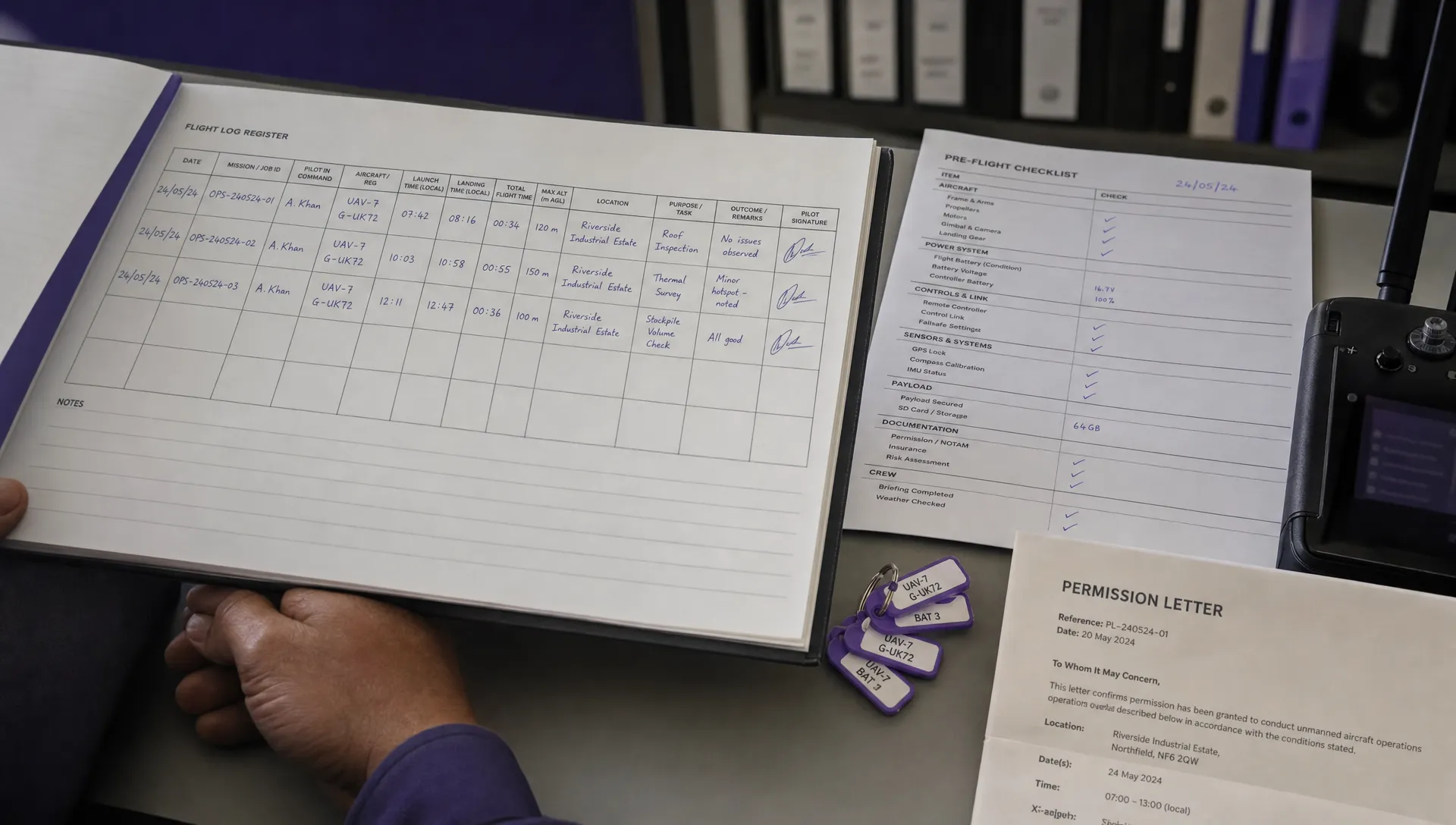 How to Build a Drone Pilot Flight Log That Is Audit Ready →
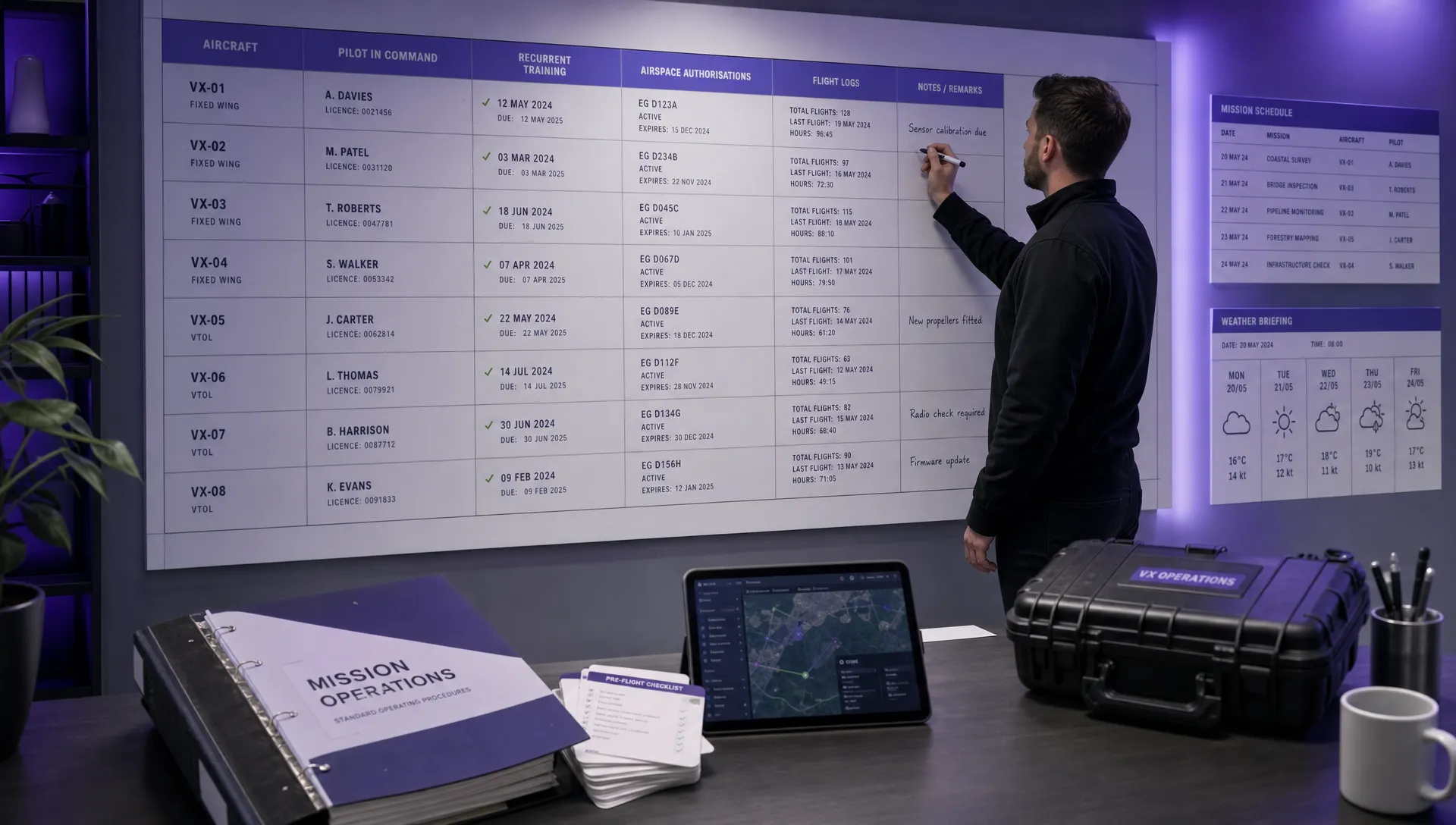 FAA Drone Licence Requirements for Commercial Pilots →
 FAA BVLOS Waivers Granted: What Successful Cases Show →
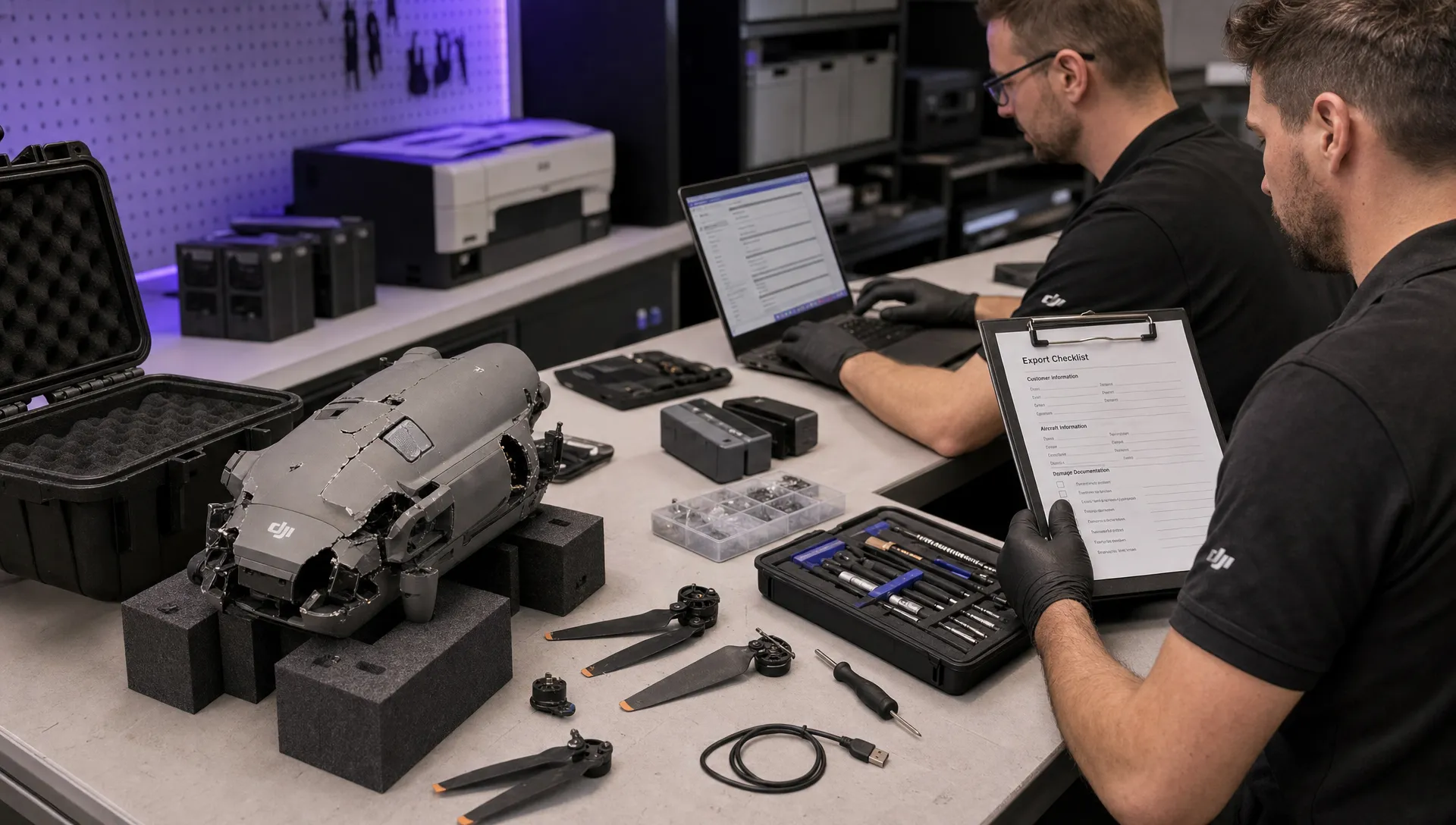 How to Export DJI Flight Logs for Incident Reviews →
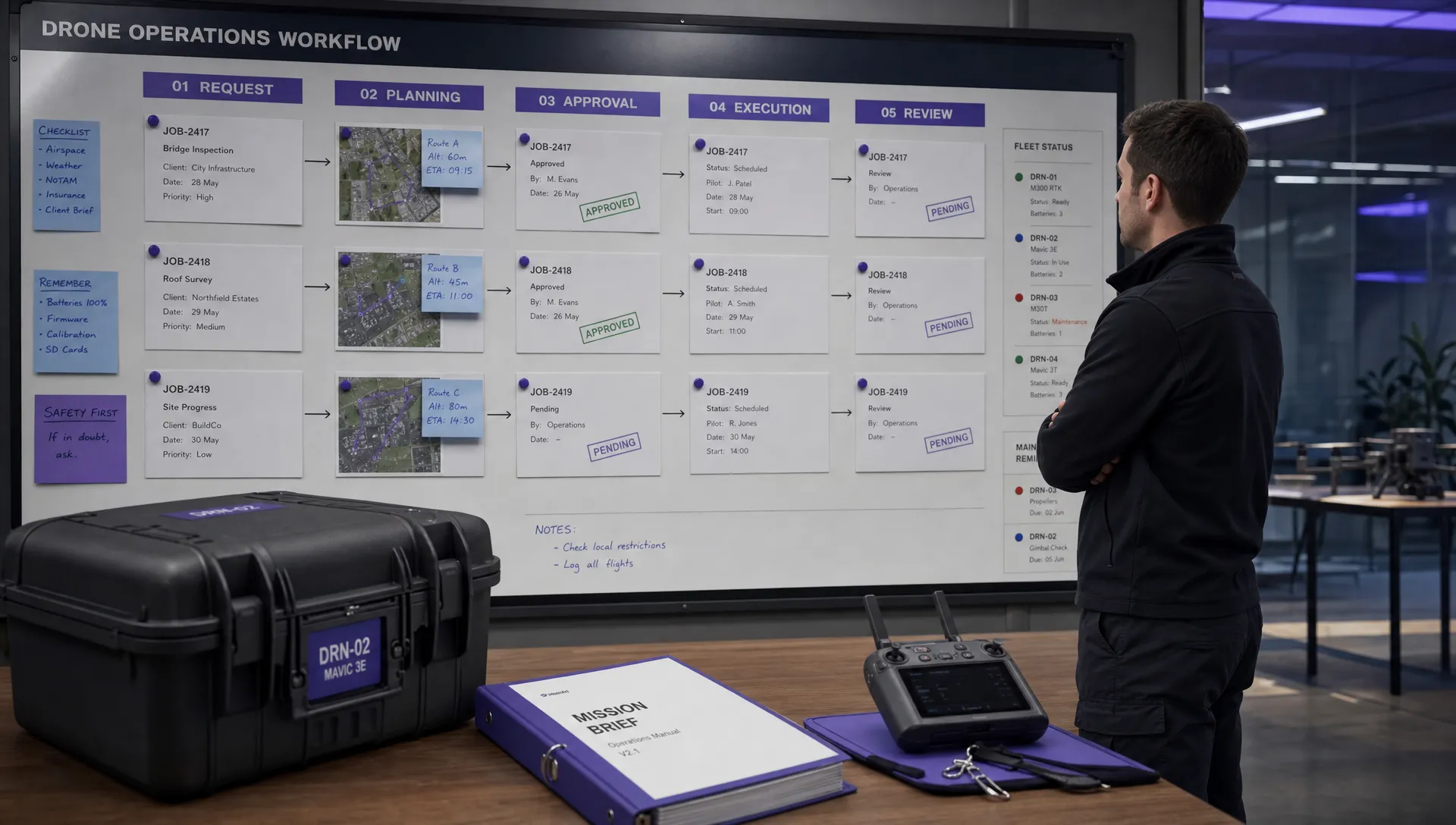 Drone Safety and Legal Duties for Business Operations →
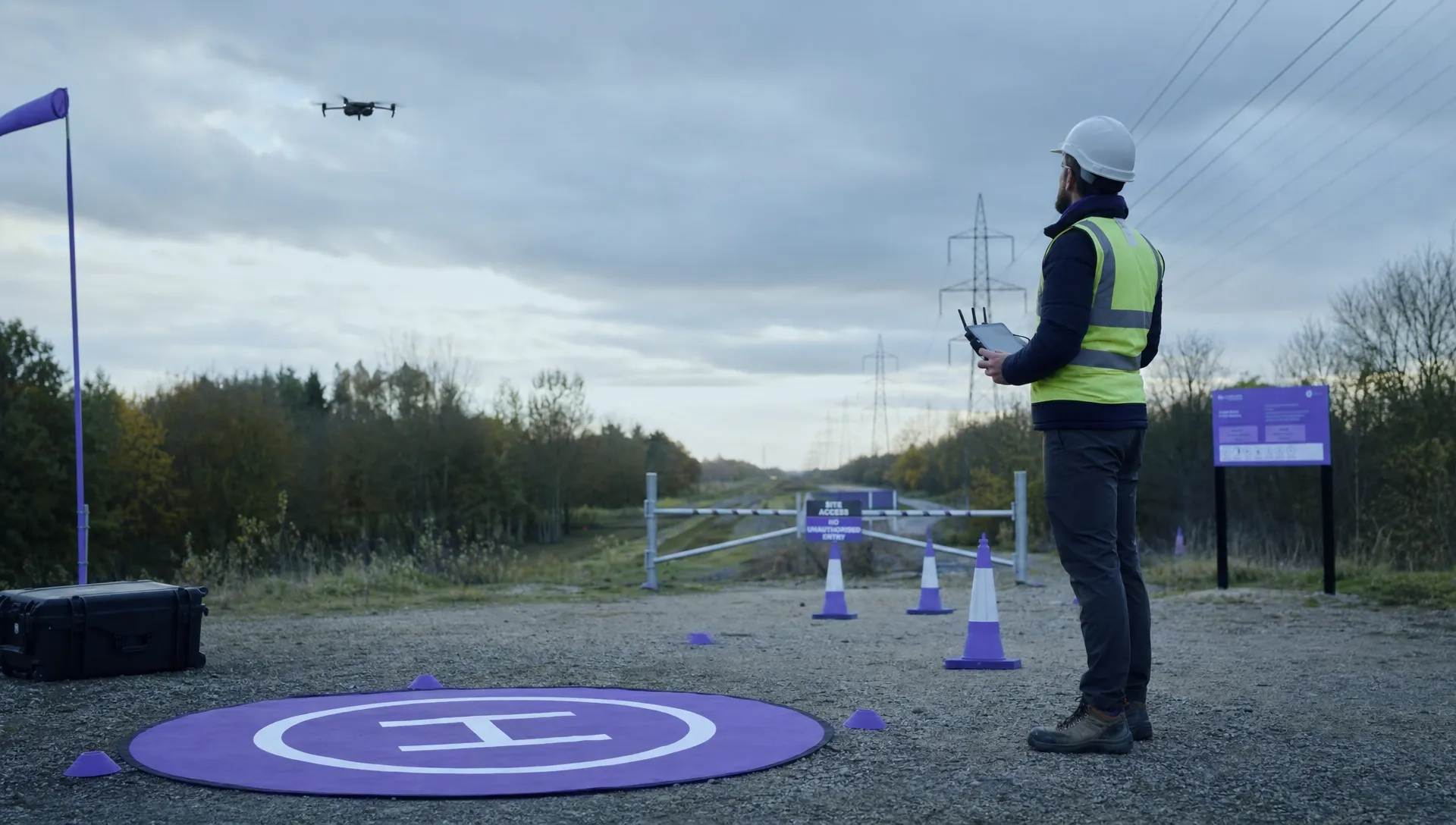 EASA Drone Regulations: Open, Specific and Certified Categories →
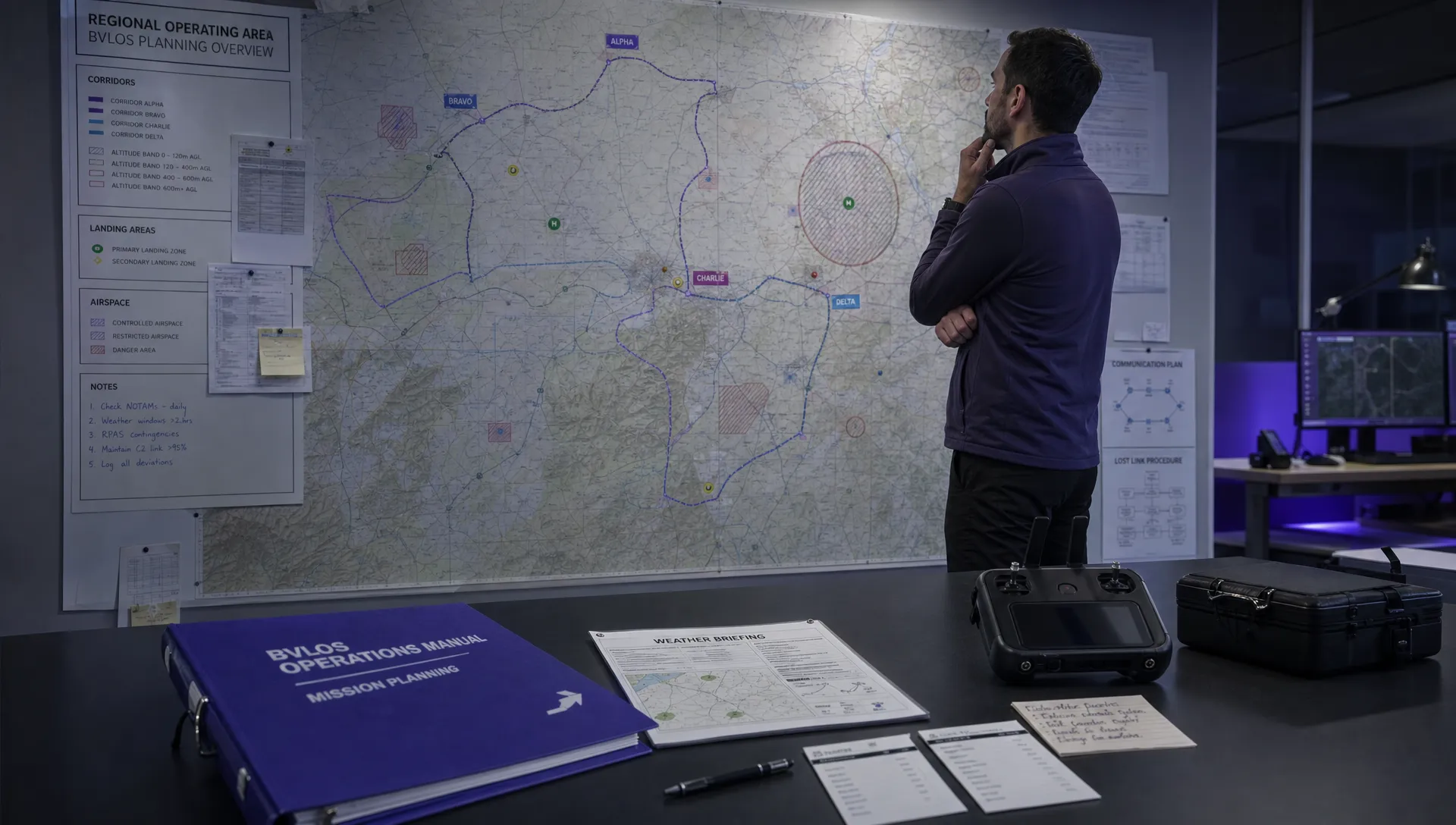 What the BVLOS ARC Report Means for UAS Operators →
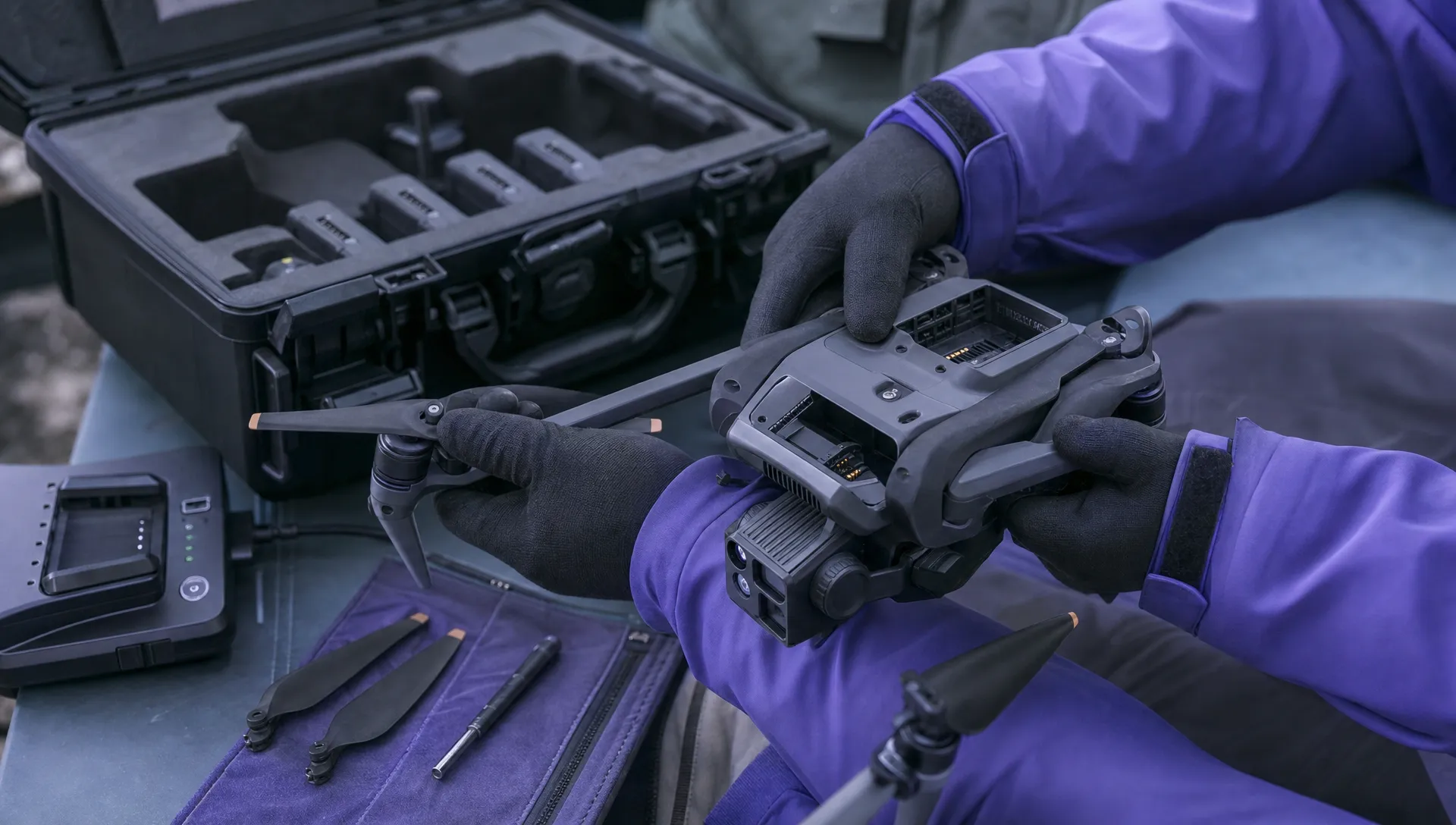 Free Drone Pre-Flight Checklist for Commercial Missions →
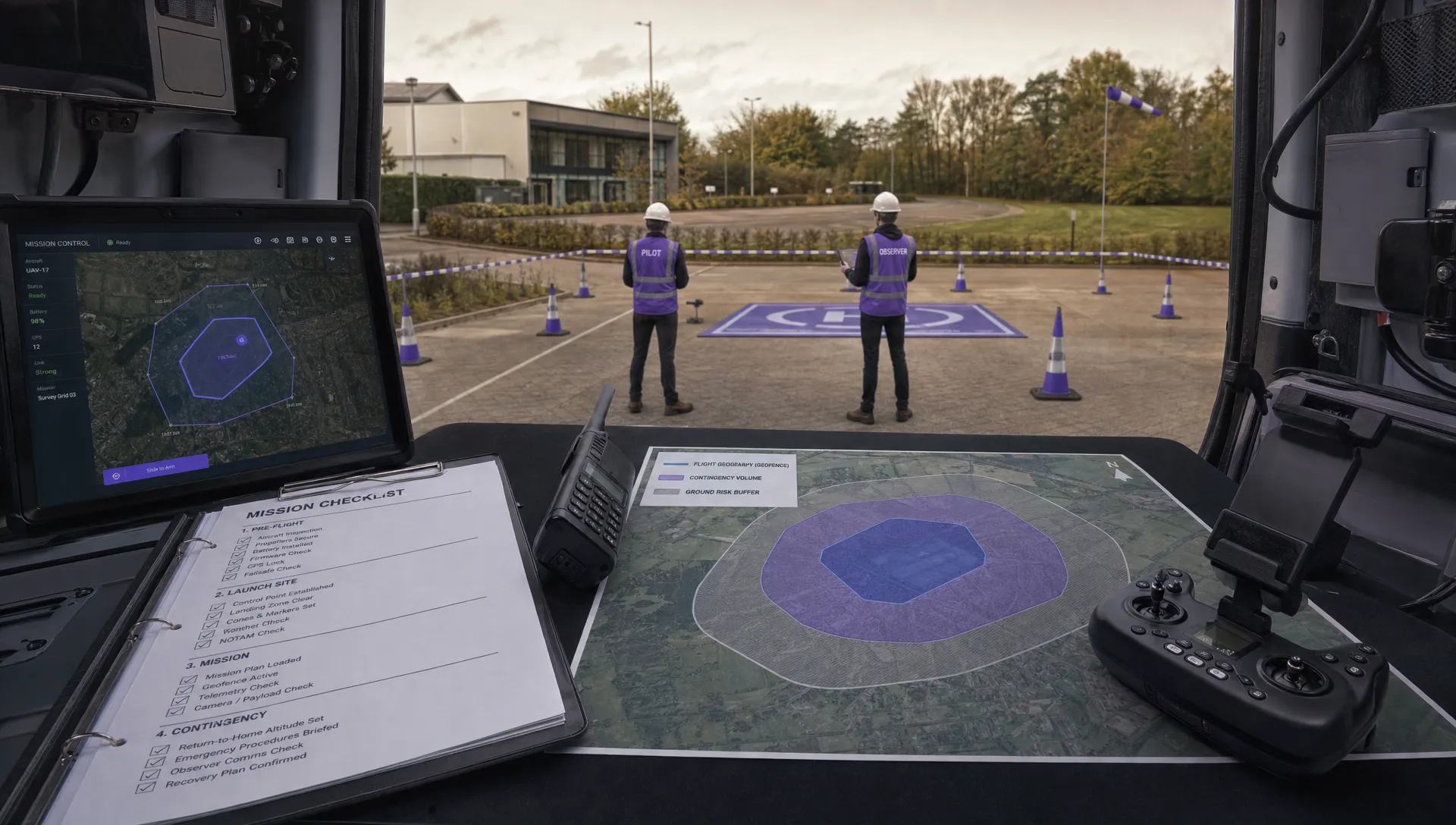 Contingency Volume and Flight Risk Buffer Explained →
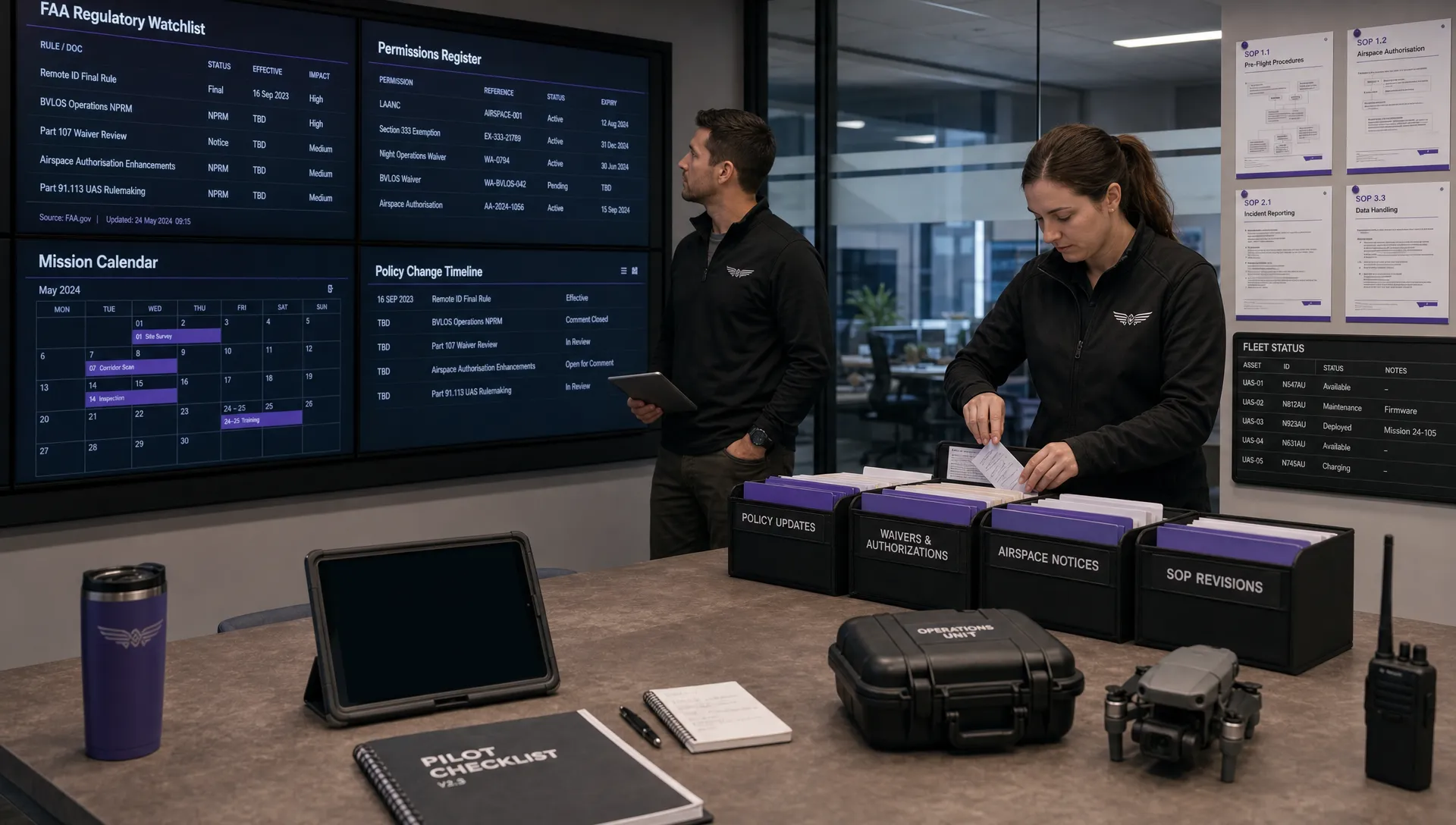 FAA Policy Changes That Commercial Drone Teams Should Track →