
Your Guide to Flight Plans on File for Modern Aviation
Picture a national rail network trying to operate without a single timetable. It would be pure chaos, right? A flight plan on file is the aviation world's answer to that timetable—a crucial document that tells everyone in the shared sky what a pilot plans to do. It's the bedrock of safe, predictable, and professional flying.
Why Flight Plans on File Are Essential for Safe Skies
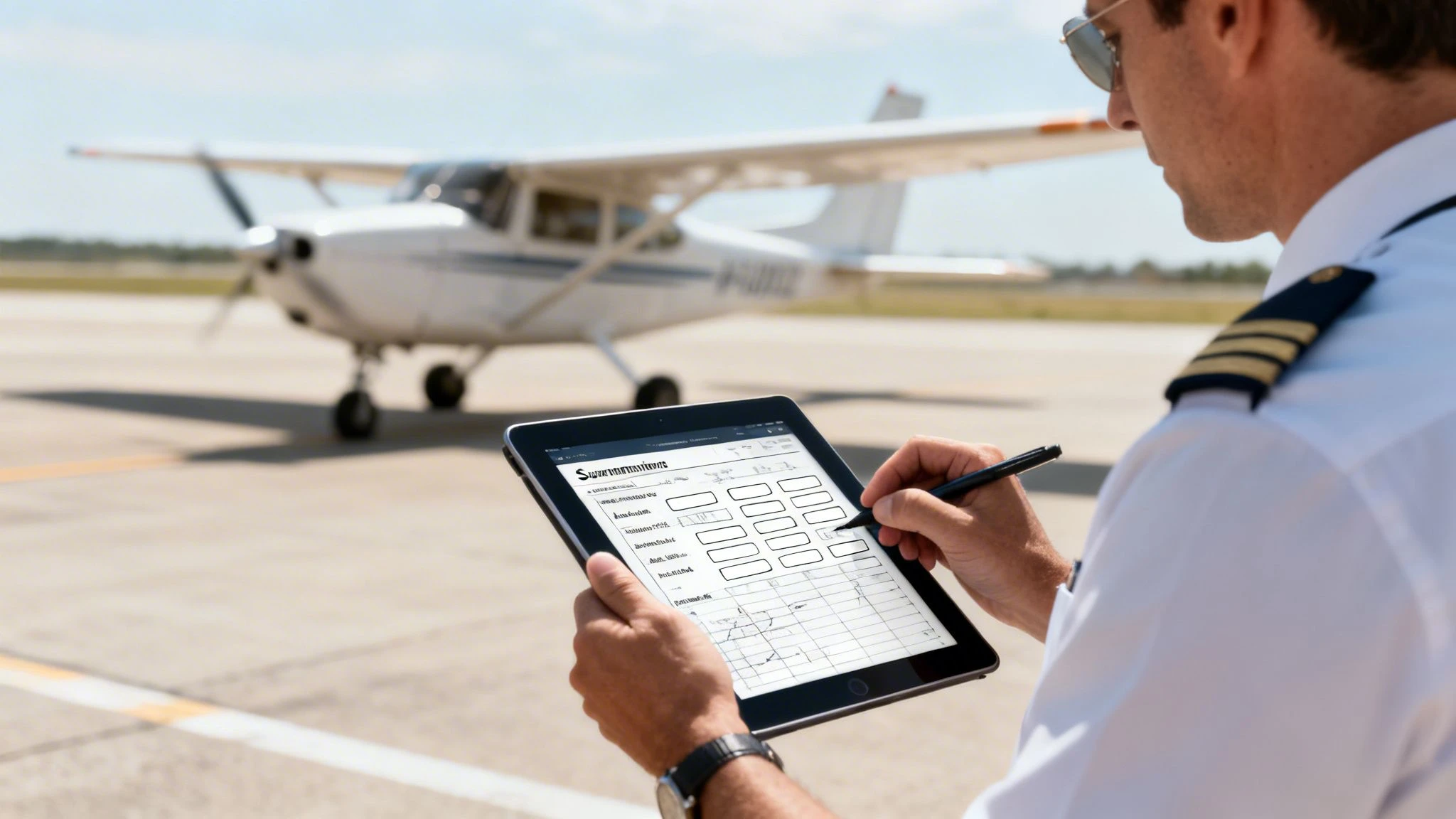
At its heart, a flight plan is a pilot's formal heads-up. It's not just another piece of paperwork; it's a communication tool that turns a potential free-for-all into a managed, orderly system. For a traditional aircraft, this document tells air traffic control (ATC) where you're heading, the route you'll take, and what they should do if they lose contact.
This simple act of filing a plan is the foundation of aviation safety. It gives ATC the information they need to keep aircraft safely apart. And if the worst happens, a flight plan on file is the first thing search and rescue teams look at, giving them a clear starting point.
The Professional Mark for Drone Operations
This same principle is just as critical for us in the drone world. Now, is it legally required for every single flight? Not always. But keeping a detailed system of flight plans on file is what separates the amateurs from the true professionals. It's a clear signal of your commitment to safety, compliance, and running a tight ship.
For drone pilots, making this a standard practice brings some serious benefits:
- Boosted Safety: It locks in a structured pre-flight routine. You're forced to think through airspace checks, risk assessments, and emergency plans before the props even start spinning.
- Simpler Compliance: When you use a tool like Dronedesk, getting airspace authorisations like LAANC isn't some separate, annoying chore. It becomes a smooth, integrated part of your planning workflow.
- A Solid History: This practice builds up a complete operational log. Think of it as a digital paper trail that's gold dust during audits, for client reports, or if you ever need to investigate an incident.
A flight plan on file is more than just a route on a map; it's a comprehensive statement of professionalism. It signals to clients, regulators, and the public that an operation is being conducted with the highest standards of safety and accountability.
Using a dedicated platform like Dronedesk to manage and store these plans is a game-changer for your operation's integrity. It guarantees that every flight adds to a robust history, sharpens your situational awareness, and cements your reputation for being reliable and professional in a tough market.
From Paper Trails to Digital Runways
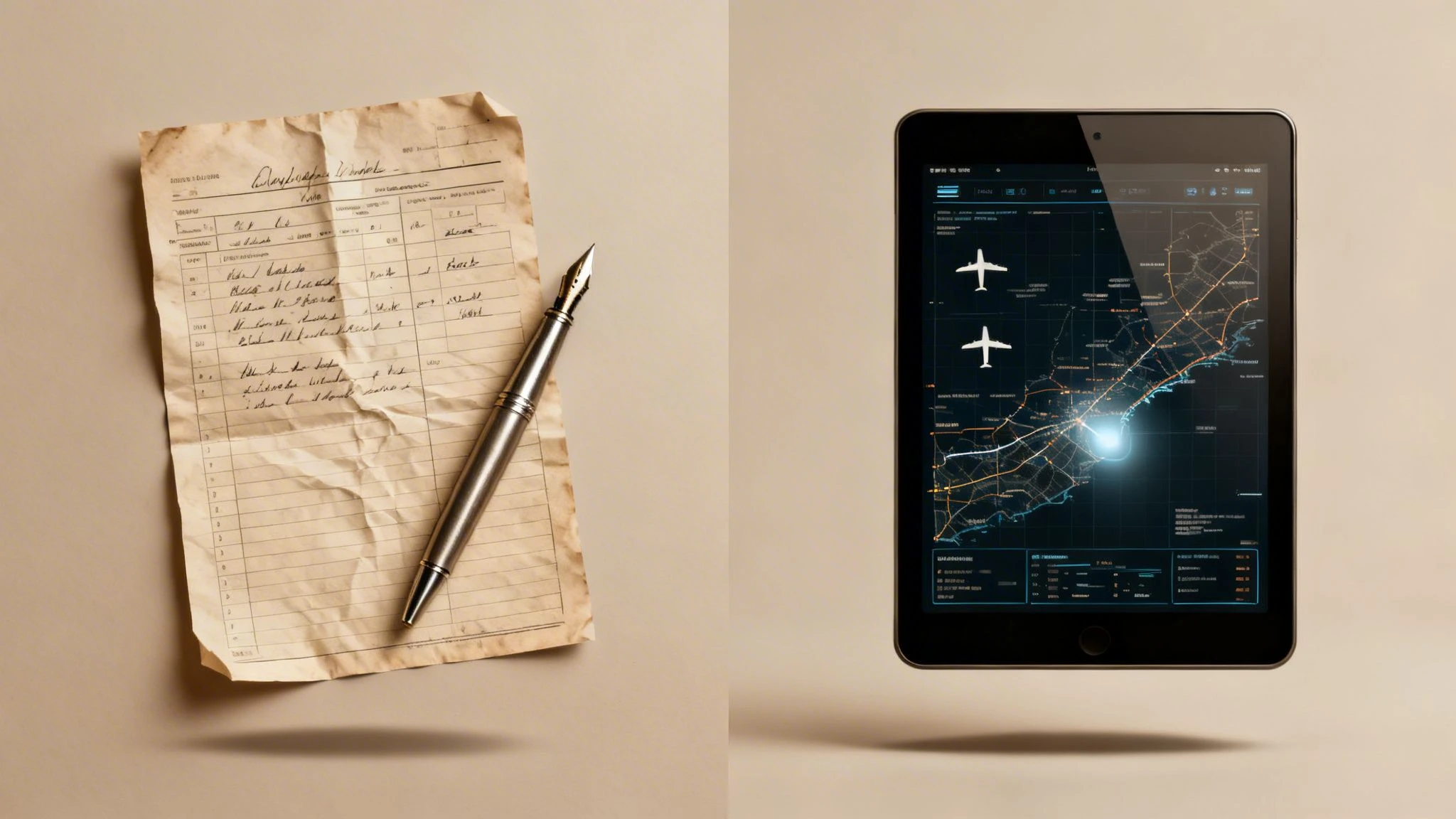
To get a real feel for how easy we have it with today's digital flight planning, it’s worth taking a look back. The early days of flying were a bit like the Wild West. Pilots relied on skill and a whole lot of courage, but there was almost zero coordination between aircraft. It was a high-stakes game with no real system to stop planes from running into each other.
That kind of free-for-all just wasn't sustainable. As more planes took to the air, the need for some kind of order became painfully clear. This wasn't about creating red tape for the sake of it; it was about survival. It was about building a predictable airspace where pilots could fly without constantly looking over their shoulder for another plane.
A New Era of Aviation Safety
The game changed for good with the landmark Air Commerce Act of 1926 in the United States. This wasn't just a friendly suggestion; it was a mandate. It forced aircraft over a certain weight to file formal flight plans with the government, giving birth to the very first generation of flight plans on file. This single act laid the groundwork for modern Air Traffic Management and was a huge leap forward for safety.
The results were almost immediate. Having these plans on record was a game-changer. FAA data shows that between 1926 and 1930, reported near-misses in controlled airspace plummeted by 45%. Why? Because filed plans let dispatchers see and track routes, turning a chaotic sky into a managed one. You can dig into how this history still shapes today's systems and see how individual flight reports are still central to the FAA's operations.
This move from guesswork to a documented plan was massive. For the first time, the skies had a "timetable."
Before flight plans, the sky was a vast, uncoordinated space. Afterward, it became a managed environment where every aircraft's journey was known, tracked, and protected.
The Digital Transformation of Flight Planning
Of course, the journey didn't end with paper logs. Those handwritten plans and dusty filing cabinets have morphed into the powerful digital systems that run global aviation today. The core idea is exactly the same, but the tools we use are worlds apart.
What was once a slow, manual process of scribbling on forms and handing them in is now handled by sophisticated software. Pilots can now create, file, and change their plans instantly from a tablet or a laptop.
This evolution brings us right to the world of modern drone operations, where platforms like Dronedesk carry on this legacy. Just like the Air Commerce Act brought order to manned aviation, solid digital records bring a new level of safety and professionalism to unmanned flights. For any serious operator, keeping meticulous flight plans on file is no longer just a good idea—it’s a non-negotiable standard.
Decoding Today's Airspace Regulations
Let's be honest, getting your head around the rules of the sky can feel like learning a new language. It’s a world full of acronyms and complicated requirements. But for anyone taking to the air—whether you're in a Cessna or flying a drone—understanding these rules isn't just about compliance. It's the shared language that keeps everyone safe up there.
For traditional manned aviation, the Federal Aviation Administration (FAA) has a pretty clear set of rules. If you’re flying under Visual Flight Rules (VFR) in good weather and outside certain controlled airspace, filing a flight plan isn’t always a must. But for flights under Instrument Flight Rules (IFR), having a flight plan on file is a strict legal requirement. It's how Air Traffic Control provides separation and keeps the skies orderly.
Understanding The Drone Pilot's Rulebook
For drone pilots, the rulebook looks a bit different, but it’s built on the exact same principles: safety and communication. The specific rules you need to follow depend heavily on whether you’re flying for fun or as a commercial operator under Part 107.
- Hobbyist Flyers: If you're flying recreationally, the formal filing requirements are minimal. However, you must always give way to manned aircraft and stick to established safety guidelines.
- Commercial Operators (Part 107): For the pros, the rules are much more defined. While you won't file a "flight plan" in the traditional sense for every job, you absolutely must get authorization for any flights in controlled airspace.
This is where a game-changing system called LAANC (Low Altitude Authorization and Notification Capability) comes in. Think of LAANC as a digital handshake between your drone and air traffic control. It’s a system that gives you near-instant, automated approval for flying in controlled airspace at or below 400 feet.
LAANC has transformed drone operations, replacing a weeks-long manual waiver process with a digital system that grants access in seconds. It’s the essential tool that makes professional drone work in populated areas both possible and safe.
Key Terms You Need To Know
Another vital piece of the puzzle is the NOTAM (Notice to Air Missions). A NOTAM is a real-time alert about potential hazards along a flight path—think a closed runway, a surprise crane, or a big public event. Checking NOTAMs is a non-negotiable part of the pre-flight risk assessment for both manned and unmanned pilots. For drone operators, it’s a critical step.
You can learn more about how to issue a NOTAM for your drone operations in our detailed guide.
At the end of the day, whether it’s a legal must-do or simply professional best practice, documenting your operational plans is fundamental. A hobbyist might just run through a mental checklist, but a commercial pilot needs to keep meticulous records. This paperwork proves you've done your due diligence, ensures you're compliant, and builds your reputation as a safe, responsible operator in an increasingly crowded sky.
Building Your Audit-Proof Flight Record System
Filing a flight plan is just the first step. Where the real professionalism kicks in is how you maintain that record afterward. Think of your flight plans on file as the financial books for your drone business—they prove you’ve done your due diligence and will be your best friend if something goes wrong.
For any serious operator, building a system that can stand up to scrutiny isn't just a good idea; it's essential. This is your first line of defense in an FAA audit or, worse, an incident investigation. A well-kept digital logbook is undeniable proof of your entire process, from pre-flight checks to post-flight review, ready to show clients, insurers, or regulators at a moment's notice.
The Anatomy of an Audit-Proof Record
So, what does a rock-solid flight record actually look like? It’s far more than just a KML file of your flight path. A truly audit-proof record tells the complete story of a mission, from the first client call to the final sign-off.
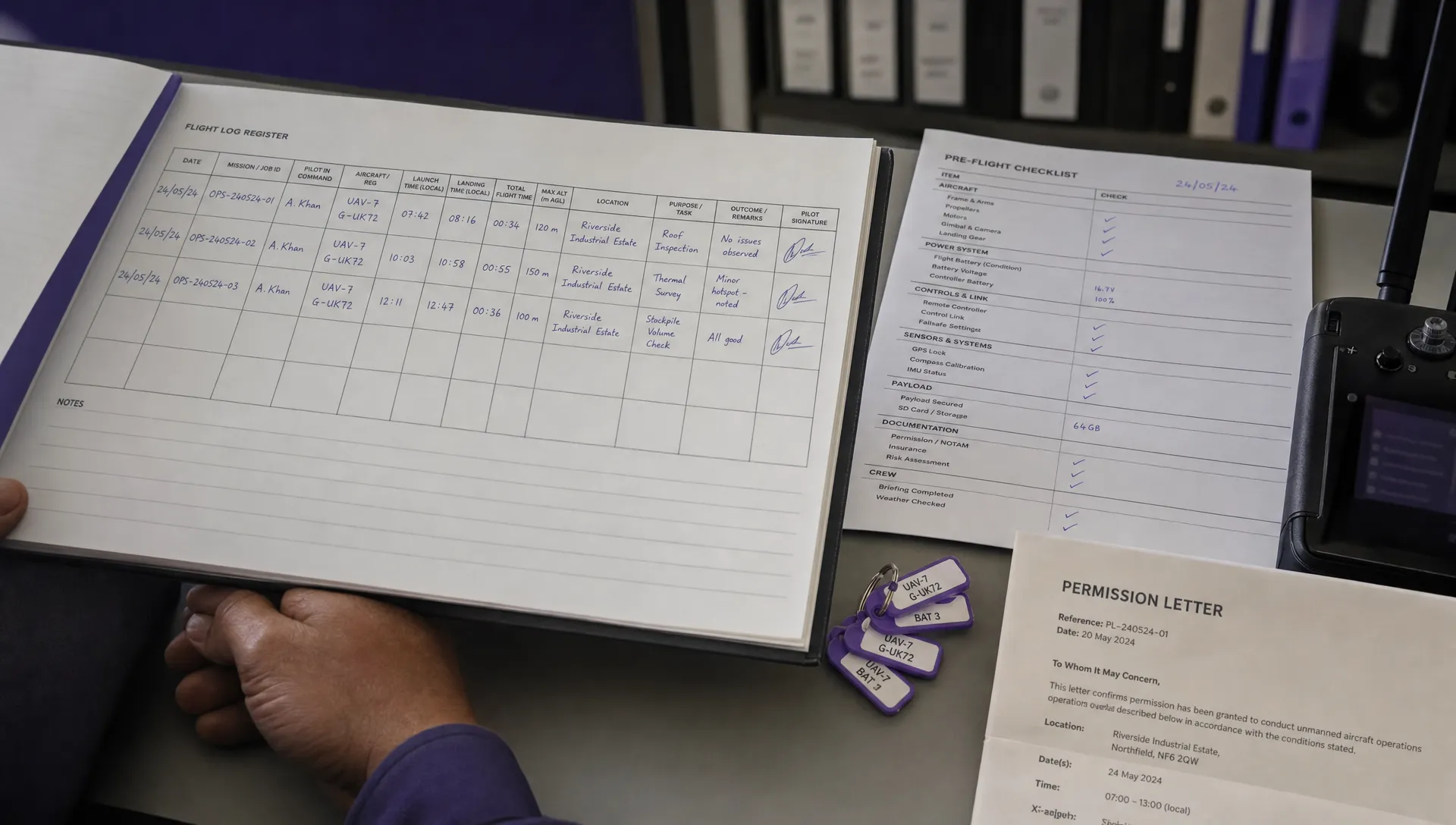
For every single flight, your records should include:
- Mission Details: Who was the client, what was the job number, and what were the exact goals of the operation?
- Pilot and Crew Information: The names and specific roles of every person involved.
- Flight Logistics: Takeoff and landing spots, dates, times, and the total flight duration.
- Aircraft and Equipment: The exact drone, batteries, and payload you used for that specific job.
- Safety Documentation: Your completed risk assessments and the proof of any airspace authorizations, like your LAANC approval confirmation.
This isn't just about ticking boxes. This level of detail paints a clear picture of your professionalism and commitment to flying safely.
An audit-proof system isn't about hoarding data. It's about creating a clear, verifiable story of every decision you make as a pilot. It turns compliance from a chore into a real business asset.
Record Retention and Long-Term Value
One of the most common questions I hear is, "How long do I need to keep all this stuff?" While regulations can differ, a solid rule of thumb is to hold onto all operational data for at least 12-24 months.
Honestly, though? I'd recommend keeping them indefinitely in a digital format. This historical data is gold. You can track your performance over time, predict when gear might need maintenance, and build a powerful portfolio to show off your experience.
If you want to dig deeper into this, our guide on using an online flight logbook has more tips for getting the most out of your records. At the end of the day, a robust system for managing your flight plans on file is the backbone of any successful and resilient drone business.
Alright, let's move from the theory to the practical side of things. All this talk about 'flight plans on file' is great, but you need a solid system to actually manage it all without pulling your hair out. This is where a platform like Dronedesk comes in, acting as a central hub for all the admin chores that come with running a drone operation.
The idea is to turn a pile of separate tasks into one smooth process, making sure every flight you do is compliant from the get-go. It's about transforming scattered data into a clean, audit-proof record that follows a simple flow: plan, record, and then analyze.
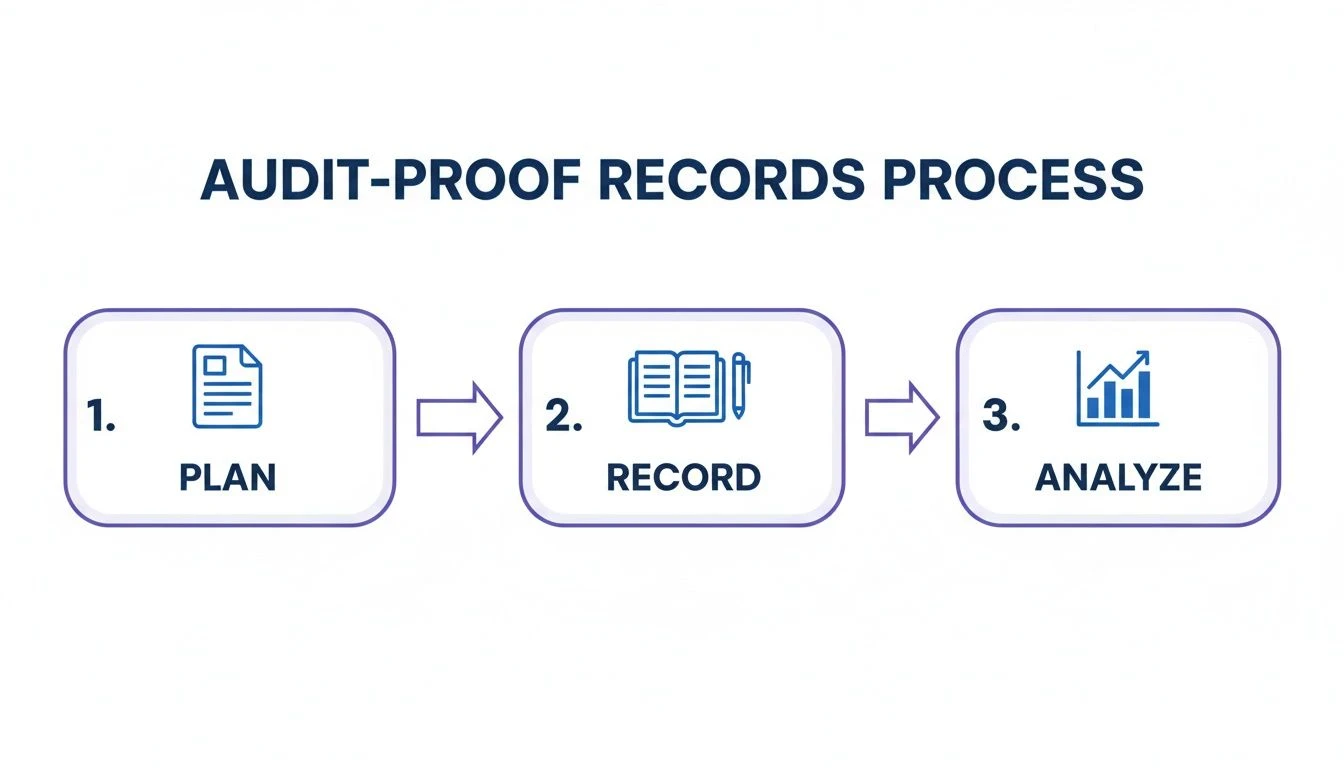
When you get this workflow right, every single detail from every flight is captured properly. This creates a powerful history you can look back on for compliance checks or just to get smarter about your own business.
Creating and Filing Plans Without the Headache
Dronedesk really simplifies the whole flight planning part of the job. Instead of jumping between different apps for weather forecasts, airspace checks, and risk assessments, everything you need is right there on one dashboard. You can create a new job, pick a pilot and drone, and see all the relevant airspace info instantly.
This is where the magic really happens. For us drone operators, it’s a bit like what digital flight logging did for manned aviation. Just as having everything in one place can slash admin time by 30-40% for fleet managers, Dronedesk’s setup helps you avoid the 15% of violations that come from messy or unfiled plans. It’s all about having one place for everything.
With a unified dashboard, you stop wasting time switching between different tools and, more importantly, reduce the risk of something critical getting missed.
Airspace Intelligence and Compliance on Autopilot
One of the best things about Dronedesk is the built-in airspace intelligence. The system automatically pulls in all the data you need on controlled airspace, TFRs, and NOTAMs. It gives you a crystal-clear picture of what you’re flying into.
With Dronedesk, applying for LAANC isn't a separate, painful task anymore. You can send your request right from the flight plan, get a near-instant answer, and the authorization is automatically saved with your job records.
This automated process means every single flight in controlled airspace is properly authorized and, crucially, documented. You can read more about how this all works in our post on Dronedesk's airspace intelligence.
Syncing Your Post-Flight Data Effortlessly
Your job isn't done when the drone lands, and that’s where the final piece of the puzzle comes in. Dronedesk closes the loop with its automatic DJI sync feature. It pulls your post-mission data—flight logs, battery usage, flight times—and drops it straight into the job record.
No more manual data entry. This ensures your flight plans on file are always complete and accurate.
If you really want to nail your flight planning and build an efficient record-keeping system, look into strong automation features. By bringing all these steps together, Dronedesk boils a bunch of tedious tasks down to a simple, three-part process:
- Plan: Create the job, run through your risk assessments, and file for LAANC if needed.
- Fly: Carry out the mission knowing you have full situational awareness.
- Log: Automatically sync all the post-flight data to complete your records.
This workflow doesn't just keep you compliant. It also builds up a valuable database of your operational history, turning what used to be boring admin work into a real strategic asset for your business.
Unlock Business Insights from Your Filed Flight Plans
Your stack of filed flight plans isn't just a box-ticking exercise for compliance. It’s actually a goldmine of business intelligence, just sitting there waiting to be tapped. Think about how major airlines use their flight data to fine-tune routes and nail their on-time performance; you can apply the same logic to your own drone business using your flight records.
Keeping your flight plans on file in an organised way helps you see the bigger picture of your operations. When you look back at this historical data, you start to spot patterns that are impossible to see when you're just focused on the day-to-day grind. This is how a routine admin task becomes a powerful way to make smarter, data-driven decisions and get a real leg up on the competition.
Turning Data into Decisions
Looking at this data helps you ask—and answer—the big questions about your business. It lets you move past gut feelings and start using hard evidence to guide your strategy.
So, what kind of insights can you actually pull from this?
- Equipment Reliability: Which specific drones or batteries are getting the most airtime versus those that are always on the maintenance bench?
- Pilot Efficiency: Are some pilots getting jobs done faster or with fewer snags? This can be a great way to spot who your top performers are and identify training opportunities for the whole team.
- Job Profitability: By comparing your planned flight times against the actuals, you can quickly see which types of jobs are making you the most money and which are eating up your time. This helps you put together much sharper quotes for future work.
By treating your flight records as a source of business intelligence, you can boost operational efficiency by up to 40%. It’s all about working smarter, not just harder.
With more and more of us using digital tools, the sheer volume of flight plans on file has exploded, feeding powerful analytics that help everyone from solo operators to large enterprise teams. Just look at the manned aviation world, where platforms like FltPlan.com have brought together millions of plans, simplifying everything from managing aircraft profiles to calculating weight and balance.
For drone pros like surveyors and inspectors, Dronedesk brings that same power to our industry. It automatically syncs and stores your plans, which, as our users will tell you, can slash compliance risks by as much as 35%. You can dig deeper into how historical flight data powers modern analytics to see the potential.
Your Questions About Flight Plans Answered
Whether you're new to the cockpit or have hundreds of hours logged, flight plans can still throw up a few questions. The rules and best practices can feel a bit tangled, but they all exist for one reason: keeping everyone safe in the sky.
Let's unpack some of the most common queries I hear from pilots.
A big one is whether you always have to file a plan. For manned aircraft, it’s a non-negotiable for flights under Instrument Flight Rules (IFR), but often optional if you're flying under Visual Flight Rules (VFR). For us in the drone world, getting LAANC authorization for flights in controlled airspace is our version of a legal must-do. This makes the "filing" process a core part of any compliant commercial operation.
Key Differences and Digital Benefits
Another point of confusion is what a "flight plan" actually is in different contexts. A VFR plan for a traditional aircraft is mostly a safety net for search and rescue. An IFR plan, on the other hand, is actively used by Air Traffic Control to keep planes separated.
For a drone operation, the "plan" is so much more. It's the entire job file—risk assessments, equipment checklists, airspace authorisations, and client details all rolled into one. It’s a complete record of the mission from start to finish.
The real power of keeping digital flight plans on file is that it creates a single, undeniable source of truth. It's your proof of due diligence, makes any potential audit a breeze, and gives you a clear, time-stamped record of your professionalism.
This is where modern platforms like Dronedesk really shine. They don't just log a simple flight path; they build a complete, searchable archive for every single job. This ensures your records aren't just compliant but are also perfectly organised and ready for inspection at a moment's notice. For a great step-by-step walkthrough of the traditional process, this guide on how to file a flight plan offers some essential insights for pilots.
At the end of the day, a detailed flight plan—whether mandated by law or adopted as a professional standard—is the mark of a true pro. It shows a commitment to safety that protects you, your business, and everyone else sharing the airspace.
Stop juggling disjointed tasks and start running a smooth, compliant, and profitable drone business. Dronedesk is the all-in-one platform you need to manage everything from clients and flight plans to audit-proof records, all in one place. Start your free trial of Dronedesk today and feel the difference.
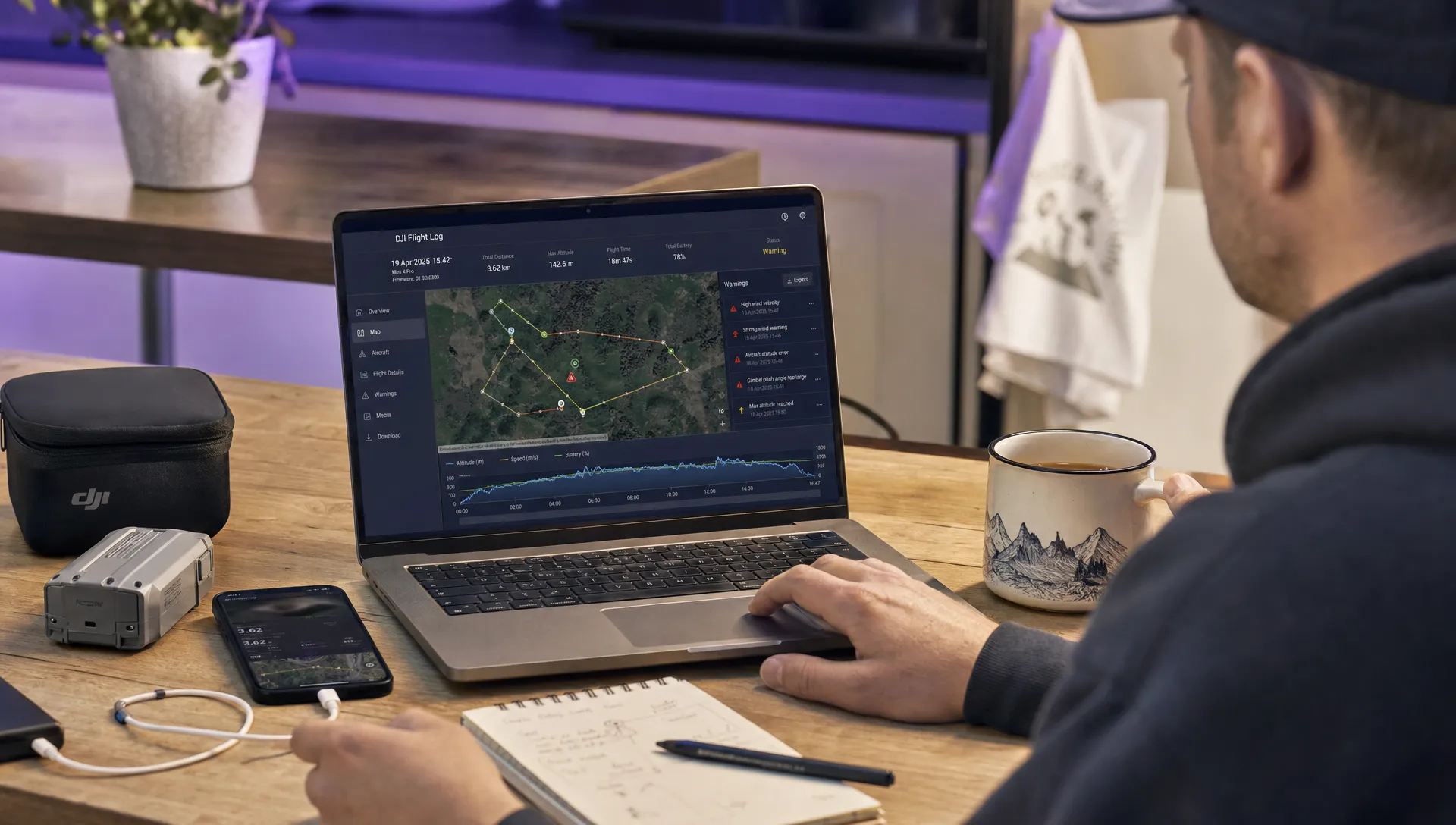 How to Review a DJI Flight Log After an Unexpected Event →
 Drone Laws Around the World: A Pre-Flight Research Framework →
 How to Compare Drone Survey Services for Complex Sites →
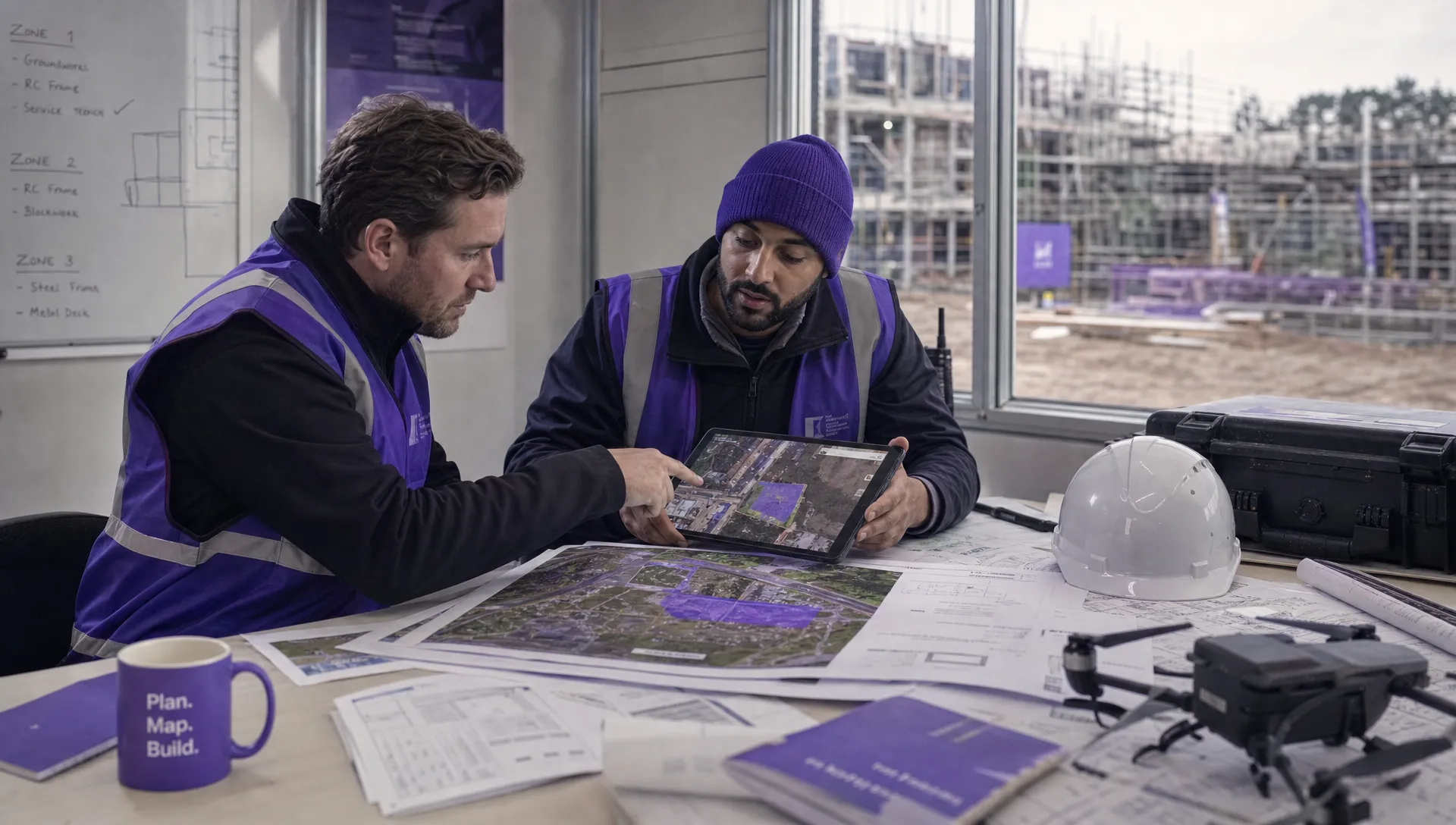 How to Start a Drone Mapping Business With a Clear Workflow →
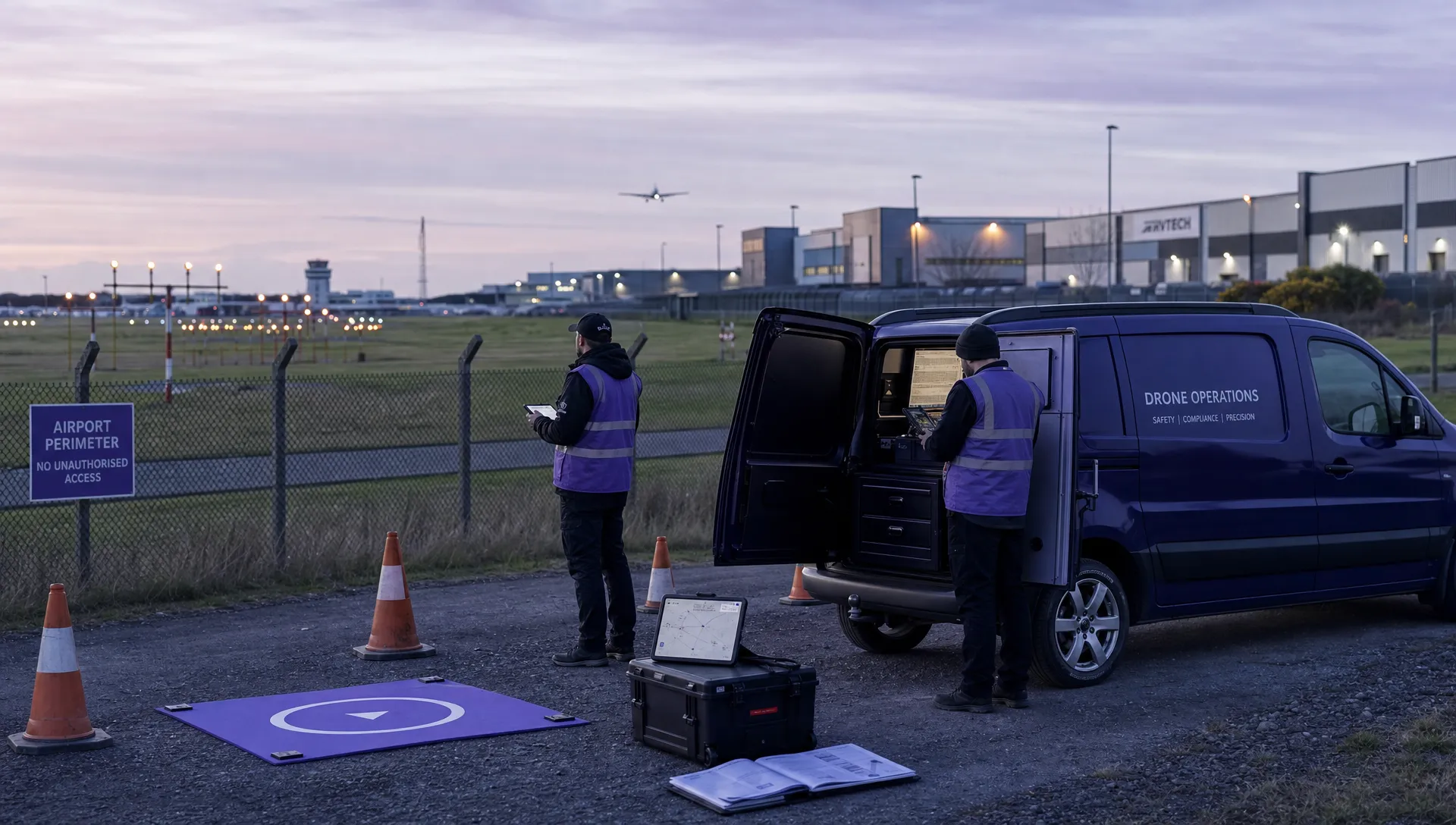 Class C Airspace Drone Rules for Commercial Flights →
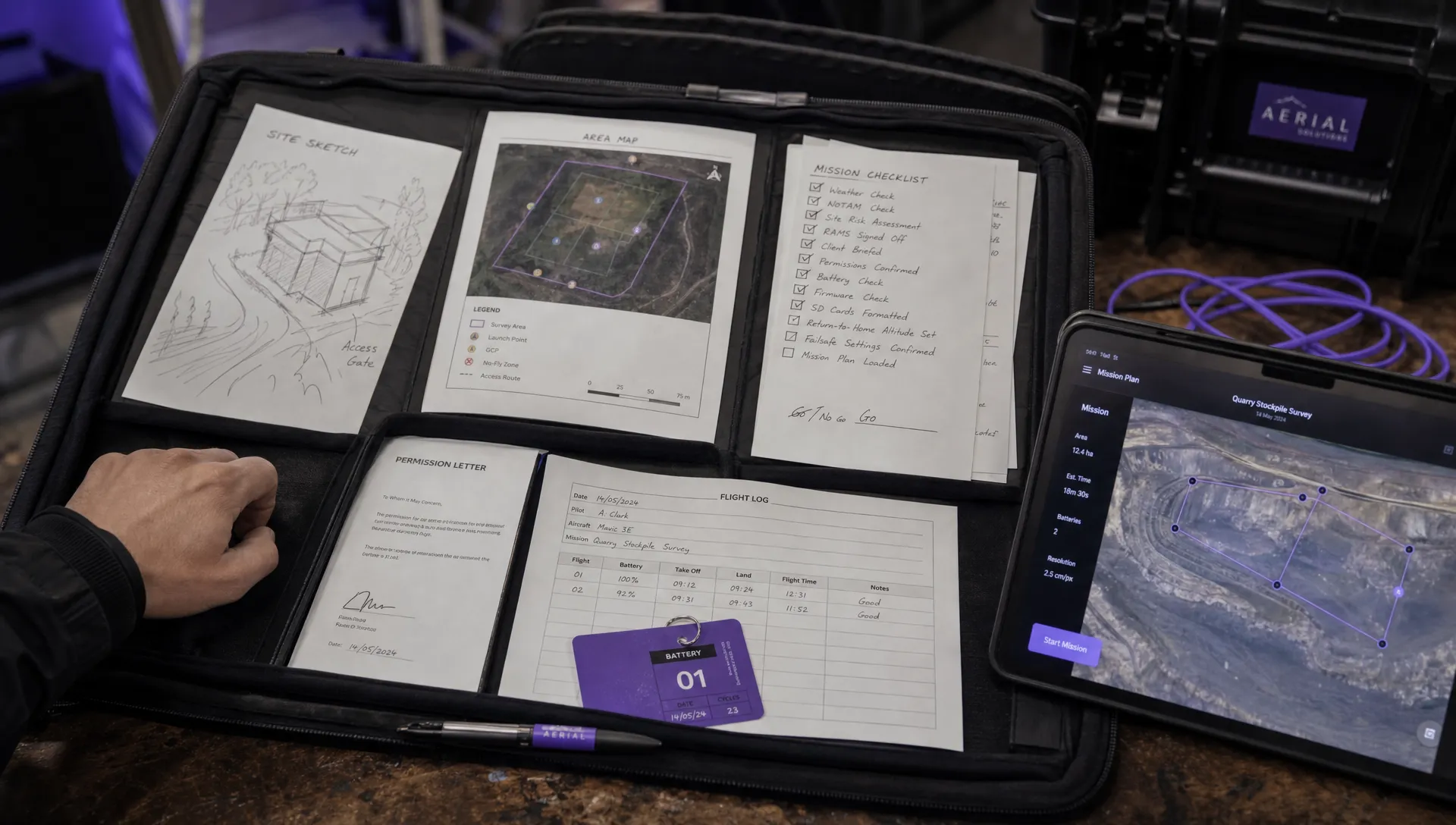 How to Create a Drone Job Pack for Every Mission →
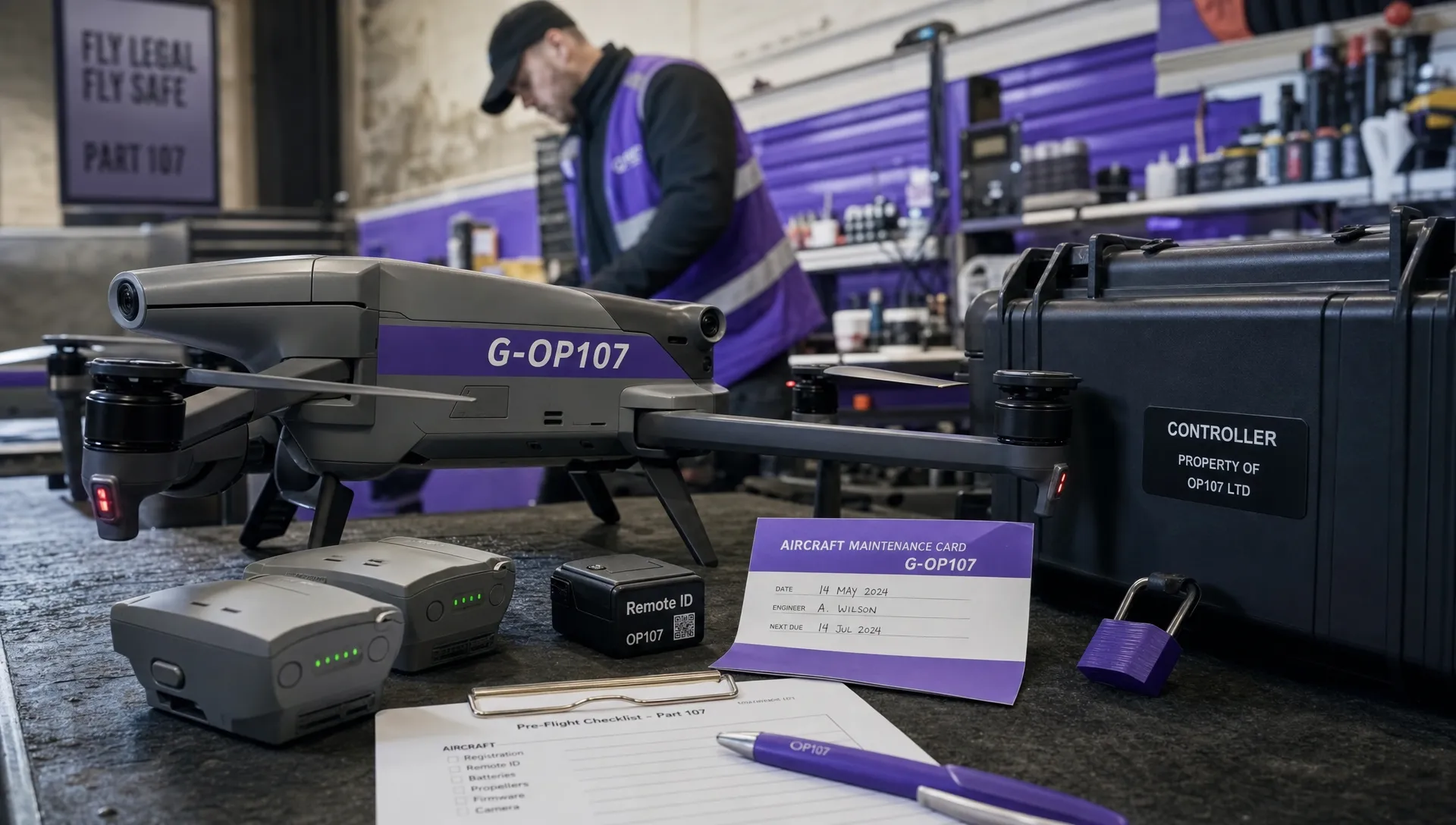 FAA Small UAS Rule: Key Requirements for Operators →
 How to Build a Drone Pilot Flight Log That Is Audit Ready →
 FAA Drone Licence Requirements for Commercial Pilots →
 FAA BVLOS Waivers Granted: What Successful Cases Show →