
Master Quick Guide - drone rules by state for local & FAA compliance
If you want to fly a drone legally in the United States, you need to look beyond just the FAA's rulebook. The reality is a complicated patchwork of drone rules by state, county, and sometimes even city. What this means for you as a pilot is that a flight that's perfectly fine in one state could land you in hot water with hefty fines in another.
Understanding Federal vs State Drone Authority
For any professional pilot, the first step to staying compliant is getting a handle on the legal hierarchy. The Federal Aviation Administration (FAA) sets the baseline for all drone operations across the country. This is mainly done through its Part 107 rules, which cover the big stuff like pilot certification, airspace access, and operational limits—like the well-known ceiling of 400 feet.
If you need a refresher on the essential gear, we've got a comprehensive guide covering https://blog.dronedesk.io/remote-id-drone/ that's worth a read.
But here’s the crucial part: the FAA’s authority isn’t the final word. While states can't just invent their own airspace rules, they absolutely have the power to regulate how drones are used within their borders in other ways. This creates a dual layer of regulation that every single pilot has to navigate.
How States Add Their Own Rules
States have gotten pretty savvy about legislating in the gray areas outside the FAA's direct control over airspace safety. This lets them tackle local concerns without stepping on federal toes. You'll find that state-level regulations most often pop up in a few key areas:
- Privacy and Surveillance: A huge number of states have passed laws making it illegal to use a drone to spy on or harass people on private property.
- Critical Infrastructure: It's common for states to restrict drone flights near sensitive sites like prisons, power plants, and government buildings.
- State-Owned Land: Thinking of flying in a state park or wildlife refuge? You'll likely run into specific state-level rules requiring permits or even outright prohibitions.
- Law Enforcement Use: States are also busy defining exactly how, when, and why police and other government agencies can use drones in their work.
This web of federal and state rules isn't unique to the drone world. You see similar headaches in other industries, like trying to figure out the maze of fireworks shipping restrictions by state. In fact, regulatory hurdles have consistently been a top challenge for the drone industry, with things like the FAA's complex waiver process driving up costs. There's talk of new proposals to bring in more flexibility and better align U.S. policy with what's happening internationally, but for now, we've got the system we've got.
A High-Level Look at State Drone Laws
Before you get bogged down in the fine print of specific statutes, it's incredibly helpful to get a bird's-eye view of the legal landscape. Think of this as your first compliance checkpoint—a way to quickly gauge which states are more relaxed and which ones will require a lot more homework and planning on your part.
I find it useful to group states into three general categories based on how they approach drone regulation. It's not an official system, but it's a practical way for operators to think about things.
- Permissive States: These are the easy ones. Their laws pretty much just echo the federal FAA guidelines, with very few, if any, extra state-level rules.
- Moderate States: Here, you'll start to see specific laws pop up. They often focus on hot-button issues like flying over critical infrastructure or protecting personal privacy.
- Strict States: These states have a much heavier hand. They often impose significant restrictions and may even require you to get a state-specific permit or registration on top of your FAA credentials.
It's all about understanding how the layers of authority work. The FAA owns the sky, but states and local governments have a say in what happens on the ground.
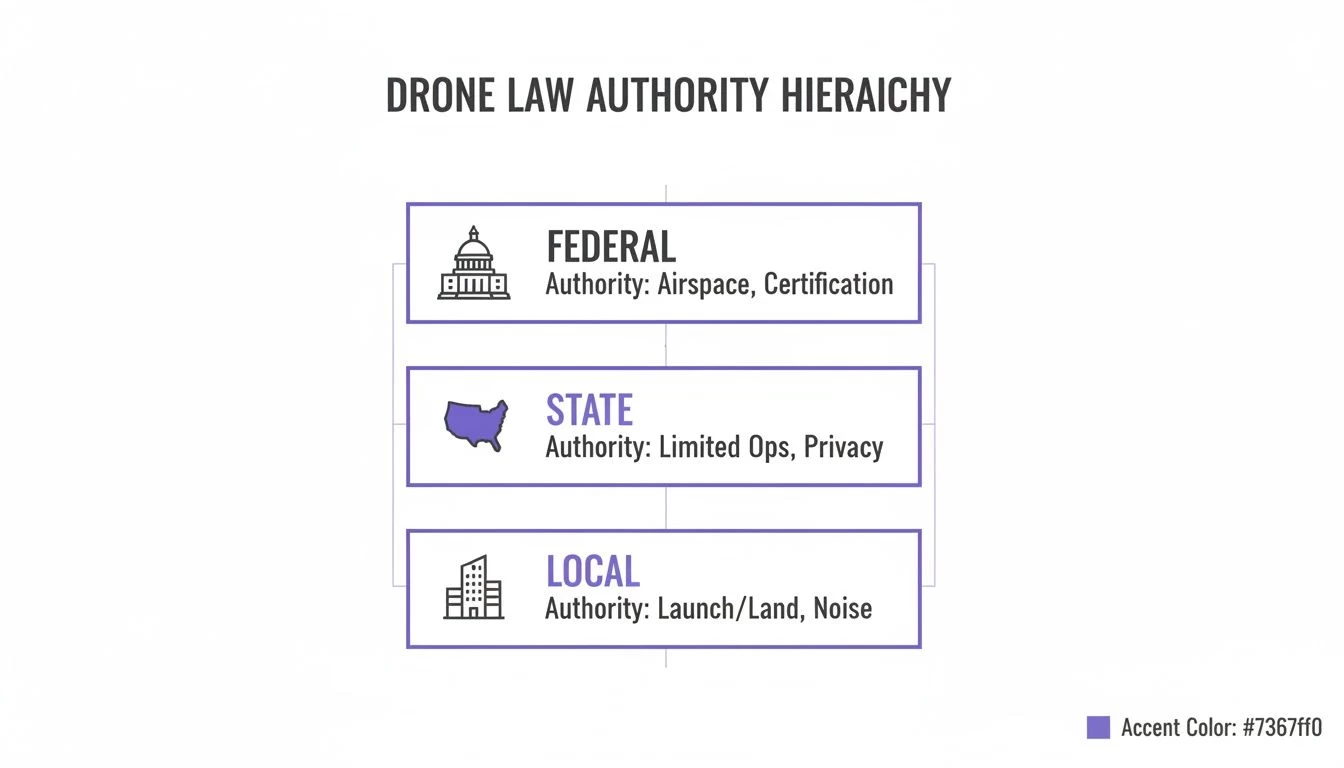
This chart really drives home the point: you've got to satisfy every level of government. The feds control the airspace, but your state can dictate rules about privacy, and your city can have ordinances about taking off from a local park. It's a true hierarchy of rules.
How to Use These Regulatory Tiers in Your Planning
Knowing a state's tier immediately tells you how much work you have ahead. For example, if you're planning a flight in a permissive state, your pre-flight check might just involve a quick search for local park rules. Simple enough.
But if you're heading to a strict state like North Carolina, you've got more hoops to jump through. You'll need to secure a separate state-issued permit in addition to your Part 107 license. It’s a completely different level of preparation.
A crucial reminder for every pilot: your FAA license doesn't give you a free pass to ignore other laws. It's a federal felony to willfully “damage, destroy, disable, or wreck any aircraft,” and that includes drones. If you see a suspicious drone, don't take matters into your own hands. The right move is always to report it to local law enforcement.
This quick-reference approach is built for working pilots who need to size up a state's legal climate in seconds. Use the table below for a fast lookup, then dive into our detailed state-by-state breakdowns to get the specific statutes you need for safe, compliant flight planning.
State Drone Regulation Quick Lookup Table
This table gives you a snapshot of each state's regulatory environment. It's a great starting point to quickly identify potential red flags and areas that will require a deeper dive into the local laws.
| State | Regulatory Tier (Permissive/Moderate/Strict) | Key Restrictions (e.g., State Parks, Critical Infrastructure) | Specific Privacy Laws (Yes/No) |
|---|---|---|---|
| Alabama | Moderate | Critical Infrastructure | Yes |
| Alaska | Permissive | Sex Offender Restrictions | No |
| Arizona | Moderate | Critical Infrastructure, State Parks, Hunting/Fishing | No |
| Arkansas | Moderate | Critical Infrastructure, Voyeurism | Yes |
| California | Moderate | Emergency Scenes, State Parks, Voyeurism | Yes |
| Colorado | Permissive | State Parks, Hunting/Fishing | No |
| Connecticut | Permissive | Limited restrictions | No |
| Delaware | Moderate | State Parks, Correctional Facilities | No |
| Florida | Moderate | Critical Infrastructure, Voyeurism, State Parks | Yes |
| Georgia | Permissive | Local government restrictions preempted | No |
| Hawaii | Moderate | State Parks, Harbors | No |
| Idaho | Moderate | Critical Infrastructure, Hunting/Fishing, Voyeurism | Yes |
| Illinois | Moderate | Law Enforcement Use, Hunting/Fishing | Yes |
| Indiana | Moderate | Sex Offender Restrictions, Voyeurism, State Property | Yes |
| Iowa | Moderate | Voyeurism, Traffic Enforcement | Yes |
| Kansas | Moderate | Critical Infrastructure, Voyeurism | No |
| Kentucky | Moderate | Critical Infrastructure | No |
| Louisiana | Moderate | Critical Infrastructure, Correctional Facilities, Sex Offender Restrictions | No |
| Maine | Moderate | Search and Rescue Use | No |
| Maryland | Moderate | State Parks, Event Venues | No |
| Massachusetts | Permissive | Limited restrictions | No |
| Michigan | Moderate | Correctional Facilities, Sex Offender Restrictions | Yes |
| Minnesota | Moderate | Law Enforcement Use, Voyeurism | No |
| Mississippi | Moderate | Critical Infrastructure, Voyeurism | Yes |
| Missouri | Permissive | Limited restrictions | No |
| Montana | Moderate | Hunting/Fishing, Wildfires | No |
| Nebraska | Permissive | Limited restrictions | No |
| Nevada | Strict | State Parks, Autonomous Prohibitions, Voyeurism | No |
| New Hampshire | Moderate | Voyeurism, State Parks | Yes |
| New Jersey | Moderate | Correctional Facilities, State Parks | No |
| New Mexico | Permissive | Limited restrictions | No |
| New York | Permissive | Local ordinances may apply | No |
| North Carolina | Strict | State-level Permit Required, Voyeurism | No |
| North Dakota | Strict | Law Enforcement Use (Weaponized Drone Law) | No |
| Ohio | Permissive | Limited restrictions | No |
| Oklahoma | Moderate | Critical Infrastructure, State Parks | No |
| Oregon | Strict | Critical Infrastructure, State Parks, Weaponization | No |
| Pennsylvania | Moderate | Voyeurism, State Parks | Yes |
| Rhode Island | Permissive | Limited restrictions | No |
| South Carolina | Permissive | Limited restrictions | No |
| South Dakota | Permissive | Hunting/Fishing | No |
| Tennessee | Moderate | Critical Infrastructure, Voyeurism, Event Venues | Yes |
| Texas | Moderate | Critical Infrastructure, Correctional Facilities, Voyeurism | Yes |
| Utah | Moderate | Law Enforcement Use, Voyeurism, State Parks | Yes |
| Vermont | Moderate | Law Enforcement Use, Voyeurism | No |
| Virginia | Moderate | Law Enforcement Use, State/Local Property | No |
| Washington | Permissive | Limited restrictions | No |
| West Virginia | Moderate | Critical Infrastructure, State Parks | No |
| Wisconsin | Moderate | Voyeurism, Hunting/Fishing | Yes |
| Wyoming | Permissive | Hunting/Fishing | No |
Keep in mind that this table is a high-level summary. Laws are constantly evolving, and local ordinances can add another layer of complexity, so always verify the latest rules before you fly.
Detailed State Drone Law Breakdowns
Okay, let's get into the weeds. To really understand the web of drone rules by state, you have to look past the high-level summaries and dig into the actual statutes that will impact your flights. Every state has its own way of doing things, which creates a totally unique legal landscape for professional pilots depending on where you are.
Below, we’re breaking down the regulations state-by-state. We’ve grouped them by region to make your pre-flight research a bit easier. Think of this as your go-to reference guide for staying compliant on the ground, so you can focus on the sky.
Northeast Region Drone Regulations
States in the Northeast are a mixed bag. Some have very little in the way of drone-specific laws, while others place tight restrictions on sensitive areas.
- New Jersey: You'll find restrictions on operating near any correctional facilities. State parks are also a no-go unless you follow their specific rules.
- Pennsylvania: The state has taken a strong stance against using drones for voyeurism or surveillance. Flying a drone to invade someone's reasonable expectation of privacy is a serious offense. Like New Jersey, state parks have their own set of guidelines to follow.
- New York: While there are fewer statewide laws on the books, don't let that fool you. Local governments, especially New York City, have incredibly stringent rules. Always, always check local ordinances before you even think about launching.
This patchwork approach means a flight plan that’s perfectly legal in one state could land you in hot water just across the border. Getting a handle on these differences is key. For a deeper dive into strategy, check out our guide on mastering state drone laws for pilots.
Southern Region Drone Regulations
Down South, you'll find a lot of states with pretty comprehensive drone laws, often with a heavy focus on protecting privacy and critical infrastructure.
Florida (Example of a Moderate State) Pay close attention to Florida Statute 934.50. This law flat-out prohibits using a drone for surveillance of private property—or its owner or occupants—without their written consent.
Practical Takeaway: This isn't just a suggestion. It means you can't fly over a neighbor's backyard to get that perfect shot for a real estate listing next door unless you have explicit, written permission from the owner of the property you're flying over. A violation can lead to civil lawsuits.
North Carolina (Example of a Strict State) North Carolina takes it a step further. Commercial drone pilots are required to get a state-specific permit on top of their FAA Part 107 certificate. Getting it involves passing a knowledge test covering state and local aviation laws.
Midwest Region Drone Regulations
In the Midwest, you’ll see a lot of laws aimed at preventing drone use from interfering with hunting, fishing, and law enforcement, in addition to the usual privacy concerns.
- Michigan: The state has specific laws against using a drone to interfere with or harass anyone who is hunting or fishing. You'll also find restrictions around correctional facilities and for registered sex offenders.
- Ohio: While a bit lighter on statewide rules, Ohio law does make it illegal to operate a drone "in a manner that knowingly endangers any person or property." It’s broad, but it gives authorities a tool to stop reckless flying.
- Wisconsin: Here, using a drone to photograph, record, or observe someone in a place where they have a reasonable expectation of privacy is a Class A misdemeanor.
Western Region Drone Regulations
Out West, with vast public lands and the constant threat of wildfires, regulations often focus on drone use over state parks and during natural disasters.
California California law is crystal clear: interfering with first responders during an emergency is a misdemeanor. This explicitly includes using a drone in a way that gets in the way of firefighting or medical services. Don't be that pilot.
Oregon Oregon has several drone laws on the books. These include restrictions on flying over critical infrastructure and state properties like prisons. It is also illegal to weaponize a drone in the state.
On a global scale, it's interesting to see how different regions are handling drone rules. North America, for instance, is seen as a leader in creating progressive rules for beyond-visual-line-of-sight (BVLOS) operations. This forward-thinking approach is paving the way for innovations like drone delivery and could lead to simpler approval processes for all of us. You can find more insights on global drone regulation over on Statista.com.
Navigating Critical Infrastructure And Privacy Laws
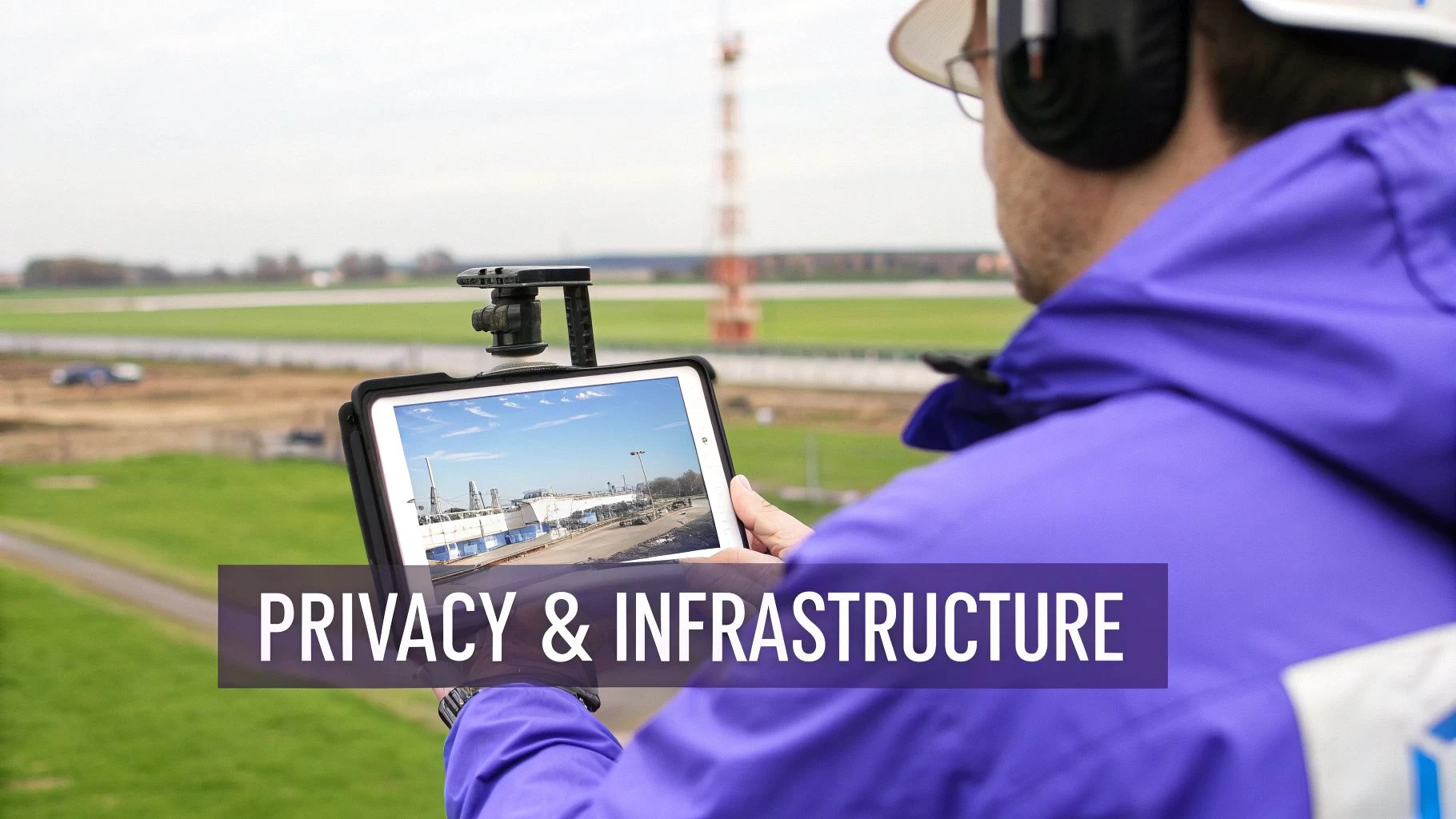 Once you get past the rules for places like state parks, you'll find two big themes that keep popping up in state drone laws: protecting sensitive sites and protecting people's privacy. A huge number of states have passed laws specifically banning drone flights over or near critical infrastructure, and almost every state has something to say about using drones for surveillance.
Getting a handle on these two areas is absolutely essential if you want to avoid some pretty serious penalties. The sheer complexity of these rules is exactly why a deep dive into the drone rules by state is a must before you even think about taking off.
What Counts as Critical Infrastructure?
So, what's the official definition of "critical infrastructure"? It does shift a bit from one state to the next, but the general idea is any facility that's vital for public safety, national security, or the basic functioning of society.
You'll almost always see these on the list:
- Power plants and electrical substations
- Water treatment facilities and dams
- Oil and gas pipelines or refineries
- Correctional facilities (prisons and jails)
- Military bases and key government buildings
- Major transportation hubs like ports and railyards
Flying your drone over one of these spots without permission is usually a misdemeanor, and it can come with hefty fines and even jail time. For instance, Texas law classifies flying a drone under 400 feet over a designated facility as a Class B misdemeanor. Our guide to understanding drone restricted airspace provides more background on these no-fly zones.
Pro Tip for Pilots: Don't ever assume a location is clear for flight just because it isn't near an airport. Always check your flight plan against the state's specific list of critical infrastructure. It’s a simple step that can save you from a world of legal trouble.
The Patchwork of State Privacy Laws
If you thought infrastructure rules were complex, drone privacy laws are a whole different beast. Some states simply tacked drones onto their old "peeping Tom" laws, while others wrote entirely new statutes to deal with aerial snooping.
The core legal concept here is the "reasonable expectation of privacy." Think of it this way: someone in their own fenced-in backyard has that expectation. Someone walking through a public park does not.
- Florida makes it illegal to use a drone to take pictures of private property or the people on it without getting their consent in writing.
- In Wisconsin, using a drone to watch someone where they have a reasonable expectation of privacy is a Class A misdemeanor.
- Virginia takes it a step further, making it a Class 1 misdemeanor to fly a drone within 50 feet of someone's home to coerce, intimidate, or harass them.
The different ways states handle these issues can be confusing, which is why a clear comparison is so helpful.
State Approaches to Drone Privacy and Infrastructure Rules
The table below breaks down how a few different states define and penalize violations related to privacy and critical infrastructure. Notice the variations in what's considered "critical" and the severity of the penalties.
| State Example | Privacy Law Type (e.g., General Surveillance, Peeping Tom) | Critical Infrastructure Definition | Penalty for Violation (e.g., Misdemeanor, Fine Amount) |
|---|---|---|---|
| Texas | Specific anti-surveillance law | Includes petroleum refineries, chemical facilities, power plants, and correctional facilities. | Class B Misdemeanor for infrastructure; penalties vary for surveillance. |
| Florida | General surveillance, consent-based | Focuses on privately owned property where there's a reasonable expectation of privacy. | Actionable under civil law; law enforcement use is a misdemeanor. |
| Wisconsin | "Peeping Tom" statute extension | Not explicitly defined in the same statute as privacy. | Class A Misdemeanor for privacy violations. |
| Virginia | Specific anti-harassment law | Not explicitly defined in the same statute as privacy/harassment. | Class 1 Misdemeanor for harassment. |
This table illustrates just how important it is for operators to check the specific statutes for the state they're flying in, as a flight that's perfectly legal in one state could lead to serious charges just across the border.
This kind of regulatory maze isn't just a U.S. phenomenon. Africa’s drone rules present a similarly complicated picture. Over half of the continent's countries have no official drone regulations at all, while a staggering 21% of nations have banned them completely—the highest rate of any continent. You can read more about this global contrast over at AutonomyGlobal.co.
Best Practices For Local Law Compliance
Getting to grips with the tangled web of drone rules by state takes more than just a quick read of the statutes; it calls for a proactive game plan for compliance on every single mission. Any pro pilot will tell you that federal and state laws are just the starting point. It's often the municipal and county ordinances that add a stricter layer of rules that can easily catch out the unprepared.
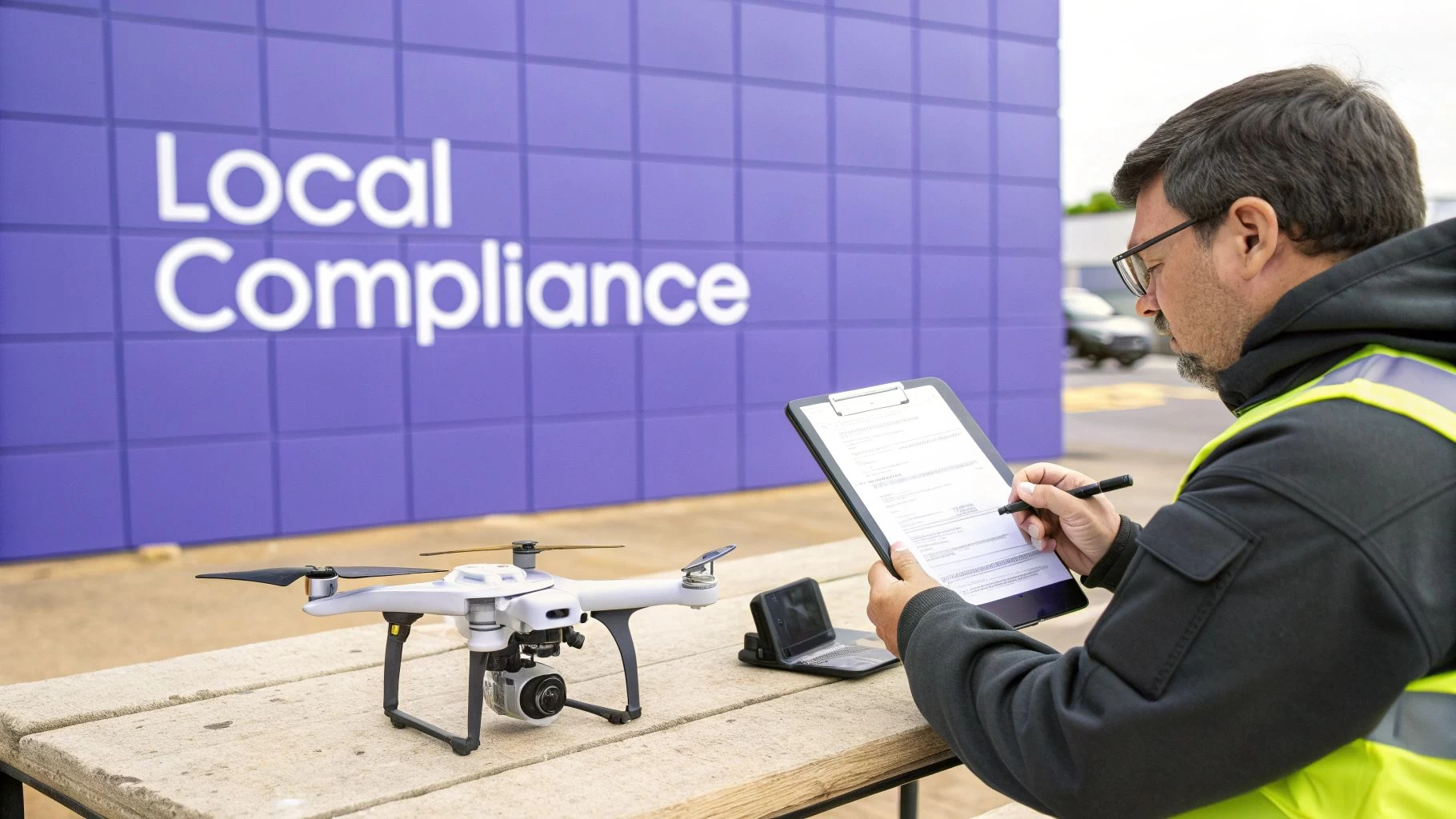
The best way to sidestep legal headaches and build a solid reputation for safety is to adopt a systematic workflow. This means baking compliance checks right into your pre-flight planning process, making sure no local rule gets missed.
Your Pre-Flight Local Compliance Checklist
Before you even think about spinning up the props, you need a checklist that goes way beyond the standard FAA airspace checks. Local laws can be notoriously hard to track down, often buried deep within clunky municipal code websites. Being thorough is your best defense against accidentally breaking a rule you didn't even know existed.
Your homework should always cover:
- City and County Websites: Get familiar with the municipal code and search for keywords like "drone," "UAS," or "unmanned aircraft." Also, check for ordinances related to public parks, noise, and general nuisances, as these can sometimes apply to drones.
- Local Park Rules: Never just assume you can take off from a public park. Lots of city park departments have specific policies either banning or restricting drone operations on their property.
- Privacy Expectations: Get a feel for the local community's attitude toward privacy. Flying over a dense residential neighborhood requires a completely different level of sensitivity—and likely communication—than operating over a remote construction site.
- Temporary Flight Restrictions (TFRs): This is a non-negotiable. Always check for TFRs before a flight. They can pop up for big public events, security operations, or natural disasters.
Documenting Your Due Diligence
Keeping meticulous records isn't just good practice; it's your shield in a dispute. If a property owner or a law enforcement officer starts asking questions, having documented proof of your compliance efforts is priceless. This paperwork shows you've acted like the responsible, professional pilot you are.
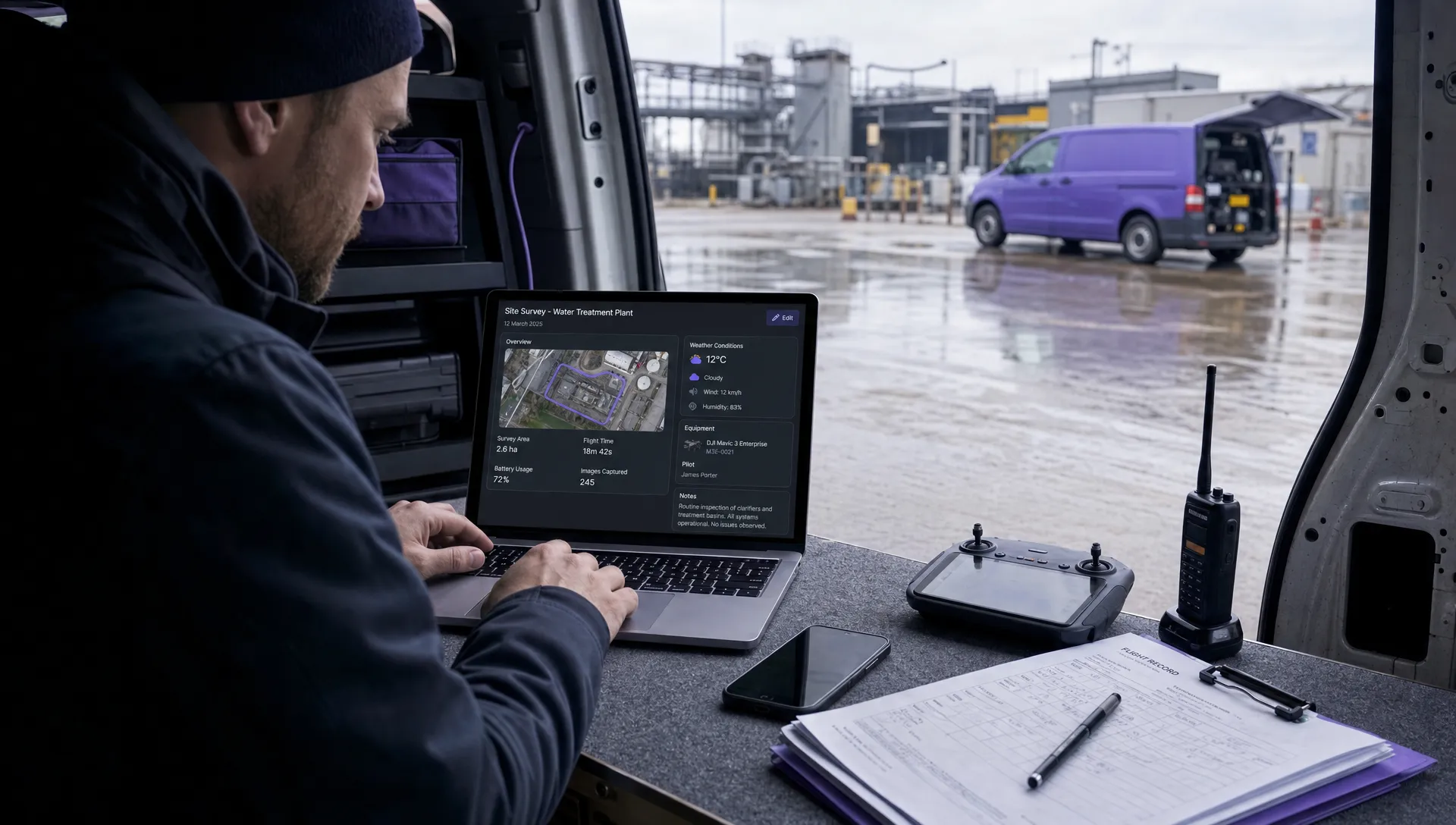
Pro Tip: For every job, keep a digital folder. In it, save screenshots of your municipal code searches (even if they come up empty), email chats with local officials, and any notes from phone calls. This builds a crystal-clear paper trail of your due diligence.
For instance, if you get an email from a city clerk confirming that no local drone ordinances are on the books, save it. That simple action can de-escalate a confrontation in a heartbeat and proves your commitment to flying legally and safely in their community.
Frequently Asked Questions About State Drone Rules
Even when you've done your homework, some specific questions always pop up when you're trying to untangle the complex web of drone rules by state. Let’s tackle some of the most common ones we hear from professional pilots to help you fly with confidence and stay compliant.
Can a City or County Create its Own Drone Laws?
Yes, and this is a huge one that trips up a lot of pilots. While the Federal Aviation Administration (FAA) has exclusive authority over the national airspace, that control doesn't extend all the way to the ground. This is where local municipalities get their say.
Cities and counties often create rules around things like:
- Take-offs and Landings: Many local governments ban launching or landing drones on public property. Think parks, beaches, and the grounds of government buildings.
- Privacy and Nuisance: You'll often find local ordinances that get specific about noise or define what kind of drone use crosses the line into harassment.
- Law Enforcement Use: Municipalities can, and do, set their own internal policies for how their police and fire departments use UAVs.
A perfect example is a state that might generally allow drone flights in its parks, but a specific city like Miami Beach could have its own blanket ban. This is exactly why checking both city and county ordinances is a non-negotiable step in your pre-flight planning.
Do I Need a State Permit if I Have a Part 107 License?
It depends on the state, but yes, sometimes you do. Your FAA Part 107 certificate is your federal ticket to fly commercially, but it doesn't automatically grant you a free pass at the state level. A handful of states require you to get a separate permit or pass a local test.
North Carolina is a classic case. To fly commercially there, you have to get a state permit by passing an additional knowledge test. Flying without it can get you fined, even if you're following every single FAA rule to the letter. Always double-check the state-specific requirements where you plan to fly.
What Happens if a State Law Conflicts With an FAA Rule?
This is where the legal concept of federal preemption kicks in. Simply put, FAA regulations that govern airspace and aviation safety will always trump conflicting state and local laws. A town can’t just decide to ban all drone flights above 200 feet, because the FAA has already established a ceiling of 400 feet in uncontrolled airspace.
But—and this is a big but—that doesn’t mean you can ignore state laws. Rules that regulate the use of the drone on the ground, like those preventing illegal surveillance, harassment, or interfering with first responders, are usually enforceable. The key distinction is that they govern ground-based actions, not flight safety itself. Getting your head around that difference is crucial for navigating any potential legal gray areas.
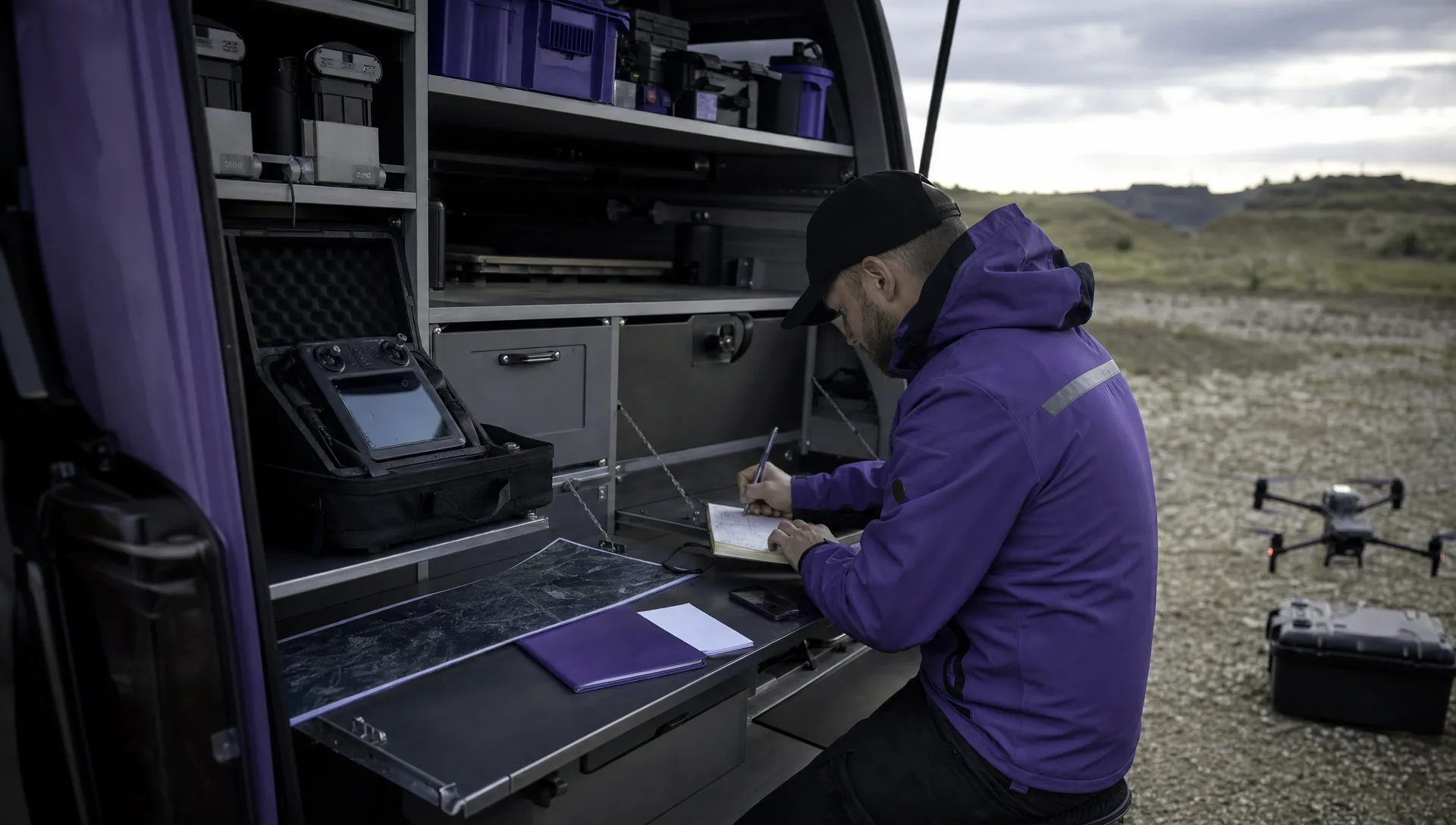
 Drone Airspace Rules: How to Document Your Site Checks →
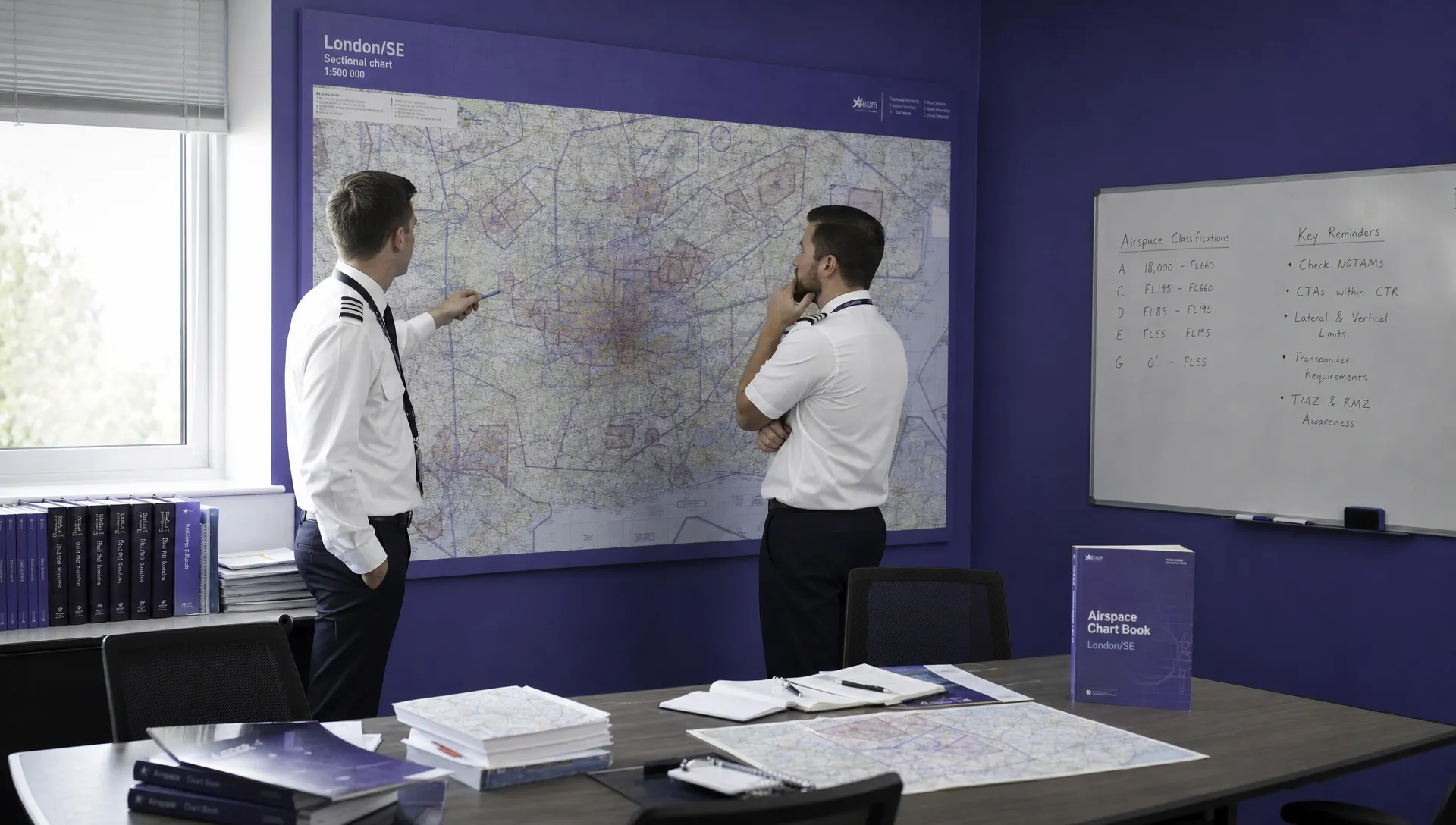
 How to Evaluate a Free Drone Logbook Before Using It →
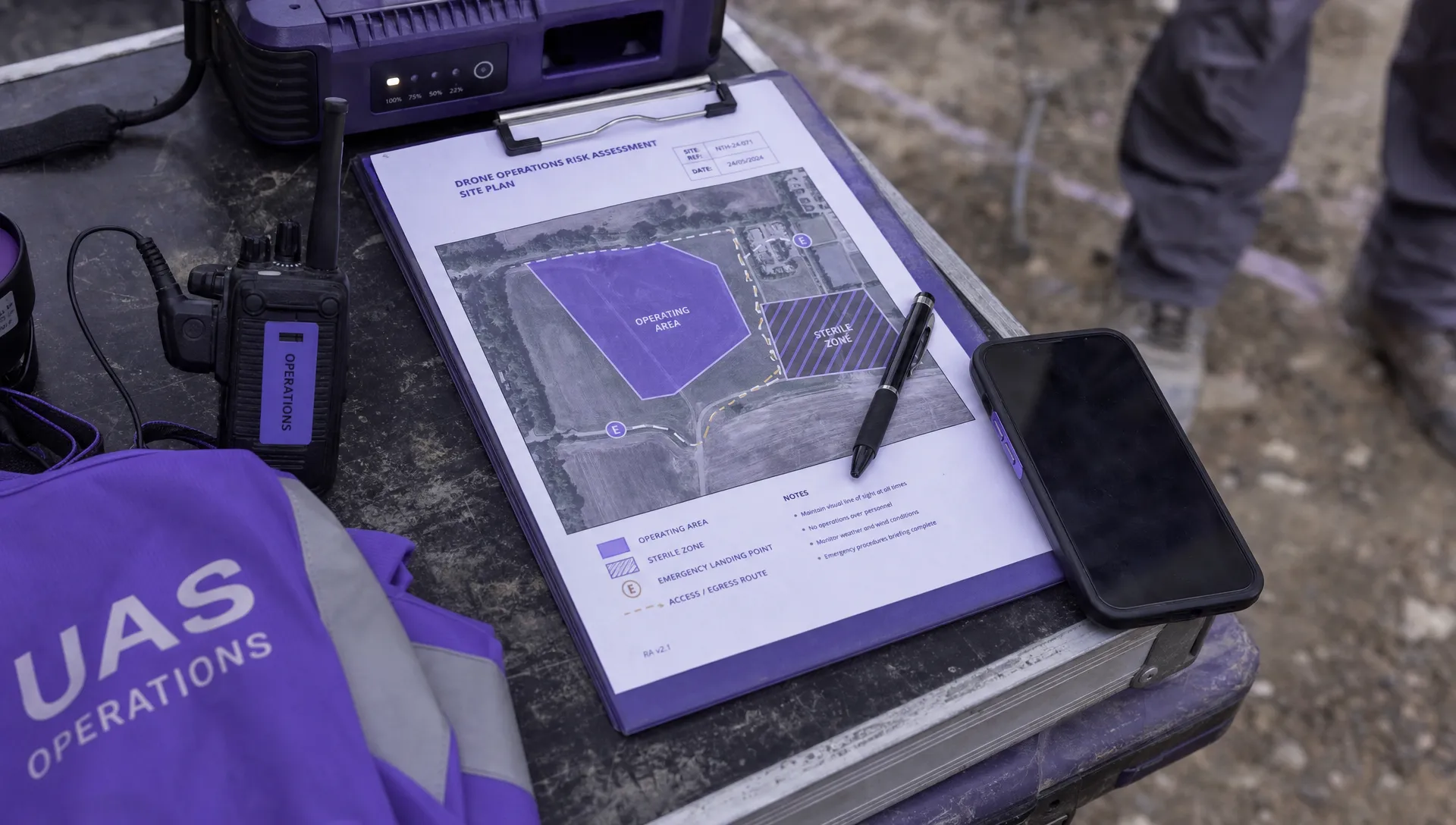
 FAA Part 107 Test: How to Master Airspace Questions →
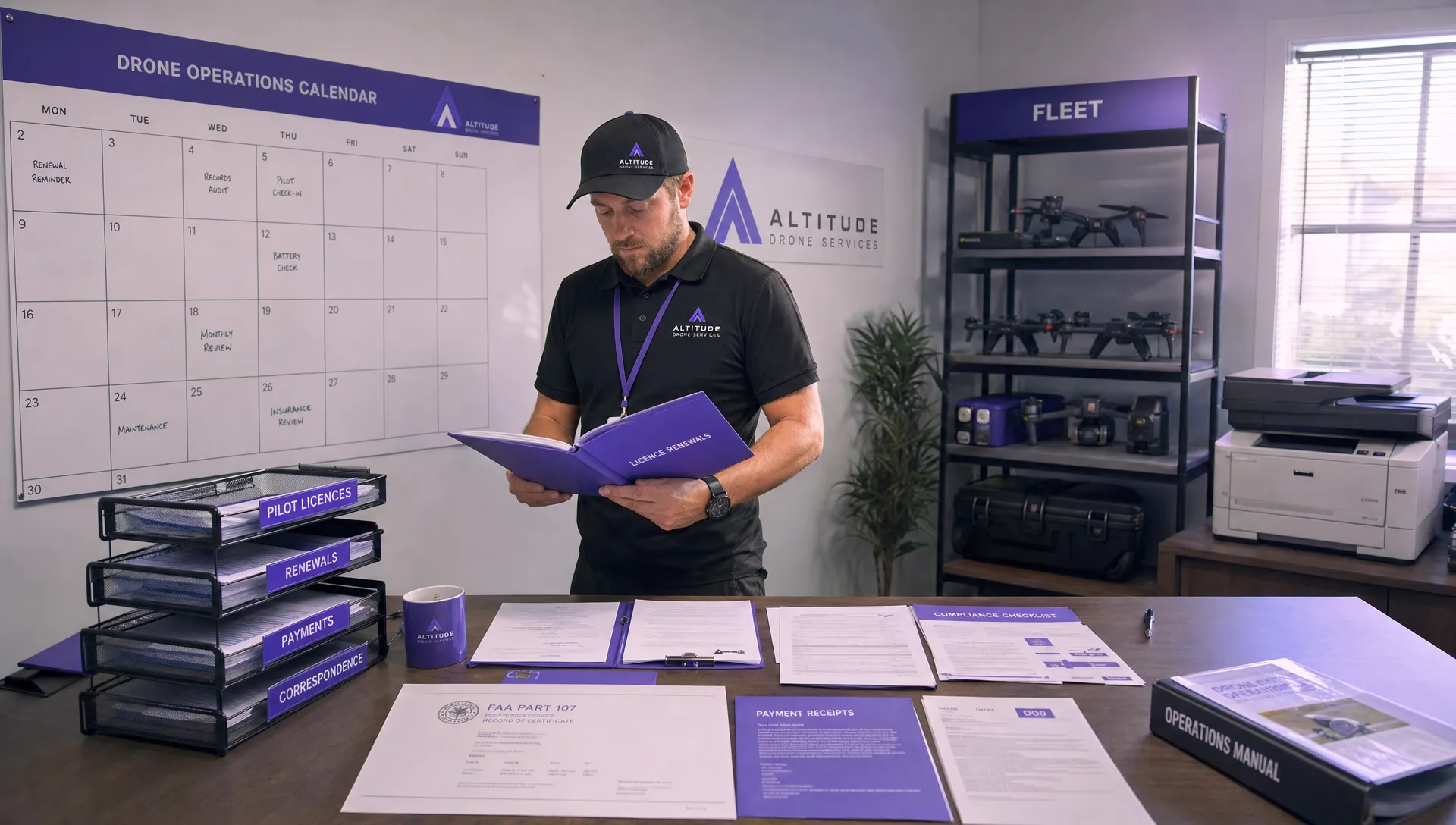
 Drone Risk Assessment Controls That Work in the Field →
 FAA Drone License Costs Beyond the Knowledge Test →
 Drone Part 107 Operations: When a Waiver May Be Needed →
 Drone Operating Rules for Managing Contractors and Employees →
 BVLOS Drone Requirements for Building a Safety Case →
 Drone Pilot Test Mistakes That Cost Candidates Marks →
 FAA 107 License vs Part 107 Certificate: What’s the Difference? →