
Your Guide to DJI Repair Service in 2026
When your DJI drone is grounded, every minute counts. Whether it’s for a client job or just a weekend flight, a broken drone is a big problem. You've got three main routes to get back in the air: sending it to DJI's official service, using a DJI-authorized repair center, or going to an independent third-party shop.
Your Drone Is Down: Now What?
A grounded drone means lost time and, for commercial pilots, lost money. Figuring out the best way to get it flying again can feel overwhelming, but it's simpler than you think.
I like to compare it to getting your car fixed. You can take it to the main dealership (DJI), a manufacturer-approved specialist (an authorized center), or your trusted local garage (a third-party shop). The right choice really hinges on your specific situation—is the drone still under warranty? How fast do you need it back? And what exactly is broken?
Let's walk through these choices so you can make a smart decision. Sending it straight to DJI is usually the best bet for warranty claims or tricky software problems, since you're guaranteed genuine parts and by-the-book repairs. Authorized centers can be a great middle-ground, offering certified technicians with a more local feel. And for common physical breaks like a snapped arm or a busted gimbal on an out-of-warranty drone, an independent shop is often the quickest and most cost-effective option.
DJI Repair Options at a Glance
To help you see the differences clearly, here’s a quick comparison of the three main repair paths for your DJI drone. This should help you choose the best fit for your needs and budget.
| Repair Option | Best For | Typical Cost | Warranty Status |
|---|---|---|---|
| Official DJI | Warranty claims, software issues, complex repairs | Moderate to High | Maintains warranty |
| Authorized Center | Out-of-warranty repairs needing certified techs | Moderate | May void warranty |
| Third-Party Shop | Quick physical repairs, out-of-warranty drones | Low to Moderate | Voids warranty |
Each of these options has its place, and the best one for you today might not be the best one for your next crash. It’s all about weighing the cost, speed, and long-term implications for your drone's warranty.
The repair market itself is booming, largely because DJI drones are everywhere. The global drone fault repair market is expected to hit a staggering $5,080.17 million by 2035. This huge growth shows just how many pilots are out there needing fixes.
Of course, the best repair is the one you never have to make. Getting familiar with the most common drone problems can help you avoid them in the first place. But if a crash is bad enough that your drone is truly beyond saving, please don't just toss it in the bin. Use a professional service like Camera Drones Disposal and Recycling Services to handle it responsibly.
Choosing Between Official DJI and Third-Party Repair
When your drone is down, you’re stuck with a choice that will hit your wallet, your schedule, and your warranty. Do you send it back to the mother ship—the official DJI repair service—or do you put your trust in a local, third-party shop? It's a bit like taking your car to the main dealer versus the independent garage around the corner; one guarantees factory-spec work, while the other is often quicker and more accessible for straightforward fixes.
Opting for the official DJI service is almost always the best bet for any drone still under warranty or covered by a DJI Care Refresh plan. When you send it to DJI, you know for a fact that only genuine, original equipment manufacturer (OEM) parts are going into your aircraft. This is non-negotiable for tricky issues with sensors, motherboards, or software gremlins that need their proprietary tools to diagnose properly.
For example, if your Mavic 3 Enterprise starts throwing a persistent IMU or vision sensor error, DJI’s own technicians are the ones with the right training and gear to fix it correctly the first time. The trade-off? It can take a while. Shipping and service queues can mean a longer turnaround, but to keep your warranty intact and for those complex electronic problems, it’s the right call.
The Case for Third-Party Repairs
On the flip side, third-party and DJI-authorized repair shops really come into their own when speed and cost are what matter most, especially if your drone is out of warranty. These independent techs are often masters at dealing with the common bumps and scrapes of drone life.
A professional surveyor with a looming project deadline might take their Mavic 3 to a local shop for a broken landing gear. That shop could probably swap it out in a day or two, getting the drone back on the job site with minimal downtime, while the official service could take weeks.
This speed is their biggest advantage, as they usually have parts in stock and you skip the whole cross-country shipping headache. But, there are some important things to weigh up.
- Warranty Void: Using an unauthorized shop will almost certainly void any remaining manufacturer's warranty you might have.
- Part Quality: The replacement parts could be OEM, third-party, or even salvaged from other drones. Always ask what they're using before you commit.
- Technician Skill: The quality of the work can vary wildly from one shop to the next. Do your homework and look for shops with a solid reputation and plenty of good reviews.
While your drone has its own unique repair needs, it can be useful to see the bigger picture of how electronics are fixed. For a wider look at quick DIY checks, typical costs, and finding pros for other gadgets, this general guide to mobile device repairs offers some handy insights.
Managing these outside repair shops is a skill in itself, especially if you're running a whole fleet. Learning more about vendor management best practices can save you a ton of time and money down the line. In the end, the choice boils down to what you value more: the guaranteed quality and warranty safety of DJI, or the speed and potential savings of a third-party expert for those common physical repairs.
Understanding the Official DJI Repair Process
So, the worst has happened. You’ve had a crash, and your drone is looking a little worse for wear. Dealing with an official DJI repair service might seem daunting, but it’s a well-oiled machine designed to get your bird back in the air using genuine parts.
The whole thing kicks off with what's called a Return Merchandise Authorization, or RMA. Think of this as your official ticket into DJI's repair queue. You'll start by filling out an online repair request on their support site. This is where you'll tell them what happened, describe the damage, and provide your drone’s serial number. It’s also the point where you’ll need to specify if you have a warranty or a DJI Care Refresh plan.
This flowchart maps out the journey your drone will take, whether you go the official route or opt for a third-party shop.
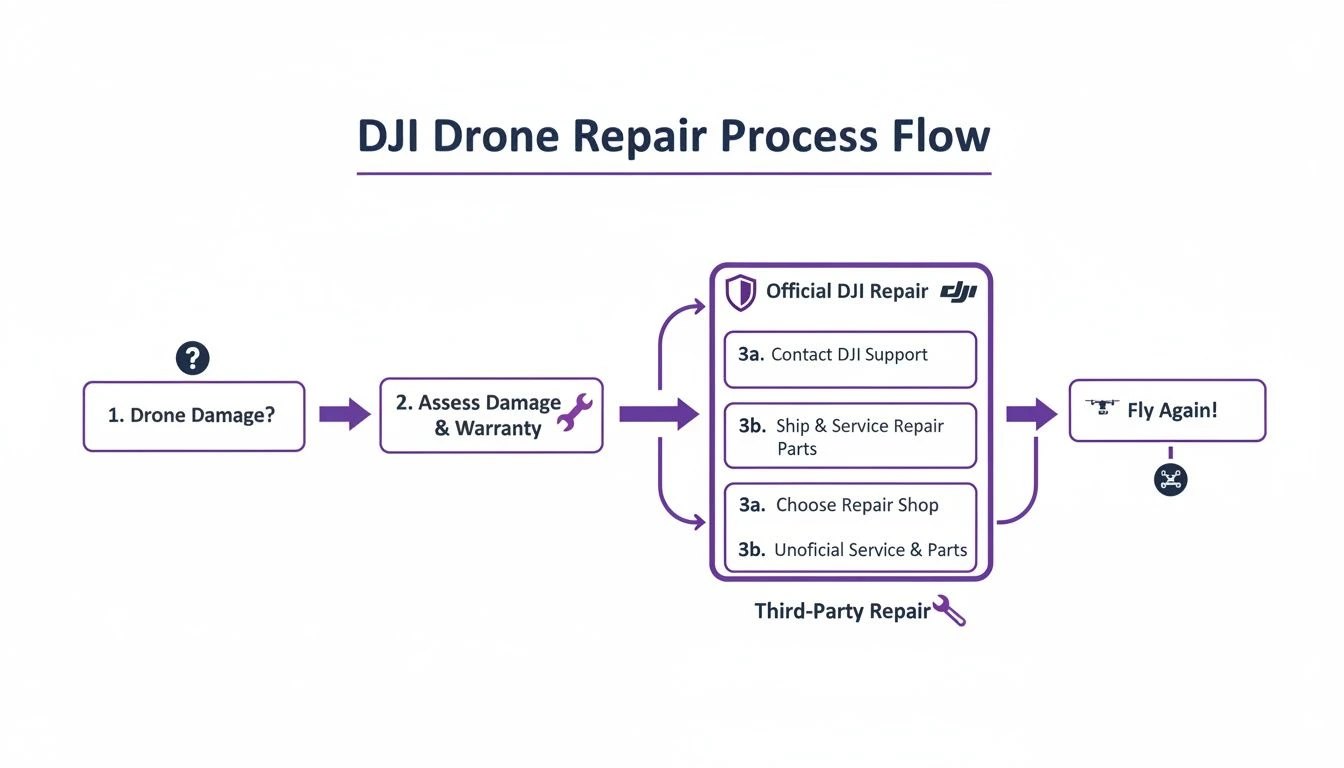
As you can see, the official DJI path is the only way to make claims under your warranty or DJI Care Refresh plan. It’s your guarantee for certified technicians and factory-fresh parts.
Preparing for Your Repair
A little prep work goes a long way in making the repair process smooth and fast. Once you've started the RMA, your job is to document everything and pack the drone securely for its journey.
To back up your claim, pull together any evidence you have. This means snapping clear photos and videos of the damage from every conceivable angle. Just as crucial are your flight logs, which hold the vital data that helps technicians figure out exactly what went wrong.
Pro Tip: Always back up your flight data from both the drone and the controller before you ship anything. This isn't just for your own records; it ensures you have the diagnostic information handy if DJI's team needs it.
Packing and Shipping Your Drone
After your RMA is approved, DJI will send you a shipping label. How you pack your drone is critical – you don't want it getting banged up even more on the way to the service center. Here’s a quick checklist to get it right.
What to Include in the Box:
- The Drone: Obviously, this is the main event.
- The Gimbal and Camera: These are almost always needed, as they're a key part of the diagnostic check.
- The Remote Controller: Send the controller along. It holds flight data and could be part of the problem.
- One Battery: Pop one battery inside the drone, but make sure it has a very low charge for shipping safety.
What to Leave at Home:
- Propellers: Take these off to prevent them from snapping or damaging the drone body.
- Extra Batteries: They only need one.
- SD Cards: Remove your memory card to keep your data safe.
- Chargers and Cables: These aren’t needed for the repair itself.
Following these simple steps helps the DJI repair service team get straight to work, which means a quicker diagnosis and a faster turnaround for you.
How Much Drone Repairs Cost and How Long They Take
When your drone is grounded, you're really only worried about two things: how much is this going to set me back, and when can I get it flying again? The answers, of course, depend on just how bad the damage is and who you trust to do the fixing.
The bill for a DJI drone repair can be anything from under $100 for simple fixes like busted landing gear, to well over $1,000 if you’ve fried something complex like the main controller board or a high-end Zenmuse camera.
A pretty common job, like replacing the gimbal and camera on a Mavic 3, will usually land you somewhere in the $400 to $700 bracket. A single broken arm on a Mavic or Air model is a much easier pill to swallow, typically costing between $150 and $250.
These numbers really highlight just how important the DJI repair service is. The whole drone maintenance market is huge—valued at USD 1.2 billion globally in 2023 and expected to hit USD 4.8 billion by 2032. As the big player in the game, DJI's access to its own tools and genuine parts gives it a massive edge, which you can read about in this drone maintenance service market analysis.
Estimating Repair Timelines
Just like the costs, repair timelines can be all over the place. Your total downtime is a combination of shipping it out, diagnosis, the actual repair work, and shipping it back.
The biggest wildcard in your timeline is almost always parts availability. If a specific component for an older or less common model is on backorder, your wait can stretch from days into weeks, no matter who's doing the repair.
Here’s a general idea of what you can expect from the different services:
- Official DJI Repair Service: The whole nine yards—from you shipping it off to getting it back—usually takes about 2 to 4 weeks. This covers transit, damage assessment, the fix itself, and the return journey. It might not be the quickest, but for tricky electronic or software problems, it’s your most reliable bet.
- Third-Party Repair Shops: For common physical damage, a good local shop can be a lifesaver. If they have the parts on hand, they might turn a repair around in just 2 to 5 business days. For a professional pilot, that speed is a massive advantage when every day on the ground is lost income.
Ultimately, your choice of DJI repair service boils down to a trade-off. Do you want the guaranteed quality and genuine parts from DJI, or the potential speed of a third-party specialist? For any commercial operator, being able to predict this downtime is crucial for keeping clients happy and makes a strong case for having a backup drone ready to go.
Managing Repairs for Your Entire Drone Fleet
When you're running a whole fleet of drones, repairs aren't just an occasional nuisance—they're a constant operational hurdle. A single grounded drone creates a bottleneck. Multiple grounded drones can bring entire projects to a screeching halt, wrecking schedules and costing you revenue. Trying to juggle all that with a mess of spreadsheets and email threads just doesn't work once you start to scale.
This is where a proper drone operations platform completely changes the game. It moves you from scrambling with reactive repairs to having a proactive, controlled system. Instead of panicking every time a drone goes down, you have a process ready to go and a central dashboard to manage everything from pre-flight checks to post-crash repairs.
From Chaos to Control with Dronedesk
Imagine having one place where you can log a damage report the second it happens, complete with photos and notes from the pilot. That's exactly what Dronedesk gives you—a clear, real-time picture of your entire fleet's health. It lets managers see which drones are flying, which are in for maintenance, and which are away for a DJI repair service.
It’s all about getting your logistics sorted. You can see which drones are nearing their service intervals and book them in for preventative maintenance, which helps cut down on those unexpected, project-stopping failures. You can even build out and manage a full fleet maintenance program to get the most life out of your aircraft.
This dashboard gives you that at-a-glance view of every drone's status.
A simple visual summary like this means managers can spot a grounded drone instantly and get the repair process started without missing a beat.
When you can link flight logs directly to a repair ticket, you’re handing the technicians a goldmine of diagnostic information. That context helps them find the root of the problem way faster, which can shorten repair times and reduce your costs. This kind of organisation is vital in the drone maintenance market, which is set to explode to USD 6.8 billion by 2035. DJI's services make up a huge piece of this pie, tackling the most common issues with batteries and flight controls that account for up to 75% of all commercial repairs. You can dig into more of this data in a detailed market report.
An integrated platform isn't just about managing repairs; it's about managing uptime. When you have a clear history of every repair and what it cost, you can start making smarter calls on when to repair an old drone versus when it’s time to replace it. That’s how you get a real return on your investment.
Common Questions About DJI Repair Services
When your drone takes a tumble, a million questions can race through your mind. Is it fixable? How much will it cost? Where do I even start? It's easy to get overwhelmed.
Let's clear up some of the most common questions pilots have when they're looking for a DJI repair service.
Will Using a Third-Party Void My Warranty?
In a word, yes. If your drone is still under its standard manufacturer's warranty, letting an unauthorized shop crack it open will almost certainly void that coverage for any future problems. DJI wants to be the only one working on it while it's their responsibility.
But here's the flip side: if your warranty has already expired, that's no longer a concern. This is when a good third-party shop can be a fantastic, and often faster, alternative. Always double-check your warranty status on DJI's website before you decide.
What Is the Most Common Type of Damage?
By a long shot, it's physical damage from a good old-fashioned crash. I've seen it all, but the most frequent tickets are for:
- Broken arms or propellers
- Cracked body shells
- Damaged gimbal mounts or cameras
Electronic gremlins like flight controller faults or battery errors pop up now and then, but they're far less common than the aftermath of a run-in with a tree or a hard landing. These physical breaks are often the bread and butter for experienced third-party techs.
For commercial operators and new pilots, DJI Care Refresh is a smart investment. Think of it as an insurance plan that provides replacement drones for a set fee in case of accidental damage, including water damage. It dramatically reduces the financial risk of a major crash.
How Do I Choose the Right Repair Option?
Choosing the right path really boils down to what matters most to you right now. Just ask yourself these three simple questions to find the best DJI repair service for your situation:
- Is my drone under warranty? If the answer is yes, stick with the official DJI service. It's the only way to keep that warranty valid.
- How fast do I need it back? For straightforward physical fixes like a broken arm, a local third-party shop can often turn it around much quicker than shipping it off to a DJI facility.
- Is the damage physical or electronic? If you suspect a complex software or sensor problem, DJI is your best bet. For a cracked shell on an out-of-warranty drone, a third-party repairer is a great, cost-effective choice.
Managing repairs, service schedules, and asset downtime for an entire fleet can be overwhelming. Dronedesk simplifies everything, giving you a central platform to track every incident, manage maintenance, and keep your operations flying smoothly. Learn how Dronedesk can streamline your fleet management today.
 How to Evaluate a Free Drone Logbook Before Using It →
 FAA Part 107 Test: How to Master Airspace Questions →
 Drone Risk Assessment Controls That Work in the Field →
 FAA Drone License Costs Beyond the Knowledge Test →
 Drone Part 107 Operations: When a Waiver May Be Needed →
 Drone Operating Rules for Managing Contractors and Employees →
 BVLOS Drone Requirements for Building a Safety Case →
 Drone Pilot Test Mistakes That Cost Candidates Marks →
 FAA 107 License vs Part 107 Certificate: What’s the Difference? →
 Drone Airport Rules: A Field Checklist for Site Assessments →