
Business Tools for Drone Companies to Succeed
When people think about drone companies, they picture the drone itself. But the real work, the stuff that builds a sustainable business, happens behind the scenes. That's where essential business tools come in. We're not talking about flight control software; we're talking about the platforms that manage your entire operation.
Think of them as your central command center, handling everything from client relationships and project management to regulatory compliance and fleet maintenance.
Why Your Drone Business Needs More Than a Drone

Being a great pilot is just the price of entry. To actually succeed, you have to run a complex business where managing clients, planning missions, and staying on the right side of regulations are every bit as important as your stick skills.
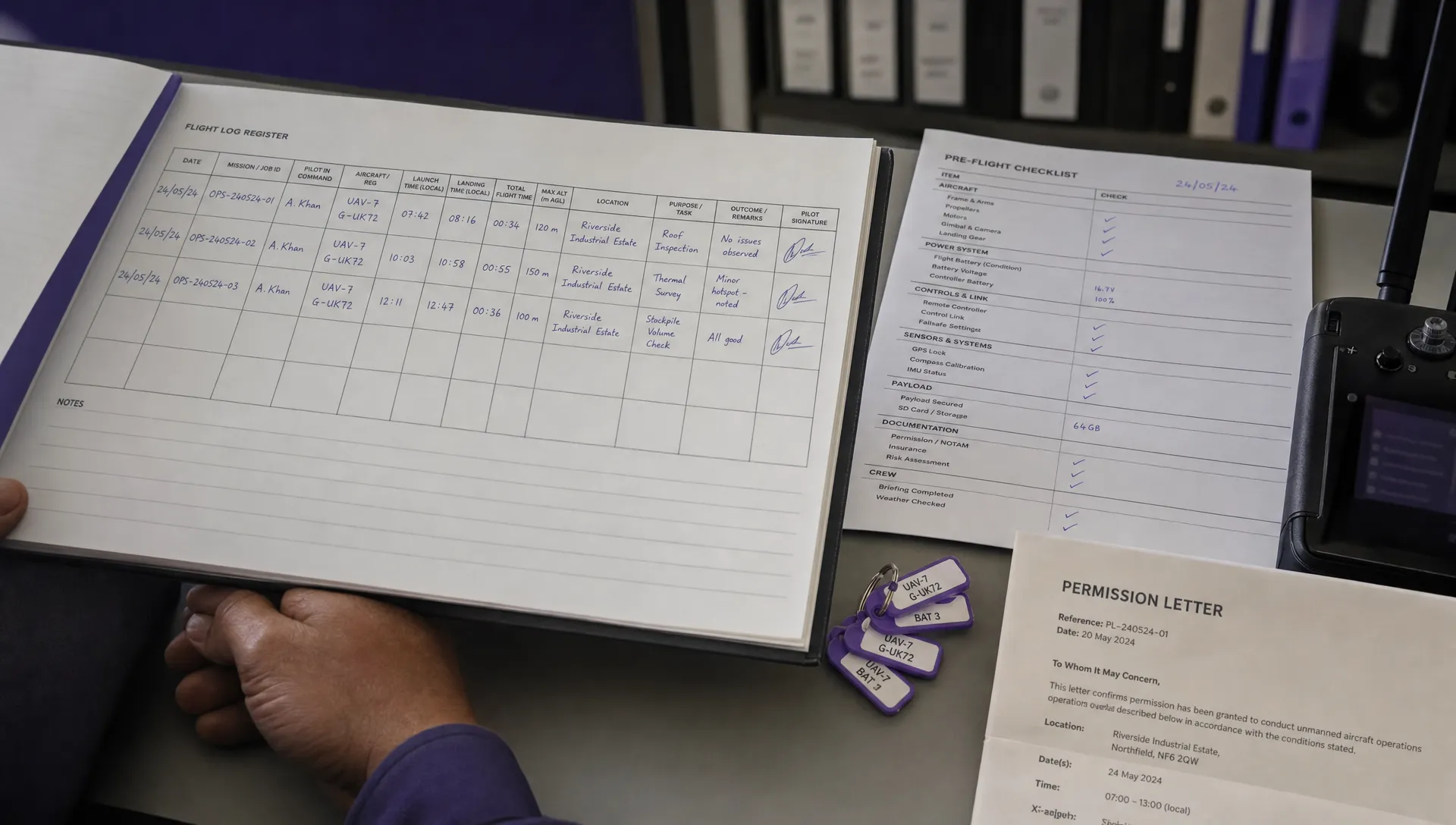
Trying to juggle all that with scattered spreadsheets, paper logbooks, and a patchwork of manual processes is a recipe for disaster. It leads directly to inefficiency, missed opportunities, and some serious risks. This old-school approach creates data silos, making it impossible to accurately track job profitability, stay on top of drone maintenance, or pull up the right records when an auditor comes knocking. A solid suite of business tools isn't a luxury—it's the foundation for professional, scalable growth.
Shifting from Pilot to Business Owner
The right software helps you make a crucial mental shift: from thinking like a pilot to thinking like a strategic business owner. It provides the operational backbone you absolutely need to compete.
And the competition is heating up. The global drone market is pegged at a massive USD 73.06 billion in 2024 and is expected to more than double by 2030. That kind of growth screams both opportunity and the need for rock-solid systems to keep up. For a deeper dive into business tools and strategies that go beyond the drone itself, the folks over at Edgevista's blog have some great insights.
Think of it this way: a drone is your primary tool for data collection, but your business software is the factory that processes that data, manages the workflow, and turns it into a profitable product for your clients.
Without that "factory," you're stuck with raw materials and no efficient way to create value. As you'll see, integrating the right tools is what separates the hobbyists from the professional, high-growth drone enterprises. We've also broken down what the drone industry growth means for commercial operators.
Mastering Client and Project Management

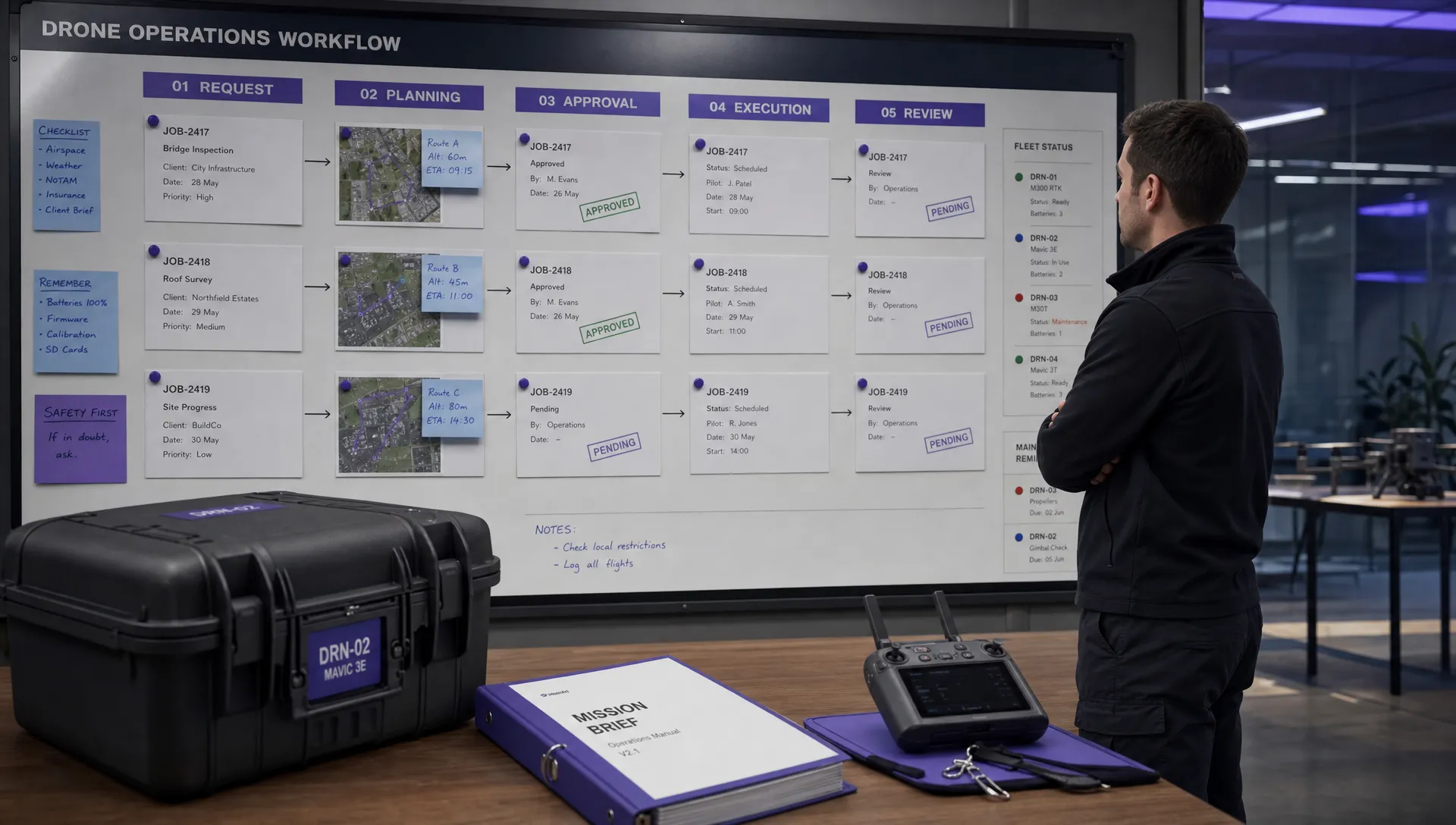
Top-tier service doesn't start when the props spin up. The most successful drone businesses know that how you handle client relationships and operational workflow is just as critical as the flight itself. This is where Customer Relationship Management (CRM) and project management tools become the air traffic control for your entire operation.
Think of a CRM as the digital brain for every single client interaction you have. It's a central spot that keeps track of everything—from the very first lead and quote to signed contracts and all the communication in between. Without a solid CRM, you're just asking for promising opportunities to get lost in a mess of emails and sticky notes.
From Handshake to Flight Plan
Once a client gives you the green light, your focus pivots from selling to doing. This is where project management software steps in, transforming that signed contract into a structured, mission-ready plan. It’s the essential bridge between the business development side and the boots-on-the-ground operational side of your company.
A good project management system lets you:
- Define clear timelines for every project stage, from the initial pre-flight checks all the way to delivering the final data.
- Assign pilots and equipment to specific jobs, which helps you dodge scheduling headaches and ensures the right gear is always ready to go.
- Track progress and milestones in real-time, giving both your team and your client a clear view of how the project is moving along.
Imagine trying to juggle multiple agricultural surveys or construction site inspections at once. What could easily become chaos turns into a smooth, orderly process with the right tools. Every mission has a clear plan, every team member knows what they're responsible for, and your valuable resources are used efficiently.
The real magic happens when your CRM and project management systems aren’t separate islands but are woven into a single, cohesive platform. This creates a seamless flow of information from the first client call to the final invoice, cutting out repetitive data entry and drastically reducing the chance of human error.
Integrating for Operational Excellence
This kind of integrated approach is a game-changer for modern business tools for drone companies. When a new job is logged in the CRM, it should automatically trigger the creation of a project shell in your management system, already filled in with the client's details and the project scope. This connectivity makes sure nothing gets lost in translation between your sales team and your flight crew.
Even better, this integration gives you a bird's-eye view of your entire business. You can easily track vital metrics, like which types of jobs bring in the most profit or which clients are giving you the most repeat business. This kind of data-driven insight is absolutely invaluable for making smart, strategic decisions and steering your company toward real, sustainable growth.
Without these systems in place, you’re not just flying blind in the air; you're flying blind in your business.
Optimizing Flight and Fleet Operations

This is where the magic happens. Your flight and fleet operations software is the command center of your drone business, turning a collection of expensive gear into a coordinated, efficient, and compliant operational force. Think of it as the digital air traffic control tower for your entire company.
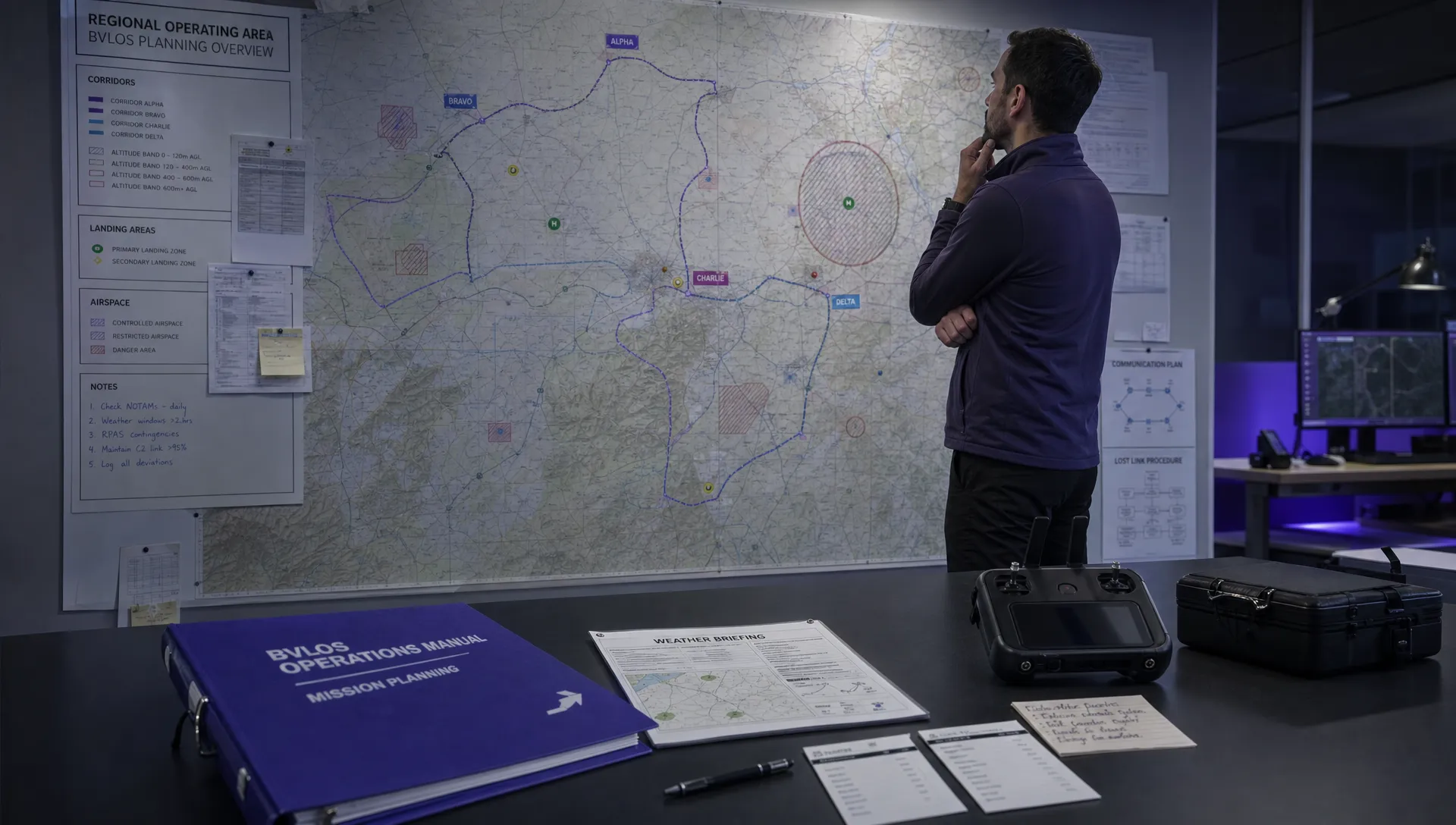
These tools are a world away from the basic apps you might use for hobby flying. We're talking about sophisticated mission planning, letting you plot out complex flight paths, lock in camera angles, and define survey areas with pinpoint accuracy before you even leave the office. It's this level of prep that really separates the pros from the amateurs.
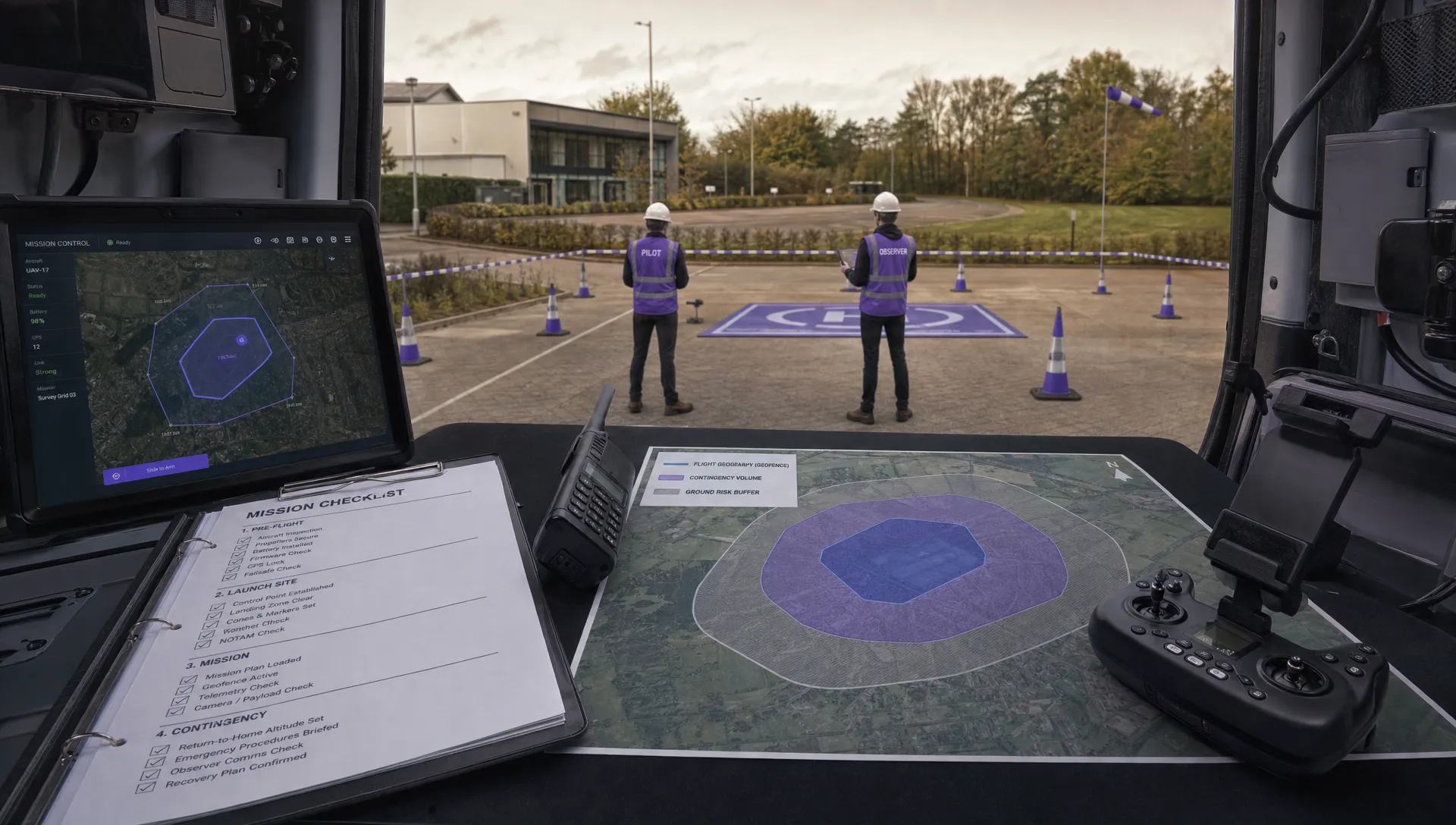
Better still, these platforms build safety and compliance right into your day-to-day workflow. Automated pre-flight checklists make sure nothing critical gets missed, and real-time airspace intelligence gives you the latest data on restrictions, weather, and potential hazards. It's a massive step up in reducing your operational risk.
Moving Beyond a Single Flight
Great management doesn't stop when one drone touches down. The real trick is managing your entire fleet as a single, unified system. This is where fleet management software becomes an absolute necessity, giving you that crucial high-level view of every asset you own.
It's a lot like managing a fleet of delivery vans. You wouldn’t just track one van’s location; you’d be watching fuel levels, maintenance schedules, and driver hours for the whole lot to keep things running smoothly and avoid costly breakdowns. The same logic applies to your drones, which makes a solid UAS fleet management system non-negotiable.
Key capabilities you should look for include:
- Maintenance Tracking: Automatically logging flight hours and battery cycles to predict and schedule maintenance before a part fails.
- Equipment Status: A live dashboard showing the availability and condition of every drone, battery, and payload in your inventory.
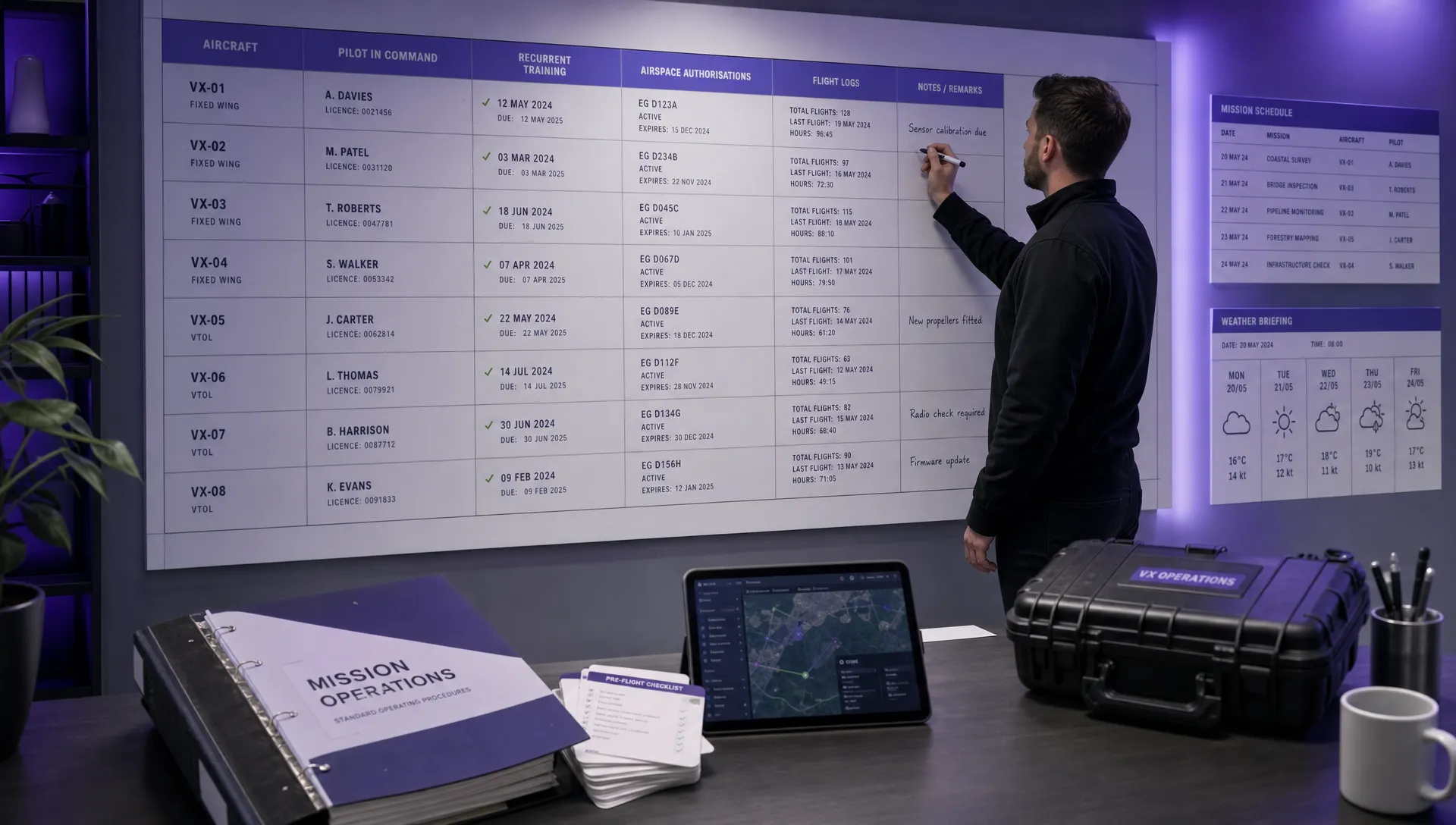
- Pilot and Asset Allocation: Smartly assigning the right pilot with the right qualifications to the best drone for any given job.
Taking this proactive approach cuts down on downtime, helps your expensive equipment last longer, and creates a rock-solid chain of custody for all your maintenance records—something your insurer and any regulator will want to see.
The numbers don't lie. Valued at USD 7.6 billion in 2024, the U.S. drone market is expected to climb to an incredible USD 19.3 billion by 2033. This growth is being driven by business tools that automate flight control, analyze data, and ensure compliance, showing just how much the industry is shifting toward organized, software-led operations.
The Power of a Data-Driven Operation
At the end of the day, good flight and fleet operations software shifts your business from being reactive and manual to proactive and data-driven. It gives you the information you need to answer the big questions. Which drones are making us the most money? Are we getting the most out of our battery lifecycles? Can we accurately forecast our maintenance costs for next year?
By bringing all your operational data into one place, these platforms provide the business intelligence you need to scale up with confidence. You can add more drones and pilots to your team, knowing you have the robust systems in place to manage them all effectively, making sure every single flight is as safe, efficient, and compliant as the last.
Automating Regulatory and Safety Compliance
Let's be blunt: in the drone industry, compliance isn't just a box-ticking exercise—it's your license to operate. Trying to manually track every flight log, risk assessment, and pilot certification is like navigating complex airspace with a paper map. It’s slow, riddled with potential errors, and simply doesn't scale as your business grows.
This is where the right tools can completely change the game, turning what feels like a regulatory burden into a genuine competitive advantage.
Think of it as Your Digital Compliance Officer
Modern business software built for drone companies acts like a tireless compliance officer working in the background. Instead of you manually creating and filing every critical document, the software handles it. We're talking about generating detailed risk assessments (like RAMS), logging every single second of flight time, and keeping tabs on equipment maintenance schedules.
The end result? An unbreakable, easily accessible audit trail for every single mission you fly.
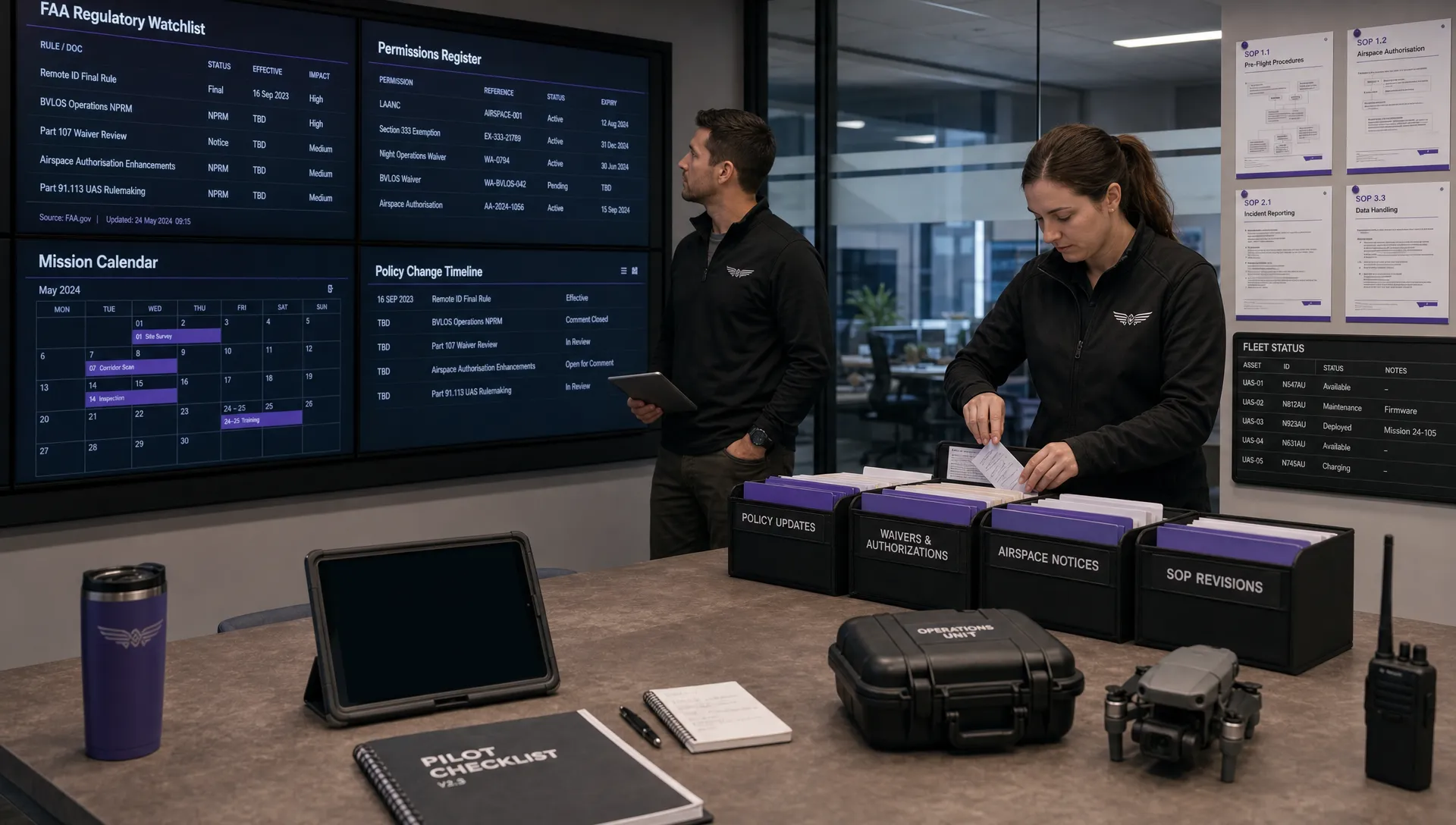
But this automation is so much more than just record-keeping. The best platforms will give you a nudge with proactive alerts for crucial deadlines. Imagine getting a heads-up that a piece of equipment needs servicing soon, or that a pilot's certification is about to expire. This ensures that every mission is not only safe but also fully documented and legally watertight—something high-value corporate clients absolutely demand.
The real magic of automation is that it shifts your compliance from being reactive to proactive. Instead of scrambling for documents during an audit, you have a system that guarantees you are always ready, protecting your business from fines and headaches.
This isn't just a nice-to-have. The efficiency gains are massive. Take a look at the data below comparing manual compliance tasks to an automated system.

The numbers speak for themselves. Automated tools can slash report generation time by a staggering 80%, while also reducing the error rate and giving you a deeper look at your own metrics. That’s a huge amount of admin time you get back—time you can reinvest into flying more missions and growing your client base.
To get a better handle on how software can centralise all these moving parts, check out our deep dive on using a regulatory management tool for drones. At the end of the day, using these tools isn't just about protecting your operations; it's about solidifying your reputation as a professional, safety-first provider.
Transforming Drone Data Into Client Value
Let's be honest, your drone is an incredible data-gathering machine, but raw data alone doesn't pay the bills. The real money is made when you take that mountain of information—gigabytes of images, videos, and sensor readings—and turn it into polished, actionable intelligence for your clients.
This is the final piece of the puzzle, and it’s where a crucial category of business tools comes into play. These are the platforms that handle everything from the moment the data leaves your drone to its final handover in a professional, client-facing portal.
From Raw Files to Actionable Insights
Think of it like being a professional chef. The drone brings back the raw ingredients (your data). Software like a photogrammetry suite is the prep station, turning photos into 3D models or orthomosaic maps. But you still need a full kitchen to actually cook the meal, plate it beautifully, and serve it to the paying customer.
Data analytics and delivery tools are that final part of the kitchen. They're what let you:
- Securely store and organize massive project files in the cloud.
- Dig into your operational metrics to understand business performance, like profitability per flight hour or asset utilization rates.
- Create polished, client-facing portals where customers can view, annotate, and download their project deliverables.
This is what separates the pros from the amateurs. You’re no longer just sending a Dropbox link filled with JPEGs; you’re delivering a high-value product.
The commercial drone ecosystem is booming, with the service segment being the largest revenue stream. In fact, projections show the commercial drone service market is set to generate around USD 29.4 billion globally by 2025. This growth is powered by business tools for mission planning, data integration, and automated analytics that help companies monetize the data they collect. Discover more insights about the drone market growth drivers.
Elevating the Client Experience
When it comes right down to it, these tools are all about delivering an exceptional client experience. A secure, branded client portal instantly communicates professionalism and builds trust. It gives your clients an interactive way to engage with the data you’ve captured, making your service stickier and justifying premium pricing.
By investing in a solid data management and delivery system, you complete the operational loop. You prove that you’re not just a pilot who can capture images; you’re a data solutions provider who delivers tangible business value from start to finish. This is how you build a reputation for quality and win repeat business from high-value clients.
Choosing an All-In-One Drone Business Platform
Juggling a patchwork of different software subscriptions is one of the biggest growing pains for any drone company. You've got one tool for managing clients, another for your flight logs, and maybe a third for tracking projects. Sound familiar?
This approach doesn't just get complicated; it actively works against you. It creates data silos, drives up your monthly software costs, and adds a ton of friction to your day-to-day workflow. It's like trying to build a high-performance aircraft with parts from a dozen different manufacturers that were never designed to fit together. It’s clunky, inefficient, and bound to fail.
An integrated, all-in-one drone business management platform is the answer to this fragmentation. Think of it as the central operating system for your entire business, connecting every single stage of a job, from the initial client quote right through to the final data delivery. This creates a single source of truth, making sure everyone on your team is working from the same, up-to-date information.
What to Look for in a Unified System
When you're shopping around for an all-in-one platform, you need to be sure it actually covers the core pillars of your operation. A truly unified system should seamlessly combine:
- Client Relationship Management (CRM): To track your leads, quotes, and all client communications.
- Project and Operations Management: For scheduling jobs, assigning pilots, and keeping an eye on progress from start to finish.
- Flight and Fleet Operations: This includes mission planning, automated flight logging, and monitoring the health of your equipment.
- Automated Compliance: For generating risk assessments on the fly and maintaining a crystal-clear audit trail.
By bringing all these functions under one roof, you get rid of redundant data entry, which is a massive source of errors. One study found that poor data quality costs organisations an average of $15 million per year. A unified system dramatically cuts down that risk.
Unlocking True Scalability and Professionalism
Picking the right platform is about more than just a quick efficiency boost; it’s a strategic move that opens up new levels of professionalism and growth. As you navigate this decision, it can be helpful to see how other specialised sectors evaluate their tools, like the criteria used for the best AI-powered business platforms.
Ultimately, it’s about building your business on a solid foundation that can handle more clients, more pilots, and more complex missions without the operational chaos. This is how you make the leap from being just a drone pilot to running a genuinely scalable and profitable aviation business.
Frequently Asked Questions
Figuring out the right business tools for a drone company can feel a bit overwhelming. Let's tackle some of the most common questions we hear from operators who are ready to get serious about their workflow and grow their business.
What's the Single Most Important Piece of Software for a New Drone Business?
If you're just starting out, your most critical investment isn't just a flight logging app—it's a fully integrated operations management platform. While it's tempting to patch things together with separate apps, a system that combines client management (CRM), mission planning, automated compliance checks, and equipment tracking right from the start is a game-changer.
This approach lets you build a professional, scalable foundation from day one. You get to skip that chaotic "spreadsheet stage" entirely. It means that from your very first job, your business is running on a compliant, efficient, and fully auditable system, which saves a massive amount of time and cuts down on risk.
Can I Just Use Generic Business Tools for My Drone Company?
You could, but it’s not a great idea. While powerful tools like Asana or Salesforce are brilliant for general business, they're simply not built for the unique regulatory and operational headaches of a drone company. They don't have built-in airspace intelligence, automated flight logging, drone-specific pre-flight checklists, or fleet maintenance schedules based on flight hours.
Trying to make them work involves clunky, time-consuming customisation and endless manual data entry between different systems. This just opens the door to critical errors and compliance breaches. A drone-specific platform, on the other hand, weaves all these aviation-critical functions together seamlessly, saving you time and keeping your operations safe.
An integrated platform gives you a professional, transparent view of your entire operation. Being able to produce a full audit trail on demand shows a high level of operational maturity, and for high-value clients, that's often the deciding factor.
How Do Integrated Platforms Help Win Bigger Contracts?
Think about it from the client's perspective. Large corporate and government contracts always come with stringent compliance and safety requirements. An integrated platform is your secret weapon here. It lets you instantly generate comprehensive reports that detail your safety procedures, job-specific risk assessments, pilot qualifications and currency, and complete drone maintenance histories.
This is how you prove you’re not just a pilot with a drone, but a professional aviation business. It’s this demonstrated commitment to safety and operational excellence that builds the trust you need to secure those more lucrative projects.
Ready to stop juggling apps and start growing your business? Dronedesk brings all the essential tools for drone companies into one powerful, easy-to-use platform. Start your free trial today and see the difference for yourself.
 How to Build a Drone Pilot Flight Log That Is Audit Ready →
 FAA Drone Licence Requirements for Commercial Pilots →
 FAA BVLOS Waivers Granted: What Successful Cases Show →
 How to Export DJI Flight Logs for Incident Reviews →
 Drone Safety and Legal Duties for Business Operations →
 EASA Drone Regulations: Open, Specific and Certified Categories →
 What the BVLOS ARC Report Means for UAS Operators →
 Free Drone Pre-Flight Checklist for Commercial Missions →
 Contingency Volume and Flight Risk Buffer Explained →
 FAA Policy Changes That Commercial Drone Teams Should Track →