
FAA Policy Changes That Commercial Drone Teams Should Track
Commercial drone teams rarely get caught out by rules they already know about. The bigger risk is policy drift: a waiver condition changes, a controlled airspace workflow is updated, a customer site falls near a new restriction or a previously low-risk mission becomes subject to a new reporting or documentation expectation.
That is why FAA drone policy needs to be tracked as an operational issue, not just a legal one. For drone operators, survey companies, utilities and emergency services, policy changes affect quoting, scheduling, aircraft procurement, pilot training, risk assessment and the evidence you keep after every flight.
Below are the FAA policy areas commercial teams should be watching in 2026, with practical steps to turn regulatory change into safer, cleaner operations.
| FAA policy area | Why commercial teams should care | Practical action |
|---|---|---|
| BVLOS and proposed Part 108 | Could reshape inspections, corridor mapping and drone as first responder programmes | Identify missions that need BVLOS and document your safety case now |
| Remote ID | Compliance is now a fleet management issue, not a one-time setup | Track Remote ID status, firmware and serial numbers for every aircraft |
| Controlled airspace and LAANC | Routine sites can become harder to access when maps, procedures or restrictions change | Check airspace during quoting, planning and immediately before flight |
| Critical infrastructure restrictions | Utilities, transport, energy and public safety work may need extra coordination | Confirm both client permission and airspace legality |
| Operations over people and moving vehicles | Road, event, emergency and urban missions can hinge on aircraft category and procedure | Record the category, aircraft eligibility and mitigations for each mission |
| Waivers, COAs and reporting | Conditions can be more operationally important than the approval itself | Maintain a live permissions register linked to SOPs and training |
BVLOS and proposed Part 108 should be on every commercial roadmap
Beyond visual line of sight, usually shortened to BVLOS, is the policy area with the largest commercial upside. It matters for linear infrastructure inspection, long corridor surveys, rail and highway work, remote utility assets and public safety drone as first responder operations.
The FAA's UAS BVLOS Aviation Rulemaking Committee final report remains a useful foundation for understanding the agency's direction of travel. It discusses routine BVLOS operations, safety risk management, detect and avoid capability, command and control links, pilot qualification and operational approvals.
For commercial teams, the practical point is simple: do not wait for a final framework before preparing your evidence. If your business model depends on flying beyond the visual line of sight, start classifying the mission types you would scale first. A utility company might prioritise transmission line patrols. A survey firm might focus on long corridors. An emergency service may look at drone as first responder launch sites.
Track requirements or proposals around aircraft approval, detect and avoid, command and control reliability, strategic deconfliction, operational areas, pre-flight notices and reporting. Even where the details are not final, building disciplined records now will make future applications, audits and customer conversations easier.
Remote ID is now part of fleet governance
Remote ID is no longer a future compliance task. The FAA's Remote ID guidance explains that most drones operating in US airspace must broadcast identification and location information while operating, unless they qualify for a specific exception.
For a single pilot, Remote ID may feel like a simple aircraft setup item. For a commercial team with multiple drones, pilots and job sites, it becomes a fleet governance issue. You need to know which aircraft have Standard Remote ID, which rely on a broadcast module, whether firmware updates have affected compliance and whether the Remote ID serial number is correctly recorded.
This matters during procurement too. Buying a cheap aircraft for training, backup work or a one-off contract can create avoidable admin if it does not fit your Remote ID process. It also matters for subcontracted crews. If a contractor flies on your project, you should be able to confirm their aircraft compliance before the day of flight, not after a client asks for the flight pack.
A practical Remote ID register should include aircraft make and model, registration, Remote ID type, serial number, firmware status, module allocation if used and the date it was last checked. That register should sit alongside maintenance records and pilot assignment, because Remote ID is only useful operationally if it is linked to the aircraft actually used on the mission.
Controlled airspace policy is still changing at the edges
LAANC has made controlled airspace access far more manageable, but it has not removed the need for careful planning. The FAA describes LAANC as a collaboration between the FAA and approved service suppliers that supports near real-time authorisations for drone operations in controlled airspace, subject to approved altitudes and conditions.
Commercial teams should treat LAANC as one layer of the planning process. UAS Facility Maps can change. Airports can have local procedures. Temporary flight restrictions can appear for sporting events, security activity, disasters or VIP movement. A site that looked straightforward during the sales call can become operationally complex by the time the crew is due to fly.
The safest workflow is to check airspace at three points: before quoting, during formal mission planning and shortly before launch. This is especially important for repeat work near airports, hospitals, city centres and infrastructure corridors. For more detail on avoiding last-minute surprises, Dronedesk has a practical guide to planning flights near airports.
Critical infrastructure restrictions could change routine inspection work
Critical infrastructure is one of the most important FAA policy areas for utilities, engineering firms and emergency services. A client may own the site, but that does not automatically mean the airspace is clear or that a drone flight is permitted under every future restriction.
Industry coverage of the FAA's proposed process for drone restrictions around critical infrastructure has highlighted the potential for certain facility operators to request restrictions near sensitive sites. If adopted, this kind of framework could affect work around energy facilities, transport assets, communications infrastructure and other high-consequence locations.
The operational lesson is to separate site permission from airspace permission. A utility inspection team may have a work order from the asset owner, but it still needs to check FAA restrictions, temporary restrictions, local security requirements and any site-specific conditions. Emergency services also need clear escalation routes, because a restriction that blocks routine operations may have a different process during an urgent public safety response.
For commercial bids, add a critical infrastructure screening step before you commit to dates or fixed pricing. If the job involves a sensitive facility, confirm who owns the permission pathway, what documentation the client can provide and whether additional lead time is needed.
Operations over people, vehicles and at night remain policy-sensitive
The FAA's rules for operations over people created defined pathways for certain flights over people, moving vehicles and at night. These rules are already part of Part 107 operations, but the policy area still deserves close attention because real-world eligibility can depend on aircraft category, manufacturer declarations, pilot training and the exact nature of the mission.
Survey teams often meet this issue during road, rail or urban mapping. Utilities see it when inspecting assets near public rights of way. Emergency services face it during incidents where bystanders, responders and vehicles move unpredictably through the operating area.
Do not reduce this to a checkbox labelled "OOP allowed". Your mission record should identify whether the flight involves sustained flight over moving vehicles, transient overflight, controlled access areas, night operations or people who are not directly participating. It should also record aircraft eligibility, lighting, crew roles, cordons, briefings and abort criteria.
Waivers and COAs need active lifecycle management
FAA waivers, authorisations and Certificates of Waiver or Authorization, known as COAs, are often treated as static documents. That is a mistake. The conditions attached to an approval can be more important than the approval itself.
A waiver may limit operating altitude, location, aircraft type, pilot qualification, visual observer placement, reporting obligations or weather conditions. A public agency COA may have detailed boundaries and procedures. If those conditions are not translated into checklists, training and flight planning templates, the approval can create a false sense of security.
Create a live permissions register that records the approval type, reference number, expiry date, covered operation, operational limits, reporting requirements, responsible manager and linked SOP. Review that register whenever the FAA publishes relevant rulemaking, updates guidance or changes an approval process.
This is where risk assessment discipline matters. A strong risk assessment should reflect the specific permission being used, not a generic statement that the organisation is authorised to fly. If your internal process needs a refresh, this guide on building a drone flight risk assessment that works is a useful place to start.
Accident reporting and operational records are becoming more valuable
Part 107 already contains specific accident reporting requirements. Under 14 CFR 107.9, a remote pilot in command must report certain accidents to the FAA within 10 calendar days, including serious injury, loss of consciousness or qualifying property damage.
Commercial teams should go further than the legal minimum. Near misses, lost link events, flyaways, unexpected airspace conflicts, crew deviations and equipment anomalies are operational signals. They may not all be reportable to the FAA, but they should be captured internally, reviewed and used to improve procedures.
This is especially important as BVLOS, drone as first responder and more automated operations mature. The more complex the operation, the more valuable your safety history becomes. Good records can support waiver renewals, customer audits, insurance discussions and internal training. Poor records leave managers trying to reconstruct what happened from memory, text messages and scattered flight logs.
Emergency services should track SGI, COA and DFR policy together
Emergency services operate under different pressures from commercial survey or inspection teams. They may need to launch quickly, coordinate with manned aircraft, work near crowds or fly in temporary restricted areas during incidents.
The FAA's Special Governmental Interest process can support expedited approvals for certain emergency or public interest operations, such as disaster response, search and rescue, firefighting and law enforcement. Public agencies may also operate under COAs, depending on their structure and mission.
For fire, police, ambulance and emergency management teams, the key is to track how these pathways interact with routine drone as first responder programmes. A standing DFR operation, an urgent SGI request and a public aircraft COA are not interchangeable labels. Each has its own conditions, documentation needs and operational assumptions.
Build a simple FAA policy monitoring workflow
Policy monitoring does not need to become a full-time job, but it does need ownership. Assign one person to maintain a regulatory watchlist, then require operational owners to translate changes into SOPs, checklists, training and job planning templates.
Software will not interpret the law for you, but it can make the operational side more consistent. The Dronedesk features page lists client management, fleet management, team management, airspace intelligence, proximity intelligence, flight planning, flight logging, data reporting, configurable checklists and risk assessments, which are the kinds of records affected when FAA policy changes.
A lightweight workflow can look like this:
| Trigger | Question to ask | Record to update |
|---|---|---|
| FAA proposed rule or final rule | Which mission types, aircraft or clients are affected? | Policy register and operational impact note |
| FAA guidance update | Does the change affect planning, crew briefing or evidence? | SOPs, checklists and training materials |
| LAANC or airspace map change | Do repeat sites need new lead times or permissions? | Site notes and flight planning templates |
| New aircraft purchase | Does it meet Remote ID and mission eligibility needs? | Fleet record and maintenance process |
| Waiver or COA renewal | Have incidents, procedures or personnel changed? | Permission register and safety case |
The aim is not to predict every regulatory detail. It is to make sure that when FAA drone policy changes, your team knows who reviews it, who updates the process and how pilots see the change before they fly.
Frequently Asked Questions
What FAA policy change matters most for commercial drone teams? BVLOS policy is likely to have the biggest strategic effect because it can change the economics of inspections, mapping and emergency response. Remote ID, airspace authorisation, critical infrastructure restrictions and waiver conditions are more immediate day-to-day priorities.
Does Remote ID replace LAANC or other airspace approvals? No. Remote ID helps identify drones in flight, but it does not grant permission to operate in controlled airspace or restricted areas. You still need the correct authorisation for the location and mission.
Should UK-based drone companies track FAA policy? Yes, if they operate in the United States, support US clients, subcontract for US projects or plan to expand into US work. FAA requirements can also influence customer expectations and aircraft procurement decisions outside the US.
Are proposed FAA rules enforceable before they are final? Proposed rules are not the same as final enforceable requirements. However, they are worth tracking because they show where policy may be heading and give teams time to prepare comments, budgets, training and operational evidence.
How often should a commercial drone team review FAA policy? A quarterly review is a sensible baseline, with additional checks before major bids, new aircraft purchases, waiver renewals, BVLOS projects, emergency service programme changes and flights near sensitive or controlled airspace.
Turn policy tracking into operational readiness
FAA policy changes only matter if they reach the people planning, approving and flying missions. A shared spreadsheet may work for a small team, but growing operations need a more reliable way to connect clients, aircraft, pilots, airspace checks, risk assessments, checklists and flight logs.
If you want those operational records in one place, explore Dronedesk and see how it supports commercial drone teams with structured planning and management workflows.
 FAA 107 License vs Part 107 Certificate: What’s the Difference? →
 Drone Airport Rules: A Field Checklist for Site Assessments →
 FAA Part 107 Record-Keeping Rules for Commercial Teams →
 How to Review a DJI Flight Log After an Unexpected Event →
 Drone Laws Around the World: A Pre-Flight Research Framework →
 How to Compare Drone Survey Services for Complex Sites →
 How to Start a Drone Mapping Business With a Clear Workflow →
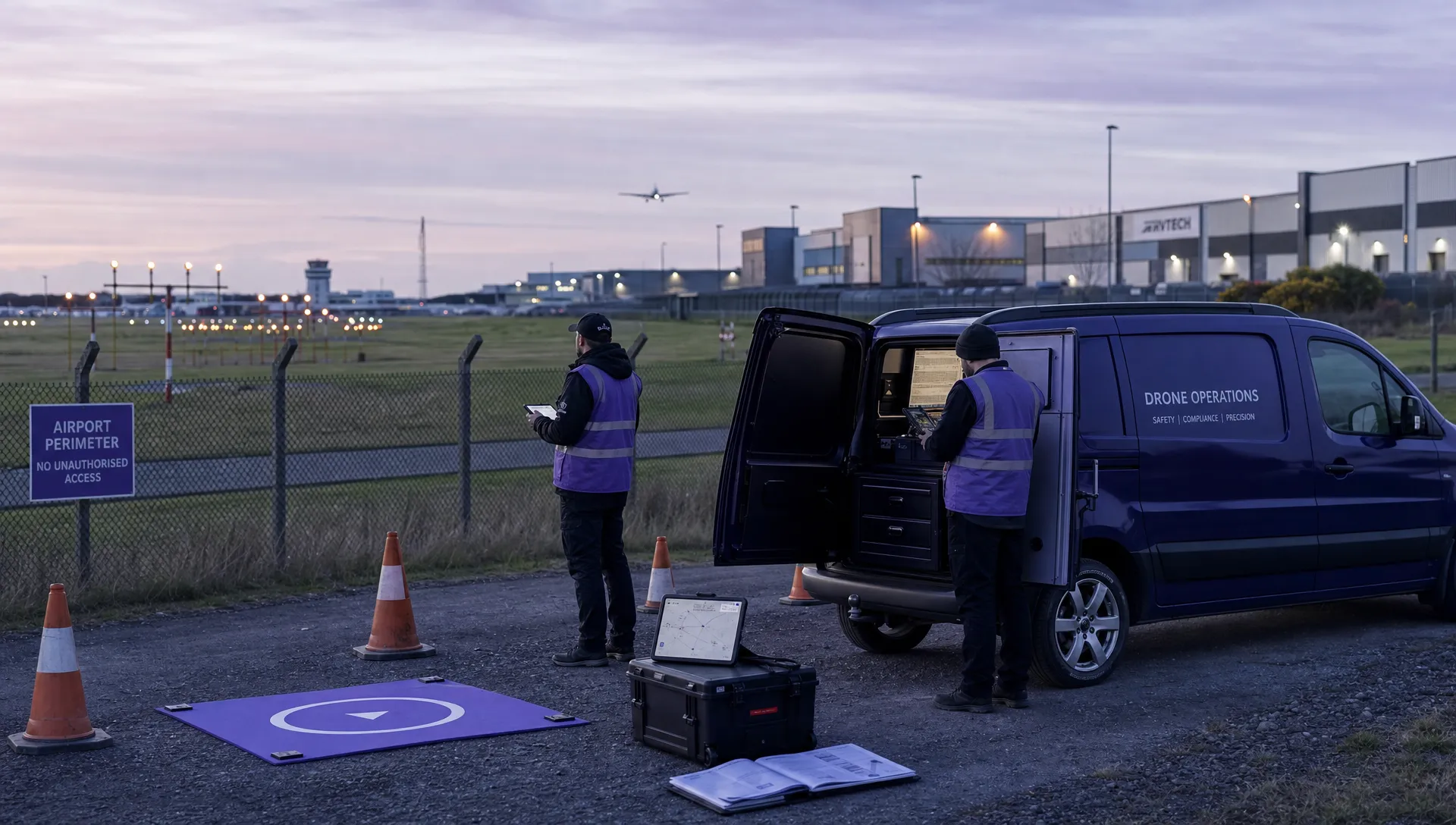 Class C Airspace Drone Rules for Commercial Flights →
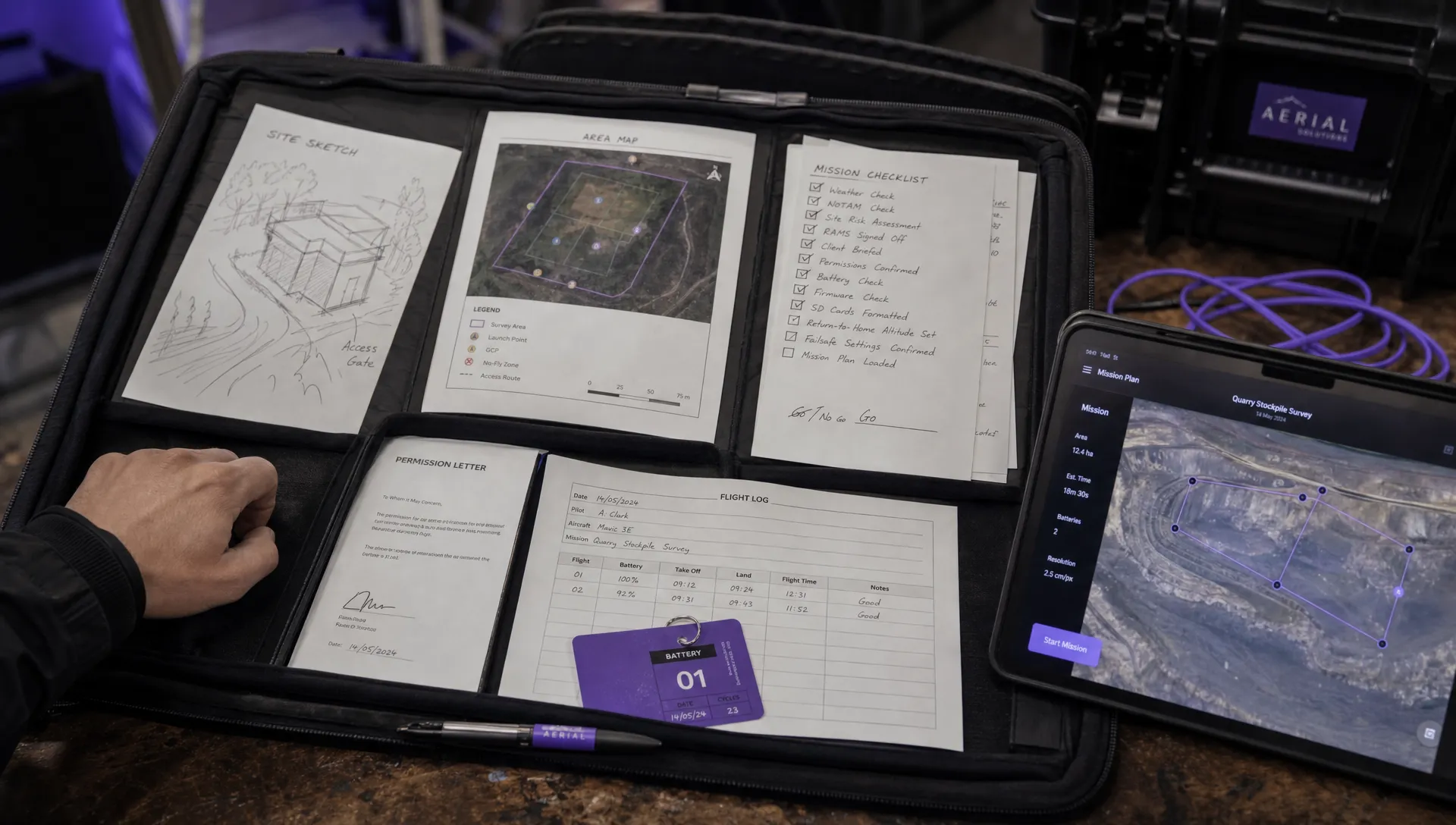 How to Create a Drone Job Pack for Every Mission →
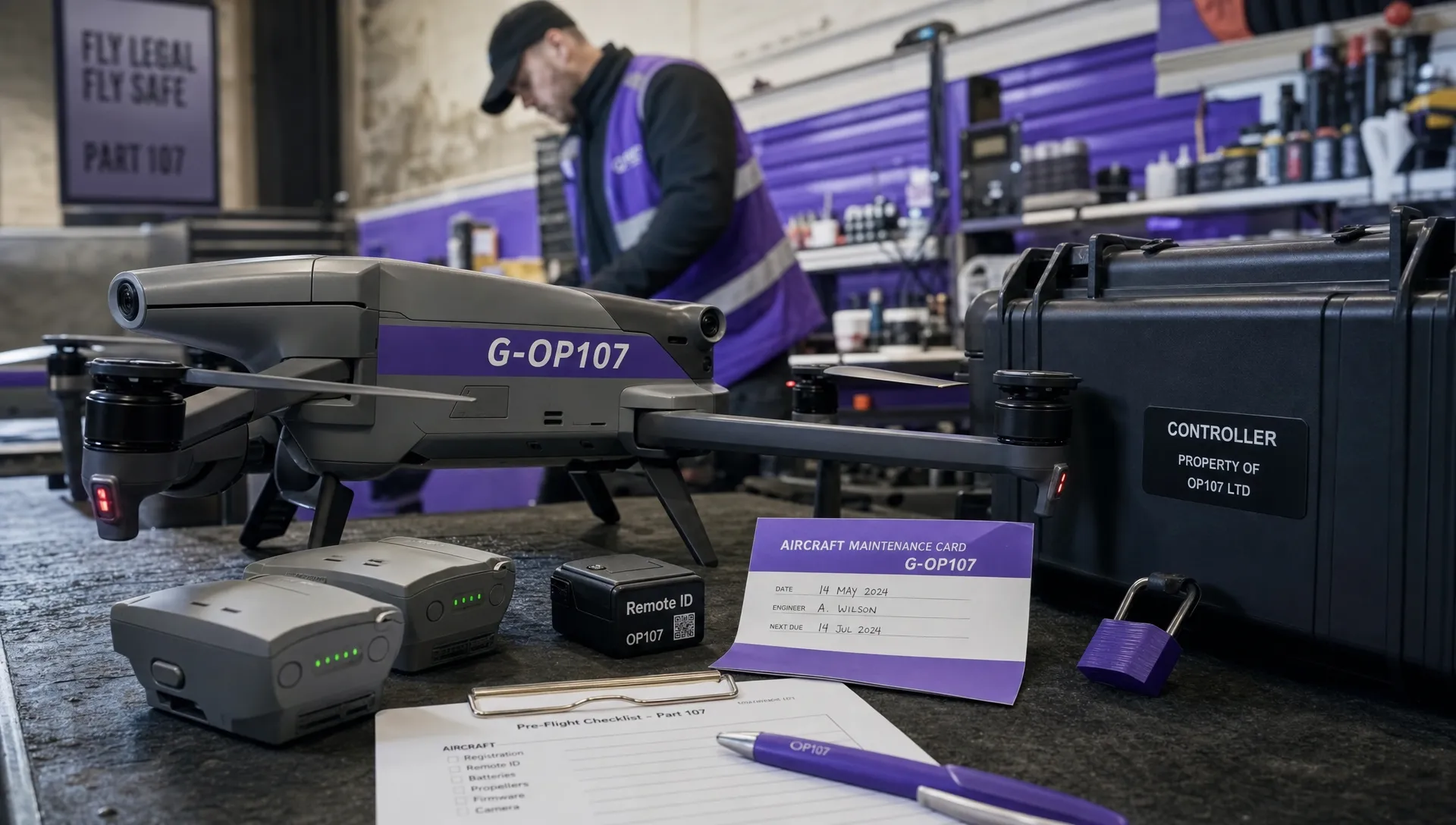 FAA Small UAS Rule: Key Requirements for Operators →