
What the BVLOS ARC Report Means for UAS Operators
The BVLOS ARC report is one of the most important regulatory signposts for commercial drone operators, even though it is not, by itself, a law. It sets out how routine beyond visual line of sight operations could move from exceptional approvals to a more scalable framework built around risk, aircraft performance, pilot competency and operational controls.
For UAS operators, that matters because BVLOS is not just a technical milestone. It changes the economics of drone work. Linear infrastructure inspections, wide-area mapping, emergency response, security patrols, environmental monitoring and logistics all become more viable when the aircraft can operate safely beyond the unaided view of the remote pilot.
The practical question is not simply “when will BVLOS be allowed?” It is “what should operators start proving now so they are ready when regulators, clients and insurers expect stronger evidence?”
What is the BVLOS ARC report?
ARC stands for Aviation Rulemaking Committee. The FAA UAS BVLOS ARC final report, published in 2022, brought together regulator, industry and public-sector stakeholders to recommend how the United States could enable routine BVLOS drone operations.
The report focused on the gap between today’s approval-by-exception model and a future in which properly equipped operators can conduct repeatable BVLOS missions under defined rules. Its recommendations are most directly relevant to FAA-regulated operations, but they are worth reading globally because many of the same problems appear in UK, European and international BVLOS frameworks.
If you need a primer before getting into the regulatory detail, Dronedesk has a useful explainer on what a BVLOS drone is and why it matters.
The key point: the BVLOS ARC report is not an operating permission. It does not authorise a drone company to fly beyond visual line of sight. Operators still need to follow the rules that apply in their jurisdiction, such as FAA permissions in the US or the UK Civil Aviation Authority’s drone rules and categories in the UK. What the report does provide is a clear view of the direction regulators are likely to favour.
The core shift: from individual waivers to scalable operations
Most current BVLOS approvals rely on detailed, case-by-case assessment. That approach makes sense for early adoption, but it does not scale well for high-volume commercial operations. Each new route, aircraft type, location or use case can create fresh paperwork and uncertainty.
The BVLOS ARC report recommends a more structured model, including a dedicated regulatory framework for BVLOS, often discussed in relation to a future Part 108 in the US. The direction is performance-based rather than prescriptive. Instead of assuming every BVLOS mission must be assessed from scratch, the framework would allow operators to demonstrate that they meet recognised standards for a defined type of operation.
For UAS operators, that suggests three operational changes:
- BVLOS readiness will depend on repeatable procedures, not just a strong one-off safety case.
- Aircraft, crew, software and operational records will need to be controlled more tightly.
- The quality of your evidence will matter as much as the quality of your aircraft.
That last point is easy to underestimate. A regulator reviewing BVLOS operations will not only look at the drone. They will also look at how you plan, brief, fly, monitor, log, maintain and learn from each mission.
What the report says about risk
The BVLOS ARC report treats risk as something to be categorised, reduced and evidenced. That is a familiar concept for experienced operators, but the report pushes it further by tying the level of oversight to the type of operation, the aircraft’s characteristics and the environment below and around the flight.
A small aircraft operating over a sparsely populated rural corridor does not create the same risk profile as a heavier platform operating near congested areas. The report therefore supports a risk-based approach that considers factors such as kinetic energy, population exposure, airspace complexity, command and control reliability, detect and avoid capability and operational mitigations.
This aligns with the wider global move towards structured operational risk assessment. In Europe and other jurisdictions, the JARUS SORA package has influenced how operators build safety cases for specific category flights. The terminology differs, but the direction is similar: regulators want operators to show that they understand the risk, have selected suitable mitigations and can prove the process is repeatable.
For survey companies, that may mean documenting how flight corridors are selected and how ground risk is reduced. For utility companies, it may mean proving that routine infrastructure inspection routes are managed consistently. For emergency services, it may mean showing how rapid deployment can still follow defined operational controls.
Key recommendations and what they mean in practice
The report is long, but several themes stand out for commercial UAS operators.
| BVLOS ARC theme | Practical meaning for operators |
|---|---|
| Dedicated BVLOS framework | Prepare for operator-level approvals and standardised procedures rather than relying only on isolated waivers. |
| Risk-based authorisation | Build safety cases around the aircraft, operating environment and mission profile instead of treating all BVLOS flights the same. |
| Detect and avoid performance | Be ready to explain how the aircraft remains well clear of other airspace users without unaided visual observation. |
| Command and control reliability | Document link coverage, lost link behaviour, contingency plans and communication procedures. |
| Remote pilot qualification | Expect higher training and competency expectations for BVLOS missions than for simple visual line of sight work. |
| Third-party services | Check the reliability, limitations and traceability of airspace, surveillance, weather or UTM-related services used in planning and flight. |
| Record keeping | Maintain consistent evidence of planning, approvals, risk assessments, checklists, logs, maintenance and crew decisions. |
None of these themes should surprise a professional operator, but the report brings them together into a regulatory direction that rewards maturity. Operators that already treat documentation as part of safety, rather than just admin, will be better placed.
Detect and avoid becomes central
In visual line of sight operations, the remote pilot or observer can use direct vision to help remain clear of people, property and other aircraft. BVLOS changes that assumption. The aircraft still needs a way to avoid conflicts, but the human eye is no longer the primary mitigation.
That is why detect and avoid, often shortened to DAA, is central to the BVLOS ARC report. DAA can involve onboard sensors, ground-based surveillance, cooperative aircraft signals, procedural deconfliction, airspace restrictions or a combination of methods. The right solution depends on the mission.
For many operators, the operational challenge will be explaining the limits of the DAA strategy. It is not enough to say a system is fitted. You need to know what it can detect, where it works, what it cannot detect, how alerts are handled and what the remote pilot or automation does next.
This is especially relevant for public safety and emergency response teams. A drone as first responder programme may need rapid launch capability, but BVLOS approval will still depend on demonstrating that the system can operate safely in dynamic airspace and changing ground conditions.
Shielded operations could matter for infrastructure work
One of the most discussed parts of the report is the idea that certain low-altitude operations close to structures or infrastructure may present a lower airspace conflict risk. Crewed aircraft are generally less likely to operate close to power lines, towers, bridges and similar obstacles, except for specific missions.
The report recommends regulatory thinking that recognises this lower-risk environment, often described as shielded operations. For utility companies, rail operators, telecoms providers and inspection contractors, this is significant. Many high-value drone missions follow infrastructure corridors where the aircraft can remain near assets rather than crossing open airspace at higher altitude.
That does not make the operation automatically safe. Ground risk, public access, electromagnetic interference, contingency landing areas, property permissions and nearby aerodromes still matter. But it does suggest that future BVLOS frameworks may be more accommodating to well-controlled infrastructure inspection than to broad, unconstrained flights over complex environments.
What it means for different UAS operators
The BVLOS ARC report affects different organisations in different ways.
Survey companies should expect clients to ask more detailed questions about operating permissions, flight logs, data assurance and risk management. BVLOS can improve productivity on large sites, but only if the operator can show that data capture and flight safety are both controlled.
Utility companies should look at their inspection routes as repeatable operational environments. A power line corridor, pipeline or rail route can be analysed, segmented and documented in advance. That preparation may support stronger safety cases when BVLOS permissions are sought.
Emergency services should focus on governance. BVLOS can support search and rescue, incident assessment, fireground awareness and first responder deployment, but emergency use does not remove the need for training, audit trails and clear command responsibility.
Independent drone operators should treat BVLOS as a capability that clients will eventually expect from serious providers. Even if you are not applying for BVLOS approval today, better planning records, aircraft configuration control, maintenance logs and crew training evidence will improve your position.

How UAS operators can prepare now
You do not need to wait for future rulemaking to improve BVLOS readiness. The strongest preparation is to make your current operations more consistent, measurable and auditable.
Start with your operational documentation. Regulators and enterprise clients will want to see that your procedures are not improvised. Your operations manual, risk assessment process, emergency procedures, maintenance records and pilot competency records should all match how work is actually done in the field.
Next, review your planning process. A BVLOS-ready planning pack should capture the route, airspace constraints, ground risk, proximity hazards, communications plan, lost link behaviour, weather limits, crew roles and go/no-go criteria. The aim is not to create paperwork for its own sake. The aim is to make safety-critical decisions visible and repeatable.
You should also review your technology assumptions. If your BVLOS concept relies on mobile connectivity, radar, ADS-B In, UTM services, terrain data or manufacturer automation, document the limitations. What happens if coverage drops? What happens if data is delayed? What happens if the aircraft behaves differently after a firmware update?
A practical preparation checklist includes:
- Map the BVLOS use cases that would create real operational value for your organisation.
- Identify the aircraft, sensors, command links and software needed for those use cases.
- Build standard operating procedures for each repeatable mission profile.
- Record training and competency evidence for pilots, observers and operations managers.
- Strengthen maintenance, battery, firmware and configuration control.
- Standardise risk assessments, checklists, flight logs and post-flight reviews.
- Track incidents, anomalies and lessons learned in a format you can use for future safety cases.
If risk assessment is the weak point in your current workflow, Dronedesk’s guide to building a drone flight risk assessment that works is a useful next step.
The admin burden is becoming an operational issue
BVLOS will not be unlocked by aircraft capability alone. The operator’s management system will matter. That includes how tasks are assigned, how sites are assessed, how crews are briefed, how checklists are completed, how logs are stored and how evidence is retrieved when needed.
This is where many organisations feel the pain. Drone teams often begin with spreadsheets, shared folders and messaging apps. That can work for occasional visual line of sight jobs, but it becomes fragile as operations become more complex. BVLOS readiness usually requires tighter control over people, aircraft, documents, procedures and records.
Dronedesk is designed for that operational layer. Its drone operations management features include client management, fleet management, team management, airspace intelligence, proximity intelligence, flight planning, flight logging, data reporting, configurable checklists and risk assessments. For operators preparing for more advanced approvals, having those workflows in one place can make it easier to show how decisions were made and how each flight was managed.
No software can replace regulatory approval, qualified personnel or a sound safety case. But a clear operational system can reduce the risk of missing evidence when it matters.
Common mistakes to avoid
The first mistake is treating the BVLOS ARC report as permission to fly. It is a recommendation document, not an authorisation. Always check the current requirements in the jurisdiction where the flight will take place.
The second is focusing only on the aircraft. A capable platform is essential, but BVLOS safety also depends on route design, operating procedures, command and control, crew training, contingency management and record keeping.
The third is writing a safety case that cannot be repeated. If every mission relies on individual heroics, undocumented local knowledge or ad hoc judgement, it will be difficult to scale. Regulators tend to favour systems that can produce the same safe behaviour again and again.
The fourth is ignoring public confidence. The BVLOS ARC report is focused on aviation safety, but real-world operations also need to consider privacy, noise, local consultation, land access and client communications. A technically safe operation can still fail if stakeholders are surprised by it.
Frequently Asked Questions
Is the BVLOS ARC report legally binding? No. The report contains recommendations to the FAA. It does not create operating authority by itself. UAS operators still need the permissions, waivers or authorisations required by the regulator in the country where they fly.
Does the BVLOS ARC report only matter in the United States? It is an FAA report, so its direct regulatory relevance is in the US. However, the themes are useful internationally because many regulators are working through the same BVLOS issues, including detect and avoid, ground risk, command link reliability and operator competency.
What is the biggest takeaway for commercial UAS operators? The biggest takeaway is that routine BVLOS will depend on repeatable, evidence-led operations. Operators should be able to prove how they plan, assess, brief, fly, log and review missions.
Will BVLOS remove the need for visual observers? Not necessarily. Some BVLOS approvals may still use visual observers or other procedural mitigations, depending on the operation. The long-term direction is towards reliable detect and avoid methods that reduce dependence on continuous unaided visual observation.
How should utility companies prepare for BVLOS inspections? Utility companies should document repeatable corridors, identify ground and air risks, standardise procedures, manage asset permissions and ensure inspection partners can provide strong operational records. Shielded or infrastructure-adjacent operations may be important in future regulatory models.
Can emergency services use BVLOS more easily than commercial operators? Emergency services may have strong public interest use cases, but they still need governance, training, operational control and regulatory authority. Rapid response capability should be supported by pre-planned procedures and clear accountability.
Bringing BVLOS readiness into everyday operations
The BVLOS ARC report points towards a future where advanced drone operations are judged by evidence, consistency and safety performance. That future will favour UAS operators that already run disciplined operations today.
If your organisation is preparing for more complex missions, start by strengthening the basics: planning, risk assessment, checklists, logging, fleet records and team accountability. Those are not just administrative tasks. They are the foundation for credible BVLOS operations.
To see how a single platform can support those workflows, explore Dronedesk and review how it fits your current drone operations management process.
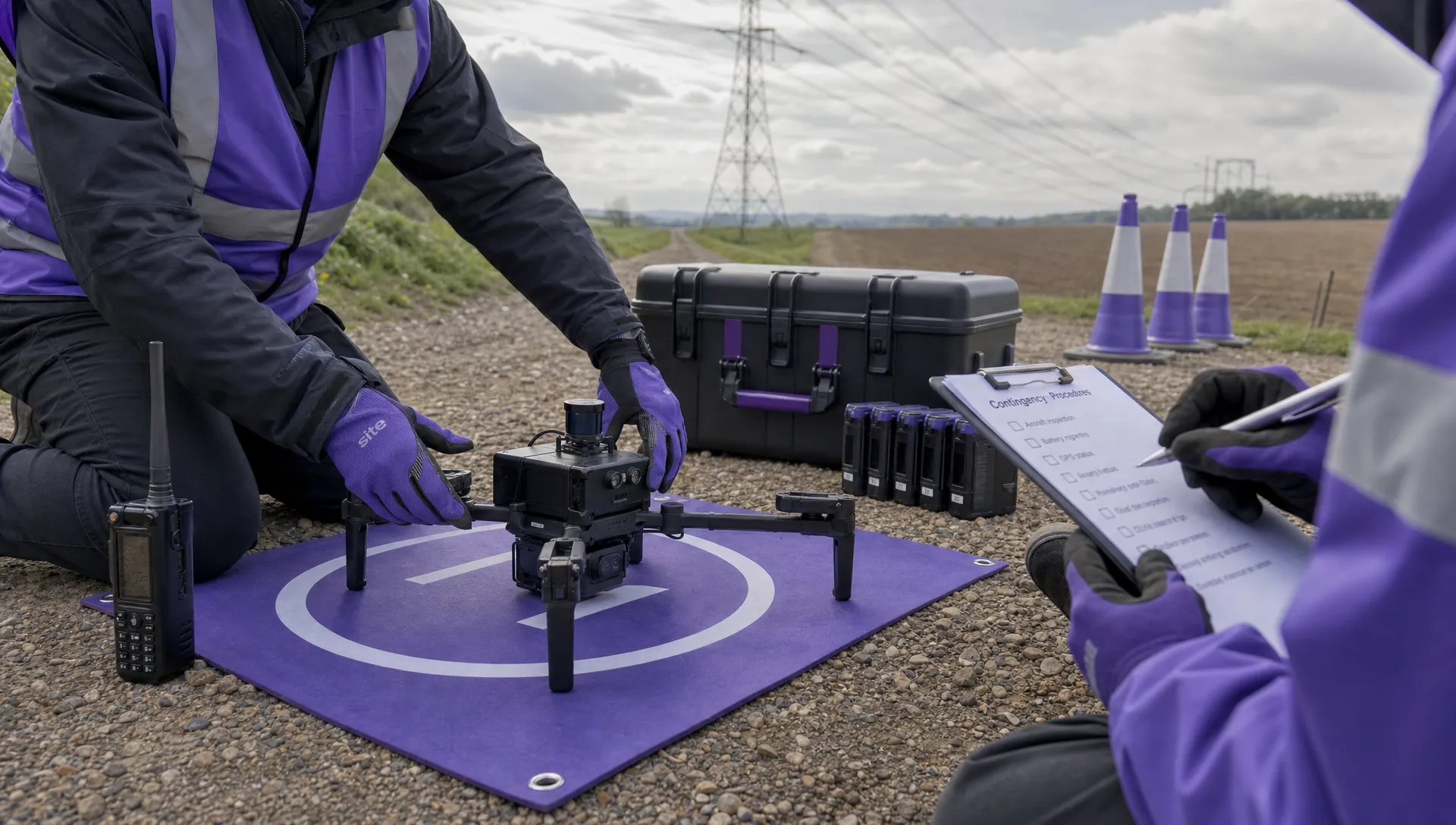 BVLOS Drone Requirements for Building a Safety Case →
 Drone Pilot Test Mistakes That Cost Candidates Marks →
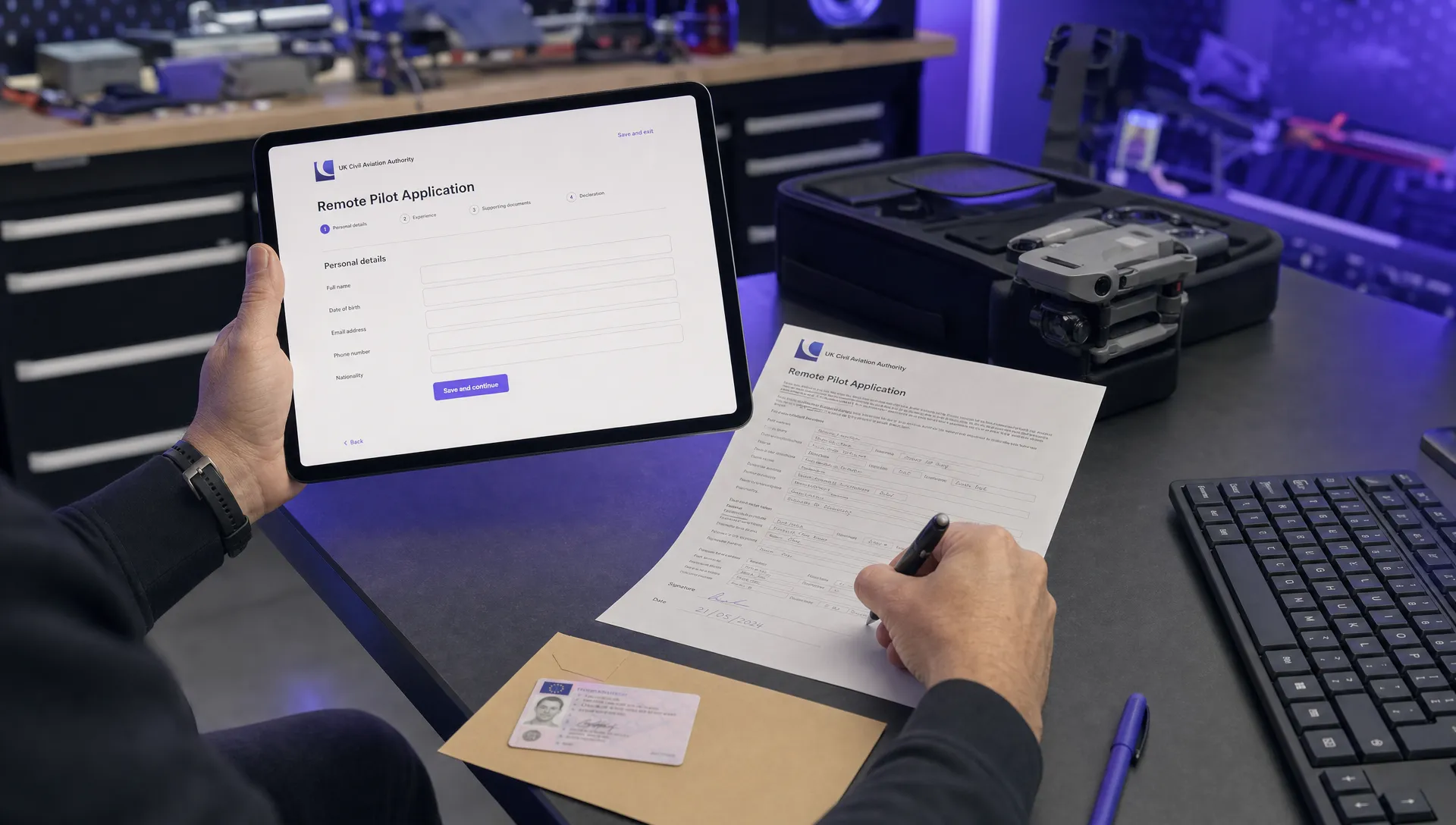 FAA 107 License vs Part 107 Certificate: What’s the Difference? →
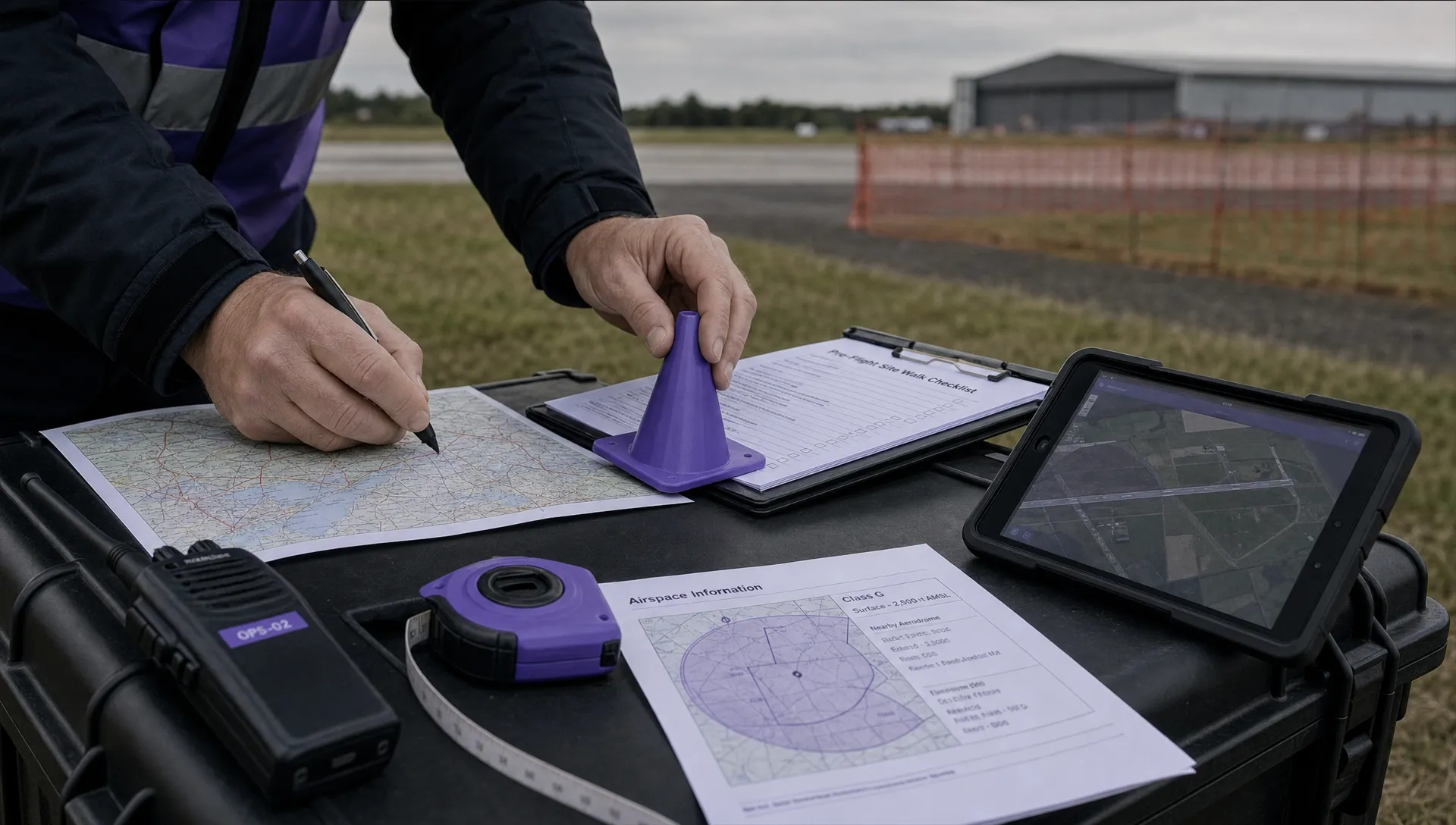 Drone Airport Rules: A Field Checklist for Site Assessments →
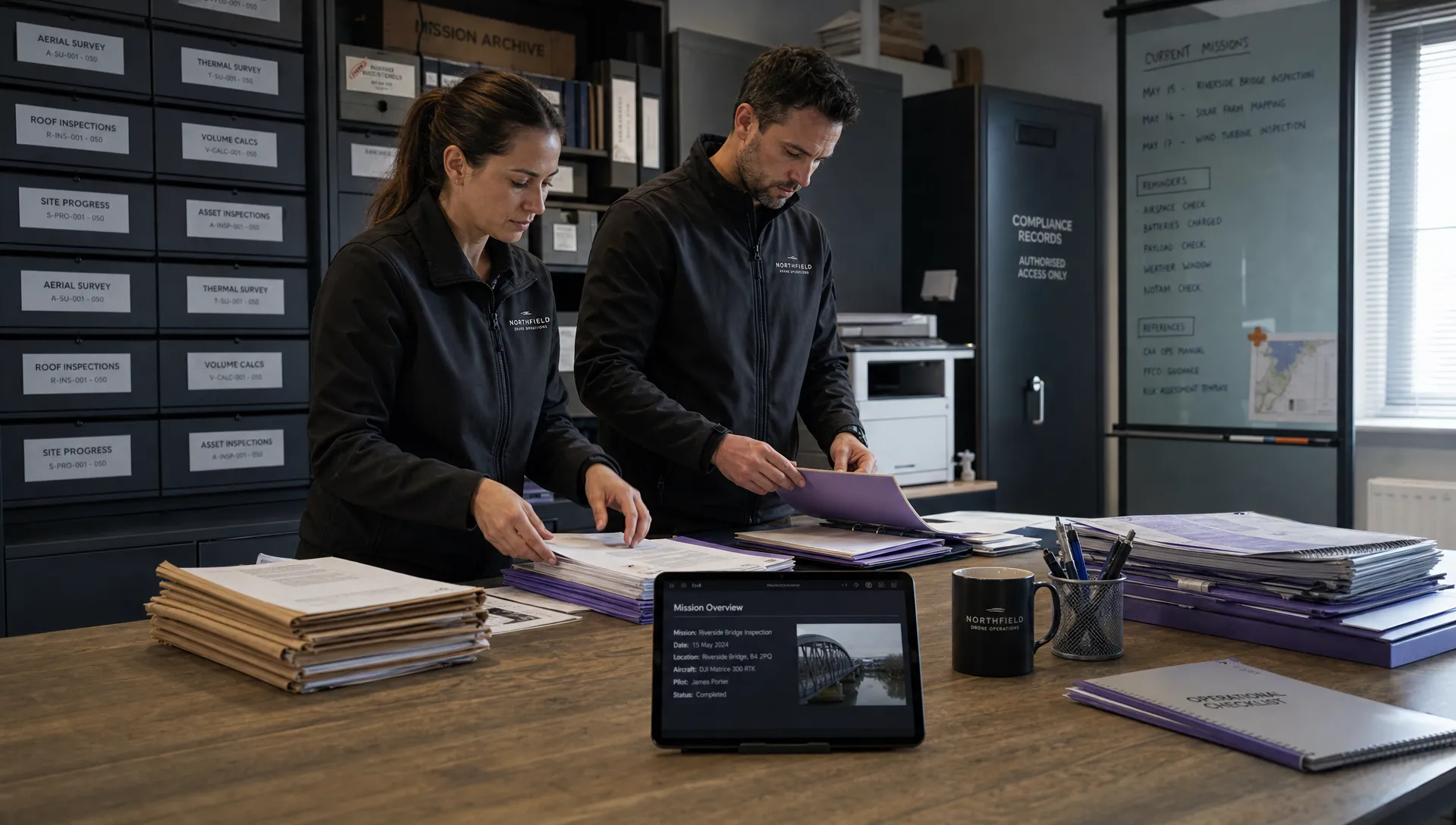 FAA Part 107 Record-Keeping Rules for Commercial Teams →
 How to Review a DJI Flight Log After an Unexpected Event →
 Drone Laws Around the World: A Pre-Flight Research Framework →
 How to Compare Drone Survey Services for Complex Sites →
 How to Start a Drone Mapping Business With a Clear Workflow →
 Class C Airspace Drone Rules for Commercial Flights →