
Your Guide to the Best Drone Ops Compliance
Proper drone ops compliance isn't a static checklist you can tick off and forget about. It's a living, breathing system. At its core, it’s a proactive mindset that blends risk management, sticking to the rules, and a deep-seated commitment to operational safety. Get this right, and you're building a professional operation that's legally solid.
Decoding Modern Drone Compliance

Trying to navigate the world of drone operations can feel a bit like being a modern-day ship captain. You have to constantly keep an eye on changing weather (regulations), avoid crowded shipping lanes (airspace traffic), and have a firm grasp of international maritime laws (global rules).
Just as a captain wouldn't dream of leaving port without checking their charts and the latest forecast, a pilot simply cannot launch without a solid compliance framework in place. This isn't just for big enterprise fleets inspecting critical infrastructure; it's a fundamental principle for everyone, right down to the solo photographer capturing aerials for a local estate agent.
The stakes are incredibly high. Getting compliance wrong isn't a minor slip-up; it can have massive consequences that could ground your entire business. We're talking about steep financial fines that could easily cripple a small company, or even the suspension or outright revocation of a pilot’s certification.
More Than Just Following Rules
This is the key takeaway: top-tier drone compliance is about more than just memorising a list of regulations. It's about weaving a culture of safety and professionalism into the very fabric of your work. That proactive stance is what really separates the amateurs from the trusted industry leaders.
To get there, you need a solid foundation. Let's break down the essential pillars that every compliant operation is built on.
Key Pillars of Drone Operations Compliance
This table summarizes the fundamental areas every drone operator must manage to ensure comprehensive compliance.
| Compliance Pillar | Description | Example Action |
|---|---|---|
| Regulatory Knowledge | Keeping up-to-date with all local, national, and international drone laws from bodies like the CAA, FAA, or EASA. | Regularly reviewing the latest regulatory updates and subscribing to official aviation authority newsletters. |
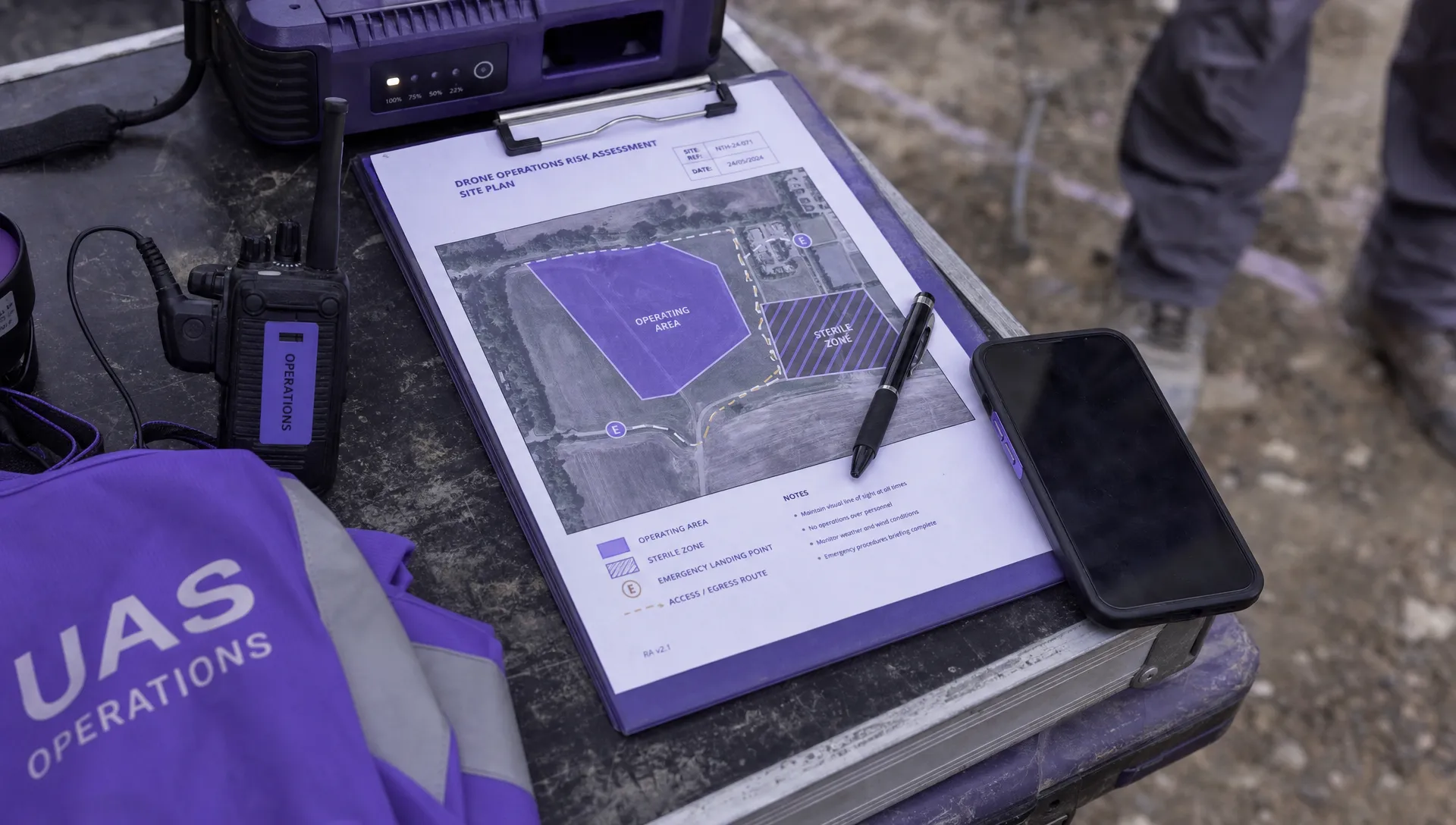
| Risk Management | A systematic process to identify, assess, and mitigate potential hazards before you even think about taking off. | Conducting a detailed, site-specific risk assessment for every single flight, not just reusing an old one. |
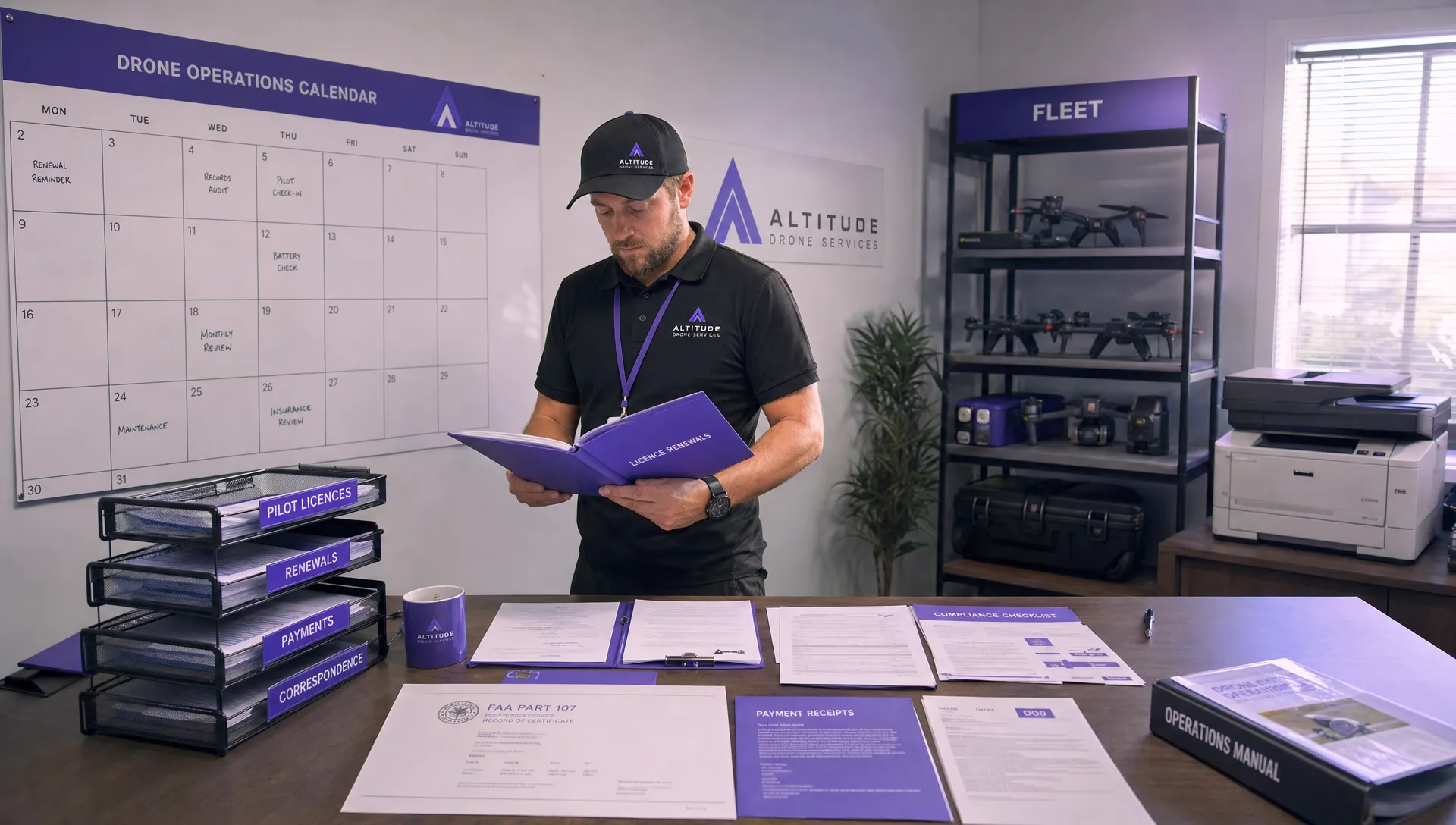
| Meticulous Record-Keeping | Maintaining detailed logs for every flight, all maintenance activities, and pilot certifications to create a clear, auditable trail. | Using a platform like Dronedesk to automatically log flight times, maintenance schedules, and pilot currency. |
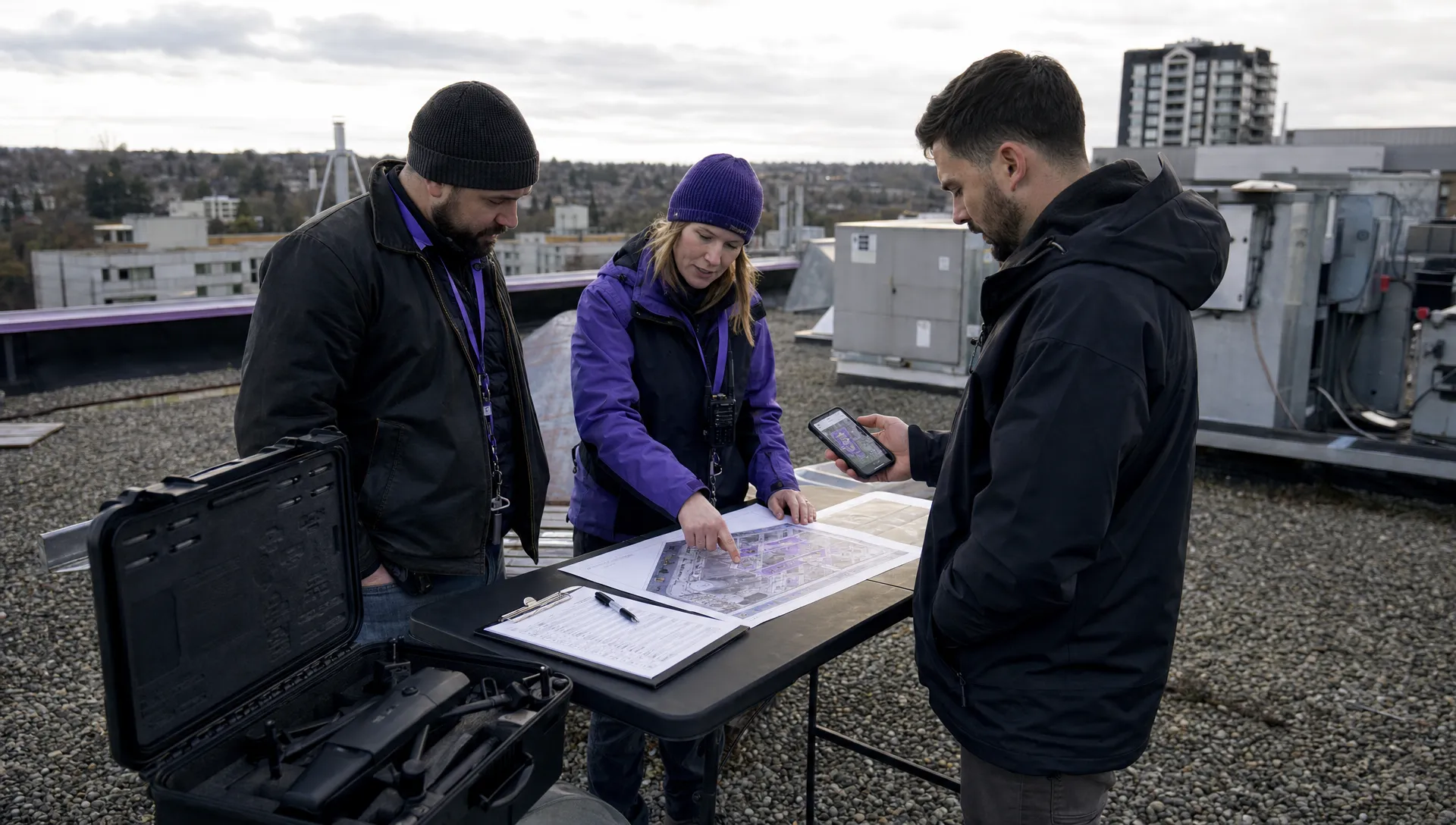
| Public Safety | Making the safety of people and property on the ground the absolute top priority, above any other mission goal. | Establishing clear ground safety procedures, including cordoning off the takeoff/landing area and briefing any bystanders. |
Ignoring these pillars is like building a house on a shaky foundation. It might look fine for a while, but it's just a matter of time before something gives way. And when it does, the damage isn't just financial—it can shatter your professional reputation, making it next to impossible to win new clients or get insured.
Think of a robust compliance program as your operational insurance policy. It protects your business, your clients, and the public by proving your commitment to safe and legal drone use. It turns a potential liability into a massive professional advantage.
Ultimately, a systematic approach to drone compliance isn't a burden; it's what makes your business thrive. It builds trust with clients, opens the door to more complex and lucrative jobs, and ensures you've got a long-term future in an industry that's only going to get more regulated. It's the bedrock of operational excellence.
Navigating the Global Regulatory Landscape

Operating drones across different countries is a lot like international travel; every destination has its own unique customs, laws, and entry requirements. A flight that’s perfectly legal in one region could land you in hot water in another. To stay compliant, you first have to accept that there’s no single, universal rulebook for the skies.
What we have instead is a patchwork of national and regional regulations, each built with different priorities in mind. This variation is a direct response to the absolute explosion of the drone industry.
The global drone market is expected to hit roughly USD 54.6 billion by 2025, with a compound annual growth rate (CAGR) of over 20%. This kind of surge demands strict rules, and those rules change dramatically depending on where you are.
For instance, in the U.S., drones generally need to be registered and flown below 400 feet within the operator's line of sight. Over in the European Union, they've adopted a risk-based system under EASA regulations.
The FAA Approach in the United States
In the United States, the Federal Aviation Administration (FAA) takes a very airspace-centric view of things. Think of the FAA as the ultimate air traffic controller for the entire country. Its main job is to keep the National Airspace System safe, and that includes everything from a jumbo jet to your DJI Mini.
This philosophy results in regulations that prioritize clear boundaries and tight control. For commercial operators flying under Part 107, the key pillars of the FAA's framework include:
- Pilot Certification: You have to pass an aeronautical knowledge test to get your Remote Pilot Certificate.
- Aircraft Registration: Any drone weighing over 0.55 pounds (250 grams) must be registered with the FAA.
- Operational Limitations: There are strict rules on where and how you can fly. This includes maintaining a visual line of sight (VLOS) and staying below 400 feet.
- Airspace Authorizations: Want to fly near an airport? You’ll need specific authorization through systems like LAANC (Low Altitude Authorization and Notification Capability).
The FAA’s system is pretty prescriptive. You get a clear set of rules designed to keep drones safely away from crewed aircraft. Follow them, and you’re good to go.
The EASA Model in the European Union
Fly over to the European Union, and you'll find a completely different philosophy. The European Union Aviation Safety Agency (EASA) bases its rules on risk. Instead of a one-size-fits-all approach, EASA sorts drone operations into categories based on the level of risk they pose to people and property. This creates a more flexible, but also more complex, system.
The EASA framework is built on a simple principle: the rules should be proportionate to the risk. A tiny drone flown in an open field is a world away from a heavy-lift drone operating over a crowded city, and the regulations reflect that difference.
EASA's system breaks down into three main categories:
- Open Category: This is for your low-risk flights. It has its own subcategories based on drone weight and how close you’ll be to people, but you generally don't need prior authorization.
- Specific Category: For medium-risk operations that don’t fit into the Open category, like flying beyond visual line of sight (BVLOS). This requires a detailed risk assessment and a green light from the national aviation authority.
- Certified Category: This is the big one, for high-risk operations on par with traditional aviation, like transporting people or dangerous goods.
This risk-based approach gives operators more flexibility, but it also puts the onus on them to conduct really thorough risk assessments. Juggling all this effectively calls for a solid system, and using a specialised https://blog.dronedesk.io/regulatory-management-tool-for-drones/ can make navigating these complexities a whole lot easier.
Building a Robust Compliance Program
Knowing the regulations is one thing, but actually putting them into practice is where a truly professional drone operation begins to take shape. A solid compliance program isn't just about good intentions; it's built from specific, repeatable actions that foster a culture of safety and accountability. Without these core elements, even the most skilled pilot is flying on shaky ground.
Think of it like building a house. You wouldn't dream of putting up walls without first pouring a solid foundation. In the world of drone operations, each component is just as vital, working together to create a structure that's not only safe but also legally defensible. This blueprint ensures every single flight is built on a bedrock of due diligence.
Meticulous Flight and Maintenance Logging
The absolute foundation of your compliance house is meticulous logging. Every flight, every battery cycle, and every bit of maintenance has to be recorded. These logs are your definitive history, proving what happened, when it happened, and who was at the controls. If you ever face an audit or an incident, these records are your first and strongest line of defence.
A detailed log should capture far more than just takeoff and landing times. It needs to include the pilot-in-command, location, duration, and any important observations made during the flight. In the same way, maintenance logs for your drones, batteries, and controllers create an auditable trail of your equipment's health, showing you're on top of safety management.
This diagram shows how a successful compliance strategy is built upon a policy framework, training, and automated monitoring.

As you can see, a strong program starts with policy, is brought to life through practical training, and is held together with the right technology.
The Framework of Pre-Flight Checklists
If logs are the foundation, then comprehensive pre-flight checklists are the structural framework holding everything up. Rushing a pre-flight check is one of the quickest ways to invite unnecessary risk into an operation. A standardized, thorough checklist ensures nothing gets missed, from a physical look-over of the equipment to checking software and firmware.
A good checklist is a living document, tailored specifically to your aircraft and the kinds of jobs you do. It should cover all the key areas to confirm you're ready to fly:
- Physical Inspection: A close look for any damage to propellers, arms, or the drone's body.
- System Status: Verifying battery levels, GPS signal strength, and controller connectivity.
- Mission Plan Review: Confirming the flight path, emergency plans, and any geofence settings.
- Weather and Environment: A final check on wind speed, visibility, and potential hazards on the ground.
Using a checklist isn't a sign of being a rookie; it's the mark of a pro. The most experienced airline pilots on the planet use them for every single flight because they are proven to cut down on human error.
Essential Utilities: Airspace Authorizations
With the foundation poured and the frame built, you need to connect the utilities—this is where airspace authorizations come in. You can't just launch your drone wherever you feel like it. Understanding and getting the right permissions to operate in controlled airspace is a non-negotiable part of flying legally.
For operators in the United States, this usually means getting familiar with the FAA's Low Altitude Authorization and Notification Capability (LAANC) system. It gives pilots near-instant approval to fly in controlled airspace around many airports.
Gaining proper airspace authorization isn't just about ticking a regulatory box; it's a critical safety protocol. It makes sure air traffic controllers know you're there, preventing potential conflicts with crewed aircraft and keeping the skies safe for everyone.
Skipping this step isn't just a compliance issue; it's a major safety breach that can have some pretty serious consequences.
Pilot and Equipment Management
Finally, properly managing your pilots and your gear is what ties the whole structure together. For teams, this means keeping track of pilot certifications, currency (like recent flight hours), and training records. Making sure every pilot is qualified and current is fundamental to maintaining high safety standards.
Effective equipment management means tracking the entire lifecycle of your assets. This includes knowing which drone is on which job, its full maintenance history, and its current status. Keeping all these records straight can be a real headache, which is why so many professional outfits rely on specialized tools. Platforms that offer integrated drone compliance software can automate a huge chunk of this tracking, making sure your records are always up-to-date and easy to find. Centralizing all this data creates a single, reliable source of truth for your entire operation.
The Future of Compliance for BVLOS and Automation

As drone technology comes of age, the industry is quite literally pushing beyond the horizon. The next great leap for drone operations is flying Beyond Visual Line of Sight (BVLOS). This isn’t just a small step forward; it's a game-changer that opens up entirely new business models and capabilities.
Think about a single pilot, sitting in a command center, managing a whole fleet of drones inspecting hundreds of miles of pipeline. Or picture automated drones zipping between hospitals to deliver medical supplies, all without an operator on-site. This is what BVLOS promises—turning drones from tools that need a human babysitter into truly autonomous assets.
But with this incredible freedom comes a whole new level of risk and complexity. The entire compliance framework has to adapt to make sure these advanced missions are flown safely, pushing the boundaries of what it means to achieve the best drone ops compliance.
The Shift From Waivers To Standardized Rules
For years, flying a BVLOS mission meant navigating a maze of red tape. Operators had to build painstakingly detailed safety cases and apply for special, one-off waivers from aviation authorities like the FAA. It was a slow, expensive, and unpredictable process that made it nearly impossible for businesses to scale their drone programs.
Thankfully, that’s all changing. We're now seeing a vital transition toward standardized BVLOS regulations across the globe. This is one of the most important milestones in the history of drone compliance. New legislation is setting the stage for a formal rulemaking process, designed to replace the clunky waiver system with a clear, predictable set of standards.
This regulatory evolution is like the difference between needing a special permit for every single car trip and having a universal driver's license and traffic laws. Standardized rules create a predictable, scalable environment where innovation can flourish safely.
This move is absolutely essential. It finally gives businesses the clarity they need to invest in advanced drone technology, knowing there's a clear path to deploying it at scale.
Core Technologies Enabling Safe BVLOS
Getting BVLOS right isn't just about new rules; it's hugely dependent on technology. A handful of critical systems have to work together perfectly to act as the pilot's eyes and ears when the drone is miles away, ensuring it can operate safely in shared airspace.
Here are the key pieces of the puzzle:
- Detect-and-Avoid (DAA) Systems: These are the drone's sensory organs. Using a combination of radar, LiDAR, or cameras, they spot other aircraft and obstacles in real-time, allowing the drone to automatically swerve out of the way.
- Failsafe Command and Control (C2) Links: A rock-solid communication link between the drone and the ground station is non-negotiable. These systems use redundant methods, like cellular and satellite, to make sure the pilot never, ever loses control.
- Remote Identification (Remote ID): Think of this as a digital license plate for drones. It broadcasts identification and location data, allowing air traffic control and law enforcement to see the drone in the sky—a must-have for safe integration.
Together, these systems create the technological safety net that makes long-distance, autonomous flights a reality. Understanding and implementing them is a central part of modern BVLOS compliance. Our guide on the future of drone ops takes a much deeper look at these requirements. As automation becomes the norm, compliance will shift from just logging pilot actions to proving the reliability of these complex systems.
Using Technology for Simplified Compliance
When you're starting out, managing compliance with spreadsheets and paper checklists might seem doable. But as your drone operation grows, that manual approach quickly becomes a liability. It's like trying to navigate a cross-country road trip with a giant, foldable paper map. Sure, you might get there eventually, but it’s slow, messy, and you're always one missed turn away from getting seriously lost.
The moment you start juggling multiple pilots, a growing fleet of drones, and a packed schedule of jobs, manual compliance just doesn't scale. The risk of a missed pre-flight check, an unlogged flight, or an overlooked airspace restriction skyrockets with every mission. This is where technology steps in, acting as your digital co-pilot to keep you on the right side of the rules with way less effort.
The Digital Co-Pilot for Your Operations
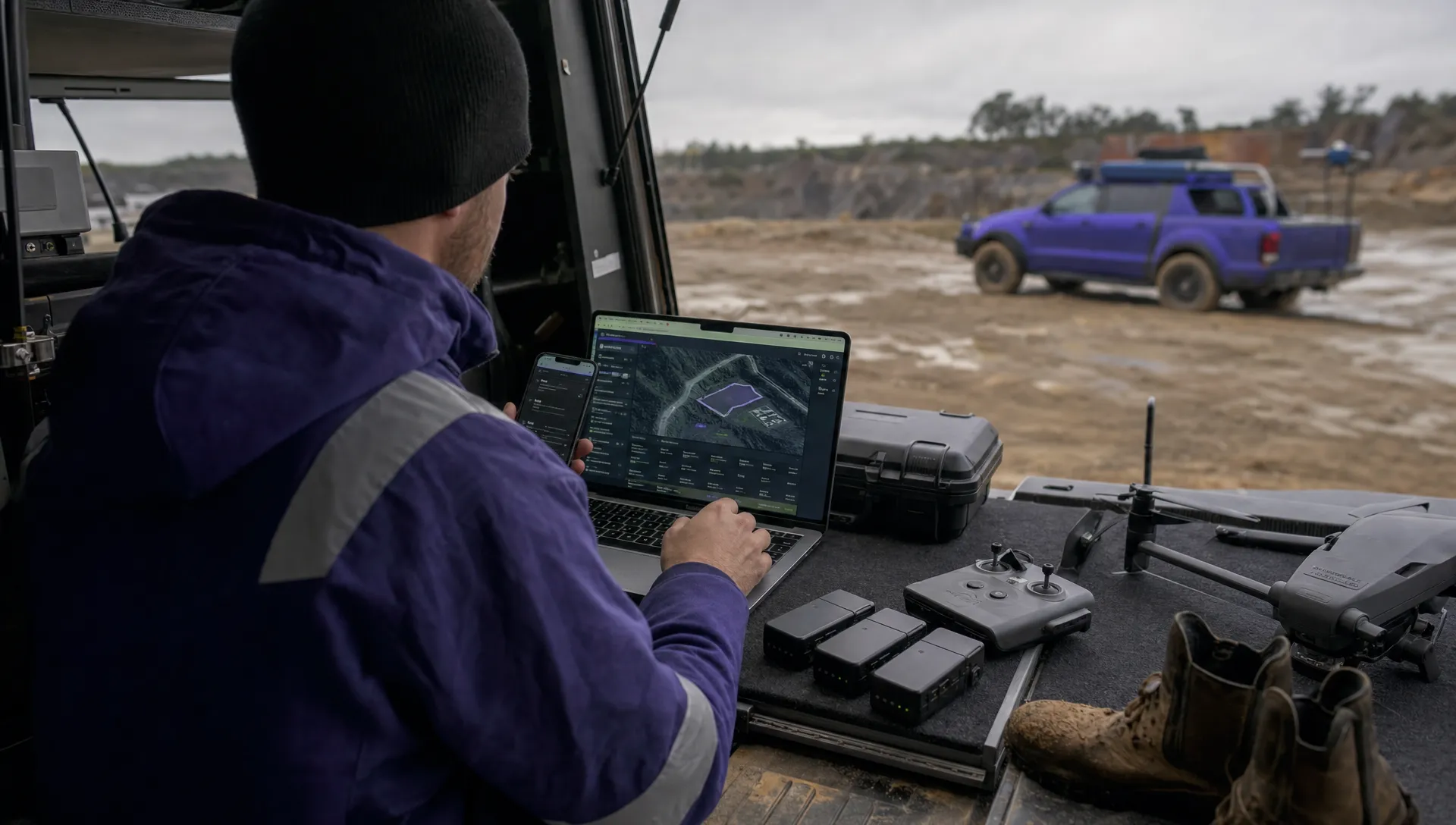
Modern drone management software is built to handle the repetitive, mission-critical tasks that are so essential for safety and legality. Instead of wrestling with spreadsheets, paper logs, and a half-dozen different apps, these tools pull everything into one clean, organised system. Think of it as swapping your paper map for a live GPS that doesn't just show you the best route but warns you about traffic jams, speed traps, and road closures in real time.
A platform like Dronedesk acts as the central nervous system for your entire drone business. It seamlessly connects every part of your workflow, from the first client call to the final project delivery, layering in automated compliance checks at every single step. This is what turns compliance from a headache into a background process that just works.
By automating routine checks and record-keeping, technology frees up pilots to focus on what they do best: flying the mission safely and effectively. It shifts the cognitive load of compliance from the pilot's memory to a reliable, auditable system.
This systematic approach is becoming non-negotiable as regulations get more complex around the world. These platforms offer automated workflows, real-time alerts for no-fly zones, detailed flight logging, and comprehensive reporting. It’s a software-driven method that seriously reduces your legal risks and the potential for hefty fines. You can find out more about how these regulatory compliance solutions protect operators on a global scale.
Key Compliance Tasks Automated by Technology
So, what does this actually look like day-to-day? A solid drone management platform takes care of the most critical compliance components, making sure nothing ever falls through the cracks.
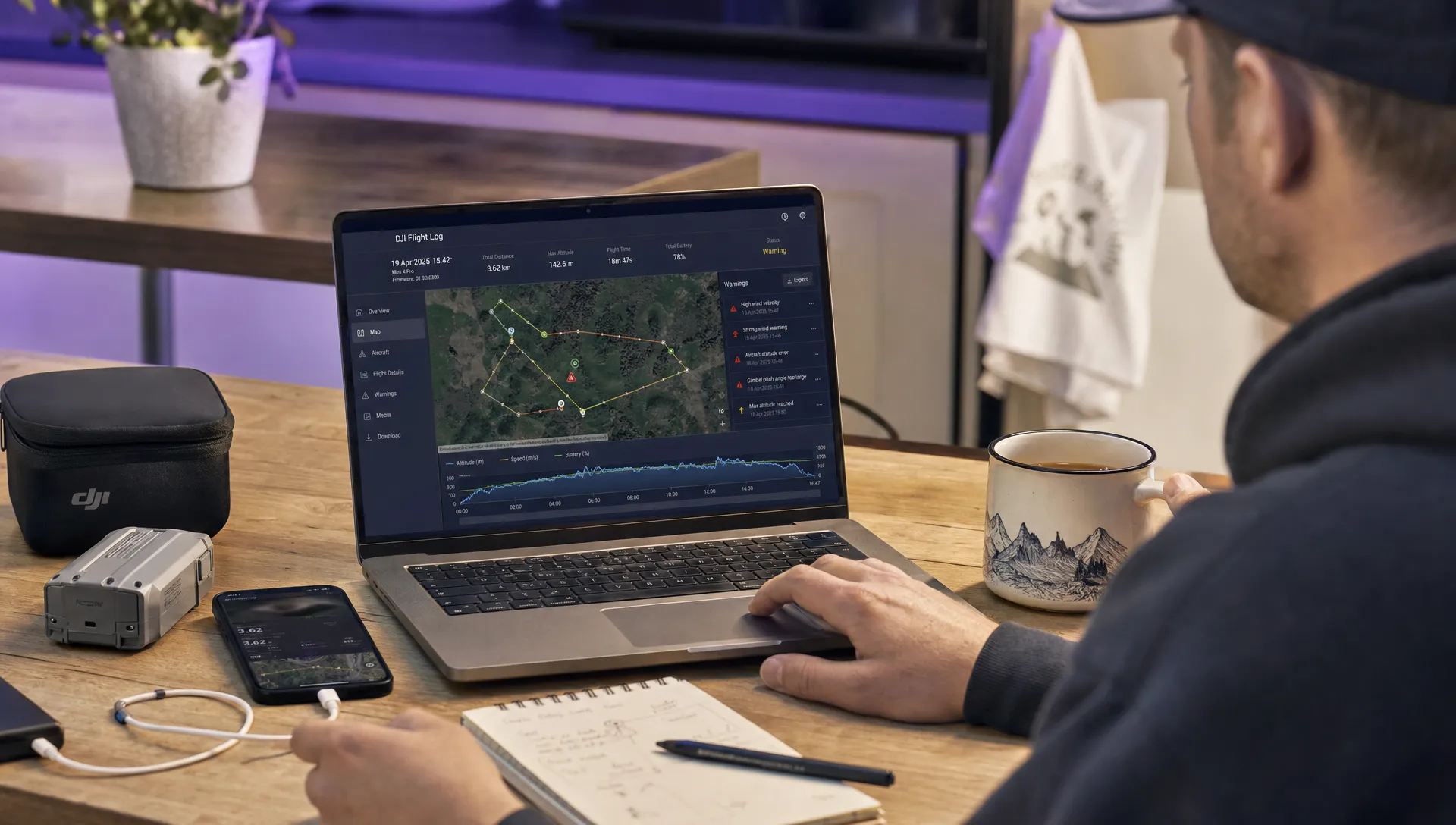
- Automated Flight Logging: Every single flight is automatically logged with detailed telemetry data—pilot, aircraft, flight time, location, the works. This completely eliminates manual data entry and creates a perfect, unchangeable record for any audits.
- Integrated Pre-Flight Checklists: You get dynamic checklists that are tailored to specific aircraft and job types, ensuring pilots tick off every required safety check before they even think about taking off. The system can even lock a mission until the checklist is fully completed.
- Real-Time Airspace Intelligence: Forget manually checking five different apps for airspace restrictions. The software gives you live data on controlled airspace, temporary flight restrictions (TFRs), and other ground hazards, all right there in the mission planning view.
- Centralized Risk Assessments: Standardized templates let you conduct quick but thorough risk assessments for every single job. These are automatically saved with the mission file, building a crystal-clear history of your safety planning and due diligence.
Demonstrating a Clear Return on Investment
Putting money into a compliance platform isn’t just another business expense; it's a strategic move with a very real return. The benefits go way beyond just keeping the authorities happy.
First off, the time savings are huge. Automating all that admin work can easily save an average of 90 minutes per job. That’s time you can put back into flying more missions, finding new clients, or just growing your business. For a busy operator, this adds up to hundreds of hours saved every year.
Second, you'll see a massive reduction in human error. A system that enforces checklists and automatically vets airspace is a critical safety net. It helps prevent the kind of simple mistakes that can lead to fines, damaged equipment, or a hit to your reputation.
Finally, having a perfect, auditable record of every operation is an incredibly powerful asset. It shows clients you're a true professional, makes insurance renewals a breeze, and gives you an ironclad defence if there's ever an incident or a regulatory audit. This level of organisation and accountability is what defines the very best drone ops compliance and separates the top operators from the rest.
The Three Pillars of Operational Excellence
Mastering drone regulations, building out your compliance program, and using the right tech aren't separate chores on a to-do list. Think of them as three interconnected pillars holding up your entire operation. Getting compliance right isn’t about grudgingly ticking boxes; it’s about wielding it as a massive professional advantage.
It's a bit like running an elite sports team. You don't win championships just by memorizing the rulebook. Success comes from a solid game plan (your compliance program) and using the best kit (your technology) to execute that plan perfectly, especially when the pressure's on. Each element props up the others, creating an operation that’s safe, slick, and impressively reliable.
Compliance is Your Competitive Edge
When you start looking at it this way, compliance shifts from a necessary evil to a core part of your business strategy. Being able to prove your commitment to safety and the law with immaculate, auditable records builds huge trust with clients. That reputation for professionalism quickly becomes your most valuable asset, making you stand out in what’s becoming a very crowded market.
This foundation of trust is exactly what opens the door to more complex and profitable work. Clients looking for operators for high-stakes projects will always favour the one who can show a robust safety culture. On top of that, regulators are far more likely to grant waivers for tricky missions, like BVLOS operations, to businesses with a proven track record of getting the details right.
Compliance is the key that unlocks the future of drone operations. It's what separates the participants from the leaders who are setting new standards for safety and innovation.
The Path Forward
Getting into this mindset is the first step. The next is to take clear, deliberate action to professionalise how you work. Stop seeing compliance as a ceiling that holds you back. Instead, see it as the solid floor you can build a more ambitious, successful, and long-lasting drone business on.
Here’s a simple framework for your approach:
- Never Stop Learning: The rules are always evolving. Make staying up-to-date a routine part of your business, not an afterthought.
- Systematise Everything: Create standardised procedures for every single phase of a mission, from the first pre-flight check to the final data hand-off.
- Get the Right Tools for the Job: Using a platform like Dronedesk helps automate your record-keeping and enforces your safety protocols, making sure nothing ever falls through the cracks.
By weaving these principles into your daily operations, you're not just scraping by on minimum requirements. You're actively building a resilient, trustworthy, and future-proof business that’s ready to lead the pack in both safety and capability.
Your Top Drone Compliance Questions Answered
Stepping into the world of drone regulations can feel like learning a new language. It's easy to get tangled up in the details, but getting a grip on the core principles is what separates a safe, legal operation from a risky one. Let's tackle some of the most common questions pilots ask on their journey to top-tier drone compliance.
What Is the Single Most Important Compliance Task?
If I had to pick just one, it would be the risk assessment. Every single time. Conducting a thorough, site-specific risk assessment before you even think about spinning up the props is the most critical action you can take.
Why? Because it’s the one thing that forces you to hit pause and genuinely consider all the potential hazards. You're not just ticking boxes; you're actively looking at everything from gusty winds and airspace restrictions right down to dog walkers and lampposts on the ground. This single step is the very foundation of a solid safety culture, shifting your mindset from just following rules to actively managing the unique challenges of every single flight.
How Often Do I Need to Update My Compliance Knowledge?
Drone rules are anything but static; they're constantly being tweaked and updated. A good habit to get into is checking for updates from your national aviation authority (like the FAA in the US or the CAA in the UK) at least quarterly. Signing up for their official newsletters or industry publications is a great way to have these updates land right in your inbox.
Staying current isn’t just about dodging fines. It’s about seeing where the industry is headed. When new rules about things like Remote ID or BVLOS (Beyond Visual Line of Sight) flying drop, they often signal massive shifts in how we'll all be operating in the future. You want to be ready for that.
Can I Use the Same Risk Assessment for Similar Jobs?
Absolutely not. This is a common shortcut that can leave you with serious safety blind spots. While you can—and should—use a standardised template to make sure you cover all your bases, each risk assessment has to be tailored to the specific site on the specific day of the flight.
Think about what can change even between two seemingly identical jobs:
- Location-Specific Hazards: One site might have new construction that wasn't there last week, or an unexpected public event next door.
- Changing Weather: Wind, visibility, and rain can be completely different from one hour to the next, let alone from one job to the next.
- Time of Day: A flight at 9 AM has totally different lighting conditions and foot traffic than one at 4 PM.
Treating every assessment as a fresh pair of eyes on the situation is the only way to guarantee your safety plan is actually relevant and effective.
Does Compliance Software Replace the Need for a Pilot's Judgement?
Not a chance. Technology is an incredible sidekick for automating paperwork and flagging potential issues, but it’s a support system, not a substitute for an experienced pilot-in-command. The final call to fly—or not to fly—always rests with the human in charge.
Good compliance software takes the administrative headache away, freeing up your mental bandwidth to focus on what really matters: making smart, in-the-moment decisions to keep everyone safe. It gives you the data, but you provide the expert judgement.
Ready to nail your operational excellence and cut down your admin time? Dronedesk is built to handle the tedious parts of compliance, so you can get back to what you do best: flying. Give our free trial a spin today.
 Drone Risk Assessment Controls That Work in the Field →
 FAA Drone License Costs Beyond the Knowledge Test →
 Drone Part 107 Operations: When a Waiver May Be Needed →
 Drone Operating Rules for Managing Contractors and Employees →
 BVLOS Drone Requirements for Building a Safety Case →
 Drone Pilot Test Mistakes That Cost Candidates Marks →
 FAA 107 License vs Part 107 Certificate: What’s the Difference? →
 Drone Airport Rules: A Field Checklist for Site Assessments →
 FAA Part 107 Record-Keeping Rules for Commercial Teams →
 How to Review a DJI Flight Log After an Unexpected Event →