
British Drone Laws Explained for Commercial Operators
For commercial drone operators, British drone laws are less about whether you are being paid and more about the risk your flight creates. A paid roof inspection with a small drone in a quiet rural location may be possible without a CAA Operational Authorisation, while an unpaid flight near an airport or over uninvolved people may need permission, specialist procedures and tighter controls.
This distinction matters. Since the UK moved to the current risk-based drone framework, the old idea of needing a permission simply because a flight is commercial has been replaced by categories based on aircraft, location, proximity to people, airspace and operational complexity.
This guide explains the rules in practical terms for survey companies, utility teams, emergency services and professional drone operators. It is not legal advice, and you should always check the latest Civil Aviation Authority drone guidance before flying, but it will help you understand what compliance looks like in day-to-day operations.
British drone laws in one sentence
British drone laws are UK-wide aviation rules, regulated by the Civil Aviation Authority, that classify drone flights into Open, Specific or Certified categories according to operational risk.
Many people use the phrase British drone laws to mean the drone rules for England, Scotland and Wales. In aviation practice, the CAA framework applies across the UK, with local airspace, land access, privacy and site rules adding extra layers depending on where you operate.
The most important point for commercial teams is this: commercial status alone does not decide whether you need CAA authorisation. Your flight category does.
The core legal duties every commercial operator should understand
The details vary by aircraft and mission, but most professional drone operations involve the same compliance building blocks: registration, pilot competence, operating category, airspace checks, insurance, privacy controls and record keeping.
| Compliance area | What it means for commercial operators | Practical note |
|---|---|---|
| Operator ID | The person or organisation responsible for the drone must register where required and display the Operator ID on the aircraft. | A company can be the operator, while individual pilots are the flyers. |
| Flyer ID | The remote pilot must have the required basic competence for the aircraft and flight type. | The CAA’s Drone and Model Aircraft Code explains when IDs are required. |
| Operating category | Flights fall into Open, Specific or Certified categories. | Most professional work is Open or Specific. |
| Airspace permission | Controlled, restricted or protected airspace may require permission even if the flight category is otherwise allowed. | Airport Flight Restriction Zones are a common issue. |
| Insurance | Commercial operators need appropriate aviation insurance. | Commercial drone insurance should meet the applicable retained UK aviation insurance requirements. |
| Privacy and data | Capturing identifiable people, vehicles or property can trigger UK GDPR and Data Protection Act duties. | The ICO expects organisations to use drones responsibly and transparently. |
| Records | Professional operators should keep planning, risk assessment, maintenance, pilot and flight logs. | Records help prove compliance after an incident or client audit. |
For a single freelance pilot, these duties may be handled by one person. For a utility company, survey firm or emergency service, they usually need a formal system so that pilots, aircraft, batteries, site permissions, client instructions and risk controls are all traceable.
Open, Specific and Certified categories explained
The UK drone framework is built around three operating categories. Understanding these categories is the foundation of lawful commercial drone work.
| Category | Typical use | CAA authorisation needed? | Commercial relevance |
|---|---|---|---|
| Open | Lower-risk flights within strict limits, usually lighter drones, visual line of sight, below 120 metres and away from higher-risk situations. | No, provided all Open category rules are met. | Useful for some mapping, inspection, photography and survey jobs in low-risk locations. |
| Specific | Flights that exceed Open category limits, such as closer work near uninvolved people, more complex sites or higher-risk operating environments. | Yes, an Operational Authorisation is normally required. | Common for urban inspections, infrastructure work, emergency response and complex commercial projects. |
| Certified | Highest-risk operations, closer to manned aviation standards. | Yes, with certification and approvals. | Relevant to more advanced operations such as carrying people or very high-risk drone activity. |
The Open category is not a hobby-only category. A commercial operator can fly in the Open category if the operation meets all the Open category rules. Equally, a recreational operator may need Specific category authorisation if the flight is too risky for Open category limits.
What commercial operators can do in the Open category
Open category flights are designed to be low risk. They are attractive for commercial operators because they do not require a CAA Operational Authorisation, but the trade-off is that the operating limits are strict.
In general, Open category operations must stay within visual line of sight, remain below 120 metres (400 feet), avoid assemblies of people, use aircraft under the category’s weight limits and comply with the relevant subcategory rules. The exact requirements depend on the aircraft and the Open subcategory.
The three Open subcategories are A1, A2 and A3. A1 is for the lowest-risk operations with the lightest aircraft and has the closest relationship to people. A2 allows some closer operations to uninvolved people where aircraft and pilot competency requirements are met. A3 is for flights far away from people and at least 150 metres from residential, commercial, industrial or recreational areas.
For commercial work, Open category operations might include a rural land survey, a low-risk construction progress flight on a controlled site, or a simple inspection in an isolated area. However, the moment you introduce uninvolved people, roads, railways, dense urban sites, airport restrictions or complex emergency activity, you need to reassess whether Open category remains suitable.
A key professional discipline is to avoid forcing a job into the Open category just because it is administratively easier. If the site conditions do not fit the category, you need a different plan.
When you need the Specific category
The Specific category applies when a drone operation cannot be conducted within the Open category rules but does not reach the highest-risk Certified category. For many commercial operators, this is where regular professional work sits.
You are likely to need Specific category authorisation if you need to operate close to uninvolved people, work in built-up or complex environments, fly a heavier aircraft, operate beyond standard Open category limits, or conduct missions that require more advanced safety mitigations.
In the UK, the usual permission for Specific category work is a CAA Operational Authorisation. This replaced the old Permission for Commercial Operations, often known as PfCO. You may still hear clients or older procurement documents ask for a PfCO, but the current terminology is Operational Authorisation.
An Operational Authorisation is not simply a pilot certificate. It is an approval for an operator to conduct defined types of operations under documented procedures. A General Visual Line of Sight Certificate, often called a GVC, is a recognised competency route, but it does not itself give permission to fly in the Specific category. The operator still needs the appropriate authorisation.
Some routine Specific category work may be covered by a UK pre-defined risk assessment route, while more complex work may require a fuller operating safety case. In both situations, the CAA will expect clear procedures, competent pilots, suitable aircraft management, emergency planning and robust risk assessment.
Airspace permission is separate from operating category
A common compliance mistake is assuming that if a flight is legal under Open or Specific category rules, the airspace is automatically available. It is not.
Airspace restrictions sit alongside drone operating categories. You may need permission to fly inside an airport Flight Restriction Zone, a restricted area, a danger area, a temporary restriction, a military zone, a prison restriction area or another protected site. You should also check NOTAMs and temporary airspace changes before each operation, not just during the initial quote.
For commercial teams, airspace planning should be part of the job workflow rather than a last-minute check. This is especially important for infrastructure inspections, emergency services, public events, urban surveys and jobs near ports, airports, railways or sensitive sites.
Land access is another separate issue. CAA rules govern use of airspace, but they do not give you automatic permission to take off, land, place equipment or stand on private land. You may need landowner consent, site induction, client approval, local authority permission or compliance with byelaws.
Visual line of sight, height and distance rules
Visual line of sight means the remote pilot can see the drone directly and unaided, apart from normal glasses or contact lenses, well enough to monitor its flight path, orientation and surrounding airspace. A spotter can help with situational awareness, but the operation still needs to be planned within the legal requirements for the category and authorisation.
The familiar 120 metre, or 400 foot, maximum height is central to most routine drone operations. However, it should not be treated as the only limit that matters. A flight can be below 120 metres and still unlawful if it is too close to uninvolved people, inside restricted airspace without permission, outside visual line of sight, uninsured for commercial work or in breach of privacy obligations.
Distance from people depends on the category, subcategory, aircraft and authorisation. The practical question is not just how close the drone gets, but whether the people are involved, briefed and under the operator’s control. A construction site worker who has been briefed and is following the site control measures may be treated differently from a member of the public walking through the operational area.
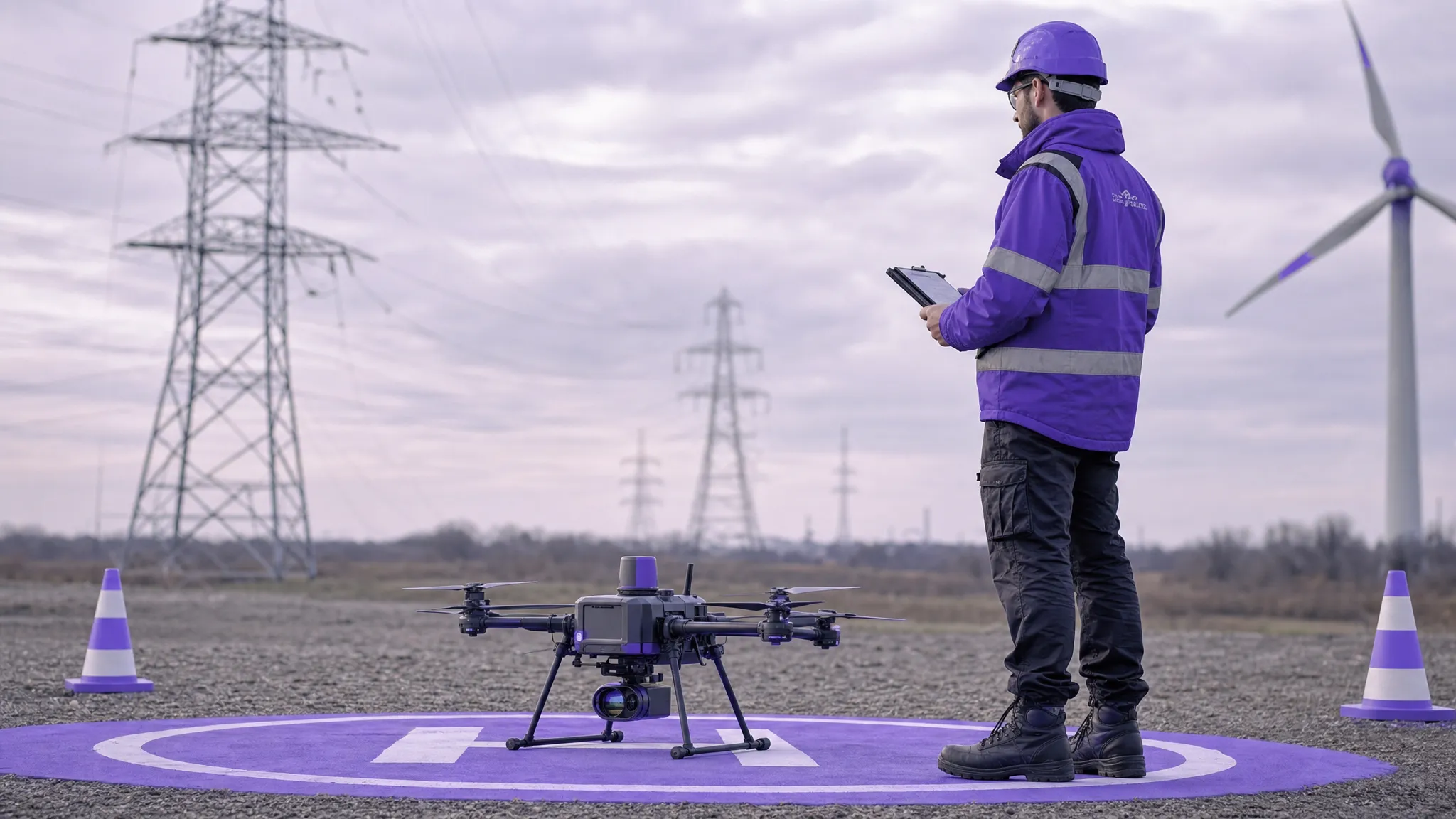
Risk assessments and records are part of the law in practice
Commercial drone compliance is not just about knowing the rules. It is about being able to show that you applied them to a real job.
A professional risk assessment should consider the aircraft, pilot, weather, terrain, people, property, airspace, emergency procedures, communications, take-off and landing area, battery management, lost-link behaviour and contingency landing options. For repeated operations, such as monthly utility inspections or construction progress surveys, the risk assessment should still be reviewed against current site conditions.
A good mission pack normally includes the following evidence.
| Record | Why it matters |
|---|---|
| Client brief and location details | Confirms scope, purpose, contacts and operating area. |
| Airspace and ground hazard checks | Shows that restrictions, obstacles and nearby sensitive sites were reviewed. |
| Risk assessment and method statement | Documents hazards, mitigations and decision-making. |
| Pilot competency evidence | Confirms the remote pilot is appropriately trained for the task. |
| Aircraft and battery records | Supports airworthiness, maintenance and traceability. |
| Permissions and notifications | Proves that land, airspace or stakeholder approvals were obtained where needed. |
| Flight logs and incident records | Creates an auditable record after the operation. |
For emergency services and public sector teams, records also support governance, proportionality and post-incident review. For survey and utility companies, they support client assurance, procurement requirements and repeatable operational quality.
Insurance requirements for commercial drone operators
If you use a drone for commercial purposes in the UK, you need suitable insurance. This is not the same as relying on general business insurance or assuming that a drone supplied by a contractor is automatically covered.
Commercial drone insurance should be aviation-specific and appropriate for the operation. Public liability is often the first concern, but operators may also consider cover for equipment, payloads, professional liability, hired-in aircraft, overseas work and specialist activities. The key is that the policy matches the aircraft, pilots, operating category, geography and type of work.
Clients in sectors such as utilities, construction, highways and public safety often require proof of insurance before site access. Treat insurance documentation as part of your pre-flight compliance pack, not as a finance document stored separately from operations.
Privacy, data protection and public confidence
Many commercial drone flights collect personal data, even when that is not the main purpose of the job. A roof inspection may capture neighbours. A mapping flight may record vehicle registration plates. A public safety flight may capture sensitive footage of vulnerable people.
The Information Commissioner’s Office provides guidance on drones and privacy. For organisations, the key principles are transparency, necessity, proportionality, data minimisation, security and retention control.
In practice, this may mean notifying people where appropriate, using signage on controlled sites, briefing clients about privacy responsibilities, avoiding unnecessary recording, limiting camera angles, securing footage, controlling who can access data and deleting material when it is no longer needed.
Privacy is also a reputational issue. A technically lawful flight can still create complaints if members of the public feel watched, surprised or ignored. Commercial operators should plan communications as carefully as flight paths, particularly in residential areas, at public events or during emergency response.
Common commercial scenarios and likely legal considerations
No table can replace a full risk assessment, but these examples show how the rules tend to apply in real operations.
| Scenario | Category often considered | Key compliance questions |
|---|---|---|
| Rural field mapping for an agricultural client | Open category may be possible | Are you far enough from uninvolved people and built-up areas, and is the airspace clear? |
| City-centre roof inspection | Specific category is often needed | Can you control the area, protect uninvolved people and operate under an authorisation? |
| Utility pole inspection near a road | Open or Specific, depending on site | Are there road users, nearby properties, overhead hazards or local restrictions? |
| Emergency services incident support | Usually depends on the organisation’s authorisations and procedures | Is there a live risk to the public, controlled airspace, multi-agency coordination or evidence handling? |
| Construction progress imagery on a closed site | Open category may be possible if tightly controlled | Are all people involved and briefed, and can you prevent public access to the operating area? |
| BVLOS linear infrastructure inspection | Specific or more advanced approvals | What detect-and-avoid, communications, airspace and safety case requirements apply? |
The phrase often considered is important. The correct category depends on the specific aircraft, site, people, airspace and permissions in place on the day.
A practical compliance workflow before every commercial flight
A repeatable workflow is the simplest way to reduce legal and operational risk. Even small operators benefit from treating every job consistently.
- Classify the operation: Decide whether the flight fits the Open category or needs Specific category authorisation. Do not start with the assumption that commercial work automatically needs an Operational Authorisation.
- Confirm pilot and operator status: Check Operator ID, Flyer ID, pilot competency, authorisation scope and internal approvals.
- Check the aircraft and payload: Confirm weight, maintenance status, firmware, batteries, failsafe settings, payload security and suitability for the job.
- Review airspace and site restrictions: Check FRZs, restricted areas, NOTAMs, local constraints, land permissions and client site rules.
- Assess people and property risk: Identify uninvolved people, roads, buildings, animals, vehicles, critical infrastructure and emergency landing options.
- Prepare documentation: Complete the risk assessment, method statement, checklists, briefings and permissions evidence.
- Brief the team and stakeholders: Ensure pilots, observers, client contacts, site managers and involved people know the plan and emergency actions.
- Log the flight and close the job: Record flight details, incidents, maintenance issues, battery usage, data handling and any lessons learned.
This workflow also helps with client conversations. If a client asks for a flight that cannot be done safely or legally, your documented process gives you a clear basis for explaining why the plan must change.
Common mistakes that put operators at risk
One of the most common mistakes is using outdated terminology. A client may ask whether you have a drone licence or PfCO, but those phrases do not always match the current framework. It is better to explain your CAA registration, pilot competency, operating category and Operational Authorisation where relevant.
Another mistake is relying on a sub-250g drone as if it removes all legal obligations. Lighter drones can reduce some operational restrictions, but they do not remove airspace rules, privacy obligations, insurance requirements for commercial work or the need to fly safely.
Operators also get caught out by site-specific restrictions. Airports are obvious, but prisons, military areas, temporary police restrictions, stadium events, nature reserves, local byelaws and landowner policies can all affect whether and how you can fly.
Finally, many compliance failures are record failures. The flight may have been planned sensibly, but if there is no evidence of airspace checks, risk assessment, permission, maintenance or pilot competence, it is much harder to defend the operation after a complaint, incident or audit.
Where Dronedesk fits into commercial drone compliance
Commercial drone operators need more than a flying app. They need a reliable way to manage clients, pilots, aircraft, planning, permissions, checklists, risk assessments and flight logs across the whole operation.
Dronedesk is an all-in-one drone operations management platform with features for client management, fleet management, team management, airspace intelligence, proximity intelligence, flight planning, flight logging, data reporting, configurable checklists and risk assessments. Used well, tools like these help operators keep compliance evidence organised and make repeatable workflows easier to maintain.
For growing teams, the value is consistency. A survey company with multiple pilots, a utility contractor with recurring assets to inspect, or an emergency service drone unit needs every job to follow the same standards, even when the site, aircraft and urgency change.
Frequently Asked Questions
Do commercial drone pilots need a licence in the UK? There is no single commercial drone licence. You may need a Flyer ID, A2 CofC, GVC and/or CAA Operational Authorisation depending on the aircraft and operation. The requirement is based on risk and category, not simply on being paid.
Do I need CAA permission for every paid drone job? No. If the flight fully complies with Open category rules, you do not need an Operational Authorisation just because the work is commercial. You may still need airspace permission, landowner consent, insurance and privacy controls.
Is a PfCO still valid terminology? PfCO is old terminology. The current permission for many Specific category operations is an Operational Authorisation. Some clients still use the old phrase, so professional operators often need to explain the updated CAA framework.
Can commercial operators fly at night? Night flying is not automatically banned, but the operator must maintain safe control, comply with the relevant category or authorisation, use appropriate lighting and procedures, and ensure the pilot can maintain situational awareness.
How high can a commercial drone fly in the UK? For most routine operations, the maximum height is 120 metres or 400 feet above the surface, unless a specific permission or authorisation allows otherwise. Airspace restrictions and safety considerations may impose lower practical limits.
Do emergency services have different drone rules? Emergency services may operate under specific organisational authorisations, procedures or exemptions in defined circumstances, but they still need strong governance, trained pilots, risk management and records. Urgency does not remove the need to manage aviation safety.
Make compliance easier to manage
British drone laws are manageable when you treat compliance as an operational process rather than a one-off form. Classify the flight, check the airspace, control the site, document the risk, insure the work, protect personal data and keep auditable records.
If your team is still relying on spreadsheets, folders and disconnected apps, it may be time to bring your operations into one place. Explore Dronedesk to manage flight planning, risk assessments, checklists, fleets, teams and flight logs with a workflow built for professional drone operations.
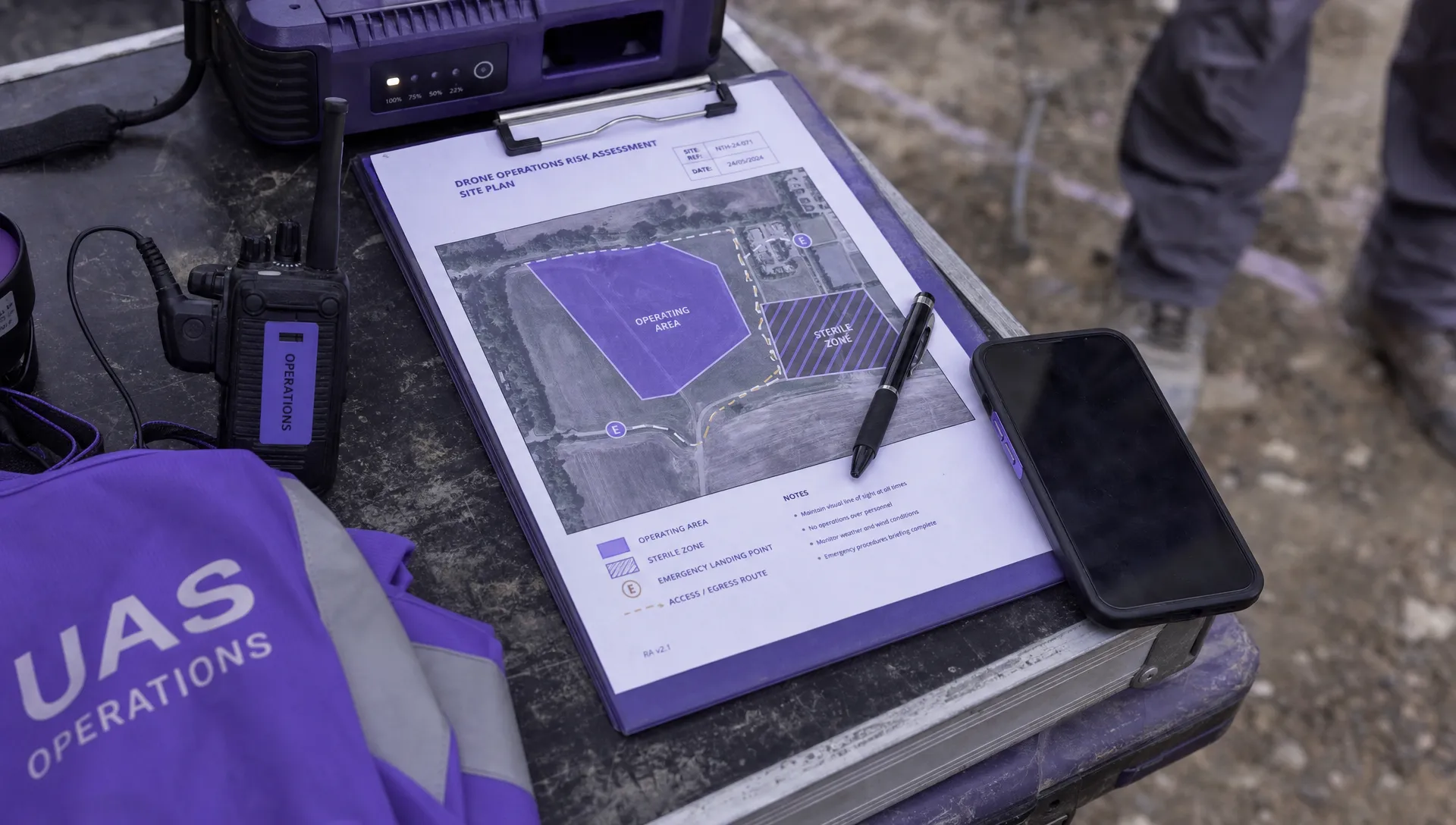 Drone Risk Assessment Controls That Work in the Field →
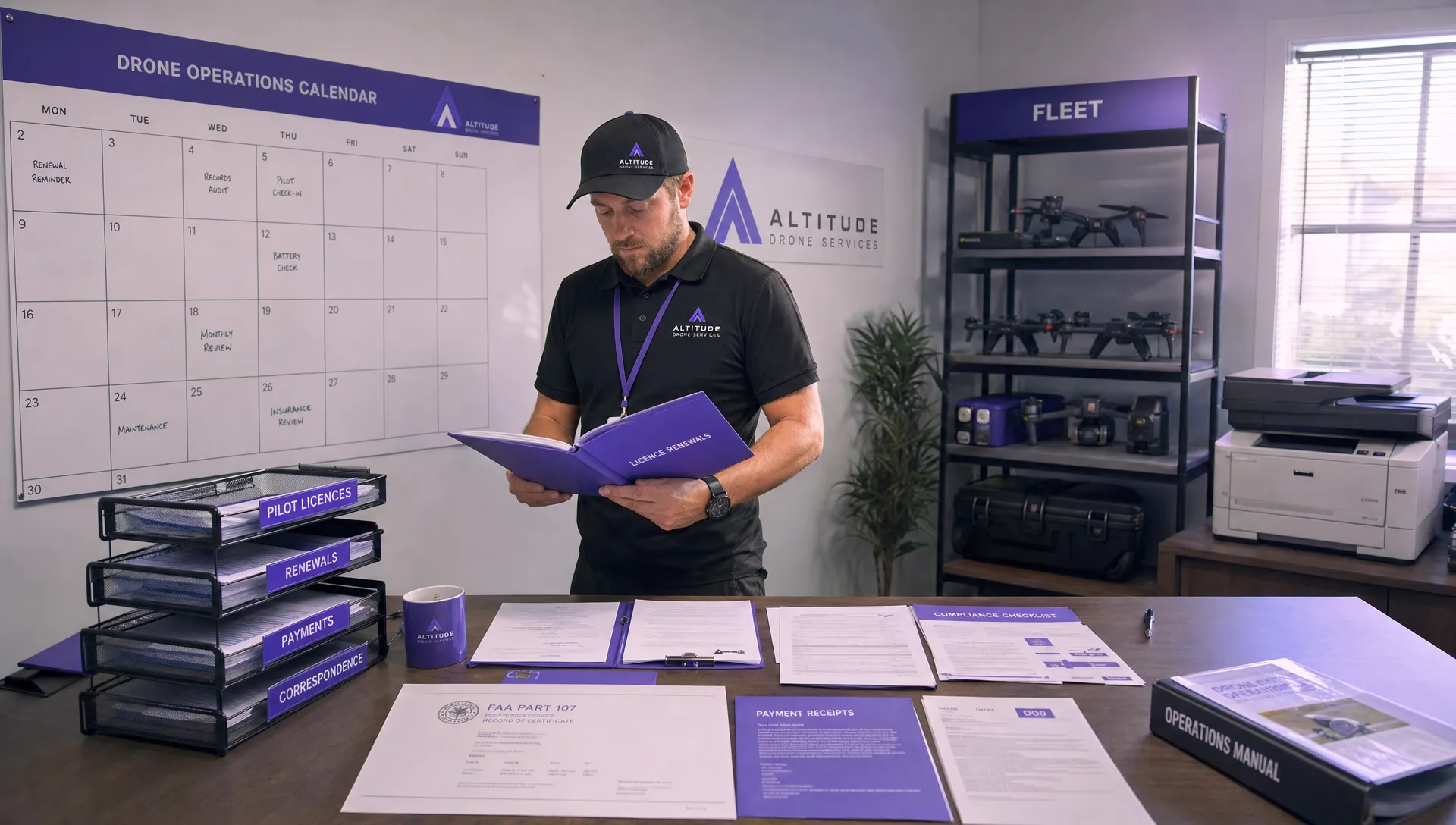 FAA Drone License Costs Beyond the Knowledge Test →
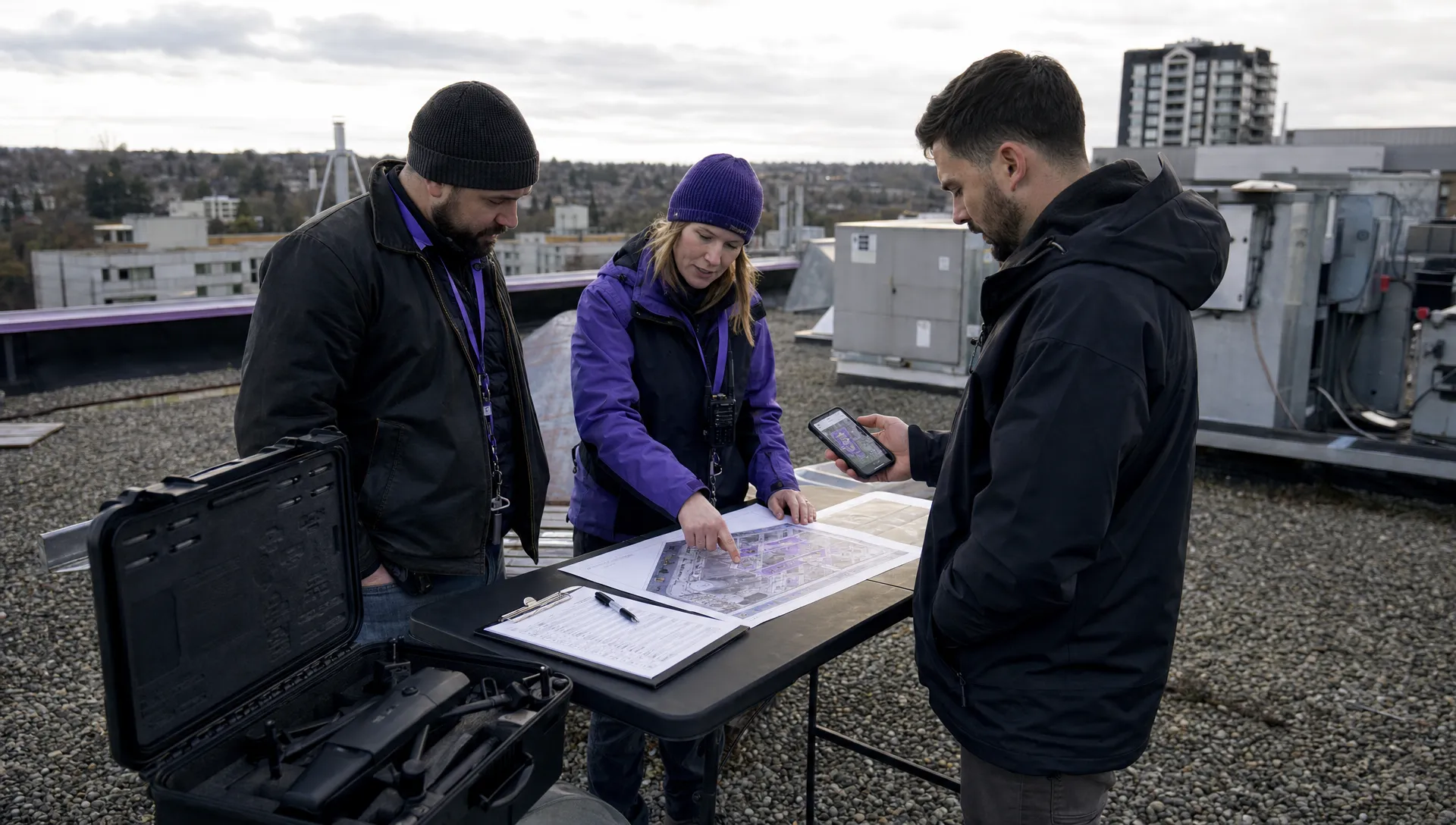 Drone Part 107 Operations: When a Waiver May Be Needed →
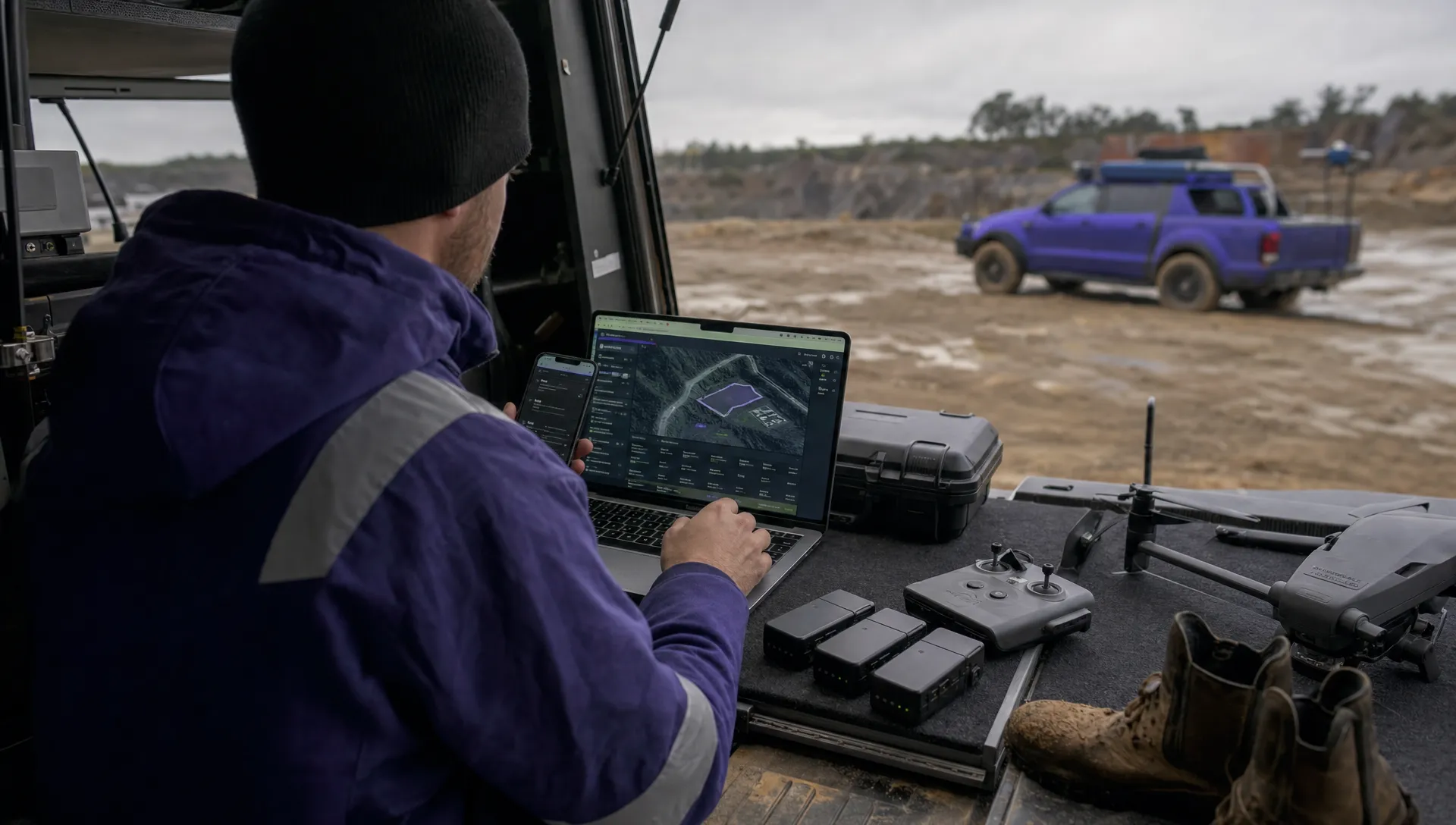 Drone Operating Rules for Managing Contractors and Employees →
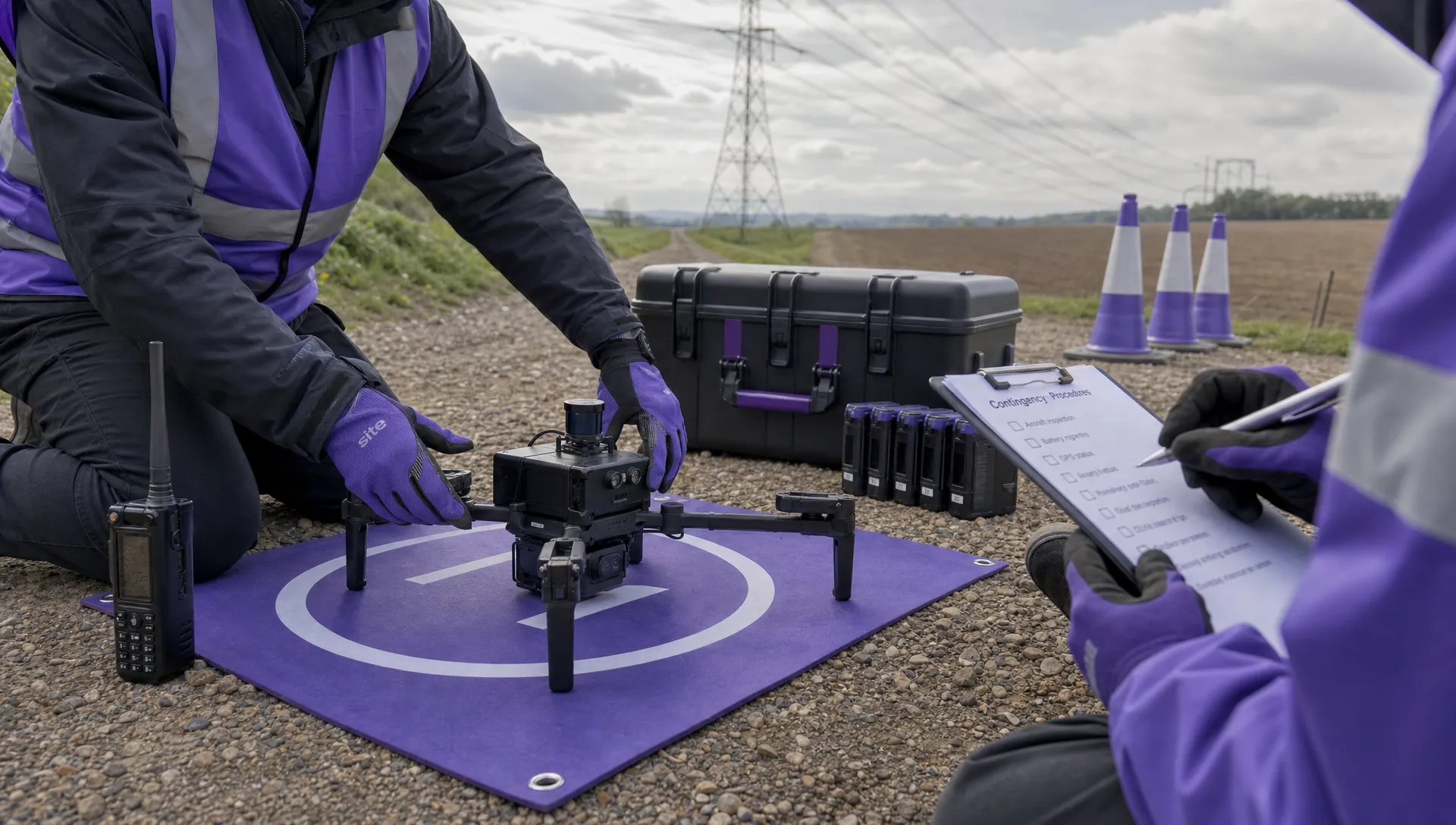 BVLOS Drone Requirements for Building a Safety Case →
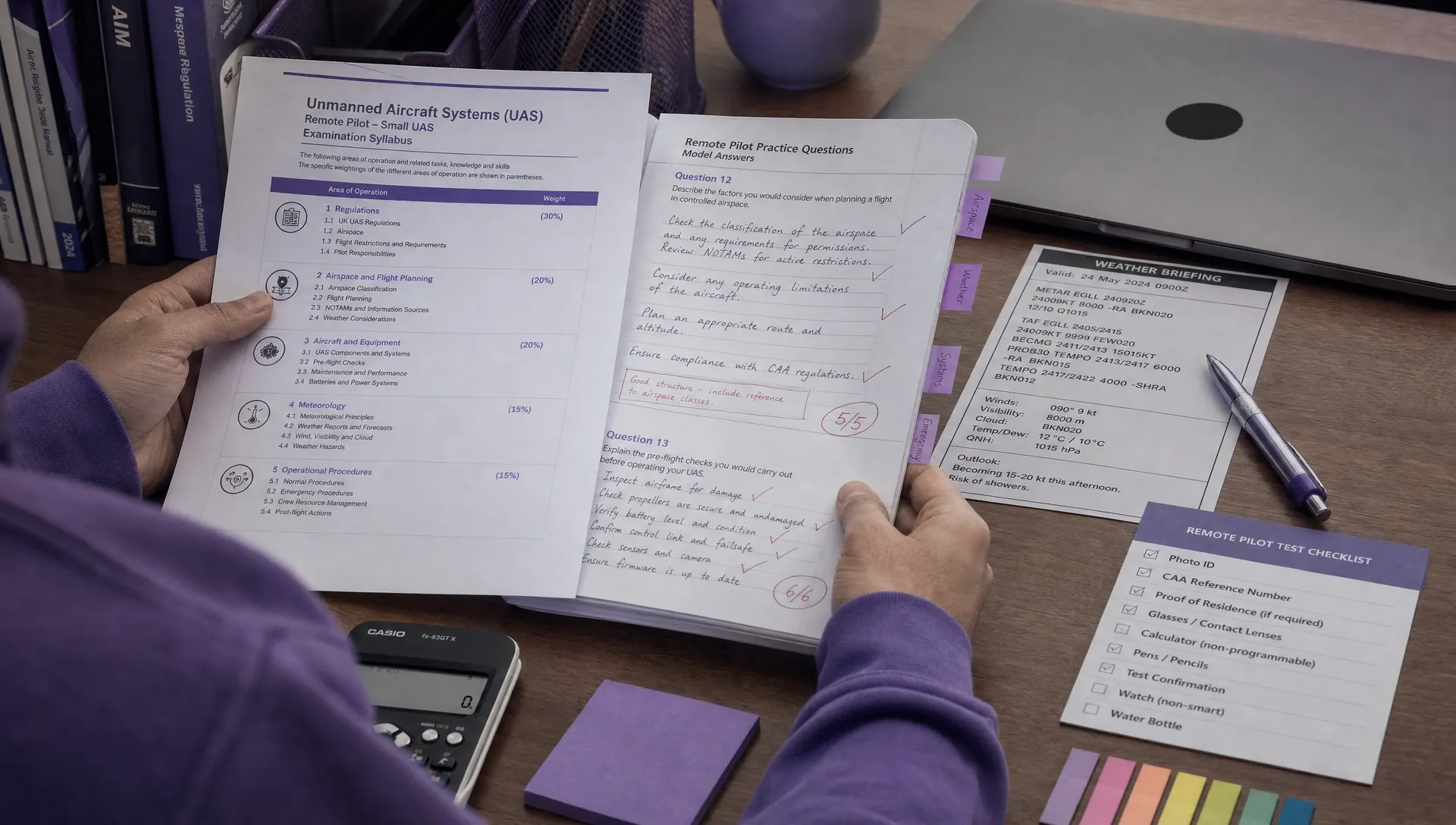 Drone Pilot Test Mistakes That Cost Candidates Marks →
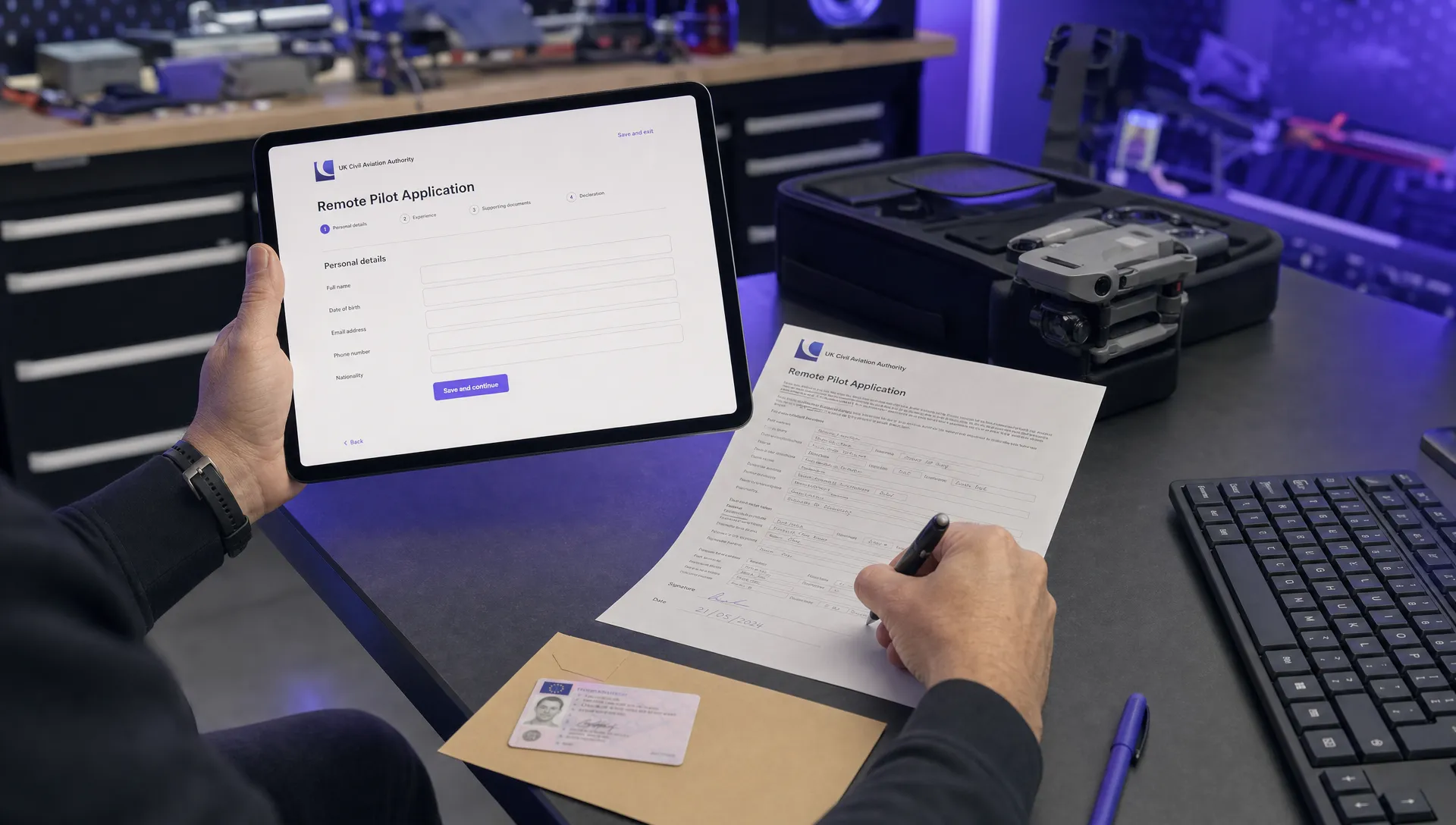 FAA 107 License vs Part 107 Certificate: What’s the Difference? →
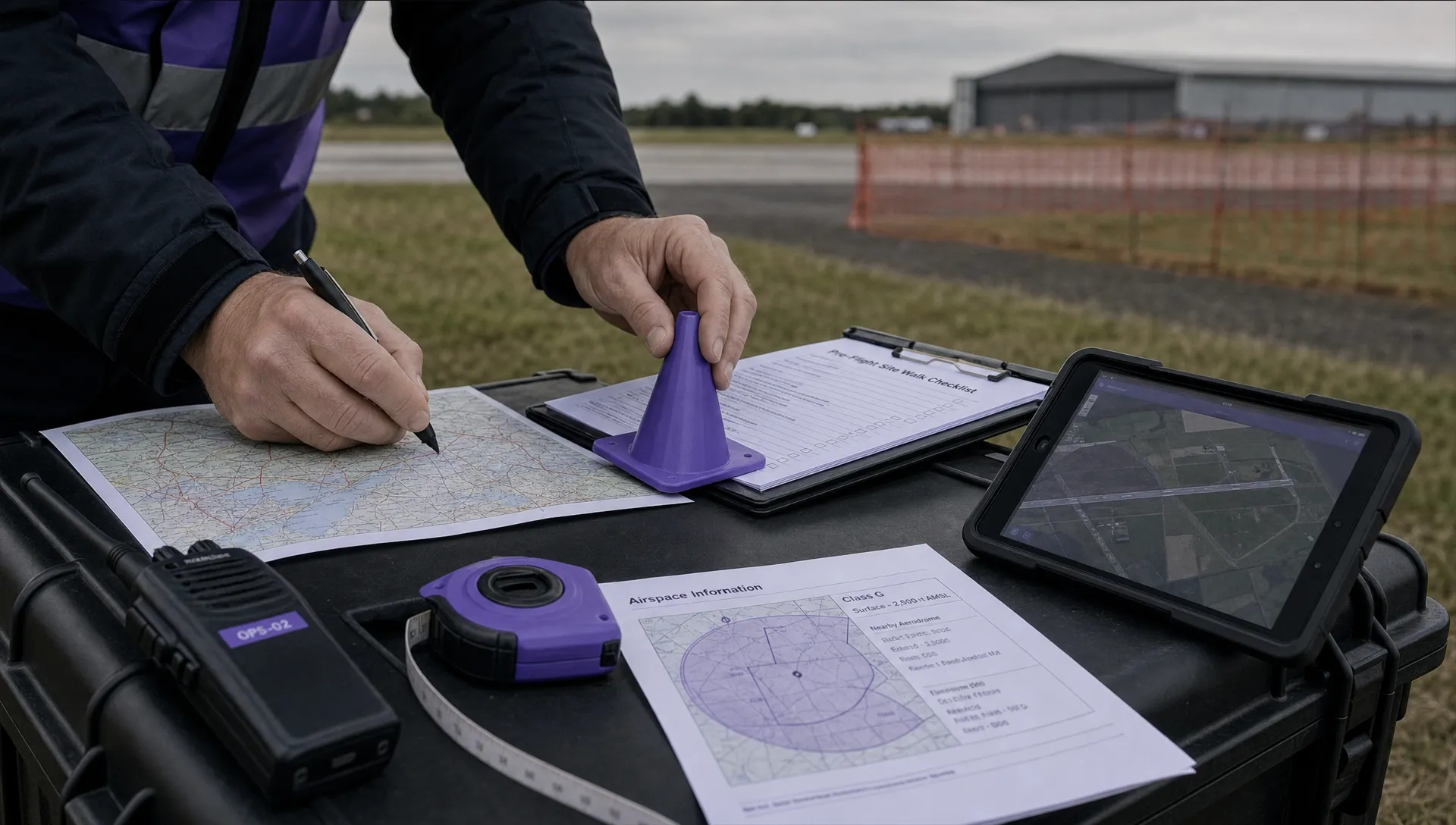 Drone Airport Rules: A Field Checklist for Site Assessments →
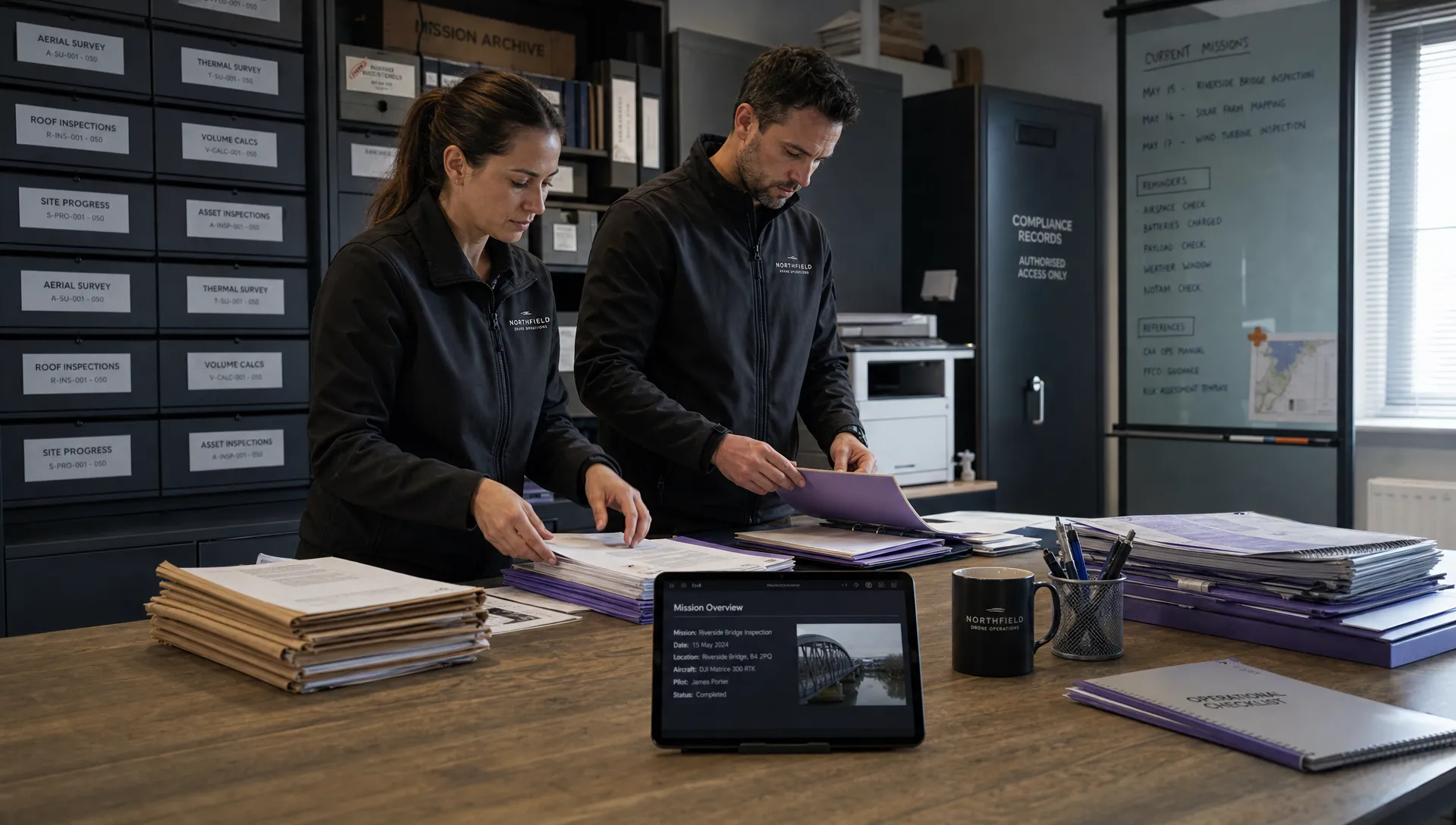 FAA Part 107 Record-Keeping Rules for Commercial Teams →
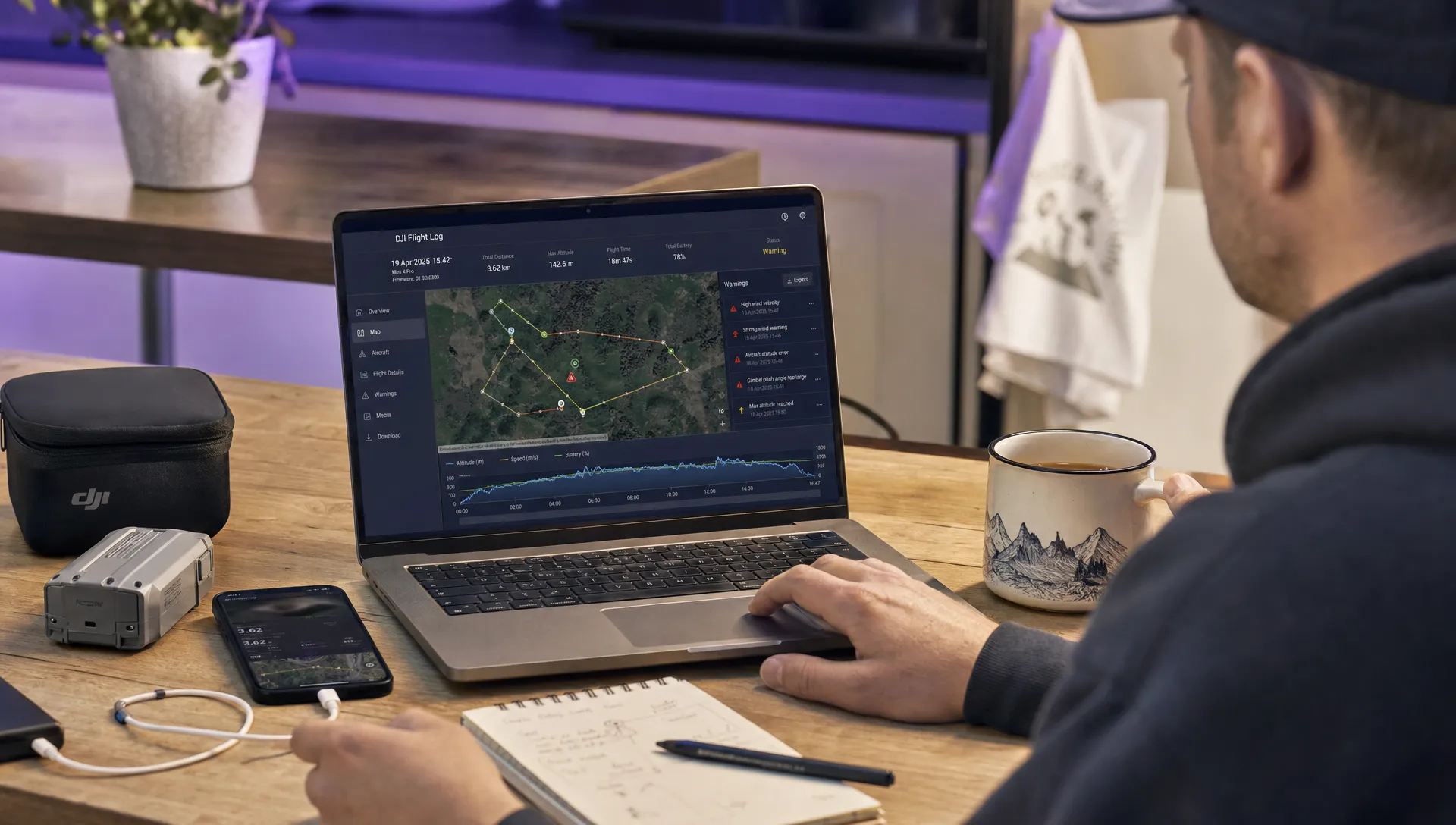 How to Review a DJI Flight Log After an Unexpected Event →