
Drone Laws Explained for Commercial Pilots in 2026
Commercial drone operations in 2026 are governed less by whether you are being paid and more by the risk your flight creates. A simple roof photo with a sub-250 g drone can sit in a very different legal category from a utility inspection near a road, a survey beside controlled airspace, or an emergency services deployment in a built-up area.
For UK operators, the Civil Aviation Authority (CAA) remains the primary regulator. The core framework is risk-based, with drone flights falling into the Open, Specific or Certified category. Commercial pilots also need to think beyond aviation rules, including insurance, privacy, land access, client records, crew competence and auditable flight logs.
This guide explains the practical side of drone laws for commercial pilots in 2026, with a UK focus and brief notes for operators working internationally. It is not legal advice, and you should always check the latest CAA guidance before flying, but it will help you understand what questions to ask before accepting a job.
The key point: commercial use is not the legal trigger it once was
One of the biggest misconceptions in UK drone operations is that “commercial” automatically means you need a special permission. That used to be closer to the truth under the old Permission for Commercial Operations system, usually called PfCO. Today, UK drone laws are primarily based on operational risk.
In practice, a paid flight can be legal in the Open category if it stays within the Open category rules. Equally, an unpaid flight may need CAA authorisation if it involves higher-risk conditions, such as operating beyond visual line of sight, flying too close to uninvolved people with the wrong aircraft, or working in restricted airspace without permission.
The CAA Drone and Model Aircraft Code is the best starting point for everyday rules. For more complex commercial operations, the wider CAA drones guidance and your Operational Authorisation conditions become essential.
UK commercial drone laws in 2026: the quick checklist
The exact requirement depends on the aircraft, location and task, but most commercial operators should be able to answer the following before every job.
| Compliance area | What commercial pilots should check | Why it matters |
|---|---|---|
| Registration | Whether the operator ID and flyer ID requirements apply, and whether the operator ID is displayed correctly | Shows who is responsible for the aircraft and pilot competence basics |
| Flight category | Whether the job is Open, Specific or Certified | Determines whether you can fly under standard rules or need CAA authorisation |
| Pilot competence | Whether the pilot has the right competence for the subcategory or authorisation | Supports safe operation and regulatory compliance |
| Airspace | Whether the site is in controlled airspace, an airport Flight Restriction Zone, restricted area, danger area or temporary restriction | Prevents illegal or unsafe airspace entry |
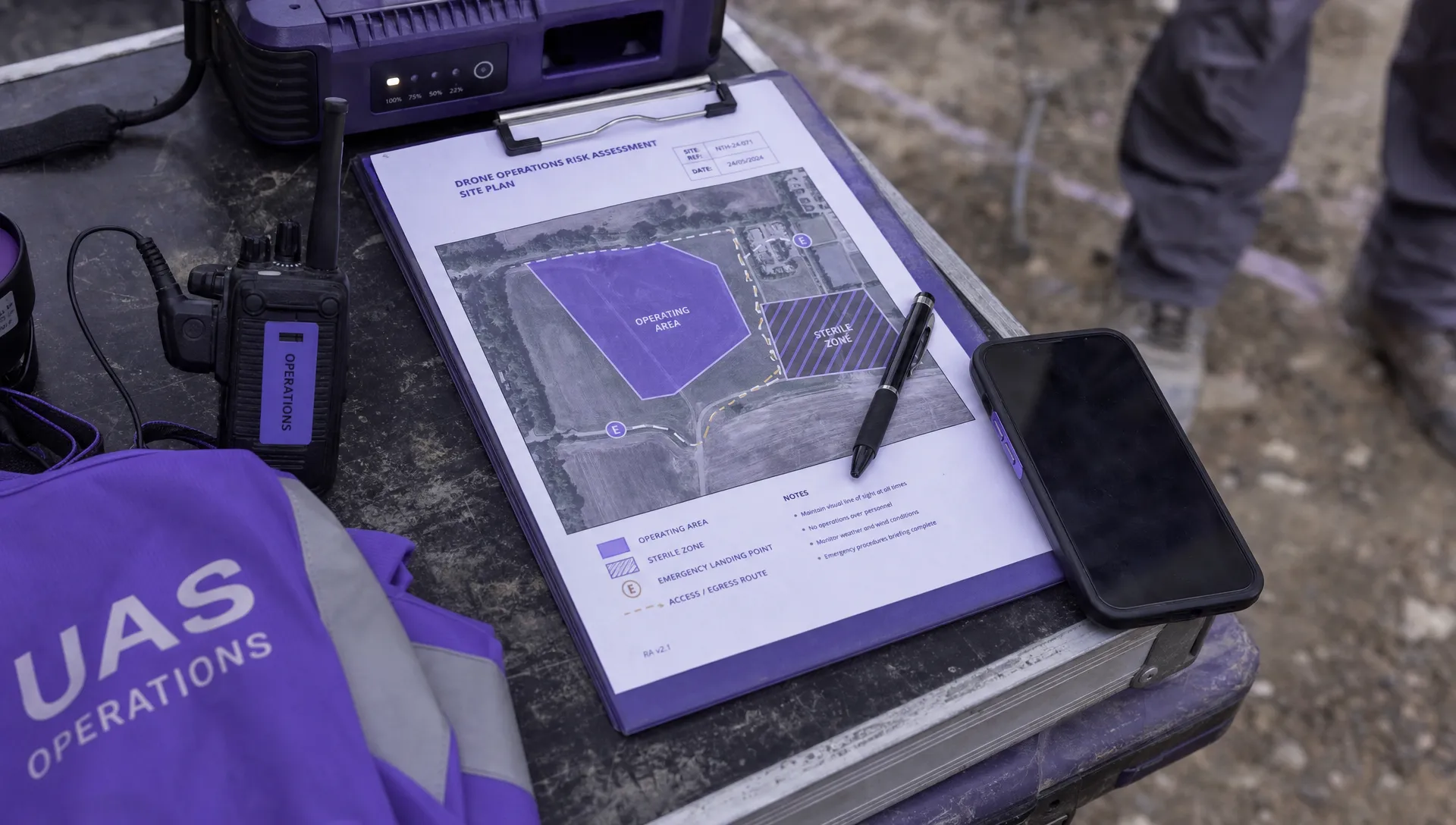
| Site risks | People, roads, railways, buildings, livestock, terrain, weather and emergency landing areas | Determines whether the flight is realistic and defensible |
| Insurance | Whether suitable aviation liability insurance is in place for commercial work | Commercial drone work normally requires appropriate insurance |
| Privacy | Whether image capture could identify people, vehicles, homes or sensitive sites | UK GDPR and data protection rules may apply |
| Records | Whether planning, risk assessment, checklists, logs and maintenance evidence are retained | Helps prove what was planned, flown and reviewed |
For professional operators, the goal is not simply to “get permission”. The goal is to build a repeatable compliance process that stands up to client scrutiny, regulator questions and internal safety review.
The three legal categories explained
UK drone operations are divided into three broad categories: Open, Specific and Certified. These categories are central to understanding drone laws in 2026.
Open category: lower-risk flights under standard rules
The Open category is for lower-risk operations. It is the category many commercial pilots use for straightforward work, provided the flight stays within the standard limits.
Typical Open category principles include flying within visual line of sight, staying below the maximum height limit, not flying over assemblies of people, respecting separation distances from uninvolved people, and using an aircraft that fits the relevant weight or class requirements.
The Open category is split into A1, A2 and A3 subcategories. In simple terms, A1 is for the lowest-risk flights close to people with lighter aircraft, A2 allows certain operations closer to people with additional competence and suitable aircraft, and A3 is for flights far from uninvolved people and built-up areas.
Class marking and transitional arrangements have changed over time, and operators should not rely on old assumptions. Before planning a commercial job in A1, A2 or A3, check the current CAA tables for your aircraft’s weight, class marking status and permitted distances.
Specific category: operations that need CAA authorisation
The Specific category applies when the operation sits outside the Open category but is not so high-risk that it falls into the Certified category. This is where many serious commercial operations live.
Examples that may fall into the Specific category include:
- Flights beyond visual line of sight
- Operations closer to uninvolved people than Open category rules allow
- Some urban inspections, infrastructure work or complex survey environments
- Flights above standard height limits
- Operations requiring a more detailed operational risk assessment
In the UK, Specific category operations usually require an Operational Authorisation from the CAA, unless another valid authorisation route applies. Operators typically need to demonstrate a robust operations manual, pilot competence, maintenance arrangements, risk assessment process and emergency procedures. The CAA provides guidance on applying for authorisations and exemptions.
A General Visual Line of Sight Certificate, usually called a GVC, is commonly used as evidence of remote pilot competence for Specific category work, but it is not the authorisation itself. The authorisation belongs to the operator and sets the conditions under which flights can be conducted.
Certified category: the highest-risk operations
The Certified category is for higher-risk drone operations, such as carrying people, transporting certain dangerous goods, or operating in ways that create risk closer to traditional aviation. Most commercial photography, surveying, inspection, emergency response and utility work will not fall into this category, but it is important to know it exists.
If your operation begins to look like crewed aviation in terms of risk to people, airspace users or critical infrastructure, you should assume specialist regulatory advice is needed.
Registration and pilot competence
Most commercial drone teams need to manage two related but separate responsibilities: the operator and the flyer.
The operator is the person or organisation responsible for the drone. The flyer is the remote pilot actually flying it. In a commercial setting, the operator is often the company, public body or sole trader running the operation, while the flyer may be an employee, contractor or volunteer.
In the UK, an operator ID is generally required for drones of 250 g or more, and for many drones under 250 g if they have a camera and are not classed as toys. A flyer ID is generally required for pilots flying drones of 250 g or more. The operator ID must be displayed on the aircraft in line with CAA requirements.
Commercial teams should also record pilot competence beyond the minimum registration tests. That includes A2 CofC where relevant, GVC where required, internal training, aircraft familiarisation, emergency procedure practice and evidence that pilots are current on the aircraft and operating environment.
Core operating limits commercial pilots must understand
Most enforcement problems come from basic operating limits being misunderstood or ignored. These limits are not just “hobby rules”. They apply to commercial operators unless an authorisation or exemption says otherwise.
Height and visual line of sight
The standard maximum height is 120 m, often referred to as 400 ft, measured from the closest point of the earth’s surface. Visual line of sight is also fundamental. The remote pilot must be able to see the drone well enough to control it, monitor its flight path and avoid collisions.
Using a screen, observer or telemetry does not automatically make a flight beyond visual line of sight legal. If the pilot cannot maintain visual line of sight as required, the operation may need Specific category authorisation.
People and crowds
Open category flights must follow strict rules around uninvolved people. The permitted distance depends on the aircraft and subcategory. Flying over assemblies of people is not allowed in normal Open category operations.
For commercial pilots, “uninvolved” is a critical word. A client standing on site is not automatically an involved person. People should only be treated as involved if they understand the risk, have agreed to participate, and follow the pilot’s safety instructions. Members of the public, passing workers, road users and people in neighbouring properties should normally be treated as uninvolved.
Airspace and airport zones
Before flying, commercial pilots must check whether the location is affected by an airport Flight Restriction Zone, controlled airspace, temporary restriction, danger area, restricted area, prohibited area, military activity, emergency restriction or local site rule.
If the job is inside an airport Flight Restriction Zone, you need the correct permission from the aerodrome or air traffic control unit before flying. Client pressure, low altitude or a short flight duration does not remove that requirement.
Night operations
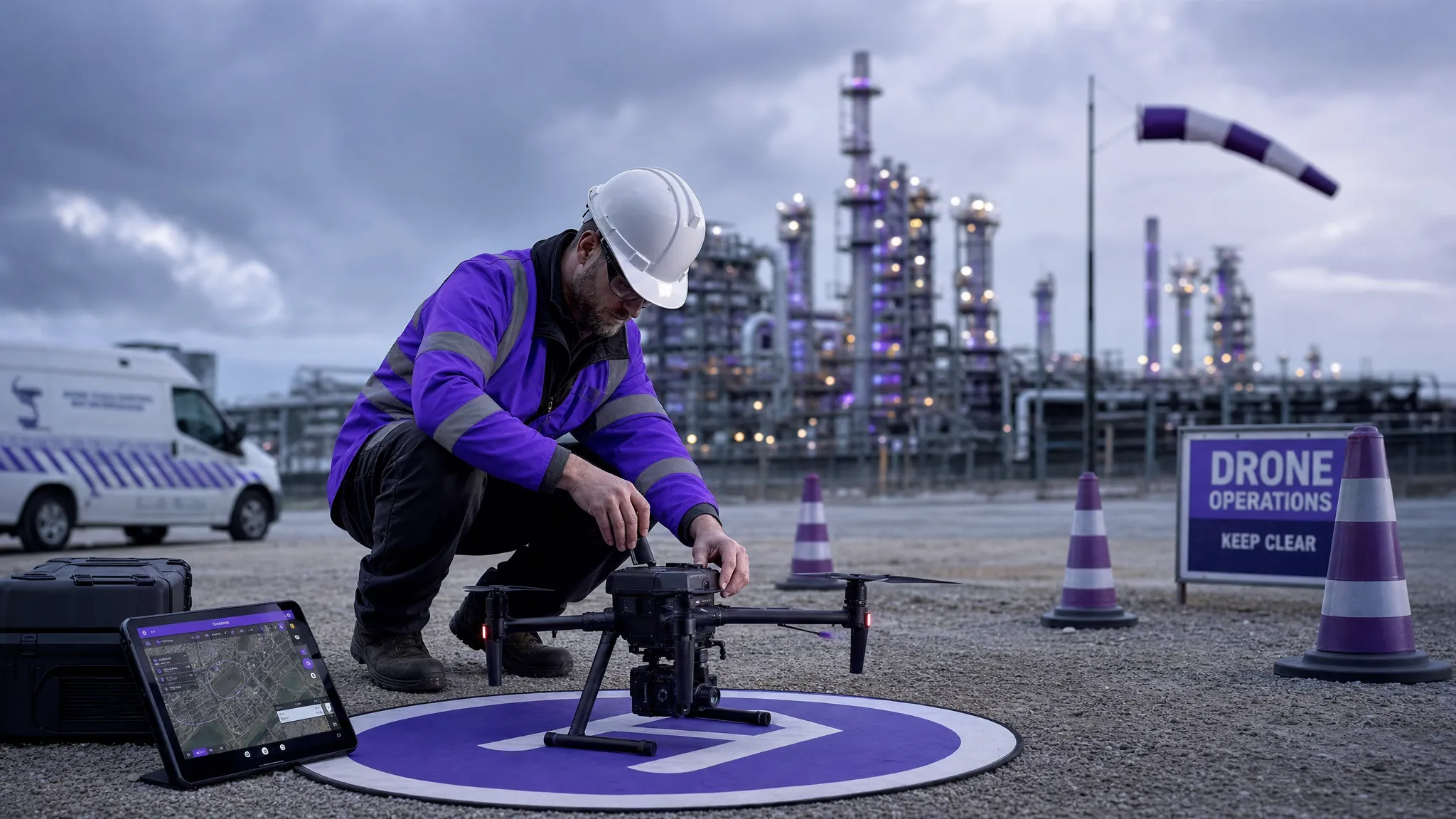
Night flying is not automatically banned in the UK, but it must still be safe, legal and within the applicable category or authorisation. The pilot must be able to maintain adequate situational awareness, the drone must be visible enough for safe control, and the risk assessment should address lighting, obstacles, landing areas, fatigue and emergency procedures.
If your Operational Authorisation includes night conditions, follow them exactly. If you are flying in the Open category, do not assume that a daytime plan is automatically suitable after dark.
Commercial obligations beyond aviation rules
Aviation compliance is only one part of legal drone work. Commercial pilots also operate within contract law, privacy law, insurance requirements and site safety rules.
Insurance
Commercial drone operators should hold suitable aviation liability insurance. In the UK and Europe, commercial aviation insurance requirements are shaped by Regulation EC 785/2004 and related retained or assimilated rules. The safest approach is to use a provider that understands unmanned aircraft operations and can confirm that the policy covers your aircraft, pilots, locations, jurisdictions and type of work.
Clients may also require specific cover levels, named insured parties or evidence of insurance before granting site access.
Privacy and data protection
Drone cameras can capture people, number plates, homes, workplaces and sensitive infrastructure. If identifiable personal data is collected, UK GDPR and the Data Protection Act 2018 may apply. The Information Commissioner’s Office provides useful guidance for the public and organisations on drones and privacy.
Good commercial practice includes minimising unnecessary recording, warning people where appropriate, securing captured data, limiting retention, and being clear with clients about who controls the data.
For example, a roof inspection may not need continuous wide-angle recording of neighbouring gardens. A survey near a public footpath may need signage, a spotter, adjusted camera angles or timing changes to reduce privacy risk.
Landowner and site permission
CAA permission to fly is not the same as permission to take off, land or operate from private land. You may need approval from the landowner, site manager, local authority, highways authority, Network Rail, emergency services incident command, a port operator, a utility asset owner or another responsible body.
This is particularly important for survey companies, utility contractors and emergency services, where the safest legal airspace plan can still fail if ground access is not controlled.
Record keeping
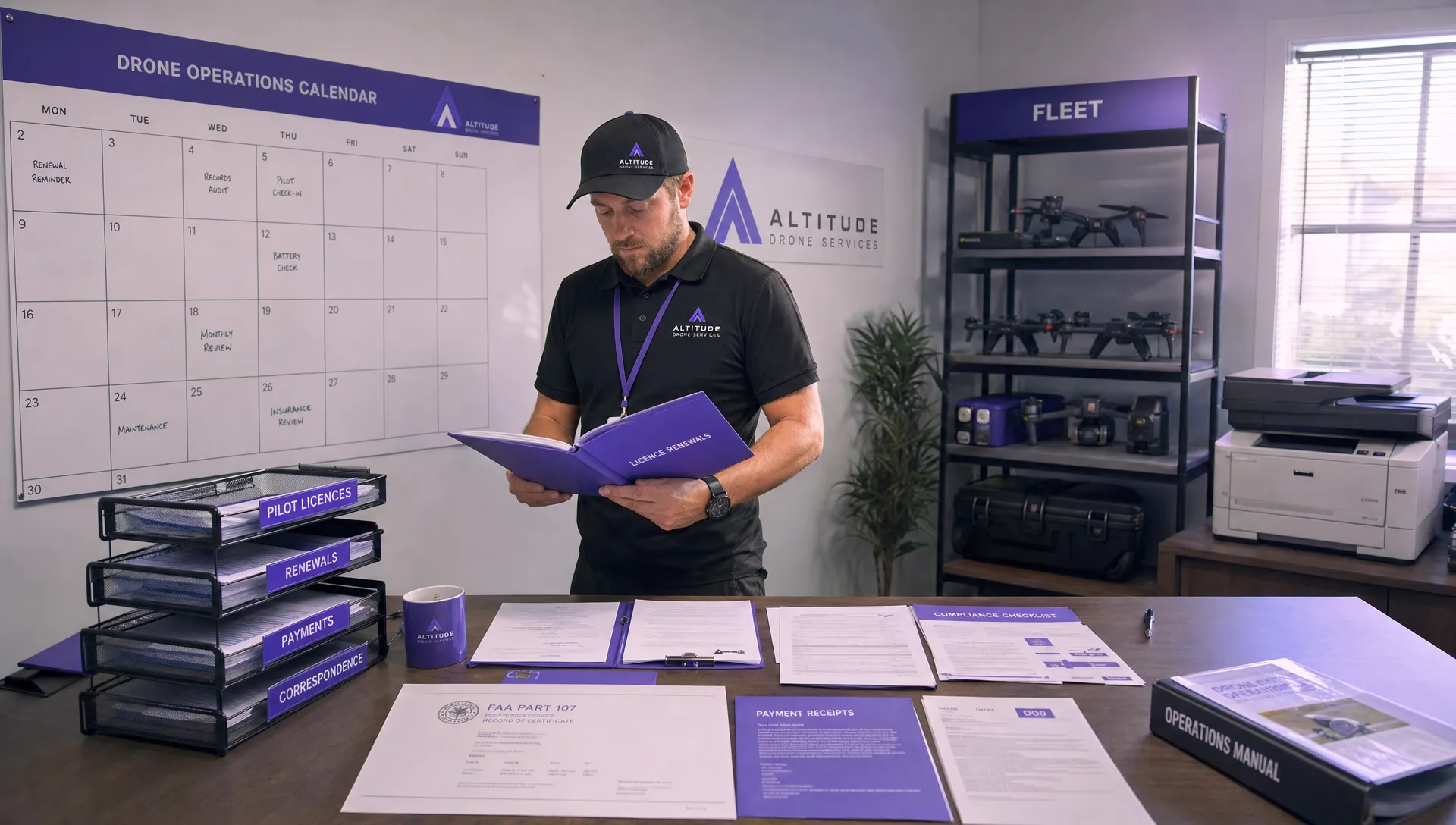
Commercial drone records should be detailed enough to show what was intended, what was checked, who was involved, what happened and what changed after the flight. That usually includes the client brief, site assessment, airspace review, risk assessment, pilot assignment, aircraft used, battery information, checklists, weather, flight logs, defects and post-flight notes.
Records are not just paperwork. They are evidence of professional judgement.
Example scenarios for commercial pilots
The following examples are general planning prompts, not legal determinations. The final category depends on aircraft, location, distances, airspace, people and your authorisations.
| Scenario | Likely regulatory question | Common compliance issues |
|---|---|---|
| Rural land survey | Can it remain in the Open category, usually with safe separation from people? | Boundary roads, public footpaths, livestock, low-level aviation and landowner permission |
| Roof inspection in a town centre | Can the aircraft and pilot meet the required separation distances? | Uninvolved people, roads, neighbouring properties, privacy and take-off control |
| Utility asset inspection | Does the task involve roads, rail, substations, restricted sites or BVLOS? | Site inductions, infrastructure hazards, electromagnetic interference and emergency procedures |
| Emergency services deployment | Is the flight covered by standard rules, an existing authorisation or incident-specific coordination? | Airspace coordination, cordons, evidential data handling and rapid logging |
| Construction progress capture | Are people on site genuinely involved and briefed? | Contractor movement, cranes, changing site layout, privacy and client data controls |
The pattern is simple: do not start with the question “Is this commercial?” Start with “What risks does this flight create, and which legal route covers those risks?”
What changes when you operate outside the UK?
Drone laws do not travel with you. A UK Operational Authorisation does not automatically authorise work in the EU, the United States or any other jurisdiction.
In the EU, drone operations are regulated under the EASA framework, also using Open, Specific and Certified categories. However, registration, class marking, remote pilot competence, geographical zones and national procedures can differ by member state. The EASA civil drones hub is the best starting point.
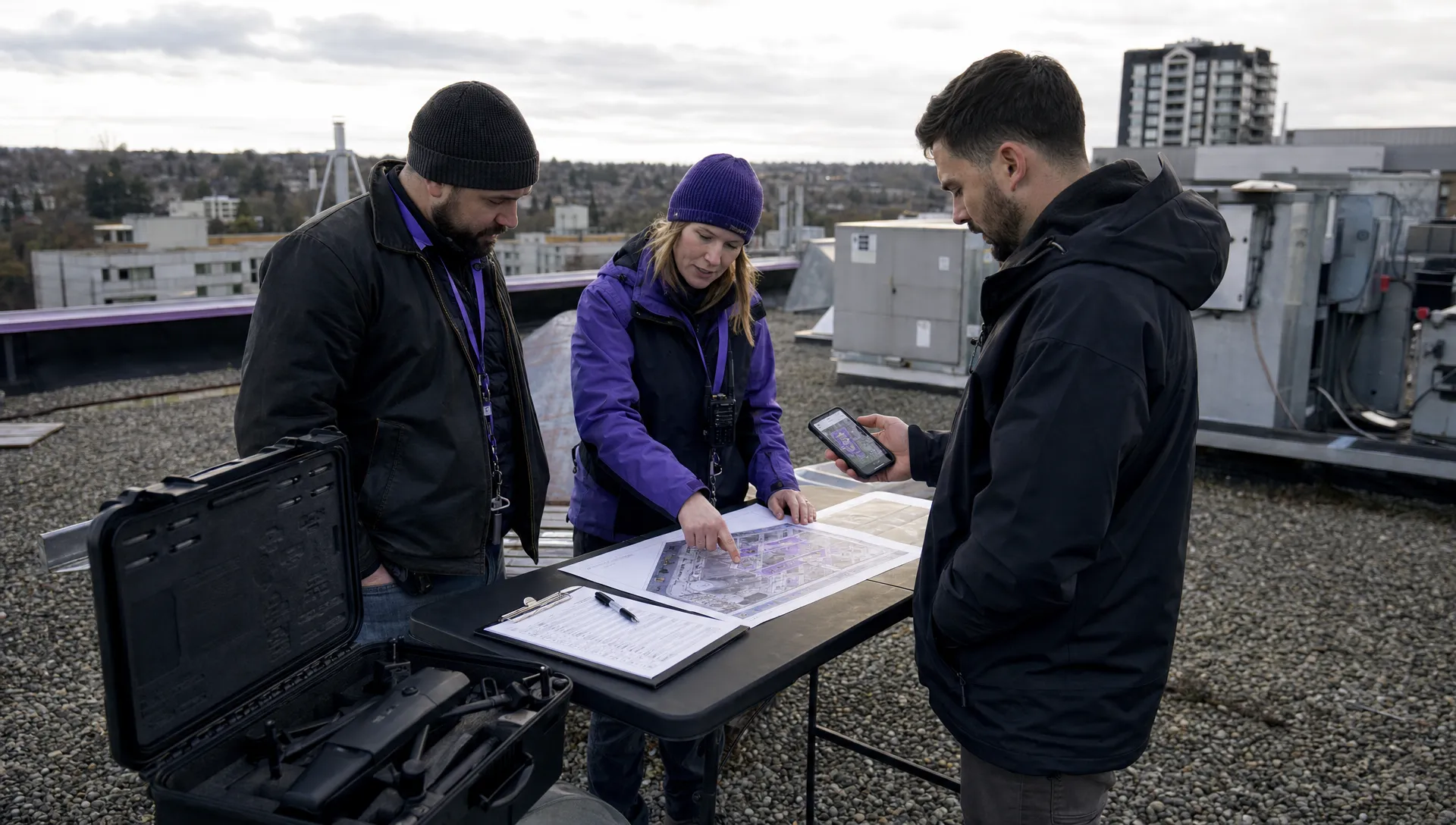
In the United States, most routine commercial drone operations fall under FAA Part 107. Requirements include a Remote Pilot Certificate, aircraft registration, Remote ID compliance where applicable, airspace authorisation for controlled airspace, and compliance with operational limits unless a waiver applies. The FAA’s commercial UAS guidance explains the framework.
For international work, appoint someone to own jurisdiction checks before pricing the job. It is easy to underestimate lead times for local registration, permissions, insurance and site approvals.
A practical compliance workflow for every commercial drone job
A reliable workflow helps pilots avoid missed steps when client pressure is high. For most commercial teams, the process should look like this:
- Confirm the task, location, client objective and deliverables before accepting the flight.
- Classify the operation as Open, Specific or Certified, and check whether an authorisation is needed.
- Verify aircraft status, pilot competence, operator registration and insurance.
- Check airspace, NOTAMs, airport zones, local restrictions and land access.
- Assess site risks, including people, traffic, obstacles, weather, animals, terrain and emergency landing options.
- Prepare a risk assessment, method statement, checklists and contingency plan.
- Brief the crew, client and any involved people before take-off.
- Log the flight accurately, including deviations, incidents, defects and lessons learned.
This workflow is deliberately simple. The value comes from doing it consistently and keeping evidence.
How Dronedesk supports commercial drone compliance
Managing drone laws with spreadsheets, folders and messaging apps becomes difficult as soon as you have multiple pilots, aircraft, clients or repeat jobs. The risk is not only wasted admin effort. It is missing a key compliance step because information is scattered.
Dronedesk is designed as an all-in-one drone operations management and flight planning platform. According to the Dronedesk features page, it includes client management, fleet management, team management, airspace intelligence, proximity intelligence, flight planning, flight logging, data reporting, configurable checklists and risk assessments.
Software does not replace regulatory judgement, CAA permissions or competent pilots. It can, however, help commercial operators standardise planning, keep records together and build a clearer audit trail across jobs, aircraft and team members.
For survey companies, utility operators and emergency services, that consistency matters. A drone programme is only as compliant as its weakest undocumented decision.
Frequently asked questions
Do commercial drone pilots need a licence in the UK in 2026? Not simply because the flight is commercial. UK rules are risk-based. You may need a flyer ID, A2 CofC, GVC or other evidence of competence depending on the aircraft and operation. If the flight falls outside the Open category, the operator may need a CAA Operational Authorisation.
Can I fly commercially in the Open category? Yes, if the operation meets all Open category requirements. Payment does not automatically move a flight into the Specific category. The aircraft, location, distance from people, airspace and operating method are what matter.
Is the 120 m height limit still relevant? Yes. The standard maximum height is 120 m, often described as 400 ft. Flights above this normally need a valid legal basis, such as an applicable authorisation or exemption.
Can I fly over people with a commercial drone? It depends on the aircraft and category. Some lighter aircraft may be permitted closer to people under certain Open category rules, but flying over assemblies of people is not allowed in normal Open category operations. Always check the current CAA rules for your aircraft and subcategory.
Do I need insurance for commercial drone work? Commercial operators should have appropriate aviation liability insurance. Many clients will ask for proof before allowing work on site, and your policy should match the aircraft, pilots, operation type and jurisdiction.
What if a client asks me to fly inside an airport Flight Restriction Zone? You need the correct permission from the relevant aerodrome or air traffic control unit before flying. A client’s approval is not a substitute for airspace permission.
Are UK and EU drone laws the same in 2026? They share a similar Open, Specific and Certified structure, but they are not identical. Registration, class marking, geographical zones and authorisation procedures can differ. Check the relevant national aviation authority before operating outside the UK.
Build compliance into every flight
Commercial drone laws in 2026 reward operators who plan properly, document decisions and understand the difference between low-risk and higher-risk work. The safest approach is to make compliance part of the job workflow, not a final box to tick before take-off.
If your team is growing beyond ad hoc documents and spreadsheets, Dronedesk can help you manage flight planning, risk assessments, checklists, logs, fleet information and team records in one place, so your operation is easier to run and easier to evidence.
 Drone Risk Assessment Controls That Work in the Field →
 FAA Drone License Costs Beyond the Knowledge Test →
 Drone Part 107 Operations: When a Waiver May Be Needed →
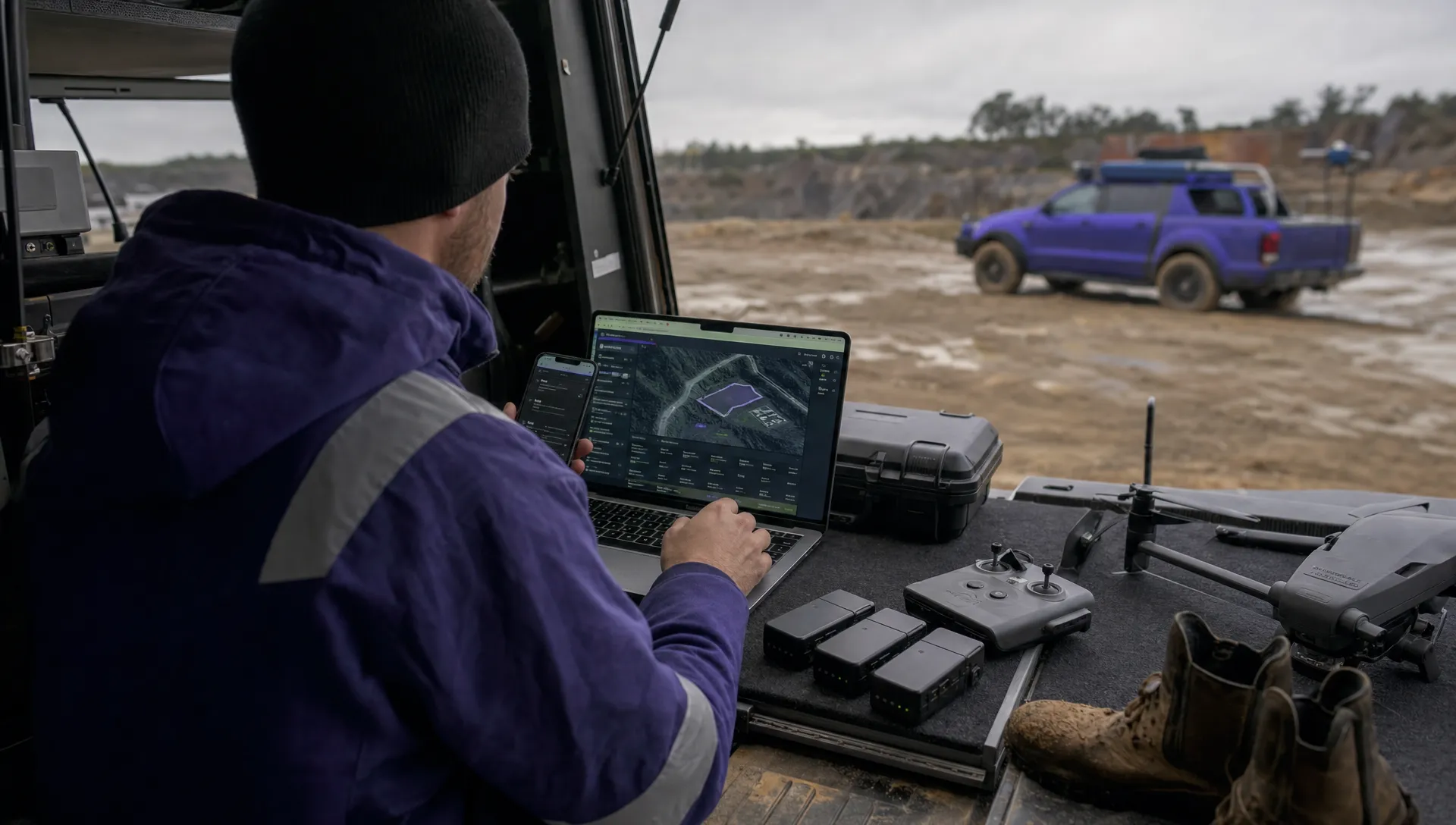 Drone Operating Rules for Managing Contractors and Employees →
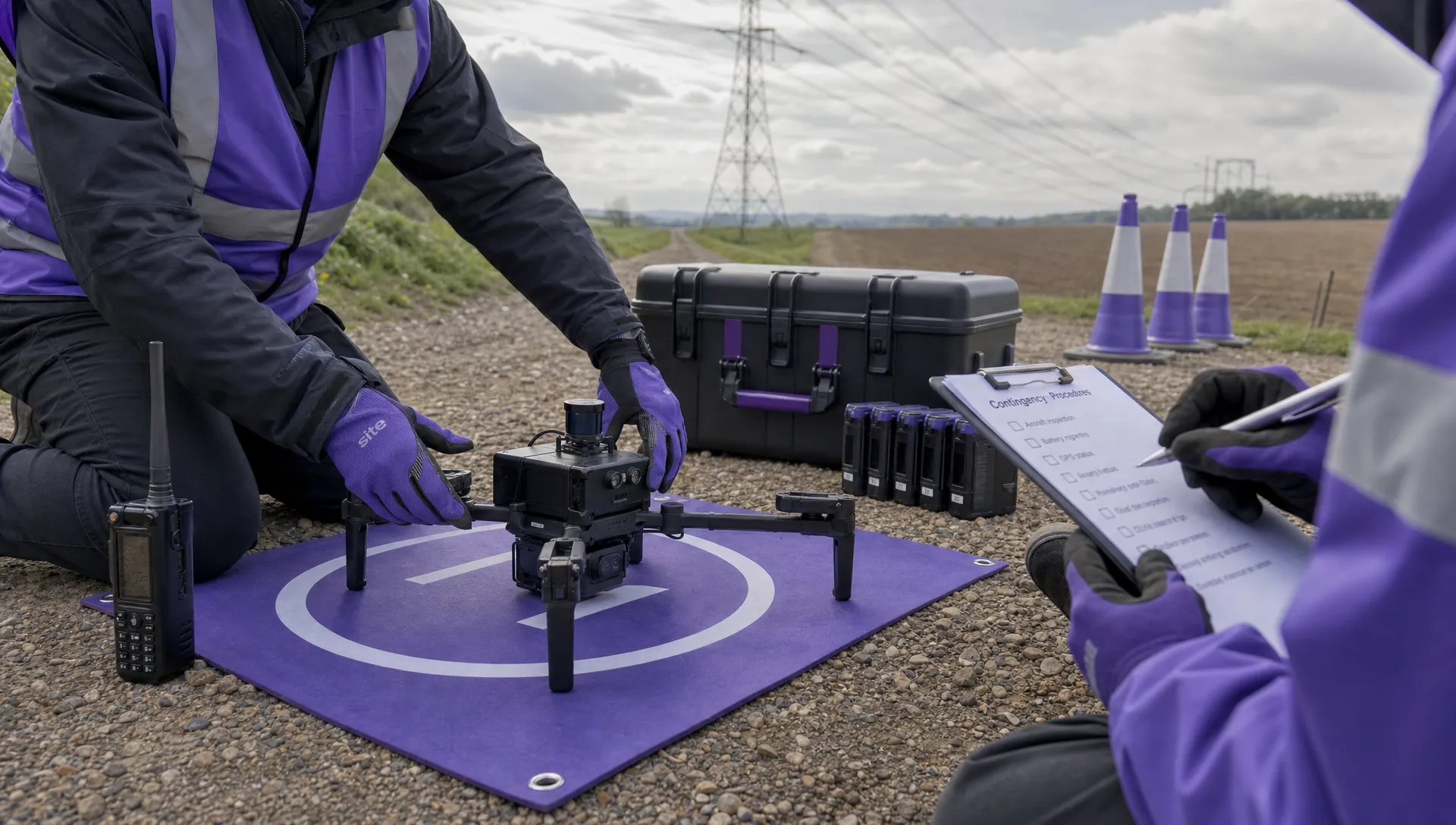 BVLOS Drone Requirements for Building a Safety Case →
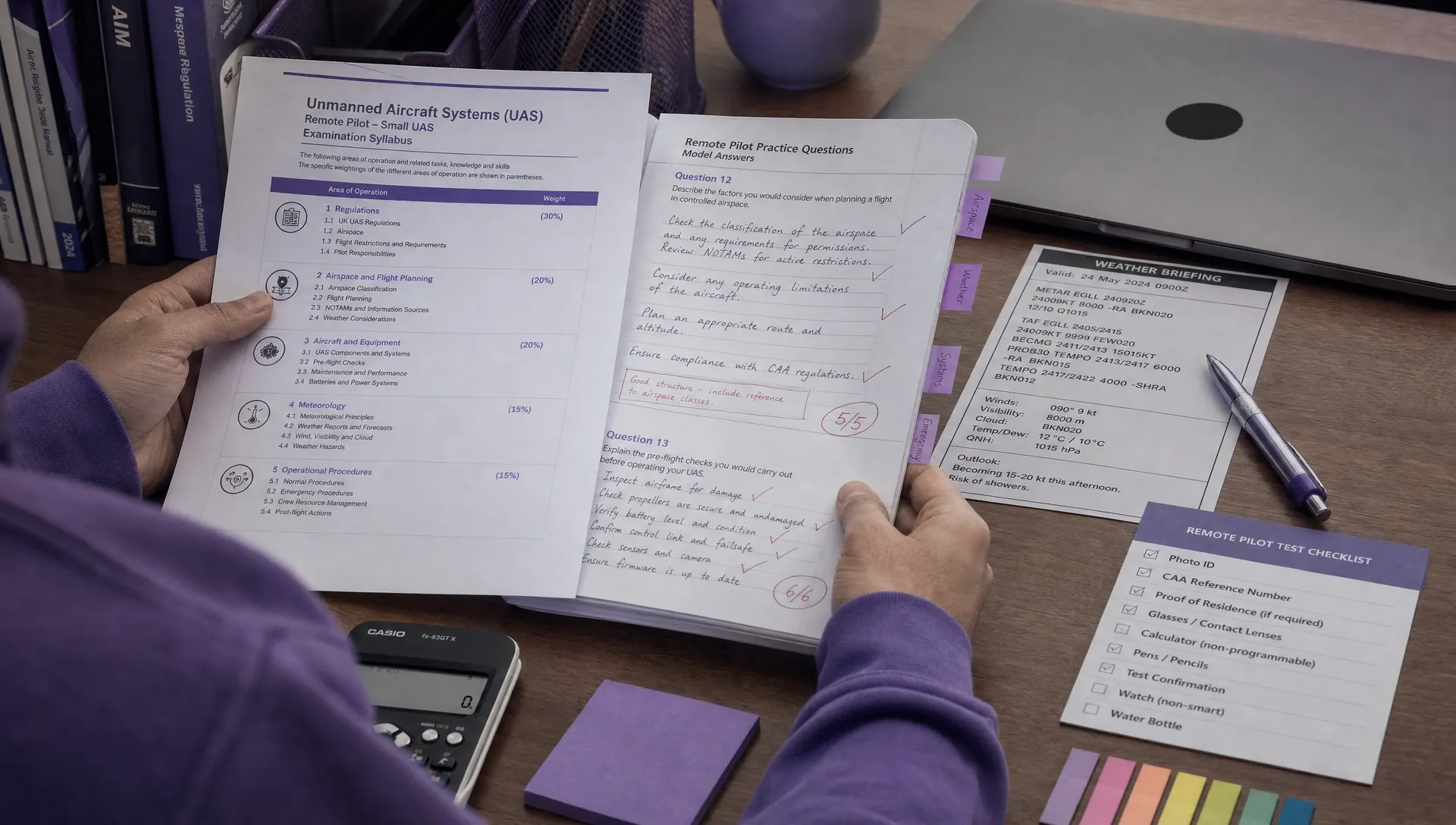 Drone Pilot Test Mistakes That Cost Candidates Marks →
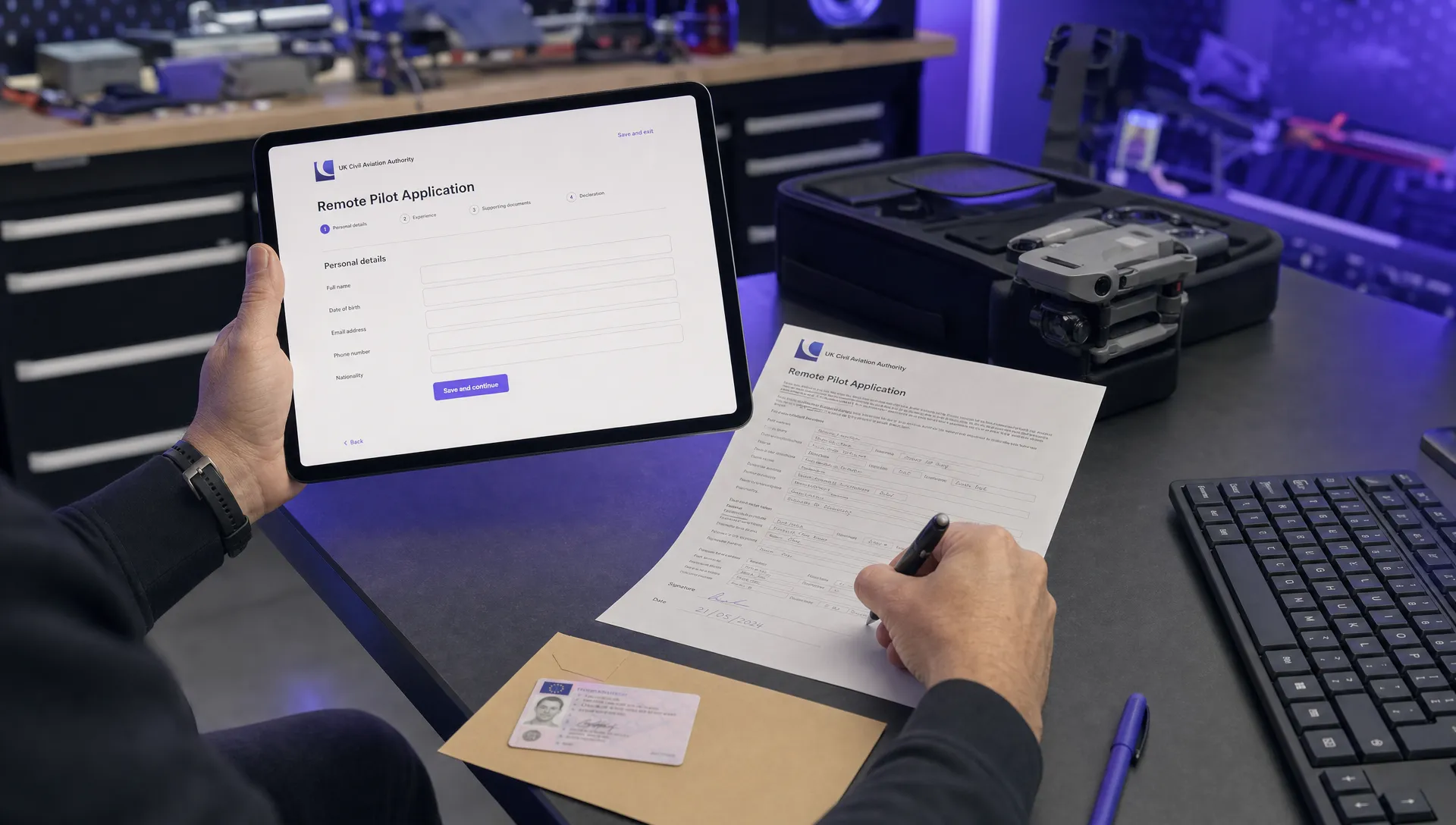 FAA 107 License vs Part 107 Certificate: What’s the Difference? →
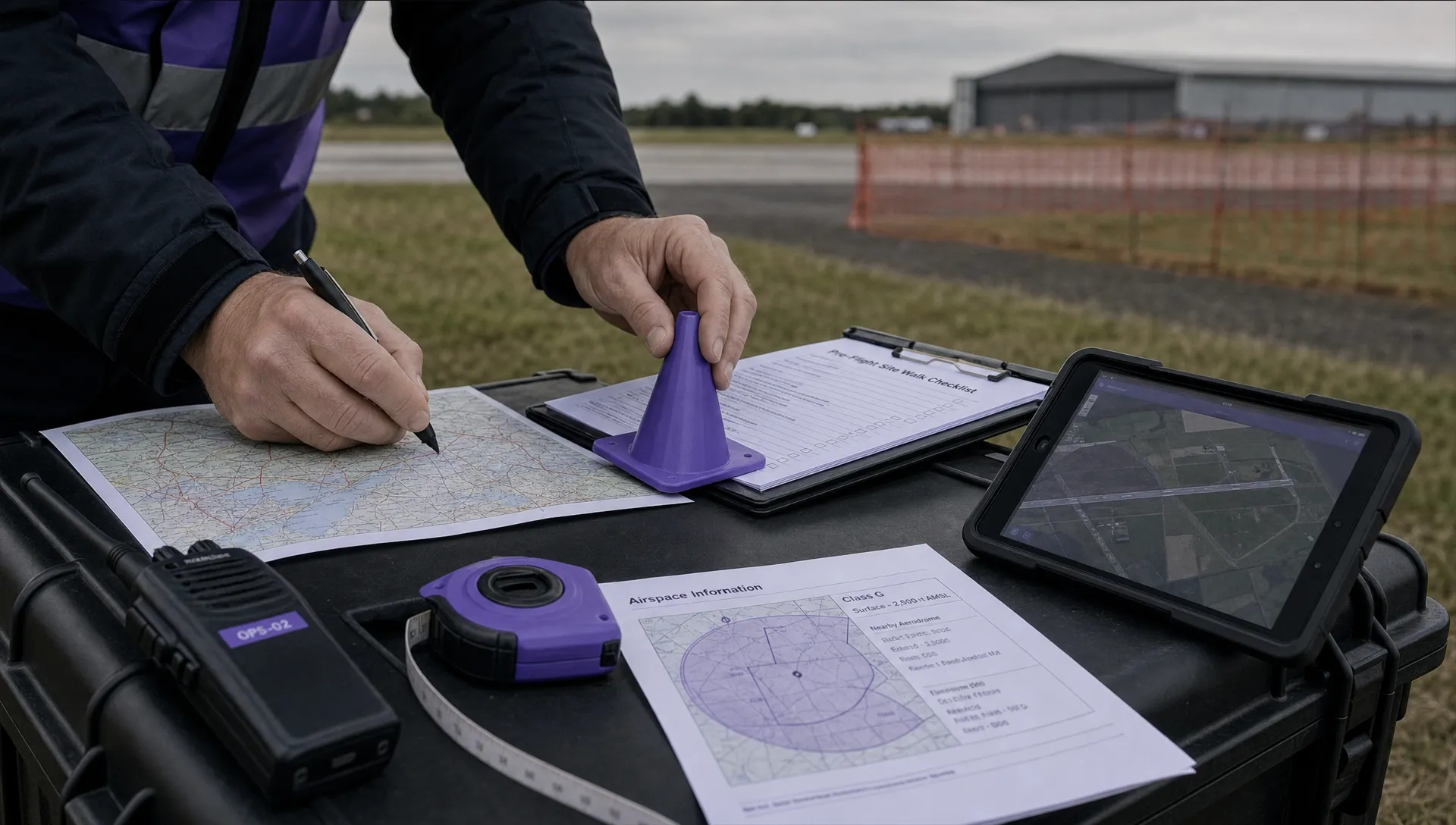 Drone Airport Rules: A Field Checklist for Site Assessments →
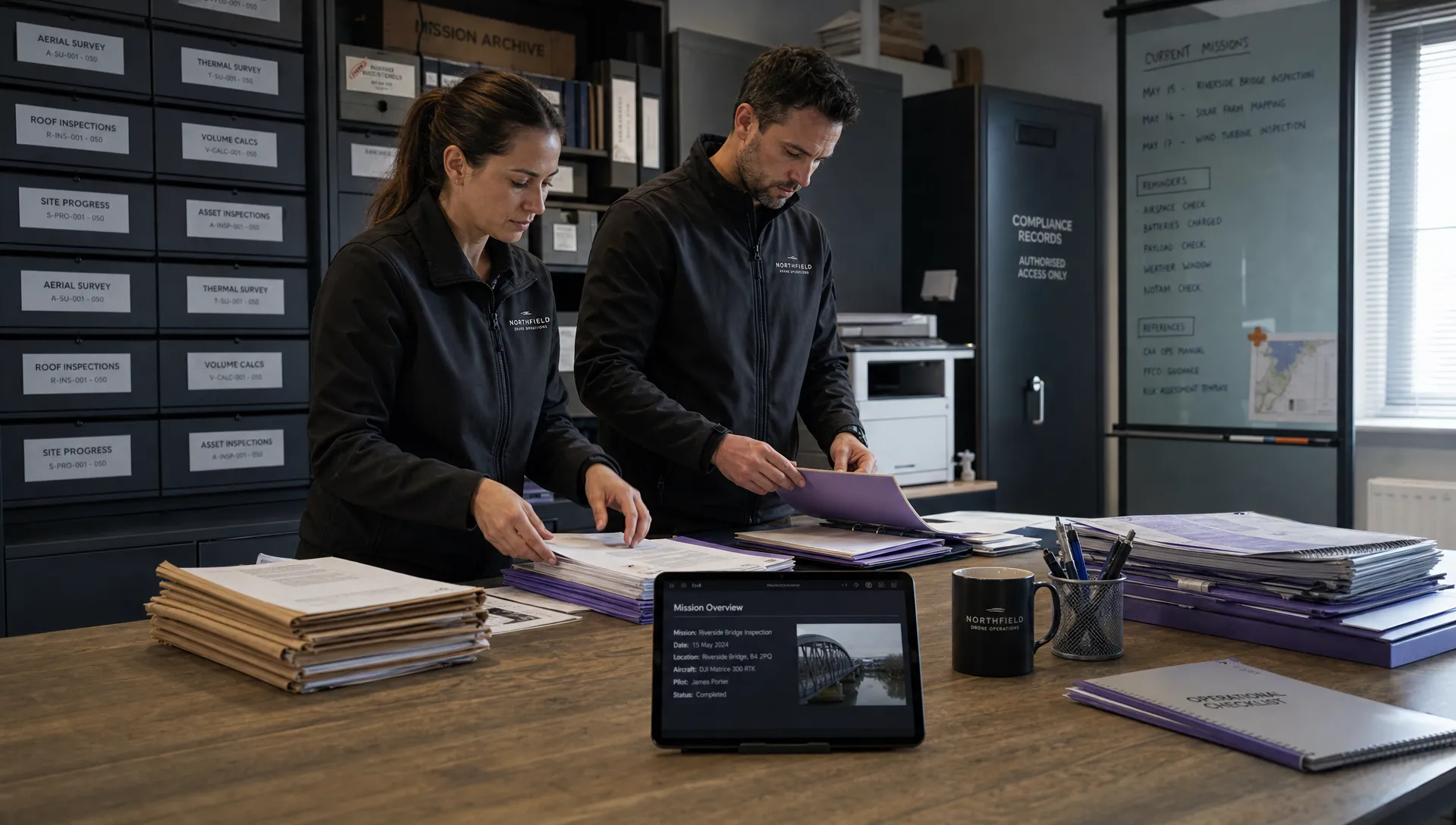 FAA Part 107 Record-Keeping Rules for Commercial Teams →
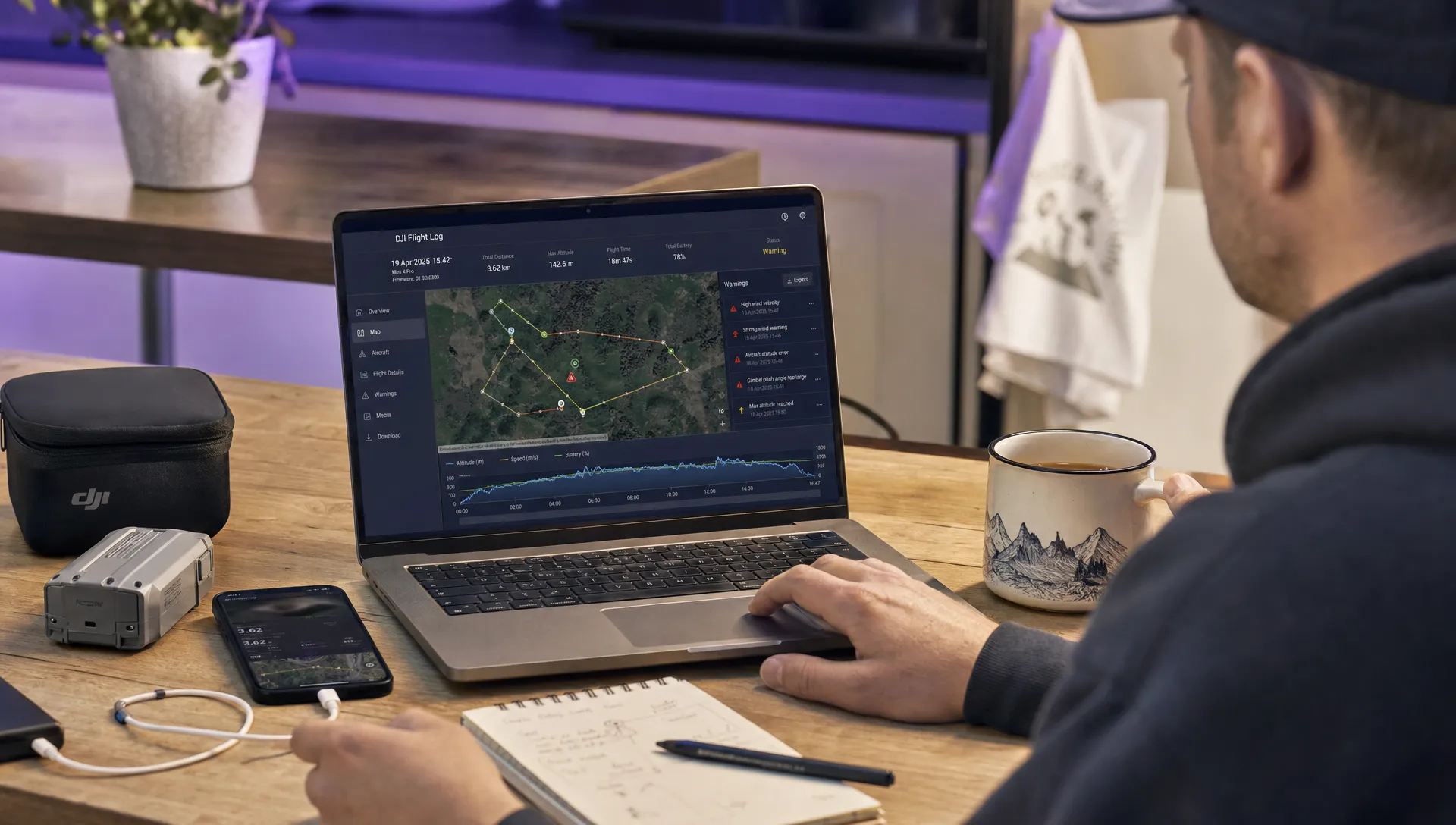 How to Review a DJI Flight Log After an Unexpected Event →